Loading summary
Transcript62 lines
- [00:01]
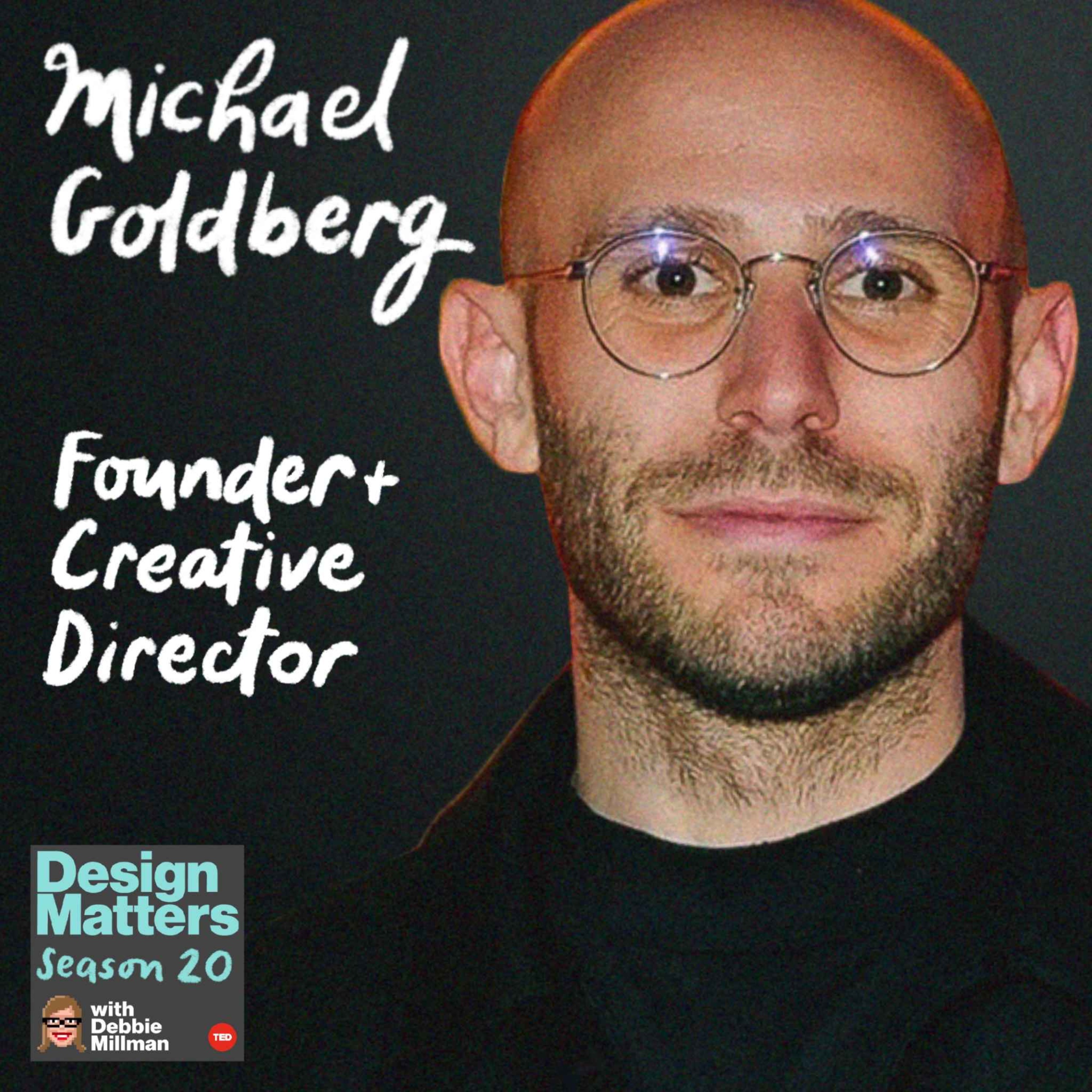
Michael Goldberg
We purchased 44 shipping containers sight unseen. So we had no idea, you know, what shape all of the artwork, what condition all of the artwork was in. And I can tell you that I definitely was beyond anxious. I think I was a bit green, you know, when we opened up those first containers. From the Tet Audio Collective, this is Design Matters with Debbie Millman. On Design Matters, Debbie talks with some of the most creative people in the world about what they do, how they got to be who they are and what they're thinking about and working on. On this episode, Michael Goldberg talks about an obscure 1980s art project called Luna Luna. I couldn't believe what I was seeing. You know, I saw these images and I was immediately just blown away. Race the rudders. Race the sails. Race the sails. Captain, an unidentified ship is approaching. Over. Roger, wait. Is that an enterprise sales solution? Reach sales professionals, not professional sailors. With LinkedIn ads, you can target the right people by industry, job title and more. We'll even give you a $100 credit on your next campaign. Get started today at LinkedIn.com results terms and conditions apply.
- [01:27]
Debbie Millman
If you're a parent or share a fridge with someone. Instacart is about to make grocery shopping so much easier because with family carts you can share a cart with your partner and each add the items you want. Since between the two of you, odds are you'll both remember everything you need. And this way you'll never have to eat milkless cereal again. So minimize the stress of the weekly shop with family carts. Download the Instacart app and get delivery in as fast as 30 minutes. Plus enjoy. Zero dollar delivery fees on first three orders. Service fees apply for three orders in 14 days. Excludes restaurants. Spice up get togethers at Whole Foods Market during the Flavors of Latin America event. Look for sales on shrimp for a tantalizing ceviche craving Tacos save on their no antibiotics ever. Marinated Beef skirt Steak Top your taco with their pre made pico de gallo full of fresh tomatoes, cilantro, onions and jalapenos. And get Saucy for Less with 365 by Whole Foods Market Enchilada and mole sauces. Shop Whole Foods Market in store and online. Worried about what ingredients are hiding in your groceries? Let us take the guesswork out. We're thrive Market the online grocery store with the highest quality standards in the industry. We restrict 1000 plus ingredients so you can trust that you'll only find the best high quality organic and sustainable brands all free of the junk with savings up to 30% off and fast carbon neutral shipping. You get top trusted groceries at your door, and you can stop worrying about what your kids get their hands on. Start shopping@thrivemarket.com podcast for 30% off your first order and a free gift. Imagine an amusement park designed by artists. Imagine, say, Salvador Dali creating a surrealist funhouse, or Jean Michel Basquiat decorating a Ferris wheel with his drawings. Or Roy Lichtenstein fashioning a glass labyrinth and Philip Glass providing the music. Well, fantastical as it may seem, such an amusement park actually once existed briefly in the late 1980s. It was called Luna Luna, and it was the brainchild of an Austrian artist by the name of Andre Heller. Luna Luna shut down several months after it opened, and the exhibit spent decades in storage. More recently, they've been back on display, having just finished runs in Los Angeles and New York City. Michael Goldberg is the founder of Something Special Studios, one of the companies that is behind the resurrection of Luna Luna. He's here to talk about that and about his multifaceted career. Michael Goldberg, welcome to Design Matters.
- [04:14]
Michael Goldberg
Thank you, Debbie. Great to be here.
- [04:16]
Debbie Millman
Michael, is it true that you have a particular fascination with bucket hats?
- [04:22]
Michael Goldberg
Wow. You did your research. I was not expecting to start here. I did, at one point in my life, have a fascination with bucket hats. I like to have a bit of a uniform. And I went with the bucket hat one day, and it stayed on my head for about three years. It was definitely a phase, and I've since grown out of it.
- [04:45]
Debbie Millman
You grew up in Florida, but your whole family was originally from New York. And that duality, sort of being from one place but feeling tied to another, how. How did that shape your perspective early on?
- [04:59]
Michael Goldberg
So growing up in Florida, it was always one of those, I need to get back to New York the second I can. You know, both my parents growing up here. I have older sisters. I'm the youngest. My older sister's nine years older. My, you know, middle sister is eight years older. And they came back to New York right after college. So for me, New York has always just been a place of most of my family being here and wanting to get back. And I interned here every summer. I think the day I graduated was on a plane. And I've been here ever since.
- [05:31]
Debbie Millman
Talk a bit about your younger self. Can you describe who you were as a young boy?
- [05:36]
Michael Goldberg
I've always been somebody that when I'm into something, I'm truly very, very into it. So growing up, I was obsessed with primarily rap music and basketball, and I got into a phase Growing up in Florida, where I was quite obsessed with working out. So there was a period of time where it was really like sports and music took up the majority of my life. And going to college, I immediately found ways to always keep myself busy. And, you know, basically the first day I went to the bars that people were going to and realized very quickly, like, if I'm going to be going out every night, I might as well be getting paid for it and, you know, figure out a way to gain some experience. So I've always been a bit entrepreneurial, and I worked throughout college and haven't stopped since. So, like I said, I've always been somebody that finds things that I'm interested in and really dedicates myself as much as possible, applies myself as much as possible to those interests.
- [06:39]
Debbie Millman
You talked about the many internships you've had. You went to school at the University of Central Florida, but every summer you made your way back to New York to intern. That's a lot of internships. What were you majoring in and what kind of internships were you getting?
- [06:55]
Michael Goldberg
I majored in marketing. You know, the first couple years, they were pretty much odd jobs that would get me out here. So I interned for a ticket broker one year. The internship that had the biggest impact on me was going into my senior year. I interned for a hospitality group that owned nightclubs in the Meatpacking district. And my very first day of the internship, my job was basically we were doing an event and Kid Cudi was performing, and this was in 2009. And Kid Cudi was, you know, one of my favorite rappers at the time. And my job was basically just to look after him. And I came out of that night and basically decided I was going to be the first person in the office and the last person to leave at 4 in the morning every night. And I soaked up everything that I could. I thought that I knew a lot more than I did. And I went back to college and tried to apply what I. What I learned in the internship. And as I mentioned, I worked throughout college at, you know, the local bars. And one of the people who I worked with, they were actually only a couple years older than me, and they were opening up a bar in a movie theater. And I convinced them to turn that into a nightclub, where I began to book DJs from Miami and started to work out a little bit of a route where we would book House Music DJs, and we booked them at FSU and then University of Florida, and then I'd pick them up in Gainesville and drive them to Central Florida. And we were bringing in talent from New York as well. And, you know, I got a ton of experience not only working with artists for the first time, but also managing a staff and working with a wide range of people in that. In that job. So I took a lot out of it, and it made me more confident coming to New York and immediately, you know, starting to work in a similar field.
- [08:54]
Debbie Millman
Michael, what was driving you so hard at that time?
- [08:57]
Michael Goldberg
Great question. I don't know if I could pin it to one thing other than I wanted to figure out what was next. And I didn't feel like I was necessarily getting that from school. I didn't feel, you know, I look back and I. I wish that I was more proactive of searching for classes that aligned with my interest, but I didn't really do that. And I kind of searched for that outward, you know, in the world and was really just looking for business experience to kind of figure out what was next. And. And I knew then nightlife was 100% not what I was interested in, but I saw nightlife as an opportunity that I can meet people and kind of figure out what was next. And when I moved to New York, I very quickly, you know, started working for a hospitality group where I was the assistant to the director of marketing. And the person who I was working under left the company and I said to the people that I was working for, you know, I could do their job. And they said to me, you know, you're 12 years old, you graduated yesterday, there's no way can you do this job. And I, you know, was very insistent, and it wasn't that they like fully believed in me, but they didn't end up hiring anybody. And I slowly but surely was doing the other person's job. And eventually they gave me the job title after a couple of months. So, you know, I became the director of marketing for a well established hospitality group in New York that I would.
- [10:21]
Debbie Millman
Say that was one Oak. Right? That was one that was.
- [10:23]
Michael Goldberg
Yeah, exactly. And I got so much experience wearing 10 different hats. And I learned so much from that experience. And the entire way through, I knew I very quickly wanted to make an exit out of nightlife. It was always kind of looking around and thinking about, you know, what I could do next. And eventually, after working there for six years, I decided to start something special. And, you know, that was in 2016, but really in 2017 when I fully left my job and the experience that I got in my life, really, I learned a ton from you know, learning the value of relationships and really taking care of people. But I think the other part was a work ethic and persistence to making sure that you deliver on something. You know, if you don't properly promote a party, you feel that very, very heavily. You know, you walk in and it's uncomfortable because nobody's there. And what I took from that in terms of applying that to my, to something special and to the, to the practice that I run now is ensuring that you're setting things up for success, ensuring that you think through things. Another big thing that I took from nightlife was how to curate and how to think about pairings, you know, that one plus one equals, you know, three, you know, kind of mentality. So I took a lot of really valuable lessons that I was able to apply to my agency, things that I still, you know, practice today.
- [11:48]
Debbie Millman
I read that you stated about making that transition to a different type of career, that you said I was loving what I was doing until I didn't love what I was doing. What do you think changed that led you to that realization?
- [12:05]
Michael Goldberg
I was 21, maybe 22 years old when I moved to New York. And I think I was very wide eyed and, you know, just so excited to be here. And it was the only world that I knew. So for, you know, a period of time, I loved it. And I loved, you know, the, the people that I was around and the people that I was meeting. And it was a way to be close to musicians who I really admired and a way for me to connect with them. I had something that, you know, I was able to offer in terms of, you know, let's book a party or let's do, you know, an album release party. And we were showing up in, you know, whether it's Paris Fashion Week or, you know, Art Basel, we were doing events all around the world. So it was bringing me places that I hadn't otherwise I hadn't been before. And then I realized there's other ways to be here and there's other ways to connect with people. And I felt that there was way bigger opportunity outside of what I could see at that point. You know, since I left nightlife, I don't know if I've been to too many clubs since. So I think that says a lot for me. You know, one of the things that I loved working about nightlife was giving people opportunities and creating like platforms for artists that I believed should have them. And I feel I'm able to do that in a more impactful way. And what I do now than what I did then.
- [13:20]
Debbie Millman
So did you go straight from working in nightclubs, in the nightlife and so forth to starting your own agency?
- [13:29]
Michael Goldberg
I did, yes.
- [13:30]
Debbie Millman
Now you had never worked in that field before, like ever?
- [13:35]
Michael Goldberg
I had never worked in that field before. I, you know, I joke around when people, you know, as an example of the way that I started, somebody would say to me, let's kick off this project, please send us a scope of work. And I was on Google, you know, searching what is the scope of work, you know, like what does that entail?
- [13:51]
Debbie Millman
I heard you didn't even understand what the word RFP was, which is request for a proposal, which is how you get the work.
- [13:58]
Michael Goldberg
That is exactly right. I did not know any of those terms and I very much was figuring it out as I went. And I have to say, you know, some of the earlier projects I couldn't be more proud of. I look back at, you know, what we were able to accomplish. We were just so thoughtful and so intentional about everything that we were doing. And I still look back at the time and I never want to lose sight of that. It's something that, you know, I still encourage my team. It's like we have to still operate like we're this small agency and we should never change that that way. I mean, we're not that big. But it's always trying to treat every project like it's your first and ensure that you over deliver for any client that you're working with.
- [14:38]
Debbie Millman
Michael, what gave you the sense that you could do this? Did you get startup funding? Were you on a, you know, sort of bootstrap budget? How did you get started? How did you open the door?
- [14:49]
Michael Goldberg
I definitely didn't have any funding, that, that is for sure. I kept things very, very, very lean to start. We were taking on big projects. The very first event that I did was at the Brooklyn Museum and we did a closing party for Tom Sachs's Boombox retrospective and we brought in Party Next Door and did his album release party and just blew it out. There was a massive turnout. The next event that we did was with Beats by Dread Art Baseline. I look back at the budget that we had and it's, you know, I laugh and smile because it's pretty wild that I was able to, A, that I was like took that on but B, that we were able to make what we, what we made out of it. And you know, that event we ended up having Travis Scott and ASAP, Rocky, Virgil Abloh DJing. You know, it was just an amazing Virgil. It was an amazing event that you could just. It was so raw for brand experience and it felt so special. I think anyone that went to that event knew how, you know, this was like this once in a lifetime type of party. And the project that I really look back on as being the thing that kind of kicked everything off.
- [16:01]
Debbie Millman
And then somehow your path led you to Luna Luna, a forgotten art fair ground from 1987. As I mentioned in our intro, it was the mastermind of the Austrian pop star turned artist Andre Heller. Can you share some of the history about the first iteration of Luna Luna and more about what it actually was before we start talking about how you discovered it?
- [16:33]
Michael Goldberg
Yes. So Andre came up with the idea for Luna Luna, really, in the late 70s, and, you know, he was driven to try to bring art to as wide of an audience as possible. And he started to narrow in on this idea of taking a Luna Park. You know, Luna Parks originate from Coney island in the early 1900s and are essentially traditional kind of amusement parks or fairs or carnivals that, you know, we all have grown up knowing. And the twist, you know, and what differentiates our Luna park from typical Luna Parks is he wanted to invite the greatest artists of the time to each design their own rides, games and pavilions. And he came up with this idea in the late 70s, but it wasn't until the mid-80s that he got funding for the project from a magazine called New Riveau. And he immediately came to New York and started to recruit artists. And, you know, it was through an amazing introduction from Andy Warhol, who connected to him with Roy Lichtenstein and then Keith Haring and, you know, then it started to snowball from there through those introductions. He then went on to meet with Jean Michel Basquiat and Kenny Scharf, David Hockney, eventually, before flying back to Europe and starting to recruit some of the European artists, Rebecca Horne and Monica Gilsing and Eric Brower amongst a number of others. And Luna Luna, you know, fully came to fruition in the summer of 1987. It opened on June 5th and ran until the end of August. Andre always had a big vision for what he believed Luna Luna could be and spoke about a global tour. Even before the first iteration of Luna Luna opened up in Hamburg in 1987, and after it showed in Hamburg, he was driven to take it on this world tour. And he had a couple of deals that ended up falling short and not going through. And eventually, at this point, a couple years had went by and he was really strapped for cash. And he talks about being on the verge of bankruptcy. And eventually he got a call from a foundation that was based in the US and they wanted to show it in San Diego. They started to negotiate terms and came to an agreement and eventually they tried to back out of that deal and it ended up in litigation from 1991 to 2007. So so much time went on. And eventually, you know, Andre won the litigation, the lawsuit, and he transferred 44 shipping containers to this foundation who now is under new management. You know, they, they don't know what to do with it and they have a ranch in Texas, in rural Texas, and they end up parking it there with no plans to show it ever again. And, you know, yeah.
- [19:35]
Debbie Millman
Support for the show comes from LinkedIn. One of the hardest parts about B2B marketing is reaching the right audience. I have so often gotten served ads that clearly haven't been intended for me. So if you want to reach the right professionals in your B2B marketing, use LinkedIn ads. LinkedIn has grown to a network of more than 1 billion professionals. That's where it stands apart. And then you can target your buyers by all sorts of different categories. Job title, industry, company seniority, company revenue. So that you can stop wasting your budget on the wrong audience and start targeting the right professionals. LinkedIn will even give you a $100 credit on your next campaign. So you can try it yourself. Just go to LinkedIn.com tedaudio that's LinkedIn.com tedaudio Terms and conditions apply only on LinkedIn ads.
- [20:29]
Michael Goldberg
To get people excited about Boost Mobile's new nationwide 5G network, we're offering unlimited talk, text and data for $25 a month, forever. Even if you have a baby.
- [20:38]
Debbie Millman
Even if your baby has a baby, even if you grow old and wrinkly.
- [20:41]
Michael Goldberg
And you start repeating yourself, Even if you start repeating yourself, even if you're on your deathbed and you need to make one last call or text, right? Or text the long lost son you abandoned at birth, you'll still get unlimited talk, text and Data for just $25 a month. With Boost Mobile Forever, after 30 gigabytes, customers may experience slower speeds. Customers will pay $25 a month as long as they remain active on the Boost unlimited plan forever. Ryan Reynolds here from Mint Mobile. I don't know if you knew this, but anyone can get the same Premium Wireless for $15 a month plan that I've been enjoying. It's not just for celebrities. So do like I did and have one of your assistant's assistants switch you to Mint Mobile. Today I'm told it's super easy to do@mintmobile.com Switch upfront payment of $45 for 3 month plan equivalent to $15 per month. Requ rate first 3 months only, then full price plan options available, taxes and fees extra. See full terms@mintmobile.com raise your hand if you want your nails to look perfect all the time. Me too. I'm Sarah Gibson Tuttle from Olive and June. And this is exactly why we created the MANI system. We wanted to make it possible for everyone everywhere to give themselves a beautiful manicure at home with our tools and our long lasting polish. Each manicure with our mani system comes out to just $2. That's right, $2. No more. 30, 40, $50 manis that you get at a salon and they take hours. Now you can paint your nails on your time and love them more than ever. And by the way, when people ask, who did your nails? Where did you get them done? You're gonna proudly say, I did them myself. Get 20% off your first mani system with code perfectmani20@oliveandjune.com perfectmanny20 that's code perfectmanny20 for 20% off at oliveandjune.com Perfectmanny20.
- [22:29]
Debbie Millman
So 300,000 people ended up seeing that first iteration. In Hamburg, Jean Michel Basquiat designed a Ferris wheel. Were people actually allowed to ride in it?
- [22:44]
Michael Goldberg
Yes. So that is a very specific point that we try to make clear, you know, in the exhibition, the experience that we have running right now in New York. Luna. Luna wasn't a art show with the theme basing it around an amusement park. It was an amusement park. So people were fully riding the rides, playing the game, stepping inside of it. You have 300,000 people that truly interacted in every which way with the park. And that would have been the intention for it to continue if it continued to Tour. And unfortunately, 35 years went by before Luna. Luna saw the light of day again. And at this point, safety standards don't allow us to let people. And safety standards.
- [23:30]
Debbie Millman
Who would want to even be able to let somebody touch a jumpy shell? Basquiat Ferris wheel.
- [23:36]
Michael Goldberg
And the fact that we want to preserve it for as long as possible. The combination of those two things are the reason why, you know, we don't allow people to ride the rides at this point, but we do let people step into, you know, any of the pavilions. The Salvador Dali Dali dome or the David Hockney Enchanted Tree. The Roy Lichtenstein labyrinth.
- [23:55]
Debbie Millman
Yeah, yeah, I saw the exhibit in Los Angeles when it first opened and went through everything and even got married again in the little chapel, which we have a certificate for and got the little ring and the blow up Luna, Luna Moon. And the replica of the Jean Michel Basquiat Ferris wheel.
- [24:18]
Michael Goldberg
I love to hear that. You have to come check it out in New York. It's a new and improved show. It's a big evolution from la. There's a new commission by a duo called Ponsily Creation who were inspired by the original performers that roam the park and engage with all of the guests. So they've created a new cast of characters that are roaming the experience. And then we also have a dedicated area called Ponsilly Land, which is really designed for kids, but also, you know, adults are more than welcome, where people could kind of engage and interact and create their own fantastical characters. You could even try on some of the, you know, some of the elements that they've designed. There's also a new soundtrack that we've developed for this iteration, which features such incredible musicians. David Byrne, Andre 3000, Jamie xx, and then it also features some of the original music by Philip Glass and Miles Davis. So we're super excited about this new iteration. There's also expanded storytelling, so definitely recommend coming and checking out the new iteration.
- [25:21]
Debbie Millman
I love that Jean Michel Basquiat insisted that the musical accompaniment to the Ferris wheel was Miles Davis. Michael, how did you discover that Luna Luna even existed? It was in a storage facility on a desert ranch in Texas for 35 years.
- [25:40]
Michael Goldberg
It's a night that I'll. I'll never, ever forget. I have like such, you know, specific memories of this, but essentially somebody on my team, you know, I ask people on my team always, if you see things that are interesting, share them with me. I want to learn, you know, just take in whatever you guys are viewing at the time. And somebody had sent me a article on a website called Mini Muse and I had never heard of Mini Muse. And just out of curiosity, I went to the homepage and I started to scroll through the website and at the very bottom, there was this article about Luna Luna. And I couldn't believe what I was seeing. You know, I saw these images of the Basquiat Ferris wheel. Also there's this aerial photo of the overall park. And I was immediately just blown away. And I opened up a new tab and I searched Luna Luna, thinking that there would be like 10,000 results, like there are for, you know, most well covered historic art events like this. And two results popped up on my screen. The website That I was on Mini Muse and this guy, Andre Heller, who I never heard of his website. So I clicked on Andre Heller's website and I started to look at some of the other projects that he had put together. And I was immediately blown away by those as well. There was the fire theater that Andre put together in 1984, where he blew off fireworks at the Reichstag so that people on both east and west side of the Berlin Wall could experience the flying sculptures that he flew all around the globe. And the next day, I went into the office, and on the way in, I walk every day. I called four people that I respected in art and all different ages purposely, and I said, have you ever heard of Luna Luna? And all four of them said, no. What are you talking about? And I said, don't worry about it. Never mind, hung up the phone with them. And I, you know, gather my team in the office and just immediately was like, I think I found something last night that we need to try to figure out how to bring back. And, you know, at that time in 2019, social media was obviously exploding, and so many brands were coming to us and asking us to do stunt for stunt sake. It's like, can we fly a hot air balloon with our logo on it or can we do. You know, and it's a lot of these things I just felt lacked depth. And, you know, Luna Luna was this unicorn in that you have this nostalgic format that's so relatable. Everyone kind of understands immediately just the format of, like an amusement park, you know, a Ferris wheel or a carousel, but designed by some of the greatest artists of. Of our time. And I just immediately fell in love with the idea. So after a couple weeks, if not months, of obsessing over Luna Luna and thinking about how we could bring it back, I decided to write an email to Andre Heller, the subject line being Luna Luna 2.0. And I'll. You know, just to read that letter, I basically said, Dear Mr. Heller, my name is Michael Goldberg, and I'm the founder of Something Special Studios, a creative company based in New York City. About six months ago, I became aware of Luna Luna and instantly fell in love with the project. It is such a captivating and timeless exhibition that I strongly feel should be given the opportunity to exist in today's world. I truly respect and admire what you created, and I'm reaching out today to explore your interest in potentially recreating a contemporary Luna Luna for a new generation to experience in the US Something Special Studios could help in securing funding and handle all production, operations, etc. We wanted to gauge your interest in a project like this, and then from there, hopefully discuss the next best steps. Thank you in advance for your consideration, and I hope to connect soon. Sincerely yours, Michael.
- [29:32]
Debbie Millman
How did he respond? Did he respond right away? Did it take some time? What was the response? Like?
- [29:38]
Michael Goldberg
I sent a couple of emails, and then eventually his receptionist or assistant, you know, reached back out to me to schedule a call. And the first call that we had, it's funny to look back on because it's just so obvious to me now that I know Andre, he was just like, who is this guy? You know, he had no idea who I was. I don't do a ton of press, at least not prior to Luna Luna. I've always been a bit behind the scenes, and my name is Michael Goldberg, so there's 1 million of me. You know, you search Michael Goldberg, there's going to be a lot of things that pop up that aren't me. I don't think he had any idea who I was or my company or what I could potentially do or not do. So the call was a bit short and brief. He wasn't dismissive or passive. It was just more kind of like, I don't know what to do with you. And I kept calling him. I think that first email was in October, and I think I probably followed up a handful of times before getting on another call with him, maybe in late November. And this part I'll never, ever forget. He said to me, look, I don't know you, you don't know me. Come to Vienna. Let's look each other in the eyes, and we'll decide if we want to do business together. And I don't know about you, Debbie, but people don't say stuff like that to me that often. There was something so charming and almost like romantic, kind of like old school about it that he was asking me in this, you know, such a sincere way of, like, come and let's. Let's have a real conversation and, you know, decide if we even like each other. So I booked. You know, I was planning to come out in early March of 2020. And of course, we know what happened in March of 2020. Covid hits. And now I basically have every single project that I'm working on get canceled or get postponed. I'm, you know, sitting in my apartment wondering if I have a company anymore. But I couldn't stop thinking about Luna Luna. And I felt like Luna Luna was such a perfect project that, you know, when the world opened back up. This is a project that could bring all different types of people back together. It's a project that's filled with inspiration, it's filled with dreaming. It was the type of project that I felt we really needed at, at a point like that. So I kept calling Andre and I kept calling Andre and following up and writing emails and eventually, I don't know why or how, but I got connected to his son Ferdinand, who's the exact same age as me. And if it wasn't for Ferdinand, I really don't know if we would have ever gotten too much farther in the conversation. So, you know, it's really important to give him credit. He, him and I built a little bit of a rapport and he eventually encouraged his dad to get on a zoom and have a proper conversation with me. And, you know, we set up a zoom in January of 2021. So, you know, that's how much time we've almost here, you know, had gone by. And it was the first time that we saw each other face to face. And we were on a zoom for about an hour and a half. And he walked me through everything, how he, you know, came up with the. With the idea to create Luna Luna. The experience of, you know, this tragedy. The way that he described it, it was. He talks about mourning it, you know, for the last 30 plus years and, you know, knowing that he had something so special and letting it slip out of his hands. And it was almost a miracle, the timing of everything, because he said that he had recently started to think about Luna Luna, and he was working on bringing it back. And he said to me, you know, if I'm successful in figuring out how to bring it back, I'll contact you and, you know, maybe there's a role for you. We could get you involved in the creative or the marketing. I said, great, you know, sounds good, but I wasn't totally confident. You know, time was going by and I wasn't really sure if he was going to.
- [33:22]
Debbie Millman
He's 75 also, right?
- [33:24]
Michael Goldberg
Yes, exactly. And I just was like, look, I'm going to try to figure this out myself and if I can figure out a way to bring it back, great. And if he figures out a way to bring it back, great. You know, I just wanted to see the project come back and have a return and have a second life. And I started to take some meetings and started to just, you know, continue to think about how we could bring Luna. Luna back. And, you know, one of the very first meetings that I took was with Dream Crew and I met with Anthony Gonzalez, who, you know, I've had a good relationship with, I believe, since 2015. We've always. We met first when I was working in nightlife, and then, you know, continued to be friends. When he was in New York or I was in la, we would meet up and we met at the Dream Crew office in la. I was living there for a couple of months at that point, and I brought the book with me, and I'm so lucky that Anthony immediately got it. There's some people that you talk to about Luna, Luna, and it takes a second for them to understand what's so special. The magic behind took two minutes. He immediately saw the project for what we believed it could be. I left that meeting that day feeling really optimistic that something was going to come out of it. And he called me the next day and he said, can we buy it? I said, yes, 100%. And the next call was immediately to Ferdinand. And I. I said to him, do you know who Drake is? He said, do I know who Drake is? I live in Vienna. I don't live under a rock. Yes, I know who Drake is. What are you talking about? He was like, what's wrong with you? So I said, look, I took a meeting with him and his company, and they're interested in buying the collection. Can we have a real conversation? So we set up a meeting, and Anthony pulled in the team. It took a little bit of time, but eventually we were able to go forward with the deal, and a group of us came together to form a new entity. And with Dream Crew leading the way as a lead investor, and we purchased 44 shipping containers sight unseen. So we had no idea what shape all of the artwork, what condition all of the artwork was in. And I can tell you that I definitely was beyond anxious. I think I was a bit green when we opened up those first containers. And we are very, you know, lucky that everything was stored in Texas, because for the most part, everything was in incredible condition and held up as well as it possibly could from being stored for that long of a period.
- [35:56]
Debbie Millman
Now, just so my listeners understand, Drake is part of DreamCrew, is that correct?
- [36:02]
Michael Goldberg
Yes. So DreamCrew is Drake's production and entertainment company. They've produced, you know, they're behind Euphoria and Top Boy and a number of other, you know, more recent great documentaries and TV shows.
- [36:18]
Debbie Millman
And they, along with you and this team that you put together, invested $100 million to acquire the work without seeing it in person.
- [36:32]
Michael Goldberg
So the. I'm not going to Confirm that figure.
- [36:34]
Debbie Millman
But I just. That's. That's been what I've read everywhere, so you don't have to. That's absolutely okay. And who knows, you know, it is what it is, but you spent a lot of money to acquire something. You had no idea what the condition was.
- [36:48]
Michael Goldberg
That is exactly correct. And, you know, I said to them several times, like, what happens if the art's not in good shape? And, you know, they. They, I think, were a little bit more comfortable with the risk than I was. I was so concerned. And worst case, we would have had a great story to tell, a great documentary or something of the sort. But I think we're in a way better spot now that everything was in, for the most part, incredible shape. And that's really when the work started. It was like, on one hand, you're celebrating because you're actually able to see this artwork that we've been thinking about. And for me, I've been spending years obsessed over, and now, you know, you're seeing it in real life, and you're able to, like, understand the scale of it, which was something that I don't think I truly understood. But that was really when the more difficult task at hand faced us head on, which was figuring out how to reassemble all of these works. And, you know, it's not only a matter of figuring out how to reassemble, get them to stand upright, but how do you get them to mechanically run again, you know, for a work like the Basquiat Ferris wheel. That Ferris wheel is from the 1930s, when, you know, when Andre was putting together Luna Luna, he didn't have a huge budget, and he was really trying to maximize that budget. So he purchased some of the rides were, you know, vintage in the 80s. So now, fast forward 35 years, our incredible team had the tall task of trying to figure out how to get these rides to mechanically run again, which is something that, you know, I can tell you now is not something you're just hopping on YouTube and looking up instructions. It was something that, you know, really took a ton of time. And I will also say that, you know, these shipping containers weren't, like, they didn't come out with instructions. It wasn't, like, you know, organized in a way that was set up for us to just unpack everything and start to reassemble. It was incredibly difficult task. And, you know, we. We had such a amazing team in LA that was. They loved the project, and they bought into it, and they were so passionate about, you know, bringing it back to Life. So there was so much love and care with such a wide variety of experts in different fields coming together to build this park, reassemble this park again. And we got possession of all of the artwork in late January of 2022, and we opened Forgotten Fantasy in Los Angeles in December of 2023. You know, the team worked very, very quickly, and we showed, you know, Forgotten Fantasy in Los Angeles actually in the studio, the warehouse right next door where we unpacked everything. So, you know, it definitely, you know, was an extension of the studio and the team. It was. It was amazing to see all that work. It wasn't until we actually showed Forgotten Fantasy in Los Angeles that we saw all of the artwork fully built back up again. Because our studio that we were unpacking everything, the ceiling height didn't allow us to build all of the rides to their full height. So it was amazing. You know, when we're putting together the show, some of the works we hadn't even seen fully constructed yet. So it was really special to open up the doors to Forgotten Fantasy in L. A and be able to share that experience, you know, with. With the L. A community.
- [40:11]
Debbie Millman
What gave you the sense that the world of 2023 would be interested in an artistic fairground made in 1987, made from vintage machinery from the 20s, 30s, 40s and 50s that they couldn't actually even ride?
- [40:30]
Michael Goldberg
So if you're interested in art, you're seeing some of the greatest artists of the 20th century doing something that they've never done before. You know, there's only one Basquiat Ferris wheel. There's only one Keith Haring carousel. So, you know, this is a group of artists coming together and doing something that none of them have ever done before, which, to me, anyone that's interested in art that's going to intrigue them, and they're going to want to go check that out and see that for themselves. On the other hand, you may not know who David Hockney is or who Salvador Dali is or who Sonia Delaney is, but there's this incredible story of somebody chasing a dream for almost 10 years and finally figuring out how to bring that to life and showing it for this very short period with, you know, in one specific city, and then that dream basically evaporating out of the history books, really, for the most part, aside from two articles on the Internet not existing online, there's this lost and forgotten tale to be told. So it speaks to an art audience. It speaks to somebody that just really appreciates an amazing story, and especially with the show that we have currently running in New York. There's a whole performance component. You know, the performers are engaging with all of our guests. There's a music, there's a soundtrack. You know, when you look at all of these things working together and you have, you know, the rides turning on at a specific moment as the songs change, as the lights start to, you know, dance and do their thing, there's this choreography that, you know, when you look at it all as a whole, it's moving, you know, and it's been incredible to watch people. I. I go to Luna Luna, you know, probably too much, and I go often with, you know, my son who's two and a half, and it's just been so amazing to see somebody at his age learn and appreciate art, you know, in this way. And, you know, I love seeing not only a young audience, but also an older audience connect with the experience and everything in between. And it's something that, again, if you love art, there's something for you. If you don't know about art, I feel really confident you're going to walk away leaving Luna Luna with a big smile on your face.
- [42:37]
Debbie Millman
You know, I think there's something almost poetic about Luna Luna disappearing before the digital era and now being able to come back and really be appreciated via a digital experience as well as a in real life experience, because you can still see the magic in all the photos on Instagram and TikTok. People seem to be so engaged in sharing their experience with Luna Luna with the world. And I know the original book about Luna Luna has been republished. Will the exhibit continue traveling? Is there going to be a life beyond LA and New York City?
- [43:20]
Michael Goldberg
Absolutely. So we're getting ready for the next city. We'll be announcing that soon lunaluna Forgotten Fantasy will continue to tour eventually. Our hope is to bring it fully around the world and eventually have a permanent home for the collection. As we get ready to also look forward in terms of creating contemporary experiences with new artists. There's a new podcast that also tells a story and we're really excited. Helen Molesworth leads that. She hosts the podcast series series and she does such an incredible job of, you know, telling the backstory and interviewing some of the central figures that are a big part of the original Luna Luna, but also its return. So to date it's been limited aside from our commerce, you know, our merchandise offering that's available worldwide. The experience has really been exclusive to people, obviously in New York and la. And we're really excited to have the podcast as a vehicle for people around the world to get to learn about the backstory of Luna Luna and the magic behind it.
- [44:22]
Debbie Millman
Tell us the name of the podcast and where people can find it.
- [44:26]
Michael Goldberg
Lunaluna Forgotten Fantasy, hosted by Helen Molesworth, and it's available on Apple, Music, Spotify, and probably wherever else you get your podcast.
- [44:36]
Debbie Millman
So my last question today is about your agency. You've built Something Special Studios into an agency that doesn't really feel like an agency. It's also a cultural force that doesn't chase trends as much as help shape them or identify them. What's next for you and your team?
- [44:55]
Michael Goldberg
So what's next for us at Something Special is partnering with artists whose work we admire and connect with brands who share our vision and values of engaging with culture in an authentic and meaningful way.
- [45:12]
Debbie Millman
I look forward to seeing what you do next. Michael Goldberg, thank you so much for making so much work that matters for bringing Luna Luna back into the world. And thank you for joining me today on Design Matters.
- [45:24]
Michael Goldberg
Thank you, Debbie. Appreciate the time.
- [45:27]
Debbie Millman
To learn more about Michael Goldberg, you can go to somethingspecialstudios.com and to learn more about Luna Luna, you can go to lunaluna.com this is the 20th year we've been podcasting Design Matters, and I'd like to thank you for listening. And remember, we can talk about making a difference. We can make a difference, or we can do both. I'm Debbie Millman and I look forward to talking with you again soon.
- [45:52]
Michael Goldberg
Design Matters is produced for the TED Audio Collective by Curtis Fox Productions. The interviews are usually recorded at the Masters in Branding program at the School of Visual Arts in New York City, the first and longest running branding program in the world. The editor in chief of Design Matters Media is Emily Wylat. IPhone 16 Pro Apple Watch Series 10 ES Como Tras Regalos in esperados y los podes con cual quier plan de servicio. The new Boost Mobile network is offering unlimited talk, text and data for just $25 a month for life. That sounds like a threat. Then how do you think we should say it? Unlimited talk, text and data for just $25 a month for the rest of your life? I don't know. Until your ultimate demise. What if we just save forever? Okay, $25 a month. Forever. Get unlimited talk, text and Data for just $25 a month with Boost Mobile Forever. After 30 gigabytes, customers may experience slower speeds. Customers will pay $25 a month as long as they remain active on the Boost Unlimited Plan. Race the rudders. Race the sails. Race the sails. Captain, an unidentified ship has approached coaching over. Roger, wait. Is that an enterprise sales solution? Reach sales professionals, not professional sailors. With LinkedIn ads, you can target the right people by industry, job title, and more. We'll even give you a $100 credit on your next campaign. Get started today at LinkedIn.com results, terms and conditions apply. Okay, so let's be real for a second. If you're listening to this, chances are you're hot and funny and you probably have tummy issues. It's basically science at this point. Like, hot girls are gassy, we're bloated, we have random stomach issues. But here's the thing. We are not about to let our gut problems ruin our main character energy. That's why we're excited to introduce you to VSL4GUT, the probiotic that keeps your gut happy, your digestion on point, and your bloating in check. And gut health isn't just about digestion. It's literally connected to everything. Your skin, your mood, your energy. You know when your stomach is mad at you and it's just like your whole life is off. VSL4 gut is packed with clinically backed probiotics that support digestion, boost immunity, and keep your tummy feeling good so you can focus on being hot and a thriving queen. Visit VSL probiotics.com to unlock hot girl digestion and a thriving gut. Because hot girls deserve happy guts, period. Now back to the show.
- [48:46]
Debbie Millman
Hopefully with less bloating and more thriving.