
Podcast
Dhammagiri Buddhist Podcasts
Hosted by Dhammagiri Forest Hermitage · EN
Dhamma Talks, Chanting, Precepts and Meditation
with Ajahn Dhammasiha, Ajahn Moneyyo,
and other experienced Senior Buddhist Monks
in the Theravada Forest Tradition of Ajahn Chah.
Recorded at Dhammagiri Forest Hermitage,
Brisbane, Australia.
Our website:
https://www.dhammagiri.net
Our Youtube Channel,
including regular live streams on the weekend
"Dhammatalks at Dhammagiri":
https://www.youtube.com/@dhammatalksatdhammagiri8724
Our email Newsletter:
https://www.dhammagiri.net/newsletter
Our Spotify Playlists are here:
https://open.spotify.com/user/8z4dmrysnbbnjtz9f0wzjgcre
.
31episodes
Episodes
Newest firstAll episodes

Letting Go of Illusion of Ownership | Abandoning Mine-Making | Nekkhamma | Ajahn Dhammasiha
2w ago00:34:51Tap to summarizeAjahn Dhammasiha talks about Nekkhamma = Letting Go To truly renounce, to truly let go, we have to investigate the process of attachment happening in our mind. We can observe and investigate this process everytime when we're shopping. For example, if we buy a new phone, or any other object. The moment we pay and take the phone, our mental attitude changes profoundly. Mine-making happens. We suddenly regard the phone as 'mine'. It's exactly the same phone, nothing has changed in the object after we bought it. But what has changed is our mental attitude, we now regard it as 'our possession', we cling and attach to it. However, if we clearly see with wisdom how this 'mine-making' actually leads to our pain & suffering (e.g. the phone breaks or malfunctions or gets stolen), we will abandon or at least weaken our sense of ownership. Ajahn also gives examples how ownership implies permanent possession. If we can't keep it forever, it's only 'rented', we don't really own it. But can we keep our body permanently, or is it just 'rented' from nature (earth, water, fire, wind) for a while? How about our feelings and emotions? Can we keep them forever? If not, why do we think we own them? Dhammagiri Forest Hermitage:https://www.dhammagiri.net/newsOur email Newsletter:https://www.dhammagiri.net/newsletterLatest Photoshttps://latest-pics.dhammagiri.netOur Youtube Channel:https://www.youtube.com/@dhammatalksatdhammagiri8724#ownership #clinging #attachment #minemaking #dhammatalk #letinggo
Transcribe →
Joie De Vivre in Italy vs Getting Out of Samsara | Zest for Life vs Disenchantment | Ajahn Dhammasiha
2w ago00:29:39Tap to summarizeAjahn Dhammasiha shares how much he liked Italy and Rome at his recent visit to Santacittarama Monastery in Sabina, Italy. He was surprised how easy it is to get lost in 'Lebenslust' / 'Cheerful Enjoyment of Life', despite the fact that death is closing in on all of us, and that no safe place can be found in Samsāra. If we truly want to transcend all conditioned phenomena and experience Nibbāna, we have to cultivate 'sabba-loke-anabhirata-saññā' (perception of non-delight in the whole world) and 'sabba-sankhāresu-anicchā-saññā' (perception of non-desire towards all conditioned phenomena)Dhammagiri Forest Hermitage:https://www.dhammagiri.net/newsOur email Newsletter:https://www.dhammagiri.net/newsletterLatest Photoshttps://latest-pics.dhammagiri.netOur Youtube Channel:https://www.youtube.com/@dhammatalksatdhammagiri8724#lebenslust #JoieDeVivre #zestforlife #nibbida #viraga #disenchantment #dhammatalk
Transcribe →
4 Noble Truths | First Teaching of Buddha | Entry to Rains Retreat | Dhammacakka | Ajahn Dhammasiha
3w ago00:53:38Tap to summarizeThe full moon in July marks one of the most important dates in the Buddhist calendar: Asalha Puja (Esala), the start of the Rains Retreat / Vassa for the Buddhist monastic Sangha, and the day when the Buddha delivered his first formal discourse, the Dhammacakkappavattana Sutta ('Discourse on Setting in Motion the Wheel of Dhamma'). This date is also known as 'Dhamma Day'. Ajahn Dhammasiha talks about the meaning of Vassa / Rains Retreat, and encourages us all to dedicate ourselves to enhanced practice for these three months. In particular, we can use the Four Noble Truths, as explained by the Buddha in his first formal teaching, for contemplation to: Fully understand suffering 'Dukkha' Abandon the cause of suffering, craving 'Taṇhā' Realise the end of suffering, throught the end of craving 'Dukkhanirodha = Nibbāna' Develop the Noble Eightfold Path in order to weaken and finally transcend all craving and sufferingDhammagiri Forest Hermitage:https://www.dhammagiri.net/newsOur email Newsletter:https://www.dhammagiri.net/newsletterLatest Photoshttps://latest-pics.dhammagiri.netOur Youtube Channel:https://www.youtube.com/@dhammatalksatdhammagiri8724#asalha #entryrainsretreat #dhammacakkapavattana #4nobletruths #buddha #buddhism #dhammatalk
Transcribe →
Yourself and Dhamma is Your Only Refuge | Attadipa Viharatha | Dhamma Talk | Ajahn Dhammasiha
3w ago00:26:19Tap to summarizeAjahn Dhammasiha quotes and shares reflections on Samyutta Nikāya 22.43 (Connected Discourses of the Buddha, 22.43): "Attadīpā, bhikkhave, viharatha attasaraṇā anaññasaraṇā, dhammadīpā dhammasaraṇā anaññasaraṇā!""Bhikkhus, live with yourself as an island, live with yourself as a refuge, with no other refuge; live with the Dhamma as an island, live with the Dhamma as your refuge, with no other refuge!"See also Dhammapada Verse #160:"Attā hi attano nātho, ko hi nātho paro siyā. Attanā hi sudantena, nāthaṃ labhati dullabhaṃ."We have to be our own saviour, How could anyone else be our saviour? If we train ourselves well, we gain a saviour that is hard to find. Dhammagiri Forest Hermitage:https://www.dhammagiri.net/newsOur email Newsletter:https://www.dhammagiri.net/newsletterLatest Photoshttps://latest-pics.dhammagiri.netOur Youtube Channel:https://www.youtube.com/@dhammatalksatdhammagiri8724#buddhism #dhammatalk #selfreliance #dhamma #selfcare
Transcribe →Harmony | Letting Go of Preferences to Preserve Concord | Samaggi | Ajahn Dhammasiha
Jul 1300:36:27Tap to summarizeOne of the most important conditions for progress in one's Dhamma practice and bhavana is harmony in the community one is living in, whether it's the monastic sangha, a lay family, or a work environment. The negative effects of conflicts on our own mind and meditative progress are so severe that it's worthwhile to make major sacrifices to preserve harmony. In particular, letting go of our preferences is often key to reduce conflicts and maintain concord. Dhammagiri Forest Hermitage:https://www.dhammagiri.net/newsOur email Newsletter:https://www.dhammagiri.net/newsletterLatest Photoshttps://latest-pics.dhammagiri.netOur Youtube Channel:https://www.youtube.com/@dhammatalksatdhammagiri8724#buddhism #dhammatalk #harmony #preferences #concord
Transcribe →Feeling the Whole Body in Breath Meditation | Anapanasati | Mindfulness of Breathing | Ajahn Dhammasiha
Jul 600:21:59Tap to summarizeIn the Buddha's own instructions for Breath Meditation (Anapanasati), the third step is: "Sabba-kaya-patisamvedi assasissami/passasissamit ti sikkhati""One trains oneself to breathe in/out feeling the whole body"Ajahn Dhammasiha offers reflections on the meaning of this step, and how to cultivate it in one's own meditation.Dhammagiri Forest Hermitage:https://www.dhammagiri.net/newsOur email Newsletter:https://www.dhammagiri.net/newsletterLatest Photoshttps://latest-pics.dhammagiri.netOur Youtube Channel:https://www.youtube.com/@dhammatalksatdhammagiri8724#buddhism #dhammatalk #meditation #buddhistmeditation #anapanasati #samadhi #samatha
Transcribe →Protection against Snake Bite | Loving Kindness to Snakes | Khandhaparitta | Ajahn Dhammasiha
Jun 2900:43:29Tap to summarizeThe Buddha has given a special Pali Recitation to protect the monks (or anyone) against snake bite, the Khandhaparitta. The power of this protection rests mostly on developing loving kindness (Metta) to all the various kinds of snakes, and to all other animals and beings in general.Dhammagiri Forest Hermitage:https://www.dhammagiri.net/newsOur email Newsletter:https://www.dhammagiri.net/newsletterLatest Photoshttps://latest-pics.dhammagiri.netOur Youtube Channel:https://www.youtube.com/@dhammatalksatdhammagiri8724#buddhism #dhammatalk #snakes #lovingkindness #metta.
Transcribe →
Contentment is the greatest wealth - Dhammapada Verse 204 | Teachings of the Buddha | Ajahn Moneyyo
Jun 2300:34:56Tap to summarizeA teaching on Dhammapada Verse 204 of the Buddha: Contentmet is the greatest wealth.How can we relate to our material posessions in a skillfull way, so that we use them for a good purpose rather than increasing our defilements?No matter how much you have - you can always want more and have the feeling that you haven't enough yet, even if you already have $ 1 billion. While someone with relatively simple material posessions can feel happy and content already.Dhammagiri Forest Hermitage:https://www.dhammagiri.net/newsOur email Newsletter:https://www.dhammagiri.net/newsletterLatest Photoshttps://latest-pics.dhammagiri.netOur Youtube Channel:https://www.youtube.com/@dhammatalksatdhammagiri8724
Transcribe →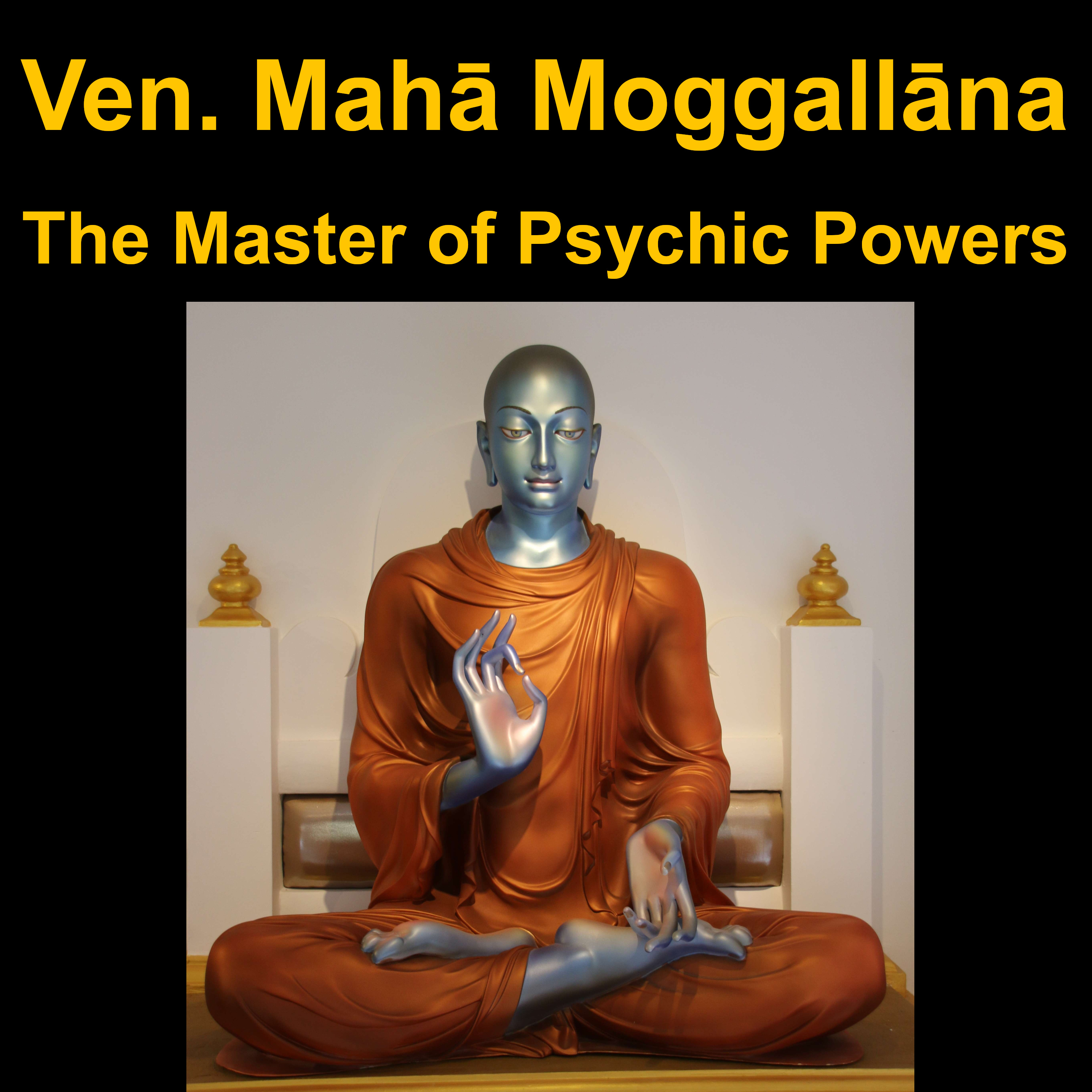
Ven. Maha Moggallana - The Master of Psychic Powers - Great Disciples of the Buddha | Early Buddhism
Jun 1601:09:09Tap to summarizeThe Buddha says that every perfectly awakened one has a pair of monk disciples who are the most outstanding among all the several thousand Arahants (completely liberated disciples). The Buddha calls them "the pair of chief disciples, an excellent pair". For our Buddha the pair of chief disciples were Ven. Sariputta and Ven. Mahamoggallana.This is a Dhamma-Talk recollecting the life and the outstanding qualities of the disciple of the Buddha foremost in psychic powers, Ven. Maha Moggallana. The Buddha is teaching about psychic powers not as something mysterious, but as a part of his knowledge of the causality of the Universe and the citta (heart/mind) that he realized at his awakening. He is teaching how to develop them systematucally as part of his gradual training in Virtue, Samadhi (unification of the citta) and Wisdom. To do so one has to gradually develop the citta to a very high level of purity and peace. If you would like to know what your mind is capable of if you train it systematically - then this talk is for you..."The Great Disciples of the Buddha" Series on YouTube:https://www.youtube.com/playlist?list=PLbxbuMjfRsvyy3PUJe7FdOInpkw_3R8bu"The Life of the Buddha" Series on YouTube:https://www.youtube.com/playlist?list=PLbxbuMjfRsvxKRNGf2OpxFD322oyZzfWk Dhammagiri Forest Hermitage:https://www.dhammagiri.net/newsOur emailNewsletter:https://www.dhammagiri.net/newsletterLatest Photoshttps://latest-pics.dhammagiri.netOur YoutubeChannel:https://www.youtube.com/@dhammatalksatdhammagiri8724
Transcribe →
Great Disciples of the Buddha - Introduction - The benefits of recollecting the Sangha | Meditation | Ajahn Moneyyo
Jun 900:38:16Tap to summarizeThe Buddha was not only perfect in knowledge and conduct and developed supreme purity, compassion, wisdom and liberation but he was also the unsurpassable trainer of trainable people and teacher of gods and humans and as supreme teacher he had the ability to guide others to awakening.Just like the sun is not only bright and radiant only for itself, but also provides the energy for the entire ecosystem of the planet earth and all beings living on it - so too the Buddha didn't realize awakening just for his own benefit but illuminated the life of countless beings and lead them to liberation.During the 45 years when the Buddha was teaching he led several 1000 people to the realization of Arahantship - the highest spiritual attainment and the same liberation that the Buddha himself had realized and he led several 10000 people to the first stage of awakening, after which they were secure to realize the goal in at least 7 more lifetimes (streamentry). Also after the Buddha had passed away already his disciples continued to practice and realize his teaching in the last 2500 years up to the present day.Among all these noble disciples the Buddha mentions 41 monks, 13 nuns and 20 male and female lay disciples as so called "great disciples" with special outstanding qualities and encourages us to emulate them. By recollecting them we can gain a deeper understanding what it means "to practice well", why they are worthy of respect, we can get to know their qualities, follow their example and enter into the stream of Dhamma and become noble disciples ourselves.“Then there is the case where you recollect the Sangha: ‘The Sangha of the Blessed One’s disciples who have practiced well… who have practiced straight-forwardly… who have practiced methodically… who have practiced masterfully—in other words, the four types (of noble disciples) when taken as pairs, the eight when taken as individual types—they are the Sangha of the Blessed One’s disciples: deserving of gifts, deserving of hospitality, deserving of offerings, deserving of respect, the incomparable field of merit for the world.’ At any time when a disciple of the noble ones is recollecting the Sangha, his mind is not overcome with passion, not overcome with aversion, not overcome with delusion. His mind heads straight, based on the Saṅgha. And when the mind is headed straight, the disciple of the noble ones gains a sense of the goal, gains a sense of the Dhamma, gains joy connected with the Dhamma. In one who is joyful, rapture arises. In one whose mind is enraptured, the body grows calm. One whose body is calmed experiences ease. In one at ease, the mind becomes concentrated.“Of one who does this, Mahānāma, it is said: ‘Among those who are out of tune, the disciple of the noble ones dwells in tune; among those who are malicious, he dwells without malice; having entered the stream of Dhamma, he develops the recollection of the Saṅgha.’"- The Buddha in Anguttara Nikaya 11:12"The Great Disciples of the Buddha" Series on YouTube:https://www.youtube.com/playlist?list=PLbxbuMjfRsvyy3PUJe7FdOInpkw_3R8bu"The Life of the Buddha" Series on YouTube:https://www.youtube.com/playlist?list=PLbxbuMjfRsvxKRNGf2OpxFD322oyZzfWk Dhammagiri Forest Hermitage:https://www.dhammagiri.net/newsOur email Newsletter:https://www.dhammagiri.net/newsletterLatest Photoshttps://latest-pics.dhammagiri.netOur Youtube Channel:https://www.youtube.com/@dhammatalksatdhammagiri8724
Transcribe →