← Diabetes Connections | Type 1 Diabetes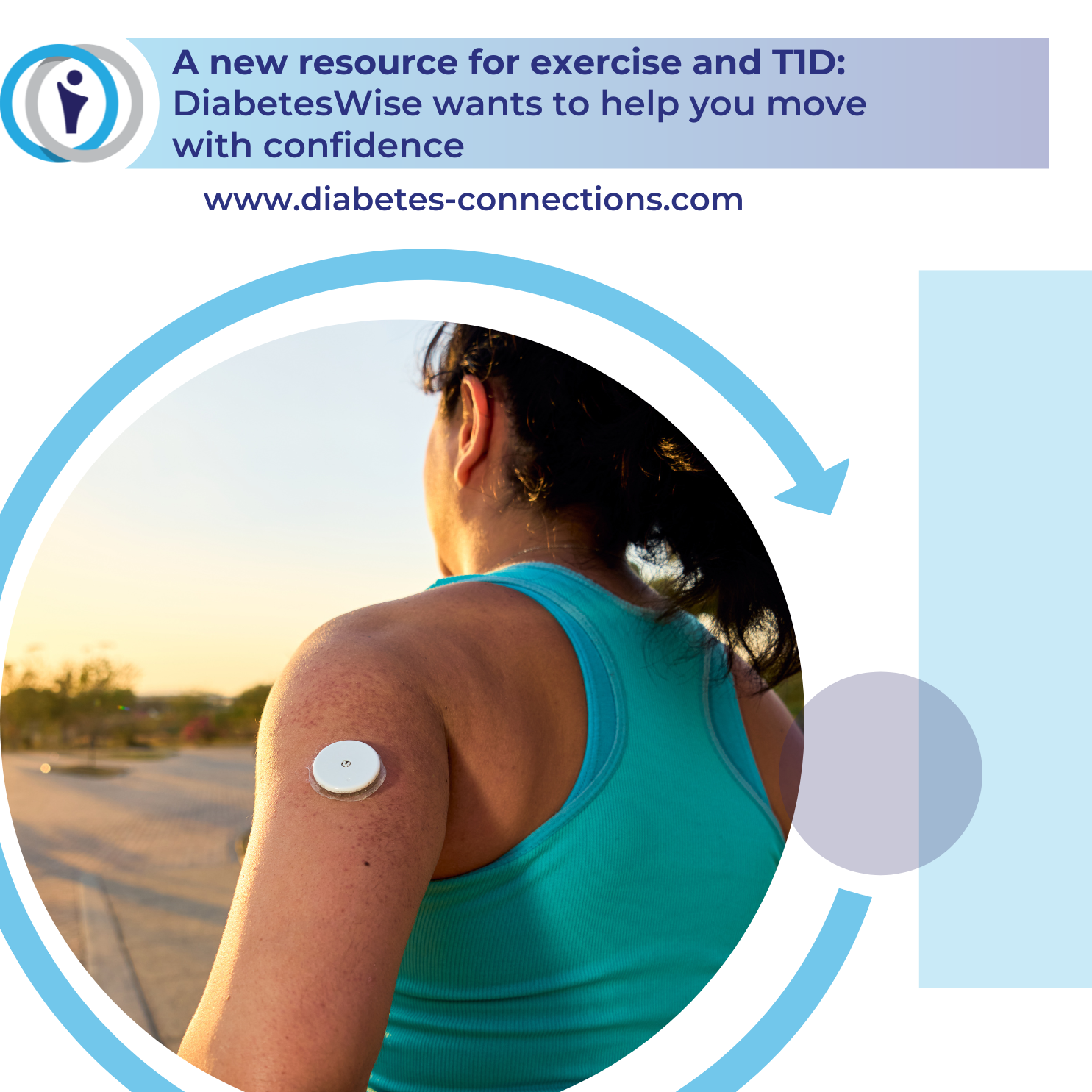
Diabetes Connections | Type 1 Diabetes
A new resource for exercise and T1D: DiabetesWise wants to help you move with confidence
00:32:43
We all know how important exercise is for good health. And we all know how difficult exercise can be with type 1 diabetes. There’s a new resource from some of the smartest people in our community. The folks at are adding exercise to their platform,...
Loading summary
Transcript50 lines
- [00:01]
A
Support for this episode comes from Omnipod. Did you know all the sounds used to make that song come from a sight? Change with the Omnipod 5 automated insulin delivery system Pretty cool, huh? With Omnipod 5 pump site changes are simple. The pod lasts up to 3 days, 72 hours, and to change it, you just fill up the pod with insulin, place it on your body, tap a few buttons in the Omnipod Omnipod 5 app, and you're ready to go. There's no tubing to prime like with traditional insulin pumps, and it's virtually pain free, so you never have to see or handle the insertion needle. Want to try Omnipod 5 for yourself? Request a free Omnipod 5 starter kit today by visiting omnipod.com diabetesconnections Terms and conditions apply. Eligibility may vary.
- [00:55]
B
Did you hear the pod drop.
- [01:01]
A
This week on Diabetes Connections we all know how important exercise is for good health. And we all know how difficult exercise can be with Type one. There's a new resource from some of the smartest people in our community. The folks at Diabetes Wise are adding exercise to their platform, which already has community and expertly sourced information on devices. We're talking to the folks behind this move about what problems they want to solve, what you can find on the site and how to use it, and how they manage their T1D while they work out. This podcast is not intended as medical advice. If you have those kinds of questions, please contact your healthcare provider. Welcome to another week of Diabetes Connections. I am your host Stacey Sims. You know we aim to educate and inspire about diabetes with a focus on people who use insulin. We are getting ready for Mom's Night Out Phoenix. As this episode goes live, traveling there the last Mom's Night out event of 2025 and I'll give you a little behind the scenes. I only wanted to do three Mom's Night out events this year. I just feel like man we are always running. They're wonderful, they're all great. But it's hard to do four events but my husband Slade convinced me to do the fourth one in Phoenix so that we would then take a golf vacation to follow. So as of right now I do plan on having an episode next week, but I will be on vacation. We thought this would be our last overall event of the year, but we have added some other in person events. Club 1921 is a new dinner program we're doing for the diabetes community for caregivers and adults with type one. Our next event for that is November 13th here in Charlotte and I hope to be announcing more dates for 2026 in different cities. So it looks like next year is going to be even busier than this one. I tried to back off and somehow the result is more stuff seems to be the story of Diabetes Connections since we started in 2015. I also want to tell you a quick story and it has a lot to do with 2015. I put this out on social media, but in case you missed it, the Diabetes Connections app is going away. You didn't know we had an app. Nobody knows we have an app. And that is because I haven't done anything with the app since probably 2016. And it just shows you how much the space has changed. When I launched this podcast more than 10 years ago, there was a big debate in the community about how to tell people where to find your show. It is so hard to believe, but still, in 2015, people really didn't know much about podcasting. I would get asked all the time, where do I find it? I'm not sure I want to watch your show. And this is. Well before video was even an element of podcasting, many more people were listening on the website than on any apps. Apple had just made the podcast a native app. You know, it came with the phone before 2014, maybe 2013. I want to say, you know, you had to go searching for it and get it in the app store. So podcasting has obviously changed a lot. But back then the big advice was everybody knows how to find an app, but not everybody knows how to find a podcast. So it's a great idea to get an app. And that way when people say, where can I get your podcast? You say, oh, just get the app. Well, now here we are in 2026. I don't know about you, you know, how many apps do you have on your phone? You don't want another one. Nobody wants another app if they don't have to have one. And my podcast hosting service is now discontinuing hosting standalone podcast apps. So mine has been available for a long time, but I don't think you can actually download it. I mean, I still have it on my phone just cause it's fun to look at. But if I try to update it, you know, you get one of those messages that it's not supported or there's no data. So if you're still listening somehow through the Diabetes Connections podcast app, I'm really sorry to tell you that it is going away. So you'll have to switch over to Apple, Spotify, Overcast, YouTube. We're everywhere you can find podcasts. That's where we are. And you can always listen@diabetes-connections.com if you're still using the app somehow. I would love to hear from you stacy@diabetes-connections.com or there's a way in the app to contact me too, so check that out. Okay, let's talk about Diabetes Wise. This is a wonderful website. If you've never been there, please visit it today. They say they are built by and for people living with diabetes. I've been following them since the beginning. They launched almost six years ago, I think, and at the time I called them kind of a consumer Reports for diabetes tech. But they have added so much more. There's information for healthcare providers, there's information about insurance, and now there's information about exercise with type 1 diabetes. You're going to hear from two fantastic members of the Diabetes Wise team. They both live with type one Dr. Corey Hood, Stanford University School of Medicine. He's a professor and a psychologist and Dr. Desi Zaharyeva, also Stanford University School of Medicine and certified exercise Physiologist. As you may have guessed, Diabetes Wise is an initiative from the Stanford University School of Medicine and people living with Type one, and it is supported by the Helmsley Charitable Trust. It's a 501c3 nonprofit organization and my conversation with Corey and Desi is coming up right after this. When I think about our family's use of CGM and Dexcom, it's getting harder and harder to remember how we did things before. I mean, how did we manage when Benny needed something like ten finger sticks a day when he was a toddler? We thought it was amazing to switch to Dexcom cgm. It needed to be calibrated twice a day. Remember that. Now Dexcom G6 eliminates finger sticks for calibration and diabetes treatment decisions. We love the alerts and alarms and that we can change them both for him and for us. A lot has changed as Benny has grown from a toddler with Type one to a college student. Dexcom share and Follow has let us help give him more and more independence. If your glucose alerts and readings from the G6 do not match symptoms or expectations, use a blood glucose meter to make diabetes treatment decisions. Learn more go to diabetes-connections.com and click on the Dexcom logo. Corey and Desi, welcome to Diabetes Connections. Thanks for being here.
- [07:05]
C
Thanks for having us.
- [07:07]
B
Yeah, it's great to be here.
- [07:08]
A
I think listeners are probably familiar with you, Corey, but would you mind? First, let's I'm gonna ask you both, tell me a little bit about your background and a little bit about yourselves when it comes to diabetes and diabetes whys and cori start with you.
- [07:20]
B
Yeah, sure. So again, thanks for having us. And I'm a clinical and health psychologist and I'm a professor at Stanford University. I also have type 1 diabetes and we created diabetes wise. It's going on six years now and each iteration of it has included some new things, but we've always been interested in giving people better understanding of the options for different devices and technologies. And one of the latest iterations and additions is what Desi is going to talk about is with exercise.
- [07:51]
A
And Desi, before we jump in, give me a little bit about you. Yeah.
- [07:54]
C
Thanks, Stacey, for having us. My name is Desi Zaharyeva. I am an instructor and exercise physiologist and diabetes educator at Stanford, working in pediatrics. I've also been living with type 1 diabetes for over 28 years myself. And so a lot of my passion stems from personal challenges. Growing up and doing exercise and seeing firsthand a lot of those difficulties of how to manage blood sugars around activity. And so part of partnering together and working on this grant with Corey, which has been a lot of fun, has just been to build out more of the exercise resources on the Diabetes Wise website. We see so many benefits of the website before there was exercise integrated and I just thought that is still one of the greatest challenges is how to navigate blood sugar management with activity. And so we started to incorporate all of these different pages and try to simplify some of these patient facing documents.
- [08:48]
A
Let's talk about exercise and how difficult it is and what you're trying to solve for here. I know we could probably spend the entire interview talking about the challenges of type 1 and exercise, but pretty high level, what are you trying to solve here?
- [08:59]
C
Yeah, so I would say one of the greatest challenges is really that each type, intensity and duration of exercise can cause different glucose responses. And those are a couple of the factors that we have to think about, but really how much insulin we took and when you last ate and what you're going to be doing. And there's just so many factors that can impact glucose responses to exercise. And this is one of the greatest challenges is, is how do you account for all of these factors and variables, even when you think you've accounted for them? Sometimes just the way that you're feeling that day and the stress and you know, there's just so many different factors that can change glucose responses day to day between a person and within people as well. So those are some of the greatest challenges that we still try to navigate. But I would say one of the biggest ones really does have to do with just the different types and intensities of exercise. They can cause very drastic changes to glucose responses.
- [09:51]
A
I'm going to put you both on the spot. I'll start with you, Desi. In your lives, what kind of exercise do you do and how, you know, what are the problems that come up with diabetes? I've spoken very openly before about, you know, my son played baseball as a kid, which is a great sport for diabetes because there's lots of breaks. And then he decided to wrestle, which is disgusting and a nightmare. Whether you have type one or not. Obviously I'm not knocking wrestling. It's wonderful, but it's, it's tough to keep devices on, let alone, you know, the activity and everything else. I'm curious just before we jump into the, the website, like personal story stuff, Desi, can you start with what does this mean to you?
- [10:26]
C
You may not know this, but you'll find it kind of funny is that my background is actually martial arts. So, so, you know, I, I know very well, firsthand experience. I've competed in mixed martial arts, just various types of martial arts, from taekwondo, which is what I grew up doing, to wrestling, to kickboxing, to Brazilian Jiu jitsu, which I do now. And like you said, one of the greatest challenges is not only the type of activity that is, but the contact and just keeping devices on has always been a really big struggle in this type of sport.
- [10:58]
A
Yeah, I, I, I say disgusting. What I'm really referring to is the drive home in the minivan after. Excuse me, apologies. Corey, how about you?
- [11:07]
B
No, I, you know, I think that the, I may share some of those experiences with, you know, in terms of trying to figure out ways to have all the diabetes devices on and to know what you're doing in, in contact and non contact sports. I mean, I think that what I do on a pretty regular basis are kind of the high intensity classes just to get some exercise in. But I do running, skiing, occasionally in the water. I just like to stay active. And then, you know, the other part is I live in San Francisco and so there are plenty of times I just like to walk and I may walk two or three miles just around the city. And even those kind of situations I think present some challenges, you know. Okay, I've got to take extra stuff I've got to think about. Okay, I'm going to Put my control IQ system into. Into exercise mode. I'm going to have to grab this. I'm going to do a route that at least has a place where I know has a Gatorade if I need to buy something. So it's kind of all of those things, even on kind of a. A pretty. It should be a pretty simple level of exercise, but it. It always becomes pretty complicated.
- [12:12]
A
Yeah. So diabetes Wise, as you said, has been around for several years now, and I think most people who are familiar with it think about it as a way to help you figure out devices. Desi, tell me how you're incorporating exercise here.
- [12:25]
C
Well, I think the two things kind of go hand in hand, is that we see a lot more people using technology now. And the question is, how do you use those devices around exercise? Not to knock on, you know, technology, but I will always say that these devices were created to work well at rest. They were not intentionally designed to work well during exercise. And, you know, for me, living with type 1 diabetes myself, knowing that again firsthand, some of these devices really do struggle around activity, Whether it's keeping those devices on and being able to wear them and make sure they work or just the accuracy of how these devices work. When you start to sweat and increase your heart rate and blood flow, it can impact the accuracy of some of the devices, like the continuous glucose monitoring systems. And so we really haven't had a place where people can go and to learn about how do you use that technology around exercise? And are there different tips and tricks we need to learn? Are there different glues and tapes that we can help keep these devices on? And what do we do for different types of activities that often, you know, there isn't much research on? So we just came together as a group and decided to start putting these pages together on Diabetes Wives and created a whole separate header on exercise and sort of integrated that technology piece with activity.
- [13:41]
B
You know, I think that the other part of it and why it kind of fits nicely with Diabetes Wives, is that when we created Diabetes Wives, we were really aiming for kind of every person with diabetes and thinking about, you know, what are gonna be options if this is the way that you're thinking about using devices and technologies. Do you just want it for information? Do you want it to be able to do something? And so we tried to have a platform where really anybody could get good information and also, if they weren't on devices and thought it might be a good thing, how to advocate for themselves. And. And so what I think and Desi would be able to speak to this better than I could. But, you know, in my own experience, you know, looking at the available resources for exercise on the Internet, it's, you know, often it's for elite athletes, it's for people who are doing really, really intense, amazing things. But it sometimes is a little bit hard to find the exercise information for kind of every person. And so I think that we were also thinking about this as a good platform to where the resources could be located in a place that's like diabetes wise. But also, if you look at the site, you know, you'll see we're trying to give people connections to devices and technologies, no matter what they're doing like that walk around the block all the way to scuba diving and other things like that. So we're trying to kind of hit all of those pieces.
- [15:04]
A
So is the goal here to help people choose better devices for their activity, or is it to use the devices they have to have better experiences during those activities?
- [15:17]
C
I will say that it's both. And actually a third part of that is actually fear of hypoglycemia remains the leading barrier in pediatrics and adults in type 1 diabetes. And we know that one of those barriers around exercise can be just the challenge of using these devices. And some people may choose to be on injections, and we really want to meet people where they're at. So part of this has also been if people are unsure sort of what devices may work for them, maybe they've taken a break from certain types of technology. These people, like everyone with diabetes, really should be focusing on integrating exercise into their daily lives. And that fear can be a really large barrier of hypoglycemia. So we try to just find strategies and ways to encourage physical activity for everyone, Meeting people where they're at, but also trying to encourage just movement, whether it's just getting some extra steps in per day or people that are gonna push the limits like doing things like scuba diving or doing other types of activities that may not be your everyday norm.
- [16:21]
A
Where does the information come from? What information did you use? Is it community based? Is it research based? All the above.
- [16:29]
C
Great question. It's a bit of both. And so depending on what we have evidence based literature on, we will always integrate that. First and foremost. It's important for us. For me, I'm really grateful that I've been involved in many of the exercise position statements and consensus guidelines. So we integrate some of that evidence based literature into the guidance that we provide on diabetes wise. But what we often say is that these 20 page PDF documents, very long, you know, and not the easiest to always interpret. We try to create more lay language around basically just these guidelines. And in addition, some of these like we have pages on kids under 5 or older, adults over 65 and both of those kind of groups of people. There is far less literature published in type 1 diabetes and those populations. At which point we do reach out to the community and we find out what kind of challenges and what advice do people have. And we want to be able to support all different communities and also raise awareness that more research is needed in certain areas.
- [17:32]
A
So to be clear, if I'm the parent of a five year old who's just getting into soccer for the first time, and you know, five year old soccer is not real soccer. I don't even know if that's a sport. It's just kids running like wild or if you're somebody who, as you mentioned, maybe you're over the age of 60 or 65 and you want to do weekend softball or you want to start hiking. Both of those groups, they could all get information here.
- [17:55]
C
Yes, everything's kind of on Diabetes Wise. We're also always looking to share more information. So although some sections may not have as much and that's just because the lack of literature, we try to make sure that we include what the people want to see. So we do reach out to the community and, and ask what is missing and what would you like to see on Diabetes wise? And it really is a community based website. We focus on what people want to see and we help to build out those resources.
- [18:21]
A
All right, kind of a loaded question here. When I was asking about the information that's here, I was really careful to say, so people can have the best experience. I didn't say so people can have the best blood sugars or so that people can have the most in range blood sugars or so that people can find the best device. Cause I got to tell you, if there was one best device, I think everybody would be using it. Do you think about it in those terms or do you think about it as finding the best device, getting the most tight time and range? What do you want people to get out of this?
- [18:47]
B
So, I mean, I think the short answer is no. We're, we're not focused on getting people in tighter time and range. If that's one of their goals, then there's information there for you. Our goal is to, like we talked about, is to give people the best experience and to get people moving. And there's Relevance for people. Obviously, we've been talking a lot about type 1 diabetes. There's relevance for people who are on insulin and have type 2 diabetes or so I think that the, the tools there can really be helpful to one, get people moving and to two, feel like the performance, your performance during that, you know, exercise or that walk was okay and that you're going to be likely to do it again. I mean, that's really what we're aiming for, to kind of initiate it, get people, you know, there and then to stick with it. But Desi, I don't know if you have different thoughts on it or I'm.
- [19:41]
C
Yeah, very much in agreement. And I think this has always been the fun part about working together with Corey and the team is that we really do see eye to eye, is that the goal is never about. We don't like to say perfect blood sugars. That's an unrealistic expectation. In reality, even at rest, that can be challenging. Meals can cause disruptions. Exercise can cause disruptions to glycemia. Really, we want to provide resources and support for all of these challenges to make sure that people can find some joy and some happiness in the activity that they're doing. We know that many people aren't meeting exercise guidelines at baseline. And so with diabetes, that just adds so many more challenges. And we really just try to find, you know, ways to encourage movement and to do that safely. Of course, we do offer guidance on keeping glucose levels in a more stable glucose range, but that's not our primary focus. It really is to just talk about often things that are not discussed, like how do we keep these devices on and what happens with devices in the water or with special circumstances of doing long distance events. All of these kind of situations where you may not have time to see your provider every week, but you have time to go to the website and check out the new resources that we're always putting on there. So really just to encourage activity, have.
- [20:58]
A
Either one of you learned something from the research that's in Diabetes Wise or diabetes Wise itself? Have either of you learned anything that you've incorporated into your exercise routines?
- [21:09]
B
One thing that I've done, it seems such a, like a simple basic thing is it's just always carrying glucagon with me. I didn't consistently do that for probably like the last 20 years. And then in the last couple as we've been working on this and I haven't had to use it, but it's this, I think it's served this. Like, for me, it's served two things. One is a little bit of a safety net, but then it helps with this worry about, and Desi talked about this earlier, the fear of hypoglycemia. It kind of allows me to put it on a little bit of a shelf while I'm exercising because I know that that kind of rescue is there if I really needed it. And so I think that it's allowed me to be a little bit more present and enjoy some of the activities that I'm doing. And it's such a simple thing. And. And I think now with screaming and like other ones that you can kind of a little that are much easier to administer if you need to, then, you know, it's kind of nice to just have it in your pocket and feel better about it.
- [22:11]
C
For me, I'm always learning from the community. I think one of my favorite parts is that having diabetes for over 28 years, you don't know everything. I think every day is a new day to learn something from the community. And part of that has been really fun because on Diabetes Wise, which I'm not sure if it's maybe too soon to jump in, but we've also created Diabetes Wiser, which is our online community forum. And on there, we host events once a month, and we have different speakers that come and attend, and we get to talk about different topics related to exercise. And it's been really enjoyable to have the community come together because I'm always learning about how people use maybe different low snacks or what they like to use during exercise, or my body, for example, I used to get rashes with certain types of tapes that I would use, and it would be really frustrating and have just found all of these different devices that people have used, whether it's, you know, 3D printouts that can go to protect your continuous glucose monitoring system, or a different type of tape that causes less irritation to somebody's skin. And we're always, again, being a neutral and unbiased platform, we're not sponsored by any of these companies. It's been really great to sort of learn what's out there. There's always something new, and these new companies come out with new devices and new tapes and glues. And so I'm always learning from the community about what's something I can try, whether it's wearing a pump in the water with a waterproof case or whether it's just having a different piece of tape on my skin to keep my devices on.
- [23:39]
A
Desi, what did wind up working for you? As we said, Everybody's skin is different. But I'm really curious.
- [23:43]
C
Yeah, so for me I used to get kind of, you know, either with the amount of sweating that happens with martial arts and, you know, from wrestling and that kind of, you know, very, very active sport, my device is just never stuck on, even if I put tape on it. And really for me I just found like Skin Grip is one of, one of the companies that works really well for me. They have different cutouts and different types of tapes. And um, you know, that's just one of the tapes that has worked really well for me and certain companies too. I find it really fun. You could get like a free sample. And so we always try to encourage the community to reach out and try to get. If you're not sure about buying a whole pack because that could be expensive, you could sometimes get just one sample sent to your house. And it's often just reaching out to the company to see if they're willing to do that. And Skin Grip is one that has done that for me. So it's just really great to be able to try it out. Before you really commit to using one device or one, you know, tape for.
- [24:33]
A
Forever, I wonder if there's somebody that you can think of that. I imagine there's quite a few people who weren't exercising at all or maybe they were exercising before their type 1 diagnosis and then got so nervous that they didn't want to do it at all. I imagine there's some people on Diabetes Wiser who have kind of figured it out and are taking those first steps.
- [24:52]
C
That is definitely our hope. You know, part of this community forum is that's a little bit different than some of the other sort of existing platforms is we do moderate it and we make sure that it's sort of backed by science and that's something that we really want to encourage people to go and ask all of their questions. And we're not the type to really just like, you know, make sure we moderate every single question and kick somebody out of a chat. We want it to be a safe space for people to come and ask the questions that they have. And a lot of that might be around how to do something when it comes to activity or they often will talk about their challenges. Um, and so that's been a really fun opportunity for us to welcome the community, to be able to, to really learn from each other and also to jump in and provide some, you know, evidence based guidance as well when we can.
- [25:37]
A
Benny was diagnosed almost 19 years ago now and I still have Moments where I'm living my life, I don't have diabetes, you know, not thinking about it. And then all of a sudden I'll think, wow, what would I do differently if I had type one, you know, in an exercise class? I just thought about that the other day. Cause Benny was going to the gym and I was going to a different gym and I was like, wow, he's. I mean, he's 20 and he's doing great, but he does not think about it as much as I would like him to. But I was thinking, like, what would I do differently in my class? Because it's, it's cardio and weights. So I'm like, oh, this would be difficult to navigate. You know, I, I just. You gotta understand, we moms, we, we're. We get a little goofy sometimes. But there is so much. Yeah, there's so much to think about.
- [26:19]
C
I just wanted to jump in about this one point which you just made about what do you do when you don't necessarily plan and whether it's your son or in this case, like sometimes just a certain type of personality. You've either got the people that are really pre planners and we've got some guidance around, you know, tips and tricks that you can do if you are that type of personality, to plan ahead. But we also provide some guidance on if you're not a pre planner and you're sort of a spontaneous type of exerciser, maybe, you know, requiring a little bit more carb feeding and more frequent carb snacks. And we do try to provide guidance for different personalities as well, because we know that we can't expect everybody to plan ahead and be thinking two hours in advance of exercise. We definitely understand those challenges.
- [27:03]
B
And I think that just to add on to that, it's such a great point because I think the last thing, the last time I was spontaneous about exercise was like 28 years ago. So, so it is, it's a really tough thing to do. But I think the other thing that we add on to everything Desi mentioned is also that we try and help people understand it's okay if your blood sugar is a little bit in this kind of range during this spontaneous activity. And here are the things that you want to do after so that you can bring your, you know, your numbers back into range. And so we're trying to, if you're going to be spontaneous about it, if you're going to do something last minute, you also have to be somewhat flexible or accepting of some kind of blood sugar swings. And so what do you do about that? Because it's going to happen. It might happen, but I think that a lot of what, when we think about Diabetes wise generally, and then also with the exercise piece, you know, we've got kind of two anchored pieces. The one is, you know, the technical information, all the great support, the evidence, everything like that. And then a lot of these. These kind of stories and the wisdom and the experiences from the community, and we try and put those together. And I think we've done a nice job with it with the exercise piece, and we're just continuing to work on that.
- [28:17]
A
Is there a section for high school sports on college sports or would that be just incorporated into other parts of the website?
- [28:25]
C
We don't actually have anything specific to high school sports, but I think the fun part about this is we always take kind of feedback of do people want to see? And is that something that we can work on building out? I think right now, you know, we're building out some, you know, CGM interference and what happens if your c. If your CGM is not working during activity and how can you improve it? If there is something that we could add about high school sports, and we absolutely could consider that this is where the fun part about Diabetes wise is. We take all of the feedback and we work on building out new materials based on what the community wants to see.
- [28:59]
A
I could just see this as a resource for coaches, right. If a parent wanted to say, hey, this would be a great place for you to go and get a little better educated about what we're all dealing with with Type one. So I don't know.
- [29:10]
C
One thing that we are working on right now is actually building out some resources for coaches and teachers on stigma and sport. And so that's something we hope to put on the website very soon. And we're working with some colleagues destigmatize, to actually put some of those resources online on diabetes wise as well.
- [29:26]
A
Oh, fantastic. Keep me posted.
- [29:27]
B
The only thing I want to add is that we've had funding from the Helmsley Charitable Trust to build this and some of the work that that went on before that. And Desi mentioned this as we went along, but one of the great things about their support is it's allowed us to be, you know, neutral in many ways. I mean, we're biased that we want people moving and we think that devices and technologies can help, but we don't care what you do. We just want you to have a better experience. And so I think the support from Helmsley has allowed us to do that. And to create this kind of website in that way without feeling kind of tethered to certain manufacturers or companies or things like that. So we're really fortunate to have their support.
- [30:09]
A
And Corey, after all this time, six years plus with Diabetes Wise, are you still excited about it?
- [30:14]
B
Yeah, this is the most exciting part of my daily job. So it's great working on this.
- [30:19]
C
Yeah, yeah, this is awesome. I just think that, you know, for me, I knew about Diabetes Wise before Corey and I started working together and that's kind of where I saw this could be something additional that we add to the site and just selfishly to put in a little plug. But we're constantly looking at kind of the analytics and what can we do more of? And we've seen every time we're adding new content, there is often an uptick in the, you know, the amount of people that visit the website. And we try to see like, where can we add more and you know, what can we update on the website. And again, Helmsley has been really great in allowing us the chance to just add the resources that we think are necessary. And that flexibility has been really fun for us because we get to be really creative. We get to add new materials all the time. We always have sort of a pipeline and all these resources that we're going to be adding in the coming months. And so we're just really excited about that. It's not something that sort of stands still and stops. It's just constantly being updated and always new information being added.
- [31:16]
A
Very cool. Well, Corey and Desi, thank you so much for joining me today. We'll link up all the information, get everybody over there, get everybody moving, whatever their sport of choice, even wrestling. God. Anyway, but thank you so much for being here.
- [31:29]
C
Thanks for having us.
- [31:36]
A
More information on Diabetes Wise and I'm telling you, you really should check it out. Go to diabetes-connections.com I'd love to hear what you think they would love to hear what you think they really would like to hear more. As you said, they are always looking to add to the community based information. So please help them out. And as I said at the beginning, if you're still using the Diabetes Connections standalone app, please be ready to listen somewhere else. Boy, I really hope somebody's out there on like an iPhone. I don't even know what model, like an old iPhone with, with their old apps that they just refused to update. And I hope they've got mine from 2017. Let me know. All right. But make sure you do have a backup because it is going away. Thanks to my editor, John Buchenis, from Audio Editing Solutions. Thank you so much for listening. I'm Stacey Sims. I'll see you back here soon. Until then, be kind to yourself. Diabetes Connections is a production of Stacy Sims Media. All rights reserved.
- [32:34]
C
All wrongs avenged.