← Fame Under Fire: The Tupac Murder Trial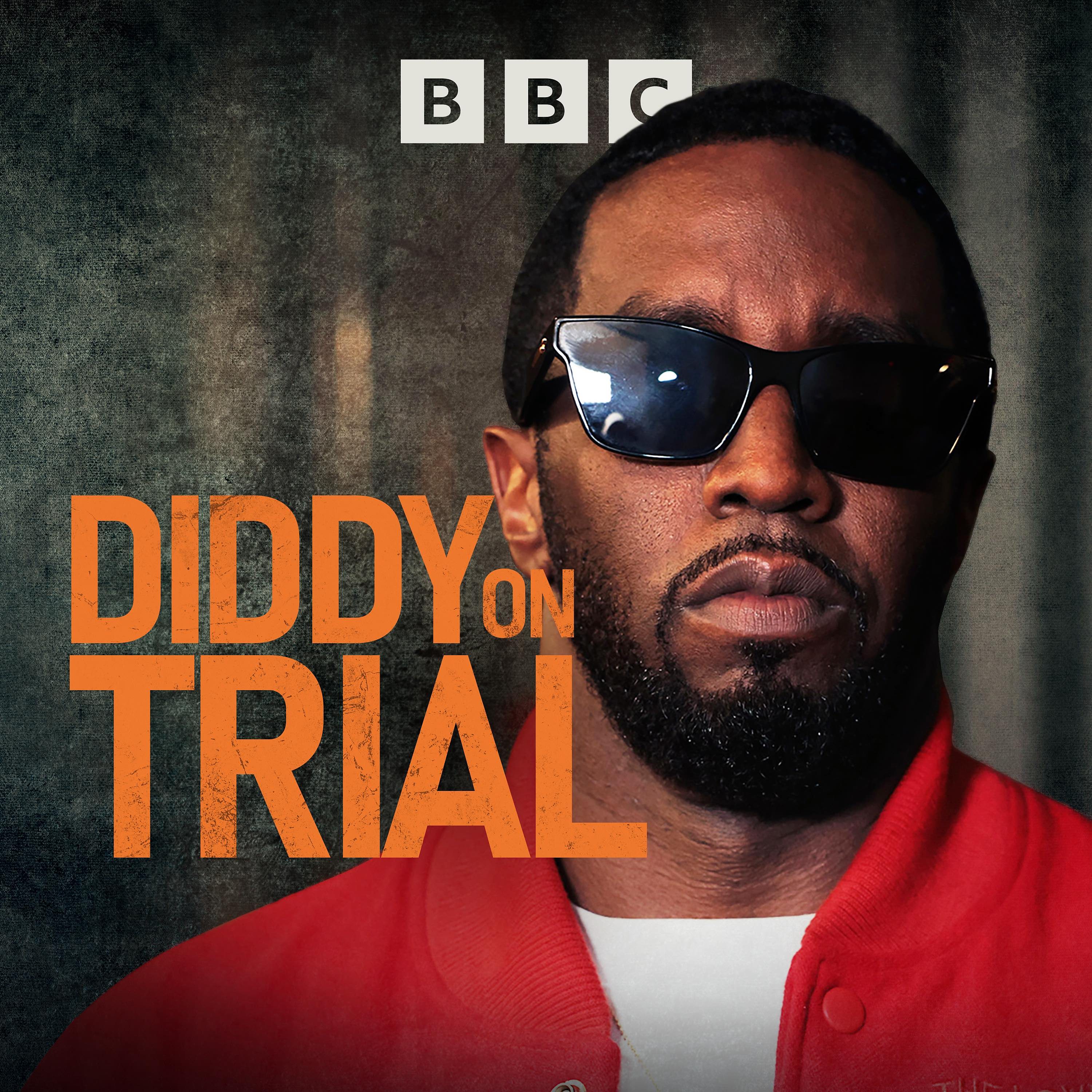
Fame Under Fire: The Tupac Murder Trial
Diddy bail hearing gets heated
00:23:24
Bail hearing for Diddy after his conviction for transportation for prostitution
Loading summary
Transcript78 lines
- [00:00]
Anushka Matanda Doughty
This BBC podcast is supported by ads.
- [00:03]
Sean Kemp
Outside the uk BBC Sounds Music Radio podcasts. Hello and welcome back to Diddy on Trial from BBC Sounds with me, Anushka Matana Doughty. Now, for the past eight weeks I've been here at the Southern District of New York court here in New York watching this trial and giving you the updates. You've been with us since last November when we were covering cities civil cases. Remember, those are concerned with Diddy's money, compensation for alleged acts or cognizable damages. We followed every twist and turn of this case and every released and unreleased Yay song where he's sampling Diddy's kids or Diddy himself. Now, inside that courtroom, we've had seven weeks of evidence from the prosecution. They called to the stand Cassie Ventura, who was in an 11 year relationship with Diddy Jane, who's using a pseudonym to protect her identity. Both of those women testified to alleged years of abuse. They say they were forced to participate in sexual performances we've come to know as freak offs or wild king nights or hotel nights. We also heard about bombshell balcony dangling allegations. We heard about alleged bribery. We heard about distribution of drugs. We heard about alleged arson with Kid Cudi's car. Now, what the prosecution were trying to do is meet the burden of proof to convince those 12 everyday Americans who made up the jury that Diddy had committed these crimes. The defense, well, they only presented a defense for 30 minutes. They showed some texts that were loving between Cassie and Diddy and Diddy and Jane. Texts where Cassie and Jane were expressing that they were sexually aroused by freak offs or hotel nights. In their closing arguments, they spoke about Diddy and as a philanthropic figure, as a black mogul, as someone who beat the odds and made a name for himself. Now, what they were trying to do is pick holes in the prosecution's argument. And today the verdict is out. It is not guilty. On count one, racketeering with conspiracy, that's the big one. That's where he was facing life in prison. It is not guilty. On count two, that is sex trafficking in relation to Cassie Ventura, his former romantic partner. It is guilty. On count three, transportation for prostitution in relation to Cassie. It is not guilty. On count four, sex trafficking in relation to Jane, who's using a pseudonym to protect her identity. It is guilty. On count five, transportation for prostitution involving Jane. Now, when it was read out in the courtroom, Diddy kept his head down. There wasn't much emotion from him. But afterwards he got on his knees, he put his head in the chair in front of him and he began to pray while his defense lawyers patted him on the back. They were high fiving and hugging each other. Make no mistake, although he is guilty on two counts, the transportation for prostitution counts, this is a victory for Diddy's defense team. Them getting him acquitted of the biggest counts, racketeering, that is a huge accusation. Him being acquitted of that and sex trafficking is a massive victory for them. And that was reflected in their celebration. The children were clapping. I saw them afterwards. They were dancing down the hallway. His son was skipping. They were high fiving. His mum gave a thumbs up to the press. And outside the courtroom here when the verdict was announced, they were cheering in the overflow room and they were cheering in the main courtroom as well. It's safe to say that a lot of people are very happy with how this has turned out across social media. I can see a lot of people are quite shocked. Some people are celebrating, some people are waiting to see if he's going to walk out of that courtroom today. And that is a possibility. So we're going to head back inside now and see what the judge has to say.
- [03:20]
Sakshi Venkatraman
It's 6:25.
- [03:21]
Sean Kemp
We're done for the day.
- [03:22]
Sakshi Venkatraman
In court, Judge Arun Subramaniam has made his decision about bail. I'm here with the BBC's New York digital reporter, Sakshi Venkatraman. Hi, Sakshi.
- [03:30]
Marco Ignifolo
Hi, Anushka. Thanks for having me back after this insane day in court.
- [03:34]
Sakshi Venkatraman
I'll say we will need to put our feet up and go to the bar, but we're not done yet because we need to tell everybody about what was the second big decision of the day. Will Diddy remain incarcerated until. Until his sentencing? So sentencing doesn't happen immediately. What did the judge decide?
- [03:48]
Marco Ignifolo
The judge has denied Diddy Bill, even after pleas from the defense to consider that he's been a model prisoner, that he should be released to his family. The prosecutors in the defense got into it today and we'll talk more about that, obviously. But the headline from today is that Diddy was denied bail. He will not be coming home. Yeah.
- [04:07]
Sakshi Venkatraman
And then Marco Knifolo, Diddy's lead counsel, making a very impassioned sort of running speech which went on for quite some time, which he did recognize about the many reasons why Diddy should receive bail and why there is a precedent for that, citing multiple case laws and saying even the thing he's been convicted of under the Mann Act, I mean, he wasn't transporting people for the purposes of prostitution to make a profit, which is usually what we see this was for participation. He cited one prominent case from 2008 where a US sitting governor was using prostitutes and did not even receive charges. So he was saying this is a unique case and the judge should make a unique decision that recognizes that. But once again, again, the judge fleshed out his decisions and his decision making process, and it has to do with some of the stuff that defense argued during the trial.
- [04:55]
Marco Ignifolo
So the biggest reason that Judge Arun Subrabanyan cited for not giving Diddy bail and letting him go today was that Diddy clearly has a history of violence. The defense has said this out right from the beginning. They said this in opening statements that if this was a trial about domestic violence, we would not be here. They repeated this throughout the trial. Two closing statements saying that, you know, what happened to Cassie Ventura was domestic violence. Agnifolo said very clearly in closing statements, we own that. And Judge Arun Subramanian quoted him and brought these things up, saying, even citing the Intercontinental Hotel video where, you know, you can see Diddy beating Cassie and dragging her down the hallway, saying that this is a man with a history of violence. The judge said domestic violence is violence and it would be a risk to allow him to go.
- [05:40]
Sakshi Venkatraman
Yeah. And he said, there's no way to police that type of violence because it's interpersonal. It's behind closed doors. So speaking to the specific type of violence that Diddy and his defense lawyers have owned up to, using their words against him now, what was the reaction from the rest of the family?
- [05:55]
Marco Ignifolo
So the family, it was kind of hard to read their expressions. But earlier in the day, the family obviously was jubilant given the news about him being acquitted on the more serious charges that he was facing. But the bail being denied was definitely a setback, and you could see that on their faces.
- [06:11]
Sakshi Venkatraman
And I have to say that to the two of his daughters who were the twins, who people might know, they're 18 or 19 years old, they lost their mother, Kim Porter, and Diddy's been in jail. And Markagniflo pointed to them during this impassioned speech and said, look, they don't have a parent. Those are significant circumstances. But the judge said, you know, that is a personal argument, and that just doesn't meet the bar.
- [06:32]
Marco Ignifolo
Igno said, I don't want to pull on heartstrings when I shouldn't. But then he did talk about Combs children. He said that Combs is a changed man. He's not the person that he was when he was filmed beating up Cassie in The hallway of that hotel, Igno said that he's been to a domestic violence program before the federal investigation even started. And to that, the judge cited that Combs violence actually has been going on up until very recently. During the course of the trial, we heard from Jane, who said that in June of 2024, which was just before he was arrested for federal charges, he was being violent with her.
- [07:10]
Sean Kemp
Yeah.
- [07:10]
Sakshi Venkatraman
And the prosecution then also expanded on that saying even after he knew he was being investigated, he continued with the criminal conduct. And when he was arrested in the hotel he was in, he had supplies with him for free coughs. And remember, free coughs is where this transportation for prostitution was taking place that he was convict of under the man Act. And Maureen Comey got up from the prosecution and said, the only thing that are significant about this defendant is his wealth, his success, and his brazenness. And then spoke about that specific instance of violence in 2024 with Jane and saying that he, even under investigation, he continued doing this, and that is brazen. But Mark Igniflo came with a response to that pretty quick.
- [07:46]
Marco Ignifolo
He did. He said, listening to Ms. Comey makes me appreciate that we have juries.
- [07:51]
Sakshi Venkatraman
Sakshi, me and you. This is both our first trial that we've covered. Seven weeks inside that courtroom with the family, with his mom in the canteen, with the lawyers, with the influencers, with the journalists. What's the standout moment for you?
- [08:04]
Marco Ignifolo
I mean, I think that something that a lot of people in that courtroom would be hard pressed to forget is the image of Cassie Ventura, nine months pregnant, on the stand, sobbing and just breaking down. It was a moment that I don't think will ever leave anyone that was in that courtroom.
- [08:19]
Sakshi Venkatraman
Of course. Yeah. And I mean, something that the jury considered when they were making their decision and saw more evidence than we ever will. It's been crazy outside the court today.
- [08:29]
Sean Kemp
Here are a few people who turned for verdict day.
- [08:31]
Sakshi Venkatraman
Speaking earlier to senior producer Crystal after that verdict came in, the reason why.
- [08:35]
Unnamed Supporter
I'm here is, number one, one of his bodyguards was a best friend of mine that passed away. He had nothing good to say about Diddy. He had nothing bad to say about Diddy. The fact that with all the charges that was against him, I felt as though it was overreached. I felt most of these charges should have been done in a state level as opposed to a federal level. I'm just glad that the verdict went the way it did. Of course, I would have loved an acquittal. All five charges. Well, come on, let's be Fair. I'm a fair man, okay? Give him a little time. He can redeem himself. That's the thing about America. If white folks can redeem themselves, why can't black folks redeem themselves? I'm a strong believer that we all must pay for our sins, even me. But I'm also a believer that white America needs to pay for their sins first.
- [09:20]
I'm happy that it turned out that way. So the two counts, I mean, he was guilty of it. For a woman, if a man is giving you $10,000 a month for your rent and also giving you just money because you're calling and you asking him for money, I just can't see how he coerced her. I don't see that.
- [09:43]
Sean Kemp
Well.
- [09:44]
Unnamed Supporter
I have a deep connection to hip hop. I interned in the music industry, and I saw firsthand how wild it can be. I feel that it's time now. The verdict is a wake up call to address the whole industry. It's not just Puff. It's a bunch of music execs, interns, artists that are behind that blue wall of silence, and they need to come forward and speak so we can better the music and better the industry. The verdict is a wake up call for the music industry. I feel that somehow Sean Combs could have become the fall guy for what is happening in the industry, and I feel that is unfair.
- [10:19]
I'm here because my platform speaks very highly against the campaign against domestic violence. For me, this wasn't about Sean Puffy Combs. This is about women that are currently in domestic violent relationships. I think it's an atrocity. The reaction of listening to people saying, freeze, Sean Diddy Combs. And the smiles and the laughter, it's disgusting. I don't know what kind of message that sends to the people that are currently in relationships right now that can't get out of him. It's plaguing millions upon millions of women. And it leaves also a message to men out there that you can do this and get away with this.
- [10:52]
Sakshi Venkatraman
Sakshi looking ahead, what happens now?
- [10:55]
Marco Ignifolo
So as of now, Judge Subramanian has set the sentencing date for combs to be October 3rd. That date is pretty far away. In fact, for Combs attorneys, that date is too far away. They're attempting to expedite the process. Combs in court today was even waving and trying to say something. Mark Igniflo almost had him stand up and say something. But ultimately they decided not to. But they are arguing and trying to push that date closer, and they're meeting again on July 8th. To figure out if that is possible.
- [11:25]
Sakshi Venkatraman
Sakshi, thank you so much for filling us in today.
- [11:28]
Marco Ignifolo
Thank you for having me back, Anushka.
- [11:30]
Sakshi Venkatraman
That was the BBC's New York digital reporter, Sakshi Venka.
- [11:35]
Unnamed Host
World of Secrets the Killing Call a BBC World Service investigation into the murder of Punjabi singer and rapper Sidhu Musiala.
- [11:44]
Anushka Matanda Doughty
The facts, they aren't out in the open.
- [11:46]
Unnamed Host
Why uncovering a global criminal underworld that reaches far beyond India's borders.
- [11:53]
Anushka Matanda Doughty
There are so many rumors, no one wants to talk.
- [11:56]
Unnamed Host
There might be repercussions. Listen now. Search for World of Secrets wherever you get your BBC podcasts.
- [12:07]
Sakshi Venkatraman
Trauma.
- [12:14]
Sean Kemp
As you guys know, criminal defense attorney Sean Kemp from South Carolina has been with us every step of the way since last November explaining this case. And now he's on a little holiday, a vacation in London and I'm here in the States. So we've switched, but he's here and he's going to give me his opinion on everything that's gone down. Hi, Sean, you've been watching this trial all along, even before you've been with us since November last year. What's your immediate reaction to the verdict?
- [12:37]
Anushka Matanda Doughty
If you would have told me on day one when the indictment came down or would have asked me what would happen, I would have bet everything in my life there would have been a guilty because that's what happens when the feds, if you would have been taking me later through the discovery and I kept saying he's going to be in trouble. When that superseded indictment comes and then when the questions started coming out, I think you and I started talking. I think I even made the suggestion that this was a possibility yesterday because that's the way the Tealeys are riding. And I hold hard to this. You can never predict what a jury will do ever. And nobody out there saw those freak off tapes or all the videos other than the jury. So I would guess the long and short is, say as of today, I'm not surprised.
- [13:22]
Sean Kemp
And a lot of people at the court and certainly some supporters on social media are reacting as if this is a completely not guilty verdict. And that's not true. He's been convicted of two charges of a serious federal crime. Just talk to me a little bit about the transportation for prostitution crime. How much time could he get for this?
- [13:38]
Sakshi Venkatraman
What's the severity?
- [13:40]
Anushka Matanda Doughty
Well, there's a couple of things you need to look at. One, this is a felony. So he is going to be a federally convicted felon, which is not good. That's not something anybody ever grows up and says they Want to be a convicted felon? 2. I looked at the guideline range, it looks like he is starting, his base offense level is I think a level 14, which puts him in the 15 to 21 month range. And then there's some enhancements that could go on top of that. If they say he's a leader, things of that nature, he may be more so looking at the 51 to 61 month range. So I think he's looking at months to years.
- [14:17]
Sean Kemp
Realistically, if you had to point out some mistakes that the prosecution made, what would you say?
- [14:22]
Anushka Matanda Doughty
I am a big fan of the justice system. I believe in our system, 12 strangers pick to make a decision. I believe usually whether people like to hear it or not, they get it right. When you and I talked a couple of weeks ago, it might be like two weeks ago when you asked how the government had done, I said what separates this from most federal charges is you never, and I mean never see a federal case when every single witness has warrants they were not able to put on one witness who couldn't be properly cross examined. And that's from Cassie, all down. If you look at Cassie, there's a question about their relationship back and forth. If you look at Jane, there was questions back and forth. If you look at Kid Cudi, so every single witness, there was something about them that you couldn't be 100% with certainty.
- [15:12]
Sean Kemp
And when you say warts, things that raise questions enough such that you can say there's reasonable doubt there. Just talk to me about some of what Cassie had. I know people might be thinking, what do you mean? Cassie got up there and gave an extremely emotional testimony and she was so young when she met him. What could our warts, if I adopt your phrase, possibly be?
- [15:31]
Anushka Matanda Doughty
Well, don't forget to prove. And first, let's go with the sex trafficking. To prove sex trafficking, they must prove coercion. It's not that they must prove coercion specifically from Cassie's eyes, but they also must prove it from Diddy's eyes. And if you go and you look through all the text messages, there was a give and take that I enjoyed these things. I love these things. These things were fun for me. And so there was a question back and forth, I think possibly from the jury that they would say, how would this defendant have known she wasn't into it if she wasn't texting, how much she liked it back and forth. I thought a lot of her text messages hurt them. Now, a lot of her testimony was emotional. A lot of her Testimony was very strong. A lot of her testimony was credible. But there was also parts of her testimony that you could look at and say she gave as much as she got. She herself signed off for a lot of freak the. So a lot of times what could happen, this jury, believe it or not, possibly just couldn't have liked her. Or they could have said there's a reasonable doubt. There's so many things that we don't know that could have gone into it, and we won't know until we interview the jury.
- [16:38]
Sean Kemp
When we've been talking about this, you thought it was nonsense that people were saying that Diddy was being targeted or he was receiving harsher treatment because of the color of his skin. This has been an undercurrent of the entire trial. Your reflections on that. Now, looking at, as a black man in the usa, as a criminal defense attorney in the deep south, how do you think did this plays? Surely this is showing that he was given a free and fair trial.
- [17:00]
Anushka Matanda Doughty
Absolutely. And that. And people don't like to hear this. And I'm glad you asked this question. As an African American male in the south, it is fascinating for me, Puff Daddy said, if you will, an African American male with a mostly white jury was able to get a full and fair trial in America, present his side, present his theory, and a jury was able to listen to him and acquit. That never used to happen. So for people say, and give it to you, maybe he was targeted by race. I don't think he was. But if he was, he still got a full and fair trial. And for the longest in our history, that would never happen. That he wouldn't have gotten a. Charlie would have just been shot outside the street. So they would have just made his decision. Or maybe they would have listened to the TikTok universe who are so emotional. He got a fair trial. And that's kind of why I like our jury system without pride or prejudice. You put somebody on stand, you get 12 strangers, and they make a decision, whether we like it or not, they make a decision. And they did.
- [17:55]
Sean Kemp
Right. But you say, you know, we got 12 ordinary everyday Americans. They make this decision. But that decision, surely it sets a precedent. We spoke at the beginning of this about the overreaching arm of the federal government taking a peek inside a private individual's bedroom and judging them for their sexual proclivities. Well, now this jury have ruled. This isn't what was going on. Well, the question we ask now is, should they have been there in the first place? Does this impact future cases in that way?
- [18:20]
Anushka Matanda Doughty
I don't think so, because like I said, every case is different. Now, if you have a future case where a victim files a lawsuit, gets $20 million, goes back and forth, and then all of the other people in the relationship with him get on the stand and talk about how great of a person he is, yeah, it will affect those cases, but in the grand scheme of things, no, I don't think it's going to affect the cases the way that people think. Usually these types of cases that involve sexual assault and things of this nature are not brought this way. They're usually brought on a state level trial. Because here's the thing, a couple of nuances. Had Diddy been convicted of beating Cassie in California back the way he did and something happened, we would not have been here. We wouldn't be here today. So, no, I do not think this would affect my belief. I could be wrong. This is the government reading her lawsuit, reading what's going on. And somebody in that office said, I can't believe nothing's ever happened to him, let's get him. And they drafted the indictment.
- [19:15]
Sean Kemp
Talk to me about the level of.
- [19:17]
Sakshi Venkatraman
Interest in this trial.
- [19:18]
Sean Kemp
You have a very loyal, very large base of followers who have hung on your every word in terms of your legal analysis. This podcast has had so many listeners around the world, people so engaged developing almost an expert level understanding of the US Judicial system.
- [19:36]
Anushka Matanda Doughty
I love the fact that people are taking an interest in our system because too many people don't understand our system and they allow it to happen to them rather than fighting for it. So now we have so many listeners from. You would be surprised the calls and messages I've gotten from the UK now, people trying to understand the system. And I truly believe knowledge is power. And so that's why I got into this, that people now are understanding and they're not being told and lectured. And once you understand a system, it becomes powerful. And I love the fact that people actually understand it, whether they agree with it or not. At least they understand it and can talk intelligently and not guess about it. I think it's going to take a while for a lot of people to digest this verdict, but once they put their bias and prejudices down, I think they will understand the verdict and understand that it is a just verdict. When you break down each of the charges and I think when you hear from the jury, they'll understand that.
- [20:32]
Sean Kemp
The big decision after the verdict was will he get bail? Judge Arun Subramaniam decided went with the prosecution on this and said, no, he's going to remain incarcerated until he his sentencing. They were offering an $1 million bail. What's your take on that?
- [20:46]
Anushka Matanda Doughty
I kind of disagree with the judge, even though he is a federal judge. But what ended up happening in the situation is pretty clear. The United States leaned in. They made it clear that they thought he was the answer to questions, a danger to the community and a risk of flight. They may be assumptions that he would be looking at 20 years. They showed the letter and told him, I think they showed him the letter from Cassie Ventura saying that she's scared, don't let him out, along with some other folks who mentioned that he was a danger and he's sc. And so the judge balanced those questions. He assumed is the only thing we can assume is that he is a risk of flight. And at this point in time, he thought it would be best to deny the bond.
- [21:24]
Sean Kemp
Well, we have people like Deontay Nash writing letters to the judge saying, please, you don't let him out on bail. It's unsafe. Does the judge actually read those letters?
- [21:32]
Anushka Matanda Doughty
Absolutely. Like I told you, two questions he must ask danger to the community, and that's first one. The government must, must show that or must have shown that he is a true danger, that if he is released, people are in danger. And if he is released, is he going to show back up for court? And so the judge has to read those letters and he has to make a finding on the record.
- [21:53]
Sean Kemp
We've seen this forensic interrogation of Diddy as a powerful figure and the position he held in the music industry. People are starting to really interrogate celebrities, and it makes sense because we spend money on them, we spend time on them, we make space for them in our algorithms and our budgets and occasionally our hearts. And that's why this isn't the end of the road for us. Sean, you can't get rid of me yet because we have another podcast launching called Fame Under Fire, and it's going to allow us to do just what we've done with the Diddy trial, answer your questions and interrogate those powerful figures, non traditional powerful figures, who have a lot of influence over our lives, over the culture, and have a look at some of the situations they find themselves in. And of course, as we always do, separate the fact from the fiction. You don't need to do anything. The feed is going to be right here. You stay subscribed, you stay up to date, you stay with us.
- [22:39]
Anushka Matanda Doughty
I am shockingly excited. I thought I was going to end with the Diddy verse. And Anoushka. I am excited that the two of us are going to be doing this together. I think it's fascinating. People have shown that they love the law, they love understanding it. Doing a deep dive with you guys is something that I'm beyond excited about.
- [22:56]
Sean Kemp
Sean, I've said it once, I'll say it a hundred times. Thank you so much for your insightful expert analysis throughout this trial.
- [23:03]
Anushka Matanda Doughty
Thank you for having me. I appreciate you.
- [23:05]
Sean Kemp
That was criminal defence attorney Sean Kent. And that's it for this episode of Diddy On Trial from BBC Sounds with me, Anushka Matanda Doughty.
- [23:11]
Sakshi Venkatraman
Thanks for listening.
- [23:13]
Sean Kemp
And if you're in the UK and.
- [23:14]
Sakshi Venkatraman
You'Ve been affected by any of the issues we've spoken about in this program, you can find some support@BBC.co.uk Actionline.
- [23:29]
Natalia Melman Petruzella
I'm Natalia Melman Petruzella and from the BBC. This is Extreme Peak Danger, the most.
- [23:36]
Marco Ignifolo
Beautiful mountain in the world.
- [23:38]
Anushka Matanda Doughty
If you die on the mountain, you stay on the mountain.
- [23:43]
Natalia Melman Petruzella
This is the story of what happened when 11 climbers died on one of the world's deadliest mountains, K2. And of the risks we'll take to feel truly alive.
- [23:53]
Anushka Matanda Doughty
If I tell all the details, you won't believe it anymore.
- [23:57]
Natalia Melman Petruzella
Extreme Peak Danger. Listen first on BBC Sounds.
- [24:05]
Unnamed Host
World of Secrets. The killing Call a BBC World Service investigation into the murder of Punjabi singer and rapper Sidhu Musiala.
- [24:13]
Anushka Matanda Doughty
The facts, they aren't out in the open. Why is Siddhu Musaywala, you know, uncovering.
- [24:18]
Unnamed Host
A global criminal underworld that reaches far beyond India's borders?
- [24:22]
Anushka Matanda Doughty
There are so many rumors, no one wants to talk.
- [24:25]
Unnamed Host
There might be repercussions. Listen now. Search for World of Secrets. Wherever you get your BBC podcasts.