← Fame Under Fire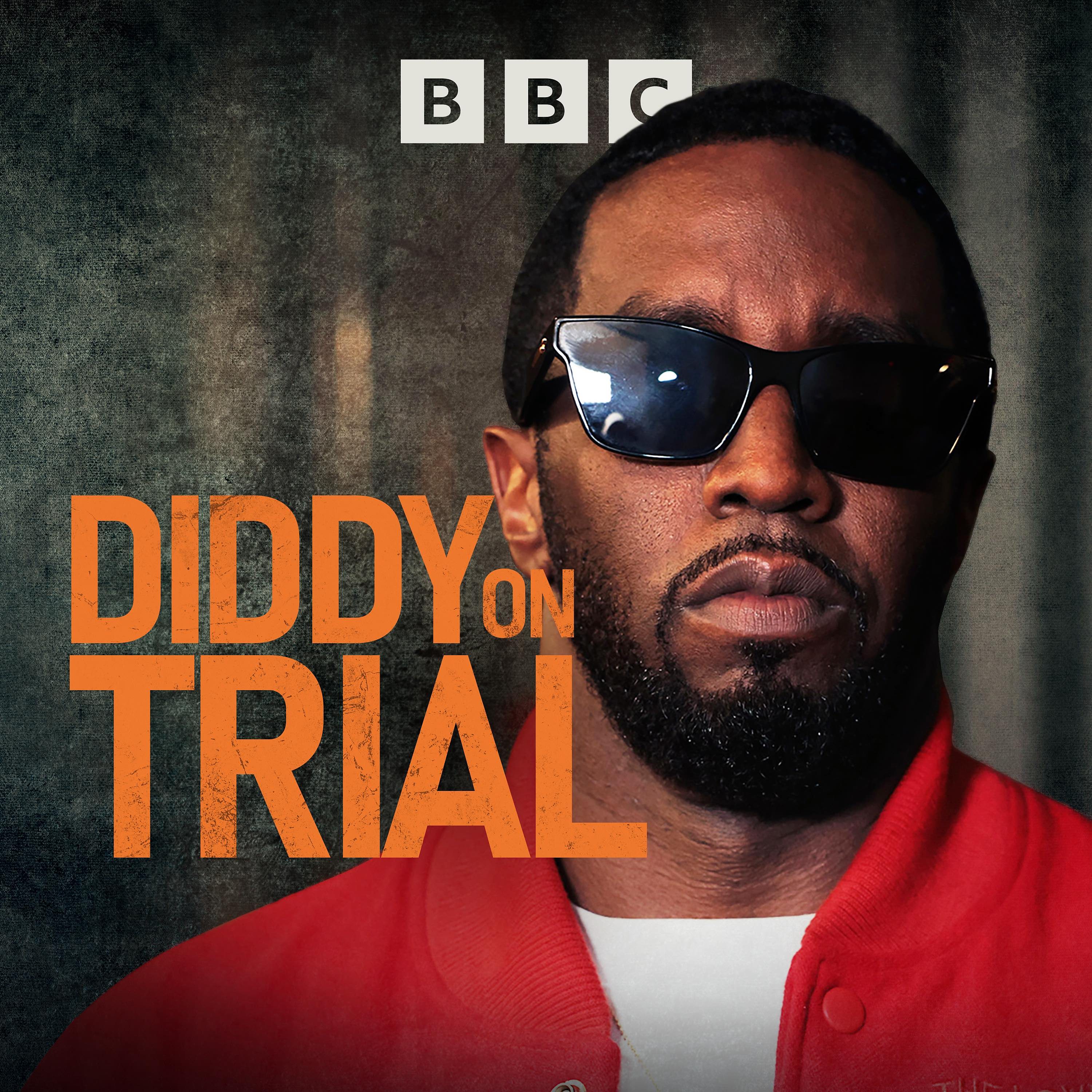
Fame Under Fire
Investigating Diddy's secret world, plus verdict reaction
00:25:40
After Sean ‘Diddy’ Combs’ trial ends, videos and voicenotes show his private life
Loading summary
Transcript66 lines
- [00:00]
Stephen Stockwell
This BBC podcast is supported by ads.
- [00:03]
Unknown
Outside the UK BBC Sounds Music Radio podcasts.
- [00:18]
Anoushka Mutanda Dougherty
Hello and welcome to Diddy on Trial from BBC Sounds with me, Anoushka Mutanda Dougherty. So the trial ended on Wednesday and Sean Diddy Combs was cleared of the most serious charges, racketeering and two counts of sex trafficking related to ex partners Cassi Ventura and another woman referred to as Jane. But jurors found he was guilty of two other counts related to the transportation for prostitution of both Jane and Cassie. In many ways, the trial was the end of something, a conclusion to questions we have been asking for nearly a year now. But the conversation, the conversation is far from over. Power dynamics and working practices in the music industry, coercion, control and consent. These buzzwords are on the lips of social media commentators. The over. Joining me today to tackle some of these big topics are two women who couldn't be any closer to the trial. With me is the BBC's investigation correspondent, Rhianna Croxford. Hi, Rhianna.
- [01:10]
Rhianna Croxford
Hi.
- [01:10]
Anoushka Mutanda Dougherty
And Laura Coates, former federal prosecutor, now CNN anchor and chief legal analyst. Hi, Laura.
- [01:16]
Laura Coates
Hi. Glad to be here. Thanks.
- [01:18]
Anoushka Mutanda Dougherty
Now we have a lot to get through today. Rihanna, you have done an in depth investigation into the inner world of Diddy. And Laura, you've spoken to one of the alternate jurors. So let's talk about Rihanna's investigation first. You've seen messages and recordings from former staff members in Combs household. Tell me about your interviews with Phil Pines. If anybody's been watching and following along with the trial, they might recognize that name. It came up on a few documents a few times.
- [01:45]
Rhianna Croxford
That's right. So Phil Pynes is one of Sean Combs former assistants. He worked for him between 2019 and 2021. And he's also one of the more than 60 people to have filed a lawsuit against Combs. He's accused him of harassment as well as unfair working conditions. And Bill was one of several former household staff who I spoke with. I've been speaking with lots of people who worked in his homes across Los Angeles, in Miami, in the Hamptons to get a sense of what Combs was like as a boss on a day, day to day basis. And they really did paint a picture of a very intense and demanding and volatile person to work for. They said that Combs could be really unpredictable and they attributed that to his drug use. I spoke to another former assistant who wasn't Bill, who told me about an incident where he says Combs smashed a glass against a wall in a Fit of rage. And the shards cut his face, so he's got a scar on his foreh as a result.
- [02:53]
Anoushka Mutanda Dougherty
What did Diddy have to say when you put this to him?
- [02:56]
Rhianna Croxford
So Diddy didn't comment on the specific allegations that we put to his team. What they did give me, though, was a statement from December 2024, when Phil Pines first filed his lawsuit. And it basically says that Sean Comb says that he's never sexually assaulted or sex trafficked anyone, man or woman, adult or minor, and that anybody can file for any reason. But he has obviously previously denied these allegations more broadly when it's come to these lawsuits. But he didn't comment on the specific allegations that we put to him.
- [03:33]
Anoushka Mutanda Dougherty
Laura, hearing that now, I can't imagine you're super surprised because it does fall in line with some of the testimony we had from other assistants that took the stand. I'm thinking here about David James and George Kaplan. What do you think when you're hearing what Rihanna's told you about?
- [03:48]
Laura Coates
I mean, you're almost compelled to just shake your head repeatedly and almost in disbelief, but for the fact that you heard testimony from people who would have relayed perhaps something analogous to that, at the same vein, would have then told the jurors and of course, the attorneys asking them questions how they revered and respected him as a businessman. And there was always this split screen of this Dr. Jekyll, Mr. Hyde being painted where on the one hand, somebody was engaged in really egregious professional behav. On the other hand, someone would say, but I learned so much from him. And it was like a business school in and of itself.
- [04:26]
Anoushka Mutanda Dougherty
And a lot of that is about lifestyle. And the defense attorney, lead counsel Mark Igniflo, saying, this is a lifestyle. This is hip hop. This is who he was. So, Rhianna, what did Phil tell you about Diddy's lifestyle?
- [04:38]
Rhianna Croxford
So both Phil Pines and the second assistant that I spoke with painted a picture of a very hypersexualized lifestyle. So both of these two assistants told me about how they were having to regularly organize and clean up after these so called free cough events, and how humiliating and at times traumatizing that was, having to walk into the room when either sexual activity was taking place or immediately after and having to clean up very intimate fluids. And they also talked about how regular these nights became over time, going from sort of being weakly to. To daily, and that they could also take place on an international scale. And at least one staff member told me that they were also required to both search online and Book escorts for Sean Combs and send him photos for his approval. And both of these assistants who I spoke with also talked about how there was a constant rotation of young women going in and out of Sean Combs many residences, including in Miami, which was his main home. And Phil Pines says he got to see quite a few of these people, and here's what he thought about it.
- [05:52]
Phil Pines
A lot of people looked like they were enjoying themselves. A lot of people I witnessed looked like maybe they had never done anything like that before. I witnessed one woman one time, I took her home from his Miami residence, and she uttered the words to me, I've never done anything like that before. And she was shaking and shivering like she was coming down off the drugs.
- [06:14]
Rhianna Croxford
You mentioned in your lawsuit that you'd once witnessed Sean Combs being violent. Can you tell me what happened?
- [06:22]
Phil Pines
Yeah, there was an incident that happened at Star island where him and a female guest were arguing. They're arguing, stuff's moving to the street. Ping security to come out, because it's getting heated. They're going back and forth, and he pushes and kicks her. And at that time, he's telling her, take off that hoodie. He curses at her. So after he kicked her and pushed her, she takes off the hoodie. She's topless, no bra, nothing. No T shirt on. So I take off my jacket and I wrap it around her to kind of shield her from it. At that time, security gotten him taken and pushed him back a little bit. Within a minute or so, her Uber arrives. She gets in the car, she goes home.
- [07:07]
Anoushka Mutanda Dougherty
We've heard a lot about violence, Laura. This came up again yesterday when he was requesting bail, where Judge Arun Subramaniam said, you've put your hands up and you've admitted that this is a violent person. Just talk me through some of the stuff that the defense said about that.
- [07:23]
Laura Coates
You know, here in the American system of the law, there's this saying, anything you say can and will be used against you in a court of law. Well, you think about that when an officer is maybe arresting you, and you think, whatever I say here can be used against me at trial. And then the perception is, but once the trial is done and the jury is ready, let alone that I've been acquitted of something, then nothing is really used against me. I go from the presumption of innocence throughout the trial to having been proven not guilty. And yet we saw yesterday that that's not entirely true. The judge certainly took into account different aspects that were not things related exclusively to the prostitution, related Charges and the statements that were made not by Sean Diddy Combs at trial. Cause we didn't hear from him on the witness stand, although heard audio notes. We did hear through the advocacy of his counsel, that he owned the violence. Not because he accepted or thought it was the right thing to do, or that they agreed with his violence, but that he was somebody who was violent. He was a domestic abuser, but he was not a racketeer, he was not a sex trafficker. And the judge had to essentially evaluate that and say, look, I've got these factors in front of me as to why I have to consider somebody being released until they're sentenced or held. And part of that is a threat to the community. A part of that is whether they're a flight risk. A part of that comes from the statute and what needs to be proven to hold someone in detention until they are actually sentenced. And he took all that into account and used the defense's own words that confirmed the violence that Sean Diddy Combs owned through his counsel's statements and said, you've already told me full throatedly he's violent. If this is a crime of violence, this is a violent person, then that's a reason to detain them pending sentencing. I've rarely ever seen a judge that will hold someone in detention pending sentencing because he intended to have them walk at sentencing.
- [09:27]
Anoushka Mutanda Dougherty
And we spoke briefly there about predicate offenses. And of course, when we hear from the assistants, the prosecution were trying to build that forced labor predicate offense. But there was also a drug trafficking predicate offense in there as well. Rhianna, you spoke to Phil about traveling with drugs. What did they tell you about that?
- [09:44]
Rhianna Croxford
So Phil traveled with Diddy everywhere in the two years that he worked with him. And he often talked about how he had to take a Gucci bag full of drugs and also supplies for free coughs for him everywhere they went, even on the private jet.
- [10:01]
Phil Pines
The same drugs he would use at his home, marijuana, mushrooms. Some of his other pills that he likes to take, put it in the safe, have a combination for it. No one was gonna ask what's inside of these bags. It's Diddy, you know, you're not gonna get there and someone will be like, open up all these bags. He's a celebrity.
- [10:25]
Rhianna Croxford
Were there things that you were uncomfortable about carrying?
- [10:29]
Phil Pines
Absolutely. Marijuana I don't want to carry domestically or internationally. Other drugs, mushrooms, ketamine, ecstasy, all that stuff. I don't wanna take that stuff. It was a requirement. If he gets there to his next destination. Doesn't have it. It's your fault.
- [10:47]
Anoushka Mutanda Dougherty
As you mentioned there, Laura, we didn't hear from Diddy, even though he did put his hand up and he was waving. And it did sound like he wanted to get up there and get on the stand yesterday. But we did hear voice notes that you mentioned where he's speaking to Cassie and Jane. What did that tell us about who he was and the messages he was sending them?
- [11:05]
Laura Coates
I think you got a clear indication that he had the upper hand in terms of what he felt entitled to. And I found it fascinating when you think about the way in which you're always gauging as a trial attorney, what the jurors are accustomed to and what they're hearing in the real world versus what you traditionally can bring in as evidence to prove your case. And here we are in 2025, when you no longer have to ask the question of whether you'll only hear from a defendant through, say, a police station video with a detective, where they're in those sort of rooms and there's a corner table and you've got this gritty, grainy video of them perhaps confessing or otherwise. Now you've got them able to use and speak their own words, not just in writing, through text messages, not just by taking the stand, but by being able to hear that person. And when it came to Sean Diddy Combs, this is a voice that people know through his music production. And you only heard him speak a couple times in court. One when he was complimenting the judge, one when he was at the beginning when wanted some water to use the bathroom out of the earshot normally of the jurors, and then through his own voice, through these notes, and I have to tell you at the bail portion of it, or you call that moment when they're considering whether to release him pending sentencing. I'm sure he wanted to speak and plead his case because he wants to go home. And he was probably thinking, I've got life in prison off the table. I'm hoping he's probably thinking the prostitution related charges will be more, not years. So I'd like to be home back on Star Island. But the words you say can be used against you. And just because the jury has made their determination and was excused, that judge still has to make a decision about your sentence. And it was probably very prudent and strategic for the defense counsel to say, let me talk to him first. And ultimately he ended up not speaking because there can be a level of arrogance and confidence that comes from the hope One feels when there is some form of an acquittal that could really come back to haunt you in the eyes of a judge who will judge remorse, who will judge the attitude of the person who has gone through that seven weeks worth of trial.
- [13:26]
Unknown
World of Secrets, the killing call a BBC World Service investigation into the murder of Punjabi singer and rapper Sidhu Musayala.
- [13:35]
Anoushka Mutanda Dougherty
The facts, they aren't out in the open.
- [13:37]
Laura Coates
Why Siddhu Musaywala, you know, uncovering a.
- [13:39]
Unknown
Global criminal underworld that reaches far beyond India's borders.
- [13:44]
Anoushka Mutanda Dougherty
There are so many rumors, no one wants to talk.
- [13:47]
Unknown
There might be repercussions. Listen now. Search for World of Secrets wherever you get your BBC podcasts.
- [13:59]
Anoushka Mutanda Dougherty
And I think the point you just made there is absolutely fascinating about the type of evidence that you can get in these trials. But like you say, these voice notes, this comes up again and again. Rhianna, you heard some that were saved by some of his employees sent to them. Did they touch on similar themes that Laura's just mentioned there?
- [14:16]
Rhianna Croxford
Yeah, absolutely. A lot of those voice notes centered around Combs asking his staff to bring him drugs. Combs asking his staff to come and clean up after these so called freak offs. Combs also just ranting. So I saw quite a few videos, quite a few images, heard quite a few voice notes hearing Combs really, in his own words, making these direct demands to his staff.
- [14:44]
Laura Coates
Hey yo, Phil, can y' all come.
- [14:45]
Stephen Stockwell
Straighten it up over here? Not looking luxurious.
- [14:48]
Laura Coates
Hey, Phil, I need a plan B And give me 20 Xanax, please.
- [14:52]
Stephen Stockwell
Phil, I feel I need some Cialis. Phil, can you come back upstairs to help me set up the red light?
- [14:58]
Laura Coates
Can I give you a little bit of tea, Anoushka as well, ladies?
- [15:02]
Rhianna Croxford
Yeah, of course.
- [15:03]
Laura Coates
So today I had the chance to interview exclusively for CNN an alternate juror. And he actually talked about the impact of the technology and the text messages, not just in terms of the voice notes from Sean Diddy Combs, but how the jurors were viewing the text messages that they saw from Jane, from Cassi Ventura. And they looked at that throughout the course of trial as an indication of consent and proof somehow that there was a seed of reasonable doubt that had been planted as to coercion and force. You heard Cassie or Jane describe that what they put in writing sometimes was to placate Diddy, was to maintain the relationship out of concern that it would end for a variety of reasons. But at least one juror evaluating that evidence as an alternate thought, hmm, those text messages tell me something different than what the prosecution wants Me to believe it's fascinating.
- [16:08]
Anoushka Mutanda Dougherty
That is fascinating. It's like you're still on the stand in the ether of the courtroom somehow, for messages you sent in some cases a decade ago. Laura, we were in that courtroom yesterday. I came and saw you afterwards in the scorching heat to have a little debrief about what this all means. I mean, I can't emphasize it enough, guys. It was a circus outside. I'm sure you'll see the videos on social media. Laura, what are the implications of this trial and the verdict that were reached in your opinion?
- [16:33]
Laura Coates
I mean, people looked at this in many ways as trialtainment. They were out there days on end, weeks on end. There were journalists, there were influencers, there were people who were just interested from the public. And all of it came together in this sort of motley crue melting pot of people with a wide range of opinions. And you also had among them some very vocal provocateurs, including people who were pouring baby oil on one another and themselves. Even as Sean Combs mother Janice was walking by to different cheers, you had people trying to rage, bait others, you had screaming matches as people were either pro ditty or they were not. And this conversation entirely, it took on a life of its own because it seemed very clear from almost the beginning, didn't it, that this trial was obviously in reality about Diddy as the defendant and the witnesses and alleged victims who came forward. But it was also a conversation about our societal power dynamics, about celebrity, about MeToo, about believing women, about delayed reporting and about sexuality, fetish and kink. And it became almost emblematic of a critique of the government and overreach or the role that we all play in the court of public opinion.
- [17:59]
Anoushka Mutanda Dougherty
Something that I worried about from day one. And it is because it was so heavily included in the indictment, and we understand why the government went with this, but the memeification of the details of the Diddy trial and the fact that we did have all these influencers there, and influencer isn't a dirty word, but some of the stuff that was being said was out there. Some of it was offensive, and some of it was unnecessary. Do you think that now we have this verdict, we're no longer gonna focus on what the charges were, how certain things happened, whether he was unable to act in a certain way. And this is just gonna pass into the history of sort of joke meme and Internet fodder.
- [18:36]
Laura Coates
I certainly hope that people will be able to distill the conversations that need to happen and to extract that from the Memeification that you so aptly identify here. But I also think that people are gonna have a discussion on what the law is and what it ought to be. And I think they're also gonna be continuously evaluating if you are a survivor, if you are being victimized currently as well, you're gonna weigh, in some respects, was it worth it? Was it worth it to come forward? Was the courageous bravery that is required to do so? Is it enough? Or will people be relegated to silence? And I ask those questions in my own mind all the time, based on being a sex prosecutor and someone in the media. When you have people who are telling their story, and I know painfully what it. I'm empathizing and can almost speculate to what it would feel like when that light of the camera goes off. And here you are dealing with the ramifications of having spoken up. And I think that's gonna be one of the things that I am biting my nails about in terms of what this all means in the end.
- [19:51]
Rhianna Croxford
Absolutely.
- [19:51]
Anoushka Mutanda Dougherty
And, Rhianna, you've been across this for a long time. You've been investigating before the trial started, and you've been across the civil lawsuits as well. You know what the verdict was. You've been following the trial closely. What do you think the implications are now?
- [20:05]
Rhianna Croxford
I've been in touch with a number of people who have filed lawsuits against Sean Combs in the past year, not all of whom are ready to share their stories and speak out, but some of them are messaging me yesterday, just telling me they were absolutely devastated, absolutely devastated that somebody like Cassandra Ventura could take the stand and testify in such graphic and harrowing detail about these experiences. This was a woman who took the stand to say that the trauma of these encounters, of these freak offs, nearly drove her to take her own life. And they'd been depressed also, in their own words, seeing these conversations play out on social media with people minimizing domestic violence, something that Diddy and his team admitted to from the outset. So they've been really demoralized, and they wonder what it means for survivors of abuse going forward to speak out, to bring claims, but also what it means in terms of further prosecutions of powerful people. Will prosecutors now take a pause and think, should we be bringing this case? Is this person too powerful, too popular for us to go up against? And so I think when we think about what MeToo really started, that reckoning for people who abuse their power, for many of the people in this case, people with ongoing lawsuits, they're absolutely devastated by the outcome of this and what they think it symbolizes.
- [21:38]
Anoushka Mutanda Dougherty
Just as a final question, we talk a lot about separating the art from the artist. Laura, do you think that he will be able to recover as an artist and reclaim his spot in the culture, or do you think this has changed the trajectory of his future?
- [21:53]
Laura Coates
Well, I will say those civil lawsuits, which are dozens and dozens and dozens of them, would have a extraordinary impact on his overall wealth if they are successful. Given that a civil lawsuit has a much lower burden than beyond a reasonable doubt. You're talking about bip preponderance of evidence, which is a fancy way of saying more likely than not. And so I'm curious to see the impact before you can fully evaluate his wealth and his financial trajectory. But I interviewed Suge Knight, who, of course, of Death Row Records, who is currently incarcerated. I interviewed him and asked him what he thought about the future of Sean Diddy Combs would be given what has happened. And he said his words. The music industry is forgiving. And I really think that's a fascinating take and sentiment on what is expected that people can sort of rehabilitate themselves, particularly in a culture where people believe sex, drugs, and rock and roll go hand in hand. And I will be curious to see, given the graphic details, even in spite of the guilty verdicts of prostitution and in spite of the not guilty for sex trafficking, to what extent people want to associate with him the course of this whole trial, he didn't have, like, vocal support and droves of people in his industry coming out to stand beside him to show up in court. Only Kanye, really, of his level of fame even appeared. And even that was very brief.
- [23:25]
Anoushka Mutanda Dougherty
And Rihanna, of course, your initial investigation was into the culture at Bad Boy. And you spoke to lots of people in the industry at the time. Time who said things like, you know, this is hip hop. This is the culture. What do you think, having heard all those opinions as well?
- [23:39]
Rhianna Croxford
I mean, the first thing I got yesterday when the verdict came through was a message from somebody who used to work with Combs at Bad Boy. And he said to me, see, I told you I was right. This is just about domestic violence. This isn't sex trafficking. Nothing to see here. This case should never have been brought. And so there were people who, regardless of the outcome, had already made up their minds, and that was always to defend Combs. And we saw that when Cassie first filed her lawsuit back in November 2023. There are a number of stars. I can think of the rapper Slim Thug who came out being like, quit trying to expose people for money. There were memes going around of Cassie being a gold digger. You know, people were talking about how they didn't want to see Combs, somebody who had attained near billionaire status, be taken down, a very successful black man in the community. And so there are people who see this as just part of the culture. This is just normal. This is what the industry is like. And I think there are people who had their, their minds fixed and set up and that was just never going to change no matter what was said in court.
- [24:49]
Anoushka Mutanda Dougherty
Thank you both so much for joining me today for this. I'm sure we'll be picking back up on this again at sentencing. And there's lots more in the Diddy verse that we're going to find out about and hear about. But thank you for your time. Thanks, Rhianna.
- [25:02]
Rhianna Croxford
Thank you.
- [25:03]
Anoushka Mutanda Dougherty
And thanks, Laura.
- [25:05]
Laura Coates
Thank you.
- [25:06]
Anoushka Mutanda Dougherty
Thanks for listening to Diddy on trial from BBC Sounds with me, Anushka Matandadawati. Some of you have been with us since last November and some of you clocked in just for the trial. I think it's safe to say that for all of us, this is a case we won't forget. I know I won't. But as for our daily Diddy coverage, that's it for us right now. I'm sure we'll find ourselves in the Diddyverse once again. Again. But don't go anywhere because there's something else coming. Make sure you stay subscribed because our new podcast will be here soon. Look out for a teaser for fame under fire dropping next week.
- [25:48]
Stephen Stockwell
She's accused of murdering her relatives by serving death cap mushrooms inside a beef Wellington. Erin Patterson's trial has finally started and all the details about that infamous lunch are now coming out.
- [25:59]
Laura Coates
It's a tragedy what happened. I love them.
- [26:01]
Stephen Stockwell
I'm Stephen Stockwell and I'm here in the small Victorian town of Morwell, where the triple murder trial is underway every day. On the Mushroom Case Daily podcast, we'll tell you about all of the evidence presented in the courtroom to make sure you don't miss an episode. Hit follow on the Mushroom Case Daily podcast wherever you get your podcasts.
- [26:21]
Unknown
World of Secrets the Killing Coal. A BBC World Service investigation into the murder of Punjabi Singh singer and rapper Sidhu Musiala.
- [26:29]
Anoushka Mutanda Dougherty
The facts, they aren't out in the open.
- [26:31]
Laura Coates
Why?
- [26:33]
Unknown
Uncovering a global criminal underworld that reaches far beyond India's borders.
- [26:38]
Anoushka Mutanda Dougherty
There are so many rumors no one wants to talk.
- [26:41]
Unknown
There might be repercussions. Listen now. Search for world of secrets wherever you get your BBC podcasts.