← Fame Under Fire: The Tupac Murder Trial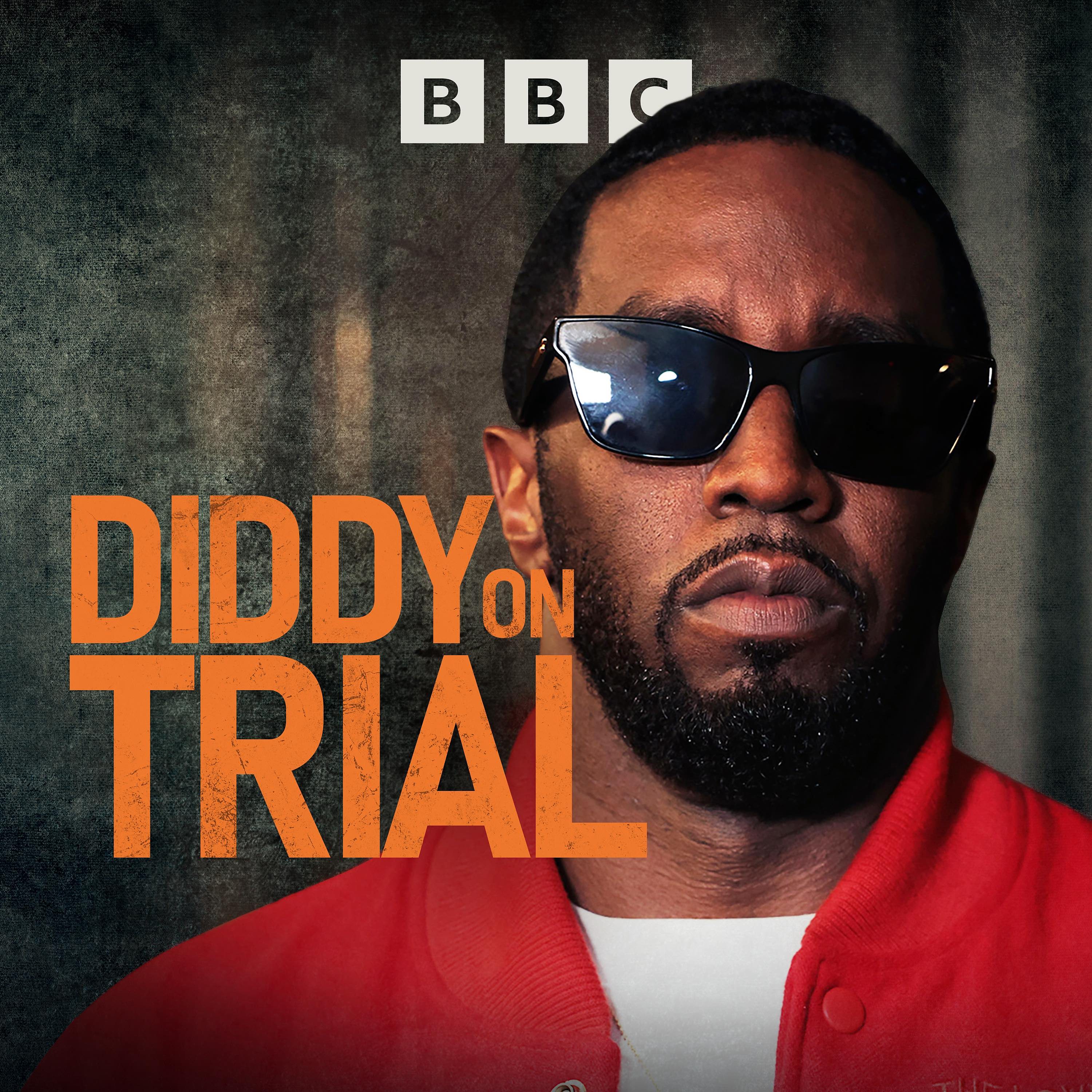
Fame Under Fire: The Tupac Murder Trial
Judge threatens to remove Diddy from courtroom
00:24:12
Diddy’s defence lawyers warned about his behaviour
Loading summary
Transcript56 lines
- [00:00]
Anushka Mutanda Doughty
This BBC podcast is supported by ads outside the UK.
- [00:07]
Neda Talfik
Shop the Sherwin Williams 4 Day Super Sale and get 40% off paints and stains June 6th through the 9th with prices starting at $29.39. It's the perfect time to transform your space with color. Whether you're looking to revamp your interior or exterior, we have you covered with bold hues, soothing neutrals and everything in between. Shop the sale online or visit your neighborhood Sherwin Williams store. Click the banner to learn more. Retail sales only Some exclus. See store for details. Trip Planner by Expedia. You were made to have strong opinions about sand.
- [00:42]
Sean Kent
We were made to help you and.
- [00:43]
Neda Talfik
Your friends find a place on the.
- [00:45]
Sean Kent
Beach with a pool and a marina and a waterfall and a soaking tub.
- [00:49]
Anushka Mutanda Doughty
Expedia Made to Travel.
- [00:54]
Neda Talfik
BBC Sounds Music.
- [00:56]
Sean Kent
Radio Podcasts Foreign hello and welcome back to Diddy on Trial from BBC Sounds with me, Anushka Mutanda Doughty. Make sure you subscribe and turn on your push notifications so you never miss a thing. Here at the Southern District of New York Court in lower Manhattan. It's 4pm and court has just finished for the day. Before we get into things, a reminder. Diddy is charged with sex trafficking, transportation for prostitution and racketeering with conspiracy or all of which he has consistently denied. Just a warning, this episode contains descriptions of violence and graphic descriptions of sex. Now this is our roundup episode today, so you're going to be hearing from our resident criminal defense attorney later, Sean Kent. But first of all, we have the BBC's New York correspondent Neda Talfik to walk us through what was said in court today and go through what's been said for the rest of the week. Hi Neda.
- [01:50]
Neda Talfik
Hey Anoushka.
- [01:51]
Sean Kent
So let's start with the woman who's testifying under the pseudonym Jane. She took the stand for the first time today. What did we hear?
- [01:58]
Neda Talfik
Yeah, well, Jane went right to the beginning of when she met Diddy. She said she met him on a girls trip to Miami and that they didn't get together right away but eventually they did in 2021. And she talks about how he was extremely charming, how their first date lasted five days. At the end of it they said started using the L word for love. And she talks about how she was open with him, that she had a son with someone who he didn't get along with, and that she had also been with somebody who was close to him previously but that Sean, as she called him Diddy, said that hadn't bothered him at All. And she said that really it was Diddy who started to introduce drugs more regularly into her life. Having Molly, ketamine, ecstasy pretty frequently in their sex life. And there was a moment on the stand where she actually started crying. It was the only moment she started crying and actually dabbed the tears away from her eyes with a tissue. And that's when she spoke about May 2020. She said that was the first time that Diddy introduced the idea of these fantasies. Now, they didn't call them freak offs again, these kind of drug fueled sex nights with male escorts. They called them debauchery nights or hotel nights. And she said that there was a real pattern to these nights. She would have to be dressed in lingerie, she would have to wear stripper heels, she would have creepy cream colored light nails, her hair would be straight or up in a ponytail. Again, they would be in mostly hotel rooms with red lights. And the escorts. Again, she describes how they came from this company that Diddy had used in the past. She describes the first one being introduced to a man, being extremely nervous, actually asking for the escort to use a condom. And while Diddy was reluctant at first, she testified he eventually did use a condom. But she said that first night, while she was exhilarated by it, she felt it was very taboo and it was exciting. She said it was like opening a Pandora's box after a while because she couldn't shut it. And she said ultimately she didn't want to do it. She started telling Diddy later that she didn't want it. But he was very dismissive of her concerns. She testified he would say, fine, we don't have to do it, then you're crazy, let's not talk about it. And she said, and yet they would still have to do it. And at a certain point she felt pressure because he was paying her rent at about $10,000 a month. So Jane on the stand describing very much the early stages of the relationship, how these hotel nights played out with some graphic detail about just even the escorts ejaculating on her at the end. And that being something that Diddy would expect before they themselves would be intimate and just how that made her feel, especially with the financial pressures and her saying she could never really get her own job. It was a lot of pressure to look a certain way for Didion to be available at his beck and call, essentially.
- [04:59]
Sean Kent
And they did focus on a specific time frame from May 2021 to October 2023. They have a break in October 2023. But they asked her what Percentage of that time was spent doing these hotel nights. And she said about 90%.
- [05:15]
Neda Talfik
She said 90% of sexual interactions were with other men and that these hotel nights, they could last again, as we heard from Cassie, for days. She said she would be awake over 24 hours without stopping these hotel nights. And she spoke about how she again expressed she didn't want to do these things, but she would hurry them along because she felt like she just wanted to speed them up because it was inevitable that they were going to happen. And that even though she did get alone time with Diddy, it never really felt like that. It felt like their whole relationship became these hotel nights.
- [05:50]
Sean Kent
And Diddy received a warning from the judge about his behavior in the courtroom.
- [05:55]
Neda Talfik
Yeah, this was after the court wrapped for the morning and everyone was about to go on lunch break. And the judge said that he noticed Diddy making, like, facial expressions at jurors during testimony. And he said he had previously actually warned the defense that that was inappropriate, that Diddy shouldn't be trying to interact with them or make any kind of expressions, and that if he continued to do that, he would let prosecutors intervene or in worst case scenario, even kick Diddy out of court. He said it was just completely unacceptable. So a warning that Mark Agnifolo, Diddy's lawyer, said he understood and that they would take care of it.
- [06:34]
Sean Kent
And we had about two hours of testimony from Jane today, but it's been a pretty full week. A big moment was hearing from Barna Bungolen, who's Cassie's friend. We were waiting for her to take the stand. What does she have to say?
- [06:45]
Neda Talfik
Yeah, and, you know, it was interesting because the judge actually asked prosecutors directly, what is the key piece of Bona's testimony to your case? And they said this shows an element of coercion to show that Cassie and those around her felt that there were threats from Diddy. Bona outlined first how at a photo shoot, one point, Diddy told her, you know, I'm the devil. I could kill you. Also outlined how she had seen Cassie with a black guy or some bruises a few occasions. But obviously the massive part of her testimony was what's being referred to as the balcony incident in court. Bona says that she was sleeping at Cassie's apartment and Diddy started banging the door loudly. She threw her girlfriend into the bathroom, told her to be quiet, went onto the balcony, and as Diddy rushed in, she claims that he picked her up under her arms, dangled her over the balcony, and then threw her aggressively back onto the Balcony furniture. And she says he kept screaming at her, you know, what the f you did? And Bona said, I don't know what I did. And so in court, again, just going through cross examination of that story and what we saw from the defense was building up a timeline and showing that when Bona says this photo of her bruises was taken by the metadata on her phone, that it actually coincided with Diddy being on tour in New York, being on the Bad boy reunion tour, having events at Macy's and other events with Cassie. So the defense trying to suggest that Bona had been lying about this happening and really just eating into her credibility with Bona a few times, saying, I don't recall, I don't recall, had Nicole Westmoreland, Diddy's defense lawyer, telling her, you put your civil lawsuit forward with the understanding that you had to allege sexual assault, didn't you? Again, hammering her on this idea that she said she was sexually assaulted, then said she wasn't. Bona responded, I don't recall. And that was a common theme, her saying, I don't remember. I don't recall during cross examination.
- [08:52]
Sean Kent
We also spent some time this week back focusing on the CNN footage that was released of the 2016 assault on Cassie by Diddy in the hallway of the Intercontinental Hotel. We heard from Eddie Garcia, who was a security guard at the time. He filled us in on another part of the story from his perspective.
- [09:08]
Neda Talfik
That's right. He got immunity to testify. And he spoke about how he was handed $100,000 paper bag by Diddy and asked to sign an NDA to hand over the security footage. He said he split that money with other colleagues of his in the office. He went and got himself a used car. And it was his understanding that the woman he spoke to on the phone after the money that was handed over was Cassie saying that she had a movie premiere. She just wanted this all to go away. And Eddie said he was nervous. He didn't really even get to read through the whole NDA. He just quickly signed it because it had Combs Enterprises at the top. The defense on cross examination, did point out that the NDA didn't preclude him from speaking to law enforcement. That could be a nod to trying to fight this idea that there was obstruction of justice. But certainly when you look at this testimony from Eddie Garcia, it is very crucial to the government's case that this was all part of racketeering, that there were others in the company that were instrumental to covering up this alleged crime.
- [10:15]
Sean Kent
At the beginning of the Week we picked up where we left off last week with Mia, who was still on the stand. She's testifying using a different name to protect her identity. And this was the tail end of her cross examination. Followed a similar pattern to the beginning of the cross examination.
- [10:30]
Neda Talfik
Yeah, that's right. The end of her cross examination was again, just kind of going over some of her flattering messages to Diddy, how she stayed in touch with him and going over why she would do that if he is somebody who had traumatized her. Going over a message she sent after she lost her position at revolt where she talks about wanting to harm herself, how her life is over. And she explained on the stand that even though it wasn't a great job, that, you know, she has trauma from it in the moment. It felt like it was her whole world and that's why it was so upset setting for her, and that's why she reacted that way. But very much the cross examination, trying to discredit her, digging into all of these messages she had sent to Diddy all along.
- [11:16]
Sean Kent
Neda, thank you so much for filling us in.
- [11:18]
Neda Talfik
My pleasure.
- [11:19]
Sean Kent
That was the BBC's New York correspondent, Neda Talfik. And just a reminder, Diddy denies all the charges. Now, on Wednesday, I caught up with our resident criminal defense attorney, Sean Kent, to go through some of what's happened this week, but also answer your amazing questions. Hi, Sean.
- [11:42]
Anushka Mutanda Doughty
Hey, how are you doing?
- [11:44]
Sean Kent
I'm good. Today was interesting. We had Barna on the stand. You said that nothing that happens in this trial is a shock for anybody, either the prosecution or the defense, and particularly a witness for the prosecution. They should know their temperament, what they're going to say, what they can remember, what they can't. Now, for 80% of the cross examination, Barna's answers were, I don't know, I don't remember. I can't recall even up until talking about conversations she's had with the prosecutions. Two days ago. Why would you put somebody on the stand who's gonna do that for the whole cross examination?
- [12:22]
Anushka Mutanda Doughty
Well, I guarantee you they didn't know it. And we've interviewed a lot of people. Get on stand, you freeze. Like if you remember the witness before her, Mia, how many remember, they said they met with her 27 times, and they probably met with her 27 times to make sure they knew how she was going to be. Because you think you can prep a witness for a stand, but until you get on the stand and you're looking at the person, you freeze. It's sort of like an actor getting stage fright. It's the exact same theory. And you never know what someone's going to do until they testify. So that's probably what happened. But I read that the cross examination went well, but not even that the cross examination went so well that the witness did so poorly. And one bad witness, I've told you, can hurt your entire case.
- [13:00]
Sean Kent
The other thing I don't get is the prosecution have the same notes that the defense have, ie, notes that they, in the pre trial meetings that they have. Right. So the defense were drawing out. In the first meeting you said this happened. In the next meeting you said you were in a completely different place. In the third time you said that different people were there, just using that as examples. But those are all discrepancies that the prosecution should have picked up on beforehand. But it seemed like this was coming completely out of the blue. And the only thing that she knew what to do was say, I don't remember.
- [13:31]
Anushka Mutanda Doughty
And that's such a big defense. You know, how many times have I called it the eight mile defense? Tell everybody the bad stuff about the witness before you let the cross examination happen. You get the bad out. Do you have a criminal record? Have you been in trouble with these things? Tell me, do you do drugs? You get all that out because it doesn't have the same shock value as it will when the witness is being cross examined. And that's the problem. But my gut reaction is they did not know she was going to. Either they did not know she was going to do so poorly or, or they knew she was going to do so poorly. And it's almost worse if you don't put the witness in because then everyone's like, okay, I wonder why they're not having her testify. Maybe she was lying. So you don't have a choice. You're like, we knew she was going to be bad, but we're putting her on the stand anyway with Barna.
- [14:13]
Sean Kent
One of the narratives that was offered a few different times that you might not have picked up on if you weren't doing this as your morning, noon and night job. They've spoken about her before during Carey Morgan's testimony. When they speak about Barna, they kept saying, oh, and Barna would buy drugs, right? Or supply Cassie with drugs or supply you guys with drugs. Just, just pipetted through different people's testimony. And then today they really drew that out from her and she was forthcoming and said, yes, we did a lot of drugs together and yes, a portion of my income was made from Cassie. Buying drugs off me. How does that diminish her credibility?
- [14:45]
Anushka Mutanda Doughty
Well, after a while, you start realizing and there's a little phrase that prosecutors will use that they'll say, the devil doesn't hang out with angels. The devil hangs out with devils. And angel like so. In other words, these are bad people, so they're going to hang out with other bad people. The defense's standpoint is going to be you cannot trust anything that these folks are saying. They're drug dealers, they're drug users. They don't have credibility. And so if her credibility is slightly shot from the defense standpoint, it's like you cannot trust her.
- [15:16]
Sean Kent
Now, look, we had another big witness for the prosecution, which was Mia. What were your reflections on her testimony now that it's come to an end?
- [15:24]
Anushka Mutanda Doughty
I don't know if you saw the filing that came out. The government now wants to recall their expert. They want to recall the doctor as a result of the cross examination that happened on Mia. Remember the text messages that came out, the R. Kelly information that came out, all of this stuff that came out about Mia and the fact that the defense is trying to make it seem like she liked him, she enjoyed him, she put stuff about his social media out. Well, they want to call that same expert to explain coercive control. They sent a filing to the court and said, we want to recall her and explain that this is the reason why she testified this way and this is the reason why she still loves Puffy and didn't realize it till later because this is the cycle abuse that we were talking about Cassie, and it also has an effect on Mia. So that's what I thought was interesting is that it's pretty clear that the government is filing this motion because they thought the cross examination of Mia must have gone well for the defense. And now they want to recall the expert to basically rehabilitate their witness and say this is why she was sending all these loving, adoring text messages back and forth.
- [16:28]
Sean Kent
Let's talk about Eddie Garcia because I know you've had a lot of questions about what is bribery, what constitutes bribery and what isn't, and whether Eddie Garcia was speaking to an instance of bribery. Eddie Garcia being the security guard who took the $100,000, hands over the USB stick we know was not the only copy of the assault on Cassie, but takes the money, hands it over, bribery or not bribery.
- [16:49]
Anushka Mutanda Doughty
Yes and no. Now that I've had it, and it's a fascinating legal reason. And let me tell you why, and this is fascinating when you go back and look in the indictment, I have finally been able to understand what the government is doing in the classic sense of the word. In the federal parlance, it is not bribery. Why? Generally in bribery in the federal rule, we deal with what public officials, governors, mayors, cops. Usually we have somebody who has been bought off to do something. In an official act. You go to somebody and you say, I want you to vote for this bill. I want you to pass this legislation. That's bribery generally in the federal sense. It is a predicate act and it's one of the predicate acts that they need to do. So I went back and looked at the indictment because I'm like, there's some reason why the government is putting this witness on. When you go back and look at the indictment and you look under rico, when you look under the predicate acts, they talk about California state law. They don't just mention federal law. They go under California state law. They specifically mention California Penal Code 137. In a RICO case, you can also use state law to prove a federal crime. So what they did is they made allegations of state California bribery to prove federal rico. And why that's important is under the state of California, which is way easier to prove bribery, all they got to prove is if somebody offers you money not to tell something to law enforcement, that's bribery. That's it. That's a state level bribery claim. And so when I looked it up and I'm like, dang, that makes sense on why they're doing. And even though it's a state level act, it still counts under federal rico.
- [18:32]
Sean Kent
We've actually got a lot, a lot of questions and they're really, really good questions.
- [18:36]
Anushka Mutanda Doughty
Why would someone smarter than me, I don't like that, give me dumb twist?
- [18:40]
Sean Kent
Well, we've been coming to class, ready to go. So this is from Charlotte in North Yorkshire in the uk.
- [18:48]
Anushka Mutanda Doughty
Hi, Charlotte.
- [18:51]
Sean Kent
If the people who are testifying against Diddy also used to work for him and were involved in the enterprise, how come they are not accused with Diddy?
- [18:58]
Anushka Mutanda Doughty
Yes. All of these individuals are part of the enterprise. Okay. And that's the first part of rico. You must prove a criminal enterprise. Well, here comes the second part. You still got to prove two predicate acts. Just because these people are watching this, what are the predicate acts that they've actually committed? That's why they're able to go with Diddy. Diddy has committed the arson. Diddy has committed the kidnapping. Diddy has committed the bribery. The other big reason why the federal Government is going after all of these charges under RICO is the statute of limitations in California on most of these charges have already passed. So a lot of these people couldn't be convicted of crimes in the states where they occurred. If I was defending anybody in the Diddy sphere who worked for Combs Enterprise, I would be like, that dude did it. We had nothing to do with that. Because if you remember what Cassie said, how many people were in the freak off, her and the dude and Diddy. So Christina Combs, like, I wasn't in no freak off. I didn't get an invitation. I mean, the arson, we don't know who committed the arson. The kidnapping, that was Diddy, you understand? They're all able to say Diddy did the predicate acts, nobody else.
- [19:56]
Sean Kent
And just a reminder of people tuning in now, what is a predicate act?
- [20:00]
Anushka Mutanda Doughty
Okay, A predicate act to prove rico. Rico, of course, is the Racketeer Influence Corrupt Organization Act. The person that RICO was created to get the mob. The reason we were trying to get the mob is we're trying to make a way to get seemingly unrelated crimes that are being ordered by an underboss, if you will, or the Marvel villain as he has been described. So there's a hierarchy. There's somebody on the top of the RICO who is ordering similarly unrelated acts. And so in a mob situation, if they said, hey, Bobby, I want you to go rob the bank. Jesse, I want you to go shoot that fella, and Tony, I want you to go steal some sardines. Those are seemingly unrelated, but they wanted to be able to tie the person who was ordering things together to get rico. They've got to say that we've got to prove that this is a pattern of criminal activity. So there are certain crimes that are considered predicate acts that are crimes. And so what the federal government must prove is that there are certain crimes that are put together that create the rico. And to make it a little even more simple, the federal government is saying the purpose of the COMB enterprise is to make sure Combs can have these butt naked baby old freak off, awful sex trafficking parties. What does he do to enable his action? He has committed an arson to blow up somebody's car who tried to go after his girlfriend Cassie. He has brought prostitutes over county lines or state lines that help him do his actions. He has hurt individuals to make them get his actions. So the government has approved that at least two of these go together to create rico.
- [21:31]
Sean Kent
This is an anonymous question that we got through. It says hi at the start of the trial, I thought this was going to be lifting the lid on the big parties that Diddy was throwing and looking at what everyone was getting up to there. Actually, it is very focused on Diddy and what he and his girlfriends were up to in hotel rooms with maybe one extra guest. Will there be a wider look at parties examining who was doing what there?
- [21:52]
Anushka Mutanda Doughty
The reason that people got so excited about it is everyone was just making stuff up. Everybody just made these allegations that, oh, this person and this person and this person, they were all at this party. And then when you heard Cassie testify, she's like, whoever told y' all that there's me, this other dude and Diddy in the room. And so people made these allegations without the actual factual support. And until I've said it to a million people, until you hear it testified in court, it didn't happen. You know, we had all these people making these broad allegations that there were going to be things about minors involved. Nobody's testified about anything about minors, anything about children, anything about these allegations. They haven't come up. And until they come up in a courtroom, it doesn't happen. Now, if big capital, if. If Diddy is convicted and if he gets a massive sentence in the federal sentencing guideline range, he is able to then cooperate if he wants to, to get his sentence reduced. Let's say, for argument's sake, he has all this co. Conspiracy information about people that they want to know, he can cooperate to get his time cut. That is allowed in the federal system. So if he did have information, got convicted and went to jail for life, he could get his time reduced if he wanted to.
- [23:02]
Sean Kent
Wouldn't he have to offer up somebody else bigger than him? Because if he was like, oh, this rapper that nobody's ever heard of was doing this, wouldn't they be like, okay, we'll shave off two days?
- [23:13]
Anushka Mutanda Doughty
Love that question. And it is, and it usually happens when we're representing individuals who are dealing with drug dealers. Okay. And usually what ends up happening is exactly what you said. Somebody gets busted, they're on a conspiracy, they're trafficking drugs all over the United States. They get busted like, I want my time cut. I'm looking at 30 years. And they say, I can give you a bunch of middling small drug dealers. Well, what ends up happening is the federal government says, sure, give us all of those people. We'll take two years off your sentence. For us to cut your time, you need to give us somebody who has more drugs than you got arrested with. So it's the same theory with Diddy. You want a substantial cut, give us somebody we care about.
- [23:51]
Sean Kent
Sean, thank you so much for breaking that down for us. And thank you to everybody sending in these really, really good questions. Thank you so much, Sean. We really appreciate you.
- [24:00]
Anushka Mutanda Doughty
Thank you for having me. I appreciate you.
- [24:02]
Sean Kent
That was Sean Kent, criminal defence attorney from South Carolina. And that's it for this episode of Diddy On Trial from BBC Sounds. Make sure you turn on your push notifications so you never miss a thing. And keep sending us your questions on WhatsApp at 033-0123. 451. That's 033-01-2235. 555 1. And if you're in the UK and you've been affected by any of the issues in this program, you can find support@BBC.co.uk it's not funny.
- [24:37]
Neda Talfik
It's true.
- [24:39]
Sean Kent
Lily Allen and Makita Oliver Keats, I've got some questions for you, BBC Sounds.
- [24:44]
Neda Talfik
Tell me what you've enjoyed about our podcast so far.
- [24:47]
Sean Kent
I like that you've got more and more comfortable in this space and I've watched you show all parts of yourself. We've both cried. Miss me With Lily Allen and Makita Oliver. We're just us having a chat. Feels like we've been doing it forever.
- [25:01]
Neda Talfik
We kind of have.
- [25:03]
Sean Kent
Listen on BBC Sounds.