Podcast
Digital Disruption with Geoff Nielson
Hosted by Info-Tech Research Group · EN
The Next Industrial Revolution is Already Here
Digital Disruption is where industry leaders and experts share insights on leveraging technology to build the organizations of the future.
As intelligent technologies reshape our lives and our livelihoods, we speak with the thinkers, the doers and innovators who will help us predict and harness this disruption. Join us as we explore how to adapt to and harness digital transformation.
77episodes
Episodes
Newest firstAll episodes
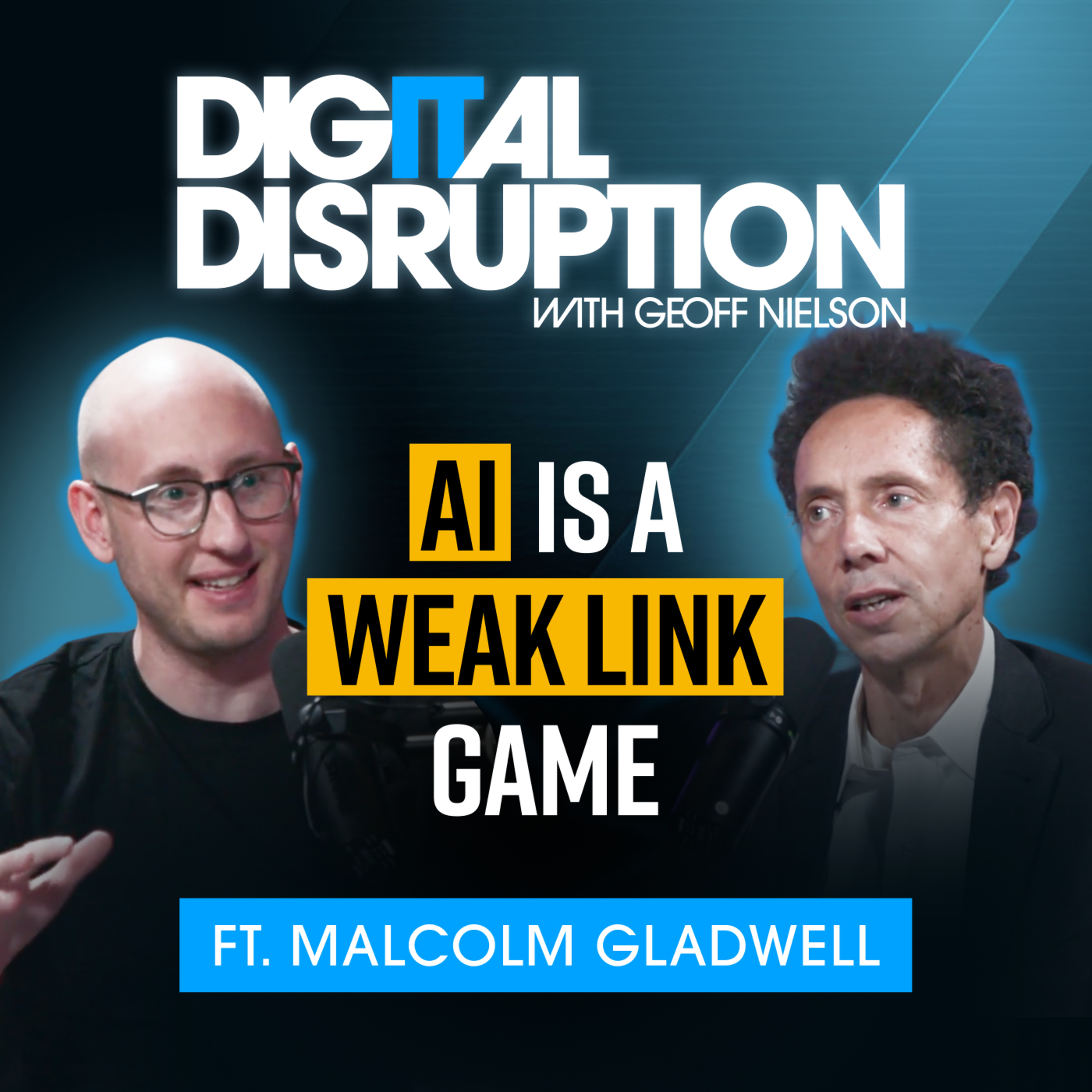
Malcolm Gladwell on Tesla, RFK, and Why AI Could Save Us
Jun 16, 202500:46:37Summary readyCan generative AI help us close the gap between expertise and access?This week on a special episode of Digital Disruption, we're joined by New York Times best-selling author Malcolm Gladwell, recorded live in Las Vegas at Info-Tech Research Group's LIVE tech conference.Malcolm Gladwell is the author of eight New York Times bestsellers, including his latest, Revenge of the Tipping Point. Named one of TIME’s 100 Most Influential People and one of Foreign Policy’s Top Global Thinkers, he is renowned for his unique perspective on the forces shaping human behavior and society. An extraordinary speaker, Gladwell combines eloquence, warmth, and humor to both entertain and challenge audiences. Through masterful storytelling, he unpacks complex and often misunderstood ideas, from decision-making in Blink and the roots of success in Outliers, to our underestimation of adversity in David and Goliath, and the missteps we make when interacting with strangers in Talking to Strangers.Malcolm Gladwell sits with Geoff Nielson for an engaging conversation on the future of AI, the power of storytelling, and the evolving forces that shape society. From AI’s role in closing the expertise gap to how unexpected narratives drive lasting cultural change, Gladwell offers his signature perspective: thoughtful, contrarian, and always surprising. He talks about why the most transformative uses of AI may be the simplest, how generative tools can elevate human capability, and why culture never changes in ways we expect. Malcolm provides insight into how the media, brands and politics are changing and what that could mean for leadership, while touching on the surprising truth about misinformation, expertise, and AI as a corrective tool. In this episode:0:00 Intro0:24 AI's biggest promise? Strengthening weak links1:33 AI in developing vs developed countries2:12 Should AI replace or empower teachers?3:13 Closing the expertise gap with AI4:18 AI as a safe place to learn without embarrassment5:08 The human side of AI5:32 AI in surprising places6:15 Malcolm’s personal use of AI7:57 Where Malcolm finds ideas and why AI can’t replicate them9:52 Why creativity can’t be automated12:42 Will AI ever replace storytellers and thinkers?14:24 Paul Simon’s genius explained17:27 What makes a great story? Tesla example22:26 Are people the new brand? Apple vs Chevy25:13 The power of "overstories" in shaping behavior26:57 We live in multiple narratives at once29:26 Can organizational culture be changed?30:37 How cultural narratives evolve31:37 Politics, power, and social media’s new role35:07 We’re still figuring out what tech is for38:10 Why AI disruption might not be as bad as we fear39:34 Is Malcolm an optimist or just realistic?41:22 Can AI restore trust in expertise?43:43 The power of narrative over facts44:15 Poking the bearConnect with Malcolm:Website: https://www.gladwellbooks.com/X: https://x.com/GladwellInstagram: https://www.instagram.com/malcolmgladwell/Visit our website: https://www.infotech.com/Follow us on YouTube: https://www.youtube.com/@InfoTechRG
Summary
Forces That Will Radically Transform Society in the Next Decade
Jun 9, 202500:57:57Summary readyCan your organization survive its own hesitation to take bold bets?Today on Digital Disruption, we’re joined by former Amazon exec and bestselling author, John Rossman. John is an author, business advisor, and keynote speaker. He was an early Amazon executive who played a key role in launching the Amazon marketplace business in 2002. He has served as the senior technology advisor at the Gates Foundation and senior innovation advisor at T-Mobile. His books include “The Amazon Way” and “Think Like Amazon.” His new book, Big Bet Leadership: Your Transformation Playbook for Winning in the Hyper-Digital Era, is an actionable guide for leaders who want to succeed in complex transformations. John sits down with Geoff to unpack why most change initiatives fall short, and what leaders can do to shift the odds in their favor. Looking back on his experience launching Amazon Marketplace and advising top organizations, he shares strategies for scaling effectively, leading through change, and building resilience in today’s digital environment. John explains why traditional transformation efforts often fail, the issues leaders come across, and how to adopt a system of risk-smart decision-making and drive meaningful change. Get ready to challenge assumptions, cut through the hype, and transform the way you lead. In this episode: 00:00 Intro01:07 Solving hard problems with an integrated mindset03:07 Why most companies struggle with change04:21 The 3 megatrends disrupting business06:32 Why Back-office productivity must change07:22 Why Past winners are at risk of losing09:36 Why big bets often fail13:30 The three habits of big bet leaders16:42 Why innovation labs often fail21:39 Why leaders must design decision points intentionally25:03 The power of a clear “Big Bet Vector”31:27 What extreme accountability really means36:08 Should we abandon silos?40:25 Advice for how CIOs can unlock progress despite technical debt46:08 How CIOs can win51:55 Why Change can’t just be an operator’s job53:01 The Big Bet Playbook explained56:27 Active skepticismWebsite: https://johnrossman.com/LinkedIn: https://www.linkedin.com/in/john-rossman/X: https://x.com/johnerossmanConnect with John:Visit our website: https://www.infotech.com/Follow us on YouTube: https://www.youtube.com/@InfoTechRG
Summary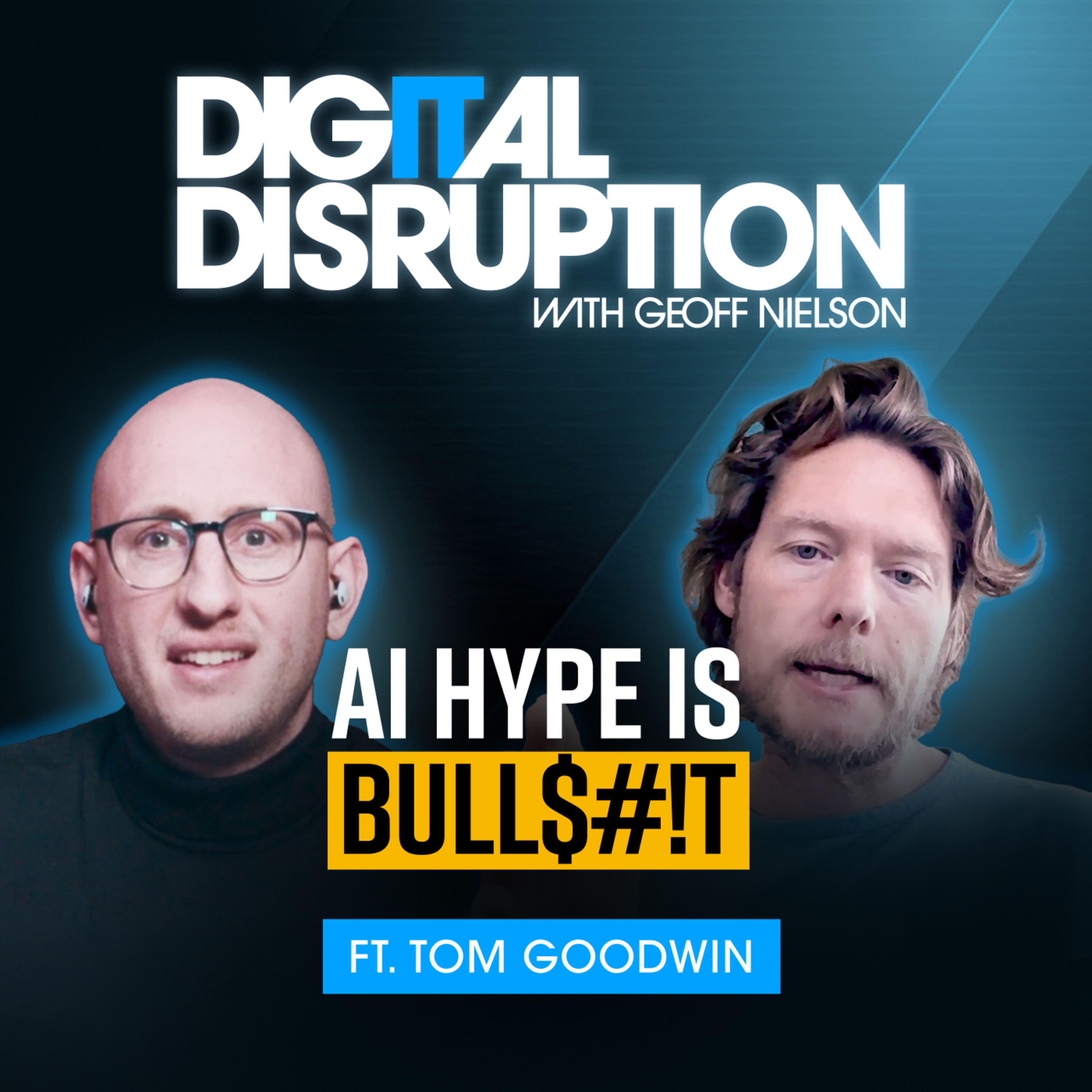
The Big Lie Behind AI Hype: Tom Goodwin on the Future of Business
Jun 2, 202500:54:03Summary readyWhat if the biggest threat to progress isn’t technology? Today on Digital Disruption, we’re joined by Tom Goodwin, Co-Founder of All We Have Is Now.Tom Goodwin is a four-time LinkedIn “#1 Voice in Marketing.” He is also the Co-Founder of, All We Have Is Now, a digital transformation consultancy helping businesses harness emerging technologies. A sought-after speaker, writer, and advisor, Tom also hosts The Edge, a tech-focused TV series, and My Wildest Prediction, a podcast with Euronews. In 2021 Tom published the second edition of his book “Digital Darwinism” with Kogan Page, in 2023 Tom launched a comprehensive online Digital Transformation course, and has now spoken in over 100 cities in 50 countries around the world.Tom sits down with Geoff to share his perspective on the evolving digital landscape and how to cut through the noise especially around AI, digital transformation, and innovation — to focus on what truly matters for organizations today. He argues that in a time of rapid technological change, the smartest move may be to slow down, ignore the hype, and prioritize people, processes, and a long-term strategic vision. Tom urges leaders to think critically, stay grounded in fundamentals, and embrace thoughtful, human-centered progress over flashy solutions.In this video:00:00 Intro01:11 Why tech hype needs a reality check02:06 What actually matters in 202503:04 Business first, not tech first04:11 Why not every company needs to chase every trend05:16 The problem with constant agility07:13 Why disruption isn’t always real10:18 Are we avoiding hard truths about our business models?12:12 Who wins: legacy companies or startups?15:28 Will AI-native companies dominate?17:09 Why real change still takes time19:07 Hype vs. reality in AI adoption22:47 Technology adoption is slower than you think24:02 Advice to leaders on using AI strategically26:44 Why short-term thinking is overrated29:05 Planning for what really matters31:00 A better approach to technology prioritization33:18 Why digital transformation usually fails34:49 The Heathrow metaphor: patchwork vs. reinvention39:06 The promise of AI for real reinvention42:20 Are IT leaders being left behind?44:00 Why the CTO must be more strategic47:03 What it takes to lead digital transformation48:22 Why we need more ambitious use of existing tech50:01 Tom’s book: Digital Darwinism51:40 What happens when AI becomes invisible tech53:13 We need clearer conversations around AIConnect with Tom:Website: https://www.tomgoodwin.co/LinkedIn: https://www.linkedin.com/in/tomfgoodwin/X: https://x.com/tomfgoodwinVisit our website: https://www.infotech.com/Follow us on YouTube: https://www.youtube.com/@InfoTechRG
Summary
What Amazon’s AI Leader Thinks About the Future of Your Job
May 27, 202500:52:54Summary readyIs AI coming for your job, or just the parts that you hate doing?Today on Digital Disruption, we’re joined by Rory Richardson, Director of Go-To-Market for Generative AI at Amazon Web Services (AWS). With over a decade of experience at AWS, she has been instrumental in launching and scaling breakthrough technologies, including non-relational databases and serverless computing. Rory has played a pivotal role in shaping the future of cloud development through her strategic leadership in go-to-market initiatives, empowering developers to expand the boundaries of what’s possible in the cloud. Driven by a passion for innovation, her current focus is on harnessing the potential of generative AI to transform developer tools, enabling more efficient, creative, and human-centered development processes. Rory sits down with Geoff to explain how generative AI can supercharge the developer experience, helping teams write better code, faster, and with fewer headaches. She shares her perspective that AI isn’t about replacing people, but about helping us do less of what we dislike, and why embracing AI now is one of the smartest moves leaders can make. Rory shares real-world examples from AWS, insights from developer culture, and a human-centered view on the rapidly changing AI landscape. In this episode:00:00 Intro01:04 Recap of Info-Tech LIVE 2024 in Las Vegas01:35 What’s new in AI & developer tools02:53 The rise of AI-powered command line tools03:32 Why Amazon is paying people to play06:44 “Vibe Coding”08:10 Differential equations & development tools12:00 Risks of rapid AI adoption13:32 What does coding look like in 2028?16:20 Creativity, context-switching & grit18:07 How play drives innovation19:34 Teaching AI in schools23:10 Is age the biggest barrier to AI adoption?28:20 What should junior Devs expect?30:38 Better AI boundaries35:01 Will AI replace Developers?37:25 Accelerating innovation, not replacing humans42:24 Why AI works best on repetitive tasks44:11 Let AI do the dishes, not the art46:04 From Paris, Texas to Amazon Web Services48:19 Everything is learnable49:09 The grit factorConnect with Rory:LinkedIn: https://www.linkedin.com/in/roryr/Visit our website: https://www.infotech.com/Follow us on YouTube: https://www.youtube.com/@InfoTechRG
Summary
Ex-Google Officer on AI, Capitalism, and the Future of Humanity
May 19, 202502:14:58Summary readyIs the real threat of AI the technology or the humans behind it?Today on Digital Disruption, we’re joined by Mo Gawdat, former Chief Business Officer of Google X. Mo is the host of the popular podcast Slo Mo: A Podcast with Mo Gawdat, and the author of several international bestsellers, including Solve for Happy, Scary Smart, That Little Voice in Your Head, and Unstressable. He is also the founder of One Billion Happy and currently serves as Chief AI Officer at Flight Story. With a 30-year career in tech, Mo has since shifted his focus to the pursuit of happiness and human well-being. He has extensively researched the science of happiness and engaged in conversations with some of the world’s leading thinkers. More recently, his work has centered on the urgent ethical and societal challenges posed by rapid advancements in artificial intelligence. Mo sits down with Geoff for an unfiltered conversation on the future of humanity in the age of artificial intelligence. Mo explains that we’re living in the early stages of a technology-fueled dystopia, one that is driven not by AI itself, but by humans who shape it by greed, power, and unchecked capitalism. But he also shares a vision for a future of unprecedented abundance, one where AI could solve global challenges, from climate change to poverty, but only if we as humans embrace ethical design and mutual cooperation. In this episode: 00:00 Intro01:20 AI, geopolitics, and capitalism03:05 Is the problem human nature or systems?06:22 The coming age of abundant intelligence08:13 AI’s dark side13:15 Fear-driven ai development17:10 Handing power to ai19:14 Why superintelligent ai could save us21:12 Can we avoid an ai Hiroshima moment?25:30 Mutual prosperity or destruction29:11 The age of machine supremacy31:00 How to influence AI for good33:12 AI reflects humanity36:06 What AI is learning from us right now40:06 Who thrives in the AI era44:04 The rise of mind manipulation47:02 How to stay critical in a world of deepfakes49:12 Use AI to expand your thinking, not replace it51:21 The leadership skills of the future54:42 Collaborating with AI as team members57:20 Will AI want to connect with us?01:01:06 Could AI become conscious?01:04:48 AI emotions and the next evolution of intelligence01:06:32 The role of humansConnect with Mo:Website: https://www.mogawdat.com/LinkedIn: https://www.linkedin.com/in/mogawdat/YouTube: https://www.youtube.com/c/mogawdatofficialInstagram: https://www.instagram.com/mo_gawdat/Tik Tok: https://www.tiktok.com/@mogawdatVisit our website: https://www.infotech.com/Follow us on YouTube: https://www.youtube.com/@InfoTechRG
Summary
Disney Chief: How AI Will Change Creativity Forever
May 12, 202500:41:36Summary readyCreativity is the key to staying competitive, so why do so many organizations struggle to innovate?Today on Digital Disruption, we’re joined by Duncan Wardle, former Head of Innovation and Creativity at Disney.Duncan and his team helped Imagineering, Lucasfilm, Marvel, Pixar, and Disney Parks to innovate, creating magical new storylines and experiences. Now a global keynote speaker and innovation advisor, he shares his unique Design Thinking approach to help organizations spark creativity, unlock fresh thinking, and embed innovation into their culture. A TED speaker and contributor to Fast Company, Forbes, and Harvard Business Review, Duncan also teaches innovation Master Classes at Yale, Harvard, and the University of Edinburgh.Duncan sits down with Geoff to explore how businesses can break down the barriers to innovation by tapping into their most powerful resource: human imagination. Duncan gives a look into the magic of Disney’s approach to creativity and explains how companies can design cultures that foster curiosity, risk-taking, and collaboration. From solving complex problems with simple questions to creating space for disruptive thinking, Duncan shares practical, transformative advice for leaders ready to think boldly and challenge the current workplace roles. In this episode: 0:00 Intro2:00 Time at Disney5:40 Creativity is now the most in-demand skill8:15 Barriers to innovation11:30 Tools for creative thinking14:45 Reframing problems as innovation18:10 The power of naïve experts21:00 Innovation at Disney25:50 Tips for embedding in any organization29:00 How leaders can foster innovation32:00 Tools to think differently33:21 Overhyped tools34:01 What’s different about Gen Z36:03 Duncan’s mission to unlock creativity39:03 Changing cultureConnect with Duncan:Website: https://duncanwardle.com/Twitter: https://x.com/duncanjwardleInstagram: https://www.instagram.com/duncanjwardleLinkedIn: https://www.linkedin.com/in/duncanwardle/ Visit our website: https://www.infotech.com/Follow us on YouTube: https://www.youtube.com/@InfoTechRG
Summary
What AI Can Never Understand: Futurist Jonathan Brill Explains
May 5, 202500:59:13Summary readyWith all the AI hype, is there still a place for humans in organizations?Today on Digital Disruption, we’re joined by Jonathan Brill, the world’s top-ranked futurist by Forbes, advisor to Amazon, HP, Samsung, and an author.Jonathan helps executives and audiences spot, prioritize, and act on the forces shaping the next five years — from AI to geopolitical disruption. As the former Global Futurist at HP and a board member of one of the world’s largest private intelligence agencies, he brings unique insights from decades of work in innovation, strategy, and emerging tech. His invention firms have developed over 325 products, generating more than $27 billion in revenue for clients like HP, Samsung, and Verizon. Jonathan is the author of Rogue Waves, praised by The Economist and Adam Grant, offering a practical framework for thriving through disruption. He shares his insights globally on stages like TED, at institutions like Harvard and CERN, and with media outlets including ABC, CNBC, and HBR. Jonathan sits down with Geoff Nielson to explore what leaders need to do to survive and thrive through the next decade of accelerating technological disruption. They discuss why the traditional organizational model introduced in the railroad era is no longer equipped to handle the complexity of AI-powered transformation. Jonathan speaks on the concept of the "octopus organization," where intelligence, decision-making, and adaptability are distributed rather than centralized. He breaks down AI’s biggest shift not just in task automation, but in decision-making and organizational design and emphasizes the importance of psychological safety in successful AI adoption. In this episode0:00 Intro1:14 Enterprise AI2:47 Code and complexity6:07 From Railroad Model to Octopus Organization9:35 AI isn’t just automating work12:03 Why CIOs must lead cultural change18:28 Human intuition is still important20:16 Four leadership traits for the AI era25:32 Executional vs. strategic thinking in IT29:39 The real value of coding in the future35:16 AI’s superpowers38:57 Human vs. machine41:21 Specialists vs. generalists in an AI world47:02 Optimism despite disruption49:48 Governments will shape the pace of change53:04 What’s the hype and what’s real?58:19 Tech adoption is inevitable Connect with Jonathan:Website: https://www.jonathanbrill.com/LinkedIn: https://www.linkedin.com/in/jonathanbrill1/YouTube: https://www.youtube.com/@brill_jonathanVisit our website: https://www.infotech.com/Follow us on YouTube: https://www.youtube.com/@InfoTechRG
Summary
The 6 Technologies That Will Define the Future with AI Futurist Steve Brown
Apr 28, 202500:56:46Summary readyIf you're not ready for the speed of change — you're already behind.Today on Digital Disruption, we’re joined by Steve Brown, a leading voice in the field of artificial intelligence and a former executive at Google DeepMind and Intel.Steve has delivered hundreds of engaging keynotes and AI innovation workshops across five continents. With over 25 years of experience in AI and emerging technologies, Steve helps organizations build winning strategies that drive innovation, boost productivity, and fuel growth. He has advised leading brands including Nike, JP Morgan, Samsung, Comcast, Audi, Bank of America, PepsiCo, and Disney. Steve is the co-founder of The Provenance Chain Network, a BCG Luminary, and an advisor to multiple AI startups. He has been featured on CNN, BBC, Bloomberg, Forbes, and The Wall Street Journal. His book, The Innovation Ultimatum, explores how six strategic technologies will reshape every business in the 2020s. He holds bachelor's and master's degrees in Micro-Electronic Systems Engineering from Manchester University and lives in Portland, Oregon.Steve sits down with Geoff Nielson to explore how AI, robotics, and automation are reshaping business, education, and the future of work. Steve reflects on the six emerging technologies he forecasted in The Innovation Ultimatum, where he got it right, and what surprised him — from the power of process orchestration and the quiet rise of blockchain, to the next potential “ChatGPT moment.” Steve also shares a preview of his upcoming book, The AI Ultimatum, and what business leaders need to know now to stay relevant and human in an AI-powered economy. In this episode:0:00 Intro0:42 Revisiting 2019's predictions2:04 The Rise of process orchestration3:11 Process orchestration5:12 AI and sales enablement6:33 Blockchain’s future11:14 The mixed reality opportunity13:49 What’s the next “ChatGPT moment”?15:12 Robotics, Quantum & what's next18:40 The real AI transformation opportunity20:10 Top 3 areas where AI is impacting businesses21:37 AI-enabled employee experiences22:54 From lockdown to enablement24:36 Getting started with AI transformation28:01 Unexpected use cases31:29 The education disruption is coming36:20 Learn to get the most out of AI37:48 How to become robot-proof40:39 What gives life meaning43:20 Creativity in the age of AI45:42 The rise of one-person enterprise 49:19 Do we need AGI50:50 Hype vs. reality52:10 The AI Ultimatum 53:36 Speed of change Connect with Steve:Website: https://www.stevebrown.ai/aboutLinkedIn: https://www.linkedin.com/in/futuresteve/Visit our website: https://www.infotech.com/Follow us on YouTube: https://www.youtube.com/@InfoTechRG
Summary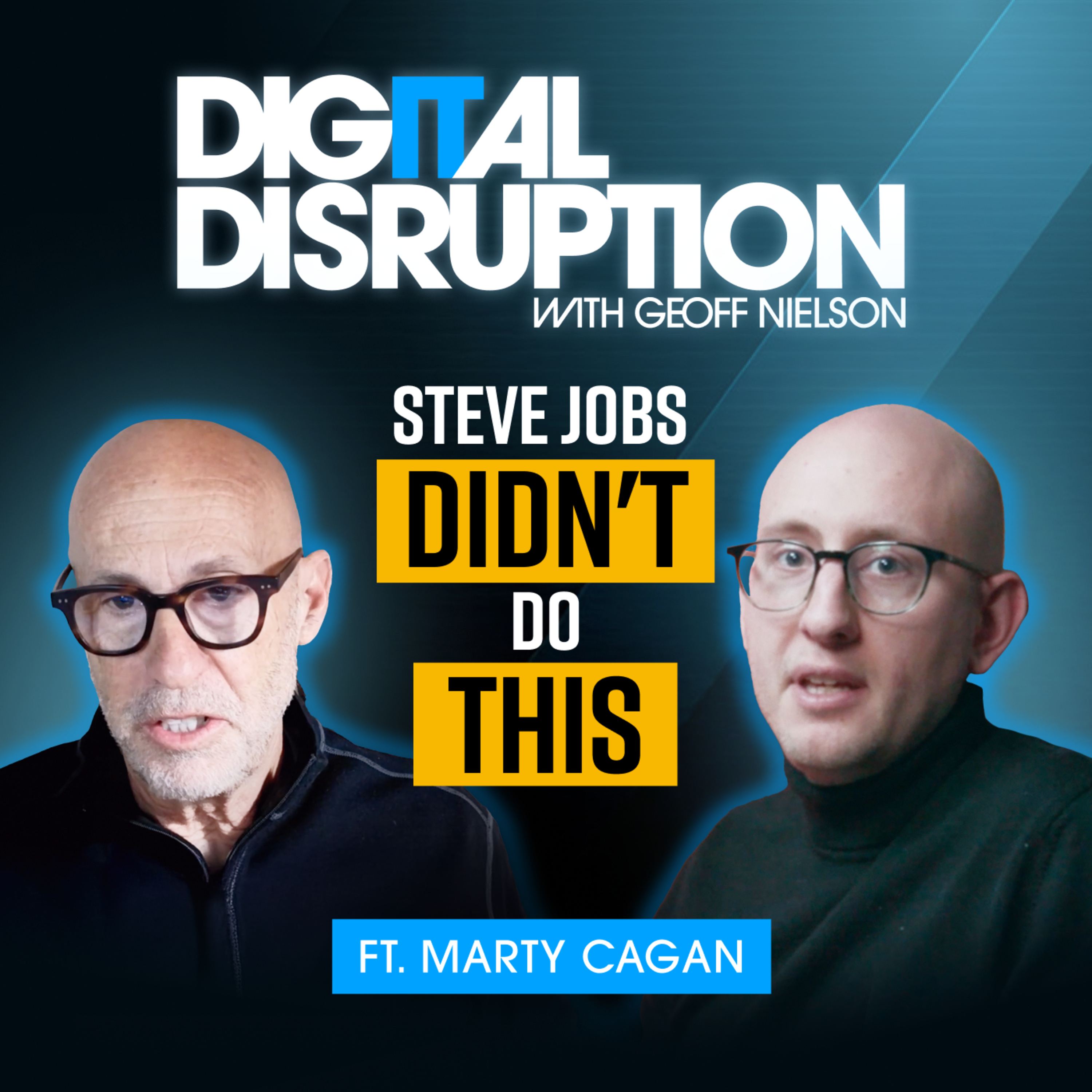
Marty Cagan Explains How to Design a Product Like Steve Jobs
Apr 21, 202500:56:06Summary readyWhat does it really take to build a product-driven organization in the age of AI, and are organizations ready for what's coming next?Today on Digital Disruption, we’re joined by Marty Cagan, product thought leader and founder of the Silicon Valley Product Group.Before founding the Silicon Valley Product Group (SVPG) to focus on helping others build successful products through writing, speaking, advising, and coaching, Marty Cagan served as a product executive at some of the world’s most successful technology companies, including HP Labs, Netscape Communications, and eBay. Through his work with SVPG, Marty is a sought-after speaker at major conferences and leading companies around the world. He is also the author of three influential books: Inspired: How to Create Tech Products Customers Love, Empowered: Ordinary People, Extraordinary Products, and Transformed: Moving to the Product Operating Model.Marty sits down with Geoff Nielson to discuss how generative AI is reshaping product management and why organizations need to rethink how they build and lead product teams. He outlines three key models of product management and explains how AI is disrupting each one differently. This conversation dives deep into modern product thinking, as Marty highlights what sets companies like Amazon, Apple, Tesla, and Netflix apart — emphasizing the importance of visionary leadership and product-centric thinking. Marty also gives a look into his latest book Transformed, which explains how even the most traditional organizations can adopt modern product practices.In this episode:00:00 Intro00:30 How generative ai is shifting product roles 01:20 The 3 models of product management explained 03:00 Why product owner roles are most at risk 05:00 Upskilling in the world of AI 06:25 What execution roles must to learn 07:30 The Feature Team Model and its vulnerabilities 09:00 Top product companies getting it right 10:40 What great product leadership looks like 13:00 Bill Campbell’s coaching culture 15:10 Empowered engineers17:00 The Steve Jobs myth 20:00 Product discovery at Apple explained 21:30 Executive resistance 23:00 Real-world case studies25:35 The importance of pilot teams29:00 From surviving to thriving with gen ai 30:30 The 3 Meta questions 33:00 Why transformation takes time 36:00 How to use pilot teams 39:00 The anti-patterns42:30 Why coaching works better than consulting 45:00 Emerging tech 47:00 Crypto vs. Gen AI48:00 Enterprise products work 51:00 Can the product model work in government? Connect with Marty:LinkedIn: https://www.linkedin.com/in/cagan/Website: SVPG: Learn the Product Operating Model : Silicon Valley Product GroupVisit our website: https://www.infotech.com/Follow us on YouTube: https://www.youtube.com/@InfoTechRG
Summary
AI Is Rewriting the Rules of Work: Futurist Ian Beacraft Explains Why Jobs are Dead
Apr 14, 202501:07:08Summary readyToday on Digital Disruption, we’re joined by Ian Beacraft, Chief Futurist and Founder of Signal and Cipher.He is one of the leading voices in AI and the future of work. As Chief Futurist and Founder of Signal and Cipher, Ian helps organizations become AI-ready through strategic workforce transformation, training, and innovation. Ian has advised top global brands including Samsung, Google, Microsoft, and Nike. A former agency executive, he now pioneers immersive presentations that bring AI and extended reality to life. Ian is also the co-owner of a production studio designing virtual worlds and the first person ever to host a news segment as a synthetic human, streaming to over 100 million devices around the world. A classically trained musician and passionate educator, he champions the responsible, creative use of emerging technologies—and remains an optimist about the future of humanity in a tech-driven world. Ian sits down with Geoff Nielson to unpack the real impact of artificial intelligence on the workplace. They discuss why outdated leadership mindsets are more harmful than AI itself, how organizations must evolve beyond rigid roles and job descriptions, and why the future of work is less about replacing people and more about reshaping how we define value, productivity, and collaboration. Ian explains that it’s not about eliminating jobs, but about eliminating the artificial boundaries that confine people to specific roles within an organization. In this episode:0:00 Intro0:45 The real threat is not AI, but outdated leadership2:15 The era of unending exponential growth4:30 AI is changing the definition of work8:15 Where leaders should begin with AI12:35 Using AI tools to align leadership team15:30 What AI really needs to succeed 17:00 The loss of job descriptions19:02 The shift in career thinking21:50 Who’s at more risk – junior roles or long-time workers?25:30 The future of work in practice31:00 Digital Twins in the workplace36:00 Build AI ready teams41:00 Rethinking education46:01 What role does Signal and Cipher play to help accelerate traditional enterprises52:35 What’s next58:00 Tracking innovation and adaptability 1:04:00 Building a future-ready organization Connect with Ian:LinkedIn: https://www.linkedin.com/in/ianbeacraft/X: https://x.com/IanbcraftWebsite: https://signalandcipher.com/Visit our website: https://www.infotech.com/Follow us on YouTube: https://www.youtube.com/@InfoTechRG
Summary