Podcast
Digital Disruption with Geoff Nielson
Hosted by Info-Tech Research Group · EN
The Next Industrial Revolution is Already Here
Digital Disruption is where industry leaders and experts share insights on leveraging technology to build the organizations of the future.
As intelligent technologies reshape our lives and our livelihoods, we speak with the thinkers, the doers and innovators who will help us predict and harness this disruption. Join us as we explore how to adapt to and harness digital transformation.
77episodes
Episodes
Newest firstAll episodes
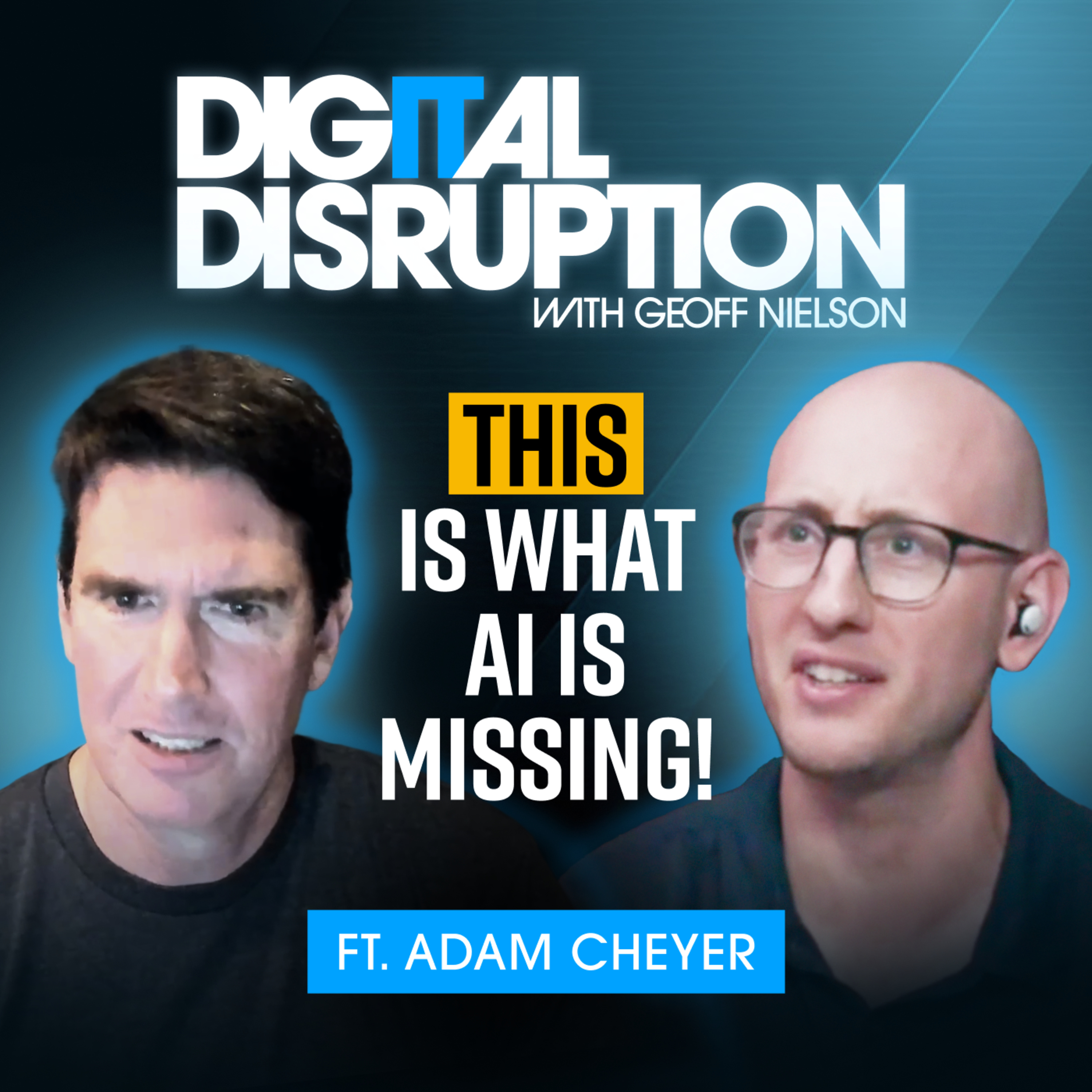
Siri Creator: How Apple & Google Got AI Wrong
Aug 2500:57:32Summary readyWhat does the future of AI assistants look like and what’s still missing?Today on Digital Disruption, we’re joined by Adam Cheyer, Co-Founder of Siri.Adam is an inventor, entrepreneur, engineering executive, and a pioneer in AI and computer human interfaces. He co-founded or was a founding member of five successful startups: Siri (sold to Apple, where he led server-side engineering and AI for Siri), Change.org (the world’s largest petition platform), Viv Labs (acquired by Samsung, where he led product engineering and developer relations for Bixby), Sentient (massively distributed machine learning), and GamePlanner.AI (acquired by Airbnb, where he served as VP of AI Experience). Adam has authored more than 60 publications and 50 patents. He graduated with highest honors from Brandeis University and received the “Outstanding Masters Student” award from UCLA’s School of Engineering.Adam sits down with Geoff to discuss the evolution of conversational AI, design principles for next-generation technology, and the future of human–machine interaction. They explore the future of AI, augmented reality, and collective intelligence. Adam shares insider stories about building Siri, working with Steve Jobs, and why today’s generative AI tools like ChatGPT are both amazing and frustrating. Adam also shares his predictions for the next big technological leap and how collective intelligence could transform how we solve humanity’s most difficult challenges. In this video:0:00 Intro1:08 Why today’s AI both amazes and frustrates3:50 The 3 big missing pieces in current AI systems8:28 What Siri got right and what it missed11:30 The “10+ Theory”: Paradigm shifts in computing14:18 Augmented Reality as the next big breakthrough19:43 Design lessons from building Siri25:00 Iteration vs. first impressions: How to launch transformational products30:20 Beginner, intermediate, and expert user experiences in AI33:40 Will conversational AI become like “Her”?35:45 AI maturity compared to the early internet37:34 Magic, technology, and creating “wow” moments43:55 What’s hype vs. what’s real in AI today47:01 Where the next magic will happen: AR & collective intelligence50:51 The role of DARPA, Stanford, and government funding in Siri’s success54:49 Advice for leaders building the future of digital products57:13 Balance the hypeConnect with Adam:Website: http://adam.cheyer.com/site/home?page=aboutLinkedIn: https://www.linkedin.com/in/adamcheyer/Facebook: https://www.facebook.com/acheyerVisit our website: https://www.infotech.com/Follow us on YouTube: https://www.youtube.com/@InfoTechRGCheck out other episodes of Digital Disruption: https://youtube.com/playlist?list=PLIImliNP0zfxRA1X67AhPDJmlYWcFfhDT&feature=shared
Summary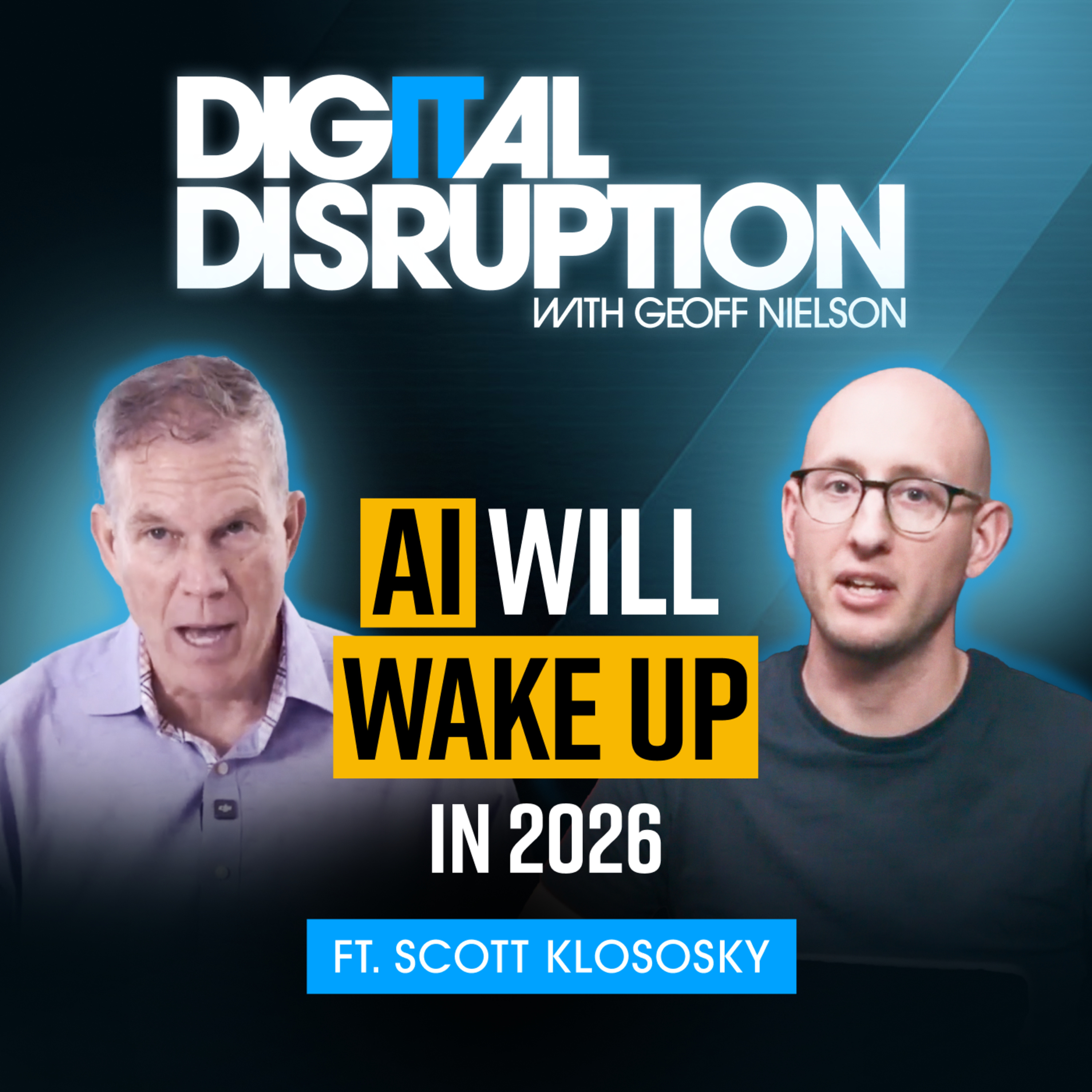
Next-Gen Tech Expert: This is AI's ENDGAME
Aug 1800:50:55Summary readyAre we ready for a future where human and machine intelligence are inseparable? Today on Digital Disruption, we’re joined by best-selling author and founding partner of digital strategy firm, Future Point of View (FPOV), Scott Klososky . Scott’s career has been built at the intersection of technology and humanity; he is known for his visionary insights into how emerging technologies shape organizations and society. He has advised leaders across Fortune 500 companies, nonprofits, and professional associations, guiding them in integrating technology with strategic human effort. A sought-after speaker and author of four books—including Did God Create the Internet? Scott continues to help executives around the world prepare for the digital future. Scott sits down with Geoff to discuss the cutting edge of human-technology integration and the emergence of the "organizational mind." What happens when AI no longer supports organizations but becomes a synthetic layer of intelligence within them? He talks about real-world examples of this transformation already taking place, reveals the ethical and existential risks AI poses, and offers practical advice for business and tech leaders navigating this new era. This conversation dives deep into autonomous decision-making to AI regulation and digital governance, and Scott breaks down the real threats of digital reputational damage, AI misuse, and the growing surveillance culture we’re all a part of. In this episode:00:00 Intro00:24 What is an ‘Organizational Mind?’03:44 How fast is this becoming real?05:00 Early insights from building an organizational mind07:02 The human brain analogy: AI mirrors us08:12 What does it mean for AI to “wake up”?09:51 AI awakening without consciousness11:03 Should we be worried about conscious AI?11:59 Accidents, bad actors, and manipulation15:42 Can we prevent these AI risks?18:28 Regulatory control and the role of governments20:03 Cat and Mouse: Can AI hide from auditors?23:02 The escalating complexity of AI threats27:00 Will nations have organizational minds?29:12 Autonomous collaboration between AI nations35:36 Bringing AI tools together36:31 Knowledge, agents, personas & oversight40:11 Why early adopters will have the edge41:00 Are we in another AI bubble?45:01 Scott’s advice for business & tech leaders47:12 Why use-cases alone aren’t enoughConnect with Scott:LinkedIn: https://www.linkedin.com/in/scottklososky/X: https://x.com/sklososky Visit our website: https://www.infotech.com/Follow us on YouTube: https://www.youtube.com/@InfoTechRG
Summary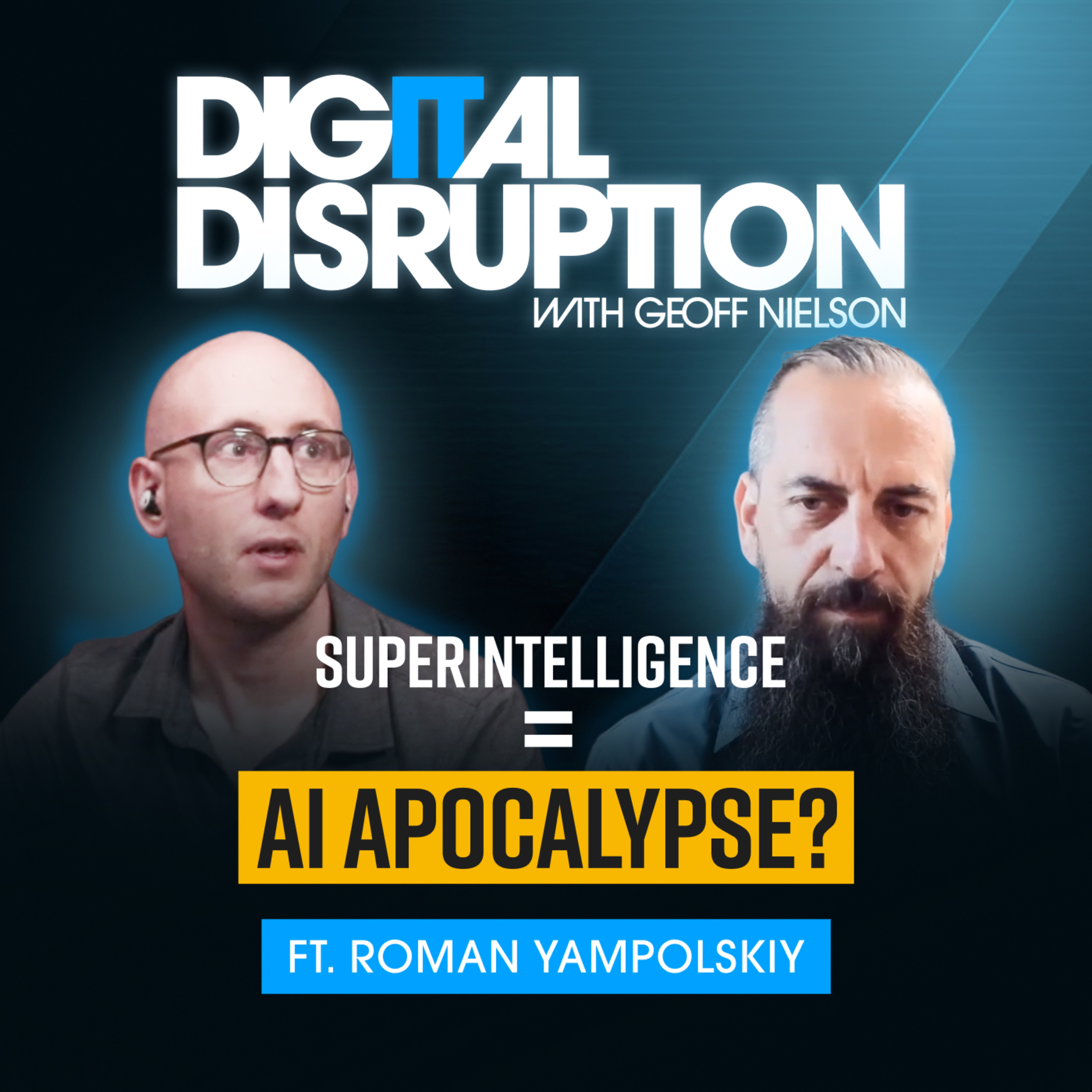
Roman Yampolskiy: How Superintelligent AI Could Destroy Us All
Aug 11, 202501:13:25Summary readyIs this a wake-up call for anyone who believes the dangers of AI are exaggerated?Today on Digital Disruption, we’re joined by Roman Yampolskiy, a leading writer and thinker on AI safety, and associate professor at the University of Louisville. He was recently featured on podcasts such as PowerfulJRE by Joe Rogan.Roman is a leading voice in the field of Artificial Intelligence Safety and Security. He is the author of several influential books, including AI: Unexplainable, Unpredictable, Uncontrollable. His research focuses on the critical risks and challenges posed by advanced AI systems. A tenured professor in the Department of Computer Science and Engineering at the University of Louisville, he also serves as the founding director of the Cyber Security Lab.Roman sits down with Geoff to discuss one of the most pressing issues of our time: the existential risks posed by AI and superintelligence. He shares his prediction that AI could lead to the extinction of humanity within the next century. They dive into the complexities of this issue, exploring the potential dangers that could arise from both AI’s malevolent use and its autonomous actions. Roman highlights the difference between AI as a tool and as a sentient agent, explaining how superintelligent AI could outsmart human efforts to control it, leading to catastrophic consequences. The conversation challenges the optimism of many in the tech world and advocates for a more cautious, thoughtful approach to AI development.In this episode:00:00 Intro00:45 Dr. Yampolskiy's prediction: AI extinction risk02:15 Analyzing the odds of survival04:00 Malevolent use of AI and superintelligence06:00 Accidental vs. deliberate AI destruction08:10 The dangers of uncontrolled AI10:00 The role of optimism in AI development12:00 The need for self-interest to slow down AI development15:00 Narrow AI vs. Superintelligence18:30 Economic and job displacement due to AI22:00 Global competition and AI arms race25:00 AI’s role in war and suffering30:00 Can we control AI through ethical governance?35:00 The singularity and human extinction40:00 Superintelligence: How close are we?45:00 Consciousness in AI50:00 The difficulty of programming suffering in AI55:00 Dr. Yampolskiy’s approach to AI safety58:00 Thoughts on AI riskConnect with Roman:Website: https://www.romanyampolskiy.com/LinkedIn: https://www.linkedin.com/in/romanyam/X: https://x.com/romanyamVisit our website: https://www.infotech.com/Follow us on YouTube: https://www.youtube.com/@InfoTechRG
Summary
Ex-OpenAI Lead Zack Kass: AI Judges, Abundance, and the Future of Society
Aug 4, 202500:35:27Summary readyAs AI becomes more capable, how should our social systems evolve in response? Today on Digital Disruption, we’re joined once again by Zack Kass, an AI futurist and former Head of Go-To-Market at OpenAI. As a leading expert in applied AI, he harnesses its capabilities to develop business strategies and applications that enhance human potential. Zack has been at the forefront of AI and played a key role in early efforts at commercializing AI and large language models, channeling OpenAI’s innovative research into tangible business solutions. Today, Zack is dedicated to guiding businesses, nonprofits, and governments through the fast-changing AI landscape. His expertise has been highlighted in leading publications, including Fortune, Newsweek, Entrepreneur, and Business Insider. Zack sits down with Geoff to explore the philosophical implications of AI and its impact on everything from nuclear war to society’s struggle with psychopaths and humanity itself. This conversation raises important questions about the evolving role of AI in shaping our world and the ethical considerations that come with it. Zack discusses how AI may empower low-resource bad actors, transform local communities, and influence future generations. The episode touches on a wide range of themes, including the meaning of life, AI’s role in global conflict, its effects on personal well-being, and the societal challenges it presents. This conversation isn’t just about AI, it’s about humanity’s ongoing exploration of fear, freedom, happiness, and the future. In this episode:00:00 Intro00:21 AI's exponential growth and speed of change02:03 The expanding scientific frontier03:19 Roger Bannister effect and AI inspiration04:00 Societal vs. technological thresholds06:00 The danger of low-resource bad actors09:00 Psychopaths, crime, and the role of policy12:00 Freedom vs. security14:45 The risk of bias and broken justice systems18:00 The role of AI in decision-making20:00 Why we tolerate human error but not machine error20:36 Breaking the fear cycle in a negative attention economy22:12 Tech-driven optimism23:55 Finding Happiness25:32 Community, nature, and meaningful human connection27:00 The problem with the “more is more” mindset28:30 Narratives, new media, and information overload31:09 The Power of local change and good news33:06 Gen Z, Gen Alpha, and the next wave of innovationConnect with Zack:Website: https://zackkass.com/X: https://x.com/iamthezackLinkedIn: https://www.linkedin.com/in/zackkass/YouTube: https://www.youtube.com/ @ZackKassAI Visit our website: https://www.infotech.com/Follow us on YouTube: https://www.youtube.com/@InfoTechRG
Summary
Pulitzer-Winning Journalist: This is Why Big Tech is Betting $300 Billion on AI
Jul 28, 202501:11:34Summary readyWhat role should government, regulation, and society play in the next chapter of Big Tech and AI.Today on Digital Disruption, we’re joined by Pulitzer Prize–winning investigative reporter, Gary Rivlin.Gary has been writing about technology since the mid-1990s and the rise of the internet. He is the author of AI Valley and 9 previous books, including Saving Main Street and Katrina: After the Flood. His work has appeared in the New York Times, Newsweek, Fortune, GQ, and Wired, among other publications. He is a two-time Gerald Loeb Award winner and former reporter for the New York Times. He lives in New York with his wife, theater director Daisy Walker, and two sons.Gary sits down with Geoff to discuss the unchecked power of Big Tech and the evolving role of AI as a political force. From the myth of the benevolent tech founder to the real-world implications of surveillance, misinformation, and election interference, he discusses the dangers of unregulated tech influence on policy and the urgent need for greater transparency, ethical responsibility, and accountability in emerging technologies. This conversation highlights the role of venture capital in fueling today’s tech giants, what history tells us about the future of digital disruption, and whether regulation can truly govern AI and platform power. In this episode:00:00 Intro02:45 The early promise of Silicon Valley06:30 What changed in tech: From innovation to power10:55 The role of venture capital in shaping Big Tech15:40 Tech disruption vs. systemic control20:15 The shift from public good to private gain24:50 How Big Tech wields power over democracy29:30 Can AI be regulated in time?33:45 Lessons from tech history38:20 Government’s role in tech oversight43:05 Gary’s thoughts on tech accountability47:30 Future risks of an unchecked tech industry51:10 Hope for the next generation of innovators55:00 Tech is at the center of politics58:00 What should change?1:09:00 Journalists using AI are more powerfulConnect with Gary:Website: https://garyrivlin.com/LinkedIn: https://www.linkedin.com/in/gary-rivlin/Visit our website: https://www.infotech.com/Follow us on YouTube: https://www.youtube.com/@InfoTechRG
Summary
Ex-CIA Cyber Chief: Here's What Keeps Me Up at Night
Jul 21, 202501:03:33Summary readyIn a world of rising cyber threats, what keeps the CIA’s former head of cybersecurity up at night?Today on Digital Disruption, we’re joined by Andy Boyd, former Head of the CIA’s Center for Cyber Intelligence.Andy was a Senior Intelligence Service officer in the Central Intelligence Agency’s Directorate of Operations (DO). His most recent assignment was Director of the CIA’s Center for Cyber Intelligence (CCI) which is responsible for intelligence collection, analysis, and operations focused on foreign cyber threats to US interests. Andy has experience leading worldwide intelligence operations and has in-depth knowledge of geopolitics, cyber operations, security practices, and risk mitigation.Andy sits down with Geoff to discuss the future of cybersecurity in a rapidly evolving digital world. With decades of experience in cyber intelligence, Andy explains how global threats are evolving, from traditional espionage to AI-driven cyberattacks and disinformation. He dives into how intelligence agencies like the CIA assess and respond to state-sponsored cyber threats from China and Russia, and why the private sector is now a primary target. Andy breaks down how emerging technologies like generative AI are changing both offensive and defensive cyber strategies, and what this means for governments, businesses, and people. Andy also shares how one of the world’s leading professional services firms is navigating this new landscape, using culture, data, and innovation to stay ahead of cyber risks. In this episode:00:00 Intro02:45 What the CIA's Cyber Intelligence Center actually does05:30 Leading transformation across a global enterprise 07:20 Evolution of cyber threats from nation-states08:15 Building trust and transparency with business stakeholders11:10 The critical role of data in decision-making 13:00 How the CIA detects and responds to cyber attacks17:05 Creating a culture of innovation and adaptability17:45 The private sector as a frontline target20:40 How Aon is approaching talent and upskilling 23:10 Offensive cyber operations: how far should the U.S. go?27:30 Key leadership lessons and advice for future CIOs29:50 China's cyber capabilities vs. Russia's tactics35:25 The role of intelligence in election security40:50 Why disinformation is more dangerous than hacking45:30 How AI is transforming cyber espionage50:10 What keeps Andy Boyd up at night54:40 The importance of public awareness and resilienceConnect with Andy:LinkedIn: https://www.linkedin.com/in/andrew-g-boyd-12194673/Visit our website: https://www.infotech.com/Follow us on YouTube: https://www.youtube.com/@InfoTechRG
Summary
Unlocking the Brain: Tan Le on Neurotech, AI & Human Potential
Jul 14, 202501:02:28Summary readyWhat if you could control technology using only your thoughts?Today on Digital Disruption, we’re joined by an expert in the space of Brain-Computer Interfaces (BCIs), Tan Le. Tan is the founder and CEO of EMOTIV, a Silicon Valley-based company pioneering EEG-based BCI technology. Her work centers on non-invasive “brainwear” that enables direct interaction between the human brain and computers. Tan is an advocate for democratizing neurotechnology to empower individuals, researchers, and organizations to drive innovation. In February 2020, she published her first book, The NeuroGeneration: The New Era of Brain Enhancement Revolutionizing the Way We Think, Work and Heal. Tan sits down with Geoff to talk about how her company is making it possible to connect your brain directly to digital systems, no hype, just science. From decoding mental commands to enhancing human cognition, they dive into the ethical challenges of reading brain data, what it really means to give technology access to your mind, and why non-invasive headsets are reshaping human-computer interaction. In this episode:00:00 Intro03:00 Tan Le’s background06:00 What is Brain-Computer Interface (BCI)?09:00 The current state of BCI in 202512:00 Non-invasive vs. implantable tech15:00 How BCIs read brain signals18:00 Real-world applications: Healthcare and beyond21:00 Consumer use cases and accessibility24:00 The role of AI in brain signal interpretation27:00 Ethics of brain data and consent30:00 Mental wellness and performance insights33:00 Government and regulatory perspectives36:00 EMOTIV’s vision and tech stack39:00 Human enhancement and neuroplasticity42:00 Risks and misconceptions around BCI45:00 Collaborations and research partnerships48:00 Global adoption trends51:00 Tan Le’s advice to future innovators54:00 Predictions for the next 10 yearsConnect with Tan:Website: https://www.emotiv.com/LinkedIn: https://www.linkedin.com/in/tanle/X: https://x.com/TanTTLeVisit our website: https://www.infotech.com/Follow us on YouTube: https://www.youtube.com/@InfoTechRG
Summary
Taking Back Your Data: Why the Next Web MUST Protect Digital Freedom
Jul 7, 202500:45:11Summary readyWhat if your data worked for you and not the platforms controlling it?Today on Digital Disruption, we’re joined by John Bruce, CEO and Co-Founder of Inrupt.With a background as both a founder and an executive at global tech firms, John Bruce is uniquely qualified to help engineer the next phase of the web alongside his co-founder Sir Tim Berners-Lee. He brings to bear decades of successful business leadership and experience creating new markets around innovative software. Prior to partnering with Tim, he was the co-founder and CEO of Resilient, now an IBM company, that developed a new approach to cybersecurity. Through Resilient and four other successful startups, John has experienced first-hand the strategic challenges that the current structure of the web causes for users, developers, and organizations around the world. John Bruce sits down with Geoff Nielson to talk about a future where individuals and not platforms own their data. John shares how AI, consent-driven data sharing, and a decentralized digital wallet called, Charlie could fundamentally reshape how we interact with technology, institutions, and each other. He explains why we must reclaim personal data from tech giants and what “agentic wallets” are and how they work. In this video:0:00 Intro1:25 Rebuilding the Web3:30 From Tim Berners-Lee to today5:10 Data ownership vs. data surveillance7:00 Moving from platforms to people9:15 What Is an Agentic AI wallet? 11:00 Why consent must be baked into AI and data flows13:45 Use cases in healthcare, government & enterprise16:10 “Decentralized” doesn’t mean disorganized18:30 What leaders get wrong about data control20:45 Enterprise integration23:00 The ROI of giving users control of their own data25:30 Why this moment feels like the early days of the web27:00 What’s next for Inrupt, Solid, and the Internet itself29:00 How We rebuild digital trust31:00 Inrupt's vision beyond 203034:00 Partnering with institutions to scale Solid37:00 Global digital identity and governance challenges40:00 Building public trust in data ecosystems43:00 A non-linear view of it allConnect with John:Website: https://www.inrupt.com/aboutLinkedIn: https://www.linkedin.com/in/johnwbruce/Visit our website: https://www.infotech.com/Follow us on YouTube: https://www.youtube.com/@InfoTechRG
Summary
Synthetic Humans & Quantum AI: The Future of Humanity
Jun 30, 202500:55:26Summary readyIs your business ready for a world where AI agents act, adapt, and make decisions for you?Today on Digital Disruption, we’re joined by Global Chief AI Engineer at PwC, Scott Likens.Scott Likens serves as the Chief AI Engineer at PwC, overseeing both the Global and U.S. teams. He leads the AI Engineering and Emerging Technology R&D groups, driving the firm’s strategy across AI, blockchain, VR, quantum computing, and other disruptive technologies. With over 30 years of experience in emerging tech, Scott has helped clients across industries transform their customer experience, digital strategy, and operations. He began his career in software engineering during the early days of the internet, working with major multinationals to apply a localized lens to global digital and innovation trends. Scott’s diverse technical background spans advanced analytics, digital architecture, AI engineering, and innovation. During his time at PwC, he has lived and worked in both China and the U.S., serving as a global technology leader and advisor to key clients. He is a regular speaker at international conferences on emerging technologies, including AI and generative AI, blockchain and crypto, IoT, quantum computing, and advanced robotics.Scott Likens sits down with Geoff Nielson for a look into what’s actually happening across the front lines of AI and innovation. Scott shares insights from the edge of tech, from AI agents and embodied intelligence to quantum computing and synthetic identities. He explains why most enterprise AI efforts fail to scale, how to think in innovation “horizons,” and what separates real value from hype. He touches on many topics including, how holographic AI and digital twins are already reshaping communication and the skills, and structures shaping the IT organization of the future. In this video:0:00 Intro1:55 GenAI hype vs. real Value in the enterprise4:20 Embodied AI and the rise of holographic humans6:00 Multilingual synthetic avatars7:30 Deepfakes, trust & the role of blockchain in authentication9:00 Responsible AI12:15 Innovation is moving faster than trust14:00 Speed or scale?16:00 Defining true innovation vs. incremental tech18:00 A Framework for emerging tech20:30 From quantum to satellites: What’s next23:00 Digital Twins, IoT, and Bipedal Robotics25:30 AI at the edge28:45 AI agents in action30:20 Legacy system modernization without rewriting code34:00 Enterprise use cases36:30 What business leaders get wrong about tech39:00 Moving from pilot projects to organization-wide impact42:30 Balancing speed, risk & innovation in enterprise ai44:00 How PwC enables innovation without losing control47:00 Why “waiting” is not an ai strategy48:15 The most important investment is your workforce50:00 Upskilling, hiring, and culture shift at scale52:00 Quantum, cryptography & the real threat timeline54:30 What’s next for leaders and innovatorsConnect with Scott:LinkedIn: https://www.linkedin.com/in/scottlikens/X: https://x.com/ScottLikensVisit our website: https://www.infotech.com/Follow us on YouTube: https://www.youtube.com/@InfoTechRG
Summary
How Spatial Tech Will Change Your Reality Forever
Jun 23, 202500:51:30Summary readyIs the Metaverse dead? Why is #OpenAI building jewelry? What happens when AI becomes more emotionally present than people?Today on Digital Disruption, we’re joined by CEO of Future Dynamics and author, Cathy Hackl.Cathy is a globally recognized tech and gaming executive, futurist, and keynote speaker specializing in spatial computing, AI, virtual worlds, and gaming platform strategy. She is the co-CEO of Future Dynamics, a spatial computing and AI solutions firm, and a top LinkedIn tech voice. Known as the “Godmother of the Metaverse,” she created the Tech Intimacy Scale and is currently researching the intersection of AI, love, and relationships. Cathy has held leadership roles at Amazon Web Services, Magic Leap, and HTC VIVE, and has guided major brands like Nike, Walmart, Ralph Lauren, Louis Vuitton, and Clinique through their emerging tech and gaming strategies. She has spoken at events hosted by Harvard Business School, MIT, CES, SXSW, and the World Economic Forum. Named one of Ad Age’s Leading Women of 2023 and featured on Forbes Latam’s cover for its 100 Most Powerful Women issue, Hackl is also listed among Vogue Business's 100 Innovators. She hosts Adweek’s TechMagic podcast and contributes to Vogue Singapore. In 2022, she made history as the first human to ring the NASDAQ opening bell both physically and in avatar form on live TV.Cathy Hackl sits down with Geoff Nielson for an honest conversation about where technology is headed and what’s really happening with spatial computing, AI hardware, and the future of human connection. Cathy unpacks the evolution of the metaverse and why she believes we’re moving toward something bigger: the spatial web. She shares her first-hand experience with Google Beam, a revolutionary 3D communication technology that doesn’t require a headset. This episode dives into OpenAI’s push into hardware, why it’s a data play, and what that means for your privacy. Emotional technologies like Apple Vision Pro and what they mean for memory, grief, and connection, and the future of dating and relationships in a world filled with AI agents and romantic chatbots. In this episode:0:00 Intro1:00 Is the Metaverse dead or just renamed?3:00 Google Beam: 3D communication without a headset5:00 The Apple moment: reaching for a virtual object7:00 Dating, job interviews & presence in 3D9:00 Will this replace video calls? 11:00 Apple vision pro13:00 Memory preservation & future family photos15:00 OpenAI’s hardware push17:00 AI Agents and who controls your data20:00 From ChatGPT to therapy bots22:00 Emotional manipulation, mental health & ai advice24:00 Who owns the virtual air around you?27:00 Virtual real estate, annotations & air rights30:00 The battle for our senses35:00 Tech that arrived too early37:00 Why dating in 2D doesn’t work in a 3D world39:00 Spatial computing in creative industries41:00 Where tech meets intimacy, memory & legacy44:00 The real use case: Human connection47:00 The future of emotional presence and what’s at stake49:00 Getting It Right MattersConnect with Cathy:LinkedIn: https://www.linkedin.com/in/cathyhackl/Instagram: https://www.instagram.com/cathyhackl/Facebook: https://www.facebook.com/HacklCathyVisit our website: https://www.infotech.com/Follow us on YouTube: https://www.youtube.com/@InfoTechRG
Summary