Podcast
Digital Disruption with Geoff Nielson
Hosted by Info-Tech Research Group · EN
The Next Industrial Revolution is Already Here
Digital Disruption is where industry leaders and experts share insights on leveraging technology to build the organizations of the future.
As intelligent technologies reshape our lives and our livelihoods, we speak with the thinkers, the doers and innovators who will help us predict and harness this disruption. Join us as we explore how to adapt to and harness digital transformation.
77episodes
Episodes
Newest firstAll episodes
How AI-Ready Leaders Will Replace You: Erik Qualman Explains
Nov 300:50:49Summary readyWhy is adaptability the real superpower for leaders in the digital age?On this episode of Digital Disruption, we’re joined by Erik Qualman, a digital leadership expert, best-selling author, and motivational speaker.Erik is a 5x #1 Bestselling Author and Keynote Speaker who has inspired audiences in over 55 countries and reached 50 million people. Voted the #2 Most Likeable Author in the World behind J.K. Rowling, his work Socialnomics has been featured on 60 Minutes, in The Wall Street Journal, and used by organizations from the National Guard to NASA. A professor of Digital Leadership at Northwestern University, Qualman’s research and courses are studied at 500+ universities worldwide. Through his animation studio, he has partnered with brands like Disney, Oreo, Chase, and Cartier. A former MIT and Harvard edX professor and honorary doctorate recipient, Qualman is also the creator of the bestselling board game Kittycorn.Erik joins Geoff Nielson to break down what it really means to be AI-ready. He reveals why the leaders who know how to leverage AI and adapt fast will replace those who don’t. He explains why AI is overhyped in the short term but underhyped in the long term, and how the most successful leaders of the next decade will blend Flintstones-level human connection with Jetsons-era innovation. Erik explains why adaptability and emotional intelligence (EQ) are the new competitive edge in the age of artificial intelligence. This conversation explores how AI can remove friction, save time, and ironically help us become more human, while also exploring the guardrails needed for responsible tech adoption. Erik also shares lessons from advising some of the world’s top brands including Facebook, Disney, and Sony and explains why the future favors those who fail fast, fail forward, and fail better.In this video:00:00 Intro02:00 The “Flintstones First” approach to digital leadership04:40 How AI helps us become more human06:15 Winners, losers, and adaptability in the AI era08:30 Emotional intelligence and leadership in a tech-driven world11:00 The need for guardrails in AI and social media13:00 Teaching AI and digital leadership at Northwestern15:00 How technology is transforming the classroom17:45 The 70/30 rule: what changes vs. what never will19:00 Core advice for leaders and digital innovators21:30 Avoiding hype: testing new tech like AI and Clubhouse23:00 Lessons from Montblanc and the origins of “Digital Leadership”25:00 The Disney+ story: digital transformation done right27:00 Building a culture of “fail fast, fail forward, fail better”30:00 Balancing the Flintstones and the JetsonsConnect with Erik:Website: https://equalman.com/LinkedIn: https://www.linkedin.com/in/qualman/X: https://x.com/equalmanYouTube: @equalmanVisit our website: https://www.infotech.com/?utm_source=youtube&utm_medium=social&utm_campaign=podcastFollow us on YouTube: https://www.youtube.com/@InfoTechRG
Summary
The AI Market Must Crash: Ed Zitron on Why the Bubble Will Burst
Oct 2700:58:52Summary readyCould AI’s biggest impact be economic, not technological?On this episode of Digital Disruption, we’re joined by the founder of EZPR and host of Better Offline podcast, Ed Zitron.Ed is a technology writer, public relations expert, and podcaster known for his critical takes on the tech industry and its biggest players. His work has appeared in leading outlets including The Atlantic, Business Insider, and TechCrunch. He is the author of the popular newsletter Where’s Your Ed At, launched in 2020, where he explores the intersection of technology, business, and culture. Ed also hosts the Better Offline podcast, delving into the realities of the tech industry and the ripple effects of the AI boom. With his candid insights and thoughtful commentary, Ed has become a trusted voice and sought-after speaker within the tech community. One of the most outspoken critics of the AI boom, Ed Zitron joins Geoff to cut through the noise and talk about the truth behind generative AI. Ed breaks down why he believes AI “doesn’t work,” what’s really driving the trillion-dollar hype, and why big tech, media, and investors may be steering straight into the next Enron moment. This conversation unpacks why large language models fall short, how Microsoft’s AI Copilot has failed to deliver, and how corporate opportunism and investor “vibes” are fueling one of the biggest speculative bubbles in tech history. They also explore the “Enron-like” risks in the AI hardware race, the potential fallout for retail investors and startups, and tackle one of tech’s most misunderstood narratives, the myth of AI-driven job loss, revealing who’s really being replaced. In this episode:00:00 Intro00:36 “AI doesn’t work”02:05 The limits of LLMs 04:33 Microsoft Copilot and the illusion of productivity07:05 The AI job myth: Who’s really being replaced?10:00 CEOs, opportunism, and the false narrative of AI efficiency12:00 The Salesforce example: Lies, hype, and failure to deliver14:00 What AI can actually do 18:00 The trust problem19:45 Media complacency and tech industry collusion22:00 Microsoft, Nvidia, and false growth25:00 The Enron parallels28:30 Why investors are rewarding bad behavior31:00 Who gets hurt when the AI bubble bursts? 35:00 Unsustainable startups and rising model costs38:00 The coming collapse of AI infrastructure40:00 What business leaders should do now to avoid being burned44:30 The harsh truth about ChatGPT49:00 What real innovation looks like: Batteries, EVs, AR, and more54:00 The future of work beyond AI hypeConnect with Ed:LinkedIn: https://www.linkedin.com/in/edzitron/X: https://x.com/edzitronInstagram: instagram.com/edzitronVisit our website: https://www.infotech.com/?utm_source=youtube&utm_medium=social&utm_campaign=podcastFollow us on YouTube: https://www.youtube.com/@InfoTechRG
Summary
Godfather of AGI on Why Big Tech Innovation is Over
Oct 2001:09:22Summary readyIs the AI arms race between tech giants and nations pushing us toward a dangerous future?On this episode of Digital Disruption, we’re joined by the founder of SingularityNET and the pioneering mind behind the term Artificial General Intelligence (AGI), Dr. Ben Goertzel.Dr. Ben Goertzel is a leading figure in artificial intelligence, robotics, and computational finance. Holding a Ph.D. in Mathematics from Temple University, he has been a pioneer in advancing both the theory and practical applications of AI, particularly in the pursuit of artificial general intelligence (AGI) a term he helped popularize. He currently leads the SingularityNET Foundation, TrueAGI, the OpenCog Foundation, and the AGI Society, and has organized the Artificial General Intelligence Conference for over fifteen years. A co-founder and principal architect of OpenCog, an open-source project to build human-level AI, Dr. Goertzel’s work reflects a singular mission: to develop benevolent AGI that advances humanity’s collective good. Dr. Goertzel sits down with Geoff to share his insights on the accelerating progress toward AGI, what it truly means, and how it could reshape human life, work, and consciousness. He discusses the role of Big Tech in shaping AI’s direction and how corporate incentives, and commercialization are both driving innovation and limiting true AGI research. From DeepMind and OpenAI to decentralized AI networks, Dr. Goertzel reveals where the real breakthroughs might happen. The conversation also explores the ethics of AI, the dangers of fake democratization and false compassion, and why humanity must shape AI’s evolution with empathy and awareness.In this episode:00:00 Intro00:21 What is Artificial General Intelligence (AGI)?01:10 The pace of AI progress and the hype cycle05:44 The path from human-level AGI to superintelligence09:20 How close are we to AGI? 13:08 Transformer vs. multi-agent systems14:05 Which AI labs might strike AGI gold? (DeepMind, OpenAI, Anthropic)17:07 Big Tech’s innovator’s dilemma and why true AGI may come elsewhere20:20 Predictive coding22:59 Why Big Tech resists new AI training paradigms29:16 Imagining life after AGI: optimism, transhumanism, and choice33:29 Navigating the transition from AGI to ASI37:55 Decentralized vs. centralized control of AGI43:20 Who (or what) will be in control47:19 Risks of power concentration in early AGI development51:01 Who should own and guide AGI?53:06 Why we need participatory governance for intelligent systems54:47 The danger of fake compassion and false democratization1:00:50 Finding meaning in the age of intelligent machines1:04:13 How AGI could help humanity focus on inner growth1:07:20 – Learning how to learn: the last human advantageConnect with Dr. Goertzel:LinkedIn: https://www.linkedin.com/in/bengoertzel/X: https://x.com/bengoertzelVisit our website: https://www.infotech.com/?utm_source=youtube&utm_medium=social&utm_campaign=podcastFollow us on YouTube: https://www.youtube.com/@InfoTechRG
Summary
Cybersecurity Expert: Breaches, Ransomware, and the One Trick to Stay Safe from Hackers
Oct 1300:57:48Summary readyHow are AI and automation shaping both the attack and defense sides of cybersecurity?On this episode of Digital Disruption, we’re joined by the founder and CEO of Have I Been Pwned, Troy Hunt.Troy Hunt is an Australian security researcher and the founder of the data breach notification service, Have I Been Pwned. With a background in software development specializing in information security, Troy is a regular conference speaker and trainer. He frequently appears in the media, collaborates with government and law enforcement agencies, and has appeared before the U.S. Congress as an expert witness on the impact of data breaches. Troy also serves as a Microsoft Regional Director (an honorary title) and regularly blogs at troyhunt.com from his home on Australia’s Gold Coast.Troy sits down with Geoff to share eye-opening insights on the evolving threat landscape of 2025 and beyond. Despite the rise of AI and automation, Troy emphasizes that many of today’s most damaging data breaches and ransomware attacks still stem from basic human error and social engineering. He explains how ransomware has shifted from encrypting files to threatening data disclosure, making it harder for organizations to manage risk and justify ransom payments. The conversation also touches on how breach fatigue and apathy have led many individuals and businesses to underestimate cybersecurity risks, even as incidents rise globally. He also highlights how AI tools are being weaponized by both defenders and attackers and argues that cybersecurity isn’t about perfect protection but about finding equilibrium: balancing usability, education, and risk mitigation.In this episode: 00:00 Intro01:15 Why human weakness beats AI02:00 Young hackers and the rise of scattered spider04:00 From hacktivists to career criminals05:00 Ransomware’s new tactics07:30 Should companies pay the ransom? 10:20 Can you ever be fully protected? Defense vs. response11:20 How to convince boards cybersecurity is worth the money14:20 Breach fatigue and public apathy18:00 Reframing what ‘sensitive data’ really means20:00 Passwords, reuse, and the real risk equation24:00 Biometrics, face ID & the future of authentication26:30 Threat Modeling 10127:30 Barriers to cyber preparedness29:30 How Have I Been Pwned works 32:00 The Future of Data Breaches38:00 Microsoft’s Role in the Security Ecosystem40:30 AI Hype vs. reality in cybersecurity43:00 When AI helps hackers 52:00 Why transparency still matters after every breach54:00 Accepting risk, building resilienceConnect with Troy:Website: https://www.troyhunt.com/LinkedIn: https://www.linkedin.com/in/troyhunt/X: https://x.com/troyhuntVisit our website: https://www.infotech.com/?utm_source=youtube&utm_medium=social&utm_campaign=podcastFollow us on YouTube: https://www.youtube.com/@InfoTechRG
Summary
Design Expert: AI, Entrepreneurship, and the Future of Digital Experiences
Oct 601:00:16Summary readyWhat does the future of digital experiences look like when AI, accessibility, and entrepreneurship collide?On this episode of Digital Disruption, we’re joined by serial tech entrepreneur, accessibility advocate, and co-founder of Global Accessibility Awareness Day (GAAD), Joe Devon.As Chair of the GAAD Foundation, Joe strives to disrupt the culture of technology and digital product development by embedding accessibility as a core requirement. Inspired by his 2011 blog post highlighting the need for mainstream accessibility knowledge among developers, GAAD has grown into an annual event observed on the third Thursday of May, promoting digital access and inclusion for over one billion people with disabilities worldwide. He also co-hosts the Accessibility and Gen.AI Podcast, exploring the intersection of accessibility and artificial intelligence.Joe sits down with Geoff to explore how AI startups are reshaping the digital landscape, from code accessibility to the rise of small business innovation. He shares the story of how one blog post led to a global accessibility movement, why AI-driven tools could either democratize or centralize technology, and how the entrepreneurial spirit will define the next decade. From robotics fused with large language models to AI coding assistants generating billions of lines of code, this conversation dives into the challenges, risks, and opportunities for entrepreneurs and digital leaders navigating this transformation.In this episode:00:00 Intro00:23 The “ChatGPT moment” for robotics01:23 The mission behind Global Accessibility Awareness Day02:29 How AI shifts the accessibility conversation03:08 Why accessibility matters for everyone06:17 Usability and empathy in digital product design12:28 How AI can unlock inclusion and personalization14:45 Aphantasia, hyperphantasia & diverse human abilities17:34 AI and the future of sign language translation19:23 How to work with disability communities23:59 Advice for leaders getting started with inclusive design25:13 AI coding tools revolutionizing software development29:27 Can AI accessibility become the new standard?30:06 How GAAD became a global movement35:24 Entrepreneurship vs. 9-to-5 in an AI-powered economy45:07 Lessons from the early internet and RSS’s decline47:04 The debate on Universal Basic Income (UBI)50:26 Joe’s father’s influence and the accessibility journey52:34 From a blog post to real change in banking57:13 The rise of AI influencers vs. the value of real humans58:36 Advice for those unsure about entrepreneurshipConnect with Joe:LinkedIn: https://www.linkedin.com/in/joedevon/X: https://x.com/joedevonVisit our website: https://www.infotech.com/?utm_source=youtube&utm_medium=social&utm_campaign=podcastFollow us on YouTube: https://www.youtube.com/@InfoTechRG
Summary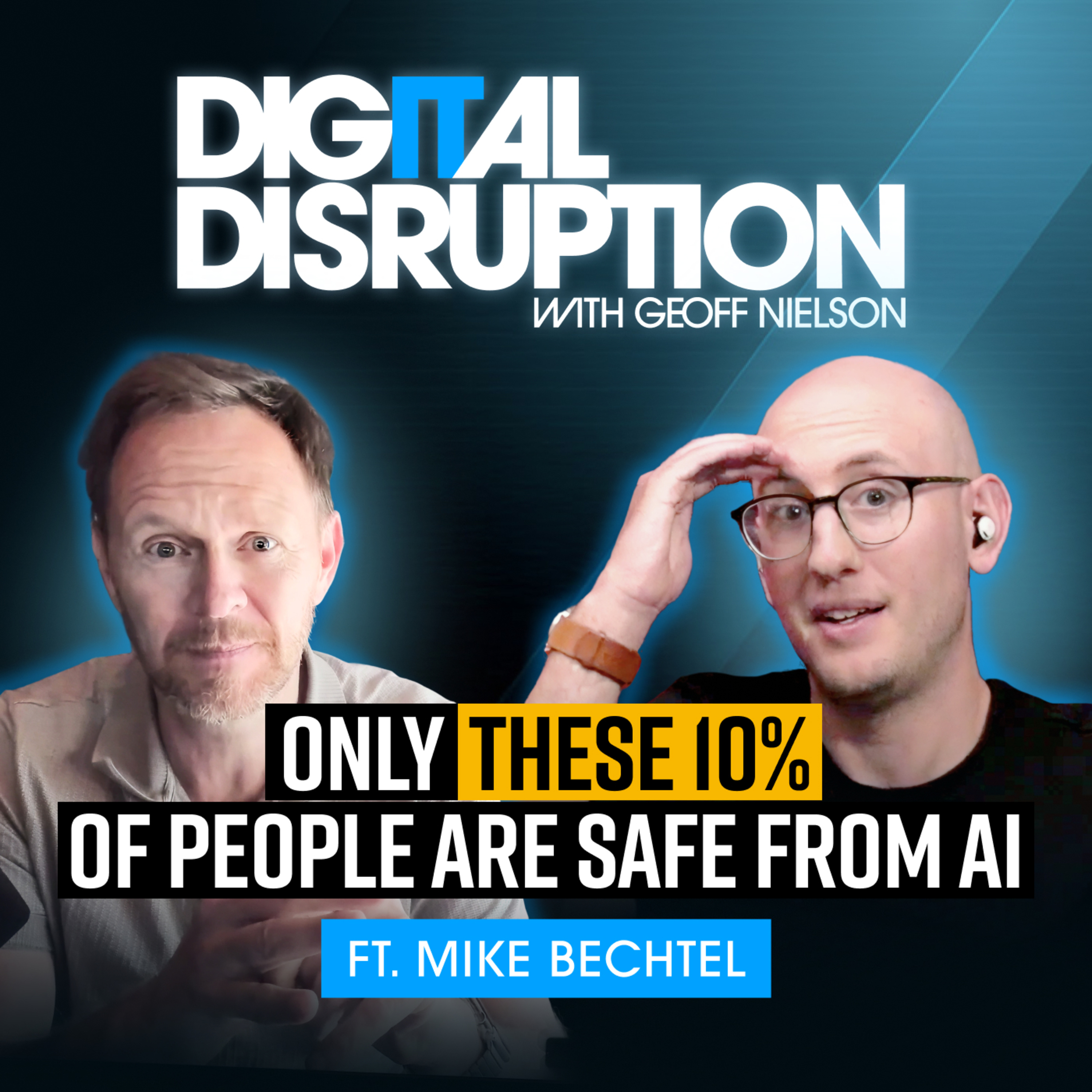
Deloitte's Chief Futurist on AI, Job Loss, and the Art of Thinking
Sep 2901:22:16Summary readyWhat happens when AI becomes as good at thinking as humans and what skills remain uniquely ours?On this episode of Digital Disruption, we’re joined by Mike Bechtel, Chief Futurist at Deloitte.Mike began his career at Accenture Labs, where his team helped Fortune 500 clients put emerging technologies to profitable use. Twelve years and twelve U.S. patents later, he was named the firm’s first Global Innovation Director, tasked with creating the strategy, processes, and culture to foster company-wide intrapreneurship. At Deloitte, Mike and his team focus on making sense of what’s new and next in technology, with the goal of helping today’s leaders arrive at their preferred futures ahead of schedule. He also serves as an adjunct professor at the University of Notre Dame, where he teaches corporate innovation. In 2013, Mike co-founded and served as Managing Director of Ringleader Ventures, a venture capital firm investing in early-stage startups that had—intentionally or not—built simple solutions to complex corporate challenges.Mike sits down with Geoff to talk about the future of AI and what it means for our work, creativity, and humanity. He shares an optimistic vision of a world where automation elevates human potential, allowing people to focus on creativity, innovation, and connection. This conversation challenges how we think about AI, AI art, the future of work, and the role of human skills. Mike draws on his experience advising leaders and students to show how we can prepare for a future where AI isn’t just a tool but a partner in thinking. He shares insights on the ethical challenges of outsourcing thought, why intent matters in how organizations use AI, and why AI is less about replacing jobs and more about automating the “muck” so humans can focus on the magic. Mike also challenges us to consider: what happens to writing, philosophy, and ethics when machines can master technical tasks faster than ever?In this episode:00:00 Intro01:00 Why AI isn’t new (but why this moment matters)04:10 Automation as a Trojan Horse for elevation05:30 Best practices get automated, next practices get built09:50 Expertise vs. curiosity: Why human skills win15:00 From fear to opportunity17:00 What clients really want in the AI era19:20 Automating muck to unlock magic22:00 The revenge of the humanities & synthetic thinking23:00 Writing = thinking: Why we can’t outsource human thought36:15 Why people still matter42:00 Beyond AI: Blockchain, trust & cryptographic futures47:30 Deepfakes, truth, and the math we can trust1:05:50 The future of IT1:08:00 AI Reshaping corporate teams & skills1:14:40 Guidance for the next generation1:19:30 Staying ahead of AI1:21:45 Key takeawaysConnect with Mike:Website: https://mikebech.tel/bioLinkedIn: https://www.linkedin.com/in/mikebechtel/X: https://x.com/mikebechtelVisit our website: https://www.infotech.com/?utm_source=youtube&utm_medium=social&utm_campaign=podcastFollow us on YouTube: https://www.youtube.com/@InfoTechRG
Summary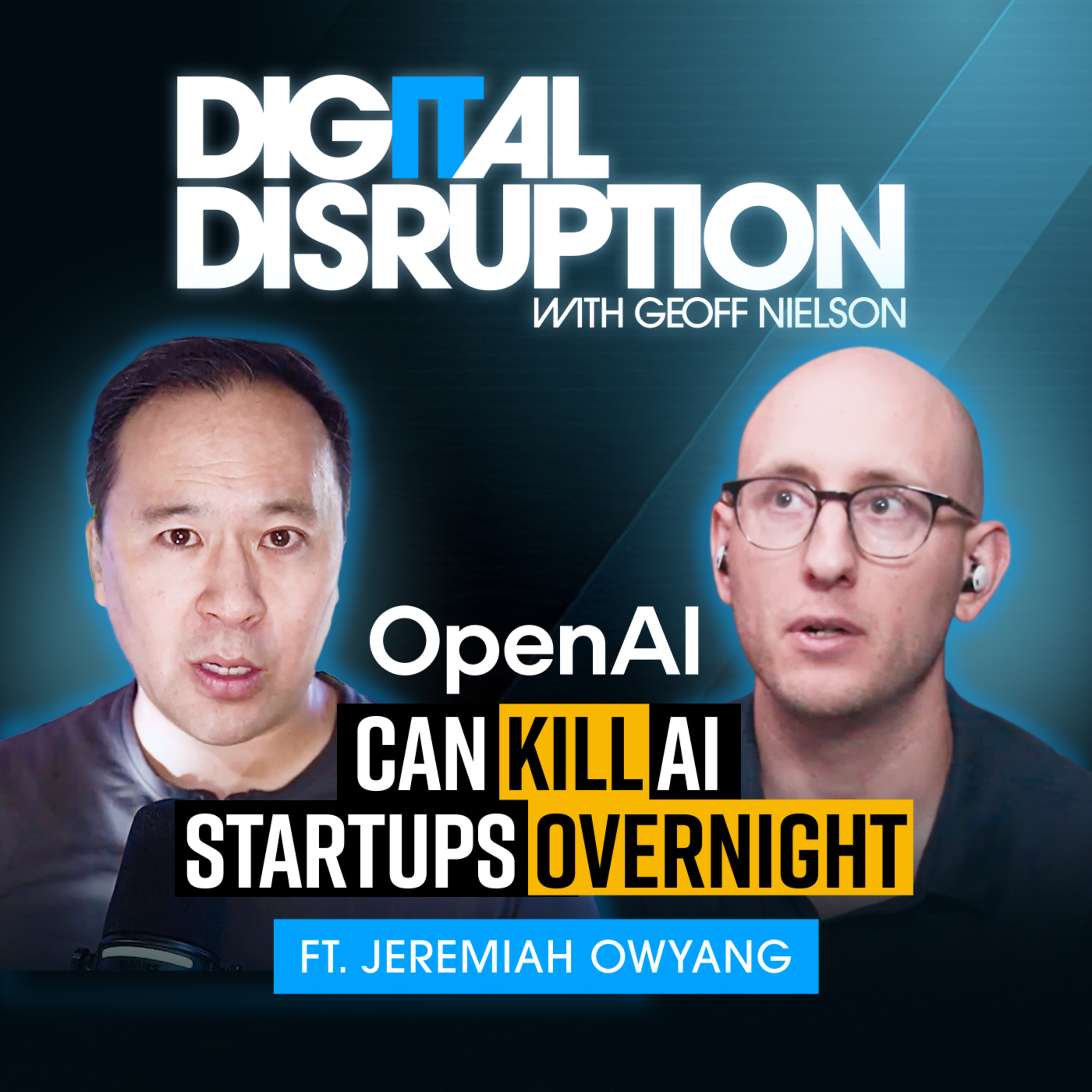
Boom or Bust? Top AI Investor Reveals the Future of AI Startups
Sep 2201:01:26Summary readyWhich strategies separate the AI startups that thrive from those that die?Today on Digital Disruption, we’re joined by Jeremiah Owyang, a venture capitalist at Blitzscaling Ventures.Jeremiah, a longtime Silicon Valley native, leads investments in early-stage AI startups at Blitzscaling Ventures. He focuses on startups with the potential for rapid scale and enduring leadership in valuable markets. He also organizes the popular Llama Lounge: The AI Startup Event Series. As a speaker, Jeremiah forecasts how early-stage technology will reshape business and society and advises audiences on how to turn disruption into advantage.Jeremiah sits down with Geoff to unpack the reality of Silicon Valley’s AI gold rush. With more than 38,000 AI startups competing for attention, thin technical moats, and the looming threat of consolidation, founders face more pressure than ever to stand out. He shares insider insights on why most AI startups are vulnerable to being wiped out by a single update from @OpenAI or Google, which industries and roles are most at risk of automation, and why critical thinking remains one of humanity’s most valuable advantages. The conversation also explores how Gen Alpha, the first AI-native generation, will grow up and work differently than any before, as well as the rise of AI agents and their impact on everyday work. In this video:00:00 Intro01:45 The AI startup explosion04:30 Why most AI startups will fail without real advantages07:10 One OpenAI update could destroy your startup overnight10:25 Thin technical advantages and the search for moats13:40 What VCs look for in AI startups17:05 The rise of Lean AI startups20:15 AI agents and the automation of entry-level jobs23:50 The skills humans still need27:10 Gen Alpha: The first AI-native workforce30:20 AI’s role in corporate strategy and decision-making34:00 The Risks of over-reliance on AI in business37:25 From Gold Rush to shakeout41:10 How CEOs can future-proof their companies in the AI era45:30 Humanoid robots, agents, and the next wave of disruption49:15 Winners and losers in the AI economyConnect with Jeremiah:Website: https://web-strategist.com/blog/about/ LinkedIn: https://www.linkedin.com/in/jowyang/Instagram: https://www.instagram.com/jowyang/X: https://x.com/jowyangVisit our website: https://www.infotech.com/Follow us on YouTube: https://www.youtube.com/@InfoTechRG
Summary
Double Agents: Dr Ayesha Khanna on How AI is Turning on Humans
Sep 1500:58:53Summary readyWhat risks come with AI systems that can lie, cheat, or manipulate?Today on Digital Disruption, we’re joined by Dr. Ayesha Khanna, CEO of Addo AI.Dr. Khanna is a globally recognized AI expert, entrepreneur, and CEO of Addo, helping businesses leverage AI for growth. With 20+ years in digital transformation, she advises Fortune 500 CEOs and serves on global boards, including Johnson Controls, NEOM Tonomus, and L’Oréal’s Scientific Advisory Board. A graduate of Harvard, Columbia, and the London School of Economics, she spent a decade on Wall Street advising on information analytics. A thought leader in AI, Dr. Khanna has been recognized as a groundbreaking entrepreneur by Forbes, named to Edelman’s Top 50 AI Creators (2025), and featured in Salesforce’s 16 AI Influencers to Know (2024). Committed to diversity in tech, she founded the charity 21C Girls, which taught thousands of students the basics of AI and coding in Singapore, and currently provides scholarships for mid-career women through her education company Amplify. Ayesha sits down with Geoff to discuss how artificial intelligence is disrupting industries, reshaping the economy, and redefining the future of jobs. This conversation explores why critical thinking will be the most important skill in an AI-driven workplace, how businesses can use AI to scale innovation instead of getting stuck in “pilot purgatory,” and what risks organizations must prepare for, including bias, data poisoning, cybersecurity threats, and manipulative reasoning models. Ayesha shares insights from her work with governments and Fortune 500 companies on building national AI strategies, creating governance frameworks, and balancing innovation with responsibility. The conversation dives into how AI and jobs intersect, whether automation will replace or augment workers and why companies need to focus on growth, reskilling, and strategic automation rather than layoffs. They also discuss the rise of the Hybrid Age, where humans and AI coexist in every part of life, and what it means for society, relationships, and the global economy. In this video:00:00 Intro00:43 The future of AI and the next 5 years02:16 The biggest AI risks05:25 Fake alignment & governance09:08 Why AI pilots fail15:30 What successful companies do23:14 AI and jobs: Automation, reskilling, and why critical thinking matters most29:39 The Hybrid Age37:09 AI and society: relationships with AI, human agency, and ethical concerns46:13 Global AI strategies54:00 Overhyped narratives and what people get wrong about AI and jobs56:27 The Skills Gap opportunity58:31 The importance of risk frameworks, critical thinking, and optimismConnect with Dr. KhannaWebsite: https://www.ayeshakhanna.com/LinkedIn: https://www.linkedin.com/in/ayeshakhanna/X: (21) Dr. Ayesha Khanna (@ayeshakhanna1) / XVisit our website: https://www.infotech.com/Follow us on YouTube: https://www.youtube.com/@InfoTechRG
Summary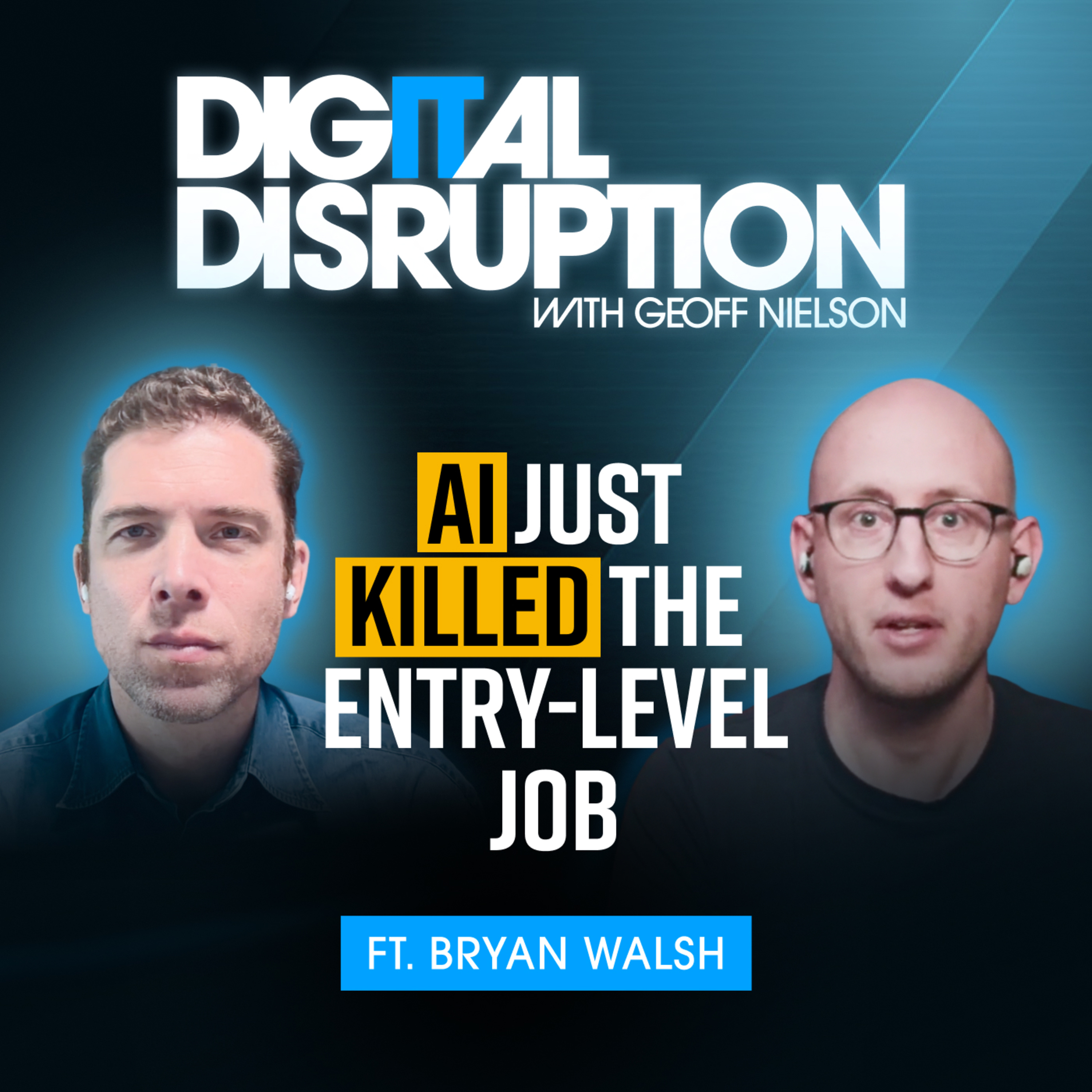
The Lazy Generation? Is AI Killing Jobs or Critical Thinking
Sep 801:05:57Summary readyCan automation and critical thinking coexist in the future of education and work?Today on Digital Disruption, we’re joined by Bryan Walsh the Senior Editorial Director at Vox.At Vox, Bryan leads the Future Perfect and climate teams and oversees the podcasts Unexplainable and The Gray Area. He also serves as editor of Vox’s Future Perfect section, which explores the policies, people, and ideas that could shape a better future for everyone. He is the author of End Times: A Brief Guide to the End of the World (2019), a book on existential risks including AI, pandemics, and nuclear war though, as he notes, it’s not all that brief. Before joining Vox, Bryan spent 15 years at Time magazine as a foreign correspondent in Hong Kong and Tokyo, an environment writer, and international editor. He later served as Future Correspondent at Axios. When he’s not editing, Bryan writes Vox’s Good News newsletter and covers topics ranging from population trends and scientific progress to climate change, artificial intelligence, and on occasion children’s television.Bryan sits down with Geoff to discuss how artificial intelligence is transforming the workplace and what it means for workers, students, and leaders. From the automation of entry-level jobs to the growing importance of human-centered skills, Bryan shares his perspective on the short- and long-term impact of AI on the economy and society. He explains why younger workers may be hit hardest, how education systems must adapt to preserve critical thinking, and why both companies and governments face tough choices in managing disruption. This conversation highlights why adaptability and critical thinking are becoming the most valuable skills and what governments and organizations can do to reduce the social and economic strain of rapid automation.In this video:00:00 Intro 01:20 Early adoption of AI: Hype vs. reality02:16 Automation pressures during economic downturns03:08 The struggle for new grads entering the workforce04:37 Is AI wiping out entry-level jobs?05:40 Why younger workers may be hit hardest06:28 No clear answers on AI disruption08:19 The paradox of AI: productivity gains vs. job losses14:30 Critical thinking, education, and the future of learning18:00 How AI reshapes global power dynamics31:57 The workplace of the future: skills that matter most44:03 Regulation, politics, and the AI economy48:19 AI, geopolitics, and risks of global instability57:33 Who bears responsibility for minimizing disruption?59:01 Rethinking identity beyond work1:00:22 Journalism in the AI era: threat or amplifier?Connect with Bryan:Website: https://www.vox.com/authors/bryan-walshLinkedIn: https://www.linkedin.com/in/bryan-walsh-9881b0/X: https://x.com/bryanrwalshVisit our website: https://www.infotech.com/Follow us on YouTube: https://www.youtube.com/@InfoTechRG
Summary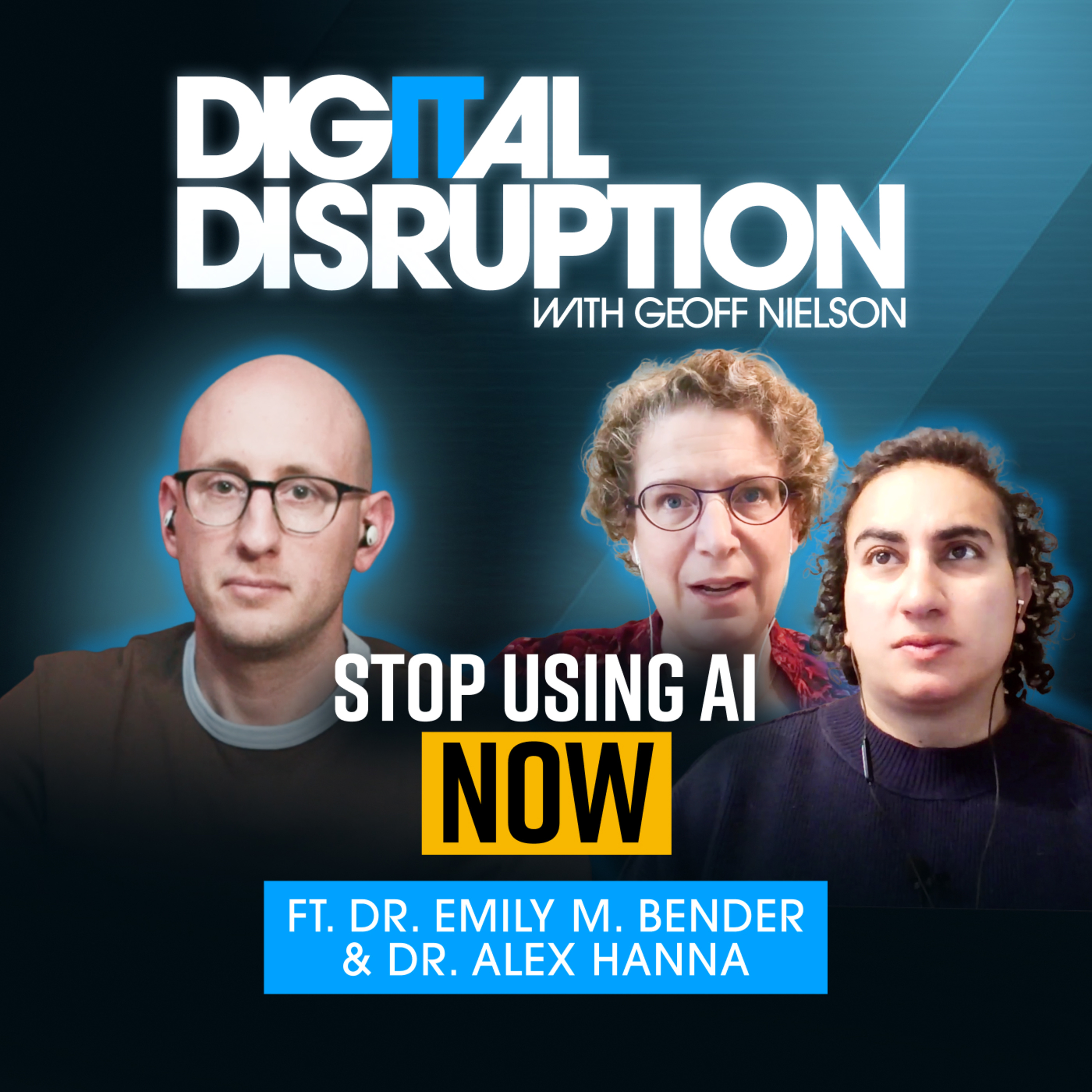
From Dumb to Dangerous: The AI Bubble Is Worse Than Ever
Sep 100:57:03Summary readyAre we heading toward an AI-driven utopia, or just another tech bubble waiting to burst? Today on Digital Disruption, we’re joined by Dr. Emily Bender and Dr. Alex Hanna. Dr. Bender is a Professor of Linguistics at the University of Washington where she is also the Faculty Director of the Computational Linguistics Master of Science program and affiliate faculty in the School of Computer Science and Engineering and the Information School. In 2023, she was included in the inaugural Time 100 list of the most influential people in AI. She is frequently consulted by policymakers, from municipal officials to the federal government to the United Nations, for insight into how to understand so-called AI technologies. Dr. Hanna is Director of Research at the Distributed AI Research Institute (DAIR) and a Lecturer in the School of Information at the University of California Berkeley. She is an outspoken critic of the tech industry, a proponent of community-based uses of technology, and a highly sought-after speaker and expert who has been featured across the media, including articles in the Washington Post, Financial Times, The Atlantic, and Time. Dr. Bender and Dr. Hanna sit down with Geoff to discuss the realities of generative AI, big tech power, and the hidden costs of today’s AI boom. Artificial Intelligence is everywhere but how much of the hype is real, and what’s being left out of the conversation? This discussion dives into the social and ethical impacts of AI systems and why popular AI narratives often miss the mark. Dr. Bender and Dr. Hanna share their thoughts on the biggest myths about generative AI and why we need to challenge them and the importance of diversity, labor, and accountability in AI development. They’ll answer questions such as where AI is really heading and how we can imagine better, more equitable futures and what technologists should be focusing on today. In this video:0:00 Intro1:45 Why language matters when we talk about “AI”4:20 The problem with calling everything “intelligence”7:15 How AI hype shapes public perception10:05 Separating science from marketing spin13:30 The myth of AGI: Why it’s a distraction16:55 Who benefits from AI hype?20:20 Real-world harms: Bias, surveillance & labor exploitation24:10 How data is extracted & who pays the price28:40 The invisible labor behind AI systems32:15 Diversity, power, and accountability in AI36:00 Why focusing on “doom scenarios” misses the point39:30 AI in business and risks leaders should actually care about43:05 What policymakers should prioritize now47:20 The role of regulation in responsible AI50:10 Building systems that serve people, not profit53:15 Advice for CIOs and tech leaders55:20 Gen AI in the workplaceConnect with Dr. Bender and Dr. HannaWebsite: https://thecon.ai/authors/Dr. Bender LinkedIn: https://www.linkedin.com/in/ebender/Dr. Hanna LinkedIn: https://www.linkedin.com/in/alex-hanna-ph-d/Visit our website: https://www.infotech.com/Follow us on YouTube: https://www.youtube.com/@InfoTechRG
Summary