Loading summary
Transcript53 lines
- [00:00]
Kat Small
I want to actually have more conversations about, like, what's wacky or like, what feels impossible. So I really try to encourage people to just like, turn off the part of their brain at the beginning that's very stuck on constraints. And I think a lot of times in our day to day we tend to get really caught up in the business constraints. For example, I think like a big component of the job of a staff designer is to, like, inspire people to think bigger, to think more radically, to potentially push people in directions that they hadn't initially considered.
- [00:30]
Rid
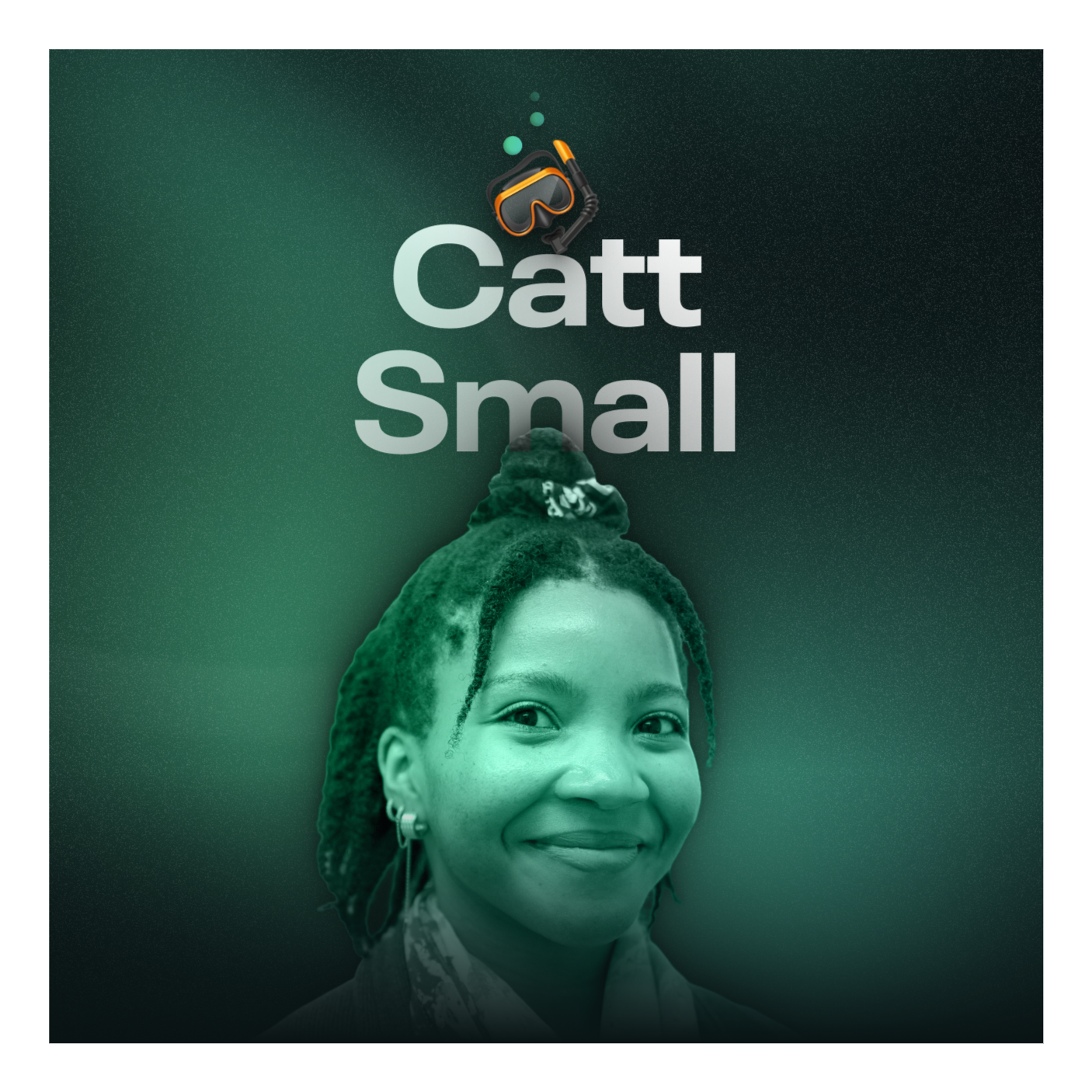
Welcome to Dive Club. My name is Rid, and this is where designers never stop learning. This week's episode is with Cat Small, who is a longtime designer at Asana Etsy soundcloud. And the goal of this conversation is to understand what it takes to thrive as a staff designer. Kat's going to share a ton of practical advice about contributing to product strategy, being a systems thinker, establishing the right relationships, leading as an and so much more. So to start, let's have Kat set the stage and talk about how she views the role.
- [01:06]
Kat Small
I've been in design at this point for almost 15 years. I came from the era of designer where we started on like Neopets and stuff like that. And I went to school, I went to college for graphic design. And while I was there, this was around 2007, 2008, I learned about web development and learned that that was a job and not just a thing I could do for fun. And then by the time I'd graduated, I was really, really into like interaction design and stuff like that. So that was my first job was as an interface designer. Then from there I learned about product design and user experience. So I came from graphic design and then moved into product design. Yeah, I just found it to be really engaging. I really liked the combination of getting to study people and learn how they think and getting to figure out the right place to put things. So basically I just kind of dove in from there and have really just spent a lot of time trying to hone my craft and learn the differences between different industries. So I've worked in entertainment, I've worked in financial services, e commerce, and software as a service, which is where I've been for the past four or five years. At this point, I've mostly been an individual contributor, but I did have two stints where I was a manager, which was a great thing to to learn. And I have a lot of empathy for managers because of that. But yeah, really just trying to follow what I find to be interesting and Fun and engaging.
- [02:30]
Rid
Well, today I really want to take advantage of your experience in these different industries, both the manager and the IC side. And I've received a lot of messages from people who want to learn what it looks like to just make an impact as an ic. So maybe we could start kind of high level, create some surface area to drill into from there and kind of to set the stage. Can we talk about what it means to you to be a staff designer and some of the challenges that you think are unique to that role that come with that level of seniority?
- [03:04]
Kat Small
There's a lot that goes into the job. So I think sometimes when I talk to people, they're shocked at just the amount of things you have to hold in your brain at any given time. But essentially you have to, as a staff Prof. Designer, be good at systems thinking. So, like the classical user experience kind of things, like information architecture, for example, you also have to be leading design in terms of, like, the craft side of things. So you're usually expected to meet and exceed the bar of quality in terms of design, visual design rather. And then there's also a business aspect of it. So you're also, at the same time expected to be thinking very strategically about what is the right sequence of work. How do we, you know, do like, multiphase rollouts of experiences to make sure that we're meeting our goals in terms of the company? And yeah, it can be honestly pretty complicated and terrifying to work at that level. So the first time that I worked officially in that capacity was when I joined Asana and they put me on this zero to one project that was basically just to come up with this whole new product area. And I was like, who me? Like, that doesn't make sense that you're putting me in this kind of position. I was like, terrified at the level of responsibility because it was one of the things that was blocking them from actually going public. So it was like a huge deal and they really wanted to make sure they got it right and that it, you know, was something that they could tell as part of the story of how they were moving toward meeting their mission. So a lot of times staff designers will get put on these really important projects and that's because, honestly, the role is a large investment. Right? Like, when you're working at this level, that means that you're going to be coordinating probably across like a lot of different people. You're going to be talking to people on different teams. You're trying to move people toward this larger picture vision that you've Got. It's complex, but the people who excel at this role tend to be really comfortable with that ambiguity or they're able to figure out what is necessary to move toward the next step. Like, you can always create momentum for yourself and for other people.
- [05:07]
Rid
Real quick message and then we can jump back into it. There's been a lot of talk on this show about quality and velocity. And the biggest hack that I've seen is having designers who can ship directly to production. And now Desen is making it so that designers everywhere can do just that without having to write any code. Everyone's talking about how LLMs can 10x developers, but Desen is laser focused on how LLMs can 10x designers. It's one of the tools I'm most excited about right now and they're giving away early access to the dive community. So head to Dive club desen to learn more. That's dessn. As if Raycast could get any better. They just released a feature that I've been wanting for years and it's called Raycast Focus. It helps you stay in flow by blocking distracting apps and websites. It's goal based, works in your browser and it's always a keyboard shortcut away. And my favorite part is they even have a little floating bar to give you a quick glance of how much time is left in your goal. I'm already using this every day and it's just another, another reason why you should definitely download Raycast if you haven't already. Just head to Dive Club Focus to learn more. Okay, now on to the episode. Maybe we could even follow like the seed of an idea for a little bit because I'm interested in that Asana project specifically. Let's start like all the way at the beginning. Like you're given some kind of an opportunity or problem space. What are some of the things that you're doing to collapse that complexity and navigate these large scale, ambiguous problem spaces?
- [06:45]
Kat Small
Usually at the beginning of a large scale project like this, the thing I try to do first, just understand what I don't know. We want to make a goal management tool within our project management tool is like, okay, what does that even mean? You know? So I start usually by trying to just assess the situation. So internally you can start going around and you can ask people like, what does goal management mean to you? How will we know that we've created something that's successful? And then externally you can start to also interview customers about what's not working with goal management for you right now? What is working? What tools Are you using to just understand, like, the lay of the land? And I find that usually by starting with those kinds of conversations and like, also just listing out what you do know and what you don't know, you can start to figure out what you need to do to fill in the gaps. And then you can find opportunities also in terms of gaps that customers have. So then that can give you signal to start moving forward. Sometimes we lean on tools like design sprints and things like that. But again, like, the point is really to figure out how to create momentum for yourself and to move toward an eventual convergence of ideas and to figure out a concept. Then you want to test that concept and figure out, like, is it good or not? But yeah, like, you're trying, like, because of the scale that I think a lot of times I'm working at, the thing that I'm trying to do is to reduce risk as much as I can or, you know, ensure success if we want to kind of reframe that. So anything that I can do to figure out the signal, like, where am I moving towards something good or am I moving further away from it? Ideally, we're like, moving towards something that tells us, like, yes, this is going to work out. And then you can create a vision that helps people actually figure out where we're going longer term. And then the conversation becomes like, okay, what's step one, what's step two, what's step three? And then maybe eventually we'll get to the big cool thing. So a lot of this probably sounds really familiar, but it's really about the scale that you're working at, which I find to be interesting.
- [08:45]
Rid
How does that scale change the way that you think about strategically getting your initial ideas and concepts into the wild?
- [08:52]
Kat Small
I want more ideas, honestly. Like, I try not to define. Define anything too quickly because I think when you jump to decisions, you miss opportunities to. To explore a little bit more. So I actually think because of the scale that I tend to work at, I want to actually have more conversations about, like, what's wacky or, like, what feels impossible because it might turn out through conversations, especially with different people who are coming at the problem from different perspectives. Like, an engineer, for example, might know something that I don't. And maybe this thing that initially I would have been like, oh, no, that's like, too hard. Actually, maybe it's actually quite easy. So I really try to encourage people to just like, turn off the part of their brain at the beginning that's very stuck on constraints and just, let's just have an open conversation that's really broad. And then because we're trying to figure out usually a longer term vision, then we can start to add constraints as we're going think about it as more of a fun process. Also, like, I think a lot of times in our day to day we tend to get really caught up in the business constraints, for example, we tend to get caught up in just like a lot of the day to day challenges. And I think that the fun thing about working at this scale a lot of the time is that you can actually like push on a lot of that through discussion once you figure out where you want to move toward. So, yeah, I think like a big component of the job of a staff designer is to like inspire people to think bigger, to think more radically, to potentially push people in directions that they hadn't initially considered. And sometimes you won't even know actually what you're going to do, like what the solution is or what the end goal is. Like sometimes the job is actually also to find problems that don't yet exist. And I think that's part of why I always encourage people to like, think outside of the box, to use a very cliche term.
- [10:42]
Rid
It reminds me of one of my favorite stories that someone shared on the show, which was the old head of design at Metal Lab, talked about how for the first couple days of a project, they would just encourage the designers to explore in high fidelity with absolutely no constraints, just because it's so easy for us to arrive at a pragmatic solution given the constraints that are available to us. But you're right, like that staff designer is the best equipped person to help the team push past what's obvious.
- [11:09]
Kat Small
Exactly. There's a lot of conversation nowadays, especially about things like industry standard or like what are other companies doing. Of course, I do want to do competitive analyses and things like that, but I really try to encourage people to also form their own opinions potentially, like independently of what the industry standard is. Especially if we're trying to do something that is original or if the context calls for originality, then what would it look like if we were setting the industry standard rather than following the industry standard? But I really enjoy projects where I get to do things like that because it feels like you're, you know, moving in a new space. And I think that's like the most fun a designer can have at this point.
- [11:51]
Rid
Once you have this spectrum of possibilities established and maybe you've identified a couple different forks on the road or areas that you can inject something that is uniquely Asana, can you talk about your process for sharing and contrasting that set of ideas to the team? And I really want to get into the specifics of, like, what are the artifacts that you're even making when you're sharing this set of ideas out?
- [12:15]
Kat Small
Yeah, yeah. So in that case, I was throwing this stuff around in Figma, and so basically I made a bunch of, like, wireframes where I was like, okay, well, there's this idea over here. This is an example of what it would look like as, like, a really lightweight wireframe that looks acceptable enough to share and get the point across. Right. Because we weren't at the stage where we had actually made full decisions about what we were going to actually put in the product. So it was really just like, let's create representative images of each of these different capabilities that we could enable customers to do. The thing that I was really excited about with this work and that I tried to integrate into other projects that I've also done is that we did a round of research where we actually showed these concepts to people and had them actually tell us. Our potential customers told us which features and functionalities or capabilities rather, they would find most valuable in a tool. And so it wasn't just us internally making the decisions. It was actually also getting feedback from our customers about what they would find most valuable in a goal management tool. And that combination of information, knowing on the inside, like, what we knew other tools were doing, what we wanted to do with the tool, and then customers telling us what they would want to pay for the most. That combination together was how we actually ended up making decisions. And then from there, it was a matter of figuring out, how do we actually build this? Because we don't have forever to build these things. And of course, customers want a ton of stuff. So then it was going back to that flat list that had been prioritized. And it was figuring out for me, like, how long is all of this stuff. Stuff going to take? Because we had a pretty compressed timeline to actually build. I think it was like, at that point, we were about a month and a half in, and we had six months in total to actually launch something. And so at a company of that scale, with the amount of integrations we wanted to have with existing product features, that was just going to be kind of a hard timeline to make. So I sat down with the team, we looked at our spreadsheet, and I basically asked them a bunch of questions to figure out how much work is each of these. These features going to take to figure out if I think about them as, like, customer problems. I want to be able to do this thing, like, how long is that going to take for me to design? Like, how much do I know about it? How much do I need to dig into it? So then it was really like taking that flat list and essentially starting to estimate the work. And then from there we could actually agree on, like, how much will we put into the first launch of this product. Obviously there was engineering conversations that were happening at the same time, but yeah, we were really trying to be as nimble as we could in terms of the artifacts that we were using. So I was always optimizing for what is the most effective artifact to share with people that is reusable. That takes me the least amount of time for the most bang for my buck, I guess you could say.
- [15:05]
Rid
All right, so there's a couple phrases in there that I want to pull out. You talked about the reusability, you talked about integrating with existing features, and it kind of ties back to that original answer you gave about the importance of systems thinking. So maybe we could use this as a launching point to talk a little bit about what it looks like to grow as what you call a platformer as a staff designer.
- [15:27]
Kat Small
Yes. Oh, my gosh. So when you are a platformer, essentially, there's a couple of things in there. There's like the architect who's like a systems designer, who's kind of creating and figuring out these, like, complex systems, and then there's the platformer who's trying to figure out, like, how do you actually create systems that other people can actually use and lean on. I was basically combining these two archetypes into this project because it turned out that because we had all these overlaps with other teams, I had to go talk to a bunch of people and figure out how their product areas worked. And we had to agree on where was this idea, where was this goal object going to go within their space? If we're looking at a project and a project is contributing to a goal in some way, what does that mean? What does that look like? Where does the goal show up? Where does the project show up on the other side? How do we represent these things as, you know, like components within a system? So then I needed to actually figure out what information is valuable for a customer to see within that space. And then, yeah, we just had a lot of back and forth conversations and eventually I landed on a component that I could then share with different individuals who are working on these different teams, and they could then go to their team and say, hey, we need to integrate this into our space. That was one of my first experiences at that particular scale of work. So when I had worked at Etsy, for example, I had contributed to design systems a fair number of times. So I was very familiar with needing to make sure that I had considered other people's use cases. And I would go around to different teams and talk to them about how would you use tables if we had a table component. Component, you know, so it's actually quite similar in terms of what I was doing on this particular project. So instead of like a table component, for example, it was more like, oh, well, like we have this idea for this thing that's called a goal and we think it would be useful here. How would you use this? You know, like that was more the conversation. And then over time I was able to actually build out a component system. And then eventually, once we had more of an, like a long term vision, then I actually also created these guidelines that basically any team that was interested in using the ideas that we'd come up with, they could actually just read that series of guidelines and figure out how they could integrate it. And then if they wanted to contribute something to the goals product itself, that was also something that they could reference.
- [17:53]
Rid
All right, so you're talking about component systems. I want to zoom out really quickly then because I think at least some person is listening and they're like, okay, component systems, Design systems don't have a ton of familiarity with that. Is that a requirement even to operate at this staff level? So in your mind, like, how do you think about the variance between the different types of staff designers?
- [18:16]
Kat Small
There are definitely different types of staff designers who flex in different ways. So I think as I mentioned, there's a person who's more of like a systems design architect type person. And that's how that's like their highest strength. I think there are some people who are just really incredible at making like systems and like guidelines and like principles and things like that. And that's like another strength. There are other people who are incredible, like visual design tastemakers. I do think that there is a baseline foundational level of being able to function in each of those kinds of archetypes. That is expected. And so that's something that people are often like, oh my God, like I'm being asked to do something that's outside of my comfort zone, that's just going to happen. And sometimes you're just going to be asked to flex in a way that you're not used to. And That's a growth opportunity. If I look at my personal career history, but also the other people that I've worked with, there is an expectation that you're able to understand how your work could be used in other contexts that are not your own. And that's a baseline expectation of the job. Because as a staff designer, you are expected to look across the company itself and understand how everything fits together. So you might not be intentionally having to do design systems work per se, but you do need to understand the system and how everything intersects together, if that makes sense.
- [19:37]
Rid
Okay, so obviously you have to wear a lot of different hats, but what is your superpower as a staff designer?
- [19:44]
Kat Small
I am definitely a huge architect type person. I love thinking about how everything connects. As you can probably tell. I love when I'm thrown a problem that's really complicated and it's very like, information architecture heavy. I'm the person who is a content designer's best friend. I love content designers. I love design systems designers. Like, those are my people. And yeah, I just find it to be really fun when I get a problem that's very conceptual or very ambiguous, and I get to untangle it. So, for example, I was actually a director of product design at one of my previous employers, but I was much more hands on because it was a very small company. And this, it was like a design studio. So occasionally they would do consulting work. And this one client of ours was like, hey, we bought these two companies and we want to merge them together. And I was like, wait, what? That's wild. Okay, cool. Yeah, let's figure it out. So it was really fun because I had to look at both of these existing products that had their own customer bases and then figure out, like, where are the overlaps? What are the things that make them both unique? How do we combine these two products into something that is better than the sum of just the both of their parts? You know, and that's just such a random, crunchy problem. But that's the kind of stuff that makes my brain feel really happy.
- [21:03]
Rid
I have a big smile on my face because I think I'm probably the same way too. Like, my most fulfilling moment as a designer is when I'm like, given kind of an ambiguous problem space. There is some prompt like, this is the problem that we should solve, but you can kind of zoom out, see the bigger picture and actually be like, you know, if we changed it and solved this problem instead, we could also knock out this entire other feature set. Kill two birds with one stone. It's like Ah, yes. That is the best feeling to figure that out.
- [21:30]
Kat Small
The dopamine is amazing. Yeah, it's so fun. I know some people who feel that for, like, oh, I figured out this new interaction pattern. I just solved this really crunchy visual design problem. And occasionally I do feel that too. But I think the level of dopamine that you get from, like, launching something after months of just really trying to crack your head against the problem, it really soothes the part of my brain that's, like, very scientific, if that makes sense. Like, it's a really great combination of the more scientific, methody kinds of practices. And also you're getting to do a lot of the visual stuff. So, yeah, I love that kind of work. Personally.
- [22:09]
Rid
I want to take a left turn here and get into some of the more communications elements of it, which is something that you've highlighted a couple times now. And it reminds me of a quote that you have. You say a key differentiator between senior and staff designers is the mushy stuff like executive presence. So can you speak to that a little bit?
- [22:30]
Kat Small
And what you mean, executive presence usually is like the ability to inspire confidence in other people. So, like, people feeling confident that you are able to reach a certain outcome, and that can be a really large blocker for people in their careers also. Just the general concept of being able to influence other people through communication, for example, is another big challenge that I've witnessed and experienced for myself. The ways that I have personally invested in the concept of executive presence, as well as influence have been. Honestly, reading a lot of books was really helpful. So I read things like Radical of Candor. I read the 15 commitments of conscious Leadership. I really learned the reasons. I was just struggling in some cases to be able to actually successfully influence people. So, for example, I learned about the sphere of influence as a concept, which basically it says, you know, there's things that you directly control, there are things that you can influence, and then there are things that are just kind of in this outer ring of just stuff that you're not able to influence because you maybe don't know the right people or people have certain opinions that are just, like, really hard to actually change. Maybe you don't have enough trust, you know, built with that person for them to actually listen to you, for example. So, yeah, I started to really invest in my working relationships with people and to figure out how to actually communicate with people in a way that essentially would lead to maybe longer term having some level of influence. And yeah, sometimes you just can't really push People. But what I do think is really cool is when you actually start to notice like people are consulting you about things and like asking you questions. So if you have like a one to one with a senior director on a semi regular basis, for example, and they start actually saying, you know, like, hey, like what do you think about this? Have you noticed anything, you know, happening within the org at this in this particular way? And that's a moment, like that's an opportunity to actually start building influence. So I think it's honestly it's investment in the relationships and the conversations that you're having on a day to day basis. It's the way to actually build influence is really to actually start to learn what other people's goals are and to have regular conversations with them so that you can like figure out what their sentiment is about certain things. And then over time you can actually start to, you know, talk about things that matter to you, but through the lens of the things that they care about. And that can actually lead to the kind of influence you're looking for in terms of executive presence. It comes down a lot of the times to framing. So for example, instead of saying like this thing was designed to do this, it's like I designed this thing to do this. That simple change in the way that you frame the conversation can actually make you seem more like an active contributor, even if the whole time you were an active contributor. So that's also something I always nudge people on, like own the thing that you did, you know, instead of like passively talking about it. I think that's really huge. And then the final thing I'll mention is just that I. I really especially encourage people who come from cultures or who were socialized to be humble. I think we really need to work to actually talk more publicly about our work. And if it's helpful, the way that you can do that is by thinking about it more as a teaching exercise. So by sharing what you've done to reach a certain outcome, you're actually helping other people to be able to replicate that which is a service that you're providing to other people. And I find that thinking about that in that way actually makes it easier for me to be more present and to share my work.
- [26:11]
Rid
That's such a good tactic because I totally feel that where like, even if I'm proud of something, I deliver it not in like a half hearted way, but it's kind of just stating the facts. And maybe you withhold certain things that feel anywhere near bragging. Yeah, but reframing it as teaching for the benefit of others. Here's how I arrived at this is genius. And I could just see how it would even like, change the way that I approach a Slack message.
- [26:37]
Kat Small
Right? Yeah. So I'm a huge fan of, like, here was the outcome that we reached. Here was how we got to that, you know, like, this is what we did in terms of like the thing we delivered. And then here's the behind the scenes that actually led to how we got to that final solution. I find that that combination of talking about the work can be really helpful. And then obviously also you're tooting your horn at the same time. But yeah, it feels weird at first, you know, because you're like, oh my gosh, like, I'm sharing things about me. I don't like doing that. I hate when there's attention on me. Actually. It's like really weird to be on stages and stuff or like to be the center of attention. It's not my favorite thing. I'm very introverted and just like, generally don't like that. But I think I really like teaching and I really like sharing what I learn with people. And so that's why I write, that's why I teach, that's why I do all these things. And it's made it feel more comfortable for me to actually be in that Slack channel or to go to all hands and present. And that's something else I encourage people to do, to not just write the Slack messages like, those are great, but also record those videos and like do share outs, you know, like actually go to different meetings or talk with different teams and just make sure that you're actually getting yourself out there. Because that is something that's really important for being seen as a leader, which is what a staff designer is like. Staff designers are usually essentially like pillars of the design team, even though they're not managers. Like, they are people that ICs can go to and look up to essentially as something that they might become one day. So I think it's really important to be present and to share what you learn with people.
- [28:17]
Rid
Let's talk about the share outs and these little videos that you're making. Then I'm going to ask you to imagine the very first video that you ever made and then something that you would make, you know, next week at work. And I want to look at like kind of the delta a little bit between those two and maybe you could share anything that comes to mind in terms of how you've evolved that part of your practice based off of things that you've learned or feedback that you've received.
- [28:41]
Kat Small
I think initially I felt like I really had to to prep, and I. I still do prepare a lot for these things, but I think initially I was like, everything has to be perfect, and I can't make any mistakes. I need to have, like, a full presentation that's laid out perfectly and stuff like that nowadays, I think, because I've reached that level. Like, I think when you're aspiring to reach a certain level, there's, like, a certain amount of that kind of prep that you do need to do. But I actually think people really appreciate seeing a little bit more of the behind the scenes. So depending on the context, like, if I'm presenting something that is more angled toward, you know, like, the broader team, and it's not really, like an executive stakeholder or something like that, I will actually be a little bit more scrappy to show people that you don't have to be super put together all the time. And I actually have also recognized a lot of individual contributors who are newer to design. They just haven't had as much of the apprenticeship kind of experiences that I have really early on in my career. So I think it's really important to kind of be a little bit more scrappy and show them that it's actually okay to do sketches. Like, some people still do that, you know? So I. I try to approach it in a way where I'm like, let me find the right level of, like, relatable, but also put together that kind of, like, that's the way that I approach being a staff designer. I think other people definitely lean really heavily into. Let me put together the perfect presentation and spend, like, hours on that stuff. I lean more into what's most efficient, what's going to help people understand how I got to where I got. That's kind of the way that I try to approach it, and then I try to show my personality a little bit. So I think, yeah, the big thing for me was really trying to lean into being seen as maybe more of a, like, senior leader, like, in a scary, authoritative way, and really trying to figure out what does it mean to be somebody who's more approachable, who's, like, chill, scrappy. Like, what are the kinds of adjectives that I'm looking, you know, to be described as? And, like, how can I imbue that in my video and still, of course, use those active words, for example, and, like, make it clear I'm an expert at what I do. But also, yeah, I think it's okay to be a little bit vulnerable with people, and I think that that hopefully comes through in all the recordings that I do. And yeah, when I do presentations as well, I try to have a little bit of humanity still in my work.
- [30:58]
Rid
It reminds me of an article you wrote where you talked about how for the first 10 years of your career, you were fighting for recognition. What was the mindset shift that happened for you?
- [31:06]
Kat Small
For the first 10 years of my career, I think I was really focused on externally being validated, and also I was looking for, of course, the recognition through title and status and things like that. I think at a certain point I realized, and this is a thing that a lot of people say, I think there's some level of privilege associated with it sometimes, and I'll kind of break that down. But it is more about the work that you do. And also I think you need to have, like, a belief in yourself. So I worked a lot personally on shifting from needing external validation to being able to internally validate myself and to understand that, like, to feel confident in the quality of the work that I deliver, if that makes sense. And being able to really figure out how to build myself up, I think was really useful. So I call out the privilege thing because unfortunately, I think depending on just, like, the way you exist in the world and how you're perceived and things like that, there's going to be extra work that is just required to be seen as like, a leader, for example. So I think that was definitely something that I had to think about a lot, and I did. I think that was why I was seeking so much validation for such a long time. Like, I really wanted to become senior, and then I really wanted to become staff because I just wanted to be perceived as, like, worthy and so on. And so at some point I was like, you know what? Actually, I really enjoy a lot of things about this job, and I think I just want to focus more on that, and I just want to focus on doing the best job I can. And hopefully, you know, through the work that I'm doing and me sharing the things that I'm learning, that other stuff will show up as well. And it started to happen more. And I think that was partially because I was just a lot more open and, like, less defensive and not doing the land grab thing anymore. And I was just kind of focused on what is the best thing for the company. For me, that was a huge moment, and I'm really happy to be at this point point. I definitely talk to lots of people who are Very focused, of course, on, like, what do I need to do to, like, get to that next level? And I do try to, of course, have those conversations about, like, what does this mean to you? You know, like, why does that matter so much? Because once you get to that point, are you going to have to find another goal? It gets really existential, honestly, very quickly. And with the staff designers I talk to, we're pretty much all just, like, designing our own jobs, and it's super existential. So I really. I like to think about it more at this point as, like, why am I still here? What draws me to this job every day? Am I still having fun or not? Yeah, so it's. It's been a really fun journey. I think also just as, like, a person to just be more confident in myself and my skills, to know what I bring to the table and just consistently communicate that to people so that they understand where to put me, really. As long as I just keep learning and growing and focusing on just trying new things and having new experiences in terms of larger scopes of work or different problem areas, all the stuff around the rewards will most likely come with that as long as I'm communicating the work that I'm actually doing. So, yeah, I think for me, what growth looks like at this point is really like, oh, I think I could have probably done this particular thing better on this particular project, so let me try this next time instead. Or, like, maybe I should look into a book about this particular subject. Or like, oh, it's been like, four years since I've done a visual design course. I should really do a refresher. Like, I think there's a lot of maintenance work that needs to happen. Once you get to the staff design level, things change all the time. So, like, Figma auto layout came out and everyone was like, what the heck is that? And, you know, of course I wanted to be one of those people who, like, knew, where do I use this? When do I use this? So I'm also trying to grow as, like, somebody who is a mentor to other people. So I think that's also a huge opportunity area that I like to continuously dig into. So, yeah, I think, like, the things that I try to think about at this point are really, how can I just continue to make the work experience smoother, more efficient, happen to be a better teacher to other people.
- [35:12]
Rid
All right, since you brought up mentorship, I'm going to toss some hypotheticals your way and pretend to be your new mentee for a little bit here. And the first hypothetical that we'll start with is I'm a designer who. I've been doing this for a few years. I feel like I am contributing at a high level, but I am trapped a little bit downstream. I'm in more of like an execution focused role. What are some of the things that I can do to move upstream within my org?
- [35:44]
Kat Small
Yeah, one of the things I always ask people is, how often are you talking with your pm one to one. I find that a lot of people only really have conversations within groups, which is fine, maybe, but I found that when I actually scheduled one to ones with my PM once a week, that was a time where we could start to have more strategic conversations and I could just learn more about them and their challenges. Because a designer, a lot of PMs don't know this off the bat, but designers can actually be really great resources for reducing risk, which is huge for a product manager because their whole job is terrifying. Like the whole job is just guessing basically and then like pushing people towards something that you think is right. So if you can start to angle yourself as somebody who can help a PM make good decisions that are informed, that's huge. So I love to just learn more about the product manager. You can also kind of start to see through those conversations like where does this person spend their time? And is there an opportunity for me to ask, oh, can I just be a fly on the wall for this particular meeting that you mentioned that you go to every week. And then from there you can start to see a little bit more of like how the business works. And that again is an area where you can then say, hey, I noticed xyz maybe I can just illustrate a couple of examples of the decision you're trying to make is something that I've done, for example. And sometimes it turns out that a business decision or an engineering decision has a really important impact on the experience design. So I try to do that by again talking with my pm. Also, I would suggest meeting with your engineering lead once a week as well. I think that's something else that people tend to not do as often as they could. And again, the same thing starts to happen. You start to learn more about how things are being built. And then from there you can start to see like, oh, that engineering decision would actually have huge design implications. Let me sketch some things out for you. And then you can start to slowly become part of that conversation.
- [37:51]
Rid
A theme that's coming out is just the ability to see the bigger picture and get to that higher level of altitude. And maybe you're not explicitly being assigned things that are more strategic, but at least you're building up the context throughout the org to understand what opportunities might exist.
- [38:09]
Kat Small
Exactly. Yeah. A lot of it is being proactive, for sure. I think one of the things that was really hard for me to initially learn is like, you go from being told what to do to just being told to achieve an outcome and you just have to kind of figure it out. And it's. It's really scary. But I think that the more that you proactively reach out to people and people start to see you as, you know, an ally and an asset in some way, they're going to start to lean on you, they're going to start to trust you more. And then that's where you can start to build the influence that you're looking for. And then, yeah, the scale just increases and increases as you see more of the system and as people, you start to talk to more people. And then suddenly it just makes sense that you should work on this really big, meaty problem because you just know all the right people already. You already have the right context and that's how it happens.
- [39:03]
Rid
Hey, it's Rid. I'm constantly asked about my favorite product, so I'll take just one minute and give you a quick rundown of my stack. Destin is how I ship design changes without having to code. Framer is how I build my websites. Genway is how I do research. Jitter is how I animate my designs and Play is how I design and prototype mobile apps. Visual Electric is how I generate all of my imagery and Raycast is my shortcut every step of the way. Now, I've hand selected these companies to partner with me so that I can do these episodes full time. So the best way by far to support the show is to check them out. You can find the free full list at Dive Club Partners. Okay, now on to the rest of the episode. All right, let's do another hypothetical then. I'm someone listening to you talk about being proactive. That's something that I want to start doing more of. I have a full list of PRDs that are assigned to me and I feel like I'm struggling a little bit with time management and making sure that I'm working on the right things. What advice do you have for me?
- [40:10]
Kat Small
Yeah, this is a hard one. Usually in a case like this, I would want to ask about prioritization. So, for example, is this a conversation that needs to happen with your team where you can ask, hey, so is this particular piece of work more important than this other particular piece of work. I think this particular piece of work is going to require this much of my energy. We also have these bazillion other things that I need to do. Do you agree that this one is the most important? Because if it is, then like, I want to spend like 80% of my time on this one. Sometimes designers don't realize that time management or like the way that they manage their work can actually be a conversation with the rest of the team. And through those conversations, you're actually giving people visibility into how design works. And once people understand more about how design works, they will actually respect your time more. And again, they'll view you as like a precious resource of sorts. I think that's like, number one is that I would start to communicate and collaboratively prioritize the work. And then hopefully over time through that prioritization and through those conversations, and if you're also again, like starting to get more involved in strategy, people will start to see, oh, maybe like, we can, you know, use the design system for some parts of these things. We really want to put your time into this stuff that's a little bit more complex or like, maybe more forward looking. Maybe they'll also start to like, have conversations about, hey, this is really design easy, but engineering complicated. So what if we did this thing first so that you can then have time to actually think more, you know, about this much more complex problem. And then we'll come back to you, you know, in a couple of weeks. It's been really cool to see how honestly just being open with my team about how I work and the things that I'm working on actually leads to a much easier experience for me and then thereby all of them.
- [42:09]
Rid
I like that a lot because I think, well, I know in the past I've experienced this feeling of, well, I want to be someone who, you know, has a lot of autonomy. So I need to figure out the way to prioritize my own schedule and what to work on. And yeah, maybe there's an element of that. But framing it as a conversation with the rest of your team, I haven't heard someone put it that way before. And I think that's a really great piece of advice.
- [42:33]
Kat Small
It's one of my, my life hacks, I guess you could say. Like, I try, I do try to come to the conversation with an opinion about how I want to spend my time, but I think just opening the floor a little bit to confirm, like, is this the right arrangement of priorities? You know, People are very responsive to conversations like that.
- [42:53]
Rid
Let's talk to another hypothetical designer then. So let's say that I'm working on a. Where there are, like, really tight deadlines and I have a bunch of execution work on my plate. I'm feeling like I'm having to cut corners to the point where I'm no longer proud of the things that I'm putting out into the world. And my manager comes to me yet again and says, how long is this going to take? Do you have any advice for a designer who's feeling like in that situation and maybe even just like a way of thinking about how to effectively size your work and communicate that with managers?
- [43:30]
Kat Small
Yeah, that's such a hard one because sometimes the priorities of the design team and the product development team that you work on are in conflict. So I've definitely experienced situations where there's a tight deadline and at the same time there's an expectation that I'm going to deliver high craft work. In a case like that, I will usually come to my manager and say, well, this is the situation. If you are looking for like this level of craft, then I need this much time. Is that still the case or is. Is that not the case? Is something that I might ask, especially if the manager is like, go fast, but also make this thing good. If the team is like, take as long as you want to make it good. Well, then I do think we need to have a conversation about, like, what does done look like? That's something else that I would want to be discussing. Ideally, we've talked about this at the beginning of me working on this particular piece of work, so there's something I can reference. But if we, if I, for some reason kind of got partway through this project and I'm like, oh, my God, like, I don't know when I'm going to be done and, like, there's still so much work I could do. I think at that point I would ask, can we all agree on what the definition of done is? Because I don't feel like this is done. Maybe then to the manager you can actually ask, what does done mean to you? I don't. I feel like these are the opportunities that I have left to improve this work. But, like, what do you think about that? So again, I'm sharing my opinion about, like, why I think that this work is not quite complete and I need more time to do it. Maybe I need to time box it and we can agree on the amount of time, but I really want to get that person's opinion as well, because ultimately they're the lead in that kind of case, if that makes sense. So, like, you want to be kind of listening to the people who essentially are choosing what your salary is in some way. But you also, of course, want to express your own opinion and make sure that it's clear that, like, you have thoughts about that. I think maybe there's also a question there of what are things that you could take off of your plate potentially to open up more space to actually focus. So, for example, is it a conversation about reducing the number of meetings that you have for like a week or so so that you can actually get in the focus time that you want? That's something else that I would really suggest having, again, a discussion about. So maybe you agree that you're going to miss the next Sprint planning meeting or the next Retro, so you can actually get that hour back and then you can have a two hour focus block. There are probably other things that you could talk about with your manager in terms of capacity or your team in terms of just like workload. And then hopefully by starting to also pull those levers, you can get a little bit more time for yourself.
- [46:15]
Rid
See, look at you go just like an effective staff designer, zooming out, reframing the problem and focusing somewhere else to arrive at a different type of solution. But it works.
- [46:24]
Kat Small
It's all connected.
- [46:25]
Rid
It's all connected. Everything is designed. All right, before I let you go, I have a few just one off questions to give you an opportunity to kind of reflect on your journey a little bit. The first is what's a skill or a piece of understanding or maybe even something that you observed in a teammate that then created an inflection point in your own career?
- [46:48]
Kat Small
Oh my gosh. Shout outs to my friend Micah Bennett, because she is so cool. I feel like I learned a lot about visioning from watching the way that she presented her work. So it's wild because that was like in 2021, I think, and I again, that was my first time as a staff designer. But like, looking at her and the way that she presented her work really helped me understand, like, oh, that's what great influence looks like. Like, I had learned how to influence at that point, but I felt like just watching her operate really helped me to understand the things that I was missing before. And it really pushed me to invest further in storytelling as something that could be like a power.
- [47:35]
Rid
Is there anything specific that you pulled out from the way that she was approaching storytelling and included in your own practice?
- [47:42]
Kat Small
She would illustrate this vision of the future. But, like, it was very clear how that work could immediately be prioritized and, like, built out with the actual team. And so she would tell this story through this presentation, but then, like, she would immediately convert that into a roadmap that, like, the team could actually use to build the work. And I was just, like, shook a little bit because I was like, usually that conversion process would take me so much longer, but I think it was partially because she would present things that were in relatively high fidelity. Like, I think she would kind of, like, increase fidelity over time, but she would apply this color filter to make it clear, like, there's still a lot more work that needs to be done. And so, you know, like, this is not complete yet, but it was good enough that you could get a pretty strong idea of the direction we'd probably want to go in. And so then that could all be put into a backlog. And then, you know, you just figure out all the extra states or just dig into it more to validate. Was that actually good or not? So, yeah, she was really good at, like, visualizing the future in a way that felt relatively immediately tangible. And it's a really hard line to figure out. Like, how do you design something in a way so that it feels accessible, but also people aren't like, it's ready right now. Just go build it like that. And I think she really toed that line very well.
- [49:05]
Rid
I mean, it reminds me of your idea of reducing risk. You've brought that up a couple times now, and in many ways, this is one of perfect indicators of that, because you can tell a really inspiring story, but in the back of every executive's head is like, yeah, well, this is going to cost me a million dollars and take forever.
- [49:20]
Kat Small
Yeah. Anytime she presented something, people were like, do it. Like, go build that. That's cool right now, but I know that it's going to take a little bit of time, but, like, go figure it out was, like, the way that people would frame things after she would present it.
- [49:34]
Rid
Well, before I let you go, you actually have a course for people who want to go even deeper on this topic. So can you just give us a little sense of kind, who's it for, and what they can expect to get out of it.
- [49:44]
Kat Small
Yeah. So, yes, I have a course that is called Staff Designer, and it is all about figuring out how to either move up to that level or essentially excel at that level if you're already there. So it is both for people who are already staff designers, but maybe the expectations are not super clear or they're struggling in certain ways because they just maybe haven't been set up quite for success, which can happen. I was in that situation initially as well, and I had to kind of flounder a little bit until I found my sea legs. So if you're finding your sea legs or if you're a senior designer who is not sure why you haven't been promoted yet, and you've just been trying, you've been getting feedback and you've been listening and changing and growing according to that feedback, but there's still something missing. This is a great course to figure out what those gaps are for you. So it's really targeted at both of those groups. We go through the baseline expectations industry wide of what a staff designer does so that you can have that language to bring back to your company. We also talk a ton about building influence. We get really into the weeds in terms of the the communication gaps and challenges that tend to exist that keep people from building influence. We talk about deciding what problems to actually influence. We talk a ton about managing up stakeholder management, all those kinds of things. So essentially it gives you the tools to actually be a really, really great staff designer.
- [51:11]
Rid
Hey, quick note. If you're enjoying this episode and you want to go even deeper with Kat, I asked her if she could give a special discount for the Dive Club listeners and she agreed. So head to Dive Club Cat. That's C A T T to get the special offer. And I'll include the link in the show notes as well. Okay, let's finish this episode.
- [51:31]
Kat Small
And from this course, from what I've heard people say, like the feedback I've gotten from people who actually gone through it, it's given them a lot more confidence. It has shown them what was missing, which was really something that felt really great for me, that I could actually help them, like illuminate the path forward. And then of course, you also just get a really wonderful network of amazing peers that you can keep in touch with afterwards. I love being a connector and just like getting to nerd out about something that is so near and dear to me.
- [52:02]
Rid
Well, I appreciate you coming on here and nerding out. It's quite clear you are a wealth of knowledge and honestly, this is just so fun to hear how you think and some of the different stories and things that you've went through. So, Kat, thank you for taking the time to share it with us today.
- [52:18]
Kat Small
Thank you for having me. Cheers.