Loading summary
Transcript66 lines
- [00:00]
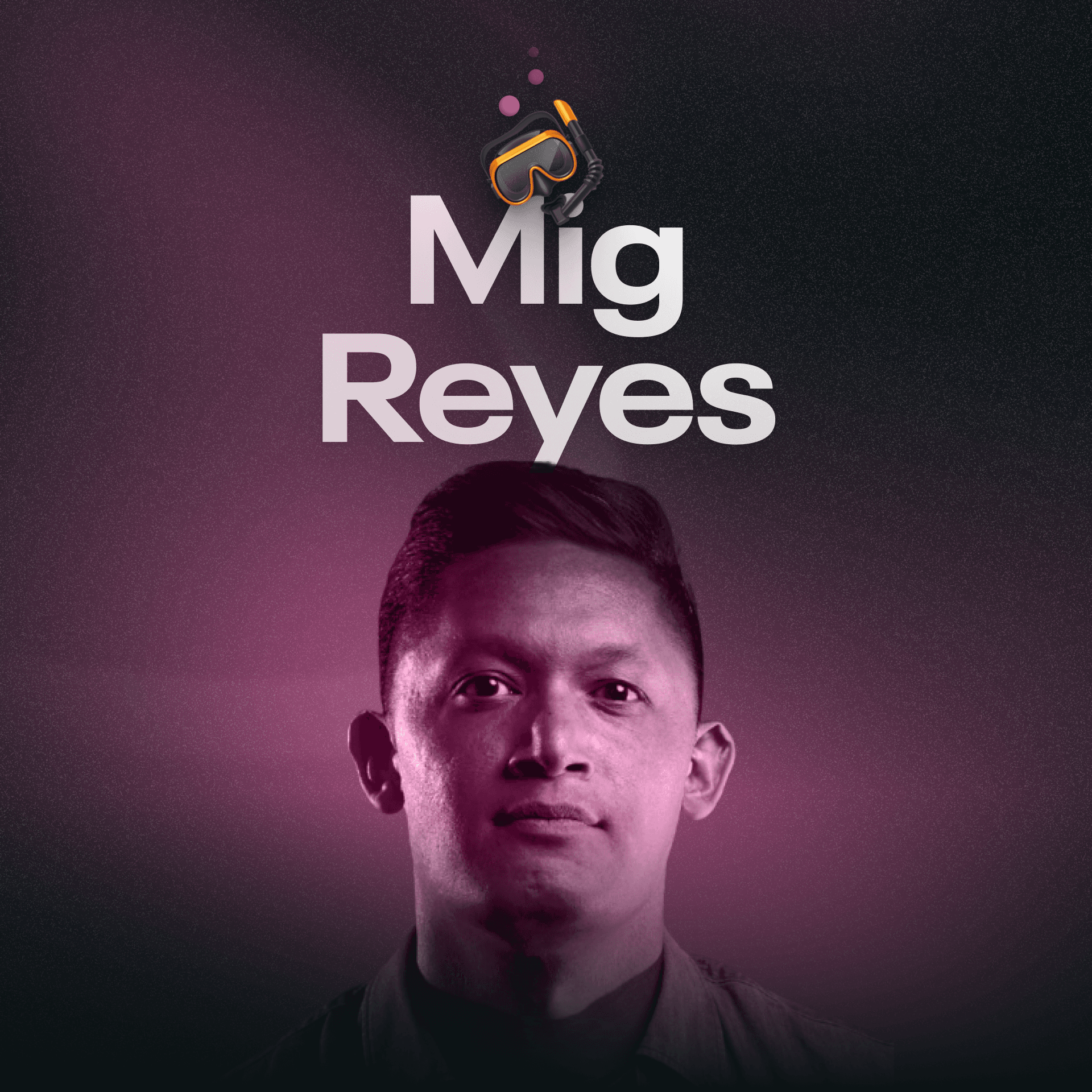
Mig Reyes
I think this is almost an uncomfortable thing to say in the industry, but I do think UX design is a. Is somewhat of an archaic term.
- [00:07]
Rid
You were almost kind of given like a mandate out of the gate from leadership. So maybe you could talk about that a little bit and what your strategy has been to raise the bar for design at Duolingo.
- [00:19]
Mig Reyes
Something I hear all the time. When designers and design leaders I interview, they tend to like, say, you know, Meg, I really just want to work at a company where design has a seat at the table. We don't have that problem. Design helped build the table at Duolingo. Instead, what we have are open seats where the business is saying, design, step up. We want you at the table.
- [00:35]
Rid
What are some of the specific behaviors that you would hope to see from an exceptional design manager?
- [00:41]
Mig Reyes
I've got to know the names of our components. I'm going to articulate the details of why something feels off by a few milliseconds all the way to. Here's where we're headed as a product.
- [00:50]
Rid
What does make a really great design community and culture in your mind?
- [00:54]
Mig Reyes
Whether you're a new grad right out of school or the 12 year veteran that helped design all of Duolingo, you present work to the executive team five times a week.
- [01:03]
Rid
Welcome to Dive Club. My name is Rid, and this is where designers never stop learning. This week's episode is with Mig Reyes, who's the VP of Product experience at Duolingo. And I love this episode because he shares a lot of truths that maybe are a little bit uncomfortable to hear, but I think the design industry needs to hear them. We also go deep into what makes Duolingo's design culture so special. How to succeed in design reviews, what Mig looks for in hiring, and a lot more. But before we get into all of that, I was curious to learn why Mig changed the name of the org from UX Design to Product Experience.
- [01:41]
Mig Reyes
So there's what the Internet saw and what we actually are feeling internally at Duolingo. So it goes a little bit like this. I have the privilege of managing and supporting and leading many functions. Product writing, product research, product design. And yet we were all under this umbrella of UX and there were not a ton of meetings for this. There was not a lot of alignment building. It was really asking a few people on the design team and in the exec team, hey, does UX actually feel like who we are and what we're doing at Duolingo? And everybody, everybody, the senior designers, the managers on design, chief product officer, Was like, no, not really. We're actually. How did we even land on UX to begin with is what we call ourselves. So for us, a couple reasons we riffed on. One, it just feels super antiquated UX and you know, maybe there's a little bit of a bias here. A lot of us come from a world where UX really just meant drawing boxes and passing it off to somebody else. We really think that all of us should be way more involved in the product. And then we kind of paused there and realized what we're all doing here is making an incredible product. An incredible product with users at the center of it. But for us, user centricity is just a given and an assumption. And it doesn't have to be a conversation. And you can tell companies low design maturity if they still have to advocate for the user. U.S. design has the seat at the table. We all know both. If you're a PM engineer or designer, the user matters. So what are we building together? What are we all paid to do? Literally, what is the mission to build excellent product. And so when the titles of our teams were already product research, product writing, product design. Together we're all making the product experience. So for us, that was like the first idea we had. We tossed around maybe not that many other options. We couldn't think of anything else. And then I just DM different execs. Hey, thinking of changing our name. It's a better reflection of what we do at Duolingo, which is we care about the product. What do you think? They're like, cool. Yep. What's the next agenda item? So low stakes. It was just I posted this on LinkedIn and the entire Internet got pissed at me and I'm. And it's just like, how could they remove the user from everything? It's like that's. We never said that. You guys put those words in our mouth. But that's cool. That's how you think about it. So for us it's. We care about the. This is a long winded way of saying red product matters and so does the user for sure. But we're all here for the user to build really good product. So whether you're a designer, a researcher or a writer, you're making the product experience better on behalf of users. And so we're all in on product experience.
- [04:16]
Rid
Real quick message. And then we can jump back into it. All right, picture this. You're in design crit, getting a bunch of feedback from everyone on the call. And you're taking notes as fast as you can, because that's what's going to fuel that next round of iteration. Sound familiar? Well, thankfully, those days are over. All you have to do is run granola in the background the next time you're talking with people on your team. That way you can relax a bit, be present in the conversation. Granola feels like a notepad, so you can still jot ideas down so you don't have to be 100% reliant on AI or those creepy meeting bots. You can kind of think of it like Apple Notes, but it transcribes crit for you. You can even have a crit template to pull out specific action items or capture all of the questions you were asked. I'm never starting a meeting without granola again, and I strongly believe that designers everywhere should be using it. They're offering three months free for you and anyone on your team. All you have to do is go to Dive Club Granola to get the special offer. I've taught thousands of designers Figma, so I've made as many prototyping noodles as just about anyone. But now that I'm building my ideas in Lovable, it is really hard to go back to the old world. Nothing compares to sending developers a real functional preview link. And it's so easy with Lovable. Like, really, really easy. You can add screenshots, describe anything you want to build, and it happens like magic. I'm having as much fun building my ideas in Lovable as any other point in my career. And they just launched Lovable 2.0. So you can start building day. Just head to Dive Club.
- [05:50]
Mig Reyes
Lovable.
- [05:51]
Rid
That's L O V A B L E. Okay, now on to the episode. I can't remember who I was talking to, but it was not long ago I was on an episode and I said effectively, I would not apply for a job that was UX Designer because that immediately communicates an old world way of thinking. And maybe at its core the definition is correct, but it doesn't really matter because the perception has changed around those two letters.
- [06:13]
Mig Reyes
I think I agree with you and I think this is almost an uncomfortable thing to say in the industry, but I do think UX design is a. Is somewhat of an archaic term. And I think, I think it was Jacob Nielsen who went on my LinkedIn and said, you're wrong and we should fight for you.
- [06:27]
Rid
Got a Jacob Nielsen comment saying, you're wrong. That's the gold standard. That's like, he doesn't get any higher praise than that.
- [06:33]
Mig Reyes
And it's like, hey, thank you. I read your books and also I've also built product here with other people and none of us resonate with the title UX Designer and going even before. Okay, so at Duolingo we've never had the title UX Designer. We've always been Product Designer. At Instagram, where I worked for three and a half years prior to Duolingo, it was never UX Designer, it was always Product Designer. And the thing I, I'll like peel the curtains back on and hiring for consumer facing companies, whether it's Instagram, Duolingo, Airbnb, Coinbase, all my friends at other consumer companies, we almost get nervous when we have designers with UX Designer titles come to interview because you're going to think about a few things, but not all the things, which is visual design, business metrics, building things with engineers. A lot of what UX design symbolizes or communicates to a lot of hiring managers is I'm pretty far from the work and I just want to do my end to end flow. You will never see a UX Designer job opening at an Airbnb, a meta, et cetera, because the product matters and the title. Has been Product Designer for more than a decade at some of the most reputable consumer companies in the world. At Duolingo expects to be one of those companies.
- [07:45]
Rid
I appreciate you coming on and being willing to even talk about it because it is something that I've been feeling and it feels weird to say, you know, like feels super weird even put it, yeah, putting it on the Internet, you know, you just invite backlash. You know, my God, post this on LinkedIn, like they'll headhunt you. You know, I, I hang out on the UX design subreddit from time to time almost just because it's like a window into the complete opposite world of Twitter. Really. Like it's like actually helpful to see that. Okay, there's like this real bubble that's happening here and I don't know, just the other day I felt bad. Somebody was coming on, they had 20 years experience and we shared a portfolio and basically it's like, I cannot get a job. Why can I not get a job? I looked at the portfolio and there was a visual design bar that wasn't being hit, but the title was UI UX Accessibility. And I was like, you know, you're not going to want to hear this, but I think a large percentage of the industry is writing you off just from that way of defining yourself.
- [08:43]
Mig Reyes
I would double down and underscore what you said. I think Having been a hiring manager for more than a decade at consumer companies, when we see job titles that say UI/UX, I go, do you know what you're doing?
- [08:54]
Rid
Yeah.
- [08:55]
Mig Reyes
Which is it? It is funny. The UX Design subreddit is I. Is maybe not the place you want to grow your career or learn. In a lot of my peer groups and even on my team at Duolingo, friends from Instagram, other other companies, we also will kind of scrub through UX Design subreddit or blind anonymous forums where, you know, you want to confide in your peer group. I think we're having all the wrong conversations in those places. I think, you know, it's 2025 and people are still debating, is it UI slash UX? UX versus UI. And it's like world building products, though. So when you're ready to talk about excellent prototyping, high visual design, really thoughtful design details, and then really understanding revenue, daily active users all in the same conversation, come on over. You'll up your chances on getting a job at a big publicly traded tech company if that is your goal. But there's still merit to that in startups where we care about revenue metrics, but also craft. And so there's two worlds in the industry. The people that have the jobs that are doing the work, and they're oriented around building products, businesses and doing great things for users. And then there's the people that are on these Reddits going, what's our title? Or here we go, another person changing the title. It's like, is this really how we want to spend our time, moving our industry forward? And so I do encourage a lot of people to, to go there for entertainment value, but it's not learning value.
- [10:15]
Rid
I think that's probably a good way of saying it. And I love the phrase moving the industry forward because that to me is really the difference. It's like you're either defending the old world and trying to justify it, or, you know, racing at the front. And I ask people all the time that come on the show what matters? Like, what do you look for? And some derivative of the word curiosity is like always the first thing out of people's mouth because they're looking for designers who just trying to be at the front and figure things out and experiment and push boundaries in interesting ways.
- [10:45]
Mig Reyes
You know, for all the people that have told you curiosity matters, I would agree. I think AI is here. Year over year, month over month, technology evolves. And if you are not someone that's curious about what our role together with technology is you're going to have a hard time finding design work. And so for everyone that has given me grief over the post. I don't know what to tell you. We're here to be curious and here to challenge assumptions. And that's how great products are built, that's how great teams are built.
- [11:10]
Rid
I appreciate that. And it is kind of interesting because you know how you significant you've wrapped it up into this kind of almost quick decision. So let's back up a little bit and talk about some of the longer term strategy stuff that you're trying to work on at Duolingo. Because from our earlier conversation you said you were almost kind of given like a mandate out of the gate from leadership. So maybe you could talk about that a little bit and what your strategy has been to raise the bar for design at Duolingo.
- [11:37]
Mig Reyes
I love this topic and it was a big reason why I decided to go to Duolingo in the first place. I'll start by saying I was really happy at Instagram and didn't want to leave. The team there is unbelievably talented. I felt a lot of support from all those senior executives and especially the design leaders. And so when Duolingo came around, we call him Simi Ryan Sims, he's our now chief design officer. He said, look, man, the design team got really big pretty quickly and at this point I'm probably not doing justice to all the design leaders and design managers who are on the team. I need someone to take care of them. I think for the first time in our company history, we need a dedicated head of product design and I'd like you to consider it. And he sat me down and laid out a few things that maybe we can talk about. Number one, our team is incredibly early in their career. Number two, we have process they're probably breaking at this point because we're going through rapid growth. And number three, because we're becoming a grown up company. We're public now, we need more leadership and we don't have the problem. This is, this is something I hear all the time. When designers and design leaders I interview, they tend to say, you know, Meg, I really just want to work at a company where design has a seat at the table. We don't have that problem. Design helped build the table at Duolingo. Instead what we have are open seats where the business is saying, design, step up. We want you at the table. And so that kind of hints at what you're kind of pushing on, which is we need more leadership. And seniority on the design side at Duolingo because we invest in early career talent so heavily. So I got to Duolingo and we had a an amazing group of managers, yet none of them really had a clear vision or were held to high standards in a way that I'm used to being held. So I had enough encouragement from the exec team to go make the product design leadership team something we're all proud of and have them push on the ICs, push the business forward, push the product. That's what we want from all leaders at Duolingo. So I got in and pretty quickly had frank conversations with every manager. Here's where we're headed right now. We're really good at taking care of our people, doing one on ones and that's the management side of things that you're really good at. We need to really honor the two other parts of our job title which is product and design. And this is something, for what it's worth, read that. I think we're still under indexed on in the industry. Leaders that are deep in the product and leaders that actually articulate and hold design to a really high bar. I think design management in the industry has perhaps devolved into paper pushing, running performance reviews, you know, doing a lot of hand wavy organizational things and not enough leading design, leading product. So that was the change I wanted to bring to Duolingo. Product design management. Let's get good at product, let's get good at talking about design. Because the way we're going to earn trust into being in more executive decision making rooms is no one will be able to talk about craft as good as us. And like that's who we are, is who we should be as design leaders. So I laid that out as a vision for the design management team with all new expectations. You're going to be good at coaching people into more senior levels. You're going to get good at really articulating product constraints, understanding the metrics really well and then let's talk about craft. And so it's a very simple thing. Product design management, well, let's get good at all those three things. Some managers were like, I see you. It's not where I want to be. So thank you. I think I'm going to explore new opportunities and this is, I expected that. I expected people to make a hard decision and for the other managers that stuck around they said thank you, let's go. And I also converted high potential ICs who really wanted to be managers into a manager. And so I essentially in year one rebuilt the entire design management team. The thing that is true of every manager on our team today, at one point in their career, they were an excellent ic. I really think that to be a great manager, it is a hard job. You have to love the people side, but you earn credibility from the business and the ICs from having once been an excellent IC in your career before now. That doesn't mean just because you're an incredible senior ic, you'll, you'll automatically be a good manager. But the art of knowing actually what you're talking about, being able to jump into Figma if it push came to shove to, to jam with an ic, that's what I was looking for because we're a small company, we're only 900 people, so we're not going to be big tech with hundreds of people in an org. You're going to be in the work, including me. I'm the head of the whole function for product experience. I'm. I've got to know the names of our components. I'm going to articulate the details of why something feels off by a few milliseconds all the way to, here's where we're headed as a product and you know, in the next several years. So it's hard. I'm asking for a lot. I absolutely recognize that. But that is the standard I want to hold for the management team. Here's why I focus on management. First, you get good and build an incredible leadership team. Everything else will follow. So I can scale myself through an excellent leadership team. But more importantly, we can lift up all the designers and all of the ICs and the researchers, the writers by having incredible managers that are trusted with all the other managers trusted by the executive team. That just didn't happen. When I got here, we were not well trusted with the exec team simply because we were too far away from the work. So now today we have an amazing leadership team that we're all really proud of. We go up to bat for each other, we push each other, we grow each other, all in spirit of helping everyone else on the team. And so that was kind of this big vision.
- [16:55]
Rid
I like it. And I'm sure it also inspires a new subset of designers who maybe all of a sudden are interested in becoming managers too. Because like, that was always the blocker for me. Like I saw management as the separation from the craft and the removal from the pixels. And I was like, well, I don't want anything to do with that, you know. And so I Appreciate the merging of those lines.
- [17:16]
Mig Reyes
I've had senior ICs come to me and say, now that I know what management really could be, I actually am more interested in a path to maybe being a hybrid manager in IC or maybe full time manager one day. And there have been managers on my team who have said, this is the first time I actually understand how I can use my design skills in a management role. But yes, I mean, this is true of every function at Duolingo. Whether you're an engineer, a pm, you had to have been excellent at your craft. Because our philosophy is if you're going to manage anyone else or lead anyone else doing this, you got to know what you're talking about. And you have to have a high standard to know what excellence looks like and feels like for you to guide anyone else toward it.
- [17:54]
Rid
Let's get one level more into the weeds here. What are some of the specific behaviors that you would hope to see from an exceptional design manager?
- [18:02]
Mig Reyes
You should know every item on your roadmap, why it matters and what it means to the business. I think knowing what we're building, who we're building for and why we're building it, you better be able to repeat to anybody in the C suite, in the elevator, why? So just knowing the vision of where we're headed as a team or at Org, you got to know quite deeply on the design side. I expect you to be able to evaluate your entire team's body of work. You should consider yourself the studio head of your team and be able to bravely flag where work is falling short. So if this project is not doing well, you better be the first to call that out, not some executive. And that's how I know you're doing an incredible job as a design leader. You are proactively flagging where work is falling short. Then you're inspiring the team to get to a better outcome. It's not just going, rid, this is bad work. Fix it. It's hey, rid. I notice we're going in this direction. Let me articulate, because of this detail and the context of where the product is heading, how you can make this work better. And so I really expect our design leaders to be excellent coaches, mentors and teachers. And that, that I'm actually pretty unwavering on. You have to be a support person. You have to be a peer that we can go to. Go. You have high standards, but I feel safe to learn from you. At the same time, it's a really hard bounce to strike. Excellent communicators that can Go down to the detail of the craft and then back all the way up of where we're heading. As a. I expect you to be able to kind of go up and down in those waves as a. As a design leader. Depending on the seniority of your management role, I expect other senior people to look up to you. And I don't think we say that in the. In the corporate world too much, but I do remember, even when I was at Instagram, our career ladder said, if you're trying to be a director, senior people look to you for guidance. Senior people want to work on your team. I'm bringing those same expectations to Duolingo. I want the most senior people in this industry to go look at our team and go, how the hell do I get on there? And one way we're going to get there is from leaders and managers that are supportive, caring, kind, but also have an insanely high standard for the work and for the team. Thoughtful articulation, high sense of judgment on what our product means and what it does, and then, you know, teach people and teach people how to get there.
- [20:11]
Rid
I probably want to go into each of those individually a little bit later, but as you're talking, I'm kind of curious. You know, a lot of this probably has a bit of a timeline for you to see meaningful results. You know, you're making big, sweeping organizational changes. Maybe some of them still feel work in progress. How do you, as the design leader that's trying to make this happen, figure out if it's actually working? Like, what are the signals that you looked at where you're just like, gosh, you know, we're two months in. Is this having the impact that I was hoping it would?
- [20:44]
Mig Reyes
One thing that has really simplified the way I look at things, and I learned this from Brett Westervelt. He's the now VP of Design for all of Instagram. He really pushed his leaders to just, first and foremost look at the work, because the reason you're building an excellent team is to build excellent work, to build excellent product, to do excellent design. I can't control if daily active users go up or down all by myself. I can't control if we make more money off this experiment versus this experiment. What I can control is how good was the work that helped. At least try to move a metric. Is the work getting better every single month? Now, this is a bit of a subjective thing, but one thing we've really understood as an exec team at Duolingo, you are hiring leaders for their pace, their bar for excellence. So for me, as I'm number one, I'm aligning with the CEO, the entire C suite, all the execs of every other function. What does good look like for a company? Is my definition really good? Your same definition as really good. Once I got a really good picture of what good work means at Duolingo, I'm then evaluating all the projects and what I'm then doing is taking a look at the work and then having conversations with all the ICs and all the design managers of of how the work is. And my responsibility is how good am I giving feedback so that I can see the work getting better.
- [22:01]
Rid
Given the emphasis on the work, then I think a natural response for a lot of maybe first time design leaders would be, okay, well, we need to bring in ultra senior talent and make sure that the seniority bar is really high because each person has to be able to execute at a high level and have this, you know, really rich background in craft. And yet twice now you've mentioned the emphasis on hiring junior talent. So can you touch on that piece of the strategy?
- [22:26]
Mig Reyes
Whether you're an L1, which is like a new grad designer, to an L7, which you're a VP level designer, every single person has the same high expectation for craft. We don't modulate it based on how junior or senior you are. You just, you're here because you're going to do good work. What's been cool and honestly rid what made me hesitate about taking my job at Duolingo until I learned to love this and now I'm. I totally love this is the density of early career talent. It's interesting to share that roughly half of our hiring forecast every single year is specifically reserved for early career talent, meaning from, from university or school to your first ever job. We're hiring intentionally new grads largely because we want to invest in the industry. This is not a cost saving thing. We pay all our early career people quite well in. Instead, it's instead of only fighting for the same senior talent that every other hiring leader in the world is fighting for. Grow them, develop them. And it also speaks toward the mission we have for our product. We're here to teach, we're here to grow others. You're here on Duolingo, the product to learn. We want that philosophy in our company. You're going to come to Duolingo to get your butt kicked in all the most fun ways and you're going to learn. So we really invest in junior talent or early career talent. But the Expectation for them is the same. Your craft has got to be awesome. So you can imagine it is a high stress environment at first for your first few weeks, quarters months, being an all new to the corporate world designer. And then you start to realize, oh, you know what, it's actually not that bad. And again, I have a manager who will support me, take care of me, guide me. And so I'm trying to think about it from both lenses of build an excellent leadership team who will take care of the crew and then bring in hungry, unbelievably ambitious, high potential designers who, you know, given good opportunity and coaching, can meet the expectations we're always going to know, like, okay, if it's an L1 designer, put the right scope of project on their plate, don't give them an entire redesign. So what we try to do is hold you to the same high expectation, but change your scope as you get more senior still. I would definitely love more senior people at Duolingo, but the reality for us and what we're committed to is investing in the future of the industry. And so what's also nice advice is that we can shape the perception and the attitude and the approach of how designers enter this field. Where one invisible hard thing to suss out when you interview senior people is are they jaded? Will they bring in baked ways of working that they are unwilling to change if they get to Duolingo? So hiring senior people is such a mixed bag and we all want them. But here's a really cool counterpoint. There have been designers at Duolingo who have been here 7 years, 8 years, 9 years, 10 years, 12 years, 11 years. So our retention is, is unbelievable. These same people are now directors, executives, senior ICs. We developed them here. Some of, some of the designers here, they've only ever worked here and now are, are leading the way for us. So I, I even asked Luis, our CEO, hey man, what's your take on just having so many junior people here? He said, I know it's a long game, but this is how we work as a company. We take the long view. So we're going to invest and is it more work up front? For sure, but, but we owe it to the industry to pay it forward and develop people. And some of the best people on our team rose up through the ranks of Duolingo versus a lot of senior people we've brought in and had to unfortunately say goodbye to because they never wanted to. It was just hard to figure out how they fit in. So deep, deep, deep commitment to early Career talent because we think it's just the right thing to do for the industry.
- [26:05]
Rid
Can we talk a little bit about the development process? Like if you hire someone tomorrow, what are the specific ways that you would expect that person to grow in their first maybe year at Duolingo?
- [26:15]
Mig Reyes
Here's, here's a philosophy I feel very strongly about. You don't treat a junior person like they're a junior person. You treat everybody with the same super high expectations and then you tailor your expectations based on what they give you. If you want to get to every next promotion, I'm going to treat you like you're already there. And then I get to learn the gaps you have and then we make a coaching plan for you on those gaps and so we kind of throw you into the fire right away. So here are concrete examples. Whether you're a new grad right out of school or the 12 year veteran that helped design all of Duolingo, you present work to the executive team five times a week or have the opportunity to present five times a week. So you present your own work. You talk to us about what metric impact you think you're going to have. You show the prototype that you made, your manager is not going to do it for you. We throw you right in front of the CEO, head of product, head of design, and go talk about your work. And that is totally scary. I get that. But we, again, it's, we're not going to slow roll it. We, we think we hire smart people and I think we want to get out of the way and so see where they end up after these first few rounds of high pressure and real work. And like we're trying to ship real product work and then from there tailor it in reverse. Now we will do other things too, just to make sure it's not a total chaos. Show one again. I go back to the managers. Are you thoughtful in growing their career? Do you have a coaching plan? Do you talk to them about their career and their skill gaps? Not just once a quarter or every performance review. I'm talking weekly. Are we creating structures where it's safe for people to make mistakes? So one thing we've done at the company is this new format called Hot Trash. And Hot Trash is an environment where PMs, engineers, designers, everyone in the company can hop into a room and just show silly ideas and go, what if we did this? And even the execs are in the room and it's like, whoa, cool. What if we did this and we build? So I think so much of it is just feeling safe to learn. And then I'll try to do other things too, bring in outside leaders. So, you know, whether it's Ian Silber, head of Design of OpenAI to no. 11, Head of Design of Figma, I've invited them to come do Q&As with my team to just go talk to us about what it's like in your companies. Just so that they know it's not just a Duolingo thing. This is an industry thing. We're all trying to learn. So I think it's, yeah, creating a culture of learning all around these people. And even for me, I'm not done learning. I actually, for all intents and purposes, feel like a rookie myself in a lot of things. So it's creating that culture of it's okay to mess up as long as you're showing every single day you're getting a little bit better.
- [28:46]
Rid
I mean, that was a very robust answer. It's pretty cool. And it's very obvious that you're doing a lot of things to support junior talent. And even just listening to you talk, I mean, the timing for that strategy has never been better. Just because the industry is reinventing itself so quickly. Like, going back to the beginning of the conversation, it's like, my goodness, the tools that I'm spending so much time working with right now are just as new to me as the person that you hired eight months ago at Duolingo. And so in so many ways, there's like this leveling of the playing field where all of a sudden the value of moldability is pretty easily able to outweigh that lack of experience when everything's so new.
- [29:26]
Mig Reyes
I mean, it's wild for me to see that some of our L1L2 designers at the company are running circles around people I'm interviewing externally because of their adaptability, their curiosity, the high potential and craft that they all exhibit. I came in to Duolingo with skepticism because of how early career our team is. And I'm now looking backward, going, holy shit. I'm so proud of my early career crew that I'm actually asking some of these early career designers to teach some of the senior designers other skills that they don't have have. It's this full circle coaching culture that we have for each other that I want, want to build more of.
- [30:02]
Rid
I guess another aspect of moldability is, you know, it's not just that the process and the practice of design is potentially more rigid in a senior designer, but they also have certain expectations about what A design culture should even look like where you're kind of given this blank slate on an individual basis for each person. And I would imagine that almost in some ways allows you to have a slightly more opinionated take on what a good design culture even is. And I know you've written about that in the past for Instagra, so maybe you could talk a little bit about what you believe through the lens of what you're seeing at Duolingo in terms of what does make a really great design community and culture in your mind.
- [30:39]
Mig Reyes
You said a word that I really feel strongly about. It's community. I think as a company gets bigger, it's so important for each other to know what we're working on, how we're getting there, and that we're learning together. What culture is not our happy hours, Ping pong tables, foosball tables. That's just stuff in an office. Culture to me is what do we say yes to, what do we say no to? What is our standard and how do we help each other meet those standards? And I know that sounds very intense, but what it really is is a commitment to the work and each other. That. And that's the culture I want. And that commitment to each other means we're learning and growing. So we do. Once a month we'll do these things called Design Showcase, where we're just doing show and tells, doing deep dives on the weird cultural things of each of our teams, making fun of ourselves. We're doing case studies in front of each other all the time of like, whoa, I just learned how to run a meeting with the CEO and everyone. Here's what I learned. Like the silliest little things. I, I think people don't realize those are all learnable things. So we have a culture of just sharing constantly. Every Monday, I have a Monday update where I use it as a moment to try to share a top of mind that we can all be learning from, from each other. But the, the culture. Here's a couple important things I think of. Culture. Leadership definitely has to set the tone. If I'm absent from the work, I'm not in the rooms, I'm not talking to the designers. You're gon have this sense of leadership is too far away. So number one, I want all the leaders to be with the team. This is our team. Not your team, but our team together. And so it's first and foremost on the managers and leaders to set the tone for quality and set the tone for community building. But I also tell all the ICs especially the Junior ICs. This is your team too. So if we're not doing something, you have full permission to start a new event or program or something. So. So earlier I said, we got the heads of design of OpenAI, Figma, other companies to come hang out with us. That's all from a junior designer that I just instead supported. So we have a designer, Lokesh. He had asked me, hey, does anyone know any growth designers in the industry? I'm on the growth team. I just want more resources. I slacked in a thread. Hey, how about I get some growth design managers to come to your team and we'll do a Q and A with them. We did that. So shout out to Christina, who's a design director at Instagram. She came over to to give a talk. And then Lokesh was like, mig, that was so cool. Could we do that again? I'm like, yeah, do it. Make this a whole program. Whatever you need.
- [33:03]
Rid
Cool.
- [33:03]
Mig Reyes
I want you to design the program, put together a schedule of the top design leaders in the industry you want to meet. I'll email them if it, if it helps. If it, you know, helps to have a senior leader reach out to another senior leader, I'll do that for you. You put in the work on bringing people to our company and I'll invest. And so that's what I mean about bottoms up culture. Like, if you want to work on a badass design team, be a part of making it badass. And so we, we really try to empower our team to teach each other, make culture with each other and not only wait for the managers and leaders.
- [33:33]
Rid
I love that. And I also want to highlight something that you said. You used the word learnable. Maybe we could use that as a launching point to talk a little bit about the design reviews, which do feel like a pretty big piece of this culture where you're putting your work in front. It doesn't matter if you're a junior. Like, you're not going to have a manager go to bat on your behalf, like if you made something, show it off kind of thing. So in what ways is that piece of the puzzle learnable? And are there specific things that you're equipping younger designers with even to succeed in those moments? And I'm going to eliminate two answers that are the obvious ones, which is like, give the proper context and know your audience. So building on top of that, how do you set designers up for success in those moments?
- [34:18]
Mig Reyes
I don't think there are many more tried and tested methods of learning Something other than reps. And we really believe in reps at Duolingo. What we do for a new PM and a new designer, regardless of level or tenure or seniority, you're going to start showing up at product review right away. So product review is one of the more important meetings we have at Duolingo. It happens five times a week, every single day. We'll have a mini product review where it's rapid fire and you'll launch, line up in the room and just flash work and go, I want to do this. What do you think? Approved. Next designer want to do this. Approve. So that one's a little faster and lower stakes. And then every Tuesday and Thursday, we have a full product review where each review is only 10 minutes, by the way, not a full hour. 10 minutes per product review. And what we want is a designer and PM to tag team show work right away. We do not want hand wavy, long decks. We don't want long docs. We just literally want a prototype type and show us the work. And that is for senior people, really weird because they're used to making all these like overly done, longly written docs. And for junior designers, they're like, I've never done any of this stuff before, so what the heck is this? To answer your question, number one, we give everybody lots of reps and the expectation is you're just constantly coming to product review and we expect you to get better over time. The second thing we do is just give you hands on feedback right after your product review. I mean, one is rep, but two is the coaching. And this is the really important part that I think we're still getting better at. At Duolingo, after a product review, we do a debrief with all the execs in the room. We talk about every single review every single day. And so we'll go, okay, let's talk about Rid's review. He showed this new streak feature. What kind of feedback in addition to the review feedback we gave. What are like the meta feedback we should give Rid and his team. All right, maybe Rid was a little too long winded. We didn't need to see this part of the doc and we don't actually trust the metrics evaluation that he had. So let's maybe coach his team on that so that he can show up better next time. We will then DM you directly or tell you and your manager and your PM partner directly. Hey, awesome job today. Couple of extra notes for you after we did a debrief. And so rather than reading everything Hoping you're going to get ready to do it. Jump in. It's going to be a little scary at first, but after each successive product review, plus hands on help afterward, you start to dial it in and fine tune your approach, your presentation style, and also, more importantly, the work itself. We also do have a lot of documented things that work. We have a litany of principles. We prefer to keep it short, keep it brief, no explainer ui, no wizards and tap throughs and click throughs and tools. Like, we have some of these fundamental things that we'll just pass along to the team. But for the rest of it, you gotta be brave and try and we expect that for junior people to new directors that join the company as well.
- [37:05]
Rid
Let's take a different approach to the reps idea.
- [37:09]
Mig Reyes
Let's do it.
- [37:09]
Rid
And I'm gonna shine the spotlight on you now because you've also went through a ton of reps as the person sitting in the design review chair. In my head, it kind of looks like Shark Tank. I'm just not sure what it actually looks like, but that's what I'm picturing you at. You're in that middle Shark Tank seat. And you know, you've sat there quite a few times, many times a week, not just at Duolingo, but this was probably a big part of the role at Instagram, past roles. So given the amount of reps that you've had in the Shark Tank seat, how have you evolved the way that you give feedback to designers?
- [37:42]
Mig Reyes
I love this question. It's also rarely spoken about when we talk about leadership, leadership education. Part of leadership is giving guidance and it's like it's a given that you're just good at it, but it's not. It's like giving hard feedback to someone. It's an art that you learn. Product feedback, design feedback. It's an art that you craft and you learn. I'll tell you how I even became an official product reviewer at Duolingo and then answer your question about how I refined it over time. When I got to Duolingo, the P priority zero of my onboarding plan with my manager, Simi, was you have to get calibrated. Big bold letters. You have to get calibrated. Because if you are not calibrated at how we work at Duolingo, you're going to have a hard time being a reviewer, which we expect you to be one day. So what I did was I was added to every single product review meeting from week one of starting my job. And I shadowed all of Them I just watched and studied lead. But I did active shadowing. So on the side I had a private slack channel with my boss. It was me reading every pitch from every team that was going to present a product review that day and me also giving feedback and predicting what feedback the CEO, head of product and SIMI would give in a thread before the review starts. Then we go through the review. Simi will go back to the thread and check in on my answers. Here's what you got, right? Right. Here's why we said this thing. An additional consideration you missed out on Mig was this. I did this for about four weeks straight on my onboarding at Duolingo, to the point where I was really starting to predict what leadership was going to say. So by my fifth week at the company, I was minted an official product reviewer for the company. But it was being very active and engaged way before a review would happen just to really try to purposely understand the level of craft, the level of product thinking that is required to to to be successful at Duolingo. So it was very hands on. And now we're trying to scale that process to future PMs and future design hires where we literally tell everyone shadow product review and have active conversations with your manager on what you thought was going to happen. Why do you think migs said this in the review? Let's break down the feedback and I will also go out of my way to new people to go, hey, by the way, good job on your first review. Here's also why I said this again to help calibrate everyone else. So there's that how I got to be a reviewer at Duolingo. I would say my feedback giving skills really I started to take seriously when I was at Instagram. All the design leaders there at Instagram are held to a really high standard, both in their understanding of craft and product, but also how to give feedback on it. So something I learned how to do and refine over time is being very succinct, linked, direct and only giving feedback on what really matters. One pitfall a lot of leaders fall into is they'll just kind of vibe for a while of like things they're feeling and then they leave the room and the team's like, so what do I, what do I do? What, which of this do I need to act on? I've learned over time and I'm honestly rid, I'm still trying to get good at this. Get down to the single most important thing that would help make the project better. Everything else that designer can learn through More reps, more design time on their own. What's the thing that I know that they could never or they'd have a hard time getting to on their own. That in and of itself of finding the most important thing is really hard. And when you can do that, I think just being concise, crisp, direct and not sugarcoat, I think a lot of leaders will say, oh, this is so good. And you know, maybe if you try this. No, hey look, you're, I don't think this is going to meet the goals of the project and here's why. Why? And so the second thing I would say is get good at saying why. What you don't want to build in a design and product culture is designers and PMs going you and asking for approval and then leaving. That is not teaching people how to think. What you want to do is give the feedback, especially if the work's not there yet, and then say the why so that when they're, when you're not in the room, they start to get to these outcomes more on their own. I've gotten really intentional about saying why a lot more and in a 10 minute review it's, I will admit it's really hard to go in depth and go beyond a brief piece of feedback. So I'll, I'll still follow up on a dm, say here's why I gave you that feedback really breaking down how you think about a problem, then give the feedback. Is, has been really helpful and the only way I got good at it, as I said earlier reps, I, I, I sucked at giving feedback for a while but time, you know, review over review of just trying to dial it in and then also asking my, my, you know, there's three people I've really looked to in my time at Duolingo, Jem, our head of product, Liz, one of our heads of product and then Simi, my manager. I'll ask for feedback. How'd I do when I gave that feedback? Was this clear? Did I come off too harsh by the way, or sometimes they'll say no, you were too soft actually. So you get feedback on giving feedback with each other and this maybe is the nugget of what I'm trying to talk about. There's gotta be a culture around giving good feedback. Giving good feedback has to manifest matter unanimously across the leadership team.
- [42:51]
Rid
I felt some conviction because you used the phrase like maybe if you tried. That's totally me. I'm totally like maybe if you tried person. So yes, noted. I want to make sure that we're covering everything in the communication bucket before we move on. So this could exist outside of the design reviews. It doesn't really matter. But what other communication patterns in your mind separate the most successful designers that you've worked alongside from the people who maybe struggle to build a little bit of influence inside of a design org?
- [43:21]
Mig Reyes
I have lots of thoughts on this because getting really good at communication is. Is critical to being influential. I think a lot of designers will tell me they struggle because of a few reasons. They're introverted, it's not part of their personality. They're not a good writer. English is not their first language. There's a lot of reasons that will will hurt our confidence in communicating. The thing that I actually feel more strongly about is that you just do it at all. I think too many designers are under indexed in just saying anything to anybody. And the most successful people I've seen in design are proactive. They communicate a lot, even if they're not polished. Unpolished but frequent is much better than polished. But rarely and over time, again, because of reps of doing it over and over, you will eventually become a more polished communicator. I can't stress enough that making sure everyone around you knows what's in your head is one of the most important things you could be doing to grow as a designer and a design leader in particular. So just doing it at all, I think. I know it sounds weird, but just not communicating is one of the biggest flaws. And not communicating enough is what I actually tell people and when I try to coach other designers is if you think you're doing enough, you're probably not doing enough at all. Overdo it. And by overdoing it, you're probably doing it just enough. So I think the proactiveness and the attention to doing it over and over. Now what I mean by that is give team updates or give project updates to your manager. Give project updates to your team. When something's going wrong, raise your hand and say so. And don't wait for someone else to flag something's wrong. I think just a sense of ownership and saying, hey, I'm seeing this, everybody. Is anyone else seeing this? Those people become influential simply because they show they're caring about the right things, simply by saying it out loud. So that I can't stress enough that you don't have to be a brilliant blog writer to be a good communicator. It's just proactiveness. And doing it constantly is like the first best thing anyone can ask for a great communicator. Will start to articulate thinking in a way that other people can mirror the thinking and start to scale themselves. So this is what I actually want out of all my design leaders on our team is, is be a good communicator so that you can scale yourself and get all 10 of your designers to start thinking like you versus say something out loud so that they do the order. I really think writing is one of the biggest levers we have in growing people. So I'm a big proponent in pushing people to write regularly, share regularly. You don't have to speak at all hands if that scares you. You don't have to do that. But you gotta find ways to get decision makers to know what you're thinking. And, like, that's how I really try to break down what communication is, is just get the right people to know what's in your head. That's what matters. How you do that, whether it's a dm, in a meeting, in an email, figure out what's comfortable to you. But ultimately, what matters is the people around you that matter needs to know what matters to you. So it's. It's just encouraging to do it at all is the first thing.
- [46:23]
Rid
I'm a big believer in the power of video to explain my thinking as a designer. So when it's time to get feedback, I'll drop a link, loom link and slack, and another link to a Figma prototype, and feedback will be scattered everywhere. And, I mean, it's a mess. So I'm building the product that I've always wanted to exist, and it's called Inflight. You can kind of think of it like an async crit. It's an easy way to share a video walkthrough along with an interactive prototype or whatever you're designing, and then AI interviews the people on your team to get you the feedback that you need and organizes everything for you in a beautiful insights page. So right now, I'm only giving access to Dive Club listeners. So if you want to be one of the first to use Inflight, head to Dive Club Inflight to claim your spot. I think it's very obvious from a design leadership standpoint, but even just like putting myself in the position of, you know, the little IC designer with some kind of an idea, just putting it out there is the way to be a magnet for the one, two, maybe three other people that are like, oh, that's kind of a cool idea. And all of a sudden you have mobil people, you know, and that. That idea of like, oh, I'm actually just scaling myself. You know, there's more inertia behind this little nugget of an idea all of a sudden.
- [47:37]
Mig Reyes
Communicating widely and proactively is how you make more opportunity for yourself as a designer. You want to get to more senior roles, have bigger project opportunities. We got to know what you care about, we got to know what interests you. And so when I'm a manager trying to find the right designer to put on a very important project, what I'm looking for are, who's a fit for this, who cares about this problem? You tend to have better output when you have a designer who cares about the problem. And the only way I know is if a designer is broadcasting their goals, their hopes, their desires, what they're worried about, what they're mad at, what they're excited about. And the designers that find ways to comfortably share what's in their head, whether it's through writing or meetings or et cetera, those are the people that are then become top of mind and first in line for opportunity. Even when a manager wants to do this as fairly and and as with as much justice and fairness as possible, creating visibility is something you'll hear a lot about in career ladders. Creating visibility means get your ideas out there. It doesn't mean brag about your work in front of the execs. It simply means, hey, everyone, if there's ever an opportunity to make a design system for this thing or clean up these parts of our app, I really am so stressed about it. I'd love to be the first to clean all this up. That's communicating and that's just expressing where you want to go. So I can't agree with you enough that it really is not just for leaders, it's for ICs and not little ICs. I think at Duolingo, ICs are actually the most important role at the company. We're going to have fewer managers simply because we believe what makes the company go is excellent. ICs, I think I'm going to take.
- [49:07]
Rid
A left turn before I let you go here, and let's touch on the hiring piece a little bit. There's probably a lot of people right now, even listening, that are just like, man, it's tough out there, you know, like, they might be looking for the next role. Maybe they're still in between jobs. Maybe they're having trouble getting to the end of an interview process. So I'm curious if, off the top of your head, do you have any advice that you think more designers need to hear for today's landscape.
- [49:31]
Mig Reyes
We could talk about this topic for another two hours. I really think hiring in tech and in design is broken. I want to first start by saying if you're looking for a new role, it is hard out there and the whole Duolingo crew is rooting for you. It's hard. I've been a part of the side where I had to do layoffs and I didn't love it. I've been now as a hiring manager, knowing just how saturated and dense the market is. So just first a shout out to all of you looking for work. It is tough and whatever the Duolingo crew can do for you, we're here for you. And I think one thing and rid why I'm excited to be a part of this is to just help others. And so I do want to share stuff that I think is different from what I think we're being taught to find a job. So here's a few things. I'll start with silly hot takes. I don't want to see pictures of you putting sticky notes on a wall. That's not what we're hiring for. Don't really need to see screenshots of your fig jam. I don't need to see 30 slides of build up and UXR and all and Personas. The insights matter, but ultimately in the first stages, especially for an interview, the output matters. And I can't underscore this enough. I think especially as you know, we're riffing on the UI UX debate. I think too many designers are trying to be a million things and they're first shot at getting a job. There is a funnel here and what we really want first is do you execute well? The word designer is in your title. We will say, oh, we want craft. I'm going to just say straight up as a leader, here's what craft means to Duolingo. Your visual design is very good. You have a good prototype, you have interaction design details that make us go, wow, that's nice. You have built and designed work that looks like it belongs in other people's hands. Visual design actually really, really matters. And it is not that visual design is the only thing that matters. But here's where it's frustrating on the other side. Let's say we go through somebody's case study. 20 minutes go by with a lot of lead up and sketches and then there's one slide at the end of what they shipped. It's not well executed, is a huge letdown. And so I really think There is a significant under indexing right now on the execution of the work, the visual design of the work. Work. And I don't know how else to say it. And when we turn down candidates, when we do rapid portfolio reviews, if you're, if your visual design's not there, we're closing the tab.
- [51:56]
Rid
Yeah, you got eight seconds.
- [51:57]
Mig Reyes
You got seconds. And if your visual design's not there, we close the tab. If your visual design is good, we then investigate what was the product challenge, how was it? Cool. Now I'm interested. So we reverse funnel it. Start with visual design. If you're off there, you're out of the running. And then we, we slowly go, all right, there's interest here. Bring them onto an on site. Here's where I think designers are going wrong in interview loops. And what advice I would give. Way too much context. Again, lots and lots of build up. All we want to see first and foremost is the work. And then we've actually made a change at Duolingo, when we do first calls and portfolio reviews with candidates, many companies will do a 30 minute, 45 minute portfolio review. Before you're allowed to go on sales site, we do a 30 minute chat. You are allowed only three to five slides only. No text is allowed and you can only show high fidelity final output on these three to five slides. Here's why. We're consumer company and the people that use our apps are real people like you and me. Real people are not reading 10 page decks. Real people are not reading 10 page documents. Real people use the work, see the work and look at the work. So this is also how our product review process is at Duolingo. Show the work. We don't want to read the deck. Show the work. So I have told designers I don't want to see anything other than high fidelity prototypes on up to five slides. And every time I get to a call, the designer's like, I don't know if I did this right, but here it is. And I'm like, you did it exactly right. And here's why we do it this way. One, we're showing you how we work at Duolingo. Two, we want to just cut to what really matters in the first stage. But three, we want to make it easy for you. Finding a job sucks and it's so hard. It's so much work to put all these hours of work into making this narrative. In meeting number one, just how do you, how do you execute? And so designers are like, this is weird, but I only spent like 30 minutes on it, it's like, boom. It's exactly what we want. So we want to show you that, you know, speed to idea, speed to prototype really matters. And I think designers right now are just way too long winded on the stuff that doesn't matter in a portfolio. Review the execution and then from there, what does matter is what was the product and business challenge and why does your design meet that goal? Tell me about the metric movement in that goal. But what I want is a healthy conversation, like we're coworkers right now talking about the work. But from there, you know, we will do the usual chats of how do you collaborate? Let's do a figma exercise together. But I cannot understate enough how much visual design matters and especially consumer tech. And by the way, this is not unique to Duolingo. At Instagram, if you are a UX designer, we, chances are you weren't even getting a call. But if you were a product designer, we're first going to look at your craft, your visual design. Heavy emphasis on visual design and the likes of Block, Cash, app, Instagram, Airbnb, Duolingo. I don't know how to tell this UX design subreddit that visual design truly matters.
- [54:52]
Rid
You made me laugh earlier because you defined craft as visual design, which I feel like as an industry we're just like too scared to do. Like, we just have it in our DNA that visual design is devalued. There's not thinking in visual design. So it's like, well, we'll call it craft and put it on a pedestal and all of a sudden it's different and celebrated and it's like, no, no, we just rebranded visual design.
- [55:12]
Mig Reyes
Totally. Yeah. At Duolingo, what's going to earn you trust and respect if you have the word designer in your job title is excellent execution and excellent visual design. And we're not afraid of saying that. You are paid a ton of money and given a ton of responsibility to, yes, be a visual designer who can think of metrics, understand user flows, build full products and prototypes, end to end, negotiate, stakeholder. Yes, it's a big job, but don't be afraid of saying you're really, really good at visual design.
- [55:40]
Rid
What about the early career people? Like, obviously my expectation is like, you don't, you know, it's a reps thing. You know, you just have less reps. Like, I don't know how else to really get good at visual design other than reps. Is that still the dominant variable that you're looking for when you're evaluating probably long list of early career.
- [56:00]
Mig Reyes
Candidates, the upcoming class. We very much hold you to a high standard for visual design. Of all the skills we're all learning, the thing that has been, like, pushed further down the roadmap of a designer's career growth seems to be visual design. We're trying to raise that back up. So, yes, even for all our early career L1, L2 level designers, we're staying both in the job description and the performance calibrations criteria. Your craft is elevating, your visual design is getting stronger, and it's already starting at a strong point. So how we filter out junior talent is who's the one that had the best visual design out of all these? And who seemed the most coachable? Who could start to understand business context as it relates to what they're visually designing? I will maybe just layer on a couple other things. When we say craft, it is 100% visual design, for sure, but also interaction design, you know, micro details, but also simple writing. Whether it's simple copy in the product itself, we really care about brevity and being concise in product copy. But also craft and how you present. When you show work, it better be simple, clean, you craft means, you know, the right thing to talk about at the right time. So we do have an expanded version of craft, but we're also unafraid to say that at the heart of it, how's your visual design? We look at the portfolio. We got millions of tabs of portfolios on the screen and we immediately X them out if the visual design design's not there.
- [57:21]
Rid
Well, mig, we've covered a lot of ground. What's the most important thing that we haven't talked about yet?
- [57:26]
Mig Reyes
This is a tough market. It's a tough industry. There's a ton of people in it. We're all learning together. What I would hope and what we're trying to do at Dingo is to just look out for each other. I think something we try to do in our interview process is even if you don't get a job with us, you felt like you became a better designer and a better leader through our interview process. So we'll do things like for every director that I interview, if, if they're far enough along in the process, I will show them my. My own interview deck that I got my job with at Duolingo to go. You don't have to copy this, but I know how hard it is to find design leadership jobs. Let me at least give you one additional perspective on how to Approach this interview just so that if it's not with us, it's with somebody. And so what I can hope for right now in this time, where it's a pretty confusing time in our world, there are few jobs, budgets are slashed. The thing I really want is just a supportive community both inside your company and here. Whether it's on Dive club or on forums, it's, we got to help each other and teach each other. I think this is how design will remain a relevant industry is when we all treat it as a craft, like a practice, a job that we can all get better at. I wouldn't be where I am today in my career if I didn't have other people look out for me. And so you can also do this when you're mid level or junior in a career. There's turn around, look behind you and realize someone else is trying to be in your shoes. So I think that that is kind of the spirit at Duolingo and just something that's of pushed me in my career is just be helpful. You don't have to be the best, but you can be helpful.
- [58:51]
Rid
And that's the fastest way to grow too. If you can identify one person that's one rung below you, you will grow so much more quickly by investing in that person than you would otherwise.
- [59:01]
Mig Reyes
Just looking up completely. I. I feel like I've become better at my job simply by helping other people learn their job because I learned my own blind spots and things I didn't know about myself that I can now focus on for myself but also teach other people. So yeah, I, at the end of the day, it's a small industry, we all know each other, so best thing I could say is just be helpful in this place.
- [59:22]
Rid
Well, you've definitely been helpful today. I appreciate you coming on and sharing just a lot of things that I guess I wanted to get on an episode, you know, like you, you, you spoke a lot of truths that sometimes it's easy to kind of just dance around and just leave unsaid. So I appreciate you today and just even learning more about Duolingo culture, it's really awesome you all are doing things in a fresh way that is just.
- [59:48]
Mig Reyes
Really cool to see.
- [59:49]
Rid
So thanks for sharing it with us today.
- [59:50]
Mig Reyes
Thank you. And likewise, you're building up a community of insights, people, leaders that you're kind of honoring the thing we just talked about. You're helping people too. So proud to be a part of this.
- [60:00]
Rid
Before I let you go, I want to take just one minute to run you through my favorite products because I'm constantly asked where what's in my stack. Framer is how I build websites, Genway is how I do research, Granola is how I take notes during crit Jitter is how I animate my designs, Lovable is how I build my ideas in code, Mobin is how I find design inspiration, Paper is how I design like a creative and Raycast is my shortcut every step of the way. Now, I've hand selected these companies so that I can do these episodes full time. So by far the number one way to support the show is to check them out. You can find the full list at Dive Club Partners.