
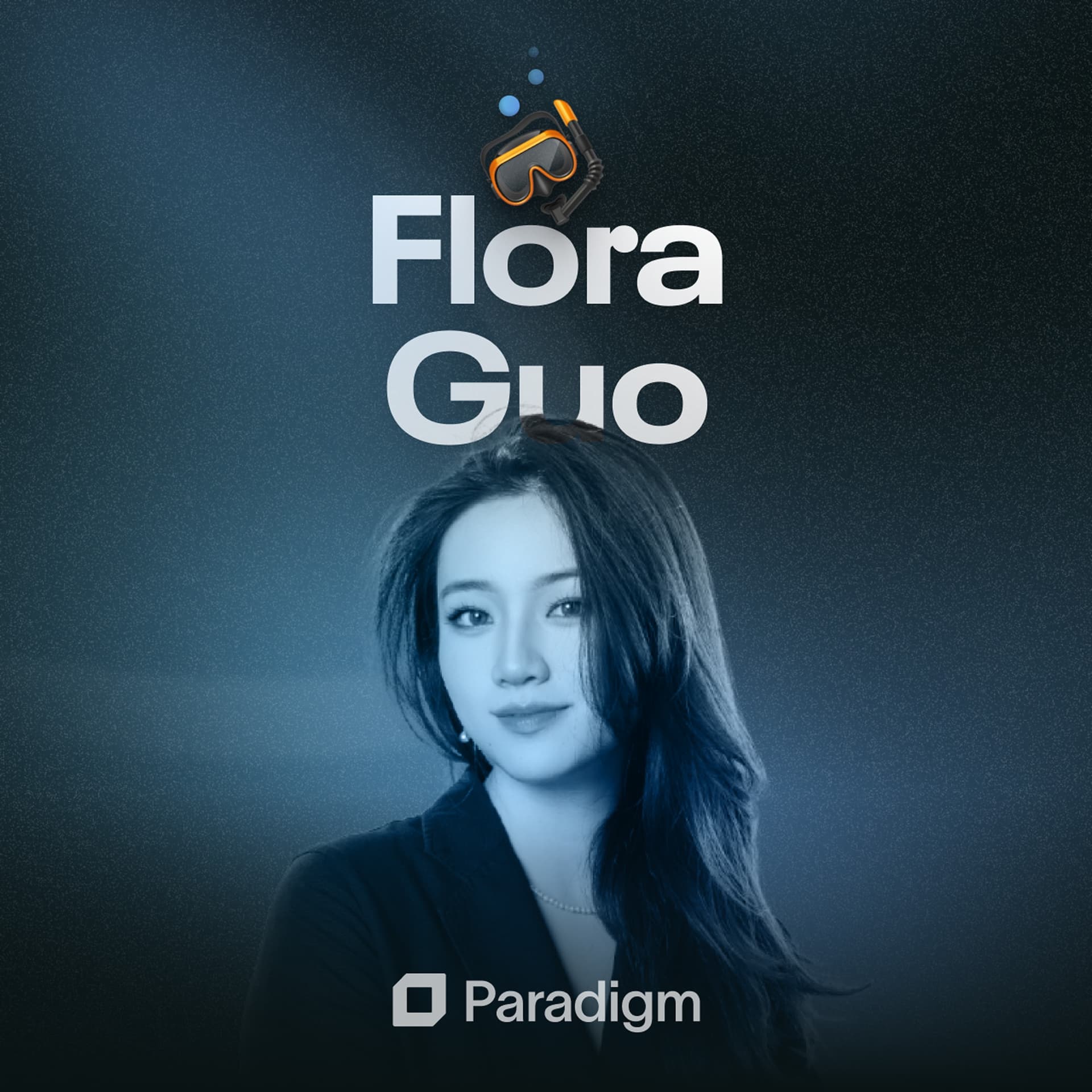
Dive Club 🤿 — Flora Guo: How to Accelerate Your Design Career with AI
Host: Ridd | Guest: Flora Guo (Founding Design Engineer, Paradigm)
Date: March 25, 2026
Episode Overview
This episode features Flora Guo, an accomplished design engineer who has rapidly ascended through the design world, now shaping the experience at AI-native startup Paradigm. Flora shares her personal journey from self-taught maker to prominent design engineer, her approach to learning and applying AI in design, and actionable strategies for designers to accelerate their careers in the era of AI. Along the way, she highlights her unique note-taking and sharing practices, dives into the specifics of her workflow, and offers a fresh perspective on cultivating serendipity, building community, technical upskilling, and leveraging AI as a learning partner.
Key Topics & Takeaways
1. Opening Metaphor: AI as a Map Maker for Designers
- Flora’s Core Analogy:
“What AI is really great at is giving us a map of the territory. It’s like when you’re playing a video game and you see that there’s, like, clouds surrounding areas of the map that you haven’t unlocked yet. AI is really good at blowing those clouds away. Basically, now you have a very clear idea of what is possible, but it’s still up to us to walk the terrain.” (00:00, 23:20)
2. Craft, Conferences, & Community: Lessons from Tokyo (01:11–05:24)
- Flora recaps the Tokyo Design Conference (“Brian Beniot basically brought 50 of the most interesting designers in the space...”) and the impact of sharing detailed notes and "stamps" on social media.
- Notable Talks:
- Brian Levin on AI in Design at Notion – How AI enables designers to move beyond static artifacts to rich, interactive prototypes.
- Rio’s Philosophy at Cursor – The importance of exposing user intent in AI tools, contrasting black box versus transparent interfaces.
- Soleo’s “Geometry of Luck” – “Luck isn’t...just something that falls in your lap, but it has a specific shape and a geometry...we can invite more of into our lives.” (05:24)
3. Building "Surface Area" for Serendipity (06:49–11:41)
- On Sharing & Community:
“The role of a designer is that of a very good host.” Flora cites Roy/Charles Eames, encouraging designers to focus on what they can offer as they show up online or in person. (07:21) - Flora’s professional breakthroughs—like being recruited via Twitter DMs for roles at Vercel and Paradigm—stem from “putting artifacts of what you love online.”
- Actionable Tips:
- Share excitement and learnings publicly, even if your following is small.
- Reach out with specific gratitude and feedback to makers you admire (10:58).
- Host or co-host events to bring community into your orbit.
4. Demystifying Fast-Track Career Growth: From Projects to Paradigm (11:41–17:31)
- Flora shares her early experiments:
- Made a digital gift box in V0, which led to DM conversations with Vercel's CEO (“...in January, G DM’d me on Twitter and was like, have you ever thought about working at Vercel?” 13:58)
- “The fact that you DM’d the CEO of Vercel just to say thank you says so much about you and how you like...That’s a big deal.” — Ridd (14:10)
- Key reflections:
- Serendipity favored the prepared—and proactive—mind.
- Technical curiosity and project-sharing can short-circuit traditional application channels.
5. Learning by Building: Technical Upskilling & Use of AI (17:58–25:34)
- Flora’s learning approach:
- Self-directed: HTML/CSS/JavaScript basics → REACT docs → personal projects.
- “There’s always a minimum viable amount of learning that you need to get you to the next step, and then you backfill a lot.” (21:13)
- AI as Scaffolding:
- Great for quickly prototyping and exploring the “map,” but, “The moment you need to debug something...you’re like, ‘Oh man, I don’t even know where to start.’” (23:20)
- Advocates balancing deep understanding with leveraging abstraction.
6. Practical Techniques: Note-Taking, Externalizing, and Harnessing AI (26:31–28:53)
- Personal Artifacts:
“After I feel like I’ve tried something new or I learned something that I didn’t know before, I’ll quickly write up a markdown file and just save that for next time for my own reference.” (26:31) - Publishes annotated notes and processes to her website—a living artifact.
- Uses AI as an “infinitely patient tutor”:
“I can ask any question and I can ask it to break it down into as fine of a fidelity as I need.” (28:53)
7. Collaboration & Ownership: Working in AI-Native Teams (29:31–35:42)
- Flora on being the design engineer at Paradigm:
- Straddles design + substantial front-end engineering responsibilities (30:29).
- Decides on ownership boundaries: when to own details vs. enable other engineers.
- Workflows & Process:
- Prioritizes upfront team alignment on mental models and object definitions (“what are the primitives of a workflow?”) before visual design.
- Prototypes rapidly in Figma, Variant, and code—choosing fidelity based on stage and need (34:04).
8. Designing for Scale & Ambiguity in AI Tools (35:42–39:39)
- Paradigm’s product: trigger thousands of AI agents within a spreadsheet-like interface—demands new paradigms for interaction at scale.
- “How can we bring this to an interaction that feels good when you have 200 agents versus just 20 running at once?” (36:00)
- Looks to structured data paradigms and established models, but adapts for the new AI context.
9. Staying Ahead: Healthy Consumption, Sharing, and Demo Culture (39:45–43:31)
- Staying Updated:
- Twitter is a signal-rich landscape, but in-person events and peer discussions help filter for signal over noise.
- “A really great filter is just chatting with my designer friends or design engineer friends... makes it a much more fun experience to just do it together as a collective or as a community.” (39:45)
- Demo Rituals:
- Participates in events like Socratic App co-working sessions—building and demoing for curiosity’s sake, which accelerates collective learning.
10. Mindset & Motivation: The Power of Curiosity-Driven Making (43:31–End)
- “Doing things for the fun of it is probably the most powerful thing. And just always keeping that curiosity alive and building.” (43:31)
- Challenges listeners to use AI for building mental models, not just quick fixes:
“What is the minimum viable level of knowledge I need to make something, but then what is the level of knowledge I need to become someone who actually feels well versed in this specific technology or this specific tool?” (43:31–45:11) - Final Takeaway: Embrace AI as your tutor, design as a journey, and curiosity as your superpower.
Memorable Quotes
-
On luck and opportunity:
“People who just perceive themselves to be lucky are also able to identify the opportunities as they come to them. They're creating a greater surface area of this luck.” — Flora (05:24) -
On sharing:
“Share artifacts of what you love and what you’re passionate about and put it online.” — Flora (09:52) -
On the role of AI:
“AI is really good at blowing those clouds away. Basically, now you have a very clear idea of what is possible, but it’s still up to us to walk the terrain.” — Flora (00:00, 23:20) -
On cultivating learning:
"I love to think of websites as living artifacts." — Flora (28:28) -
Empowering others:
“Building for the fun of it is probably the most powerful thing. And just always keeping that curiosity alive and building.” — Flora (43:31)
Key Timestamps
- 00:00 – AI as a map for designers, not a path walker
- 01:11 – Recap of Tokyo Design conference learnings
- 05:24 – The geometry of luck and cultivating serendipity
- 09:52 – Using Twitter intentionally to build career opportunities
- 13:58 – Getting recruited to Vercel via shared projects and DMs
- 23:20 – The tension between deep technical knowledge and AI-assisted abstraction
- 26:31 – Practical use of explainers, notes, and personalized learning artifacts
- 36:00 – The challenges and design possibilities when scaling agent-based AI products
- 39:45 – Staying up to date: filtering the firehose and leveraging community demos
- 43:31 – Mindsets for maximizing learning, sharing, and embracing the rapid evolution of design in the AI age
Final Reflections
Flora's journey exemplifies how sharing, curiosity, and community-building—supercharged by strategic use of AI—can open doors, accelerate growth, and keep designers at the vanguard of their craft. Her practical approach to learning, prototyping, collaborating, and managing ambiguity offers listeners a replicable, inspiring blueprint for professional development in today's AI-transformed creative landscape.