
Podcast
Divergent Files Podcast
Hosted by Divergent Files Podcast · EN
If a story feels too neat... too polished... or a little too rehearsed... I start digging.
That’s Divergent Files.
I’m Ralph, and around here, we don’t do partisan nonsense.
No political teams. No sacred cows. No blind loyalty to anybody’s narrative.
This is a truth-first show. Brutally fair. Equal-opportunity assassin.
If it involves buried history, black-budget weirdness, media manipulation, intelligence games, lost science, ancient anomalies, government cover-ups, declassified documents, UFO and UAP mysteries... or an official explanation that somehow gets dumber the longer it talks... we’re probably already in it.
This isn’t a conspiracy show. It’s not a debunking show either.
I read the paperwork. I follow the incentives. I pressure test the narrative.
Because reality is usually messier than the script...
and stranger than the people running it want you to notice.
Stay curious, stay sharp... and remember:
no matter what they tell you... the truth is still out there.
Prefer visuals?
Many episodes have a companion video version featuring documents, footage, and visual evidence. You can watch those episodes on YouTube at:
www.YouTube.com/@DivergentFiles
168episodes
Episodes
Newest firstAll episodes

Is CRISPR Creating the First Designer Humans?
May 1800:38:03Tap to summarizeCRISPR is already changing medicine.Children with devastating diseases are being treated in ways that sounded impossible only a few years ago. Personalized gene editing is becoming real. Rare disorders are becoming treatable. And for many families, the technology represents genuine hope.But every breakthrough opens another door.Because once society accepts the idea that DNA can be edited to remove suffering, it becomes much harder to explain why it shouldn’t also be edited to improve intelligence, appearance, athleticism, risk tolerance, or behavior.In this episode of Divergent Files, we investigate the science behind CRISPR gene editing, personalized medicine, embryo screening, IVF genetic selection, polygenic scoring, military biotechnology, and the growing possibility that human genetics could become the next major dividing line between classes, nations, and future generations.This is not fear content. And it is not anti-science.It’s a truth-first investigation into the moment medicine, technology, parenting, inequality, and human identity begin colliding at the genetic level.Because the real danger may not arrive as some dystopian government program.It may arrive as something people willingly choose for their children… one upgrade at a time.
Transcribe →
Are Universities Creating Thinkers… or Followers?
May 1200:46:53Tap to summarizeWhat happens when an institution stops rewarding curiosity… and starts rewarding agreement?In this episode of Divergent Files, we investigate the hidden social machinery inside modern universities, including ideological conformity, DEI systems, activist pipelines, curriculum design, faculty filtering, donor influence, and the pressure systems shaping how students learn what is acceptable to think, question, and say.We examine the rise of critical theory, post-Vietnam academic culture shifts, campus activism networks, bias response systems, and the growing overlap between universities, corporate HR culture, media institutions, and public bureaucracy.Because for many parents, the strangest part is not that students change in college.It’s how often they change in the same direction.This is not an attack on education or students. It’s a truth-first investigation into social conformity, institutional influence, and the possibility that modern higher education may be shaping identity as aggressively as it shapes intellect.And once you see the system clearly…the similarities between campuses stop feeling accidental.
Transcribe →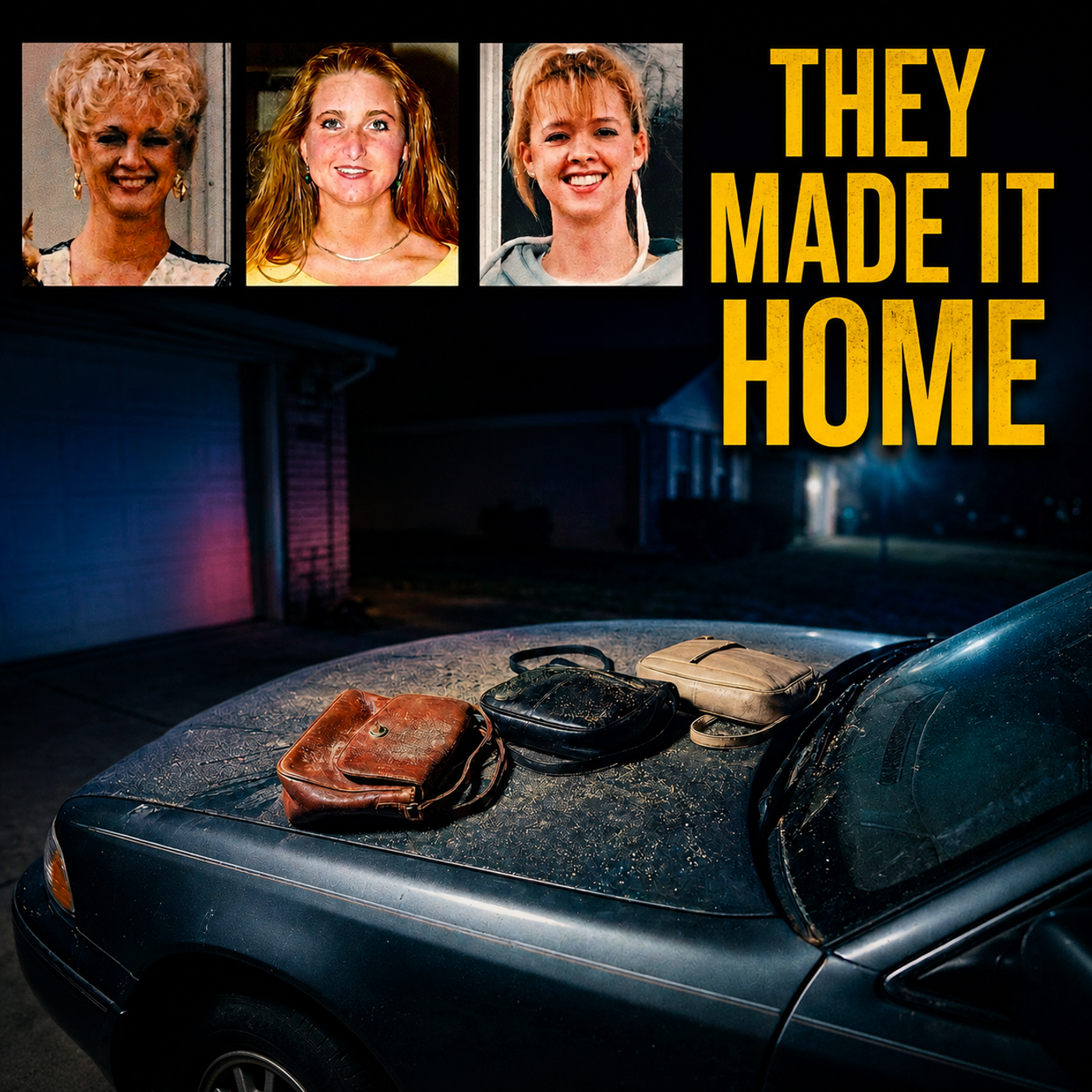
The Springfield Three: Three Women Vanished From a House That Looked Normal
May 800:25:03Tap to summarizeThe strangest part of the Springfield Three case is not that three women vanished.It’s that the house they vanished from still looked almost normal afterward.Cars outside.Purses inside.A dog still wandering the hallway.And no clear sign anyone ever left.In the early morning hours of June 7th, 1992, Sherrill Levitt, Suzie Streeter, and Stacy McCall disappeared from a home in Springfield, Missouri. More than thirty years later, nobody has ever explained what happened to them.In this episode of Divergent Files, we reconstruct the documented timeline behind one of America’s most haunting unsolved missing persons cases, including the East Delmar house, the broken porch light, the erased answering machine message, witness claims, Robert Craig Cox, and the growing gap between the verified record and the version of the story people think they know.No bodies.No confirmed crime scene.No verified exit.Just three women who seemingly made it home… and then vanished into one of the most unsettling silences in American criminal history.
Transcribe →
The Artemis Rocket Turn Everyone Questions
May 500:33:55Tap to summarizeThere’s a moment in every rocket launch that makes people stop.The engines fire.The rocket climbs.And then… it turns.Not a little. Not by accident. It commits to it.For some people, that’s just how spaceflight works.For others, that’s where the questions start.In this episode of Divergent Files, we take that moment seriously and break it down from the ground up. Not with jargon, not with dismissal, but with the actual mechanics of how objects move in space. We walk through orbital motion, velocity, freefall, and why reaching space has less to do with going “high” and more to do with going fast enough sideways that you keep missing the Earth as you fall around it.We also examine what’s happening during stage separation, why satellites don’t just hang above you, and why astronauts appear weightless even though gravity never really goes away.Because the confusion isn’t coming from nowhere.It’s coming from the fact that spaceflight works in a way your brain was never built to intuit.Up feels right.Straight feels right.Standing still feels right.But orbit doesn’t care what feels right.It only cares about motion.This is a grounded, truth-first breakdown of rocket launches, orbital mechanics, and the moment that turns a simple question into a completely different way of seeing space.Divergent Files is a truth-first investigative podcast for people who are willing to slow down, look closer, and understand what they’re actually seeing.
Transcribe →
What If the War on Drugs Was the Cover Story?
Apr 2800:50:38Tap to summarizeFor fifty years, America was told it was fighting drugs.So why did the drugs keep winning?That question sits at the center of one of the darkest and most uncomfortable investigations in modern U.S. history. Because when you line up the record, the pattern gets hard to ignore: users got punished, neighborhoods got crushed, prisons exploded, and entire generations were told the state was trying to save them... while the supply chains stayed alive, the money kept moving, and some of the most connected players seemed to operate in the shadow of something larger than law enforcement.In this episode of Divergent Files, we investigate the hidden history behind the War on Drugs, from World War II intelligence deals with the mafia and Cold War tolerance of narcotics routes, to Air America, Laos, the Golden Triangle, the Contra cocaine scandal, Manuel Noriega, cartel money laundering through major banks, Afghanistan’s opium boom during U.S. occupation, and Operation Fast and Furious.Using declassified files, Senate hearings, court records, inspector general reports, and public investigations, we follow the documented record through the places where anti-drug policy, covert operations, intelligence priorities, financial institutions, and mass incarceration begin to overlap in ways the public was never meant to look at too closely. We also separate what holds up, what is disputed, and what the internet has inflated beyond the evidence.Because maybe the most dangerous myth in this story is not that the government lost control.Maybe it’s that the public was taught to believe the goal was ever what they said it was.This is a grounded, truth-first investigation into the War on Drugs, CIA drug trafficking allegations, covert operations, cartel finance, mass incarceration, bank laundering scandals, and the possibility that one of America’s longest “wars” may have functioned less like a solution... and more like a machine.A machine that never ran out of funding.Never ran out of prisoners.And never seemed to run out of product.Divergent Files is a truth-first investigative podcast for people who want the hidden history, the pressure test, and the receipts behind the slogans.
Transcribe →
Why Does Déjà Vu Feel So Real?
Apr 2100:29:00Tap to summarizeWhy does your brain sometimes look at the present... and treat it like the past?That’s what makes déjà vu so unsettling.It isn’t just familiarity. It isn’t just coincidence. It’s the sudden, almost impossible feeling that this exact moment, this exact room, this exact sentence, has already happened before, even when you know it hasn’t.In this episode of Divergent Files, we investigate the science behind déjà vu, from false familiarity and recognition errors to memory timing glitches, temporal lobe activity, hippocampal processing, predictive coding, and the strange ways the brain can build a feeling of certainty without a real memory attached to it.We examine what psychologists discovered in famous memory experiments, what neurologists learned from temporal lobe epilepsy patients, why younger adults report déjà vu more often, how virtual reality studies recreated the effect through hidden spatial patterns, and why the eerie opposite phenomenon, jamais vu, may reveal even more about how fragile our sense of reality really is.Because déjà vu isn’t just an odd feeling.It’s evidence.Evidence that memory is not a clean archive.That perception is not a perfect recording.And that the mind may be assembling your reality in real time, using shortcuts, predictions, and pattern matches you never consciously see.For a few seconds, the illusion slips.And you feel it.This is a grounded, truth-first investigation into déjà vu, memory glitches, neuroscience, cognitive psychology, consciousness, and the unnerving possibility that your brain may be less like a camera... and more like a storyteller trying to keep up.Divergent Files is a truth-first investigative podcast for people who know the strangest mysteries are often the ones hiding in plain sight... inside the mind itself.
Transcribe →
Every 80 Years, America Breaks—Here's Why
Apr 1400:45:42Tap to summarizeWhy do America’s biggest crisis eras seem to rhyme?The Revolution.The Civil War.The Depression.World War II.And now, once again, a country that feels stretched, brittle, and weirdly familiar to itself.In this episode of Divergent Files, we investigate The Fourth Turning, the generational theory created by William Strauss and Neil Howe that claims the United States moves through long historical cycles, with major national crisis periods appearing roughly every eighty years. Not as mysticism. Not as doom content. As a serious pattern claim that has influenced political thinkers, financial circles, and a growing number of people who feel like the country is entering another period of fracture.We examine where the theory came from, how it maps itself onto American history, why some of its pattern recognition feels eerily persuasive, and where critics argue it overreaches, simplifies, or forces history into a shape it didn’t naturally have. We also look at how ideas like this move from bookshelves into power, from Steve Bannon’s use of the theory to its influence in finance and the strange feedback loop that begins when elites start planning around a coming crisis.Because maybe the real danger isn’t whether the pattern is true.Maybe it’s what happens when enough institutions, investors, and citizens begin acting like collapse, reorganization, or national reset is inevitable.This is a grounded, truth-first investigation into American history cycles, generational theory, institutional legitimacy, economic instability, social trust, and the uncomfortable sense that the country may not be inventing a new crisis at all.It may just be walking back into an old one.Divergent Files is a truth-first investigative podcast for people who want the real pattern, the real criticism, and the real stakes, without the panic and without the partisan garbage.
Transcribe →
The Sodder Fire: Five Children, No Bodies
Apr 1000:39:00Tap to summarizeOn Christmas Eve in 1945, the Sodder family home caught fire in Fayetteville, West Virginia.By the time it was over, five children were said to be dead.But for George and Jennie Sodder, that explanation never held.No remains were clearly recovered. The family’s ladder was missing. The phone line had been cut. Their trucks would not start. The fire response was delayed. Witnesses described strange details in the hours after the blaze. And years later, the family received a photograph that seemed to suggest the story had never ended at all.In this episode of Divergent Shadows, we reconstruct the Sodder Children case from the historical record: the fire, the investigation, the contradictions, the witness claims, and the evidence that kept this case alive long after officials considered it closed. We stay close to what can be documented, and just as importantly, to what never sat right.Then we examine the explanations that followed, from accident and investigative failure to kidnapping, retaliation, and the possibility that the truth was lost almost immediately in the chaos of that night.Because the most unsettling part of the Sodder case is not that a house burned.It’s that the fire was supposed to answer everything...and somehow made less sense the longer people looked at it.Five children vanished after a Christmas Eve fire.The official story survived.The certainty never did.
Transcribe →
Why the Most Dangerous Cyberattacks Won't Look Like Movies
Apr 700:38:28Tap to summarizeWhat if the real danger isn’t that systems go down?What if the real danger is that they stay up...and keep lying to you.That’s the part most people miss about cyberattacks. It’s not always blackout screens, collapsing planes, or instant nationwide chaos. Sometimes the worst damage starts when the power still flows, the dashboards still update, the alarms stay quiet, and bad data begins moving through the system like it belongs there.In this episode of Divergent Files, we break down how a real cyberattack could disrupt power grids, fuel distribution, communications, banking, transportation, industrial control systems, and supply chains across the United States, not as fiction, but as a mechanical, evidence-first analysis of how modern infrastructure actually works... and how it actually fails.Using real-world incidents like Stuxnet, NotPetya, SolarWinds, and Colonial Pipeline, we examine what cyber warfare, ransomware, supply-chain compromise, and industrial sabotage really look like when they hit systems people depend on every day. Then we pressure-test Leave the World Behind: what it got right about confusion, cascading disruption, and digital fragility, and what it got wrong about synchronized collapse, aviation chaos, and how failure really spreads.Because modern life doesn’t run on steel.It runs on trust.And when that trust breaks, the damage doesn’t always look dramatic at first.It just starts stacking.This is a grounded, truth-first investigation into cyberattacks, critical infrastructure, ransomware, grid vulnerability, and the uncomfortable reality that the most dangerous systems in America may be the ones nobody notices until they start acting strange.Divergent Files is a truth-first investigative podcast for people who want the real mechanics behind the headlines, the fear, and the fiction.
Transcribe →
Three Men Vanished from a Sealed Lighthouse | The Flannan Isles Mystery
Apr 300:14:30Tap to summarizeIn December 1900, a relief crew reached the Flannan Isles Lighthouse expecting routine work.Instead, they found a station that should not have been empty.The buildings were still there. The equipment was still there. The system still made sense. But the light had gone dark, the logs had stopped, and the three men assigned to keep the station running had vanished into one of the most unsettling maritime mysteries ever recorded.In this episode of Divergent Shadows, we reconstruct the disappearance of lighthouse keepers James Ducat, Thomas Marshall, and Donald McArthur using the surviving historical record. We follow the timeline, the official reports, the arrival of the Hesperus, and the narrow, frustrating facts that have kept this case alive for more than a century.Then we examine the explanations that followed: rogue waves, emergency rescue attempts, procedural failures, isolation, conflict, and the folklore that rushed in once the facts ran out.Because that’s what makes the Flannan Isles case so hard to shake.Not what was found.What wasn’t.A staffed lighthouse on a remote Scottish island.A failed light.Three missing men.And a record that never quite closes.Divergent Shadows is a story-first series about documented mysteries, historical disappearances, and the cases where the facts remain… but the ending never fully does.
Transcribe →