← Don't Cut Your Own Bangs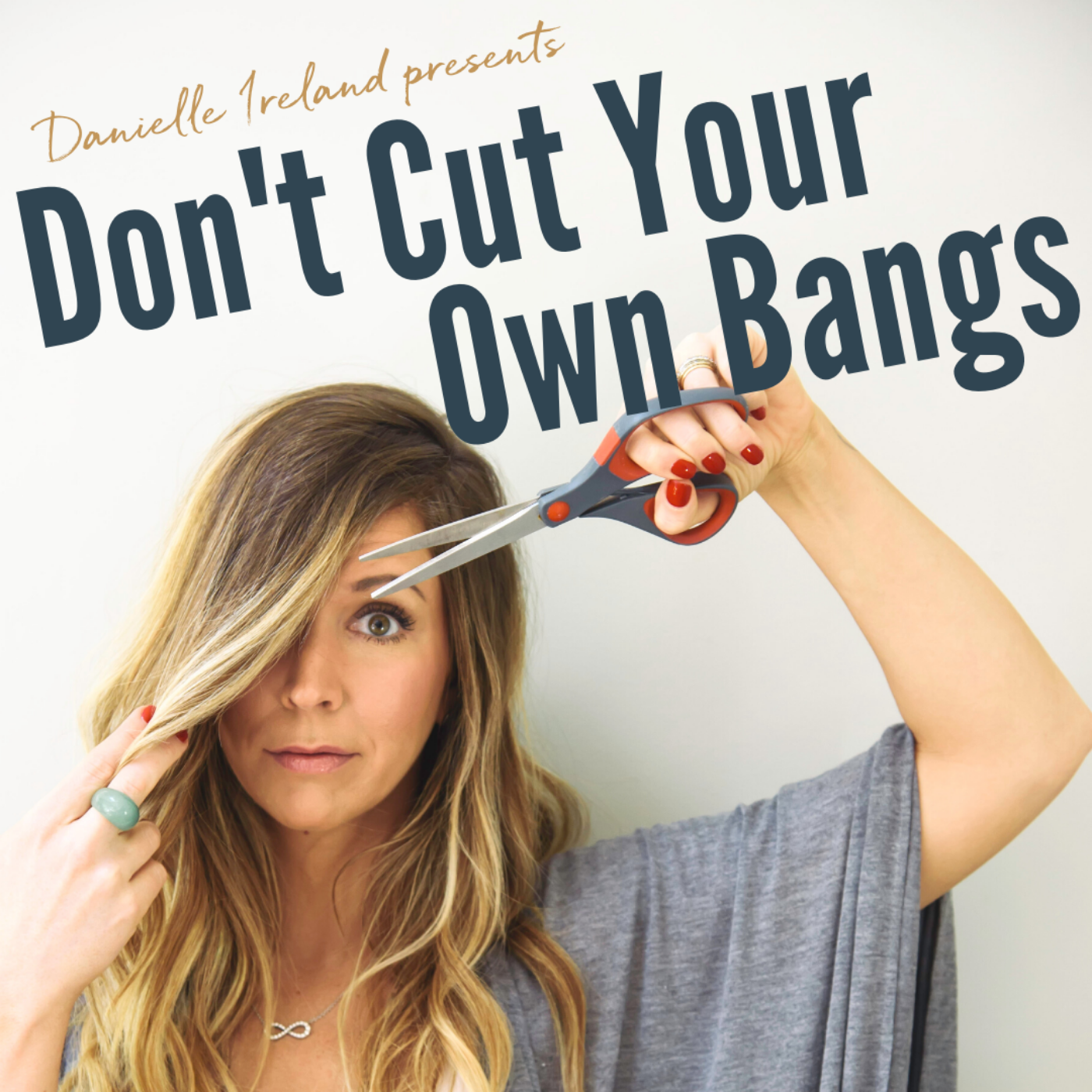
Don't Cut Your Own Bangs
Creativity Miniseries: Creation
00:37:28
Creative expression can be a powerful tool for personal healing and growth because the creative work we do is so connected to the healing work we need. From following along in this Creativity Miniseries, you know that Emily Sutherland has been my...
Loading summary
Transcript66 lines
- [00:01]
Emily Sutherland
There is a creative flow that happens when we nurture all of the aspects of ourselves. And you've probably heard if you've been listening to this podcast for a while, that there is this magical spark that happens with journaling. Now you may be even thinking, well, you know, I used to journal, but I didn't really know what I was doing. Or, yeah, I hear people talk about journaling, but like, what's the point of just writing down your thoughts or writing down what happened in the day? I can tell you the benefit. The reason why that matters is because there is a constant track of noise that plays in your head over and over again. And putting those thoughts into a place gives you a more powerful position to do something new with it. Whether that's something new is to set it down and let it go. Ignite and spark an important or meaningful conversation that needs to happen or a creative idea. So I want to invite you to pick up a copy of the treasured journal. It's a journal that I made with you in mind. It's a seven part guided journal so that you don't ever have to look at a blank page and wonder, gosh, what should I be writing? Or am I doing this right or wrong? It can also be a guide for you to use in many journals over and over and over again. The prompts, the stories, the quotes, they're going to be there with you forever. So don't worry. You don't have to do this alone. You have Community here.
- [01:28]
Daniel Ireland
Hello.
- [01:28]
Hello. This is Daniel Ireland and you are listening to don't cut your own bangs, a creativity miniseries with my friend and partner in crime in this miniseries, Journey, Emily Sutherland. Emily has joined me for the previous three episodes. We've talked about inspiration, we've talked about preparation, we've talked about perspiration. And friends, today we are going to actually put a final period at the end of this podcast sentence and talk about creation. You've made the thing.
- [01:55]
Yes.
- [01:56]
How do you know when you're done? Are you ever done? How do you know when you're ready to share it with the world? And then don't worry, we're not gonna leave you hanging. Even after we talk about, okay, the project is done, we're gonna leave you with a fun little bonus episode that we've been talking about called the creativity toolkit. So in this creativity Toolkit, this is where we're gonna actually have the nuts and bolts answers to potential questions you may have. Like, what pen do you like to use? How do you actually carve out the time. If you wanted to write a book and you wanted to self publish, what would you do? All of those links and the actual, again, going back through the nuts and bolts, that toolkit, we're going to save those for a follow up episode that you can reference and download and save and you can just use it anytime. But welcome to today's episode. Welcome to our conversation about creativity and creation. Welcome, Emily Sutherland.
- [02:44]
I'm so excited about this one. That's what we work for, right? Making something, Making it done. Getting done is kind of vulnerable though. You think?
- [02:54]
Yeah, I do. I think once it's done and you're not tweaking anymore and you're not playing with it anymore, then it exists.
- [03:01]
Right.
- [03:02]
And then people can have opinions about it. Or worse, people can have no opinions about it and be the worst and be totally indifferent to it, which is. I don't. I have no sense of time anymore. But it feels slow. And also it's all just like part of the process. We're sitting here recording mid to late January in 2025. I thought my book would be done by now, and so I would have thought by this time we would be talking about something that exists. It is existing in process, but it is still in process. So this is an unique journey for me where my expectation and the reality of creating something and collaborating with someone else. There is a point I find in with most creative projects where it has to exist outside of your hands. And that's maybe also what makes it vulnerable too. I can't do what my illustrator does. And I also have no control over the timeline of how and when he's able to get it done. I do have choices within that process that I can make. But I, Yeah, I'm. It's like I do have choices and flexibility. I always have a choice. And I'm also committed to this person and this process. So it's, it's been a real, mm. Exercise and growth for sure.
- [04:18]
Here's a good question. How did you know when it was done?
- [04:22]
Well, how do. How did I know when the written part was done?
- [04:25]
Yeah, when your part of it was done.
- [04:26]
Ooh. Oh, what a good question. My answer to most questions is rooted in a feeling, which is probably annoying. When somebody wants a concrete response like it is a feeling. You're like, well, that's great. I don't know what that is, but it just, it's. I don't know if anybody listening, you know, if they like to cook, like some people are bakers and I, Well, I mean, obviously there are people that are talented at both, but I find that there are people who either really enjoy cooking or really enjoy baking. I happen to really enjoy cooking. And probably because I don't love following recipes, I love just sort of like mad, you know, scientists. And there's just like a taste I'm looking for and a feeling. There's like a color I'm looking for in the pot, or there's a smell that I'm looking for, or if I lift the spoon and I let it cool and I taste it, there's. There's something to that that tells me, okay, it's done. And with this, with the writing process, I remember after you helped me figure out the rhythm of the book, like the syllables. Yeah. After you helped me find the rhythm of the book, once I had that piece, I was able to go back through and re edit. And then I read it out loud to people and let people read it, like maybe a handful. And every time, every time I let somebody else read it or I read it aloud to someone, I could feel the parts that needed to get out of the way. And I think it took maybe six or seven versions of doing just that. And then everything that wasn't it was gone. And everything that was left was right. And it was just a feeling.
- [06:06]
Instinct.
- [06:07]
Yeah, it was really. It was a feeling. I'm like, okay, this is it. And it was just a feeling of completion. And it was the same type of satisfaction or like, that satisfying feeling if people listening are list makers or puzzlers. And you put that last puzzle piece in like that, that is the feeling it had. And I probably sat very close to that feeling for maybe three or four weeks. I think I was also able to feel that feeling of completion or that it's done because I left it alone for a little bit. I didn't abandon it and I didn't neglect it. I would sort of, like, turn to it. I would glance at it, read it, like I said, read it to someone. But then I would let it rest. And there were maybe two or three times where I would set it down, pick it up, set it down, pick it up with space in between where I didn't feel like I needed to make a change. I didn't want to make a change. It felt done two or three different times, if that makes sense.
- [07:04]
Yeah.
- [07:05]
And I think that was. It was like, oh, I can trust that. Like, it wasn't. It's almost like I had to, like, prove it wasn't a sense of urgency or desire to Rush or get through to the next step, because in other projects, I might. I just want to get it done, and so I'll rush through that. But with this. With this particular process, I didn't do that. And then it kind of told me when it was done.
- [07:26]
That's so good. Yeah, I think that's generally what we have to go with. Like, when does the work tell you we're good? Yeah, you can let me live in the world now. For me, I. I don't trust myself enough sometimes because I just keep tweaking, keep tweaking. But I think Ira Glass has this whole video on YouTube book work about a. When you have worked on your craft, you have good taste before you have the chops to meet your taste. And so it does take time to continue to let the work meet your good taste. Because you're doing art, you're doing creating, because you envision it living in the world and making a small difference in some way, you know, and to cut through the noise, you want it to be good, but then, you know, you also have to realize that that taste, that takes a while to reach it. You know, the first draft is probably not going to be there unless you've put in 10,000 hours times 10,000 hours, because, you know, it just takes a while to let your taste meet your ability at whatever level. And for me, I just. I realized often that I have to let go of something at some point and recognize that if something is the best that I can make it and I put it out into the world, that's good. It's subjective. And I'm afraid to finish sometimes because I don't want anyone to think that it's not good enough. And so I keep working, keep working and keep working, and don't ever let it live sometimes. And for that reason, I have literally hundreds of song lyrics in a file somewhere that I've never let live because I'm like, I don't want this to come across to someone. Like, it's not the best it could be, you know, and so there's perfectionism, there's pride as well, you know, of feeling like, you know, I say, I'm a writer. Is this going to be good enough? And I do think that for people who create a lot, there's this feeling of, okay, once I put this into the world, everything will be measured up to this or has to be better. And so that we put this pressure on ourselves that the better it is, then the next time, the more we have to live up to. Does that make sense.
- [09:44]
Yeah. And it also made me think about this concept of time that what you make also kind of becomes a bit of a time capsule for the best you can do at that time in your life. It also, it kind of breaks your heart when you think about that. Like when somebody peaks or creates something globally loved when they're 20 and they still have, you know, potentially 80 years left to make things. But what if it's never that thing they made when they were 20? And that's not my story, but I, I can think back to plays that I did When I was 17, 18, I started commercial acting when I was. And I'm sure if I looked back at a commercial, I did a Blossom Chevrolet commercial when I was 13 years old. I'm sure I can look back at that little moment and cringe because I would, I would play it so differently now as a 40 year old woman, you know, like the choices I would make. But I think that that is the beauty and also almost like making sandcastles, like making anything, it just, it's beautiful for that moment, for what it is and then goes away or it doesn't. But it's hard to judge yourself based on what your future self wants to become or hopes you can be and the reality of your skill set.
- [11:04]
Absolutely. The only way to be good is to create. I mean, I have written some really embarrassingly terrible things trying to become better, you know, and I can remember in my 20s, you know, my taste was good, but my, my ability hadn't reached that point yet. And I can remember being so afraid that I was going to get hit by a Mack truck and somebody was going to see all the stuff that I'd written that was not good. But at the same time that was the only way to get good. A mentor of mine once said that a lot of the things that we write are just for us or just to get an idea out of the way so that we can get onto the next part or you know, it's like a path. Everything that we create is part of that longer journey. We will improve. But there is always some truth in the things that we create when we're doing it from that pure place of. I've gotten the inspiration from something outside of me and the idea wanted to live. So all of a sudden that is significant and there's a reason that we're creating those things. And even if you did look back at that commercial 13 year old, you was doing her beautiful best. And there's something that you will admire about the courage that it took her to do that, because you have to start somewhere.
- [12:16]
I also think as you were talking, that the attachment to the outcome and how it's perceived. If my focus is more on the outcome than the process, like everything we talked about previously, we get an inspired idea or something lights up a spark inside, and then we put in all of this preparation to make space in our life to do the thing, which is no small feat regardless of the stage of life we're in. It's never convenient to create, which is why it's always so beautiful and radical when anybody does, because life never allows for it. And yet we do. We keep making things. It's never convenient. And then you put forth any amount of effort or energy into making something exist that didn't exist before. I found with this particular project that I was more in love with making it than I was focused on what it would be thought of.
- [13:15]
So good.
- [13:16]
But I. I feel so lucky that this seems to be the project that this podcast is rooted in, because I could think of a thousand other things that were the opposite of that. But I will say the creative projects that have maybe stayed the most alive in me or still light something up in me. I was more focused on my personal and intimate relationship with creating than I was with the outcome of having made it. And whenever I make something to buy or sell as a commodity, it usually is short lived. It's almost like a Forever 21 sweater that kind of falls apart after one wash versus that beautiful investment piece that you still get miles out of and you've had it for 20 years. This podcast itself actually started that way. I made it truly is a selfish endeavor, not with the intention for it to become anything. And whatever it's become has been a beautiful, not an afterthought, because I wanted it to be. It was important to me, but it wasn't like I didn't care. I don't want to be that casual about it, but the. The goal of creating it was to sort of get over my own fear and find a new way to get to know people that I would otherwise be afraid to talk to.
- [14:26]
Oh, that's amazing.
- [14:27]
And it was. It wasn't about being an incredible podcast. It wasn't about.
- [14:32]
And.
- [14:32]
And. And I don't even know if it is. But I would say that for me, if we're talking about creation, I would maybe go back to the why, like what inspired it. And if my why ever lays in the hands of somebody else, if I'm doing this to impress, persuade to be Consumed and, and not that any of, not that those aren't even worthy goals. I mean, I'm sure a business coach, if, if you were listening to their podcast, they'd probably be telling you to focus on those very things. What do the consumers need and what's the roi and blah, blah, blah. But we're talk totally.
- [15:05]
This is art, right?
- [15:06]
This is art. We're talking about art. This is very different. But other people's voices about what they thought of it weren't why I made it. And it wasn't part, it wasn't where I got any of the joy from doing it. I don't know if any part of this process has even come close to the zing and the magic I felt going on that walk when 80% of the book came to me. And so I feel like more what I'm doing, at least with this particular project is honoring that whatever that little moment was, little big moment. And that kind of makes whatever, it makes whatever comes after either less relevant or it's like if people happen to love it, that's great. And then if they don't, it doesn't take anything away from that magic.
- [15:55]
The joy that you felt doing it. Yeah, that is enough of a reason to create.
- [16:00]
Honestly, that's, I mean, that one 20 minute stretch of an hour long walk, I mean, I'm still talking about it. So it's like the ripple effects of that one beautiful moment, I'm still reaping the benefits of. I'm still harvesting the goods from that moment.
- [16:18]
Yes.
- [16:19]
And so if we're talking about creation, like that is worth its weight in gold, 100%.
- [16:24]
I so resonate with that. And there are all these funny memes about how writers always are excited about their new idea instead of the work in progress. Because that feeling of connecting with your idea and it's saying like, hi, I love you, I want you to make me. That's so much more fun than all that perspiration that you have to go through and find the illustrator and get through all these edits and wait on other people's time schedules. And in the middle of that, you're having a busy life and it's hard to manage it all. And it's so good that you're going back to that moment and saying, okay, that moment told me that this idea was worth all the stuff that I'm now having to put into the making it live.
- [17:10]
Oh yeah, so let's talk about all the stuff. All the stuff to actually finish the creation. So let's See when, when Emily and I last recorded, I had met with the illustrator. Things were going well, we were getting some concepts together. This was maybe October, November, November, and we were approaching December. And so what happened in December? I'll just give, you know, a quick rundown what happened in December. I turned 40, we moved to a new house with my 3 year old and my 1 year old and then the holidays and then my daughter started preschool. And then everybody's been some version of sick at least twice so far. So it was like life kept life ing. And I just, I complained to David last night because sometimes you just gotta whine. And I whined last night, not with actual wine, but with my words. And I.
- [18:04]
Not that that would have been, you know.
- [18:05]
Yeah, it would've been fine. I just, I'm not quite. I'm not. I can tell. I'm not like, I'm not wine ready yet. That's how I know how healthy I actually am. If wine sounds good. But anyway. But I, I was like, I think life is just lifing a little too hard and I'm ready for it to just ease off the gas a little and same. My very sweet, sweet, sweet illustrator was also. Life was lifing really hard for him too. He was moving, work was happening, the holidays were happening. And so it. I think that's where historically and sometimes even still where in my. The depths of my imagination have no bounds. I don't need to eat, I don't have children, I don't need to use the bathroom. I don't need to sleep. I just create crate and I swim into the sea of creation and it's just limitless. And then when that, that imagination land meets the needs and the demands and the honking horns and the calendar and the email and the garbage cans needing to get rolled out, like when life lifes again, it can be easy to get impatient with that process for sure.
- [19:12]
It feels jarring. I think when you're in this really happy, beautiful space, living with your ideas and all of a sudden, yeah, life lifes.
- [19:19]
You had a quote you wanted, so sir, I did.
- [19:22]
I am so excited that I found this. I knew it existed. Madeline Langel is a trailblazer in many ways as a writer and she wrote. Her most well known book was for a young audience called A Wrinkle in Time. It's classic. My son and I were in a bookstore recently and he found the 50th anniversary copy of it. And I. He was like, mom. And I was. I bought it on the Spot. Madeleine Engel once said, you have to write the book that wants to be written, and if the book will be too difficult for grownups, then you write it for children. And I wanted to tell you that today because we have been talking about how that book told you it wanted to be a children's book. And you, you struggled with that because you were thinking, oh, I thought this was going to be a serious work of creation that would be for serious adults, you know, but it was such a difficult subject that you wrote it for children.
- [20:17]
Wow. Okay. Isn't that amazing that she came in when we were setting up to record and when this is a little peek behind the curtain, Emily came in and she was like, I've got a quote. Do you want me to read it to you now or do you want to save it and hear it live? But I'm hearing it live and I'll tell you, I'm sweating, sweating, sweating so hard.
- [20:34]
I love it.
- [20:35]
Thank you. Thank you for that. It is so funny, for lack of a better way to describe it. It's funny how the ego just tricks you into thinking it's so important and so right. Because I could. I still remember that whole internal battle about wanting to write some, like, legitimately scholarly, heady, important book for adults and thinking about it now because I love what's being made so much. It's so, it's silly. It's so silly. The self important, the self aggrandizing or whatever. The part of me that wanted to write the important, the quote unquote, an important adult book, I think was the part of me that was just still wanting to prove that I belonged. I think there's still this part of me that feels fraudulent doing what I do in the mental health space. Not a big part, trust me. Like, I'm. This, this part is well managed. I don't, I don't want anybody listening who maybe sees me as a, as a client to think that, oh, is this what she's wrestling with? But there are still days, like, I remember setting up my new office in our new house, and my husband asked if I wanted to hang my degree. And I really paused. I was like, I don't. What. What do I need to hang my degree for? And he just, he was like, because you earned it. And I was like, damn it. Yes, I did. Like, I'm just fist on desk. Yes. Like, I, yeah, I might have been wiping baby butts before that and just thinking, I'm not some scholarly, educated person. I'm a butt wiper. But no, I'm both those things.
- [22:14]
Both. And I'm a both.
- [22:15]
And I'm a butt wiper and I'm a therapist. And we all are, at some level.
- [22:19]
We all do some level of that, you know.
- [22:22]
That's so true.
- [22:25]
So yeah, you are not alone, my friend. At all.
- [22:29]
No, but that I really appreciate that and I may have said something to this effect, but I think writing it, writing it the way that it wanted to be written, which was ultimately a children's book, I think it was also necessary for me, which I, I'm really starting to understand that the creative work we do is so connected to the healing work we need. Like I'm bridging this mental health and creative work that I don't think it's an accident that in my effort to strive and perform, improve my worth that I had to get smaller and simpler and more childlike. Because when, like I'll say me at my most insecure, egoic self would be me at a networking event wearing some kind of ill fitting blazer and way too caffeinated, talking way too fast, dropping way too many quotes, trying to prove to everybody in the room that I'm smart enough to be there. And the opposite of that is what this book is. It's tender, it's not proving anything. It's simple, there's not too many words, like it's edited. And I, and I mean that as someone who. I'm an external processor, so sometimes I discover things as I'm saying them. And this book is not that every single word is so intentionally there. And there's a level of presence to it that it's almost like this book is how I hope to be in 10 years. I, I hope I'm embodying what I've written.
- [23:56]
Absolutely. I think we have to create beyond ourselves. That's why it, like that's what it's doing. It's our own internal work, externalized. That's what resonates. And when you talked earlier about selling your art and how that can tend to complicate the process if you know that's what it's for, somebody who does it for a living or somebody that's like, could this be something that I put into my web store or put it up on Amazon? I really believe that the resonance that people have is you're working out something that's going on inside of you, letting it live outside of you. And then other people who are working on that same thing, whether or not they're aware of it, they look at this thing or read the words or see the illustrations and in some way see themselves.
- [24:46]
Yeah.
- [24:48]
And I think that's why art is so necessary, and that's why it's valuable, because it is a mirror of our own souls. You know, the artists and those who are looking and enjoying. You know, there is value to that. So it's not a sellout to post something out there on the market. But I'm with you that the things that really resonate at a deep level are the things that we created out of what's going on inside.
- [25:19]
Well, and to talk a little bit about the soul work of creating is, for me, it's like 80%. But then there's also the 20% of using a platform like IngramSpark to actually push the work out into the world and let it be a printed piece of art that exists and just to share. This is more of a process share, but it also speaks to the creation of the final product. I essentially let the artist I'm working with create what felt good for him to create. Also, I didn't create too many confines or constrictions, one, because I didn't know better. And I didn't really know because I'd never done this before, and I hadn't collaborated with anybody in this way before. So I was like, I guess just do what you want to do. And he did a beautiful job. I mean, is doing a beautiful job. Like, it's just so lovely. But then eventually I, you know, like, that's the beautiful 80%. Like, we're both communing with our spiritual creative selves, and that's gorgeous. And then it's like, oh, how much is it going to cost for me to print this thing? Right. So I actually had to run it through a calculator because, I mean, I think it grew to something like over 50 pages. And so this platform that we will be talking about in the creativity toolkit called IngramSpark that Emily introduced me to, there's a printing calculator that shows how much I would get and how much it would cost per book to print and what I thought it was going to be, which is roughly 20 pages. Now, granted, we've added a glossary, like, things have been added since. But when I entered in 54 pages, it was going to increase the cost to print per book significantly. My why is not to rake in dollar bills, you know, like DuckTales. Was it Scrooge McDuck who rakes in all the coins? Yeah, my goal was not to rake in gold coins. Having said that we reigned it in. And I tried to find a happy medium. And I basically sent him a message and I said, can you get this closer to 35? I don't mind a page or two, but, like, with respect to what I can handle or what feels good to me, he reworked all the illustrations to fit within that. That was a process I couldn't have known before. Like, oh, I don't know how big I want it to be. I don't know how many pages I want it to be. It's just this beautiful poem that came to me on a walk. Like, I don't know.
- [27:38]
Yeah.
- [27:38]
But, yeah, all those things, you. You figure it out on the path to it existing, right?
- [27:42]
Yes. And there's that moment of, like, colored pages on the inside instead of black and white pages are a significant jump in what it will cost you to print. And nobody wants to go in the hole. How do.
- [27:55]
How do I make this work? Yeah, exactly. How do I make this work? And it. Because it makes me think too about, like, your taste even going beyond, like, what you have the capacity to create in terms of your skill set, but also what do you have the capacity to create in terms of maybe money? Like, what can you actually invest in this? I also probably could have let these words exist as a poem and just posted them. You know what I mean? Like, I mean, the words are the words, but I wanted it to be this. And so it's like, what the end product will be is almost like a child's flower. Venn diagram. Well, this is what I want it to be, and this is what I could afford, and this is what this person can do. And this is like. And it just. This overlap of all of the different layers that matter to me, and then it will end up in the final result.
- [28:40]
And anytime we're creating something, unless we have a personal printing press in our basement or something, you know, we have to put it into some other people's hands. And. And we kind of wrestle with the practical parts of it. And that art does kind of feel hard sometimes. Feels like, oh, man. Like, what was in my imagination realistically is going to be tough. But at the same time, I have to say, if we can make it the best we can, like that overlapping layers of that Venn diagram where it's like, okay, this is the best I can make it with what is available to me right now. I do always keep in the back of my mind, one person sees that and sees the potential and sees the beauty in it. It could very easily get picked up by a publisher who's like, oh, man, we want to have these all over the world. Or, you know, if you own the copyright, which you do when you go through IngramSpark and do all of the legwork yourself, it's out there, and if something more needs to happen with it globally, it can happen. You know, you own the ability to redo it, you know, if you want to. But I have a feeling that once it exists outside of yourself and people respond to it, you'll realize that the important stuff got there.
- [29:59]
Yeah, that's so good. I would be remiss if I didn't go back to and revisit the four steps that I've introduced or sort of integrated into each previous episode, which is awareness, acknowledgement, action, and allowing. And so with creation, if you want to know, how do you know when it's done those four steps, running it through that filter, that could really be in service of you. So I start to get this awareness that I think for me, the best place I can think of was when did I know it was time to bring someone in to illustrate, because I'd done as much as I can do with the words themselves. So I started to get this feeling like I don't think there's anything left for me to cut. I think this is exactly how I want it to be, and I acknowledge that out loud. So I acknowledged that to Emily. I acknowledged that to my husband, David. Because you. You can have a thought, but we have hundreds and thousands of thoughts constantly, incessantly, all the time, many that go beyond our awareness or that we certainly never spend any time with. So taking the acknowledgement external, either writing it down or saying it out loud to somebody, I think I'm at a good point to do blank. It just helps that thought crystallize a little bit more. And then the action step was for me to either say it out loud or write it down. But beyond the acknowledgement, the action would be, how does it actually feel to do the thing I'm saying I'm ready to do? Yes, because you can think you're ready, and in the process of starting to do something, maybe what you feel is, it's not time. It's not right. I'm not ready. I'm not ready to hit publish on that blog. I'm not ready to put that pot in the kiln and fire it up. There's still more I want to do. Just like I think I'm close to done, I'm acknowledging that I think I'm ready. And then As I start to take the action step, just continuing to cycle through, how does this feel? And for me, in this particular case, as we're talking about this book, every step just continue to feel like an easy yes. And I'm going to really highlight the easy yes because I can think of so many other times where I kind of convinced myself of a yes, but it maybe it wasn't a true yes. And so the ease is a really big part. Like, if I want a little bit more tea, that's an easy thing for me to go do. It had that type of ease. I wasn't bound, constricted, worried, nervous. Maybe I was a little excited or had a little bit of enthusiasm, but I. Beyond that, it was so easy to say yes. And so that made the action step clear. And then the allowing is essentially taking your hands off the wheel, letting everybody.
- [32:36]
Else bring their genius to it. But I think too, part of the action for you was reading it out loud to people, and then you hear them go, oh, that's really good. You know, and all of a sudden it emboldens you a little bit to say, okay, well, one other person likes it. I remember when I had created my children's book in 2017, I just wanted to finish something, you know, so I pulled that idea out that, you know, inspiration had happened 11 years earlier, as I've mentioned here. But there was that feeling of like, I don't think I can make this any better than it already is. Then I started sharing it with people, and that gave me energy to get it done. But when it was done and my friend opened it at her baby shower, and she was like, no way, you did not. You know, and she starts looking at it, and she sees who illustrated it, which is her other friend, our mutual friend. She starts passing it around the room, and I start, my face is getting hot because I'm realizing it exists. Everybody in here can see it now. And it was beautiful. And their reactions were the hugest relief because in my mind, I was, like, questioning everything. Just, I'm like, they're looking at it.
- [33:47]
Is this as good as I could have made it?
- [33:49]
No, no, it's done. And everybody loved it. And they didn't know all the things that it took to make the decisions that they were holding in their hands. It was just there, and they appreciated it for what it was. And all my fears about how it could have been better and, you know, all the things I would do different next time or whatever went away because there were people crying reading those, you know, and I'm like, that I didn't expect, but also I would get choked up reading it out loud. So it's like, okay, maybe I wasn't alone in the appreciation that this idea matters. And I think you're gonna find out. I say that only not to turn it to myself at all, but to say I'm resonating with what you're saying. Because once you do take your hands off of it and it lives outside of your body, there might be that moment of like, oh my gosh. Oh my gosh. It's gonna be beautiful to see people's responses and you're gonna be so glad you finished it.
- [34:43]
Thank you. Well, that. I don't think I can add anything more to that. That was so lovely. And I love that you shared that. You weren't making it about. You were having a conversation. And I love that. I love that you shared that. Thank you. This was such, such a fun way for me to document my process.
- [35:00]
I love that. I'm so glad you did that. It's vulnerable in the middle.
- [35:04]
Yeah, it's still happening. Yeah, it's still getting made. And also there are gonna be some fun opportunities, so make sure to stay tuned. We're going to release the toolkit, but there's also going to be some really fun opportunities for you to potentially get a little bit more hands on assistance with Emily in the creative space. She's got some really fun things up her sleeve this year that we're really excited to announce and share with you all here on don't cut your own bangs. Thank you all so, so much for listening. I hope that you feel inspired. And even if you're listening on a cold January or February, March, whenever you're listening, even if what you're not feeling right now is currently inspired, maybe you're getting ready to be ready. And that's a part of the process too. Wherever you are in the creative process, wherever you need support, I'm so glad that you're here listening. Please stay tuned for more information about Emily's workshop and all of her offerings because I think it could be really beneficial.
- [36:05]
Emily Sutherland
If you've been enjoying this time with Emily Sutherland and myself. I want you to know that there are still ways that you can connect and collaborate with her and continue to learn from all of the wisdom she has in a more in depth and personal way. We have another upcoming event, Storytelling for business. It's April 4th and this is great. If you're a solopreneur, part of a marketing team, or a presenter and you want to take your storytelling to the next level in the workplace later in the year. On May 9, there is another really special event called Nurturing your creative self. This is for anybody who used to lose time when they were coloring as a kid, or loves to just mix new ingredient combinations together in a bowl and see what you can bake. However creativity manifests for you, it doesn't have to be writing, but this event does give you the opportunity to reacquaint yourself with your creativity and hopefully reignite a spark. So if you need help support, you need a community and you don't want to figure this out alone. You don't have to check out the link in the show notes and you can have all the detailed in depth information and can sign up there. Thanks so much for listening.