← Don't Cut Your Own Bangs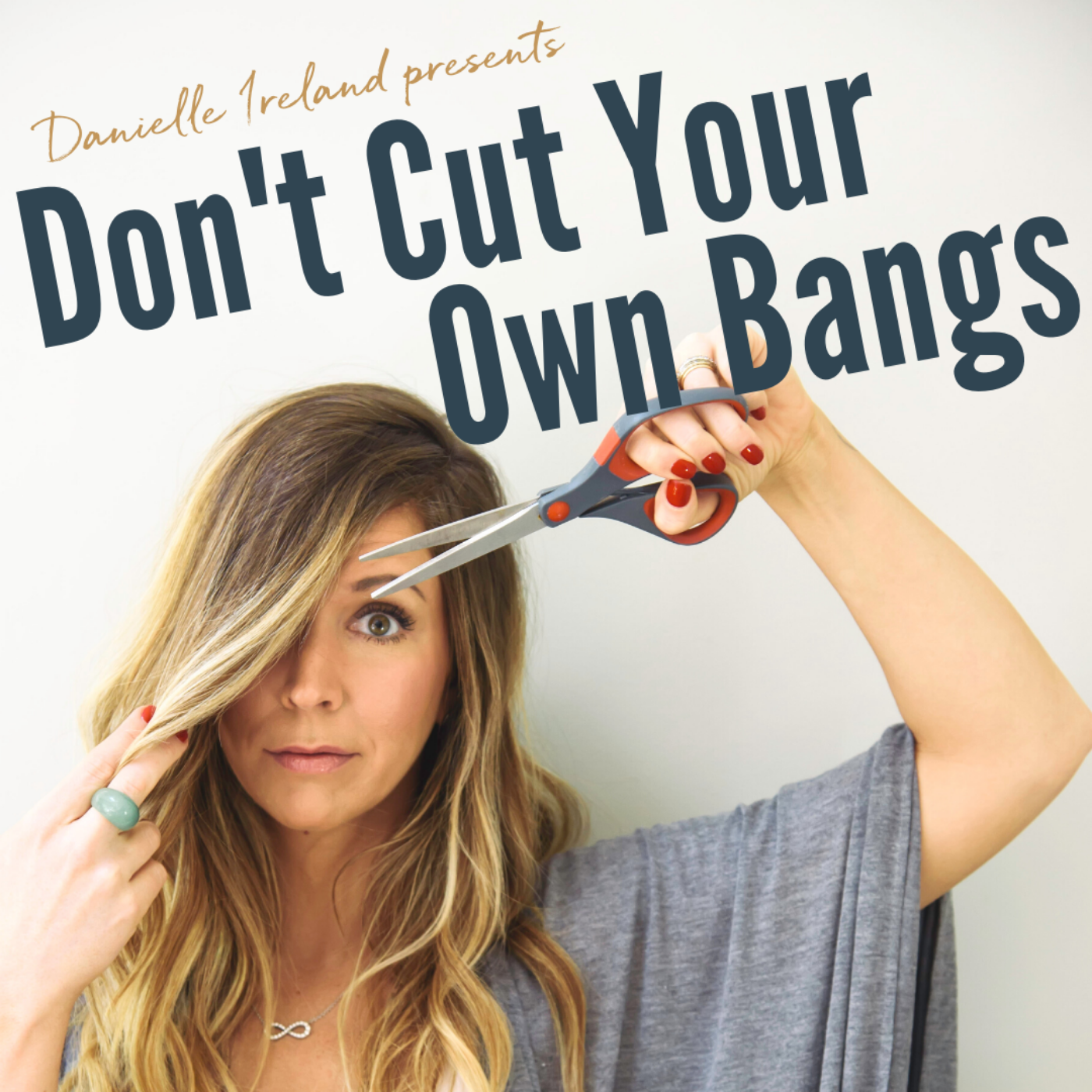
Don't Cut Your Own Bangs
Support Now with Jordan Arogeti: Why Support Makes Us Stronger
00:47:14
We’ve all been there — someone we love is struggling, and we desperately want to help… but we don’t know how. Do we step in? Step back? Offer words? Bring dinner? Sometimes, the hardest part of supporting someone is figuring out what support...
Loading summary
Transcript45 lines
- [00:00]
Bluehost Advertiser
I'm no tech genius, but I knew if I wanted my business to crush it, I needed a website. Now, thankfully, bluehost made it easy. I customized, optimized and monetized everything exactly how I wanted with AI. In minutes my site was up. I couldn't believe it. The search engine tools even helped me get more site visitors. Whatever your passion project is, you can set it up with Bluehost with their 30 day money back guarantee. What do you got to lose? Head to bluehost.com, that's B-L-U-E-H-O-S-T.com to start now.
- [00:31]
Danielle Ireland
Foreign hello, hello, this is Danielle Ireland and you are catching another episode of don't cut your own bangs. And today's guest is Joran Araghetti from SupportNow. SupportNow is an online community. It's a network, it's a framework. It's an organizational tool that lives online that is connecting people to people in moments of need. So whether you find yourself in the position of someone who is in need of help, suffered a loss, you're in grief, your life has been flipped upside down. One of the hardest questions to answer and the people in your life who love you and care about you are most likely to ask, what does support look like for you? How can I show up for you? And what we learn in this episode is help can take all different shapes and sizes. There's actually a framework that Jordan has created called your support language based on the love languages. It's a process that she and her husband put together and it's a framework that I think whether you're in struggle now, you have been once before, or you want to better know how to prepare yourself for the future, this is an absolutely phenomenal episode for you and a great resource for you. The other beautiful thing that comes out of this episode is not just what do you I do to support myself or how can I funnel and filter the help that is hopefully coming my way when I need it most. It also empowers the individual who is wanting to be of service to not feel helpless to the point where they do nothing, which is an experience that is so incredibly common, very human, and something that doesn't have to stop us from starting. There is a place to start. There is a place for you. And SupportNow is a beautiful community that allows us to do just that. This episode, I will also say, has one of my favorite don't cut your own bang moments that I've heard in a really long time and selfishly it's probably because I relate to it so much and I know that I'm not alone in it. So make sure to hang out with us all the way till the end and be sure to check out the show notes. So Jordan's TED Talk, her support now community and also a link to her podcast Moms Like Me. Thanks so much for being here. I know you're going to love this episode. Get your AirPods in, get your walking shoes ready or wherever you are in life, whatever you're doing, I hope you're ready to enjoy. Jordan Arighetti When I set out to write a book, I only knew two things. One was I wanted to make big feelings feel less scary and more you're here and I wanted to end. I pressed before we started but like therapist, that emotion shows it's recording on your end. They have information to tell you to inform the next right step to take. I don't know, self doubt, fear, anxiety. Live in that space between knowing and not knowing. The second thing I knew was that I wanted to have fun in the process of making this thing. The result is this. Wrestling a Walrus for Little People with Big feelings Beautifully illustrated children's book that has a glossary at the end for some of the bigger feeling words. What this story does in a light and loving way is create context for those relationships you can't change, those people that you wish would treat you different. The things in life that we cannot control and yet we face that are hard. This book, it's a conversation starter for any littles in your life who want to create more safety and love and patience for some of those experiences. So hop on over to the Show Notes. You can pick it up@Amazon.com bargenople.com or my website. I hope that you do because I believe in this little book. I freaking love this little book and I cannot wait to hear your experience with it. Thanks so much for listening and back to the episode. Thank you Jordan for your flexibility, but I am truly excited to introduce you and your work and your beautiful community support. Now to the don't cut your own banks listeners. Jordan is also I'll also add a fellow podcast host for moms like me and I know I have a lot of moms listening, so there's just gonna be a lot of beautiful value content and that I admire in people like you, creators like you and founders like you that once you create something it seems so obvious that it was needed. But before it existed obviously there was a gap and so you and the work of SupportNow are stepping in to help support families in their time of need in all of the different facets that that takes. And there you have a list on your website actually of what constitutes a tough time. But I just want to let you take it from there and tell me a little bit more about the work you do and share that with everyone listening.
- [05:14]
Jordan Arighetti
Sure. And again, thank you so much for the opportunity to share not just about support now, but to dive into this topic of support, as one of my passion points is talking about how to bring back people's villages. And I think we've lost the art of supporting each other through a variety of reasons which we can get into later. But to get to the point of what support now does, you know, we are really focused on allowing friends and families to show up for the people they love when they go through a major life moment. Something like a loss, a cancer diagnosis, a hospitalization, even a natural disaster. And what we know to be true is that when people get the news, instinctively ask, after you find out what happened and why it happened, the next question people ask is, how can I help? And this was long a scenario I observed and was active in during COVID I felt like I was on the receiving end of text messages and emails and phone calls constantly, that people I loved were going through these major life moments. And I joked with my husband that we lived in a culture of cash and casseroles. And I really pondered why that is. Why is it that our instinctive reaction is, well, can I go drop off a meal or can I go send them some money? Because I knew I wasn't the only person that wondered or was curious about other ways I could show up for my friends or for my family members. Things like walking the dog or childcare, prayer, maybe just listening. And so the observation was that we have become very conditioned by the tools around us. GoFundMe has made it normal to send money. Mailtrain has made it normal to send meals. And while I think it is great that we have those things, to me they were simply incomplete.
- [07:07]
Danielle Ireland
I want to add something to that too. It didn't make it. It didn't only make it normal. I think it also simplified the sense of helplessness. Being the witness to pain or being the witness to someone you love or someone you care about or even maybe just someone that you know super. Like from a distance, the there is this sort of handshaking. It made me think hopping in a game of double Dutch. I've never done double dutch. When I see videos of kids doing It I'm like, how do you get in? Is it now? Is it this? Is it. Okay. And so those other platforms that you mentioned, they make it simple that this is something I can do and what you talk about so beautifully in your work. And I'll make sure to also link in the show notes. There's a really beautiful TED talk that Jordan's done that elucidates really everything we're going to be talking about here in essentially 10 minutes. There's so much more to offer, and we all have something to offer, but it's a matter of making that connection. And you have a whole process of how you funnel that in that I would love to hear you talk about, too. I think when we don't know what to do, we usually don't do anything. And so places that easy to do something, it's, well, at least I'll go click casserole.
- [08:19]
Jordan Arighetti
That's. And I think as moms, we typically, we. We shoulder a lot of these support efforts. We shoulder a lot of the, what are we going to do next? And so I agree with you. We are lucky to have tools that brought these sort of things online that allowed us to be connected. And to me, it's time for another iteration of that with the recognition that moms and the people that support people typically are overwhelmed. We've got a lot on our plate. It's not that we don't want to show up in different ways. It's just that it has to be made simple, it has to be made easy, it has to be made efficient, and it should feel different when you do it. And so that was the recognition, frankly, that my husband and I had together. We're co founders in this. And the mission became, could we create a more compassionate, empathetic, modern place for friends and families and more broadly, the community to show for the people they love when they're experiencing these things. And it's been an incredibly challenging but rewarding chapter because we see every day the fruits of our labor and that it's not that we can take away the pain that families are feeling if, God forbid someone has cancer or God forbid they have a child in the nicu, but we do get to be a part of making their lives easier by letting their village in and taking the things off their plate that maybe they wouldn't have thought could have been alleviated previously.
- [09:49]
Danielle Ireland
Well, they wouldn't have thought. I think that's a really. I think that's a really, really important statement because there is this additional burden on the person who is in need of support, in need of care, when they are in their most tenuous, overwhelmed, burnt out, maybe still in shock, moments of. I use this example a lot with clients who are navigating burnout, that it's. You are drowning, but you're, you're treading water like you're not completely fatigued, like you can keep your head up, but just barely. And then someone you know comes by on this boat and they ask you, what do you need? What would support look like for you, what you would. And it just that being able to connect those dots and make that decision, that decision fatigue, it's. I don't have the resources to know how to even answer that question. I think what you also offer, which is so beautiful is you hand that mental load to the person who's wanting to help and essentially saying, if that is truly your intent, then it's important that you take this decision making filtering process on to not be an additional burden to the person who needs your care.
- [11:03]
Jordan Arighetti
Yes. And that's where we've tried to be incredibly intentional with the psychology that families are experiencing. And you've framed it perfectly. It is decision fatigue. So if your friend has a parent that's sick or a spouse who, God forbid, passes, they don't know what they, they need. They just don't. So well intended, but redundant questions of how can I help? It actually can create a lot more pain and frustration. And again, it's super well intended. It's not. No one's, I don't believe that anyone's trying to make things difficult. They're trying to make things better. So what we've tried to do inside of supportnow is inject this ownership back to the supporter by prompting them and by reminding them that there are other ways of supporting a family that go beyond money and meals. Of course we support money and meals. And what that does is it reduces decision fatigue. And really it's so beautiful because it also breaks down on the shield that families often create when something traumatic is happening to them. It's an instinctive thing. We do. Oh, I'm okay. I'm fine. I don't need any help. That's not accurate. They just don't know how to articulate it. And there's so much shame involved in letting people help you. So by letting your supporters proactively offer these things and prompting them into them, it's like a chisel in stone. Like you're just chiseling away. And then eventually they say, you know what? I'm, I am okay with that. Or these things just start to happen naturally and they realize how much relief they feel by having someone walk their dog or take out their trash every week without them having to think. And that's where, you know, I feel so passionate about the work we do because not only is it good, it's. It's genuinely helping progress us as communities to get back to what I believe is the core of what we as humans were designed to do, which is to help one another. We are pack animals. We do better in packs than we do on our own. And I think that in this culture of technology and go, go, go and busyness and this hustle culture that we're in, we've forgotten that. And it's really detrimental not just to our ability to raise money or organize meals. It's really detrimental to our mental health and the loneliness that families feel, especially when they're navigating something challenging.
- [13:27]
Danielle Ireland
I want to just open up the examples. The first place I go when I'm hearing you talk about this or my own challenging moments or my own experience or my own story. But it really wasn't until you listed examples in your TED Talk or I saw the list in your website, how like, oh, God, yes, of course. Because whether it's you or has been you or will be you, once you hear the list, it will be someone. So you will either be in the seat of the recipient who's in need of this kind of care and will likely be so thankful in your own way that something like this exists, or you're going to be on the side of wanting to offer support and care and wanting to, to know where you fit. Because what you also highlight so well, and I would love to hear kind of give like a little synopsis, breakdown of how you find your support language. So some examples of the tough times, like there's the COVID pandemic, natural disasters, and then personal loss and pain. And the personal loss and pain can be listed as illness, disability, emergencies, a major accident, health decline, loss of a loved one, pregnancy, a newborn pregnancy, loss, infertility, and the list can go on and on. But once you really open, open up the definition of what and who this is for, you realize it makes everybody. It's everybody.
- [14:49]
Jordan Arighetti
It's. It's everyone. And, and by the way, that's an opportunity and a challenge, right? It's hard to build for all of the things and you. It's so universal. It is so incredibly universal to go through life and experience this. And again, it may not be you, may not Be front and center in it. And hopefully you're not. Hopefully you're not the person that's going through the. But no one goes through life more than 1 or 2 degrees removed from one of these moments. It's impossible because death is a part of life. Getting sick is a part of life. Accidents are a part of life. And so we just have an opportunity to remind each other that we each play a role not in what happened, but how we respond to it. And that to me is a really fulfilling mission. And I think it is very challenging for people to figure out how to do. I think what you said earlier, Danielle, is actually one of the most profound things, which is that so often we get so stuck in what to do and how to do it that we do nothing.
- [15:55]
Danielle Ireland
And that's true across the board. It's like, I don't know what to make for dinner. So with pizza again, like that's the paralysis. It just. It's. It's. But. And it's. And actually to give our brain some credit, that's actually a function of biology. It's just people who feel overwhelmed oftentimes get really sleepy. And that's because your brain's like too much power.
- [16:17]
Jordan Arighetti
Too much. No, exactly. And it's. I think this is really important. Like it's no fault to anyone. And there are some opportunities to. To still improve and to get better and to understand yourself. Like so much about this is self discovery. So much about this is understanding how you process information, how you grieve, how you respond and not to be something you're not. Which is a great segue to support languages. It's actually to be the person that you are to show up in that way without. Without being worried or concerned that if it doesn't look like your friend or your sister or your neighbor, that in some way that negates or lessens the value you can provide.
- [16:58]
Danielle Ireland
Well, so tell please let's use that segue and go into support languages. I loved that breakdown and I. It. It reminded me so much of. Again I was. Couldn't help but put myself in my own. It brought me back to a time in my life where I was someone who was. I would say more in the recipient position. I experienced a miscarriage at 12 weeks. It was my first pregnancy and it. I had never experienced the grief like that. And I remember in a. There were a lot of beautiful lessons and things that actually came out of that experience for me. But I was in a position where I was hold duly holding the awareness that other people Maybe didn't know what to do around me, didn't know what to say, didn't know what to offer. And then also I was not in a place to explain it or make it comfortable for them. And so I didn't try to take on that additional care. I was acutely aware of, oh, someone came over to comfort me and now they're trying to shovel rocks off a crack in my driveway. It was like you could just tell their hands needed to be busy or somebody wanted to really talk to me, but I didn't want to talk. And so somebody who was maybe in a position to be a really great listener, that wasn't the place I was in. And I also feel fortunate enough that I, I didn't feel the burden of making it comfortable for anybody. So it didn't create a problem. But I can see through that lens of my experience how beneficial the people who are wanting to support and love me, had they gone through some this, this three step sort of assessment process, particularly like reading the room, which is step two, that would have maybe gone a long way for them and for me. So would, if you would please just, could you talk us through the support languages?
- [19:02]
Jordan Arighetti
So, you know, the simplest way to describe a support language is. It was a, it was an idea that I had after frankly learning about love languages. Everyone's familiar with love languages. How do you like to receive love? And so I thought about it from the perspective of what I've seen in the months and years that we've been doing support now, which is that people struggle to know how to support people. And so the goal was, what if we could guide people to help them better understand how they like to give support. And I think before I share the framework, one thing I want to highlight is, you know, this is not a foolproof process. To your point, Danielle, like everything, every situation is different. What it's meant to do is to bring awareness to you so that you feel empowered to show up when it is appropriate. That's a, it's a really like key component here that requires some emotional intelligence. It is a not, it's not a one size fits all. And, and we'll talk a bit, a little bit about that. But there's really three steps to a support language. And the first is kind of three categories that we have created this formula around. And the first is identifying what your support language is through the filter of if you are, from a socialization perspective, do you prefer to work individually or do you prefer to collaborate with others? Like one set of questions that we ask. The second set of questions we ask is around activation. Are you assertive? Do you like to take action proactively? Or are you more, hey, I'm going to wait for some clear direction on that. On this, we call that more adaptive. And then the last is around actions. You tend to be someone who likes to give tangible support, like cooking a meal. Or are you more relational, like the listener type? That's, by the way, that's more my style. And so what we did was we created this entire formula based off of these different criteria sets to say if you respond to certain questions in a certain way, it would create one of eight different support languages, things like connector, community builder, coordinator, organizer, listener, harmonizer, team player, and problem solver. And each of those kind of have, again, their own unique qualities. That's not to say that if you're the problem solver that you can't cook a meal, or that if you're the organizer, you can't also cook a meal. It just helps you frame where you typically like to fall in terms of taking action right away, or no, I'm going to be the person that waits for Danielle to give me again, more direction.
- [21:44]
Danielle Ireland
A thought that just occurred to me, too, hearing you explain it, is that I can also imagine because like you said, this isn't like a one size fits all, and it's also not like plug and chug. I did this once and forever. That's just the role I play in moments of uncertainty or grief. Because I can, as you were describing it, I can see my answers being different based on the person in need and my relationship with them. So there is. Right. If this was somebody, a friend of a friend that I've met a couple of times, had a fond interaction with, but wouldn't necessarily say we're close, I'm not going to be leading the charge in offering her care. But I will chip in if somebody else is spearheading this and there's something I can do. Like I. Yes, that will be the role. So I think not only what is my personal style, but also what is the relational dynamic. Right.
- [22:40]
Jordan Arighetti
And that's exactly what leads us into the second, second step of this process, which is reading the room. I joked in my TED Talk that reading the room is the lost art of realizing you're not the main character in every chapter. And I think it's really important to know that as human, we are egocentric. We are driven by our own ambitions, our own what we get out of it. And that's not a bad Thing. It's just a thing. And so one of the most important things to. For people to recognize when someone you know is going through one of these major life moments is the step back, where do I fall relative to the other kind of people involved in this situation? And again, this is where support language is helpful, because to your point, it's not that you have to be the organizer for every person you know that goes through a miscarriage, but it. What it does is it gives you some framing and frankly, some ideas in terms of how can I play a role so that I'm not simply sitting on the sidelines. And to your point, the really the most important thing here is it's to do something, even if it's as simple as texting someone to say, hey, I heard this, I'm thinking about you. I'm always here to share my experience if and when it could ever be helpful to you. And the goal is not, by the way, for that person to respond. The goal is for you to feel good that you have taken some action that makes you know that you have played a role and helped push this person forward or to help them grieve or whatever process and whatever they're experiencing. And I think it is so critical to understand your own experiences will often guide your support language. So if you've never experienced infertility or a miscarriage or cancer or a significant loss, and then suddenly you do, well, that's going to really shape the way that you look at support moving forward. Because now you have your own perspective on this. And that is where what we're trying to do is initiate the conversation, start this idea of thinking about support, not as binary. I think what the way people look at support today is either I'm super close and I can do something, or I'm not close at all, so I'm not going to do anything.
- [24:50]
Danielle Ireland
I think there was such a gap that actually was a question that I pointedly wrote down to want to ask you. Like, why do you think there was such a gap? Was slash is like you're working on filling that gap. You and your husband and your team are. But why do you think that gap existed?
- [25:06]
Jordan Arighetti
I think it exists for a lot of reasons. I think part of it exists because when we struggle, when especially women, especially moms, when we struggle, we have this tendency to push people away. We're very mindful of our perception of brand of reputation, however you want to call it. No one wants to be seen as not capable. And so the first challenge that we face as humans is that our first reaction is to put our guard up, which makes it really hard for the people that love you to step up and to take action if you're not receptive to the support that people want to give. But on the flip side of that, I really do believe that because we. Of how we've evolved as humans, we used to live in civilizations where you would live in the same home as people, you would live in the same village as people. You would live, like, truly side by side with doors unlocked. We don't live that way anymore. We live very far away relative to how we were first created. And so what that does is we evolve as humans so we're less engaged, we're less involved, we're less aware of the challenges that families are actually facing when you're going through these difficult things. So it's almost like we've forgotten all of these little things that add up to the stress and anxiety and difficulties that families feel. This is where, again, support now and support languages. It's all about this idea of using a technology to actually bring people back together and the ways that we are naturally designed to do. And in the process, we're strengthening relationships and communities in ways that. That are both, like, truly very tangible, but also, just like, emotionally uplifting people to remind them that you are not alone in your struggle. What you may be feeling is very independent and individual, but you are not actually alone in this world and in all the. That you are navigating.
- [27:10]
Danielle Ireland
I took language out of my mind and said it back to me. I cannot tell you how many times I have shared that, either on the podcast or with therapy clients, that your experiences and your story are as individual as, like, your fingerprint. But the emotional heart and thread of that experience is one that reaches so far beyond. It's. I. If I could call it a gift again, one of the greatest gifts I feel I've been given in doing the work that I do as a therapist is I get to hear. Because a lot of people have asked and are curious about, like, how do you listen to that stuff all day? Like, how do you take in? There is maybe something to say to that. And that's why I do my own. I get my own healing, too. I'm definitely still. I'm still taking the medicine that I'm offering. But the other. But the gift I feel is that I've heard thousands at this point, thousands of iterations of people's deepest pain, deepest fears, deepest worries, the thoughts that keep them up at night. And the thing that I Wish everybody could hear it, how similar it all sounds. The things that we're afraid of, the things that we want, the things that we crave, the loneliness, the experience is so specific to the individual. But the emotional thread, like the empathetic pull is. It is connecting. And so I love that you're looking to access technology and showing up where eyeballs are, like we're on screens. So you're bringing the community to where people are already paying attention, but you're connecting to a fundamental thread that connects us emotionally, which is so beautiful.
- [28:54]
Jordan Arighetti
And Danielle, I think what you just said is like, that's. It's what I believe. So many of the struggles people feel, they are the same. Like, they are the same. And we know that. I'm sure you've seen this as well. Like mental health, mental illness, it's on the rise in every demographic. And so some of this is really just trying to shine a light that what you are feeling isn't all that different from the people you know. They just may be hiding it better. They just may be hiding it better. And so we. I really do hope that this framework, if even it's a quiz so anyone can go on supportlanguages.com and take a quiz. You can find your support language. If nothing else, forget using it. It's just reminding you that you have the ability to help the people around you, to break out of your own shell, your own bubble. It's the nudge. It's the acknowledgement that I too, as a community member, as a friend, as a sister, as a family member, I too, get to play a role in helping someone. And it doesn't have to be the big gestures. It can be the smallest things.
- [30:10]
Danielle Ireland
It also, from the persp. From an individual level, too, seeing all the examples of what help can look like can also broaden your ex can broaden the possibility of what maybe you can ask for. Like if, say, the people in your life that love and support you haven't access support now, they haven't heard of this, they don't understand this framework, and they don't know how to read the room. That's just not a skill set that they have access to. Even whether it's you offering to someone else or you asking to be, you know, for your own, throw me the safety raft, please. That this can also broaden your own palette of what's possible.
- [30:46]
Jordan Arighetti
And I think one of the things I think about a lot is our generation, the sandwich generation, the generation of women, of people that will begin to start taking care of aging parents while also taking care of children in the house. We are you're going to hear more and more about caregiver burnout because there's so many baby boomers aging. This topic will not go away because so many of us are soon will be experiencing this in a very tangible way where now we are caught in the middle of taking care of everyone else but ourselves. And it's just something I'm curious to watch and I'll be I'll be fascinated to see how both our framework and frankly support now's work overall can hopefully help guide how we ensure not that we're just not just that we're taking care of aging communities, not just that we're making sure that our children are okay, but that we, the people, the caregivers of the world, are also taking care of ourselves.
- [31:43]
Danielle Ireland
Yes, that's my therapy client base right there. It's. It's those people. And I would say just to speak to that if I could, please, is that I they a yes. And both allowing two things to be true and exist at the same time. I think you've mentioned this too a couple of different ways, that it doesn't have to be one or the other. It doesn't have to be all or nothing. That the more you can increase your tolerance for gray space and a little lack of clarity in terms like this is exactly what needs to happen and this is the list and this is how the list is executed. The more you can and it's not living your life that way. I think the more one can increase their tolerance for gray and for two things to exist at the same time. And the more, and I'm speaking more specifically to women and mothers, the more we can increase our own tolerance for our needs to be inconvenient to the people around us because that is, I think, the biggest hurdle or wall. I cannot inconvenience anyone. And there will be by positioning myself as center in my own story. There's going to be a ripple effect. It's going to affect people. If I need more sleep, someone's going to get up. If I want to cook the meal that pleases my taste buds that may not be somebody's favorite. Understanding the consequences of choices we make and naming them and allowing them to exist is really important because I think it's self care has become much like you've created a community around support in challenging times. I more than anything with this podcast, want to make approaching big feelings feel more possible and tangible and attainable and less scary and I think the way to do that is to name it. When we talk about self care, it feels like an additional burden and a job or prioritize yourself. Yes, Queen, like all of that very chanty language. But when it is put on the individual, what do you want? How can you manifest your dreams? It's like, ugh, if I do any of this, it's going to be really inconvenient. And no one's articulated it that way. But that is, I think, the hurdle first to overcome. I have to accept in order for my needs to exist, I have to make space for them to exist and to make space for them. It's going to create change. And change is uncomfortable.
- [34:12]
Jordan Arighetti
I love that framing. Danielle. I think that's perfect.
- [34:15]
Danielle Ireland
Thank you. I mean, I touched on it very lightly in the beginning, but I know we're talking about support now and the work that Jordan and her husband do and like what that community does. But there's also another place that if you're looking for support and conversations like this, and you want to know I'm not alone in this, right. There's a podcast called Moms Like Me podcast. That's right. That's Jordan Show. So all of this will be linked in the show notes. By the way, if you're on your walk, keep. Stay on your walk. You don't have to memorize this, but it's saved for you in the show notes. I want to. Yeah. What do you recommend to someone who either didn't know how to read the room and. Or didn't show up at all and times that were important? I've heard about support. Now I understand support languages, but now I cannot help but be like running through the visual Rolodex of experience and moments past where I didn't have this context, I didn't have this framework, and maybe I just didn't show up. What would repair look like from your perspective?
- [35:14]
Jordan Arighetti
You just said it. I was going to steal from Dr. Becky on this one. Repair. Repair. Repair, repair. It is never too late to acknowledge that you might have misread a situation or that you didn't act in a certain way or you acted too much in the. In a certain direction. It's never too late. And so what I would say is if. And by the way, this happens all the time. Same to me. I look back at certain situations of people that I know that have been through difficult things when I was younger and just less. Less lived. I didn't live as much. I was certainly less than doing support now. And you can never underestimate the power of just acknowledging that. And you can repair that relationship. And you can feel so good about knowing that you messed up, you owned it. And you can move forward now because so many relationships are lost because we're so afraid of acknowledging our own mistakes. And repair is the most powerful tool that anyone can use to strengthen the relationships of the. With the people that you love.
- [36:24]
Danielle Ireland
Hearing you say that, you just, you added. I think there's something else to add to that like repairing mistakes. And also it's like that Maya Angelou quote, when you know better, you do better. I can think specifically of a relationship that it was one of the first people in my life that started to have kids. It was maybe eight years before our friend group started to have kids and they were a mother of two before I think a year or two before I was even trying to have one. And I remember what, from my perspective, the information in life that I had access to and what I thought and felt and how I showed up and didn't show up for this friend because I just had zero concept. I had zero concept. Like there are so many things I can see now where, ugh. That thing that I thought was a reflection of the friendship had everything to do with someone in survival mode. That. And so knowing what I know now, I don't even know if I would to give like Danielle from years past some grace. I don't know if it was a mistake, but it was the best I knew. But I also know better now. I know different now and that I have a completely different appreciation and context. Again, that's gray though. That's gray. It's not good or bad, black or white mistake. I don't know if I was a hero or a villain and I may have been both. But just again, the more you can open that capacity for that, that in. It's messy.
- [38:00]
Jordan Arighetti
Yeah. And by the way, I find that most of the times when you do go to repair a relationship or a situation. And by the way, I think every mom on earth has, has had that experience. I think about my sister in law who's years, who's older than me. So she had kids, she had two kids way before I had children. And I think about not even things I said, things that, things that I thought and, and I, I've gone to her, I have a great relationship with her, I love her and I've said to her like gosh, I'm so sorry I ever said those things or even thought these things. And you know, she said she's like I've been. I did the same thing with someone. Like, again, this is just where what you said earlier is so true. No one is perfect. No one. Life is not black and white. So the more that you actually are open to having some of these conversations around our faults and the messiness and man, I really misread that or I, I said the wrong thing. The sooner we just acknowledge that and talk about it, the sooner you realize, oh, we're all just trying to figure it out. And that's what I really believe. I believe that as humans, doesn't matter how much money you have, doesn't mean what you know, where you live, who you are. We're all just trying to go through life doing the best we can and figuring it out as we go.
- [39:14]
Danielle Ireland
And we all need a little bit of support.
- [39:16]
Jordan Arighetti
Sometimes it's sprinkle in that support. Yep.
- [39:18]
Danielle Ireland
Yeah, exactly. Exactly. Just sprinkle in that support, please. With that in mind, with the support in mind, one of my absolute favorite things in life is getting to share in those like, vulnerable, either cringy, funny, or sometimes heartfelt stumbling moments in life, which is really what the don't cut your own bang question. That's the heart of the don't cut your own bang question. So, Jordan, I would love to to invite you to share your don't cut your own bang moment.
- [39:43]
Jordan Arighetti
I had to think a lot about my don't cut your own bang moment. It's a personal one. I have three children. I have a six year old, a five year old and a two year old. And my cut don't cut your own pain moment was this thought, this perception, this belief that I had to take my kids to Disney when they were really little and I was pregnant with my third. And I thought I everyone on Instagram's doing it. I can do it. And I brought my 3 year old and 2 year old to Disney over spring break while I was pregnant with my third. And when I tell you it was beyond disastrous. We couldn't even make it a full 48 hours in Disney. We literally got back in the car and drove home. And I share this story because I'm sure there are plenty of moms out there that have successfully taken their three year old and two year old and probably more children successfully to Disney. But for me, I look back on that moment and it is really one of it was such a low point for me because I had built up in my head it's gonna be this beautiful moment and the magic and blah blah, blah, by the way I don't care about Disney. Like, I'm just not a Disney girly. Like, no disrespect to people that are. I just am not that person. But because my social media feeds, I had convinced myself that like I was doing something wrong by not taking my kids to Disney early. And worst of all, when the trip failed and it, it failed, I mean we, it was not good for so many reasons. I didn't consult with enough people. I didn't, I, I just thought if everyone else is doing it, I can do it again. We didn't even last 48 hours. And I quickly, it was a really good self check for me to remind myself that I don't have to live my life based off of what I see everyone else doing. And I think I knew deep down, like, this probably isn't gonna go well. But I think that's what we do as moms. We want to project a certain vision, a certain reality that isn't always the truth. I wasn't going to Disney because I wanted to. I wasn't going to Disney because they wanted to. I was going to because I thought that's what you're supposed to do, right?
- [41:59]
Danielle Ireland
Oh, Jordan. Oh my God, I'm sweating so much recognition right now. Okay, two things. I have two. So I'm going on a Disney cruise in February with my 4 year old and my 2 year old. So she's just like, shit, shit, shit, shit, shit for that. But I'm going for many of the same reasons. I'm like, look at all of these of five or eight or how many? And they're just like, they got the matching ears and matching shirts and they're doing it and I'm like, oh, I'm failing my daughter. I'm failing her. And I actually remember the last day of school, I turned to the mom next to me that I, it was like she's the face I vaguely recognize the most, but I actually don't know her name. And I was just like, hey, what are you guys doing this summer? Oh, we're. She rattled off like camp, camp, camp and Disney cruise. And I just thought I have, I don't, I don't know, I don't have any of that stuff. Flash forward. So we're going in February for spring break and my hope is my delusion that we'll, I mean, I can always create an episode, a follow up podcast about how did it.
- [43:08]
Jordan Arighetti
Please do.
- [43:09]
Danielle Ireland
Yes, how did it really? But my thought was because it's less about the rides and more about the like interaction with the characters, I'm assuming, and it's like all Disney themed, that it'll be a little less about getting on a roller coaster. But we'll see.
- [43:26]
Jordan Arighetti
We'll see. To each their own. To your point about the gray area, for some people, that's their jam. Again, I'm not even a rides person, so it was a really embarrassing moment for me. Not because the trip failed, but because I realized I was doing it for all the wrong reasons.
- [43:42]
Danielle Ireland
You probably have already come to your own versions of the conclusion I'm about to share, but I think that is the value in discomfort. Sometimes we don't actually know where our boundary lines are until we cross them. And. And that experience, that discomfort will not let you forget it again. And so when you feel that inkling, that twinge, it's like, I honestly, I think shrieking, shrinking the gap between knowing what you want and following through and trusting yourself. I think that is the magic to reducing anxiety and overwhelm. I need to believe myself a little bit sooner and act on that. But again, you could regret it, or you could be like, I will not let myself forget. I will not let myself forget that memory in smaller ways. I do what you're describing almost every weekend because it's the end of a work week. My husband and I are tired. Saturday morning comes, I'm like, do we have to go somewhere? There's all these activities, and I've spent many and many a weekend trying to pull my family around, doing things that make me feel like I'm not failing as a mom. But really, I think that they all would be fine just watching Lilo and Stitch again and eating.
- [44:55]
Jordan Arighetti
Yeah, exactly. Exactly.
- [44:58]
Danielle Ireland
Oh, Jordan, thank you for that story. That's. That was such a generous story. Thank you for sharing it. I don't know what your version of Disney is, if it's like a beach and a cabana, but I hope that you've had an opportunity to redo or do over whatever that is.
- [45:13]
Jordan Arighetti
I'm still trying to figure that out.
- [45:15]
Danielle Ireland
Maybe that's the follow up. I'll tell you how the Disney cruise went and you can tell me what your. What your ideal family experiences. Or maybe it's not with your family. That's the. Maybe that's the thing now that I.
- [45:26]
Jordan Arighetti
Could get on board with.
- [45:29]
Danielle Ireland
This was incredible. Thank you again for your time, Danielle.
- [45:32]
Jordan Arighetti
Thank you.
- [45:38]
Danielle Ireland
Sample. Sam, thank you so much for joining me on this episode of don't cut your own bangs. I hope that you enjoyed listening because I thoroughly enjoyed making it. I learned something. Every time I get to sit down with a guest or even if I'm doing a solo cast, there is something about processing in this space in this format that just expands and opens the conversation beyond my own mind or beyond myself and another person, and it connects with you. With that in mind, please remember to rate, review and subscribe to the podcast. Your interaction with the podcast, your feedback, your comments, and your questions. It helps me improve, it helps me really dial in the content, and it also helps build the community. Everything that's mentioned in the episode episode will be linked for you in the show notes too. Be sure to check those out. And you know what? Have an incredible day. You deserve it and I'll catch you next time.
- [47:45]
SOFI Advertiser
Today we'll attempt a feat once thought impossible, overcoming High Interest Credit Card debt. It requires merely one thing a SOFI Personal Loan. With it, you could save the big on interest charges by consolidating into one low fixed rate monthly payment. Defy high interest debt with a SOFA personal loan. Visit sofi.com stunt to learn more. Loans originated by Sofi Bank NA member FDIC terms and conditions apply. NMLS 696891.