← Down These Mean Streets (Old Time Radio Detectives)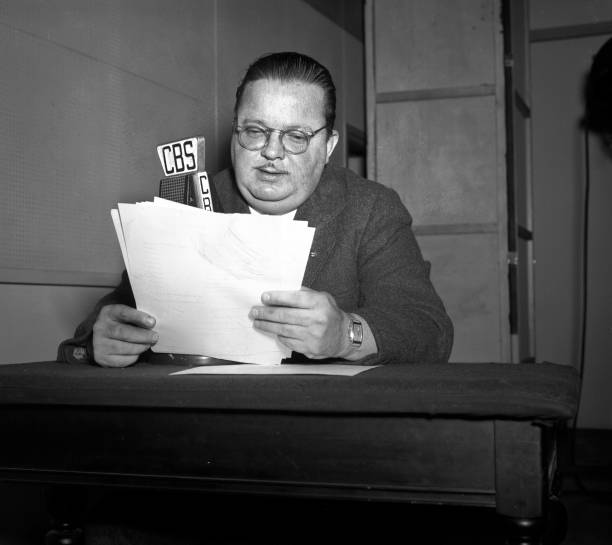
Down These Mean Streets (Old Time Radio Detectives)
Episode 613 - Cooper’s Town (Crime Club, Whitehall 1212, & Quiet Please)
02:04:36
In honor of his January 26th birthday, we're saluting one of radio's most innovative writers and directors - Wyllis Cooper. Cooper's probably best known for his work in the world of horror as creator of Lights Out and Quiet Please but he also...
Loading summary
Transcript5 lines
- [00:00]
Willis Cooper
Get this and get it straight. Crime is a sucker's road and those who travel it wind up in the gut of the prison of the grave. The story you are about to hear is true. Only the names have been changed to protect the innocent. The Adventures of Sam Spade Detective the Adventures of the Saint, Starring Vincent Price. Bob Bailey in the exciting adventures of the man with the action packed expense account, America's fabulous freelance insurance investigator. Yours truly, Johnny Dollar.
- [00:55]
Vincent Price
Hello and welcome to down these Mean Streets and more old time radio detectives and crime fighters. Today we're saluting one of the great writers of the radio era, a man primarily known for his contributions to the horror genre, but who also toiled in the world of detectives. He's Willis Cooper, born January 26, 1899, and who today is best known and remembered among radio fans for creating two of the high points of radio horror. Lights out and Quiet Please. But outside of the realm of thrills and chills, Cooper wrote and directed Whitehall 1212, a series that dramatized cases from the files of Scotland Yard. But before he revolutionized radio drama, Cooper was in the army. He joined the U.S. cavalry in 1916 shortly after he graduated from high school, and he saw action first on the Mexican border and then in France during World War I. After he left the service, he worked in Chicago as a scriptwriter and editor at NBC. While he was there, in 1934, Cooper created Lights out, an eerie horror show that initially aired at midnight and specialized in grisly stories with innovative sound effects to bring them to life. One of my favorites is how an electrocution would be depicted on the air by frying bacon in a pan close to the microphone. The show, with its new and terrifying ways of telling stories, was a hit, and it even drew big stars like Boris Karloff to the microphone. But Cooper left the show in 1936. When he did, he handed the reins over to Arch Oblor, another genius of the era who put his own stamp on Lights out to the point where today the show is probably more associated with Ober than it is with Cooper. After he left Chicago, Cooper headed to Hollywood, where he worked on several screenplays, including three Peter Lorre Mr. Moto movies. His best known Hollywood work, though, is probably his script for Son of Frankenstein, the Universal monster classic that marked Karloff's last appearance as the creature. Cooper continued to work in radio during and after his sojourn in Hollywood. He wrote for the Campbell Playhouse, which was Orson Welles Mercury Theater on the air after it got a sponsor. During World War II, Cooper produced and directed A military news and variety show called the Army Hour. His position in radio combined with his military record during the First World War earned Cooper a role as a consultant to the Secretary of War, and his work on the Army Hour was part of his Service. Then, in 1947, Cooper created his best series and one of the finest, most innovative shows to emerge from the golden age of radio. Quiet Please. It was an anthology of fantasy and horror stories. Though it differed from Lights out, it had a slower, more deliberate pace, and it relied less on blood and gore to unsettle its listeners. The show starred Ernest Chappell, who primarily had been an announcer in radio, not an actor. But Cooper wrote in some of radio's most complex characters and situations, and many times Chapel had the only speaking role in the entire episode. It wasn't a hit when it aired, but today Quiet Please stands out as one of the greats, and some of its episodes, particularly the spine tingling the Thing on the Forbel board, rate among the scariest old time radio shows ever. His last major series as a writer and director came in 1951 with Whitehall 12. Sadly, it would prove to be his last major work, aside from some TV scripts in the early 50s, as Willis Cooper passed away in 1955 at the age of 56. Sadly, much of his early Lights out run doesn't survive. But we have the bulk of the series of Quiet Please and nearly the Entire run of Whitehall 12 as examples of Cooper's genius at the typewriter. And today we'll salute him with a focus on his detective show credits, beginning with the Topaz Flower, an episode of the Crime Club that originally aired on Mutual on April 24, 1947. Cooper adapted a 1939 mystery novel by Charlotte Murray Russell. The titular flower is actually a rare jewel that's missing after its wealthy owner is found murdered. Then we'll hear a pair of episodes from Whitehall 12, the show's very first episode, the Blitz Murder Case from November 18, 1951, and a show from December 23, 1951 known as the Heathrow Affair. And we'll close this week's podcast with an episode of Quiet Please. Now, half the fun of this show is hearing how Cooper unfolds his stories, so I won't say anything except that the show is called It's Later Than youn Think, and it originally aired on Mutual on August 2, 1948. It's a celebration of Willis Cooper, and it kicks off with Crime Club right after these messages.
- [06:55]
Willis Cooper
There's a big change going on, an important one for car buyers it's the countrywide change to Rambler, passing car after car in sales. Rambler now leads all but two other makes in state after state. What does it all mean? That Rambler has what people want and cannot get. In other cars, Rambler is the quality compact car. For instance, Rambler has plenty of hat room, shoulder room and leg room for six big people. Yet Rambler is so trim on the outside, it handles and parks with the greatest ease for first cost, gas, economy and resale value. Rambler is America's top economy car. Yet only Rambler offers the fine features. Features of personalized comfort. There are front seats that glide back and forward separately to perfectly fit short legs or long adjustable headrests, airliner reclining seats, twin travel beds finest air conditioning at lowest cost. Throughout, Rambler engineering is more advanced, Rambler workmanship more careful. Come in and drive the quality compact car Rambler See your Rambler dealer. What would you do to protect your family and yourself in case of a sudden atom bomb attack? It may never happen, but it could. Remember, you can survive an atom bomb attack if you know what to do. Get a copy of the official air raid instructions from your local civil defense organization or write to Superintendent of documents, Washington, D.C. enclosing 5 cents in coin or stamps. Learn the instructions by heart and see that everyone in your family does, too. Be smart. Be prepared. Autolite original factory parts and Autolite service stations work as a team to help you maintain carefree, economical performance for your car. So, friends, when your car's electrical system needs attention, drive into your nearest Autolite service station or the dealer who sells your make of car and ask for original factory parts and auto light service. Money can't buy better electrical equipment. An auto light. And remember, auto light means spark plug ignition Engineered spark plug Auto light means batteries stay full battery. Auto light means ignition system, the lifeline of your car. This is the Autolite suspense show. Drive as if your life depends on it. It does. Good night. Switch to auto light. I'd like to tell you folks about Kraft's golden cheese food. Velveeta Velveeta is such good eating. Just taste that grand, rich yet mild cheddar cheese flavor. And Velveeta is so good for you. It's rich in important food values. From milk itself for swell tasting snacks for good hearty sandwiches for thrifty, easy hot dishes. It's smart to keep stocked with Velveeta. Get it tomorrow in the handy quarter pound package or in the economical two pound loaf, the cheese food of top quality. Velveeta is made only by Kraft. I dedicate this program to the fight against crime. Not merely crimes of violence and crimes of dishonesty, but crimes of intolerance, discrimination and bad citizenship. Crimes against America. Hello. I hope I haven't kept you waiting. Yes, this is the Crime Club. I'm the librarian. The Topaz Flower. Yes, we have that Crime Club story for you. Come right over. Ah, you're here. Good. Take the easy chair by the window. Comfortable? The book is on this shelf. Here it is. The Topaz Flower by Charlotte M. Russell. The exciting story of a flower that was plucked by the hand of death. Let's look at it under the reading lamp. It was a little after 7 o'clock in the evening. The family and friends were scattered through the rather Austere House, and Mr. Sloane was even more than usually indifferent to their comfort and his responsibility as host. Wally Kent was the only person there who did not fear the old man. He even admitted to himself that he liked him in a strange sort of way. And that was good. Especially as the Sloanes were inclined to be clannish. And Wally intended to propose to Natalie if he could find her. After having looked everywhere else for her, he finally decided to try Mr. Sloane's room. Perhaps she had been closeted with her uncle. Standing at the door, he hesitated. Then, squaring his shoulders, he knocked. Mr. Sloan. Mr. Sloan. Is Natalie there? Mr. Sloan. Hey, Mr. Sloan. Nice luck. Natalie. Mr. Sloan. Oh, Natalie, darling. I've been looking all over the house for you. The party. Honey, what's the matter? Let me go, Wally. But listen. Let me go, I tell you. Oh, what the. Sloan. Oh, my good gosh, Natalie, what were you doing? Don't call Mr. Sloan. Oh, Mr. Kent. Oh, take it easy, Varner. But he's murdered. Mr. Sloane's been murdered. Get to the phone borrower right away. Call Captain Tom Vane of the Homicide Bureau. Tell him what's happened. He'll be here right away. Yes, sir. Oh, and Bauer, Just either nobody leaves until he gets here, will you? Well, sir, I. I don't know, but I'll try, sir. Poor Mr. Sloan. And if you see Ms. Natalie, tell her to come up here, please. It's very. Captain Bain is here, Mr. Kent. Oh, thanks. Bar. Bring him right in here. Yes, sir. Come in, please, Captain. Thank you. Hello, Tom. Hello, Ollie. Here, you got a murder here. Got a dead man anyway, Tom. Let's have a look right in here. Yeah, he's dead all right. Harry Sloan, huh? Yeah. Nobody saw it done, I suppose. As far as I know. Now, let's see. Two glasses. Drinking with somebody? Looks like it. Wonder who. Search me. Anybody in here besides you? No. Oh, yes, there was two. Young Raymond Sloane, his nephew, came roaring in. When the news got out that the old gentleman was dead, I kept the others out. Well, maybe we can get some prints off those glasses. Yeah. Oh, say, though Raymond Sloan picked up one of the glasses. This one Picked it up. What for? Well, he was kind of upset and he wanted a drink, so he just grabbed the glass, poured a shot into it. Yeah. Since me and the Prince all over the place, Don. The luck. I always get the tough jobs. Why couldn't he have picked up the old gentleman's glass? Well, how would he know which was which? Yeah, he got something there. Well, no. Thanks anyway. Let's go see these folks, shall we? Sure. Downstairs and to your right. I'll show you. The old man had a lot of dough, didn't he? He was pretty well off. Is this the room? That's right. Now, ladies and gentlemen, if you please, I'm Captain Tom Bain of the Homicide Bureau. I know Wally can't hear, but you others, will you please tell me who you are? You first, sir. I'm Bauer, the butler, sir. No, I'm Maria Sloan, Mr. Sloan's sister in law. And I'm his son, Raymond Sloan. Clarinda Bell, Mr. Sloan's secretary. And this gentleman here in the corner, Joe Bannister. I'm an old friend of Harry Sloane. Shouldn't there be someone else? Well, Natalie, my daughter. Where's she? Well, I think she. Sorry I'm late. I'm Natalie Sloane. All right, now sit down, please, everybody. Let's just check those names again so I know to whom I'm talking. Bower, the butler. Yes, sir. Mrs. Maria Sloan. Yes. And Ms. Clarinda Bell. I'm right here, see? And you're Joe Bannister? I am Miss Natalie Sloan, yes. Have I forgotten anybody? Oh, yes. Raymond Sloan. Present. And me. Mm. Wally Kent. Okay, here we go. We know that Mr. Sloan was shot about 7:15 by someone with a revolver with a silencer. He had been drinking in his locked room with someone who apparently killed him and took the Topaz flower. What? What is the topaz flower? It's a jewel, a cluster of jewels. A family heirloom. Easily recognizable. Miss Natalie? Oh, yes. The topaz floor is also a gold mine in Canada that Harry Sloan and I discovered. Oh, thank you, Mr. Banister. You're welcome. Now, let's just check what each of you were doing when Wally Kent. I. I discovered the body, Captain. I was looking for Natalie. Where were you, Ms. Natalie? I was dressing. But what? Well, I didn't say anything. Okay. You, young man. Raymond Sloan. I was having a drink in the living room down here. He's always having a drink. Aren't you, Ray? How are you doing, Mr. Bannister? I don't remember. You don't remember? I see. I was downstairs here all the time. You're the secretary, Clarinda Bell. Yes. And may I go home? You may. Not you, Mrs. Sloane. Me? I was dressing. You can ask my maid. I will. And the butler. I was in the front hall all evening, sir. Wally, you're supposed to be an amateur detective. What's your theory? Since you found the body, was there anybody else in the room? Not when I found the body, Captain, no. Well, how'd you get in there if the door was locked? What? I said, how did you get in there if the door was locked? Oh, that. Yeah, that. Well, I never thought of that time. One minute the door was locked and then it was unlocked. That's right. I never thought of that. There must have been somebody in there. There sure must have been. And you didn't see anybody when you went in? No, no, I didn't see anybody. Well, perhaps whoever it was got out through the French doors that open on the terrace. They were locked. Mrs. Were there any fingerprints on the glasses? If they were drinking out? Well, thanks to young Mr. Sloan here. No, he smeared his own prints all over him. Well, I was only trying to help. Well, great help. Well, whoever killed Mr. Sloan took the topaz flower. I suppose that couldn't have been the motive for the murder. It was only worth about $5,000. Only 5,000? Mrs. Sloan, you'd be surprised what people will do for $5,000. Wait a minute, young Mr. Sloan. How are you treated in your father's will? What? What do you mean? Do you mean easy, easy, lad. Do you come in to a lot of money? If he does, Captain, so does practically everybody in the room here. Maria here is his sister in law. Natalie's his favorite niece. Bauer's been an employee of Sloane's for 28 years, sir. I know I'm provided for on his will. Everybody here except Wally Kent stands to benefit by the will. How about you, Wally? You and Ms. Natalie, I take it, Tom, could it be that the murderer took the topaz flower to direct suspicions along another line? It certainly could be, Mr. Kent. Ah, Ms. Clarinda Bell. Incidentally, you didn't say anything when Bannister was talking about people who might profit by. No. I stood to lose a great deal by Mr. Sloane's death. Oh, you mean he wasn't going to do the right thing? By secretary. By his first will, yes. First will. Why? What do you mean? There was only. Now, hold it. Hold it. What do you mean by that? Ms. Bell, Mr. Sloan dictated a new will to me only a week ago. Why didn't you tell me this before? You didn't ask me, Captain. Well, I don't believe it. I don't either. Miss Natalie, what do you think? Well, I don't know. Oh, wait a minute. Let's find out about this new will. Yes, by all means. What did you mean about losing by the terms of the new will? Will you explain that, please? I will. Mr. Sloane and I were to be married. And the new will named Clarinda Bell Sloane, his wife, as the principal beneficiary. However, since I'm still Clarinda Bell, probably always will be. You see? Where is this will? In the safe. Mr. Sloane's office. So, Captain, now that I've demonstrated that I have no possible motive, do you suppose I might go home? Sure. Sure, you can go home. I'll be in touch with you. Thank you. Good night. Good night. Well, people, looks as if we're out of luck. No, we're not out of luck yet, Joe. That second will can't be probated. So the first one is still good. Oh, no dirt, my dear. The intent of the will is a thing. We're still out of luck. I didn't know there was another will. Telephone Captain Bain. Headquarters calling, sir. Oh, thanks. The rest of you, clear out for a few minutes. Bower, see that they don't run all over the place and get lost. Yes. Yes. Hello. Oh, you did? No, hold it a minute till these people get out of here. All right, let's go. Please. Let's go. Natalie. What, Wally, Come in here a minute, will you? Where? Here in this room. I want to ask you something. No, wait. Let's see if there's anybody in here. No. Come on. What do you want? Now, honey, look at me. What were you doing in your uncle's room when he was shot? I. I don't know what you mean. Nat, darling, this guy Bain is a sharp cop. Now, look, I can't cover up for you all the time. Do you mean you think I shot Uncle Harry? Darling, no, but I. I mean, you were in there with the door locked. You unlocked it yourself. I nearly got caught when Bain asked me how I got in. You're not Going to tell him, Wally. Natalie, darling, listen, please. I got. Oh, Wally, can't. I've been looking all over. Excuse me. Wally, I want to see you. Excuse me, Natalie. I'll see you later, huh? Okay. Tom. What now? Sorry, Ms. Natalie. Wally, we found the topaz flower. You what? Yeah, John Jarbo of the Hawk Shop squad just called. That was the phone call. Found it in the shop six blocks from here. And he's bringing the owner in the topaz flower first thing tomorrow morning. Well, I'll be says fast work, Tom. Yeah, it sure is, isn't it? Says woman hocked in. A woman. You suppose somebody could have gotten out of the house, run over to the hock shop and. Well, what. What did the woman look like, Tom? Well, the fella said she was wearing a green hat, a purple scarf and she had red hair. Red hair, huh? Oh, well, thank goodness there's no red headed woman in this house. Now think again, Wally. And maybe a red wig. I got Ms. Bell on the telephone, Captain. She's on the way over. I told her what you said about the woman pawning the topaz flower, sir. Where's Mr. Kent this morning? Well, I was looking for Natalie, Tom. Where's the topaz flower? Be here any minute. Now look here, you're supposed to be an amateur, Dick. This. This look like an inside job to you? I. I don't know, Tom. It does to me. Who do you. I mean. Well, this son of his. Ray. Hmm. Well, he's kind of a young fellow they call a near to well in detective stories. Drinking, gambling, women, you know. Yeah, if he knocked off the old man, he sure made a mistake. How'd they get along? Not good, I hear. That's right. But I doubt he's got the nerve to do such a thing. And that sister in law, Maria, well, now, she's kind of malicious, but she's harmless. Mm. Well, you pick out the murderer? Oh, no, Tom, not for me. Not me. I wondered if you would like some coffee, gentlemen. Oh, no thanks. Bauer. That's your name, isn't it? Yes, but you can tell the rest of the people I want them in here now, please. Very good, sir. The guy snoops. Oh, no, not Bauer. Well, how do you know he wasn't listening at the door? Well, I. Yeah, when you've been in this game as long as I. Ah, Doorbell. Bower will get it. Must be nice to be so rich and get murdered. Yeah, that's right too. A police officer, Captain, and another person. Hmm. Oh, hello, Jabo. Morning, Captain. Nice work, kid. Yeah. This here is Doran, the hot shop fella. Oh, good. Come on. We'll go in the other room where we have these people. There's more room in there. Everybody in there. Bauer. Yes, sir. They're waiting for you. Okay. In here, Jobo. Dawn. Well, dawn. Either one of these two ladies? No, not neither of them. You sure? Absolutely. I recognize that woman out of a million. Red hair, kind of deep voice, a green hat, purple scarf. Just what is this, please? Captain Baynes, Jarbo, give us a stone. Yes, sir. Why, it's the topaz flower. Where'd it come from? Where did you get it? Yeah, a woman with red hair and a green hat and a purple scarf with a deep voice. All right, all right. It was hacked at this man's place last night. A woman with red hair and a Greek. Enough. You say it wasn't either of these ladies now? Positively. I'd know her in a minute. Okay, okay. Take them back, Jim. Okay. Come on, lad. Is that all, Captain? That's all. Much blood. You're welcome. Well, I must say, Captain. Say, Captain, as long as this fellow's trying to identify women for you. And you better keep them here till Ms. Bell gets here. Just to make it come out even, you know. Oh. Oh, yeah, sure, that's. Hey, Captain. Captain, what's the matter with you? Now, look. Look. The green hat and the purple scarf. I found it. Where'd you get that? Well, that's my hat and my scarf. Now, wait a minute. Let's see that. It was right there on that thing in the hall. I never noticed it when I come in, but when I went out, there it was, and I knew it right away. Look. Look. I bet there's maybe a red hair in it someplace. Look. Huh? Well, what do you know? It is a red hair. Or am I colorblind? Kent? No, it's red, all right. Well, Aunt Maria, now who's in the suit? Well, I haven't seen that purple scarf in a week. Well, the lady that Huck the jewelry wore. Natalie, when did you wear this hat last? Why, it was in my room. How'd it get down here? Young Lenny, I think we're going to have a lot of fun finding out. But I didn't. No, no, no, no. It wasn't her. Not her. The hat and the scarf might have been lent to someone. You make another remark like that. Let him alone, please, Mrs. Sloan. Now, shut that door. Bo, wait and see who that is. Yes, sir. Probably Ms. Bell. Mr. Bannister. Now, see here, Captain. Hold it for a minute or two. Mr. Joseph Bannister. Ah, come in. Come in. Bannister. We found the topaz flower. What? Yes. It was pawned at Mr. Dorn's shop last night by a red headed woman in this green hat and a. Huh? Yeah. Do either of you know any red haired women? I know one in Calgary. Captain. Hmm? Bauer. Yes, sir. Will you take the gentleman somewhere for a few minutes, please? I want to talk to these two ladies. Yes, sir. This way, gentlemen, if you please. What are you going to do? I'll call you when I want you, Mr. Sloan. Let's go. Let's go. Want me to go, too? No, you stay here. Thanks. Sit down, Ellie. Thank you, Wally. How long before you'll want us? I'll call you. Nat. Is that your hat? Really? Yes, of course. I think that man must be crazy. Well, I think it's something the police have coped up to try to scare us into. Scare you into what, Mr. Sloan? What do you mean by that? I don't know. I mean, I don't know. Sit down. Sit down, Mrs. Sloane. Now, are you sure you haven't lent that scarf to someone recently? Ridiculous. And you, Miss Sloan, Your hat. The hat's been in my room for weeks. I haven't worn it and I don't know when. I see. Well, Brother Kent, it was an inside job after all, wasn't it? It certainly looks like it, all right, but I don't think. Mm. Go and ask the men to come back, will you? I'll go if I may. I want to get the handkerchief. No, wait. Oh, never mind, Wally, you don't. It doesn't make any difference what Mr. Kent thinks, Ms. Sloan. I'm the one. Mother. Come on, Mother. Natalie, get back. It's Maria and Clarinda Bell. They're dead. They're murdered. How is Mrs. Sloan now? She'll be all right, Captain. But the shock. Yeah, I know. May I go up to her now, please? Sit down a moment, if you will. I won't keep you long, but sit down, please. Here, let me help you. Natalie, how did Ms. Bell get in the house? Why, she had a key. She often came out here to work with Uncle Harry. I see. Do you know how she was murdered? She was stabbed, wasn't she? Yes. And when your mother saw her, she fainted. Well, what would you do? Faint, probably. Miss Sloane, this. This pencil was lying under Ms. Bell's body. You ever see it before? That's my pencil. Oh, it is? Miss Sloane, belongings of yours seem to turn up everywhere. Your green hat, your Pencil? But I was in here and I lost that pencil three weeks ago. Oh, now, see here, Bell, I don't know from you. Now, look, Natalie, I'm reasonably sure you didn't murder Ms. Bell, but you wouldn't have lent the pencil. Please, Tom. I told you I lost it. This is a very odd pencil. Pull the end off. There's an eraser. I know that. It's got another trick, too. I don't know what you mean. Look, you pull the eraser out. A knife. A little knife. Yeah, a little knife with blood on it. Miss Sloan, who murdered Clarinda Bell with your knife? Now, look here, Ben. Shut up. Take it easy, Kent. Answer my question, young lady. I tell you, I don't know anything about it. All right, all right. You can go up to your room. But stay there, will you? I'll take you up, Natalie. No, you stay here. I want to talk to you for a minute. Go ahead, Natalie. Captain Baker, See you later. All right. I don't get it. She didn't do it, baby. No, I don't think so either. But who did? Well, used stuff from Clarinda Bell's purse. Keys, lipstick, cigarette case, address book, matches, comp papers. Well, what? Now, look at this card. Read it. I remember the Christmas party six years ago just as well as you do. Well, what is it? Christmas card or something. I wouldn't know what. What's this? Last will and testament of Harrison Sloane. Yeah, but where's the rest of it? Somebody wanted that will badly enough to knock off the old girl for it. Now, just who could that be? We're just as badly off as we were before. Except. Captain Bain, Mr. Bannister would like to speak to you, sir. Oh, Bannister. Send him in. Yes? Well, how you doing, Cap? Oh, all right. Don't kid me, Cap. Oh, yeah, you've been drinking. Sure makes me think. Well, what do you think you want? Makes me remember things. Oh, isn't that fine? Like what? Like things. I see. Come on. Come on. I was out in the garden for a breath of fresh air by the time Harry got killed. And I looked up at Harry's room. French stores, you know. Know who was sitting there with him? Oh, girl. What girl? You look around, you'll find out. Young girl. Banister, are you insinuating. No. Just telling you goodbye. Hey, wait a minute. No goodbye. What do you think of that? Why, that old. Hold your horses. He's not so drunk. But. But why did he. Hey, wait a minute. Now what? He didn't see anybody in that room. What do you mean? Well, didn't you see those French windows? What do you mean? They're covered with frost all the way from top to the bottom. In this cold weather. Well, I be. That's right. Nobody could see in. Of course they couldn't. That's right. Now, what do you suppose? All I know is he couldn't have seen in that room. Bob, you've got the making of a detective after all. But why would he want to throw suspicion on Natalie? I wonder. Say, maybe he meant Clarinda. No, he said a young woman. He was a little drunk. I don't think Clarinda did it. Anyway, the hot shop man said she wasn't the one that had the topaz flower. Yeah, that's right. What about that card, though? The Christmas card? Let's see it again. I remember the Christmas Eve party six years ago just as well as you do, Bean. I've got an idea that's. Well, ring for Bauer. Okay. You rang, sir? Yes. Come in here, Bauer. Close the door. Yes, sir. Bauer, you've been here a long time. Yes, sir. Were you here at a Christmas party six years ago? That would be 1941. Yes, sir, of course. Who else of these people was here? Mrs. Sloane, Natalie? No, sir. They were in California. Let me see. I think Mr. Sloan and Ms. Bell and Mr. Bannister. Anything special will happen that night? Special, sir? Something Miss Bell might remember, for instance? Let me think, sir. Why, yes, sir. It's indeed, sir, Very funny. What? It was Mr. Bannister, sir. Bannister? What did he do? Well, sir, he was rather tight. And he came downstairs wearing a woman's dress and a red wig. A red wig? Oh, yes, sir. I remember perfectly. Oh, he was a scream. Bower, go out and ask Mr. Bannister to step in here, will you? Yes, sir. I hope you won't tell him. Snappy Bower, please. Yes, sir. Kent. Nice going it. It all seems so simple, Captain Bain. Yeah, sure. Looking back on it, Sloane told him about the new will and about marrying Clarinda. What we didn't know, of course, was that Sloane had cut Banister off in the new will. So Bannister figured he'd murder the old gentleman, take the will out of the wall safe in the room and get away with it. Even if Clorinda did tell everyone about it. But it wasn't there. So he took the topaz flower to make it look like robbery. And when I came in the room, he locked me in. That's right. Then he had to get rid of the topaz flower. So he dressed up in women's clothes. But he'd forgotten that Clarinda remembered the Christmas party and his act. And she was going to pass him the note when she came here. Yes, only he got here first. Well, see you at the trial. And if you ever want a job on the force, wallet. Oh, no, not me, Captain. I'm going to be pretty busy looking after the topaz flower. Sure belongs to Natalie now. Oh, yeah, I get it. I get it. Well, I look pretty good in soup and fish. What do you mean, Captain? Oh, pardon me. I just mean in case you want somebody to guard the wedding presents. Well, goodbye for now. And so closes tonight's Crime Club book. The Topaz Flower. Based on a story by Charlotte M. Russell. Willis Cooper did the radio adaptation. Roger Bauer produced and directed. Raymond Edward Johnson played Captain Bain. Chet Stratton was Wally, and Julie Stevens was Natalie. The cast included Eleanor Phelps, Reese Taylor, Barry Thompson, Irene Hubbard, Paul Hammond and Ed Latimer. Oh, I beg your pardon. Hello. I hope I haven't kept you waiting. Yes, this is the Crime Club. I'm the librarian. Yes, come over a week from tonight. Good. We have a very intriguing story of a missing person that was found by death. It's called Epitaph for Lydia by Virginia Ross. In the meantime. Well, in the meantime, there is a new Crime Club book available this week and every week at bookstores everywhere. Yes, it's available now. Fine. And we look for you next week. This program came from New York. This is the world's largest network, the Mutual broadcasting system. Whitehall 1, 2, 1 2. Quickly. This is Scotland Yard. For the first time, Scotland Yard opens its secret files to bring you the authentic, true stories of some of its most celebrated cases. These are accurate records drawn from these files by special permission of Sir Harold Scott, Commissioner of Scotland Yard. They're true in every respect, except the names of the participants, which for obvious reasons have been changed. The research has been done by Mr. Percy Hoskins, Chief crime reporter for the London Daily Express. And the stories for radio are written and directed by Willis Cooper. New Scotland Yard. The London headquarters of the Metropolitan Police. Is situate near the Embankment on Whitehall, hard by 10 Downing street and almost in the shadow of Big Ben. Here also is the headquarters of the CID The Criminal Investigation Department. The body of men whose exploits for more than a hundred years have made the name Scotland Yard synonymous with a brilliant detection of crime and unrelenting pursuit of the criminal. And the presentation of the painstakingly acquired evidence. That assures his eventual punishment on the lower ground floor of New Scotland Yard is the famous Black Museum, where whose present custodian is Chief Superintendent James Davidson, a Scotland Yard veteran. Behind this door. Good afternoon. This Black Museum of ours is rather unique. Everything in it was at one time connected with the successful solution of a crime or was closely involved in the crime itself. We possess an imposing collection of lethal weapons here, each carefully docketed to indicate its origin. Here are half empty bottles of almost every poison known to man, together with a statement of particulars concerning its use. Here are the blood stained garments on which the solution of a crime of violence depended. Among the Black Museum's relics are disguises used by famous criminals, death masks of notorious men and women whose ends Scotland Yard encompassed, and a great many other more gruesome mementos of man's inhumanity to man. Among the exhibits are other seemingly incongruous objects that in their time served well in the undoing of desperate criminals. Such an exhibit is this one, the fragments of a set of tea caps. This collection of shards was the first step in the solution of a frightful crime which occurred during the blitz of July 1940. Yes, sir. Will you please bring me file number 302Mr. 651, Constable 302, Mr. 651, sir. Yes, sir. One, sir. In July 1940, the Battle of Britain was at its height. The Luftwaffe hits us at all hours, and from advanced defense fields of the RAF the weary Spitfires rose day and night to do battle. Thousands of British people died in Britain as a result of enemy action. But in the midst of the very present war, murder went on as usual. Chief Superintendent Peter Carruth received a telephone call at Scotland Yard on the morning of the 3rd of July of Wednesday. File 302Mr. 651, sir. Thank you. The call was from Chief Constable at Matfield, a Kentage village near Tunbridge. The Chief Constable reported the finding of the bodies of three women shot to death and requested the assistance of the cid. The services of Scotland Yard are available to the provincial police at all times if requested, the Home Office assuming all expenses if the request is made within 24 hours of the discovery of the crime at their own expense, if we're called in after that. Chief Superintendent Carruth was gratified that the request came at the very beginning of the case, and he drove to Matfield at once with a medical examiner from the Home Office and Detective Sergeant Small, also Scotland Yard. They were met at the scene of the crime by Matfield Chief Constable Thomas Bennett. It's good of you to come so quickly. All of you. It's all quite beyond his ears, sir. What with the Blitz and all. I'm sure had a bad time having it, sir. Yes, I have no doubt. Those hours. Mr. Berry must be up again. Well, here's what happened in the house. There's Miss Evans, the servant. Is she dead? Two olds in her head play place. All ransacked, all tore up. Where are the others? Mrs. Ames and her daughter. Jessica's lying down there in the orchard. Also shot. Yes, I see. Where do you want to start, sir? A house, I think. First. Come in then, sir. Gentlemen, thank you very much. Thank you. They've lived here in Matfield a long time, have they, Bennet? Miss Evans, the servant, has always lived here. Mrs. Ames and her daughter moved here a year ago. Mrs. Ames a widow? No. Estranged from her husband, Though they're quite friendly. He lives at Piddington. Oh, yes, I know. I've been there. Owns a farm. Does he know about this? My station sergeant telephoned him this morning, sir. He was in London, but he'll be home this evening. Shall I go first, sir? She's lying right by the door, and you might trip over her. By all means. You mind your eye there, sir. These is the gentleman from Scotland Yard, Constable. Yes, sir. This is her. Ms. Margaret Evans, sir. Age 61. Servant living in Aw. See what you can find out, Bernard. Right you are, Small. Get started looking for fingerprints. Yes, sir. Place has really been ransacked, hasn't it? Mm. What's missing? Haven't checked yet, sir. Haven't touched anything. Good. Well, not much chance of finding out if anything is gone, though. Everybody lived here is dead. I'd like to see the others. Right, sir. If you'll come with me. What's that over there? Tea things? Yes, sir. Looks as if she dropped the tray when she saw the murderer. Have a look at them. Too small. All right, sir. Down this part, sir. The orchard there. That's where they are. Mrs. Ames and a daughter, Jessica. They have many visitors? Very few, sir. And the place is back from the road. Hidden a bit by the roses. Hard to tell. They do ab. Here she is. This is the daughter, I suppose. Right, sir. Her mother's over there, off the path. Daughter was running away toward the house. Mother was facing the other way. Shot in the back, too? Aye. Found anything here in the grass? Cartridge cases, Anything? No, sir. We did find this glove, though, sir. Sorry. I had it in my pocket. Almost forgot it. Woman's glove. Size six, I'd say. Hogskin shops sell thousands a Week. Left hand. Whose is it? Isn't Mrs. Ames, sir. Too small or Ms. Jessica's? Either. Too large, I'd say, wouldn't you? Yes, I think so. Maybe the murderer, sir. We'll see. All you found? All so far, sir. Where was the glove? Oh, over there, sir. I marked the spot. With those two sticks. Alongside the mother's body? Yes, sir. Well, as soon as Bernard's examined the bodies, I think you'd better have all this grass scythed down and see if you can find anything else. Cartridge case or anything. Right, sir. Shall we walk back to the house? Yes, sir. Relenting, lad. Beg your pardon? Talking to fighter chap up there. Hope he shoots some Jerry's bloody ears off. He probably will. Got a son in the raft. Flight sergeant in the Coastal Command. Good man. 19 years old. When I was 19, I was a farm man for good old Uncle Tom Cobley. I wonder if they found anything yet in there, sir. We'll see. Ah, here's Bernard. Anything yet? Well, I want to see the other bodies first discovered A little so far. Where are the. Down the path back there, sir. We've touched nothing except this glove. Is this one of theirs? Wrong size. All right. You can remove the bodies as soon as I finish, Chief Constable. Yes, sir. I'll have the van here at once. See to it, please. Yes, sir. What are you doing, small? Trying to fit these cups together, sir. Well, what about fingerprints? I wanted you. I found a good many, sir. They all checked with hers. How did you know they were hers? Oh, I took hers. I wish live peoples were as easy to take. No others? Well, I'm not sure yet, sir. As soon as I get the others down there, I'll make a very thorough check. These cups and saucers, she dropped them when she saw the murderer. Probably. Quite. But why should there be? Four cups, sir. Four. One for the mother, one for the daughter, one for the maid. For her. Ze was more a companion than a servant, sir. Here in Matfield, we. Yes. And one for the murderer. Why then? Must have known the murderer. People don't usually offer a cup of tea to a perfect stranger. You could make up a list of their friends, Chief Constable. I have very few friends, sir. Kind of standoffish, like they was, and. But the parson, the grocer, postmistress, Martin. A real close friend, so to speak. Make up a list and check where they all were yesterday. Yes, sir. What about this estranged husband of Mrs. Ames? Would he have a motive? Oh, I don't think so, sir. He used to come visit Her, I know, but. Oh, he did, eh? And he's in London now, you said. I went down yesterday morning, they said, sir. Where does he live, d'you say? Piddington, sir, near Oxford. You take over, Sergeant Small. You and Mr. Bernard. I'll call you from Piddington. Piddington, sir, do you think. I think I'd like to know whether our friendly ex husband was really in London yesterday or elsewhere. At piddington that afternoon, 70 miles away from Matfield, Jem Davies, the man of all work, explained to Chief Superintendent Carrot that John Ames had not yet returned from London. Ms. Viola Masterson, the manager of the Eames farm, however, was at home recovering from an accident. Carruth spoke to her in her sitting room. Her left arm was in bandages and she was obviously in slight pain. Caruth sympathized with her. I am so sorry to disturb you, Ms. Masterson. It's quite all right. I'll be up and about in a day or so. It pains a little, though. Now I suppose you've heard about the former Mrs. Ames and her daughter. I'm so dreadfully sorry. I knew them slightly, you know. Oh, did you? I'd have gone over to Natfield if I hadn't been so stupid as to fall off my bicycle and injured my arm. I'm afraid I'm not a very good cyclist. Oh. Do you have any clues as to the. The murderer? Very few at the moment. Very few, I'm afraid. Oh, What a pity. Mr. Ames went to London yesterday. Yes, he was probably in London while his former wife and daughter were murdered. He often stops in to see them on his way. If he'd stopped there yesterday, he might have prevented it. Yes, I suppose he can account for his movements yesterday. I'm quite sure he can, Superintendent. I expect him at any moment. You were here at the farm all day? I rode about the farm all day on my bicycle until I had the accident. I'm sure Jemmy Davis can confirm that. And the bicycle is still where I left it, Where I fell off. Unless Jemmy's brought it back. I see. By the way, have you ever seen this glove before? Let me see it. No, I'm afraid not. Did it belong to? We're not quite sure. Well, it's not mine. Much too big for me, I'm sure. Superintendent. You've never seen it before? Never. Thank you, Ms. Masterson. Is that all you wanted? Aren't you going to wait for Mr. Ames? Oh, I don't like to disturb you, Ms. Masterson. I'll wait out there with Jemmy. It is Jemmy, isn't it? By all means, talk to Jemmy. I'm sure he'll confirm everything I've said. Good day, Ms. Masterson. You know where to find Jimmy? He was sitting alongside the stable door cleaning a shotgun when I last saw him. Jemmy Davis was a simple minded man. He didn't realize that he was talking much too freely to the friendly Scotland Yard man. Well, it'd be a terrible thing, I expect. But I don't shed no tears for em. I didn't like her, nor her daughter neither. Hated them. It being none of my business, sir. But now, Mr. Ames, he be a real fine man. And she. She treated him awful bad. How? Dog in the manger. Kicks him out, she does. And then when he finally meets a woman he loves, and that woman loving him, she won't give him no divorce. You seem to know a lot about Ms. Rames affairs, Jemmy. Him and me, we be just like that. I do anything for that man. Her too for that matter. Who? Ms. Marsterson. There. Well, that's pretty clean, ain't it? Let's see. Clean as I'd ever want a gun to be. Had it for years. Old fashioned like me. But she be a good shotgun. He uses it all the time for rabbits. Mr. Ames. Buys his own shells too. Ms. Masterson, she's scared of it. Tried to teach her how to shoot it, but she was scared. You couldn't kill a person with this here gun, I says to her. Not unless you got up real close. Funny thing though. She shot a rabbit with it yesterday. You know what made her so sick at her stomach when she shot the poor little feller? Never again, she says to me. Do you see the rabbit, Jemmy? Well, what were left of it. She were too close. Not worth bringing back to cook. You know. I think that's why she fell off her bicycle thinking about it. Where did she fall? In the meadow yonder. We all slipped on the grass. Jemmy, did you ever see this glove before? Huh? No, sir. Oh. Can't see us how I have. Sure? No sir. Whose is it? I found it. Well, finders keepers, that's what they say. So you don't think Mr. Ames and Ms. Masterson will be upset by Mrs. Ames death? Lord bless you, no sir. Now they can get married. That dog in the manger wife of his. He must have been the last one to see her alive. Oh, how's that? When he stopped us here on the way to London yesterday. Why I thought you was going to wait for him. To come back, sir. Chief Superintendent Carruth hurried to the local police station, where he put through a trump telephone call to Matfield. Detective Sergeant Small, the Scotland Yard man, answered the telephone at the murder house. Small here, Small. I want you to check at once on something. Yes, sir. I want you to make the most diligent inquiries. Get that chief constable there to inquire of every person in Matfield, if necessary, at once to discover if this man Ames was seen in Matfield yesterday. You got that? He was seen, sir. He was the postman, sir. We've been making inquiries all over the village of Mrs. Ames known friends, and we've come across several curious things, sir. Well, the postman observed Mr. Ames walking toward this house yesterday afternoon. He's sure he positively identified him, sir. Known him for years. Spoke to him, called him by name, and Ames replied. What else? He was carrying a shotgun, sir. Oh, I discovered here that he intended to visit them. But the gun looks as if he's our man, doesn't it? What else did you discover? Well, there's a bicycle belonging to Mrs. Ames is missing. Oh, and the porter at the railway station reports a strange woman carrying a parcel arrived in town yesterday, but so far we have been unable to trace her. Now, the local police have picked up a deserter from an army camp near here. He's being questioned. Now, a lorry driver for the gas company at Oxford reports picking up a woman on the highway near here yesterday afternoon. She was wearing one glove. Oh, now he thinks her bare hand was scratched and bleeding. Yes, she explained she'd fallen off her bicycle and was trying to catch a train. He took it to the railway station and then what didn't you say, sir? I didn't say anything. Oh, I was speaking to Dr. Bernard, sir. I'll put him on. He wants to speak to you. Thank you. You there, Carruth? Yes, Bernard. I've discovered why you didn't find any spent cartridges, Superintendent. Yes, the women were killed with a shotgun. Probably a 410. Shotgun? Yes. Yes, sir. The murderer had to pick the discharged shell out of the breach of the gun. By hand? Yes, but probably carried them away and disposed of them elsewhere. Did you recover any of the shot from the bodies? Yes, quite. Small pellets, birdshot. Mark it in evidence and hold it for me. I think those little lead pellets are going to hang someone, Bernard. Back at the Piddington farm, Chief Inspector Carruth found that Ames had returned in his absence. Jamie, the garrulous man of all work, was just leaving. He was going to fetch Ms. Masterson's abandoned bicycle. I be going out to fetch Ms. Masterson's bicycles right here, Jemmy, would you like a half a crown? What for? That rabbit Ms. Masterson shot, is it near where she left the bicycle? Oh, furlong or two, sir. Patchy back for what for, sir? It being fit to eat. She were too close. Oh, I've a fancy to see how that gun of yours works, Jim. Oh, that old gun of mine? She be a very good gun, sir. Show me here. Well, good man. Now, is Mr. Ames in the house? Aye, sir. Now I'll fetch the rabbit and show you. But the poor thing will be all full of birdshot, sir. That'll be all right, Jemmy. I'm very interested in birdshot. Yes? I'm Chief Superintendent Carruth of Scotland Yard. You're John Ameson? Yes. Now, you're the gentleman who was here this afternoon? Yes. May I come in? Do you have come about the murder of my wife and daughter? Yes. I'm sorry. Mr. Carruth, you said? Yes. I cannot pretend any great grief, although I am shocked at the tragic. May I sit down? I. I spoke to Ms. Masterson, your manager this afternoon. She said you were here. Perhaps if Ms. Masterson strong enough. Here I am. Oh, sit down, my dear. Please sit down. Don't hurt my hand, John. I'm all right. Well, sir, am I correct in assuming that with the death of Mr. Ames and Strange wife, you and he, we can be married? Yes, Mr. Ames, that is true. My wife has consistently refused to give me a divorce. Although we were on fairly good terms, she and I weren't. I'm glad she's dead and that horrid daughter of hers too. Now we're rid of them once and for all. Do you share Ms. Masterson's views, Mr. Ames? I'm afraid perhaps he's not as ferocious as I am. But he shares my views all right. Don't you, John? Yes. And what were you doing with a shotgun on the way to our home yesterday, Mr. Ames? John, you didn't. You didn't. Mr. Ames. You didn't tell me. Oh, John. John, now you spoiled everything. Your wife and your daughter were murdered with a shotgun, Mr. Ames. I didn't. He didn't. He didn't. I say, what gauge is shotgun, mister? A. This is absurd, mister. Why do you. Why do you think it's absurd, my dear sir, My gun, which incidentally is an American made Remington, over and under, 12 gauge, has been broken for four weeks, you see. Broken? The sear spring is Broken? It's quite impossible to fire the gun. You can examine the gun at your leisure at Henny McGovern's, the gunsmiths. And High Horbin in London, where I took it yesterday. We'll check that. Why did you visit your wife yesterday carrying your broken gun? I dropped off in Matfield on my way to London to have the gun repaired. I begged her again to give me a divorce. She refused. She refused again for the last time. And we're going to be married now at last. Don't expect us to weep for her. Whoever killed her should be given a medal. Violet. Oh, stop it. You're just as glad as I am, aren't you? Excuse me. The telephone. Yes. Yes, he's here. One moment. It's for you, Mr. Carruth. Thank you. Chief Superintendent Carruth. Him small here, sir. We found Mrs. Ames missing bicycle. Oh, yes, sir. Discovered in a ditch close to the place where the lorry driver picked up the woman with one glove. Oh, good. There are numerous fingerprints on the handlebar, sir, but of the right hand only. Most interesting. And the strange woman whom the railway reporter observed was carrying a parcel. You remember? Yes, yes, of course. It was a long parcel. About the length of a gun, he says. Wrapped in brown paper. I see. Have you taken the things you spoke about? Things, sir? Yes. Oh, the fingerprints on the bicycle. Yes, quite. Yes, sir, I've taken them. How soon could I see them? And the people you spoke of up there, sir? Yes. Well, there's enough train that we can have stop at Pittington. Leaving here in half an hour, sir. I think you better come then. If you can find the others you mentioned. I'll meet you at the Pittington station. Right, sir. Goodbye. I'm very sorry. Could I ask. You have uncovered some other evidence, sir. You're not going to arrest John? Then he won't be charged with murder? I think I can almost assure you that you will not be charged with murder, Mr. Ames. I'm sorry. I must go meet my colleagues. This is quite important. Will you be coming back? I probably shall. I shall want to be able to assure Mr. Ames that he will not be helped. Oh, John. Is the Scotland Yard man Still here, Mr. Ames? Why, I'm here, Jemmy. Well, I fetch you the dead rabbit, sir, with your half crown's worth of birdshot. They met him at the railway station two hours later. Detective Sergeant Small. Chief Constable Bennett, the lorry driver who had picked up the woman with the bloody hand and the one glove. And the railway porter who had observed the woman carrying the Brown paper parcel the size of a gun. Leaving Chief Constable Bennett at the station to make a telephone call, the party proceeded the Ames farm. Good evening, Mr. Carruth. May we come in, please? This is quite a delegation. May we come in, please? I suppose. Do come in. Although. Thank you. Where's Ms. Masterson? Viola. Yes, dear? Why, what? Ms. Masterson, do you recognize any of these people? Why, why, no, of course not. Patterson, do you recognize this woman? Hey, she's the lady in blue slacks I picked at Mallory on the road in Matville yesterday. The lady that said she fell off a bike. Her hand was all bloody and she had one glove on like this one? Yes, sir, exactly like that. O'Connor. Yes, sir? Have you ever seen this lady before? I seen her yesterday, sir, getting off the 1206 train that passes through Piddington before it gets to Batfield. She was wearing blue slacks and carried a brown paper parcel about the size of a gun, sir. Now, look here. What's the meaning of all this? Come in. Well, Bennett, just like you thought, sir. I telephoned the doctor who treated Ms. Masterson, and he informs me that he treated her left hand from multiple lacerations, removing particles of road gravel and stains of tarvia from the palm. Ms. Masterson, there is no gravel or tavia at the Meadow. Thank you, Mr. Ames. I'm extremely sorry for you, John. Now we won't get married. Viola Masterson, I arrest you on the charge of willful murder to get married. And she stood in office. And I must warn you that anything you say will be taken down and may be used in evidence against you. John, what have I done? The evidence adduced by Chief Superintendent Carruth, the identifications by the lorry driver and the railway porter, the shotgun pellets which proved identical with those Ms. Masterson had fired into the unfortunate rabbit, the glove which was identified as hers by the store which had sold it to her, the gravel from the road in her wounded hand, and the motive, which was all too plain, proved sufficient evidence to convict Viola Masterson of the murders of Mrs. Ames and her daughter, and of the servant, Margaret Evans, who provided the first cue, the fourth cup. Ms. Masterson had determined to murder the servant to eliminate the only witness to the murder of the others. In a trial marked with frequent air raid alarms caused by an enemy whose depredations could not prevent murder from going on as usual. She was found criminally insane and is now imprisoned in the asylum, Broadmoor. John Ames was tried as an accomplice, but acquitted. He joined the 1st Battalion of the Bats and was reported missing in action in the Italian campaign. You may Turn the file 302Mr. 651, the Blitz Murder case, to the records room. Good afternoon. You've just heard the first case in the series Whitehall 1212 drawn from the official files of Scotland Yard by permission of Commissioner Sir Harold Scott. All names were changed in this story for obvious reasons, but everything else is true. It occurred fight all 1212 is written and directed for radio by Willis Cooper. Next, listen for Tales of the Texas Rangers on NBC, Whitehall 12. Quickly, please. This is Scotland Yard. For the first time, Scotland Yard opens its secret files to bring you the authentic true stories of some of its most baffling cases. These accurate records are drawn from the actual files of Scotland Yard. They're true in every respect, except for the names of the participants, which for obvious reasons have been changed. Research on this exclusive series has been done by Percy Hoskins, chief crime reporter of the London Daily Express. The stories for radio are written and directed by Willis Cooper. Some of the participants, Donald Rhodes, jeep security officer of Heathrow Airport. And a former Scotland Yard man. It was a considerable responsibility. Detective Sergeant Vivian Morris of Scotland Yard. I am a suburban housewife. Chief Inspector Robert Sheehan of Scotland Yard's Flying Squad. Step into the Black Museum here with me. I should like to show you something. John. Is that you, Sheehan? Yes. I brought some friends to see you. I'll be with you at once. Good afternoon. This is Chief Superintendent John Davidson, curator of Scotland Yard's Black Museum. So, how do you do? Well, I expect you've come about the relics of the Heathrow affair, right? Oh, on the table there behind you all we have. Oh, good. Yes. This one I recognize. Iron bar used by criminals in Heathrow fair. Some of my hair still sticking to it. Yeah, some of your blood too, Bob. Makes my head ache yet. This is briefcase carried by the GOC. And here, alterable license plate used by the GOC gang. You see, it reads GMU 436. Press the lever please, John, and hey presto. It reads CGC829. Very neat, isn't it? You, of course, don't have the most important souvenir at all here, John. What's that? The half million pound sterling. I think that I should tell you a little about our flying squad. It consists of a large number of motor cars, all wireless equipped, all very fast and all kept constantly in superb condition. The flying squad is on duty 24 hours a day. A highly mobile force available on extremely short notice at any point in the Entire London area. The members of the Flying Squad are hand picked and they're very unusual men. These three are typical. This is Detective Sergeant Nobby Knuck of the Flying Squad. Yes, sir. I was one of Lord Louis commandos. I was at Narvik. Oh, yes, and at GIEB. Former Leading Petty Officer Dusty Miller of HMS Phoebe. I am 29 years old. I am 6 foot 2 and I weigh 14 stone 8. I was welterweight champion of my ship. The light trails are Phoebe. Detective Sergeant Ray Lawton, the Canadian. I'm about the only policeman you ever heard of who was once a lion tamer in a circus. Like all policemen in Britain, we seldom carry arms, although I assure you we're quite able to use them effectively should the occasion demand them. British policemen rely on the weapons provided by nature, augmented occasionally of course, by the issue of stout truncheons or rubber caches which I understand the Americans call black jacks and which are wondrously effective. Our job, you see, is not to shoot criminals, but to bring them to justice. Or if possible, to prevent their depredations. We find our methods rather effective. Well, in June 1948, the great new London airport London had long since outgrown the famous old Croydon airdrome was operating at capacity, although it was still far from completion. My old friend Donald Rhodes, a veteran Scotland Yard man who was chief security officer at Heathrow, came to call on me at the Yard. Can't stay away from the old home place, can you, Donald? I asked. I always know where to come for help. Bob. What's the matter? You know the goc? General Officer commanding what? Ancient and honorable brigade of robbers. Oh, Moriarty. Moriarty Townsend in S.H. hughes, Wes Simmons, Brown, Bennett. Dozens of names. Yes, I know him. Arno. Of him I should say. Big operator. Biggest. Well, his recce people have been looking us over. What's he after? A nice new airplane for himself. Gold. At Heathrow we tranship thousands of pounds in gold. You know, international affairs. Planes fly in dripping with the stuff, leave it overnight with us and leave it lying about. We keep it as short a time as possible in our bonded warehouse under guard. Strongest safes in the country. Guarded, of course. Try and get past them. Much gold planeload at a time. How's he going to do it? Tanks or something at dawn? Oh, he'll be much more clever than that. He always has been. That's why he isn't sewing mailbags at Dartmoor today. How'd you get on to all this? I brought the chap along. One of my mechanics like to Talk to him, naturally. Come in, will you, Curran? Yes, sir. This is former Lt. John Carne of the Royal Tank Regiment, Bob. Good afternoon, sir. Sit down, Mr. Curran. Thank you, sir. Tell Chief Inspector Sheehan about it, will you please, Karan? Well, sir, I've been with Mr. Rhodes for quite some time. The day before yesterday I received a telephone call from an acquaintance of mine named Edward Muybridge. Where did you know this Muybridge before? We were in prison together, sir. Prison? Well, Mr. Hitler's off like 18 in the war. Oh, German prison camp. Yes, sir. I hadn't seen him since we were demobed and we had a drink together. Oh, let's not waste any time, please, Colonel. No, sir. Well, he telephoned me again yesterday, sir. And you had another drink? Right, sir. He asked me how I'd like to make a lot of money and whiskey and I said fine. I asked how, he said, passing on some information about Heathrow, how it was run and the guards and all that. What sort of looking chap was he? Red hair, squint eye, limps on, right leg. Sound familiar to you, Bob? Not as what you call him, Colonel Edward Muybridge, sir. His name's Ginger Johnson in our books. Unmistakable. He's not a nice fellow at all, Colonel. I found that out, sir. Oh? He warned me to say nothing to anyone about our conversation or he'd have to take steps. I remembered what he did to a German prison guard the day we were released, sir. What? Cut his head off with a mess knife. A very hard character indeed, this Edward Muybridge, alias Ginger Johnson. An old borstal boy. He had served honorably in the army but had returned to his old ways immediately upon demobilization. He was well known to us as one of the GOC's most useful lieutenants. This GOC, a man of great mental attainments we knew for the leader of one of the most desperate gangs of lawbreakers in all our experience. A genuine storybook mastermind. He had for many years operated like a real general officer, commanding, maintaining a small staff of rough and ready assistants like Muybridge and recruiting his actual operators, his army, for specific jobs as he needed them. Scotland Yard had never been able to lay a finger on him, although he was quite well known to us under a variety of names and ostensible professions. It was obvious that this was to be no small undertaking. He needed to be watched and thoroughly and beginning at once. I telegraphed a chief inspector, I remember, in a Scottish town not far from Perth, and he reported to me at Scotland Yard. The next day I finished my briefing on what he had to do for us. Oh, cow recognized him all right, sir. You have a lot of pictures of him. I wish we had him. I'm not to arrest him, sir. You'll not have a chance. He's a most law abiding man. Now, he's never seen you in his life. And you understand. I don't want him to see you. Okay, sir. I'll want to know everywhere he goes, everyone he talks to. Aye, sir. Don't telephone in. Stay with him till you see him home the evening, then come in and report. Okay, sir. And good luck. You'll need it. I'm a very ordinary looking man, sir. He'll never see me. Chief Inspector Ross was back in my office in two hours. Well, he. I was standing on the corner, sir, waiting for the bus with him. And just as it stopped, he turned to me and said, that's all right, Chief Inspector Andrew Ross. You can go back to Perthshire. I'm just going to my bank. This time, a detective constable we imported from Leeds, who looked like a clergyman, was addressed pityingly by name by the goc, who trod on our man's toes. The language he employed was quite uncletical. The law, of course, does not permit tapping a suspected man's telephone. So we were forced to continue to try to trail him, to find out precisely what he was doing. But infallibly, he recognized our people. Rhodes kept hounding us. He couldn't organize his plan to defend the airport until he knew more of the GOC's probable intentions. And the man outwitted us at every turn. There came a morning 10 days or so later when I saw Vivian Morris, one of our women detective sergeants, pass my open door. Oh, Sergeant, I called. Good morning, sir. Come in here a moment, will you? Yes, sir. Vivian. Yes, sir? You're a very pretty girl. Why, thank you, sir. Have you ever followed a man? Report of Detective Sergeant Vivian C. Morris to Chief Inspector Sheehan at Scotland Yard. I don't think he recognized me, sir. You look like a young suburban mother, Vivian. I am. I've got two girls. I shall send the meecher hair ribbon. What happened? I got on his bus one street after him. There was no seat, but I spotted him at once. He was staring about the bus looking for one of us, and we were not there. All at once he leaped to his feet and offered me his seat. The very mirror of politeness. Then he rushed to the door, leered at a perfectly innocent man in a homburg hat. And leapt off the bus almost before it had stopped. I couldn't follow, of course, Naturally, but tomorrow is another day. Report of Detective Sergeant Morris the second day. Yes, sir. He stayed on the bus this time. I had my knitting with me. I'm doing a pair of tartan stockings for Sheila for her birthday. He didn't pay the slightest attention to me. He got off at Waterloo Station with most of the others on the bus, including myself. He went into a small tobacconist shop. Here's the address, sir. Thank you. He was wearing a dark blue coat and a bowler hat and carried a small briefcase. I went into Alliance Corner House, you know the one, sir, where I could watch the door of the tobacconist. I had three buns and three cups of coffee before he came out again, this time wearing a brown tweed suit and hat and without the briefcase. He looked about him sharply and hailed a taxicab, and they drove off. The number of the taxicab was EBC 414. Thank you, Sergeant. Most well done. Would you just shove me the telephone, please? Thank you. There's an urgent telephone call waiting for you, sir. Who is it? Inspector Green of traffic, sir. What does he want? He said it's quite important. All right, put him on. Yes? Green. Green. Yes, Shane? See, I hear you're interested in Ginger Johnson. What about him? He's dead. I refuse to burst into tears. He was apparently struck by a motor car. Where? On the Great West Road near the New Heathrow airport. Oh. Was he killed? Instantly, but he lived only a few minutes after we picked him up. Well, he's out of our hair. Oh, did he say anything? Just a sec. What was he said? He said, tell. Perhaps you'd know what he was talking about. What did he say? He said, tell Curran not to drink the tea. It's poisoned. Sounds quite Max Roamerish, doesn't it? You're sure he said tell Kern? Did he say Kern? Yes. Yeah, that's right. Karen. See, I don't have any Karen. Quite all right, old boy. I do. Oh, thank you very much. I hung up on him. Is there anything I can do to help, sir? Yes, Go out and get someone started on tracing that taxicab. At once, please. Here, take the paper with a number on it. Right, sir. Will you put me through to Heathrow Airport? At once, Chief security officer. Oh, good, you're here, Bob. Oh, Donald, I was just telephoning you. Never mind, operator. He's just come in. Look, Don, what about Colonel, the tea, eh? Ginger Johnson just got killed. His dying words were to Tell your man, Colonel, not to drink the tea because it's poisoned tea. What's it mean? I think he was off his rocker. Thought he was still in the German prison camp. Could be what I came over for. I have a signal from the Foreign Office. The Americans are sending us some money soon. Much? Mere £388,000 in gold. When? 10 days from today. Wonder if that's what the GOC is getting his sights on. A great many people knew that we were expecting a large amount of gold from America. He has a long nose. That long, do you suppose? You had a great deal of experience with him while you were here at the Yard, I wonder. Oh, excuse me, sir. Come in, Vivian. You know Sergeant Morris, don't you, Donald? Indeed I do. How are the girls, Vivian? They're fine. Excuse me, sir. They're checking the taxi driver, sir. They'll telephone you. Good. You can go home now if you like. You want to try again tomorrow? Of course, sir. Good girl. Good night. Good night, sir. Good night, Mr. Robes. Good night. What? What's she doing? She's caught up with the goc. Find out anything? Good. Shortly. Look, we'll have to get going on this thing at once. If it is the new shipment he's after, I know it. There's not much we can do until we have an idea how he intends to try. Pity Ginger Johnson died. He might have told us instead of babbling about poisoned tea in German prison. Sheehan here. Shattinger here, sir. In the 999 room. Yes. Chadinger had rather good luck on tracing that taxi cab, sir. Found the driver had just come into the company garage. Had his trip or quitted? Good. The trip at 10:23 this morning was from Waterloo Station to a shop in Sellow. A chemist's shop, sir. A chemist's shop? Yes, sir. The taxi driver said he saw his fare enter the shop. George Shill. Chemist, he said it. George Shill. I know that name. What about George Shill has been involved in a number of narcotics cases. Yes, I know. Thank you very much. What about George Shill? That's who the GOC was visiting this morning. Is he in the narcotics thing, too? We shall find out, old boy. I wonder where he went from there. Probably to bump off Ginger Johnson. Bump him off? Now tell me why he should do that. Well, good old Ginger might have been looking on the wine when it was red. Bible, old chap. Or the whiskey when it is amber. And blabbered about his talk with your man Kernan. The GOC wouldn't like that would he. He wouldn't know whether Koern had talked to you. And he might have decided to prevent any more talk by Ginger to the wrong bloke. Ah. A little fantastic, but plausible. Where'd they find Ginger? Uncomfortably close to your precious airport on the Great West Road. Ah, yes. Put me through to Superintendent Trevelyan. Is that you, Trevelyan? She in here? Look, sir, I'd like to have a detail of men at once on an investigating job. Yes, sir. Most important, I'd like to have a checkmate at once of all houses along Great West Road near the New Heath Airport. I'll direct them if you like. Eh? Oh, thanks, Donald. Mr. Rhodes, the chief security officer at the airport will help them out. I'm looking for a house that has a recent lodger. Check the houses that overlook the Air Force first, please. For a lodger that did not return this evening, here's the description. Tall, red haired, has a squint eye and a gimpy right leg. Got it, sir. Thank you. Yes, sir. I'll get a search warrant and come at once when they find him. Thank you very much. They can telephone me at home if they find the place out of ours. Right. A few minutes after midnight, I was awakened by a telephone call from one of the men of Superintendent Trevelyan's squad. After some difficulty in obtaining a search warrant at that time of night, I proceeded to the house in which he had telephoned. The house was almost directly across the road from the main gate of the airport. Donald Rhodes, who was awaiting my arrival, accompanied me upstairs to the former lodger's room, which provided an excellent view of the airport from its single window. The householder turned on the lights and left us. The room was quite neat. There's a chair by the window. Yes, turn towards the window. Cushions rumpled quite a bit. Somebody's been sitting on it a lot. Here's an officer's musette bag in the closet. Have a look. It's his all right. See? E. Muybridge. Lieutenant Kingsroy, Rifle Corps. Good regiment. He's a good soldier, I expect. Here's a draw on the table. Ah, what elites. Wetzler. Good pair of glasses, these German officers. 10x30. You are spying. That's this. What's this? Royal Call Signals. Field message pad for his reports to the glc. Quite regimental. Been using it too. Good. But writing on the sheet he just tore out left an impression on the second sheet. Let's see. Hold up the lamp there, Donald. No, hold it. So the light comes across the page from the edge so it casts a shadow on the ridges of the writing. Here. Really? Hold the lamp still. See to guards at. At. What's this wood? Looks. Looks like midnight. What guards will he see to midnight? Makes no sense. Let me look again. No, that isn't sea here. No. Looks like I know what it is. What? Tea. Tea. Tea to gods at midnight. I don't. What was it Ginger said to tell Karen? Don't drink the tea. It's poisoned. It was the custom at that time for a local tea shop to send a man with a tricycle around the airport every night with a huge container of hot tea. It was a familiar sight to everyone on the field. And the sound of his funny little French taxi horn was the signal for everyone to have his tuppence ready for his tin cup of the stuff. The GOC's plan was obvious. If that tea were poisoned and if they all drank it, and if half a million pounds in gold lay unguarded with a dead man at the gates. A most diabolical scheme, nevertheless, a feasible one by the GOC's reckoning. But he had overlooked some factors in his reckoning. One factor he'd overlooked was a rough, tough man's aversion to poisoning a wartime friend. The other was the Flying Squad. I sent men the following morning to all parts of London on a search for certain men whom we knew to have worked for the GOC before. A number of them were in prison, but we discovered that 11 of them had been mysteriously disappeared. They, we reasoned, had been mobilized by the GOC for final briefing and held in readiness for the attack. The GOC himself had left for parts unknown. He reappeared only once and Vivian Morris reported that he had made a most curious purchase. Six pairs of nylon stockings, the largest sizes available. We knew something of the GOC's plans. This was our final briefing in the Flying Squad garage. Repeat your instructions. Nobby Clark. I'm to drive to Seal Lorry that picks up all the guards and takes them to the shelter. I drop off a Flying Squad man for everyone I pick up. The Flying Squad men are to be dressed in BOAC uniforms like those the guards wear. Each will be armed with a truncheon or a rubber cock. At the shelter I'm to tell the guards I pick up what is going on. Right. Detective Sergeant Norton. What do you do? Lion tamer. I'm in charge of the Flying Squad men. That will be planted in the bonded warehouse where the money is. And you? Dusty Miller? I'd like to be with lion tamer. What's your job. I'm in general charge of the cars, sir. I was welterweight champion. We'll save one of them for you, Dusty. Say to it, Martin. All right, Dusty. Now remember, not a man must touch the tea. Not that poison. It hurts any of you. But I. I shall need it for evidence. Couldn't we offer them a drink, Sir Donald? Look, it's my airport and it's my responsibility. What do you do? I just sit in that bloody little shelter by the telephone. And when they're all inside and to lift the receiver. Good. I'm a Sergeant from the 999 room. Constable Lloyd, sir. I'm to watch the special switchboard for it to light up when Mr. Rhodes lifts the receiver. And then. Then at once I'm to shout into my wireless microphone one word. Well, go. Where's Dusty Miller? Oh. Then I bellow yoinks and the cars of the rest of us converge on every entrance to the airport. Render such assistance as might be necessary. None will be necessary, Dusty. And Lawton. When do you start operations? Not till I start to open the safe, sir. Then what? Then we smite them hip and thighs and carry them all off to the pokey. To the what? Oh, sorry, sir. That's Canadian. To the bowels of the vast tide. And when you're done, boys, Heathrow will supply beer for all. A bottle of pigs, beer and bandages. Bo the day came. The airplane from America arrived with the gold. It was transferred under heavy guard to the bonded warehouse. Donald Rhodes supervised that himself. I joined the guard at the gatehouse of the airport about 11 that evening. It was very quiet. That'll be Clark. Taking our men around and picking up the regular guards. Very lonely and very quiet. Maybe they're not come. I thought I borrowed a cigarette from the gate guard, but I crushed it out. They mustn't know there's anybody here besides you, I told him. That's right, sir. Squidge down on the floor. I waited. That was Nobby taking the regular guards to the shed. I. Who's that? Hart gave it, sir. Yes? Clark here. Tell Mr. Sheehan I've picked up all the guards and our people are waiting. Yes, it was. I heard him just in time, sir. Here comes the tea. The man with the tricycle came up and stopped. Hello, Herbert. Hello, James. Thought I was going to be late. I've come, eh? Got your tin cup? Yeah. Some guard or somebody stopped me down the road a bit and demanded what I was doing. Made me open up the tea and let him look at it. Good Old cowed, I'm afraid. Him staring at it. All right, Thomas, please. Right. Go on in. The guard brought in the tea, which we set on the floor to keep as evidence. The driver came back with the empty container and went on about his business. The guard and I crouched on the floor of the little hut, waiting. Only the sound of a belated airplane or two broke the silence. It was half an hour later when we heard the sound of a lorry. I crawled under the table. The guard lay back in his chair, motionless. The lorry stopped at the gate and a man got out. He looked in our window. Here's one of them now. I stood up cautiously. The lorry moved straight to the bonded warehouse and stopped. We heard them at the door. We kept quiet in the dim light. The door opened. I watched through a crack in the shelter door. I handled my telephone to the 999 room. We sat in our cars, motors running, hidden at the road junctions all around the airport. My eyes began to hurt watching that switchboard. I said to the guards and the shade. Now, mind you, not a sound. I could see the shadowy figures clustering about the door to the bonded warehouse. A man whispered in my ear. What have they got on their heads? They look like ruddy elephants. They had women's stockings on for masks. They sure looked weird with it. Legs hanging down over their faces. I hope the GOC is with them, I thought. The last one entered. I picked up the receiver. There it is. Go, ya sods, go. Come on. The Flying Squad. They're at the safe. Stay where you are. Police officer. I saw a man running towards me. He tore the stocking from his head and I leaked out the door at him. Stop. Stop, Ayel. Stop. I'm inside inspectorship. When I came to an hour later, I discovered the grandfather of all bumps on my head from the loaded cosh the man had caressed me with my. Men of the Flying Squad stood about, many of them bandaged to the eyes, but all happily quaffing beer. We totted up the score. Eleven prisoners, including the one who had struck me and whom the gate guard had taken care of. Two broken arms, one smashed nose and a turned ankle. A pile of heavy crosses and short iron bars the robbers had carried and the £388,000 still untouched. The prisoners bore a large variety of contusions, black eyes and broken heads. I. I had a headache for a week. We never did catch the GOC, but we sent 11 of his men to prison, having caught them red handed. And to this day no one has Ever dreamed of robbing Heathrow again? If they do, sir, may I have a chance at him? You have heard another true story from the files of Scotland Yard. Only the names were, for obvious reasons changed. Research for Whitehall 12 is done by Percy Hoskins of the London Daily Express. The stories for radio are written and directed by Willis Cooper. Listen again for Whitehall 1212 12. Two weeks from today and weekly thereafter. Three chimes mean good times on NBC. Quiet please. Quiet please. The Mutual Broadcasting System presents Quiet please. Which is written into directed by Willis Cooper and which features Ernest Chappell. Quiet please. For tonight is called it is later than you think. And so I venture to say that the Germans and the Japs are trembling in their boots at this moment for the word that Lindsey Bradley is on their trail. Lindsay, our loss is Uncle Sam's gain. Your fellow employees wish you success, adventure and a bushel of medals. And in token of our high esteem for you. In remembrance of the happy hours we have spent with you in the plant. For we are all one big happy family. I present you with this 17 jewel solid gold imported wristwatch. May it ever remind you of your good friends here at this arsenal of democracy. You are leaving to face our enemies in person. Well, all I can say, fellow employees, fellas. And Mr. Throat. All I can say is I thank you. Well, yes, of course it's a beautiful watch, Lindsay. But for heaven's sake, this is your last night before. Before you go to camp. And I do wish you could pay a little attention to me. Oh, Vernon, I'm sorry. I. I never had such a nice watch though. And how you'd carried away. I'm sorry, honey, really. Oh, for goodness sake. Act like it then, huh? Act like what? Act like you're sorry. Kiss me. Oh, I should say so. I am going to miss you, Lindsay. Hank. It isn't as if I was going overseas right away, honey. Oh, my goodness. I'll probably be in the camp for quite a while learning things. Heck, you could come and see me often. Maybe I could get an apartment in the town where the camp is. And the sergeants or whoever it is would let you live at home and just go to the camp. Please. Well, I don't know about that. It'd be wonderful, Lindsay. You could come home for meals. And you could have Colonel in for dinner. It'll be just like home. First thing you do when you get to camp is find a nice apartment, about four rooms, maybe five. And I'll come right away, huh? Well, I'll see. Honey, you don't seem to be very excited about it. Well, I don't know how it'll be at camp. You know, I might not be able to find an apartment and maybe I wouldn't be staying there long. You don't want me to be with you? Why, sure I do, Verna, but I. You just want to leave me here all alone in this old place while you go off camping out and being in parades and having a wonderful time. I don't think it'll be like that, Verna. Francis Felton wrote last week from Camp Breckenridge and he said he'd lost 13 pounds. Well, he could stand it. Goodness. I just bet it's wonderful for the boys in camp. Marching and having sham battles and Goodness. I wonder what you'll be doing this time tomorrow. It's 11 hours now and when I'll be arriving. What are you doing with that watch? Huh? I was just setting it ahead 11 hours. All right, get your heels together, all of you. Chin in, chest out. You're at attention. My goodness gracious. Quiet. But I just. And I said silence. Could I ask a question, Lieutenant? I'm a sergeant. Could I ask a question, Sergeant, please? What? Where am I? You crazy Mac? Well, gee, honest, sir, I'm not sure. Well, I'll just refresh your memory, Bud. You're at Camp Dix, New Jersey. And you're a great big, ugly, flat footed private in the infantry, whether you like it or not. Well, for heaven's sake. Well, for heaven's sake, I said. How I got there I will never know. 1. One minute I was sitting on the davenport with Verna, right in my own living room in High Bridge, New Jersey, just for no reason, setting my watch 11 hours ahead and then bung. I'm alongside the railroad station in Camp Dixon. It's daylight. And this sergeant. Well, now, things don't happen like that. There's no such thing as magic. But. Well, how? Tell me how. All right, you can't tell me, so I'll tell you. I'll tell you how I found it out. It was an hour later that they let us sit down a few minutes. There was a man sitting alongside me and he said, I have a good looking watch, didn't I? So I told him how the boys at the plant gave it to me and he admired it some more. And then he said, did I know my watch was an hour fast? So I said, is that so? And I turned it back and. All right, get your heels together, all of you. Chin in, chest out. You're at attention. And I heard myself say, my goodness gracious. Quiet. But I just said. And I said, silence. Could I ask a question, Lieutenant? I am a sergeant. Could I ask a question, Sergeant, please? And by goodness, I went through that whole hour again. And I was so tired. When we got back to the time and the place where the man said I had a good looking watch. And I looked at that watch. I didn't say anything this time. So time went on the way it ought to go on. And they took us to eat. But I. I couldn't eat anything because my stomach was full of great big butterflies. Finally, when I had a minute, I got to a phone booth. And I waited 45 minutes. And I got a call through the hybrids to find out what Verna had to say about it. And Mrs. Houlihan from next door answered. And she said Verna was in bed with a high temperature. And what the dickens did I do to her on my last night at home? So I hung up. Sure. The watch. Whatever I said of that, that's what time it is. Well, now, think, Sidis. Could be a very handy thing, but I have to be careful. Say, where do you suppose they got that watch? It's really. And then I happen to think of something. My gosh, what would happen if that watch ran down someday? If I forgot to wind it and it stopped? Would time stop? Wow. Well, I'm. I'm not going to try to find out. You know, this sergeant, he wasn't such a bad fella at that. I was sitting on my bunk one night after supper there. There wasn't anybody else in the barracks. And he walked in. I said, hi, Sergeant. What's with you, Bradley? Oh, I'm. I'm just tired. Ain't you going to the movies? No. They run that picture in High Bridge two months ago. Cigarette? Thanks. Are you going? I feel kind of low. Oh, that's so. Yeah. Got a deer john. Of which letter? From my girlfriend. Oh, you know, Dear John, I don't know how to tell you, but I have fallen in love with another guy. And you and I will always be good friends. Aw, yeah. Great. We'll never get married, kid. I. I am married. Oh, excuse me. You happy? Well. Oh, sure, sure, sure, sure. Great. We been married four years. Ms. Here, huh? You bet. This is a kind of vacation, though, you know, she said she might come down here to live near the camp. You like that? Well, what you monkeying with that watch, huh? I was just thinking of an experiment. What kind of experiment? Oh, nothingness. There's nothing. Want A beer. Let's walk over to the px. So we walked over to the PX and we had a beer. And then we had another. And me and my big mouth. Beer always makes me talkative. The sergeant noticed I was fiddling with my watch. I couldn't get it off my mind. And finally, finally, the beer. And I told him the story. Of course, he didn't believe it. He laughed a lot. He said I had a great imagination. And then after a while, he walked back to the barracks with me and we sat down in my bunk again. And the place was still empty. And he was. He was still laughing about my imagination. I got huffy. I told him I'd prove it to him. How will you prove it to me? Well, how soon will the movie be out and the fellas come back to the barracks? An hour. Okay. Watch. What are you doing? Setting it ahead an hour. Why don't you guys shut up? Turn it back. Turn it back. Okay, Sergeant. Brother. Yeah, see? It works. They all appeared just out of nothing. That's the way it'll be an hour from now. Oh, gosh. What you can do with that thing. Well, I've been using it. Yeah? How? I've been setting it ahead every day for a while. What for? See if my wife is going to arrive. Huh? Wife? Well, I'd like to have some warning, see. So you can hit me for a pass. Either that, sergeant, or so as I can go, eh, Walt? No, Vernon's all right. We get along all right. But, well, heck, she demands. I mean, I never got out before I was drafted and, well, darn it, I kind of like being my own boss. That is, as far as the army had let you. You know what I mean? I. I love Vernon, all right, But I knew what it'd be once she got settled in an apartment here in town. Heck, High Bridge isn't far away. I could get a pass once a while. But here in town? No, I figured that was too close. Yeah, I feel a lot different about it now. But this was quite a while ago, see, 1944. And I'd only been away from her a few months. You know what I mean? Okay, so she snuck up on me after all. I forgot one night to set my watch ahead, and first thing the next morning, I got the word that she was here. So I talked to the sergeant out and talked to. Out of a pass. We kidded a little. I. I went to town to meet her. It was. It was kind of nice, but, gosh, I couldn't get a word in Edge ways. Lindsay, you're so thin. Well, I. I've been. I know you. You just won't talk up to these sergeants and majors and people. Just let them walk all over you. You wait till I see somebody in authority. Oh, now, Verna, you can't. You can't. You've been drinking. I bet you've been drinking. But I'll put a stop to that when we get an apartment here in town. You can have ginger ale at home and I'll make brownies. And you can have some of the boys over once in a while. Verna. What? Verna, do you love me? Why, silly child, of course I do. Here, give me a kiss. Now, wipe off that lipstick. Are you going to take me out to the camp? I'm just dying to see it. Well, I thought maybe we'd stay in town. Now, Lindsay, I'm not going to sit around in this dismal town all day and all night when there's all sorts of interesting things going on out where you're camping. I came down here to enjoy myself and that's what we're going to do, no matter what. So that's the way it was. Yakety yakety all the time. And I got awful tired of it all of a sudden. You know, used to be I could kind of shut my ears to the yakety yakety. But I seemed to have lost the trick somehow. And so then I thought, oh, gosh, I'm gonna see how long this is gonna go on. So I turned my back and I moved the hands of my watch ahead and I got it 10 hours ahead. And I heard a kind of sigh or something and I turned around and you know what? There was this sergeant kissing my wife just as big as you please. Well, I grabbed his arm and I tried to yank him away, but it was just like I wasn't there. And Verna spoke to him and it didn't sound like the yakety yakety she used on me. Oh, Sergeant Kilroy, you're so impulsive. And then I remembered that what I was seeing was 10 hours away. And I quick spun the hands of my watch back again and doggone it, I went too far back. Lindy, you're so fierce. And that was where I came in. And I had to go through all of it again. But knowing the repeat on the kisses wasn't so bad. Till I remembered the way she was going to talk to Sergeant Kilroy about 10 hours from now. Well, sir, about 5:00 he showed up and he told me I had to go back to camp. How do you like that? He could stay in town, he said, and he'd be glad to show my wife around and keep her entertained whilst I was away. My pal. I crossed him up, all right. I waited a couple hours after I got back to camp. And then I just set the watch ahead. And it's morning and the whole company, including Sergeant Kilroy, is turning out for revelation. Well, she stayed there. She gunned the. Such as it was. I got a lot of passes. I took the sergeant in with me every once in a while. And everything was as nice as pie. I didn't do much with the watch because I was scared of it. I took awful good care. It was wound all the time. I tried once to see if I could turn it ahead farther than 12 hours, but I couldn't. When the hands got the 12 hours ahead, everything just clicked right back. When you see 12 hours, the hands just come right back to where they were when you started. Anyway, half a day's enough for me. Heck, it's too much. Think it ain't? Yeah. There come a day, there always comes a day. A big bunch of us got pulled out early in the morning with our A and B bags and everything out of the kitchen stove hung onto us. We're off to the races. Only Sergeant Kilroy, he's permanent detail. He stays in camp. Great deal. Well, I'm smart. I get myself lost in the dark and I beat it for a taxi and I haul down to town. Our apartment. No, Verna doesn't know I'm leaving. I. I don't know where I'm going. And no, I'm not trying to desert. I want to find out something. I get in the apartment and Verna doesn't wake up. And she looks awful cute asleep. But I turn the hands on my watch. Ahead three hours, nothing happened. Except the bed was all of a sudden empty. And I could hear burnout in the other room. And of course, it was full daylight now. So I heave a big sigh of relief. Everything's all right. And then. Who is it? Who is it? Gilroy's here, darling. And I was so mad, I thought what to do. And then, just as Vern unlocked the door, I got it. I set my watch back where it belonged. And it was early dark morning again. And she was asleep there in the bed, smiling. And I got out of the apartment. I'll fix that, I said to myself. I'll beat it back to camp and I'll Knock that Kilroy's head off. And a big MP stepped up in front of me. Hey, take it easy, Mac. Where you going with that equipment, huh? Why, I. I mean, I. I missed the train, huh? You missed the train, huh? Yeah, I. That's fine, Mac. Listen. The train ain't left yet, Mac. Oh, it ain't due to leave for 20 minutes yet, Mac. So I'll tell you what I'm gonna do. Just get in the jeep here with me, Mac. I'll deliver you special right to the steps of the car. Okay, Ma. And so I started my trip overseas, handcuffed to an mp. And there wasn't any kidding about it. I was on that train but good. Then all the jumping up and down in the world wasn't going to do me any good. Because in an hour and a half, I was sitting on a bunk about a foot above sea level in the hold of a great big transport. And the ship was aiming for Africa as fast as they could turn over the propeller. Me and my fancy watch. I wish I'd never seen it. But what can a guy do? I throw it away. What'll happen? It'll stop him. Oh, all right. Maybe time won't stop it. You see, what's happened before. Me, I won't take chances. So it turned out it was a good thing I hung onto it. Because I'm in a hole a few weeks later with another guy in the bazooka. And Mr. Ramos. Tanks are doing all right. I'm scared. This fellow, Red Bellinger, his name was. He's my loader. And we're popping away at Krauts whenever we can get a beat on one. Then there's a kind of lull and we don't see anybody. So we light up a smoke. Red leans his arms up on the edge of the hole and looks out. Looks like they love to whistle. Lindsay. Huh? What you mean? I don't see anybody? Any case. Let me see. And that was the end of Red Fellbringer. And it was pretty near the end of me, except for the watch. All the German tanks in the world were heading bright straightforny and blazing away like the 4th of July. Only it wasn't no celebration. The air was thick with hunks iron. And I leaned down to pick up my bazooka. Then the thought come to me. I reach for my watch. Two hours. I'll set it back, I thought. And I did. And all the tanks and everything disappeared. So I climbed out of the hole and started away from there. And all I remember Was. And everything went black and red and green. And then. Dead. No, not dead. But I got it right through my neck. And they told me in the hospital that the bullet traveled on down my arm. And came out right alongside my watch. I was pretty scared about the watch. But the nurse was a nice girl. She laughed, showed me how she'd put it on my other arm. Wound it, too, she said. I felt better. Then I remembered I'd never set it ahead again to where it belonged. And I asked her to set it. And she tried. She couldn't. Something happened to her. Well, look, I won't try to tell you about all the trouble I had with my arm. How I got sent to back to the States. Spent for the next four years in the hospital. Verna. Sure, I saw Verna. I saw her a lot. She used to come and see me all the time. She was different. Seemed like all I'd been through kind of changed her. She. She felt so sorry for me. Gosh, I got to feeling sorry for myself. You know how it is. Well, it was a long time, those years. With all I had to do to my natural neck and my arm. Once in a while, I'd think about Sergeant Kilroy. But gosh, Verna was so different now. I knew everything was okay, so I forgot it. Funny thing was, though, I couldn't turn the watch up to where it belonged all that time. I tried the nurses, tried the doctors. They couldn't do. There's no soap. And all this time I got nervous and irritable. I used to have, you know, delusions. One day last month, it was the first day I had my artificial arm. I woke up kind of dopey. I thought I seen somebody leave. In my room at Wall of Reed. I sort of heard the nurse talking to a guy in civilian clothes that looked kind of familiar. And I thought I heard him answer. Oh, no, Just tell him. Killed the Lloyd here. Well, I was going to tell Verna, but new arm and everything. I forgot. So I got out last week. It was kind of fun. I went back to High Bridge. Bernard fixed up her old place. Swell. And she was special, nice to me. I pretty near felt I could afford to lose that arm to make that difference in Verna. She was all right. Only she kept kidding me about the way I fiddled with my watch. I couldn't tell her I was trying to get it set back to where it belonged. There was two hours worth of difference in that watch. I guess I got into the habit when I felt so lousy. Always twiddling at it. You know that. There's somebody at the door. Burn's downtown getting her hair fixed. I wonder who it is. Hi. Lindsay Kilroy. Mind if I come in a minute? Get. Why, sure, sure. Kill. Roy. Thank you. Very glad to see you. Gee, Vernon will be glad to see you too. Sit down. Watch your fly. Well, I see you still got the trick watch. Yeah, still got it. How you been? What are you fiddling with the watch for, Lynch? It got stuck, Stack. Yeah, I keep fooling with it. Well, tell me where you've been since you got out. I wish you'd stop fooling with that watch. No, I'm sorry. Hey, by golly, I got it. I got it. I'll just set it ahead two hours to make. Yeah. Verna, it's about time. Where you been? All right, I'll meet you there. What? Good Lord. Yes, certainly I did. What? Well, how would you like to sit around in a room for two hours? The guy you just shot, huh? Quiet, please. For tonight was called it is later than you think. It was written and directed by Willis Cooper. And the man who spoke to you was Ernest Chapel. And Abby Lewis played Verna. Don Briggs was the sergeant. Ms. L. Voices and colorful characterizations with the creations of one at Latimer. Music for quiet, please is played by Albert Berman. Now a word from Willis Cooper. The characters tonight's stories were all fictional, of course, for next week. Next week I have a story for you called the thing on the portal board. And so until next week, at the same time, I am quietly yours, Ernest Chapel. This program was heard in Canada through the Canadian Broadcasting Corporation. This is the Mutual Broadcasting System.
- [122:33]
Vincent Price
We just heard Crime Club Whitehall 121212 and quiet, please. All written by Willis Cooper. I'll be back next week to kick off February with a salute to another great old time radio show, Nightbeat, the Frank Lovejoy newspaper mystery that celebrates its 75th anniversary this year. In the meantime, you can check out Stars on Suspense, my other old time radio podcast. New episodes of that show are out every Thursday. If you like what you're hearing, don't be a stranger. You can rate and review the show in Apple Podcasts or wherever you listen. And if you'd like to lend support to the show, you can visit buymeacoffee.com meansts OTR next time, Nightbeat. Until then, good night and happy listening.
- [123:31]
Willis Cooper
SA Here is our star, Vincent Price. Ladies and gentlemen, in a prejudice filled America, no one would be secure in his job, his business, his church or his home. Yet racial and religious antagonisms are exploited daily by quacks and adventurers whose followers make up the irresponsible lunatic fringe of American life. Refuse to listen to or spread rumors against any race or religion. Help to stamp out prejudice in our country. Let's judge our neighbors by the character of their lives alone and not on the basis of their religion or origin.