← Down These Mean Streets (Old Time Radio Detectives)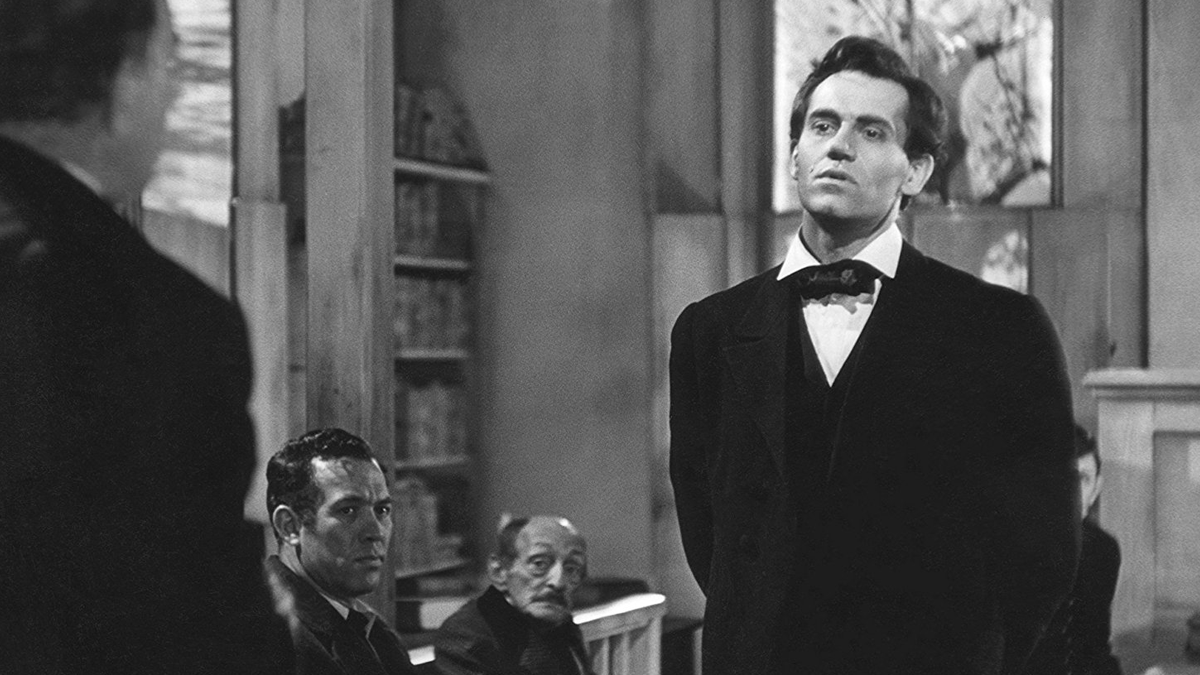
Down These Mean Streets (Old Time Radio Detectives)
Episode 630 - Investigations for Independence Day (Academy Award, Cavalcade of America, The Whistler, & Johnny Dollar)
02:05:19
With July 4th right around the corner, we’ve got a quartet of radio mysteries involving great figures and moments of American history. Henry Fonda recreates his role of Young Mr. Lincoln in a radio version of the classic film on Academy Award...
Loading summary
Transcript1 lines
- [00:00]
A
Get this and get it straight. Crime is a sucker's road and those who travel it wind up in the gut of the prison of the grave. The story you are about to hear is true. Only the names have been changed to protect the innocent. The Adventures of Sam Spade Detective the Adventures of the Saint starring Vincent Price. Bob Bailey in the exciting adventures of the man with the action packed expense account, America's fabulous freelance insurance investigator. Yours truly, Johnny Doll. Hello and welcome to down these Mean Streets with more old time radio detectives and crime solvers. This Friday is the 4th of July. It's hard to believe summer really is flying by. To celebrate America's upcoming birthday, I've lined up four old time radio mysteries, each involving major figures or events from our country's history. First, Henry Fonda recreates his screen role in a radio adaptation of John Ford's classic film Young Mr. Lincoln. The story of Honest Abe in his days as a lawyer and his defense of a pair of brothers charged with murder was presented on Academy Award on CBS on July 10, 1946. Fonda is joined by his film co star Ward Bond. And in this courtroom mystery with the future president out to clear his clients and catch the real killer. Next up is a story of Alan Pinkerton, the celebrated spy and detective who created the national detective agency that bears his name. Pinkerton rose to prominence for his role in thwarting a plot to assassinate Abraham Lincoln en route to his first inauguration. Now whether or not Lincoln was actually in any danger is uncertain, but Pinkerton made a name for himself off of the story. We'll hear Lee Bowman as the great detective in an episode from the Cavalcade of America originally aired on NBC on November 18, 1946. We heard an episode of this long running anthology show last week with Basil Rathbone as future U.S. president John Adams. Today we're joining Pinkerton as he investigates a year old case of bank robbery and murder. Along with Lee Bowman, we'll hear Bill Johnstone and Wally Mayer, the stars of the great radio police procedural the Lineup. Speaking of Wally Mayer, he stars in our third show today, Letters from Aaron Burr, a story by the Whistler that originally aired on CBS on November 20, 1949. The letters from the notorious vice president and other historical correspondence are phonies smuggled out of prison after they're penned behind bars by a master forger. Wally Mayer plays a recently released con who discovers the scheme and elbows his way in for a piece of the action. And finally, we'll hear Bob Bailey as America's fabulous freelance insurance investigator in the Meek Memorial matter from yours truly, Johnny Dollar. We'll hear an Armed Forces Radio Service rebroadcast of the show from March 3, 1957. Johnny's on the case when an original copy of Lincoln's Gettysburg Address is stolen. I'm afraid we don't have any fireworks, but we'll be celebrating Fourth of July with four radio mysteries beginning with Young Mr. Lincoln right after these messages. When a cloud bursts and fresh, clean rain falls on a grove of rich green pine, it's mmm, so nice. And now that same clean scent of pine is in new pine scented Lysol. Right now, the one and only genuine Lysol brand disinfectant comes in a new pine scent. It disinfects, deodorizes as nothing else does, kills diseased germs on contact. In laboratory tests, Lysol's anti germ action kept working for seven full days. A bottle costs as little as 29 cents. And it's so easy to use. Just add new pine scented Lysol to your suds when you clean in bathroom, kitchen, nursery, sick room. Use pine scented Lysol because Lysol deep cleans make your home pine sweet. Lysol clean. You can still get regular Lysol too. Your best bet for hot breakfast is Quaker Oats. The giant of the cereals is Quaker Oats. Delicious, nutritious, makes you feel ambitious. The giant of the cereals is Quaker Oats. Yes, if you want to be a star in sports and school activities, make your hot cereal Quaker Oats. Cause Quaker Oats helps grow the stars of the future. You get more growth, more endurance from oatmeal than from any other whole grain cereal. Remember, Quaker and Mother's Oats are the same. Inflation can work the same way in peace that it did in war. Prices rise when goods are scarce and people have money. Instead of making your dollars shrink by spending them needlessly when prices are high, why not make them grow with interest by investing in United States Savings Bonds? Here's the way it works. $75 invested now each month in US savings e bonds will in 10 years turn into an income of $100 each month for as long a period as you bought the bond. It's as simple and as sure as that and easiest. When you use the payroll Savings plan without missing a dollar, you'll be amazed how savings grow the e Bond Way. $4 for every three. Next week will mark national holidays for two great countries. On July 1, Canada commemorates the 84th anniversary of of its founding as a Nation. And on July 4th, the United States celebrates the 175th anniversary of the Declaration of Independence. May we all recognize the importance of these two great days in our lives and make continuation of our freedoms a must for ourselves, our children and the generations to follow. I dedicate this program to the fight against crime. Not merely crimes of violence and crimes of dishonesty, but but crimes of intolerance, discrimination and bad citizenship. Crimes against America. The House of Squibb presents Academy Award. Every week, Squib brings you Hollywood's finest. The great picture plays, the great actors and actresses, techniques and skills chosen from the honor roll of those who have won or been nominated for the famous golden Oscar of the Academy of Motion Picture Arts and science. And now, E.R. squibbin Sons, manufacturing chemist of the medical profession since 1858. Bring you the distinguished actor Henry Fonda in Young Mr. Lincoln with Ward Bond. Young Mr. Lincoln as best original story of the year was nominated for the 1939 Academy Award. Mr. Fonda, as best Actor of the year was nominated for the 1940 Academy Award. This is a story about a long, lean lawyer named Abraham Lincoln. A young man full of droll stories and deep, quick laughter. A story of Abe Lincoln. In Springfield, Illinois, a fine summer afternoon at the fair is over. The barbecue fires glow red now in the darkness. And families are rounding up their children and seeking their wagons for the lazy ride back to town. Suddenly, a woman screams. A rush of running men. Blood spilled on a dark meadow. The hushed whisper of murder. The pioneer mother standing stock against the breeze, staring at her two sons, two boys. Suddenly, strangers standing over the body of a third lying stabbed. Death had come under the dark skies over Illinois. He's dead. Who done it? Them fellers, sheriff. Them Clay brothers. They was fighting with this here scrub white and they cut him. There's the knife they done it with. Which one of you Clay boys done this? Me. No, me. I want the truth now. Which one of you cut him? I did. That ain't so. I done it, I tell you. It was me he was going for, Adam. With a gun. One of yours? Lying. Now, which one is it? All right. Anybody see it? I reckon I did. Who are you? Their mother. Well, which one was it? I'm not saying. It don't make no difference anyhow. Under the law, they're both equally guilty. Come on, now. You're both under arrest. Palmer Cass, I appoint you temporary deputy. Help me get these two fellas down to the jail. Come on, you two, let's go. Who are these fellows? Never saw Them around here before strangers around here. Folks ain't got no right to come to town and start cutting. Two of them jumping for a scrubbing, stabbing them in the back. I said they ought to have her touch a rope. Rope? Yes, sir. That's the medicine for them. Hey, come on, fellas. Get a rope and hurry. No, no. They can't do that to my boys. They can't do that to my boys. Come on, ma' am, we have to hurry. Those fellas mean what they say about lynching your sons. Leave me alone. What do you want? Who are you? My name's Lincoln, ma' am. Abe Lincoln. I'm your lawyer, ma' am. Come on, we better hurry and get down to that jail. Open the jail door, Sheriff. Let me out of here. I can't, Palmer. They've got a break in. Don't be a fool. They'll get us, too. Can't help you. They'll have to bust in first. We're going to get those murders, Sheriff. They ain't got a chance. I can't open the door, boys. The law's got to protect these Clay fellas and give them a trial. Blow up the jail. Get powder. Powder. Open up, Sheriff. Get you. Hold on, man. Hold on and listen to me. Get out of our way. They can wear bust and Jing. I said listen to me and fight. Jing you will. No, we ain't gonna listen. That's better. Now, gentlemen, I'm not here to make any speeches. All I got to say is I can lick any man here hands down. We know you, Abe Lincoln. Come on, man, let's get him. Hold on, Buck. I thought I'd find that big mouth of yours around here telling people what to do. I'm Buck, all right. A big buck of this lick. Then come out and whet your horns. What's holding you? Maybe some of you other gentlemen like to take Buck's place. Me? I can lick you myself. Is that a fact, neighbor, or just your notion? Get away from there, Lincoln, or we'll give her to you, too. Well, well, if it's not Bill Gentry. First time I ever heard of you trying to break into jail, Bill. I thought you were too busy trying to break out. Shut up. Come on, let's get him. Howdy, Clarence. Last time I saw you, you were heading for the rock pile for beating up your wife. Nah. Gentlemen, all joking aside, let's look at this matter from my side. You all know I'm just a fresh lawyer trying to get ahead. But some of you boys act like you want to do me out of my first clients. Go ahead, Abe. Go on and talk. I'm not saying you fellas aren't right. Maybe these Clay boys do deserve to hang. But with me handling their case, it looks like you won't have much to worry on that score. All I ask is to have it done with some legal pomp and show. Yeah, but what about our side of it? We've been to a heap of trouble not to have at least one hanging. Sure you have. And if these boys had more than one life, I'd say go ahead. A little hanging mightn't do them any harm. But the sort of hanging you boys had given would be so permanent. The trouble is that when men start taking the law into their own hands, they're just as apt in the confusion and fun to hang somebody who's not a murderer as somebody who is. Then, first thing you know, they're hanging one another from pure devilment till it gets to the place a man can't pass a tree or look at a rope without feeling uneasy. We seem to lose our heads at such times as this and do things together we'd be mighty ashamed to do by ourselves. For instance, you take Jeremiah Carter yonder. There's not a more decent, God fearing man in Springfield than Jeremiah Carter. And I wouldn't be surprised if when he goes home, he takes down a certain book and looks into it. Maybe he'll just happen to hit on these words. Blessed are the merciful, for they shall obtain mercy. That's all I got to say, friends. Good night. Mr. Lincoln? Yes? Ms. Clay ain't one to talk much. But after what you just done for us tonight. Saving my boys from them. Them. Now, now, save your thanks. Here, I'll give you a hand with those mules of yours. Whoa. Of course, you know, I'm just sort of a jack leg lawyer. That much experience at this sort of business. But as long as you want me, I'll do the best I can. Still, maybe you'd feel a lot safer if my partner was here. Or you could get ahold of Steve Douglas. I hear that silver tongue of his can be mighty useful with a jury. We don't know nothing about lawyers and things like that. Well, I'll do the best I can. You know, my mother, Nancy Hanks, would have been just about your age if she'd lived. I have an idea she'd been a whole lot like you, too. A whole lot like you, ma' am. Thank you, Abigail. Clay, which one of your boys killed Scrub White? I can't tell you I can't. But I'm your lawyer. You can trust me. I don't want to scare you, but we've got a fight on our hands. I gotta know what I'm doing. I can't tell you, Mr. Lincoln. It'd be like choosing between em. What do you suppose made em both say they done it? Matt said it because he's the oldest. And Adam said it because Matt's got a wife and a baby. I reckon there's a lot of people who'd like to see those boys hang. I know, but I just can't. No, I reckon you can't. Take it easy riding home, Abigail. And watch out for ruts. Get at mules. Order. Order. Nicor, I'm a cast. Take the stand. You solemnly swear to tell the truth, the whole truth and nothing but the truth to help you God? I do. What's your name? J. Palmer Cass. You knew scrub White? Sure, Mr. Felder. I knew him the day he was killed. You'd been with him all day. Do you recall where and under what circumstances you first saw the defendants? Well, we run into them at the pie contest. Scrub kind of took a fancy to one of their gals who and her fellow got sore. They followed us over near the tug of war and wanted to fight. What did Scrub White do then? He just laughed and asked them what they wanted to fight with. Knives, pistols or fists. How did he ask that? Jokingly? Yeah. He was laughing all the time. Tell the jury what happened then. Well, Scrubb and me had a little argument. He went off by himself. Next thing I heard. I knew I heard a shot and some shouting, and I run back and found Scrub lying on the ground with those two fellows standing over him. And the knife was on the ground between them? Yes, sir. Where was Scrub's pistol? In his holster. So it went off then, while he was trying to get it out of his holster? Yes, sir. Yes, it did. Thank you. Your witness. Mr. Lincoln, what's the J stand for in your name? John. Then why the J. Palmer Cass? Why not John P. Cass? Well, anything the matter with John P. No. Has J. Palmer Cass anything to conceal? No. And what do you part your name in the middle for? I got a right to call myself anything I please. All right. But if you don't mind, I'll just call you jackass. Arg. Your Honor, I object to this ridiculous line of questioning. Mr. Lincoln's clownishness may win him a laugh from his friends, but I assure you his entire game of buffoonery is lost. On this jury. Stick to the point, Mr. Lincoln. I'll do my best, your honor. Now, J. Palmer. Cass. You say you and Scrub White had a little argument. What was this argument about? I'd rather not say. Oh, you'd rather not say. Well, J. Palmer, suppose I told you I'd rather you did say. All right, if you want to know. We were arguing about politics. That's something new to argue about. What kind of politics? Well, I've learned different now. But I said that I figured that you had more sense about politics than Steve Douglas. And Scrub, he got mad as a wet hen and said you didn't. Order. Order. Looks like I scratched up a snake. Then I reckon we can allow all you said to go in. Step down. Your honor, I'd like to call Abigail Clay back to the stand. Abigail Clay. You love your boys, don't you, Mrs. Clay? Who'd like to save their lives if you could? You were present the night Scrub White was killed, weren't you? I saw him fight. Don't be afraid of me. I'm not a bloodthirsty man. I'm prepared to offer you the life of one of your sons. Provided you tell us which of your boys stabbed and killed Scrub White. Order. Order. I can't. Mrs. Clay, you believe in God, don't you? Do you believe that if you take a solemn oath in the sight of God and on his holy Bible. You are bound to speak the truth? Yes. But I can't tell you. I can't. Your honor, I protest against the prosecution's attempt to force this woman to decide which of her two sons will live and will die. I have seen Abigail Clay exactly three times in my life, gentlemen. Yet I know everything there is to know about her. I know her because I've seen hundreds of women just like her. Working in the fields, suffering over some sick and helpless child. Women who say little and do much. Who ask nothing and give all. And I tell you that such a woman would never answer the question that's been put to her here. Never. I'd rather, Mrs. Clay, see both your sons taken from you. Than to see you break your heart by saving one at the expense of the other. So don't tell them. Order. Order. May it please the court to spare the jury any more of these harrowing outbursts. The state will withdraw the question. No doubt Mr. Lincoln will be glad to hear that Mrs. Clay was not the only eyewitness to the murder of Scrub white. Order. Recall Mr. J. Palmer Cass to the stand. J. Palmer Cass. Mr. Cass, where were you at the time Scrub White was killed? I was about. Well, a hundred yards away, I reckon. You saw the killing with your own eyes? Yes, sir, I saw it. Why didn't you tell us this before? Nobody asked me. Have you told anybody else about this? No, sir. Why not? Well, I didn't want to help get anybody hung. And why do you tell us now? Cause it looks to me like both of them's gonna get hung. How could you see so clearly from a distance of a hundred yards at 11 o' clock at night? It was moon bright. I see moon bright. And you clearly saw which boy pulled the knife? Yes, sir. The defendants will stand up. Now. Tell us, Mr. Cass, which defendant stabbed and killed Scrub White? That one. The big one. Adam Clay. Your Honor, the state rest. Quiet. Quiet. This cart is adjourned until 10 tomorrow morning. Take the prisoners away. In just a moment you will hear the second part of Academy Award. This is the time of year when a vacation tan helps to focus more attention on your smile. And that's one reason why Squib Dental Cream is an important part of so many well made vacation plans. For this quality dentifrice, a member of the great family of Squib products. Helps to uncover all the natural brilliance of your smile. That's because the polishing agent in Squib Dental Cream is one of the safest, softest, yet most effective known to dental science. And you will like Squib Dental Cream for its refreshing flavor. Cool as a shady bed of mint. Its refreshing action that leaves your teeth and gums feeling gloriously clean. For Squib Dental Cream is three ways refreshing. You can taste, feel and see the refreshing difference. Something to remember when you're buying a dentifress. Ask for Squib Dental Cream. Taste, feel and see the refreshing difference. Use Squib Dental Cream. Before continuing with part two of Young Mr. Lincoln. We want to thank 20th Century Fox for making this story available. Henry Fonda and Ward Bond will soon be seen in the 20th Century Fox production My Darling Clementine. And now, the House of Squibb presents part two of Academy Awards. Starring Henry Fonda in Young Mr. Lincoln with War Bond. Mighty pretty music you're playing there, Mr. Lincoln. Why, hello, Judge. Mighty pleasant to see you this evening. Doggone it, Lincoln, this is against all my principles. But I want to talk to you as an older man. Go ahead, Judge, I'm listening. What I mean to say, dad, blame it is. Don't you think you ought to get some older lawyer with more experience to help you out tomorrow? Are you Suggesting I retired, Judge, or just take a back seat? I'm just suggesting that if you want me to, I'll speak to Steve Douglas. I'm sorry, Judge, but I'm one of those fellows who don't believe in swapping horses in the middle of the stream. Then at least change your plea. Accept sentence for your guilty client. And I'll guarantee that the state will be lenient with the other. That's a mighty tempting offer. Mighty tempting. But I'm afraid it won't work. But, man, you'll send both defendants to the Gallus as sure as the moon sets. Maybe. But just the same, that's the way it's got to be. Good night, Judge. Harder. Harder in the cartoon. Your Honor, the defense would like at this time to cross examine the last witness for the state. J. Palmer Cass. J. Palmer Cass, take the stand. Mr. Cass, yesterday you identified Adam Clay as the killer of Scrub White. That's right. He did it. You're sure of that? Sure I'm sure. Well, I just wanted to know. Now, you say you were about 100 yards from the scene of the fight? Just about. Are you familiar with the land over there? Yes, sir. What's the nature of it? Well, there's a little clearing. Any trees? A few. Where are they? Between the clearing and the fairground. And you saw through these trees? No, I was already through the trees when I saw them fighting. Oh, I see. I suppose the clearing was lit up by light from the barbecue fires. No, sir. Then how'd you see so well? I told you. It was moon bright. Moon bright? If it hadn't been moon bright, you couldn't have seen 100 yards, could you? No, sir. But you did see it. I told you I did. And then the only reason you're telling us this now. Is that you feel sorry for one of the defendants. I don't want to see them both get hung. Well, I guess you wouldn't lie about a thing like that. Step down. Oh, Mr. Cass, I forgot. There's just one more question I'd like to ask you. You needn't bother to come all the way back to the stand, Cass. What'd you have against Scrub White? Nothing. Then what'd you kill him for? I don't know what you're talking. Oh, yes, you do. Look at this book. It's Goudy's Almanac. Go on, look at it. Look at page 12. The night of the murder. See what it says about the moon? That the moon was only in its first quarter that night and set at 10:21:40 minutes before the killing. So it couldn't have been moon bright, could it? Order. Order. You lied, didn't you, Cass? You weren't trying to save these boys necks, were you? You were trying to save your own, weren't you? Well, come on. Weren't you? No. No. Then why'd you lie? I didn't lie. You did lie. That's just as plain as a nose on your face. But why? Come on, tell us. What made you tell a lie about that moonlight? I don't know what you're talking about. Then I'll tell you what I'm talking about. You lied because you and Scrub White had a fight. But it wasn't about politics. You never mentioned politics. That was your first lie, wasn't it? It was politics. It was fighting about something else. Maybe it was money. You owed him money or he owed you. No. No. Maybe he was getting a little graft here and there and you wanted to be in on it. No, sir. Well, what was it? Come on. It was one of those things. Something that made you want to get rid of Scrub. You're crazy. He was my friend. Maybe. But just the same you lied. Now why? Why did you say you saw what happened when you didn't see it? All right, I'll tell you what happened. You heard a row. You saw a fight starting. And you ran over there and you saw that Scrub was still living. And right there on the ground, you saw the knife that Matt Clay dropped. And you bent down and picked up the knife. And your body hid what you were doing. And then you stabbed him. You stabbed him in the back and killed him. No. These two boys, Matt and Adam, each knew he didn't do it. And therefore each thought the other did. And their mother, Abigail, she saw the knife in Matt's hand. But she couldn't say so without putting a rope around his neck. But you. You killed him. And you lied. And your lie tripped you up. Your crude, cold blooded lie that was gonna cover up a crime you'd committed yourself. The lie you can't deny, now, can you? Answer me. You did kill him, didn't you? Didn't you? I tell you, I didn't mean to. I'd been drinking and we had a little fight. But I didn't mean to. Scrub. Scrub was my friend. I tell you, I only. You're a witness, Mr. Felder. Get your hands off of me. Let me go. I didn't mean to kill him. Well, I recognize there's nothing holding you people now. No, sir. There sure ain't but you boys better not go around thinking you killed anybody again. You'll get yourselves in trouble. Goodbye, Matt. Take care of yourself. Yes, sir. I'm a gonna. Mr. Lincoln. Goodbye, Abigail. We ain't got much, but after what you done. Why, thank you, ma' am. I hope all my clients will pay me as fast as you just did. Now, be careful, them mules going home. Watch out for ruts. Get at mules. Go on. Mr. Waker. Oh, there you are, Abe. I had a heck of a time finding you. Oh, evening, Judge. Abe, I wanted to tell you I thought you pulled a brilliant piece of strategy today. And I'm sorry about trying to talk you into taking on an older lawyer, but I didn't know you had that ace up your sleeve. Nothing to worry about, Judge. I might have done the same thing if I earned your boots. How did you happen to hit on Cass as the guilty one? Well, Judge, I. I got to thinking about Cass when he insisted on parting his name in the middle. Struck me he might have reasons for wanting to be secretive about himself. And when I found a copy of the almanac, that cinched it. Where are you heading? Lincoln. Oh, just thought I'd walk up the hill a piece, Judge. The boys will be looking for you. What'll I tell them? Oh, just tell them I got the smell of the country in my nose. I think I'll go on a spell. From Sam. During the years when young Lincoln was practicing law, another young American was practicing medicine with the same hatred for all that was slipshod and untrustworthy. The young man was Dr. Edward R. Squibb. And he fought single handed to supply the medical world with something difficult to find and urgently needed. Drugs of unfailing uniformity, purity, efficacy. From his tiny laboratory, the beginning of the great house of Squibbing came not only the first uniformly safe, pure ether, but something even rarer. A new way of working in the production of medicines. A quest for perfection that was to continue unceasingly. It was a hope fulfilled for other doctors and surgeons of Dr. Squibb's own time. We look upon your cause as our cause. They wrote your enterprises as the inauguration of a new era. And yourself as the echo exponent of the great principles of truth and humanity and array against dishonest stupidity. So began that continuing service in the cause of human health which for generation after generation has made Squib a name you can trust. Next Wednesday, and great picture. The House of Squibb will present Academy Awards. Starring Douglas Fairbanks, Jr. And Virginia Bruce in the Prisoner of Zenda. Today's performance of young Mr. Lincoln was written for radio by Frank Wilson with an original musical score composed and conducted by Leith Steven. Our producer director is Dee Engelbach. Henry Fonda appeared through the. Courtesy of RKO producers of Till the End of Time. This is Hugh Brundage bidding you good night until next Wednesday at the same time when you're invited to listen again to Academy Award presented by the House of Squibb, a name you can trust. This is cbs, the Columbia broadcaster. Tonight, the dupont Company brings you the Pinkerton man, starring Lee Bowman on the Cavalcade of America. But first, here is Gain Whitman. Most accidents happen right in the home. Watch out for boiling water in the kitchen. Watch that electric light switch when you're taking a bath. Watch that dark flight of stairs. And watch out for rugs and carpets that may trip you or skid out from under you. Dupont Rug Anchor is a sponge rubber underlay designed to make rugs stay put. It makes them cling like a leech, no matter how slippery floors may be. And it adds to their life because it keeps dirt from working up from the floor into the back of the rug. Rug Anchor is one of the DuPont company's better things for better living through chemistry. The Cavalcade of America. America. America means skyscrapers and haylofts, the crack of a pioneer's glintlock and the sound of the river machine. The outline of a church steeple against the midnight sky. America is your story. America is you and everyone you know. Tonight we present Lee Bowman in the Pinkerton man on the Dupont Cavalcade of America. It is the year 1859. In one of the coaches of a train bound for Columbia, Tennessee, a man sits looking calmly at the countryside. He's dressed quietly and you wouldn't look twice at him because. Well, because he looks like a hundred thousand other men. You've seen his name, Alan Pinkerton, America's greatest detective. As he sits, another man carrying what appears to be a sample case comes into the coach, looks around for a moment and then. Excuse me, is this seat taken? What? Oh, no, no, no. Help yourself. Thanks. I hope you don't mind. No seats on the shady side of the coach. Oh, it's all right. Don't like to sit in the sun myself. Thanks. Oh, I'm sorry. I always have trouble with my sample case. I see. What is it this time, Collins? Ties, socks, handkerchiefs? What's it all about, chief? Where'd you get on last stop? Took a local and caught this train from there. Good Collins, I'm going through with a case. Yeah, that's for the figure, Chief. All right. What's my job? I don't know yet, but I'll have some use for you. Yeah, but Mr. Pinkett. In you, Quillen. J.B. quillen. What? Well, that's my name. Get it? Oh, yeah. All right. A businessman. Retired. Health reasons good enough. Mr. Quillen, you stay at the hotel in Colombia. And you? A boarding house, I think. For how long? Well, I don't know. Depends on how tough this will be. Plenty tough, Chief. Cases a year old. Trails as cold as a dog's nose. Yeah, I know. I'll dig around until I find a lead. What kind of a lead? In a case that's growing a beard. Oh, that's my job, Collins. Now, when we get to Columbia, you get off first. Go directly to the hotel, sit tight, and I'll contact you. And that's the story, Collins. Don't sound good to me, Chief. Not a lead. Not a single lead. Well, a bank robbery and murder. That happened over a year ago. What can you expect? I don't know. Something. Anything. There must be something. Suspects? Four. The president of the bank gave me the names. Collins. I've eliminated three of those people. Why? There's nothing to tie him in. In the first place, all the local police had to go on was suspicion. That's not much. But how about the fourth suspect, a man named Samuel Arthur. Anything on him? No, nothing. Nothing at all. But look, if Arthur's guilty, if you think he's the one, you got to have something. What about the money from the robbery? Not a penny of it shown up. That's why I believe the job was pulled by someone in this town. Someone who was afraid to leave. Someone who killed the watchman, Walters, and then got panicky. Panicky? A murderer who's played doggo for a year isn't exactly panicky. He's smart. Waiting for the time he can leave. Collins, I'm changing boarding houses. Cooking bad at the one you're in now? No, the hunting's bad. Samuel Arthur stays at Mrs. Holly's boarding house. Here. Here's the address. All right, what's next? I'm going to find one lead, one clue that'll give me a toehold. I'll see you later. Your last boo gives me me a triple jump and king me. Well, Mr. Evans, you win again. Yes, sir. I'm afraid I'm still the checker champion. Miss Holly's Boarding House. No question about that. I resigned. Care for another one, Mr. Quillen? It's only 8:00 o'clock. No, no, no, thank you, sir. Tomorrow night, perhaps. Fine, fine. Well, think I'll turn in then. Oh, there you are. Have you finished your game, gentlemen? Yep. Yep, and I'm turning in. You keep Mr. Quillen company, Edna. Make him feel right at home here. Well, how long are you planning to stay, Mr. Quillen? Oh, that. That all depends. On what, Mr. Quillen? Well, on. On my health. What is your ailment? My ailment? Well, it. It started a little over a year ago and I. Yes? Wasn't that Mr. Arthur who went past the door then? Well, I didn't see, but I guess it was. Oh, well, excuse me, I. I'm rather tired myself. I think I'll turn in too. Oh, well, maybe we can have a little talk tomorrow night. Oh, that will be delightful, Miss Oglethorpe. Good night. Good night, Mr. Grillon. And. And sleep. Night. Huh? Oh. Oh, thank you. Thank you. Hello. Oh, hello. Sorry I startled you, Mr. Arthur. Not at all, Mr. Quillen. Beautiful evening outside. Yes. Yes, it is. I. I was just thinking of going for a walk. Care to come along? Well, I'm a little tired and I. Perhaps just around the block. No, No, I don't think so. Maybe tomorrow evening. All right. Glad to. Glad to. Yes? Oh, nothing. Good night, Mr. Quillen. Good night, Mr. Arthur. Oh, Mr. Quillen. Yes? Are you planning on going into business down here? A business? No, no, I'm retired. Oh. Well, then you'll be with us for quite a while. Maybe. I. I don't like to stay in one place very long, Mr. Arthur. Like a change of scenery once in a while. I see. Well, I'll see you tomorrow. Good night. Good night, Mr. Arthur. Why, Mr. Krillin, I. I thought you'd gone upstairs. Yes. Well, I met Mr. Arthur. Stopped for a little chat with him. He's very nice, isn't he? Oh, yes, very nice. We're all so fond of him. Has. Has he been living here long? No, I. I took about five months. Oh. What does Mr. Evans do for a living? Nothing. Nothing at all. I think he came into a little money some time ago. Oh, but there I. I mustn't gossip, must I? Well, no harm in that. No. Well, Mr. Arthur doesn't work either. Oh, Retired. That is. Hard to say, Mr. Quillen. I suppose he had some money saved up in. Oh, there I go again. It's all right. Well, good night. I'll see you tomorrow. Of course, we must have a longer talk sometime. Yes, sir. What can I do for you? Do you have cigars? Yes, sir. Any special kind you want. Well, let's see. Two of these, please. Yes. Well, nice store you've got here. Thank you. Yeah, I must keep you pretty busy running it. Well, kinda could use some help. I'll bet you could. Don't. Don't you have a clerk? Well, not now. I had one, but I had to let him go. He got to talking sassy to the trade, losing his temper. Oh, well, no wonder you let him go. Yep. I couldn't afford to have him give in trouble like that. Funny thing, too. All of a sudden he up and began acting like he was crazy. Well, now, that's funny. I wonder what makes people do that. You know, I had a cousin like that, nice as could be. Then one day, just like that, began acting funny. Same as Sam Arthur. Too bad. I like Sam. Everybody did. Yeah, that's the way it goes. Well, I'll see you again. Drop in anytime. Glad to have you. Thanks. Oh, excuse me. Oh, hello there. Oh, how are you? Fine. You got a match? What? Sure thing. Here you are. Be at your hotel in ten minutes. All right. I've learned a couple of things that might interest you. And he was fired from his job because he got touchy and irritable. I see. Well, I learned he's been keeping to himself. Won't have a thing to do with anybody. Everybody seemed to like him before, though. Collins, suppose Sam Arthur has something on his mind, on his conscience? I suppose he has. What can we do about it? Find out what it is. How? If he's guilty, which we don't know, he's kept it to himself for a year now. But that sudden break from his old life. Collins, I'm convinced his conscience is working on him. If it didn't make him break in a year, it won't break him now. Yeah, I know that. We've got to work on him. But you can't do that without getting him suspicious. Start asking a guy like that some questions and he'd shut up like a clam. You know that, Chief. We've had him before. Conscience is a funny thing, Collins. Shows the instinct for self preservation. Just let Sam Arthur get the slightest hint you're after him and you won't be able to touch him with a ten foot pole. Look, I've got a job for you. You'll have to go about it quietly, too. All right, what is it? Find out all you can. But I did. There's nothing about Sam Arthur you don't know already. I'm not talking about him. I want you to find out all you can about Ben Walters. Walters? But he's the murdered bank watchman. I know it. I've known that for a long time, Collins. Oh, yeah. I'm sorry, all right. But what good's it gonna do? You ever hear of psychology? Psychology? Never heard of it. You will. We'll use that and a little American ingenuity. Great combination, Collins. Now, go to it. You are sure of all these facts? Positive, chief. Oh, what's. What's this about the perfume? Well, not exactly perfume. It was after Shaving Sandy. He was crazy about the stuff. Use it all the time. And he. He talked like this. Mr. Quillen, this is the way I used to talk. Yeah, that's the way. You should have been an actor, Collins. I could have been a good one. You're going to be, huh? I've got an idea. Now, maybe it'll work. It's never been tried before. I don't get you, Chief. You will, Collins. Get a bottle of the scent you were talking about. Can you do it? Sure. But what's the idea? Psychology. Now, here's what I want you to do. I'll see that Arthur doesn't go near his room until after you finish the job I want you to do. Mr. Arthur. Huh? Oh, hello, Quillen. You want some company on your walk? Well, I wasn't going very far. Just out for breath of the air. Well, so was I. Confidentially, Ms. Oglethorpe was waiting for me. I see. She likes to talk. That she does. She doesn't care what she talks about, either. No, just as long as she talks. You sleep well last night? Sleep well? Of course. Why did you ask that? I was so hot. I was restless all night. I heard you, and I thought you were restless, too. Almost dropped over to see you, so I. I wasn't restless. No? Well, I guess I heard something else. Heard something? What? Oh, nothing. Nothing. My imagination, I guess. But since you're just next door to me, I thought it was you. Well, what are you talking about? Nothing. Nothing at all. You see, I. I don't sleep very well. Probably one of those half awake, half asleep dreams. Oh. What? What was it you heard? Oh, some sort of mumbling, like a person talking in his sleep. It wasn't I. No, no, probably not. No, I. I've never talked in my sleep. Well, I. I didn't say you did. I was just mentioning it. Forget it. It was more than likely it was me. Well, I've. I've got to leave you here. Oh, that's too bad. Yes, I. I've got to get something at the store. Well, I'll walk with you. Oh, please. I'm going to stop and see a friend. Oh, well, then I won't trail along then. Good night. Good night, Quillin. I'll see you tomorrow. That was pretty smart of you, chief. The trailers, huh, Collins? Sure. Now what? How'd you do back in his room? Oh, fine. No trouble getting in at all. And locked in the connecting door between his room and yours was a cinch. All right, let's get back before he does. I'll go first. I'll let you in when the coast is clear. You are listening to Lee Bowman in the Pinkerton man on the Cavalcade of America sponsored by the Dupont Company, maker of better things for better living through chemistry. As the second part of our story opens, Alan Pinkerton is trying to break a year old murder and rob case in Columbia, Tennessee. Certain that a man named Sam Arthur is guilty. Pinkerton is working on him. And Pinkerton's plan seems to be succeeding. For he and Collins listen to an argument going on outside his room. Really, Ms. Arthur's absolutely ridiculous. I know what I'm talking about, Mrs. Holly. And don't shout at me. I'm not deaf. And I don't like your insinuations that someone in this house was in your room. Well, someone was, I tell you. Someone was in my room. Dora was in to clean. Dora doesn't have to go into my dresser. Now you listen to me. Dora's been with me for 15 years. She's a good girl. I told you somebody was in my room. I told you it was only Dora. If you don't like things the way they are around here, Ms. Arthur, you can leave now. Tonight. This minute. I. Oh, never mind. Forget what I said. Good night. I believe it's starting to work, Collins. Maybe you're right, chief. Yes, I think so. But it's not enough yet. Hey, where you going? Stay here. I'm going to see him now. Oh, who's there? Willen. Can I come in before Just. Just to talk. Well, just a minute. What do you want? Well, I. I just heard you and Mrs. Holly thought I could do something. Anything wrong? Oh, it's Dora. I know she was in my dresser. Oh, really? How can you be sure? Well, come here. Come here. Here. This drawer. Anything disturbed? No, no, but I know someone was in this drawer. I don't know how you can be so sure if nothing's out of place. Well, don't you. Don't you smell anything Smell anything? What? Well, yes, A peculiar odor, like perfume. No, nothing. What? Get closer Now. I'm sorry, Arthur, but I'm afraid you've got too good an imagination. It's not my imagination, I tell you. There's some kind of perfume been spilled in that. In my drawer there. It must be your nerves, Arthur, I tell you, I can't smell a thing. You're. You're sure of that? Look, why don't we get someone else? Evans. Miss Ogle. No, no, please. Never. Never mind. Well, but if you say it's here, I. I could be wrong, you know. Now, Evans, are. I said no. I don't want them in here. Well, all right. That's. It's all right. I guess it was my imagination. Sure, it's funny, but, you know, nerves and imagination can play tricks on a man, especially when he's worried. Who. Who's there? Who's that? Just me, Mr. Rocker. Quillen. Oh. Oh, you. Why didn't you answer the first time? Well, it. It's after 2 in the morning. I. I didn't want to speak loudly. Too hot to sleep, eh? For me, too. Yes, I. I came down to the veranda to get some air. It's not too cool here either. Sultry. It's one of those nights you read about. You know, the. The kind that makes you feel something's going to happen. Still, quiet air, the heavy humidity. Even the crickets are quiet. I. You were going to say something? No, nothing. Just look at that sky. Not a star showing. No breeze. Nothing. Just deadly quiet. I can see for myself. Oh, sorry. Excuse me. Your. Your handkerchief. A what? Handkerchief. What about it? That's where it comes from. You use it. You use it. Use what? What are you talking about? That scent. That's where it came from. It wasn't in my room. It was yours. Scent on my handkerchief. Oh, no. Absolutely not. Never use scent. I can't stand this. It's coming from your handkerchief now. I smelled it when you pulled it out. It wasn't here before. Now, look here, Arthur. I never use scent. I don't smell anything. No. No. I don't believe in things. Things like that. You don't believe in things like what? Man, your nerves are bad. It's not my nerves, I tell you. It's not my nerves. You ready, Collins? Yeah. Listen to him pacing back and forth. Get in the closet. You know what to say. Right. Arthur. Sam. Arthur, can you hear me? Sam. What? Sam, this is Walter. Talk to me, Sam. Tell me why you did it. Sam. Who. Who's that. Sam, why didn't you talk to me? Tell me why you killed me. Sam, please talk to me. Arthur, what the devil's the idea of bursting into my room? Who are you talking to? Talking? Me? You're crazy. There's somebody in here with you. There's somebody in that closet. Oh, you are crazy. Why should anyone be in there? You were talking to someone. All right, all right. So I was talking to someone. Someone in that closet. Go ahead and look in. See who it was. Well, go on, satisfy yourself. Or do you want me to open it for you? No, no, please. Please don't open the door. Come on out, Collins. He's ready to make a break for it. He almost looked in. No, no, he didn't dare. He was afraid he wouldn't see anyone. Will, I. Hey, he's running away. Yes, I thought he would. All right, the next train doesn't leave Columbia for an hour. And in that hour we've got to hire two men and plant them on that train with Arthur. Excuse me. Is this c. What? Why, Arthur, what are you doing on this train? Well, this is fine. I thought I'd have to ride this train alone. I got a wire suddenly business up north. Oh, but you. Where are you going? Well, I, I. I had a. In New Jersey I haven't seen in a long time, and I. Oh, you made up your mind suddenly, didn't you? Yes, Yes, I was worried about her. Oh, that accounts for your nerves, eh? Worry will do that to a man. Oh, yes, Yes, I was worried about her. I see. Well, this is going to be pleasant. Still hot, isn't it? I thought. Well, what's the matter? Your handkerchief. My handkerchief? What's the matter with it? That perfume I smell. You do use it. What are you talking about? There's no scent on this. There is. There is. I can smell it. Oh, now, look, Arthur. I never use scent. It's your imagination again. I tell you it's not. You use the same kind of scent that he used. He? Who? Please, please, Quillin, don't fool me. What are you trying to do? I know it's your handkerchief. Look, Arthur, we can settle this easily enough. I'll ask the man in back of us. Excuse me, sir. I know this sounds a little. Wait a minute. What are you going to do? I'll just show you what your imagination can do to settle a bet. Will you smell this handkerchief and see if there's scent on it? Oh, sure. Nothing on that handkerchief. What? There, you see? Arthur, give me that. Sure, sure. Ask that man across from us, Mister. I beg your pardon? Please. Yes. There's scent on this handkerchief. Will you. Will you please tell me what kind? You crazy? No, no, please. Please. Just smell it. All right. Nope. I can't smell anything. What? Satisfied, Arthur? Quillen. Quillen. I can't stand it anymore. I've got to tell. I've got to tell someone. I've been living with it for a year and I. I can't hold it in anymore. I can't. I can't. What is it, Arthur? I killed a man. Ben Walters. But I didn't mean to. He woke up and I had to hit him. I swear. I swear I didn't mean to. Didn't mean to, huh? Oh, it's been driving me crazy for a year. And this last week has been the worst. It's. It's like he's come back. He's come back. Quillen. Oh, I had to tell somebody or go crazy. It's better this way. Come on. What will they do to me? What will they do? I don't know, Arthur. But it's much better this way. We'll get off at the next stop. Our star, Lee Bowman was return in just a moment. But first, here is Gain Whitman speaking for Dupont. Sound travels about 12 and a half miles a minute. And the new jet propelled planes are already flying 10. This means a jet plane flies right along behind the sound it makes. It's like something out of a rocket trip to Jupiter in a comic book. But it's a long way from being comic. When a plane travels near the speed of sound, air, unable to get out of the way, is compressed and piles up around the leading edges of the wing. Behind this shock wave, the air is rough. So rough that a plane may be torn to pieces. Aviation engineers are sweating out this problem right now. Among other experiments, for instance, the aircraft laboratory at Wright Field has designed an entirely new type of wing. Made of glass and plastic outside. To reduce skin friction to a minimum, it is finished and polished to a mirror like surface. Freed from rivets, overlapping joints and other projections inside, the construction is even more novel. Instead of being full of ribs and braces, the new wing has only half a dozen structural parts. The wing surfaces are made from several layers of glass cloth cemented together supporting these surfaces and sandwiched between them and the internal structural parts is a foamed cellulose acetate plastic. Lighter than cork, this construction provides great strength and unusual rigidity in the wing surfaces. With all the resources of American business ingenuity at the service of aviation engineers, we have assurance that the combined efforts of scientific and business enterprise will keep American transportation in the forefront. The cellular plastic used in this new wing is a development of applied chemical research by the dupont Company, maker of better things for better living through chemistry. Now here's our star, Lee Bowman. Thanks. Game. You know, I've always been a great detective story fan, and that's why it was interesting for me to learn that America's Alan Pinkerton used psychological methods to solve a crime so long ago. Pinkerton believed that ingenuity was the birthright of every American. In time, he was to see worldwide distinction come to American detectives for their work in ensuring law and order for our citizens. The United States Secret Service, an organization Pinkerton founded as well as his own. Pinkerton men rank high in international prestige along with France's famed and Britain Scotland Yard. It was a pleasure gained to portray this remarkable detective on Cavalcade tonight. Thank you and good night. Next week, the dupont Cavalcade brings you Jean Hershel in Parade. It's the tender and moving story of Peter Varick, an immigrant who believes in dreams and who believed in working hard to make those dreams come true. Be sure and listen next Monday to Gene Herold in parade on the Cavalcade of America brought to you by the dupont company. Our star tonight, Lee Bowman, appeared through the courtesy of Columbia Pictures, producers of the Jolson story. The music for the dupont Cavalcade is composed and conducted by Robert Armbruster. Our Cavalcade play was written by Russell Hughes. The part of Collins was played by William Johnstone and the part of Arthur was played by Walter Mayer, who appeared through arrangement with Metro Goldwyn Mayer, producers of the Yearling. This is John Hend inviting you to listen next week to Gene Hershel in parade on the Cavalcade of America brought to you by the dupont Company of Wilmington, Delaware. The Cavalcade of America came to you from Hollywood. This is NBC, the National Broadcasting Company. And now stay tuned for the program that is rated tops in popularity for a longer period of time than any other west coast program in radio history. The Signal Oil program. The Whistler S I G N A L Signal. Signal. Gasoline. Signal. The famous Go farther gasoline invites you to sit back and enjoy another strange story by the Whistler for extra driving pleasure. The signal to look for is the yellow and black circle sign that identifies signal service stations from Canada to Mexico. And for Sunday evening, listening pleasure. The signal to listen for is this whistle that identifies the Signal Oil program. The Whistler. I am the Whistler and I know many things. For I walk by night. I know many strange tales hidden in the hearts of men and women who have stepped into the shadows. Yes, I know the nameless terrors of which they dare not speak. And now the Whistler's strange story. Letters from Aaron Burr beating down on the prison yard. The afternoon sun seemed to fade, the grayness somehow dwarf the height of the high walls. The prisoners, milling slowly about and standing in little groups were talking quietly, smoking during their brief recess from the chores of the jute mill, the machine and print shops. Yes, it was a let up in the middle of the afternoon. An easing of pressure on both the men in confinement and the guards who watched them. And in a far corner of the yard, there was one man who actually felt happy. Pleased with himself as he talked with an older companion. You know, Pop, it's still kind of hard to believe. I guess I won't believe until I actually walk out of those gates. I envy you, son. Wish I hadn't pulled that last forgery. Figured it'd put me on my feet. But you figured wrong. Me, an artist who can duplicate anything. Ernie. I don't want to skip it, Pop. Skip it. They can help you. The prison officials. People outside too. But it's still the same. Five bucks, a blue search suit, a pat on the back. It might as well be a show. Sure. I like you, Ernie. You're all right. I want to make sure you stay out of here. So? So I'm asking you to do something. There's a place I want you to go. Somebody I want you to see. A Mrs. Alden. Mrs. Alden. She's a fine, wonderful old woman. Tries to help people. Lives just for that. You go see her tomorrow afternoon. Tell her I'm well. Talk to her. I'll talk to her, Pop. About you and about yourself. If you need anything. Well, she's prominent in the Community Aid society. I'll see Mrs. Alden for you. But I'm not looking for any handouts. Well, there she blows. Back to work. I'll see you later. I'll give you that address, honey. Mrs. Alden? Yeah, yeah, sure, sure. You forget Pop Wily almost immediately. Lovely. Don't you, Ernie? Yes. Because you've other things on your mind, Other plans. And the hours drag until the following morning when you're ready to leave. Ready to become Ernie Madden again, rather. The number 2214. And then finally, as the big gates open for you and you walk through, there's a car waiting for you. And your old friend Joe Bennett reaches out to shake your hand. And pull you in inside. Hello, Wendy. Good to see you again. Really good. Thanks, Bennett. Thanks. Well, I see you got my letter asking you to meet me. Sure did. Come on, come on, get in. Oh, say one thing. Take a look across the street there. What, the dame? Yeah. You know her? Never saw her before in my life. Funny. Why? She been hanging around ever since. Since I pulled up. Kept watching the gate. Just sitting there in the car. Watching, waiting. Oh. Well, what do you want to do, honey? First? I mean, where do you want to go first? Take me to the best men's store in town. And then? And then you can let me have a couple of hundred bucks. I want to get started right. Yeah, you can't beat this place, honey. Unless you want to go in for some tailored stuff. No, no, no, no. This will do fine. I just want to get out of this blue surge, that's all. Well, I'll see you later, Bennett. Thanks for the lift and the loan. Look, I'll go in with you and wait for you. Some of the boys want to see. No, no, no, thanks. You go ahead. Tell the boys. I'll look them up. Well, okay. Hey. Huh? Hey, wait a minute. Your friend. Hmm? The dame. She's still with us, see? Across the street. Well, so she is. Well, she won't know me when I come out of here. Bennett. Clothes make a new man. I don't like it. Gotta find out what she's up to. Maybe I will, but not until I can make a better impression. So long, kid. Sal, you enter the clothing store and buy the suit you've been dreaming about. Then you have to kill some time, don't you, Ernie? While the tailor in the clothing store makes some hurried alterations on your new suit, you walk across the street to a small bar. You're about to slide onto a stool when you see something in the mirror. The girl again taking a booth only a few feet away. You turn and walk over to her. Something on your mind, honey? I beg your pardon. And I beg yours, Only I shouldn't. You've been following me, sweetheart, all morning, ever since I checked out of my last hotel. If you'll sit down, I'll. I'll try to explain. I'm listening. But you didn't listen to Pop Wiley and go to see Mrs. Alden, did you? Oh, you know Pop? Mrs. Alden does. I work for. Oh, sort of a watchdog to see the charity cases don't go astray. Not a watchdog. A social secretary. And not charity? No, no. Just a helping hand. Oh, word. And what do you get out of it? Not a living. I donate my time. Not all of it, of course, but I'm there every evening. I. I also have a curio shop, you know, antiques, old manuscripts, objects of art. I think a couple of martinis would be objects of art right now. May I? Please. I know how. How little you poor boys are given to start out again in the cold, cold world. Now you're wrong, honey, about me. I don't need a helping hand, a kind word or a loose buck. Oh, I'm sorry. And don't let the blue surge fool you. I'm changing that too. Oh. Oh, yeah, yeah. You won't know me. I just bought me a complete new outfit. Taylor had to make a few alterations, you know, cuffs, sleeves, padding the shoulders. Really? I'd have thought in your case they'd have to take a little padding up. Well, thanks. You're cute too. Oh, waiter. Never mind ordering for me. I think you can manage drinking alone. You seem so self sufficient. Okay. It's your loss, honey, I'm sure of it. Goodbye. You ought to stick around and see me with the shoulder padd. You return to the clothing store and change to your new suit. As you leave, you look around, half expecting to see the girl again. You feel better now, don't you, Ernie? With a new suit on. And it gives you a certain satisfaction to pay cash for it. Tell the tailor to throw your old one away or give it to charity. Half a block away, you stop, turn as you see someone crossing the street. It's the girl again, isn't it? And she doesn't think you've seen her. You step back against a building and watch as she enters the store you just left. She comes out a few minutes later carrying something in a suit box. She crosses the street again, enters an alley, and that's when your curiosity takes over completely. You hurry after her. As she reaches her parked car, you see her take the blue surge suit, which you discarded from the park box. A moment later, she tears at the lining with a nail file and takes something out. Oh, hello, honey. What do you want? What do you got? From the suit? I mean my suit. You. You threw it away. The clerk said you didn't want it, but you did, huh? Why? For charity. A less fortunate case, maybe. Yes. Yes, that's it. Now that isn't it. Let me see. No. Give me that. It's nothing. You. It's some sort of a letter. Signed by. Huh. Aaron Burr. It's. It's just a joke. On who? Not Aaron Burr, no. Hey, wait a minute, honey. An old letter smuggled out of the pen in my suit. Why? Please give it to me. I. I give it Pop. Pop Wily, the forgery artist. Ha, ha. I still have it. No, that isn't true. It's the letter that isn't true, honey. Just a clever forgery, huh? And say, say, it's pretty clever how you managed to smuggle the stuff out of there on the backs of the poor unfortunates. All right, so what are you gonna do about it? Go to the police? Me? Honey, I never wanna see another cop. Say, this. This paper is special parchment, isn't it? That's right. Properly aged and the right texture, no doubt. How did you get it to the old boy in the first place? If you must know, it was smuggled into the prison tailor shop where he worked in the bolts of cloth. You know, that's pretty neat, Miss. Fenton. Louise Fenton. Fenton. Fenton and Madden. No, no, no. Madden and Fenton. Well, that sounds kind of nice, huh, partner? Well, what's so funny? It's going to be a short partnership, Mr. Madden. This is the last letter. Oh, what's the matter? Papa's good old right hand getting shaky? No, but the sale of items like this is the last one, huh? So how much do I get? Half. Half? Oh, I should say about $5,000. Five thousand? Well, not bad. Not bad at all. And now, partner, will you give me the letter so I can make arrangements for its sale? With pleasure. Oh, and when and where do I pick up my dividend? I'll have it for you. Where are you staying? Well, the California Hotel, probably. I'll bring it to you there tomorrow. Good. And, partner. Yes? Don't get any ideas like this iron berg I had. I mean, pulling a fasty, shall we say? Don't worry. Oh, but I will. I'll be sticking close to you, honey, right up till we meet again when you deliver those 5,000 wonderful green clams. Yeah. Yet till then, I'll think of nothing else. Tonight's $20 signal gasoline book goes to Clara E. Chestnut of Berkeley, California, for this limerick. A thrilled seeking driver named Pruitt was told Signal Gasoline would do it. So Pruitt did try it, and on this new diet, his old car took wing and he flew it. Signal, Signal, Signal gasoline. Your car will go far, will go for the gasoline. Maybe your car won't actually take wing like that of the driver in the limerick when you switch to signal, but you will experience, experience the next best thing to flying when you feel signal swift. Sure. Pickup Signals smooth, effortless power. For in gasoline. Pleasure packed performance just naturally goes hand in hand with good mileage. If you want to be sure of getting both. Then the next time your gas tank gets thirsty, be sure you get signal the famous go farther gasoline. Well, Ernie, the advice from Pop Wily is about to pay off for you, isn't it? More than Pop planned. Of course he was. Wanted you to go to Mrs. Alden's house for another reason, didn't he? So that his accomplice, Louise Fenton, could somehow manage to get your suit and the letter that Pop forged. The letter supposedly written over a hundred years ago by Aaron Burr and worth quite a sum in the current collector's market. Yes, you spoil it all for them by catching Louise in the act of ripping the lining of the discarded suit given you the day you left prison. Now they're forced to include you in their highly profitable enterprise. There's always the danger, however, that Louise will be foolish enough to try to run out on you. And you wonder about it. After she leaves. You Wonder too, about Mrs. Alden and where she fits into the plan. You decide not to take any chances. That evening you pay a visit to Mrs. Alden and surprise Louise. Please. You. I thought. Sorry, honey. I got lonesome. Wanted to talk some more. You shouldn't have come here. Why not? This is where Pop told me to come in the first place. To see Mrs. Alden. She's upstairs asleep. I told you I'd bring you the money. I thought you just might have picked it up earlier. I. All right, I did. Here, I have it for you. Just a minute. Oh, it's okay. I'll just come in and sit down and we'll. Who is it, Louise? Oh, it's Mrs. Alden. So I'll see you. No, you've got to leave. And Louise. It's all right, Mrs. Alden. Where does she figure? She has nothing to do with it. Just an eccentric old lady. Louise, I didn't ask if it was all right. I said, who is it? Oh, why, it's only. Never mind. Now that I'm down here, he can answer for himself. Well, young man? My name is Madden, Mrs. Alden. I've heard about the wonderful work you're doing. I mean, with some of these boys getting out of prison. Oh, yes, and I. I'd sort of like to, well, help in some way. Mr. Madden means a small donation, Mrs. Alden. Perhaps like the set of books you donated to the prison library. Oh, no, no, Ms. Benton, that isn't what I mean. No, I Want to be actively engaged, Help you? Perhaps be here for several days or a week or on call or. Oh, anything, Mrs. Alden. Anything at all. Well, we can certainly use help, can't we, Louise? Yes, yes, certainly, yes. Ernie, Your services are welcome to Mrs. Alden, not to Louise, of course. But that isn't important. All that matters is that you're nearer. She gives you your. Your share of the money for the sale of the letter. Despite what she told you, you decide to remain on hand for any word that might indicate future possibilities in the transactions between Louise and Pop Wiley. It comes sooner than you expected. When a few days later, you drop in at Louise's curio shop, hear her in a telephone conversation. That's right, Mr. Slagle. I'll have the Ehrenberg letter for you. Tuesday. Tuesday evening. What's that? Oh, yes, yes, of course you'll have the money. Yes. My price is 25,000. All right. Tuesday, Tuesday. That's all you need to hear. Louise Fenton lied to you, didn't she, Ernie? There is another letter. And you know just how it will be smuggled out of prison. Yes, and that's why you're waiting outside the gates on Tuesday, bright and early, ready to intercept a certain party who's being released. Hello, Sid. Huh? Oh, Ernie Madden. What are you doing around here? Oh, I just came by to see you. Me? Yeah, yeah, I'm tied in with a new outfit now. So long, kids. Hey, wait a minute, wait a minute. This is legit. Yeah, sure, sure. I'm working with the Community Aid Society. An old lady named Mrs. Alden runs it. Oh, her. Yeah, yeah. Pop made me promise that I'd see her, but I changed my mind. I don't want her charity. All right, all right. You don't have to talk to her if you don't want her. But she gave me the dough for a suit for you. What's wrong with the one I got on? Okay, so it ain't the last word. Look, I'll see you around, huh? All right, all right, if you feel that way about it. Well, come on, if you're going into town. I'll give you a lift. I got a car down the block. It's a free ride. You don't mind a ride I can use. You get him away just in time, don't you, Ernie? Because as you round the corner, you see Louise's car pull up to the prison gate. You drive off before she can follow. Now you're alone with Sid, and you know it's not going to be Easy. Getting him to part with his prison issue, the surge suit. A suit that's worth $25,000 because of the letter hidden in the shoulder padding. You've made up your mind, haven't you, Ernie? Yes. You're going to stay close to Sid in that suit he's wearing. And you do in the hours that follow as you drive him several places while he tries to find a girl he used to know. Late that afternoon, he wants to make another call in hopes of reaching her. You let Sid off at a drugstore and find a parking place just around the corner. Light a cigarette, sit back and wait for Sid to return. You've got to get that suit from you. And the letter that you're certain is hidden in the shoulder padding. Yes, but how, Ernie? He gives you enough time to think it over clearly and decide what you must do quickly. You step around to the back of the car, the baggage compartment. Your hand closes over the heavy wrench. You slip it into your pocket. You'll just have to take Sid for a little ride in the country if you're going to get that letter, won't you, Ernie? You're just easing in behind the wheel again when Sid joins you. No, honey, she still don't answer. Wow, that's tough. Say, how about a little ride out, Honey? Honey, I've been thinking about seeing my girl and everything. That offer you made me this morning still good? You mean about. About the new suit? Yeah, sure. So a nice old lady wants to buy me a classy outfit. So what's wrong with it, huh? It makes her happy. What I got against making an old lady happy? Now you're talking, Sid. So I let her buy me a suit. Sure. It's a smart thing to do, Sid. This is probably the smartest move you ever made, huh? Skip it, kid. Skip it. Yes, I think you'll really enjoy this suit, sir. Now, let me see. We'll have to shorten the sleeves a little. Making a bit here, here. And the pants, too, pal. Of course. I'll have our tailor here in just a moment. By the way, will it take long? Well, we've been rather busy, you know. I'd say we could have it ready sometime tomorrow afternoon. Look, pal, maybe you and the tailor could get together here, split this 20 between you and get the suit out for my friend while he waits. Well, I think perhaps we can arrange that. The alterations are minor. Really? Fine, fine. Here you are. And this will take care of this suit. Thank you. Hey, you leaving her in? Yes, yes, I have a Very important date, Sid. Here's a magazine you can read while you're in the dressing room waiting for the alterations. And look, Sid, I'll just take this blue surge of yours with me. Mrs. Alden, you know, she can give it to somebody who could really use it. See? I'll see you around, pal. Back at your home room, you rip open the suit coat and there it is, Ernie, neatly concealed in the shoulder padding. The letter from Aaron Burr. The letter that you're sure is a forgery from the skilled pen of Pop Wiley. And it will bring you $25,000. It takes you a little time to find the man you're looking for, Mr. Slago, the man Louise spoke to. But finally you find his phone number, call his office and then. Hello? Hello, is Mr. Slagle in? Hello, Ernie. Louise. Yes, Ernie. I've been expecting you to call. When I didn't hear from you, I knew you'd call here. So I've already talked with Mr. Slagle. What's the idea? I told him, darling partner, that you'd be delivering the letter. You can meet us at my curio shop. You know the address. Okay, what time? 8 o' clock will be fine. And don't be late, Ernie. Mr. Slagle is a very interested buyer. Well, Ernie, Louise has outguessed you, hasn't she? But it's still a windfall. And you'll still share in Mr. Slagle's payment. Shortly before 8, you drive across town and enter Louise Fenton's curious. Oh, come in, Ernie, come in. Hello, Louise. I want you to meet Mr. Slagle. Mr. Slagle, Mr. Davis, my associate. How do you do, Mr. Davis? Mr. Slagle. You have the letter, Ernie? Oh, yes, yes. Here you are, sir. Yeah, thank you. Yes, yes, this is it. And now, Ms. Fenton, this envelope is for you if you care to count the money. No, that won't be necessary, Mr. Slagle. Thank you. After all these years, the letter is mine. You don't know what this letter means to me, Miss Fenton. Mr. Davis. And you don't know what this envelope means to me. To both of us, darling. Oh, of course, Ernie, to both of us. When you buy an automobile battery, you want three things. You want power for quick starts. You want trouble free, long life and you want economy. You get all three of these things and more of them. In the New Signal Deluxe battery power, you get up to 35% more power because the microporous all rubber separators and New Signal Deluxe batteries hold twice as much acid Solution between the plates long life signals written guarantee for a full 30 months on a service basis assures you extra long trouble free performance economy. Those extra months and months of service in a Signal deluxe battery mean amazingly low cost per month, which is the only logical way to compare battery costs. What's more, you can now get a generous trade in allowance for your old battery at signal service stations, plus liberal credit terms. So before you buy any battery, see your signal dealer. Let facts and figures prove that you get today's best battery buy where you fill up with the famous go farther gasoline at a signal service station. It's over, Ernie. You've sold the Aaron burr letter to Mr. Slagle and he's given you and Louise the $25,000. It's fantastic, isn't it? How you unknowingly brought the first letter out of prison in the suit they gave you on the day of your parole. How you discovered the clever plot between Louise Fenton and old Pop Wiley, the imprisoned forger. But Louise caught on to you when you intercepted the second letter, unwittingly smuggled out by Sid Nolan. Yet it really doesn't matter now because the money Mr. Slagle just paid for it is enough for both of you. You smile as Mr. Slagle leaves the shop, but as he does someone else. Enter. Hello, madam. Oh, hello, Solari. Well, what do you want? A word in private, if you'd rather. No, no, no, it's okay. Ms. Fenton, Lieutenant Solari, police. How do you do? How do you do, Miss? Well, all right. What brings you around here, Lieutenant? Sid Newlin. The two of you got pretty chummy today. Spent an awful lot of time together. You ought to know we don't like a couple of parolees palling around. Well, okay. I was just doing him a favor. All right, that's fine. I just thought I'd come around and warn you. Better break it up. Sure, sure, don't worry. Anything else? No, nothing else. Oh, Miss Fenton. Mr. Davis. Slagle. Pardon me for interrupting. I just wanted to say if you ever run across any more Aaron Burr originals. Yes, yes, of course. I'll pay a good price. Pardon me, Mr. Slagle. August. Mr. Slagle. You. You are a collector too? Oh, of sorts. Then you'll be interested in this letter I just purchased from Miss Fenton. Mr. Davis. A letter by Aaron Burr. Here, look. Mm. Sure this is the real thing? Real? Why, of course. I know. I know it is. Why do you ask? I was just wondering. Your Mr. Davis here isn't really Mr. Davis at all his name's Ernie Madden. Got out of state prison just a week ago. What? Yeah, and he's a good friend of Pop Wiley's. Maybe you heard of Pop. An expert forger. Very good at things like this. You mean this letter? You think it's. I think we'd better take this downtown, have it checked. How about it, Ernie? Okay. Okay, sir. Larry, why bother? It's a phony. Sure, just like all the others. Ernie. Look, sweetheart, look, when you're caught cold, it's no use. I know. Yeah, you know, don't you, Ernie? Okay, let's go, the both of you. Ernie, you stupid fool. Now there'll be an investigation. They'll find out about the other letters. I've sold the forgeries. They've got us dead to rights. When they check this letter, they'll find it's not a forgery. Papuiley had to have something to work from. So I bought the original Aaron Burr letter and sent it to him. And that was it. The one we just sold to Mr. Slagle. Let that whistle be your signal for the Signal Oil program. The Whistler. Each Sunday night at this same time brought to you by the Signal Oil Company marketers of signal gasoline and motor oil and fine automotive accessories. Remember, if you would like the fun of having your friends hear a limerick of yours on the Whistler the address to which to send it is the Signal Oil company, Los Angeles, 55, California. All limericks become the property of the Signal Oil Company. Those selected for use on the Whistler will be chosen by our advertising representatives on the basis of humor, suitability and originality. So, of course, they must be your own composition. Featured in tonight's story were Wally Mayer and Doris Singleton. The Whistler was produced and directed by George W. Allen with story by Joel Malone, music by Wilbur Hatch and was transmitted to our troops overseas by the Armed Forces Radio Service. The Whistler is entirely fictional and all characters portrayed on the Whistler are also fictional. Any similarity of names or resemblance to persons, living or dead is purely coincidental. Remember, at this same time next Sunday, another strange tale by the Whistler. S I, T N A L. Signal. Signal Gasoline. Marvin Miller speaking. This is cbs, the Columbia Broadcasting System, from Hollywood. It's time now for Shiny Dollar. Where have you been for the past 20 minutes? In the shower for 20 minutes. Okay, so I'm a Shiny Dollar. So you're. Oh. Who's that? Max. Max Green at Assured Equity. Oh, hi, Max. What's on your mind? Four score and seven years ago, my father's brought fourth. But that doesn't answer my question, Johnny. You ever hear of the Meeks? New England family stood away in the Mayflower. Speak only to their money. That's the Meeks. What about them? No, not about them. It's about Mariah Meek and Lincoln's Gettysburg Address. She's lost her copy of it. Well, it shouldn't be hard to find her another one. That's where you're wrong, Johnny. It would be very hard. Might cost us a hundred thousand doll. Bob Bailey in the exciting adventures of the man with the action packed expense account. America's fabulous freelance insurance investigator. Yours truly, Johnny Dollar. Expense account submitted by special investigator Johnny Dollar to the Assured Equity and Trust Company, 325 Scott Avenue, Hartford, Connecticut. The following is an account of expenses incurred during my investigation of the Meek Memorial matter. Expense account item 1, $1.90 cab from my apartment of Max Green's office. He was standing in a haze of cigar smoke, ashes on his vest and a worried look on his face. Good morning. Good morning, Johnny. Oh, you want a cigar? Oh, no, no thanks. Sit up. Excuse me. Listen, Johnny, what do you know about that speech that Lincoln made at Gettysburg? Well, I had to memorize it in school like every other kid. All right. You know how many words are in it? Maybe a couple of hundred. Why? Wait a minute. It's in this book here. It's page 143. Speech is printed here exactly as Mr. Lincoln released it to the newspapers after the Gettysburg Address. You find it? Yeah, but now what do you. Okay. Total number of words, 268. But the first two drafts of that speech, including the one he read that day, contained only 266 words. So he patted his part. That's right. Two more words. How come? Oh, according to the historians, Lincoln ad libbed the two additional words at the time. He read it later on when he made three new copies of the same speech, included those two words. You with me so far? Keep going, Max. All right, right down at the end of it, just before of the people, by the people, where he said that this nation under God shall have a new birth of freedom. The words under God do not appear in the first two drafts you wrote. Yeah, well, this is all very interesting, Max, but I still don't see what it is or what it has to do with me. Well, Mariah Meek's copy has disappeared. Oh, and Johnny, that copy happens to contain just 266 words. You mean she owns one of the first two original drafts handwritten by Mr. Lincoln himself. While he was on the train riding to Gettysburg. Wowee. Yeah, which is of course, why we insured it for the full amount it cost her. Which is $100,000 even. Of course, you made sure it was authentic before you issued the copy. Oh, naturally. Who'd she buy it from? An antique dealer down in Richmond, Virginia. A fellow named Jason Penrod. Uh huh. Why's she been keeping it under glass in the Meek Memorial? What's that? Oh, she collects Americana, so she had a museum built to keep it in. And she calls it the Meek Memorial. Follows. Follows? Also follows. The most expensive item in the collection, the Gettysburg Address would be the one to disappear. Oh, you're just an old pessimist, Max. You think somebody lifted it? What do you think, it walked out by itself? Okay, okay. So what are you gonna do about it? Oh, we're gonna run newspaper ads. We're Gonna offer a $10,000 reward for information leading to its return. If anyone answers it. You let me know where you'll be and I'll refer them to you. Good. When was it taken? The night before last. Is there any kind of market for something that rare? Hard to say, Johnny. A hot camera would be easier to peddle. Sure, but a good many welcome people like Mrs. Meek. They make a hobby of collecting things. You know, antiques, objects of art, etchings. But whoever took this or buys it from the thief couldn't just let everybody see it. Wouldn't matter to some people. They take it and put it in the vault and keep it there. Then what's the point in having it around? Pride of possession. You got something no other collector could own. And of course, it might not have really disappeared at all. You're thinking of fraud. 100 grand is. That's a lot of cash. Expense account, item 2, $1.90. Cab fare back to my apartment. I wasn't particularly intrigued by this assignment. Rare documents, like anything else antique, have always seemed to be just one step from decay. And that sometimes goes for the people who collect such things. Item 3, $16.10. Transportation, including a round trip ticket Hartford to New Bedford and cab fare to the Waiters Hotel. There was a convention in town, so I was lucky to get a room. After checking in, I called the Meek residence. Mrs. Meek was expecting me and said she'd have her car pick me up. I had just put down the phone when someone knocked on the door. You in there? Depends on what you're looking for. I long for miss. Mr. J. J. Did you say nobody by that name here? Oh, yeah, I see I. I guess I got the wrong room. Yeah, well, why don't you ask down at the desk, huh? Yeah. Yeah. Oh, sure, sure. Yes. Yeah. Funny, or is it? I cracked the door open again. Watched him walk to the stairs. Then I took the elevator down the eight flights to the lobby. Half an hour later, I was in the backseat of the Meek limousine heading toward the home out on Buzzards Bay. It was a big sprawling frame building facing on the beach. About 50 yards behind it, closer to the road, was the Meek Memorial Museum. I was starting up the front steps when the door opened. Mr. Dollar? That's right. I'm Paul Meek. I understand you have an appointment with my grandmother. Right again. Come in, please. She's waiting for you upstairs in the sitting room. Okay, thanks. Before you go up, I wonder if I could have a few words with you. Why not stay in here then? You've never met my grandmother, have you? No, no, I haven't had that pleasure. Some people consider it a dubious one. Mr. Dollar. Oh, Mr. Dollar, this is my wife, Janice. This is me. Hi. How about a drink? Thanks, not just now. How about you, old stick in the mud? You want another one? After a bit, Janice. And if I were you, I wouldn't have any more. But you're not me, are you? You will have to excuse my wife, Mr. Dollard. See, well, we've both been under a severe strain since moving here. Grandmother is blind, you know. No, I didn't know. The sight began failing about four years ago. I'm surprised the insurance agent didn't tell you. Well, Mr. Green was so concerned over the theft to the Lincoln manuscript. I imagine it slipped his mind. And just how do you intend to locate that manuscript? I'm not so sure that I can. It'd be a pity if you couldn't be just awful. It's Grandmother's prized possession. She hasn't been herself since it was stolen. And being quite elderly, well, we're all very much concerned. Oh, my, yes. We're afraid she might die and leave us all that lovely money. Janice, the truth is, Paul and I, I don't have any money of our own. Mr. Dolly, we'll never have any until she does die instead of giving it to us now while we're young. You know what she does with it? Spends it buying junk for that silly old museum. Now, look, that's gratitude, isn't it? I bathe her, feed her rubber feet and do all her dirty work. Janice, you've said quite enough. Mr. Dollar isn't interested in our personal problems. Oh, thick of the mud. All right. I'll be in the den if you want me. And that's the funniest thing I've said all day. If you want me. I'm sorry. She doesn't mean half of what she says. Oh, that's Grandmother's signal then. Hadn't we better go up? Yes. Yes, we better. We went up the broad staircase, through a hall and into a bright, sunny room. Wrapped in an old kimono and shawl. Martha Meeks sat in an invalid chair facing the ocean. Paul introduced us, then sat down quietly near the door. Paul. Paul, I know you're there. Now answer me. Yes, Randall, you go on downstairs. I want to talk with Mr. Dollar in private. Whatever you say. And close that door. Don't mind my back, Mr. Dollar. I couldn't see you if I looked into your face. Now then, when are you going to arrest that crook and bring my Lincoln's speech back to me? Well, I. I'm going to need a lot of help and information, Mrs. Meek. What kind of information? Mostly about the museum. Like what? Well, do you know who was in the. The night the manuscript disappeared? Certainly. That dirty robber was. Anyone else? Well, old Pete's always there. Supposed to be guarding the place. But he didn't do a very good job the other night. Got himself slugged. Does he live on the grounds? Yes. I brought him over from Naples 10 years ago. He was my guide in Italy. Showed me around so nice I decided to bring him back. Tell me, is the memorial open to the public? It was going to be. I intended it to be once, but when my eyes. No, Mr. Dollar. I keep it locked most of the time. And who discovered the manuscript was missing? Pete did, I guess. At least when he recovered, he ran, yelling bloody murder up here to the house. Everybody went down to see what had happened. Everybody but me. They left me all to myself. Were there any strangers here in the house that night, Mrs. Meek? Anyone beside the servants and your grandson and his wife? One person, but he's no stranger. Who's that? Jason Penrod from Richmond. He's an art dealer. We were discussing some business. May I ask what kind of business? It has nothing to do with you or the people you work for. Sorry. Where can I find Mr. Penrod? He's staying here now. You in his room, then? He's most likely out in the memorial. Now, that's enough questions. You give me a cigarette, ma' am. What's the matter? Your death. Give me a cigarette. For Paul. With that snoopy wife of his Comes prowling Around all right. Sure. Like me. You want any more information, Pete's the one to talk to. All right, thanks. But what about your son and daughter in law? Were they inside the house at the time of the robbery? You don't suspect them, do you? Right now I suspect everybody, Mrs. Meek. Even me? Yes, ma' am, even you. Well, bless you, boy. I found Pete Vesuvio trimming the shrubbery just outside the memorial building. He seemed quite willing to talk to me. How you say? What happened to me, mister? I'm hit out, Knocked out. Pete. Ah, si, senor. And because of this I do not see anything. Nothing at all, huh? Please, mister, do not use the insult. I am American citizen. First papers because of a kind of. Of my patrona, I will soon be. Second papers. I know by heart the constitution, United States, Gettysburg Address. Pledge allegiance to my flag. You know how I know that? These things which help me be citizen because of my lady. She's letting me work in a place where great papers are for me to read. Because of her. I would not hide anything, mister. Okay, Pete, okay. I'm convinced. But I'm sorry, I cannot help you, mister. Well, it's not your fault. Hey, you like to hear me say Gettysburg Address? Do it. Very good. Learn it right from president's own writing. Some other time, Pete. Right now I have to find Mr. Penrod. Oh, easy inside, mister. Counting the treasures. All of the beautiful things a. M. Can no longer see. You'll find him in a section L, senor. I found the small, neat appearance art dealer just where Pete had said he'd be, peering into a glass case crowded with derringer pistols. He had a notebook under his arm and seemed to be making some sort of inventory. Oh, dear. You gave me quite a fright, sir. Oh, I'm sorry. I wish I could concentrate like that. Well, there's nothing more interesting to me than these final pistol things. What histories they must have. Mr. Dollar. Johnny Dollar. Oh, yes, the insurance investigator, Paul told me you were wandering about the place. I suppose you'd like to ask me some questions, if you don't mind. Oh, no, goodness, no. I understand you were with Mrs. Meek the night of the robbery. That is correct. We heard the shouting. We ran out here just as fast as we could. I was the one who discovered the manuscript was missing. You have any idea how the thief got in here? No, no, no. Unless somebody. Someone forgot to lock the front door. Unless he had a key. Well, has Mrs. Meek given out many of the keys? In my opinion, too many. Even I have one. What about Paul Meek and his wife? No, I don't think so. They really aren't interested in the museum at all. Mr. Dollar. Mr. Penrod. I understand you're quite an authority on antique art and things like that. Well, isn't taking inventory a little beneath your position? Well, I suppose it is, Mr. Dolliver. Last week when I received dear Mariah's wire asking me to do it, I simply couldn't refuse. She's been such a good customer of mine. Will he. Yes. You have any idea who might have wanted the Lincoln manuscript? Well, I know several persons who'd love to have it. You can give us anything. But I don't know anyone with the nerve to break in here and take it by force. You remember where Paul Meek and his wife were when you heard Pete shouting? They were right in here when I arrived. I see. Well, thanks for. Oh, just one more thing. Oh, yes. If you'd stolen the manuscript, Mr. Darla. Hypothetical question, Mr. Penrod. But if you had and you wanted to sell it at a good price with the least danger of being caught, how would you go about it? Well, I take it abroad, of course. I put it on the open market it over there. You aren't planning on going abroad soon, are you, Mr. Penrose? Oh, gracious, no. You know anyone who is? Anyone who? Didn't Paul and Janice tell you? They're flying to Paris Wednesday night. I left the memorial and walked back to the house. The Meeks were in the study engaged in their favorite pastime. When I told them what the art dealer had said, Paul set down his glass long enough to confirm the fact that they did have reservations and insisted that he had a logical explanation for not having told me of those plans earlier. Very logical explanation, Mr. Dollar. Let me handle this, Janice, please. Sure. Drink, Janice. Now, first I want to hear that explanation, if you don't mind, Paul. Of course I don't mind. Janice and me were. Why didn't you tell me about the plane reservations? Well, why should I have? I'm not even sure I'm going to use them. Oh, grandmother's upset enough over losing that manuscript. Something else might. Well, anyhow, if the manuscript doesn't turn up within 48 hours, we're canceling our trip. Oh, no, please. Sorry, Janice, but that's the way it's got to be. She did it. What do you mean? It's an act. Don't you see? Jason Penrod told her we were going to leave, so she had him hide the manuscript. And now they sing about her being so upset and having Such a weak heart. It's an act to keep her precious darling boy tied to her apron strings. I don't believe that. Well, just wait. You will. Anything else? $. What does a trip to Paris cost, Paul? Well, it's not inexpensive. Your wife was complaining about being so broke. Haven't you ever heard of flying now and paying later? We have friends in Paris. $. It won't cost as much to live once we get. Worry about paying for our ticket when we get back. Any other questions, Mr. Snooper? Yeah. Later. It was after seven when I finally got back to my hotel room. I ordered a drink and tried to make some kind of sense out of the information I'd gathered during the day. But it all added up to zero. I called Hartford and asked Max Green to look into the meat finances. Then I dressed for dinner. I was about to go downstairs when the phone rang. Johnny Dollar. Mr. Dollar. I was told to call you. Yeah, it's about the ad. The ad in tonight's paper about something missing from a certain memorial. Go on. Well, I called Hartford collect. They said to call you. Yeah, that's right. Who is this? My name's not important, Dollar. But that ten grand reward is. You think you can earn it? You meet me tonight. You'll see. Where? In the alley behind the Bourne Whaling Museum. Be there at 9:30. And be alone. You got it? Yeah, I got it. Expense account. Item 4. 85 cents. Cab fare from my hotel to the Bourne Wedding Museum. I don't like wandering around dark alleys at night alone in a strange town. It isn't the best way to stay alive. But at 9:29, I passed the old whining Museum and started down the alley. It was dark, no moon, and it was very quiet. I was about 20 yards in from the street when I saw him. Curled up in a ball like he had a stomach ache. Only he didn't, because somebody had made him very dead. I struck a match and turned him over. I'd only seen him once before, but I didn't have any trouble remembering where it had been. Right after I checked in, he knocked on my hotel room door by mistake. At least that's what he'd said. After giving a statement to the local police who identified him, I went back to my hotel. Evening, Mr. Dala. Yeah. Say, look, I know it's probably against all your rules, but who has had my room just before I checked in? Oh, I couldn't disclose that information, sir. Sorry. Oh, well, so am I. It'd mean a lot for me to know. Maybe even Five bucks worth? Well, I. Well, sir, if it's that important. Thank you. Now, let's see here. Yes. Yes, here it is. Can you read his signature? Mr. Daller? Yeah. Thanks just fine. The name I'd seen scrawled on the hotel register wasn't important now. At least not without something more to back it up. There was no law against checking out of a hotel. But there was a law against murder if it could be proven. And that would be hard to do without finding a motive. So I went back to the Meek house to look for her. I paid off the taxi, that's item five, and started up the front steps. Oh, hi, Johnny. I thought it might be you. That's so. Mm. I hope you aren't mad at me for the things I said today. No, no, not at all. I've been a very bad girl, but everything's gonna be all right now. It is. Mm. Or haven't you heard? Heard what? About dear old grandmother. She's had a real bad stroke. Isn't expected to live. You aren't a bit sorry, are you? Would you be if you were me? $, you mind coming up here? No, not a bit. Paul, he's trying to reach you at your hotel. Thank goodness you've come here. Did Janice tell you? Yeah. How is she? Bad. Doctor's given up. Says it's only a matter of hours. She told me to send for you, Mr. Dollard. Oh, I don't know why. I've never been able to figure out a lot of things. All right, where is she? In there. Old Pete's with her. But go on it. Thanks. We take increased devotion to that cause for which they here gave her the last. Who is it? It's Mr. Dollar, my lady. Hello, Mrs. Meek. Oh, thank you for coming, Mr. Dollar. I go now. No, wait. Mr. Dollar, you have a moment, haven't you? Of course. I promised Pete the last time I visited the museum. I promised I'd let him recite some of the things he's learned while working there. Haven't been able to keep that promise till now. Go on, Pete, please. Yes, my lady. They hear give the last full measure of devotion that we here highly resolve that these dead shall not have died in vain. That this nation, under God, shall have a new birth of freedom and that the government of the people, by the people, for the people, shall not perish from the earth. Thank you. That was wonderful. Thank you, my lady. Now I go. Well, Mr. Dollar, I have a confession to make to you. Yes? I lied to you. Oh, I'm sure It wasn't a very big lie, Mrs. Meech. Oh, but it was. I told you the business Mr. Penrod and I were discussing the night of the burglary. Yes. I told you it had nothing to do with you or the people you work for. Remember? Yes, ma' am. Well, it was a lie. I'm broke, Mr. Donna. All I have left in the world is this house and the things in the memorial. I see. That's why I sent for Jason Penrod. He purchased most of my treasures for me. He's evaluating them now. So Paul and Janice will know what they're worth when they go to sell them, which they'll do immediately. Mrs. Meek, don't you think you should try to rest now? Will you give me a cigarette? No, ma' am. Sorry. And you must rest. There isn't much else to do, is there? Good night, Mr. Donovan. Outside in the hall, Paul and Janice Meek were talking quietly to Jason Penrod. Off in the corner, standing with his back to the others, was Pete Vesuvio. Mr. Dora? She's resting quietly. Oh, dear. Grouchy. Why did you lie to me, Pete? What? I never lied to nobody. Who say I Did I say it? You're crazy, mister. What lie I tell you? You said you learned the Gettysburg address right from Mr. Lincoln's own writing in the museum. That's an old lie. What's the matter? You don't believe that, mister? I believe you, Pete, but I just had to be sure. Come on, let's join the others, shall we? Well, good evening, Mr. Dollar. Mr. Penrod tell you any of the family secrets, Johnny? Not too many. You learn anything in there you didn't know before he. Yeah, I know. Which one of you stole the Lincoln manuscript? One of us? Why, you're crazy, $. We were all in the house at the time it happened. That's right. But one of you hired a little man named Leo Jones to do your dirty work. Jones called me earlier this evening. He was going to tell me which one of you it was. Evidently, he didn't like the deal he was getting. What was he doing, Penrod, trying to blackmail you? What are you talking about? I don't know any Leo Jones. Then why did he come around to my hotel room this morning? The same room you just checked out of. Well, that doesn't mean a thing. I imagine several persons have been to that room today. Sure, but they're still alive. Now, let's get to the phony Lincoln manuscript. Phony manuscript? It wasn't phony, Mr. Dollard. Wasn't it well, you correct me if I'm wrong, Penrod. After Mrs. Meek purchased one of the first two drafts of Mr. Lincoln's Gettysburg Address, she started losing her sight. When she closed the museum to the public, you saw a chance to make yourself another hundred thousand dollar sale. So you switch copies of the manuscript, replacing that draft with one containing the words under God, which isn't worth anything close to 100 grand. What do you mean, dollar? All right, let me quote that this nation under God shall have a new birth of freedom and so on. What? The phrase under God was not in the manuscript he sold your grandmother. But it was in the copy. Old Pete has been sent studying in the museum. Right, Mr. Penrod? All of you stay right where you are. You get what Jones got, Mr. Tor. He won't go far, Pete. But I am the guard. The lady will want me to stop him. Pete, come back here. Keep away from me, King. Come on. You. You. Dear lady, I am a better guard now. Much better. See, senor? Yes, Pete. I did good. You did fine. Pete Fuio will live to apply for his second paper and in time probably open a spaghetti joint in New Bedford. Penrod will be tried for murder. As yet he hasn't disclosed the name of the person who purchased the stolen manuscript, but in time, I am sure he will. As for the Meeks, well, Mariah passed on later that night, but as she said, there was nothing left for her but to rest. Expense account total, including hotel and numerous incidentals, $98.30. Yours truly, Johnny Dollar. Sam, Johnny Dollar has come to you through the worldwide facilities of the United States Armed Forces Radio and television. Foreign we just heard Academy Award, the Cavalcade of America, the Whistler, and yours truly, Johnny Dollar. That will do it for this week's show. Thanks so much for joining me. I hope you'll be back next week for more Old Time Radio detectives. In the meantime, you can check out Stars on Suspense, my other Old Time Radio podcast. New episodes of that show are out on Thursdays. If you like what you're hearing. Don't be a stranger. You can rate and review the show on Apple Podcasts or wherever you listen. And if you'd like to lend support to the show, you can visit buymeacoffee.com meansts OTR. I'll be back next week with more Old Time Radio Crime Fighters. But until then, good night and happy listening. Sam. Now here is our star, Vincent Price. Ladies and gentlemen. In a prejudice filled America, no one would be secure in his job, his business, his church or his home. Yet racial and religious antagonisms are exploited daily by quacks and adventurers whose followers make up the irresponsible lunatic fringe of American life. Refused to listen to or spread rumors against any race or religion. Help to stamp out prejudice in our country. Let's judge our neighbors by the character of their lives alone and not on the basis of their religion or origin.