Podcast
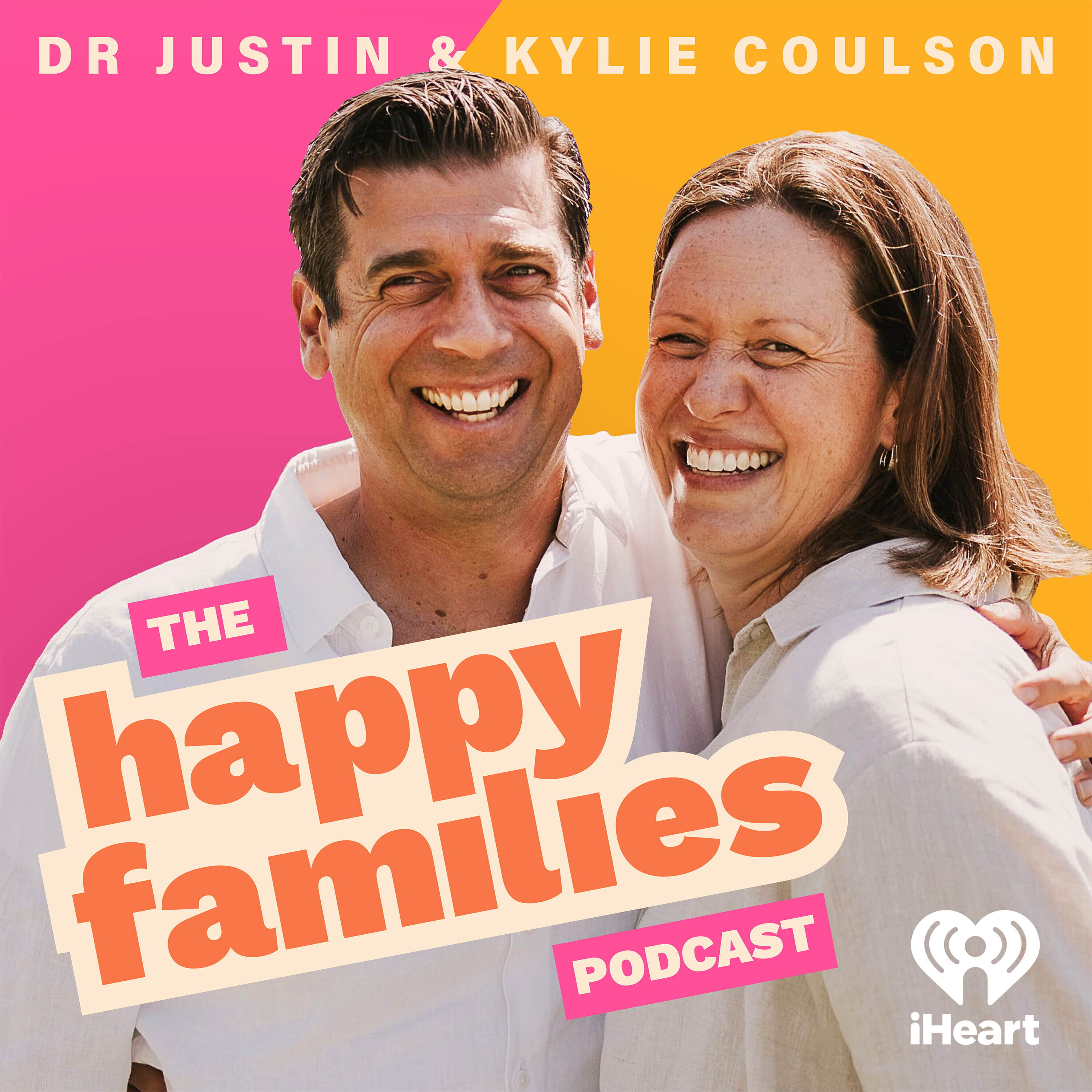
Dr Justin Coulson's Happy Families
Hosted by Dr Justin Coulson · EN
Deciding which parenting advice to follow? Join the thousands of mums and dads who turn to Australia’s most downloaded parenting podcast.
Dr Justin Coulson and his wife Kylie bring real parenting solutions every day, cutting through the noise of modern advice with clear, practical guidance for every step of parenting.
From early childhood challenges to the complexities of the teenage years, each daily episode offers simple, evidence-based strategies to help you feel more confident in your decisions and more connected to your kids.
122episodes
Episodes
Newest firstAll episodes
Is The Social Media Ban Already Failing?
Yesterday00:15:23Tap to summarizeAustralia banned social media for under-16s. It hasn't stopped kids from using it. New research shows most young people are still logging on, creating fake accounts and finding easy ways around age checks. Dr Justin Coulson explains why the law isn't delivering what parents hoped for and why families still have the biggest influence on their children's online lives. Then the conversation turns to something far more hopeful. Dutch children are the happiest in the world. It's not because Dutch parents have all the answers. Their families spend more time together. Their children have more independence. Their communities are built around connection. Justin and Kylie unpack what Australian parents can borrow, even if we can't recreate the Dutch system. KEY POINTS What the first research on Australia's social media ban found. How children are getting around age verification. Why parents still need to lead screen time at home. The habits that help Dutch children report the highest levels of happiness. Why friendships, family time and independence matter more than expensive programs. Simple ways to create stronger community around your own family. QUOTE OF THE EPISODE "The legislation can't do the parenting for us. We still have to do the job." RESOURCES MENTIONED Boys: Building Strong Young Men from the Inside Out by Dr Justin Coulson 10 Things Every Parent Needs to Know by Dr Justin Coulson Misconnection by Dr Justin Coulson Happy Families resources at happyfamilies.com.au Research: Early Effects of Australia's Social Media Minimum Age Act on Adolescents' Social Media Use ACTION STEPS FOR PARENTS Don't assume the social media ban is keeping your child off social media. Check in often. Talk about social media regularly instead of waiting until something goes wrong. Protect family time by working it into your weekly routine. Help your child build friendships through school, sport and local activities. Invite another family over, organise a neighbourhood catch-up or say yes to the next community event. Small connections build a stronger village. See omnystudio.com/listener for privacy information.
Transcribe →The Energy Game: Stop Running on Empty! [with Amantha Imber]
2d ago00:17:19Tap to summarizeYou're not imagining it. Parenting really does feel harder when you're running on empty. If you've caught yourself wishing for just one day where nobody needs you, this episode will feel uncomfortably familiar. Organisational psychologist and bestselling author Dr Amantha Imber joins Dr Justin Coulson to explain why so many parents feel exhausted and what actually helps. No impossible morning routines. No guilt. Just practical, science-backed strategies you can use in minutes. You'll learn why scrolling leaves you more tired, how to spot the type of fatigue you're dealing with, and the simple habits that can help you feel more like yourself again. KEY POINTS Why so many parents feel permanently exhausted. The burnout fantasy that more people have than you'd expect. The three types of energy that shape your day. Fast, science-backed ways to boost energy in under a minute. Why social media drains your brain instead of helping you recharge. How better boundaries protect your energy without letting people down. Small changes that leave you with more patience for your family. QUOTE OF THE EPISODE "We don't just have one energy account. We have three. The key is working out which one needs your attention first." – Dr Amantha Imber RESOURCES MENTIONED The Energy Game by Dr Amantha Imber ACTION STEPS FOR PARENTS Work out whether your physical, mental or emotional energy is running lowest. Swap one social media break for real rest this week. Try a one-minute energy boost like peppermint or a splash of cold water. Start answering requests with "Yes, but…" so you can set clear limits. Write a "Never Again" list of commitments that leave you drained every time. See omnystudio.com/listener for privacy information.
Transcribe →The Content That's Stealing Kids' Empathy [A Listener Q&A ]
3d ago00:12:50Tap to summarizeA fight video lands on your child's phone. They laugh. They watch it again. They send it to a friend. What do you do next? This week, Justin and Kylie answer a question from a mum whose 12-year-old daughter received violent footage that was spreading through local schools. They explain what repeated exposure to this content does to kids, why sharing a video makes them part of the harm, and how one conversation at home can change what happens next. If your child has a phone, this episode is worth hearing. KEY POINTS Why fight videos spread so quickly between kids. What repeated exposure to violent content does to young brains. Why children share videos they know are upsetting. How to build empathy instead of curiosity. Questions that help kids think before they hit send. The legal risks of sharing violent footage. How to help your child be the one who stops the chain. QUOTE OF THE EPISODE "Sharing is participation." RESOURCES MENTIONED eSafety Commissioner research on children's exposure to harmful online content. Albert Bandura's research on moral disengagement. Leave us a voice memo for the podcast! ACTION STEPS FOR PARENTS Ask your child if they've ever received a fight video or other upsetting content. Talk about the person in the video, not just the video itself. Explain that forwarding, commenting on or repeatedly watching these clips adds to the harm. Encourage your child to report violent content instead of sharing it. Keep the conversation going. One chat isn't enough. See omnystudio.com/listener for privacy information.
Transcribe →How to Stop Wishing Parenting Away
4d ago00:10:22Tap to summarizeWhat if the moment you're desperate to get through today becomes the one you'd give anything to have back? Brushing tangled hair. Carrying a sleeping child inside. Sitting through one more song. These moments can feel frustrating when you're tired and running late. Then one day they stop happening, and you never realise the last time has already passed. In this episode, Dr Justin Coulson shares a simple idea from philosophy called the "Last Time Meditation." It will change the way you see everyday parenting and help you notice the moments that matter before they're gone. KEY POINTS Why the everyday parenting jobs you dread can become your most treasured memories. How the "Last Time Meditation" helps you stay present. The psychology behind appreciating ordinary moments before they disappear. The personal experience that changed how Justin responds to his children. One simple habit that makes family life feel richer without changing your routine. QUOTE OF THE EPISODE "There's something you did with your child today that ten years from now you'd trade almost anything to do again. You just don't know what that thing is." RESOURCES MENTIONED A Guide to the Good Life by William B. Irvine William B. Irvine's "Last Time Meditation" Stoic philosophy Seneca Epictetus The Japanese concept Ichi-go Ichi-e Fred Bryant's research on savouring Tim Urban's "Tail End" concept Kurtz (2008), Psychological Science ACTION STEPS FOR PARENTS Pick one ordinary family moment this week and treat it like it won't happen again. The next time your child asks you to watch, listen or help, stop and give them your full attention. Put your phone away during one family ritual each day. Slow down long enough to notice the moments you'll miss one day. See omnystudio.com/listener for privacy information.
Transcribe →The Secret to Getting Kids Off Screens
1w ago00:15:05Tap to summarizeA Disney movie about toys ended with a conversation about screens, sewing and what childhood is starting to lose. After watching Toy Story 5, Justin and Kylie found themselves talking less about the movie and more about what happens when tablets replace cubby houses, craft tables and backyard adventures. Kylie shares how teaching their 12-year-old daughter to sew sparked confidence, patience and a brand new business idea. They also unpack the message Toy Story 5 sends about technology, why it missed an important opportunity, and what parents can do instead. If screens have become the default in your house, this episode offers practical ideas that don't involve another argument. KEY POINTS What Toy Story 5 gets right about childhood. The screen time message the movie missed. Why sewing, baking, gardening and other "grandma hobbies" are making a comeback. How making something with your hands builds confidence. Why learning alongside your child strengthens your relationship. The family project that turned into a small business. QUOTE OF THE EPISODE "The joy isn't making something. The joy is making it together." RESOURCES MENTIONED Toy Story 5 Happy Families resources on healthy screen habits ACTION STEPS FOR PARENTS Pick one hands-on hobby your child can learn this month. Sewing, baking, gardening, woodworking or knitting all work. Learn it together instead of handing them a YouTube tutorial. Watch Toy Story 5 and ask what they noticed about the kids using screens. Set aside one afternoon each week to make something you can hold, use or give away. Celebrate what your child creates, even when it's wonky. See omnystudio.com/listener for privacy information.
Transcribe →AI Chatbots & Social Isolation
1w ago00:16:50Tap to summarizeAI is becoming the friend people never argue with, never disappoint, and never switch off. New research suggests that's exactly the problem. A 12-month study of more than 2,000 adults found people who turned to AI chatbots for emotional support became more emotionally isolated over time. With more teens now sharing serious problems with AI instead of trusted adults, what does this mean for parents? Dr Justin Coulson explains why AI feels so comforting, why it can slowly replace real connection, and how parents can spot the warning signs before loneliness takes hold. KEY POINTS Why lonely people are more likely to turn to AI for emotional support. What a year-long study found about AI chatbots and loneliness. Why conversations with AI can start to feel easier than talking to real people. The growing number of teens taking serious problems to AI instead of trusted adults. The warning signs that AI is replacing healthy relationships. Four practical ways parents can respond without fear or blame. QUOTE OF THE EPISODE "A chatbot can simulate a friend, but it can't be one." RESOURCES MENTIONED Psychological Science study on AI chatbots and loneliness (2026) Professor Elizabeth Dunn, University of British Columbia Common Sense Media survey on teens and AI companions ACTION STEPS FOR PARENTS Ask your child how they use AI before making assumptions. Find out whether AI is helping with schoolwork or replacing real conversations. Watch for fewer catch-ups with friends, more secrecy around AI, or distress when they can't access it. Build regular opportunities for real connection through family meals, sport, youth groups, part-time work, and time with friends. See omnystudio.com/listener for privacy information.
Transcribe →Stop Performing and Start Parenting [with Christian O'Connell]
1w ago00:14:17Tap to summarizeWhat if being a better parent had nothing to do with having the right answers? Beloved radio host and bestselling author Christian O'Connell joins Dr Justin Coulson for an honest conversation about anxiety, authenticity, and what it feels like when your children leave home. A forgotten ice-block wrapper tucked into the couch becomes a lesson in letting go. Christian also shares the simple approach that helped him stay connected with his daughters as they grew up. This episode is a reminder that your children don't need a perfect parent. They need you. KEY POINTS Why being present matters more than getting parenting right. What empty nest grief really feels like. How everyday moments become the memories that stay with us. Why children connect with parents who are genuine, not perfect. The habit that keeps kids talking through the teenage years. What living with anxiety taught Christian about parenting. QUOTE OF THE EPISODE "The number one job as a parent is to keep them talking." RESOURCES MENTIONED Unscript by Christian O'Connell No One Listens to Your Dad's Show by Christian O'Connell ACTION STEPS FOR PARENTS Stop searching for the perfect response. Be fully present instead. Listen for longer before offering advice. When your child opens up, keep the conversation going instead of trying to fix the problem. Pay attention to the ordinary moments. They often become the ones you'll remember most. See omnystudio.com/listener for privacy information.
Transcribe →Listener Q&A — Suicide at Child's High School
1w ago00:16:53Tap to summarizeA student dies by suicide. Suddenly every parent is asking the same question: What do I say to my child? Justin and Kylie tackle one of the toughest conversations a parent can face. They unpack the latest research, explain why children can be deeply affected even if they didn't know the student, and share practical ways to start the conversation without making things worse. You'll hear what to say, what to avoid, the warning signs to watch for, and where to turn if your child needs extra support. KEY POINTS Why every child in a school community can be affected, even if they never met the student. The age group most at risk after a school suicide. Why asking about suicidal thoughts does not increase the risk. What to say when your child asks why it happened. How to handle social media, rumours and memorial pages. The warning signs that tell you it's time to get extra support. Services that can help children and parents. QUOTE OF THE EPISODE "Walk towards conversations, not away from them. Ask the direct question, stay calm, and keep asking gently for as long as it takes." RESOURCES MENTIONED Lifeline Kids Helpline Parentline Suicide Call Back Service 13YARN Headspace School Support CHATSafe Guidelines StandBy Support After Suicide Your GP and a Mental Health Care Plan ACTION STEPS FOR PARENTS Ask what children at school are saying and listen without interrupting. Correct rumours with calm, factual information. Ask directly if your child has had thoughts of suicide if you're worried. Stay with your child while they scroll through social media and talk about what they see. Keep checking in over the weeks and months ahead. Contact your GP or another mental health professional if you notice changes in mood, behaviour or sleep. See omnystudio.com/listener for privacy information.
Transcribe →What It's Really Like to Have a Big Family
2w ago00:19:12Tap to summarizeSix kids. One house. Endless noise, constant mess, and a level of logistics that would test anyone. With Australia's birth rate at a record low, Justin and Kylie share the reality of raising a large family in 2026. They unpack the costs, the exhaustion, and the emotional load that rarely gets talked about. They also reveal why, despite every challenge, they wouldn't change a thing. If you've ever wondered what family life really looks like behind the photos, this honest conversation is for you. KEY POINTS Why Australia's falling birth rate is changing the shape of families. The biggest challenges of raising six children. The financial reality of a large family. The hidden emotional and physical load of parenting. Why connection, belonging, and shared memories outweigh the chaos. The simple story that perfectly captures the value of family life. QUOTE OF THE EPISODE "It's not the nuggets that make you rich. It's the slow, steady accumulation of all those little flecks of gold." RESOURCES MENTIONED Sydney Morning Herald article by Bronte Gosling on Australia's declining fertility rate. ACTION STEPS FOR PARENTS Notice one ordinary family moment today that might become tomorrow's "fleck of gold." Focus less on a perfect home and more on meaningful connection. If family life feels overwhelming, remember that many of the richest moments are built slowly, one ordinary day at a time. See omnystudio.com/listener for privacy information.
Transcribe →Why Most Families Feel Stuck and How to Fix It
2w ago00:16:46Tap to summarizeWhat if the thing your family needs most… isn’t more time - but better conversations? In this episode, we reveal the one habit that keeps us aligned, connected, and actually moving forward - despite the chaos of raising six kids. It’s simple. It’s structured. And almost no one does it. If your family feels reactive, disconnected, or stuck in survival mode… this might be the reset you didn’t know you needed. KEY POINTS Why most families drift (and how to stop it) The “quarterly reset” that changes everything How to plan your family life like a thriving business The power of stepping away to reconnect properly What to actually talk about (so it’s not just another chat) Balancing deep conversations with fun so it actually works Turning vague goals into real, actionable plans Why weekly check-ins make the biggest difference long-term QUOTE OF THE EPISODE “If your family is the most important thing in your life… when was the last time you made a plan for it?” RESOURCES MENTIONED Quarterly getaways / family planning sessions Weekly couple check-ins Goal setting (annual, quarterly, weekly rhythm) ACTION STEPS FOR PARENTS Block out time (a day or weekend) with your partner—no distractions Start with a full “life map” (kids, health, finances, routines, relationships) Choose 2–3 focus words for the season ahead Break big goals into specific, practical actions Schedule your next check-in before you finish Commit to a simple weekly alignment conversation See omnystudio.com/listener for privacy information.
Transcribe →