Podcast
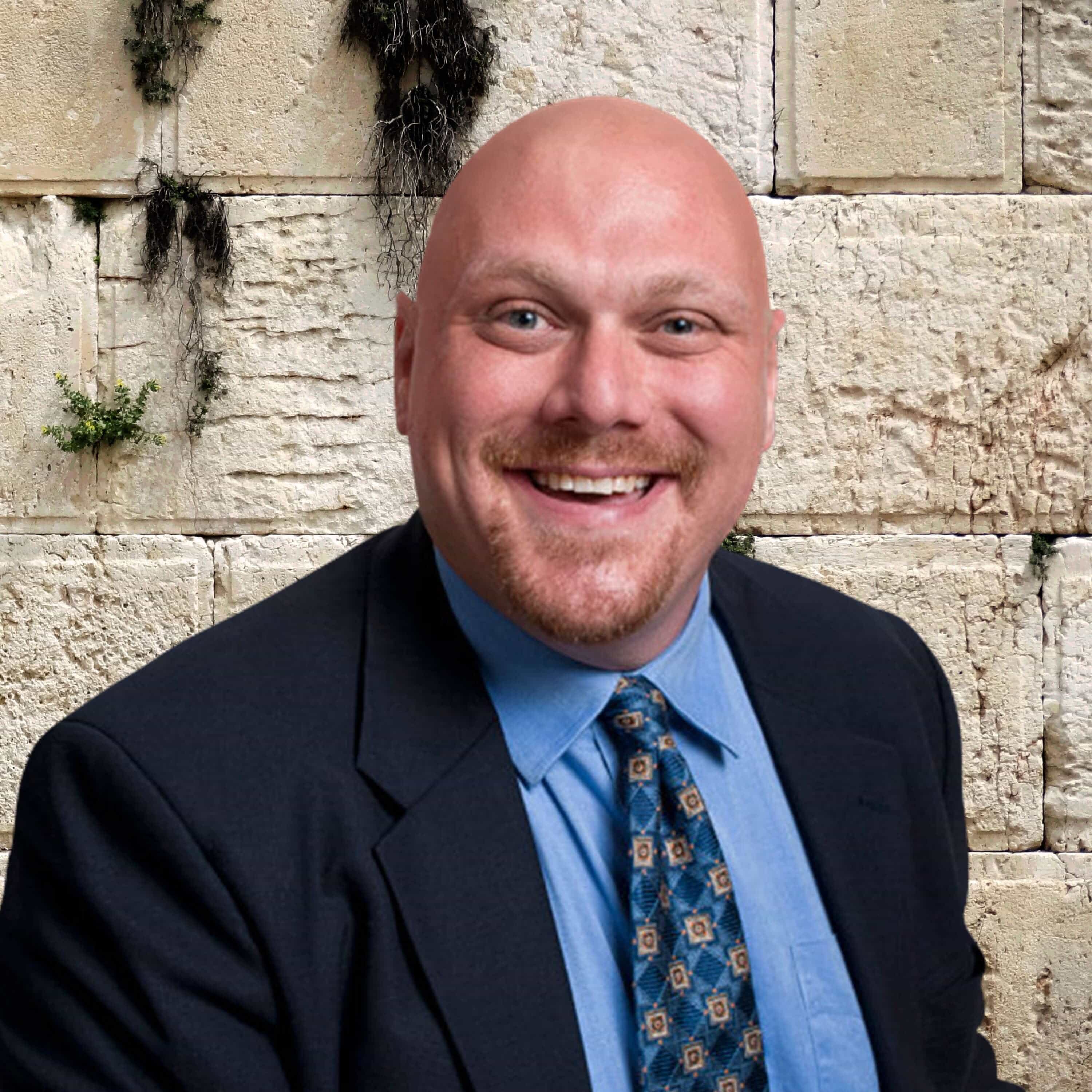
Dr. Nehemia Gordon - Bible Scholar at NehemiasWall.com
Hosted by Nehemia Gordon · EN
Nehemia Gordon uncovers ancient Hebrew sources to empower people with information to defend the Word of God and build their faith.
30episodes
Episodes
Newest firstAll episodes
Hebrew Voices #245 – Secrets of the Jots and Tittles: Part 1
May 2701:33:58Tap to summarizeIn this episode of Hebrew Voices #245 - Secrets of the Jots and Tittles: Part 1, Nehemia brings on scribe Dr. Marc Michaels for a deep dive into his discoveries of the “jots and tittles” and their place in archaeological and phonetic history. Join us as they dig for the truth from the Dead Sea Scrolls and key Jewish sources for clarity. I look forward to reading your comments! PODCAST VERSION: Download Audio TranscriptCOMING SOON SHARE THIS TEACHING WITH YOUR FRIENDS! Subscribe to "Nehemia Gordon" on your favorite podcast app! Apple PodcastsSpotify-->YouTube Music--> | Amazon Music | TuneIn Pocket Casts | Podcast Addict | CastBox | iHeartRadio | Podchaser | Pandora SUPPORT NEHEMIA'S RESEARCH AND TEACHINGS(Please click here to donate)Makor Hebrew Foundationis a 501(c)(3) non-profit organization. Your donation is tax-deductible. VERSES MENTIONEDEsther 3Numbers 10:35-36Matthew 5:18Joshua 4; Deuteronomy 27Mishnah Pirkei Avot 1:1Joshua 8:30-35John 7:53-8:11Mishnah Peah 2:6 BOOKS MENTIONEDThe HobbitJ. R. R. Tolkien <st...
Transcribe →SNEAK PEEK! Daring To Be Different: Part 2
May 1200:05:10Tap to summarizeWatch the Sneak Peek of Daring To Be Different: Part 2, where Nehemia continues his discussion with Tanakh-only teacher Israel Horowitz about the fine line between devout Torah observance and the potential for counterproductive extremism in pursuit of what the Torah says. I look forward to reading your comments! PODCAST VERSION: Download Audio Watch the full episode TOMORROW plus hundreds of hours of other in-depth studies by becoming a Support Team Member! SHARE THIS TEACHING WITH YOUR FRIENDS! Subscribe to "Nehemia Gordon" on your favorite podcast app! Apple PodcastsSpotify-->YouTube Music--> | Amazon Music | TuneIn Pocket Casts | Podcast Addict | CastBox | iHeartRadio | Podchaser | Pandora SUPPORT NEHEMIA'S RESEARCH AND TEACHINGS(Please click here to donate)Makor Hebrew Foundationis a 501(c)(3) non-profit organization. Your donation is tax-deductible.<a href="h...
Transcribe →Hebrew Voices #244 – Daring To Be Different: Part 1
May 601:09:29Tap to summarizeIn this episode of Hebrew Voices #244 - Daring To Be Different: Part 1, Nehemia brings on Tanakh-only teacher Israel Horowitz to discuss how ancient superstitions became the basis for Rabbinic laws, why arguments based on majority rule contradict the Torah, and how we should be overcoming the rulings of our earthly fathers rather than our Heavenly Father. I look forward to reading your comments! PODCAST VERSION: Download Audio Transcript Hebrew Voices #244 – Daring To Be Different: Part 1 You are listening to Hebrew Voices with Nehemia Gordon. Thank you for supporting Nehemia Gordon's Makor Hebrew Foundation. Learn more at NehemiasWall.com. Israel: If I had to respect Moses or Rabbi Eliezer, I’m going with Moses, right? And the point is that they seem to not understand the hierarchy here, which is that you’re going to have to throw someone under the bus. Either it’s going to be Rashi or it’s going to be Noah. I’d rather throw Rashi under the bus than throw Noah under the bus. Apparently, you’d rather throw Noah under the bus than Rashi. So, I think it comes down to that… It’s impossible to maintain allegiance to the written Torah and the oral Torah when they contradict each other. — Nehemia: Shalom, and welcome to Hebrew Voices. I’m here today, once again, with Israel Horowitz. He was raised ultra-Orthodox and found out, in his words, that the written Torah is the way to go and has been teaching and practicing written Torah ever since. Shalom, Israel. How are you? Israel: Shalom. It’s good to see you again. Nehemia: Yeah, it’s good to have you back on the program. We had a really interesting conversation last time, got some really good feedback. So, I think one of the big developments since we last spoke is you got married. Am I right? Israel: That would definitely be it, yes. Nehemia: So, what I should say as a Jew is mazal tov, but that’s a very problematic statement that we can discuss if you’d like. Israel: Good luck. Nehemia: Well, mazal tov is good constellation. Mazal is a constellation in ancient Hebrew. And what the alternative is, is siman tov, which is good omen. Right? You say mazal tov ve’siman tov, ve’siman tov umazal tov. Right? So, it’s good constellation, good omen. And omen meaning, like a comet, or something like that, right? So, it just goes to show how deeply rooted, let’s say, superstition is in Jewish culture. Israel: Oh yeah. Zodiacs, everything. They got it all. The zodiac signs. Yeah. Sometimes it’s hard to distinguish between Judaism and eastern religions. Nehemia: I gave an academic lecture a couple years back, and I’m writing a paper about it when I get around to it. And I cite, there, this rabbi… I want to say from the 12th century or so, maybe it’s 13th; I don’t remember, it’s been a while. And he’s discussing the question about whether the constellations actually affect us. And he says, “Well, look, if the constellations affected how you live your life, then there’d be more Jews in certain professions. Because there are Jews born every month of the year. And the fact that there’s no Jews in these particular professions,” that’s my interest there, because he’s talking about parchment making, right? So, he’s like, “How come you don’t have any Jewish parchment makers if there are Jews born every month of the year?” But he’s got to justify it, like, because to his Jewish audience he’s speaking to, it’s like these are just givens, that the constellations affect us. And we have this passage in Jeremiah, maybe we can discuss that. It’s a very famous passage, Jeremiah 10. It’s Jeremiah 10… well, he starts in 10:1. I’ll read the JPS. Let me actually share my screen here, show people what I have here. So, he has, “Hear the word which the LORD has spoken to you, O house of Israel. Thus says the LORD: Do not learn to go the way of the nations and not to be dismayed by portents in the sky. Let the nations be dismayed by them, for the laws of the nations are delusions.” And then he starts talking about idols, you know, statues and stuff. But, you know, Deuteronomy 18 talks about not learning the ways of the nations, the divination and such, and so, Jeremiah is directly referring to Deuteronomy 18, about learning the ways of the nations. And so, they look in the skies, and they see an omen, and they see, you know, constellations, and they think, “Oh, okay, that’s going to be bad because the bad constellation.” Israel: Right. Nehemia: And he said those are nonsense; they’re hevel, they’re vapor. Israel: Yeah, exactly. I mean, you see so much of that superstition. Yeah, it’s kind of concerning. A hundred percent. Obviously, the Torah itself cautions against all forms of witchcraft, superstition, worship of the constellations and things like that. And ultimately, these ideas are not even found within the Torah, or the Tanakh, for that matter. Yet you have that as a mainstream be...
Transcribe →SNEAK PEEK! The Divine Name YHVH in Ancient Greek Manuscripts: Part 2
Apr 2700:05:10Tap to summarizeWatch the Sneak Peek of this Support Team Study - The Divine Name YHVH in Ancient Greek Manuscripts: Part 2, where Nehemia and “Dr. Tetragrammaton” continue their exploration of how the name of God appears in the Greek New Testament, tracing its development and transformation across the manuscript tradition and examining how those changes shaped the texts we have today. I look forward to reading your comments! PODCAST VERSION: Download Audio Watch the full episode TOMORROW plus hundreds of hours of other in-depth studies by becoming a Support Team Member! SHARE THIS TEACHING WITH YOUR FRIENDS! Subscribe to "Nehemia Gordon" on your favorite podcast app! Apple PodcastsSpotify-->YouTube Music--> | Amazon Music | TuneIn Pocket Casts | Podcast Addict | CastBox | iHeartRadio | Po...
Transcribe →Hebrew Voices #243 – The Divine Name YHVH in Ancient Greek Manuscripts: Part 1
Apr 2201:08:18Tap to summarizeIn this episode of Hebrew Voices #243 - The Divine Name YHVH in Ancient Greek Manuscripts: Part 1, Nehemia welcomes Dr. Pavlos Vasileiadis (“Dr. Tetragrammaton”) to explore how God’s name appears in ancient Greek translations of the Hebrew Bible. Together, they unpack fascinating manuscript evidence and address the controversial question of whether there is any real connection between Jesus and Zeus. I look forward to reading your comments! PODCAST VERSION: Download Audio Transcript Hebrew Voices #243 – The Divine Name YHVH in Ancient Greek Manuscripts: Part 1 You are listening to Hebrew Voices with Nehemia Gordon. Thank you for supporting Nehemia Gordon's Makor Hebrew Foundation. Learn more at NehemiasWall.com. Nehemia: You’re saying in all the extant Old Greek manuscripts, meaning the Septuagint which predates our Septuagint, as late as the middle of the 1st century CE, the term Kurios is not used. So, in other words, if you look at all the Greek Dead Sea Scrolls, which isn’t that many, all the manuscripts of the Septuagint that predate the middle of the 1st century CE, or AD in Christian terms, you will not find the word Kurios as a rendering of Yud-Hey-Vav-Hey, that’s what you’re saying. Pavlos: And if you allow me… Nehemia: Please. I’m excited. This is amazing stuff! — Nehemia: Shalom, and welcome to Hebrew Voices. I’m really excited today to welcome Dr. Pavlos Vasileiadis. He is known in Greece as Dr. Tetragrammaton. He holds a PhD in biblical literature and religion from the Aristotle University of Thessaloniki. He also has done a post-doctorate at the Aristotle University of Thessaloniki, which means he actually has, I guess, academic teaching experience. And he has a bunch of other degrees that are almost too long to read everything here; a master’s in theology from that same university, bachelor’s in theology. His master’s, interestingly, is on the Kama Johannaeum, which I may be mispronouncing. It’s that passage in 1 John… help me out here, 5… Pavlos: Exactly. Nehemia: Okay, maybe we’ll talk about that. I would say that in the 15th and 16th century, it was one of the most controversial passages in the New Testament, so much so that I don’t think any new translations have it, not that I’m aware of, but it’s part of the King James Version. And so, in America, the King James-only people say, “See? They took that out of our Bible.” But it’s a fascinating story. I don’t know that we’ll get to that today, because I, of course, want to talk about… If I’m with Dr. Tetragrammaton, I’ve got to talk about the Tetragrammaton. Shalom, Pavlos. I should also mention that Pavlos is a research fellow at the Institute for Hebrew Bible Manuscript Research, of which I am the executive director, and we actually co-authored an article together. So, just want to put that out there for people. The article we wrote, and basically, like, you wrote the first half, I wrote the second half, if I remember correctly, is called something like, The Transmission of the Tetragrammaton in… do you remember the name of the title? I don’t even remember. Well, I’m actually looking here on its Wikipedia page, and he tells me it’s pretty… Oh, Transmission of the Tetragrammaton in Judeo-Greek and Christian Sources. Pavlos: Exactly. Nehemia: Okay, so, Pavlos, I want to start with… So, you did a whole PhD on the Tetragrammaton. Let’s start with; what is the Tetragrammaton? I think my audience knows, but let’s assume some people listening don’t know. What is the Tetragrammaton? Pavlos: First of all, thank you, dear Nehemia, for your warm invitation and have this discussion. I hope to be enlightening for anyone that will attend this discussion, and I hope to help make clear some points that I have found. And also, I have shared with you during the previous years in my research on the sacred Tetragrammaton. So, what is the Tetragrammaton? It’s a Greek word from tessera, tetara, tetra, four that is, and grammata from the word grammar, letter, that is a word with four letters. Josephus was the first to use this term for the name of God in the Hebrew language. Nehemia: Let me stop you for a second. So, for those who haven’t noticed, Pavlos has a certain way of pronunciation. He is a native Greek speaker. So, he was just talking about who I would call Josephus, and he pronounced it the way, I guess a Greek speaker… Pavlos: Yosefus, in Greek. Nehemia: Okay, there you go, right. And I’m going to defer to your pronunciation, but I’ll still continue to say Josephus. Which is interesting, because Josephus is the Hebrew name Yosef, and then he adds… why does he add the us ending? I’ve tried to explain this to people for years, but I don’t know that I’m getting it right. You’re the expert in Greek, right? I know where my expertise lie...
Transcribe →SNEAK PEEK! STS – A United Future: The New Messianic Generation – Part 2
Apr 1400:05:10Tap to summarizeWatch the Sneak Peek of this Support Team Study - A United Future: The New Messianic Generation - Part 2, where Nehemia continues his discussion with 20-year-old Messianic Bible teacher Max Bonilla about debating both Rabbinic and Christian positions, the true Biblical calendar, and pagan imitations of Hebraic concepts. I look forward to reading your comments! PODCAST VERSION: Download Audio Watch the full episode TOMORROW plus hundreds of hours of other in-depth studies by becoming a Support Team Member! SHARE THIS TEACHING WITH YOUR FRIENDS! Subscribe to "Nehemia Gordon" on your favorite podcast app! Apple PodcastsSpotify-->YouTube Music--> | Amazon Music | TuneIn Pocket Casts | Pod...
Transcribe →Hebrew Voices #242 – A United Future: The New Messianic Generation: Part 1
Apr 800:56:07Tap to summarizeIn this episode of Hebrew Voices #242 - A United Future: The New Messianic Generation, Nehemia sits down with 20-year-old Messianic teacher and apologist Max Bonilla. From Maimonides to Paul and Yeshua, they explore how a new generation of believers is bridging the gap; integrating a deep respect for Jewish history and the Sages with an unwavering faith in Yeshua of Nazareth. I look forward to reading your comments! PODCAST VERSION: Download Audio Transcript Hebrew Voices #242 – A United Future: The New Messianic Generation: Part 1 You are listening to Hebrew Voices with Nehemia Gordon. Thank you for supporting Nehemia Gordon's Makor Hebrew Foundation. Learn more at NehemiasWall.com. Max Bonilla: … the Acts 15 Council. I had constantly been told by preachers that that discussion, it disavowed the practice of circumcision. But the discussion was never about the practice of circumcision itself to begin with, it was about the Rabbinic giyur process where they were teaching people that they would be saved through the process of circumcision and not necessarily condemning someone being circumcised in order to keep the Pesach. Because if that were the case, then they would not have left four commandments for all new Christians to keep. — Nehemia: Shalom, and welcome to Hebrew Voices. I’m here today with Max Bonilla. He has a bachelor’s in political science. He is a Bible study leader at Altar of Truth Ministry. And he’s a 20-year-old social media influencer and guitarist. Max, shalom and welcome to the program. Max: Yeah, Shalom Nehemia. Thank you for bringing me on. So, I graduated high school at 16, started college early, then finished it. Nehemia: Wow! Max: And then now I’m just on TikTok talking about my messianic beliefs, essentially, and it’s something that I really enjoy doing. And I’ve picked up a bunch of hobbies on the side. I just love life and I love having a life. Nehemia: Well, that’s wonderful. Max, you’re actually not the youngest person I’ve ever had in the program, but I think the younger person doesn’t really count because I was interviewing a woman and her daughter was there, and we were… there was a social worker, and the social worker was asking her questions. But as a full-fledged guest, you’re definitely the youngest full-fledged guest I’ve ever had. So, welcome to the program. Let’s see what we can do here. I don’t know how this is going to go. Like, there’s this generational divide, and I’m learning more and more how significant that is. You know, there’s this profound verse where it says, “And there was a new pharaoh over Egypt, and he did not know Joseph.” And I was a young boy, and I was studying under rabbis, and we were taught that, well, that can’t literally be true because, how could somebody not know Joseph? He was the viceroy. And so, it has some other kind of meaning. He pretended he didn’t know Joseph. But what I’m realizing, as I get older, is, no, that’s literally true. Right? There is such a thing as a generational divide… Max: Right. Nehemia: … and the young generation really doesn’t know things that the older generation knows, and vice versa. So, you know what? Let’s start with, how are you, someone who’s such a young man… You’re really active on social media. You’re engaging in these debates. And I want to understand what that’s like, because when I was your age… Max: Sure. Nehemia: … oh, man, I’m old. When I was your age, we didn’t have an internet. We didn’t have social media. So, what is this like? Just try to share for my audience, who may not know, and even some of the younger audience may not be exposed to social media the way you are. Max: Yeah, well, first of all, there isn’t as big of a generational divide as you think. I’m terrible with the Gen Z slang. I don’t quite understand it, or even the brain rot that’s spreading on the internet these days. But I will tell you this; one of the debates that I had seen recently was between Charlie Kirk and one of the people that came up to him, and he was quoting all these things from the Talmud, but they were such out-of-context quotes. And for me, I just like engaging in intellectually honest discussions, even with people who disagree with what I believe. And a lot of people who are Christian are coming at it from a standpoint where it’s authoritative. They’ll take these slight quotes where, okay, you treat the non-Jew as someone who’s not human, or Jesus is burning in excrement. They’ll take these very fringe, small beliefs, or even these out-of-context quotes, and think that there’s something that all Jews believe as if it’s something monolithic. The reason why I ...
Transcribe →SNEAK PEEK! STS – Jewish Professor Says Nick Fuentes is Right: Part 2
Mar 2400:05:10Tap to summarizeWatch the Sneak Peek of Jewish Professor Says Nick Fuentes is Right: Part 2, where Nehemia continues his discussion with Prof. Kochin about what he thinks is the antidote to Fuentes’s ideas and how it better aligns with America’s foundational concepts. I look forward to reading your comments! PODCAST VERSION: Download Audio Watch the full episode TOMORROW plus hundreds of hours of other in-depth studies by becoming a Support Team Member! SHARE THIS TEACHING WITH YOUR FRIENDS! Subscribe to "Nehemia Gordon" on your favorite podcast app! Apple PodcastsSpotify-->YouTube Music--> | Amazon Music | TuneIn Pocket Casts | Podcast Addict | CastBox | iHeartRadio | Podchaser | <a href="https://www.pandora.com...
Transcribe →Hebrew Voices #236 – Jewish Professor Says Nick Fuentes is Right: Part 1
Mar 1801:34:40Tap to summarizeIn this episode of Hebrew Voices #236 - Jewish Professor Says Nick Fuentes Is Right: Part 1, Nehemia brings on Political Science Professor Michael S. Kochin to discuss what Nick Fuentes gets right, what he gets wrong, and the resulting ideological battle for the heart & soul of America. I look forward to reading your comments! PODCAST VERSION: Download Audio Transcript Hebrew Voices #236 – Jewish Professor Says Nick Fuentes is Right: Part 1 You are listening to Hebrew Voices with Nehemia Gordon. Thank you for supporting Nehemia Gordon's Makor Hebrew Foundation. Learn more at NehemiasWall.com. Michael: What Fuentes wants to do, what these people who are dropping the Judeo from the Christian, what the people preaching against Christian Zionism, what Tucker Carlson wants to do, is bring in notions of Christianity, of white identity, of Europeanism, of Western culture, which are foreign to American civilization. They think that America has failed, that America has failed them, and they want to do something else. — Nehemia: Shalom and welcome to Hebrew Voices. I’m here today with Prof. Michael Kochin, who is a professor of Political Science at Tel Aviv University in Israel, although this year, he’s on sabbatical at the Catholic University of America and Hillsdale College, both in Washington D.C. Welcome to the program, Prof. Michael Kochin. We’ve had you on before… Michael: Thank you. Nehemia: …and we’ve had some amazing conversations about Jewish freedom in America. Today I asked you to come on to talk about this new anti-Semitism, which the most, I would say the most famous, or maybe the most eloquent proponent of, is Nick Fuentes. And I want to summarize at least my perspective on what Nick Fuentes is saying. And this is, people… you might’ve heard of the Groypers, but you’ll hear somewhat similar things, I think, from others as well. And I sent you a clip. I was going to play it, but then he kind of drones on for… he goes on. I mean, look, he’s a very good speaker. He’s very eloquent. So, I identified three themes in what he says. And you tell me if you agree with these, because I sent you like a 15-minute clip. You know, and here’s the thing about Nick Fuentes; he can go on for two hours and sound very reasonable. And then the mask slips, and he’s like, “Well, the Jews control society!” And so, he says, “Jews are not Europeans. They are not white. They are foreign enemies of European civilization and hate European Christians.” That’s point number one. Point number two… maybe that’s several points, but I’m calling that number one. There’s “Organized world Jewry wants to eradicate white European civilization because they hate white European Christians.” These are Nick Fuentes’ points. And number three, “There’s a deliberate and centrally orchestrated Jewish strategy to carry out,” what he calls, “white genocide, and the strategy is to flood white countries with non-white people through unrestricted immigration.” And he says, “This will lead to whites being a minority in their own countries and, hence, losing power. It will also lead to whites mixing with non-whites, resulting in an end of the white race.” And one of the things that actually propelled him, I would say, to infamy, is that he was speaking to these Republican people he thought were his allies, and they were secretly recording him. And one of these young girls, this is when he was like 18 or 19 or something, said, “Well, what if I had relations with an African American man?” He said, “That would be degenerate, like having sex with a dog.” And ever since, I think his strategy has been, “Well, I can’t pretend I’m not a racist, so I’m just going to embrace it and say I’m a racist.” So, all right, so, that’s who Nick Fuentes is and what he argues. And although he denies being an anti-Semite, if you say, I don’t know… Is that a fair appraisal of his positions, at least as you’ve encountered them? Maybe it’s not; you’re the professor of political science. Michael: You know, I’m not so interested in giving a fair appraisal of Fuentes’ positions. I think it’s more important to think about what he’s saying. What is he right about? What is he wrong about? Why does he have such popularity? I think those are more helpful questions than, you know… Because some of the stuff, like the miscegenation comment… you know, I haven’t seen that source, but I assume you have a good source for that. Nehemia: Oh, it’s a recording of him. Michael: Right, so, I don’t think it… Nehemia: And look, he was 19, and it was like two in the morning, and he was chatting with people he thought were his friends. Michael: And anyway, you know, people say a lot of stupid things all the time. And it’s true that we can play this ...
Transcribe →SNEAK PEEK! Support Team Study – The Chair of Moses: Part 2
Mar 1000:05:10Tap to summarizeWatch the Sneak Peek of this Support Team Study, The Chair of Moses: Part 2, where Nehemia continues his discussion with Rev. Dr. Philip Thomas Mohr, delving deeper into his dissertation on the “Seat of Moses,” the consequences of misinterpretation, and the overarching reality of God’s sovereignty in all things. I look forward to reading your comments! PODCAST VERSION: Download Audio Watch the full episode TOMORROW plus hundreds of hours of other in-depth studies by becoming a Support Team Member! SHARE THIS TEACHING WITH YOUR FRIENDS! Subscribe to "Nehemia Gordon" on your favorite podcast app! Apple PodcastsSpotify-->YouTube Music--> | Amazon Music | TuneIn Pocket Casts | Podcast Addict | CastBox | iHeartRadio | Podchaser | Pandora <...
Transcribe →