← DTC Podcast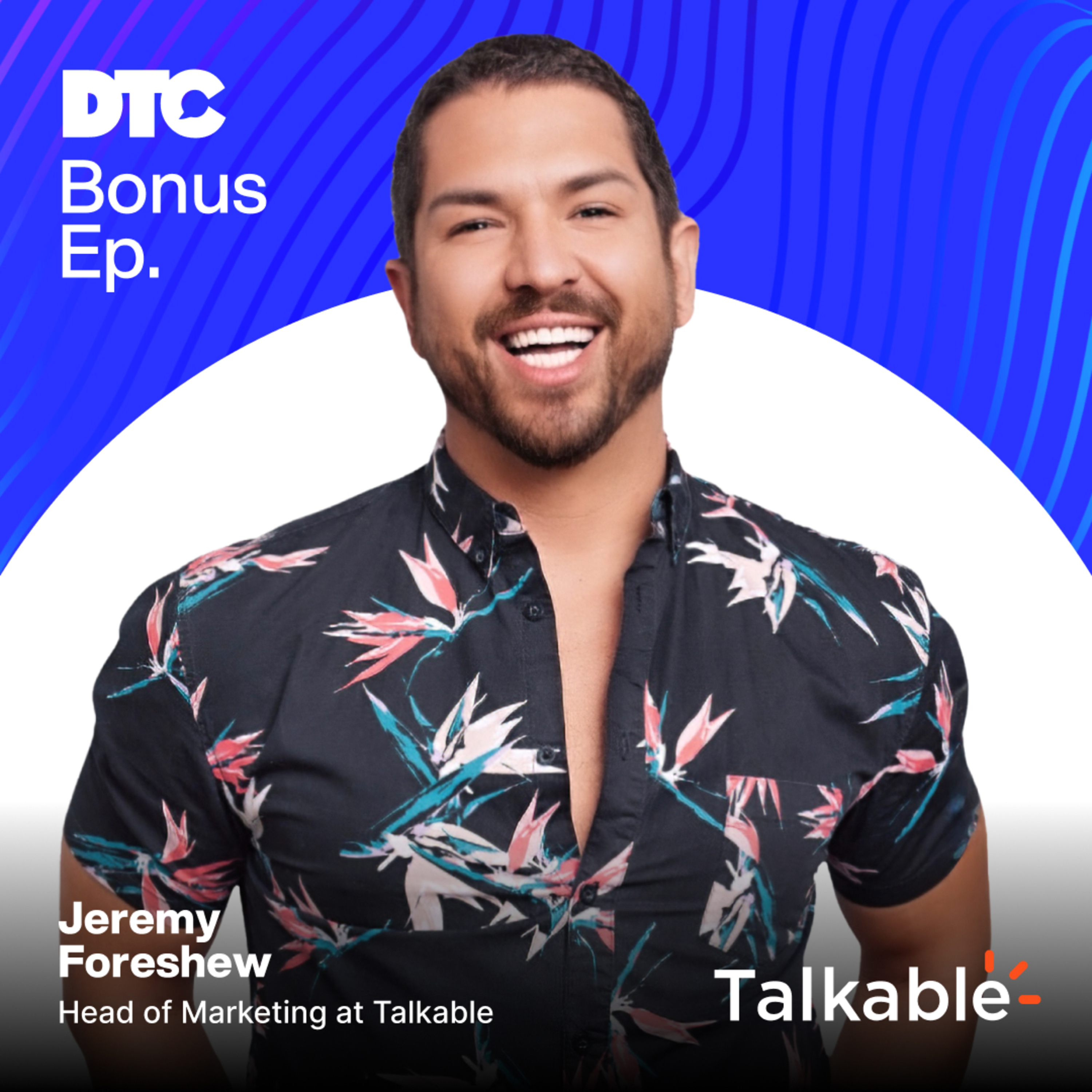
Loading summary
Transcript52 lines
- [00:00]
Jeremy
This is your hero moment. When you're investing in referral marketing, you are reducing your risk first and foremost. It's a loop. You are not only bringing in that customer, they're bringing in another customer and so on and so forth. What happens is you start to see this growth and this network effect of really high quality customers because they're all really from the same network. It almost becomes a being with a life of itself. Don't think of your referral program as just this one thing that's sitting on your website. Somebody will check out, oh, 2 for 10. It really is a powerful driver of growth. People can understand when they are being played and they know the language of brands now. It's time that people break through that and actually do that one to one.
- [00:54]
Eric Dick
Jeremy, welcome to the DTC podcast. Marketers are under a lot of pressure this year. They've got less budget, but the same targets which never change. What's the biggest shift that you're seeing being in how brands are growing, man.
- [01:06]
Jeremy
Brands are really starting to pay attention to each of their channels and how they're performing from how much they're spending, the rising cost of that spend as well as the diminishing returns. So what I've found, especially in this economy, is that a lot of companies are starting to look at what assets they have in house and how they can leverage those for growth. Like existing customers.
- [01:31]
Eric Dick
Yeah, 100%. What feels unsustainable about what you see in the market right now, the growing.
- [01:36]
Jeremy
Prices of digital media is just unsustainable. It's really unfortunate. There were years and years where brands were essentially bringing all their customers to these platforms, you know, living in the heyday, getting this great organic reach and then a push for their paid ads. And now it's exclusively, hey, you're not getting any reach unless the money's going in and the rates are going up, the competition is getting higher, you've got more privacy issues. So harder to track where that revenue is coming from if it's coming from there. You know, it's just really unsustainable for marketers who have to justify the dollar of every spend.
- [02:17]
Eric Dick
And even on things like retention, email marketing, it's getting harder and harder to reach the customer's inbox with like broad sales messages as well. So it's kind of impacting marketers on all side. Mentioned other owned resources like referral program. We're here to talk about talkable. Talk to me about what you're seeing with brands winning with referrals.
- [02:38]
Jeremy
Yeah, we've seen this. Now don't get me wrong, I understand that, you know, tech has only been here for so long, but at this time, I've also seen a few ebbs and flows in the economy. And in those times, what I have noticed is that companies that are investing in their customers, investing their relationships, they're the ones that are able to build moats. They're the ones who are able to break through in the messy middle and gain loyalty where really ultimately the lowest price usually is the motivator for most consumers. So they're doing this by running, you know, referral programs. They're doing this by finding moments of delight and really asking their customers in a very authentic way, hey, if you love this and you have friends that love this, we would rather invest in you as a customer than say, a platform where we're going to pay ads for you to bring your friends in here and enjoy the same experience that you had. I've seen it through the pandemic and those are the businesses that didn't just survive, they actually thrived. They came out with that really strong rabid fan base that allowed them to continue and grow outside that economic stress.
- [03:49]
Eric Dick
It's the gift that can keep on giving. Whereas on, you know, Meta or Google, you have to reacquire the same customers over and over again and pay to reacquire them each time. If you create a great referral program, you can, you know, create an ongoing, ongoing relationship with them where they drive sales, they drive people who drive sales, and the value chain continues.
- [04:07]
Jeremy
Well, not only that, I mean, you're right with the platforms, you're constantly putting the same person back in the top of that funnel every time they're coming in and you're paying for that top of funnel even if that person's bought two, three, four times, they saw an ad, they clicked on it, right? With the referral marketing, it's a loop. You are not only bringing in that customer, they're bringing in another customer and so on and so forth. What happens is you start to see this growth and this network effect of really high quality customers because they're all really, you know, connected. They all have the same interest, they're from the same network. And it's, it almost becomes a being with a life of itself. It's really amazing to see the growth that some of these companies have achieved using referral marketing.
- [04:55]
Eric Dick
Talk to me about that. What are, what are some examples of brands that have. Because I think people have an idea that they, everyone should have a referral program and they think, you know, okay, I can get, get a few, you know, additional sales here. But for brands that are really optimized, the referral program, what's possible?
- [05:09]
Jeremy
You would actually probably not believe it until I put the numbers in front of you, but we've had customers here who have. First of all, Talkable itself has generated over 1 1/2 billion dollars in first purchase revenues for our clients. That's just first purchase revenues. And a lot of these customers, you know, referral customers, they tend higher, repeat purchasers than others. So we had one customer that came in, they were one of our original customers. Fifteen years ago, when Taco came to the scene and invented referral marketing, they were able to earn $200 million as a retail company, D2C, from their first purchase. When we were able to track the residual revenue that came in from there, that was almost half a billion dollars from that one customer alone and their programs. And it's because they got in from the beginning, they invested and they played that long game, they built the moat. And I can't say who the brand is, but they're very well recognized and they do have a very dedicated set of customers.
- [06:14]
Eric Dick
Huh. So you mentioned, you know, being early in the game, if not starting this referral space. What's changed since you guys started versus now? What? What. How is the technology evolved or how has the philosophy or strategy evolved from now until.
- [06:28]
Jeremy
Well, I think when, you know, this was 15 years ago. And so user experience wasn't necessarily driven around the user itself. It was driven around the user and their interaction with a computer, a desktop, a laptop. And so where referral, where talkable came in, we were the first company to bring post purchase referral offers, which is basically what started to grow the entire industry from there. Now what we're seeing with user experience is all about being able to engage that person in an authentic time in a time that is real, right? Not a time that they're dedicating to going to their computer. So let's say you and I, you know, we meet up, we're on the golf course, I happen to see your shoes. And I'm like, Eric, those are some very cool shoes. Where did you get those?
- [07:22]
Eric Dick
I got known for such things, right.
- [07:24]
Jeremy
If you're just dealing with a referral code or there's no way, Eric, that you're going to remember to give that to me, you'll have to go into your phone, skip through whatever. We're on the golf course, there's already people trying to play through what Talkable has now done and where we're bringing into the market is a thing called Talkable Wallet. We're actually getting right into the wallet experience in any phone, both Apple and Android. What that means is with just a double click of the thumb, Eric, you could have your referral code right there for me to scan. I'm able to take that, make the purchase then or make the purchase later and both of us get a reward for that experience. You know, for me, I don't feel like I was being sold to. I wanted to get that product and now my relationship with you is stronger because you were able to help me get that product at a cheaper price, especially when every dollar counts. We're really excited about this product. It bridges a lot of gaps, not just from DTC to kind of brick and mortar omnichannel, but it really does go beyond, you know, the transactional nature of being on your computer and puts the experience right in your day to day life when it's the most natural.
- [08:34]
Eric Dick
I'm using my wallet, my phone wallet all the time these days for different loyalty cards and this and that. So it's really within my workflow. I imagine that's increasing for more and more people.
- [08:43]
Jeremy
Back in the day when my career started, I mean before Facebook and all of that. Yeah, I'm older than Google. The whole thing was getting into somebody's physical wallet. You know, that real estate was prestige for any marketer to be in there. And now being able to do that in a device that everybody is addicted to.
- [09:02]
Eric Dick
Totally. Way to put it.
- [09:03]
Jeremy
Yeah, you're right. It's like we're checking into flights, you know, we're checking into events, we're using our cards, we're using it for fobs. The wallet really has just become a really pervasive part of our lives and to not be in there just seems so silly.
- [09:21]
Eric Dick
Yeah, it's a great opportunity. So what, what? Because I guess for someone to remember, okay, I've got this, I've got this referral, it's going to benefit me, it's going to benefit you. What kind of offers are required in order to make people have that, you know, give that mind share to your referral program so that they're actually going to use it.
- [09:40]
Jeremy
There's an interesting combination of factors that really bring somebody into that ideal moment. One of them obviously is the offer itself. There needs to be value to get that person's attention. Sometimes it's cash, right. Sometimes it's a discount. But a lot of times, depending on your Brand. If you've got brand equity, being able to give somebody an exclusive experience and excuse exclusive access to a product also can drive a lot of momentum for your referral program. The second thing is it comes down to the timing. You want to make sure that you are engaging with your customer when they're at peak delight. Right. So, you know, maybe when they ordered, when they received it. You want to make sure that you understand those parts of the customer journey. And then with wallet, which is great, we're getting out of that cesspool of the email inbox. We're going past SMS and with this product you can actually send a push notification. So you can send pulse campaigns if you've got a certain promotion or you can do it in proximity to one of your stores or even one of your competitors to let somebody know that there's an offer available in their space.
- [10:45]
Eric Dick
When it comes to organizations, are people generally just, are they building these programs into the retention function of their business? Are they hiring like headcount in order to manage the referral program? What does that look like for companies that might have stretched HR budgets?
- [11:00]
Jeremy
Yeah. The reality is that there is not a huge suite of referral experts that are out there in the market in the first place to add an additional headcount and nobody has budget for additional headcount. Let's be honest, if we're keeping the heads we have, we're very, very luck. What we've been able to do throughout our time is develop a white glove service. And so what that means is we have a team of professionals that come in and act as essentially a fractional department of your team. They are involved from planning, not just in QBRs and sending a quick update. They're involved in your campaign planning. They're making sure that the campaigns that we are running not only are optimized at all times, but they're also a seamless experience for your customers and shouldn't be jarring. So everything flows naturally, everything is beautifully branded, it's super reliable, you have the highest conversion metrics possible. And again, there's no, there's no additional person that you need to worry for.
- [11:58]
Eric Dick
Nice. And then how are you finding. You mentioned like the moments of delight. You know, I think I saw a psychological study one time that said that like people are happiest like before a product comes in some cases because that's when their anticipation is the highest. That's people, you know, all of us consumerism junkies are getting that rush then. But how do you, how are you isolating and finding the moments of delight that make someone most likely to want to share their referral code.
- [12:24]
Jeremy
Truly, it really comes down to having an authentic relationship with your customer. You need to understand what their customer journey is. What are the ups, what are the downs? Right. Let's think like even something as basic as applying for a credit card, when you get that, hey, you're approved, that's a high moment. When that card comes in, that's a high moment. You know, when you don't want to send the referral offer when the first bill comes in. Right. So again, it's what is the experience, what is the person going through developing those real relationships and always trial and error. Sometimes you will not understand what it is until you see the numbers live and direct. People are people. So it's always best to test. You know, we, with our white, with our red glove services, we're continually testing. It's not just an a B test, it's start to finish campaign optimization and finding the those moments of delight, that is one of the important optimizations that we do to make sure that we're getting the highest conversions in the industry.
- [13:25]
Eric Dick
Nice. And then when it comes to the offer, you maybe can't mention brands specifically, but what are the offers that have been the best, that have driven the most additional sales?
- [13:35]
Jeremy
Again, it's really finding what is driving the most value for your customers. So first off, cash is always king. Right. If you can put something into your customer's pocket, that is great. Also think about the motivation of your customers customer to be able to share to someone else, how are they going to look? What is their hero moment coming into that relationship? You want to make sure the value that they are giving to that person is the best offer that person can get. If I give you my referral code, you go on the website and you see you can get everything for 75% off and I'm only giving you 20. Not only does that not help the referral program, but really that doesn't create any confidence between you and I and it doesn't encourage me as a referrer to want to keep doing that. So make sure first and foremost that not only is the person who's referring being rewarded well, but the person who is coming in is coming in with that super warm welcome. Like I said, it's everybody is counting their cash right now. Nobody is. I mean some people are swimming in money, but that's like Scrooge McDuck. Right. And so it's really important that people understand that right now your brand is in it with them. Right. Your brand wants to make sure that not only are you able to welcome them in now, but that you want to make sure that you want to maintain that long term relationship with them. You value them so much because they are bringing their friends in and therefore your relationship is stronger. It doesn't go unnoticed. Especially with the Gen Zs and the Gen Alphas that have that growing purchasing power. Authenticity is king. I think I read something like 36% of people trust social ads. That is a very big Delta from the 92% of people that trust a recommendation from their friend and family. You know, there's, there's a big trust gap right now. Even you watch commercials right now and there's a certain very large retailer that started selling books and their whole campaign is around, is around saying, hey, no, no, no, don't worry, our reviews are real, they're not fake, they're not bots. Don't worry, you can trust us.
- [15:41]
Eric Dick
Tough message. Instantly. Instantly puts that idea that maybe I shouldn't trust your reviews in your head right away.
- [15:47]
Jeremy
Right, Exactly. And so these people understand that there is a trust gap. I can't say that they're bridging it in the way that I would, but it's really starting to be recognized that people can see through what has been put in front of them on the Internet. People can understand when they are being played and they know the language of brands. Now it's time that people break through that and actually do that. One to one, I love.
- [16:13]
Eric Dick
Yeah, one to one. So do you see referrals as sort of a one size fits all solution for a brand or are we talking, talking about having sort of certain levels of dynamism in like who you're offering what referral program to or what tier people are in?
- [16:27]
Jeremy
Yeah. No. Okay. First off, biggest fail is a set it and forget it attitude or a one size fits all. Neither of those are going to fit because you have a diverse set of customers that all have unique profiles. Each of them need to be catered to in a certain way. It's, it's the basics of marketing. You're segmenting, right. In those segments. Different people are going to value different things. Different people are going to have different moments of delight. You may say if you're a large direct to consumer mattress retailer. Right. You may want to include a gift. Right. Another product so somebody can try something and be exposed to another great product that they wouldn't have otherwise. Yeah. And so it's really important to think about who you're speaking to. And I've said it a million times, I know, but it's that authentic understanding of your customer. If you want them to come to you directly, you want them to go from, you know, the Meta Castle and cross the bridge in the moat and come to your side, there really needs to be something compelling there because otherwise those algorithms, they've got them hooked. So step one, do not be like the beast you're trying to get around. Be authentic, be direct, respect them as a person and understand that their time is valuable and provide value for that time.
- [17:53]
Eric Dick
What other mistakes do you see people making with their referral programs?
- [17:57]
Jeremy
There is the set it and forget it. Right? And so we all know in marketing, often you need to see a message multiple times before you take action, before you even recognize it. So not only getting the impressions, but creating some sort of variety in there. Right? Your referral program doesn't need to stay static. You can have, say, a pulse promotion where, you know, for a limited time we're doing this referral Marketing is also really great for moving inventory. Right? And so let's say you have a whole bunch of, I don't know, pants you got to get out of your factory. You can literally push a huge referral marketing campaign around these pants and push that product really significantly. We've seen a lot of clients do it. So don't think of your referral program as just this one thing that's sitting on your website. Somebody will check out 2 for 10, yada, yada, yada. It really is a powerful driver of growth. It is probably the number one source of revenue growth that goes unrecognized by every marketer, all marketers, no matter the size of the company. It's not about a small company that just doesn't have time to get it. You see companies that are huge, that just have no concept of what it means to get down on the customer's level.
- [19:17]
Eric Dick
Well, talk to me a little bit about timing. You know, this is a post purchase solution. Quite often, so after someone's made a purchase, maybe after they've received the product, maybe after they've had some time to use it. Talk to me about the timing of when messages may work best for brands.
- [19:33]
Jeremy
Yes, you should. I mean, the rule of law, I believe, is something like 18 impressions for somebody to get attention. So you want to make sure that you're promoting it not just on your website, but you're promoting it after. I mean, to get to the website and see, oh, there's a referral program and Then go about search, add things to your cart that all of a sudden starts to go away. That's got to be there during the purchasing experience. Hey, you know this end, you can send that over and save this much on your bill. There's a lot of retailers that do a great job of showing what that difference would be if that referral went through. There is the post purchase, of course there is including it in your email signatures. There is referring to it when you're sending out invoice. We also have a lot of clients that like to make sure that it's on their packaging. So again with the QR code, you can custom print and direct print these QR codes. Think of say a home residential company. They're doing roofing, they're doing solar, they're doing eavesdrop. A lot of those companies, you know, they rely on yard signs to be able to get that network effect in the neighborhood. Sure, Shirley could have a referral code and it could be printed on the front of there. But nobody driving by is going to remember, you know, Bob's big bridalgions.com referral. Shirley. What they will be able to do is take a quick photo and get that QR code. Not only again are you getting that that timely sharing experience where somebody's coming through, it's seamless and easy. You're also getting that geographic context as well. Where is it coming through? Who is scanning? What are the type of people in there? So you're able to better understand physical neighborhoods. We have teams of door knocker salespeople that leverage this tool a lot as well. So it's a really agnostic tool. And going from that post purchase or just in the checkout portion of the customer lifestyle, breaking out of that I think is going to be key for brands to break through the noise and allow their referral programs to shine and become a really significant portion of their revenues for the next years. And of course because it's a viral loop, if you start now, it only grows.
- [21:45]
Eric Dick
That's what I was going to say. It's like Rolling Thunder. It's not like, you know, it's not like Meta or Google where you're constantly have to reacquire the same customers. Like what, what's the LTV like of people who complete a successful referral? Are you finding that they're like LTV as both a customer and as a refer kind of goes on and on?
- [22:02]
Jeremy
Yeah. So it's a really great cycle where you're developing these really high quality customers. Customers obviously the acquisition costs are lower, but these customers generally have a higher lifetime value. They are far more likely to be a repeat purchaser goes to the lifetime value. And then with the referrals in that referral chain, essentially what's happening is that custom acquisition continues to decrease.
- [22:28]
Eric Dick
So who in the D2C audience, you've got thousands of brand founders, marketers that listen to this podcast. Who do you think is like the prime candidate to get the most value out of a product like Taco Bowl?
- [22:40]
Jeremy
So when it comes to any company, first off, I would say make sure that whenever you're founding that you have this going. Because for a lot of companies, a lot of unicorns especially, this is a huge driver for their hockey stick moment. Right Dropbox? Yeah, right there.
- [22:54]
Eric Dick
Oh yeah, I remember that. Yeah.
- [22:56]
Jeremy
Beyond that really it's the equation I like to look at is, you know, do you have high volume sales at a reasonable price point or is it a high price point item that may be a one time investment. So you know, you're going to refer shirts and clothes and equipment and whatever. But also there is a really big trust factor that comes into play. Say again if you're considering reroofing your home.
- [23:22]
Eric Dick
Yeah.
- [23:23]
Jeremy
And so it is not just about that high volume. It really is about the intent, it is about the consideration to what the purchase means to that person. And again it comes down to what the person could save. There's a trust factor, but also somebody is going to be taking off 20% of that roof that they're putting on. You better believe that's who they're going to be going with first.
- [23:46]
Eric Dick
So this, I think the value prop is clear for founders, for, for maybe brand managers or marketing managers out there who are listening to this. Give me your best frame up of how you would frame why this is something they need to be doing that they can give to their, their founder to get them, get them going on.
- [24:01]
Jeremy
It's this is your hero moment. The reality is, is that when you're investing in referral marketing, you are reducing your risk first and foremost. Your expense, your variable expense is coming post transaction. So you're not spending into Google, not knowing what the CAC is going to be and hoping somebody comes in and makes that purchase and then doing it again and again and again. You are making sure that you are spending that money once somebody is actually taking the action that you're looking, looking for the transaction. That's number one. Number two, of course it's the low cost for acquisitions, you're getting more forward and you're creating that viral loop. We understand that right now the CFO generally is a very strong partner with the marketing department. And we have found that this is over and above any other channel, the one that gets the thumbs up from the CFOs that are the most engage and they're the ones that tend to make that marketer shine.
- [24:59]
Eric Dick
Yeah. Make them look both look good to the CEO.
- [25:02]
Jeremy
Well, I mean, here's the thing. Your CEO is looking at you going, all right, well, I mean, how many times does a marketer called a rock star or a superstar or whatever it is, Right. The reality is, is that we've just got all the tools in our back and we're making the best out of it. So if you can get a win, and you can have a win coming from a partner that is going to be there, that is going to, to do the work with you, that is going to support you, that's going to make sure that you have the reporting that you need to push up, that you have the technical support to make sure that everybody is being served a seamless experience. If you have somebody that is helping you iterate, try new messaging, grow, implement new branding, you know, this is the partner that you need. We have had so many clients that have come in and that have benefited from these programs. We have clients who have thought to maybe do it in house or go to another client who boomerang back. That is one of the things that I love about Talkable is the boomerang factor. For us, there's nobody else who's able to get the conversion rates that we do. And it's because we're a deep tech company that works really closely with our clients to make sure that their brand and their revenue goals come first. We don't build anything if it's not meant for conversion.
- [26:12]
Eric Dick
Makes sense. Cool. Anyone listening should go to talkable.com especially if you don't have a referral program or if you're working with someone who's not an industry leader. You want to get into the wallet, which I think is a cool, a really cool evolution as well. You want to talk to Jeremy, So go to taco.com reach out, tell him D2C sent you. Thanks for coming on the podcast today, Jeremy. This was really interesting.
- [26:31]
Jeremy
Yeah. Let's talk.
- [26:32]
Eric Dick
Nice.
- [26:33]
Jeremy
Looking forward to it. It was really great to meet you, Eric. Can't wait to see you on the golf course and yeah, show off my gear.
- [26:46]
Eric Dick
Thanks so much for listening to today's episode. If you're not a subscriber to our newsletter. You can do that right now at Direct to consumer, all one word co. I'm Eric Dick and this has been the D2C podcast. We'll see you next time.