← DTC Podcast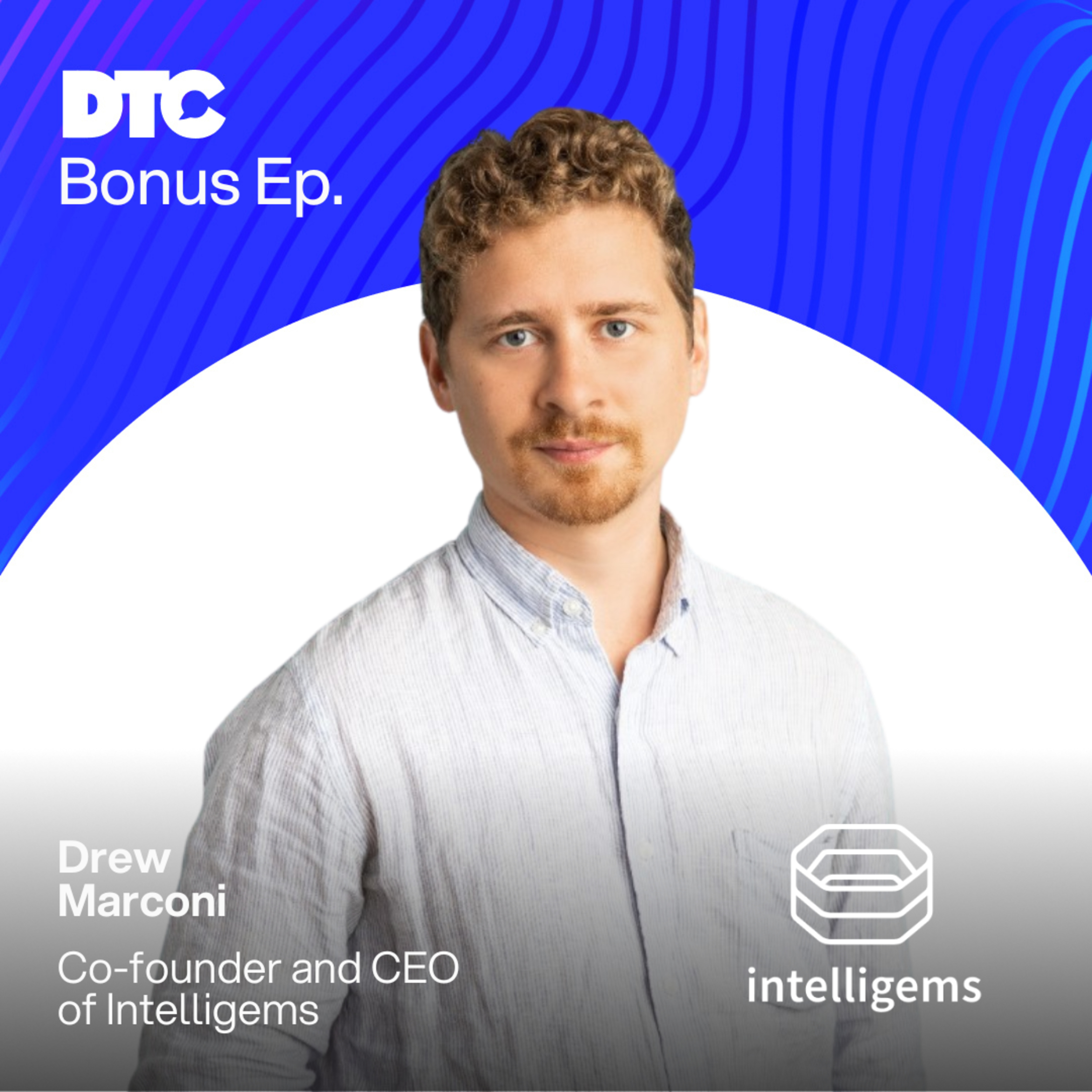
DTC Podcast
Bonus: How to Build a Testing Roadmap That Drives Real Profit—Not Just Revenue with Drew Marconi
00:35:25
Loading summary
Transcript44 lines
- [00:00]
A
You spend all this money and time driving traffic to your site and we help you find ways to get the maximum profit and yield from that traffic. In the last four and a half years, I have seen a lot more openness to treating pricing as a business lever. Pricing needs to be broader than just the list price and this is a drum I've been beating for a while now. The reason you test is to learn more about your customers so you can find opportunities for incremental profit. The way that you learn is through statistical sampling. Your visitors, your traffic is the limit on how much learning you can do. It's, it's your budget. If a visitor comes through who was not tested on, you just kind of like wasted some of your budget.
- [00:50]
B
Drew, welcome to the D2C podcast. We're going to do a amazing deep dive on the state of a B testing. But first I was wondering if you could give me a bit of your hero's journey. What brought you into build IntelliGems?
- [01:06]
A
Yeah, kind of a funny journey. Not where I expected to be. I I started my career in consulting so I was at McKinsey for four years. I spent a year as chief of staff to the CEO there. Did a bunch of education technology work, a little bit of pricing thrown in. Followed a colleague to this company via transportation that was doing consumer ride sharing. They're actually a about to go public selling that sort of technology to cities. The time we were a consumer we were doing flat prices and they're like, hey, go figure out how we should price. I was on the growth team, so I'm running a lot of promotions and then got tasked with this large problem of determine how we dynamically price. And that's where I actually got paired up with my co founder who took it on from the technical side. So we spent four years there building out things like surge algorithms and dynamic discount competitive price tracking. We decide we want to start our own thing. We're like it's going to be dynamic pricing for mobile games. Spent three months on that. Pretty quickly realized it was not for us. And we had been like, well E commerce people, people must know how to dynamically price and discount. Like this must be a thing already. And then we actually started having conversations and we realized that people were barely a B testing anything, let alone dollars and cents of their site. So that was like early 2021. We started having those conversations in E Comm intelligence started with price testing, then we added shipping and offers and then hey, we're going to let you content test and do the Classic CRO stuff. And now we're adding on personalizations and AI. So it's been this very iterative journey to get here.
- [02:46]
B
And so at this point, what's the. How do you describe the core problem that intelligence solves?
- [02:50]
A
We help take the traffic that you send to the site. You spend all this money and time driving traffic to your site and we help you find ways to get the maximum profit and yield from that traffic. So we help you run tests that figure out what's going to drive more profit per visitor. We help you build personalizations that discover ways to get more profit from different types of visitors. We help you look at that entire journey, not just, hey, let me change the button color, let me change around the placement of things, but widen the lens and say, how does pricing impact this? How do my offers and discounts and promotions impact this? How does my shipping impact this? How does the visual layer, like, sometimes, you know, moving around the buttons does matter a lot. How does my copywriting matter? My checkout page? And give brands kind of the tooling to iterate, modulate and measure what they do.
- [03:46]
B
Their pricing, I think is such a. It was interesting that you kind of bit that off to start because it's. I think it's something that a lot of brands, they kind of put their finger in the wind to begin with. They kind of set their price and now there's pressures obviously with tariffs where brands are considering raising their prices. So I think pricing is like such a highly relevant thing. We talked in the pre interview about Delta too, who announced their dynamic pricing, which I think is not really what you're talking about, but I think that's an interesting avenue as well where there was a bit of a backlash for them sort of proposing that they're going to be charging people based on external data or something. What do you think, like, what's, what's your statement maybe on the state of pricing in the DTC space right now?
- [04:26]
A
Big question number one. In the last four and a half years, I have seen a lot more openness to treating pricing as a business lever. People realize it has been a very volatile few years. Your margins are under attack. Pricing needs to be a tool in your toolkit to like navigate choppy waters and like be excellent at operating your business. 2021, 2020, when we're having initial conversations, people are like, I haven't changed prices in five years and I'm not going to because why would I? Now everyone's like, how, how can I get more on top of this? So I Think, number one, people are seeing pricing as a lever that they need to actively manage or, you know, they should be if they're not already. Piece two, I think this is what I wish to be true. I don't know how caught up it is, but pricing needs to be broader than just the list price. And this is a drum I've been beating for a while now. But your discounts that you are giving are part of your pricing strategy. Your shipping rates that you are charging are part of your pricing strategy. Your return policy is part of your pricing strategy. And you know, I think people hear pricing and they think about the list price and all of that stuff needs to be in conversation with one another. And then third, yeah, I think tariffs were like the biggest shock to the system. I've heard more people ask how should I price this year in the last six months than I had in like the previous three years. Interestingly, I mean we've seen a lot of price raises. It hasn't resulted in raises for everyone, but it's been a forcing function to say, hey, I'm going to take this seriously, I'm going to go get data instead of vibes about how to change this. And so we're starting to see, yeah, a lot more teams, like approach it analytically with clear ownership.
- [06:13]
B
Do you think some brands are afraid of that? Like Delta backlash about that idea that if a customer sees a price that's higher and then goes back and maybe sees another price or something, that you're losing brand equity or pissing customers off? Do you think brands are afraid of that and should they be?
- [06:29]
A
Yeah, I think dynamic pricing is a, sounds like a dangerous term and I think there's a lot of fear around changing your prices. Like, you know, as a business owner, you're like, hey, if I change my price, my customers are going to be mad at me and my business is going to go away. Like, it's very anxiety inducing. I feel like being a pricing expert is at times like being a therapist.
- [06:54]
B
What do you think it's worth? Right, what is it worth? What do you think it's worth?
- [06:58]
A
Yeah, like, let's just go gather a bunch of opinions. We hear concerns from people of, oh, if I change my prices, my customers are going to be mad. If I, if I test prices, what happens? Will people notice? And I think it's usually the fear is not well founded. It's other things coming. It's, it's fear. You know, we've had, I think 600 million shoppers go through price tests, very minimal Issues where customers have, you know, reached out or there's been kerfuffle. And what I tell the entrepreneurs I work with is like, okay, you can do one of two things. You can test it and get data and understand how people will react to these price changes and make yourself equipped for these decisions or you can YOLO it and be subject to the same risks. So would you rather be smarter going into this risky territory or have less information and like that often kind of gets the conversation through. Another differentiation I think I spent a lot of time talking about with customers is like there's dynamic pricing, there's hey, we're going to be changing the list price constantly. And I think that's where like Delta, you know, got some blowback or Wendy's last year. But then there's like dynamic offers and discounting and like, you know, my wife and I can be sitting on the couch and both get Uber Eats offers. We're just going to use the better one. We're like, oh great, yeah, it's a good deal. So I think there's like dynamic pricing is this big scary turn, but when you start breaking it down into, hey, are you open to running a test to measure elasticity to make better pricing decisions? Yes. Are you open to segmenting your audience and deciding who gets different offers? Yes. Are you open to having a variety of shipping rates and thresholds depending on what that customer has in their cart or where they are? Yes. And that decomposing of this big idea often makes it like people are quite comfortable with the bite sized components underneath.
- [08:48]
B
Maybe go into a bit more detail there like and imagine either use a brand as an example or an imaginary belt brand that I'm creating to walk through what that process looks like. What do people bite off first? Is it simply a segmenting their traffic and sending them to two different offer page with two different prices? How does that and then how would it unfold from there to test beyond just the list price?
- [09:08]
A
Yeah, yeah. So let's, let's take your belt brands, Eric's belts, you're starting with belts, maybe a few other accessories. Maybe you're selling Crocs type jibbit that stick on belt buckles. I think my first push would be what's, what's the strategy like? Like what's your most important thing you're going to accomplish this year is are we trying to scale and be break even on the first purchase but get as much new volume as possible? Are we trying to just, hey, this is a side business. You want to make as much profit any given year as possible. It's like, yep, I want low maintenance, I want that. Are you trying to do a subscription Jibbitz program? And that's actually the most important thing to get off the ground, or, hey, you're going to launch HATS later this year and we want to, like, prepare customers for that. So a good testing roadmap starts with a good strategy. Like, what do we think is important for driving this? From there, we're going to decide what makes sense to take off first. And I think in a lot of cases, like the levers we're going to look across are pricing shipping, which is going to impact every order and AOV and conversion rate, the offer. And that could be the mechanism of the offer. Is this free gift? Is this percent off? Is this dollar off? The messaging of the offer. This is typically for new customers. What are you telling them? How is that landing page happen? And then the investment amount, like, what percent back are you giving? So it can be, hey, I need a great hook that gets new customers in the door. Or it can be the ux. People don't understand how special these belts are. People don't realize how valuable they can be. People don't know why you'd put Jibbitz on a belt. We're going to go into that and so we'd start to prioritize. In some cases, we're going to do sequentially. Maybe we have the ability to like go across. Let's say we pick pricing. What I probably do to start with you is say, hey, let's start with a core belt collection. You've got a long tail of, you know, NFL team branded belts, but you got this core selection that is totally in your control, worth doing. We're going to take that and we're going to run a straddle price test. We're going to do 8% lower prices, 8% higher prices, and we are going to measure the elasticity. When we lowered 8%, how much does conversion change? What does that mean for aov? What does that mean for your profit per visitor? And similarly, when you raise it, what happens? And so we're looking for profit per visitor. You send a thousand visitors to the site from your ad campaigns at these different price points. When you take into account the conversion rate, the AOV and the margin percentage, how much profit are you making from those thousand customers? And like, that's going to be where we start. It impacts everyone. It gets big things from there. It gets iterative. Hey, higher pricing is working. Let's test Even higher. Oh, let's go to that NFL collection. As we've changed this price, our shipping threshold needs to change. And you can often be doing content tests alongside, like, change your copy, change the layout as you're doing these more commercial tests. But I mean, there's, there's. That's one example that we totally made up. But like, different strategy, different catalog profile can mean a very different starting approach.
- [12:22]
B
This belt with Jibbitz idea is really starting to grow on me. You've got that, you've got that bracelet that has all those bangles that moms end up getting with different.
- [12:28]
A
Yeah, the Pandora bracelet.
- [12:30]
B
The Pandora bracelet. We need a Pandora belt for dads.
- [12:33]
A
It's like, yeah, like, people do love belt buckles. So what if you could just get like eight belt buckles?
- [12:39]
B
I think we gotta start this. This is.
- [12:41]
A
We may have a brand.
- [12:42]
B
Yeah, this might, we might have just done it. I, and I love this idea. Everyone's looking for incrementality, true incrementality. Right. And so you can, you know, when it comes to your actual contribution margin on a product by product basis. So talk to me a little bit about like the kind of like when you're talking about doing testing here, are you talking about doing it sort of across the full funnel? Are you selecting traffic sources to say, okay, we're going to do this with our meta traffic and then on the, you know, Google side, we're going to do something different? Are you, how do you, how do you think about breaking down the segments that you're doing the tests on?
- [13:15]
A
Yeah, it's a great question. And that's like, you know, how do we get to personalizations? You know, different customers from different channels and different sources are probably going to respond to different things. We have a whole more targeting possibilities and rules than anyone could ever use. I like to recommend people start broad, you know, like, let's say you're running acquisition for this belt brand. Take all of your paid traffic like you're. What you are trying to do is stay break even and acquire as many customers as possible. So isolate to pay traffic the people that you are driving to the site, run the test on everyone. And maybe we're playing around with the presentation of the offer like it kind of ends up the same amount. But we're messing with that landing page. Run that for two weeks. We're then going to look in the dashboard and see not just what one overall of variation C was the best, what one per source did. Was there a different winner for Google or for Meta Was there a different winner actually for your, you know, like retargeting campaigns versus your true prospecting campaigns? And as we find those sub segments of customers where they actually behaved differently, maybe, maybe they're retargeting folks responded super well to a free shipping offer, whereas the folks coming from Google just needed like education and some free informational material. Like a free gift was what they responded to. You can find that in your data and then say hey, I'm going to roll this out as a personalization. So people coming from this source, I'm going to make sure they have this offer, this experience on the page that's congruent with what they saw in the ad or in the campaign. And this other group over here is going to have these and building like a kind of a rule based personalization system that it could be as simple as just changing the image or changing the hero copy or it could be as complex as like they get an entirely different offer structure and discount price. But it starts taking the broad data and then looking at your sub segments.
- [15:24]
B
It fits into your 3E's framework which jogged your memory on last time. Explore, experiment and extend. So you start, you could you just sort of maybe start with a segment and then extend it out?
- [15:36]
A
Yeah, yeah, you go explore the data, come up with your hypotheses. Don't just yolo a test cause you saw a screenshot on Twitter. Explore your own data, come up with hypotheses, experiment with it broadly and then extend your learnings to different segments. Push out these different versions to the people who respond well to them.
- [15:53]
B
So what are the tests that people are doing right now? I don't know if you have any specific examples really dialing in their Black Friday offers that they're going to be making this year because I think that's on everyone's mind right now is how to optimize and make sure that you've got the pinnacle offer and set up for Black Friday Cyber Monday.
- [16:11]
A
Yeah, well we just had a lot of people use Labor Day as a dry run and you know, if you miss that then think about it for next year or Halloween I think too. Right. How is it really a shopping holiday for some brands? But yeah, it's a time when people are expecting a deal. It's a good way to run one of these. Like do take the experiment approach of I'm going to try a different few different mechanisms. Let me see about a free gift. Let me see about a straight percent off. Let me try a volume like buy More, get more Spend X, get y, spend 200, get this much back. So we saw a few people run straight up mechanism tests like do people value a free gift more or do they value percent back? And there, you know, it's looking at, I think we had someone do free gift. Over 150 bucks or 10% off over 150 bucks. And, you know, the free gift cost about $10 to provide. What we saw was the free gift actually, like conversion rate ended up about the same in the two groups. The AOV was $10 higher for the free gift. People were more excited about getting that extra gift. It seemed like a higher perceived value, even though the cost of goods sold was 10 bucks or 15 bucks. So conversion rate's the same. The AOV went up, people were more incentivized. Therefore the profit per visitor and total, total gross profit went up. So that was one case where they're like, oh, great, actually we should like go get a little more supply of this gift that we used. It was like a frother for a beverage company and make that a big part of our holiday plans. Another really interesting one I just saw and was debriefing on today. This was in the apparel space. They have kind of three categories of their catalog. There's the best sellers, drive a third of the traffic or a third of the sales. Pretty small selection core, you know, maybe another 20 SKUs also drive a third of sales. Then everything else. Long Tail also drive a third of sales, but it's like hundreds of SKUs and they were kind of dialing in. They started with a couple different offer levels of let's try not to discount the best sellers, but get 10% off tier 2, 20% off tier 3 versus 5% on the bestsellers, and then tier 2, 20% off everything else. And as the weekend went, they watched these results and actually turned the dials to say, oh, shift more traffic towards the 5%, 5% variation. And that was actually going at like the catalog level. What do customers respond best to? Like, which products do I need to get the discount on? So they were in there toggling the knobs as the weekend went based off what they were seeing. And that's something that we've seen people do for Black Friday. So, yeah, I don't know. Those were two. I got debriefed on the team by today. I'm sure there were a bunch of other tests out there as well.
- [19:06]
B
Everyone wants to be able to test consistently, but I feel like people go in cycles. There's also like different people in the organization who maybe have purview over different parts of whether it's you're testing the front end offers or you're testing the back end conversion funnel. What do you like? What are the best, how are the best brands sort of handling, creating an ongoing culture of testing and who looks after that in an organization generally?
- [19:31]
A
Yeah, often. I mean the organizations that we see do it best. The VP of E Comm, like whoever owns the site has made testing a priority and they have found the tool and they've tasked someone to be in charge of that. Now that may be a combination of people, but there's a senior advocate, VP of E Comm or the founder and then clear owners for these things. Like we want. We talk about widening the lens of what's testable. It's not just the ux, it's also the price and the offer and the shipping rate and you know, keep saying this list over and over again, but in that when lightning, maybe ops team is setting the shipping rates, maybe your acquisition marketer is doing some offers and your retention marketer is doing others. So they need to bring that group together and say, hey, we're going to have a testing approach. I want each of you guys to be doing this and we're going to like meet weekly and talk about new ideas. Like that weekly experimentation meeting usually is. What new ideas do we have? Let's put them on the board. What tests do we have active? Do they seem good? Are they ready for analysis? If it is, let's analyze tests that are done, decide what to do and then let's groom and decide what to test next. Let's groom that backlog. All these ideas and they're typically looking at an ICE framework, which is how easy is it to implement? How confident are we that this is going to be a winner and what's the impact if it wins? And using that to prioritize the tests. So you have different people running the tests, but you're talking about it as a group, you're making sure that it's a cohesive strategy and then you're looking at the same metrics. One of the reasons I really like profit per site visitor as a metric is it puts all of these different initiatives on the same footing. Like the person going and setting prices is looking for incremental profit per visitor in the same way that the person building a new in cart upsell experience on the development side is looking for incremental profit per site visitor in the same way that maybe you're adding a site performance tool. That speeds up the site. We can test it and look at the impact on profit per site visitor. So everyone is held accountable to incrementality and looking at that same metric. And then yeah, I mean I can, I know immediately when I pull up someone's dashboard whether they're one of these teams because they have clear naming conventions in there. They have like dates and good data about what's being tested. And I see multiple users logging in. When I see that in a dashboard, I'm like, this is a high performing team. Like we don't even need to talk to them. They're going to go get a ton of value through their testing program.
- [22:09]
B
And approximately how are they thinking about like the number of tests and maybe the frequency? Like are they, how often are they testing pricing thing, Is it a continually thing or is, do they test it quarterly? Like what does a testing regiment look like for one of these successful teams?
- [22:24]
A
A test at minimum is always life. Like the reason you test is to learn more about your customers so you can find opportunities for incremental profit. The way that you learn is through statistical sampling and information. That means that your visitors, your like traffic is the limit on how much learning you can do. It's your budget. And so you need to be spending that entire budget. If a visitor comes through who was not tested on, you just kind of like wasted some of your budget. So the best teams almost always have at least one thing going at a certain scale. You can actually have multiple things in parallel if you have enough traffic and run things mutually exclusively. So test A is impacting half my traffic and test B, something totally different is impacting the other half of my traffic. Tests run for two weeks at a minimum. It can be really hard to wait. People love refreshing the dashboard. But like there are biases that can happen early in a test. And I see people get so excited after 48 hours and like want to end it. I'm like, no, you have to wait because like there's the people who see this test first are the people who are constantly on your site. Like there's a sampling bias and they just don't have dead time. You know, they, before they end the test, they know when they're gonna end it. They have the next one built and queued up. And so I mean we're, we're like, we're working on some cool stuff. We're bullish on around AI to kind of cue those things up for you and build these tests to make that cycle easier. But it's kind of like as soon as one comes off the site, you roll out a winner and you deploy the next, and you just minimize any dead time.
- [24:04]
B
I want to talk about agentic. The future of agentic AI is the. The buzzword of the week on. On the podcast. But just talk to me first, just quickly, about statistical significance. I guess, obviously, like you say, your traffic is your budget, and the more you. The more data you can collect. But what. What do you think of as, like, the minimum thresholds for statistical significance in these tests?
- [24:24]
A
Yeah. So it's, It's. I see so many screenshots posted, and I'm like, I wonder if we scroll down what the significance would be. So our dashboards have a Bayesian method of statistical confidence, so we can kind of say, hey, what are the percent odds that group B is better than the control group or group C is better than control group? And you're kind of like you're comparing two things. You're using prior assumptions and you're giving a measure of confidence. Now, people should always look at that and look at the ranges. There's a big difference between, I'm confident that this group B is better than control, and I'm confident that Group B is 10% better than control. Because sometimes we can be very confident that it's better, but it could only be, it's like 1% to 10% better. It could be this big range. So we try to make that clear in our dashboards because sometimes people just see, oh, great, conversion rate was up 7%. They roll it out, and then they're like, why didn't my conversion rate go up 7%? It's like, well, you actually didn't have enough power in the sense you didn't run it for long enough to shrink that sample size. The more data you get, the more confident we can be in the exact delta between two groups. I'm getting, like, kind of deep in stat speak, so I hope I'm not losing people here.
- [25:40]
B
Nope, I'm with you.
- [25:43]
A
So look at the intervals. Look at those ranges in addition to looking at the, you know, odds to be best. And what you're seeing in a dashboard is just an observed value, but there's a cloud around it. The thing around, why do I say two weeks? So statistical power isn't quite like. It doesn't. It's for, like, when you're running T tests. It doesn't really apply in a. In a Bayesian mode of, of statistical confidence. But two weeks gives us confidence of, hey, you're getting a good sample of visitors. A good sample of orders. We have got an even mix of weekdays because weekday by weekday can be very different behavior on a site. And we've gotten past this, like, initial period that comes from new people just being exposed to the test. So, like, what we have, what a lot of our agencies do, is they will think about this as, what's the minimum detectable effect? I want to see. Like, I want to know if I'm making a 5% improvement or more, what's my baseline level of traffic? And you can go put it into, like a stat sig calculator or a test calculator online. There are a bunch. And you can say, hey, with these ingoing assumptions, if I want to be 85 or 90% confidence in a 5% change, how long will I need to run this test? And they'll use that actually to set expectations up front with themselves and with their clients about, here's how long we need to get a powerful test. And that can help, you know, get rid of some of that temptation to peak and then just end the test super quickly.
- [27:17]
B
How are the smartest brands considering their, like, absolute bottom line in these tests? Because it's easy to think about top line, I think. And just like conversion rate, you talked a lot about kind of going deeper down the funnel. How are brands kind of using intelligence to really optimize their, you know, marginal return on ad spend, for instance?
- [27:37]
A
Yeah, it's about that profit per visitor metric. I mean, people need to expand the equation of how they look at CRO and test results. Like, okay, it's conversion rate optimization. Conversion rate is a dumb metric. I think everyone gets that that conversion rate is noisy. That got replaced by revenue per session or revenue per visitor. So we're going to look at conversion rate times aov. If that goes up, that means total revenue is going up better. Still not a complete picture, right? Like, I could probably get revenue per visitor to go up a lot by giving steeper discounts. Top line goes up, my ROAS goes up if I'm measuring it on revenue. But if I'm just giving away all my margin or even going negative, I may be crushing the bottom line. So they also need to say, conversion rate times AOV times my margin percentage. So pull in cogs, pull in cost to fulfill, and get to a sense of the gross profit you're making on these orders that are part of the test. You multiply those three across, you get to gross profit per visitor. And so that to us, like, we can pull in cogs, we can pull in those fulfillment, those fulfillment cost estimates and help you understand, yeah, you raised prices, you lost orders, maybe even you went down a bit in revenue but your unit margin was this much higher. Therefore you're making more gross profit. Is there gross profit overall? Hey, yeah, you saw a huge top line boost but because you gave away this discount, did that actually work? Where's the sweet spot? So I mean we just try to make sure that every brand gets their cost data in there in a reliable way so they can have their tests measure it. I don't really see a reason why you wouldn't use it as the metric for basically any kind of test that you do.
- [29:30]
B
Now talk to me about the agentic future of intelligems and just a B testing in general. How do you see the agentic playing into this?
- [29:39]
A
Yeah, it's going to be a really interesting five to ten years for testing. I think the short term, what I expect see a lot of over the next one to two years is agents helping run this testing flywheel for you. So explore, experiment, extend the come up with test ideas, build them, run them, analyze them, roll them out. That's the flywheel that's done manually. Right now I think we're going to see agents start to give teams and agencies a lot of leverage in that so that people can move faster, reduce dead times. Like we just rolled out an agent that will analyze your test results for you and you can chat with it. It will tell you if it's statistically confident if you should run it for longer. It will tell you what sub segments are performing well. And that work that used to be a lot of clicking through filters and switching between pages and putting it in a PowerPoint deck, that can now be done for you. You should ask the right questions. But we're really pumped about that because for us it's kind of step one of building out this workflow. And I mean I'm just very bullish on that. Expanding the number of people who take on testing programs like still only 20% of brands on Shopify plus use a testing tool. When I talk to them, the main answer is of why aren't you doing this? Is like I don't have time, I don't have someone on the team to do it. There's no they get it's valuable but they just haven't gotten to it. And so if we can say hey, agents are going to bring the effort very, very low, those people are going to start coming into the market. And I think we, I mean we work with some Agencies who are doing some like incredible things around test ideation using their own agents and branding it. So there's a ton of innovation in the space. What I think the next level is is kind of moving away from discrete tests. And this is a test and this is a test and it has this many groups to actually like generative variations of tests. So you can say, hey, take this page. Always be trying new things. Go like great. We started with three groups, this one is winning. We're automatically assigning traffic. But then there's like a variant agent that is designing new things to try. And so this is kind of like, you know, infinity testing is a term for it where without lifting a finger, this page or this section of the site is just constantly being optimized and like we're rolling with the best version but there's always new things being tried and monitored. I think then like, I think it's still quite a ways away. But generative one to one experiences on while shopping is like the level beyond that, like level three. Hey, I'm a visitor. I come in. There's agents that know where I came from, know what people like me have done, watch the behavior, potentially know more about me as a person that will see where the data landscape, like data privacy landscape evolves with that. And just as I shop, new pages are being created for me from scratch that like, you know, this agent or an algo somewhere has decided is best for me. There's a lot of reasons why I think that's like not as close as some people think. But we will get there in the decade I think.
- [33:03]
B
Super cool. I just was on Your, on your LinkedIn page. Everyone should go follow Drew on LinkedIn. And of course if you're not one of the 20% of brands on Shopify plus that are testing, you should probably reach out. Go to Intelligence IO. Let's see if I can screen share quickly because this meme, I think you just really nailed it with this meme about price testing. So you know, Small brain is just raise prices across the board and hope for the best. Raise prices but have them end in the nine. So it feels strategic. Raise prices and offset with better discounts to protect conversion. But ultimately you want to use intelligence to test multiple price points with a 9010 traffic split, recover margin, protect performance and make data backed decisions while your competitors panic. Why? Yeah, just do that. Easy.
- [33:46]
A
I love the Galaxy Brain meme. Yeah, yeah, that's it. I think there's a version even before of like I'm never going to change my prices, which is I honestly heard, heard that a lot when we were starting intelligence.
- [33:58]
B
Well, that's not really the atmosphere we're in right now. I think in E commerce you don't have to raise your prices necessarily, but you gotta be looking into all of your options. Volatility is the new normal, right?
- [34:10]
A
Yeah. And you just have to see, like, widen the lens. It's not just pricing, it's not just the discount, it's not just the UX of someone through the site. Like, the goal is take this traffic, take the people that are coming to your site and maximize that expected profit. And some levers are going to be boost conversion rate, some levers are going to be boost aov, some levers are going to be boost the margin percentage. But like, think about that holistically and go look at your org and figuring out where you have super weird silos that are probably causing disjointed approaches to that because. Yeah, it's not. It's not just one of the things.
- [34:51]
B
Well, Drew, thank you for coming on the DTC podcast today. This was super interesting. You got to go to Intelligems IO, add Drew on LinkedIn, tell him that D2C sent you. Thanks again, man. This was awesome.
- [35:01]
A
Thanks, Eric. Yeah, thanks for having me.
- [35:09]
B
Thanks so much for listening to today's episode. If you're not a subscriber to our newsletter, you can do that right now at Direct to consumeralloneword Co. I'm Eric Dick and this has been the D to C podcast. We'll see you next time.