← DTC Podcast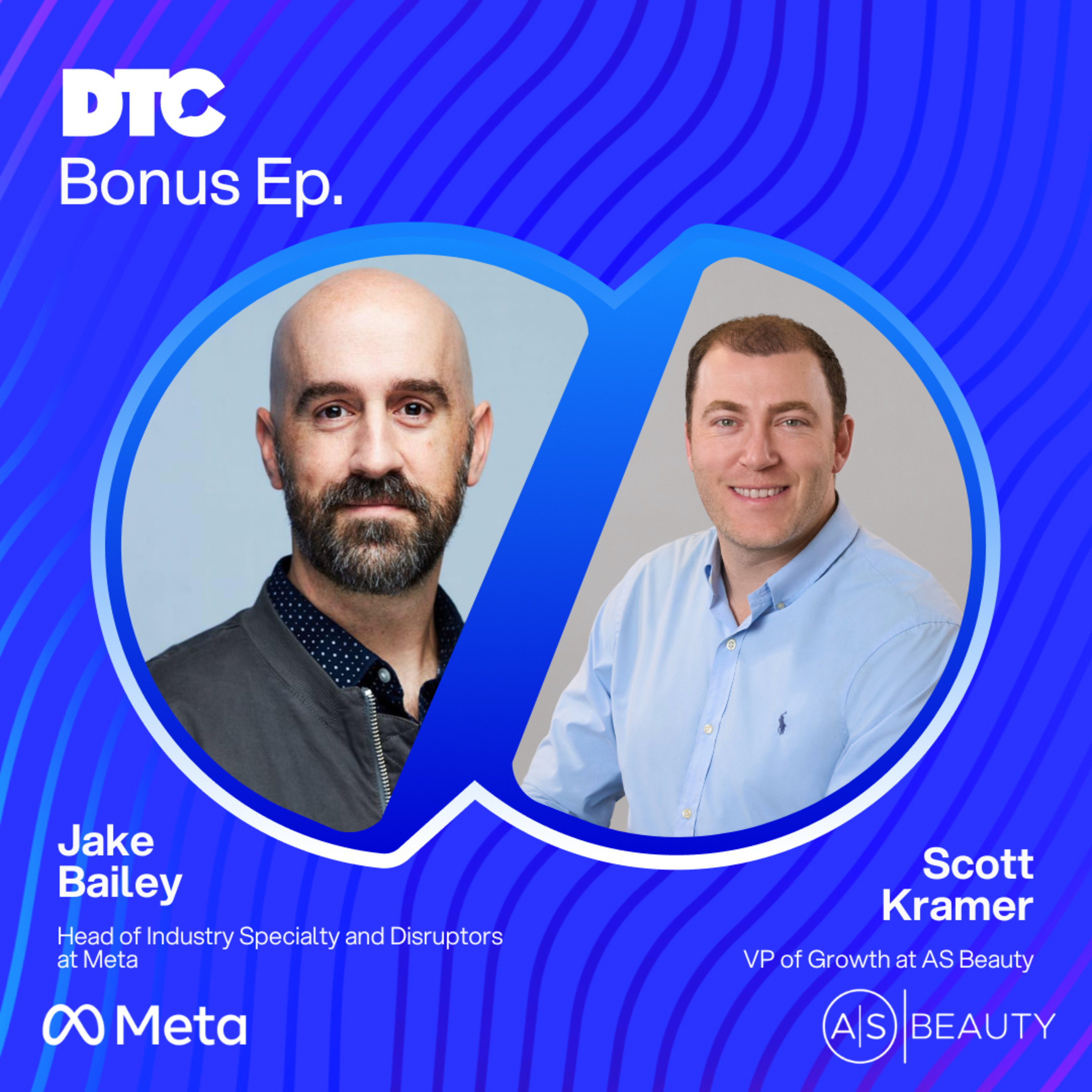
DTC Podcast
Bonus: Inside Meta’s Disruptor Playbook with AS Beauty: AI, Creators & Campaign Tactics for Q4
00:40:10
Loading summary
Transcript68 lines
- [00:00]
A
I feel an inherent responsibility for us to work with these companies to truly innovate and to build something net new that becomes the next best practice globally across our platform.
- [00:11]
B
What are some of the challenges that we think are facing brand marketers this holiday season?
- [00:16]
A
It's one word, it's uncertainty.
- [00:19]
C
The best ad, the best script you think is going to win almost never.
- [00:22]
A
Works for every marketer out there. DTC leader challenge your team to use measurement. A lot of the companies that we work with that are truly the best of the best use or three different sources of truth. When you're only competing at the bottom of the funnel, last click and not focusing on incrementality, then you're truly missing the larger opportunity and you're going to spend yourself out of being able to grow a business profitably.
- [00:53]
B
Welcome to a very special episode of the DTC podcast. Today we have Jake Bailey. He's the head of industry as well as specialty and disruptors at Meta. And we've got Scott Kramer, VP Growth as Beauty. Jake, I was just saying in the, in the pre interview I remember learning about what the disruptors were within Meta and I thought that it was such an interesting approach to this, all these disruptors in the industry. Talk a little bit about your role at the Disruptors and what the disruptors are.
- [01:19]
A
Yeah, great question Eric, and thanks for having us. The Disruptors team within Meta is primarily advertisers and brands that are D2C. A lot of the companies that you've probably spoken with over the years, we work with every single one of them. Many of them are digital natives, meaning they're born on digital, either app or web and they are a fast moving group that loves to test and move very, very quickly. So our job is to keep up with them and help them push the boundaries on the platform.
- [01:47]
B
And it goes across all verticals, correct?
- [01:49]
A
Yeah, it's primarily, I would say the fair amount of them are beauty, apparel and food tech. But those are, those are a few of the primary ones that we work with. But it does go across all verticals.
- [02:02]
B
Scott, why don't you tell me a little bit about your role as VP Growth at AS Beauty.
- [02:05]
C
As the VP of Growth at AS Beauty, I oversee all of our paid media performance marketing and really have a close eye on how is that helping drive revenue across all their different sales channels. So in the early days a lot of DTC brands very focused on E commerce, Shopify numbers. But we've seen a significant growth through our Amazon business as well as some other sales channels. So we're really starting to think this year about how are we kind of driving revenue both on our Shopify and.com store, but our other channels as well. And working with the Meta and Disruptors team has been an amazing opportunity. I think for anybody that's been in the Facebook media buying or advertising landscape has always looked up to the Disruptors team and everything that Jake's done. So we've been a part of that group for almost two years now and it's just a very exciting opportunity and kind of like being at the forefront of testing new campaigns, new strategies and just looking at data from a much more like holistic landscape has been an amazing opportunity and especially important for our growth.
- [03:02]
B
Jake, are Disruptors like a two way system? Like the coolest thing about meta ads is just how fast you can move, how, how many different ways you can take it. Are you both like learning from Disruptor brands and then sharing what works with other disruptor brands is a two way street?
- [03:18]
A
Yeah, it really is Eric, and it's a great question. One of the things that gets me so excited in working with these companies is they truly push the boundaries of what's possible on the platform. So our job, I feel an inherent responsibility for us to work with these companies, to truly innovate and to build something net new that becomes the next best practice globally across our platform. So a lot of the things that Scott and his team build with us and alphas and betas ultimately become new features that we roll out globally and especially across Disruptors. These companies move fast, they will turn on a dime, follow the data and they're all extreme performance marketers and that for us makes it a lot of fun because things change every single week, every single month.
- [04:04]
B
That's super cool.
- [04:05]
C
It's such a unique opportunity. I mean I think that's where it's like we learn from them just as much as they're learning from us. And it's like as such an important channel that we're able to kind of have that direct communication line and they're actually so receptive to it I think is what's, what makes it such this kind of like illustrious group to be a part of. So we're thankful to be in there and helping push the boundaries for, for us and for, for all other brands too.
- [04:27]
B
I think it's unique. I think there's, there's a rap that sometimes platforms get about their reps not being that responsive and always sort of pushing maybe the company line about how they think things should be used. But As a performance market, I've been doing this for over 10 years. It's always a push and pull. You're always innovating yourself, taking with what your rep says with a grain of salt, trying to do that as much as possible but, but also having your performance marketer roots where you're trying to push on, on, on hypotheses that you have or whatever. So it's really cool to hear that Met Time now has integrated that push and pull into how it innovates. Makes a lot of sense.
- [05:02]
A
With that also comes a bunch of challenges too because they're pushing every single boundary and so they keep us honest about what really works well and what doesn't. And so the, the most common theme that we see Eric, is like a lot of the best disruptor brands, DDC companies have a permanent testing roadmap in place. So they always are working on what's the next test we're going to run. And it sounds exhausting but that's how great performance marketing companies truly get to the next level.
- [05:30]
B
Let's talk a little bit about this holiday season. The only constant in this industry is change. Changes on the platform, innovations in the tools, changes in the cultural landscape. What are some of the challenges that we think are facing brand marketers this holiday season? More so than previous years, Jake?
- [05:46]
A
Yeah, I would say Eric, if it's one word, it's uncertainty and it's uncertainty in the economy with the consumer with inventory levels that they should have in preparation for this big holiday season coming up, tariffs, interest rates and the list goes on and on. And I would say more so than the last number of years, a lot of uncertainty. But with that also has been a ton of resilience that we're seeing. So from that standpoint it's been really encouraging to see it.
- [06:17]
B
I just saw a news headline this morning about the Big Mac index right now and about how McDonald's like sort of sales are, are going down maybe for the first time in like a really long time. So and they've sort of used that as an indicator about consumer confidence. What are you seeing heading into the holiday season Scott, around consumer confidence?
- [06:36]
C
That's the Big Mac index in New York City. I think we call it the subway price or the, the pizza price index. And that continues to go up like they just raised it another, another 10 cents. But yeah, I think all the things that, that Jake said it's like we're closely watching everything from consumer confidence. I think economy, tariffs, that all just plays into consumers sentiment for are they Ready to buy? Do they want to buy? I think also this year tougher than ever is tariffs. And I think while some brands have more or less exposure to tariffs, it still is hitting all of our bottom line. So we're all kind of talking about price increases and kind of counter to that, in Black Friday, Cyber Monday, it's like people want the best price. So how do you kind of figure that out? Is there other ways we can find items that have better margin that we can kind of bundle together to help ensure that we have those same kind of profit levels to keep scaling and pushing? I think the one thing that is better this year than last year, if we think back and looking at November last year we had the election and we've had so much uncertainty, I think, around the election for consumer buying. And I think that's the interesting thing. It's like consumers don't always think logically. I think they're always kind of fearful of what's going to happen this election. But in reality, the election doesn't change anything that next day. Nothing's going to happen until the next term when presidents actually come in. But there's just that concern of like, okay, if it goes one way or the other, am I going to have more money, less money? What's that going to mean for the economy? I think just like levels of fear, I think really kind of affect consumers and their buying habits. I think that's what we're hopeful that this year we can have a little bit more certainty, at least in November for holiday and holiday planning. And then also the competition of advertising. October was a very aggressive month again, as you look at the ad spend of the political landscape and what that did last year compared to this year, super cool.
- [08:24]
B
What about the lipstick index? While we're talking about index, I think, or the lipstick effect, that's something we talk about on the POD podcast a lot, is that even in tougher financial times, people are looking for those things that are sort of acute pick me ups in a way.
- [08:37]
C
Right?
- [08:37]
B
Is that, is that something that you see?
- [08:38]
C
I mean, yeah, the lipstick effect. You look at it during COVID I mean, brands that were selling workwear and things like that, those brands suffer. But again, the lipstick effect are kind of how the brand people are buying things that make them feel happy. I think that's the nice thing of where we even sit in the beauty and cosmetics category. We call ourselves in the masstige. So not mass and not prestige. So kind of in that happy medium where it's a price point that hopefully most people can afford. And that's where our AOVs sit. 50, $60. We're always wanting to increase AOV because again customer acquisition costs get more and more expensive. So I think that's the challenge. And what tactics are we doing on site with post purchase upsells, cross sells, all those things. So I think we definitely are fortunate to be able to take advantage of the lipstick effect. But there are always other challenges as well. We're trying to work through there too.
- [09:28]
B
Yeah. So there's challenges in the market and there's constant innovation from meta's side. Jake, with working with the disruptors, working in industry and specialty. What's sort of the top line messaging that you're coming to this podcast with for brand owners looking to have a better holiday season than they had last year?
- [09:43]
A
Yeah, I would say there's probably like two big things that have changed dramatically over the past call it 12 to 18 months. And I think the first one is our investment in value solutions. And from our standpoint that would be things related to value optimization, incremental attribution or optimizing towards LTV. We put a lot of work over the past 24 months across hundreds of engineers in building out these solutions and just making them way stronger. And we're starting to see that really play out. And Scott, keep me honest as I'm going through this, I would say the other one that has been big for us is the shift of the consumer towards video first experiences. And in this case it would be the size of reels versus feed and how much consumers are spending their time looking at reels and listening to creators. And so we've invested a lot in making sure that partnership ads are thriving. And for a lot of our companies that we work with, they're seeing really strong Dr. Performance through creators, but also seeing net new audiences. And that's the real important unlock there because when you're only competing at the bottom of the funnel, last click and not focusing on incrementality, then you're truly missing the larger opportunity and you're going to spend yourself out of being able to grow a business profitably. So for a lot of our clients, we'll have them look at things like Rolling reach. What is the net new audience reached by going into some of these other services like creators and partnership ads? And that's been a big one for us.
- [11:17]
B
On your side, Scott, which of these these aspects has been most influential this year?
- [11:21]
C
Yeah, I think it's all the above. I think that's where we're Always looking at how do we increase our reach and kind of drive net new customers. I think that's where we need to make sure that when we're setting up our campaigns, when we're doing these tests, we're measuring for incrementality more than ever. I think as smaller brands, when you're first getting started, I think you've got the luxury of kind of like, you know what, I can just look at my business and kind of focus on a few small metrics. But as you evolve and grow, some of these metrics become even more important to kind of measure and kind of keep a close eye on. So value optimization has been an amazing one for us. We've played with it in the past, but I think it's at a point now that it's even better than ever. Also, incremental attribution is one that we were part of the alphas for and we're really excited about the new wave of incremental attribution and, and even incremental attribution with value optimization setting. It's kind of like how do we just kind of take these best practices and combine them together? Because I think that's where it's like looking at these tools and kind of like finding ways that we can really guide them for our business KPIs. I think that's the hardest part that people forget sometimes. Like the meta in their system is so good. But you need to make sure you keep it on the right rails for your business and for your metrics. I think that's where using right audience exclusions, building the right customer segments for that stuff to make sure if you're telling it, hey, I want that high value customer, you need to make sure that you're excluding past customers or past high value customers so that it knows to go after net new. If you don't do that, it's just going to take the signals you're giving and it's going to go for the easiest win. So that's, I think, the challenge that us as advertisers and marketers really are becoming. How are we at aligning our KPIs to the structures and kind of like building the architect for these tests and for these, these campaigns in the correct way to get us to those KPIs.
- [13:04]
B
Incrementality is the word of the year on the DTC podcast and in the industry practically. What does that look like? What are the tools that you're using or what are the structures that you're using to really focus on Driving Net new.
- [13:16]
C
Yeah, for us, I mean, it's pulling in all the different ways that we can guide it through those customer solutions. So we layer in a bunch of stuff in there. So from custom audiences that we can build within Meta and they're different events. We pipe in our customers from Shopify, we pipe in audiences from Klaviyo. We even utilize some of the Shopify audiences on top of our kind of like CRM uploads. And then there's other tools that we've been looking at out there that are kind of like, hey, is this helping kind of increasing this exclusion capabilities? We also use tripwail for a lot of our attributes. So making sure that, you know what, while we're looking at this, how is that actually coming through on the back end? So within there, we measure our new visitor percentages, our new customer percentages. So to make sure that, hey, if we think this is actually driving it, is Meta taking the signals we're giving it to go after the right types of people, I think that's the struggle we have. Sometimes if you're just kind of looking at one metric or looking within one dashboard, it may look great. And you're like, hey, Ross is amazing. Let's scale, let's push. It's like, wait, wait, hold on. Let's take a look at it through a couple other KPIs and double check it. It's almost like, is something too good to be trading? I've been around this long enough that you're like, if Rose looks amazing, it's like, before I start doubling budgets and adding zeros at the end of ad spend, let me make sure something else is going on. And like, is this all like, checking out before we start? Start ramping too soon?
- [14:34]
A
Scott nailed this one because a lot of the companies that we work with that are truly the best of the best use two or three different sources of truth in order to triangulate what's true Incrementality. And so for every marketer out there, DTC leader, it is truly challenge your team to use measurement in order to find out which channel is really incremental to your business. You don't want to be investing your precious marketing budgets on purchases that would have happened anyway. So make sure that you're truly leaning into incrementality and that will really help you right size and invest your money as best as possible.
- [15:11]
B
Music to our audience's ear, I can tell you. So creators and partnership ads have been around for a long time. What's changed about how they're used maybe this year, year or. And. And why they're more important than ever.
- [15:25]
C
Yeah, it's essential. I mean, partnership ads, white listing, gray listing, blacklisting, some of that stuff we've done a lot over the years. And a lot of people that work with a bunch of influencers and celebrities are. Are familiar with that. And it's. It's always interesting. I feel like the early days of working with some. Some celebrities in partnerships, you'd always kind of see, like, we'd run and we'd test. We're like, okay, if we whitelist it, if we run the same content, but from our page, or if we kind of do it the. In partnership. And for whatever reason, for a while, it always felt like whitelisting outperformed the partnership. And I always had this theory of, like, the consumer would know that when they're seeing that ad served to them when they see that celebrity name and it says like, in partnership with. And it's like, that's just like a red flag to them. This person's getting paid to post. I don't care what it is. I know I'm getting sold an ad to. So that's where we always felt the white listing style performed better because it just felt more organic and more like this person, this celebrity, this influencer that has some value to kind of talk to the products is actually in a more organic way speaking to you. And so I think that's where we typically were running whitelist for a long time. And now with the addition and kind of the changes to the partnership, I feel like we're starting to see it really swing the other way. And we've been doing a lot of tests because it's not easy setting up whitelist. It's like working with people to get access and share that. It's a complex and tough process, especially for people that have legacy accounts that maybe their Instagram pages that connect to their Facebook page. And so you're trying to run it, it only ends up on one platform. And like, we always want to kind of like, optimize for as many platforms as possible when we're running ads. So I think the recent changes to partnership ads has really helped us scale and amplify this, and we're seeing the results perform a lot better. I think also in the past when we tested it, we'd see way higher CPMs from those partnership ads compared to whitelist. And that's where we always felt that, you know, what the whitelist looked like they were more organ. We were getting rewarded in a sense because again, Meta is getting the signals that this content that people are engaging with, we want to serve it more. So you're getting more reach and kind of winning more auctions. I think that's kind of what we're seeing now with the new wave of partnership ads that it's kind of coming through and kind of working to similar success that we saw back in the day with Whitelist. I'm sure Jake has more context to add that's kind of the outside of what we're seeing, but the meats of it, I'm sure he can add more to now.
- [17:46]
A
You nailed a lot of the good points, Scott, but one thing that I would say is important about this at the highest level is creative diversification. At the end of the day, it's about putting different concepts into the machine, into the AI that we've invested so much money in and letting it do the work and finding the audiences that will match best with that diverse creative. And by diverse we really mean different concepts and creators is a really great way of unlocking those net new audiences. And one of the things that we have seen early days that is performing incredibly well is using catalog ads plus partnership ads. And we've seen that to be a great one, two punch on our platform. But as we're talking about creative diversification, Scott, as you're looking to your holiday, how are you all thinking about kind of building up that machine of differentiated creative?
- [18:40]
C
Yeah, I mean for us, we also in the beauty category, a lot of brands do holiday collections. I think that's a big thing for us. We release a lot of holiday collections. We launched them October 2nd, so they're already live on our site. And I think that's where we also do a lot of creative around this. It's an exciting time of the year, exciting holiday to talk about something different and unique. And it also brings that perspective of creative diversification when we're maybe heavy on UGC content and some statics and stills, like how do we kind of mix it up? So we're also adding a lot of hi fi. We do a lot of stuff with the founder of our business, Laura Geller, and kind of content that we shoot at our home. Founder stuff very much, yeah, the founder style. But again we're doing it in like an old school kind of way. We have a really strong QVC business as well. And so it's kind of this like the hi fi kind of in our home, in our kitchen kind of looks like those kind of like live shopping stages and just showcasing the product I think is exciting. So it's kind of just creative different in all aspects of it of like content, the content style, the lengths we see a lot of times, is it short length, is it longer lengths? And mixing that up as well to kind of just give the machine of meta as much opportunity because the more we can feed it, the better it can optimize and it can take that micromanaging out of our hands. So we don't need to be like going in and tweaking, be like, okay, this is going to be a campaign just of Instagram stories. If people remember that back in the day, it's like, oh my gosh, I want to get more reach on Instagram stories. Let me do an Instagram stories only campaign and kind of try and like push the system that way. So I think it's like, how do we just feed more into it and kind of hit all the advanced shopping, kind of toggle all those on, make sure you're optimizing for it. I think even I know we haven't got there. I'm sure we're getting to AI. So I don't mean to jump the gun by. Some of those things are awesome about just making sure that you can serve on all those different placements as well.
- [20:33]
B
I think the catalog plus creator aspect is. I've always loved catalog ads for that bottom of the funnel, but I think of the creator more as the top of the funnel or awareness generation. So when you combine those, you get probably a pattern disrupt where people are used to seeing static images, maybe in a catalog ad, and instead they're being shown something by a creator. Are we now at the era where partnership ads and creators are kind of used up and down the funnel, not just at top of funnel?
- [21:01]
C
Jake?
- [21:01]
A
Absolutely. It's. It's both, obviously, you know, for brand metrics. It, you know, it's upwards of 90% increase in brand lift for a lot of our Dr. Advertisers, which is big. But at the same time they're seeing really strong doctor performance. In some cases, you know, it's 20, 25% improvements in CPA. And when you do those things together, that's a really powerful combination.
- [21:24]
B
Scott, when you're working with like creators, are you giving them scripts based on top of funnel style things and bottom of funnel style things? Are you thinking about creators delivering messages custom to where a customer might be in the funnel?
- [21:38]
C
I think it's interesting. We want to give them a little bit of creative freedom, but we'll also kind of pull on. Hey, what's worked in the past. Because I think that's the hardest part. I mean, we've been doing this a long time. I'm sure, Eric, you have as well. It's like the best ad, the best script you think is going to win. Almost never works. I think it's sticky note. Yeah, the sticky note. The very hot ugly ad, or the. Any other number of things. And setting it to where. I mean, I learned this years ago when we kind of would test across all media buyers when I was in my agency days, and we'd ask them, be like, okay, just for fun, like, let's make a contest out of this. Like, pick which ad you think is going to do best. And then, of course, like a week later, it's like, we're hitting like a 25% score of, like, who was right and who was wrong. Man, I thought we were all smart that we know this. I think that's part of it. It's like the creators know their platform, and I think that's also the interesting part of us trying to kind of talk to, hey, maybe we have a woman who has a large audience of mothers or something, so it's okay. We may be like, hey, we think we need to have her talk the mom angle and tell her how great this is for moms on the go. And us forcing that maybe isn't the thing that works, because maybe it's like those people know that they're watching that their mom's on the go. So it's like us telling her that audience mode, something that is unique about how she goes about her day, is something that, like, inherently her audience can connect to instead of being forcefully told. So I think that's where it's like letting them kind of have these organic aspects of their creators and kind of what they see resonates with their audience. And then it's also how you can, like, tap into more of it. So, you know, maybe we want to go after that audience. Let's not tell them what to do. Let's just kind of reach out and let's. Let's work with 10 different people in that category or in another category. And it's not like forcing the narrative around it or a product. It's like letting them kind of speak to their audience the way they do and showcase why they love a product and not really kind of forcing that problem solution angle as much as we thought we had to.
- [23:28]
B
Where are we at with campaign structure these days? I just did a podcast yesterday where someone was Talking about they're done with breaking out, retargeting into its own campaign. A lot of people talk about testing campaigns and scaling campaigns and just keeping it on those two tracks. How do you guys, Scott, think about campaign structure? And Jake, maybe you can comment on how you see it working best.
- [23:48]
C
Oh man, how much time do we have for this? This is the age old debate. Like we could talk for hours in circles on this. And I think I struggle to tell people what the right campaign is because every business is different and there are different stages of their growth. I mean for us we're spending so much, we need a fairly diverse campaign structure just to make sure that we're able to get through that spend volume. And I think the strategy that works for us also is a very much creative testing and then moving those tests into quote unquote like scale campaigns. And our scale campaigns can be anything from ASCs to larger CBOs. I think also for us the luxury of having a lower aov, we can actually afford to spend on every creative in a sense of every creative strategy and kind of be able to learn quickly if that worked or didn't without breaking the bank. You hear a lot of people say that I want to try testing and getting learnings from this but I can't afford to spend on every creative because you know what I mean? How do I just cut out wasted spend, cut my career of testing, take an ad new, throw it in the asc. If it gets any spend, it worked. If it didn't, let's move on and go to the next one. So I think that's where we kind of have a different philosophy. But again for others they win with just like let me have one ASC have that running and just kind of like all my creative I just throw right in there. If it doesn't get spend, you know you hate to do this to your creative strategy team and kind of tell them be like it didn't get any spend. I can't give you any learnings but let's keep trying. And then to the retargeting side, I think we're very much looking at new. Customer acquisition is kind of our key metric. So we are very aggressive in exclusions like we were talking about earlier and trying not to spend as like the little best amount of money on retargeting as possible in all of our prospecting campaigns. To make sure that our prospecting is as much top of funnel that new. We also have a really aggressive email and SMS program. So we know that we do a lot of in our retargeting through that. But that's not to say that we don't have specific retargeting. We just are strategic with how we're spending there so that we don't accidentally overspend in less incremental ros. Because that's always the tough part. You look at these retargeting and remark and you're like, it's amazing. And someone's like, hey, why don't we double triple the budget there? So we're watching frequency numbers. I think we just were part of the advanced analytics boot camp yesterday at Meta's office and we're excited about even some, some really interesting stuff they're doing there about, you know what setting and doing analytics polls on some frequency caps and be like, okay, and actually then run an AB test of what is the like measuring frequency over conversion rate and does my conversion rate go down over time? And this is kind of the thing of like people say like I've seen this ad 50 times. What is that incremental cost to serving it the 51st or 52nd time to somebody? And it's like, well maybe that takes it to get the purchase, but. But did I just run out of money to serve it to that person? And it was a net positive.
- [26:44]
B
Anything to add there, Jake, on campaign structure? Our separate podcast.
- [26:48]
A
Yeah. Got hit on like a lot of fun points and a lot of innovation happening here. But I would say a common theme that I have always seen here is that simplification wins out over everything else. The more you can consolidate all of your campaigns as much as possible, the better performance you're going to get on the platform. And it's always been the top thing that will drive better consolidated signal in the auction itself, which drives better outcomes. And we've invested so much in AI over the last little while and our systems on the back end that are using those signals to drive better outcomes, whether it's Andromeda or Lattice or gem, all of these systems drive significant improvement. But you're only going to get better performance when you really consolidate your campaign structure. And that's the common theme we've always seen.
- [27:38]
C
Yeah, I think on that the consolidation is key. I think it's keeping it consolidated and I think that's where we still look at the learning phase percentage and we look at that number. I think that's where we get in our own way a little bit at times. Like, you know, we're launching a new test and this test wins and we want to keep that going and Then like every couple months, like, whoa, whoa, we gotta, like, we gotta cut some stuff. And it's that kind of scary thing. Let's hold hands, let's pause this campaign and trim it all back. And I think that's where you see the learning phase, the campaign overlap, audience overlap, all those things that kind of, that tough part. But I think also it's like for business at scale, it's hard when you're trying to drive volume and be like, how much budget am I going to put to this one campaign? And you're almost that nervousness of putting too many eggs in one basket. But I think that's, it's a small select group that are really kind of getting to those levels to kind of like do that for the masses. Simplification and consolidation is definitely key.
- [28:32]
B
Scott, you mentioned scale. What kind of guardrails do you have in place when it comes to scale? I think you mentioned a really good point that this isn't an election season. So at least they're not spending hundreds of millions of dollars in the system right now. So there's not that competition. But, but there's still, there's like meta just can scale to the moon, but you just, you have to keep those guardrails on it. How are you thinking about your aggressiveness of scaling during this holiday season?
- [29:01]
C
Yeah, I think it just all comes from a good plan and strategy. I think that's where our team met earlier this week. We also met with our Disruptors team and are really kind of thoughtful of how we're planning Q4, November budget, pacing, different tests, how we're helping build awareness when we know that, hey, this is when advertising costs go up. How do we even plan our promotion calendars around that to make sure that our promotions are aligned with those opportunities where advertising costs are, are more efficient. So I think that's where it's, it's a couple approaches to that. And then I think we've got a lot of tools that help us. Like if we have our budget plan, we look back first thing we check in the morning, how did we do to our plan from yesterday? What is our strategy? And so we're able to kind of like write down, we're testing different, different rules of budget scheduling also to kind of like ramp up also on the weekends so that we don't need to be kind of like waking up every day again. Something is the heart of it, of Q4, we'll, we'll be watching every day. But even before that, we've seen that, you know, weekends are some of our top performing days. But we're not getting as much scale on a Saturday, let's say, because the way the audience or the options are resetting. So we'll launch lifetime campaigns every Friday afternoon that then end Saturday night just so we can make sure that we're getting additional delivery on Saturday when we know that that's a really good time for us.
- [30:19]
A
There's two important points there too, Eric. I think the one that Scott kind of hinted towards is scenario planning. I always, you know, I'm talking with CEOs and CMOs. It's consider making three scenarios, good, better and best. And depending upon which one you're tracking towards, that will determine which changes you make. And in the heat of the moment when it's cyber 5, too many changes can actually be a bad thing in the auction. So you want to make sure that you're measuring twice, cutting once when you do that. And we've also seen on holidays that a lot of times when companies look back on Cyber5, they've actually undershot their opportunity. They could have actually invested way more and very efficiently. And so it's make sure you're ready to push the boundaries if you're seeing those KPIs back up what you, what you want to see in the auction.
- [31:07]
B
And don't be afraid to switch your plan or optimize your plan, I guess in that time. Right. Because there's other brands when their budgets run out or where there's advantages that you can kind of take.
- [31:16]
A
That's right.
- [31:16]
C
Yeah. Yeah. I think it's also, I mean, for us in our creative strategy around it of like, okay, I mean, if you think about this back in the day, it's like, okay, we're going to have Black Friday ads, we're going to have teaser ads, we're going to have Cyber Monday ads. Like, what do we run on Saturday and Sunday? It's like, okay, we don't want to be resetting learning phase by uploading new ads all time.
- [31:33]
B
The.
- [31:33]
C
The time. So we run just Cyber Week ads and we kind of run that. And like, also if we're introducing new ads, we're not pausing the old ones. And this is the hard part, especially from like a brand side and some of that of like, is that a good experience for someone that is still seeing a Black Friday ad, let's say on a Monday, if you're kind of like your media buyers saying, I don't want to turn this off. And the brand team's like, but it's not Black Friday anymore. So it's like, okay, well then maybe next year we should do cyber ads or cyber Week ads so that we can kind of like get around that messaging to kind of work within the system. So I think that's what it all comes back to. Like, okay, what are the best practices for it and how are we building a strategy that kind of aligns to those so that we're not forcing ourselves to like, make a lot of changes or pivots because hopefully you're not kind of on in the middle of Black Friday, be like, oh my gosh, we got to change everything. We got to launch new ads. And again, at the most competitive day, you're not going to get a lot of delivery, it's going to be slow to learn, and you're kind of now working against yourself of what you know is best of kind of like, okay, how do we simplify and focus on a few things that are working?
- [32:36]
B
We hinted at AI and there's obviously so many AI tools in the, in the meta suite. How have you. I just did a podcast with a CTV provider. They were basically saying on streaming, they feel that within, you know, six months or something like 80, 90% of the ads that are on these streaming platforms are going to be AI generated. What are your stances maybe on. Well, I guess first of all, the volume of creative that's required in today's marketing world, and then do you believe some of that or all of it could be or should be replaced with AI related stuff? Are AI creators working yet?
- [33:13]
C
I don't know. This is such a strange topic. I mean, you're talking like the Kalashi ad that they did during the super bowl that was like all AI. Yeah, I don't think we're that close to like 80% of ads on TV being AI. Was it Sora? Is that the new platform that's essentially just like all AI and AI slop they're calling it now? I don't know. I'm skeptical of a lot of it. I think it's interesting and cool and we're testing. I mean, we're finally winning. Like, Gen AI ads are doing well in our ad account. And this is something we started in the early alphas with meta on and they didn't perform that well and now they're getting better. Now they're holding their own against our top performing ads. And it's, it's, it's interesting because it's like, you know, for that small brand that is, let's say a small makeup brand comes out and they can't afford to go do a huge shoot with talent and create ads around it. But then it's like, okay, well AI can make that for me. But then it's like, well, is that even like legitimate or is that even accurate of like, you know, we're having AI do a makeup application? Well, that's not actually what my product looks like. So I think that's where there's a lot of like efficacy stuff that's going on with that. I don't know how I feel, but I don't know. Jake, curious your stance on where we're going with this too.
- [34:29]
A
Yeah, I mean it's a good call out Scott, I would say. And first of all, you all innovate really, really well at AS beauty, so I got to give props to you and your team here. But I would say two things. One, it's still early days on Gen AI Creative, but for a lot of the companies that have fully leaned into this, within our team we're seeing 20 to 30% improvements in CPA. We're on this path towards full one to one personalization of advertising at scale, which is like mind blowing. Now to the question about that mix of full AI versus creative built by the team. The truth always kind of like lies somewhere in the middle and I think it's going to be a blend of those two things and I think the systems have to learn what do to what truly works well for which audiences. So I think it's going to take some time. We're still early, but the indications we're seeing from companies that are fully leaned into Gen AI Creative are seeing really good performance.
- [35:27]
B
It opens Pandora's box. And I was just talking with a founder yesterday that was that uses them right now more to inform his creative team just because it's like opening up his mind to like what's possible and so he can riff off five different angles in a session kind of thing and then give them to his creative team. And his creative team can either remake or test these, but it just really opens the hatch creatively, I think, about what's possible.
- [35:52]
A
I think you're nailing a really important point, which is the creative teams that win now are the ones that follow the data. And that sounds crazy obvious, but the reality is that's not always been the way that creative has been built. So the companies and the directors that show their creative team, these are the ads that are working and here's where I want us to riff. They're seeing a lot of success in the Platform. So following the data and letting it kind of inform the team, it's a great strategy.
- [36:18]
C
I mean, even to that, I think we've used some tools that are like, if we see an ad that we're like, hey, how do we recreate this ad? We love this ad style. We think they're doing a great job. And then having AI recreate that brief based on a previous existing ad and kind of being able to like, just kind of, we can pump that out very quickly now with different tools. So I think that's also the, the advantage AI has on some of this creative is like, how are we able to get to briefing a lot faster and kind of getting out there to end products so we can test it.
- [36:47]
B
Will this be the biggest holiday Q4 season for your brand, Scott, ever?
- [36:51]
C
I think every Q4 is going to be the biggest. You always got to keep going up into the range. You got to beat it every year. But also, I mean, to the creative question, I mean, this past year has been a journey for us of redefining creative production. And we started this year of like, you know what, how do we increase that creative output? And we, we set benchmarks for the team. Okay, what is our output right now? Statics, video in house, external agencies and that combination. And we've been able to increase that output and I think we've seen the results from that. So I think it's people also. Is it quality? The quantity? It's both. But I think quantity right now is really important to an extent. I think some of the AI quantity, I think what some of these tools, they're going to, we can put out a thousand ads. I'm like, I don't think again, to the creative testing mindset. I don't know if that's a great idea because you can spend a lot of money testing too much. So we're really, again, creative diversification and diversification in our strategy. I think it's more so taking bigger swings. So I think Jake's saying kind of like, hey, let that come up with concepts for you. Because I think we see this all the time. It's like you kind of, you get stuck in your own way of like, you know what? Like, I, I can't think creatively. Like, the creative geniuses out there that are kind of like they can never even bat a thousand of like, you know what I'm always going to think of, like, we're not all ogilvies. As much as we want to be. Like, it's, it's hard to kind of like think of that new concept that's really going to be that home run. So how do you kind of use other people's minds, other brains and ideas of like, okay, that's a tactic that's different than how many times are you going to do a get ready with me. And you know, I'm kind of just like tapped out on a new idea for it.
- [38:25]
B
Well, I'm really excited for the holiday season this year. What I'm just curious, Jake, with the Disruptors, do you guys reach out to brands or do brands apply to be part of Disruptors? How does that work with the Disruptors?
- [38:36]
A
It's kind of a mix and I will say it's a very exclusive group of companies. It's really hard to get into this and you know, first things first, you've got to have a team that's really willing to lean in to the platform to innovate with us. If you just want to not be bothered, this may not be the place for you. But we have a lot of VCs and private equity firms that are asking banking to get some of their companies into the Disruptors team because it is sign of success and future growth. But there's a lot of innovation and there's a lot of testing that has to happen. So it's not for the faint of heart. You got to really be willing to follow the data and lean in with the team. And Scott's team has been outstanding at which is leaning in and testing with us.
- [39:21]
B
Super cool. Well, I want to thank you both for coming on the DTC podcast today. It's super interesting. I'll maybe if throw up your LinkedIn listings just if people maybe want to try to connect and say hi. But otherwise super interesting. Thanks for. Thanks for doing the podcast today guys. This is great.
- [39:35]
C
Yeah, Eric, thanks for having us. This is great. Jake, always a pleasure chatting with you. Excited for Q4, Black Friday, Cyber Monday and and big, big things ahead and and let's put up some big numbers this year.
- [39:46]
A
It's going to be big.
- [39:53]
B
Thanks so much for listening to today's episode. If you're not a subscriber to our newsletter, you can do that right now AT direct to consumeralloneword.co. i'm Eric Dick and this has been the D to C podcast. We'll see you next time.