← DTC Podcast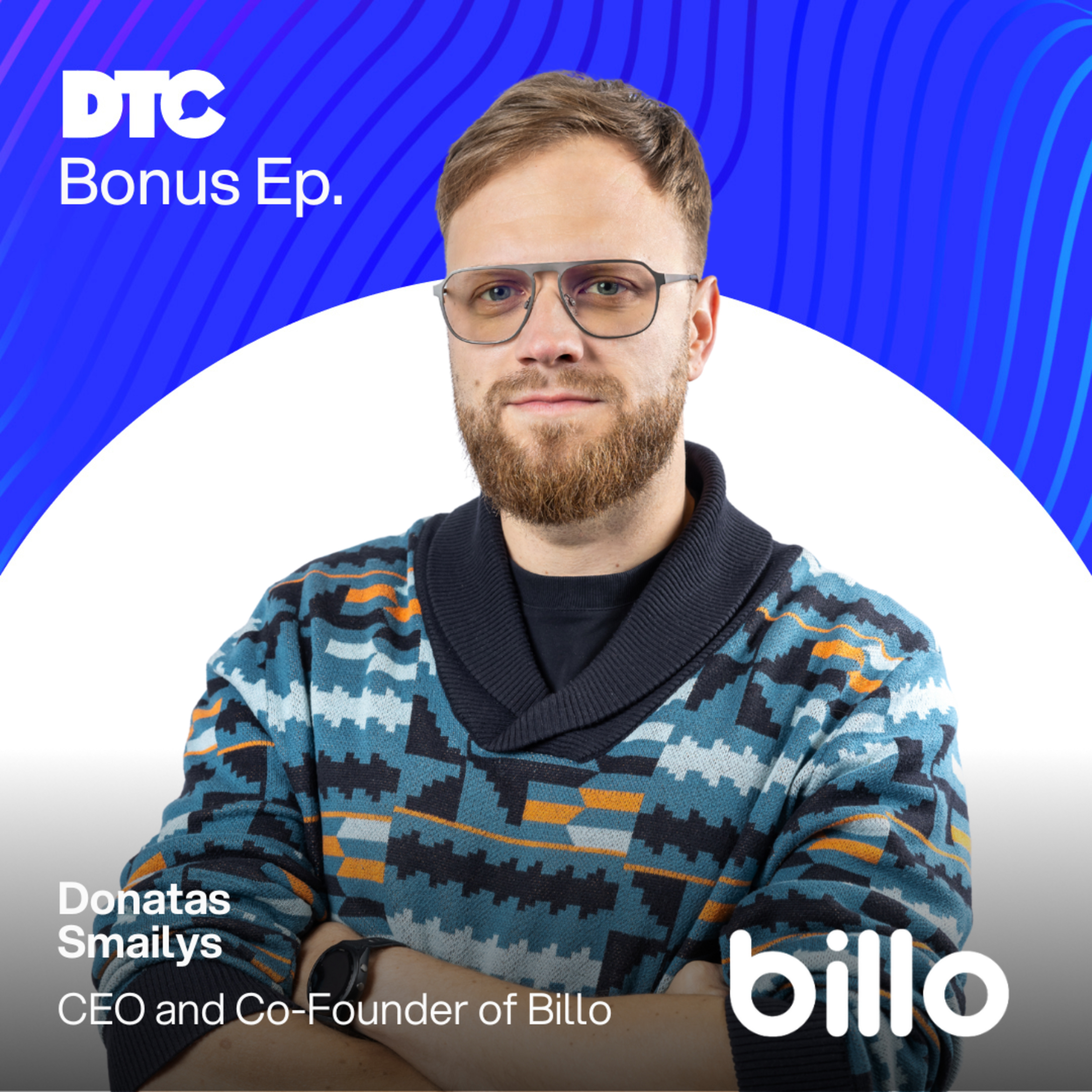
DTC Podcast
Bonus: The Future Is Human: How to Scale Your Creator Marketing Program (Without Losing Trust)
00:31:22
Loading summary
Transcript44 lines
- [00:00]
A
We understand that brands starting off don't know everything. That's why we've built like AI brief generators back by half a billion purchase data. You just drop in a link of your product, the brief generates, it matches you with performance data backed creators. You pick creators not by just subjectively how they look, you actually see how well they did in other ads so you see actual performance signals. So we really want to be the place to go for DTC companies that want to do creator marketing and we really want to give them data backed direction with very reasonably priced creative. And honestly that is probably the best thing that could be done today with creator marketing.
- [00:52]
B
Donatus, welcome to the DTC podcast. Super excited to jump into a topic that we never get tired of talking about on the DTC podcast, which is creators and influencers. Tell me about Billo. What problem were you solving when you launched Billo?
- [01:06]
A
Okay, let's go back to 2020. The problem we solved was content for brands at scale, not necessarily from influencers with thousands of followers who were quite expensive for small to mid companies. So that was the problem. And our assumption was that we can also help lots of creators who don't necessarily have lots of followers earn money. So it's like a marketplace. On the supply side you have the creators who have a problem of wanting to earn more money and on the demand side we have the e commerce mostly brands who need creative for performance marketing. So that was really it.
- [01:51]
B
Talk to me about the state of influencer creator marketing. How integral do you see it? I see it all the time and every person who's talking about their admix, this kind of repurposed creative is absolutely essential. How are you seeing brands use it most effectively right now?
- [02:07]
A
Honestly? So even our platform Billo has evolved from this one trick of outsourced creative to a full scope creator marketing platform. So I think like now it has to be used as a system because a lot of things changed and especially that it doesn't really matter that much how many followers creators have. Since the algorithms of social networks are mostly about viral moments now and virality of the content. And so you have to do organic these days to pick up performance signals and then know what sort of ads to create and then know what sort of partnership ads or spark ads if you may on TikTok, partnership ads, on meta, what to spend on and from these performance signals you have to crush it with a lot of concepts with a lot of content to win on the social algorithm. So I think it has become systematic. You can't Just do random actions. You just. And for platforms like ours as well, we just, we just had to evolve into a system rather than just the.
- [03:11]
B
One trick marketplace describe that system.
- [03:14]
A
So the system is as follows. So you know your usual partnership actions with the creators, which is you establish a relationship, you create a video, you use that video for ads, what not. Then as a part of the system with the creators, you do organic posting. And with organic posting you see what people resonate with from those specific creators who fit your brand. So that means you just picked up performance signals. So based on that, you can create content for your ads and put it in Ads Manager. Based on that, you know what sort of creators you can run partnership ads with, AKA white listing. It used to be called on Meta, now smart on Spark or spark it on TikTok. So that's what I mean by a system. With that said, this could be done with, you know, you can do it yourself by other platforms. And our system is that we actually suggest the next step afterwards because our clients, well now it's just for meta, they connect as they trust us, we connect to their ad accounts and we can suggest that next step. And recently we've also launched version one one of our proprietary technology where we use the existing content of the advertiser and we create the next piece of creative to further on run ads with. So this is like in a nutshell, the system as you go in loops because all the, you know, I've read a lot of content, I've spoke with many clients and I stand or sit in front of you right now and I can say nobody knows at the end of the day what's going to perform, no matter how magician they sound. Even I don't know what's going to perform at the end of the day, obviously. But you need a direction which is backed by data. And now we definitely know, especially you know, the Andromeda, you need a lot of concepts, a lot of creative, so direction, right?
- [05:14]
B
Because you don't know what is going to catch. You don't even know what about your creative is going to catch. Whether it's the way the person looks that makes someone think of their teacher or something, right? Like you don't actually know their kitchen might resonate the kitchen that they're in or the background or the shirt they're wearing or their tone of voice. You just need talk to me about because Andromeda is not new as we know. It's been around for almost a year now, or just under a year, but we're really Living in this world of Andromeda now, where I love the metaphor we talked about on the podcast a little bit, it's basically like instead of having things bucketed into silos and categories, it's like a single concierge who sees the customer has a library of a billion ads and then goes and picks the one that is going to work best. So what does that actually mean when it comes to the creator slash influencer marketing world?
- [06:01]
A
Okay, so I'm going to describe it in my own words. Okay. As I understand it, I read a lot of blogs, as I said, stuck with a lot of advertisers. We also do testing, you know, ourselves as a company. And the truth is, at the end of the day, how does it work? Nobody knows. Here you go. But there are patterns, definitely. And as I understand it is that even though, like, let's say we're selling these, I don't know this mouse for a computer, the reason why this mouse is used may be the same by your customers, but the message that they will connect with you with will be different. That is the point where even on Facebook, like Ads Manager, you used to specifically define the audiences that you want to reach. Now you just suggest them. You don't because the AI does its own thing. And the thing is like, I just imagine these boxes. Like on one side you have the creative, the concept, lots of it. On the other side you have the potential customer that resonates with a different message. And I think it can be actually even insane what sometimes a potential user can resonate with based on what they like. And you know, the truth is like these AI systems and these big companies, they know a lot about us. And I think it's even scary to think how much they know about us. But, you know, the further it goes, the more personalized the whole experience will be. And I think obviously we don't know how exactly the algorithm works, but I think fundamentally that that's how I think about it.
- [07:40]
B
I worry more about how much Chat GPT knows about us with most people using it as their psychiatrist at this point. So the amount of like gaslighting ability that ChatGPT has on me is, is off the charts. But I think it's interesting. I did a podcast with Nate Lagos, who was ran the growth at Original Grain, a watch company for many years, and he, he talked about being, I think being ahead of the curve with his company, with his company is about how to think about segmenting your audience not by their, their segment or their demographic segment, but by their, like underlying emotion about the product in a way. So he actually broke all of his campaigns and his avatars out into. Okay, it's either men who are buying the watch or it's their, their signi significant other who's buying it as a gift. Goes a layer deeper to be like, why is this man buying this watch? Is it because he needs, he just needs a win? You know, he needs something that, that is going to be beautiful, that he wants to look at. And he broke down like five different reasons that each of these avatars would actually buy the creative. And to me, that's the kind of thinking that's going to win in Andromeda because it goes to that like deeper level as, as the why. And then it allows the algorithm to go out there and find everyone's why because they know so much about us. Right?
- [08:51]
A
Spot on. And thinking even about ourselves, how we do it. A few things to add here. I think we should always make assumptions as well as speak directly to our clients non stop and validate these assumptions of why. The drivers of why, I think even ourselves sometimes I remember the periods of building Billow where half a year goes by and we're like, how many customer interviews did we have? 10. You know what I mean? So I think that is crucial. It's very important to build with customers and listen to them. We also send out these quarterly surveys and pick up these. Exactly. Performance signals as you're talking about because these wise are performance signals. But with that said, I wouldn't be building a platform like Billo if I didn't say if you're working with creators, you should allow at least a good portion of them to go nuts and at least a good portion of them to discover and deliver those whys. I mean, there are different brands. Some brands are extremely hands on and extremely in control of what creators say and do. Of course it differs, but I really believe that a huge portion of the content should be you let the creator define those things and help them connect with similar audiences and it works like a charm, especially if they love your product.
- [10:21]
B
I love that we have Abes who comes on the podcast from Pilot us all the time. She's always talking about not being afraid to like get weird with it too because you just don't like diversity is so important in your creative. Redundancy is redundancy. How from what you've read about Andromeda, do you feel like redundancy is punished or it's just, it's just going to show up more like you're going to have creative that never gets seen if it's redundant or if it's not fresh. How do you think about redundancy?
- [10:47]
A
Honestly, I'm not going to sort of pretend that I know the exact answer for this and I'm maybe repeating myself. So you have to go in cycles. You have to learn from what you already did. You have to repurpose the content that you already had. If it didn't work before, it doesn't mean it's going to not going to work again. If it works on what platform you should try on another. If it doesn't work on one, you should do cross platform checks. And another is like you cannot just have this not always testing something new mindset. You just can't just, it's a must because as far as we know these social algorithms today, they're like black holes of content fatigue. Just like some sort of a creature that grows as much as you input it and it just disappears somewhere. And to keep up with the game you just have to, you just have to have this mindset of as you mentioned yourself, just sort of go nuts with it. And I'll repeat myself some portion. Just, just, just let the creators go nuts, let them do their thing because.
- [11:55]
B
They have the fresh eyes, they know their connection to their audience. They. So even if you're not using their reach, you're just using their creative. They know how to speak to that group of people and let them bring their own unique take on it because it's like you just, yeah, you constantly want to be finding new customers and so you probably have to be saying new things in order to do that.
- [12:13]
A
Yeah. And Eric, another, another interesting thing that we are trying ourselves, ourselves now. And I'll tell you where this came from. It's a little bit on and off topic. We are hiring a position, a role for our social media channels and the one thing that I want is that the person understands Gen Z the way how to do marketing with Gen Z. And the person grew up for years with social algorithms because I think there's also something there, there's something generational there to not underestimate is actually who you do this job with.
- [12:54]
B
Yeah.
- [12:55]
A
You shouldn't be limited with, with our own thinking because you know, sometimes it can just lead to, you know, if you're talking with yourself, you're in your own bubble and the world is much more diverse. So I just wanted to put this out where you know, we are also testing all the time even though we're, you know, a creator marketing platform preaching. Let' yes, we're also doing that.
- [13:14]
B
You mentioned the extension, the AI extension sort of philosophy you have with how you're. You're taking original human creative, but using AI to extend its life, maybe extend it through fatigue. And I. We're also in the era of maybe rampant soon AI influencers and a whole segment of the population that gets that and is repulsed by it. And section what's your stance on AI influencers or creators? And what are you guys doing instead of.
- [13:40]
A
Okay, so let's kick off with I think just like movie characters, just like game characters, fictional characters, I think is here and it's going to stick. And especially if it's going to be consistent, like AI influencers, AI Personas, AI something that we don't know yet, something's going to happen. Maybe there's going to be AI only social network and maybe there's going to be human only social network really soon. We don't know that. But with that said, we embrace it. It's here. But when it comes to AI generated content, I think when we talk about some content being generated with a purpose to trick someone that is a real human being, I think that is the line and this is the line that we drew. If an AI avatar is out there, if it's selling and I know it's fictional, I'm okay, you know, I'm fine. Just like I'm not.
- [14:36]
B
That's like the Keebler elves, you know, I know they're not real, they know they're not making the cookies, but they're cute.
- [14:42]
A
I don't watch much, like honestly movies and I don't watch much Netflix. But when it comes to Witcher, for example, I've been fascinated by the game years ago and I love the character. And now, like sometimes, you know, but. But that's fine. I'm fascinated with like a story with the consistency of the character. So I think not to double click too much on this, it's here. But when it comes to real humans, when it comes to talking about products and selling opinions, even though we know that influencers and creators may get paid, but there are plenty of jobs out there, there's plenty of content out there where they actually enjoy the product. When they go for long term partnerships with the brand, where they create the voice for the brand, I think that is just the way to go. And we decided to say no to clone avatars because we think it's short term, maybe it's good, it's working. But in midterm people are going to get peed off and they're going to say, I want to know is this real or not? I get that myself now I'm look scrolling through the feed now, I'm like, I'm getting a little bit paranoid. Is this real or is this every comment? I would just like to know every comment.
- [15:52]
B
A lot of those videos. Oh yeah, it's. While there's already a crisis of authenticity in a lot of ways, even with like you're saying, even with, with real creators, there is that worry sometimes. And so I think it's probably a good line in the sand. There's probably also issues with the fcc, I would imagine, if you're actually just fabricating people entirely. So it seems like a good line to have.
- [16:12]
A
Yeah, I mean I have read through it. It's a very controversial topic, but I read through it and I think the line is pretty clear that non existent humans should not be promoting products and promoting the opinions because they haven't. Because who is accountable at the end of the day? A prompt.
- [16:30]
B
Yeah, exactly. Yeah.
- [16:31]
A
Who's accountable for if a grandma bought supplements because the grandpa said it's good? What if the next day the grandpa says it's not good because the grandpa is the prompt?
- [16:42]
B
It's and someone else. Right. Even if you're not, even if someone else gets that, gets that formula or whatever and then all of a sudden you get contradictory messages from different marketers out there. Yeah, it's dangerous.
- [16:51]
A
And where was that bottle, what face used before? You will never know. And then social networks, I think they will have to tag it and then maybe a new social network will arise. And I think honestly to double click Eric, I think give it, give it like a, I don't know, three, six months we're gonna see a wave of we are human. Only this, we're human. Only that we're weaponizing human things. You know, I think that's gonna come as well.
- [17:19]
B
So what are you doing? Explain what you are doing then with AI to extend the life of creator content.
- [17:25]
A
AI is for us is a tool, it's not a face. Let's start with this. So we embrace the fact that AI is great for making things more productive. Like, I mean it's changing, it's life changing. Even though, like, you know, I use the chat bots every day, I find it fascinating. But in our case is we keep the human accountable. That's number one. We keep the voice of the creator for max authenticity for things that happen. Our goal is to match the creator with the brand that they actually love. And like, and we use AI and data to provide that direction as I've mentioned before in the system. So data is like this is a direction to create things. Maybe change this a little bit, iterate on that, use this creator. Here's the data about how these creators actually performed in other ads. So we were the first to have a database of creators backed by real purchase data and the AI part now I'm proud to say we've developed our proprietary technology to generate mashups from the content that you already have on our platform. So it's like real creator stuff, real creator content. And while you wait for net new content, which is not expensive at all on our platform because that's the mindset we have to test a lot of, AI generates new creatives. And that we believe is the right way to go because at the end of the day, the human is accountable. AI is used as a tool, not a face.
- [18:58]
B
And it satisfies the endless hunger of the algorithm which you do need the ability to come up with lots of diverse creatives but then find effective ways to reuse it and recycle it.
- [19:10]
A
And going further, I think that and we will work hard to help creators establish long term relationships with the brands and help them to develop that brand voice, pick up those performance signals. Because honestly, I really believe in good products and by being good, we all have different standards. But at the end of the day, this is really what I want. I want the best products to win, the best creators to win. At the end of the day, the consumer wins as well.
- [19:39]
B
So I think it was 2018, I put on an event in Barcelona for marketers and I think we had Nick Shackelford come out and speak and he explained in 2018 the power of what was called whitelisting and blacklisting back then. It's always been a major force for e commerce brands to use creators handles to promote products. But now more than ever, I guess with Spark ads on TikTok and partnership ads, Meta's putting a huge push behind them. How do you see the mix versus brands using creator content on their own handles versus these partnership ads? Where do you see the future?
- [20:12]
A
Okay, so for disclosure, we are a managed partner of Meta. We, we believe the stuff that they're doing. 70 of our clients are meta first. Honestly, out of all the platforms right now, we hear that Meta performs the best. So the, and, and it's gonna, they're gonna go cards with their partners as well on, on partnership ads. It's an agenda this year. It's an agenda for the most likely for the next year. You know, I can talk about, yeah, partnership ads is increasing CTR, decreasing CPAs and there are different performance use cases. And the truth is, it is the truth like it does work. I don't think it works at the scale as it could most likely, but I think it's a matter of probably education, It's a matter of probably working with the right systems. And what we see, we've, we've developed, as we developed our system, we've launched partnership ads as well on our platform because we believe that is definitely a thing to go. Because put it this way, if you think of the creator marketing as a system, you do social posting, you pick up performance signals, you create ads. It's just, just a way more convenient way to run an ad. You run it through the handle of one of your, let's say best long term creators who help you build the brand, who help you pick up those performance signals. So I think it really is the future and I think brands will collab with the best performing creators even more in ways that maybe we even don't know yet.
- [21:49]
B
The other topic I wanted to hit on was this. It's actually a term I think I'd heard around, but you crystallized it when we talked last time about answer engine optimism optimization. We're now in this era where I was, you know, we're not just looking for a search, we don't want search listings, we just want the answer which I don't know what Google's going to do eventually in that environment. But how do, how does creator marketing play into building an AEO program so.
- [22:13]
A
Everyone knows what SEO is? It's like years of building content, building blogs so you rank high in Google search. A O is how high and how fast you rank or appear in the answers of your chatgpt, of your clause, of your Geminis. When people ask and search for certain things and the truth is from the information that is out there and from the stuff that we've been doing, we're ranking pretty well in those search engines. So the results can come within weeks and not months or years. And the social network play, I'm pretty sure that there's been an update where ChatGPT now considers or is about to consider content and social networks. When you ask something, when you look for some answer, there are certain things that being considered to give you the right answer. So I think the more and more this plays along, social networks is going to be probably one of the main places where the answers are looked for. How often the brand is mentioned, what are, what are people actually saying about it, what are people commenting about it, what content is out there? And that is the future of search because I think it's being disrupted pretty highly because people just are lazy at the end of the day. And just this one answer right now. So AEO is a topic of the future. And I mean there are companies out there making a lot of revenue, helping others to succeed with this. So it's definitely a topic for, for this year and even next year for E commerce.
- [23:49]
B
We're seeing it more and more on the agency side that people are just coming in with ChatGPT as where they came from, their UTM. So I can only seeing it more and more. And for us, we feel like because we put out all this content and we're kind of creating this web of content that's just hopefully going to bring more people to us through these answer engines. And I think all brands should kind of be thinking about that. Any thoughts for the future of all of this? I guess it's like, I know you're not Nostradamus, but yeah, like, do you. It's not going anywhere. Creator content is not going to go anywhere. I think the stand that you guys have made with like focusing on authenticity as much as possible is going to be a great line to have in the sand. Any other thoughts on the future of creator marketing?
- [24:29]
A
Hopefully we're going to have some startups popping up that are about detecting what is real and what is not. Hopefully the social platforms are going to differentiate real people, real content, not real people, not real content. And we're going to understand the difference there. I think that for sure, those synthetic people or synthetic characters or AI characters, I think they're here to stay. And as long as it's known for the user that is not real, I think that's going to work out even better. I know that the problem is that these characters are not yet consistent in terms of being a character, having some sort of context and putting the visuals out there that are consistent. But I think it's also a matter of time. Another thing is that first, I think having a lot of followers may not work as well as it is now. And the algorithms now are about something that is different, something that stands out, something that is polarizing. And I think with this whole AI content coming in, we don't know what's going to stand out. But I would sort of weaponize human things as much as we can because that is essentially what's going to stand out. We never know. Maybe influencers are going to be start doing some live tasks or going to you know, live locations, many of them and you know you can get AI out there. So, so I, I think, I think things are gonna change in a way. But look in 2019 when we were like oh my God, there's so much influencer marketing out there, there's so many platforms. This must be some sort of like a bubble. You know people are saying that this can go on forever 10 years later or you know, not 10 years later. Fast forward to 2025. It's just going up. It's just, you know, you remember multi level marketing and all that.
- [26:40]
B
Like I mean it's coming well, it's not going anywhere just because there's so much pressure on people need things to do. Like they're either AI is going to continue to displace people and so people, I think you know the average person has, is going to become an or have the opportunity or it's going to seem appealing potentially to be a creator because people have to consume products to live and they need to work. So we're going to find, we're going to find some balance between people. Like I think I've seen like I think I saw there's like a vending machines people are creating where you can like do an ad for the product in exchange for the product or something like that. You know, like it's going to be interesting to see and I think the only, yeah, the only constant in this industry is change. So I think you're probably absolutely right about that. I wonder do you have any examples? I know you guys work with you know, hundreds or thousands of different advertisers, but what for a brand in our audience right now, say they're 3 to 5 million dollars in revenue, maybe, maybe 5 to 10. What do you recommend? They you know, if they jump onto Billo like walk me through what an effective, you know, first three months on billow would look like.
- [27:44]
A
It really also depends on how much they're spending on ads. So I would say you know, if you're spending like whatever you're spending on social ads you go for like spend 20% of that for creative and creator marketing. Do some posting to pick up performance signal, then generate a lot of ads. We can do it with post production as well. So basically for around $200 per ad which is like the price is reasonably low. And that is before the AI variation it's just like net new content. So you can basically you can do the math I can talk about case studies and numbers with this and that, but every story is different. So just picture $200 per ad. Then you could negotiate like a social post or a partnership ad with a creator and that could be something like from 100 to 250. And basically you just run it as a system for our clients. We have our customer success manager who are always out there to help we understand that brands starting off don't know everything or if they have a small team. That's why we've built like AI brief generators backed by half a billion purchase data. You just drop in a link or URL of your product and the brief generates it matches you with performance data backed creators. Which means that you pick creators not by just subjectively how they look. You actually see how well they did in other ads. So you see actual performance data and not social data. You can also see organic data like comments, whatever, but actual performance signals. So we really want to be the place to go for DTC companies that want to do creator marketing and we really want to give them data backed direction with very reasonable, very, very reasonably priced creative. And honestly, that is probably the best thing that could be done today with creator marketing. Because I'm not a wizard who's going to say I know all the answers, but we're definitely building a system to back our words.
- [29:59]
B
I think that right there, having so many people evaluate creators based on their followers or they try to look at their organic engagement or all of these things, but just building actual platform data into how these perform as ads, not as influencers. I think that's a pretty cool differentiator right there. And it is the way to think of anyone thinking about scaling influencer marketing by like getting a million dollar deal with the Kardashians or all these, these one offs that can be so risky. Like the, the play really is to build it into your paid strategy along with having a great organic as well. But it's just, it just seems so much more scalable this way.
- [30:33]
A
Yeah, exactly. Organic for social signals. And then you just, you build ads. Partnership ads, reels. Yeah. So basically reels and partnership ads. That's what I'd like to be remembered by.
- [30:46]
B
Nice. All right, well, let's leave it there. If you're in the audience, go to Billow B I L L O app if you're ready to professionalize and scale your creator and influencer marketing. Thanks for coming on the podcast that you've done us. This was awesome.
- [30:58]
A
Thanks, Derek.
- [31:06]
B
Thanks so much for listening to today's episode if you're not a subscriber to our newsletter, you can do that right now @directtoconsumeralloneword.co. i'm Eric Dick, and this has been the DTC podcast. We'll see you next time.