← DTC Podcast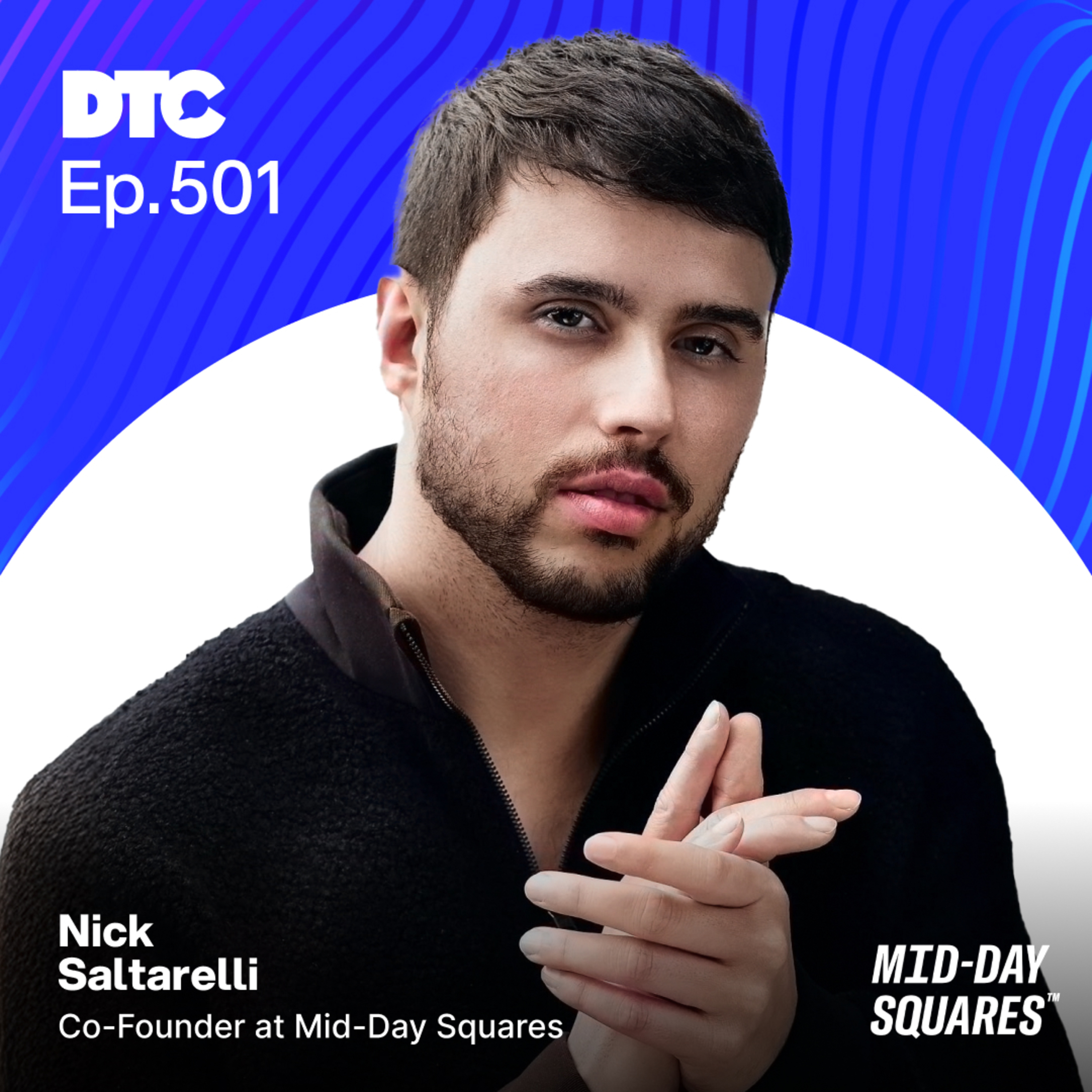
DTC Podcast
Ep 501: How Mid-Day Squares Scaled to $36M with Careful Costco, Costly Cocao, and a Bitcoin Supply Chain Makeover with Nick Saltarelli
00:37:00
Loading summary
Transcript78 lines
- [00:00]
A
Now, here's the craziest thing that emerged from this whole thing in our current banking system. For me to get into the crux of Ghana or Indonesia to get $20 into a farmer's hands and who knows where. What? Forget about it. With bitcoin, I was able to set up this network where I was just sending people money. In these countries, the second people find out that you're a player that's giving out money like this, and we're not talking big money, I was able to build this army of people that were doing on the ground because I was getting money to them this. As entrepreneurs, there's two ways to go about anything in life. We sit and wait for the powers that be to solve our problem, or we take the bull by the horns and we start chipping away.
- [00:53]
B
Nick, welcome back to the DTC podcast. One of my favorite, one of my first guests. One of my favorite all time guests. You came to Las Vegas and blew away the crowd there. How you doing, man? On this fine April day.
- [01:04]
A
I love spring. I'm a four season guy, so it always is just good for me.
- [01:09]
B
Yeah.
- [01:10]
A
Because I, I'm, I'm like, I like continuous movement. I like that we're always evolving and changing, you know, so spring's one of my favorite times.
- [01:19]
B
Super cool. Catch me up on the road to a billion.
- [01:23]
A
100 million.
- [01:24]
B
100 million. Well, you're gonna get to a billion eventually. You got it. Maybe 100 million is the next, the next goal, but we'll, we can just jump right ahead. I saw you guys launched at Costco. How's that been?
- [01:32]
A
Crazy. I mean, we're 35% of the way to the goal. So I would say like the, the annualized revenue right now. And I say annualized because it's the last 2 quarters. This is kind of the run rates about 36 million right now, and trailing 12 months is, is about 29 million. So we're, I like to say we're 35% of the way to $100 million a year. It's been nothing but the craziest. I have not felt, we have not felt tailwinds yet. It's just been, it's just been headwinds since we started this in 2018. But a huge thing is, you know, on this road to 100 million, Costco was a really big piece and we worked our ass off for two years to land Costco. And I think this is just a really important piece for other CPG entrepreneurs that are thinking about Costco is like, take your Time do it right. There's so much at riding on launching Costco and being able to do it properly and you know, fighting for what you believe in, but also partnering with Costco. So there's, there's two things and I think Costco really loves people that come and truthfully partner with them and drive value to their customer base. And that's what we want to do. So you know, we, we did the roadshow, another big thing that I would suggest everybody does. It's extremely hard. You're in a Costco the entire from 8am to 7pm for 13 days straight and you're doing it every single day and you're expected to drive value for their, for, for their members. You know, and a lot of people shy away from it, but I, I, if I, you know, even us at one point we were shying away from it and you almost get this, it's weird on the journey you have these moments of where you think you're too good to do something sometimes and it's usually just because you're tired and you're like, why are we, you know. But the roadshow was single handedly the most important thing. One, we went out and we broke the record. So we broke a 10 year old record. We sold the most amount of product ever in terms of dollars in 13 days. And we built almost like a gamification with our audience and our, and our fans through social media that it wasn't just us, like this was all of us collectively. You know, the fans had wanted to see Midday Squares in Costco for so many. We knew that that's, that was the pillar of our confidence going to Costco. The fans had wanted to see us there. Our second most searched term outside of the Midday Squares brand like by itself is Midday Squares at Costco. And so we knew that we had the base to go and so we rallied the troops and the momentum of one year, we did four road shows. So effectively we're in a Costco for 1326, let's call it two months straight. Like over the course of two years, just hustling. And so when we finally nailed it, I remember Costco was like, okay, we're going to give you 40 stores or 43 was our kickoff. And it just smashed because the anticipation of everybody being involved in this success ended up hitting when we launched and we went from 40 stores to national in two weeks. I mean now it's been like three months and it's just been so consistent and it's, it's raised all of Our other business. This is the craziest thing. People think it's going to cannibalize. It doesn't cannibalize.
- [05:05]
B
And it's. It's like overnight success, but, like, years and years in the making. Three years building this, three years car. But even before then, like the groundswell, like, you say your fans, right? You've been building the fans since 2018. You've been building this, like, groundswell.
- [05:19]
A
You can't do it without an army of people. Like, yeah, I think we spoke about this on the first podcast. This is like CPG snacking. You won't find more competitive cutthroat competition in terms of, like, trying to build the business. And so, like, you need to go and earn everything. And the only way you're going to do that is by building an army of people that one love the product and want to see you succeed in this day and age, at least.
- [05:48]
B
What about that? Because you guys are your funk, your functional snacking, and you live in the refrigerator as opposed to, like, the wall of bars kind of thing or the wall of cookies or whatever. You're kind of. How has that been, like, being kind of in a category of 1 in. In a behemoth like Costco?
- [06:05]
A
I mean, we. We really asked them to build the set, so they launched. It was us. Perfect. Bar and mush launched at the same time. And I hope they give us credit because we really pushed that on the back end, so we were like, let's do the set. I think we need to make a destination of not just midday squares, right? It's got to be, like, three, four, even five types of products that appeal to the same customer. And this set exists in Costco usa. And so I think we gave Costco Canada another. I think our roadshow performance gave them confidence again to try it one more time in Canada. And I hope it's going well for the other brands. But we developed a nice little set here of this kind of, like, functional snack in the fridge, and I think that's really important. You don't want to be alone.
- [06:53]
B
Did you mention mosh? Is this Patrick Schwarzenegger's brand?
- [06:56]
A
No. Mush. So mushroom overnight oats. Overnight.
- [06:59]
B
Overnight oats. Okay, cool.
- [07:00]
A
It's like a yogurt scoop, but it's. It's overnight oats.
- [07:03]
B
Oh, got it. Yeah. I'm tweaked because I'm. I'm a White Lotus fan, so I'm trying to get him on the pod as well with his. With his mosh bar, but that's Something different.
- [07:10]
A
Yeah.
- [07:12]
B
Let's talk a little bit about your supply chain. Obviously things are in chaos right now with, with the tariffs, but you guys have been working on like, you know that we were just talking before this about like the level of like industry you guys are building in Canada here, the level of like functional capability to create things, and then you've got this probably pretty complex supply chain. Talk about that a little bit and how you guys have innovated or struggled, what have you. What's, what's been your biggest challenge in that, in that space?
- [07:39]
A
Well, I think struggle is the birth of innovation. So it's been a struggle in the sense, like if you just look at cocoa prices, We've hit a 100 year, an anomaly, essentially. If you just literally Google cocoa prices, you'll see a chart and effectively for about 100 years, the chart goes like this. It goes from 2800ametric ton of cocoa beans. That's how much you're paying. So 2800 USD per ton and it goes up to 3600 at maxes. If things got really crazy, it was 4000. We hit 11,000 in the last 12 months. And we've been not just at 11,000, that was the peak, but we've been hovering at an average of 8,000ametric time. That is double that has ever even come close to being seen in terms of industry midday squares. 35% of the product is cocoa. Right? It doesn't matter. 35% of our product is either cocoa butter, cocoa mass, or cocoa in any derivative shape or form. So our margin was just destroyed. And so I just been on this hunt. A lot of things don't make sense. And I think as entrepreneurs, there's two ways to go about anything in life. And Elon did this a lot at Tesla, which was if you do first principles, that is, I need, let's just say I need something and it's iron. Okay, let's make this really simple. And the cost of iron for a kilogram is $1. And you're buying a part that's made of iron and that part is 1 kg, in theory, it should be $1 plus production cost. Okay, you could do that math in your head. Now if somebody is selling you that part for a hundred dollars, there's a problem because the raw material is $1. Your part's 1 kg of the raw material. So where is the 99 coming from that they're adding on top of it? And Elon did this over and over in Tesla and you realize what the is going on. We need to start vertically integrating our stuff internally. And they kept on making more and more parts in their own facilities because the spreads made no sense. You know, no problem dealing with a partner that wants to make a healthy margin, that's fair. But when things get out of whack, it doesn't make sense. And so, you know, I started to take this. It was, we were going into November 2024 and I just was fed up of everything and the answers I was getting. And I, I went on a mission and I think this is important for founders. It's like do that first principles work and if things start to not add up, start scratching the surface and start figuring out what the hell is going on. And I just kept on finding beans in different areas at X prices And I would do the math and there was something severely wrong with what we were paying for and what I was finding beans at in South America, different parts of Africa. And I was asking myself what. There's something feels severely mismatched here. And what was really interesting is how did I get this information? Well, once I literally started on Alibaba, that was just like phase one. Then I started googling things and this is like a really interesting hack for other entrepreneurs. When you nail a Google. So it's, it's very rare. You're going to go into Google and go Cocoa bean suppliers and find what you need. What you're going to mostly find in some areas is you're going to. I like I went on chat GPT and I was like, give me the list of countries that are the top five producers of cocoa exportation. Okay, so now we have a, an area to start searching from. And then it was like area name liqueur, Coco. You start figuring out the derivative names and then once you start to find manufacturers websites, you will find keywords that are on these websites that are going to help you unlock more manufacturers. And a lot of times it's in their native languages that you have to search for. And I went on this rabbit hole of where within literally 60 days I had a WhatsApp trading desk set. Like it was like the amount of traders I had in like co like core Coco game was crazy. And bitcoin came out of this. So I started speaking with these traders and they were like, hey, we could get paid in this or we could get paid in bitcoin. I'm like, you're willing to get paid in bitcoin? And I'm like, I would love to, to spend like I'm a Huge bitcoin believer. I would love to do this because it's so fast. Now here's the craziest thing that emerged from this whole thing was I became capable of being a human on the floor in these countries that was able to give out $20, $100. So now imagine right in our current banking system for me to get into the crux of Ghana or Indonesia, forget about it. To get $20 into a farmer's hands and who knows where what, or a hundred dollars, forget about it. But with bitcoin, I was able to set up this network where I was just sending people money. I would just be like, I'm going to give you $100 today for nothing. I just want you to know I'm serious and that I need to get this happening in these countries. The second people find out that you're a player that's giving out money like this and we're not talking big money, we're just talking. I was able to build this like army of people that were doing on the ground because I was getting money to them like this. And what was crazy too is like let's say I needed samples, we were paying for samples coming out. I would have guys go do visual checks to make sure I wasn't getting screwed. And with bitcoin it was costing me 16 sense to release funds into Indonesia in three minutes. Well, a guy was on a phone showing me the product. So I knew that I could release the goods if I had to do that using traditional finance. By the time it got to a bank, six days. So I can't do real time payments. So people could start to screw you when there's no real time payments. So in my supply chain now, I'm capable of saying, okay, I'm going to give you 10% of the payment when it leaves your field at 9am When I get my guy in the main city of Abdjan Koti Var. Once it gets to him two hours later, I'm going to give you another 20% when it's loaded on the container, another 20. Like you could break up the payment chain into whatever you want and everybody's just kind of getting paid. That was the big unlock here.
- [14:39]
B
I love this. I haven't talked about this on the podcast. I bought two Bitcoin in 2013 at a thousand.
- [14:47]
A
I fucking hope you kept those two.
- [14:49]
B
No, I lost the password. They are Schrodinger's bitcoin. They both exist and don't exist now. But as soon as I heard this idea of like a Middle manless, you know, sort of payment system. I'm like, okay. The way our currency is working right now, there's, there's some real challenges with that. But I love this because as. As much as bitcoin is worth, I don't know very many people who are actually using it. So, so to hear that you're using it in this really interesting fashion and I guess in these, in developing nations it's more of a prominent thing because their banking systems are kind of more.
- [15:20]
A
Up people in America go, well, oh, one of the things was oh, why don't you trade in stablecoins? Or you guys understand these people don't, they don't leave the bitcoin system. They don't care. They, they're happy to hold bitcoin over their own currencies.
- [15:36]
B
Yeah. Because we should be as well probably considering how much it's.
- [15:41]
A
We live in a bubble here where we're not feel like that's. We come at it from. It's almost irrelevant to pay for them because they just know it's, you know, it's just more valuable their currency. They trust that currency more than they trust their own currency.
- [15:57]
B
Has that led you to keep more of the businesses funds in bitcoin versus fiat?
- [16:03]
A
No. So we set up a legitimate like Midday Squares is capable of trading in bitcoin at like a corporate level. We did the whole process. It was, it was pretty wild. So we have opted to not hold bitcoin. Not because I don't want to because there is a lot of things that get triggered right now with regulations if we start to hold bitcoin that. I didn't want the headache. I'm a personal, like I, I don't need the. I'm not trying to turn Midday Squares as business use case into a bitcoin use case. That is not the goal of this. So we just buy at spot as we need it. We buy it and we're able to just trade it and send it. And yeah, it's really interesting.
- [16:47]
B
How much of the bloat of the cost bloat were you able to eliminate approximately?
- [16:52]
A
Tell me more like you're talking about like, well, you were talking about how.
- [16:54]
B
You, you found that you know, you could find raw materials for this price, but then by the time you were buying it there was this big gap and there was this big amount that.
- [17:01]
A
You were paying less on. Less on that. I think building the supply chain which is important is. So we've been able to reduce our cocoa cost by about 35% just wild by doing this process. What I think is more interesting, though, is that the bitcoin allowed me to build an army fast because. An army. And I'm not talking about this from a militia standpoint, just so everybody knows this. Although it can be used for the same thing. Hey, I don't know if you guys know, but like dole pineapples. Yeah, militia.
- [17:38]
B
I know that. Yeah.
- [17:39]
A
To protect their pineapple crop. So they legitimately have. But the. The moral of the story is be he who can get people money fast in areas of where money is difficult to come by can build a very strong cooperative fast. And I did it all from ever even getting to the country. Then I actually took a trip to the country. I mean, this. This got so crazy. I was meeting with the Ministry of Agriculture in. In Ecuador. I mean, I literally got all the way up to the government level over there because they saw that the post that I did on bitcoin. And they're really big on bitcoin. And I think also there's this idea that Agricultural Ministry should have. I think the idea of adopting a strategic bitcoin reserve as well too. There's. There's many reasons we can get into that. But that. That was of interest to the Ecuadorian ministry. So I got invited. Me and Les went out and we. We broke bread over there. And it was. It was a lot of fun. And I just learned so much about Coco. And the next trip will probably be Ghana.
- [18:45]
B
Just. Wow. This is the. I think the most innovative story we've ever had on the DTC podcast, like innovating at a level that most people don't think is really possible or even you can.
- [18:55]
A
I know you've seen this on Twitter. You could just do. I think that's my main goal is every time I come on here or we speak is to remind people there are no rules outside of the law. And even within the law, there's gray areas. Right. One could argue there there are no real rules you could just do. And I think that's what Elon has really. If there's one major thing that I take away from. From Elon's ethos that he's given to the world is is this notion of first principles thinking, like, always get to your own source of truth and then just go. And so we were put into a corner and. And so you either I either. We have two options. I remember having the media midday squares meeting. At midday squares. We sit and wait for the powers that be to solve our problem, which is out of our control. Or we take the bull by the horns and we start chipping away and make this our own problem.
- [19:52]
B
Talk a little bit about scaling your production. How much have you had? Like in when you got Costco, for instance, did you have to scale your ability to produce?
- [20:01]
A
Yeah, we had to. So we had to buy a $500,000 machine that was always in to just speed up the process of packaging and being able to do that again. That's what I said. We had three opportunities to launch with Costco before this one main one. And the advice I have is just take it slow, take it. If you could do it, great. If you can't do it, then wait till you can do it. So we knew what we needed to do and it was. We spent a year setting up the plant to be able to handle that volume. And we're in another expansion right now to be able to handle the next tranche of volume coming in from the US So it's a chicken and the egg. I always tell people, especially in manufacturing, I've never felt throughout this whole time, I live in a duality at all times. I feel like I'm winning and losing all at the same time, all the time. It's the weirdest thing because you're like constantly putting up capital to do your real capex to expand your production, which then hits you in a way where you're like, why aren't we making money yet? And your cogs get thrown out of whack and. But the brand's growing and it's really doing a great job. So I just, I constantly live in a duality of where I feel like I'm losing and winning at the exact same time.
- [21:22]
B
And with the Costco and the US expansion, are you starting to feel those tailwinds a little bit?
- [21:26]
A
I will not feel the tailwinds until this cocoa crisis is fully behind us. And I think for us, in terms of what we're doing on the supply chain and all that, probably another five to seven months. So it's around the corner. I mean, I had a taste of it. We. We hit profitability last year in Q4, so I had a taste of it. But we really set the company up for major tailwinds once this normalization happens. We've been taking cost out of the production like crazy, assuming that we weren't going to be able to solve the cocoa problem.
- [21:57]
B
What. Just real briefly, like, what is the cocoa problem? Like, what is it? Is it weather? Is it. Like, what is the actual reason for. For the cocoa problem?
- [22:06]
A
So it's a. It's usually a five year cycle, four year cycle. And it starts with a real thing. So we were in the El Nino, El Nino weather pattern. I don't know if you've heard it, but we. El Nino, I think is lasting anywhere from like one to three years, whatever that was. So that causes elevated temperatures in some regions, which causes more rainfall, more humidity. With more humidity, you have disease spread. So there was a lot of disease spread on the cocoa trees. There's a specific disease that was causing a massive reduction in the yields out of Africa. I think we're in a cycle right now that it's bad actors. And so what happens is prices get elevated, supply and demand, then a lot of money is made. Then you usually have a period of time from that where bad actors stay at play, that there's an incentive to keep, keep the prices elevated because now the spreads are big. Then comes the part of the cycle where everybody, like Nestle, Hershey's, you name it, start removing reliance on cocoa. In chocolate, you're allowed legally going up to 5% of your net weight being a cocoa butter equivalent called a cbe. So you can move to palm kernel oils or, and shea butters or mango butters and still be called real chocolate. So it takes a minute though, right, for a supply chain to have that run through the cycle. That's why these cycles. So by the time the supply and demand. So let's say we're at supply and demand, getting out of whack. Now we're at the point where people are moving away from Coco derivative because it's just too high. So that's going to decrease the demand for the product and eventually the bad actors will realize, wait a second, no one wants to buy the quantities they were buying before and price starts to come back down. What I could tell you is with my own eyes, there is no cocoa bean shortage. It does not exist.
- [24:01]
B
Interesting. You mentioned her, you mentioned Hershey. I remember our talk about your lawsuit. I see there's been a Kellogg lawsuit as well. You know.
- [24:09]
A
How the hell do you know about that?
- [24:11]
B
Oh, it's on ChatGPT.
- [24:13]
A
No way.
- [24:14]
B
I was doing research on ChatGPT ahead of time.
- [24:18]
A
We don't talk about the Kellogg one.
- [24:19]
B
Oh, okay.
- [24:22]
A
But that's, that's a good. I have no comment. We don't have to edit this out. I just have no comment.
- [24:26]
B
No comment. Okay, fair enough.
- [24:28]
A
What I could tell you is that we have no pending lawsuit with either of those companies and all is good. And all is good. And in Paradise Nice.
- [24:36]
B
Your orange is, is changed to a slightly different orange on your peanut butter cup product.
- [24:41]
A
We've come to a happy agreement with Hershey's and I appreciate, appreciate, I appreciate it. I think we've made our amends with them. You know, we've been on a few panels and it's all, it's all respect back and forth.
- [24:52]
B
Nice. That's great. Well then, moving right along to. You mentioned ChatGPT and I use ChatGPT every day.
- [24:59]
A
Knows that like that's the craziest thing. Like nobody, nobody knows that.
- [25:03]
B
That's wild. I, I use it every day on the podcast, you know, first for researching questions, you know, really nardoir like questions to ask and how. And you mentioned it for just like, you know, some research about where, where your regions were when you're building out your supply chain. Are there any other ways that you're using ChatGPT effectively?
- [25:22]
A
Oh yeah, like I use chat GBT every single day, all day. I think naturally what I'm trying to do with the organization is getting people very familiar within midday squares to feel that at any given point in time we have PhDs, researchers at our fingertips, you know what I mean? And it could be work, it could work within anything. And so I think that's the piece is really just normalizing it in the organization. And I think I'm starting to see it like I remember when it first happened, I was seeing it not a lot on my teammates computers. Now I'm starting to see it a lot, A lot because we're pushing it in the organization. We're encouraging people to find their own ways to implement it. So I think AI is not going to necessarily have this one moment where it's going to be like, oh, this is the unlock. It's just, it's literally going to become ubiquitous. Like computers have become ubiquitous and, and, and output will increase over time. I mean, some of the ways we're using it in every single facet, we use it in implementing brc. Right. So what you could do in terms of documentation and how you could reference documentation I think is huge with large language models. So, you know, before large language models existed, you would create these, you know, 60 page booklets of how to do stuff on machinery OR protocol or SOPs. And really the natural way to want to use an SOP is to question something and then have it answer you. So versus having to, you know, go to a booklet and find page 63 of the SOP of how to do it. Now we could just take the documentation, put it in and have our teammates just reference it. Like, okay, you know, I'm doing this. It's showing me this. What do I do? And it actually references our SOP that we've created. So I think we're using it in every facet. We're using it in R and D. We're using it. You just. I use it all day. I think that's the best way to describe it.
- [27:28]
B
Yeah. We just saw the tweet this week from Toby from Shopify about how it's like. It is now the, the standard. Like you, you are using a. You need to be using AI and figuring it out. It's just, it's just expected that it's a part of it. So I was talking to my brother who works at Shopify, and he was talking about. He was loving the six months previous to this because he was really innovating on AI and it was giving him all this, like, sway in the company. He was getting. He was doing. He's doing really well with it, but he's like, he's like, I know it's only a matter of time before this amount of productivity becomes the expected norm in a way because everyone's using it.
- [28:01]
A
Yeah, 100%. So the flip side to that is I just believe that, like, computers, you're still going to be able to use it in a level that others will not be able to use it. So there's going to be a use gap. I see it with my own, like. Like I'm so dialed in that I could do things that are really epic. And so, you know, it's, it's. It's a curve that's going to still be there. And yes, it will get normal for maybe a little bit, but then there's going to be that next gap and that next gap of how you're. You're using it. I do want to. I do want to say one thing that's like, really interesting for me is this is. This is not a, like paid. What's the word? Endorsement.
- [28:49]
B
Promotion. Endorsement.
- [28:50]
A
Look how brands grow. I don't know. Have you ever heard of it?
- [28:53]
B
No, I haven't.
- [28:54]
A
Okay. So recently I've been really obsessed with trying to learn, with trying to learn and master traditional CPG marketing, like scale. CPG marketing. That Coca Cola, Mars, Nielsen, these, you know, that really are. Are thinking about how they run marketing, how they gauge its effectiveness. And I've just been obsessed with that because I think there really is a divergence that's. That that's coming. D2C this book actually breaks a lot of D2C marketing. It breaks, it completely negates. Negates. And it has data that's really compelling. I think that's what this author's done so well. Whereas basically the world that we know of current D2C marketing is like the baby part of marketing. It's the, you haven't even scratched the surface of scaled marketing because it's all based on this idea that you can find a one to one customer that meets this exact profile of what you're going after. And this book just destroys all of like literally all of it. They have data here that suggest that retention is useless. It's a really useless metric in terms of retention has more to do with a brand's scale and market penetration than it does with actual retention. And so if you take like, let's say we take a category like chocolate, you go look at the biggest brand and an incumbent brand like us, the only real differentiator is our market penetration. When you go look at Hershey's repeat purchase rate and Midday squares repeat purchase rate, they're not miles apart, they're 0.3 apart. And so this point is, is that they said is like, okay, there's a theory that if you just reduce your retention, let's say your, your, your, your turns 10 and you get down to 5%, this is the common example that they use that everybody says, oh you just got to get 10% retention down to churn down to 5% and you double your, you know, you double your income. You know, like that's go straight to the bottom line. And they're like well that's nice. In a college research setting. Has anyone actually done this? And what's the cost to do that? So they went and they try to get as much data that they can to say, well the dollar that it cost you to lower from 10% down to 5% is three times more expensive than just acquiring a new customer, bringing in a larger customer to your base. And so there's these fallacies that just exist everywhere and I'm obsessed with them because I believe that the frontier to getting to a billion dollar brand is to remove your brain from what we've been taught and primed in performance. Direct consumer marketing.
- [32:03]
B
Yeah. And so what is that? How is that like, I know you're just in the research, you're absorbing it all, but have, has it led to any changes in your marketing plans or into what you're actually doing?
- [32:13]
A
I'll tell you right now that retention is going to be a big piece that we're not going to focus on. We're not going to actively try to be obsessed with retention. We're going to kind of just do the basics and what will be will be. But we're, I, I, I'd much rather spend my energy building out our market share. Number two, we're not just going to look at health bar consumer metrics anymore. We're going to look at chocolate as a whole category. There's so much data that shows in here that there's a, again, there's this fallacy. So, so here's the best way to describe it. The ice cream market is the ice cream market. There's not a consumer for strawberry ice cream, healthy ice cream, non healthy ice cream, it's negated. There's just the ice cream market. At any given point in time one person is going to buy all of those, literally all of those. So the ice cream market is not differentiated by that. You're going to create a segment within the ice cream market and be the only ice cream in the health consumer ice cream world. No, what this book is suggesting is that you could go get Haagen Dazs is customer base. So broaden your, your scope because if you're just going after the health ice Cream Market 1, your cost structure and CPM is going to go up and to the data suggests that you have as much value to get from a Haagen Dazs customer trying your product one time than you do just being a health ice cream. So that's changed our focus completely. Another huge fallacy is, is that 50% of a brand's revenue they did this on Coca Cola comes from customers that buy Coca Cola less than one time a year. So again there's this fallacy that we need to find our whale customer. Right? Everybody is like let's go analyze the customers that the Pareto's law. Let's find the 20% of our customers that buy 80% of our dollars per year and let's find out who they are, what they are and let's market to them only wrong. So when they went and looked at that, any company that has done that approach has actually lost market share over time because they weren't bringing in this 50%. That's never going to be a whale consumer. But at any given point in time your whale consumer becoming a non whale consumer and your one time purchaser is closer to becoming a whale consumer than you think. And they show that in the data that they switch. It's a moving Target. And so they just break down the fallacy of all this that we talk about in Direct to Consumer Ideal.
- [35:00]
B
What's the author's name?
- [35:01]
A
Byron Sharp.
- [35:03]
B
Byron Sharp. Got to get him on the pod.
- [35:04]
A
Yeah, yeah, yeah, absolutely. Please. I would love to listen to how brands grow. And then I do want to give a shout out to the person that introd me to this. So I. I worked hard. He was at Ferrero. I put out a post. I was looking for hardcore people. So Mohammed Al Lawati, Mohammed Alawati, thank you so much for putting me on. We had a great one hour together. I asked him in that. I said, I really. And Ferrero is arguably one of the greatest, like, traditional consumer marketing companies that exist. So I asked him in our hour together, I'm like, I really want to walk away with one thing that is just like hardcore. The Pareto's law of traditional marketing. He's like, brother, I got one better for you. Buy this book, read it, and you'll have everything you need to know.
- [35:52]
B
Nice. Well, let's leave it there, man. This has been an absolutely super interesting interview. As always, I'll tell you that the NHL playoffs are just starting and if the Habs make it, I'm going to be team. Team Habs, I think this year. I mean, I'm going to throw my lot because Vancouver is not making it.
- [36:06]
A
Well, just how could you not be Team Habs this year as like, I know out of nowhere this young team that just rallies in the last.
- [36:15]
B
The.
- [36:15]
A
You know what the odds of us making the playoffs were 17 games ago. It was like so low. We had to have a near perfect 22 game schedule of where we were going to, like, lose seven games at max to make the playoffs. And lots of headwinds. Lots of headwinds.
- [36:30]
B
Lots of headwinds. Just like midday squares, man. Thanks again. This is super awesome.
- [36:34]
A
Have a great weekend and thanks, Eric.
- [36:36]
B
Good luck, brother. Thanks so much for listening to today's episode. If you're not a subscriber to our newsletter, you can do that right now at directtoconsumerall. One word co. I'm Eric Dick and this has been the DTC podcast. We'll see you next time.