← DTC Podcast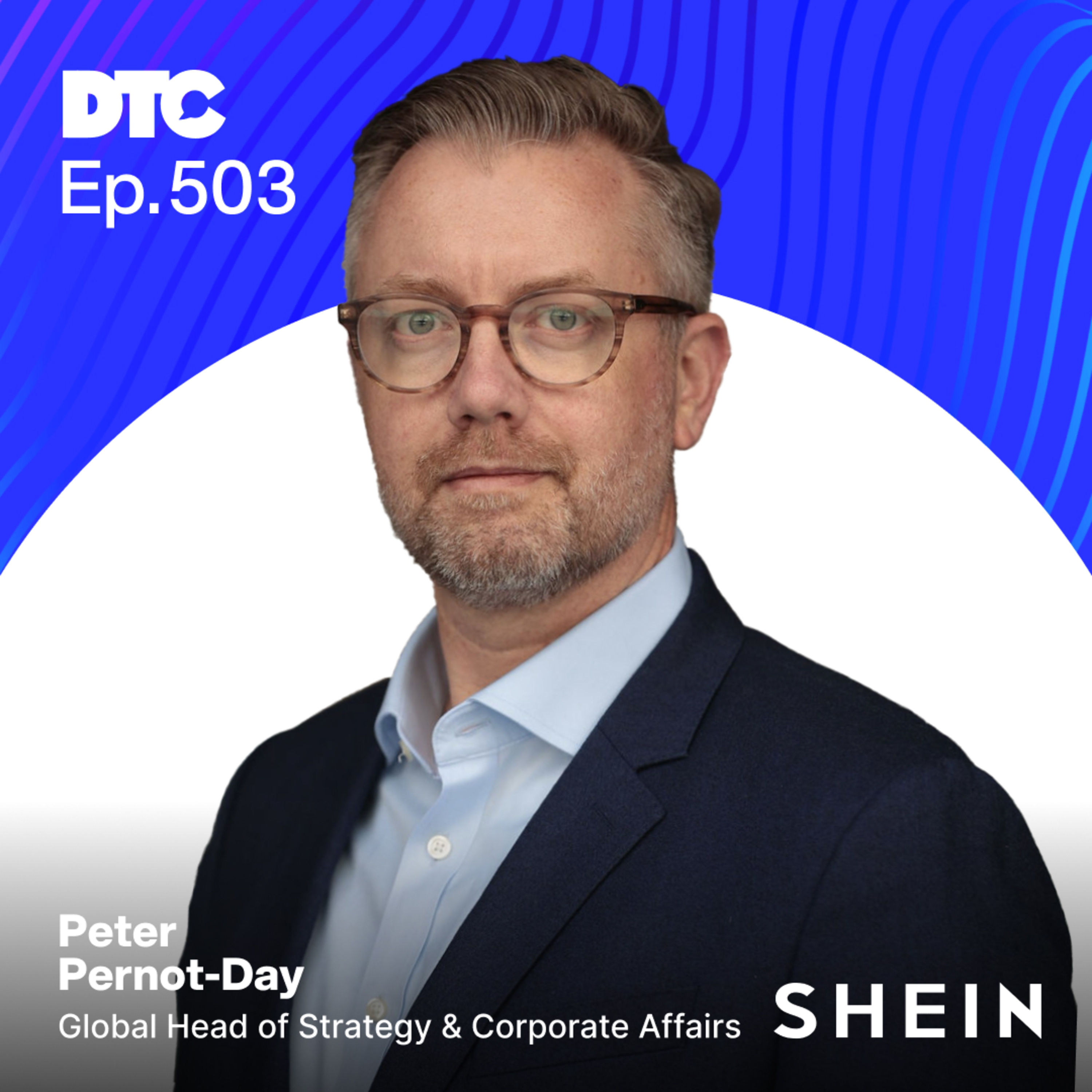
DTC Podcast
Ep 503: Inside Shein’s $30B+ Global Fashion Machine: AI, Micro-Influencers, and On-Demand Manufacturing (LIVE from ShopTalk)
00:27:09
Loading summary
Transcript56 lines
- [00:00]
A
In retail, it's all about finding out who your customer is and giving them what they want. Shein's unique on demand business model. The way we have an engaging web app, the way that we can leverage trends and customer feedback in a rapid and dynamic way. All of those things allow us to be so customer centric, and it's that which has driven our growth. E Comm is great. It's got great efficiency gains. It can surface products, it can connect people who don't have access to large retail centers, but it has this experience gap. When you go into the best physical retail stores, you can really see a collection of clothes, you can see garments on a model. You can maybe interact with a fantastic salesperson that's going to encourage your look. E Commerce has struggled to replicate that, and I think that's what we're trying to do.
- [00:53]
B
Welcome to the DTC podcast. This is a great opportunity to have such a huge international brand on the DTC podcast. You're probably the biggest brand we've had here.
- [01:01]
A
Well, you know, it's great to be here. We're really excited to be at Shop Talk. It's just such a wonderful opportunity to meet people and we're really glad to engage with your audience.
- [01:09]
B
Yeah, you've experienced incredible rapid global expansion valued at a $64 billion mark, which is just amazing. How do you account for Shein's incredible international growth? What are the main factors that you would point to?
- [01:24]
A
You know, I think it comes down to retail basics. And in retail, it's all about finding out who your customer is and, and giving them what they want. And I think Shein's unique on demand business model. The way we have an engaging web app, the way that we can leverage trends and customer feedback in a rapid and dynamic way, all of those things allow us to be so customer centric. And it's that which has driven our growth.
- [01:49]
B
Talk to me about the on demand business model. This is something I first kind of became aware of, I think, with Zara. I think Zara has a slightly similar thing where they do a lot of rapid testing locally. Talk to me about the on demand model.
- [02:00]
A
So Shein has pioneered something that we call the on demand model. And the idea is to micro produce garments. So instead of making thousands or tens of thousands of copies of an item, we produce maybe 100, maybe 200 copies for the entire world. And we load these images of these items onto our mobile site or onto our web storefront and we let customers engage with them. And if they like what they see and they start to purchase it, we can quickly pivot and make a second run or a third run even. And again, we're only making four to 800 copies in that second or third run. And the idea is to precisely align supply and demand, to really focus on what is the market, what are our customers interested in at the moment, and just make that too. And this has a lot of benefits. The first one is it really reduces excess inventory. We're not over producing. We don't have large stocks of unsold goods. We're able to produce exactly what the market demands. And I think the second benefit is that means that our prices are a lot lower because we don't have to account for inventory risk. So instead of having cost of goods sold that add, you know, 15, 20, maybe 30% more to manage inventory risk, we don't have to charge our customers that. I think finally it allows our customers to have wide choice so that if they're interested in various trends or they're part of a micro community, or maybe they're, you know, a plus size shopper who hasn't been able to find clothes that fit very well, we're able to serve all those subgroups and do so profitably. So, you know, the on demand model we think is unique. It's something that we've innovated and we've brought it to market at scale. And that's really been a huge, huge driver of our growth.
- [03:45]
B
What does it look like? You mentioned the mobile app. What does it break down? What does it roughly look like? Like the web app versus the mobile app in terms of purchases.
- [03:55]
A
So we don't get into specific numbers, but I can tell you that the mobile app is far and away a critical driver. That's not to say that our web properties aren't important, but the mobile app has really been a shining light for us as we've interacted, particularly with younger customers. And I think it has a number of benefits. One of the benefits is it allows for a much more immersive shopping experience. You can scroll through, you can see images, we can use things like photo search much easier on a mobile device. And I think that helps surface more of our product catalog. But again, the web storefronts, the websites are also very, very important to our business. We operate over 20 of them in 20 different languages around the world. So they're an important component of our business.
- [04:40]
B
Do people discover the mobile app after they've made a purchase quite often, or is there a big push to get people on the mobile app for their first sort of shein experience.
- [04:49]
A
So I think we always want to meet customers where they are. And I think in today's e commerce environment, there are lots of options. Customers have lots of pathways to find products and services. And so we want to engage customers where they are. If they are interested in mobile shopping, we want to have that available to them and surface that in our ads. If they want to be on a web storefront, we want to be able to easily access that from a search engine or a search ad. And so those are the approach. I think that what we tend to see is that as we've become more well known, particularly in app stores, we are historically ranking in the last several years as either the top or one of the top five shopping apps available on both the Android Store and the Apple Store. And that has been a source itself of driving traffic and app downloads.
- [05:40]
B
I want to back up a little bit and talk about your role at Cheon. You're head of strategic and corporate affairs for North America and Europe. What does that entail?
- [05:49]
A
So it entails a lot of things. I think principally I look at trying to deliver measurable results for our customers. So I'm always looking for ways to help our customers realize their vision, to find new ways to express that and to find operational efficiencies in the business that allow us to achieve our goal, which is to make fashion accessible for everyone. In practice, that involves a lot of travel, a lot of meetings, a lot of thinking and ideating and trying to experiment with ideas. And for me, the best part about working at Sheehan is that on demand feature, that willingness to test, to take risks, to try lots of new things, and most of them succeed, some of them fail. That's also true in our business approach. And I think as a business leader, the ability to have some flexibility and freedom to experiment with things and try new ways of doing business and really revolutionizing E commerce, that is just. That's gold for, for me and I love doing that.
- [06:53]
B
And then just back to the on demand model. Is it some. Is it a localized model where you have different. You're testing different things in different markets and then when it, when appropriate, you go global with them, you go broader. But is it. Is it really down to individual geographic locations as well for what products are working best?
- [07:09]
A
So it can be. The way I describe it is it's a little bit like a pool and we have a product catalog that's very wide but very shallow. There's not a lot of individual items and each of the channels. So this would be the American mobile app, the Canadian mobile app, the French mobile app, you name it, are drawing from that pool. And because there isn't a lot of inventory, something that could be trending in France, maybe it's not trending in Canada, we can still produce those items into both markets because of that wide pool. So it's a little bit of a different strategy. And because there isn't this inventory and it's really essentially a sell through operation, we can be successful in markets as diverse as Saudi Arabia and the United States or Japan and Germany and all these markets, we're still able to satisfy our customers.
- [08:02]
B
Let's talk about marketing a little bit. This is DTC podcast. We talk a lot about direct to consumer marketing. You guys have really effectively utilized social media platforms, collaborations with micro influencers essentially to engage with Gen Z customers. Can you talk a little bit about that strategy?
- [08:16]
A
Absolutely. So really early on in the business this had been back in 2014, 2015, we were just trying to enter the North American market, the European market. And at that time there wasn't a lot of opportunity and there certainly wasn't a lot of cash to engage in an expensive marketing campaign. And so the idea was, hey, let's work with these newer sort of newish micro influencers on these newer, newish at the time platforms like Instagram and you know, the emergence of TikTok and other microblogging sites, Snap. And so it was much more of a, hey, we don't really have the cash to launch this, this massive traditional marketing campaign. Let's try this. And it's been really, really. Because I think that particularly with Gen Z, you know, younger millennials, the idea of having someone that you relate to, having someone who is in your community, who speaks to you at much more of a smaller level, can be a fantastic connection and lead you to discover new brands, discover new ways of shopping and discover and take risks on new products. And I think that's been something that we've done quite well. I'd love to say that it was some master plan that was hatched in a marketing heaven, but it was just more something born out of necessity and opportunity. This, this was emerging at the same time we were and it was really, really cost effective.
- [09:39]
B
One of the things we talk about all the time is authenticity in marketing. And I think user generated content, when done right, plays into that really well. I think I've seen a lot of like Shein hauls of people kind of going out and just sort of talking about what they, what they've received what they, what they got from Shein. I'm sure that's been a big part. So user generated content is a huge part of that micro infl influencing strategy.
- [09:58]
A
I'm so glad you brought that up because I think that illustrates the effectiveness of the strategy. So we would potentially engage with an influencer, a micro influencer. We would usually exchange in the early days product for airtime, but that would have these organic effects in the E Comm, you know, in the social media ecosystem. So people would want to emulate what they saw their influencer doing. And that's the kind of thing that led to this Shein haul phenomenon. And I think some have said, oh, you're paying for all those Shein halls, but really a lot of that content is organic and it reflects this sort of feedback loop that you have from influencer content to user generated content to community content that eventually breaks through into the mainstream. I mean, I think I can't tell you the number of mainstream press articles I've read that talk about these shin halls. And so it's a fascinating examination of how information's moving through these social media systems.
- [10:55]
B
We talk a lot with smaller brands quite often, and everyone's talking about Omnichannel at this point. You know, we're the D2C podcast, so we started, you know, focusing on brands that were running ads and scaling their Shopify stores essentially. But you reach a point where everyone's trying to get omnichannel, everyone's trying to get massive scale. Shein has done that extremely well. Are there, what are the ways that Shein thinks about the top of the funnel when it comes to awareness? I guess you guys have reached just such mass awareness with your retail with this micro influencer strategy. Are there anything like, when's the super bowl commercial happening? Or are you guys, are you guys doing TV at a large scale or thinking about that?
- [11:30]
A
So we have done some linear advertising testing in the North American market and we've been partnering with a linear advertising partner in that it's been very targeted and specific to cities. And I think it reflects sort of the maturation of our business. You know, we started with this social first component and now it's like, okay, we're moving sort of backwards a little bit. I think, though, that what we've observed is, and studies have kind of backed this up is most Americans today, over 60% are getting their information from social media platforms. And so I think that the power of alternative platforms is going to become much more specific and much more targeted. But social media is going to remain a major, major component of any top of the funnel strategy as it continues to become one of the main sources for Americans to get their information.
- [12:23]
B
I used to work in the app space and talking about just being in the charts, being the top of the charts, one of the most downloaded apps. That's gotta be a huge source of top of funnel awareness as well. It's just like, what is this? You look on it, you know, you're looking for a new app, see what the top one is, you get it and then you're kind of drawn into this world. That's gonna be a huge part of your top funnel strategy as well.
- [12:43]
A
And it, and it's reinforcing because you're looking at platforms that are top of funnel. So this would be TikTok, Instagram, other social media platforms, they're usually top of funnel for most downloaded apps. They're typically featured on best of apps. And so you're going to have users who are going to engage with those. And if your content is on those apps, you're going to be able to reach customers much more effectively as they begin to interact with their mobile device.
- [13:09]
B
I actually haven't downloaded the Shein app. I should have before this. I did just randomly the other day download the Temu app and they were doing, I know totally different companies, but they were doing so much to gamify the experience. When it came to like, you know, making my first purchase, they were offering free things. I'm not sure if this is part of your purview, but are you guys doing much to sort of gamify that app experience?
- [13:30]
A
The way we talk about it is as audience engagement or customer engagement and that can include elements of gamification. So I don't know anything about the Temu app. I haven't downloaded it myself. But the Shein app, when you do download it a first time, you are invited to participate in some fun activities that will get you coupons or additional points. You can also earn those points through other activities on the app, such as leaving a review with a photograph. And the idea is to have customers have an experience when they come to an E commerce site. And I think we've recognized for several years now that E Comm is great. It's got great efficiency gains, it can surface products, it can connect people who don't have access to large retail centers, but it has this experience gap. When you go into the best physical retail stores, you can really see a collection of clothes, you can see garments on a model, you can maybe interact with a fantastic salesperson that's going to encourage your look. And E Commerce has struggled to replicate that. And I think that's what we're trying to do is to create something that is shopping friendly, browsing, friendly, engaging shopping experience. So I don't know that gamification itself is the strategy. It's much broader than that. It's trying to create a future for E commerce shopping.
- [14:48]
B
It's a good way to put it. It's like that retail experience isn't really a game, it's just an engaging. And one of the things I've talked a lot about at this show is the role of AI in situations like that. Whether you come to a store and you have a concierge who knows your past purchases and is directing you in new way, how is she in thinking about the integration of AI into the customer experience?
- [15:10]
A
So I think stepping back, it's really important and I think your users would be interested in this. To really be clear about what we're talking about when we talk about AI, I mean, I think us in the industry, we go to these conferences and it's every fourth word is AI and then maybe every fifth word is agentic and then you're, you know, you're lost. So Shein, when it was founded, has always been a digital native company. And because of that we've been able to leverage technologies like machine learning, recommender systems to enhance personalization, to enhance audience segmentation and engagement, but also to optimize our supply chain. So in that sense, we've really had a lot of experience with what I think many people today would consider earlier generations of AI. And it's put us into a unique perspective of what AI is and what it is not. And I think what we've seen is that it's most useful as an augmentation solution where it comes alongside a human designer, it comes alongside a customer and it helps them surface something or express themselves. But in terms of these full stack solutions or these replacement solutions, I think that is probably in the future, if it exists at all. But today it's much more about, we have a specific problem. You know, here is an AI solution that will make it more efficient.
- [16:31]
B
Yeah, and I think that's, that's a great answer too because you think about like Photoshop did that for photographers, like we've done that all along the way. This idea that humans are going to be replaced from the process. It's probably overstated considering technology has only ever just helped us with efficiency gains.
- [16:47]
A
Yeah, I think It's a great way to look at it. And so the way we're approaching AI with that mindset of this augmentation is as solutions that can help customers. So this is ways to navigate our product catalog more efficiently. The recommender system I mentioned earlier is a great example of that. When customers interact with the site, you know the next time they visit, the site's going to be more tailored to them. And over time that tailoring gets better and better and better. Much like your Netflix cube, I think the other one is photo search. We've launched a photo search capability on our app two years ago. You can take a photo of that fit you think is fire and it will surface items in our catalog that will match that or at least complement it. And I think those are the types of solutions that you're seeing real benefits to.
- [17:32]
B
Today, fashion brands at scale like Shein have faced scrutiny regarding their environmental impact. Circularity. I saw, when I was going on your LinkedIn, I saw circularity as a big focus for you. So what initiatives has Shein implemented to address concerns around environmentalism?
- [17:47]
A
You know, I think that the industry itself is facing a real both an opportunity and a challenge. And we are keenly aware as a company that our business model has impacts. We're also keenly aware that our innovative spirit and our commitment to these causes is something that can really contribute to the industry as a whole. And so we've got so much going on on the Circularity front. I'll just highlight a couple things that I'm personally really excited about. The first one is around our retail exchange program. So we launched in the United States last actually, yeah, last year, a resale exchange program. This is peer to peer, it's accessible to everyone via our app and it allows you to take your pre loved Shein clothes and to sell them to other Shein customers. So not only are you contributing to circularity, but you're also potentially earning back a little money that you spent on those items and you're extending their life. And We've had over 5 million Americans sign up for that. And it's just a great program and it reflects how we can use our tech stack and our reach to engage more people in circularity. I think a second item that I'm super excited about right now is in textile to textile recycling. So we've been working with a university in China, Dongguan University, to develop something that makes polyester based clothes. And a lot of our collection is poly based, fully recyclable, the way you would recycle a water bottle today, you know, you toss it in the blue bin and you know, it goes off and has multiple lives as a bottle in the future. And we've been able to demonstrate that together with Dongwuan industrial scale capability to recycle garments. And we were able to scale this from just a test batch in 2023 to hundreds of tons of material in 2024. And we're starting to use it in our own product mix. And I think this is something that's very, very exciting. It's this investment in material science and it's one of the benefits of being a company of our scale because we have this massive partnerships with third party contract manufacturers all over the world. We can test this stuff and see how it works in real time conditions so that we can give customers affordable, accessible and circular clothes, not just very expensive green capsule collections.
- [20:01]
B
Nice 2025. There are a number of global challenges emerging out of the US and globally. What, what are some of the primary challenges that you in your role anticipate regarding today's climate with maybe tariffs, any of these things? What are you guys thinking about?
- [20:22]
A
You know, I think it's totally fair to say that the macro environment right now is, is really, really frothy. There's lots that's going on and I think it makes it challenging to, to have a single projection or prognosis as to where things are headed. I think that what we're focusing on as a business is maintaining our agility. And we've built a model, I think, principally around the COVID period where we have a lot of flexibility. We have contract manufacturers, you know, in Brazil, in Turkey and China. And that flexibility, I think is something that will serve us well as we enter a period of uncertainty because we'll be able to adapt to meet the moment. So, you know, to put a shorter answer to your question, our goal is to keep our options open and to maintain flexibility so that whatever arises, we're ready to meet the moment and continue to serve our customers.
- [21:12]
B
And one of the things we've talked about on this podcast before is sort of the lipstick theory of recession in a way too. So that even in times of recession, people are still looking for things that are can be considered pick me ups or things that can, you know, enhance their wardrobe or something in a small, you know, affordable way. And I feel like Sheen's probably, you know, positioned. Positioned well to do well in that environment as well.
- [21:35]
A
I think that's true. I mean, we haven't seen any really significant movement in our data we did a survey with Harris Poll in February, so it's a little bit dated, but still pretty recent. And we saw that 67% of American consumers, and this is not just Shein customers, this was American consumers writ large, are worried about the cost of living, they're worried about inflation, there's economic concern. And I think that's why we've always focused on being an affordable option that offers a range of products, a range of looks, so that people can do as you suggested and self express and find little moments of joy in a difficult time.
- [22:14]
B
Want to talk a bit more about your role and any personal insights or leadership insights you might have in your role overseeing strategy and corporate affairs, what leadership principles guide your decision making processes?
- [22:26]
A
So I think that leadership starts with humility. And I don't come from a corporate strategy background, so I'm learning as I go. And I'm just really, really fortunate to have such a talented team. And I think that it takes a degree of humility for leaders to step back and let their team be in the driver's seat, to admit that they don't know what's going on. I also think that that leads to a second principle, which is you have to be curious. You've got to push back on assumptions, ask the stupid questions and be on your team about, okay, well, we've always done it this way, but why? Or is there another way to think about these problems? And I think particularly in strategic roles, management roles, executive leadership roles, that openness to asking good questions, pushing buttons, is really key to surfacing new ways of doing business.
- [23:15]
B
Can you talk a little bit about what your team looks like?
- [23:17]
A
Yeah. So our team is global. It encompasses folks that are in our Singapore office. We've got folks in our Los Angeles and San Francisco offices, teams in London, Paris, Berlin, Dublin, Ireland. And the goal of the team is really to make sure that we are meeting our objective of being a customer first, business, and making sure that everything that we do is optimized towards that result.
- [23:42]
B
So you're taking input from all these decentralized spaces and sort of centralizing the strategy based on their inputs.
- [23:49]
A
Yeah, that's exactly right. We want to surface to, you know, my colleagues on the leadership team, what are the options, what are the challenges? And we want to do that in a candid and global way and, you know, decisions get made and that's business. But I think that we do that very, very well. We have a tremendously collaborative team. We've got 16,000 employees around the world, including 2,000 in North America that are just fully committed to this vision of making fashion accessible for everyone.
- [24:18]
B
Can you point to a pivotal moment or decision in your tenure? You've been here almost four years, or I think, based on your LinkedIn, can you point to a specific decision that has significantly influenced the direction of the company?
- [24:30]
A
So I think one thing that I'm particularly proud of is our decision to create the Sheehan Foundation. And that was a team effort. You know, I certainly was involved in that, but many others were. And the Shein Foundation, I think, is a great expression of. Of our theory of the case, which is it's important to be giving back to the communities that you are in and to find ways to promote things like circularity, to promote social responsibility, to promote female empowerment and empowering communities. And that's something that I think is just really, really. I'm really, really proud of that, and I'm really proud of the work it's done to date, and I'm excited about what it's going to be able to do in the future.
- [25:12]
B
So with your time at Shop Talk, what are you trying to accomplish this year at Shop Talk, would you say?
- [25:16]
A
My secret goal is to get a DTC cap.
- [25:19]
B
Nice.
- [25:19]
A
So if you know anybody who can hook me up, I can. I want to meet them. Yeah. I always go into Shop Talk with. With one sort of byword in mind, and that's serendipity. So cruising around this place, you never know who you're going to meet. You never know what partnerships are going to rise. You never know how you're going to get some input that's going to totally change your perspective. And so I always try to prioritize spending time on the floor. I try to take as many meetings as I can. And I encourage, you know, our teams that are here, particularly our marketplace team, they're out meeting brands, meeting potential partners, and we just get together and talk about these opportunities, and it's fantastic.
- [25:59]
B
Yeah, I always say kismet, which is.
- [26:01]
A
A great word for it, sort of.
- [26:03]
B
Karmic version of that. But, yeah, I think it's the amount of times that I've had chance encounters at the bar or urinal or something like that that have changed the direction of my career, my company. It's amazing for those outsized opportunities.
- [26:15]
A
Yeah. And I think that's. If I can give one piece of advice to your listeners that come to Shop Talk or thinking of coming to Shop Talk, go in with that, you know, kismet mindset or serendipity mindset, you will not be disappointed.
- [26:29]
B
Well, look at this. Now we're going to have a walking billboard for D2C going forward when I send you a DTC cap. And right there, it's been worth it.
- [26:36]
A
I am happy to carry that banner for you.
- [26:38]
B
All right, well, great to meet you, man. This is a lot of fun.
- [26:39]
A
Likewise. Thanks for having us on the show, Eric. And you know, if there's anything that you want to chat about in the future, we you all the best, and you know where to find us.
- [26:52]
B
Thanks so much for listening to today's episode. If you're not a subscriber to our newsletter, you can do that right now at directtoconsumeralloneword co. I'm Eric Dick, and this has been the DTC podcast. We'll see you next time.