← DTC Podcast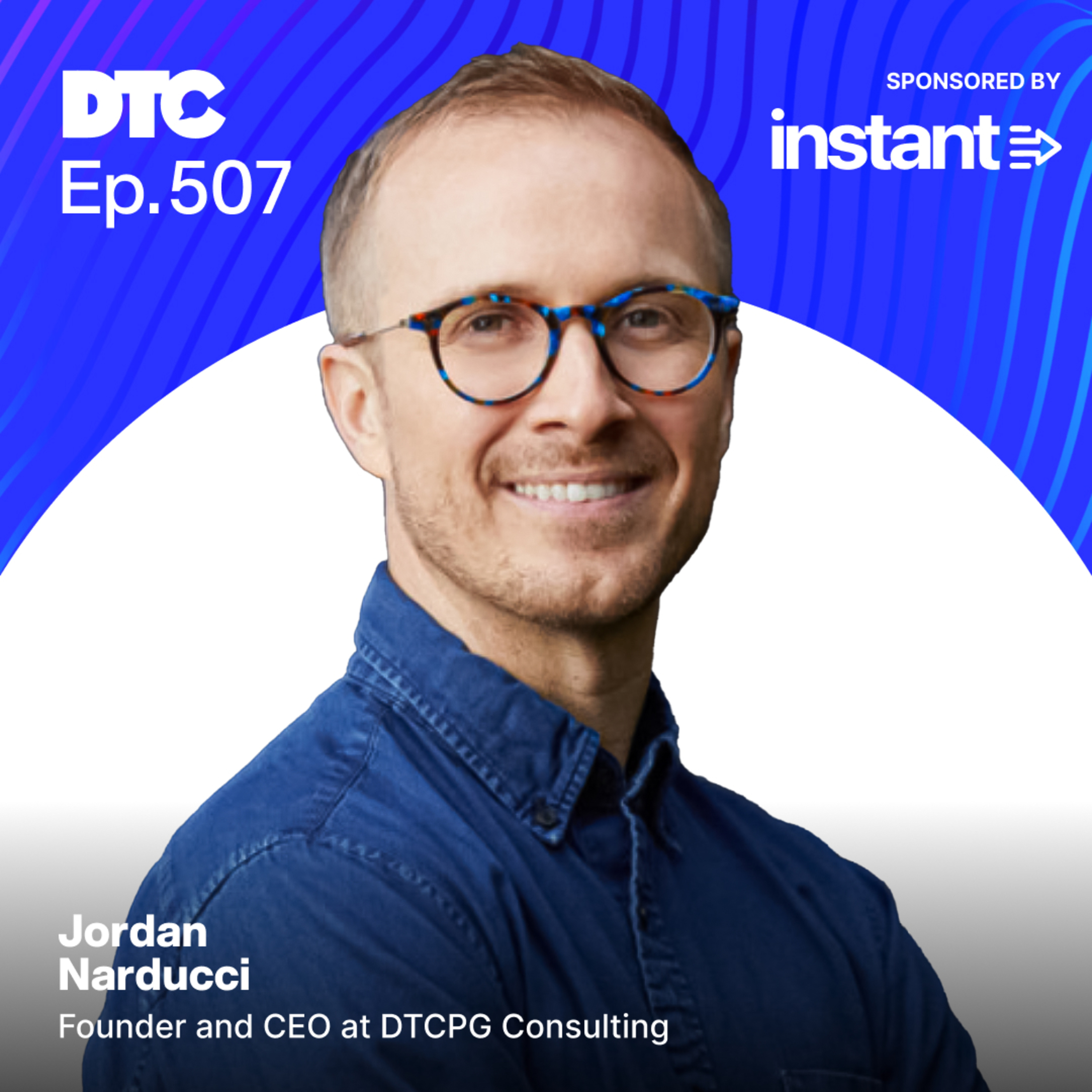
DTC Podcast
Ep 507: How to Optimize Subscription Offers for Better Retention and Profit with Jordan Narducci
00:40:39
Loading summary
Transcript36 lines
- [00:00]
A
They're not giving enough away. It's like when someone comes to the site whether they're new or returning. How do you make the subscription offer such a no brainer versus the one time option? The subscription reminder email is the most under appreciated and underutilized email. Because if you think about it, the other thing that I don't want to underestimate, that I think is really underutilized is subscribers are your best customer. Elevate them to a VIP tier, give them benefits along the way, give them the perks that your best loyalty program gets and make it such a no brainer that people stick around.
- [00:42]
B
You're spending real money to drive traffic to your site, but the truth is 98% of that traffic leaves without ever giving you an email meta knows who they are, but you don't unless you use Instant. Instant helps brands identify anonymous visitors so you can send more abandonment emails, build stronger retargeting audiences, and actually recover that lost revenue. Brands like Fate the label saw a 4.5x boost in their abandonment flows. Massco increased Shopify revenue by over 15%. Third Love, Toys R Us and the Oodie. These are all massive stores that use Instant to see an average ROI lift of 11.2x. They'll even guarantee you a 4x ROI or your money back. It only takes 15 minutes to set up and you'll start seeing results fast. If you're serious about getting more out of the traffic you're already paying for, now's the time to fix it. Get 50% off your first month at Instant One DTC. That's Instant O N E DTC. It's the DTC podcast. And I'm back with my friend Jordan Narducci. I've told myself I wasn't gonna call you the Nard Dog, but I just love that nickname so much. From the office. I've got a podcast right after this with a guy named Jordan Menard. So I get two Nard dogs in one day. And so we met back in the day when you were. You're actually one of my favorite stories to tell about the DTC podcast when we had like 25 listeners or something like that. But one of them was the. What was, what was your actual title? It was like so impressive when I saw it. It was the director of Global Direct to Consumer E Commerce at Kellogg, one of the biggest, you know, CPG companies in the world. We ended up like working together a little bit, which was really cool. And we, we back then we talked a little bit of what it was like to work for a mega corporation in your role and you've kind of since moved on, so why don't you just kind of catch us up on, on your journey, maybe leaving Kellogg and where, where you're at now. And to give people a preview. This podcast is going to be about managing subscription programs and all the best practices for creating subscription programs, which I know is like a super attractive business mode for people looking to build in this space. So we'll get to that. But first, start us off with your journey a little bit.
- [02:42]
A
Yeah, man. And I would love to go a little broader than just subscriptions, like LTV more generally, because I think there's more to that picture. But yeah, it's been a ride, man. You know, I think it was like probably five or six years ago that we connected last year and I had this great long winded title, like you just said at Kellogg. It was a lot of fun. I was leading their global direct consumer strategy. I got to work on some massive brands like Pringles and Cheez, it billion dollar brands and help bring them to life through the direct to consumer channel. I got to launch a bunch of new brands under, you know, under the Kellogg umbrella internationally. It was a lot of fun. But ultimately, I think, you know, I, I came from a startup background in direct to consumer. And then I feel like after a couple years I kind of found my way back into that environment. I loved the people, I loved the team. I still talk to so many people from that experience. It also happened during COVID like, you know, and I was in this international role where I was working like with London mostly. And you can imagine that time difference was, was not the most fun. So I found my way back to startups just because I, you know, you can move faster, you can feel the impact. You can, you can kind of like have a lot more purpose. I think I stayed in food and beverage for a little while. I worked at a really unique brewery, which sounds kind of strange for a guy that comes from E commerce and direct to consumer at Kellogg to, to a brewery. But it was like ultra premium beer, like $40 a bottle type of beers that aged. So they were like aged in a cellar. And it was just this really unique model where they, they kind of had like the supreme drop model. Every month you would launch a new, they would launch new products and you had to be a member to buy them and then they would sell out. Like they, they made sure there was like a scarcity element. So it was really cool. I learned a lot and actually A lot of the tactics I, you know, employ now in, in the role I'm in today. Fast forward, I, my last role was at a brand called Momentous, which was like a hyper growth supplement brand. And I joke, like, I feel like I was in like hard mode, you know, like back in the video games, like playing on like harder, like you know, expert mode. Working in food and beverage, indirect consumer, you know, I've kind of gone broader to Amazon as well. But like most of my focus has been DTC and food and beverage is hard. Like the margins are not the best, the shipping costs are high because they're, they tend to be big or heavy, especially with beverage, you know, and there's not as much of a propensity for consumption unless it's like a functional food to come back on like a subscription. And so it was hard, especially as Amazon got bigger and bigger. And then I found my way into supplements and it was like I had the cheat codes all of a sudden. Like the same tactics but like just a lot, a lot more movement.
- [05:33]
B
And you're fighting an uphill battle at Kellogg, first of all, because everyone buys Kellogg at the grocery store. 99% of it's bought at the grocery store. And also remember from working with Kellogg, like no shade, big corporations are much slower to move on the velocity. And a lot of the things that you might need where built in the world of performance marketing. Right. And they're built, they're, they're burst into this world of rapid iteration and funnel testing and all this great stuff.
- [05:59]
A
Yeah, and that's what we were trying to do like at Kellogg. That was, the whole model was like, how do we get more rapid? And what I'm most proud of from that experience was we brought a product to life in six months, which, you know, it was a new flavor so it wasn't anything like groundbreaking. But we used like their pilot facilities and we got like, we got a product launch like from scratch to beginning online, built a website, everything in six months. And like at Kellogg it typically takes like two to three years to launch a new product right in flavors, maybe a little less, but still long time because the stage gate process. So there was a model that would have worked. But yeah, to your point, like it's just easier when you go to an industry that it's, it's built around this and like the teams are structured around it and you're not having to convince everybody that this is the right path and take resources away. It's more like every, all the resources are dedicated to It So anyways, long winded way of getting into supplements. And I think what I'm most proud of of my time at Momentous was when I joined subscriptions were, were growing and they were part of the business but it wasn't like the focus. And I realized a couple things very quickly where I was like, you know, I joined and it was like get 20% or get 15% off your first order excluding subscriptions. And I was like that seems wrong. Like subscribers are the best type of customers. We should be doing something differently here. And I really just overhauled their subscription program and merchandising and focused on that as like what really mattered was if we could increase the opt in rate for subscription which when I joined it was like 20%. When I left it was 50%. Like if we could do that. The lifetime value of a subscriber tended to be anywhere from three to four times greater than a non subscriber. And so the math just compounds over time. If you can just if you can, if all else equals like obviously you can't give so much away on your offer that like everybody subscribes but everybody churns immediately, right? Like there's a balance there. But if you can keep churn constant and do those things, it compounds like three to four times greater. Right. And it just compounds over time. And so that was my like big unlock and my big light bulb moment that, that, that came out from that experience. And when I left just had a baby and I went into consulting and I was like most brands are not doing the tactics that we did at Momentous to, to to make those changes to drive subscription opt in up and to keep customers longer. Those were to the two the metrics. And so I started like with a hypothesis that this would be valuable for other brands. And as I've gone into like I start with an audit and then I go into execution. Like these other brands are having massive swings. Like brands that were on the decline for two years in terms of subscription revenue. Within a month of working with me, like just a few changes to their website, their offer, et cetera, low hanging fruit, back to growth. Like their biggest month ever in subscription growth. And now they're back to revenue growth. And what I realized is just coming from running brands and being the lead of a direct consumer company for so long, there's so much going on that you like don't. It's hard to focus in one area. And so I've built out this little niche that like you know there's, there's a Bunch of different acquisition agencies out there. Like everybody has budget for acquisition, everybody thinks about growth through the lens of acquisition. And then when people think about retention, most people like. Or let me ask you, what do you think of when, when I say retention, like a retention agency, I think email.
- [09:25]
B
Email and SMS.
- [09:26]
A
It's email and SMS. So 90%, 99% of, of retention agencies focus on email and SMS. Right. And so I realized there's actually this whole niche that can focus on subscriptions as the main focus. But really I try to go a little broader to LTV as a focus and I'm working with a handful of clients now and seeing really good results and you know, happy to kind of explore and dive in deeper. But it's been really fun, like working on multiple brands versus one, like putting all your eggs in one basket because I get to go do a bunch of these tests and then take the learnings and apply them to all these other clients. And yeah, I'm just, I'm learning more as an individual and a marketer and it's, it's been, been a whole lot of fun. And yeah, I'm excited to kind of share some of those learnings today by focusing in.
- [10:09]
B
And that's funny, I do. I was just chatting with Jordan Gordon, our email and retention podcast specialist, and that's really what you think about it. But really subscription just short circuits that and gets. It's like auto. You don't even have to send those emails and SMS as much because they're automatically already retained. So are you working with people that are more that already have subscription programs and you're helping them figure out how to prioritize them and put them in the right place? Or are you also helping people who don't have subscription programs build those out?
- [10:37]
A
Most of the brands I'm working with are established brands, like I would say in the 5 to 100 million range that have some element of a subscription. Oftentimes they're coming to me because it's either declining. Like I mentioned there like two brands, you know, declining, or maybe they've kind of tapered out or like they just, they're growing but they like relative to the size of the business should be much bigger. So they're looking to optimize and improve. Right. And I think I've built some credibility with my time at Momentous. That's obviously like for people who work in the supplement space, they know it, you know, outside of that, a lot of people who listen to this maybe don't, won't know it. But it's kind of like a darling new new entrant that's really well regarded and trusted and so it kind of opens doors. And I think what I've learned is it's just a process, right? And it starts with first a deep dive into the analytics of like what's happening with your business, you know, identifying trends, anomalies, like, you know, why did your opt in rate for a subscription go way up in January of 2023? Oh, we ran this offer and you know, so you get, it's kind of like detective work at first where I look at month over month data and identify kind of anomalies either good or bad and trends either good or bad. And then I just ask a bunch of questions and get kind of the story. And then I do like a customer, like usually I start with this audit and then I do a customer journey experience where I actually purchase the product. I go through that experience, I take a bunch of screenshots from your welcome flow from my purchase journey. And there's all these like micro moments that you don't even think about. But they actually can either encourage or disincentivize subscriptions. And when you start thinking through the lens of like subscribers are the most important type of customers, right? Because they're more valuable, even usually better than like your highest lt, you know, your highest loyalty program. Maybe they're already a subscriber but like if they're not a subscriber they might even be better. And on average they're always better than everyone else. And so if you can just make these changes to your website, they can have a 10x improvement on your lifetime value versus literally you can spend hundreds of hours on email and not net that same results. And I'm not saying like I don't want to discourage email. I think that's foundational and you have to have that stuff. That's just not where I specialize. Like I work with partners who are better than me as email specialists and sms. But I do review that. You know, I go through the journeys because like, like an example, almost every brand I work with just like momentous when I joined will have some welcome offer that's like here's 20% off your first order excluding subscriptions, right? And so what you're really doing, if you think about that, like zoom out, you're basically saying here's a 20% or 15% off. And if your subscription offer is 15%, why would anybody ever choose subscription if it's the same price or sometimes even people give more off than their subscription rate. And so it's like you're disincentivizing people to subscribe in that case. Right. So that's like a really low hanging fruit. Or another example is they're not giving enough away. It's like how do, when you come, when someone comes to the site, whether they're new or returning, how do you make the subscription offer such a no brainer versus the one time option? And there's like a psychology component, the way you design that like with the colors and the visuals and all the benefits you offer. There's a literal discount component and then there can also be like free gifts and things that like a shaker bottle or a welcome pack or whatever to drive trial, but also like to create value. And all of these things work together in tandem to, to drive more opt in rate for subscription. And then the counterbalance that what you have to kind of like measure and that's where the analytics is really critical is then understand like as you do these things, as you change the offer and roll that out, how does it impact your retention, right? Like the churn, does it increase? And if it goes way up then, then maybe you got to strike a balance of like maybe you've given too much away. Like I have a brand. One of the clients I'm working with last January they gave, well I guess it was like January of 2024, they gave away. I think it was like a free box or it was like such a big offer. Whereas like they got like a 60% opt in rate for that for subscription up from like, I don't know, it was like 20, 20 to 30% at the time. And what they found was like great, lots of opt in that looks really good on paper. The following month it was like a 3x increase in churn. And so it was like, it was like way worse for the brand, right?
- [15:02]
B
So because they had too much stuff or whatever. And then there's that anxiety about like oh I gotta cancel this or I'm gonna end up with too much of this stuff that I don't even need.
- [15:09]
A
Slightly different, which is another thing I want to talk about. But it's more like people are just like deal hunters. Like they're, they're just taking that deal because it's so great. They had no intent to ever subscribe. Whereas if you give, you know, just enough that it feels like, you know, it's such a good offer that like oh like okay, I'll give subscription a try. Like if I like it, I'll Stay. And I like to use this term, I didn't coin it, but it's like it's the marketer's job or the E Comm job to get someone to subscribe. It's the product's job to keep them, right? Like obviously you also have to educate them through, through marketing as well. But like at the end of the day, if they don't like your product, if your product's not good, they're not going to stick around, right? So you have to have a great product first and foremost. But if the product's good, if you've educated them on the why they should take this and the benefits, you know, post purchase and you've gotten them to subscribe, they're going to stay on, right? And then it's like there's other tactics you can do to keep them. Like, you know, give free gifts along the way. You know, when they do come to cancel, which is what you were saying, like they have too much of the product. That's the number one reason every single brand has in terms of their cancellation survey. There's so many tactics you can do to prevent that. You can offer them an incentive to pause, right? Like here, pause for two months, pause for a month. You can give these discounts because what I find is a lot of brands, they don't give enough away to keep the customers. And these are your best customers, right? Three to four times better than not, or maybe two to four depending on the industry. And so they'll offer like 5% to stay. It's like I have three of these packs at home, I'm not going to stay. But if it's like, hey, here's 30% to stay, I might think about that. And if you compare the 30% on a, let's call it a $50 or maybe 100 just to keep it easier for me, if it's 30% of $100 order, they're talking about like 30 bucks. I guarantee you that brand's acquisition cost to get that $100 is more than 30 bucks, right? And it's probably not going to be as good of a customer. And so I think like thinking through the lens of like subscribers are your best customer. Elevate them to the vip, to a VIP tier, give them benefits along the way, give them the perks, that loyalty program that your best loyalty program gets and make them want to stay. Like make it such a no brainer that people stick around.
- [17:22]
B
One of the when it comes to like free gifts too. I'm blanking on the brand it was. But they came on and they talked about. They saw a huge retention boost. It was a. It was a cosmetic company, and they realized. Or a skincare company, and they realized that everyone was using these, like, spatulas to, like, get the last of the product out of the bottle because it was an expensive product. And so they ended up, like, sending that as, like, a free gift once someone had gone through one or two of their orders. And it's like, it's something that enforces the ritual, like a shaker in the same way. Like, it. It enforces the. You see the brand every time you're. You're using it. This was a specific tool that helped you literally get more out of the product. And it helped ingratiate the, you know, the customer to the brand by having them because they're putting themselves in their shoes kind of thing.
- [18:01]
A
Right? That is. I love that. Yeah. I mean, that's the kind of stuff where you're, like, taking insights from customer surveys and input, you know, that they gave along the way. And you're innovating on that to create the habit. Like, that's what you want to do. The best brands have things like on your second order, you get, like, a canister that looks beautiful. So instead of, you know, this, like, ugly supplement protein thing that my wife makes me hide under the sink. Right. Like, now you have it out because it's this beautiful packaging. And what does that do? You see it visually every day that you go to the kitchen and it reminds you to take it. Or, you know, if something has to be kept in the fridge, maybe it's a magnet. It's that not super expensive, but it's just a little visual cue to remind you, oh, yeah, I should take this Omega 3 or whatever it is, right. Like, all of these things are encouraging rituals. Glasses, shaker bottles, frothers, all of these things, they're freebies, but they are in line with what you're trying to encourage, which is these routines and reminders to keep taking. The other thing that I don't want to underestimate, that I think is really underutilized is samples, right? Like, give samples of your product as little surprise and delight moments. Or even, like, call it out. Like, here's a welcome gift that's worth $20 worth of five different samples. What it's doing is driving trial, and then you're cross, and then you can cross sell them thereafter with like, hey, did you like any of these products? Here's 20% off to go try it. Right? And it's, it becomes such a easy tactic to drive, like to incrementally drive up your AOV for subscription.
- [19:32]
B
Super interesting. And just back to your point too about subscription versus things like email and sms. Like the thing I talk about with Jordan about SMS all the time. Email and SMS is, it's like the inbox is getting more and more crowded. Gmail is getting more and more restrictive about the messages they let through. And so every message you don't have to send to drive a customer is going to be beneficial to your overall email and retention program possibly as well because you're already, you know, if they're on a subscription program, they're going to be more engaged. It just, it could be by, it just takes the weight off of just sort of hammering your list all the time if you've got people on these automatic subscriptions.
- [20:08]
A
Dude. And I mean like the other cool thing that's happening right now is like what's happening with Generative AI customer support? Is it started, I mean these, if, if any of your listeners are not checking this out right now, they should, it's massive. Especially for like subscription brands where you know, 8 out of 10 of your questions are like, where's my order? Cancel my subscription. You know, like it's like tickets that you're, you're, you're hiring these like really talented people to do these really mundane tasks. And so you can eliminate like 80% of your tickets with these mundane tasks by getting Gen AI and they're really good. Like we, we rolled that out at Momentous and our CX person was like just way ahead of, ahead of the curve on that front. And but where the Gen AI is heading now is like integrating into SMS and going to become revenue driving side of the business. Right? Because our whole thing was like if we can get our CS team out of the weeds of doing these mundane tasks, well now they can spend more time educating customers, cross selling them offers, winning back customers. Right? So we had a flow where we would send our top 100 customers who churned that month ranked by order based on LTV as the top any subscribers who churned. And we would have like our, our CS team do personalized outreach from their email and be like hey, like can you tell me a little more? They would have, they'd be equipped with offers to go like as they, as they heard like what happened. You know, usually there's some issue or, or maybe they had too much product but then they can go back to them and literally start tracking like how much revenue did These, these CS team drive. It's, it's really awesome.
- [21:44]
B
I think you've talked about each of these things, but you have in your notes here examples of like no brainer offers. Offers are everything. And that's actually one of the questions I'm starting to ask more people on the podcast. Like, what's the best offer you've ever run? Offer really is everything. So give me an example of like a really great no brainer offer. Maybe talk about what it was before and what you kind of changed it to do and what impact that had.
- [22:06]
A
Let me talk about through the lens of like, as we learned at Momentous, so the first thing we did was we had this 15% off for welcome offer, excluding subscriptions. The first thing we did is we had the data to show like, subscribers are way more valuable. We started to allow stacking, right? Where you could be like, use that 15% on top of our 15% subscription offer. So now you could message as. Instead of get, you know, 28. Sorry, instead of get 15% off, we could say like get up to 28% off when you subscribe. Right? Because it stacked. That boosted our opt in rate pretty dramatically. And then it was like, okay, well only maybe 10, I think it was like 5% or 10% of customers that came to our website, gave their email address. So what about the 90%? And then only, you know, 50% or so of those customers open the emails. So what about the other 90% of customers or 95% of customers? You're just kind of like ignoring them with that offer. And so what we did was we actually took that offer and made it an evergreen offer on the website. So it was get 25% off your first subscription order and then get 10% off subsequent orders. And that's like a hack. Like that's oftentimes where I start with a lot of my companies. 95% of 90% of subscription businesses are just doing a blanket get 10, 15 or 20% off all orders, right? They're not playing around with this idea of like, well, you can actually give more away on your first order. Accounting can view that as a cost of acquisition. So it actually doesn't, it doesn't hurt your contribution margin. Really. Like, if you think about that through an acquisition lens and then it goes up and actually like with a lot of the brands I work with, if they were running like 15 or 20% off previously, now they're doing 25 and then 10, they actually end up netting margin over time, right? They actually get margin back because People stay on. And so that's like the best hack you can have. And generally like to answer your question specifically, you want to create an offer that feels like a Black Friday offer every single day. Right. That's, that's where this works. And so generally, I would say somewhere in the range of 25 to 35% is where you want to, where you want to be. Anything above 35%, you start getting deal seekers and freebie hunters, where the churn starts going way up. And so usually what I found, like, and it's not just me, like, I've invested a lot of brands, I've talked to a lot of brands that have done a lot more testing than I have. That's what they've kind of landed on too. So this is based on, I think people who are a lot smarter than me that have done a lot more testing than me finding that sweet spot in terms of churn versus versus opt in.
- [24:39]
B
Super cool. Are you familiar with Nift, the Nift gifting network?
- [24:43]
A
I'm not, no.
- [24:43]
B
I mean go to go to Go Niftuck. It's funny, I love when I can bring up sponsors in podcasts natively, but they're a really interesting gifting network where they have all these clients where once you've taken an Uber or maybe got a credit card or all these like post purchase type events, they pop up a little coupon that's like, hey, you can get your first month free on the wine of the month club, basically. And they have an ungodly amount of traffic because they're working with Uber and all these other companies and it's perfectly built for subscription companies where if they can make a really aggressive offer in that first month and kind of make it up in time, it's, it's like really like I've had companies who were doing subscriptions talk about it all of a sudden becoming like 20, 30% of their acquisition budget because the amount of traffic that's available to them. So might be worth you knowing them. I can make an intro if you're interested.
- [25:32]
A
Yeah, I'd love to. It sounds a little bit like sometimes when you buy like concert tickets, you kind of see offers. Yeah. Like StubHub and stuff. And yeah, if you, if you make those offer. Or amex has another program that's great if you can make those offers. Like really enticing. The acquisition cost is such. Is so low, relatively speaking, compared to like a meta that. Yeah, I see that being successful. The challenge I think is if you like in order to make that enticing enough you end up with oftentimes customers are not the best type of customers because they're going after that deal but it's still so cheap that like net net it's still fine. Like you know, you just know that those are maybe you're going to get a higher churn on average with those.
- [26:12]
B
Customers and it's a fixed cost on their network where you literally give them a CPA and you're like this is the cost. So you know you're, you're so you can kind of kind of manage it that way as well. We've got another like I did we talk about the your are the churn reducing tactics basically does that comes down to looking at the data thinking about that the value can you can add with with add on gifts. Anything else to like reduce churn.
- [26:36]
A
I mean I think we talked a little bit about also just the, the churn prevention surveys I think is a really strong tactic. I think brands don't give enough away when they're thinking about that. Like it's usually starts at like 5% where I've got like I've just tested a b, tested this and getting up to like 10, 15, 20, 25 even you know you, you end up seeing like your save rate goes from 5% to 10% to 15% like and that's massive. Like when you're talking about save saving customers and getting people to swap to you know, to try other products to pause all of these tactics I think like the other thing that I would say this is like again going back to email sms this is where there's overlap is like I think the subscription reminder email is the most under appreciated and underutilized email and it's where I usually instruct all of my clients to start. Because if you think about it like zoom out that email is basically just like a reminder seven days or three days before your card is about to get hit to cancel your survey because you probably have too much of it. And so the brands that do that really well get ahead of it by thinking about ages like designing that not using the templated version that you get from one of these subscription platforms but then designing in a way that's really focused on the benefits that you're getting as being a subscriber. And if you are to churn like if for example over time you've generated cash back like a lot of I think that's the one thing we haven't talked about. A lot of vendors are now introducing points and cash back and Things like that that you accumulate over time as they go to cancel. It's like are you sure you want to lose this $40 of value that you know that you're going to cancel? So I think that's a really powerful persuasive like way to, to keep them. But, but yeah, I think like then it's, once they get into that survey it's encouraging them to, to stick around and, and I think just like the design of that email, like it's a lot of times it's like here's how to cancel your subscription. No, it's like here's how to pause your subscription. Reminding them on all the things they can do to keep all these other benefits on why they're a member, reminding them that there's like, oh, you're gonna miss out on this like free hat that you would have gotten on the next order, you know, so what's the next gift? So it's all these things that play, play a really big factor and those things have like massive impacts for these businesses on you know, in terms of active churn prevention. And then there's little things like making sure that you have like, you know, the right systems in place to update credit cards and things automatically when, when, when the credit cards are, you know, expired. But most of the tools now, like the out of the box subscription tools are catching up on that front and I think have a lot of really good out of the box solutions for that stuff.
- [29:19]
B
I was going to ask you about that gamified angle because I'm a part of Fresh Prep and they're constantly reminding me that I'm not collecting points or and I actually don't really care about the points but it's in like I think I could maybe if I jumped into like and it's like when you have a continuous streak going, you're collecting more points and when you pause you get less points on the other side or something. But it's a little complex for me as a consumer.
- [29:41]
A
But I'm not the biggest fan. I think loyalty programs are a little dated from the lens of just, just loyalty like points based loyalty programs. I'm more of a fan of either cash back, right? So it's like it's dollar amount. Like when I'm canceling my subscription I'm actually going to lose $30 of value that I could use tomorrow. So I think cash back A, over, over points. But then B, it's for me it's more about like how do you elevate subscribers to a tier that like is your vip, like it is your loyalty program, like all of your benefits. If those customers are much more valuable to you, all of your benefits and loyalty should be focused on those. And I think some of the tool like subscription platforms out there have, have really started building their own kind of like subscription based loyalty. And what I mean by that is like, you know, could you give incentives, cash back, free gifts, like all these different things with each order that make it stickier and by the time they're on there, like, you know, if you're giving a gift every, you know, on every order, every couple orders, um, by the time they get to like their fifth or sixth order, they've created a habit, right? At that point, either you did such a good job as a marketer where they have six bags that have piled up and they just wanted the free stuff like you, like you were saying. But more likely at that point they've actually created a habit and it's part of their routine. And, and then, you know, sometimes it becomes like, how do you get customers to stick around once they do accumulate? Because inevitably, like we don't take, you know, protein 30 days out of the, out of the month, right? Like inevitably you're going to miss days, you know, where you forgot to take it or you're traveling or what, whatever. And so eventually you do get to a point where they have too much. And so then it's like, what do you do to combat that? And I think that's where the pause and incentivizing people to stay is really important too.
- [31:23]
B
What does your tools you mentioned, like, I get you might be tool agnostic in that you work with people with a lot of different things. But what are some of the tools in your kit that you really like working with on the subscription side?
- [31:34]
A
I mean there's like a few players, I try to be pretty agnostic. I have, I have good relationships with all of them. The dominant player was Recharge has been recharged for a long time. I think Recharge ran into some challenges two years ago or so, or they had to, you know, Shopify changed the rules and they had to all of a sudden use Shopify's checkout. And so I think it stalled their innovation for, for a little while while they were like all their product team was focused on getting that. And so there were some new entrants that came into the mix that I also really like. Like, you know, Skio Loop, Stay there. You know, there's three other providers, I would say like some of them Focus more on just like subscription management. Some of them focus more on like the product, you know, delivering a really good portal experience and having like upsells and churn prevention and others, you know, are kind of lower cost versus so it's like when I work with a client, usually they're already on a tool but if they're not happy, I kind of understand like okay, what are you trying to do? Right. And if, if, you know, if there's just like our costs are too high. Okay, I have some pro, I have some clients for you to arrive, some vendors for you to talk to. If it's like I want to focus on churn mitigation. Okay, well have you talked you know, to these guys? So it kind of depends on what their goals are and what they're trying to do. And, and a lot of that comes out of the audit process of looking at their data and being like if their opt in rate is like 50% or 60%, it's like I'm probably not going to move the needle that much on that. Like that's really good. Like 50, 50% plus is, is creme de la creme. Right. Like I know brands that are at 70, 90%, like those are the, that's insane. But if you still have optionality, obviously there are brands that just do subscription and then it's like essentially 100%. But the brands that offer, I actually prefer optionality, I think as a consumer and as a consultant because you can still make subscription the no brainer choice, but you're at least giving the people option and I think it actually reduces your acquisition costs. So I like the illusion of choice even if the majority are taking the offer. But yeah, it kind of depends on kind of what their needs are and kind of, you know what I find in my, my analysis.
- [33:38]
B
So I feel like what we've been talking about here is mainly to do with habitual use products like supplements, things like that. But you've got a note here about how you can drive recurring revenue in a subscription type format for other brands, like apparel brands. What are your thoughts there?
- [33:53]
A
Yeah, so this is a fun one that I think is underutilized and obviously I've been focusing a lot on kind of supplement beauty like any of the habitual use. But what I've found as I've started deepening my relationships and talking to more and more potential clients and even, even starting to scope this out with, with one of my clients is there's an option to introduce a paid membership. Right. And if you think about A paid membership, the way I think about it, which I again, I didn't come up with this. Someone coined it. But it's like you're subscribing to the brand versus subscribing to a product, right? And there's certain industries that it's really good to. You know, it makes a lot of sense to subscribe to a product because you love that product, right? Like, like protein powders or you know, whatever. But then there's other industries like apparel, fashion, et cetera, fragrance, where it makes way more sense to you. Like you love that brand, you're buying from them all the time. How do you get the same benefits that you would get as a subscriber, but you make it for any product and that way they can pick and choose, like maybe they want optionality each time they visit. And so you can run a paid membership program just like you run a subscription where you can have it as part of the checkout flow. You can give the benefits, they can get a discount on any product they buy from it. And you can then as a marketer you can focus on how do you increase the opt in rate for that subscription offer or sorry for that membership offer. And you charge them the following month a certain fixed fee to get that value. But the ones that do it best, like there's two, there's two major players out there. One is called Iterable. The other one that I actually like the most is called Subscribify. There they came out of a lingerie brand that sold to Victoria's Secret. And they built their whole model based on this concept of paid memberships where every, you know, every month you could buy any of their products but you'd get a massive discount. But what the way they would do it is they would do it based on you would pay like call it $30 a month, but you'd get that back in a credit, right? So every month you'd get charged, but you'd get that back in a credit. So it's like you don't really feel like you're losing something. And it doesn't have to be monthly. It could be quarterly, it could be annually. But the consumers don't feel like they're like, like paying just to be a member. They're actually paying to get this value back which they're going to go spend anyways. And now they're getting other perks like incentives that similarly, like I just described, that subscribers could get. Now they can get that across site wide. And so there's like you know, True Classics Tees is a great example. They have a massive paid membership program on their, on a T shirt. You know, I think there's a lot of brands like Meundies, there's a few brands that are doing this I think really well and then you can create a recurring revenue business. And my whole thing is like whether you have a habitual use product or not, if you can create a recurring revenue business and figure that out for your brand, which is going to be different for every brand. Some subscriptions can work based on new flavors of the month, new colors of the month, new underwear of the month, whatever, that could work. But more likely if you can create a paid membership program where you're getting this recurring revenue stream, it's so much easier to make your LTV work versus your cac. And in today's world, CAC is going up, it's going to continue to go up as more and more brands come out that it's just so important to focus on the other side of the growth curve that everybody forgets there's so much money in agencies that focus on acquisition. But the other side of that is ltv. Right. And focusing on retention and there's just such low hanging fruit. And when you start just looking through your business through the lens of subscription first and you have the analytics, that was another huge unlock I had was I partnered with a team in India called Saris analytics and they were like, they were just incredibly valuable for me because in real time I had retention dashboards that I could see how these changes were impacting opt in rate for subscription retention rates the following month. I could, I could look by product by one time customer versus subscriber. I could look, you know, by marketing channel. All these different ways to look at LTV in real time and that's like such a game changer. So I think having the foundation of analytics set up and then getting, getting your, whether it's a paid membership or a subscription set up that you drive recurring revenue, it's just going to make it so much easier to get that, you know, that LTV versus CAC ratio in a really healthy place compared to just having to go acquire new customers every single month.
- [38:18]
B
Beautiful. Well, you've got a few other bonus topics here, but we're at our end so you'll have to come back. You can be our resident LTV via subscription expert. But if people want to find more about your consultancy, do you recommend they reach out to you on LinkedIn?
- [38:31]
A
Yeah, LinkedIn's probably easiest. I'm like still building the plane while flying it. So, you know, I'm, I'm setting up my website right now. I'm actually using. You'll appreciate this. I'm using this tool called Bolt New and you can literally build a website by talking to the say text prompts. Yeah. And it is incredible in real time. Like I'm like, I'm taking a LinkedIn post, for example, where I talked about a client of mine and the kind of value I created with them in working together and the tactics I did. And I'm like, make a case study out of this. And it takes it and it creates this beautiful boxed out way better than I could ever design myself. And it's free to use. You can upgrade to do more work with it for 20 bucks a month. But it is the future, man. So I'm, I'm in process of doing that right now. So yeah, LinkedIn is probably the best way. Jordan Narducci. N A R D U C C.
- [39:28]
B
I will include the link. Sorry, Bolt what? Cause I'm actually I have to build a web or I was going to like build the text for a website after this podcast. So maybe I'll just build the website Bolt New.
- [39:38]
A
It is like, yeah, hit me up after you use it. I'm still like. But like I'm doing things like I have. So with my. Most of my clients, I have kind of a templatized sow that I use for like this is my process. I'm like, I put it in as a prompt. I was like here like call this my proven process. And then, and then create like a, you know, a widget within the website and it. And it's like beautiful what it did, man. Like I'm like blown away with this tool. So yeah, get after it. It's pretty impressive.
- [40:07]
B
Nice. Well, get access to Jordan's proven process for subscription and LTV revenue. Thanks for coming on. Today was great to catch up, man.
- [40:15]
A
Yeah, always, always fun, man.
- [40:23]
B
Thanks so much for listening to today's episode. If you're not a subscriber to our newsletter, you can do that right now at Direct to consumeralloneword Co. I'm Eric Dick and this has been the D to C podcast. We'll see you next time.