← DTC Podcast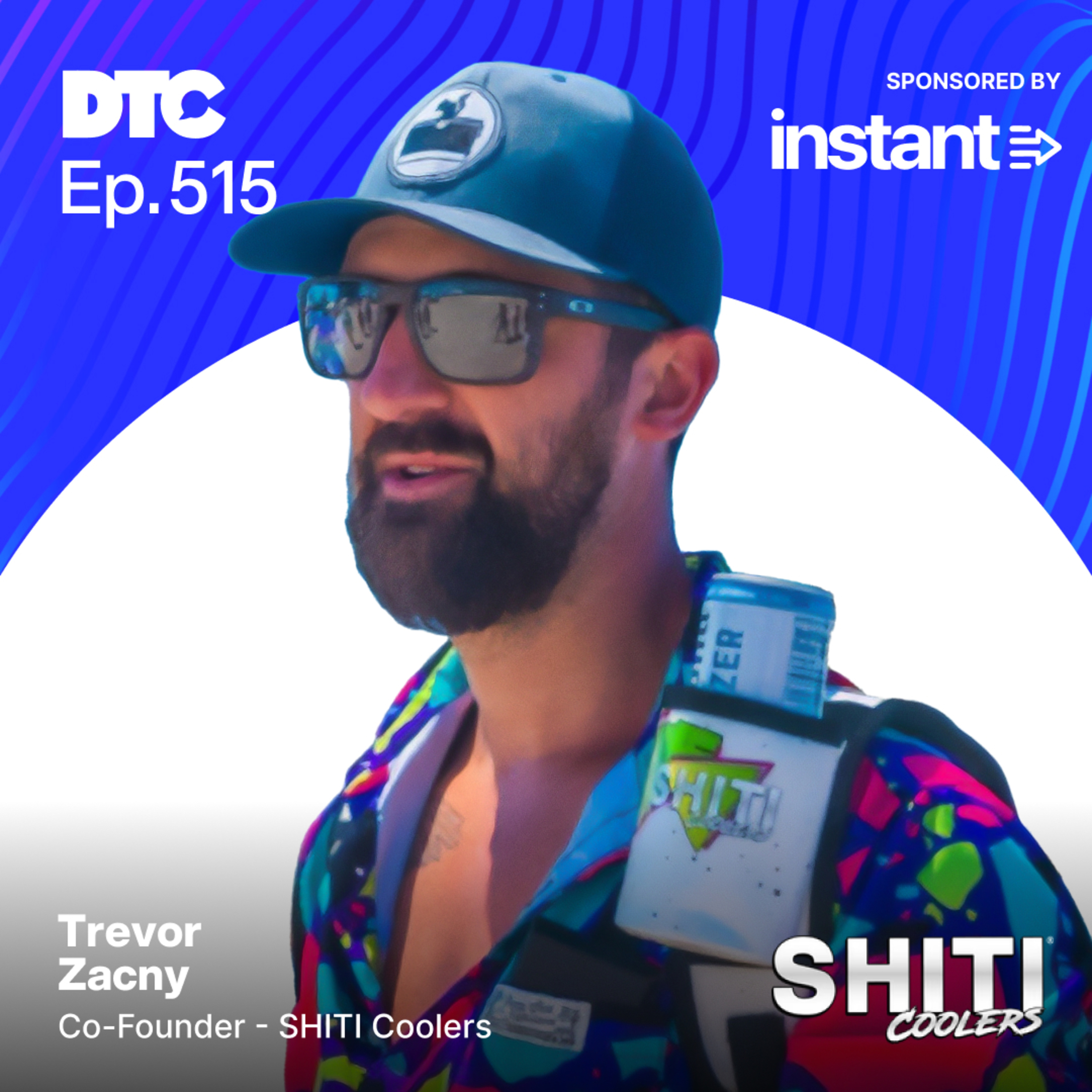
DTC Podcast
Ep 515: How Shiti Coolers Turned a Joke Into a $320K Sticker Business and Built the First Party Cooler Brand
00:36:49
Loading summary
Transcript92 lines
- [00:00]
Trevor
First year in business, we hit 320,000 in sales of just sticker sales. I realized, like, the amount of money that was coming in from just that idea alone. And I was like, we just got to keep going. The first one was just a basic blue cooler that we sold. It was called the Stumbler. We sold a thousand of them, like the first day. We are, as we grow, trying to be a little bit more for, I wouldn't say everybody, but just a little bit more a step back and being like, okay, you know the dad who's stressed out all week and then Friday comes and he wants to have a beer and get shitty with his friends, like, that's fine too. Or you have the. The guy who's in college who, Wednesday, Thursday, Friday, Saturday come and he's boozing every day of the week. Like, it's for him too. So really a lifestyle brand is what we've built.
- [00:51]
Eric
You're spending real money to drive traffic to your site, but the truth is 98% of that traffic leaves without ever giving you an email. Meta knows who they are, but you don't unless you use Instant. Instant helps brands identify anonymous visitors so you can send more abandonment emails, build stronger retargeting audiences, and actually recover that lost revenue. Brands like Fate, the label saw a 4.5x boost in their abandonment flows. Massco increased Shopify revenue by over 15%. Third Love, Toys R Us, and the Oodie. These are all massive stores that use instant to see an average ROI lift of 11.2x. They'll even guarantee you a 4x ROI or your money back. It only takes 15 minutes to set up and you'll start seeing results fast. If you're serious about getting more out of the traffic you're already paying for, now's the time to fix it. Get 50% off your first month at Instant One DTC. That's Instant O N E DTC. Trevor, welcome to the DTC podcast. Big fan of your brand. Shitty Coolers. Pretty cool. Tell me the story that led you to create the ultimate party cooler company.
- [01:57]
Trevor
Yeah, so that wasn't intended to start. So let's get that straight. At the beginning it was. I went to a. Like a country music festival in Michigan. They no longer have it this year, but it was called Faster Horses Music Festival. And I went there by myself, brought my old cooler, brought up just a backpack cooler. Not a shitty backpack cooler, just a regular backpack cooler, brought that into the festival. And when I went there, I realized that everybody that was there, a lot of people there had, you know, a yeti cooler or a yeti koozie or yeti products. And they were treating it like it was like gold, right? It was, oh, you had to bring it in your tent when you were going to sleep. You had to put it in your truck at night when you were going to bed. Or like, they were just holding all these things real tight. And I didn't give a. About what I had there, right? So that con. When I went to that festival, it kind of opened my eyes to, like, this. This festival culture that goes on, but also the cooler culture and how these people were connecting to their cooler, right. That I had. Had never seen before. I never cared what type of cooler I had. Ironically, when I got home, my. My brother, who's three years younger than I am, bought a yeti cooler. So when he bought it, I just immediately started making fun of it. I'm like, you know, why do you need that thing? Like, whatever else? And when he wasn't looking, I pretty much wrote shitty on a napkin and I taped it to this old cooler that was sitting on, like, our kitchen table. And I just made a quick snapchat of it and just made a joke, sent it to, like, my few followers. I had, like, on my personal account, and a few people were laughing, whatever. So the idea just kind of set, like, stopped there. And that was. That was really, like, the. The start of it. There was. Was that. And then from there we started to. We were like, well, let's just sell stickers that go on an old cooler and relabel everybody's cooler that they already have as a shitty cooler. So essentially, that's. That's how it started, and that's what we started our first year in business. We hit about 320, 000 in sales of just sticker sales that first year. And I was a teacher at the time, and I'm like. I realized, like, the amount of money that was coming in from just that idea alone. I was like, we just got to keep going.
- [04:14]
Eric
So just based on that idea of, like, lampooning a little bit, like, taking this cultural moment where yeti had become this, like, status symbol, people are spending three times as much as they've ever spent on those kinds of products. And sort of your. Your play is like, recognizing that there was a bubble there, and you're. You're popping the bubble with a bit of a joke, and it just resonated with people, right? Super cool. When did you decide to start actually producing coolers?
- [04:40]
Trevor
So that wasn't till about 2019. I think it was around 20 or like 2018. 2019. And that was because, I mean, when we were selling stickers, the most searched term on our website was coolers, right? It's like, well, where's the cooler? You know, everybody's initial reaction, well, where's the coolers? But, like, that wasn't the point of it, but we quickly realized, like, all right, we need to start. We need to try a cooler. Like, what. You know, how. But how is that going to look, right? Because from the beginning, it was, we're built for the broke. We're squirrel resistant, not bear resistant, right? We're making all these, like, funny puns. We're wildly weak. Our. Our coolers keep beer warm. Like, who cares about the over, you know, the yeti cooler? So the branding was all around. Around that. So as we've grown and as we wanted to come out with our first cooler, that's something we had in mind, was like, you know, our first cooler cost 30, $30, you know, and now on our site, our cooler goes up to $150. So that just shows you the journey we've kind of had to go on to, like, restructure the brand messaging and the voice of, like, who we really are. But the. The fact is that, no, there. There's never been a party cooler company. Like, people use coolers to party with, but there's never been a party cooler company. And we knew that very early on, even with doing the stickers, we were like, just, if we can push this and this is working. No one started a party cooler company. And, like, if there is one, like, we're definitely it. Like, the name is it. Like, it. It is it. And that's what we've pretty much strived to become, is the ultimate party cooler company. And it's. It's worked.
- [06:20]
Eric
Talk about your mark. 1. What, what. What went into creating the first party cooler?
- [06:26]
Trevor
Yeah, the. The first one was we went to another. Again, we went to a festival. And, like, I feel like ideas come. Come really well when you kind of get out from behind the computer and actually, like, live your life right, and do things. But we went to another. I think it was a NASCAR event, and we noticed these people from Canada walking around with these backpacks that were. They were sold with beer. I don't know if you remember them, but they were. They were sold with a case of Bud Light or they were sold with a Corona. And they just had the branding of the booze company on the outside of it. Right? And we've seen some at the track. We're like, wow, I've never seen a cooler with that type of printing. So that's what we kind of based it on, was, all right, let's get something in that we can put some crazy graphics on and just try to sell it. And the first one was just a basic blue cooler that we sold. It was called the Stumbler, and It was again, 29. And we sold a thousand of them, like the first day. And that's when we knew, like, all right, like the stickers work. That was a thing. But there's a whole nother side of this that we haven't tapped into.
- [07:30]
Eric
Was that name a play on Tumblr?
- [07:32]
Trevor
100%, yeah.
- [07:33]
Eric
100%. That's amazing because it's not, again, it's not drinkware. It's this other kind of product that I guess Yeti does as well. Yeti does do those kind of cooler backpacks as well.
- [07:42]
Trevor
Yeah. But ours, ours are just that design to essentially make drinking easy. That's like where we're at now. And I'm sure you'll have some questions now about like, where we are currently. But, but yeah, they're all based around making drinking easy and just making your life just easier when you're partying.
- [07:58]
Eric
Any, any key learnings or mistakes that came out of that first production run.
- [08:02]
Trevor
Yeah, that even though our name was shitty, that the products can't be shitty. No, because then it just makes the pun that much better for the customer and they, they, they just will jump all over that. Right. Like, oh, it's shitty. Never buying it again. So we quickly realized, like, however, there are customers that don't care. Like, that's what's wild is that with our name and, and who we target, like there's customers that don't give a, like what they, they use. They're that anti kind of expensive type of person. Right. But yeah, the learnings, like, we quickly realized, like, all right, like, if you want to have a drink out of your cooler, you don't want the ice leaking all over the place. You want the zippers to work. If the cooler falls over, the straps are breaking off, the liner is getting moldy when people, after they're done using it. Right. Just, I mean, the metal pieces on the cooler that we had were rusting. So it was just like continuously going like, all right, like it was product update after product update, year over year to get it to where we're at, like right now, which I feel like right now our products are the closest to the final, the final version that you could have it at. Although we stress on innovation and keep, keep kind of striving to make the product better for the customer. But yeah, the learnings were, I feel like we had to go through that to land on where we're at now in a way instead of just jumping all the way right to like the most expensive, you know, quality cooler and slapping it on, calling it shitty. You know, we just had to go through that journey, I feel like, to really dial it in.
- [09:37]
Eric
And the whole way you kept the brand tone around humor around poking fun. How have you, has that been a tough balance to balance the sort of like tongue in cheek humor with this like continually improving product line?
- [09:50]
Trevor
I don't think the humor is an issue with us because like, it's fun doing this with my brothers and like, even our partners now. We have like, we all have similar personalities. We all like to have fun and those ideas come when we are having fun and like we're, we're using the product and things right. So I don't think the humor has been difficult. It's actually, I think it plays our advantage a little bit. It's, it's a little, some of our stuff's a little polarizing where it's like you either, you either really like it or you're really like, ah, like I'm okay, I don't need a shitty cooler, you know, whatever. But we are as we grow, trying to be a little bit more for, you know, I wouldn't say everybody but just a little bit more a step back and being like, okay, you know, the dad who's stressed out all, all week and then Friday comes and he wants to have a beer and get shitty with his friends, like that's fine too. Or you have the, the guy who's in college who, you know, Wednesday, Thursday, Friday, Saturday come and he's boozing every, every day of the week. Like it's for him too. So it's, it's essentially like a really, really a lifestyle brand is what we've, we've really built.
- [10:52]
Eric
When it comes to your pricing at this point, are you still, are you still like a, you know, it's a premium product, but are you still. You're less expensive than Yeti's premium product, I imagine, right?
- [11:03]
Trevor
Yeah, we're about half, half the price of, of Yeti, but still above some of the other competitors when it comes to the coolers. Just because they are better quality, like they're better, better quality than some of the ones you, you'll find on Amazon, Walmart, wherever like ours are. They're crazy looking and they're called shitty, but they're also very, very good quality, I think.
- [11:24]
Eric
We did a podcast recently with Motion, the creative platform, and they mentioned in their big study of creatives how important humor is to branding. And I think it's something that a lot of people overlook. It's kind of hard to be funny unless it's like, really built maybe into your brand identity. But when it comes to the growth and, you know, the ads that you run, I imagine humor has been a bit of a secret weapon to, like, help instill that brand quick. Because if you can make someone laug connecting with them on a level that.
- [11:51]
Trevor
An ad normally doesn't 100% nail it right on. It's. It's almost like we balance between being like a badass type of brand and like, oh, that's like aspirational, right? And then there's like, you're saying the side of humor and there's times, like throughout the journey that you almost lose. You lose the humor a little bit and you're like, become a little bit too serious and you're like, wait a minute, we got to swing this back the other way. Like, we're losing the whole intention of, of, you know, the humor base of it. So it's funny you bring that up because it's a constant battle, like with Mark, with how we market to be like, no, let's make it funny and be a little less, like, serious, you know? Like, I know we want the ice retention to do this and we want this to, yeah, everything's got to add up. Right? But at the end of the day, we have a good product. And like you're saying we just need to make people laugh and trigger that emotion to get them to pull the trigger and buy.
- [12:42]
Eric
And what's cool is you probably mostly evolved out of the poking fun at yeti situation. Right? You're really your own brand at this point. You're not really leaning on that, like lampooning yeti at this point, 100%.
- [12:53]
Trevor
Yeah. I think the only similarities are both brands end and I at this point, that's really it. Other than that we're hitting, we're hitting maybe, maybe some people have a yeti that they use on the boat or they're. Whatever they're doing that they need that type of cooler for, but they're also having the good time and needing a cooler that makes just drinking easy. Right? Our coolers aren't bulky. They're not huge. They're not heavy. They're designed to be lightweight. They're designed to work. So it's almost like the Yeti fan or any other cooler company fan, like, would also need our product too.
- [13:29]
Eric
What are your thoughts on eventually going into actual drinkware?
- [13:32]
Trevor
I love it. Yeah, that's a. That's a huge thing for us because I know Yeti's.
- [13:36]
Eric
They're.
- [13:37]
Trevor
I believe when they. Early on, it's like their drink wear jumped from, like, to 60% of their overall revenue at one point. And, like, right now, I mean, they're doing, what, $1.5 billion a year in revenue when it comes to drinkware, I'm like, 100% like, we need to get that dialed in. It's been on the back burner for us, but now it. It's definitely one of those things that we're continually wanting to. To develop. But it's also. We want to, like, be innovative enough to do something just a slightly different, you know, and not put our label on there and just kind of sell it. That's the easy thing to do. But we're also. I'm like, all right, what's the next level to that? You know, how do we. How do we make our cups, like, the best drinking cup that someone wants?
- [14:20]
Eric
And party drink? We're keeping that party vibe as well. Like, it's just so much of a bigger market. Ideally, like, people use party coolers, like, during these amazing times in the summer, and there's, you know, probably like several times a year they're using it. But drinkware they have on their desk every single day.
- [14:35]
Trevor
100%. Yeah. Like coffee, Anything, right? Anything. Yep.
- [14:39]
Eric
I travel with mine. Cool. That's awesome. I think it's smart to not just have thrown yourself into it. Right. Like, you. There are so many. That's the thing about Yeti, right? Like, you can get something that's a tenth of the cost on Amazon that essentially keeps your drink probably just as cold. And. And so you don't want to just be a me too brand with it, I guess. Right, Right.
- [14:57]
Trevor
Which we can in ways. Like, you could. You know, we can make a stainless steel cup, engrave our logo on it, and run with it. And that's cool. But, yeah, it's that next level kind of thinking and going, all right, like, what. What do we want our. A shitty cup to look like? You know? Yeah. Like our coolers. We've specifically designed, like, attachments to go, you know, to hold our cups. You know, that's like, one thing where it could slip right in the side. It's almost like a cup holder. Nice. So we kind of like work the product in there where they always have something to do with the backpack or a cooler.
- [15:31]
Eric
One of the main themes that brands on this podcast are always talking about is community. And I think, again, because you've got humor, because people are using your product at such a happy time, happy moments in their lives, probably that ability to connect with them and build a community has been really valuable for you. What would you say has been your most successful move when it comes to building that community?
- [15:53]
Trevor
The community, at first it was all about gaining followers. Like, how many followers can we get in this community where they don't care what they use? If they don't have a yeti, they have a shitty, like, how big can we get it? And that, that Instagram grew quite a bit. That was like my sole focus in the beginning. Like it wasn't even sales, it was how do we get this Instagram up to 25, 000 followers, you know, so that was the initial community, but now it's, you know, email marketing. Our text community, our text list is, is pretty big. We have our Facebook group that's got like over 5,000 people in, in the group that are, you know, posting about shitty coolers, showing them photos of them using the product. So the communities came a long way and it's obviously still something that you can just continue to build and build on as we keep, as we keep going.
- [16:42]
Eric
When it comes to growth channels, what is, what's been your most successful play when it comes to the growth of the brand? Is it meta?
- [16:48]
Trevor
Yeah, meta ads are getting expensive in the beginning, definitely. Obviously we all know social ads are like the pure driver of what you're doing. And it was used to be cheaper, now it's more expensive. So with that, our pricing being higher has helped us being able to push, push the meta ads more and keep the brand, you know, alive. But one thing that just is hand over fish money, handover fist money for us is just going to the events that people are at, where they're using the cooler at, when they're already having the great time. Like it's like a, it's a recipe for, you know, one, a good time for us because like we're having fun with our customers, but also just sales. Like it's somewhere where it's an easy buy. Like we just got back from, we sponsored Kid Rock's tour and Leonard Skynyrd and we went, we just went this past weekend to the event and we sold. And it amazed me that one, it was the event that we charged the most for our coolers at. And then two, it was just the most inventory we've ever brought. Like, it was just. We brought like so much inventory. So this was like a pretty good test. But it was wild that like people just knew what they wanted. Like and it was so fast and so much revenue happened within like a two day span that it's just like when you meet those people, where your people are at, like physically, I don't think you can go wrong. Especially within our, within our brand.
- [18:15]
Eric
That's super cool. And then. And so you basically set up a store on the, on the festival grounds there. What goes into creating like. Is it literally just like a merch booth essentially, or does it. With the amount of inventory brought, it sounds like it might be a little bit bigger. What goes into creating a great presence at a, at a festival?
- [18:31]
Trevor
Yeah, it's just one. Our logo. We want to make sure, like our logo is on a black background. Right. So like this. Seeing this on a. We don't have the triangle behind this, our older logo. But yeah, seeing it from a distance. Right. Having flags up in the air. We're gonna put like some flags up so that people can see where we're at. But it's also promoting like before we even get there. Right. Like we have Legion campaigns going to win tickets and. And whatnot to these festivals that are going on. So like that type of awareness along with the setup of like we had a. It was a 16 by 7 foot trailer also with a 10 by 10 tent that we. This was great. But we set up two tables in the 10 by 10 that we just had cups and beer pong and Smart. It just stayed busy all day. Right. So it, it almost looked like we had a party going on. And all we really did was roll out some cups and beer pong balls and you know, and then they could buy kind of like in the other side. So it's just kind of creating the noise yourself and then. Then hopefully getting the sale.
- [19:34]
Eric
Have you done much with partnerships? Like I, I would think I, I know that would be hard, but like a Kid Rock cooler or something would be insane at a, at a conference like that. What. What have you done with partnerships?
- [19:44]
Trevor
Yeah, so with. Yeah, we haven't done anything with Kid Rock specifically. Like it's, it's kind of interesting because the tour is like almost separate from the artists. Like, it's almost like there's like a, like a separation there so we haven't done anything with him. We did get him a cooler, though. So, yeah, if he messages back, that'd be awesome to work with him. But yeah, as of. As of now, we've. We've done a few partnerships in Collab. We've done. We've done a partnership with Real Tree, like the camo. Camo backpack. We've done. We're doing one or. We've done one with Ryan Newman. So he runs a smart car series, used to be a NASCAR driver. We've done with him. We've done. We're currently doing a fishing team down in Florida and the Bahamas. They fish. So we're kind of getting into that area. And then one that's coming out soon within the next two months is a collab with Bill Murray and, like, Caddyshack.
- [20:36]
Eric
What? Oh, that's awesome.
- [20:38]
Trevor
Yeah, for golf. So, like, that's our. That's our way to get into, like, the golf community, which I. It was like, I don't even know any other. Any better way you could kind of get into golf than Caddyshack and With a collab with the William Murray Bros. But those are what we got going on now.
- [20:53]
Eric
That's super cool. I think of one of my. I'm friends with Brock from Frostbuddy. He does so much with licensing. I.
- [21:00]
Trevor
He.
- [21:00]
Eric
I know he was. He's going crazy on, like, the NCAA this year for the. For the Final Four. But I think that's another huge opportunity for you guys is like, sports team, straight up sports team licensing on these products because people will go nuts for that 100.
- [21:12]
Trevor
That's funny. I've followed Brock for a while now. That's. That's cool that you have connections with him. I've loved the type of stuff that he's putting out. It's great.
- [21:19]
Eric
I'll send it in. He's. He's great. I'll send an intro after this, just because you guys should connect. For sure.
- [21:23]
Trevor
Yeah, let's do it. That's awesome.
- [21:25]
Eric
I think he's in. Well, he. He's from Indiana, but he. I think he lives down in Miami. But we're at this really interesting point.
- [21:32]
Trevor
It.
- [21:32]
Eric
You know, the newsletter and the podcast. Right now we're super focused on, like, surveying our audience and figuring out what people are doing, how people are reacting to tariffs, how people are affected by this sort of trade war situation we find ourselves in. What's on your mind April 9, 2025 about the. The current trade climate.
- [21:51]
Trevor
Yeah, that's interesting. I think that one you just got to be able to have those other levers. Right? There's stuff that's just not in your control. Like, I could like, watch the news all day long and it's not going to change anything. So it's, it's like, it's, it's thinking of, like, the levers you have and the relationship you've built, like, over the years and going, all right, like, what are ways I could get this made somewhere else? What are our relationship with our manufacturer right now in China? How, how, how can we reduce our, our cost down? And yeah, it's kind of going to be a tough thing. And then like, we're, we're lucky that our products, we're able. We have a pretty good margin on them already. But yeah, I'm not against, like, you know, you got to do what you got to do with, with price increasing too, to protect your brand and like, continue to grow and be a thing. Right. I mean, something like that could just throw some companies just right into the dirt and they won't be able to recover from it. So, yeah, it's definitely on my mind definitely, definitely trying to think of alternatives. And I think I have the faith that it'll just, it'll iron itself out in some way. But also just keeping, keeping those contacts that we have close. Like, we've met some pretty good contacts that have worked for some other companies that have been through some things too, that we think we can, we can leverage.
- [23:06]
Eric
And I think you're right. You have to figure out what moves you can make, but without being too drastic, because this, it really is like a shock and awe kind of moment, especially with China where it, it doesn't feel like something that's going to be an ongoing state of things. It might, it's going to have fallout no matter what. But I, yeah, it's not going to. I, I don't think it's going to be as catastrophic. Sky is, it's not a sky is falling moment. And I think keeping keeping your cool right, figuratively and literally makes, makes a lot of sense.
- [23:35]
Trevor
Yeah. You guys are well positioned, right? Like running a business. I feel like it's inevitable that something, something's getting thrown at you. Right.
- [23:43]
Eric
You said you started the business with your brothers. Talk to me a little bit about your sort of founding team and, and what that's like.
- [23:50]
Trevor
Yeah, it's been awesome. Like, I couldn't wish for anything different, honestly. Like, growing up, like, I was, I was a teacher, my two brothers, during shitty. We were, I was building Shitty As a teacher for out of the nine years it's been going. I did it as a teacher for like five or six of those years. So I have to give credit where credit sued my brothers, jumped in early on and kind of held like the day to day operations like solid. And I was the one like kind of afternoons running Facebook ads, doing marketing, email and doing that. But I think overall it's, it's a tremendous benefit to work with my brothers and have them, you know, have them in the business and also going like I said, going to have fun and thinking of ideas and that like it's, I'm beyond grateful for the position I'm in and working with them.
- [24:38]
Eric
And what's the division of labor? Like what's your focus versus your, your other co founders?
- [24:42]
Trevor
Yep. So my focus is mainly like you know, overseeing a lot of different things like meta ads. I'm heavily into email and SMS marketing. I handle all of that. Any the day to day something comes up, need to fix something on the website, it's me. Yeah. So I'm like a lot of like spread all over the place. My youngest brother Luke, he, he's mainly in the content. So he does you know, everything you see on social emails, he's taking those photos, doing the UGC content like he's a one man content machine basically. He lives in South Florida and just know, pumps out content which is, which is great. And then also handles customer support and oversees you know, that side of things. And then also just tinkering with website updates and different things. He does. And then my other brother Austin, he does mainly product design, product development, shipping, imports from China, overseas, wherever we're getting our products from, he handles that a lot of like the, the shipbob, we, we use them, he handles all that communication. So we were multiple hats like of US3 which is, it's been like a blessing to have that type of help especially early on because you can't hire some of this stuff out like early on it's too expensive, super cool and.
- [26:05]
Eric
And, and a team that you can sort of implicitly trust because they're family.
- [26:08]
Trevor
Right, Right.
- [26:10]
Eric
What's been the most challenging thing about building this brand?
- [26:13]
Trevor
The most challenging thing, you know you're against all odds starting a business, you know and like early on it's fun, it's you know, whatever you want to call it. And then it gets, shit gets real basically where you're like all right, like I don't know the exact stat but if I remember correctly it's like 90 something percent of businesses just fail, like when their first 10 years, like, don't quote me on that, but it's, it's pretty accurate where you either run out of money, you just file for bankruptcy, you, you just can't get any product, Something happens. So, yeah, I, I would say there was a point a couple years back that we had a lot of our money. Well, I would say mainly all of it tied up in inventory and none for like working capital. And that was when, you know you're transitioning from stickers to coolers. So that's totally, totally a different business. Like, you, like stickers come in within a week, thousands of them. Coolers take four months and way more cash and way more could go wrong. And that learning curve happened slowly over time, but ended up hitting like a, hitting a brick, brick wall to where we needed, we knew we needed to find a partner who has, who has built a business before or find an investment from somewhere to help with that. So 100%, that had to been the hardest time was when you pretty much run out of cash and then what.
- [27:42]
Eric
What did you do? What was that process for finding that partner and what did you end up doing?
- [27:45]
Trevor
Yeah, so we were, we were in a sense of panic mode. So I threw everything I had, brothers, threw everything we had and kept, kept the business going. Knew again, knew that a party cooler company was missing and had the faith to keep it going. Yeah. And yeah, we met with a few investors over the course. When I say few, it was. I contacted probably so many, but I only had ended up having three meetings with three different ones within a year's time. And I ended up passing up two of the offers. And then randomly, the founder of Death Wish Coffee, Mike Brown, he stumbled upon our brand at a NASCAR event and had seen it and reached out. Long story short, we ended up partnering with him and his, his buddy who helped him heavily within Death Wish grow it. And now they work hand in hand with us every single day, billing shitty. And I'm beyond grateful to be working with them. It's, it's like I said, a blessing to have that, to have that kind of page turn and kind of react, restart the next chapter of like where, where this company's going.
- [28:55]
Eric
And again, it's the power of events. It's like not only are they this major sales channel, they're also this source of like, kismet or like, you know, destiny kind of thing when you, when you create all those connections in person.
- [29:07]
Trevor
Yeah, it's like so lost now. Like, it's like and it's easy to get caught up and sitting behind your computer, thinking everything's going to, like, work out and, like. And just keep going, like. And I see why, like, you have. You have to work, you have to do the computer, but you also have to just put yourself out there, too, because, yeah, you don't take the chances or go. Go anywhere. It's nothing. Nothing's gonna happen.
- [29:29]
Eric
What did your event schedule look like at this point? Are you, like, how many events are you gonna try to hit in 2025? Approximately 2025.
- [29:36]
Trevor
We have at least 10, though. That's the whole festival tour. So we have 10. 10 of those events. We have a full event team based out of Nashville that help us kind of manage it. And then we can go, you know, make sure everything's going well. I keep track of inventory on the back end and just make sure it's flowing smooth. So, yeah, we have about 10 this year, but we may sneak in, sneak in a few more.
- [30:03]
Eric
And then. What's your criteria for finding the best events? I guess it's always changing whenever you have a big success. But what. What do you look for?
- [30:09]
Trevor
Yeah, so it's. I know NASCAR is a big one. So, like, you know, if you're. If you're having drinks, having a good time, and you're allowed to bring in a cooler, right? Like, those are. Those are like the recipe. And NASCAR is just that. Like, I mean, have you been to a NASCAR event?
- [30:25]
Eric
I haven't, no.
- [30:26]
Trevor
Haven't. So, yeah. So if you go to one, what's amazing is because you can pack a cooler full of ice, full of beer, full of whatever you want, and just walk right in. You scan your ticket, you walk in. So you have.
- [30:37]
Eric
That's great.
- [30:38]
Trevor
You know, you could potentially have a hundred thousand people with a cooler walking in, you know, because they don't want to buy anything in there, which the concessions are fine with. Right. And then, like, same thing with the Rock the Country tour that we're doing now. It's, you know, they allow them in, since we're, you know, official sponsor, they're able to come in again. They're drinking. They need a cooler. It's hot. And usually when there's music, like those couple things, and then you go into the event, it's like, people will. People will, like, flock to where we're at and be like, what is this? Because again, you see the blunt name, and you're already kind of getting shitty. You're already in this, like, open state of mind of, like, what you know, what is this?
- [31:23]
Eric
You know you're already spending money to be there, right? Your, your wallet's already open to it to an extent. We talk all the time on this podcast about the power of story and narrative and I. You guys have such a great story. Being brother founders starting as a sticker company, moving to this. Have you done much with story based creative like or telling your founder's story either through social, through your ads or on landing pages?
- [31:46]
Trevor
To be honest, I wish we have. And like I, I blame myself. I blame like you know, it's like it's easy to get caught up in the day to day stuff. But like, I agree. I think as of recent we're really, we have been giving a ton of thought to the story right. And how it's told and how it comes off. Because I'm a big, big believer of what you just said. Like the three brothers founders, we actually founded it starting in our grandma's basement which I think is a. Just a great thing to kind of. That is implement in the story of where we started. But no, I, we haven't made any like founder based story ads. But it again it's on, it's recently like made it to the top of the list like after having discussions with my brother recently.
- [32:29]
Eric
Yeah, I think that's a huge opportunity. I, I just think about Brock again. He over and over just goes and over and over on his social. He's on the beach telling the story, you know, universal cancuzzi and how he made it and why he made it. And I think that's just driven so much of their, their social presence that you know, you guys have a huge opportunity with that. That's.
- [32:47]
Trevor
That's 100. Agree. I might make a video after this.
- [32:50]
Eric
Let's do it. Let's cut, cut that video.
- [32:53]
Trevor
Knock it out and just try it.
- [32:55]
Eric
Nice man. I see on your website you also do wholesale. What's. How's. Is that a big part of the biz?
- [33:00]
Trevor
We're not in too many stores. It hasn't been a big focus but it has been as of recent. Like we're starting to really start to push into different stores. I think we're under, in under 20 stores right now, but we have contacts for so many different stores to get into. But it's just the manpower behind it. We obviously put a lot of focus in the online part, but as we, as you heard me talking about events, it's like you got to get in front of where your customers are at, where they're shopping and wholesale Is like, could be a huge, huge thing for us that will. We'll continue to push for.
- [33:37]
Eric
Is it heavily a seasonal business? Like, I know we're headed into spring here. I'm just looking outside. It's just starting to warm up where I am. I guess there's places where it's summer year round, but is seasonality. Is summer really your Super Bowl?
- [33:48]
Trevor
Yeah, I would say May, June, July, May, June, July. It's just, it starts to ramp up and then it kind of slows back down. And obviously you're always trying to combat, like, the seasonality. And we've had thoughts on, like, oh, what could we. What could we do? And like, one of the thing that I, I seen the company Sand Cloud did it. They. It was on Shark Tank, but they started to pretty much market their products. When it's winter here, it's summer in Australia.
- [34:16]
Eric
Yeah.
- [34:16]
Trevor
So they started to market their beach towels over in Australia. And that kind of caught my eye. So maybe this winter will start to try to market to Australia to help with the seasonality. But yeah, it's definitely the first couple years when you. I didn't understand business and the seasonality started to happen. I'm like, okay, I get that no one's using coolers, but it's warm in Florida. Why aren't they using coolers? But it's like, it's also Florida's. Like, Florida has their summer months too, and their winter months where you wake up and it's 40 degrees, you know, so it's not always, it's not always like the season for coolers. But it's our job to kind of make sure it is in ways.
- [34:55]
Eric
Yeah. I, I randomly play cricket here in Victoria with a bunch of Australians. And you should, you should probably call it the Shitty Esky because they call. That's, that's what they call. They call coolers down there the Esky. And if you don't, if you, if you don't close the lid on the Esky, you're in big trouble with the Aussies.
- [35:11]
Trevor
What is an so Esky that's interesting now I'm gonna.
- [35:14]
Eric
It's Eskimo. I think it's short for Eskimo. And it's what might be one of those situations where it was a brand, like Eskimo brand, and then people just call it an Esky. But that, that's, that's my insight into the Australian mindset is. And shitty Esky sounds pretty cool, actually. If people want to follow your journey. Are you like, obviously follow shitty coolers on, on social media, on TikTok, on Instagram and such. Are you, are you active on LinkedIn or anything like that? If people want to follow your journey?
- [35:42]
Trevor
Yeah, I'm on LinkedIn. You can reach out to the website customer support. That'll go right to a customer support team and then it'll get in contact with me. But Yeah, I mean, shittycoolers.com we're all over Amazon and then hopefully in a, in a store near you soon or a event of some kind. As long as they're keeping track of our social media, you know, we could be, could be near you.
- [36:04]
Eric
I'm a big paddleboarder, so I'm gonna have to pick one up for paddleboard season because it's pretty much perfect for that use case, I think 100.
- [36:11]
Trevor
Yeah, it's got an airtight zipper too. So if it falls in the water, no water is going to get in there and you could just put it right back up and you're good.
- [36:19]
Eric
Awesome, man. Well, great. Great to meet you and good luck with everything. I look forward to following your journey. Maybe we'll catch back up with you later.
- [36:25]
Trevor
Thank you, Eric. I appreciate it, man.
- [36:33]
Eric
Thanks so much for listening to today's episode. If you're not a subscriber to our newsletter, you can do that right now at Direct to consumer. All one word co. I'm Eric Dick and this has been the D2C podcast. We'll see you next time.