← DTC Podcast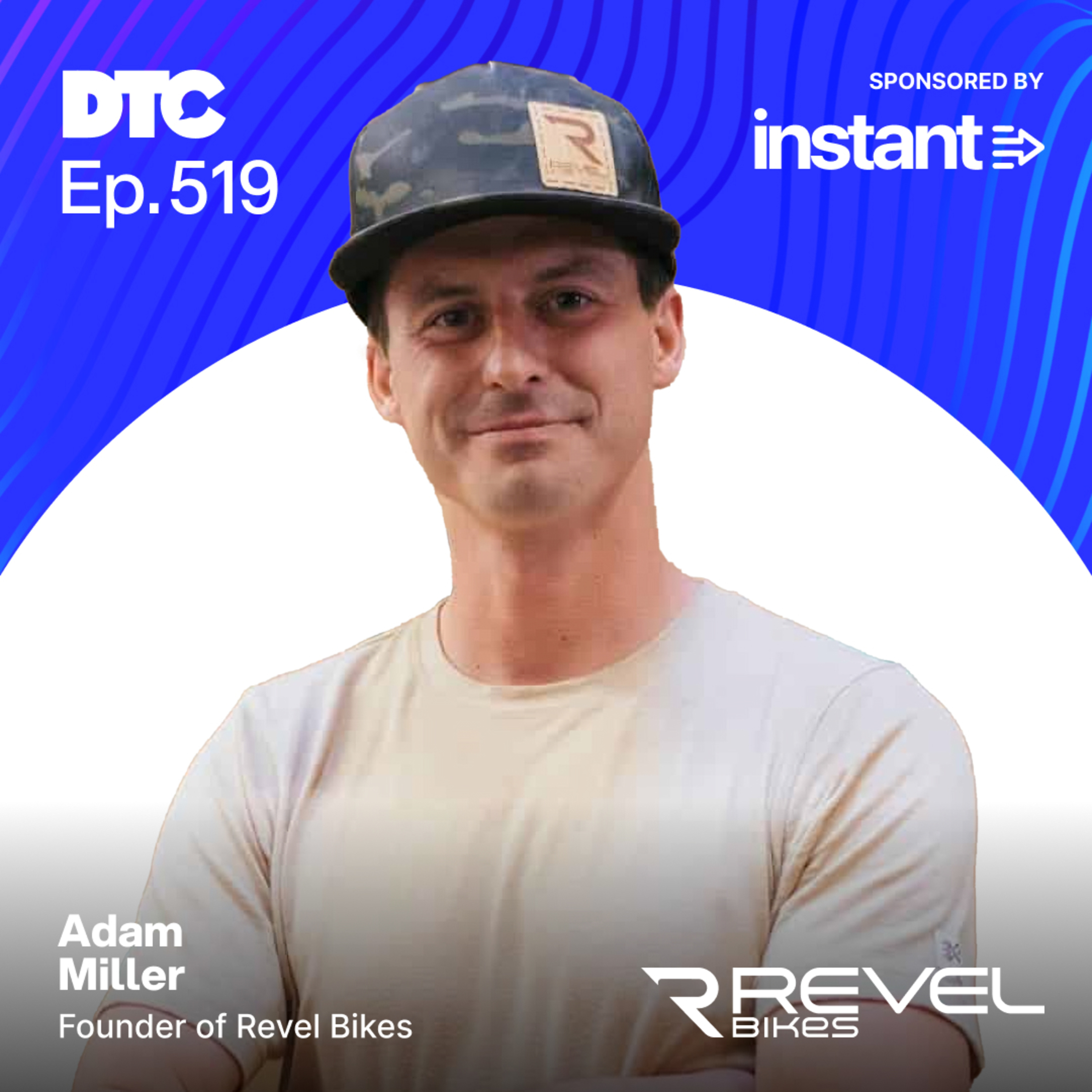
DTC Podcast
Ep 519: Bootstrapping Revel Bikes: From Carbon Suspension Innovation to Acquisition
00:42:40
Loading summary
Transcript62 lines
- [00:00]
Adam Miller
We didn't do a lot of the traditional marketing methods. I think when you get to a product like ours at a very high price point, the customer scrolling Instagram, who sees an ad pop up and says, oh, that's cool, I'm going to click and buy it. That doesn't happen when you're talking about a $6,000 product. I made a conscious effort to say, we don't have a marketing department. We have a communications department. We don't have a sales department. We have a customer service department. The best thing we did from a true sort of marketing perspective was one of the largest online retailers wanted to sell our bikes. I kept on telling like, no, we can't take you on as a customer. We need to focus on our existing customers. They didn't want to take no for an answer. They sent me a purchase order for like $980,000 and I literally printed it out and I held it in my hands. I just thought, am I going crazy to even, like, think that I could say no to this?
- [00:53]
Eric Dick
You're spending real money to drive traffic to your site, but the truth is 98% of that traffic leaves without ever giving you an email. Meta knows who they are, but you don't unless you use instant. Instant helps brands identify anonymous visitors so you can send more abandonment emails, build stronger retargeting audiences, and actually recover that lost revenue. Brands like Fate, the label saw a 4.5x boost in their abandonment flows. Massco increased Shopify revenue by over 15%. Third Love, Toys R Us and the Oodie. These are all massive stores that use instant to see an average ROI lift of 11.2x. They'll even guarantee you a 4x ROI or your money back. It only takes 15 minutes to set up and you'll start seeing results fast. If you're serious about getting more out of the traffic you're already paying for, now's the time to fix it. Get 50% off your first month at instant1/dtc. That's instant.o n e DTC. Adam, welcome to the DTC podcast. Really excited to dive in here. I'm an avid cyclist myself. Tell me a bit about your background in in cycling and what brought you to revelation.
- [01:59]
Adam Miller
Yeah, thanks, Eric. Great. Great to be here. Yeah, I've been kind of a total, total bike nerd my whole life. I grew up in Alaska. You know, biking was kind of the first sport I got into that I felt like I was decent enough at it. So I kind of just got hooked, started working in a bike Shop as, as a kid. I had a little bike ebay business when I was like 12 years old and actually did. I did pretty, pretty well selling used bikes on ebay until I sold my first company. That was the best I ever did from a business standpoint. So I was kind of, kind of really into bikes from a young age as a kid, got into the business side of things, was lucky enough to work at a great bike shop in Alaska. And then I sort of fell into the business of the bike world. Everything was really sort of passion driven, I suppose. And then I started dabbling in a few side projects that sort of turned into businesses. So I started my first company when I was in undergrad in Colorado Springs. We made high end carbon fat bikes, which is a bike with big wide tires for riding on snow. And timing was great. We hit the market. The product that was a carbon fat bike, I built that, built that company through, through college, then a little bit after college, and then I ended up selling it to my business partner back in 2013 I think. So kind of, kind of, you know, dipped my toes in the water, had a good crazy experience, was able to sort of travel all around the world with bikes. And then after I sold that company, I, I wanted to start, you know, start another one and really make, you know, the types of bikes that I like to ride personally. You know, high end full suspension mountain bikes and a few others too. So in around 2015, 16, I started really diving into that. I started two companies. One was called Y Cycles. It was a really kind of unique niche titanium bike brand that I launched in 2016. And then we were working on my main company called Rebel Bikes. We started working on at the same time. But that was like a long time of developing and creating the products. And so we launched that in 2019and then combined the Y Cycles product line into Rebel Bikes. I ended up selling that business in 2021. It was a fantastic experience. We can dive into it more. And then I worked for the company for a couple years and then left the business about a year ago now. So that's kind of the quick and.
- [04:18]
Eric Dick
You can dirty the quick and dirty and you bootstrap this bad boy. Which kind of blows my mind when I think about the costs that are involved in bike building. What can you say about how big it got? Like from, from your humble beginnings, like, how big did this get?
- [04:31]
Adam Miller
Yeah, we totally bootstrapped it. I mean, and looking back on was challenging at times that the bike industry or, you know, any product oriented company, but bikes specifically take about 40 different components to get together to sell one unit. So, you know, inventory and cash flow are a super, super important thing. Especially as a smaller company when a lot of suppliers aren't, you know, weren't giving us very big terms. You end up spending all this cash, let's in January to get your products, and then you don't get those products for three, four, five months sometimes. And you don't always collect money on them for several months afterwards. So the cash cycle was like, you know, day in and day out. I feel like we were a cash flow company more than a bike company at times, just trying to manage that. But we totally bootstrapped it. You know, I took out a. I was lucky enough I sold my first business for a little bit. So I was able to kind of put all of that into the business. I was able to buy a house and then have the first six. Six employees were also my roommates for a period of time so we could all kind save costs. I remodeled the house and took out two different home equity lines of credit on the house to use that cash to buy the inventory for the bikes. So everything was really focused on how do we get enough cash to pay for this inventory, let alone all the costs of several years of developing the products. We ended up launching the brand that the grand total Advertising spend was $96 on Facebook Ad spend. And then we brought a few bikes and a van to a bike festival in Sedona, Arizona to launch the company. So we had to get very creative with all of our D2C marketing. But we grew very quickly. After we launched in 2019, it was myself and six employees at the time. A couple years later we had 40 employees. I had an office, our own office that I opened in Taichung, Taiwan to help manage the manufacturing and supply chain and then international business. We had distributors in 17 countries, D2C sales, and I think over 40 or 45 countries, and then retailers in every, in every state in the country. So I was told we were like the fastest growing carbon mountain bike brand ever. I don't know if that's exactly true, but you know, we grew quickly and it was really quite a bit of fun.
- [06:43]
Eric Dick
You're the HOKA of bikes.
- [06:44]
Adam Miller
It sounds like not quite that big, a little smaller, total addressable market. But you know, it's a good start for sure.
- [06:51]
Eric Dick
What do you attribute to those, like those. So you said it took off like in 2019 when you launched it. I'm interested. Like I know people follow bike makers and like people who love biking know, you know, maybe they're a little tuned in to like, you know, people launching new brands. But like, what do you attribute to that big takeoff period when you launched it?
- [07:09]
Adam Miller
Yeah, I mean, you know, I've thought about this a lot over the years of trying to, trying to go back and pinpoint that because I think if I could pinpoint it and somehow put it into words, it would be very helpful to my, my future businesses and maybe some other businesses. I think it was definitely a combination of a lot of different things. We obsessed over the product for those that, you know, if you're not in the, in the mountain bike space, you know, it's, it's that people are very enthusiastic about the products. Like you said, they really follow along. The bikes we sold were, you know, they're high end bikes. We are priced very similarly to our competition, if not a little bit less expensive than our competitors at different points. But the starting price of our bikes was $6,000 and went up to $12,000, which, you know, sounds crazy, I take it. Yeah, but, but it's just sort of what the bikes cost. So, you know, it's similar to golf or FL fishing or sports cars. When a person gets really into it, you can really kind of go down the rabbit hole and upgrade every little piece and part here and there and get a really high end product and that makes your hobby more fun. And for me, I've kind of lived that my whole life. I just fell into loving bikes, so it sort of made sense for me. But I think a huge part of our success early on and through the years was sort of the authenticity and the storytelling. As a listened to a lot of your other podcasts or read read books on marketing or you know, how to sell products, I almost feel like we didn't do a lot of the traditional marketing methods. I think when you get to a product like ours at a very high price point, the, you know, customer scrolling Instagram who sees an ad pop up and says, oh that's cool, I'm going to click and buy it. That doesn't happen when you're talking about a $6,000 product. You can't convince someone in the moment just to buy it. So there's a very long sort of thought process and purchase process that goes into spending this amount of money on a bike. And I think we really leaned into that and the storytelling aspect of it, of course. I mean, we're a product focused company. We spent three and a half, four years developing, you know, the first two bikes before we launched them in 2019. And so the product itself was really set apart. We had a unique suspension platform, so the way the rear wheel moves up and down over rocks and roots. I had licensed a patent from a friend of mine who invented like the best, the best method ever for that. And then we developed the bike, you know, kind of every little detail and possible feature we could think of to put on the bike and make it ride really well and look really good. I think we did a great job at that. But when we were going in to launch the brand, I assumed we would be like 90% D2C and maybe one or two bike shops here and there would pick up the bikes. We'd sell a few at retail and like, I couldn't have been more wrong. I think going into the concept that it's an expensive purchase and you know, 2019 wasn't that long ago, but it was still sort of a long time ago when it comes to like D2C sales and whatnot, Especially on a higher end product like this. I realized, you know, even though we sold quite a few bikes or you know, the first couple of days, first couple hours after we launched, a lot of people still wanted to go into their local bike shop or they knew someone and touch and feel and see the product before spending that kind of money. So we certainly sold some, some products online, but we kind of accidentally were. Went very heavy into retail for those that first year or two especially. And then the D2C kind of kind of picked back up and actually started, you know, outpacing the retail sales fairly quickly. I think it's sort of just that consumer confidence, you know, someone, they finally read enough reviews and saw enough of those bikes on the trails and heard from their friends that they're good, that they're not going to, you know, spend $10,000 on the Internet with some random company that just popped up and, you know, hope they get, they get a.
- [10:50]
Eric Dick
So I think your B2B game, if you, if like just hearing this, like to pinpoint it, one of the most successful engines I can see is that you got all these cool bike shop workers and owners because they're like, you walk in a bike shop, it's like, they're cool, dude. They're cool people working on bikes and you know that they have, they love certain bikes and maybe they don't love certain bikes. So you got a lot of those people to really like the brand and the product of Revel bikes. Is that accurate?
- [11:14]
Adam Miller
Totally. And you know, and I don't Think we were super conscious when we were going through our, you know, marketing plan because our, me and one other guy that really did the kind of the marketing and branding side of it. Chris, Great, great guy. We didn't, like, have a huge plan or, you know, I don't even know if we had a few notes scrawled out on a piece of paper of, like, what our plan was going to be. It was really, hey, let's show off these, you know, amazing products that we worked really hard on to the world. And then it was. We were sort of reactive from there, which ended up working out just fine. But the plan wasn't, oh, let's get everybody in the bike industry to, to buy our bikes and they'll tell their friends. But that. That sort of, that, that happened, I think a lot of it was that we were truly like. I mean, I hired six friends, you know, before we launched Revel, I moved the company I'd started in Utah, but then I moved it to this small town called Carbondale in Colorado, Tennessee.
- [12:01]
Eric Dick
That seems like part of the brand because it's carbon bikes and you're in Carbondale. Like, that's just another awesome layer of the brand.
- [12:07]
Adam Miller
I mean, it's a small town down the road, there's Aspen ski resort up the road, and, you know, it's a bike mecca. Like, I moved the business here. Awesome mountain biking, awesome skiing, river, sports, whatever. And I figured, hey, this is a lifestyle product. We need, you know, I want to live here for one, but our company needs to. We need to live what we sell if we're going to do a really good job. And everybody we hired, I mean, for years, I think, really still the company is hiring people who are like, die hard, passionate bike people. And that really showed through in our marketing kind of on accident. And, you know, I made a conscious effort to say, you know, in the beginning, we don't have a marketing department. We have a communications department. We don't need to, you know, make anything up. We just need to sort of tell, you know, tell the world what?
- [12:51]
Eric Dick
I like that.
- [12:52]
Adam Miller
And I said, we don't have a sales department. We have a customer service department. Because if we have a great product and we're authentic and we truly take care of customers, we should really just be reactive to this. And that ended up working out quite, quite well. For several years. The best thing we did from a true sort of marketing perspective was getting really good pr. So we sent a handful of bikes to different magazines early on, and luckily I had a few connections from my previous company. And then some of the people on our team had some great connections, too. So some of these magazine editors were even willing to accept a bike to try out, to write an article on. But the day we went live, we had a product review on Pink Bike, which is the largest mountain bike publication, and a product review from a magazine in Germany called Enduro Mag. And I had flown over there. I was on a college friend's Euro trip that I almost didn't go on because I had no money before we launched this brand. And like, last night I was like, okay, I'll join this trip, but I have to, like, you know, go visit this, this bike magazine in Germany to, like, get them a bike. I flew. I flew with the bike over there because it's cheaper than shipping it because we didn't want to spend, you know, all that money on, on shipping a bike.
- [14:00]
Eric Dick
We take too long to bike there, so you got to.
- [14:02]
Adam Miller
Exactly, exactly. Yeah. Our hands are tied. And so, And I remember I was, like, sitting at this, this demo event in Arizona, and the. The articles went live, and I was, like, so nervous. I went and, like, sat under this juniper tree in the desert and I was like, you know, was like, refreshing my phone to, like, see when the articles would go live. Because if, if they were good articles, our company was. We were golden. We were going to sell a bunch of bikes. If they were bad, it's like, game over. Like, we were going to be dead before we. Even. Before we even started. I don't think I slept a whole lot those, those couple weeks leading up to it, but I was, like, reading these articles on, on my phone and, like, I just had this, like, huge feeling of relief. Like, it was, they're amazing reviews. It was like, the bike's amazing. The bike's awesome. The company's awesome. You know, this is like this refreshing new take on the. On the mountain bike world. And it, like, it just checked every single box. And then it was like, off to the races from there. Like, our story resonated. I know we were all, like, taking bets on when we were going to sell the first bike. You know, when we launched at 9am and like, everyone was off by, like, days. Like, we sold several bikes, you know, those first few hours, and then it just, it just took off from there.
- [15:11]
Eric Dick
Can you describe just a little to a non? Like, I'm a cyclist, but not, not, not a mountain biker, and I'm not as into it, but, like, what did you innovate with the product? I'm looking at they're really like sleek looking. But I'm always just so interested. I know there's so much difference in how a frame is oriented and the angles in it, like at a, at the highest level. How did you innovate with Rebel Bikes on the actual product?
- [15:34]
Adam Miller
Totally, yeah. The biggest, like backbone, most tangible thing that our differentiating factor was the suspension platform. So how the rear wheel moves up and down. And every wheeled vehicle has it. Cars, motorcycles, dirt bikes, mountain bikes. It's all about how do you keep your wheels moving up and down over bumps. So it's comfortable to ride the bike, it's efficient to ride the bike. It's quiet, you know, it's fast, all those things. And so everybody tries to figure that out. Every company kind of has their, their way of doing it. A friend of mine had invented this patented suspension system and I, I rode one of his bikes and I just said, this is, this is the best thing ever. This is what I want to build my company around actually. His name's Chris Canfield. I just talked to him on the phone this morning. One of, one of the best guys ever. Super fun to work with. Just like a genius when it comes to how to lay this stuff out. So we set up a deal where I could license his patent. We're the only ones using, using it for carbon bikes. And then beyond that, it was like every little detail, the geometry, the angles, how you, how you sit on the bike and really, it's a lot of really small things that add up. You know, I compared to high end sports cars a lot. If you look at a Ferrari and a Lamborghini and a Corvette and I don't even know all the names of them, but like, you know, they're all awesome. Like in the high end mountain bike world, all the bikes are really pretty awesome out there. There's little differences here and there that different people are going to really resonate with. And you can maybe there's some performance differences here and there too. But it's kind of a culmination of all these little details that add up. And I think you know that we nailed the main thing, the suspension platform, and then kind of backed it up with all the other details.
- [17:12]
Eric Dick
Very cool. I, you mentioned a little bit about the like mindset and like purchasing behavior. So I'm curious. And you mentioned that you have grown like that the Revel's like DTC business has grown. How do you do that kind of storytelling and education on a platform like Meta ads for instance.
- [17:30]
Adam Miller
Yeah. And you know, truly, we spent $96 on meta ads for the first like two years of the business. So I'm by no means an expert on Meta. We ended up working with several agencies and we, and we, we kind of got a good system figured out after some time. But we were so really kind of traditional marketing before that. I mean we were in retail. I went to a lot of trade shows, we went to demo events, you know, we've, we had face to face meetings with a lot of, with a lot of, you know, customers in person, bike shops in person. And that worked really well. That's all so kind of like simple and old school sounding compared to everything that's. That you would do now, starting a new brand. But I do think with our product and likely with other products in a similar price point, that mentality, you sort of have to have some of that mentality. It's such a long. People aren't making impulsive decisions when it comes to this amount of money for the most part. And so focusing on that in person, that real person on the other end of the phone, we'd say all over our website, hey, you can text us, just send us a text message. You can call us any way you want to contact us, reach out and we'll answer. And we did that stuff. Really worked back in college as an economics major. I did my senior economics thesis on Facebook advertising because I had a bike company at the time in college and I was like, hey, I can barely figure out how to, you know, how to get to class. I'm trying to run this business, like can I do my thesis on something that'll apply to my business? And I wrote like 46 pages with all this data analysis and evidence on like types of images and what the image, you know, how the customer resonates with an image and what does that lead to from like a click through rate. And it was, it was probably a horrible thesis, but the concept was like very applicable to my business and I used that for my first company. But that was back in 2013, 2014, like so irrelevant. Like even by the time I really got into it in 2019, like all that work I had done and what I thought I knew about Facebook advertising was just like completely irrelevant for this business. So it was definitely kind of a learn as we went sort of a situation. We did a lot of evergreen content. It was not a lot of like click to buy this bike. We did some of that. We experimented, we did some a B testing with you know, especially the last couple of years, you know, we got a whole Lot bigger. And we were doing more traditional advertising like hey, you know, President's Day sale, 20% off or you know, whatever sale, you know, 10% off discount. We did a lot of AB testing with that and you know, do you do a dollar discount, a percentage discount? What sort of image do you use in there? What's the call to action? It all kind of worked, but what really worked well was the evergreen content. If we had a third party video review that worked, that worked very, very well. So if it was like some of our retailers or athletes or magazines doing a product review video, if we could get those in front of people and do paid, you know, promote those posts to targeted audiences, that worked well because it sort of helped feed people's thought process of, you know, through the winter they're thinking about what bike they're going to buy in the springtime. And a lot of people who are really into buying these high end bikes will spend, you know, many waking hours reading product reviews, watching YouTube videos, following, you know, different athletes and whatnot on Instagram. And so the more we could just constantly fill those channels with authentic storytelling product reviews, the better it works. The problem is it's very hard to measure that, which we sort of just had to embrace.
- [21:07]
Eric Dick
Just have to see the top line grow. I'm on bike rumor.com following one of the Y cycles things. So it's just like, it's not only like the, the magazines and the print things, it's this whole blogosphere that people get sucked into when they're, you know, lovers of these products.
- [21:21]
Adam Miller
Yeah, Bike Room is a great website. Yeah, there's quite a few websites like that. And you know, at the very, when we first launched, we could only afford to send a couple bikes out because every, every product is fairly expensive. And so we got a few different reviews and then it was, it was just sort of the snowball effect. You know, everybody in the industry was following our brand. Then it became a lot easier to reach out to, you know, a lot of these different blogs, websites, publications, YouTubers and say, hey, can we send you a bike for a month? And you review it and if you like it, you like it, if you don't, you don't. And luckily everybody liked the product. And so that sort of online product review, I mean that was the key to everything. Our paid meta ads was a very, very small part of our overall marketing. And really for several years in there, we were selling so many more bikes than we could produce. I mean, when I launched in 2019, it was myself and six employees. And then literally, as I was driving back from this Arizona trade show, 12 hours in the car, I was posting job openings. We need to hire more people. This is crazy. And so it was kind of like we went on a hiring spree after that. I moved the business, I think, four or five times in those first few years, like, just to a bigger warehouse. Bigger warehouse. That's a big reason why we ended up opening this facility in Taichung. Was like, hey, we need a bigger global footprint so we can have enough physical space for these bikes, have enough space to build them and then. And then ship them to our customers. And then the tariff game, you know, funny timing now that that's all we're talking about. But the tariff thing was a big deal back in, you know, 2019, 2021 as well. So, you know, where bikes were assembled and shipped to from was always a thing, but it was. We were basically. We were selling more bikes than we could produce for several years there, which is just a wonderful problem to have, obviously. But it was also. I wasn't very focused on financials in the beginning, which I know kind of sounds crazy. I was very focused on cash flow, because if we had the cash or we didn't to buy inventory, and then I was very focused on, you know, were customers happy? Because I knew we were. We were growing. If customers are happy, they'll tell their friends, you know, they'll come back and buy a second bike. Usually a person that buys one bike, you know, at this level is buying a whole lot more. A whole lot more bikes down the line. So we kind of just obsessed over that customer service aspect. And so as we were going through the supply issues for. For really several years in there, everything was about how do we. How do we take care of our customers? How do we keep them happy? And, you know, I'm sure a lot of businesses went through that during some of the supply chain shortages. It was quite a balance. I mean, we. I have a vivid memory of this only. Only a couple years ago, A few years ago now, we had one of the largest online retailers wanted to sell our bikes. They'd been courting us like crazy, which, you know, five years earlier, someone told me that would be happening, and I wouldn't be the one, you know, knocking on every door trying to get sales. I wouldn't have believed it, but I kept on telling them, like, no, we can't take you on as a customer. We need to focus on our existing customers to make sure, you know, we just don't have the customers capacity and the concept of like turning down new customers with a new business is, is crazy to me. Like, I can still barely wrap my head around it. But we were so overwhelmed with demand and orders that we had to say no to a lot of people. But this, this, this big online retailer, they like didn't want to take no for an answer. They sent me a purchase order for our bikes. Like I didn't even send a part numbers and stuff. And they sent me a purchase order for. It was, it was for like $980,000. And I literally, I printed it out and I held it in my hands and, and I thought, you know, I just thought, am I going crazy to even like think that I could say no to this? Like, that's more money than I ever thought I'd, you know, see for the business. And that was like, it's like you know, one, one order kind of a thing. And I had to call up and say sorry, sorry guys, we can't, you know, we, we can't accept this order. We can't take you on as a customer because we were, I was so hyper focused on we have to take care of the customers we have, we have to do the right thing with our retailers, with our direct consumer customers. You know, taking on an order like that might make the month look good or the quarter look good, but it's not going to make the five year horizon look good. And I think that was always a challenge as we were growing is how to balance always having enough money in the bank to pay everybody and to buy new inventory, but obsessing over the customer service side of things because that's what I knew would build the brand to be something special and something that.
- [25:48]
Eric Dick
Lasts a long time and it paid off. You're one of the rare DTC podcast guests who is post acquisition. So congratulations on that. Can you walk me through how was that something you were thinking about for a long time with the brand? Talk to me a little bit about how that came about and, and what went down.
- [26:06]
Adam Miller
Yeah, so I sold, I sold the company in late, very late end of 2021. It feels like it was like last week, but I guess it was a few years ago now. We were doing so well. I had spent so you know, from when I was like I stuck with my first real bike company was when I started, when I was like 19 or 20 in college, sold that I kind of, you know, started up this company. Shortly thereafter I started and sold actually a cannabis related company in the meantime, which was like a Fun, a fun side gig. I learned a whole lot, wanted to jump back into bikes. So I'd kind of, from a personal standpoint, I'd like, I like starting businesses, you know, once they're. At a certain point. I think the operating side, it wasn't necessarily in my skill set. I think, you know, it got there a whole lot more. But it was, you know, we were always, even when we, you know, when we were doing incredibly well, better than I thought the business would do in 20 years, let alone in one or two years. Everything was so focused on cash flow. Just the way you have to buy the inventory, you have to invest in molds to create products two years before you're going to get the products there, which is six months before you're going to collect cash on it. Everything was this cash flow game. And I was so, you know, we were, we were. Top line was growing. EBITDA was growing like crazy. We're, we're, we're very successful by all financial metrics. But cash flow was always such an issue by My home, had a couple mortgages on it. I had, you know, borrowed money, taken on, taken on four other investors to have enough capital. And I kind of always lived by the idea that the best time to ask for investment money is when you don't need it. As soon as you really need money and you're coming up against the timeline, if you're going to, you're going to run out of cash, it's, you know, then that person sitting across from you at the, you know, over coffee is there in the driver's seat instead of you as the, as the business owner. So I'd done well raising smaller amounts of money from, from a handful of investors earlier on with that mentality of, hey, you don't necessarily need it. This business is growing like crazy. If you want to jump in, you know, let's go. And, and it worked out really well. Really. We were growing so fast that I knew that my, you know, couple home equity lines of credit on my house and, you know, my handful of smaller. I knew we weren't going to be able to provide the business with enough funding to grow to what it could. I mean, the Rebel brand, the ship we were on, had like so much more potential than we had, I think from a, you know, from a pure cash standpoint and then also from an expertise standpoint, like we're selling all these different countries. Like, you know, I was, for years I had like a bag packed and I was home for, you know, 50% of the year I was like, home for a few days, I grabbed the bag, hop on a plane to, you know, to China or Vietnam or Taiwan for the manufacturing side, and then, you know, home for a few days and hop on a plane to Europe for the. For the selling side of things. And, you know, it's absolute blast. But I was like, we. We need more expertise. Like, this business could, you know, we're. We're already growing, you know, hundreds of percents a year. This could. This business could be 5, 10 times the size in a couple years. And I want to make sure we have the capital and the people to. To make sure that could happen. So I started the sales process very slowly, and it was actually really fun. It was kind of like a fun new challenge. Like, it was a challenge to, like, build and design and create bikes and figure out how to, you know, market them and figure out what, you know, how to do meta ads and all that. And then selling the business was like a whole separate challenge. And I actually had a ton of fun with it. Like, I, you know, talked to all the kind of advisors, mentors, whatever that I could, you know, asked a lot of questions, interviewed several investment bankers. I ended up hiring a fantastic banker out of New York City, and she helped me, you know, just. Just a ton. And then it was like super, like, it was just a different kind of business meeting and. And type of person. You know, a lot of the bike meetings, I'm like, wearing flip flops or like, you know, we're going on, like, you know, bike rides with our customers and then, you know, these. When I was going through the business sale process, it was like, I think it probably helped that our company was based down the road from Aspen. We had a lot of people fly out in their. In their jets, you know, to like, have an Aspen vacation and like, you know, use this as an excuse to have a business meeting too. So it was fascinating. Like, it almost. It almost felt like, like a dating life. Like, I was going, like, so many Tinder swiping. Exactly. Like these private equity companies would fly out here and like, go out to dinner. I got to eat a lot of great meals up in Aspen and, you know, so many of them. And I wasn't selling the business to, like, sell it and walk away that day. I was, like, selling it to, you know, sell a large portion of my equity, but, you know, bring on a partner that would. I want to see this business grow. I want to be 95 years old someday and say, I started that company and it's awesome. And you know, that was kind of my goal. So I want to, I want to make sure this, this group could, could help the business grow. And so many of these, you know, dinners I had after, like 10 seconds at the table, I was like, oh, no, this is, this is never going to work.
- [31:05]
Eric Dick
Like, how many Patagonia vests did you see with the, the bankers? They love them.
- [31:11]
Adam Miller
They are, you know, that's a true stereotype. Especially out in the mountains of Colorado, the Patagonia.
- [31:17]
Eric Dick
So how did you find your Cinderella or how did you find your, your prince Charming in the ugly stepsister world?
- [31:23]
Adam Miller
Yeah, I mean, it was a ton of meetings, a ton of these in person meetings. You know, they flew out here, I flew out there. We, you know, all that stuff really was kind of fascinating to meet all these finance groups. I had spent a lot of time in that world. I'd raised money. You know, I brought on, I don't know, 10 or 15 investors over the years with my different businesses, but way different than, you know, a private equity or family office type type thing. So it was fascinating to, you know, go to New York City and have business meetings. Like I was, you know, running this bike company in the mountains of Colorado. Like, it was, it was two very different worlds, but a lot of people like bikes and the business was very good. So it made, it made the conversations, you know, pretty, pretty fun. I kind of narrowed it down to a handful of groups that I thought were good. The group I ended up going with called Next Spark F Small family office based in, in Cleveland. The main, the main guy who started it had done very well for himself, was a passionate biker and everything just sort of lined, lined up well, so made the decision to go with them, jumped into the due diligence period, which everybody told me, you know, due diligence when you're selling your company is like the worst thing ever and it's so difficult. And I was really, you know, through that process, I was like super proud of our, our team. Like, our company was very, like organized and very focused on, you know, in the, in the bike world and outdoor industry space. Not everybody's super, super business focused. A lot of it's purely passion driven and not business. And we were, I think, a good combination of like a passion driven company. But hey, let's do this right. Let's run this company really well. And so due diligence was like, easy, you know, it was just like everything went great. You know, there's no. Nothing came up.
- [33:00]
Eric Dick
No skeleton, no bodies buried.
- [33:03]
Adam Miller
Yeah, exactly.
- [33:04]
Eric Dick
That's great.
- [33:04]
Adam Miller
Everything happened right on time and it was fantastic. I set up the business very well. You know, getting having a family office bring a line of credit from a large bank was like night and day difference, you know, compared to me, you know, walking into the bank and then being like, hey, you're not getting another dollar from us. So it definitely worked out well. And then I stayed on as CEO for about a year. During that process, I let the company know, you know, the private equity company know that I was gonna be working my way out, but you know, over as much time as needed. So we hired several people. I hired a CEO to replace me and then stayed on for another about six months after that to help with the transition. And then I took off completely last, let's see, last April. So almost a year now. And it's been fantastic. It's like mentally like a lot of interesting challenges. But for me, I wanted my, I wanted that company that I started and like, you know, put my heart and soul into and like there's so many amazing people that work there that are, that still work there. I wanted to see that company, you know, grow and thrive onto the next level. And it's kind of like a nice neat feeling to kind of step back and let it grow and has that.
- [34:20]
Eric Dick
Like how, how has it done post, like, you know, post the acquisition?
- [34:25]
Adam Miller
I think. Well, I mean there's always a lot of changes when, you know, institutional money comes into a business. But it's what the business needed. The business needed more capital and it needed that level of expertise. I mean, it's an international business and we were doing a lot of figuring things out and I, you know, sort of at the point where figuring things out cost a lot more money when we were at that scale. So like having, you know, expertise come in, someone who could say, oh, here's how you do banking in Taiwan and here's how you figure out the international sales. A customer needs a bike in say Germany. Well, should the frame ship from America and the parts from Taiwan or should it all get assembled in Taiwan? What does that do to the tariff? You know, kind of all this logistical stuff that isn't very exciting, but it makes a really big difference from like a financial standpoint. So I think the business is set up, is set up very well.
- [35:17]
Eric Dick
Do they buy something with the idea that they're going to 10x it essentially, or is it more that we love this as an asset? It's such a well run company, it's such a good company. I'm just curious with, with this P, is it. Are there really high expectations of massive scale?
- [35:31]
Adam Miller
Yeah, you know, that was a thing when I was meeting with a lot of these PE firms is a lot of them have very specific expectations there. Hey, we need, you know, we need a 3x return and 3 to 5 years or 5 to 7 years or we need a 20% IRR or you know, whatever it is. And you know, here's what we think we should do to make that happen. And I didn't want to go with that route. I think that for a product like this that has such a passionate marketing need, you have to be really careful of running the business purely by the P and L. You need to be able to say, hey, we're going to do this thing. It might not make perfect financial sense, but we're pretty sure it's going to make a lot of financial sense for five years down the line. And that's tough for a lot of peer finance people to come into a passion driven business like this. So a lot of the private equity firms were very specific on that. This one that I ended up going with was not. It was kind of like, hey, let's hold this for a long time because it's a fun, awesome business that's doing really well.
- [36:29]
Eric Dick
And then what was it like hiring your replacement? Did you find someone great? Were they just as passionate about mountain biking as you?
- [36:36]
Adam Miller
Yeah. The CEO's name is Ben. He's fantastic. It was actually like really fun because I was like, I think mentally I was, I was ready to say I started this, you know, I built this team of awesome people. Most of them are still, are still there. And to me, like, I sort of set the mindset of like, my biggest reward is if I can leave this company and see it really grow and be successful. I wasn't, I didn't kind of have that specific ego of like, I need to be the one in charge.
- [37:08]
Eric Dick
No, for sure, yeah.
- [37:09]
Adam Miller
Successful. Which, which kind of. Which made it fun. But I mean, hiring a CEO is like, it had a toast of challenges. I interviewed a lot of people and, and it was tough. And then I ended up, I hired Ben as COO with the intention of, you know, hey, I thought it might be a year or something until, until you know, I was ready to give him the CEO title and me to step back and like three days into the job I was like, wow, this guy's just fantastic at this job. Like, this is going to happen a whole lot sooner. So I made him the CEO a lot sooner than expected. And Then I stayed on for a while just to help with the transition. And it went great. I mean, it was, yeah, you know, people that are the bike world's unique. It's a passionate industry. I've probably used that word passion way too many times. But, you know, when people care, they care. And I think that level of caring and really caring about making a great product, all the way down to how the customer feels about that product, even years after they bought it, you know, everybody is on the same page there. I think it's a recipe for success.
- [38:08]
Eric Dick
And it's such a complex product. There's so many pieces that go into it and it's lifetime, right? It has a real lifetime with a user. It takes on its own, you know, life basically as a product.
- [38:20]
Adam Miller
Totally. And people are like. And I talk about this with our customer service team before we ever call it a sales team, like customers will call. And if there's, you know, this bike is like, for a lot of people, the biggest purchase of their life is a house. The next biggest is a car. And then the next biggest could be a $12,000 mountain bike. And if it's someone's main hobby, you know, outside of, outside of work and outside of family, the main thing they spend their time doing, there's a very outsized feeling and emotion attached to that product compared to a different product, you know, different. Any material product that someone buys. And so really putting yourself in those shoes and understanding how that customer thinks and feels about their, about their bike, you know, whether they want to get it early because they're going on a bike trip to Moab and you know, it's their vacation they've been planning for a year or whatever. It might be like putting yourself in those shoes. And so many of our employees came from the bike shop world and maybe didn't have like a super traditional resume. But I found that someone who had worked in a bike shop, who had interfaced face to face with a customer who was, you know, asking those questions, what do they think about. Those people that could really put themselves in the customer's shoes were far and above the most successful and kind of that service first service oriented thing, you know, it's not. Doesn't sound that fancy compared to like a lot of really tangible tactful marketing things. And it's almost a little bit cliche, but it worked really well for, for our business. And it's something I was really proud of our team for, for doing well.
- [39:48]
Eric Dick
Super cool. Well, big congratulations. You're.
- [39:50]
Adam Miller
You're.
- [39:51]
Eric Dick
Now you're you're now out of the business, do you feel. I do feel like a postpartum a little bit with it or a loss of your purpose or identity or what? And then what are you focused on now these days?
- [40:01]
Adam Miller
Oh, 100%. It's like, you know, any expectation I had before I left the company, it was like blown out of the water. It's a little bit bizarre to go from like 200 miles an hour every day and like, you know, waking up, the first thing you think about is like, you grab your phone, you start answering emails in the morning. Like, you know, going from like, any of the other founders or, you know, people in the business world listening to this fully understand, go from that to just like, like, oh, now I don't go into work in the morning. Absolutely bizarre. It's been good, though. I kind of told myself I'd force myself to be chill for a little while. I've gone out skiing and biking more days than I have in the last several years combined. But I have my hand in a few different projects. I got a few things in the works now, and it's like I'm itching to get back into that world now, which is good. So I think forcing myself spend time out in the mountains was probably a real healthy thing. But, like, no, I'm ready. Ready for whatever's next.
- [40:57]
Eric Dick
You don't have to answer this, but do you have limitations from the contract or from the acquisition about not being competitive?
- [41:03]
Adam Miller
Yeah, I have some standard stuff there, but it's actually not a whole lot longer and it's all good.
- [41:10]
Eric Dick
Super cool, man. How many bones have you broken from mountain biking? I feel like that's the real question of the day.
- [41:17]
Adam Miller
Right.
- [41:18]
Eric Dick
I haven't done it. I haven't done it very much. I just have. Have so many friends. I have a friend who did it for his, like, wedding. Like his like a bachelor party or something. And like half of the people broke their collarbone or something.
- [41:30]
Adam Miller
You know, that's. I was at a wedding last summer and. And like, we had this big bike day for the wedding and yeah, everyone was like, no, no one can let the groom crash. Like, we gotta ride slow like this. And everybody has like a little blood on their shoulders at the, at the wedding. I've broken a handful of bones. That's.
- [41:45]
Eric Dick
That's comes with the territory a little bit.
- [41:49]
Adam Miller
Yeah. Yeah, exactly.
- [41:50]
Eric Dick
Well, you've come out on top. Well, yeah. Thanks for being a shining example for the D2C world. I'm excited for what you do next. If people want to follow your journey. Are you on any of the business media platforms like LinkedIn?
- [42:03]
Adam Miller
I'm on LinkedIn. I don't do a lot on there, but I'm on LinkedIn. It's Adam Miller and then my Instagram is Adam Miller907, so feel free to follow me there. Hit me up anywhere.
- [42:14]
Eric Dick
Nice, man. Well, thanks for coming on the DDC podcast. This is awesome.
- [42:16]
Adam Miller
Thanks a lot, Eric. I appreciate it.
- [42:24]
Eric Dick
Thanks so much for listening to today's episode. If you're not a subscriber to our newsletter, you can do that right now at directtoconsumeralloneword.
- [42:32]
Adam Miller
Co.
- [42:33]
Eric Dick
I'm Eric Dick and this has been the DTC podcast. We'll see you next time.