← DTC Podcast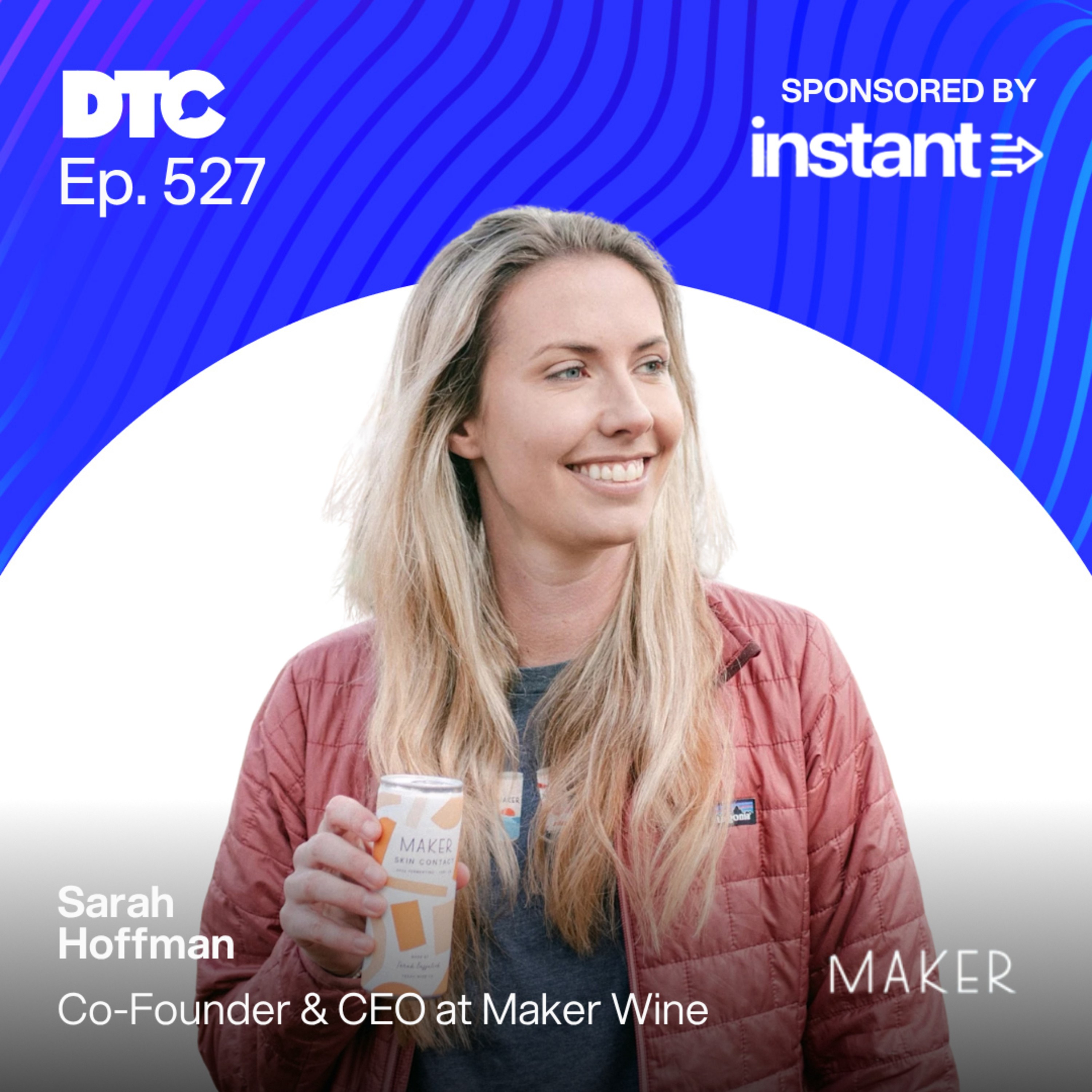
DTC Podcast
Ep 527: How Sarah Hoffman Turned Maker Wine into a Canned Wine Brand You’ll See on United Flights and NBA Stadiums
00:37:07
Loading summary
Transcript48 lines
- [00:00]
Sarah
The number one reason most canned wine is not great is that people are putting not great wine into cans. Through 2023 we were over 90% direct to consumer. Around that time, shipping and fulfillment costs were raised quite dramatically. Acquisition costs were also getting higher and we made a pretty big pivot as a company to become a true omnichannel business. Today we're under 30% direct to consumer and the majority of the business is wholesale and now airline partnership. From the very beginning we always wanted it to feel like a membership versus a subscription. Most of our competitors are taking bulk wine and white labeling it and what we're doing is a lot harder.
- [00:53]
Eric
You're spending real money to drive traffic to your site, but the truth is 98% of that traffic leaves without buying or giving you an email. Meta knows who they are. You don't a unless you use Instant. Instant helps brands identify anonymous visitors so you can send more abandonment emails, build stronger retargeting audiences, and actually recover that lost revenue. Liquid iv, TRX and Truly Beauty. These are all massive stores that use Instant to see an average ROI of 21.7x. Instant will even guarantee you a 4x ROI or your money back. With Q4 around the corner, now's the time to double your email revenue and lock in smarter retention. Instant only takes minutes to set up and you'll start seeing results in just hours. Want to see it in action? Sign up by August 1st to get your first month free at Instant One DTC. That's Instant One. Sarah welcome to the DTC podcast. I'm really excited to dive in with you on MakerWine. Can you start with your origin story? What was the spark that caused you to create this awesome brand and business?
- [02:02]
Sarah
Yeah, thanks so much for having me, Eric. Maker is a premium canned wine company that highlights the stories and products of independent wine producers. I started maker actually in 2019 early 2020 right out of business school with two of my classmates Kendra and Zoe. My background I've always been a foodie and into craft products. I actually was a home brewer and loved craft beer first before wine and also hosted a underground supper club in my apartment in San Francisco where I'd pair local craft breweries, beers and some of my own home brews with a friend who is a chef's dishes and my favorite part of that experience was getting to highlight the Maker stories and that's what I think makes food in Bev really exciting. I actually was always intimidated by wine and by my own knowledge of wine and it wasn't until I was in school that I joined the wine club and started visiting local wineries around California. And, and I just fell in love with these producers and their stories. And I thought, you know, as a wine drinker, why aren't we highlighting this? Why does it feel like there's this pomp and circumstance and this elitism to wine? I think it'd be really neat if we could borrow some of the form factor and casualness from the craft beer movement, but highlight these people and make the makers the star of the show. As soon as we graduated, my co founders and I launched a three wine pilot, a Viognier Chenin Blanc and Vintage Varietal Ava designate wines in cans and sold to our friends and family and friends of friends, and it sold out and we knew we were onto something. So that really was the beginning of Maker.
- [04:11]
Eric
Super cool. I love the fact that it's a platform essentially. More so you didn't, you know, you did have experience making beer, but you didn't think, okay, invest in a winery. You sort of thought about, let's be a platform for these other makers that are already, already have these amazing stories. How did you select your first, your first wines?
- [04:29]
Sarah
Well, as part of the startup process, we had gone out and interviewed dozens of winemakers and it's a really small, tight knit community. Once you get to know a few folks, they'll introduce you to their friends and other people they respect and like. What was really loud and clear at the time and still is that it's really hard to be a small wine producer. These folks are making incredible wines and for them to get the attention of distributors is really tough. And they're, you know, it's a, it's a really fragmented industry. So we felt that with our background in digital and e commerce sales, we could be this, this platform. And what was most surprising to me is that we showed up with, you know, Coca Cola cans with wrapping paper on it to show them what the concept could and we would leave the meeting and they would be totally game to try this. They wanted to reach a new audience. I think that's a big question in wine too is how do we reach millennial drinkers? Our audience at the tasting room tends to be older, a certain demographic. How do we get the next generation interested in wine? And can seemed like a cool vehicle for that.
- [05:43]
Eric
Talk to me a little bit about that. I enjoy wine and there have been times in my life where I've gotten into boxed win. There's this sort of like stigma around boxed wine a little bit, but like Talk to me a little bit about the process of canning wine, the strategy with that, and how the markets reacted to it.
- [06:00]
Sarah
Yeah, definitely. You know, I think often when you talk about canned wine to people, they say, oh, you know, canned wine's gross. You get taste. You can taste the can. And I think what we really found was the number one reason most canned wine is not great is that people are putting not great wine into cans. And there's a few reasons for that, and one of them is really customer education. Because our cans, for example, are 250mil cans, they're a third of a bottle, so they're almost two full glasses of wine. But people aren't really used to paying more than a couple bucks for a can. So if you equate that into a bottle cost, in order to make that work, people are putting low quality wines into cans. And I think our thought was if we could lead with education, we could help show that you can pay a bit more for a can and it's still a really great deal. As far as the actual canning itself, we started with mobile canning lines. So we'd work with a winemaker. They would make the wine in their tanks. And we showed up with a local company called the Can Van, awesome female led company. And they would pull a canning line out of their truck, hook it up directly to the tank right there. The whole maker team and the winemaker would work the line side by side and we would be there for sometimes three to five days canning a vintage. Now we do for our larger cannings, we have a high speed canning line partner in Geyserville that's an, you know, incredible machine. How much wine they can can in a day, I bet. But those days of canning side by side with the winemaker is made for some, you know, really great stories and content as well.
- [07:50]
Eric
Talk to me about how you've built. You said you're leading with education and I think there's good wine tastes better, there's no doubt, but it's almost. Humans are so suggestible that when you read a beautiful description of what the wine is or where it's from or the story around it, you can also make it taste better in your, in your mind because you're, you're visualizing. Oh, this does, this is Okie. This is, you know, like I get the raspberry notes or whatever. So talk to me about how you put education forward on your, on your, in your canned experience.
- [08:20]
Sarah
Yeah. And I think one important note is just knowing your customer really well, the sort of feeling I described earlier of being unsure of my own wine knowledge. That's really common in wine. Over 80% of our customers describe themselves as advanced beginners. There are people that know what they like. They are interested in learning more about wine, but they're scared to label themselves experts but want to be smarter in wine. And I think that that's really how we try to talk to people in a way that doesn't dumb down wine, but speaks about wine in plain language and helps to educate around a few key story pieces or insights that will be memorable that you'll remember that one thing about the wine, each of our wines has a signature of the winemaker who made it, a couple of tasting notes and a QR code for them to visit this landing page that has a blog post, video content, a short two minute video of one of our sommeliers talking about the wine in a really fun way. And so for those that want to dive deeper, we definitely create that space in our subscription can club. We do have a quarterly meet the Winemaker virtual Zoom. So we'll have the winemaker come on the Zoom and we'll have our club members come on and I'll crack a can together. And that really goes back to our roots from launching during COVID and really growing through virtual events and being able to have a single serving of wine while you're at home on Zoom.
- [10:00]
Eric
That's such a smart way to connect the offline to the online. You get people really interested in the story are going to be maybe interested in a subscription. So getting people onto that website through the QR code is super smart. But you brought up something else really pivotal in your journey in those early days. I remember I started this situation at Pilothouse and D2C right at the start of COVID and in those early days of like drinking together with Zoom. I remember one time our the CEO, the founders gave, you know, delivered beer by hand to every everyone's home and we had this local brewery and we all sat down and drank too much and it was quite a memorable experience. Talk a little bit about that strategy of hosting hundreds of virtual tastings.
- [10:42]
Sarah
Yeah, I mean it's really the way we built the company. In the first two years. We had just graduated from business school and the pandemic had really just kicked off and we could only sell in California at the time. We had our license in state but didn't yet have the licenses to sell across the US and really the main asset that we had was this incredible network that we had just built over the Past few years of our classmates suddenly entering the workforce across the US and the world at completely different organizations. And so we started with that group and asked them to introduce us to, to events and HR folks at their companies and Pinterest, Airbnb, Coinbase, Meta, some of the biggest, most prestigious companies that had presences in the Bay Area. We'd start with a small team and they would have great feedback and it would spread like wildfire. We'd sometimes do 12, 15, 20 events within one company. And what we would do is we'd send a six pack, sort of the trial pack of our wine to all of the folks on the team, one of the. And we'd have the founders at first get on and share our founding journey and then walk through. We. We typically open three wines on the call and walk through I'm not a sommelier. Walk through not just sort of the wine tasting notes, but talk about the stories, how we met these winemakers, what makes them special nuances of the canning process or funny stories from launching that wine with them, and also let people drink and engage with each other besides hopefully being a different fun experience. And the cans are a great vehicle for that because it's almost two glasses of wine, so you could open three cans and it's one bottle. So if you're there, you could have half a can each and then split it with your partner after the call or drink it the next day. And it was, it was a great way to show the utility of wine and also to sort of be an infomercial for maker. Some of our club customers today are people that I meet. They always reference a tasting that we've done. I still meet people and they go, oh, you did this OC fundraiser tasting. And we loved it. Like, I joined the club. I've been a club member for five years. And so not only was that, you know, it was such a sticky acquisition channel, as well as being, you know, very profitable and ROI positive. And it's something we still do to this day. I mean, the. Obviously, the demand for virtual tastings has gone down, but we do, for example, work with wine sommeliers and influencers that host their own virtual club events and they'll partner with us for a tasting and it's something that we find to be super effective.
- [13:46]
Eric
It's again, it's that you're wrapping. Got your own story that you're wrapping into it. You're wrapping in the maker's story. And then the form factor, as you mentioned, is so critical, I think, to be able to test multiple different wines rather than just the commitment of, like, opening a bottle. And I imagine that plays into. I hear all the time about, like, younger people are maybe drinking less a little bit too. I don't know if you're seeing that, but I feel like the canned experience for so many people, maybe just younger, getting into drinking, they have so much experience drinking cans of other things, that the form factor probably really helps with some of the trends that are going on.
- [14:20]
Sarah
Yeah, I think when we launched, it was like right after the summer of White Claw, you know, So I feel like can. The convenience of cans was very hot and salient for people. I definitely think the serving size, I mean, we do surveys of our club customers and the number one thing they say is the portion control piece and that they can open a glass and have it after dinner and not throw away an entire bottle. So.
- [14:49]
Eric
Yeah, or wake up with a headache.
- [14:52]
Sarah
Yeah, definitely. Super key. And then I think also transparency. I think that. I personally think that it's not that millennials aren't drinking wine. It's that wine may not be speaking to them. Wine is actually an incredible beverage that fits into what this generation is really looking for. For example, all our wines are dry. They're less than a gram of sugar per can. No additives or really anything added beyond grapes and yeast. And they're from diverse producers that have incredible stories, real incredible artists that are making this product. And I think that people are really surprised to learn that they say, oh, did you make sugar free wine? It's like, no, actually, wine is dry. Wines that are fermented fully are naturally low in sugar and carbs. And I think that the wine industry is sort of cloaked in mystery. And being able to talk about it in plain language can help people see that in the, you know, alcoholic beverages are not health beverages. But in the scheme of what's being drank today, it really actually fits in well with what this generation is looking for.
- [16:13]
Eric
Better than four Loco. Better than four Loco. Talk to me about your distribution story, because I know you started heavily D2C, sort of viral with these virtual tastings. Walk me through how your distribution has evolved.
- [16:27]
Sarah
Yeah, it's really changed quite a bit. Through 2023, we were over 90% direct to consumer and really focused on our online growth. We found around that time, as many businesses, especially in our space did, that shipping and fulfillment costs were raised quite dramatically and the acquisition costs were also getting higher. And we made a pretty big pivot as a company to become a true omnichannel business. So Today we're under 30% direct to consumer and the majority of the business is our wholesale and now airline partnership. So you can find our sparkling wine on all United flights in North America, which is really exciting. And we really stopped majorly investing in digital marketing and ad spend and reinvested those dollars into our wholesale marketing, into content and really profitable growth. And so I think we have a super balanced business and these channels really feed into each other now. So you might discover our wine on a flight scan, the QR code, join the club. And it's been really incredible to see those benefits.
- [17:54]
Eric
Talk to me about how the airline partnership came about.
- [17:58]
Sarah
Yeah, I mean, that was an incredible partnership that my co founder, Kendra, who leads our business development, led. She worked closely with the team and they're really excited to highlight a female led brand. We, you know, as a team came together to actually can samples for them to try on this really tight timeline and has been such a huge partnership for us in terms of visibility. We launched in October and just in the last few months, I would say meeting folks in stores, they say, oh, I tried this wine on United on the plane. And I'm just really excited to see that partnership grow and to really help with brand awareness for not only us, but for our makers. Our winemaker, whose wine is on the plane, Nicole Walsh, her name is on the front of every can. And that is so exciting to me because, you know, our mission is really to lift up these producers and now people are going to know her name and her small winery in Monterey. And I'm really excited to see how that impacts her business as well as ours.
- [19:13]
Eric
For the United Partnership, it's its own product. Do you have a specialized product that goes to that vendor?
- [19:20]
Sarah
Basically, we launched that SKU exclusively on United and it was an awesome feat from our production team to create that wine. We are now selling that wine through our wholesale channels. So I'm excited to see, you know, the impact of being able to find that wine in your local Safeway.
- [19:40]
Eric
For example, you mentioned your wholesale marketing that you've put a bit more emphasis on because it's kind of like this isn't, you know, there's obviously wine in all these stores, but it's a bit of a category creator, I imagine, because you're doing this high quality wine in cans. Talk to me about being kind of the first to market in that in that area and how you've used retail marketing to help with education there.
- [20:02]
Sarah
Yeah, and I think this is one area where building a strong online presence was really beneficial first because we had this incredible online community when we went to buyers to show them that there really is a need there. We also, as a marketing strategy, entered all of our wines into top bottled wine competitions. And they don't know that it's a can. The judges, when they're trying it because it's poured into cups. And so like we had these incredible anecdotes and stories of. For example, one of our first ones was the Press Democrat North Coast Wine Competition. And we had these master sommeliers and judges award, you know, our V and yay, best of class white wine, 96 points. And we're just shocked when they found out that this wine came from a can. And we got a lot of press around that. And I think being able to go to these retail buyers and say there is a need for high quality wine in a can, this is our industry cred to back it up. A lot of them are old school, been in the industry for dozens of years and naturally skeptical of cans. That's been really huge for us. So we often are the highest priced or second highest priced can on the shelf at a grocery store. And I think, you know, sometimes paradoxically, within wine that can indicate quality and help customers realize that this is maybe something different than the cans they're used to seeing on the shelf. I think we also highlight interesting varieties. Most of our competitors are just doing, you know, red blend, white blend, sparkling. And we have 17 different wines. We highlight everything from Anderson Valley Pinot Noir to Cabernet Pfeffer, a super obscure grape grown in seven acres in North America. But wanting to do it in a way that is, oh, interesting. What is this? Not in a way that is keeping people out of wine. So we're doing something quite different and it's been exciting to see our first chain placements come to be. And I think as a way to keep the online audience special, we do have a line of reserve wines, club only wines that you really can only access if you're a club member. And we've found that that is much more compelling to long term retention than excessive discounting. So that's kind of also been a secret weapon of ours that we can highlight several wines just for our online audience.
- [22:44]
Eric
Talk to me about the club because I think in the pre interview you said something like 70% of your revenue comes from the club. Is that that's what chatgpt reminded me. I don't know if that's true. What, what makes your experience typical from different subscription box? And then what are you doing to drive into that? Is that a lot of QR traffic? Are QRs really working well for you?
- [23:03]
Sarah
Yeah. So within our e commerce channel, 50% of our revenue is from clubs subscribers subscription and then it's up to 75% if you include those club members all at cart purchases. So them ordering in between their quarterly club boxes. And yeah, I think from the very beginning we always wanted it to feel like a membership versus a subscription. So it's not a subscribe and save where you get the same thing every quarter at a discount. It's a fully customizable. You have a two week window to come in and pick exactly the wines that you want. It's a rotating selection of wines. So for some of those more esoteric wines, if you get them one quarter, they may not be available the next quarter. So it does feel like this ephemeral experience where you're getting access to this moment in time, these, you know, specific craft wines that aren't going to be available ongoing. We also do do the meet the maker zooms. We often put little surprise and delight items in the quarterly boxes from like wine release stickers to hats to fun little invites. And in terms of acquisition, one thing that we've really done is been adaptable and open to those arbitrage opportunities. So you know, at first it really was the virtual events. A big acquisition driver for us every year is our 12 days of canned Wine Advent calendar. We just repackage the wine into an advent box and we get tons of pickup on like local press and affiliate partners.
- [24:47]
Eric
Just word of mouth I imagine too people telling their friends about an advent calendar that they'd actually care about.
- [24:52]
Sarah
Yeah, we first found that we first came over the idea by seeing, looking at the search traffic around wine terms and seeing wine Advent calendar really jump around the holidays. SEO is also an area that we really focus on and really fits in with our education thesis of wanting to own certain keywords in wine. And I really find that it's less competitive than some other categories probably because there's less of an e commerce focus in the wine world. And then finally I would say like our creators and affiliate partners, we, you know, especially from the virtual wine event days where we built relationships within the wine community of folks hosting their own wine tastings, we gift our new releases to creators in certain categories and find that they're really often, you know, excited to enthusiastically share and make a kickback on the wine purchases that they drive. So it really hasn't been like one channel that has been the unlock for us. But I feel like each year it's finding those opportunities to grow. And I think being a cash strapped startup, you know, we've been forced to figure out creative ways to grow outside of, you know, massive spend on digital marketing.
- [26:15]
Eric
You mentioned that SEO is a big part of it as well and that often you'll actually outrank the winemakers themselves with your page. Talk a little bit about how you've thought about SEO and how it's helped you grow.
- [26:27]
Sarah
Yeah, my background's actually in digital marketing and performance marketing. So I also just nerd out on learning about SEO and other digital marketing areas. And from the very beginning we really wanted to own canned wine. So that's been a key where we put a lot of focus into and we're really capturing a lot of folks that are searching for best canned wine for canned wine. We also really found a lot of interest around zero sugar, low sugar wines, like health terms, which I'm personally passionate about because I think a lot of wine companies use some of those terms irresponsibly. And I really like to educate around those terms and how wine can naturally be low in carbs and sugar. We have a very healthy set of blog articles that has helped us to really rank for specific terms. And we're a really small team. A mix of articles that are written by us and by AI and we sometimes have really interesting articles take off. One of our top drivers to the site for a while was a wine versus white claw article I wrote in 21 or 22 and basically highlighting that looking at wine and spike seltzer, I think wine wins for a variety of reasons and written in kind of a humorous tone. And we got, you know, we got a lot of discourse and interest around that and it still drives a lot of traffic for us.
- [28:12]
Eric
I feel like when you're drinking White Claw, when you're on the claws, there are no laws. First of all, I've heard, but I've just, I just heard when you're drinking, it's like you're drinking nothing in a way. It's like you're just drinking to drink. Whereas with wine it's like this. It's. It's a deeper experience. Right?
- [28:27]
Sarah
Yeah. I won't get into any specific brand, but yeah, I think wine is like I mentioned before, I think wine is actually dry. Wines are actually naturally low in carbs and sugar and, and calories if you're looking for that. But also there's so much more to wine. It's this incredible craft product. There are people that spend months, you know, creating and aging these wines and, you know, really highlighting specific places and terroir. And there's just so much there that's so exciting that it's been fun, especially through some of the educational experiences, to see people light up. I think they have these magical moments as a customer. The first is like finding a wine that you love. And then the second is really like, wow, not only do I love this like mass brand, but now I found this independent wine producer where I like, like the taste and I'm really connecting with the person or the story and like being there for that magical moment and then also saying, you know, we hope that you discover a maker wine and then go join the winemakers club, go join their bottle club or go visit their winery and really deepen the connection to both brands. So I think that's a cool acquisition opportunity too, is that when we launch a new wine, the winemaker we partner with lets their whole wine club know about it. And they often sell the wine in their tasting room. And so people just stumbling into their tasting room, try the can and learn about, you know, the maker project and check us out and get, you know, exposure to more small wineries. So it's this cool network that is.
- [30:08]
Eric
Ever evolving quite the ecosystem. I'm sure some of these wineries, you've really like, blown up their business too. Like probably for some of them, they're probably their number one channel, I imagine, with. With especially in the United Air.
- [30:19]
Sarah
Yeah, I mean, we have some winemakers where we've doubled our production with them every year. That's been really exciting to see that we've gone from this like, fun passion project. They're going to put some of their wine into cans to try it out to like, wow, this is over half my business now. Or this is the main way people are finding me. And you know, we feel that responsibility and pressure for sure to really continue to help them grow. I think most of our competitors are taking bulk wine and white labeling it and what we're doing is a lot harder. We're finding, yeah, incredible winemakers, really high quality wines and telling you exactly the year vineyard winemaker, you know exactly where that wine came from. And we're really proud of that and the transparency.
- [31:14]
Eric
And it's all American. It's all American wineries. Everything's produced in America. So you're kind of ahead of the curve when it comes to a bit of this tariff madness.
- [31:22]
Sarah
Well, it's interesting. I mean, yeah, we are all domestic wineries and everything's Made here. But you know, it's even affected our business. I mean, you know, we hear like aluminum obviously, you know, we hear there may be tariff increases there. And so definitely in a, in a fine position. But it affects the whole industry for sure.
- [31:46]
Eric
Yeah, you might have to go to Capri Sun Pouches.
- [31:51]
Sarah
I have seen pouches. I haven't tried it yet. I, you know, I think I've learned, I'm especially being called the crazy can lady and putting wine in cans before it was cool. I've learned not to make fun of any format. It could be the format of the future. So I'm, I'm all in on Capri Sun Pouches.
- [32:10]
Eric
You never know. You've. So you've got this great balance distribution between the airline, between online and your club. What's on your radar this year for how you want to grow the business? Like it seems like it's just growing pretty organically at a good pace. But what do you have that you're looking forward to as growth in the coming years?
- [32:31]
Sarah
Yeah, we're excited to continue to build out our distribution map across the U.S. we're only distributed wholesale in five or six states today, so we've had some incredible regional wins. We're really known actually for our on premise placements. So we have four NBA arena partnerships where we're the canned wine offered and the arena and for concerts. And so we've really seen those be huge for the business. So we're, but you know, we're really focused on going deep over wide I would say so one to two state launches per year but with you know, a distributor partner who is super aligned with us that has experience selling into some of the types of accounts that we really thrive in. We'll be launching in Texas later this year. You know, really excited to make our mark on markets that don't know maker yet. And really my goal is I want maker to be this stamp of approval that you know, this wine is from a reputable independent wine producer that you know it's made the right way, organic, sustainable, sustainably farmed fruit and that you know, you can trust the quality of a maker wine and really be a way, as you said, to discover these new winemakers and, and their stories. So that's really the goal and also to continue to partner with these premium placements to be somewhere where you're looking for high quality wine which just reflects.
- [34:14]
Eric
On the brand, brings them to your club, premium wine, any damn time. Great tagline on your website. So if you're in the audience and you're looking for premium wine any damn time. You should check out makerwine.com if people want to follow your entrepreneurial journey. Are you active on any of the platforms?
- [34:30]
Sarah
Yeah, definitely. Follow us on Instagram or TikTok Akerwine and would also just say if anyone is starting their own journey in wine or beverages and I can help, I would love you to reach out to me. I'm sarakerwine.com and I, you know, it's a really hard industry but I love to encourage, you know, particularly female entrepreneurs, but all entrepreneurs to help make their mark and change the industry in a positive way. So I would love to hear about.
- [35:01]
Eric
Your project and that's an aspect you get to bring forward in the wineries you choose as well. Right. When it comes to like who owns the wineries and whose stories you're kind of helping with.
- [35:12]
Sarah
Yeah. It's always been important for us to show, not tell diversity. So we really try to highlight interesting stories and people that are doing really interesting things and highlights diverse voices and people from different backgrounds, people that have different stories to wine, different models. So, you know, if you go to our website and, and look at the wine section, if you hover over the wine, it'll show a photo of the winemaker and it's. Yeah, I think we're really trying to connect the winemaker to the wine itself and have you remember the person as you're drinking it.
- [35:49]
Eric
What's your favorite wine these days? Oh, man, it's like choosing your favorite kid.
- [35:54]
Sarah
Yeah, it changes all the time. I really love our new, our new vintage of the orange Vermentino. It's the skin contact white wine from Tara Bajolet. She's an amazing natural wine producer out of the East Bay here. It's our third vintage with her and it's just like so beautiful, juicy. It's a great in between a white and a red. If you want to have something with charcuterie or just like a nice apertif type wine, great. Like whether you're by the fire or on, you know, a raft, cruising down a lazy river or something, it's just a really bright, nuanced, juicy, light wine.
- [36:36]
Eric
I gotta get some for my paddleboard. It's the paddle boarding season here in Victoria, so it seems perfect for paddleboarding.
- [36:43]
Sarah
I will send you some. It's perfect for that.
- [36:51]
Eric
Thanks so much for listening to today's episode. If you're not a subscriber to our newsletter, you can do that right now @directtoconsumeralloneword.co. i'm Eric Dick, and this has been the DTC podcast. We'll see you next time.