← DTC Podcast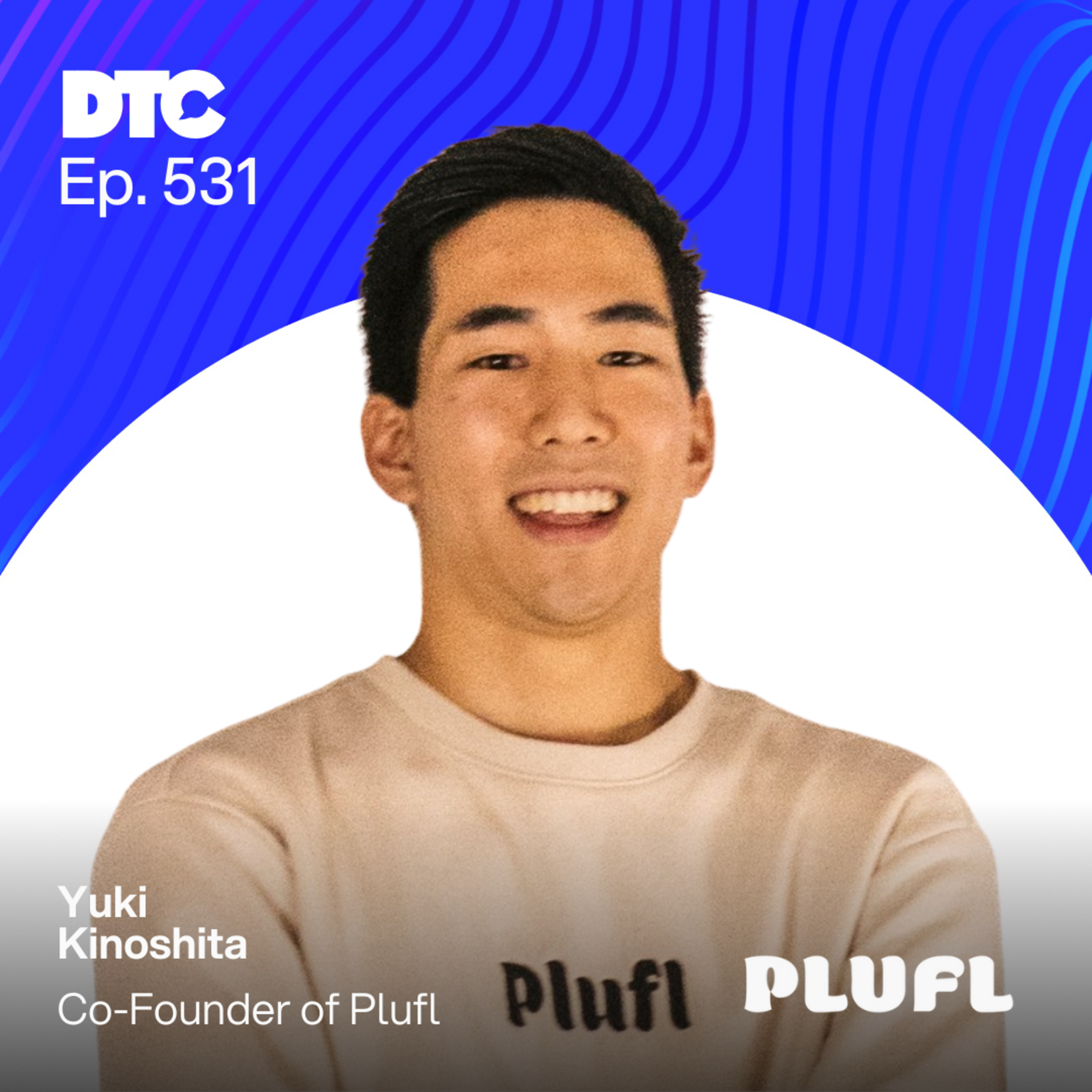
DTC Podcast
Ep 531: The TikTok Strategy, Tariff Setback, and Product Pivot Behind Plufl’s Growth
00:41:14
Loading summary
Transcript50 lines
- [00:00]
Yuki
We've had a very explosive start to our business, which set the trajectory for everything, but also created its challenges. Right. Because we got so much attention while we were still small, that kind of opened the floodgate for thousands of knockoffs. Our Amazon agency said that it was the worst that he had ever seen. We were Google's like top hundred trending GIFs. That gave us a lot of exposure into pretty much every single gift guide that ever existed on the Internet. Because we have like the followers on TikTok, we constantly get outreached by pretty big creators to want to feature our product or just want our product for free, which is pretty great. Instagram creators, they charge an arm and a leg for one reel. They want like a thousand dollars. It's outrageous, right? But TikTok creators are just much, much cheaper and there's just so many more of them. So what we do is.
- [00:53]
Eric
Yuki welcome back to the DTC podcast. I am looking over at my pluffle, which I have to say my dog has claimed it's kind of just become his giant bed. But still a huge fix in my life. Love it. It's been almost three years, two and a half years since you were last on the podcast. We were just discussing. I think you were just into pre orders or just into fulfillment. It's been a wild ride. I've seen you on your controversial Reuters article. Welcome back to the DTC podcast.
- [01:19]
Yuki
It's great to be back. Thanks. Thanks for having me. Eric. Yeah, I think the last time I was on the pod I was still living in my co founder's parents house. Things have gone a little bit better since then. You know, definitely with that. Not without its challenges. But yeah, it's been a fun ride and still happy to say that we're standing, we're still in business and things are, things are looking up.
- [01:41]
Eric
Super cool. Well, walk me through some of the big developments, the growth that you've experienced kind of since last time we talked.
- [01:47]
Yuki
Yeah. So honestly I don't exactly remember where we were at last time, but I think if we were still in the pre order phase. Fortunately we're not in pre orders anymore. We went on Shark Tank, which was a really cool experience that kind of catapulted a lot of our growth and success. We've now also launched multiple new products which have kind of added a nice chunk of revenue and have kind of been our strategy for continued growth and expansion. And also this year was supposed to be the year of retail, which we can get into later. But unfortunately things kind of took a Turn with the tariffs and we are looking to expand into retail next year. But it was definitely unfortunate. Made a LinkedIn post about it, but we lost out close to 7 to 8 million dollars worth of revenue retail orders wild because of the tariffs. And you know, that's just the nature of when you manufacture something overseas. You don't fully control your supply chain, you don't fully control your costs. It's not expected but it's part of the game. So yeah, we're doing well. We're launching a new product this month as well. Very exciting. Going to be a really cool product in our vertical and yeah, just finding new ways to grow within, I will say a challenging DTC e commerce environment.
- [03:05]
Eric
Well, so we just put out a survey a couple weeks ago. We had surveyed over 600 DTC founders about the impacts of tariffs and everyone seems to be handling it differently. It's affecting people differently. Walk me through that process of the actions you took once you realized that tariffs were going to be a thing and how you've had to kind of change the business.
- [03:23]
Yuki
Yeah, so we try to get ahead of it as we kind of knew tariffs were always going to be something that was a risk to our business. But at the end of the day there's only so much we can do when you're, you know, sub, you know, nine figure business. Hopefully I think we should be hitting eight figures this year. But you know, we're not a Nike, we're not a Lulu, we're not even a nine figure business right there. There's only so much you can do. At the end of the day you're really only going to be manufacturing from one or two key manufacturers. But we did a groundwork. So we actually this February went to visitor manufacturers in China but also visited manufacturing Vietnam. So we had a potential option there that was ready to go. We had a final sample made for Bertha products. We have two flagship products now. One's the Human dog bed which is kind of behind me. Another is a cooling body pillow called the Huggle which is a U shaped body pillow that has a lot of cool features like turns into a chair and stuff like that. And we have a third innovation coming this month launching our website which should be fun as well. But yeah, we kind of were getting all those products made in the Vietnamese manufacturing option. And then kind of as that was happening, we come back, we feel good about this option. We're still a little bit uneasy just because of the high moq and also longer lead times that are associated with Vietnam and also we don't have as much expertise. For example, we have an employee and a small team based out of China, but we don't have that in Vietnam. So we knew that it was kind of uncharted territory, but we always wanted to have it in our bad pocket. And then, yeah, we had a pending Costco order and also target order that was supposed to be for this Q4 launch. So we had a really nice kind of holiday launch planned with both those retailers. Both like varying PO sizes. The Costco one was definitely larger and as that was all happening, we were supposed to receive confirmation in April. The team tells us, you know, hold up, there may be news that Trump may impose a lot of tariffs that not just going to change our retail plans, but their entire retail strategy. Right. A lot of their products obviously come from China, so that kind of put us in a little bit of a panic. But we're like, okay, well we'll pitch them a Vietnamese option. Maybe we'll go and try to find a US option. Which was kind of what that Reuters article is about. That happened. Tariffs went up to like 150% and the whole kind of retail space went into a freeze essentially. And it didn't really matter where you were manufacturing. They just weren't really making any large decisions, especially not a large like one time PO for the holiday season with a new product that they had never launched before. You know, we had gone from something that they were really excited about to this is a back burner. We need to focus on our essentials. Toilet paper, you know, TVs, things that like really drive the core revenue over business. Not a novel product like a human dog bed. So yeah, we just especially it's got.
- [06:16]
Eric
A big footprint too. Right. Like to actually display it in a store, it probably takes up a lot.
- [06:20]
Yuki
Of space for sure. Yeah, I mean we definitely worked a lot on the box. Our box is like maybe like 60 to 70% smaller than what it was when we went on Shark Tank. So the box definitely doesn't take us much space. But each store kind of, when we did a trial run with them last year, had it out on display. So yeah, for sure it takes up a lot of space. And yeah, it's like at the end of the day, like they rather prioritize something that they know for a fact has retail velocity, like a TV or like, you know, a vacuum, rather than try something new that, you know, could be good, could be okay. Especially when consumer confidence could be lower. They don't know what it looks like. We don't know what it's going to look like this Q4. So yeah, that's what happened. We tried pitching option out of Vietnam, we tried pitching the option out of us for various reasons, at least the one in Vietnam didn't work out because they didn't know whether the tariff is going to go back up. And as we saw, you know, it was at 7% before, now it's back up to 25 something percent. Right. So they were kind of right in that that even Vietnam wasn't safe from tariffs and they also didn't know whether tariffs in China were going to come back down either. So it was just a really hard time to make any sort of decisions no matter where your manufacturing was, because there was not a single country, as you saw, that was safe from the tariffs. Definitely not Canada. Fun time. Not even Canada.
- [07:42]
Eric
So when you were looking at these, these two options like Vietnam, were you, were you also factoring in like price changes? Did you have to, did you have to absorb that into the price right away when you were thinking about this?
- [07:52]
Yuki
Yeah. So the interesting thing about Vietnam is that actually their labor costs are cheaper. So, so when I Posted this on LinkedIn, I got a lot of controversial comments of people saying, oh, you know, Chinese prices are so cheap because they don't pay their workers. You know, that's why these other options are more expensive. It's like that's actually not why, at least for our category, Vietnam is more expensive. It's because of the materials, because all the materials end up coming from China anyways. And this is the same if we were to manufacture in the US is that no one really makes this faux fur type bedding pillow cover material really outside of China for sure, there's a few other countries like India and stuff like that, but no one really specializes it and also makes it as as much volume as China. So at the end of the day, no matter where you make it, it ends up coming from China. So that's what you're paying for when you manufacture in Vietnam is that the additional cost, the shipping cost and the transaction costs associated with getting it and importing it from China. But also at the same time, like they don't have any machinery. So for our product we would have to invest or a manufacturer would have to invest in getting certain machines to be able to make our product. So that's why they require such a high moq, because they're almost buying these machines just for us with hopefully other companies and manufacturers or rebrands also using the machines as well. But they don't have that guarantee. So, yeah, that's what really drives up the per unit cost in Vietnam. But overall it kind of balances out and the cost differences actually at this point aren't too significant. So for some of the products that we're manufacturing, it actually would be like a couple of dollars cheaper for some products if you were to make it in Vietnam, but we just don't because of the kind of the operational headache. And if we're not doing a huge MOQ or a huge run, it's really not worth saving like a dollar over 10,000 units, for example, when it could take like a month or two months longer than China.
- [09:46]
Eric
First of all, I think when this does hit retail, it's going to do well. It's. It's just such a unique product. It resonates with people when they see it, when they lie down in it, like. So I think it's unfortunate that tariffs kind of scuttled that launch, but when it does happen, I think, I think it's going to be great for you. Right now, I guess you're just stomaching the tariffs, is that right? Is that you've just sort of like built the tariffs into the model in China?
- [10:08]
Yuki
For the most part, yeah, a little bit. So we did increase prices on our website a little bit, but also the tariffs aren't as crazy as they were at its height. Right. So it was at, I think like 26% before Trump came. He had another 10% and then I think it went up to 40 again. 40 something. And then obviously that whole war happened and it went up like 180, 170. Don't quote me on the number. I don't even know. No one really knows. It just went so high. So we just stopped ordering and we were in pre orders for about almost two months just because we really couldn't make any decisions on buying. And we just knew that, hey, if we were to buy this product and actually pay that 180% tariff, we're not going to be profitable. Right. So we kind of just decided that, hey, we did the math. It's better to, let's say, do 10% of our orders as cancellations, but kind of hope that, or expect that the tariffs go down rather than to like buy a bunch of units now and lock in on profitability for the, for April and maybe, uh. So yeah, that was kind of painful. It was just hard being out of stock, but still continue to spend on Meta and still continue to acquire customers, uh, but ended up working out because the Tariffs went back down to 40 something percent, which is still definitely higher than the beginning of the year, but with a few price increases. And we also have been working a lot on increasing our margins through other ways such as we switched manufacturers. That was big. But also we, as we mentioned, we ship shrunk the box close to again 50 to 60% and that in and of itself saves us about 10 plus dollars of land and cost. So you know, if we sell 10, $15,000 a year units just a month or even, you know, during Q4, we'll probably do that around a month. You know, that's 150k, 200k in extra profit or more money that we can use to acquire customers. So that has been a really core focus of ours and that's really been a big help. Especially now once the tariffs are lower, we've been able to go back to kind of growing and be able to acquire customers profitably because of the cogs reduction that we've been able to.
- [12:06]
Eric
The fundamentals, right like that. Even, even if tariffs come and go, you're building, you know, fundamentals that are going to improve your business long term. Super cool. Talk to me a little bit about the Reuters arc. I was saying I was listening to one of my weird meta politics podcasts and the announcer was going off on this dog bed for human brands that was unable to produce in the US and what a shame that was. And talk to me about how the Reuters article came about.
- [12:28]
Yuki
Yeah, it was definitely a little bit sensationalized for sure. And it is a little bit controversial because, you know, I, I had a chat with the Reuters reporter about back in April when the tariffs first came out and the situation was very, very different then. The situation was that hey, these retailers aren't even talking to us, we're pitching them other options, but they're just not really talking to us and not getting back to us. And the reason being is that they were just so focused and busy and strapped with other things. Later when we had a conversation with them, they told us that it was crazier than Covid, that the terror situation created more of a impact and harm on their business and planning than Covid did. Which is kind of crazy because Covid was like a global pandemic. But that's just how kind of insane these tariffs were for the retailers. So that they just had no time or possibility to do any planning or forecasting for Q4, no matter what cogs, no matter what price that we presented them. That wasn't really the issue. So that's what we found out later, right? But when we first had the conversation, I think I talked about how we had gone and sort of presented them a US made option because we were kind of not desperate, but we wanted to just make sure that we shot or shot. And we had presented every option and there was not a stone unturned in terms of what we presented. So we presented the Vietnam option, the US Option, the China option with the tariffs, China option of the tariffs went down. We presented them every single forecasted option and we just didn't really get much of a response. And that's what I told the Reuters reporter. But then later, for some reason, I won't say he twisted it, but he kind of, I forgot about the article maybe. We had one brief chat afterwards after the tariffs went down, I was like, you know, we're going back to China. That was about it. And then we hear from the Walmart, our Walmart rep that's like, hey, by the way, this, you know, we got informed that this Reuters article's coming out tomorrow saying that like Walmart does not want to support US Based manufacturing. And I'm like, whoa, whoa, whoa, this is not what I said. And this is bad, right? For us because as a brand, you know, one, that's not, you know, it's not what I intended and it's not what I said. And two, obviously it's a bad look on Walmart and as a future potential partner, retail partner, we, we don't want that, right? That's, that's definitely not a good look on us as a brand if we went out publicly saying that. So I frantically called the Reuters guy and I was like, hey, like, listen, like I didn't say this, like that's not what I meant. None of these retailers like expressly said that they don't want to make US Made manufacturing is more just like they couldn't really address it. And also a lot of these retailers, we didn't even pitch them US Made manufacturing because we knew that, you know, from our internal decision, we knew what price point consumers are willing to buy this product at and we knew that the US Made manufacturing option was just not viable from the first place, right? So that's what was more important. Not the retailers saying, hey, like we don't support US made manufacturing. It was more us saying or deciding that hey, this is not going to work, right? As much as we would like for it to work, especially now we saw the tariffs went down, right? Like it makes even less sense to, to do a US Based Manufacturing option. So that kind of caused a little bit of chaos. We, you know, we got it fixed. Article ended up being really good for us. Actually someone actually emailed us who owns like a, I think like a gaming studio that wants to buy like 100 of these beds or something like that. So we're currently in talks with them to do a wholesale order. He was trying to decide between us or Moonpod. And then also we saw a lot of like website traffic and you know, we only, I don't think I only got like one DM that was like negative, that was like, you know, screw you.
- [16:14]
Eric
But otherwise is good press as they say.
- [16:17]
Yuki
Right, right. Otherwise it was a good event for us and definitely boosted, boosted sales for that.
- [16:22]
Eric
And then how about the Walmart relationship? Was it, was it, was it okay?
- [16:25]
Yuki
Yeah, so it was fine. Apparently the reporter is a little bit notorious for kind of making a little bit of exaggerated headlines that kind of catch people's attentions. Right. So they ended up being understanding. The article ended up not even mentioning Walmart and the article also ended up being very like neutral. So you know, I appreciate the reporter for honestly being flexible and even listening to what I had to say because you know, sometimes I've had experience with reporters that you tell them, you know, day before article's been published, hey, like, don't say this. They'll be like, I can't, I can't change what the article says. And that's what it was close to. But yeah, he ended up changing everything to kind of match what the reality of the situation was.
- [17:08]
Eric
When I think back on our first interview, I was like, these guys are already like seven eight figure bread just because you had a lot of momentum. But to hear that you're hitting, you're looking at hitting eight figures this year, that's huge. Like in just the three years, like you really have fulfilled the promise of all that excitement in the beginning in a lot of ways. What have been the biggest growth levers between when we last talked and now to where you are approaching eight figures.
- [17:30]
Yuki
Potentially this year for sure. And yeah, the number when we first started felt like kind of that the dream, the goal for us and now that we're actually probably going to hit it, it feels like, oh, you know what? Like eight figures is nothing. You know, you see all these other brands doing nine figures and so it's like, yeah, it's kind of this endless cycle and perspective is I think is really, really important for us. Yeah, I think we've had a very explosive growth start to our Business, which kind of set the trajectory for everything, but also created its challenges. Right. Because we got so much attention while we were still small. Why we were so just started while still pre orders. That kind of opened the floodgate for thousands of knockoffs at an unprecedented level. Our Amazon agency said that it was the worst that he had ever seen in his lifetime of running Amazon brands. So that created its problems. Right. So we knew that we had to pivot. Hey, we still want to kind of push this Human Dog breed brand, but we knew that there was a limit to how much we could scale this product profitably without kind of running to the wall of knockoffs that we eventually did. Right. So that Human dog bred product is actually still, you know, it's still a key driver of sales for us, but it's not our point of growth. Right. The sales for that have kind of flatlined. We don't really put too much marketing spend behind it. We do a lot of organic affiliate seeding and we do a lot of organic content with it. But kind of our primary driver of growth has been that Huggle body pillow product. And which is great because the Human Dogma product still has a lot of potential as, as we mentioned in retail. So when we did, we did a roadshow in Costco last year where we did 10 stores and we completely sold out of our inventory. We did about like, I think like six or seven units a day at a $200 price point. So we did about $1,500 to $1,600 a day in GMV per store, which is pretty good for a retail store, even during the weekday. So the product did really, really well in retail, which kind of validated the fact that, hey, if we can bring a more affordable price point to retailers, this is a product that can do really well as long as we have the distribution. And then from an E commerce perspective, we're like, okay, well how do we kind of build out a more direct response product, right. That can convert year long. The issue with the Human Dog bed is that one, it's not super direct response. It's kind of a novelty item. It's a nice to have, it's comfortable, it's a cool item, but you know, it's not a. You don't need it. Right. It's a fun to have, but it does really well during the holiday season. But as soon as the summer months hit, we saw this issue where, you know, sales would drop by 80, 80%, 90%. So we knew that we had to build a product that was more year long and had the ability to also convert well in meta. And that came the Huggle Cooling Body Pillow product, which does really well because one, it's a cooling product, right? Hot sleepers are hot all year long. Two, it's still kind of in line with their brand. It's still a big, oversized product. And especially our past customers love the product because they know us for our quality and comfort. And. And the third point being is that it does really well from a meta perspective because it actually solves problems, right? So people that are hot sleepers are looking for a product. People that are side sleepers and have back pain are looking for this product. People that are pregnant pregnant or post pregnant are looking for this product. So we have all these different specific customer segments and customer problems that now we can solve for. And instead of building a product that people didn't know they needed, now we're creating a product that people are already looking for, but they don't know what they're looking for. Right? And we found that that is so much easier to convert and to build growth off rather than continuously shoving products in people's face that you need this product even though they've never heard of it. Right. It just requires so much more education, and it's just much more difficult to scale that way.
- [21:29]
Eric
How long have you been eyeing up a cooling body pillow as a secondary product? Was it something that you just kind of stumbled on and were like, oh, this fits? Yeah. When did you decide?
- [21:39]
Yuki
Yeah, so we were kind of looking at the growth trajectory of Hush when we first started, and not so much anymore, just because they've kind of been acquired and they're going through a whole different path of growth. But they went through a similar issue where they sold weighted blankets. And weighted blankets were great. They were also a novel item. I don't think they were the first, but they were one of the first to sell it. But there's also nothing proprietary about the product. So two issues they faced, right? One is the issue we faced that when summer months hit, regardless of competition, sales just plummeted. So they went and launched a cooling blanket with proprietary cooling fabric, and that kind of skyrocketed their growth and sales. And two, they also faced a whole bunch of knockoffs. So they wanted to create a product that was harder to replicate, fabric that's a little bit more proprietary fabric that's kind of specialized and harder to acquire. And that's what we did with their fabric in the Huggle Cooling Body Pillow is that it actually uses a fabric that's found same technology that's found in NASA spacesuits. So it has this technology where you press down on it and dissipates heat. And they don't really make this fabric too, too much. Certain manufacturers in China do, but, you know, it's harder to find. So as a result, not all manufacturers, not all like competitors can just like copy your product. And it's also a pretty expensive fabric. So unless you're able to position the product as a premium product, you're going to have a really tough time selling it. So we found that to be kind of a good niche and vertical to go into just because of the fact that, hey, we found this fabric that's hard to acquire. We also know that this product has to be sold at an expensive price point or else it doesn't work. And that kind of creates the perfect product to be able to sell on Facebook because you need a high OV to be able to acquire customers.
- [23:31]
Eric
And hot sleeping is one of those things that people can like instantly relate to. Like if you sleep hot, you know it and you've had partners who are telling you that you're a heat factory and all these things. So I could see it being, yeah, really evocative. Easier sell with that, with that kind of pain point. Pretty cool that you're two for two. Pretty cool that you're. Your first two products. What's the. Over you mentioned oversized. Like, what's the. What's the. I know you're launching a third product soon. What's the sort of narrative thread that runs through your products? And what's. Is there a holding. What. What's the holding company called?
- [24:02]
Yuki
Yeah, I mean, still pluffle. At the end of the day, we kind of are a little bit. The way the product came about was actually we saw a Twitter thread that was kind of blowing up that was like, hey, all my guy friends, I just like introduced this concept called the pregnancy pillow to my guy friends and I just convinced like nine of my guy friends to buy a pregnancy pillow. And at that time we didn't even know what a pregnancy pillow was. And we felt like this is the perfect product for us to launch because we saw this super niche product that was doing really well. Right. But only within the pregnancy market, which is a pretty short period of time. Right. It's like a nine month window. And of that, like how many months are you actually really pregnant? Maybe like four to five. Right. So people are buying this whole pillow just for these four to five months. But we're also finding this, like, use case of people that were using the product after they were pregnant, before they had even been pregnant, right? Even guys have been using it. So we're like, interesting. Like, as long as we can take this product and be able to market it not just for the pregnant angle, but for a wider use case, we knew that there was potential there because people had already been using the product for that specific case. So that's kind of how we came about the second product. It wasn't like pre planned in the sense, it's just kind of. We were. I was scrolling on Twitter and I found this thread and I was like. And I was like, told my co founder, hey, what do you think about this product? And he was like, this seems cool, like, let's launch it. But our third product, actually, it's. I guess I can kind of say what it is because I think probably by the time the podcast comes out, it'll. It'll be out. But it's essentially a bedsheet made for pet parents. And we use this special technology that wicks away the fur from the sheets. So we kind of went back and surveyed our customers and we're like, hey, what new products can we launch and what kind of pain points are you facing, right? And a lot of our customers, obviously, because we launched a human dog bed, as you said, dogs take over the product, our pet owners. So we wanted to go back to our core focus and core set of customers and ask them, hey, what is one of the biggest pain points or problems that you face as a pet owner? And the answer was overwhelmingly the fur that the dog generates. Like, fur on the ground, right? There's like vacuums and like the carpet cleaners that have gone viral on TikTok and have done like millions of dollars of sales. But as a bedding company, you know, what's the issue that you face in the bedroom, right, with a dog? And they're like, well, you know, our dog sleeps on the bed, he'll jump on the bed. And every day we wake up with so much fur on our bed. So that's kind of the next product that we're launching, probably by the end of this month or early next month. And that just comes back to like, talking to our customers and kind of seeing what they are looking for. Because we know, like, hey, even if we can't sell this outside of our customer base, as long as we have, you know, 20, 30, 40,000 people that are interested from our existing customer base, right? Like, that's, that's a profitable launch already. And that's a profitable vertical.
- [27:05]
Eric
And pet owners are just. Are always a good, good audience as well, right?
- [27:09]
Yuki
Yeah. Pet owners have a lot of disposable income. There's like a stat now that in certain areas there's more pet owners than there are, like, parents, like real parents. So, yeah, it's just only going to be a growing market and trying to, like, figure out creative ways to compete for that dollar space because, I mean, there are so many pet supplement brands and pet food brands that are doing so much revenue. Right. So trying to figure out how we can take that, take our piece of the pie there is kind of always what we're thinking about.
- [27:39]
Eric
So with you guys, PR has been a big part of the strategy. Your appearance on Shark Tank, I think, was really impactful for you. Were you also on the Home Shopping Network?
- [27:46]
Yuki
Yeah, so we did QVC and hsn. Funny enough, we are only doing probably QVC this year just because we saw better performance. But QVC and HSN have a clause where you're not allowed to launch the same product across the two channels. So we launched on QVC under a different brand name called Pluffy, so that we could go on both channels. So we did that both. Last year we also did Good Morning America. We did the Tory Johnson, I think the ABC or CBS shopping one as well. So we've done all the wholesale channels. Those are great, like, additional boosts to revenue profitable, because you don't have to, like, spend any money on marketing. So, yeah, we've been doing that every year.
- [28:31]
Eric
And did you see big noticeable ticks when you would go on these shows?
- [28:35]
Yuki
Yeah, I mean, they. They have their own sales platform. Right. So it's almost like a wholesale platform where you. They do the selling for you. So, yeah, I mean, in terms of direct sales, like, you know, I think we did seven figures and just wholesale revenue last year from these shopping networks. So when you combine all these, like, there's like four or five out there we kind of have collected. It's like Infinity Stones. We've done all of them and they're just so perfect because they're exactly your demographic because they're females in their 40s or 50s. So it's just. Yeah, our products really do well. And we found that even with our new product, the Huggle, it's done well. So as long as we keep having and bringing new innovations to them, we kind of have a guaranteed channel that we can generate kind of collectively, seven figures, which is nice, and it doesn't really require too much work.
- [29:21]
Eric
Were you going on them? Were you selling on the channels? Were you like the founder being interviewed kind of thing?
- [29:26]
Yuki
Yeah, so for hsn, we did, we did do that. Yeah, we personally went on for qvc. We weren't allowed to. We would have, but we weren't allowed to because, you know, we can't be the same guest on two shows. But ended up working well because I think we hired like a family friend to go on and you know, it was, she was more in our demographic. So I think it ended up working better because, you know, we're, we're two dudes, we're the founders, which is cool, but we're not really the demographic of, of the product. So especially when it comes to the product like the huggle. So it ended up working well and yeah, ended up being a success anyways without us.
- [30:03]
Eric
You also, I was going over your Twitter feed for these questions and regarding your PR strategy. You mentioned Listicle, like a big listicle strategy. How. How have listicles played into your growth?
- [30:13]
Yuki
Yeah, so Listicles, like in terms of the ad side, direct response side of things or in terms of just more like pr?
- [30:21]
Eric
I guess both. I guess the question I'm thinking of is being featured in other people's Listicles like best gifs this season or things like that. But then you've also spun those into your own. Into your own ad funnels.
- [30:30]
Yuki
Yeah, that's right. So in 2023 we were Google's like top 100 trending GIFs, which was really awesome because that gave us a lot of exposure into pretty much every single gift guide that ever existed on the Internet during the holiday season. So we saw a really good Q4 because of that. And then we kind of played that into the year after saying, hey, we were Google's. Like last year we were Google's top 100 trending gifts and we kind of created our own gift guide through that, put Aspen behind it and kind of made it seem like an organic gift guide, but in reality it's obviously not. So that was fun. And we were able to kind of use the logos from the Google top 100. We also like Forbes best product at one point. So yeah, the best thing about these PR opportunities is less so the, I mean something like Google, right? They always have a lot of reach. But a lot of these articles now like Forbes, Fast Company, these other paid promotions or non paid promotions, pr, they don't really drive a lot of sales in and of itself. They help with SEO, they help with like when you Google best body pillow, your product can come out best human dog bed, your product comes up. But the best way to actually convert that into real dollars is to, yeah, put, put those logos and put their wording into a listicle or like an ad. So one of our best performing ads at one point was literally just we took the Forbes headline that talked about our body pillow and we kind of took that and ran that as an ad with kind of the Forbes authority. And that ended up converting really well because hey, like one, the article is real. People could go and search it, search Forbes Huggle body pillow, and they could actually see that article was real. And two, that it actually created a lot of authority because, hey, they're not just some like random company creating this product. They actually have real reviews and real people trying it. So yeah, that ended up working really well for us in terms of the listicle.
- [32:25]
Eric
The other thing I saw you tweeting about was using meta Ray Ban smart glasses for some of your creative. You talk about how that worked out.
- [32:33]
Yuki
Yeah, so that's more of an organic play for us. We haven't really put too much ad spend behind it. There's that guy that does the street interviews. Forgot his name that I was chatting to as well. He has a whole street interview agency. But yeah, we've been doing a lot of meta glasses content where we literally just go to random people in a park and ask them if they want to try our human dog bed or try our body pillow. Try even our new product that we launched, the blanket we launched last month. And yeah, that's just been doing well, especially on TikTok. We've probably done collectively over like 15, maybe 20 million views from like maybe like 10, 15 videos. So I haven't even posted that many. But that is a really good way to just get top of funnel impressions on your product. And I think that's kind of the new quote, unquote meta of like content, but also ad as well, which we're seeing. The best ads that we see are one whitelisted ads. So we kind of run partnership ads through our TikTok creators. But also the ads that are like two, sometimes four minutes long of just super authentic creator, just talking about the product and just being really real about it. And we usually don't even give them a script. And we're starting to see more and more that the best performing ads are the ones that feel really authentic. So I think that's the case with like the organic side as well is people love those like meta glass interactions because they feel like they're actually like talking to the customer. They actually feel like they're in the park and it feels like very personal. So, yeah, that's. We've seen that to be doing really well for. For us and our.
- [34:10]
Eric
I was just. Did a podcast, we just released it today, I think about TikTok shops and the new GMV sort of orientation that they've kind of built out there. Are you. We talked a lot about affiliates on TikTok. Are affiliates a big part of your Tikt strategy?
- [34:24]
Yuki
Yeah, so we actually don't really drive that many sales on TikTok shop itself, but we use it more of a content seating platform. So because we have like the followers on TikTok, because we've done some sales on TikTok, we constantly get outreached by pretty big creators to want to feature our product or just want our product for free, which is pretty great. And also when we do outreach, we have a lot of authority because we have that verification. We have the followers. We are a known brand. We're on shark tank. So it's just a really easy way to be able to get creators for cheap, essentially, right? Instagram creators, they charge an arm and a leg, right? For one reel, they want like $1,000 for any whitelisting with them, they want to charge like thousands of dollars a month. It's. It's outrageous, right? But TikTok creators, because they're so used to just making so much content and content on there, is a little bit lower effort and less polished than Instagram creators are just as a result, much, much cheaper. And there's just so many more of them. So what we do is we'll send out a product. We'll send out ideally hundreds of products, a free product a month, and out of that, we'll get about 15 to 20 good pieces of content. And then we'll reach out directly, be like, hey, can we pay you a monthly retainer to be able to whitelist this through your account on Meta? And that's kind of our playbook right now, is that we already have the content, so we don't really have to pay for the content. They already made it. So it's really low effort for them. The only thing they have to do is connect it, and then they get a monthly guaranteed payment every single month for being able to run the content on their account. And if it doesn't work after the first month, we'll be like, hey, either we'll ask for more content and we'll pay them for it, or we'll be like, hey, no, we're not. We can just move away from this partnership and that's really great because you already get the foot in the door. You already got the piece of content. So if you need more content, it's way easier to get more content for pretty cheap. They already have the product, they already like the product. And that way we found to just get over the bottleneck of having to pay tens of thousand dollars a month for content that you don't even know if it's good or it's going to perform. And without all these caveats of like, hey, you can only run it for one month. If you're going to whitelist it, I need X percentage. All these complicated deals that we want to avoid. The one downside is that it takes longer and it takes more time and it's harder to scale just because the only way you can scale is to send out more product. And it's not always linear with seeding more product and getting good quality content. But as a result, we're a bootstrap company and we can only really afford to spend so much money a month on creators. It's just been the most cost effective and highest ROI way of being able to work with like athletes and scale with them.
- [37:08]
Eric
It really allows you to invest in what's working over time too. Right. So rather than taking like individual shots of 5, 5K, 10K a pop, we have no idea if it's going to work. You sort of spread the cost out over time so that the people that you're paying are the ones that are working well.
- [37:22]
Yuki
Exactly. Yeah. So yeah, we're all in on whitelisting and I think that's going to be a continued kind of piece of growth for us. Well, super cool.
- [37:29]
Eric
Thanks for coming on today. I love to catch up. Where do you. I know you're launching another the dog fur wicking sheets, which sounds super cool. This is a big category. Like comfort and coziness is a huge, huge category. You guys have experienced incredible growth over your first, whatever this is. Four years. Where are you taking this thing?
- [37:52]
Yuki
Yeah, it's a good question. You know, we honestly still don't know. I think we have to take it day by day. It's the real answer, I think my co founder and I. So we've been doing it for about three years total. I think we probably want to be doing this for maybe a year or two more. And honestly, like we are looking to potentially find the right buyer for a business too. We want to hit, you know, we've been profitable. We've seen good year over year growth. We've kind of have new categories and products we can grow into. We have retail channels that we can grow into. And I think like my co founder, I transparently we want to like find a sale for the business if the one that makes sense and kind of start our next thing. Because we started this kind of as a passion project. It was always a fun novelty idea that kind of turned into something much bigger and bigger than what we could have ever hoped for. But we also know that this wasn't something that we want to be doing for 10, 15, 20 years. So yeah, that's where we're at. I think we want to be able to sell the business, but I think there's a few things we want to do before we do that is that you know, we want to launch new products and to retail hit that eight figures and. Yeah. And continue to be profitable and have. Have strong margins.
- [39:05]
Eric
Super wild in your, in your next project, what are you looking for? You're looking for something consumable. I've heard founders who create, you know, one time purchases, when they do it again they're like, oh, I want to do something that people have to keep buying for for months or years for sure.
- [39:18]
Yuki
I think it's the biggest reason why we kind of want to step away from the business at some point is because we kind of have to continue chasing new products and new categories of growth. Which is fun. Right. But it's also this never ending hamster wheel of okay, new product, new category. And then almost like you're launching a new business every single time. Right. Because you're entering new category. So yeah, next business. I think I want to definitely do something that's subscription based. Something in potentially like the home gardening space I think is really interesting. And yeah, I think there's a lot of ideas that we have. I don't want to talk about it yet, but I think E Comm is a never ending growth opportunity and people say it's saturated, but it's not. I thought it was until we tried launching new products and we saw profitable growth. So it's like there's so many. If we can find profitable growth with a body pillow, I'm sure that there's some other product out there that we could also achieve growth as long as we have the right fundamentals. And when we started this business, we didn't have the right fundamentals or we had terrible margins. The human document isn't even a good E Comm product if you think about it. And just working out, so we ended up figuring it out. With all the knowledge we have now, I think we'll have a much easier and better time with our next e Comm business.
- [40:35]
Eric
I look forward to keeping up with you. You got to follow Yuki on LinkedIn and Twitter for his hot takes, his incendiary articles that he creates, and his awesome products. This is really cool man. Thanks. Thanks for coming on.
- [40:49]
Yuki
Yeah, it's great chatting with you. Great catching up with you. Eric.
- [40:58]
Eric
Thanks so much for listening to today's episode. If you're not a subscriber to our newsletter, you can do that right now at directtoconsumeralloneword co. I'm Eric Dick and this has been the DTC podcast. We'll see you next time.