← DTC Podcast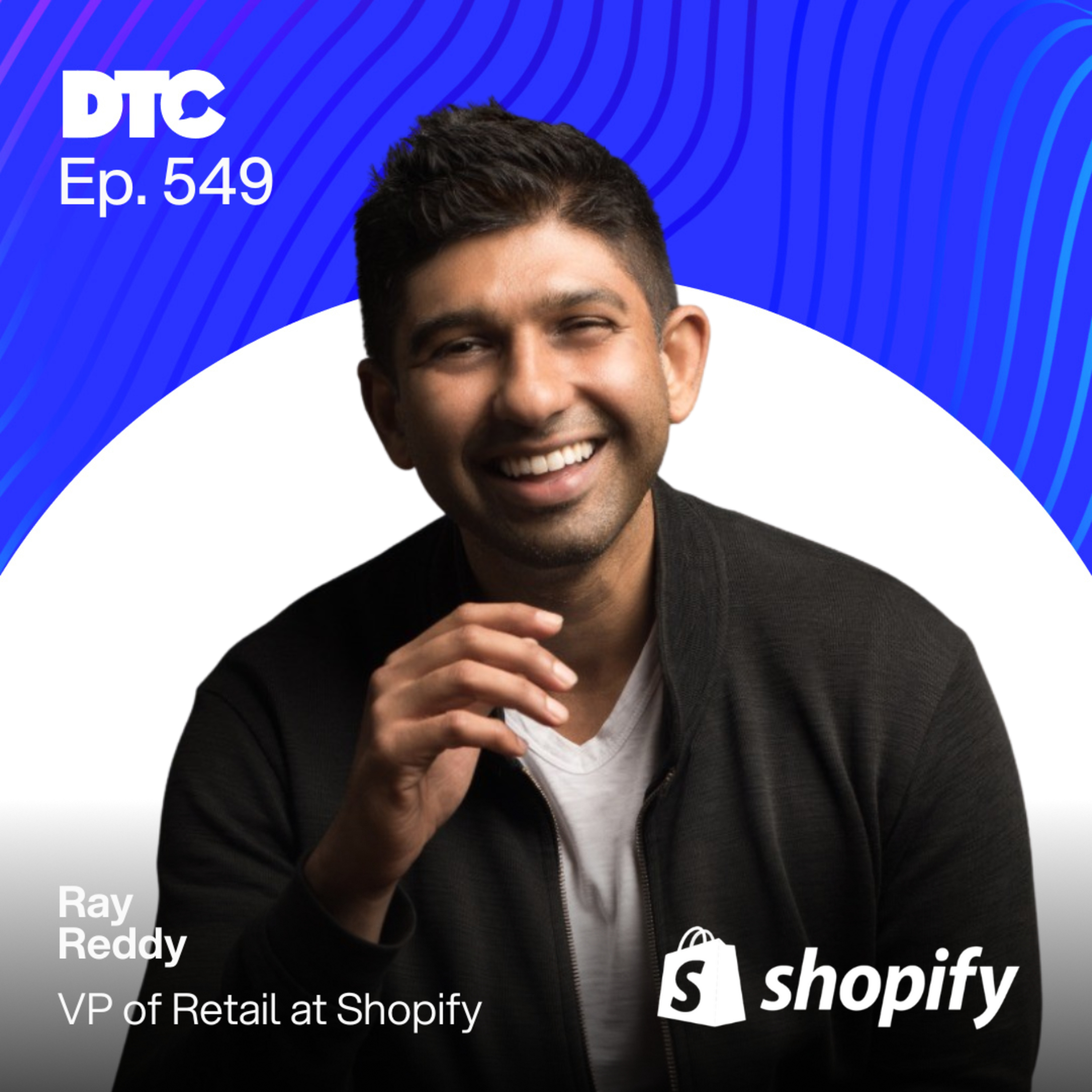
Loading summary
Transcript36 lines
- [00:00]
A
It's really difficult to build every single workflow that every single merchant in every country, across every category, across every size of business needs. And so the platform starts to look a lot like an operating system when merchants versus Shopify. The thing that really surprises me is like, not only is it a big upgrade in experience and capability, it tends to be a game changer in terms of cost. Shop allows you to pick up where you left off. If you're looking at a store or have something in your cart and you abandon that cart and you're in the shop app tracking a package, it's very easy to resume. Why could the retail experience not feel the same? It's 1995. You've seen a glimpse of the Internet. You know it's going to change everything, but you don't really understand how we're in that moment right now.
- [00:54]
B
Welcome to the DTC podcast. We almost always talk about D2C topics. Today we are expanding to actually have our first ever guest from Shopify to talk pos, not just dtc. We're talking point of sale with Ray Reddy, VP of Retail from Shopify. Welcome to the DTC podcast. How you doing, Eric?
- [01:13]
A
I'm. I'm doing great. Thanks for having me on.
- [01:15]
B
Fantastic. So the first thing I wanted to start with, I say POS point of sale, but I think in our, in our pre interview, you alerted to me to the fact that that's kind of a limited phrase. Why is POS maybe a limited phrase for what you're attempting to do, what you're doing with Shopify point of sale?
- [01:30]
A
Yeah, it's a great question. I think a few years ago we started talking about this as an operating system. I think the reason for that is Shopify's breadth of merchants online doesn't typically look alike. The way when you think about a pos, there tends to be hundreds of POS vendors across the world. They tend to specialize in markets or verticals. You know, many of them will either focus just on restaurants and coffee shops or health and beauty and fitness studios, etc. Etc. So there's hundreds of POS vendors. And you know, Shopify Online operates across 170 countries. It's everyone, it's verticals like selling cars and automotive parts to selling coffee beans and everything in between. And it's everything from the smallest casual seller that may not even have a store to the largest enterprises that have thousands of stores that now use Shopify. So it's every size of merchant. So I think when you start to think about literally the World of commerce. It's really difficult to build every single workflow that every single merchant in every country, across every category, across every size of business needs. And so I think the platform starts to look a lot more. If you think about just like the Shopify ecosystem, it starts to look a lot like an operating system where there's the core Shopify platform that has actually deep APIs and extensibility and the ability to customize and build. On top of it, you've got a thriving developer ecosystem, probably one of the most successful app stores outside of maybe the core operating systems, and just like a big ecosystem of enablers, agency partners and developers that ultimately help, you know, customize Shopify to make it work for merchants. So I think. So I think when you think about it like that, it looks more like an operating system than a pos. Right? It's the thing that you run your entire business on, not, not the way you just check out customers at a point of sale.
- [03:45]
B
So that's. We're calling it an commerce operating a cause. It's not a pos, it's a cos.
- [03:51]
A
I mean we haven't, we haven't, we haven't coined the term, but I think I would say it's closer to that than, than, than a pos. Yes.
- [03:57]
B
Talk to me about. Because it's funny, my brother was involved early. My brother has worked for Shopify for a long time and he was involved I think in, in some POS stuff around the cannabis industry many years ago. So I know you guys have been working on point of sale systems for a while. What's. Maybe what's evolved about your approach with point of sale versus maybe back then and whatever that was like 2017.
- [04:20]
A
I mean a lot we do these twice a year editions and announce a whole host of upgrades and features. So over the last few years I would say that probably the biggest thing is that POS went from an add on. So typically the customers who would be buying pos, you said four years ago, five years ago, they tended to be. POS actually is a startup within Shopify. It was incubated about 10 years ago and I think when it first started out it was really meant to be a companion to the online store and it was primarily used by online first businesses who derived the majority of their GMV and revenue from D2C and also wanted a store to showcase products maybe and that tended to be the primary customer. But if you fast forward to today, I'll share some interesting stats like a double digit percentage of POS customers Get all of their GMV from in store.
- [05:24]
B
That's wild.
- [05:24]
A
Yeah, that's a big deal. The vast majority of POS customers get the vast majority of their GMV from in store, not online. So another way of saying that is like retail merchants are retail first. And I think why that matters is it is not enough to be kind of mediocre on pos. It's okay to be mediocre when the customer derives all of their GME and revenue from online. And this is like a nice add on that shape of product works. But when the vast majority of your revenue comes from in store, people don't want to. It's not enough to say, well we have a great online platform. They want to know there's things that matter in terms of how they run all the way from compliance requirements that are mandatory in certain European countries to things like cash management that don't actually even apply to online but are a very big deal in terms of how physical stores, just the reality of physical stores and dealing with cash and things like that. So there's all kinds of things like that. Typically when you're running an online business you don't have hundreds of staff that need to have access to the product. Product with complex permissioning schemes and whatnot. So that's another example of, I would say it's a very different shape of problem and also a really complicated problem. The one nice thing, because online kind of came about many, many, I don't know, decades or centuries into the commerce journey, it kind of got simplified. Here's an example. There tends to be when you think about like tax or even compliance, it tends to be at a country level for online but the tax and compliance actually work at a county level for in store transactions. So it's not even about like in. There are examples where it is like literally 10 times more complicated to solve the same things in the physical world than than it is online. And so the point is it is a big undertaking to do a nice job of this. And that's what's changed in the last few years was this went from being an add on product to a legitimately great product for retail customers and the markets.
- [07:48]
B
We talked in the pre chat, it's always good to frame the discussion in the fact that over 80% of sales still happen in store. So it's a huge, huge opportunity for a company like Shopify to take pieces of that.
- [08:00]
A
Yeah, totally. And look, that stat, sometimes, you know, it can, it can maybe it's slightly. It is a true stat. It might be A bit of an exaggeration in the sense of there are some categories that are clearly very much offline. You know, with apparel, it might not be 80, it might be 60. But the point is that the vast majority of commerce still does happen offline, or at least the majority does. And so in almost every vertical in every country. And so I think that it's clearly a very, very big opportunity.
- [08:32]
B
So when it comes to all these diverse front ends that you mentioned, all the different ways that people, different industries use POs and what they require is how much of that are you building into the platform and how much of that is accessed through your developer network, through apps.
- [08:49]
A
I mean, it's truly. We have this philosophy at, at Shopify where we say it's most merchants most of the time. So what we try to do is things that most merchants need most of the time. We try to build those things in a first party way. But here's another example though. Let's look at tax. Tax is one of those things where it's very, very complex. Just managing tax across hundreds of countries is not a simple thing and it's a solved problem. There's companies who specialize in doing this. So I think it's a good example of, you know, yes, it's all, all merchants need, obviously, just to solve tax. But our conclusion was we would rather partner with a few companies who have solved this problem and focus on integrating this so well into the product that it feels like it's been built into the, you know, it feels like Shopify built it. It's the power to buy thing. Right? So I think we have many different, we actually have many different versions of what it looks like to partner with apps. In some examples, it's not a secret, for example, that stripe powers Shopify payments. So when you think about something even as core as payments, I think that Shopify has done a nice job of saying, well, let's focus on investing our resources in things that only we can do to bring value and to really add value or areas where it really matters that we do it, that we invest in this. But then there's other areas where we might partner with someone, but it doesn't change the fact that the end result has to be a good experience for customers. And so we try to focus more on that. So regardless of whether we build it ourselves or partner with someone else, it doesn't change the quality bar of what a customer expects. Especially for things like tax compliance, things where customers just expect Shopify to stand behind these things. I think we have many different partner models with app developers. What I talked about was maybe a very integrated model. On the other end of the spectrum is an app store where you can go discover apps, download them, pay for them and run them. In fact, many apps are apps of one customer, which is just that the merchant built an app to solve a thing that they needed to do. So that's also very widely used. So yeah, I'd say a range of different partnership models with the app ecosystem.
- [11:26]
B
So Shopify has enabled so much E commerce for so many brands and so much data that becomes available. And so many new ways of thinking about E commerce have emerged out of just having a platform like Shopify. So I'm curious, on the point of sale side, in the, in the physical retail side, what kind of data is unlocked by having this sort of unified approach to your online and offline sales?
- [11:49]
A
It's a great question. I think unified has become a really weird term. It's the new omnichannel.
- [12:00]
B
I didn't even know that, by the way, till I do this every day. And in our pre interview you told me that unified is the new omnichannel, but that unified is outdated. And I'm like, I didn't even know it. I'm still an omnichannel.
- [12:10]
A
Well, it's not. I don't know if it's outdated. You can actually go back and look the Google search, the Google search history of that keyword and I think it spiked about two years ago was when it kind of really came into the lexicon. And yeah, I think it's meant to replace Omnichannel. I think the challenge is that everyone has jumped on the quote unquote unified bandwagon. And I think you talk to almost any POS company, it's almost like it's become such an important term that everyone just has to put it on their collateral because you can't not. And so I think Unified has come to mean lots of different things for different people. I would say at its weakest it is that these solutions are all offered by the same company. Like it's the same brand across these things. Clearly that is not unified in the sense that there are some, there are some companies who have taken an approach of acquiring a whole bunch. You know, they've had regional growth by acquiring lots of regional players and they roll them all up and put one brand, slap a brand on top of it. Well, these things don't work together. They were built by different companies. I think at its worst, that is one version of Unified. I Think on the other end of the spectrum, you have something like Shopify that has taken almost a purest view of every single line of code in this platform is written by a Shopify employee. Even if a company was acquired, it was all rewritten directly into the code base. And I think that Shopify was built with this idea that there is a single data model that needs to span all the ways that a merchant might want to sell, whether that is at a farmer's market, a physical brick and mortar store, online, even B2B and wholesaler. And so I think that the difference there is that it is not about jamming some solutions to try to make them work together, which tends to be what most merchants need to do. They need to get an online store from here and an inventory solution from there and a POS from here and maybe a self serve kiosk from somewhere else and try to make all these things work together. And that's how you end up with a large IT team and all this brittleness and you know, this is the, I think this is like now become almost like the nightmare scenario of a lot of retailers. It's not even a, you know, it's amazing. When merchants are Shopify, the thing that really surprises me is like not only is it a big upgrade in experience and capability, it tends to be a game changer in terms of cost, mainly because they don't need to have a massive team of IT staff making sure that all these systems all talk together and you can start to put people to much better use than fixing brittleness of systems that were never meant to work together. That tends to be, it's all the duct tape and band aid. So I think that it's a really weird value proposition where you have a leap forward in capability and experience and a massive reduction in cost. And so I mean it feels like a no brainer I think for most merchants. But there's the reality of switching costs. And what I mean by that is just like migrating is a thing, especially when you're coming out of a legacy POS that may not have great APIs and all that stuff. So I think that tends to be the biggest problem. But the benefits of unified are, I mean, I'll give one very concrete example. Online, you know, every single customer that transacts with you, you have to be able to send them a receipt, therefore you know who they are. If you rewind back like maybe 50 years ago, that tended to be what the retail experience was. You know, you could imagine you're a neighborhood store, you'd walk in. It was, it was community driven. The store, it might be the store owner who's often there. They build long term relationships with customers. They may even know who you are when you walk in. And it's. And they can be helpful, genuinely helpful. I think over the last many years, retail has become this weird anonymous experience. You know, staff changes every six months. High churn customers are completely anonymous. You don't know who they are. They're trying to fix that with loyalty programs and collecting emails and offering all these incentives. But there's only so many people who are going to, you know, recite, do the whole recital at checkout. The benefit of having one unified model is because Shopify has a footprint of, I don't know, over 200 million shop pay users who've checked out with Shop when in this net. I think it's something like one in six people on the Internet have checked out from Shopify store. So it's a very significant number of people and growing that Shopify has identified and have created a profile on Shopify. When these people, when these customers transact in store, we know who they are. And so this is an example of something, it's called the features called Live Lookup. What it does is it allows merchants to identify over 50%, approaching 60% of every customer who transacts with them. And it's so game changing because now your marketing team that is able to run all of these campaigns to your online customers and increase lifetime value and do all of those things, they were completely hamstrung on retail. They just had no ability to talk to people. Well, now they can. So I, so I think there's this almost this convergence of being able to treat retail and have that visibility into customers in the same way as you did with online. And that's really, really powerful. It means you can measure, it means you can experiment. It means you can talk to your customers after they leave the store. It's so many things. So it's a small thing, but it's a really big thing being able to identify customers. And it's not just that side of it that makes it sound like this is all for merchants. But the best things are ones that help both sides, right? So the way we think about it is how do we make the buyer experience and store better such that it is a benefit for merchants as well. And shop is increasingly a really big deal. It's many tens of millions of users now who use the product and there are a whole host of. If you think about online today, Shop allows you to pick up where you left off. If you're looking at a store or have something in your cart and you abandoned that cart and you're in the shop app tracking a package, it's very easy to resume. And a meaningful amount of purchases now happen that are just like really a customer continuing on where they left off. Right. Well, like, why could the retail experience not feel the same? The way that I at least think about the future of retail is why customers love retail stores still. Why is the majority of commerce still offline? I think it's because people really like the tangibleness of retail, the ability to touch and feel and see and try on and all of those things. Things. The problem is that it's quite inconvenient. Inconvenient in the sense of we are maybe in some ways spoiled by the convenience of online. You know, everything's at a fingertip. You want to know what sizes, click a button. Want to know the closest, you know, store or whatever style that has this thing. Everything is accessible, right? Payment happens in one click. And with shop pays just happens with one phone number, text. So I think that it's so convenient online that it's like, how do you bring that level of convenience in store? And like a good example, you know, I'll say an example outside of the Shopify ecosystem that I think is just a demonstration of this point. It's like not so long ago you would go into a big box store, and the most painful thing about going into a big box store was having to find the aisle that the thing was in. You would spend 10 minutes hunting down Home Depot associate, trying to find which aisle is the thing at. And that was, I would say, like a low value. It was low value all around. It was frustrating for the customer. It was not a great use of time for the store associate. They're just like a router telling you where to go. And with one simple thing of exposing local inventory on websites, which is now very common for most big box stores, it's game changing. I know exactly where I need to go. As soon as I walk into a store. I often see people. Now it's almost like a companion app. I see people loading up the website in store, looking for things, finding recommendations. It's almost become this companion in store. And I think the best part of that is when I watch what store associates at a place like Home Depot are doing, they're actually being helpful. The conversations they're having with customers are no longer, hey, the hammer is in aisle four. They're actually engaging with them on how to do their project and they're helpful consultants. So to me that's kind of how I think about the future of retail. It is there's a lot of like low value interaction that happens in store that I actually think that people would prefer to just self serve on. I would much rather just be able to get the answer on my phone than need to track down someone to do it. And I think what that does is that it creates room for a much higher value interaction that actually builds customer loyalty. That actually is a memorable experience and, and what you want in a human interaction. That's the future that I think we want to build towards.
- [22:13]
B
I'm curious too, like you, you know, you go to a store regularly, you kind of input your payment details and then is it something where they could be like, oh well actually it turns out that this is your fourth product this year or something so here's the bonus gift that, that you get or something like that to add surprise and delight in that situation.
- [22:32]
A
The way I look at it is our job is not to be prescriptive exactly on how stores should deliver a great customer experience. I think our job is to provide the tools and the capability. Our job is to, I would say one, I think one transformative thing would be if in store shopping with all of the right opt ins and everything else went from being this anonymous experience to this personalized experience where both sides knew who the other was. And the nice thing about something like that is if you can just provide that unlock, you can let stores innovate on that and make it their own and do things that we could not have even dreamed of and build an amazing customer experience. So that's kind of how I think about it is it's not about building the. I mean maybe some of these things are just so obvious and clear that, that you should have them be available out of the box. I think really think about like the capability and the, and the, you know, we call them like the platform primitives at Shopify, meaning like the core capabilities that the platform needs to support. And then you know, you have the ability to build your own apps and extend the platform to make it your own. One interesting thing is like Shopify doesn't have a loyalty program, but we have all of the primitives needed to build a loyalty broker on Shopify. So a huge number of Shopify stores have loyalty programs running. Just not just we've built the platform to allow them to do that as opposed to building the loyalty program. Right. So I Think we think about it in that way.
- [24:07]
B
How is AI playing a role in the development of the pos?
- [24:12]
A
I think thus far across Shopify, I think that the way that we've used AIs to really help automate really cumbersome tasks, things like, things that are like, high value that stores need and it's just part of their day to day. So updating descriptions and better imagery and improving their catalog and all of, I would say, almost like the boring, mundane stuff that merchants need help with. So I think that was kind of where it started, was a place of real utility. I think Sidekick is growing up really fast and I think the goal or the vision there is, as I think Toby has said, this could be the ultimate advisor that you have on your side. I think one of the things that when you're an entrepreneur in, let's just say spaces where there's venture capital and you raise a lot of money, one of the benefits of having access to all of that capital and experience is like you have, you know, you have these very talented people on your board that are very experienced that you can lean on for support and advice, et cetera, et cetera. I think this is, you know, an exciting future where imagine that like every founder, every small business that may not even have a brick and mortar store that's really small has access to that, someone like that. Right. Or intelligence like that. So I think we've started in a place that's mostly about automation and time saving and helping you run your business more efficiently. But I think that the future is. It hopefully will give you such good advice that it ultimately improves the success rates of businesses. So failures go down, revenue goes up. You know, I think that, I think that that's kind of the world that, you know, we're headed, we're headed to. And so, you know, that's not necessarily Shopify in a vacuum. I mean, the AI ecosystem is large and there's lots of different players. But I think, you know, I think the most important thing to say here is when I talk to our customers, the thing that I hear most often is that they are not choosing Shopify for the current feature set. They're choosing us for the future feature set. And another way of saying that is a POS is a bit of a marriage. Choosing your partner that you're going to have for the reason it's very painful to switch. It's a marriage in that sense. And so I think that most merchants really want to measure twice and cut once here. And as a result, I think that the thing that at least sophisticated, most sophisticated merchants ask themselves is like, is this the partner I want over the next five to 10 years? Right. And that's a, you know, now more than ever, I would say it's the most important question. It's also the most difficult question to answer because almost like built into that question is, do you believe that this company is going to navigate the future? Well, and that feature includes AI, right? So I think that we take that, I'd say, responsibility and trust that merchants put in us very, very seriously. I would say it's actually the most important thing we need to get right. In a way. Yes. It's about all the features and workflows and reliability and speed and all those other things today. But even more important than that, I think, is we need to be the right innovation partner that delivers on the promise of what merchants entrust us with, which is to stay on top of technology, to make sure that we figure out how to use AI to actually deliver value and help businesses succeed more than they are today, that they gain a competitive edge being on Shopify relative to other platforms, because we do a better job of this. So the point is, I think that's how we think about it, which is, I think, Toby, there was actually a viral moment here, maybe even two months ago, where he sent this memo internally that he then released on X. And I think every company circulated this memo and a version of it. Basically, the memo was like, AI is a baseline requirement. And that memo was actually more internally focused. I think what that was saying was like, hey, there's a new thing here and we do a really nice job of adopting it. But if you think about it and just connect the dots here, it's like, well, a company that doesn't use the tools themselves, how are they going to figure out how to make this tool super useful for their customers? Right? It's kind of like being like, we don't use the Internet, but we're going to figure out how to make the Internet work for you. It's like, well, that's unlikely to happen. And so I think that that maybe is like, you know, the proof is in the pudding there, which is that it's hard to predict what's. How things are going to play out over the next five years. But I think what I can say quite confidently is that Shopify's internal adoption of AI, not just at the executive level, not just at the management team level, but like down to every single employee, from customer support to obviously the R and D organizations, and marketing and everything in between have really deeply internalized these new tools. What they mean, how it changes how we work. And I think that doesn't necessarily guarantee success, but I think that it has given like what I can say at least is I think Shopify has a very good understanding of the power of these tools and not just in Toby's head, but down to every level of the company. And I think that that gives us an edge in thinking about how to apply this to help our customers.
- [30:24]
B
It's funny, you guys are famous for democratizing commerce and AI is has similar decentralizing or democratizing effects as well. Because if you've got every person in your company thinking about how to innovate with AI understanding what new tools are out there, you never know where that, where like a game changer, changing insight might come from.
- [30:44]
A
Right.
- [30:44]
B
And if you just need more tentacles experiencing it.
- [30:47]
A
Totally. That's, that's exactly it.
- [30:49]
B
Super cool. Well, I, I imagine for Reach are for brands that have been on the Shopify ecosystem for a while selling them about your, you know, the future of the ecosystem is, is not as hard. I'm really interested. Yeah. Like I'm excited to see bigger, big, big retailers take this on and, and see the synergies that are created from it.
- [31:08]
A
Right. They are because, you know, because, because here's the thing, I think that they're all realizing it's the conclusion that many of I would say the savviest mid market brands figured out over the last few years. You know, it's almost like I would say it's the equivalent moment of it's 1995. You've seen a glimpse of the Internet. You know, it's going to change everything. But you don't really understand how we're in that moment right now. The only difference is it's not going to be 20 years, it's going to be five. Right. And so it's actually an even more significant moment. I think that every, every brand from the biggest of big enterprises is thinking about this mostly because they went through this with the Internet. Right. This is actually the other benefit. Like the way I think about it is like there's been, there's actually been three important technology shifts that have happened in our lifetimes. The first was the Internet, the second was mobile and the third is AI. This is going to be the most consequential shift. Right. And so I think that most brands kind of had to, were forced to navigate the last two. They understood, you know what it, I mean, you know, the Internet is a great example of like it dictated winners and losers. Your ability to adapt the Internet literally meant the difference of you surviving going forward. I just think that that whole thing is going to play out on a much more compressed timeline. And I think that brands are, you know, sort of like the fool me once, fool me twice thing. So it's like they all know. So I think, you know, they're all thinking about this and that's why I think the decision they really, that the brands need to make is who do you want as your innovation part? Who do you want to trust? Are you going to trust the brand that may check off more boxes today, but ultimately may navigate the most important technology shift of our lifetimes in the wrong way because they're under investing and they don't understand that enough. And that'll become evident in three years. I mean that's a pretty big gamble.
- [33:14]
B
I think this is great advice for anyone listening about their organization and the moment that we're all in right now with AI. So I think it's a great way to, to, to end things off here. Thanks for coming on the podcast today, Ray. This was really interesting.
- [33:26]
A
Thanks for having me on, Eric. Enjoyed the conversation.
- [33:29]
B
We got lots of people in our audience. If you, you know, if you, you want to get on Shopify's pos, just, just do it. It's, it's, it's, it sounds like a good innovation partner. Thanks for being the first Shopify guest on the podcast. I hope to.
- [33:41]
A
Hopefully not the last.
- [33:42]
B
Hopefully not the last. Get my brother on here one of these days. Thanks a lot. This was great.
- [33:47]
A
Yeah, awesome.
- [33:55]
B
Thanks so much for listening to today's episode. If you're not a subscriber to our newsletter, you can do that right now at directtoconsumerall. One word co. I'm Eric Dick and this has been the DTC podcast. We'll see you next time.