← DTC Podcast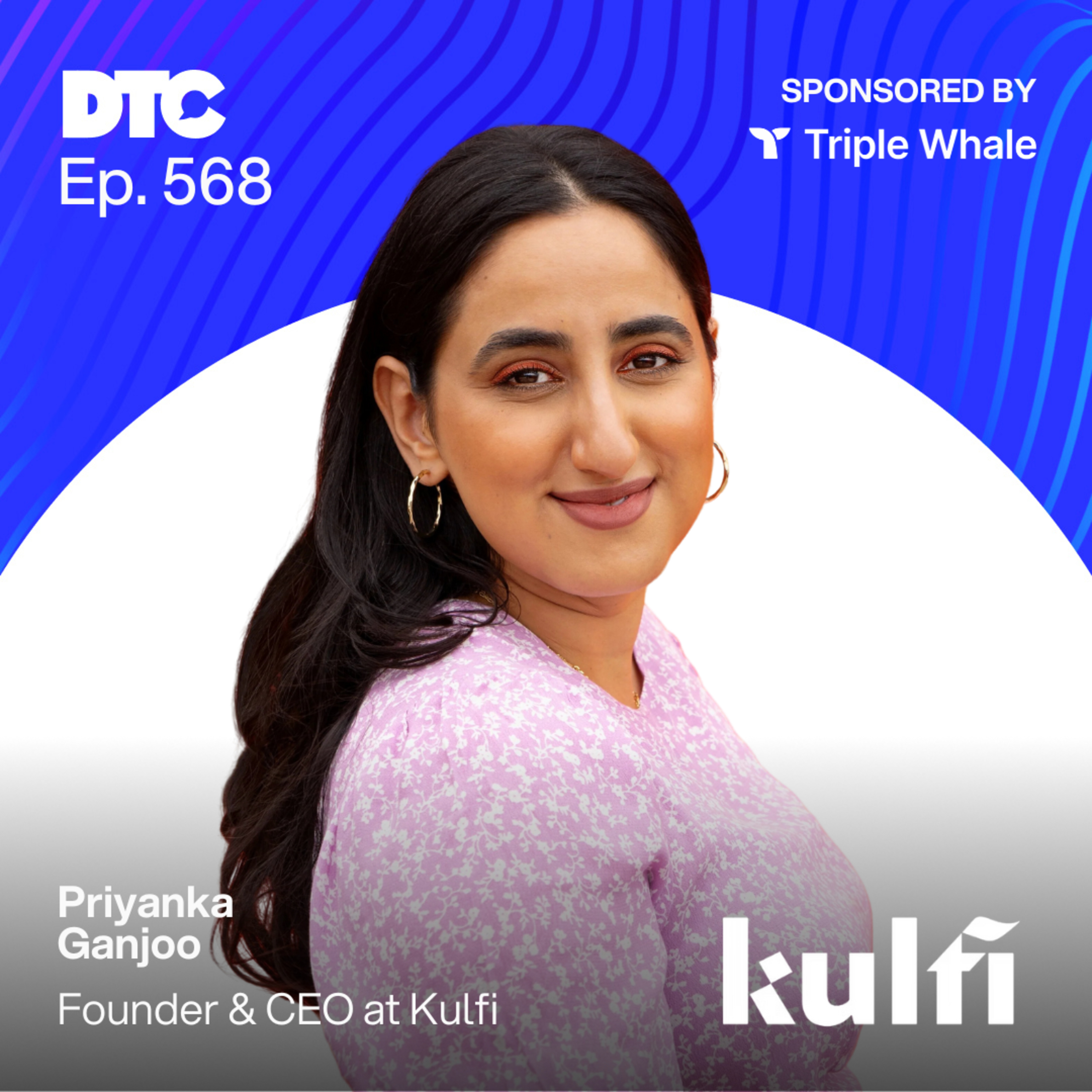
DTC Podcast
Ep 568: How Kulfi Beauty Grew from a $5K Launch to 720 Sephora Stores with Zero Paid Ads
00:39:18
Loading summary
Transcript62 lines
- [00:00]
A
Community has been such a big part of giving us feedback, but also then giving us the voice and the platform because they speak about our brand to their friends and family and their community. It's about content. You have to create compelling content and investing in that creator community, which we've really scaled this year, has really paid off for us. What makes you different and what works for you, and what works for you is going to be very different from what works for someone else. There's best practices, but then there is best practices for your brand, and that's not necessarily 100% overlap. Your story is your superpower and it's special to you. No one can take that away from you.
- [00:48]
B
Before we dive in, let's take a minute to talk about what happened this BFCM because the numbers were massive and they reveal a lot about the state of E Commerce performance right now. Across the Triple Whale platform, brands process more than 26 million orders and over $2.9 billion in revenue in just one weekend. Brands also spent more than $600 million across the major ad platforms and Triple Whale brands alone represented nearly 20% of all Shopify sales during BFCM, which is pretty incredible when you consider the scale. But here's the part that actually the brands that performed best weren't reacting blindly. They had a clear understanding of what was driving results, which channels were truly profitable, how ROAS was trending throughout, how AOV shifted as promotions rolled out, and where they had the strongest opportunities to keep momentum high. That level of clarity only comes from having all your data in one place, updating in real time. Triple Whale is the agent powered intelligence platform trusted by more than 50,000 brands like True Classic, Wei and Olipop. It unifies data across every channel and tool, giving you a single source of truth and actionable AI insights so you can make confident decisions faster. If you want that level of visibility heading into 2020, you can create a free account and see the platform for yourself. Visit Triple Whale.com dtc that's T R I P L E W h a l e.comdtc Priyanka welcome to the DTC Podcast. Very excited to talk to you today about Kulfi Beauty. Can you start by telling me why you built it?
- [02:23]
A
Excited to be here Eric why I built Ko Fi really never thought myself building a beauty brand. Part of that was because I never saw someone who looked like me in beauty. I never felt welcomed, I never felt comfortable using makeup, using color and I somehow found myself working on the corporate side of beauty. I worked at Estee Lauder and another beauty startup, and through that journey, discovered beauty on my own terms in my twenties and realized how fun it can be, how expressive it can be. It doesn't have to come with judgment or it doesn't have to be only for a select few. It's really for every. It can be playful, it can be joyful, it can be full of self expression. And I wanted to create a brand that captured that captured that essence and also reflected my South Asian heritage. I'm Indian, and I wanted to see brands that had nods to my culture that really had never existed before. And so those were all of the things that I was thinking about all this time I was working in the beauty industry. And finally in 2019, I was like, let me try to do this myself.
- [03:28]
B
What was going on with the existing beauty products that weren't working for you?
- [03:33]
A
There are two things, really. One is what I call, like a product gap. And that was, you know, colors that look good on undertones, South Asian undertones. We have a lot of olive, warm pink undertones. And the colors in the market never look good. So you walk in the beauty aisle, you put on a lipstick and it makes you look ashy, or the color doesn't show up on you because it's not pigmented enough. And that was something that a lot of people in my community can really resonate with and have dealt with growing up. And I think it's getting better. But there was still, and there is still a huge gap in inclusive beauty products that really complemented our skin tones and made you feel like you deserve this just as much as any other, like, you know, girl or person. And so there was this product gap. And then I think what's even more important to me was this emotional gap of feeling included, feeling like you can have fun with this, feeling like you can be part of a beauty routine or a person who is considered beautiful. I think that to me was an even bigger impetus of what was missing in the market. Because we've been since the beginning of time, just kind of been shown a very specific, like, Eurocentric vision of beauty. And I think that's not just a us thing. It's really a global thing where, you know, faces like mine, features like mine weren't really celebrated. And so for me, that was. That's just like a really important part of the mission is to be able to showcase all of us in that community in our brand, and talk to.
- [05:00]
B
Me about the opportunity that, like the South Asian market opportunity. It's something we actually haven't Talked a lot about on this podcast. But it's like a massive growing opportunity in the market.
- [05:11]
A
Absolutely. I think, you know, just demographically, right, if you think about the global population, there's more than a billion South Asian people. And then, of course, a lot of them are in South Asia, in India, in, you know, all the countries. Pakistan, Bangladesh, which, again, these are markets that are growing exponentially in terms of the beauty industry, because as household income is increasing, discretionary income is increasing. One of the things that ends up happening is that people are spending more on beauty and personal care. And it's one of the fastest growing regions right now in beauty and personal care, overtaking China and globally. Everyone sort of has their eyes on India and South Asia in general because of the fact that it's so fast growing in such a massive consumer base that is relatively untapped. But then there's also a huge diaspora, me included, in the us in the uk, in really everywhere around the world, that also has felt so neglected in every aspect of, you know, feeling of representation, whether it's in the beauty aisle, whether it's in the media. And so that's a huge consumer group as well, with purchasing power, that I think, like, you know, it's more about just us being able to create a space and product for them to feel included and be part of the beauty conversation, hopefully in. In a different way than they've felt before.
- [06:32]
B
So you've got this great background in beauty. You've got this great idea, great opportunity. What were your first moves to kind of put your first product together, and then what did you launch as your first product?
- [06:42]
A
First move? I'm not a multitasker, and so I'm not, like, someone who held onto my job and was working on this on the side, which maybe, if you can, I would suggest, try to do that. So I went all in. I left my job, and I really wanted to understand, is it just a me problem, or is this something that more people are feeling? So I went to Facebook groups to try to find people. This was back in 2019 and was like, meet me at a coffee shop. I want to know what. What's in your beauty bag. Tell me about your beauty routine. A lot of South Asian people, there was a Facebook group in, like, South Asians in New York or something. And so I met people, and people were so helpful. Like, it's crazy how much people will help you if you just reach out. And, you know, they met me and they would tell me about, like, their challenges. And one of the products that came out of the product ideas that came out of. That was the first product we launched, which is Kajal. Kajal is a traditional Indian eyeliner or South Asian eyeliner. We used to traditionally make it by burning almonds and mix it with ghee. And at home you'd use it to line your eyes. And there's a huge cultural practice associated with using Kajal to ward off evil eye, which is called Nazan. And so it's just, it's not even considered a makeup product. It's sort of integral to the culture. And a lot of people in these conversations were telling me, I use my mom's or I bought it here, but I don't really love it. It smudges and you know, all of these things that they just felt like, I don't love the experience of using this product. And that was my aha. Moment of being like, this would be such a perfect product to launch with because it has that storytelling, it has that emotional resonance. Everyone knows what it is, it's in everyone's makeup bag. But nobody has sort of reimagined it for our generation. So let's do that. And so we launched with Kajal eyeliner as our first product in five shades and immediately kind of grew a cult following of that eyeliner and still continues to be one of the products people recognize from us.
- [08:42]
B
Go back to the brand for a second. What does kulfi refer to or what does kulfi mean?
- [08:45]
A
Kulfi is dessert. It's similar to ice cream, I'd say, very much something we include in all celebrations. And so kind of going back to this idea of joy and play. The reason I named my brand Kulfi was because I was thinking about the times in my life when I had the most fun and was eating kulfi on a hot summer day. Growing up in Delhi with my, with my friends and, you know, just enjoying ice cream from the ice cream truck.
- [09:12]
B
Okay, so you've got your, your eyeliner, you've got your eyeliner. And then what was your go to market strategy to begin with?
- [09:17]
A
I didn't know anything about marketing when I first started the brand. I just had this idea, I had this passion for bringing this to life. Through these conversations I was telling you about, I had started to build a community. I know the word community is so overused, but it's really like those personal one on one connections with people. Whether it was through these chats I had, we launched a blog because between 20 and 2021, when I launched the brand, obviously we were all in lockdown. And so I could no longer meet people in coffee shops. But we launched a blog. And the blog was really a lot of up and coming South Asian writers who were Gen Z had never been able to write about the intersection of culture and beauty in any place. Nobody had kind of given them that platform. And so we were starting up, they were starting their journeys and careers as writers. And so we built this community of writers who would write about specific things. And we published that. And that built like a readership for us again, small, but very engaged, very personal. We launched our Instagram again. At the beginning, it was like a handful of my friends and family who had been forced to follow us. But eventually it started being people who just organically found us. And I would reach out to them and chat with them on the phone and be like, why did you follow this? What's interesting to you about what we're building? And build those personal connections. So when we launched on day one, we had that organic community. And that was really a true, I would say, go to market strategy. In addition, the only other marketing investment probably I made was we hired a PR firm. And they did a really good job of taking our story. We had really amazing visuals that we shot. We shot a beautiful campaign that was inspired by nostalgic Bollywood eyeliner, beautiful images of women, very inclusive campaign, women wearing kohl kajal. And they took that image, they took our storytelling, and we were able to get. We were on the front page of Vogue Allure, all these beauty publications on the day we launched, which was absolutely unseen for a brand with, I would say at that point, maybe $5,000 in the bank account. And, you know, we just. It was truly just, you know, people seeing that passion being reflected and being able to give us a platform, which I'm really grateful for. So our PR strategy also helped us kind of get that day one exposure.
- [11:46]
B
I don't think I can hear community and storytelling enough on the podcast. I think everyone talks about and more and more brands that I talk to that are. That are winning, started without ads, started by building their product market fit, building their community up without paid. That was a choice that you guys made. I guess with 5,000 in your bank account, that was maybe your only choice, but that was. That's how you went. And it went great.
- [12:06]
A
Yeah, absolutely. I mean, it was my only choice. Partly we were very cash strapped. I'd bootstrapped the brand when we launched. And in addition, to be honest, I didn't know anything about digital marketing and media, which is a Far cry from where I am now. I'm like in our meta accounts and in TikTok and looking at all the metrics, which is, which has been an amazing learning curve for me. But it was part necessity, but really I think part passion because for me it was more about like, I want to bring this to the world. I want people to enjoy it. I want to serve a gap that hasn't been served before. And people, people really saw that and connected with it. And that's why we have people who, you know, when someone writes on our DMs or in our Instagram, like, I love Ko Fi, I just feel so proud because how many things do you love? How many brands do you love? There's not so many brands than people that you love. And for someone to say that, it makes me feel like, like we've built something special.
- [13:05]
B
And do you get a lot of feedback from customers that echo your original founding story? Like that there wasn't something in the market for them and that this really spoke to them on that level?
- [13:14]
A
Absolutely. I've got DMs from people being like, I could never find a concealer shade match and like I found it with yours or I've never seen someone who looked like me. And you know, I'm excited to be in your campaign. And it's not a one time thing. It's really part of our DNA. We source, you know, our models that you see on our website from TikTok, from our community. We have an ambassador program of creators and we will reach out to them and be like, do you want to be, you know, our holiday campaign that just went live on Monday, the three models, I know them personally, they've come for our events and you're like, you know, and now they, when they see themselves, they then post organically because they're so proud to see themselves in a social, on a beauty media campaign. And so that ecosystem is very much like they have been. The community has been so such a big part of giving us feedback, but also then giving us the voice and the platform because they speak to speak about our brand to their friends and.
- [14:10]
B
Family and their community and they're echoing the story that you created. And then talk to me about the next big phase of growth via Sephora because you guys got discovered in a great opportunity with Sephora. Talk about that.
- [14:22]
A
Yeah, Sephora, I would say is definitely a thought leader in the beauty industry because they had an incubator program called Sephora Accelerate, which they still run it every year and we applied for it Even before we had launched. So all I had were like my lab samples, my campaign photography and my vision and just this idea of like, I want to do this. And we got selected. There were eight brands that were in my cohort that were selected. They promised to help us launch at Sephora. So we were able to get mentorship from their merchandising team. It wasn't like a financial sort of relationship, but really much more about mentorship and helping us really think about how to be ready to launch at Sephora, which is arguably like the dream for every beauty brand. And that was a huge opportunity and that we launched online at Sephora in 2022, which was a year after we had launched on our D2C and then in store in 20. Now we are across all Sephora stores in the US and Canada. So about 720 stores in what is called the Next Big Thing shelf.
- [15:35]
B
And I think I saw in your packet here that you're selling a kajal every five minutes at this point.
- [15:41]
A
Yes, definitely. That's like, that's the product we started with and people love it. But more recently, the product we've not been able to keep in stock are our lip oils, the Lassy lip lip oils. We've been, those have been insanely popular. And I don't even know what the math is, but it's, it's even faster than one every five minutes for sure.
- [16:00]
B
Talk to me about those early learnings with Sephora. You said they were sort of in, in those early days, you know, talking to you about what it would be like and how to prepare for a launch on Sephora. What were the key takeaways from that incubation?
- [16:12]
A
I think one thing that they focused a lot on was taking it step by step because I think, you know, you can get tempted to be like, I want like a whole gondola or like an end cap at Sephora. And there's all these stores and they were very much like, no, start online. And I like, no, I want to be in store. Like, you know, but they were really like, no, take it step by step. And I do think it's really important for brands to do that because it takes time for you to find product, market fit, to find the right messaging. And if you commit upfront that in like 300 stores even, which is a huge number, that's only less than half of like the Sephora store footprint. You want to invest in a gondola, which costs thousands of dollars plus the inventory, like, that's the shortcut to failure. Because you haven't really tested anything. So I do think that one of the biggest thing that came out of that was really this incubation approach and mentorship approach of being like, test your mvp, refine and then add on, and then add on distribution. And even now we're only in one shelf. And so the upside is unlimited in terms of going to a second shelf, having our own gondola over the next three years. But when we do that, we'll feel more confident and ready to invest because retail can get very expensive very quickly with return to vendor and, you know, testers, damages, etc. And so you want to be like, make sure you're taking it step by step. I would say the second piece is. Was definitely kind of making sure you have investment. And I don't mean investment in terms of dollars necessarily, though I do think that might help. But also just in terms of knowing that you have people who will help you in different pieces, because a retailer has so many different functions that it's very hard for a single person with, like, no help to be able to launch. And so I do think that brands may be tempted to be like, I want to go on Sephora, like, the moment they launch, which I was as well. But speaking from experience, I think there is value in waiting and maybe letting your brand grow a little bit more before. Before you get into retail, because it requires a lot of time and commitment. And honestly, my day used to be like 90% Sephora because it's such a huge commitment to do when you're just starting out. So I was not just trying to build a brand, but I also was trying to launch at Sephora, which are like, two very hard things to do at the same time. So I would say my takeaway would be like, maybe build a brand first and then when you're ready, take that next step.
- [18:46]
B
You talked about retail being expensive, and I think that's something that doesn't always get enough play. Can you talk about of a lesson of an expensive lesson that you learned in the retail space?
- [18:55]
A
One lesson I would say is definitely thinking about velocity in the shelf. Honestly, this is the most important lesson. That's the only thing. If there's one thing you want to know about retail, it's velocity. So it doesn't matter that any retailer wrote you a check and bought, I don't know, a thousand units of inventory, and you're like, wait, I'm rich now because they paid me all this money. If it doesn't sell, if you don't have Velocity, if someone's not walking to the shelf buying it, they're first not going to reorder and then 12 months later they'll send you an RTV and then they'll charge you back. And then if you don't have money, then you're done. Right? What you have to really focus on is velocity. So I would say knowing that that's your North Star, always trying to be like, okay, how am I going to work on velocity? That's what you should be tracking. Was just thinking about like, oh, I was able to like ship this much, or these are the forecasts. Ultimately, if someone's not going in and buying your product and you're not seeing that, like, repeat sort of purchase behavior, you're not going to succeed.
- [19:56]
B
So how did you. I think you did a lot of the work upfront is my guess by creating such product market fit, addressing a need in the market that maybe wasn't there before. But still, if you're only on one shelf in this massive store, how do you get picked up? How do you get discovered? Was that a combination of your, of your D2C casting a halo on your retail, or how do you account for your retail success and your velocity?
- [20:20]
A
I would say initially it was definitely our community that was showing up. Which isn't to say we didn't invest. We did sampling, we invested in store events. We did a lot of things that in a traditional retail playbook you're supposed to do, which are also quite expensive. But I don't necessarily know if you. If at the stage we were at, those were necessarily what were driving growth for us, because I think sampling, et cetera, is very low down in the funnel. If you think about it, it's like, oh, you already heard about the brand and now you're trying something from them and then you'll convert. But if you've never even heard of the brand, you're less likely to engage with it. Right. You don't know what this brand stands for. Who are these people? And so it was really our community who showed up and went to store and supported us in those early days. And as we've now scaled our DTC business, we definitely see a halo where the shades that we're selling on dtc, for example, we definitely see Sephora also see a spike in those shades. So we know that there's a correlation in the marketing efforts we're making on our Shopify and TikTok side that are having a halo effect on Sephora.
- [21:27]
B
Talk to me about D2C mentioned. I love when founders are still in the ad accounts. I think that I'm occasionally still in my ad account for the D2C growth side of things. Always sometimes to the detriment of the account. I think that I'm in there. But I'm curious what's worked really well with the DTC side of the business because I think you mentioned in the pre interview because you're close to 5050 now with your big with your retail presence as well as your D2C which sounds pretty healthy.
- [21:50]
A
Yeah, honestly it's about content. You have to create compelling content. And you know where we've had success with is again, I'm going to say it again, community. Because we have this diverse group of creators who have engaged with the brand and you know they organically love the product and we go out and reach out to them. If there's a piece of content that from them that has, we know has had a lot of engagement, we'll get usage rights for that or we'll ask them hey, like can you basically say what you just said but just make it an ad for us and you know it comes across because they genuinely love the product. And so kind of investing in that creator community which we've really scaled this year has really paid off for us. Whether that's seeding to a large range of creators, even if they use it in a bigger routine, the earned media from that has this halo effect on then our paid being more effective because okay, I saw this guy or this person use lustily lips or our concealer in something else and now I see an ad for it, you're more likely to engage with that ad. So I do think that investing in that creator community and then of course you know really kind of locking in on that content is key.
- [22:58]
B
Are creators and sort of UGC style content the bulk of the ads that you run in meta or do you also run a lot of statics or other sort of like product shot based things or is it mostly that UGC that works?
- [23:08]
A
We've tried a bunch of static and product but UGC is I would say driving 95% of what works for us.
- [23:16]
B
And then I think we talked a little bit about partnership ads. I think partnership ads are starting to. A lot of people are talking about them. Are they? Or formerly known as whitelisted ads. Are those something that you guys use as well?
- [23:25]
A
We used to use them a lot more on TikTok I would say at the beginning and those would do really well. But with TikTok ecosystem shifting more to TikTok shop now we do more TikTok shop ads. And then on Meta, we've tested a few partnership ads, but they've been less effective for us than running ads from our own account. And that's primarily, I think, my hypothesis is because of the type of creators we work with. We work with a lot of nano micro creators who have very small following but engaged following. We love that approach because again, that's why I started Kulfi was to kind of have the everyday consumer feel part of the brand. And so I think partnership ads, we haven't been had an opportunity to test a partnership ad with like a larger creator. I'm sure that, I know that I've read that those are working really well, but that would be a bigger investment in test. Maybe we'll, we'll do that next year.
- [24:16]
B
And then how do you source or find your micro nano influencers? Is it, is it your team out there, you know, scrolling away trying to find these people, or do you use tools? How do you actually find the creators?
- [24:26]
A
It is my team. Me, I'm probably scrolling, spending way too much time, more time than I should on TikTok. And then I'll bookmark and send it them or they'll, they'll, you know, my team is very passionate about beauty. They're passionate about what we're doing. So it's very much about like, I know there's like lots of platforms that can help you source, like creator lists, but there has to be that personal connection. So even though we use a platform to, you know, manage CRM and sort of communication, but it's very much like every creator in our community has been handpicked by us. We love what they're doing and you know, we will personally reach out and make that connection. And it is manual, but I think it's really worthwhile because then we also know who to tap into for different things like, oh, we need someone, we know where they live, so we need someone in San Francisco for something. Then we know, okay, we can count on this person. Which is, yeah, it's very manual and I would say personal.
- [25:22]
B
Have you noticed a shift in your meta approach this year as Andromeda has rolled out and sort of really taken hold of the meta ecosystem? Have you found you've had to shift any of your strategies because of that?
- [25:34]
A
To be honest, I'm not that deep into the algorithm changes, so you might have to tell me what that, what Andromeda is and what.
- [25:41]
B
Fair enough. Andromeda is just the new AI algorithm. It's the new algorithm that meta's using that sort of like, rather than segmenting things into data based sort of segments, it sort of like acts like a concierge and says okay, well this person is like this. And then it goes and tries to find the individual best ad that will work for them rather than like a Plinko chip going down into a segment. So the thing that I've, that I've seen founders say a lot about it is that it really is important that your creative each have its own unique story or unique angle, unique approach. Whether it's in the demographics of the person you're using, their background, the, the, you know, the way that they speak about the product, the problem that the product solves for them, the way they display the product. Like all of those things can kind of be thought of as maybe different angles. And it's important that you have a lot of creative diversity. I think diversity is definitely a strength of your brand and I feel diversity is, is a huge asset in, when it comes to creative in the world of Andromeda is what I would say.
- [26:43]
A
I think everything we've done has basically led up to this place where I think we're probably at the forefront of what's, we're benefiting from that. Because I know the traditional approach sometimes with paid ads was like iterations and you do copy. We just never had like the bandwidth or the ecosystem to do that. We never even do script. We don't give our creators scripts. It's really we pick the people and the people then go and speak about the product how they want to. So the way our content engine is set up is really, I think perfectly feeds into that system and maybe that's why we've seen so much success this year because we didn't have to shift it. We kind of now actually just have to figure out how to grow having this large creator base.
- [27:28]
B
Very cool. You mentioned expanding retail into the UK as well. What did you do different about your UK retail launch launch that you sort of corrected from any mistakes you made on the Sephora launch?
- [27:38]
A
Yeah, I think with the Sephora launch I was very much like let's follow the retail playbook. Let's have a lot of safety stock. Let's sort of like, you know, because it had never done it before and like I was following the playbook, but I think you have to go back and think about like what makes you different and what works for you. And what works for you is going to be very different from what works for someone else. So Specific example to me is when we launched with Sephora, we did do these big events. We did one in New York, In Dallas, in LA, LA, of course, New York, LA and Dallas. So we did these big events and we invited influencers and I think they were great. But I think the most EMV we've generated from an event ever has been when we did a picnic in Central park and we just had posted, we were smaller then. We just posted on our Instagram and been like, come meet us. We're hanging out in Central park and we did like a cute picnic table that was branded, it was crappy. It was like a five dollar event. Right. It took us five hundred dollars to set up that event. And people just love coming to meet the team and hanging out with us. And it was a beautiful summer day. And I kind of go back to that and be like, okay, that's what's working for us. It's this community, it's this like everyday consumer sort of engaging with the brand, not just like throwing a big dinner somewhere. And so that's the approach that we took when we were launching in the uk, but also sort of in general. Now we've taken is the this idea of like, there's best practices, but then there is best practices for your brand and that's not necessarily 100% overlap.
- [29:09]
B
What are you planning for the holidays for Q4 this year? What kind of. How do you think about promotion? I guess both in retail and in the D2C world?
- [29:18]
A
I think, you know, a sale, I love being part of a sale. I love shopping sales. So I do think there is a place in a brand sort of marketing calendar for a sale. But I think you have to be measured and think about the type of consumer you're attracting with that too. Right. Ultimately, I want a consumer for Kulfi who loves the brand, who loves our product. And of course we want to like reward them for their loyalty, whether that's with a gift, with purchase or discount. But I don't think that's the behavior necessarily. We want to train them that you can always get at a discount because it's not sustainable for us, us ultimately. So we only do one sale a year on our D2C, which is for Black Friday Cyber Monday. And then we did just launch our holiday shop, I mentioned where we're doing bundles and the bundles. You can get a little bit of a discount, like 10 to 20% I would say, on different bundles and routines. And we see that people love sort of that curation aspect of the bundles. And of course, like a little bit of value. But we're not like, trying to go too deep into discounting because again, I don't think that's necessarily, like, it's not sustainable for us, but it's also like, not the consumer behavior we want to trade on.
- [30:26]
B
You guys have had a lot of success, you're saying, with your product expansion, especially your lip oils, which sound great. What's your sort of guiding principle when it comes to adding products to the brand that kind of keep it with its core mission but still allow you to expand?
- [30:39]
A
We listen to our customers. That's always helpful. But then we also combine it with things we're feeling passionate about. The lip oil specifically actually was a result of. Of the feedback we heard from the customers who bought our lipstick. So we had actually launched a lipstick in 2023, and it's a beautiful satin lipstick. Hydrating formula came in a range of neutral shades. And our customers said, we love how hydrating it is, but it's not long lasting. We want something longer lasting. We love that you have neutral colors, but we want pops of color. All of that feedback was basically how we created the lip oil stain, because actually it's the first in the market. And now we have unfortunately many other copycat products in the market now. But it was the first of its kind. Lip oil that's also a stain. So it goes on hydrated, hydrating, glossy, but it actually lasts because it's a stain. And we created a shade range that had neutrals and it had pops of color. And so I feel like listening to our consumers really kind of created that product. And now that product is doing really well. So we'll kind of like, like combine our product expertise, our. Our like, understanding of undertones and shades and formulas with. With what our customer is selling us.
- [31:49]
B
Do you ever think about. I think that the other area I see exploding these days is fragrance. Anything in fragrance, whether it's Sol de Janeiro or all these, I think people are really looking. Have you thought about expanding into skincare or fragrance?
- [32:02]
A
Yeah, we have. And I think it's because of sort of, if you look at our brand, it's. It's a lifestyle. To me, it's about this feeling of joy, nostalgia, color, and like, having fun with beauty. And so for me, there's definitely a space where Kulfi could play into fragrance, could play into skincare, could play into hair even. So we've definitely thought about it. It's not like immediately on the roadmap, but it's something that we Definitely see a place for. We launched our first sort of skincare makeup hybrid product earlier this year. It's our primer that actually acts as a skincare serum. It helps with. It has active ingredients to help with hyperpigment, but it also makes your makeup last longer. So that's our first foray into the mix. I will say though that the reason it's hard is because the marketing and the go to market is different. Right. The creators who engage with specific categories are different. And so the more you dilute yourself, especially as a small theme, the harder it is to like really cut through the noise. And so it's tempting, but you only want to do it when you have the right, you know, one, you have the right sort of product, but then also you're ready to invest. Invest in. Starting from scratch, basically in a new category.
- [33:12]
B
In terms of marketing, you mentioned your team. I think in our pre interview you mentioned your team of six who's still very lean. What, what has been, what's been the hardest thing for you to delegate that you've actually delegated.
- [33:23]
A
Oh, wow.
- [33:24]
B
Or is there some stuff right now that you're trying to delegate?
- [33:27]
A
Yeah, I think right now I'm definitely trying to amp up our operations team because as we scaled like now we need a separate demand planner. Like earlier everything was, you know, our finance director was doing HR and demand planning and controllership and fpa. So and you know, everything else, you know, and so we're trying to like now those are all separate functions. So it's really kind of, I'm trying to get that side of the house in order so I can spend more time in the areas where I think I add the most value, which is sort of product and market. And then the other thing is obviously my team is always like, get out of our Instagram, get out of the meta account, stop responding to people because you're, you're messing up our flow and you're not using the right emojis. And I'm like, okay, fine, I'll get out of it.
- [34:11]
B
That's funny. What's your vision for the brand? You guys are, I think you're four years in about what are your goals for it? Do you see, you know, some of your former compatriots in big beauty coming in to, to acquire at some point or what do you what your vision for this?
- [34:25]
A
The vision is to be the first or among the pioneers of a South Asian inspired beauty brand that is really charting its own path and you know, hopefully making a lot of consumers feel seen globally and then also bringing other people into the fold of like, you know, really being part of a, part of our brand and the journey and learning more about our culture and you know, through, through the brand itself. So that's really ultimately the vision. Now how we get there, do we do it ourselves, do we have to partner or how do we get there? I haven't quite figured that out yet. I think we'll have to see how it goes. We, I think when we launched in the uk, I realized how we launched in the UK in August this year and I real how hard it can be to launch internationally because you're essentially doing everything from scratch in a new market. And it does not translate. Even though if you think like, oh, it's just across the pond and we speak the same language, it really, it's not the same thing. And so I do realize that it's going to require a huge shift in how we're doing things, whether that comes from a strategic partnership or an investment partnership to get us to a place where we will be global. But that's the ultimate vision is like, we don't have a global South Asian beauty brand, but it's about time.
- [35:43]
B
Unbelievable opportunity globally, right? Like, especially, you know, as you grow and build the brand here in North America and in, in London or in England and then bringing that prestige back to go after the, you know, to return home. In a way there's, there's a real opportunity there for you. But what was the biggest challenge about the UK that you didn't foresee coming that was made it different from the.
- [36:06]
A
US I would say the main thing is just like again, building that community from scratch. Right. I think that's sort of our secret sauce. If you think about it. It's not like we have a celebrity who's like, oh, now Zendaya or Beyonce, and she's global. She'll work anywhere, she'll be able to build her brand anywhere. We are really about that grassroots. And, and the thing about grassroots is they got to build it from scratch. And so we're like, okay, how do we do now? We want to do more and you know, there is appetite because people are like, when are you coming back? When are you doing? We would love to meet you. So like, how do we do that in London? But then beyond London, do it in Manchester and Birmingham and wherever else. Like, you know, we haven't even done that in the US yet fully. And so realizing that what works for us is time consuming and very like grassroots. And so to make that work in the UK or anywhere else. We. And that's, to be honest, that is our competitive moat and our winning formula. I wouldn't want to change that. But that will require time and patience and investment.
- [37:12]
B
So anyone listening in the audience right here, who maybe they're sitting on a. On a culturally specific idea that they haven't seen in the market yet, what would you tell them about? What's your top advice about what it takes to bring that idea to life?
- [37:26]
A
Just go do it, because you're gonna hear so many naysayers. When I first left my job and started building Kulfi, people were like, South Asian beauty is not aspirational. You know, there's just so much hate online, unfortunately, against South Asian people. And so it was very much like, oh, this is not gonna really work. You know, I. Because I worked in the beauty industry, beauty executives were like, what do you. What exactly do you mean? Like, it's a lifestyle brand. Cause they wanted more of an ingredient story. Like, I found this ingredient in the Himalayas, and I bring. Like, that's like. They were like, okay, maybe that would sell. But, like, I'm building a brand that's really lifestyle, and they just could not envision it. But I think that's an opportunity if you. The more. More people are like, this is not going to work, the more maybe you should be. You should be excited, because that means that nobody else has thought of it, and you just need to go and, like, pursue it, because your story is your superpower and it's special to you, and no one else can do it, and no one can take that away from you.
- [38:25]
B
If people want to follow your entrepreneurial journey, where do they recommend they do that? Maybe on LinkedIn.
- [38:30]
A
I think my Instagram, probably. Priyanka Gunju. I try to post occasionally. I'm trying to be a little bit more build in front of the camera, but I'm not there yet.
- [38:41]
B
Well, this can launch you into that journey. If you're in the audience and you're sitting on idea, you're building a beauty brand, make sure you reach out and. And share some inspiration, because I think this is a great story. Thanks for coming on the DTC podcast today. This was really a lot of fun.
- [38:54]
A
This was so much fun. Thanks, Eric.
- [39:02]
B
Thanks so much for listening to today's episode. If you're not a subscriber to our newsletter, you can do that right now @directtoconsumeralloneword.co. i'm Eric Dick, and this has been the DTC podcast. We'll see you next time.