← DTC Podcast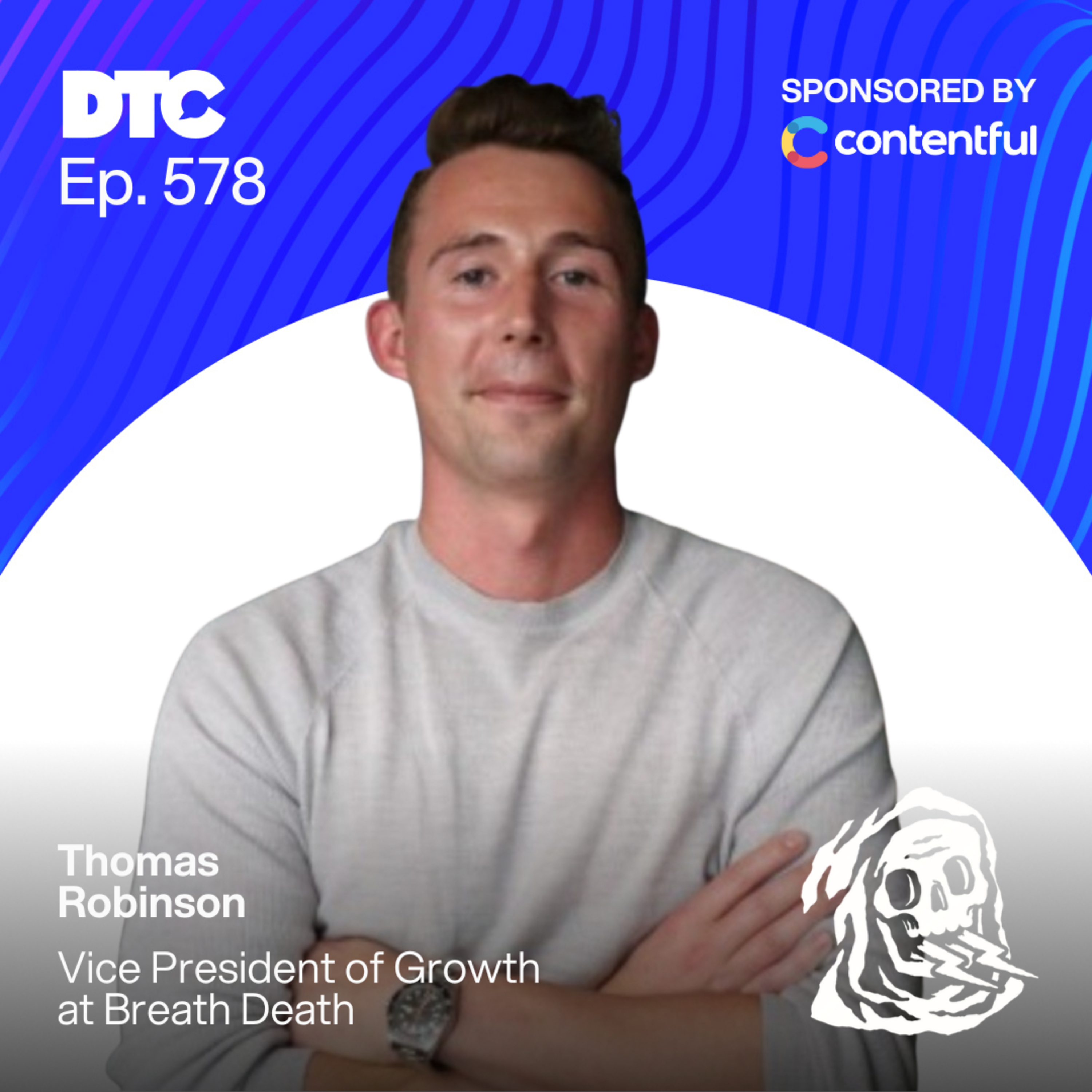
DTC Podcast
Ep 578: How Breath Death Cracked TikTok Shop: Funnels, Affiliates, and $0 Creator Content
00:36:50
Loading summary
Transcript68 lines
- [00:00]
A
I think a lot of people will be like, that's saturated, that's done. But there's a lot of way to reignite buzz or PR or celebrity endorsements and keep the ball rolling on it. Because once you have that traction, you don't want to let it go. If you can't set up automations to align your email communications with your customer's intent, you're already lost. TikTok shop is by far our strongest channel and we think about that as a strategic strength. You always kind of want to look at who's the legacy player and how do you kind of compete and disrupt the space. We're already in the top 100 best sell selling food and beverages brands on TikTok shop. Any of the big breath fresheners that have been around forever are not even a part of that conversation. And so we know we can win in that space. And so we're hyper focused on that. Like that's where we stand out.
- [00:53]
B
This episode is brought to you by Contentful Marketers. You know that feeling when your creative clicks, when that social post sends engagement through the roof, when your outside of the box campaign campaign hits ROI positive, when a personalized homepage turns prospects into customers. It's utter marketing bliss. Contentful helps you create tailored omnichannel experiences without working overtime. No stress, no limits, only possibilities. Get the feels@contentful.com welcome to the DTC podcast. Today I'm joined by Thomas Robinson, a DTC growth operator who's built full funnel engines for brands like Tiege, Hanley. And now one of the most fun and fast moving new brands out there, Breath Death. He's one of the few people who's cracked influencer marketing at scales, especially on YouTube. He's got a killer eye for turning chaotic traction into real structured growth. So welcome to the DTC podcast, Thomas. I'm glad we could connect.
- [01:49]
A
Eric. I'm super excited to be here.
- [01:52]
B
I wanted to just actually, just maybe start the podcast just by freshening up a little bit here, like actually experiencing the crystal breath experience the population breath mints as pop rocks. I cannot believe this has not been done before. What drew you to Breath Death as an opportunity? As a fractional cmo, the main thing.
- [02:11]
A
Is the team cultural fit, like the. The team that's leading and founded the company are just rock stars with successful companies under their belt. And I think I'm always like excited to be a part of like a company that has incredible product market fit, a very strong perception of what their brand is and who they want to be and a very innovative product. And there's nothing quite as fun as like jumping into a company on the ground floor and just being a part of the rise and you know, fixing all the problems like that come along with it. But like there's that feeling that's contagious of that, like zero to a million, a million to 10 million, like hitting the big milestones and like every day is different. So finding the right company that's set up to hit those results and then just being a part of the hyper growth is like, you know, it's just contagious. It's so fun to be a part of.
- [03:01]
B
What's the tam of gums and mint?
- [03:04]
A
It's pretty massive. It's a huge industry across, you know, across the world, everyone seems to use some sort of breath freshener. Whether it's a gum, a mint, a spray, a strip. Like there's all these different variations now and we're the ones that's coming up with like a new delivery device to, you know, to freshen your breath on the go. That's kind of addictive. It's super fun. So it's something that most coffee drinkers want. They keep it in their pocket. Most people use gum. But this is like a very strong alternative to that. And I think when you start to use it, you just want that instant freshness, that icy freshness that you get with a mouthwash. And I don't think any alternative delivers that.
- [03:45]
B
Talk to me about initial results with this because it's funny. Like I'm an elder millennial Gen Xer and I. And I have. So the nostalgia effect of Pop Rocks is so real. But it seems like really Gen Z geared brand. Who is this resonating with most right now?
- [04:00]
A
It's hard because it's like the chicken or the egg. A lot of our ads are kind of geared to that like 18 to 25. So we're, you know, that's who we're resonating with. We're really kind of staying hyper focused on building content and pipelines that resonate with that demographic us only for now, but we're going to look to expand. But we're definitely interested in as we move into YouTube and YouTube influencers, we're seeing older demographics come in, still mostly male, but again, we don't know if that's a byproduct of the brand or just that's where like our ads are going right now. So definitely Gen Z. Gen Z from like conception. But you know, I think over time we'll find that that's like a limiting assumption. And I'm excited to test different, you know, demographics, different audiences as we scale.
- [04:48]
B
How much learning can you take from, like, Liquid Death as an example? Because I feel like there's a lot of. Well, obviously there's death in the brand, but. But there's similarities in the. In the sor Tone of the brand, I would say. Is there anything you think you can learn from the way they've been able to scale up so big?
- [05:02]
A
Yeah, well, I think. Absolutely. I think just the. The buzz around such a, you know, aggressive positioning, like, just strikes conversation. You love it or you hate it, and being talked about is always a good thing. You know, taking. You want people to be kind of on different spectrums of how they feel about a brand that's, you know, kind of going all out. I think that's what we've learned from them is hold steady on our positioning to hold steady on, you know, we're not for everyone, but if you're, you know, kind of a bold person that's open to new experiences, we're right for you. Instead of trying to appease to kind of every single type of person that may be more modest or more conservative, I think that's like a really strong approach. So I think just not trying to not offend or fit every single type of consumer, I think is a. Is a good strategy. And Liquid Death did that best. You know, there's not a lot of. A lot of people drinking water out of that bowl of a can. It wouldn't make sense to them. But then obviously there was a huge group of people that were like, this is awesome.
- [06:02]
B
Yeah. I think making people choose is something I hear a lot, and I think it's. Yeah, never, never a bad idea. Talk to me a little bit about your. So you've got this brand, it's innovated, it's an innovative product. It's got this neat, unique form factor. It has traction with. With some core audiences. There's unlimited potential for content with Crystal Breath or Breath Death or all these fun things. So how have you approached it in terms of. Turn that traction into something scalable?
- [06:29]
A
Yeah, I think it's like, again, I came on and the founding team already had such a great vision built out for it in terms of the brand and the targeting of Gen Z, like building a roster of incredible ambassadors, connections with, like, the ufc, wwe, Machine Gun, Kelly, Logan Paul. Like, these were founders that were part of the journey from conception. And I think what I've really done well is Taking that initial buzz, that initial traction, and then building, like, funnels that kind of sustain themselves over time. You know, cutting up Mr. Beast resonates with a certain type of person and putting that in the right spot and building landing pages and retention flows that resonate for him. Whereas someone like Jake Paul is a bit more of an extreme character and a bit more of a, you know, you love them or you hate them type of guy. And, you know, using those assets more strategically for the right cohorts of customers. So it's like taking what was successful, what was already generating buzz, what was getting great CPMs and incredible engagement, and then building out dedicated, like, funnels for each of these assets that we had already.
- [07:36]
B
I think that's a super great concept because these things are like, just blips in time often, too. Right. Like, you get this huge hit from these associations. But unless you're prepared to build, you know, what you're talking about here, it can be something that just fades over time because we live in such a moment by moment society.
- [07:53]
A
Yeah. Like, and I think if you think of something, like, I actually have it, like, what is it called? Yeah, Neurogum. Like, they had a moment where Joe Rogan organically mentioned them, and they blew it up. And they were like, kind of the goats of taking that asset, and they could have just, you know, had that initial buzz and then let it fade, but instead they, you know, stitch it together with ad, and they kept the momentum up and they took that moment and they expanded on it. And so I think a lot of people will be like, that's saturated. That's done. But there's a lot of way to reignite kind of buzz or PR or celebrity endorsements and keep the ball rolling on it, because once you have that traction, you don't want to let it go.
- [08:34]
B
So I think you kind of mentioned it in brief there, but give me an example maybe of one of the moments that you were able to turn into a more always on funnel and where it worked, how it worked.
- [08:45]
A
Yeah, like, one clear example is Aiden Ross, who's a YouTuber, podcaster, Twitch streamer, had Mr. Beast on. And Aiden Ross is like an ambassador for the brand. Had the, you know, the product with him, handed it to Mr. Beast, and he just, like, took a swig of it and just his organic, authentic reaction to trying the product. And that moment could have died on the live stream, but we snipped it, we cut it up, and that moment, we've sustained it. And Mr. Beast just has such loyalty, such credibility. I think the fact that it was an authentic reaction to trying the product was like even more engaging than if we gave him a script or anything like that. And we have a whole campaign isolated to that one 30 second authentic, beautiful reaction. And we kept it going and it served us very well.
- [09:39]
B
And so does that then translate into the video that you're posting on TikTok through to the landing page? Talk to me about a little bit about the nitty gritty about what you actually do with that clip to turn it into a full funnel.
- [09:50]
A
Yeah, so I always think about meta ads and like and threes hook integration like the sales messaging and then a call to action. So taking strong hooks is actually one of the, you know, best things you can do for lowering CPMs, getting the strong engagement rates and getting attention quickly. So Mr. Beast taking a swig of it, showing his face is one of the best hooks. And then you can just make iteration after iteration on different integrations. Whether it's a sensation seeker that just wants to know what it's like with exploding crystals, whether it's problem solution of you have bad breath, this is the best way to cure it on the go. Whether it's a confidence thing or credibility thing or a healthy ingredients component. And, and so you could stitch that hook with multiple integrations with multiple different CTAs. So a call to action of buying, you know, a bundle pack on a discount or becoming a subscriber and saving or a one time purchase, try it risk free without any kind of offer attached to it. And so once you get, when you think about it in threes and you stitch it in so many different ways, eventually you find a winning combination of the three and then you know, the last piece of, outside of how it's stitched together is ensuring cohesiveness across the landing page. Right. So we have Mr. Beast there with his endorsement on the page that from the ad. Because I think if you send someone to a website after you know, they probably stopped because it was Mr. Beast. If you just don't keep that journey cohesive, you can kill momentum right there and just have high bounce rates, low conversion rates. So you know, getting the ad complete, completely dialed in, finding the right combinations and then building dedicated landing pages for them.
- [11:36]
B
And TikTok shop is just built for this as well.
- [11:39]
A
Yeah.
- [11:40]
B
Is that where the, the bulk of the sales are coming now or Give me, give me a little breakdown of where the bulk of the sales are coming from now.
- [11:45]
A
Yeah, so I think, you know, we're kind of the classic D2C3, right? TikTok Shop, Shopify and Amazon. TikTok Shop is by far our strongest channel and we think about that as the most incremental strategic strength. And you always kind of want to look at who's the legacy player and how do you kind of compete and disrupt the space. And we're already in the top 100 best selling food and beverages brands on TikTok shop. Any of the big breath fresheners that have been around forever are not even a part of that conversation. And so we know we can win in that space. And so we're hyper focused on that. That's where we stand out Amazon. You know, I'm an Amazon expert. I spent a lot of my career focusing on Amazon. I've worked at Amazon. You know, we climbed. But that's not because of, you know, very technical PPC stuff we did on Amazon. That's because of the Halo from TikTok shop, from GMV Max, from, you know, the 600 new affiliates that we sign up every single month, you know, the 1400 organic pieces of content from all these people talking about us a month. And so you got to think of your sales channels not in isolation but holistically. TikTok shop is the reason why we're doing so well on Amazon. You know, I, you can see it from the brand search volume of breath death on Amazon and how it corresponds with the impressions engagement we get. TikTok shop by far is, you know, it's the wild west still, but the people that have figured it out, it's just a massive, massive channel. Especially if you're going into kind of a legacy industry like dominated by people that have been around forever.
- [13:27]
B
And then affiliates, that's the other TikTok Shop and affiliates just are so great. I remember it was tabs, sex, Chocolate actually came on the podcast in our first year and they were doing really well before, even before I think the affiliate program came out with like just basically they were kind of making affiliate accounts on their own. I think they're using social snowball. Are there any tools that go into your affiliate program or do you just kind of use the native TikTok affiliate capabilities?
- [13:51]
A
You know, we set up some automations. I always think, you know, you can think of affiliates and threes too like conceptually of like you know, nano micro, like mid tier and the macro influencers and for the smaller creators, let's say sub 5,000 followers. A lot of that we do through automated systems, automated onboarding, automated reach out, you know, kind of send them a repository of like speaking notes and guardrails, lower commission. And we just do that at scale. You know, having a lower AOV product, you know, seeding isn't an issue for us. You can seed out lots of product and if half the micro influencers post once and drive two sales, the economics work out. But when you get to like the bigger creators, you really want to stop them from being a part of like automated outreach and you kind of want to do a little bit more white glove service for them because then it's not just about the video and the commission you're giving them. It's about building a relationship, making them feel a part of the brand, part of the journey. Usually there's some sort of contractual like flat fee payments involved in, you know, the million plus follower accounts. And so those we do through, you know, we have automated systems in place but there's not a particular tool that helps. It's more about the relationship building and finding ways to foster a relationship without them feeling like, oh, I'm just getting an automated AI message. And so you definitely don't want to burn bridges. I've seen brands reach out to very credible, very strategic brand partners with a automated AI email. You're going to burn a bridge right out of the gate with that. And so you got to be careful.
- [15:32]
B
I should know this, but is TikTok shop the same as Amazon in that you don't get the customer email, you technically get it.
- [15:39]
A
Okay. You don't get marketing consent through it. So got it. There's no kind of Shopify. You can have something at checkout where you get that automatically. You get their shipping address, you get their email, you get their phone number, but you don't get marketing consent because we still fulfill it through our, you know, Shopify3PL right. So it's like Amazon, you don't get any of that because they fulfill the order so they don't need to give it to you.
- [16:06]
B
You're big on YouTube as a growth channel. Why do you think it's so overlooked?
- [16:10]
A
I think it's just because it's less in many like brands minds. It's less scalable, less, more manual, less of that immediate jump. People love a TikTok affiliate because you drop it into GMV Max, you get the paid reach. If it converts, it gets picked up through the systems. It's low risk because if it's not picked up by GMV Max and it's just to their audience, you just pay on a portion of sale YouTube. But you're never really going to Find that there is YouTube affiliates. I've never seen a lot of people get traction on it. You might get, you know, 5% of your creator sales through, you know, people signing up to your evergreen affiliate offer on YouTube. But really YouTube is about looking at different verticals that have your TAM. You know, for breath death would be 90% US males between 18 and 25 interested in dating and fashion, like in fitness and or cigar smokers that want to fix their breath and then getting very clear about what you want to do. And then it's manual relationship building, it's contacting them, getting their rates, coming to a deal, building long term partnerships. Because if you think about how much work it is to do everything I just said, if you're thinking about a YouTube influencer as one deployment and then they're gone, you just did all that work for nothing. Right? You may not hit your CPA after one deployment. It's all about building long term. Two deployments a month for six months and then it compounds. And it's also a self service retargeting funnel. If you follow a certain creator, they deploy. Once you're like, oh, that looks cool, but I forgot the second time you see it, you're like, oh, now I actually want to try it. Whatever you said, this second time resonated. It keeps compounding over time. It doesn't have that big spike of a TikTok or a Meta where it hits, you spend against it. You get all the sales, you turn it off and it crashes. YouTube, you can have a video about, you know, something evergreen, like top 10 ways to impress, you know, a date. That video can drive sales for years to come. And so if you look at it holistically, you're not worried about an instant spike of sales. And you just look at all the money you spend on YouTube, how many sales you're getting. You do it right often it could be your most efficient channel because a lot of brands don't want to go through the hassle of kind of everything I just said of like being patient, finding the right people, building relationships and letting it compound over time the gift.
- [18:47]
B
That keeps on giving because it's. And you're using their connection to their audience each time their audience is growing at the same time. It's just more of a flywheel than a one time ad.
- [18:57]
A
Exactly. It's great for SEO, it's great for domain authority, it's great for generative, like AI search optimization. Like I think there's a reason we do so well on ChatGPT and organically it's because we have so much authority in the space, there's no affiliate UTMs attached to it. So it does better for SEO. It's, it's a beautiful, beautiful strategy.
- [19:17]
B
Are you talked about on Reddit? I feel like Reddit fuels so much of the, you know, the LLMs that I. Having a good vibes on Reddit has got to be good for, for SEO as well.
- [19:27]
A
You know what, like we are good on Reddit and we've done that. You know, we've, we've considered so many kind of Reddit growth strategists but you know, a lot of them are a black hat of like we're going to get all these robotic accounts, create all these subreddits.
- [19:44]
B
Yeah.
- [19:45]
A
You know, and so I always am hesitant of that because it can kill a brand's credibility so, so quickly. So being able to foster a real authentic community, be a part of the conversations on Reddit, that is a massive opportunity. I just haven't found a credible way to do it because like you said, a lot of the Reddit strategy isn't going to be through direct click and buys. It's going to be through domain authority, SEO, AI search. Yeah. Appearing in LLMs, etc.
- [20:17]
B
Talk to me about the meta environment. When you're trying to sell a product as low an AOV as this one is, that one's got to be a challenge.
- [20:25]
A
Yeah, yeah, well, I, I think you need to win the game of lower CPMs through very strong hooks. It just like, you know, if you think about Google, you win on a keyword bid from a combination of the bid you set and the relevance of the ad. On meta, it's the bid you set and the quality of the ad. And so highly engaged ads, you can get lower CPMs with the same audience. And so if you, you know, you got to find what, what angle you have to win and if you can't win on contribution margin on a transactional level or AOV, then you got to win through better CPMs and then having landing pages that have high conversion rates. So, you know, impressions, your cpm, your click through rate, your landing page cvr, you know, look at them across the board, you know, and then have targets for them. If my CPM isn't here, it's probably never going to work. If I can't get people off the ad to my landing page, it's probably not going to work. And if they land on the page and they're not converting, something's broken. So looking at the three for each ad or each campaign and being like, oh, I can see the issue here, it's the landing page conversion rate, I got to fix that or my CPMs are high because no one's engaging in my ads. I got to fix my hooks, you know, and so you just gotta be very kind of systematic and you need a creative person conceptualizing the new topics and then you kind of need someone like me that's like looking at the big picture and helping the team put their effort in the problem that's gonna have the highest impact.
- [22:02]
B
Do you have angles that work that aren't cut ups? And of these celebrity moments, do you have ones that just sort of work on like freshen your breath new thing or do you think you require those, those, those types of partnerships to make them make it work?
- [22:18]
A
I think with like Meta's ecosystem now of it all being like programmatic and you know, get your pixel set up, use something like Elevar or you know, have server side tracking make that very clear. And then having a broad based audience with Advantage plus with like a very kind of little seed to it, it's all about Meta is matching the ad to the right audience. So like the, the days of hyper focused targeting are gone. And that was a long way of saying that. But with that being done, if you don't have a variety of ads, Mr. Beast isn't for everyone. Logan Paul is not for everyone. Machine Gun Kelly's not for everyone. So we have other ads that we kind of classify by archetype where we do, you know, we have skip based ads which are heavy on the hook and the brand building a brand impact, but it doesn't drive a lot of sales. But then we also have UGC testimonial ads. We have. This changed my life. I smoke five cigars a day and now my wife doesn't hate me anymore. You know, you have like, you have to have a variety of different ads that all serve a different purpose. And so yeah, we do. And usually they're hit at different points in the funnel with different types of ads. But you should have lots of different concepts and then look at it by the cigar smoker, like problem solution, testimonial, celebrity endorsement, ugc, whatever it is. And then make sure you have a variety of ads because yeah, you get too isolated, you're never going to hit a certain type of customer.
- [23:48]
B
And you don't want to go by necessarily broad segments, you want to go by deeper psychographics. Like to me, the thing I keep hearing on the podcast, you want, you want People to understand. You want to understand why people are using the product as well, in a way, and whether it's confidence for going on a date or if it's like, it's all these, like, underlying motivations as to why the product could be a big important part of their life or whatever. And getting at those underlying things are really what. What draws people to the ad 100%.
- [24:15]
A
And I think, like, it sounds silly, but, like, you can use names. Look at your. Like, step one is like, I recommend everyone does this. Pull your reviews, have AI analyzed by sentiment, and try to find commonalities of why people love your product. And for us, you know, at breath death, you could look at sensation seekers, which is what we call them, but, like, people that just are curious about exploding mint crystals. Or you have confidence, you know, people that, like, what can I do to feel better on a date? And I think bad breath, whether it's in the top of your mind or in the back of your mind, it's always there, you know, and so going after, like, never even have to worry about this again. Some people are, like, very, very, like, you know, maybe they've been called out and they're actively looking for a solution to bad breath. That is a different type of ad. And so, like, yeah, exactly that. Figure out your psychographics, your archetypes, and then classify each ad by each concept. And then over time, you'll find the types that win and you'll drop some. You'd be like, oh, that's not important anymore as you scale, and then there'll be a new one that pops up. And so, yeah, you got to stay very close to that. That's a great call.
- [25:29]
B
I think when we first connected, it was pretty early days for you guys. You guys were definitely. You'd seen traction, some big sales from, from these, these. These press hits or whatever. What's. Because it's been over a month or two since maybe we last spoke. What was Q4 like, and what's the trajectory like for breath death as you scale this?
- [25:45]
A
Yeah, Q4 was massive for us. We were lucky because we got into some, like, Amazon pinned placements. So we got an incremental exposure through that. And, like, again, one of the big things that every entrepreneur should do is networking. You never know who can help you get something, whether it's through a software that you use, building a relationship with your account manager to build in a feature or push a beta to you faster, or your Amazon rep, your Google rep, your Facebook rep, your TikTok rep. Like, keep Those relationships going. I know everyone's busy but like it is very, very important to keep those alive. And like the momentum of us like at breath death now is kind of building off of all that acquisition we did in Q4 and now product expansion and really building LTV, fostering that connection and really making it a part of their routine. And then like now it's an LTV game. It's so fun when it kind of switches. There will always be this tension of effort of marketing of ltv like expansion contribution margin per customer increase or lowering your CPAs and getting more volume. And it's a pendulum that kind of swings in priorities. But you know, Most brands after Q4 CPAs are going to go back up and now it's all about maximizing your ltv.
- [27:07]
B
And so you have a retention program with email for everyone who buys through Shopify or buys through the checkout there. Is that a big part of the retention strategy? Because I guess on the platforms where you don't have it, it really becomes a partnership game with affiliates where you're using them to remarket and bring people keep you top of mind with that audience. But how do you think about retention? I guess on the email side, you.
- [27:30]
A
Know, segmentation, do all the foundational stuff and don't skip steps is like a big one. Look at your triggers, make sure you have comprehensive triggers for link clicks on different products and isolate every bit of information that aligns. Again, you can go back to your psychographic or your customer, but if you don't, if you can't set up automations to align your email communications with your customer's intent, you're already lost, you know. So I think it's. You can take what you did on Meta and just repurpose it for. For klaviyo or attentive or whatever you use and build comprehensive flows like segment by engagement too. Because also know that it's omnichannel now. It's not email, it's SMS. It's DM automations through Manychat. It's WhatsApp building dedicated groups. But I would say the big ones that people are missing are DM automations for sure. WhatsApp is honestly incredible once you use it correctly. SMS I think is fading a little bit, but you can use it strategically. You just don't want to bombard on sms. So getting your flows and your automations dialed in and then also thinking about a very omnichannel of talk to the customer where they want to be talked to.
- [28:43]
B
So you have these ongoing Big partnerships that are, that are paying dividends is that, I guess that's, that's a never ending process. You're going to kind of continually look for like high level ambassadors who are big in culture who, who are the right fit for this product. Is that still, that's still an ongoing part of it?
- [28:59]
A
Yeah, I think, you know, we think about like an ambassador as, you know, someone that's deeply, deeply rooted in the brand. And then you also have influencers that are maybe more just like paid deals, but consistent paid deals. But we're always on the hunt for someone that has a new audience or new approach of promoting the brand where they can get us in front of new eyeballs and kind of captivate them and be that initial touch point. But I, I, you know, it's still one of the best ways to build instant credibility, which is these people, like one of the biggest things is that they genuinely love the product and believe in it and that can be felt instantly. And so like you're always on the hunt. Not only do they have the quantitative like audience and reach and those types of things, but also like you, it's something you feel of like, do they genuinely love this? Are they going to promote this?
- [29:55]
B
Are they going to make it a ritual?
- [29:57]
A
Yeah. Are they, are they going to be like, yeah, you can kind of see, you know, I have people I talk to that, you know, show me on the call that they're taking the product back and I'm like, oh, this is actually something that's in their lifestyle that is going to be felt through the audience. So yeah, it's, it's ongoing. It's all the time looking for the right people to, to add to the portfolio into the, to the marketing mix.
- [30:18]
B
It sounds right now you guys are very much in that block and tackle, scale it up kind of phase. But it's also when I think about, I brought, I brought up Liquid Death to start and the thing that they, once they, once they were really looking for like crazy scale, they really went heavy into creative storytelling. Their ad creative and their, their concepts were so far out there and so interesting and so like they kind of created their own media company around all of their crazy creativity. Do you guys have plans in the future for, for creating any sort of like similar kinds of content? Are you creating that kind of content already?
- [30:51]
A
Can you kind of like say that one more time?
- [30:53]
B
Well, do you know, have you, are you familiar with Liquid Death? Sort of like they just kind of continually come out with frame changing creatives. Like I forget what it was, it was like, oh, put your face on our box or kind of, you know, or I think it's, you know how their VIP list is like you sell your soul kind of thing to be on their VIP list. And they have all this, they put out all this content that's sort of like not really about water, you know what I mean? Like, it's about, it's about all these other funny things around the industry. And I feel like they kind of created a media company just by putting out all this like interesting, highly produced content. And I'm curious if you guys have any plans around like high, more highly produced creative content to build a brand.
- [31:36]
A
Absolutely. And you know, I, I definitely don't claim to be the genius behind that. Like, we do have a creative strategist and like, but yeah, there's so much in the backlog that I probably can't talk about of like new incredible angles and kind of that shift. I think what you're alluding to is like going from that fast paced direct response ads, that polished top of funnel piece that you can run on like YouTube in stream connected TV that's like, you know, maybe more of a, you know, skippable format where you're, you're forced attention on people. And when you do that like a skippable like in stream ad, then it needs to be so incredibly entertaining and polished that it's worth the squeeze and it's high production costs. But when you create ads like that that are more about an emotional connection like brand recall, that fits so well, especially once you get to that like 2 to 5 million range. Like those can help you like once you start running those at scale, then you see your meta go up, your organic brand go up, your direct sales go up and it raises the whole funnel. So yeah, I think you got to think about this kind of like three months ahead of when you need it because you don't want to saturate your audience and then be like, what do I do now? My funnels are dying. You always got to have that top of funnel awareness and get a really smart creative director to help make sure that they're producing the right thing. Because you can miss pretty quick on that.
- [33:08]
B
I got a free idea for you.
- [33:10]
A
Okay, give it to me.
- [33:11]
B
Remember the Mentos commercials? Those like real, those European commercials where it's like do. And it's like someone gets in a fun situation, then they pop a mento. But you could be like the death maker and you could do like a fun, you could do like a take on like the old school Mentos commercials, but instead of Fresh Maker, it's the Death Maker. And you could do something funny where someone like maybe they die. I don't know.
- [33:31]
A
You know why? And I love that too because you can imagine the gen, like the Gen Z versus the like, like older demographics, like fighting about it, being like, this is a ripoff and be like, that's so cool. Yeah, I think that's so fun. So.
- [33:43]
B
Well, thanks for coming on the podcast today. I'm excited you live in town here, so we'll have to get together for a drink. We're doing a little meetup in Vancouver that I'll invite you to after this and let's stay in touch. I'm really excited for your growth here. I, I Next time we can maybe. I don't know if it's your purview to talk about, but I'm interested in your retail plan as well because ultimately that's where 95% of products like this are probably bought, right? Or in gas stations.
- [34:04]
A
Yeah. Yeah. Well, that's kind of the next big front and definitely excited to meet you for a drink and talk through some more stuff. And one little plug is I talked a lot about landing page cohesiveness and personalizing your landing pages to your ad. I've been an advisor for this company called Influence Owl that does exactly that. So it takes your utms if your campaign equals Mr. Beast, and your landing page will dynamically insert all of his content. So the days of kind of building landing pages at scale, having all this tech debt duplicated, landing pages with slight tweaks, you can just have one page and have everything personalized very quickly and seamlessly.
- [34:46]
B
Love that.
- [34:47]
A
Definitely check that out because that changes everything and it's winning on influencers. It's called Influence Owl.
- [34:53]
B
Influence Owl. Cool.
- [34:55]
A
It's now a Shopify approved app. It'll be in the public store soon, but we have the website up. Tons of like brands are like wanting to be a part of this, but we have a small beta open for a few and it's so clear that personalized experiences are converting way higher than a default template.
- [35:16]
B
So I Learned this in 2005 or 6, I think when I was being an affiliate marketer and I was realizing that the more congruent your funnel was, and it's funny, I think it was one of the first, when we started this company, it was one of the first webinars we did was just all about post click and the landing page experience because I feel like it's still one of the most underappreciated levers that brands have in their toolkit. And it's really cool to hear about it in this hyper modern perspective of what it's like in TikTok when you're dealing with, with these social Gen Z funnels, how important it is, especially in this context.
- [35:49]
A
It's even more important, I think now more than ever with the programmatic nature, there's a lot less on the targeting setup and creative targeting match. Now it's all about clear understanding of your customers, ad diversification and landing page diversification. So you can kind of get rid of targeting. But your landing pages now are everything and if you look in things like Google, they're, they're pulling assets from your landing page. So you need it to be personalized and, and aligned. And so yeah, I think it's a huge opportunity for basically everyone listening.
- [36:20]
B
Amazing. Well, let's leave it there and we'll connect again soon. Thanks for coming on the podcast today, Thomas.
- [36:24]
A
This is awesome. Thanks, Eric. It was super fun. Appreciate it.
- [36:33]
B
Thanks so much for listening to today's episode. If you're not a subscriber to our newsletter, you can do that right now at directtoconsumerall. One Word co. I'm Eric Dick and this has been the DTC podcast. We'll see you next time.