← DTC Podcast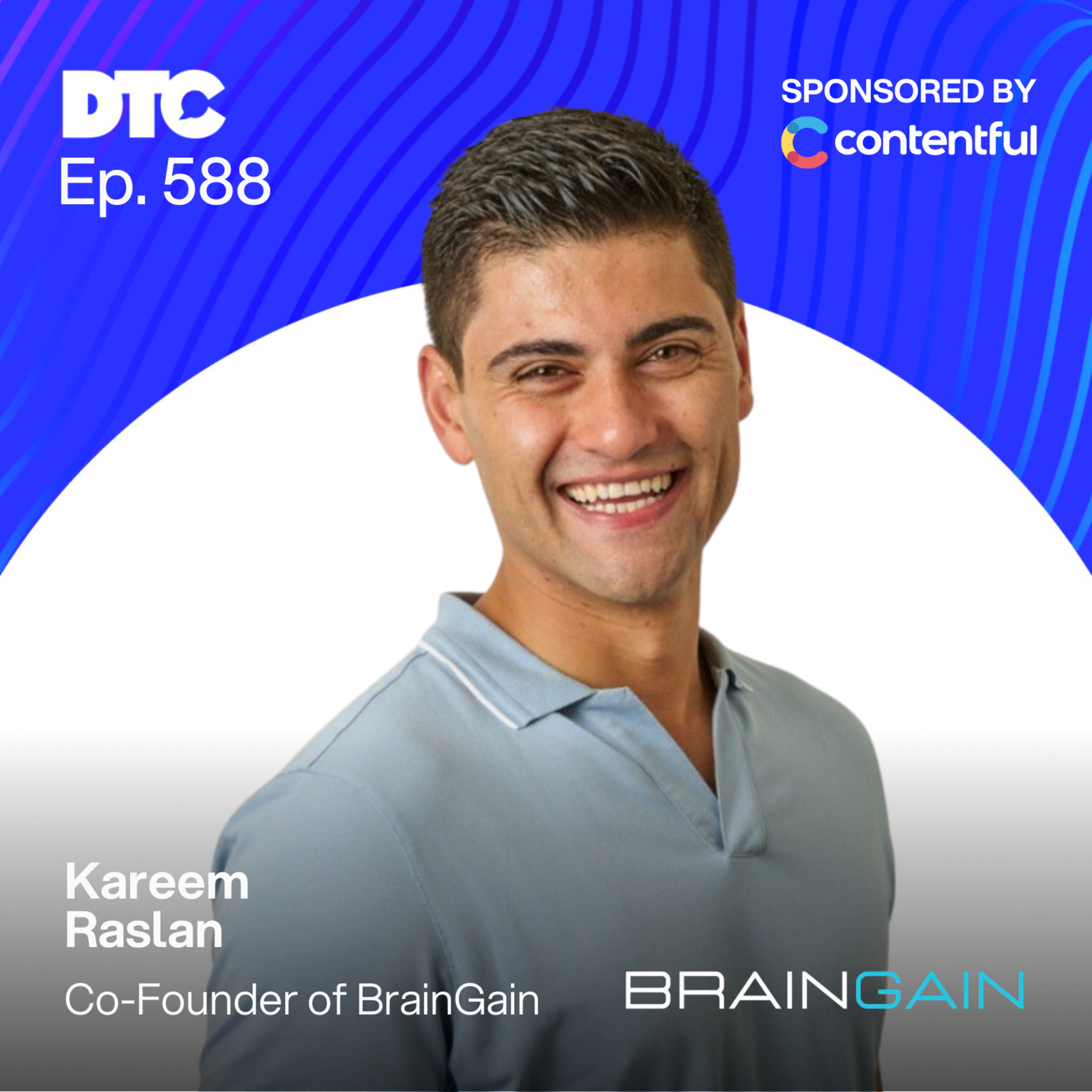
DTC Podcast
Ep 588: How BrainGain Scaled Heavy Home Gym Equipment to 30 Countries (100,000+ Customers)
00:42:25
Loading summary
Transcript53 lines
- [00:00]
A
Hello and welcome to the DTC Podcast. I'm Eric Dick. Today I'm chatting with Kareem Raslan, co founder of Brain Gain, a home fitness brand that went from selling 25 pairs of dumbbells out of a garage during peak Covid to over 100,000 customers across 30 countries in Europe. On the pod we get into the three PL strategies that dramatically cut their fulfillment costs, why they're saying no to TikTok influencers and going all in on YouTube, how a SKU level event economics audit completely changed which products they were pushing and their pricing strategy across Amazon and Shop mus. Kareem's getting ready to bring Brain Gain to the us so we'll talk about what that looks like. Hope you enjoy it and on with the show.
- [00:39]
B
Every single line item, you gotta try and find a way to optimize it. We in Ecom can get quite caught up in the sexy paid media sales, but I've seen and spoken to many people who are sales fantastic but not profitable at the bottom line and I think the reason why we do all of this is at the end of the day to have a profit at the bott probably shouldn't be sharing some of the trade secrets, but one of the best things we did, and I cannot kind of recommend or encourage this strongly enough is.
- [01:21]
A
This episode is brought to you by Contentful marketers. You know that feeling when your creative clicks, when that social post sends engagement through the roof, when your outside of the box campaign hits ROI positive, when a personalized homepage turns prospects into customers? It's utter marketing bliss. Contentful helps you create tailored omnichannel experiences without working overtime. No stress, no limits, only possibilities. Get the feels@contentful.com Karim welcome to the D2C podcast. Super excited to dive in with you here on the home gym equipment trend and Brain Gain, this awesome brand that you've built? Why don't you start us at the beginning? Why did you build your fitness brand?
- [02:06]
B
Absolutely. Look Eric, thanks for having me on the podcast. I've been a keen fan for a long time. So look, let me give you a bit of a whistle stop tour of Brain Gain where we started and look where we are kind of now. So rewind to June 2020, COVID lockdowns, ET cetera. We got served a Facebook ad for adjustable dumbbells and given gyms were closed, knew nothing about importing, selling, marketing et cetera, thought hey, why not take a punt. So my co founder and I both in full time jobs, banking for me, consulting for him Imported our first kind of batch of 25, 25 pairs. Listed them on Facebook Marketplace and within about a day or two they were gone. Placed the next order for 75 dumbbells. Again they came and they were again gone within a couple of days. So for me, Covid was some of the best times where I'd be driving around London dropping dumbbells off to the rich and the poor and the fat and the thin and the healthy and the not so healthy because everyone was just so desperate, desperate for home gym equipment. And yeah, I guess fast forward to today. We sell in the UK and across Europe, 30 different countries. We've had 100,000 different customers in the five years or so since. And yes, just going from strength to strength, which has just been a fantastic and an incredible journey.
- [03:37]
A
I think regular listeners of the podcast will be aware that I've told the story a few times of the only time I've actually bought something from TikTok was during the heart of the pandemic. I got scammed by someone selling adjustable weights and when they were delivered to me, they were literally two baby rattles which just felt like an extra f. You just send me nothing. You send me this gag gift. So I'm glad you didn't do that. Is there a reason that you went directly to having physical goods and selling it? It sounds like you had no problem. It sounds like you. They were flying off the shelf. But so many stories I hear in the E Commerce space start with dropshipping, where things are being shipped from, from Aliexpress or Alibaba. Is there a reason you decided to start physically like product in hand, shipping yourself?
- [04:16]
B
Yeah, look, to be honest with you, Eric, it's a great question because when I speak to a lot of other guys in the E Commerce space, it's again, it's like a big master plan and a five year business idea and this is what we want to do, this, that and the other, to be completely honest with, completely stumbled into it. It was an opportunistic play where we just saw, look, opportunity, let's jump on it and kind of see how it goes. And I think interestingly for us, the goods would come to our houses, we'd unload the trucks, we'd put it into our garages. When someone would want to buy, we'd fill up the car, drive, drop it off and it was just like horrifically painful. But I think kind of like gradually over time, as we kind of felt that lockdowns were lifting, there was a bit of nervousness around, look is just a point in time or is there actually kind of a business here? And I Remember it was 12th April 2021 in the UK, lockdowns were lifted and we had three containers arriving and we were like, what on earth are we going to do with 2 to 3,000 kind of dumbbells? And I think what we found is actually there is a steady state of demand. And I think what I often say to people is, look, whatever the business you're in is, is the market is big and it's broad and if you can even capture 1% of that market, then you've probably got a pretty decent kind of business. And I think what I found kind of now again with the power of hindsight, I think one of the things that's helped us is we deal with big heavy stuff. Your average person kind of on the street, who's thinking about selling E comm, you think light, you think cheap, but obviously that's where the competition is. So the question is just like, where is part of your competitive edge and your differentiator? And unfortunately for us, we went for big and heavy.
- [06:06]
A
Yours was literally your physical ability to lift really heavy things, which was which.
- [06:10]
B
Exactly, exactly.
- [06:12]
A
At what point did you rebrand or at what point did you switch from the brand that you were importing to? Like, okay, we're going to make this brain gain, we're making a website, we're diving in. What was that? Around the container time or when did that happen?
- [06:24]
B
Yeah, so I think probably about there. So I think it got to a stage where, look, it just wasn't kind of sustainable, us hand delivering everything kind of ourselves. And we got to a point where again, we just started to hear a bit about E commerce. Amazon FBA was all the rage in terms of send stock there and without really doing anything, it will kind of sell. So I think for us it was very much a transition from the physical world to then looking at kind of the digital world. And I think what we found quite quickly by using Shopify, where you can spin up a website quite quickly, low cost, starting to run some Google Ads, some meta ads, we were starting to see a pickup in orders coming through online. And I think that's when we were like, well, hold on a second. And I think the beauty of E commerce, especially when you're at the early stages, when you get that Shopify ping of your sale, it's like the best feeling in the world. And I think that's when we then lent into online E com scaling. And yeah, we just found A found an opportunity from there.
- [07:31]
A
Talk to me about the brand. It's a little left field just in that you think of weights. You don't think about your brain always. You think about building your body. Why did you name it brain gain?
- [07:40]
B
Yeah, look great, great question. And I think for us, you know, a big thing that both my co founder and I are keen on is look kind of healthy mind, healthy body. There's absolutely a symbiotic kind of relationship between both and I think particularly kind of during the pandemic it was absolutely prevalent in terms of importance of staying fit and healthy as part of your mental health as well. So that was very much the genesis. And I think over the last couple of years we've all seen kind of, you know, a trend more towards longevity. And within that, the importance of kind of strength training and stuff as you get older, I think is going to be increasingly more important.
- [08:19]
A
As I think about it, it actually reaches you a broader market because as opposed to the people that are really, you know, trying to build the biggest biceps possible and get as as jacked and muscular as possible versus the trend of people realizing, okay, I've got to do some resistance training for the quality of my life, essentially is actually a much broader argument than the people. If it was like bicep gain, it's a very small audience versus the people that want to just healthier with. With resistance training.
- [08:45]
B
I think you're spot on, Eric. And what we found over the years is, you know, when we speak to agencies, they automatically default to. Your target demographic is male bodybuilders and just kind of like people that want to lift very heavy weights. But actually I think what we found is the demographic is much broader. I would say we do skew towards the 20 to 35 year old male predominantly. But I think what we found is actually whether you're a 16 year old who's picking up weights for the first time and doesn't have the confidence to go to a gym, whether you're a young mother who's just given birth, who again kind of feels more comfortable training at home, whether you're living in a bigger house or you're living in a city and you don't want to go to the gym, whether you're a 50 year old male who again doesn't want to be surrounded by guys at the gym as well. I think what we found is actually that the demographic is big and broad and I think for us our play is making working out more accessible for everyone as opposed to just 20 to 35 year old guys who are training for aesthetics and want to have a six pack or an eight pack, whatever the motivations may be.
- [09:59]
A
You mentioned your careers that you and your co founder had before. Solid careers, good jobs. At what point did you decide I got to quit this and go all in?
- [10:09]
B
Great question. And I think to be honest with you, we probably left it a little bit later than we should because I think for us we were very much kind of operating, I like to use the phrase incognito, where we were very inward focused and as we were kind of building and scaling a brand, you kind of take for granted what you've done and what you've built. So I think for us we got to a stage, we had kind of 10 employees, we've got millions of dollars of of sales, tens of thousands of customers. And I think for us we probably took a little bit for granted kind of how big and the scale of kind of where it got to. And I think for both of us looked like the experience of being in the corporate world was looked brilliant in terms of taught us finance or for me especially finance, legal negotiation, a bunch of skills that have helped as we kind of migrated towards the entrepreneurship route. But yeah, look, one of my regrets maybe is not starting sooner. But look, no regrets in the big scheme of things as life is long and we've got plenty of time still to go.
- [11:19]
A
Talk to me about your product roster. It sounds like you started with adjustable non inflatable dumbbells, but you now have stands and benches, you have Olympic range, you have wellness products. Talk to me about your, like when you decided to go away from your hero sku and then maybe how much of your business still is that hero
- [11:36]
B
sk you for us? If I almost like take it back one step further. When we first started we were selling kind of almost like generic, as you say, Alibaba goods that basically every man and their dog who wanted to sell home gym equipment was in that space. And I think what we found was, look, competition was rife between everyone's just selling a homogenous product. It's a race to the bottom. And for us we've always prioritized great customer service, good experience. One of the questions you had earlier around, kind of why holding stock rather than dropshipping Again, I think consumers nowadays, they're very, very hot on next day delivery, maximum two to three days. People do not want to wait two to three weeks for their stuff. So a lot of that helps with conversion. So I think as we've been kind of in the game for a couple of years now, we've purposely moved away from homogenous generic products that anyone can basically buy to actually look working with our suppliers to co create unique products and where we can't co create, actually getting exclusive distribution rights for kind of certain markets. So I think for us, we've been like, very, very strategic and focused to move to unique products as opposed to kind of generic mass markets. And to be honest with you, Eric, part of our own journey last year was, you know, we were like, look, our niche here is selling big, heavy home fitness stuff in general. And I think actually in 2025, we kind of almost went a bit too far. So we were selling gym equipment or dumbbells plus benches plus stands plus kettlebells. But we kind of got a little bit distracted by Reformer. Pilates is an absolutely hot market right now. Let's bring some machines in and sell them. But I think what we found is it was actually quite a big distraction from our core. And I always use the example, Eric, if we were in China in May, seeing some of our suppliers, and I spent about 20 minutes on the factory floor trying to put this thing together and I couldn't figure it out, let alone, you know, our customer service guys who haven't seen the products, how on earth did they do it? So I think what we've actually done is scaled back the SKU stack and just really focused on what we're good at, which is dumbbells and complementary products, and just going kind of deeper on that market rather than trying to sell everything to everyone in every market, on every channel. And we've just really, really kind of focused in on our core.
- [14:24]
A
The number One City of D2C subscribers for our newsletter is London, England. Which is funny because our audience is mostly us. I think we're like almost 50% US in our audience, and the UK is number two. But I feel like everyone who's doing E commerce in the UK is in Shoreditch or is in, you know, East London or something like that. So I want to have more conversations with UK brands because it's a totally different market when it comes to localization, when it comes to diversity, of all the different places you could sell. So obviously you started in London, but then you quickly expanded. Talk to me about expanding across Europe and maybe your. Your first attempt at it, your. Your first pitfall, maybe.
- [15:06]
B
Yeah, yeah. No. So I think for a lot of UK brands, the natural. I mean, look, there's. There's two different schools of thought. Some people go straight into Europe because they're our neighbors. Other people go, okay, us, huge market, huge opportunity. And I guess quite an important differentiator is English language. So I think for us, we took the first path in terms of, look, going to Europe, given kind of locality, proximity. And I think the positive of Europe is it is essentially one big market. You import into Europe, you can sell across Europe was the hypothesis and the thinking. But I think what we found is actually there are certain nuances. So each country in Europe has its own VAT rate sales tax for the US audience. So Germany has a 19% VAT rate. The Nordics, for example, has a 25% VAT rate. So you've got to be like super focused on your unit economics for different products, different channels, different markets. And I think, for example, bureaucracy in Germany, very difficult. Netherlands and Poland, very easy. And I think what we thought initially was you just set your website up, you click a couple of buttons and then you'll just sell and the stuff will fly. But I think what we found is localization is absolutely critical. And I think what we found, for example, in Germany, which is now almost kind of 2x the size of our market in the UK, which kind of blows my mind, ads, whether that's Meta or Google, need to be in local language, website needs to be local language, email marketing needs to be in local language, influencers, pr, customer service, et cetera. So when we first started, we were like, let's try and do all of Europe in one go. But I think what we've found in practice is actually you need to really get to know your market well. And what I would say is there's some nuances and cultural differences depending on the countries. So France, for example. So, you know, in the uk, Boxing Day sales is a huge thing. In France, if you actually put anything about winter sales between 26 December and 1 January, you might actually be in breach of some regulations and cause yourself quite a bit of trouble. So there's these like little nuances. But what I would say is if you can get it right, there is an absolute mountain of opportunity across Europe. So what I would definitely say is there's like some small nuances to navigate, but once you've got it right and you've got the right fulfillment set up and the right tax set up and the right regulatory set up, it's honestly a huge opportunity.
- [18:01]
A
And did you just figure this all out by bumping into it, or did you have a guide or was there a platform or was there anything that kind of helped you optimize for this without having to make the mistake first.
- [18:10]
B
Yeah, honestly Eric, because again, you know, this was all happening and this kind of goes back to your question about like doing this all while you've got a full time job. So we were like super incognito figuring this out in the evenings and weekends kind of etc. And like one of the situation and when I come to bureaucracy because for us we were just like Germany, middle of Europe, lowest tax rate from there uses your base.
- [18:36]
A
Arnold, I guess he's Austrian but like you think you know fit guys in Germany, right?
- [18:40]
B
Exactly, exactly. And there's a huge like fitness expo called Fibo in Cologne every year. And it's definitely kind of part of the culture. But what we found with was our first container came without issues, second container came was stuck at German customs and we basically got told how we're set up is wrong. And at the time I was in Japan on holiday with my wife, you know, 12 hours ahead trying to get this container unblocked from German customs. And long story short, 50% of people told us how a setup is perfect, 50% said how your setup is 100% wrong. So what we ended up doing was Germany to Netherlands, custom cleared, moved from Netherlands back to Germany and fulfilled. So I would kind of for any German listeners apologies to kind of say this, but Germany is a difficult market bureaucratically to navigate.
- [19:37]
A
You said you had more success earlier on with Poland and Netherlands. So is that sort of the playbook in entering Europe is maybe start by entering places that have less red tape and build up towards a market like Germany.
- [19:50]
B
What kind of transpires is a lot of people use like the Netherlands or Poland as their base and then from there set up a 3 PL and you know, I think we've again been very fortunate with some, some very good kind of three PL relationships that I'd recommend to anyone and everyone who's looking at kind of Europe, so Netherlands, Poland and then from there fulfilled to the rest of Europe. You will make your life lives much easier, much simpler than kind of gunning for the logical choice which is which is Germany.
- [20:21]
A
So how many languages now and funnels and landing pages are you maintaining for your ad campaigns?
- [20:28]
B
What is slightly helpful for us because again we've like super narrowed down the SKU count in Europe especially. So we've probably got about 10 SKUs at the moment that we're pushing kind of across Europe. So for us what we've done is really focused on Germany, France, Spain, Italy as our Four big markets. And what we're doing is once we feel like we've built critical mass, we'll then move on to the next one. And I think interestingly, we're hearing a lot about Poland as a growing market. Right. With great affluence as well. So that's kind of number five that we're thinking about targeting. But to be honest with you Eric, where we are as a business is actually looking back kind of stateside because I think for us back to that kind of crossroads decision we made about two years ago, I think we're now in the position which is, well, hey, look, we figured out a playbook for the product in Europe actually, why not set up the operation in the States as well? And I think there's a lot about the demographics there that helps. So yeah, I think for us as a business, even though we're five years in, there is still some of those strategic questions which is keep going deep into new, maybe fringe markets in Europe or actually go and try and crack America. And I think that's kind of where we are at the moment in terms of back end of 2026. Where do we want to kind of place our next chips?
- [21:57]
A
So from a marketing standpoint, what's driving the business today? Mainly meta ads.
- [22:01]
B
Yeah. So I think for us Eric, we're actually kind of 50% Amazon, 50% Shopify. And I think what we've been doing is being very, very strategic with our product portfolio, product mix and being very intentional with which products on which channels and how do you kind of get the ecosystem to kind of flow. So on the Shopify side, like Google for us is our big driver. 70, 80% of our paid spend is on Google and then the other 20% is being invested kind of meta, predominantly kind of trying to hoover up the warm audiences from Google. So I think what we've been doing is kind of investing very, very heavily into look pure play bottom of funnel, people already in market and gradually we're just going slightly further up the funnel in our core markets. And I think one aspect that we're seeing quite good results is because again we're quite a considered purchase people are unlikely to spend 7, €800 just kind of off the bat. So for us YouTube is a really, really strong channel. So it's affiliate strategy on YouTube that helps to build that social proof that we found like has a huge impact in terms of conversion and part of our strategy when we go into different markets. So for us, Amazon is more of the volume play, the more mass market Cheaper products. And then Shopify is typically our kind of more premium, higher value product as well.
- [23:41]
A
And it makes sense on YouTube being the awareness piece of the Google Funnel in a way. Right. Bringing new people into that, which you can then kind of harvest on the keyword advertising or the, or the Google, Google advertising a little bit more. Talk to me about the affiliate strategy. Is that just about going to find fitness influencers in the markets that you're trying to enter and making good deals with them?
- [24:02]
B
Yeah, so I think, I think this is still a relatively like, nascent strategy that we're kind of employing at the moment, which is, look, finding people within the space on YouTube with 5,000 plus followers who are working out and training at home. Because I think what we found is like, you know, sending our products to guys who work out in the gym. It's absolutely not our kind of target demographic. And I think what we've found, and again, like one of the, one of the highest impact things we've done this year, which we'd never done before, and it sounds super outdated, but it's sending your customers a survey based on their user journey. And what we found of those that responded, you know, 40, 50% said YouTube was a key part of their strategy. And I think what we found, you know, we do do stuff on organic social, but I think again, for us, you know, we're not, we're not striving for virality, we're not striving for vanity metrics of likes and shares and comments and whatever. For us it's a, it's a, it's a shop front in terms of validation of are we, are we going to send you an inflatable pair of dumbbells or are we actually going to send you a proper pair of dumbbells here? And I think for us that's what organic is. So for us, YouTube is evergreen. Views build up over time. There's social proof, you see comments. Whereas I think TikTok, Instagram, Snapchat, whatever is a better channel for lower AOV, slightly more impulsive kind of purchases. So I think again, whilst the world is all talking about virality and TikTok shop and all this, this stuff, we've made a very conscious decision to say, you know, where we are working with affiliates. It's very specifically people with a YouTube presence as opposed to Instagram or TikTok. And I think we've had people with, you know, 500,000 followers on TikTok who are like, you know, absolutely want to promote your product. So we've taken a conscious decision to say, look, no, that's not where we're focused on, which has been quite difficult. And I think some of these influencers have probably found it quite odd that we're declining their requests as well.
- [26:16]
A
But being able to go deep on one platform and YouTube is just so unbelievably massive. There's no end to the growth that you could achieve there with that strategy. And I think I've heard of that more and more these days of people just figuring out rather than scouting their efforts across a lot of different areas, like really understanding where their best customers are and going deep on those platforms.
- [26:34]
B
Sounds like that's what you've done, honestly. And it's been a game changer. And look, there's still more. Still more to go. But I think like I said last year, we were trying to be everywhere in the uk we were on ebay, we were on. On Buy, we were on Groupon, we were on all sorts of stuff. And we just said, look, Shopify and Amazon, that's our two markets, our two channels. We've got the funnel, we've got the products. Just pure play. Focus on what we're good at and not get distracted by the. I think Alex Hormozy talks about the woman in the red dress. You know, steer clear of the woman in the red dress.
- [27:10]
A
We don't talk about 3 PL a lot. And I think it's an interesting one with you guys because you're. The central characteristic of your product is that it's big and heavy, as heavy as things can be for the size that they are in a lot of ways. So talk to me. You said, I think you guys have spent a lot of like energy, you know, maximizing your three PR relationships. I think you said that three PLs were your baby in the pre interview. So what's the most underrated factor when it comes to choosing a European 3PL?
- [27:35]
B
Yeah, look, Eric, I'm a little bit of a nerd when it comes to some of the unit economics, different pieces of the pie, logistics, supply chain. Because I do think, look, we in E Comm can get quite caught up in the sexy paid media sales. But I've seen and spoken to many people who are sales fantastic but not profitable at the bottom line. And I think, look, the reason why we do all of this is at the end of the day to have a profit at the bottom line. And I think especially when it comes to the European markets, kind of your fulfillment strategy, super, super critical. So I think for us, we started in the Netherlands and we were shipping out with UPS primarily and what we found was this peak just now, I'm going to take you down a little bit of a traumatic fulfillment experience but I think it is helpful, helpful just for others kind of going down a similar journey. And you know, we were fulfilling EU wide with ups from this 3pl who had got like an absolutely brilliant rate. But in peak periods, which is from 27th October to 15th January, which is wild, they added on an extra like 15 to €20 peak surcharge, which for us it was like, well, we're better off not selling anything at all than continuing. So we were informed on the 25th of October that this was going to happen. So we got two days notice and we're like what the hell. But the silver lining, we then got on the phone to a couple of other 3PL partners that we know and by chance we found a 3PL on the polish border that dispatches or injects straight into Germany. So rather than Netherlands to Germany, three to four days, I don't know, €10 a package. We then found this warehouse which was next day delivery for €6 a package. So like for us, what was a very stressful and traumatic kind of experience, you know, there was actually a silver lining out of it which we found a warehouse with better service, cheaper rates, very flexible. So what I would say is, I don't know if, if DHL with a 3 PL in Netherlands haven't been able to give you a great service. Don't rule that out because each 3 PL has its own kind of strategic areas, focus and priorities. So I think, look, having tried and tested quite a few, we finally found a good number that work and work really well. And I do always say, eric, for me a3PL needs to be in the middle of nowhere, a bit rundown, like big guys doing heavy stuff. If you turn up to a 3 PL and it's really shiny and new and it's got loads of automation, you're probably paying too much. Say look, I think there's real value in getting that bit right and I think quite often we can just look at the headline rate. Whereas actually some of these three PLs are highs and numbers in fuel surcharges and additional handling and residential charges, blah, blah. So I think like one of the most powerful things to do as well is like check your invoices because if there's stuff that doesn't quite make sense, there's probably something kind of hiding there that you should absolutely challenge.
- [30:59]
A
So Finding the right partner is important. And then within, even just to go deeper, because we never do. Are there any specific, like, ops optimizations within your partner that you found have saved you real money?
- [31:10]
B
Yeah. So look, I think what I would say is, like, every single line item, you got to try and find a way to optimize it. So, you know, for example, for us, our supplier was sending our pallets in the container mix sku. So what transpired when it would arrive, the warehouse would say, nope, needs to be single pallet, single sku. And they were breaking apart every single pallet and then putting it back together. That was costing us, I don't know, a thousand euros. By making that small change, our unloading fees are now €200. So there's like a bunch of different things almost like on every single line item. And for us, for example, anything above 25 kilos kicks in, like massive additional handling charges. So for us, rather than, you know, whatever, two 45 kilo boxes, break it down into four 22 and a half kilo boxes and suddenly your fulfillment costs kind of plummet. Probably shouldn't be sharing some of the, some of the trade secrets, but I think there's always ways that you can kind of get creative to start chipping away at your cogs, your landed costs, and a lot of your fulfillment stuff. And what I always say is everything is negotiable, so it's always worth trying.
- [32:31]
A
I think a lot of brands did face that this year, maybe for the first time, really having to go deep, you know, looking at tariffs and, and it's always amazing when you make changes because of necessity that end up being so much better for your business in the long run. Right. Like necessity is the mother of invention.
- [32:47]
B
Yeah. And I think with a lot of, like, U.S. companies and brands I've spoken to, that's exactly the message I've been hearing, which is, you know, when the times were good, we wouldn't really worry about this stuff. But because of tariffs, we've had to go deep. We're looking at what makes up cogs, we're looking at payment terms, we're looking at our overhead, our operating expenses. We're looking at cac, we're looking at fulfillment, we're looking at, I don't know, those SaaS costs, the Shopify apps that have been accruing. So look, I think it is in a weird way, the silver lining is, I think the way the world is, and it's becoming more difficult and inflation and, and CPCs are rising on Meta and Google and competition is higher than it's ever been. I think it's just encouraged made people need to do that extra level of kind of just scrubbing the numbers down, finding the losers, either optimizing and killing, finding the winners and just absolutely double down and kind of go after them.
- [33:47]
A
It seems like you've got a really good handle on your business's numbers top to bottom. So I'm curious how that has sort of equated into your approach to actually fig you're sealing customer acquisition cost. How do you go about figuring the CAC you're willing to work at?
- [34:03]
B
To be honest, Eric, we've also gone on our own kind of little journey of this where again, probably up until the middle of last year, we were just chasing revenue and chasing opportunity. And when those shopify things are coming, it was all great. And I think one of our biggest learnings was I was doing all the bookkeeping myself and we were doing everything on a cash basis instead of accrual. So for me it was, you know, the numbers are looking great, but in practice we were just like deferring payments. Deferring payments. So one of the best things we did, and I cannot kind of recommend or encourage this strongly enough, is outsource or get someone to do your numbers kind of as soon as possible. It's not interesting, it's not fun, it's not exotic, it's not sexy. But even if it's just like a bookkeeper who's doing it all, keeping it all up to date, because that's the only way you can get a super clear view on month on month how things are going. And then I think the more granular level that we did, Eric, was look kind of which we call our skew by skew unit economics, which is literally every single product in every single geography on every single channel. What is between price, vat, cogs, fulfillment, et cetera to back solve to a what is the ceiling CAC we can have? And I think what we found was actually we were spending money on our 23.5kg where we were getting a lot of sales. So prior to doing that analysis we were like, this is a winner. Keep spending more, keep selling more, keep buying more. But then when we did the unit economics, we were like, hold on a second, we're actually break even or maybe even slightly losing money every time we sell to then being like, well this product, the 41s, we're not spending anything. Move all your marketing spend over there. So I think unless you've done that exercise of okay, fine, like where do I have the potential to spend? It's very different. You're kind of operating blind. And I think especially when you're working with third party partners in Google or Meta or Amazon, unless you can give them a very clear scope, which is, hey, look, our ceiling catcare is £80. You cannot go above that. You kind of implement some control and structure with those guys as well because again, they can default to look how great your sales are, look how great your ROAS is, but they don't actually look at the profitability of that. It's all about scale and sales.
- [36:50]
A
And so at this point when it comes to top of funnel, are you focused mainly on your Hero product? Maybe even just the adjustable dumbbells? Adjustable kettlebells? Are those the ones that get featured on the ads the most?
- [37:02]
B
Yeah, exactly. So we've just gone like pure play focus and for us, our kind of Hero product is the 41.5kg dumbbell. And for me it's mad like, you know, I don't know, like we've got people asking us for 50 kg and 60 kg kind of dumbbells. But I think for us off the back of that exercise we were like, this is the product that makes the most kind of opportunity margin and it's the most kind of differentiable. So we do push that look very heavily. There is a slightly different strategy on Amazon because again, it's price driven, value driven. But yeah, I think on Meta and Google we're very much pushing our kind of premium Hero product.
- [37:48]
A
Can you walk us through the rationale behind your pricing of premium SKUs cheaper on your site and higher on Amazon?
- [37:54]
B
Yeah. So look, I think what we found, and I mean I say this to a lot of my friends that are outside of E Comm, is if you're ever going to buy anything from Amazon, shop around and try and find the company's own website. Because what you'll actually find is a large number of people will sell cheaper on their website Shopify than they do on kind of Amazon. So I think what we found, and again we've been doing a bit of like testing and experimentation here, which is, you know, we historically had same price Shopify and Amazon and tracking the data, what's the percentage of this SKU sold on Amazon vs Shopify? And then we started to do some price testing and what we actually found was the split between kind of Shopify and Amazon started to move in Shopify's favor. So I think again it's back to like which product, which channel what's the strategy? Because I think for us like Amazon is awesome and we're like, you know, bullish Amazon. And Amazon is fantastic, but I think it's not fantastic for everything. And again, you need to be very disciplined and intentional with your kind of purpose for each product, each channel and how your pricing then kind of fits into it as well.
- [39:11]
A
Very cool. So you've sold over a hundred thousand units in, in Europe. You're thinking about conquering America like the Beatles did. I'm curious. I think, I think we'll have to book another podcast once you've done that, maybe later in the year like or, or you know, maybe next year even once you. Because I think that would be such an interesting thing for our EU listeners to think about how to think about kind of going back into the US to maybe end the podcast. Give me a little bit about your vision and how you're thinking about conquering America.
- [39:38]
B
I think the reason, the reason, Eric, I'm kind of bullish is there's a lot of businesses that I've met who are in the States that have to their credit made a huge success that I don't think would work in the UK or Europe. So I had a cool, I mean like you'd probably be quite an interesting person to have on the podcast, but this guy sells supplements for chickens and he is more than an eight figure business and doing very, very kind of well. So I think it probably, Eric, comes back down to my. The market is big and the market is broad and I think particularly for our product set, I think the US is a great place and I'm going to show my lack of knowledge about the US but part of the questions and the thinking we're having now is again, because it's like big, heavy stuff. Do you go to the west coast and set up camp there and then fulfill or do you go somewhere in the middle but it's a longer transit time through the Panama Canal up to, I don't know, Houston or somewhere like that. Or do you go kind of east coast and then you're kind of that. So I think, look, from my perspective, if anyone has advice about shipping heavy stuff across the US I'm absolutely open to it. But look, I think where we are now, Eric, is for Europe. We went in blind. We were just figuring it out as we were going along. I think what I'm a huge believer of now is, look, the power of the network and asking for help and support and guidance. Look, I'm sure when the time comes, I'll no doubt be picking your brains and some of your network on best practices and pitfalls to try and avoid.
- [41:23]
A
I love that. And I want anyone in our audience who has experience with this to reach out to Karim. That would be an awesome synergistic aspect of this podcast. Where do you recommend people find you if they want to follow along with your journey or reach out?
- [41:36]
B
Yeah, so I'd say LinkedIn is probably the best place. I'm personally on an Instagram TikTok detox, so at the moment my fix is LinkedIn. So yeah, trying to be more active there. So yeah, LinkedIn is probably the best channel to connect.
- [41:54]
A
Nice. Well, fantastic. Thanks for taking the time. It's been really valuable for our audience and great to connect as always.
- [42:00]
B
Yeah, no, likewise Eric, thanks for having me on.
- [42:09]
A
Thanks so much for listening to today's episode. If you're not a subscriber to our newsletter, you can do that right now at directtoconsumeralloneword Co. I'm Eric Dick and this has been the DTC podcast guest. We'll see you next time.