← DTC Podcast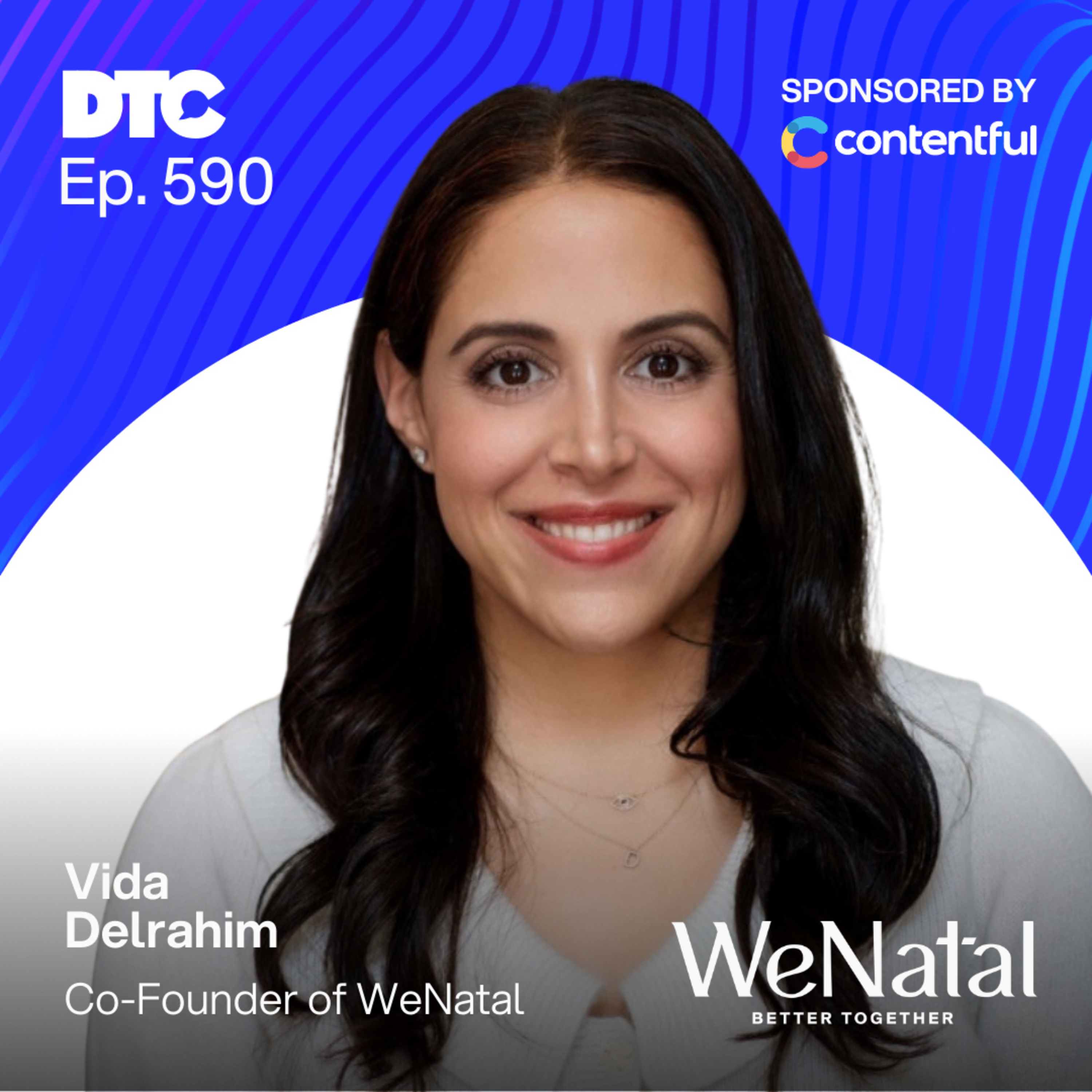
DTC Podcast
Ep 590: How WeNatal Grew to 30,000 Families With $0 Paid Ads (Bootstrapped Supplement DTC)
00:37:22
Loading summary
Transcript44 lines
- [00:00]
A
Our darkest moment turned into our life's mission. You sometimes don't see the why when it's happening to you. But something great can come out of the darkest moments of your life. And we are here as living proof. We didn't do any paid media. It wasn't about fancy seating boxes. It wasn't about like, you know, the girl with like 2 million followers. It was the doctors, the doulas, the midwives, the people who are experts in their field, word of mouth, through very trusted practitioners. Our biggest PSA in creating Wenatal was that you have a couple months, both partners, to step up so you can show up knowing you put your best foot forward.
- [00:47]
B
This episode is brought to you by Contentful Marketers. You know that feeling when your creative clicks, when that social post sends engagement through the roof, when your outside of the box campaign hits ROI positive, when a personalized homepage turns prospects into customers, Its utter marketing bliss. Contentful helps you create tailored omnichannel experiences without working overtime. No stress, no limits, only possibilities. Get the feels@contentful.com Vida welcome to the DTC podcast. I'm really excited to connect again and rediscuss Wenatal and your vision there. How you doing?
- [01:27]
A
Great, thanks for having me. Excited to be here.
- [01:30]
B
Okay, so let's take us back to the beginning. Why did you create wenatal?
- [01:34]
A
It's a great question and one I never actually saw on my own roadmap. And so what happened was Ronit and I met in our young, early single days in our corporate careers at Nike. I was a senior marketing director. I grew up there. I was there from an intern. I spent 20 years at Nike perfecting like world class events for athletes, marathons, races, and thinking through like every detail to make these athletes better and stronger. And the irony is when me and my husband wanted to start trying for a baby, we literally skipped all the prep that I knew was like appropriate for anyone to do anything. And we literally just went to like, we're young, we're healthy, we should just try and fast forward. I did get pregnant, actually, around the time my best friend Ronit was having her first child. I was past the first trimester. When you're told that it's safe. I told everybody, went in for a routine checkup and I noticed my OB GYN's face just drop and the room went silent and I was waiting to hear a heartbeat. And I saw him and sadly I heard these words that like no parent to be ever wants to hear. And he just looked at me and said, I'm so sorry. There's no heartbeat. And I. I mean, the gut punch and the devastation was so real. And really what he told me was, it's so common. Just keep trying. And I remember sobbing, asking for, like, could it be cause of this? Could it be my work, my stress, the coffee, too much coffee. Like, I ran through the gamut. And he just, like, said no to everything was loving, yet dismissive. And he ushered me back through this waiting room of all these glowing bellies, and I was just sent on my way. And luckily for me, Ronit was like, the first person my best friend I went through. She had just had a baby girl. So forget the fact that it, like, shattered all my dreams of having a kid with my best friend and having maternity leave together and, like, doing all the things. She left Nike to work alongside Dr. Mark Hyman, who's amazing big name in functional medicine. And she encouraged me to go on beyond what was just showing up as normal, my normal labs. My doctor kept assuring me, you know, you're fine, you're fine. I dug deeper because of her. I found out I have Hashimoto's, which is a thyroid disorder. I. I fixed up my eating, I cleaned, added supplementation, added some medication. I literally did all the things and went on to have my healthy baby girl, Dalia, who is now 8. And I thought the nightmare was over. I figured she taught me what I need to know. I perfected my routine. Fast forward to early 2020. We were trying at the same time for our second children. And I went in for another routine checkup, only to get that same devastating no heartbeat. And stopped dead in my tracks for the second time, but was again assured that this stuff just happens and I didn't know better. So I went along with it. The only thing that changed this time is a week later, Roni called me with the same outcome. So there we were, two best friends who had actually done all the things we had done, all the things that people tell us. We thought we had this perfect care, prenatal. And we were, you know, two losses, two best friends, zero satisfying answers. There was literally nothing. And she wasn't willing to accept that. She's like, I'm not going to try again unless you tell me there's something I could do differently. And so she went into the research rabbit hole. She started digging. And Eric, I remember the day she called me when she uncovered all this research, and she said, did you know men are 50% of fertility outcomes and men are 50% of miscarriages and pregnancy loss? And it's like so intuitive. It's the biggest, like, duh, of course we know it takes two to make a baby, but yet I was there with two losses. My husband was in the room every single time. No one even turned to him to ask him a single question. And I know through all the self blame and the guilt and the doubt that I had that it didn't even dawn on me that a single thing that he did could have caused this. And so while it is so intuitive, it was mind blowing for us. And additionally, the research showed that antioxidants, high dose antioxidants, could four to five times improve the likelihood of men helping their partners conceive and have a healthy pregnancy. And so those two pieces of research basically changed our lives. We were like, how could it be that no one's talking about this? How could it be that no men's prenatal exist on the marketplace? As all founders say, there's a gap in the marketplace. It was a personal journey and that stopped us down our track. We literally, our first concept was a men's prenatal because no one was talking about this. And then when we pulled back the covers of the women's space, we found that they all fell in two camps. Either super expensive, lot of capsules, hard consumer experience, and you had to get it like through a doctor's office or super accessible, maybe something you could get at a convenient or a drugstore. But the dosages were too low to make a difference. The forms of the ingredients were suboptimal. And then there was a whole paragraph of like additives, fillers, other junk that should not be in your vitamins. And. And we quickly realized, okay, we need to reinvent this space. We actually need to make this a great experience for both partners. And given our background, treat fertility like a team sport. One in which we know like Eric, if you decided to run a marathon, you wouldn't sign up today and run tomorrow. You would get the gear, you would get a coach, a training plan, find the right shoes, find the right apparel. You would do the things so you show up on race day and don't fall flat. And so our biggest PSA in creating Wenatal was that you have a couple months, both partners, to step up and put your best foot forward. So you. There's no guarantees in life, but you can show up with the best outcome and show up knowing you put your best foot forward. And so the impetus behind wenatal was to create the best supplements that are clean, that are third party tested, which is A whole third party does it. A whole side note. Vitamins are the wild, wild west and there is no regulation. And also empower people with resources, education and empowerment, which we weren't given. We found it very dismissive. We found fertility to be this black box of misinformation.
- [07:50]
B
Totally.
- [07:50]
A
And that's essentially. That was our why. And we haven't looked back since.
- [07:54]
B
Well, thank you for sharing that. I share, you know, some challenges in that space and an incredibly psychologically, you know, traumatizing a little bit that powerlessness feeling and especially as. As the guy as well. It's. It's also interesting. I was recently reading about saunas, cold plunges, and how we just assumed that they're good for everyone. But in. But another study came out and really drilled in on women and saw in this one particular study that cold plunges were maybe not as good. There was the shocking aspect of it was bad for some reasons, but it's just sort of like a lot of medicine is done with, like, men in mind, and women are kind of an afterthought in some ways. I've heard that sentiment across the medical system. So it's interesting that what you've done is kind of flipped it on its head in a way where we put all this focus on women, but. But kind of let men off the hook in a lot of ways. I think this is changing. My friend just got a pair of underwear for his sauna that he wears that has, like, cooler packs in it to save for, you know, to like. That's the first product of its kind I've kind of seen in that space.
- [08:53]
A
Well, you're absolutely right. You know, at Nike, we used to say brands shrink it and pink it. There was like, no thought for the woman except, like, the color and making it smaller. Our biochemistry is different. Our anatomy is different. Everything about us is different. Yet you're right, the research is not there. And then for. You're right, the irony is that infertility, the. The sole focus is on the woman. What she ate, what she drank, how she slept, you know, her physiology. But yet, literally, the male is, like, in most counts, not even checked until maybe a year of struggling or more, maybe if you're IVF. But also the stats are alarming that 25% of couples going through assisted reproductive technology, the male partner isn't even checked, which could take a whole nother podcast to say. Okay, so you're putting the wife or the partner through medicine, through expensive procedures, painful procedures. It's not 100% foolproof. And you're not even like, looking at the male to see if potentially the other 50% could be optimized. So there is so much education that needs to happen in this world, but we are seeing the tides flip a little bit. We are seeing male fertility on the forefront. I don't know if you saw. There's now like, people racing people's sperm against each other, and it's like sperm.
- [10:05]
B
Oh, I did not see sperm racers.
- [10:06]
A
I mean, I think it's fun because for men, it makes it competitive. I think for a long time, sperm was like, shameful, and men didn't want to do these tests, but now it's so accessible. It's a barometer of your overall health. It is nothing other than like blood work. And you can check your sperm or semen to actually just check biomarkers of your longevity, your health. And what's so cool for men is you guys are the superheroes in this equation because you're generating sperm every second of the day, 1500 sperm a second. And so in about 72 days, about three months, we, with diet, with lifestyle, with these changes, you could have a completely different situation than what you started with.
- [10:45]
B
I want to dive in your go to market a little bit. But talk to me a little bit about the, the state of fertility in the world. My, my sense, like, almost everyone I know having kids a little bit later, but most of the people I know are, are going through different, you know, being very conscious of the fertility. Maybe they're, they're. They're using IVF or. But I think it was taken for granted that you'd just be able to have a kid, you know, and I think there's so many people that it's a challeng days.
- [11:11]
A
Absolutely. So when we, in 2020, when we incepted wenatal, one in eight couples were dealing with infertility. And that's a global issue. It is not something in certain states, in certain countries and so certain socioeconomic status. This is a global issue that's happening. And when a few short years later, we launched two years later, it's now one in six is what the American Health Organization was saying. That is like, literally, we all know somebody. And, and what you realize is it's multifaceted, of course, but our birth rates are dropping below our replacement rate. So between every relationship, if you consider the replacement rate is 2.1. And most countries now are falling below 2.1 with like South Korea 0.8. The US is about 1.7. We are not making more humans. So if you care about, you know, the human population, we could be an endangered species. We are not growing at the rate. And there's some alarming articles saying that, like, sperm can be at zero by 2045, which is around the corner. And so it is a global fertility crisis. We're seeing miscarriages on the rise, we're seeing erectile dysfunction on the rise, we're seeing all these issues. And of course, the whole assisted reproductive technology world is booming. It's a multibillion dollar organization and one that people need to be educated and empowered and not just a crutch to say, like, oh, I tried, let's go to this. There are underlying issues. And that's why we actually just had a panel with Dr. Natalie Crawford, and she said so beautifully that health and fertility are hand in hand. It is one biomarker of your health. And so it's not okay. Just like, oh, when we want to have kids, let's turn on the fertility check mark. These are things that we all should be doing. Nourishing ourselves, movement, prioritizing sleep, cleaning your home of toxins. All these things are parameters for, call it longevity, call it overall wellness and fertility. And so we'd like to like people to understand that it's important no matter what stage your life you're in. And if you're ever wanting to consider children, this problem of this toxic soup we're living in is sadly helping the world get more infertile. And we need to do something about it.
- [13:19]
B
Entrepreneurs always do better when they have, like, a real challenge they're cracking. When yours is like the continuation of the species, it must be extra motivating, extra.
- [13:27]
A
And listen, like, ours came from heartbreak and loss. And I literally was just telling a friend, like, while that was the most devastating moment of my life, I'm so grateful for those two little souls that came into me and Ronit's world because if they didn't come for that short time and if we didn't have those losses a week apart, we may Never have created WeNATAL. And oh, by the way, we're over 30,000 families that we've supported to becoming parents. We've gone baby shower invites and ultrasound pictures and literally our darkest moment turned into our life's mission. And I share that. Only to say that, like, you sometimes don't see the why when it's happening to you. You sometimes really question and doubt. But something great can come out of the darkest moments of your life. And we are here as living proof. And we have now, to your point, Helped thousands of tens of thousands of babies being born, which the reason we're in this global fertility crisis. A lot of good reasons. You know, women have entered the workforce, we're going to schooling and we're choosing to have kids later in life. But we're talking about the people who want to have kids who are struggling. And if we can help those populations, we can help overall, you know, yeah, it sounds dire, but the whole world population is at risk and help marriages too.
- [14:43]
B
It can be such a stressful time, such a stressful thing to go through and just being able to take it on as a team, you know, putting the we in prenatal, I think is such a, such a valu thing as well, which is good for your body and your physiology. But it tackling the challenge together and being accountable together is going to help the relationship going into this situation as well.
- [15:04]
A
Couldn't agree more. It makes you more empowered, you're doing it together and it strengthens the relationship. And honestly, what I wish I had, because during the miscarriages, it definitely strains a relationship. It definitely the sadness of it and the blame and the bitterness and the anger, all I went through, all the emotions, it could have been such a more empowering chance to look under the hood, improve our health, improve our lives. And instead it was met with uncertainty and sadness.
- [15:30]
B
Okay, you're bent on making this product and making it better than what you found with the competitors. Talk to me a little bit about compiling the product and what went into your mvp, I guess.
- [15:41]
A
Yeah, so the initial concept was the prenatal for her and him. We spent two years assembling the best medical board possible because again, we were two moms from Nike. We did not see this as like we're going to do this alone. We assembled the best medical board that includes Dr. Mark Hyman, Kelly Levesque, Bridget Tigemeyer. I mean, really well known names in the functional medicine space and the medicine fertility space. They spent well. We thought we'd come to market, which I'm sure a lot of founders can resonate with. We thought, okay, well, like it'll take a few months, we'll formulate and we'll get going. Took two years to not only formulate, but find the right manufacturer that would actually produce it in small batches without the Addison fillers. Like, we were adamant about what we wanted to happen. Get the density of like eight capsules into three. And so what I think hopefully a lot of founders can resonate with is that you think you're launching next month and Next month. But that that situation took over a year for us. So we assembled the medical board. They compiled research of hundreds of clinical studies, research articles of the best dosages for men and for women and the right forms, the right ingredients. And oh by the way, we share all of that on our website. So if there's ever like why do you have this much vitamin D and why is it in this form? We share it. We cite the research articles like we wanted to build this from a true place of integrity. What we wanted to take what we wish we had. And so after building the medical board and then doing the formulation, then came finding the manufacturer which took a long time because a lot of people want to produce cheaply, which means adding the stuff to make it go through the machines easier. And we weren't willing to do that. And so it took a lot of trial and error to find a manufacturer to work with us. And it's operationally a nightmare. We do produce in small batches. Our expiration dates are not hundreds of years, they're two years. Like we really took the burden of it so that our consumer could have the best product. And let me be honest, like I see why big brands don't do it. I now see why VC backed companies just wanna produce things quickly, easily reduce your margins and we are bootstrapped. We literally are doing this without the concern about the margins. Cause we want to bring the best, highest quality product to life without that pressure. And so we might be growing more sustainably but we're so proud of the product and that's something we'll never sacrifice.
- [18:06]
B
What have been the major growth levers for the business?
- [18:09]
A
Yeah, and that's what's fun to talk about because we are probably the non traditional marketers like I think most of our friends with brands right now have like rely heavily on paid media. We didn't do any paid media. We literally three and a half years in, dabbled with some, didn't learn much and turned it back off. We're like, we grew this thing from a root cause of it started with our medical board. The Dr. Mark Hyman's of the world gave us a jump out the gate because people who love and trusted these medical professionals knew that just their backing on it meant they're in. And so we literally started with him. Kelly Levesque, Bridget Tiggemeier we started with our medical board and grew organically believe it or not. Ronit and I would go into OB GYN's offices and educate them on why we're different, why we needle exists why men need to be on a prenatal. And by the way, most doctors get very little to no education on nutrition. So they were grateful and receptive. We have some of the biggest fertility doctors in LA now recommending us. And so our influencer, if you will, it wasn't about fancy seating boxes, it wasn't about like you know, the girl with like 2 million followers. It was the doctors, the doulas, the midwives, the people who are experts in their field. And so we penetrated that world first and it was word of mouth and it was through very trusted practitioners. Similar to this, Ronit and I went on podcasts and something that was actually the most interesting, that was never intentionally made for marketing. Even though we were both marketers coming from one of the best marketing brands, Nike, we always knew that like most medicine, pharmaceuticals and vitamins came in very sterile looking bottles. What I was doing when Roni told me what to take for my pregnancy journey, I would hide them in the cabinet and then I would forget to take them. And they were all ugly, they were like white, ugly plastic bottles. And so we did want to reinvent the space and say like, hey, maybe if it's like nice enough and part of your lifestyle, you might leave it out in the kitchen or your bathroom. And actually a vitamin is only as good as if you're going to take it and make consistency out of it. So from the start Ronit and I knew that like branding was super important to us. We work with one of the best brand designers. We created these beautiful glass jars and a refill system and organically what happened when people started ordering it on day one they got this box with the her and the him and they just started posting because it was a category disruptor. It was a vitamin that probably looked more like a beauty product or like a perfume or a skin lotion. It was so beautiful. The logo, the coloring and people naturally shared in a world where like everyone's pay to play these days, you know, so it was organic through the packaging and that became probably one of the biggest disruptors. It was through experts in the space, not your typical influencers. And we didn't pay a single person. It was all through relationships.
- [21:07]
B
And you're selling in maybe not completely, but two times as much as someone just marketing to women in a way, right? Like because I bet most often you're having it bought by for the male and the female side. And so you're actually I always think of like the shampoo instructions, wash, rinse and then some marketing Genius came up with Repeat, which maybe doubled, which maybe doubled their sales as well, which is, you guys have a much better reason for it. But it must help with AOV when you're selling to two people rather than just one.
- [21:36]
A
And when we launched, we're like, okay, this is a new category. Will men even be into this? And like 50% of our sales to this day are still the together kit, which is men and women doing this together. And so, and we have 20% men doing it, you know, alone. And also it is so empowering to see like this conversation with men come full circle. Men are like eager to like, see what they like. I always said the men are well intentioned. There just wasn't the focus on them. There was really no guidance. And now this is a low hanging, tangible thing that they can do to support their partners in this huge moment. And it's not just the genetics you're giving your kid to get through like a healthy pregnancy. The genetics you give them are their lifelong health. And so if we took a little bit of that responsibility of this golden time frame, like, of course we should all do whatever we can. So yes, it definitely helps the AOV and the long term value. But what we're also seeing is that I'm sure you know, Eric, our food system is just depleted, even if you're eating clean, even if you're eating healthy. And so it is important now more than ever for your audience listening to be on a high quality multi. No matter what stage you could be done having kids. I still take we needle, I'm done having kids. But because it's a really great antioxidant immunity blend and you really want to make sure you're on something in this day and age. Our food is just depleted because our soils are depleted. If you consider our grandparents, generation one orange back then is the equivalent of eating eight oranges today. So I don't know many people eating eight oranges. The point is that you could be eating all organic, a clean Mediterranean diet, all the things, and still not be getting enough.
- [23:19]
B
And I guess that's one of my questions for you is because you've got, you've got people for this period, maybe three months, maybe longer, maybe it's a year. If they're, if they're continually trying, maybe they restart it when they're trying to have children again. But what are your thoughts on bridging this into a postnatal supplement or something or a children's multivitamin for when their kids grow up? What are you thinking on how to expand the line?
- [23:43]
A
It's a great question. So two things on the women's side. Wenatal was specifically formulated as a postnatal. And that is a big important note that people should take. A lot of people think, okay, I had the baby, I'm gonna stop taking my vitamins. You are arguably more depleted at birth because you've just had a baby. You're now sleep deprived, you're likely waking up, you might be breastfeeding. Whatever the case may be, both mom and dad are now needing the nourishment more than ever. And so our prenatal was formulated for pre, during and post. And some articles actually say postpartum for women could last like seven to 10 years. It takes a while for your body to recover from birth and like feeding and all the things for men, it's equally as important. You're now a caregiver. You are now most likely helping waking up, whatever the case may be. And we needle for him was designed to be antioxidant, support and a multi. And most people, most of the men have stayed on it simply because they feel better. They have energy, mental focus, better libido, regrowth of hair, like they're exhibiting signs of overall health. And that's what people also need to know, that fertility is not a check the box for this time of life. It is a biomarker of your overall health. And so staying on high dose. And it doesn't have to be renatal, but I want everyone to know that staying on high dose antioxidants and vitamins is going to help your overall longevity, your health, your wellness, your immunity. And so it has been a game changer to see the men stay on it even when their partners are pregnant. Women stay on it for years after. And yeah, I mean, our average woman's over 12 months with us.
- [25:24]
B
So you mentioned the organic growth from, you know, sort of originating out from the board and a lot of the sort of ground tactics that you had going in and working with doctors and getting their approval between then and your 30,000 family helped. Are you now running ads or what would have been your biggest growth levers beyond the organic ads?
- [25:46]
A
We tried it three and a half years in. We're like, you know, like, we should do this. We now have like a little more revenue coming. Like, let's try this thing. It flopped so heavily for us. I just think we gave creative freedom to an agency. We didn't have anyone in house. I was like, we're still pretty scrappy and I don't know if the creative didn't resonate, I don't know if like people need to obviously with something like our world, you've heard the marketing, like they need to see it seven times, which I believe to be true as a marketer. However, in our world, it's increasingly important because it's something you're ingesting or while you're pregnant or trying to have a kid. It's like such a sensitive time frame. I always tell our customer service team, our warehouse, I'm like, this is not just toothpaste. If people miss a day of their vitamins, they freak out. And so like our customer care. And also back to the ads, like, it needs to be genuine. And so while we had amazing creators and all that, it didn't land and it wasn't really. We did it to try where I think we're getting the most traction. Our emails are incredible. I think what our brand has always been about was education, providing education. So a few things that really move the needle for us. This past year we have invested heavily on experts writing blogs for us. And so blogs on every hot topic. Can I have coffee when I'm, you know, pregnant? Can I like all these, you know, GLP1s in pregnancy that's a hot topic. Anything. So we'll. It won't be from us, it will be from leading fertility specialists, leading doctors, leading nutritionists, dietitians. So we curate really informative article pieces. We also created a fertility Masterclass last year, wenatal.commasterclass where we had a free 11 episodes by trusted experts across the nation. We had a male reproductive urologist, we had an ob gyn, we had a fertility doctor, a mindset coach, a biohacker, a pediatrician to show that like what things we see in kids can actually start when in womb. Right. We talked to 11 experts across the field of fertility and overall health and gave that for free. And that was an amazing email acquisition for us. And then we were able to nurture the people through our emails. We also have found ways to do amazing panels. Like just two nights ago, we hosted a top OB GYN, Dr. Natalie Crawford and Bridget Tigemeyer, to talk about overall wellness and, and you know, myth busting, infertility and wellness. And so I think the number one route is education in different formats, whether it's online digital, whether it's in person, whether it's short Instagram reels. Whenever we do something about men's health or sperm, the shares go through the roof, which obviously tells you we have a huge female audience who's like passing that along. And so it's not revolutionary. It's not like we're doing anything. But we are spending less in the traditional, like pay to play where we don't want to compete with our competitors who have like $40 million in VC money. We will never win there. But what's proven is that like the time Ronit and I and our team spends in doctor's offices, spends with practitioners. We had one top fertility doctor in LA recommending a very subpar prenatal, just that he didn't know better. And once we sat with him, showed him the research, we showed him the Wenatal difference to this day, a couple weeks in, he's like, I've recommended every single person to Wenatal going forward. And so it's been relationships over everything else because also the relationships have unlocked incredible podcasts such as yourself, incredible PR opportunities, incredible SEO media driven articles. And we've gotten on lists because people, we sent the product, they loved it. And so I'd say it's relationships and the product being of high integrity. And what we realized is like, customers who love it will take it to their acupuncturist, show them the label. And the acupuncturist who knows how to read labels is like, oh yeah, this is comprehensive. I recommend five, five of these things separately. This puts it all in one. And so just in the inherent nature of the formula, in combining it, making people's lives easier. And it's been incredible at the supplement
- [30:00]
B
space is I come back a long, long ago from the performance marketing space or the affiliate supplements are in some ways, they're the holy grail for marketers necessarily who don't always want to put as much attention into product. You know, there's so many supplements that are sold aggressively and in aggressive marketing funnels, you guys have taken the totally the opposite approach where you, you know, so because focus so heavily on the quality of the agreement, focus so heavily in integrity, in how you've marketed it. I'm just curious about what, how you feel about being in this space when you see some of the lengths competitors will do, will do to achieve massive scale on lower quality.
- [30:40]
A
I mean, if I'm honest as a human, it's infuriating. But I also like competition. I came from Nike where it's like, all competition is great. It makes us all better. All boats rise. So in some, what kills me in the marketing is when it's not truthful, right? When it's the smoke and mirrors and they're telling you to look here, but behind the label is awful. So I don't even advocate for people to take we needle. I advocate for people to do their own research. That is the biggest thing I could tell you. No matter where you are in your life, whether it's like just overall wellness, you have to like one, know your body and two, do your own research. It could be a bag of chips. Turn back the label and see does it have seed oils, what is it fried in? What you know, like you need to. In this day and age, there's so much flashy marketing. One of our top competitors, like I mentioned, has 40 plus million in VC funding. Their marketing is epic. I can truly appreciate it as a marketer, but when you turn back the label, the dosages are there's 12 ingredients, we have 24. We wouldn't leave out a single ingredient. The dosages are too little to make a difference. But it's a sexy brand. So it's probably the leading prenatal out there. And is it hard to digest? Yeah, because I'm a competitive person and I want to be in front of all them. But we don't have the same funding. But we've been profitable from day one. We've 2x our business every single year and again we're only four years in but we're going to sing the right way and, and we have no one to answer to. And I think that's sexy, like not having. I have friends who have VC money and the amount of pressure to not only keep fundraising but also to always turn a profit, to always reduce your margins. And I'm not saying that stuff isn't important, but I'm not compromising the quality of our product. I don't care. I don't want to make it cheaper. I will cut costs on the box or things around it, but we're also not spending hundreds of thousand dollars on paid media and all these things that other brands are doing. So the integrity of the product could be high and we could grow slower, but it's in my opinion the right way to grow. It's hard. As a competitive person, there are moments where you feel defeated but you just, it's, it's kind of like in your own fertility journey. It's easy to look left and right and be like, oh, but my friend literally eats fast food and does drugs and had a kid so easily and look, their kid is fine and you kind of can't look left or right. Everyone's fertility journey is their own. And same with entrepreneur. There's no One size fits all for anyone brand. You're right, there is a lot of smoke and mirrors in the vitamins space which is why all we could do is like educate people, look for third party testing, look for other ingredients, look for brands that are transparent about the formula and the ingredients and the why and then the consumer decides. But it's, you know, we have good days and bad days and we're human. And of course it's like really hard when the marketing's not genuine.
- [33:28]
B
But, but you, but again this guy, they this the scale that they're achieving it, doing it the right way will be possible for you as well. And it'll just maybe it might take longer and it might, but it'll be lasting because it'll have all this authenticity behind it.
- [33:41]
A
It's like the book I read to my kids, right? Like the slow and steady turtle will win the race. And that's how I feel. But sometimes it is stressful and it is like annoying or like you do get all these customers who come to you. Oh but I heard this and it's complete misinformation. So as just any of us as customers in our everyday lives outside of being entrepreneurs, you gotta like do the homework yourself. Like I trust a few integral people on Internet and I try to weed out the rest. Like I don't listen to everybody because every day they're like, you need this in your wellness routine and this is now toxic for you. The thing that you thought was good for five years and now the worst thing ever. And like science keeps changing but if you listen to everyone, you could get overwhelmed really quick. So have a few trusted advisors, friends, even social media. Follow integrity and it'll all pan out to your point. Slow and steady will win.
- [34:35]
B
What's next for Wenatal? Do you any new products, channels or bets you're making in 2026?
- [34:40]
A
Yes, I think you know the newest product which Eric, I don't know if you've tried, we're trying to simplify wellness because it is overwhelming. So the latest product that just came out like a month or two ago was our protein plus which essentially took our full scale prenatal, added 20 grams of grass fed whey protein and collagen which is very important for pregnancy and pills. We have a his and a her. And so the idea was to do things like there's people that can't swallow pills, there's people that have that nausea or first trimester nausea, they can't eat. So we're really listening to our consumers. The other thing in VC brands, I'm not sure if you realize is not only do they like choke it down your throat, but they also launch a product every three seconds and you don't know what to believe anymore. So our products have been one or two a year very intentional and we will only launch it if it's something that we truly believe doesn't exist on the market. And so I think it's just more what we're hearing from our consumers is like, to your point, maybe postpartum phase of life. Is there things that we need there that we haven't touched or really helping our consumers continue to thrive before, during and after kids and what products don't exist that we will get to? And so yeah, we will have one or two launches this year that will be very strategic and important opportunities for our customer. But nothing just to add to your cart just because we want to make more money. That's not our intention.
- [36:01]
B
No cooling underwear on the roadmap for 2026.
- [36:04]
A
I do recommend it. I do recommend it. If you.
- [36:06]
B
Apparently science is clear.
- [36:08]
A
Yeah, it's so good because sperm is so sensitive to heat.
- [36:12]
B
It's funny. If it's on a podcast, guys will take anything. I was, I was looking at methylene blue the other day and I'm like, do I want to start taking fish tank cleaner? But apparently it's really good for you.
- [36:22]
A
Apparently with the blue tongue and all. I've seen people do it. It's a big thing in the wellness space.
- [36:26]
B
Yeah. Well, I want to thank you for coming on the podcast and I hope anyone in our audience who's, you know, on this journey will will go take a look at your website wenatal.com corre and yeah, thanks for taking the time today. This was really awesome.
- [36:40]
A
Pleasure and if anyone has any questions, you can email us anytime. Care we natal or DM us at wenatal on Instagram and we answer every single question and want to support anyone. So nice. It was nice chatting. Thank you, Eric.
- [36:54]
B
Yeah, you too, Vita. Have a great rest of your 2026. Maybe we'll catch up towards the end of the year and see how you doing.
- [36:59]
A
I love it.
- [37:06]
B
Thanks so much for listening to today's episode. If you're not a subscriber to our newsletter, you can do that right now at directtoconsumeralloneword. Co. I'm Eric Dick and this has been the D to C podcast. We'll see you next time.