← DTC Podcast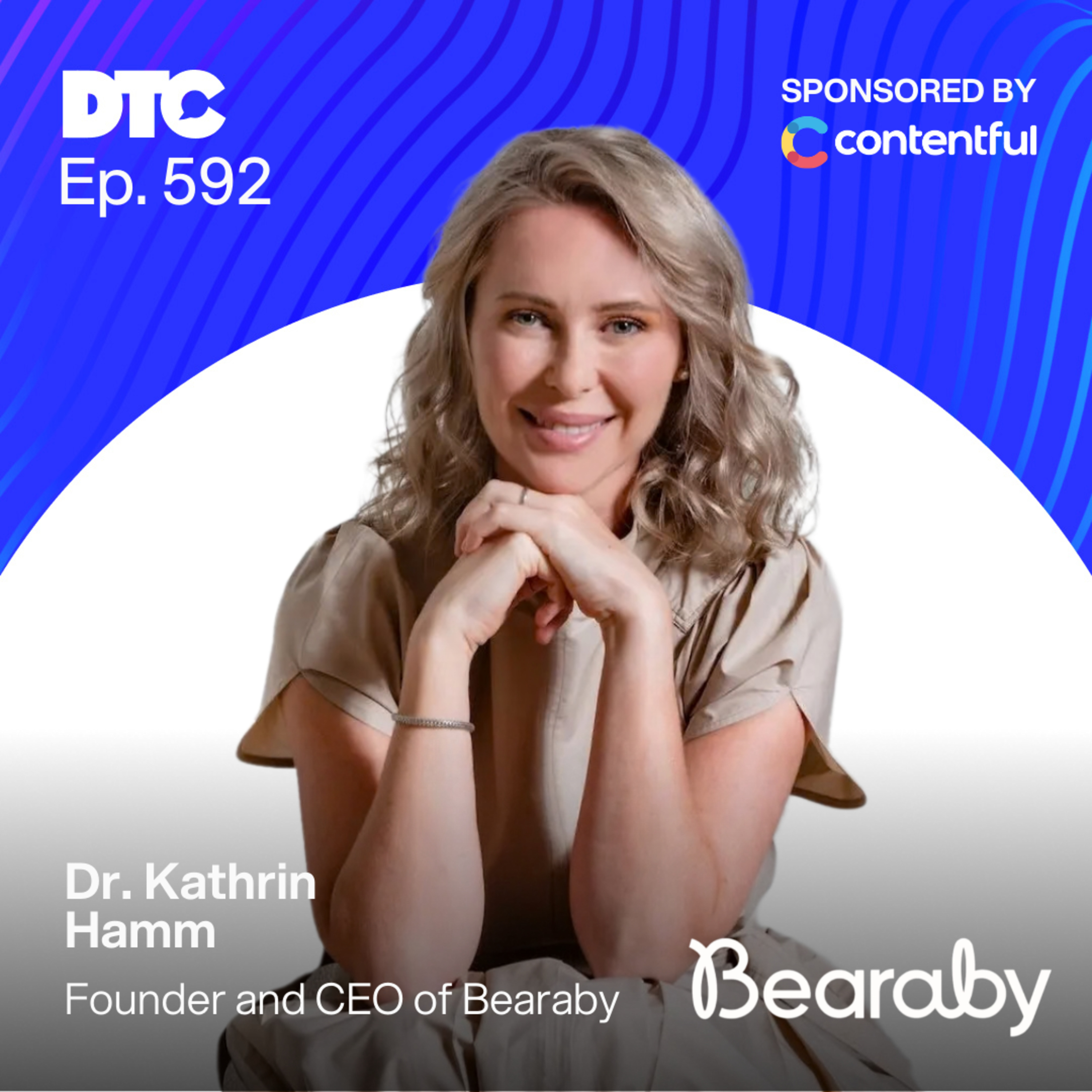
DTC Podcast
Ep 592: $250K Kickstarter to West Elm: How Bearaby Built a Weighted Blanket Category (Without Early Meta Spend)
00:43:26
Loading summary
Transcript40 lines
- [00:00]
A
So we developed a set of machines that can do the chunky yarn. And then we had five people in a small garage knitting. Like, our first batch was 800 blankets. And in my calculation was like, okay, 800 blankets should last me like a year, one and a half years. They were sold out after two weeks in the first, like nine months. We didn't do any, like, paid performance marketing. We just went out and gifted a lot of blankets to editors who wrote about sleep products, people in the sleep space. That just also informed our identity along the way. We didn't have a lot of marketing dollars, so how can you be clever?
- [00:46]
B
This episode is brought to you by Contentful Marketers. You know that feeling when your creative clicks, when that social post sends engagement through the roof, when your outside of the box campaign hits ROI positive, when a personalized homepage turns prospects into customers? It's utter marketing. BL Contentful helps you create tailored omnichannel experiences without working overtime. No stress, no limits, only possibilities. Get the feels@contentful.com. welcome to the D2C podcast. Dr. Katharine Hem. We don't often have a doctor on the podcast. You are a doctor of economics. Is that what it is?
- [01:24]
A
Yeah, Economics.
- [01:25]
B
Very cool. Well, welcome. How are you doing?
- [01:28]
A
Doing well. I'm excited to be on the pod. I'm a big fan.
- [01:31]
B
Oh, that's awesome. Well, I'm a big fan of your blanket. You sent me a Barabee weighted blanket, and I gotta say, my daughter is a huge, huge fan of it. We've had weighted blankets before. What I like about Barabee is it's. It's like the second wave of weighted blanket. We're going to get into that a little bit, but maybe start with the why. Why did you build Barabee?
- [01:49]
A
So, I mean, as I mentioned, I'm an economist. I have a PhD in economics. So I'm one of the people who studied for a very long time, so didn't initially have any intention on quitting my job once I had landed one at the World bank as an economist. So I'm like, wasn't my first idea, but I had sleep issues. So I just transferred, started my career in Washington and moved to India. And I was always a light sleeper. And at that point I just really kind of. It got worse and worse. Wake up multiple times at night, couldn't fall back asleep at night. And at that point just, I did a lot of research looking kind of what are like sleep solutions, like natural sleep solutions that are out there. And I stumbled, more or less stumbled across weighted blankets. Because as you mentioned, there has been a first wave of weighted blankets around actually like more than 30 years in the medical niche. So you could find them in a, you know, in a pharmacy. And you know, I was kind of had tried a lot of different things and at that point like weighted blankets were more positioned for children, like children with sensory needs, children with anxiety. But there was like in some medical articles they already mentioned that the same like weight, like an evenly distributed weight on your body can help adults sleep better. And I'm like, why not give it a try? And so I ordered one of these blankets in a German pharmacy and like six weeks later I get one of these massive bean bags, like kind of the orange blue with all these little like plastic beads in it. And I mean it didn't look like a sleep product at all. Not something that you want to keep on your couch or that you want to keep like on your bed. But I tried it and it was like the single best thing I've ever tried. So it absolutely worked for me. I put it on my body, I passed out five minutes later and I took a four hour nap. Kind of, you know when you wake up after nap and you don't know who, who you are. And so it was really like this concept of weight really worked for me where you could just see it also on your sleep tracker. Like my sleep cycles became more regular, had more longer deep sleep. And so that was kind of the initial how I got into the product. But then like after using it for a while, you realize all the shortcomings because then looking back at it and even it has been around for a very long time, nobody had really innovated anything. It has been this beanbag styles in 30 years. It was always in that medical niche. So what happened is it made me really hot. Imagine if you sleep under 15, 20 pounds of plastic. It just kind of, it's not something that works for the long term. And then I started kind of crafting a little bit outside of work and researching. And like literally there was no product like this out there. And so that's kind of made me intrigued. But at the same time it was not easy because I was like, how big is this category? No one had done something like this. When you look at other D2C products like toothbrush or socks, you have a rough estimate, like who are the big players in the market? What's the market size? And I knew kind of if I wanted to do it, I had to create a whole new category. And I also had to come up with a new, better product. So there were two challenges, and it took me quite some time to, like, get into it, but then, like, my first step was launching a Kickstarter campaign. So I quit my job, took, like, $120,000 that I had from my retirement savings and put that all in a Kickstarter campaign. And I think that's, like, we launched, like, in October and, like, in November, we had already, like, $250,000 in, like, huge excitement around the product. And I think that's, like, this first proof point where I'm like, aha, there is something. There is some market, There is some demand. And you start understanding also who are actually the people, like, outside of me who are looking for such a product because there was no market research besides, like, these initial proof points that I had developed through this initial Kickstarter campaign.
- [06:07]
B
I just had a question, because when one of the. When my daughter was using it, she was like, she was noticing how breathable the blanket. You mentioned previous weighted blankets. I've used previous weighted blankets. You wake up and your face feels all pressed or you're. It isn't the best feeling, but the way you've built yours, it's incredibly breathable with it being these big, chunky. Did you know how you wanted to solve the form factor, like, pretty early on, or was that something that sort of came to you in a. In a. In a spark of genius?
- [06:35]
A
No, I did, like, lots of, like, trial and errors. And basically, like, I think the insight was that, as you say, like, the beats don't solve anything. But when you have, like, natural fibers and you mix, like, just natural fibers in a chunky yarn and like, a layered yarn, you get, like, a very weighted product or heavy product that you can customize. No matter how heavy you want it. You can go up to, like, 30, 40 pounds. But at the same time, you take the beads out, you just have natural fibers, and it is breathable, right? So air just naturally circulates. And it took, like, these main issues out, or, like, the number one issue that people have is, like, that the weighted blanket makes them hot. And the beads are also. When they're shifting, it's not evenly distributed. Like, it's noisy. And so we took all of that by just creating this chunky yarn. We took all of that out. And I think that's also one of the reason when I then moved into D2C later, like my initial customer group, 50% when we did a survey was people who had a previous weighted blanket, and they upgraded to A bearaby blanket. So we had kind of. That was our initial marketing, was just having a better product. But yeah, it was kind of a lot of trial and errors until we got to that construction and then also filing and patent for it. Second issue that we had to solve was the production, right? I mean, now when you look at, again, bigger categories that are already established, you can just go to a third party manufacturer and say, like, well, I want something with some customizations. But for me, when I went with like a small knitted blanket, so I had my initial prototype that we had created and everyone said, well, I've never seen something like this. Like, I don't have the machine for it. Like, we don't have the fabrics, we don't have the people to do it. And also you don't have a proof point. Yes, we had a successful Kickstarter campaign, but that's about it. So we developed a set of machines that can do the chunky yarn. And then we had five people in a small garage knitting. Like, our first batch was, I believe it was 800 blankets. And in my calculation was like, okay, 800 blankets should last me like a year, one and a half years, you know, like taking it really slowly so we can figure things out. And they were sold out after two weeks. That was the second proof point when I knew, okay, there is really a lot of demand for the product. And then now we had to figure out how to scale such a smart
- [08:58]
B
category, because it takes, like you say 50% of the people were buying a better weighted blanket. But it also has such a strong visual appeal that anyone seeing it who didn't even know they needed a weighted blanket would see the blanket and be like, like, oh, that just looks like an amazing blanket. So I bet it probably bridges away from the sort of clinical use case into more of a lifestyle play at the same time, which is a much bigger audience. And it's great to have both of those. You have your, you know, your foot firmly in the, you know, problem aware anxiety blanket market. But then also anyone else who sees it could be like, oh, this could just make my life better.
- [09:31]
A
Definitely. I mean, like, I knew from the beginning, which was nice to have like this natural inflow of people who are upgrading to a barabee. But then we needed to build a category from scratch. And for that, when we did our branding exercise, we were like, okay, we need to get into a lifestyle segment. We need to kind of educate people what is a weighted blanket and why they should use it. What are like the benefits for it and then obviously you can't achieve that if you have these. A lot of people on Twitter say mental illness gray. Like, there was this hashtag, like for weighted blankets. So we were very colorful at the beginning. So we have the chunky knit that already looks good. But then when we chose, like how we designed the website in the ux, we were, you know, we had like, obviously the traditional home decor colors, but a lot of pink, yellow, purple. So really like just the opposite of like this medical position you would see. But we really lean into lifestyle. We were looking what are the trend colors out there that people are not keeping on their bedroom, but what is like couch worthy, something that you're proud showing off, people coming, visiting your home, going into a living room where there's like this beautiful blanket and like a stunning pink or like a stunning purple. And I think that was something. We definitely leaned in making lots of different shades and colors that really popped. And I think that's like. So we were at D2C for five months, and then we already had our first inbound from retail from West Elm. And they were also. There were like, we were looking for years into like this category and like, nothing strikes like, you know, Williams Sonoma, the Pottery Barn, West Elm home decor esthetic. But then we are looking at your blankets and they really fit. That's something we want to showcase. And then I remember the story when they wanted to come to our showroom and we were still like a couple of people in a garage making blankets. So we took like 300 pounds of blankets into Dumbo, where they have the headquarter in Brooklyn, and just kind of like wheeled the blankets in and they loved them. And we had our first purchase orders and wear in their stores. And that got us like these early proof points where people are like, okay, if this is at West Elm. And there was another thing is obviously like, you cannot only say a weighted blanket, but we had to have like explainer. So we had with West Elm and even later, when we expanded two years later into Nordstrom, whenever we have like this, the display, we have a couple of descriptions of what a weighted blanket does. What are the statistics of science behind it. So that's kind of where we, when we're in a design or like a lifestyle point, we're trying to merge the medical point with it. So explaining people, because when you walk by and then you're just touching it, you're like, why is this so heavy? So we've gotten a lot of like, you know, education around that. But yeah, I Think the visual and, like, kind of leaning into that. Another point was also, how do you do partnerships? You know, what are like, unexpected, fun, clever partnerships that you don't expect from a weighted blanket? I remember early on into and everyone was like, at home. We partnered with a popsicle brand and we created, like, a set of, like, weighted blankets in popsicle colors. And we delivered a package with popsicles to people's home in the summer when it was hot and people realized, okay, I can use that. Actually also in July and August, I can sleep under it. I don't get hot, and I can eat a popsicle with it. Or we did a Shake Shack partnership last year. So just kind of trying really to push the boundaries and don't see ourselves in that niche of medical. But, like, how do we get out into, like, medical and finding, like, brands that people are resonating that are maybe not in a sleep brand, but really, like, position in a lifestyle. Lifestyle brand. And we did that very early on.
- [13:16]
B
Super smart. And like, popsicle too, is such a nostalgic brand as well. And I wanted to actually even back all the way up to your brand name for a second because I think it's doing a lot of heavy lifting. There's a lot going on in Barabee. And maybe from my armchair psychologist perspective, you've got like, the comforting aspect of, like, a teddy bear. It sounds a little bit like therapy. So it sounds like therapeutic. It's also like, bear, like you're bearing a weight a little bit. Is that all going on there in the brand name Baraby? How did you come up with it?
- [13:45]
A
The original, like, name is like, bear hug and lullaby combined. But it actually, like, I was at the beginning experimenting with different, like, ideas what is related to sleep. And then, like, when the early customer testimonials came in, like, the word bear hug, it's like people always describe, like, it feels like people, like someone is giving me a hug or people would write on the gift notes, I'm sending you a hug. And so we're like, okay, it just. We need to bring the word like bear and hug in it. And then kind of the lullaby, something that softly, like, gently, like, melts you into sleep. And then obviously you go through all the other categories. Like, is the brand name already taken? Is that when I Google it, is there something comparable to it? And I think we got lucky that there was no comparable name out there. And we also registered a trademark for it early on.
- [14:37]
B
Was there anything with your Kickstarter? So, like, it was it really just Having a great product that people really can visually recognize as different. Was there a reason that you credit it taking off initially on Kickstarter? Just having nailed the brand and the
- [14:50]
A
form factor, I think Kickstarter is still like an audience where you get like attention with like a niche product where people are into the science, people are into new things. And again, that was like 2017. So a lot of people wouldn't know what a weighted blanket was. So even like if we would have put up a website and then we had to, let's say we would have run like regular Facebook ads, I think it would have been much more difficult if you get this initial traction with an audience that is like, you know, what is this? What is this category? But I think with Kickstarter where you have like people who are a bit geeky, who are kind of like always like a bit ahead of the game, looking for the latest product, I think having that right audience I would still use if I had another product that is where you want to create a new category. I think Kickstarter is still a great launch pad and you can just have long form storytelling. You can have a video where you explain what the product is made of without having to invest too much. So I think it was just the right thing for us. For me at the beginning, it's also like I had to get into. I'm not, I don't have a marketing background. So running ads, getting into SEO and all, like the good things you have to do as a D2C brand, that heavy lifting went away. So that's why Kickstarter made sense. And then a secondary step, you have a bit money, you can do a little bit on brand identity, really think it through, get some people who know what they're doing on brand identity. That was like step two. And then obviously a lot of gifting. I think just for like category building, like being prepared, especially if you don't have a lot of marketing dollars where you have like maybe expensive PR agency or other like bigger like budgets. We just went out and gifted a lot of blankets to editors who wrote about sleep products, people in the sleep space. And then you would get just natural conversions where people just love the product and they give you a tag on Instagram or they give you a static on Instagram or they write about. So in the first like nine months we didn't do any like paid performance marketing. We just kind of naturally did our gifting and basically being relying that naturally people find a product. Later on we said like, how can we take this to the next level. And we did the Netflix gifting. I don't know if you've seen on our webpage, you would see a couple of placements. So we were on the Sex and the City sequel. We were in Murders in the House. Just kind of a lot of things. And that doesn't. Like, now I'm giving away a secret. Doesn't cost us anything. But there are a lot of set designers of Netflix shows or any other shows who just need product to decorate the show. And sometimes you can really hit it out of the park and you even get your product integrated. And we did that consistently over the years. And now you would see, I mean, at the beginning when there was weighted blankets, like, maybe five years ago, you would still see the old design. And out, like recent shows, you would always see our design. And so that's also in the mind of people kind of now when people talk about weighted blankets, even in memes, the knitted weighted blanket comes up. And so kind of getting your design to the forefront, making it part of the culture, even if it's just, like, sitting there on the couch. That was, like, the beast in me. There was no, like, storyline in it, but, like, it was in Claire Dane's home. And you just see kind of, like, spark. And then you have, like, again, these memorable colors, like a very strong green. And then it's kind of. People can recognize that, and it's just, like, builds. And I think that is something like, it's free marketing, and you can do that along the way. So I think that just also informed our identity along the way. We didn't have a lot of marketing dollars, so how can you be clever without putting a lot of dollars early on into Facebook Meta?
- [18:43]
B
The form factor stands alone. How did you. Did you find the people who are making the set decisions and add them and send the product, or how did you actually make the Netflix relationship come about?
- [18:53]
A
I mean, I think when you're, like, in the scene and you do your research, and that's all I did at the beginning. I was like, okay, who are people in the space that we can educate and gift about the product? And so I had the different pillars, so I wanted to know the sleep audience, right? So there's Matthew Walker, like, people who've written, like, books and who are, like, really well known and, like, that authority. So that was my first pillar where, like, I want to convince people who are already, like, deep into sleep, who probably already tried a weighted blanket, so they were, like, very easy to convert. And then the second was like the design people. So I was looking at people who are interior designers, people who design sets for Architectural Digest. And there's a lot of overlap. People who are like designing for hdtv. These are usually like the same crowd where at some point someone said, well, have you ever considered putting a product on Netflix? I'm like, no, it's too expensive for us. I know someone who knows someone. So looking into who's your audience? First it was interior designers and then there is kind of like again, word of mouth. I think that's the most important thing. If people, the gifting strategy doesn't work, if people don't love the product, if you have to push them. But if you give a product and then you get the email, people just, I love it. And I recommended it to five other people and you're in the right circle. And then so we, we got very popular also in the design community and then just naturally showed up. And that's how we got the Netflix community. And then we got like four or five contacts for doing the majority of the set designs for these different Netflix shows. And now they just send us an email, say, you have a pink blanket. I'm like, sure, send it over. And then we are always happy when we see placements 18 months, a year later.
- [20:31]
B
So you set a great organic base. You have a great gifting strategy, you have this awesome Netflix influencer. What was your, what was your next sort of move to scale it up? I know you guys have, because you've been around so long, you've expanded into Europe, you've done all sorts of so many interesting partnerships at this point. What was your move? Maybe after, you know, at what point, I guess, did you start getting into paid ads?
- [20:52]
A
So I think then like, once you do kind of the initial like brand building moments, I think then you just have to do the classic D2C playbook and you have to do it really well. I think that's also what we learned over the years, how ads are changing and kind of like meta is changing. I think just kind of building that up as like you're getting, obviously you're setting up your email flows, you optimize your website and kind of you're getting through the classical T2C playbook and you're scaling at the same time we build out our Amazon and getting like step by step into like the different channels. But we were really intentional. So before I went into kind of a channel, I tried to always like lean in with the product. So we had one sku and then early on we got demand for kid sizes, so we build out all the different sizes. And we realized there's a second layer of people who are really sleeping hot. So we needed a different fabrication. So we came up with Tencel fabrics, which is like a tree. It's made from wood pulp. So it's a very cooling, silky, but also sustainable fabric. So I had all the different product categories I built first and again from this early customer feedback from hardcore fans of people who are weighted blanket users and kind of just building out this and then going into the different channels. And I think then organically, if you have a good product, you're naturally scaling and you're adding up different SKUs and different customer groups, you get to. Customers know better. You have queen king sizes. You're building all of that. And just like, naturally, like last year, we were like, okay, in the market leader in the U.S. we've hit all the major retailers. We've been on Amazon. So you're getting into, like, a steady growth where it, like, feels good. So we're like, okay, where can we. What can we do next? And then I think my vision is still, I want to bear it, be kind of if you are in Hong Kong, if you're in Japan, if you're in Australia, I want, when you have here weigh the blanket, I would. Would want your bear bee to come to your mind first. So building like that international brand. So for us to make a decision, like, what's next? And we were looking into Europe. I'm from Germany, so it's not that that's why we went into Germany also. There was like, a lot of, like, analysis on why it makes sense. So that was our next kind of growth move on just taking our core product where people actually already knew us because of, like, people also in the US Watch Netflix, People read the New York Times, people read Wirecutter. So all the work you've done in the US when you are the leading spot, I think that's the nice thing. It's not always easy building a niche and building a category or small in being in a niche category, but once you kind of own that category, you're very recognizable. And it makes it much easier to go into markets that already consume US Media. So there were obviously a couple of tweaks that we had to do in Germany. Germany has a lot of print press, for example, like Longley takes three to six months. Less digital, like, less digital press. Heavy. A lot of, like, more education again needed, like, lots of medical newsletters, medical journals, testing, like, not like mattress Testing sites, but actually testing institute that have their own. So again, when we went there, we had to some form create again the category from scratch. Did a lot of gifting. That always helps when you have a good product. Just people kind of gravitate to it. And then like, but for example, like convincing again people, well, why haven't you looked into weighted blankets? I saw you reviewing pillows and mattresses. What about weighted blankets? Well, I never heard about this category and I'm like, okay, let me educate you. So we started this with Germany, Austria and Switzerland last year and opened up basically everything besides UK to scale there further. And yeah, now we're taking kind of like another approach where we are scaling Europe, we're looking into UK as another market next. But then now I think we also in a phase where we're like, okay, we have like the weighted blanket category. And over the years we got so many like again requests from customers and other products they want to see from us or like also ideas that we see as a founder kind of, we're like heavy in manufacturing. You travel a lot, you see a lot in factories. You're like, oh, that would be nice. I haven't seen that in the US Market. We went into sheets, for example, at the end of last year we realized a lot of our customers that buy weighted blankets that have insomnia, anxiety, also have pain and like skin health issues. So we're like, what are like hypoallergenic sheets? And we found like a nice manufacturer in Portugal that weaves in peppermint, which kills 99.9% of bacteria. So it's like people who have eczema, people who have acne, or just people who really want to have clean sheets. So we are looking for like again like categories with like a functional twist on it. I wouldn't want to put out a product that is like just a cotton sheet. Yes, we can do a high quality sheet, but what is again like a functional angle that helps complement like the sleep system. And I think that's something I'm enjoying right now. So we've built a nice design team last year building that out further and see like, okay, what, where can we push the envelope not only on like functional, but also like additional like products that feel very homey, cozy and bring like that level of comfort to people. So like building out additional product categories, building that muscle right now with the team in the US Market while at the same time bringing our core product and expanding in other markets has been something we're working on, which keeps me
- [26:46]
B
busy I just released a podcast on Monday about going to Europe and how absolutely essential it is to treat each country or country grouping at the least, you know, separately. You can't think of it monolithically. You guys mentioned one of your stunts going into the German market was creating egg hats.
- [27:05]
A
Yes.
- [27:06]
B
Talk about that a little bit.
- [27:07]
A
Yeah, it was definitely. I think often D2C brands who are trying to go into like European markets, they go with the English first website or English first, where you just dabble a bit to see, like, what are my English speaking ads, how far can they get me? Definitely it's a starting point, but to kind of really crack the market, you need to have the language first and there's only certain ways or AI has limitations. Yes. You can translate your SEO pages, but you have to work with someone who understands the nuances of how people speak about something. When you translate it in English, even more so when you have a medical product. So having all these terms. Right. How do we talk about even a weighted blanket? Again, that term is like very loosely defined. What are the features, how you talk about it? Defining that was like the number one thing that we did. And then at the beginning we were also like, obviously the beds are smaller in Europe, so you have to think about that. There's no queen and king size in that sense. People have two blankets. People don't share duvets. They have like two blankets. So there's like, again, content things that you have to adjust not only on a product level, but just also like, how do people sleep differently in Germany?
- [28:21]
B
Must save a lot of marriages. I never realized that it is actually like not fighting for the blanket as much.
- [28:27]
A
Exactly.
- [28:27]
B
I think that's a really neat point. You never know when you're going. We. We worked with Unilever one time at our agency and we were filming some UGC in our. One of our kitchens and they're like, this isn't like a British kitchen. This kitchen is way too big. There's too much light. There's, you know, you need, you need. So you never know what's going to betray that you're not local in a way. Right. I think of Inglourious basterds in three versus three. You know, you have to make sure you have all that local stuff.
- [28:51]
A
Right, Exactly. Also the visuals. Right. So we usually, most of our photos we shoot in Brooklyn. Right. You have the Brooklyn brick wall that New Yorkers love. In Europe, people are like, this is not how our homes look like. We have wooden floor. We have white kind of wooden, like Larger ceilings. So I mean, I think that is something you can adjust later. But if you want to get again into architectural magazines, right into lifestyle, you need to speak their language. Your Brooklyn pictures will only get you that far. But then when it comes to campaigns, as I mentioned, one of our strategies is like, early on, finding clever brand spins and partnerships. So we did like, we always like to be humorous also as a brand. So we always do April Fools. So we were like, what are we doing like last year for April Fools? So we partnered in the US with like egg influencers. So we made an egg shaped weighted blankets and we gave it to different farmers who put it on chickens and eggs. And we said if you have, if you, if your chickens sleep under weighted blanket, the eggs get bigger just as an April Fool's. And I was like, was very early on in Germany, we didn't have a big team. So I was like, can we just run the same egg campaign in Germany? And I kind of started floating it with different people. And everyone was so upset and they're like, this is not funny at all. It is just this concept is not working. And no one, like, while every one of our American team found it hilarious, you could just see like Germans were like, I mean, Germans maybe are not funny in the first place, but like, just definitely didn't get it. And then, but what? Then someone said, but, well, what about like it's Easter coming up and everyone in Germany like obviously coloring the eggs. But every Sunday people like put egg warmers, like egg heads on their, on their eggs. And I'm like, yeah, I remember that growing up. That's a very German thing. We didn't have a lot of time, but then we used our yarn to make just these little egg warmers and like matching colors with the blankets. And just around like the Easter time, we just send out with a set of like these egg warmers. And again, that went viral. We had Manuel Neuer, who's like the German soccer goalkeeper loving the egg worms and just got again like a lot of hits and virality in the German. And I think that was just like, again, if you want to get this impact on the market and go beyond surface level, find out what are these really cultural specificities. I mean, I don't think anyone in the US puts a little egghead on their four minute egg, but I think people really appreciate it. And then obviously we did a gifting campaign around it. And then you get more inclusions because people then also feel like you're taking them seriously as a brand. You're not just coming and you want to kind of sell a couple of products but you actually building a relationship and you understand them. So I think building up on that and also with local colors. So we just started with supply chain, we make our products in India but now also started with some European sourcing in Portugal. And I think kind of just again having these additional moments where you have a product that is sourced for the European market helped us a lot as well. So Europe has been doing really well for us. But yeah, we had to really rethink what we're doing and talking with a lot of people and like getting again in like the habits and think how can we actually be relevant and make sense to people there.
- [32:21]
B
You mentioned Meta having changed and that's been a, that's a theme on this podcast that we've talked about since the, the past six years that we've been doing it. I remember it was like six years ago we used to say creative is the new targeting and we used to say that all the time. And it's like now with Andromeda it like very, very much is that is the case. I'm curious, I know you're, you're high level in the company, but from your perspective, what's changed about Meta as a, a growth engine for a brand like yours?
- [32:46]
A
I mean for us definitely like the role of the creative strategist has become important. We didn't have one before and then last year we brought on a full time role for creative strategist just to come up with like different ad angles and I think just not only the volume like like in terms of like that you need to have like more, more creative volume but also just the creative diversity. And I think once you have a marketing team or even with an agency at some point it's, there's just so many like angles you can do. So bringing in some fresh ideas with like an in house team but then also like instead of having one media buying agency that kind of does the creative, we're now working with more specialized agencies that help us with content and just like having regular shoots, creating like different angles, more fresh takes on it. So creative diversity has been like a big one for us where really we had to put our heads together and see like okay, how do you get from 40 ads to 900 ads and like without them looking the same and like again having a fresh angle, different getting through all the customer Personas. So really digging deep into building out the customer Personas and updating them and making sure that everyone in the team understands we have. Michael is one of our customer Personas. He's a stressed out professional, like in his mid-40s. So when you wake up at night I want you to think about Michael and what are like the things that are relevant for him, what is he struggling? And obviously like we need to have someone who looks like Michael right. Instead of the other Personas. So I think that was like a big one for us on getting to the volume of ads but then also like the quality and the diversity in the content and both getting the in house team staffed up but then also just having more agencies that are more agile and more shoots.
- [34:35]
B
You mentioned in our pre interview some issues with copycats. And I imagine when you innovate the form factor of a product so much as you have, there's probably fast followers. How have you, what's been the story with copycats?
- [34:47]
A
So the first like two years, you know, when you're first to market, you don't have any copycats. And then one morning you wake up and you have like oh wow, that looks a lot like our product. And then kind of like, you know, once you have success there, always naturally people will follow. So I think for us like important lesson was that we have our patents that we filed early on. One thing is obviously using them. I think we've been especially you see a lot of copycats which is really hard to get. Like all the Amazon Alibaba copycats, it's like you shut one thing down and then pop up again. So it's just something you have to keep, keep going. And I think also just being diligent about it, it's just part of like if you're a brand and if you're like a patented brand, it becomes part of your job and like making sure to address it. I think another one is just being innovative. So yes, you can maybe make a polyester product and try to knock off like a color within like 12 months. But then again if we have like different fabrications, different collections, like different partnerships, different sizes, it is just kind of like makes the team like pushing the engine. So at the beginning you're like oh wow, this is the same product that we have, so what can we do differently? So it's a mix of patent protection. I always tell like this funny story when I was in China and I was visiting like a factory and one of them was one of the factories that copied our products and they had had our pictures everywhere and even my picture there. And like when they, when they saw us they're like oh, we love your product. And I was like, well, we love this color. We love this color. So there was, like, just a different culture, like, I guess appreciation also, like, maybe not the same level of awareness of, like, what copying means or infringement means in the US So we had actually a good laugh and even took a group picture afterwards of, like, the people copying us. But, yeah, it's definitely something. You're very surprised how quick and nimble they are. Like, they're checking your website. You have something new, you can be certain you will be copied within a very short time frame if you don't have, like, legal protection. Definitely. Like, trademarks is always something. Like, if you see they're taking your images, that's something you also can prosecute. And then, yeah, trying to stay ahead of the game, I guess that's, like, competition makes us more innovative. I think that's, like, what we had to do.
- [37:21]
B
And just keep running, keep running. I think. I think the peppermint in linens, in bed linens is such a smart. I'm. I'm such a fiend for, like, the cold side of the pillow or the. Or the cold part of the sheet. And even if peppermint doesn't do that, it will make me think that peppermint will make my sheets cooler.
- [37:38]
A
Yeah. Yeah.
- [37:38]
B
Which is.
- [37:39]
A
It does, actually. It does.
- [37:40]
B
Yeah. No, that's super smart. What an awesome suite of products you're building on. How many SKUs do you have now at this point? Lots.
- [37:47]
A
Well, if you, like, count the weighted blankets as SKUs, we have, like, 120 different SKUs just for the weighted blanket. If you count in all the colors, all the sizes, right from the different weights, starting at, like, five pounds for kids, then going up to the king size with 30 pounds. So that's the something. Like, I always want, like, people when they come to our store, you should have all the breadth of the offering, all the colors, all the fabrications that you have. So we want to be that one stop shop for the knitted weighted blanket. And then obviously, then we started adding additional. Like, we have the warmables, which was one of the products, like our neck. Our neck wrap, which is made with natural clay, so you can just pop it in a microwave for three minutes. And it, like, just. Just is weighted, but it's also warm. We have our body pillow that is made out of natural foam, of tree foam. So I love. I'm, like, a big fan of using innovative materials that I find along the way. So a couple of years ago in Sri Lanka, I found this farm that takes tree SAP and steams it into then makes a natural tree foam out of it. And it's like this very bouncy foam that makes a great body pillow or pillow and it's non toxic. So it's literally just foam like from a tree that's steamed. There are no chemicals in it and it never falls flat. And just thinking about what are these materials? And I think now I see myself now that we are further along in the journey and we have the weighted blanket innovated in this, how can we go back and again take unexpected spins and not making it too easy and say well let's just take another pillow that's filled with polyester. But like what are innovative materials? Something that you maybe haven't seen in your category, you take it from another category, like the peppermint for example, but then there haven't been any peppermint sheets. So it's just kind of like I think looking right and left and I think a new category or like a niche category often comes from boring different territories and moving them into the edges and then you get like, like a completely new product. And I think that's what I'm also trying to push my design team. Like don't look at like a bedding company, don't look into a mattress company what they're doing, but look into another territory like where people came up with very innovative. What are like we're looking, for example last week we were studying like a kayak which is made out of like innovative paper material. So look at kind of really unexpected categories. A kayak has nothing to do with a weighted blanket, but you will find and then kind of like taking them into like your new territory. And so we've won now like a lot of like I think we've won more than five red dot design awards. We got the Fast company innovation award for like our products. So I think when you kind of push like the envelope and you are thinking about like what can I do new with the customer in mind, it will come up naturally with like more products that haven't existed in the market that you can easily then build on. Because, because when I was first thinking okay, now we have the weighted blanket, but there was no other weighted blanket company before. So I cannot just look like oh yeah, when you have a mattress company, you have a pillow or you have something else. But like how do you actually extend in a meaningful way like the category and what categories make sense when your hero SQ is a weighted blanket? Again, it's nothing that Like I can go and check somewhere. I have to again reinvent it it and build it, which is daunting in one hand because again, we have to always reinvent the wheel. But I think in the last years I've also seen there's a lot of freedom and liberty that comes with it because again, no one has done it before. So we can again push the envelope. We can try something. And I love kind of like taking small steps, like working with small scale manufacturers where you can try something new. Maybe it's not a great product, but then you try it out and you take these risks. But then maybe for every fifth product you get a really amazing new product that people are like, wow, I've never heard about. You can use peppermint or you can use tree foam for pillow. So that's something that gets me also up every morning and gets me really excited.
- [42:04]
B
Good luck copycats when you have this much innovation. Good luck keeping up. Catherine, thank you so much for coming on the podcast. It's such a cool story. I am going to cherish my bearabee blanket forever, as will my daughter. She took it right onto her bed. We have it on the couch. But when she went to bed she's like, I need this. And she's had the best sleep of her life. So thank you so much for sending that. I really appreciate it. And if people want to keep up with your journey, where are you active on social platforms like LinkedIn?
- [42:30]
A
Yeah, I'm on LinkedIn. You can find me under Kathryn Ham. Always happy to connect, exchange views and then like our website is bearabee.com and our socials Instagram is Mybarabee.
- [42:41]
B
And if you're a listener who has any sleep issues, you've got to go to bearaby.com and check out the weighted blankets, the other products you have there. I'm sure there's a I think for better or for worse anxiety is probably a growth market in the world right now. Specifically, I feel like there's a lot of unsurity kind of out there right now. So I imagine it's a bit of a for better or for worse. It's a growth industry for better or for worse. Thanks so much for listening to today's episode. If you're not a subscriber to our newsletter, you can do that right now. Now at Direct to consumer all one word co I'm Eric Dick and this has been the D2C podcast. We'll see you next time.