← DTC Podcast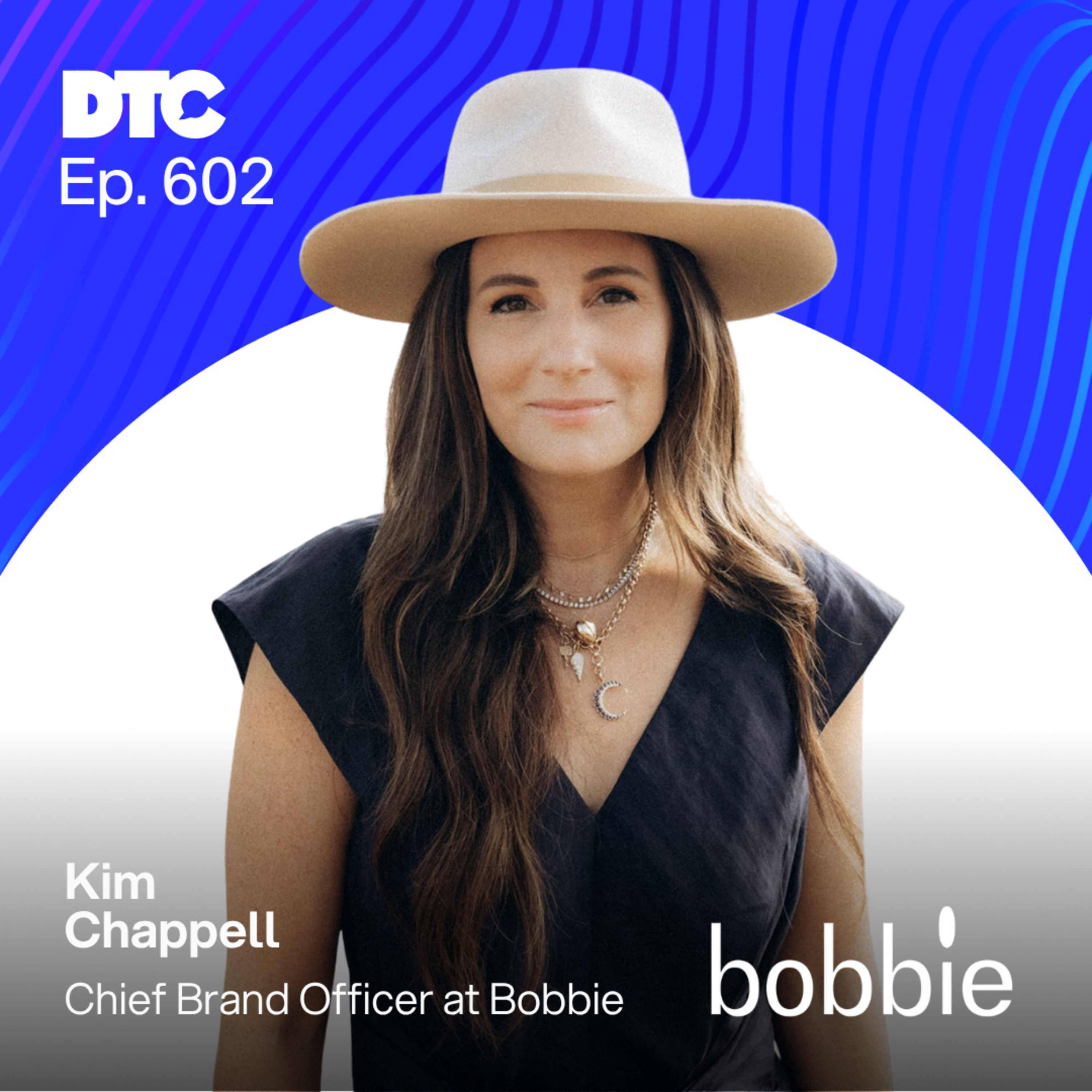
DTC Podcast
Ep 602: How Bobbie Won 91% of the Conversation With 4% Market Share | Building the Brand
00:36:59
Loading summary
Transcript54 lines
- [00:00]
A
We are here to be the best infant formula company in the world right now. In 2026, there has been a fundamental shift in how performance marketing teams are having to think about their day to day job and their spend, the way that people are shopping these days and how customer behavior has changed. It really is not just about, oh, what is Facebook ads driving? Oh, what is YouTube driving? It's like if they're seeing this, where are they seeing this? What are they seeing in retail? Are they getting reserved by this? This QR code that takes them to this landing page is delete this. What are they going to see? Are they coming to the right lp if they search, is what they're hearing and seeing across all of those touch points over time consistent, clear, and is it giving them a reason to come and purchase your product?
- [00:51]
B
Kim, I'm very excited to have you here on the DTC podcast. I've been following Bobby for a while. You guys have been making some major waves. I think you just won another award I was seeing on LinkedIn for your growth from Fast Company. So welcome to the podcast.
- [01:08]
A
Thank you. Most Innovative Companies 2026. We'll take it. We're always excited for those awards that recognize the work. I'm so excited to be here. Thank you so much, Eric for having me.
- [01:18]
B
And then you've also written a report you co authored with the founder of Poppy as well, which is really cool.
- [01:24]
A
Yes, Allison Ellsworth.
- [01:25]
B
Yes, Allison ellsworth. Exactly about 2026 and the changing nature of the brand. What inspired you to write this piece?
- [01:35]
A
So Alison and I both live here in Austin. We both have three kids. We both been in the thresholds of building brands for the past five plus years. Obviously we all know her incredible exit with Poppy and PepsiCo for $1.9 billion. And I have so much respect for what she's built and she is recognizing the work that we're doing at Bobby as a mom founded and led company. And the brands are not the same. But we see we talk about these things when we go out for a glass of wine or our kids are in the pool together. We're like talking about all of the ways in which brands are shifting and changing into 2026. What we think is interesting, like what cool partnerships are happening, what trends are out. And so with south by Southwest happening in our backyard here in Austin, we teamed up with the Soul Comms Group in Bruno and said, let's share these insights. Let's share what we think we're seeing as two people again in the middle of the mud of building brands and let's, you know, put it together in a beautiful report. And so that's what we did for south by Southwest. And it was a fun thing to do with a friend and also hopefully insightful for those that got to take a look at it.
- [02:43]
B
It's always a hot topic on the DTC podcast where D2C is a media company partnered with a performance marketing company. And so, and we kind of have come up in this world of, you know, being able to hit the scale button on meta and, and have it. Have it work really well. And that's a lot of that has changed. And it sounds like you started with Bobby in 2020 around the same time I started with Pilot House. So you've really been there for its meteoric growth. Maybe talk to me a little bit about the Bobby brand and what, what made, you know, I guess where you guys started with it or when you entered the company and what made it such a successful brand.
- [03:18]
A
So what has been so magical about the Bobby brand and being a part of it is that I did not inherit someone else's brand. I got to build this brand from scratch, from the ground up, from the very first decision with our CEO and co founder to a decision made two seconds ago before I got on this call. And there are so few opportunities that you have in your career journey to actually be a part of the build and the climb, you know, and I think that's where I feel so lucky and so fortunate at times, is that not only did I get to do that, but I'm still here and we're still. I still get to be a part of the front lines of it. Six years into to building Bobby, and I would say our brand has been built by the experience of myself and our founders, Laura and Sarah, which is being a mother in 2020 all the way through now my youngest is four. And what was the experience? How was that experience not serving us by the brands that we were consuming? And for infant formula in particular, There really was no beloved brand in this space. It did not exist. People did not go around wearing merch from their formula company. They hid their formul in the bottom of their cart because they were embarrassed that they had to use it. There was no joy or pride in that experience. And so coming in, we decided that we wanted to flip the table on that that formula feeding. Parents should know what's in their product. They should be proud of using that product. They should wear a sweatshirt with the name on it proudly, and they should be able to refer to friends and have a best in class direct to consumer experience that you get to have with baby food pouches or diapers or your skin care line. Why could that not exist for something that is so repeatable, so predictable that parents, once you start formula, you're going to need it until your baby turns a year old. And so it was not just about doing fun marketing or telling great stories. It was a really about a fundamental cultural shift in what it means to be a formula feeding parent in America and the support system and the experience that we felt they deserve. And I can say we have, I feel very confident saying this at this point. We have as a challenger brand in this space completely shifted that paradigm. So before Bobby, people were not sharing their unboxing on social media proudly, they were not tagging their friends, they were not wearing the hat. And that behavior shift that we have seen from our own customers because they love Bobby so much is shifting the culture. That is a culture shift in our space that didn't exist beforehand. And on the other side of it, we hope no matter what formula brand you're using, if you are a formula feeding parent, that you can feel joy and pride in that experience.
- [06:04]
B
I'm looking and the total addressable market according to Google for infant Formula global is about 100 billion for 2026. And I think it's a real testament to your company that you're still winning most innovative, you're still, you're still having this incredible growth pace in your fifth or sixth year that you're in now. And I guess a lot of that is also the space that you, that you've chose to work in. I think that's, that's such an interesting point is that there's all these incumbent brands that people are using out of necessity but not out of any pride or and like you say, maybe they're even less than pride. And so that's just this continual opportunity to grow.
- [06:38]
A
Yeah, 50% of parents in the US actually lie about using infant formula is a research point that we found out through a third party study. I think it's something like 70% of them feel guilty for using formula. And why, why are you feeling guilty about feeding your baby? You shouldn't, you should know exactly what's in it. You should be proud of those ingredients. You should be able to articulate them and understand them. And bringing that level of just trust and transparency to this space. I think that it has historically not served parents has also been part of our brand as well. And then going back to you know, the total addressable market for us though, it's really, we're not, we're not a hyper growth go go go growth for the sake of growth company. We are trying to build this company very thoughtfully, very intentionally and ensure that when we go to unlock a new retail partner, for example, that we have the resources, the dollars, the inventory and can really nurture that relationship and show up in an unequivocally Bobby way. It has not been let's just scale and go, go, go, go go. Because I feel like that's when brands can burn out and they lose their special sauce and they lose their way. And we're really trying to keep that, that Bobby ness and we call it, you know, the Bobby vibes. As we continue to grow and scale this company, it's incredibly important to us.
- [07:58]
B
Sounded like this must have happened fairly organically. Like just when when you kind of came in and you're, and you with, you know, your first moves distributing and growing the brand. Where did you guys do a lot of research obviously into those like under, you know, psychological underpinnings like realizing that people were ashamed of their formula before. Like talk a little bit maybe about that process of uncovering the aspects that you built the brand with, you know.
- [08:24]
A
No, and I think we did not do a ton of research and I feel like there was probably opportunity to do more. But you have to remember we were a bootstrapped pre seed funding startup. There was not money to go do deep insights and it was the middle of COVID People were not gathering in spaces to give feedback, feedback on things. But this is how and where we are different. We are the customer. We were living and breathing the experience of having young babies. In San Francisco. I had a six month old, our CEO was pregnant. Our other co founder had a four year old. Like we were in the zone of our customers. And that was our research. We saw everything that was happening in our text groups, our friend groups, our Facebook groups and we knew that there had to be a better option for parents who felt like the formula in America was not meeting their standards. So they were going as far as to import European formula through unregulated third party websites. So you're basically jeopardizing safety for what you feel is nutritional superiority. That's quite a big trade off that you're willing to make mentally. And we said why does this have to happen? You should be able to get best in class, world class infant formula that meets European nutritional standards. That's made safely here in the US and is regulated by the fda. And that was the position that we launched with to solve the problem that we were experiencing, but that we saw everybody else around us experiencing too.
- [09:50]
B
What are some of the initiatives maybe that I don't know early on or even more recently that you feel have been really strong in establishing the brand?
- [09:58]
A
That's a great question. So recently. Well, it's always been part of our ethos, but I think you've seen it come through a lot more recently. Is really around the transparency of our testing, our safety protocols, our manufacturing. And that is because our industry as a whole is in a deep state of distrust. In the past six months, there have been American brands recalled for botulism. There's been global recalls for celeride, a bacteria. And the industry and the category as a whole, it doesn't matter if your company is involved in that or not, it suffers when one company has a recall. Everybody feels the impact. And so we feel a responsibility to our community and our customers to say although we were not impacted, we also want to lift the curtain and show you what it means to have a transparent supply chain where our dairy comes from, why we put exactly this much DHA in our product. We brought cameras into our facility for the first time and showed and shared how this product is made so safely with 2000 plus quality and safety checks right here in the U.S. we also built a new transparency tracker where you can actually take the lot code from the bottom of your can go on our website, put your lot code in and you can all of the quality tests from heavy metals to pathogens to contaminants, that your can of formula has passed before it made it to your door. So how are we building trust for not only the Bobby customer, but I would say for this category as a whole. We want people to know that safe, high quality infant formula can be made and can be trusted here in the
- [11:32]
B
U.S. have you ever. One of the things that we don't talk about as much anymore because I've had so many guests say what a false dichotomy it is, but there's this notion of brand versus performance and having worked at an agency for a long time where we have our creative people pushing on different ways that we think we're going to, you know, get the algorithm to do what we want it to do. And there's been been at times issues where someone who's got a much, you know, broader perspective on the brand is less than happy with, with what we've done on the performance side. So I'm curious How do you think about brand and performance?
- [12:05]
A
That's a great question. And I think that this, this sort of tension exists at so many companies that I've worked at. And I don't think it's a unique experience. Right. It's like you want the company to grow, you want to protect the brand. Those things don't always have to be in conflict, but sometimes they do. One of our core values at Bobby is actually nurturing the tension. So we have these conversations often and I would say that I think right now in 2026, there has been a fundamental shift in how performance marketing teams are having to think about their day to day job and their spend. It's been a really hard pill for some of those teams to swallow that the traditional D2C playbook and the pay to play on Meta is not what it used to be. And running that playbook is going to get you nowhere fast and into a really expensive pit that you can't get out of. So what I like to think is how are we taking the best of the best for Meta and making sure we're optimizing those dollars? But you're not getting into a place where you're just spewing out 80 different versions in this sort of, I feel like it's like a 2019 playbook of like, well, let's just put out as much as possible.
- [13:22]
B
Let's put, yeah, change the button color, change this, change that, you know, change this headline.
- [13:27]
A
Change that headline. I really do believe that it's about quality of what you're putting out. And are you able to say very clearly what you stand for, who you are, how you are different, or give somebody a first touch point memory about your brand through those performance ads. But the performance marketing alone, it's not a sustainable way to grow a brand into profitability. Right. Like you have to have the organic growth, you have to have the brand engine and investing in that and over investing in performance will leave this part of the house dead. So how are they constantly coming together? And I will say it, Bobbi, I'm so proud of how our team works together. Our performance marketing sits under brand, right next to creators, next to organic social and next to life cycle marketing. Like we are one big cohesive team and not in competition for each other's dollars, but how are we actually serving each other's platforms with the right content that represents the brand and you're not always going to get it right. You know what I mean? Like we've learned along the way and I would say what was working for us two years ago isn't working now. And we're constantly rebuilding and rethinking and trying to keep our marketing engine fresh. So I think it's okay to also not always have the answers and to take a pause and say, okay, this isn't working anymore. This isn't going to get us where we need to go. Let's stop, let's rebuild. And that's kind of the place that we've been in. And now we're off into the rest of the year.
- [14:55]
B
I love that. And I think, you know, that's one of the ways that we've really evolved as a performance marketing agency is just going back to the roots of marketing and realizing even when you're doing performance marketing, it still has to be really informed by brand and customer strategy. And really. And, you know, your customer avatar and knowing what message they need to hear at different stages of their journey across multiple channels is the. Is one of the big channels now. We just released a podcast with Shereen Aubert, and she coined on our last podcast together, it's no longer a. A marketing funnel. It's a marketing tornado. Cause it has all these different touch points and it's all. So I'm curious how you think about a brand in a fully omnichannel world.
- [15:33]
A
Yeah, I mean, I really do think it's the way that people are shopping these days and how customer behavior has changed. You have to evolve your marketing funnel and your tornado. I'd be like, It's a Category 5 hurricane at any given point. And it really is not just about, oh, what is Facebook ads driving? Oh, what is YouTube driving? I like to think about it as this linear customer journey. Okay, if they're seeing this, where are they seeing this? What are they seeing in retail? Are they getting reserved by this, this QR code that takes them to this landing page? Is going to leave this and like, then do they come back to the page? Are they going to. If they search us, what are they going to see? Are they coming to the right LP if they search? And so no matter where they're experiencing your brand in any point in time, especially in something like infant formula, where someone may hear about us, but they may not need us for six months later? Which is totally fine. But is what they're hearing and seeing across all of those touch points over time consistent? Is it clear? And is it giving them a reason to come and purchase your product or to just learn more about you? And I think the learn more sometimes is undervalued. Compared to the shop now. And I really believe that the learn more is the introduction. Think about it this way. When you have people over to your dinner party at your house and you're meeting them for the first time, you don't shove the steak down their face when they first walk in the door. You have a cocktail, you get to know each other, you have an appetizer, and you have to build that relationship over time with your customer. And so jumping straight into the shop now is not always the right move depending on your product. But for us, it's not the right move. We want to build a relationship. We want to introduce ourselves, we want to have an appetizer which is maybe education. And then when the time is right, you can purchase formula, if it's right for you.
- [17:23]
B
To the report, you talk about how brands need cultural relevance across social creators, partnership, community, AI media, sometimes even political moments, which must be extremely a fraught issue. How do you determine what actually deserves attention and what's noise?
- [17:38]
A
It's a great question. And I think I always say this and I firmly believe this to be true. It's like no one, no one is asking for another brand to get loud about something on social like, please don't. So what we have figured out is that we are in a politicized space. Infant formula is inherently political. We're registered with the fda, we're a regulated product by hhs. There is a long history of politics involved in this product. We just went through a nationwide infant formula shortage where the president was talking about infant formula every day for a year. And to pretend like that's not a part of our space I think is a disservice to parents and disservice to our community and our ability to potentially make change for the better in this space. So we decided what are our lanes that we're going to show up for that are political because we have the right to and because we have a responsibility to. So for us, that looks like fighting for paid leave for parents in this country because we are the only industrialized nation without paid leave for parents, which is a shame. And it impacts not only our team, it impacts all of our customers. And it's just a fundamental human right that we feel like should exist for parents here. So we are going to use our resources and our platform to push for that. And that's been our bread and butter since day one. And we're going to continue to make that fight then. Our second lane is maternal mortality crisis in this country. Unfortunately, the US is also Not a safe place to give birth. Give birth in this country. We have the most maternal deaths out of any developed country in the world. And so what can we do? And what are the nonprofits that we can support to help eradicate that process? What are the bills that we can get behind that would make it safer for mothers to give birth in this country? And the last lane is around breast cancer survivors here in the US who have had a mastectomy due to breast cancer. And we found out that they can get free breast pumps through insurance, but they can't get coverage for formula to feed their babies. So what is a woman without breasts gonna do with a breast pump? Not really very helpful. So we are committed to every year sponsoring a group of breast cancer survivors called our Bobbi Breasties with a free full year of Bobi. And we are also working with that group of women to get legislation introduced that would help get them insurance coverage for formula. And I'm so proud because to date, we've done this over the last five years, we now have had more than 500 moms sponsored for a full year of their feeding journey on Bobi, which is incredible. And that's work that I'm incredibly proud of. That's how we get into the political sandbox. And those are our lanes. But there's always something going on. You know, there's wars and school shootings and tragedies, and, you know, the news is the news, and you can't. You can't stick your neck out for every single thing that happens. And it's not your place to as a brand. So figuring out what is your place, where can you actually make a change, where can you tie your product or your beliefs to action? And then continuing to show up for those things over and over and over and over again.
- [20:39]
B
Does it come down to, like, you mentioned your initiative there specifically for moms, the 500 moms there and then. But when you've got someone, you've got, like, infant shortage formulas in the news all the time. How do things like that play? Does that show up in your marketing, in your email, or, like in your other lanes? What are some other maybe initiatives or ways that you sort of reference your lanes in your marketing or in your brand comms?
- [21:04]
A
Yes. I think this is the power of building a community and galvanizing your community alongside of the polls that you're putting in the ground. That is something that we do. We have petitions that we get people to sign on Change.org, in our every single subscriber box. That gets shipped out. There's usually a QR code that's going to some kind of CTA around write a letter to a congressman around paid leave. And we built the infrastructure to make that super easy to do. Or we have them sign the petition or we say, can you donate a can for a wildfire victim in la? There's ways in which people, once you start doing that and once your community starts to understand what you stand for and that they can be a part of it too, they come to us. This is the best thing about it. Like, they will come to us and be like, I have a shelter in my community that is desperate for infant formula. I just thought I would ask, like, can Bobby donate? And you're like, yeah, we absolutely will. Because when you come to us and you're in our community, we're going to ride for you too, people. When we, when the wildfires happened last year, we realized very quickly that there was a huge number of subscribers who were impacted that lost their homes. So we sponsored all those people for the rest of their feeding journey for free. And then we went and sponsored any parent, customer or not, who lost their home, they would get free formula from us for a year. But the reason why we were able to do that and expand that program was because we put out on organic social media, donate a can to a fire victim and their family. And we had thousands of people that donated and it allowed us to unlock more, give back to more parents. So when you ask and you build that community around that shared ethos, people will show up alongside you. And it also gives them the ability to know that they're supporting a brand that does more than just sell you product. That we are trying to do right, you know, in the communities that we serve. And they also want to be a part of that as well.
- [22:57]
B
One of the things we talk a lot about on the podcast these days is just top of Funnel and really just generating brand awareness and how for years you could, like I said earlier, hit the scale button on Facebook and you have a full funnel marketing experience. But for a brand like you guys that is going up against these sort of known incumbents for so long, how do you, how do you think about, like, what have been maybe some of your most successful initiatives at generating aware overall awareness for the, for the Bobby brand.
- [23:25]
A
So I think about awareness around, you know, we have such a small, total addressable market and you know, for such
- [23:32]
B
a short time too.
- [23:33]
A
For such a short time. And it's really about somebody understanding who we are and that we're an option. So if and when they need to go choose formula in their first year feeding journey that they've already heard about us, that they already know about us, that they already feel like they know from somebody that they trust has used us. But for me, around awareness in this category, I like. I mean, we are such a challenger brand. It is in. We are disruptors. We are kind of hellraisers. And I like to do things that people in this category haven't done before. And it's full page ads in the New York Times that put our elbows out around feeding discussions. It's working with Cardi B. Who is probably the most not safe for brand person that a baby brand could work with.
- [24:18]
B
I was gonna say, I saw the Cardi B partnership.
- [24:20]
A
So it's like, how are we continuing to create cultural moments that transcend just infant feeding? But it's about being relevant in the culture and understanding the parent culture and where is our sort of slice of that to be showing up in a loud way. And we continue to, you know, have these opportunities that quite frankly sometimes fall into our lap. But we have the best team in the world. We do everything in house and our team is so fired up and every single opportunity we get, we're just like, okay, how do we make the absolute most out of this? And how do we start a conversation? And sometimes we have these moments on Slack where like, or like we'll be in a zoom meeting. We're like, she's not bold enough. It's like too watered down. Like so and so might do this, but does it, does it feel Bobby? Does it feel unequivocally Bobby? And so we like to really push ourselves and continue to lead the category.
- [25:13]
B
Talk to me about that Cardi B partnership, how that came about, because I imagine you're an issues driven company, but you probably also try to stay away from partisanship where you can.
- [25:23]
A
Yeah, I mean, we do. We're not trying to step in anyone else's personal politics, of course. And everybody has the right to believe what they want to believe. And when Cardi came to us, this was last fall, I got an email from her manager, which she said, I can share. And it was just such a wild experience to come and sit down at my computer in my home office here in Austin, Texas. And I'm like, excuse me, who's this from? It was from Cardi B. And I'm thinking to myself, okay, like, how do we. I feel like I don't know what we're going to do. Yet. But we've got to wait. We've got to figure this out. Like, there has to be a way in which this makes sense and can figure it out. So we got in a room and just started thinking about, why does this make sense? Why would Bobby be working with Cardi B? Like, how does this fit with our brand? And it was actually very clear. I think at first you're like, doesn't make any sense. Unclear. And then it became so very clear. She is a working mom of four. She was pregnant with her fourth. She's going back to work. She announced her tour while she was pregnant. She announced her pregnancy and her tour on the same day, and she was already using the product for her baby, Blossom. So she's an organic customer. She loves the brand. She's a working mom. She's doing what she wants to do. And at the end of the day, we realized she was also off the heels of her trial for assault, which also most brands might try to avoid. And she was not guilty. And not guilty is an ethos that we carry with us here at Bobby because you should never feel guilty for how you choose to feed your baby, and you should never feel guilty for using formula. So we took that cultural moment of her on the stand and, like, the buzz around Cardi was insane at the time, and we dovetailed that into her the B is for Bobby campaign, or she brought transparency to the product. She took callers, took calls from some of our other famous parents. She was not guilty for how she choose to feed her baby. And then we pulled her into what is, again, important to us is the advocacy side of the business. And we had a really amazing chat with her. And we said, you know, you're a working mom of four, and although you could obviously stay home if you wanted to, you're choosing not to because that's what's right for you. Will you take a stand with us for paid leave? And she was like, absolutely. Hell, yes. And so part of her campaign was to advocate for all parents to have access to paid leave and to have that protected time with their baby. And that went all the way through till last in January. We took the B is for Bobby campaign all the way to Congress, and we lobbied with 11 lawmakers, and we had an incredible day of action and change. We brought the voicemails from our community that called Cardi's hotline. We printed them out, and we put them in a Kinko's binder, old school, and we put them on the desk of 11 lawmakers and and for us to be able to share the stories of our customers and parents all over the US that to me was like totally seeing through this campaign and the action that we can take to deliver that.
- [28:16]
B
How would you quantify the success of the CARDI B campaign?
- [28:20]
A
How would I quantify? I mean, we own 4% of the market and we owned 91% of the conversation for about a month. So that was a success. And our trust amongst Gen Z parents more than quadrupled after that campaign. Our consideration went up doubled and I would say just the reach alone in media value. There was 1.9 billion impressions from our earned media. And to me that's exactly. We did what we want to do, which was create a cultural conversation in our category and in a way that nobody else in our category can or has done.
- [29:02]
B
Brand is what you, you're, you invest in over time and it just pays dividends long term. Right. You can spend as much money as you want on ads and you're only ever going to get what the last click you pay for gives you in a lot of ways. Right. Whereas if you can, you know, associate yourself with, you know, helping women achieve paid leave in the US and there's every young mom or, or you know, is that's on their mind in a lot of ways. And if you can be in that conversation, there's just got to be so much value.
- [29:28]
A
Yeah, I mean it's, you know, it really is like people want to support brands that are not just selling them a product. I'm not just saying this in a marketing way. Like we are here to do more than just sell a product. We serve all brand new parents who have just had a baby. There is a huge responsibility that comes with that and the ability to amplify their stories, to give them a product that they trust. But to also have them be a part of the movement and part of the community is, is the magic of Bobby like that is the ma. That's like the magic sauce. It's not necessarily us as much as it's the community that we have built of parents all across the US that stand behind us everywhere we go.
- [30:09]
B
Any, any big misconceptions or ways that you see brands out there kind of messing up when it comes to glomming onto culture or.
- [30:17]
A
I just think people are very perceptive these days. Social media leaves no stone unturned. And if you are even slightly being performative, just get ready to be called out. I mean, I think it was. And bless them, they tried Victoria's Secret when they Were like, oh, we're giving proceeds back to some cause. And when somebody asked the question it was like 0.5% or some very like nominal number. I'm gonna mess it up. Sorry, Victoria's Secret, you're doing a great job. And I was like, you know what they're trying. But also it's like you really do need to have the receipts and you need to have the action tied to the thing that you are deciding to get behind or to get loud about or to have a position or else it is performative and people are going to call bullshit on you really fast. So there's like, there's no room for error. Basically in this day and age, the citizen journalist is alive and well and they will come for you with their like hat on TikTok and they're like, let me tell you so thinking about, thinking that through before you decide to do something.
- [31:24]
B
One of the hottest topics right now is the affiliate world. Right now. The the I have my friend Brock on Frostbuddy is scaling to a hundred million dollars this year. I think something like 13,000 affiliate affiliates on TikTok Shop. How do you guys think about affiliates?
- [31:40]
A
So you know, a lot of people want to talk about social commerce and they want to talk about TikTok Shop and I would love to be able to have that conversation because we are an FDA regulated product. We are actually not allowed to be sold on TikTok Shop. And maybe that's okay. You know, I struggled with it for a second. I'm like, but why like formula is a food, people should be able to buy it. And also, you know, it is something you want to research, you want to understand, you want to have that conversation with the brand and maybe not just impulse purchase based on a creator. But that being said, I think for us affiliate, maybe not necessarily in that traditional use my code way, but more in the average mom or parent or dad that is sharing why they love Bobby and that tried and true. What is your customer saying about your brand on their handle versus what are you saying about your brand on your own and can they carry that torch with authenticity? And those stories of why they chose Bobby, how is it working for their baby? And so us being able to tap into a whole network of real customers all across the country at scale and drive an organic UGC engine behind that is huge for us. And that's also an advantage that we have as the leading direct to consumer subscription based infant formula company in this space is that we have direct communication and direct conversation with our customers daily through sms, through email, through phone calls and, and for us to be able to tap into any city at one time, any zip code, any area code and we say, oh well actually we need like 400 people who shop at Costco to go do XYZ. We have that two way street to be able to move on that really quickly in a way that traditional retailers retail first companies cannot.
- [33:34]
B
Have you been tempted to expand the product line at all? Because I know it's all just formula because I've always, I have a 12 year old and I'm just like, as she got older, if I was, if there was like a smoothie that I could give her that wouldn't let her know it was infant formula, but I would just be, you know, knowing that she was getting more of her vitamins or whatever. Yeah. So what have you thought about product expansion?
- [33:54]
A
Well, I'll say this, I don't want to go into too new specifics, but I'll say this. A lot of people have asked us that, investors have asked us that, customers have asked us that. And for the past five years I want people to know. And this is true. We have been so maniacally focused on being the absolute best infant formula company and that's come with trade offs. Right. We bought, we decided to do a fundraise in 2023 for $100 million and we bought our own manufacturing facility. We are now one of four infant formula manufacturers in the entire us just one of four and by the way, the only one owned by a woman. So we have made the strategic decisions to say we're going to take that budget and we're going to buy this facility and we're going to reinvest into this facility to get it up to our, to make sure we have the highest quality and safety tests possible to ensure that we are getting the absolute best organic supply chain. And so being the best infant formula company means that you're not also going to be the best puree company or the best bottle company or the best protein powder company, whatever those things are. We have just been so focused on owning our category and cementing ourselves as the leader in this category. And now that we're five years into that and we're sort of coming out of the woods of that manufacturing investment, which is always on. But I feel like we now have permission to start investing in adjacent spaces which you'll probably see us do over the next year or two.
- [35:21]
B
The report argues the brand should zero in, don't zoom out. So as you've spent these first five years really zeroing in, like we talked about.
- [35:29]
A
I think there's been times where we got all the way to the very end and said, no, it's not time. Like, we shouldn't launch that right now because. And we don't want to confuse people about who we are or what we stand for. We are here to be the best infant formula company in the world, and we need to make sure that we have that on lock before we go into confusing people about who we are or why we're here.
- [35:49]
B
Kim, thank you for coming on the DTC podcast today. Everyone go check out. Hi. Bobby.com. i'll put a link to the report that you created with Allison in the. In the chat.
- [35:58]
A
Should we show my dog real quick? Can I show my dog?
- [36:00]
B
Yeah, let's show the. Let's. Let's. We were chatting dogs earlier.
- [36:04]
A
This is my little baby. He's not a Bobby baby, but he's one.
- [36:07]
B
We don't have too many dogs on the DSC podcast, so I'm. Our audience will love that. Last question. Are you going to do a Super bowl commercial ever? I know Allison hit it big with her Poppy commercial.
- [36:16]
A
You have no idea how many times I have been at a board meeting, and I'm like, you guys, this is the year. This is the super bowl year. You know, making that case. I think we gotta. We gotta make a better case next year for that kind of investment. But we'll see. Hopefully one day. That would be a dream.
- [36:33]
B
All right, thanks again, Kim. This is great.
- [36:35]
A
Thank you. Thank, Eric.
- [36:42]
B
Thanks so much for listening to today's episode. If you're not a subscriber to our newsletter, you can do that right now at directtoconsumerall. One word co. I'm Eric Dick, and this has been the DTC podcast. We'll see you next time.