Loading summary
Transcript88 lines
- [00:00]
A
When I created that community, I thought about all the things I didn't enjoy in other communities that I was in and I was like, what would I want to see? My biggest thing this year is to just grow the community even more than it has and finding new ways to grow it. Because I do truly believe, like the thing that makes businesses stand out is who's behind it. If you really believe in something and you want it, you go after it. If you're like, oh, it can never happen, it could never be me, you'll never know. You're going to miss out on opportunity. And I live in the clouds with butterflies and rainbows and that's where I like to stay. Because I think it's just like the worst that happens is a no. So who cares? Just go after whatever it is you want and see what happens.
- [00:50]
B
If you're still making decisions based on messy, scattered data bouncing between ad platforms, spreadsheets and dashboards, you're not alone. Most E commerce teams are stuck piecing together a story they don't fully trust. Triple Whale changes that. It's a complete intelligence platform built for modern operators who are done guessing. Triple Whale centralizes all your data, equips you with measurement tools you can actually trust, and layers in best in class AI to turn that data into clear recommendations showing you what's driving growth, what's hurting profit, and exactly what to do next. It even takes action for you. With Triple Whale, you can quickly spot trends, catch issues before they impact revenue, and uncover opportunities you would have otherwise missed. It's about moving faster, making smarter decisions, and operating with real confidence. That's why brands like True Classic, Ouai Press, Juicery and thousands of the fastest growing DTC companies rely on Triple Whale every day. They're saving time, increasing efficiency and unlocking insights that simply weren't possible before. And if you want to hear directly why users love it, here's your chance. Triple Whale is hosting the Whaleys, a one day summit designed for E commerce operators who want to make more confident decisions and scale faster. You'll hear from industry leaders and experts sharing practical, data driven strategies you can actually implement. If you're ready to stop guessing and start growing, you won't want to miss it. Visit triplewhale.com whaleys that's T R I P L E W H a l e.com Whaley's to get your ticket today. Heylene welcome to the D2C podcast. We just found out we have a crazy background interaction where you were actually teaching at a school that I Went from kindergarten to grade six at. That's amazing.
- [02:29]
A
Yep. First school I ever worked at.
- [02:31]
B
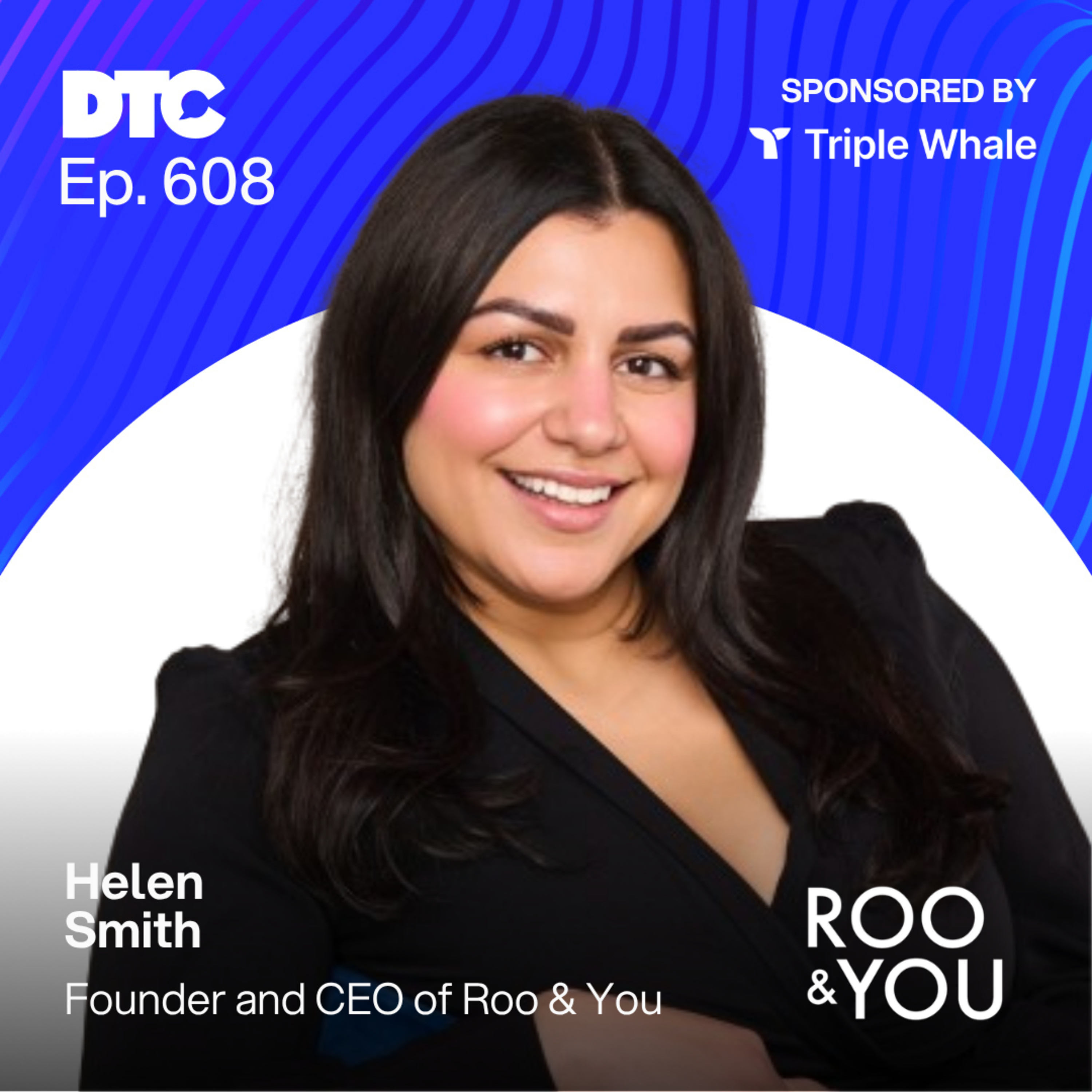
Well, to back up today, I'm joined by Haylene Smith, founder and CEO of Rue and you, the family owned brand behind the Joey Play couch and a growing lineup of kids and family products. She built the company from scratch, bootstrapped it. It's reached over a hundred thousand families and she's grown Ruin youn to a brand with major licensing, collaborations and national recognition. I want to get into how she did that and what's actually driven growth and what building through a hard year has actually looked like behind the scenes. When we met in Las Vegas at Shop Talk this year, you're saying this was one of your most successful years yet, but also one of the hardest years yet. And I wanted to just jump right in to that statement and what is making this both the best of times and the hardest of times?
- [03:15]
A
The hardest of times would definitely be the tariffs. As everybody, I'm sure is aware of that. That really was tough for us this year. We just, I guess I'm always look on the bright side kind of person. So I'm like, it'll go away. It'll never happen or be a short time, but. But yeah, it stuck around and that's been super awesome. And you know, with the war and everything else that's been going on, prices of shipping are going up. So it's just been rough on that side because, you know, you want to keep prices the same for your customers, but not always possible because there's just so much eating away at your margins at all times. And yeah, so, yeah, that's been fun learning.
- [03:58]
B
So talk to me about one of some of the changes you've had to make or how you've kind of dealt with with these big challenges this year due to tariffs.
- [04:05]
A
One of the things like about us is we always want to be as transparent as possible with our customers. So instead of raising our prices and just kind of rolling in the tariffs that way, we just put it as a line item on our website. So we kind of just did that for a while and then we started shipping just directly into the US to a 3 PL there to, you know, kind of negate some of those issues going on. So that's been kind of like the biggest thing that we've had to do.
- [04:31]
B
All right, well, take me back to the beginning. You've got a cool founder's story. I imagine it happened around Covid when everyone was stuck at home with their children. Is that close to accurate?
- [04:42]
A
Yeah, it Was actually fall of 2020 that we started. I actually was making mask lanyards at the time, hand making them. I started doing that like a few months before the summer, just with that coming out. Did 6,000 units of that that summer and kind of like lit a fire under me to do more. So my kids were at an age where they were, I think they were one and a half and three and a half. Somewhere around there they were starting to build forts with our couch. And I love my sectional, which I still have, and I've had it since before we even had our first. I didn't want them ruining it. So somebody told me about a play couch. At the time there was only one company making them in the US and they had a huge wait list. And I was like, why is nobod else doing this? So I kind of just took a look at it and I took a different perspective from how the product was just from like a parent's perspective because the people who created the other one were college students. So we added water resistant liners and covers over the zipper so your kids couldn't open it and pick up the foam and things like that. But yeah, from there it was like, how do we sell to people when we don't have the product? We're brand new, coming out of the blue, like, hey, it's me. Some stay at home mom buy from me. And I thought about what would make me trust a brand to buy from them. And so I went into Facebook groups and you know, I went live and I took videos, pictures, answered as many questions as people had. And I did that for a couple of months before our pre order and we created our own group where you had to be in there to be part to participate in the pre order. And from there we kind of just built a community around, around the business. But I also wanted a place online that parents would go to and just connect and not be judged and things like that. I found through Covid joining groups that it was a lot of judgment happening and people are pretty savage online. So I wanted to create something where there was none of that. And that's like the one strict rule we really have in our group is that there's no being mean to anybody. If it is, you're out. Like it's one strike, you're out. Just be kind. And that's all we care about in there. So the community has definitely been a really big part of our growth.
- [07:04]
B
Did you feel outside your comfort zone when you were jumping into, into those conversations and going live and Things like that, or did you have a background where that felt natural?
- [07:12]
A
So before starting the business, I had a quasi mommy influencer phase. So I was comfortable talking online and just talking to people. And I generally just enjoy meeting new people and talking to them about things. So it was really natural to me. I felt more comfortable once we were in our own group because I was like, okay, this is like my community and these are the people that, you know, want to, want to know us and talk to us and things like that. It's not going to be some of those savage people out there.
- [07:44]
B
Yeah. And the product, it's, I guess, dealing. You're always going to find savage people. But it's such a joyful product. Right? Like literally building pillow forts and things like that. It's such a, such a playful memory for, for, you know, that you've had when you were a kid and that you're sharing with your children. How was the feedback? Was the feedback, aside from a few savage comments, was, was the feedback just instantly sort of like, I'm in, I want to buy this?
- [08:07]
A
Honestly, it was like, it was such a shock because I was like, okay, like we're gonna ship this from my basement like we do with these mask lanyards. No big deal. Let's just go live with this pre order and about two containers. And we had to stop the pre order because we're like, where are we gonna ship this from? What are we gonna do? So yeah, it was, it was really surprising and it was, it was such a cool feeling seeing like so many people rushing to the website and then just like, it was just like nothing I've experienced before. So yeah, it was really cool. And the next day I woke up and I was like, okay, like we have something. Like I knew the quality was there, but it was like, how do we make sure we translate that to customers? Especially when nobody else has it and they're not going to be having it for months. But from like that first one, it was like, we need more pieces because there's essentially just really large building blocks. And I was like, why is there nothing else? So, you know, with my background in education and having kids, we just expanded very quickly on our add ons and lots of different shapes to be able to just make bigger and better for it. So.
- [09:18]
B
And when it came just, even just backing up to getting the product created, how did you do that? Did you find someone who'd built something like this before? Did you find someone who'd built couches or cushions and sort of explain the Vision to them. How hard was it to translate what you wanted to do to a manufacturer?
- [09:34]
A
I reached out with, like, sketches and measurements and things like that. And to a ton of manufacturers, I got samples, like, told them what kind of fabrics I was looking for. We had to get like all the safety, like anybody I even order samples from. First thing was give me your safety reports for everything that is being used. So from there, when we got the samples, we just tested them out with my kids and just looked through which ones felt like the best quality. And then I ordered a few more samples from there, tested those out, and then finally we. We decided on one. But for me, it's like, yeah, it was just like, go after it. And I feel like if there's something that you really want, you can figure out how to get to it. So I just was like online googling how to find manufacturers, who to contact, and then just reaching out to everybody and getting their information and their background and things like that.
- [10:27]
B
This was all before Claude could just walk you through this process. You had to do it with your own brain.
- [10:32]
A
Imagine I had AI back then. It would have been a lot easier.
- [10:36]
B
Well, it makes me think of what an age of empowered operator we live in now, right? Where you can sort of have this co pilot to do almost anything you want to do. And maybe we'll get into maybe how you're using AI a little bit later. What did the product testing look like? Was it literally just like how, you know, how obsessed are my children?
- [10:55]
A
Yeah. So when it came to new pieces, I would create the design and I would just put it in the playroom and see what they would do with it. And that was like the first phase of it. Will they use it? Are they interested in it? How are they using it? And then it was what else we could do with it as the parents. So if I put something in there and they just had no interest, and I was like, don't want to even do it. But yeah, it was just like, it's so crazy for me to see, like, when people buy it and they do an unboxing, you instantly see their kids. They jump on it. They start trying to do things. They don't know what it is, but as soon as they see it, they start doing what it's meant for. And it's like the coolest thing. And it's just like seeing how their imagination works is amazing. It's just they come up with things that we would never even think of.
- [11:43]
B
What do you think the parents cared most about with the Product that maybe other people from the outside might underestimate.
- [11:50]
A
I think the safety factor was a big thing just because, you know, it's products that you're having your kids play with. So you wanted to make sure that it has all the safety and things like that. And that was, like, a big thing that we got asked a lot about is, do you have testing? Has it been safety tested, chemical testing, things like that? I think that was really important. And the other part was just the quality and how long it's gonna last because it's such an expensive product for your kid. $300 couch. So, you know, it was like, making sure that it's gonna last you.
- [12:19]
B
It's expensive. But at the same time, especially during that time where so many of us were at home with our kids, it felt, I'm sure, like a small price to pay to have your kid not on a screen, not to judge, but. But doing an activity that was physical in your home, that was safe, that was fun. Like, I imagine that was a big. It was easier for parents to maybe get over that hurdle a little bit because of. Especially because of the time.
- [12:43]
A
Yeah. I think the timing was honestly, like, just so helpful for us because so many people were stuck inside. But as much as, like, that one product might be expensive, it's not taking the place of so many other things you would buy. They're like, the biggest thing that we always see is parents are saying, like, once they have that, their kids don't want anything else. They don't want to play with anything else. Because, like, just. Even for me and my kids, they had a ton of toys, because my first was the first one, both sides. And they would take it, they would dump it, and they'd be like, we're bored. But with this, because you can do so much with it and you're active. They just. They're always playing with it at all times in all the ages. Like, over the last five and a half years, my kids are still playing with it every day. And I think, like, it being modular and being able to be used for so many different things is, I think, also one of the things that makes people be okay with spending that money. So it's like, you know, they have their own space to set. They have their own things to do that keeps them busy and keeps them active. And there's just so many different ways you can use it. And we have, like, parents that use it when they have babies, and they need to lay beside the crib for hours. And now you're not on the floor. You got a nice piece of foam to lay on?
- [13:55]
B
Yeah, a hundred percent. So talk to me about the go to market then. So you went to market in the groups that you're in in this super organic fashion. So many parents weren't even available, you know, aware, especially at the time, weren't aware that anything like this even existed. So talk to me about how in the early days, what did your marketing look like?
- [14:14]
A
So we did no paid for the first three and a half years, all completely organic, word of mouth. And it was just honestly building that community, inviting your friends to the community, making it a place where people at that time, they wanted somebody else to connect with and it was positive and they would see all the fun that's happening in there. And then we did a lot of like giveaways and things like that on Instagram to get more eyes on the brand. So I think like, honestly, for the first three and a half years, that's kind of how we did it. And I was very involved, I'm still very involved in our community and connecting with our customers. And I think that's always been really helpful because we ask them what they want to see, what they're looking for, what their feedback is. And I think that also has helped with our growth because they feel like they are part of it and they really are. We are where we are because of them.
- [15:07]
B
Is there a point where customer feedback shaped the development of the product in a way that you weren't thinking about?
- [15:12]
A
I don't know about that. I think there's like changes we've made due to feedback. Like one of the products we have the pouch, which is a modular ball pit. The zippers used to zip up and after the feedback, the zippers now zip down because it just wouldn't stay up as long or it would be really easy for it to come down. So it was. Things like that has really helped and just really like, hey, we'd really love to see this kind of fabric or I'd like something more wipeable or a way to take it outside. And those kind of things have helped us add new pieces. So like we have covers that you can put on and take your couch outside the side and it's completely fine and safe. You don't have to worry about it.
- [15:51]
B
So no ads for the. For the first long while. Have you moved into ad supported model at this point?
- [15:57]
A
Yep, we started doing ads probably a year and a half ago, something like that. I think honestly that's been more difficult for me personally. Like instead of like, from the organic, like I can. The organic side I can do with my eyes closed. I think that is just like so ingrained in me. But the market, like the paid marketing side, I just don't get it. I get it to a point where it's like, I know what I want to see because I probably bought from every brand that I talk to because I'm just easily sold. But it's just like finding somebody to work with that can handle that because we've always had a really small team and yeah, it's just finding an agency that gets us and is really good at what they do. So I think that's been the hardest part and just figuring out how to I guess, market to Canada and the U.S. and different kind of customers.
- [16:52]
B
Does the. And just back to the community for a minute. That takes place on. Is that a Facebook community or an Instagram community? Both.
- [16:58]
A
The community is on Facebook. That's where you get early access to sales or to drops and like where we do sneak peeks and like we do like live sales, things like that. So the group gets like first access to everything. And that's kind of where all the magic happens, I guess.
- [17:19]
B
And I think you mentioned the zero tolerance policy. That must be because I think that's people's. Sometimes their worry with communities is they can kind of spin out of control or get people on there selling or get bad vibes or. But. But just having that like zero tolerance policy for nastiness has been critical to keeping the community active, eh?
- [17:35]
A
Yeah. I feel like when I created that community, I thought about all the things I didn't enjoy in other communities that I was in and I was like, what would I want to see? Where would I feel comfortable sharing? Not just about the product because like, well, it was built for it to be just our community. I wanted it to be a place where people could actually go and connect. So that's kind of what I looked on. It was like, what did I not enjoy? What needs to be the rules from the get go. So instead of like continue to try to change rules as things happen, it was like, let's come up with these rules that we're gonna stick to. When you join, you know what it is, you know where you're getting and that's just. It is how it is. And like, that doesn't always like jive with everybody because, you know, everybody's like, oh, you're like, you're keeping me quiet and I have freedom of speech and things like that. I'm just like, you be nice, you can say whatever you want. Like, just be nice to each other.
- [18:29]
B
That was one of the first rules I learned as a kid. I don't know how accurate. If you don't have anything to nice to say, don't say anything at all, always.
- [18:35]
A
And I'm just like, do everything with kindness and you'll be good to go.
- [18:39]
B
Does the community inform your ad strategy at all? Whether that, I guess that's whether you're like getting UGC or sort of content from the community? And does do the ads feed back into the community in a way and that you're trying to like drive people into the community through your, your maybe your paid ads or your retention even?
- [18:58]
A
Yeah. So it is part of like our marketing to try and get more people back into the community. A lot of what we do does come from there. We also have really, really amazing customers that they're just like, do you need anything? Do you need content? Do you want us to help with this? We have honestly, probably the best community ever. I don't know what other people's communities are like, but for me, I'm just like always like so in awe for like how amazing and helpful they want to be to us. And yeah, like when we were doing our last round of ads, we needed really specific things and I reached out to our community and they're the ones that got us the assets. And yeah, they're just like, they're a really big part of what the business is.
- [19:40]
B
I'm hearing that more and more how essential that organic Flywheel is to any business. The other big piece of your growth that I've seen you talking about on, on LinkedIn and such is the licensing, partnerships and brand expansion through those efforts. Talk to me about, about how came about.
- [19:58]
A
So when it came to the licensing, we actually had somebody reach out from the Wiggles. And I was just like, what the heck? I was like, this is cool. So we talked to them and you know, we started with them, we did a co op with them. They're absolutely amazing. They're part of the marketing, they're part of everything. And from there I was like, this is like, instead of it just being like a, oh, here, let's make this because people will buy it. So this is really great for marketing and building trust because, you know, you're working with these really established brands and things like that. So from there I was like, okay, I'm going to make my list of who I want to work with and just going to go after it. And I remember Everybody was like, nobody's going to respond to you. Like, you've been in business for, like, a year and you're going to reach out to these companies that are huge, and you're going to say, hey, let me make your product. They're not going to respond. What's the worst is they're going to say no or they're going to ignore me. So I was like, hey, I'm going to go on a LinkedIn hunt and just start reaching out to people. And did that quite a bit to, you know, make some partnerships. I was also really, really fortunate that one of my founder friends, he made an introduction for us to wb. And, like, that was, like, Harry Potter was, like, at the top of my list. We are huge potterheads in our family, and that was, like, the top dream collab. And so when we did that, I was, like, so excited. And everybody being so, like, excited to work with us encouraged me more and made me more confident each time I approach somebody else. And the way I always go about it is everybody does the same thing when it comes to partnerships, right? Like, it's always, like, really in your face partnerships. And, like, that works so well for, like, smaller products or clothing, bedding, like, things like that. But when you have a piece of furniture, you can't just have, like, super in your face logo slapped on all over the place because you can't put it away. So I wanted to create something where, you know, the child recognizes the characters and is excited to see it, but the parents are always, like, also really excited to have it in their house. And they're not like, oh, my God, I need to put it away. Somebody's coming over. I don't like how it looks in my house. So that's kind of like how I approached it with all of our partners is like, I want to keep what your brand is, but I want to, like, meld it in kind of with what we try to do of, like, making it really esthetic to fit into homes.
- [22:29]
B
I was going to ask about that because I'm sure there are a lot of people that are buying this to start with, or they're at least justifying it because it does look good in their homes or it looks unique in their homes. And not everyone has a playroom, I guess, Right. So I imagine you could be louder with some of the collabs. If a product is going in a playroom that's just for the kids. But so often we're on top of each other and there really isn't a lot of distinction between playrooms and rooms in, in parents house with young children.
- [22:56]
A
No, there isn't. And like some of it is because, you know, if they're in the playroom, maybe they're not in the same area that you're going to be in doing like maybe making dinner. You're like doing some work or something like that and being able to have something that stays in your, like your main area that you can use. I think if you can do it, why not? Like then you're always still in like the same area. And like the way our house is, is like you walk in and there's like, you know, the formal sitting area, then the dining room and our formal sitting area, up until probably, I think it was a year ago, was just foam. And my mom was like, like, people are going to come over and they're just going to see foam here. Like it's kids stuff. And I'm like, I have a brand where I make this, but also this is our house and we have to use it how it works for us. And like, why wouldn't I have like the foam there? Because like the thing with the foam is I made it all so that when you put it away, you're not using it. You can kind of set it up like its own little mini living room for the kids. So every piece works together to create like a side table or an ottoman or just slide underneath the couch itself.
- [23:59]
B
With these collabs, are they, I don't want to say one way, but are they, you know, you're licensing the images, putting it onto your products. Is there ever a reciprocal aspect where they're promoting your product with their, you know, with their licensing deal to any of their audience? Is there a way that, that these partnerships grow you incrementally to their audience, or is it just through then advertising this imagery on ads and in your retention program that you kind of expand your market through these partnerships?
- [24:25]
A
So that was the thing that I had to learn in the beginning. For me, it was like kind of like stars in my eyes. I was like, whoa, yes. You want to work with us? You want to work with this? Yes, yes, yes. And I learned very quickly, like one of the things was like making sure that we are getting like that support from the brand because although they are allowing us to use their ip, we are also advertising for them by having this product that is for their fans. So they are like, they earn from it, we earn from it. Like it's just like, you know, and the way I see it as like it has to be a two way partnership and it kind of depends on the brand and what you'll get. And one of the things that I always ask now is what will the support look like from your guys side and if we'll get any. And I think that's always really important to me now that you know I have a little more experience in it. It's like, you know, that's something that we want to have as part of this and I don't want it to be a one way thing because I just don't think like I don't think it's good for anybody that way because then you're paying for it, you're doing all the work and you get to use the ip but like where's the partnership portion? And I think it's really interesting which brands are like gung ho for it and which ones are not. And then it kind of took me by surprise when some weren't. But like a brand like wb Amazing. They are so collaborative. They've been one of the best partners that we have had and our longest partnership and like working with like the Mood Buck team who are Blippi and Cocomelon. Incredible. Like the way that they were so supportive in everything that we did, I was like that's really, really cool. And I'm like that is somebody that I would want to support not just like from this side but like from like you know, a consumer side. Knowing that they are such like such a good company, such nice people and they are about like working with everybody and like helping everybody. Like kind of having that two way instead of being kind of like one sided.
- [26:31]
B
I imagine for IP like Baby Shark or Cocomelon or these ones that are, that are based on like I bet it's going to be easier to get a two way partnership with you know, IP like that versus like Batman in a way. Like Batman's probably not, you know, writing ruin you into his comic books for instance. But when you've got it with Baby Shark or these brands that are focused more on children, there's probably a better opportunity for collaboration.
- [26:56]
A
Yeah. So one of the things we always look for is just a way to support and announce the partnership on social media, on the channels that they're on and doing things like that, emails, giveaways. So those are the things that usually I'm like I want to do with our partners and hope that they'll be on board for. But yeah, I would love to find a partner where we can like do like something like super, super custom like, with like, let's say it's the cartoon and it has, like the Joey inside of or something. But yeah, like, I think, like, right now it's just like, mainly just like social media marketing, things like that, like whitelisting ads. And some have been like, so, like, amazing about things like that and having our ads running on their. Their own main accounts.
- [27:48]
B
What gets harder operationally when you enter this licensing world?
- [27:52]
A
Again, it's like something that is more based on the brand, how long it takes for approvals. I think when it's like a brand that has their guidelines super structured and they give it to you from the beginning, you know, what you can do, what you can't do, all that stuff, it goes by so quickly. And the teams are usually pretty, pretty quick about giving you the feedback, but then there's like, somewhere it takes forever. And they're like, really, really specific about things they want to see and they don't want to see. And, you know, they might not be more open to our feedback. Like, we did work with one where I'm like, I don't think this is a good idea and it should be like this. And yeah, we tested it out to prove a point. So. But yeah, I'm like, you have to be open to a little bit of change when it comes to this and being able to kind of make it work. But I think, like, it's that working with some, like, a company that has really strict rules about what they want to see, I think that's probably been the hardest part and kind of where a lot of the stalling happens when it comes to this.
- [29:00]
B
Is there anything smaller brands should know before chasing partnerships too early in their life cycle?
- [29:05]
A
Only do it strictly for marketing, especially when you're smaller. I think, like, that is. That's the one thing that I learned very quickly, is that it is great for marketing. It is great for building brand trust. But I would say don't go into it being like, okay, this is gonna, like, make me rocket ship and I'm gonna be like, you know, rolling around and money or something like that, because there is so many things that go into it. So, yeah, great for marketing and building trust, though.
- [29:36]
B
Great for marketing. But you have to have your product market fit. You can't rely on it to like, oh, this will. Once I have Batman on it, it'll really sink into my audience or whatever, right?
- [29:44]
A
Absolutely not. Yeah. I think, like, a lot of people do view it that way. They're like, you know, the brand will carry it. But like I said, they're not always going to be supporting you in that way to kind of get your name out there. So then you have to make sure that who you're working with is going to work with your audience, because if it doesn't and you're also not getting any outside help or like, any kind of eyes on your brand from their side, then doesn't always work out the best. Like, you just have to make sure it works for your business. So it can't just be like, this is what's doing really great right now and we should work with them.
- [30:20]
B
I feel like you put your out. You've put yourself out there a lot in the. In the past year or past couple years. I think you were on quite a roadshow when I met you at Shop Talk. You've received some great accolades and recognition from some publications. What. What's that been like this year when you've. And what have you maybe gotten from putting yourself out there more?
- [30:38]
A
I will say I tend to be a little more shy, except in our group, where I'm very comfortable. But it's helped me build my confidence in, like, being able to put myself out there a little more. But a lot of, like, the accolades and things like that, definitely, like, more of a confidence booster because, like, you know, I feel like as founders, we're always, like, online looking at other founders, following each other, like, what's going on. And there's some that are so, so good at talking about where they are and how they're doing and, you know, just kind of like building, like, really building in public. And you do a lot of that comparing, and you have a lot of that imposter syndrome. And I think that, you know, for me, that's been really, really hard. And one of the things that's kind of kept me from doing a lot of things. But yeah, just this past year, kind of putting myself out there and putting myself in these uncomfortable positions, I think it's helped build my confidence because once I start talking to them, it's just like, okay, like, we're not so different. And, you know, we are kind of in the same place having the same kind of issues. But I feel like not enough people talk about all the things that are going on behind the business and all the hard times and talking about all the good, and then, you know, then you're like, oh, man, why am I dealing with all this and nobody else's? What's going on?
- [31:59]
B
So were you able to receive from this from the community, from putting yourself out there? Were you Able to receive any really meaningful advice or about maybe how to handle the tariffs or some of the challenges that you've had this year?
- [32:11]
A
Yeah, more just commiseration, maybe more commiseration. But, yeah, I, like, kind of. I'm always looking for who's talking about the things that maybe I'm going through, people that I can connect with or, like, a brand that I'd really look up to and reach out. And we'll just, honestly just be like, how are you handling this? And when it came to tariffs, I was like, okay, who do I know that is shipping from Canada into the U.S. and that might actually respond to me or whatever. And, you know, just like I did with licensing, I just send out some messages like, hey, how's it going? Do you want to be friends? So, yeah, I think it's been helpful. But I'm very, like, particular about who I reach out to, because, again, with, like, my comfort level. But, yeah, I think I'm. I'm maybe more choosy with who I message when it comes to, like, founders rather than brands. Because with the brands, I'm like, they say no. They say no. Like, I probably won't see them again. But the founders, I'm like, oh, well, I might run into them and it's gonna be kind of awkward, but you gotta do what you gotta do. So when I get in places, especially when I'm in person, I try to really push myself outside of that comfort zone. But then there's, like, people like you who are, like, super easy to talk to. And, you know, I feel like you kind of, like, have this, like, kind of energy about you where you, like, start talking to people and you, like, you make them kind of open up and feel comfortable talking to you. So I think that's also the other thing that I've, like, really enjoyed and that has helped me through this past year putting myself. I was just, like, meeting people that, you know, you may think, oh, my God, like, maybe they won't be that nice. But then they're like, actually, like, really cool and easy to talk to.
- [33:57]
B
It only took me a year to convince you to come on, so I
- [34:00]
A
must be doing something right me thing where I'm like, do I want to go on a podcast? I'm going to watch it after. What am I going to think about it? But I'm like, you know what? It's fine. And I will say one of the other reasons I actually started saying yes to more was I did for the Globe and Mail. They had an event for the Top growing companies. And they asked me to be a speaker. And I was like, I'm going to do it. And I was so, so nervous because I'm like, the other people that are up there are just like, these people who are so successful, they've been doing this for so long. They have, like, this like, amazing professional background. And I'm like, here I am. I was like a child youth worker, stay at home mom. Now I'm like a founder that's still like, figuring it out along the way. And I'm like, what am I going to have to say next to them or I'm not going to sound smart enough. And I think that's one of the biggest things that for me has been hard for me to get by, is that I'm always like, I listen to other people speak and I'm like, they speak. So, like, just like, they sound so smart. And I'm like, I'm just like me. And I say like a lot. But being at that, so many people came up to me after and were like, I love how, like, genuine you were. And it was so relatable. And that kind of like shifted my mindset. And I was like, okay, there's probably other people like me that are thinking, I don't want to do this. I'm not good enough to be doing this, and I shouldn't be up here with these people. But then it's like, you go up there and then maybe somebody else will feel comfortable. So I'm like, okay, I'm going to make myself uncomfortable just for a little bit, and maybe it'll help somebody else come out of their shell and feel like they do deserve to be up there.
- [35:45]
B
When I started doing podcasts many years ago, it was 2013, I had a startup called Tap for Tap, and I had a YouTube podcast called Tap, that app for monetization, for how to monetize your app. And I remember just thinking, like, I was throwing myself into these conversations with app developers and it was like, uncomfortable because I'd never done this before. But I was just like, every day I'm going to do something that kind of makes me feel uncomfortable. And that's been a good. A good sort of like, lesson for my whole career is like, if you're not doing things that make you feel uncomfortable on a fairly regular basis, you're probably not putting yourself out there hard enough.
- [36:17]
A
I agreed. And, you know, the more you are out there talking about it, then, you know, maybe the more people that you help. And that's one of the Things about when I did this, I was like, I want to be able to have other people that have thought about these things, be able to think that they can do it too. And I truly do believe that, you know, if you really believe in something and you want it, you go after it. It can happen. And I'm like, if you're like, oh, it can never happen, it could never be me. You'll never know. You're going to miss out on opportunity. And I think it's just better to go after it than to just doubt yourself all the time. I always say that I live in the clouds with butterflies and rainbows, and that's where I like to stay. Because I think it's just like the worst that happens is a no. So who cares? Just go after whatever it is you want and see what happens.
- [37:03]
B
Talk to me about just US expansion. I think you were, you started in Canada mainly when you were just early on. Did you tackle the US Fairly early and then what percentage US Canada is the business at this point?
- [37:14]
A
Honestly, it was from the beginning we were Canada and U.S. and right now it's like 30%, 70%. And last year was supposed to be like the year that we really, like, tackled the U.S. and good times with the tariffs, that really helped. So, yeah, starting, starting that over this year, I'm hoping to do more of that. I think it's just like learning how to connect with the US Customer is, I think, where we're kind of trying to figure out. Whereas in Canada, I feel like in Canada we really, really gravitate towards that community and having those connections and. And I think in the US you got to have to like, kind of put it in front of them more and like, get them into it and like, why, like, why do you want to be part of this community and like, show them why you want to be part of this community? I think it's just like, it's been amazing to see how many people have been able to connect outside and like, will like, meet up across like states and things like that or across provinces. So, yeah, it's just trying to hit him more with like the paid, paid side, I think right now.
- [38:24]
B
And how has the paid side gone? I know you, you have, you have this great internal flywheel with your community. Have ads been a game changing lever for the business or still something you're trying to figure out?
- [38:33]
A
I'd say that we're still figuring out they are doing their job, but I think I'm just like, so used to the growth without it. It's hard for me to, like, kind of wrap my brain around spending to get sales, get eyes, like, things like that, and just understanding more about marketing. Like, I'll say, like, from when we started, I have learned every aspect of how to run the business except paid marketing. It was the one thing that I just, like, did not pay enough attention to. Like, I guess because we didn't really use it, so I didn't learn it. And, like, I've been trying to learn more about what all the acronyms are, which is just like, marketing is just acronyms.
- [39:14]
B
And I'm like, DTC podcast.
- [39:18]
A
Yeah. Like, I would say that most people, when we talk about, like, I don't know, CAC and MER and things like that, like, when we talk to, like, marketing agencies or anybody like that, they're like, whoa, that's crazy. And I'm like, is it. I'm like, it seems like it's not enough and it should be better. And yeah, just going from, like, that really organic, not spending into spending is kind of like. But, you know, you got to do what you got to do. So just trying to learn how to use it best.
- [39:48]
B
What about your current agency made you think that, okay, this agency gets it or. Because I imagine. I think that's. I talk to a lot of founders, and there are a lot of crappy agencies out there, and founders are often cycling through agencies when. When. Even when there's other challenges in the business, the agency is often the thing that gets cycled. But how did you nail down the agency that you're currently working with? And what. What did they do that made you think, o these guys get it?
- [40:13]
A
When we first got into it, we hired a consultant who then hired an agency through the creatives. And it was like, through that time, we were, like, learning about it, and I was like, okay, then we moved to an agency, and it was just like, my thing is, when I work with anybody is we're working with you because you're the professional, you're the expert. You should know what works best. And you advise me on what to do here. And I found, like, there was too much hand holding and. And, like, so much revisions and not getting the branding or it was always like, hey, maybe we should try this. Hey, we should try them. Like, this is not my wheelhouse. Like, why would I be? Why am I putting so much effort into this when we have an agency to run this, like, start to finish? And I just, like, I'm such a vibe person. And I don't know for that was there's no vibe, but with a new one. I actually met the founder in person at one of the events and I was like, okay, he sounds like he knows what he's talking about. I like what he's about. Let's see, let's meet the team, let's hear them out. And yeah, they just, they get it. They come to us with the idea, they come to us with the plans. They always have suggestions and they're just so easy to work with. And yeah, I love that I don't have to constantly be like, can you try this? What are you doing? This is not working. That's not working. And it's just like they're coming to us with all the information and all the ideas and things like that. And I just love that we have like an actual partner who cares about the business growing as much as we do. But yeah, it's just like been like becoming friends with them as well. And it's just like having that connection, I think is like, also like, really helpful.
- [41:53]
B
What growth lever are you most excited about over the rest of this year and into next year?
- [41:58]
A
Honestly, like, my biggest thing this year is to just grow the community even more than it has and finding new ways to grow it outside of how we've been doing it. Because I do truly believe, like, the thing that makes businesses stand out is who's behind it. Because at the end of the day, there's going to be so many brands that make the same thing. And sure, some of them are better quality than others, but you're going to also have some that might be the same quality. What is going to make you stand out? It's having that community is showing who you are giving them something outside of just the product. And so, yeah, I think, like, I'm most excited about seeing how we can like, grow and expand that community outside of just like where it is right
- [42:40]
B
now and transforming customers into actual advocates. I think that's the real switch there with, with communities when you've got a group of people who bought the product, but when, when you put them in a community, you have that great chance of actually turning them into advocates who are going to bring other people in. And you know, the product itself is probably. It has a great viral component because anytime someone comes to your home and you've got this and they have kids, they're going to see it and it's like the best advertising you could have is seeing their kids playing on your ruin you. Right?
- [43:08]
A
Yeah. I think we've never done content creator influencer things like that. But it's so big right now. Everybody's talking about it and I'm like, okay, how do we do something that is about our community though? Because my view is the people who are our customers, they know our brand the best, they know how to use the products the most, they know why it's great. And they're the ones that are spreading are the word about ruin you. And I'm like, if we start an affiliate program, I want it to be for our customers. I want it to be for people who already have the product, who know it and can actually speak to what it is. So we launched that in November and we did it just like we announced in our group to our email list. And we're like, come get an affiliate code. If you're a customer, let's get you an affiliate code. And you know, I want you to talk about, I want you to earn from those sales instead of like somebody that, you know, we have to send stuff to tell them all about it, things like that. And it's been so awesome to see how well it's done. And you know, just seeing like some of these, like moms that have never been like content creators, they didn't even have like these accounts and they created them and have grown them just by showing what they love about like our brand. And yeah, I think that's like, it's been really, really cool to see and really speaks to that community aspect because, you know, they're the ones that are supporting you. So I just want to support them back. And it's worked out really well for us.
- [44:41]
B
I should have asked this maybe more in the beginning, but is the Roux and you'd. Is that Roux from Winnie the Pooh or is what. Where did you get the brand name from?
- [44:49]
A
So prior to Roux and you'd. I had a brand called Choo Choo Baby Roo where I handmade teethers and pacifier clips and I had like silicone items. And so it was like Choo Choo Baby Roo. And it was a kangaroo. And when we first had the our drop, our first pre order, we were still Choo Choo Baby Roo. But we had that kangaroo as part of the branding. And as the company grew, we were like, okay, we can't continue to be Choo Choo Baby Roo because, you know, after like five, six months, my husband was like, you're not hand making stuff anymore. He's like, people are never going to get their stuff. He's like, can't continue to do this, but I love it. So we're like, okay, we got a rebrand, but we didn't want to get rid of the, the kangaroo and people used to call us Roo or something like that. And it was just like, okay, how do we make it about the community as well? So we made it root and you
- [45:40]
B
perfect communities in the DNA.
- [45:43]
A
So we do this, we do the rebrand. We've like, you know, put out like our corp and all that stuff and everything's been done. And the very first time I heard somebody say ruin you on like stories, it said the caption said ruin you. Like, oh no. Oh my God. But then I was like, you know what? I was like, it's actually really funny because it's gonna ruin your bank account, but it's okay.
- [46:08]
B
That's hilarious. Well, very nice if you had. I think you've already given some great advice to entrepreneurs and been a great example for entrepreneurs out there. But if you had any closing words for entrepreneurs who are, you know, I loved chatting with you at Shop Talk. Just like when you're building a brand like this, there's just one thing after another that you're constantly having to figure out how to do on the fly. And I think Socrates said, you know, the wisest among us is the person who knows that they don't know anything. So sometimes I always question when you see people out there talking and they sound fully confident and they, they're, you know, they're making these big declarative statements and Americans might be better at doing that than Canadians. I think Canadians might have a more built in self consciousness or something. But. But what? Any advice that you have for founders that maybe can really resonate with your
- [46:53]
A
journey out there, don't be afraid to ask questions. For sure, I would not be here or know anything I know if I was afraid of asking questions. I literally ask everybody questions. I don't care who it is, I don't care how it's going to make me look. If I'm like talking to somebody about something that I don't know about, I'm going to say, can you explain that to me? Can you tell me how this works, how that works? And I think a lot of people are really afraid to do that because then they feel like they don't, they don't look like that. They could be in the room with that person or they're going to get judged. But you know, at the end of the day, we're all just trying to learn. So definitely don't be afraid to ask questions and don't be afraid of. No, just go do it. Go ask somebody for advice. Ask somebody to be. Do a collab with your brand. Just go talk to people and go for it. And yeah, the worst is going to happen is a no, but the best is a yes. And who knows where you'll end up.
- [47:48]
B
And don't be afraid to come on the DTC podcast.
- [47:50]
A
Yeah. Made me very comfortable. So thank you.
- [47:53]
B
Well, thank you very much. And obviously if you're a parent out there or if you just like play couches, you got to go to Ru
- [48:01]
A
and you keep an eye out for other things that might not be child related to.
- [48:07]
B
Oh, I just see. Happy International Pet Day.
- [48:09]
A
Oh yeah, we have our pet stuff because everybody's pets are all over their joeys and all the pieces and we're like, we gotta make them their own cozy little spot that is the same quality and you know, has the liner because why do pet beds not have liners? Makes some sense.
- [48:26]
B
Does make sense. And it's. I also, it's important to have them separate. As someone who owns a pluffle that was supposed to be like my dog bed for humans. Like once your dog takes it over, then it just becomes the dog bed and I don't advise anyone be in it. So it's good to have them separated out, I think.
- [48:44]
A
I'm gonna be honest. My kids love our fetch and our lounger. They. It's where they watch movies. Each of them have their own little spot where they watch a movie. One's on a lounger, one's on the fetch and one sits in a big chair. And that's just how it is. And you know, we lost our dog last year, but we still have the pet beds in here and they still use it. And yeah, they're just, they're the same quality. So like people just take them and use them for themselves and lounge on it. But your doggie can go on it as well or your cat.
- [49:12]
B
And then you're Fairly Active on LinkedIn. So I'll maybe I'll advise people who want to follow your entrepreneurial journey to follow you on LinkedIn. Good follow. Thanks for coming on the podcast today. This was a lot of fun.
- [49:22]
A
It was very fun. Thank you so much.
- [49:31]
B
Thanks so much for listening to today's episode. If you're not a subscriber to our newsletter, you can do that right now at Direct to Consumer all one word co. I'm Eric Dick and this has been the DTC podcast. We'll see you next time.