← Dumb Blonde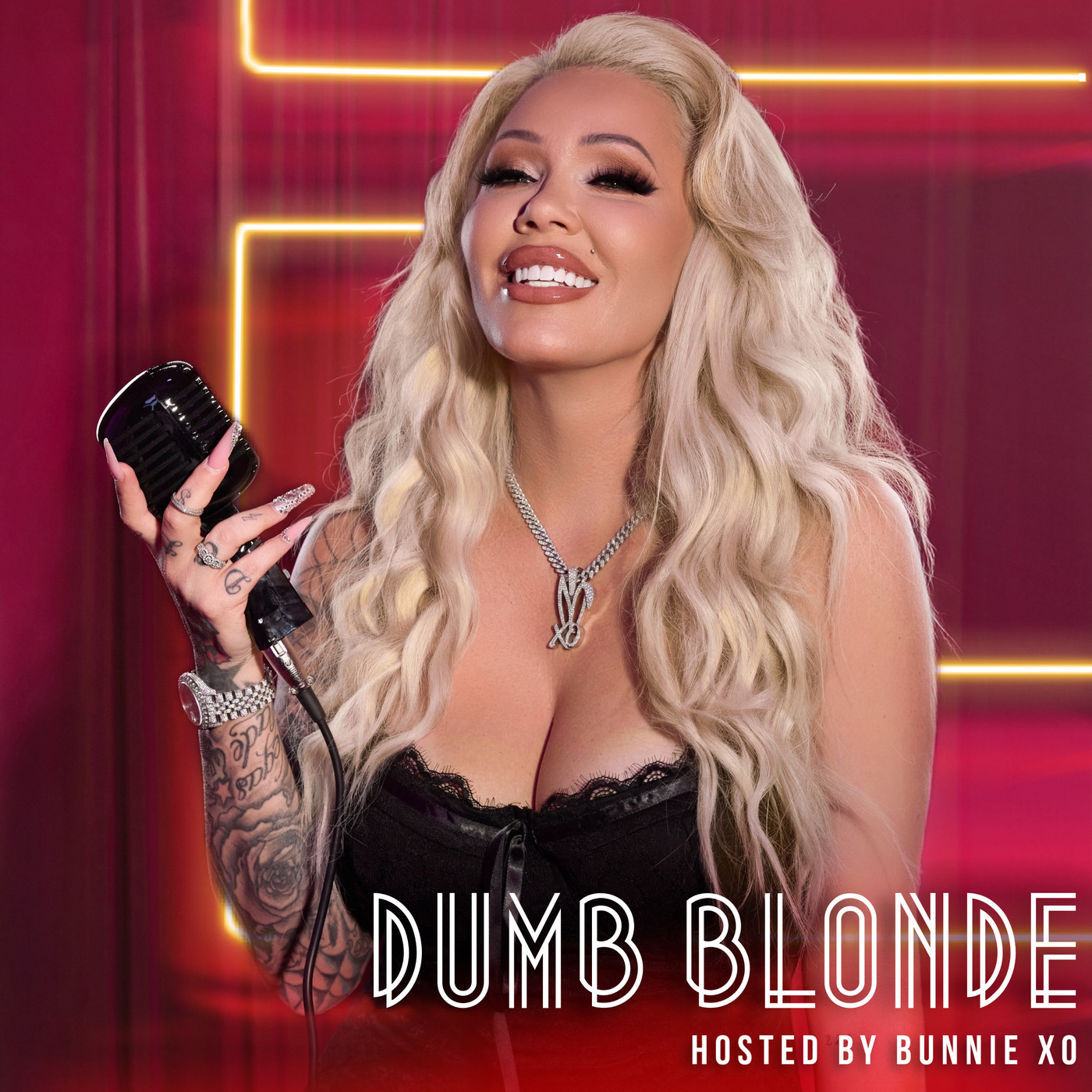
Loading summary
Transcript340 lines
- [00:00]
Bunny
You know, starting your own business or podcast sounds glamorous until you're suddenly the host, editor, marketer, accountant and social media manager all at once. It's intimidating and honestly, it can get really lonely when you're figuring it out as you go. When we launched the Dumb Blonde podcast, we had no clue how many hats we'd have to wear. We were learning everything on the fly and wishing we had someone or something to help us build the business side without the burnout. That's where Shopify comes in. It's like having a business partner who actually knows what they're doing. Whether you're selling merch courses or anything in between, Shopify makes it simple, seamless and totally doable. Even for a dumb blonde like me. Shopify is the commerce platform behind millions of businesses around the world and 10% of all e commerce in the US from household names like Mattel and Gymshark to brands just getting started. When I launched Bunny Xo Com, I had the vision, the passion and the products. But figuring out how to actually run the business? That was a whole new world. From building a website to managing orders and connecting with customers, it was a lot. That's where Shopify came in and completely changed the game. It's like having a built in business partner that handles the hard stuff so I can focus on creating and growing. Get started with your own design studio. With hundreds of ready to use templates, Shopify helps you build a beautiful online store to match your brand's style, accelerate your content creation. Shopify is packed with helpful AI tools that write product descriptions, page headlines, and even enhance your product photography. Get the word out like you have a marketing team behind you. Easily create email and social media campaigns wherever your customers are scrolling or strolling. And best yet, Shopify is your commerce expert with world class expertise in everything from managing inventory to international shipping to processing returns and beyond. If you're ready to sell, you're ready for Shopify. Turn your big business idea into Cha Ching. With your Shopify on your side, sign up for your $1 per month trial and start selling today at shopify.com bunny b u n n I e go to shopify.com bunny shopify.com bunny once the temps start rising, I realized I was back in the same worn out rotation. Same tank, same shorts, same everything. So I gave my daily uniform an upgrade with queen quints. Their pieces are easy, elevated and somehow make me feel more put together without even trying. Like 100 European linen shorts and dresses for $30. Luxe swimwear, Italian leather platform sandals and so much more. The best part? Everything with quince is priced 50 to 80% less than what you find at similar brands. By working directly with top artisans and cutting out the middleman, Quince gives you luxury without the markup. And Quince only works with factories that use safe, ethical and responsible manufacturing practices and and premium fabrics and finishes. I recently grabbed a few summer pieces from Quints, especially cuz I'm about to go out on tour with Daddy Roll. Like a super comfy organic cotton tee and cozy gym wear. That's my freaking outfit every day. The quality is top notch and the price. Totally worth it for how luxe they feel when I compare them to other brands. These pieces hold their own in terms of style and quality without the crazy price tag. I'm planning to wear them for everything this summer can casual hangs, gym sessions, or even running errands. They're perfect for keeping things cool and comfy while still looking put together. Treat your closet to a little summer glow. Up with quince go to quince.com bunny for free shipping on your orders and 365 day returns. That's Q-U-I-N-C-E.com bunny b u n I E to get free shipping and 365 day returns. Quints.com bunny and hey guys, I need to ask you a question. I want to know why in the hell are you not on Patreon? I don't think you guys even realize how much content we have on Patreon. Let me break it down for you. We have the Bunny XO show. We have Meet the D forts. We have propaganda. We have more shows that we're adding. And not to mention we have the visuals of the podcast. Head over to www.patreon.com backslash Dumblon podcast and sign up.
- [04:14]
Dr. Sarah Hensley
Funny XO Funny EXO Dumb Blonde podcast.
- [04:20]
Bunny
And Bunny rolls like Bunny.
- [04:25]
Dr. Sarah Hensley
Is this.
- [04:26]
Bunny
Thing on hello babies. Welcome back to another episode of Dumb Blonde. Today's guest is someone that I have been dying to talk to, Dr. Sarah Hensley. She's not only a relationship coach, but she's also a badass with a PhD in psychology. Welcome to the show.
- [04:42]
Dr. Sarah Hensley
Thank you so much for having me.
- [04:44]
Bunny
I am so stoked that you're here. I told you just a second ago that before you came on, I was researching and I was just like, oh my God, this woman's brain. I could sit here and pick your brain for days. And also, I didn't pick up on the Southern accent online.
- [04:59]
Dr. Sarah Hensley
Yeah, you know, people Ask me about my accent all the time. And it's funny because when I'm very relaxed, I have more of a Southern accent. And then when I'm, like, presenting, it kind of fades away a little bit. And I think that's because I took a speech class in graduate school, and they tell you, you know, you need to enunciate. And I think feedback I got was, like, lessen your accent. So I kind of. It kind of comes in and out a little bit. And sometimes people notice it when I do more laid back videos.
- [05:25]
Bunny
Yeah.
- [05:26]
Dr. Sarah Hensley
On TikTok.
- [05:26]
Bunny
I love the accent, though. I think it adds to your charm because you're already such a beautiful woman, and so you got that little Southern draw too. I feel like that would draw people from a psychological standpoint. I feel like that would draw more people in because it's so sweet and just, like, inviting. Is that wrong?
- [05:41]
Dr. Sarah Hensley
I don't know. You know, I don't know. It's just sometimes it pops up. And it's interesting because when I showcase my real life on TikTok, like, nobody cares. It's like it gets very few views, you know, like, you're. You're popular because you're cool, you know? And me, people are just like, get in your car. Shut up. Talk about the dismissive avoidant, you know? So it's like when. When I do have those laid back videos that showcases a little bit more of who I am. Yeah. You know, they don't. They don't do as well. People really just want to know about relationships.
- [06:10]
Bunny
I wonder if that's because you started your page as a niche, so it's like your followers followed you for that exact niche, whereas my followers know I'm just about shar crazy. So they're just like, oh, we don't know what we're gonna get, you know? But, like, with you, people want to learn and. Yeah, what's wild is I was talking to my husband last night and I told him that you were coming on, and he was like, baby, when you do. When you have doctors on the podcast, they. Speaking of my husband, you want to say hi to him really quick?
- [06:34]
Dr. Sarah Hensley
Oh, my goodness.
- [06:34]
Bunny
Sorry.
- [06:36]
Dr. Sarah Hensley
Hello, Jelly roll. Hi. I was just telling your wife that I'm seeing you in concert at Railbird. Yeah, I can't wait. Come hang. It's supposed to be a really cool festival. Yes, that's where we're from.
- [06:51]
Bunny
I love you, baby. I'll call you when I'm done. Oh, okay. I won't be done till six. I. I have two Podcasts today. Love you. Bye. Sorry, he just. His schedule is so busy that he literally, like, I have to get him whenever I can get him. But I was talking to my husband about you coming on last night, and he was like, baby, when you do podcasts with doctors, they go so viral because people just want to learn. So maybe on your page, it's just like, people just want to learn. They want you to teach them.
- [07:24]
Dr. Sarah Hensley
Yeah. They're like, tell me about the dismissive avoidant. Like, don't. I don't care about your house. I don't care about your dogs. I don't care about any of that stuff.
- [07:30]
Bunny
Just maybe start a separate page. Start a separate page. That's just your life and separate. You know, like, keep it separated, separated.
- [07:38]
Dr. Sarah Hensley
And I do that.
- [07:39]
Bunny
So what made you get into psychology and then also get into being a relationship coach?
- [07:45]
Dr. Sarah Hensley
Yeah, it's been a really long journey, so, you know, I really did not know what I wanted to major in in undergrad. I just kind of picked psychology because I liked my intro class.
- [07:55]
Bunny
Yeah.
- [07:56]
Dr. Sarah Hensley
And I really liked the major. I was very interested in social psychology, which is really the study of human interaction. And. And I wasn't really sure when I graduated if I wanted to go to law school or if I wanted to go get my doctorate in social psychology, because just having a bachelor's in psychology, the career aspect was a little bit more limited with just a bachelor's degree, so I knew I wanted to move on. I ended up going to Texas and doing some stuff at the University of Texas, volunteering there, and some of the research labs. And then I moved back home. My parents had moved from Ohio to Lexington, and I applied at uk. I applied at a couple other places, got accepted to uk, and just kind of dove in and went for it. But what really got me into relationship science was that my marriage was really bad. So I got married the beginning of graduate school. And, you know, it's one of those things where you get married kind of young and you don't really know what you're doing, and. And it's all about partying and it's all about fun, and then you try to make a real life with someone and you find out it's not a good fit at all.
- [09:05]
Bunny
Regent sister.
- [09:07]
Dr. Sarah Hensley
Yeah. Saying it wasn't a good fit is being really nice. It was actually, like, really, really awful. And.
- [09:14]
Bunny
So was it an abusive relationship?
- [09:16]
Dr. Sarah Hensley
It was, yeah. There was abuse. There was a lot of infidelity on his end, and he actually. I don't know how much of My story, you know, or not, but he passed away in 2020 of his addictions. And that is something that has been a really big motivating factor in what I'm doing now. But to kind of go back, I really was just trying to save my relationship. And so as a social psychologist, I was a trained scientist. So I was looking at the research on narcissism, on attachment, on just trying to figure out, you know, what is this dynamic, like, what is going on and how can I fix it? Because I was the fixer, you know, And I wanted to try to make it all better. And I would just read research and I would just try to apply what I was learning. And unfortunately, it was one of those things where I knew so much about the problem, but I just did not know how to fix it. And I'll admit I had issues too. I had pretty significant attachment issues. So, you know, it's not all one sided. But yeah, I became interested in that. I also have another concentration in health psychology and those two things kind of merged together. I was really interested in, for example, how a healthy marriage is a buffer against the effects of chronic illness and how bad marriages make chronic illness worse. And why does that social support and that support in a marriage make such an impactful difference. And so I was really interested in that research. And then I went into the academy and was a professor for quite a long time. And I was at a smaller teaching university, really was just focused on teaching. But I taught all the stuff nobody really wanted to take, like statistics and research methods and that kind of stuff. So within those courses, I would use relationship science as examples of methodology and things like that. And I just fell in love with it. I mean, I'm fascinated by relationships, all kinds of relationships, but really romantic relationships. Why they work, why they don't work, why people do what they do. It's just always been something that has fascinated me.
- [11:19]
Bunny
Lipo used to be such a bad word. But we're all supposed to act like we love every part of our bodies. It's bullshit. You've put in the hours, the sweat, the discipline. And yet your body's acting like it's on vacation. If that sounds familiar, you're not alone. Getting your body back is so hard. I get it. That's why I want you guys to check out Sono Bello. Our friends at Sono Bello are offering you their best deal. You're now included in their spring savings event. But appointments are limited. So please get on this Sono Bello doctors are masters in Micro laser fat removal. A brilliant technique that removes stubborn fat permanently wherever your problem areas. Tummy, love handles, thighs, arms. It's gone. And in one comfortable visit, eating healthy and workouts are great. Keep doing that work. But if you want to lose that stubborn fat in one visit, check out Sono Bello Save Big during their spring saving event. Schedule your free consultation now@sono bello.com blonde that's sono bello.com blonde I think it's amazing that you could that. Because I'm. I have the same personality trait as when something hurts us deep enough.
- [12:27]
Dr. Sarah Hensley
Oh, yeah, we.
- [12:28]
Bunny
We don't let it. We don't become victims. We want to know the why and we want to know how to fix it.
- [12:34]
Dr. Sarah Hensley
Absolutely.
- [12:35]
Bunny
Why do you think so many women are fixers? Whereas, like, I know there's a couple of men out there that are, but the majority of the fixers in relationships is women.
- [12:43]
Dr. Sarah Hensley
Yeah.
- [12:44]
Bunny
Is it just a, like, motherly instinct to want to. Is motherly the right word to use?
- [12:50]
Dr. Sarah Hensley
Yeah. I do think there's just some cultural conditioning there where women are supposed to be caretakers, are supposed to be nurturing, and a lot of women are behind the scenes, you know, holding their families together. Right. Making sure everybody has what they need.
- [13:04]
Bunny
Yes.
- [13:05]
Dr. Sarah Hensley
And I think that. That there's a lot of cultural conditioning around that. I think there's. If we look at the attachment science, too, there's such a difference in how little girls are raised versus little boys are raised. And little girls are often raised to have emotions and their emotions are more accepted, whereas little boys, it's. It's don't cry. Right. It's don't. Don't show your emotions. And so I think women are just by nature the nurturers and sort of wanting to make sure everybody's okay.
- [13:33]
Bunny
Yes. So circling back to what you just said about daughters and sons being raised differently, now that we're in such a different era of life, I feel like people are a lot more open to raising boys differently. How would you suggest mothers and fathers open up that emotional, you know, just be able to teach their sons how to be emotional without being, I guess, too overly emotional and.
- [14:04]
Dr. Sarah Hensley
Yeah, absolutely. So I think with parenting, the key is one consistency two, it's. It's coming to the table calm and regulated. Because if your child is very dysregulated and very, you know, has very high emotions going on, if you come to the table and your emotions are high, too, dysregulated, people can't regulate. And so I think for little boys especially, validating their emotions is really important. So saying something like, hey, buddy, I know you're really disappointed about that, and that's understandable. And, you know, we still have to do this thing, you know, you can't go do whatever it is you wanted to do. So just giving that emotional validation, but with this calm nature. Right. And so you're not dismissing their emotions. I think little boys first. I have so many clients who don't even realize the depth of their emotional neglect in childhood and some of the things that their parents said to them. Right, right. Like, stop crying or I'll give you something to cry about. Right. Or lock it up. You know, quit that crying. And so for little boys, you know, a lot of them can be very, very sensitive. I mean, we do have genetic predispositions to be more sensitive or not. And if you have a more sensitive child, being able to validate by staying and staying calm and just saying, hey, that's okay, you know, I know you're upset, and it's okay to be upset, and you're not gonna get what you want. Right.
- [15:24]
Bunny
And that's life.
- [15:25]
Dr. Sarah Hensley
And so it's really emotional regulation with good boundaries with your kids. And I think consistency with that, holding your boundaries really consistent, but also not punishing them over their emotions and letting them know you understand that their emotions. And I mean, that's just part of respect. You know, I think kids need to have respect as well, which I feel.
- [15:44]
Bunny
Like kids nowadays do not have that. It's wild. Like, it's. It's kind of like an epidemic that's going on right now.
- [15:50]
Dr. Sarah Hensley
It is. It is.
- [15:52]
Bunny
Why do you think that is? Why do you think that there's such a lack of respect with children in the household?
- [15:56]
Dr. Sarah Hensley
I think because I think we are now seeing the Gen X kids that were such a lost generation and babies having babies type thing, severe attachment issues. Yeah. I mean, Gen X, they were the generation that just, you know, they're the lost generation. Like, nobody cared about them. They were the latchkey kids. They. They were neglected. And so they have a lot of. Gen X, has a lot of anger, you know, And, I mean, I'm the eldest millennial, so I was kind of raised as a Gen X kid, and my brother's Gen X, and I think You're Gen X, right?
- [16:26]
Bunny
I'm Gen X, yes.
- [16:27]
Dr. Sarah Hensley
Yeah. And so I don't know what your childhood was like.
- [16:29]
Bunny
Yeah, I got a lot of fucking issues, let me tell you.
- [16:33]
Dr. Sarah Hensley
I understand. I mean, I grew up with a bipolar dad you know, you never knew what you were gonna get, so. But I think with Gen X, nobody cared about their emotional experiences. It was very much drilled into them that life's tough. Who cares? Pull yourself up by your bootstraps. Go figure it out. I don't have time for you. And I think that they hold some anger towards that and that there's a lot of attachment issues in that generation in the elder millennial. And then now we're seeing babies, right? So we're seeing parents that are maybe more dysregulated with their kids because of their attachment issues. And that just continues the cycle of insecure attachment being passed on to kids. And then we have social media. I mean, kids are able to see anything and everything.
- [17:23]
Bunny
Oh, it's so bad.
- [17:24]
Dr. Sarah Hensley
It's so bad. And so they're mimicking and modeling things that are maybe too, too inappropriate for their development.
- [17:32]
Bunny
Yes.
- [17:32]
Dr. Sarah Hensley
And we have kid influencers now. Right.
- [17:36]
Bunny
And all the stuff that's coming out about, though that. Like the. The family vloggers.
- [17:40]
Dr. Sarah Hensley
Oh, yeah, like that.
- [17:41]
Bunny
I mean, it's just. It's really horrific that's happening right now.
- [17:44]
Dr. Sarah Hensley
Yeah. It's insane. And. And so I think we have another generation of kids that is kind. They're. A lot of them are being raised by technology. You know, I've had babies.
- [17:54]
Bunny
Like, I've had kids.
- [17:55]
Dr. Sarah Hensley
I've had babies. Yeah. And. And so they're just learning what they see. They're modeling what, you know, some influencer says on YouTube or whatnot. And.
- [18:03]
Bunny
Yeah.
- [18:04]
Dr. Sarah Hensley
And then when they give disrespect their parents because of their own attachment issues and their anger and the things that they've held onto from their childhood can come out right now. You need to respect me. Because that's how their boomer parents raised them. Like, you know, you are not deserving of respect because you're down here and I'm up here. Right. And so when you're modeled disrespectful, you're gonna want to give disrespect back. Because kids are human. They're human, and they want to be seen, and they want to be nurtured and loved, and they want to receive a certain amount of humanity and respect. And I think that we've just had this notion wired in that it's like, you know, you must respect me just because I'm your parent. Right. And I think kids push back against that. Like, I'm also a human being. Right. And so when my needs aren't met or when I don't understand why? This isn't fair. I need somebody to explain that to me. And we can cut them off and say, I don't have to explain to you. Right, because I'm the parent. But they're human and they need explanation and they want some understanding. That's how they are starting to learn to navigate the world.
- [19:10]
Bunny
Wow. Yeah, I just, I'm having flashbacks to whenever, you know, we got custody of our, of Jay's daughter when she was 7 years old. She's about to be 17. And I just remember I was raised by like here, no children should be seen, not heard household. And you know, it was very like, you're gonna work if you want to earn this. And like, I was so like almost militant in the beginning because I didn't know how else to be. And now compared to what I used to be to now is like, you know, in the 10 year process was, you know, she showed me that like, children are like just little souls and they're gonna do whatever they wanna do. We're just here to guide them, you know. And we get so much more of a positive response from her when we, I don't wanna say we're, we're friendlier with her. It's not friend, but it's more of like giving her a chance to be able to make a mistake and, you know, not drilling her for it. Whereas like back in the day when we got in trouble, we probably got spanked or like, you know, I, yeah, I grew up in a very abusive household, so it's okay. So, you know, it's just hearing you talk like that just makes me feel so much better because I'm like, okay, maybe I did learn something from her along the way. You know. Let's circle back though. I heard you say that your father was bipolar. What was your relationship with your parents like?
- [20:32]
Dr. Sarah Hensley
My relationship with my dad was not good. It had never been good. He, you know, I was two years old, so I don't remember this, but he had a nervous breakdown when I was 2 years old before he was diagnosed as bipolar. And you know, from what my mom has told me, and my older brother can remember, it was a really bad time. He was very, very manic and had some very intense episodes and he was hospitalized for a number of weeks. So there's an attachment break right there. Right. Like as a two year old. And key attachment years are really from zero to five. And so there was this big stressor in my family where he was hospitalized for a number of weeks. And my mom was just trying to you know, work part time dental hygiene and take care of these two kids. And we really didn't have very much money. And I think when he came home, he was very heavily medicated. And he was then heavily medicated for many, many, many things throughout his life. And so he was not a very functional person. He wasn't really able to hold a job or keep a job. And that was a lot of instability in my childhood. And I think I had a lot of anger and resentment over kind of like, why can't you get it together to provide for the family? Because you just never knew, you know, you never knew when you were gonna get off the bus and come home and dad lost another job. Right. Or, you know, well, and you have to quit dance lessons or you have to, you know, we gotta sell stuff or we got to do whatever. So there was a lot of financial instability, and then there was just. He brought a lot of emotional instability. My mom is who I would classify an attachment as more of a dismissive avoidant. So she was more of, like, stoic, emotionally unavailable, but very, very loving. Very. Would do any acts of service. Right. She was. She was always around, very instrumentally supportive, but she didn't really know how to navigate the distress and the emotions of my dad's nervous breakdown and. And how to explain it to us or how to deal with it. And so my mom's just kind of like a push through, soldier through type of person. And my dad was very opposite. It was very, you know, he could be okay, you could walk in the room and it was, hi, how are you doing? How was your day? Everything's good, or, you know, you left your shoes out and I tripped over them, so I chucked him out into the yard and I'm gonna scream at you. Right? Or it was very hard to have friends over because I was always really embarrassed because I never knew if my dad was gonna lose his temper or.
- [22:57]
Bunny
Had to walk on eggshells.
- [22:59]
Dr. Sarah Hensley
Yeah, it was very much a walk on eggshells type of situation. And just looking back into my childhood, I think every girl wants to have, like, the superhero dad, the dad that has it together, the dad that is. Can be relied upon, the dad that's gonna cuddle you and say, you're the prettiest, most wonderful little princess and I'll always protect you.
- [23:20]
Bunny
Well, they're our first loves. Yeah, they really are.
- [23:22]
Dr. Sarah Hensley
And I just didn't have that, you know, I just had a dad that I saw made my mom so miserable, brought so much instability to our family. And I had a lot of anger for so many years, and it wasn't until he passed away two years ago. It wasn't until really I saw him on his deathbed that just. I had forgiven him. But I had to see him at that weak point. Bless you.
- [23:47]
Bunny
Sorry.
- [23:48]
Dr. Sarah Hensley
No, you're fine. I had to see him at that weak point on his deathbed to really say, okay, I can let it go. I can let that go. Because my childhood, there were so many great things about it. I was loved, and I had my basic needs met, and there are so many people that had it much worse than I did.
- [24:07]
Bunny
I say the same thing. But your feelings are still valid. You're. Your story is your story. So what's super traumatic to somebody else might not be as traumatic to another person, but that doesn't mean that you weren't traumatized, right?
- [24:20]
Dr. Sarah Hensley
Yeah. And so it definitely contributed to my attachment trauma. And my dad also, I truly believe he had some covert narcissism. He had a really awful childhood, so he didn't know that his dad that raised him was not his real dad until a family member spilled that secret when he was 18. And so that was pretty traumatizing for him.
- [24:42]
Bunny
And then it was somebody's brain, because it's like you feel like you have just been betrayed your entire life.
- [24:48]
Dr. Sarah Hensley
Completely. Completely. And that side of the family it was all about. His mother was very narcissistic, and it was all about appearances. It was all about, you know, how we present to the community and how we present to the outside world. But in the inside of the house could be extremely dysfunctional. And I know that my grandfather, who. The man who raised him, he was pretty physically abusive with my dad. So I know that my dad, you know, he really had it, you know, pretty bad when he was growing up, and. And he definitely had some covert narcissism going on, too. So, you know, again, it's just trauma that just gets passed down.
- [25:26]
Bunny
Yeah, it's just. It's generational, for sure. What? Okay, so I hear you talk. I have so many questions for you, I don't even know where to start. So I hear you talk about all these attachment styles. Let's talk about all the attachment styles, and then tell me what your attachment style is.
- [25:42]
Dr. Sarah Hensley
Yay. Okay, so attachment is on a spectrum. So you kind of have to picture this line with two opposite ends. On one end, we have attachment anxiety, and attachment anxiety always makes you want to seek connection, seek intimacy and closeness with your partner. And then on the other end, we have attachment avoidance. And this makes you want to isolate, go back to your independence. So disconnection from the partner, and then right smack dab in the middle. We have secure attachment, which those people. Very few of those people out there right now, actually, that are. Were born secure. Those people are able to have really healthy romantic relationships. They function very well, very healthfully inside of relationships. So if you. If you just go into this end of the spectrum, like between secure and anxious, there are people that only stay in this space. And we call those people anxious preoccupieds. So anxious preoccupieds usually grew up in homes where they will say, I was loved. My parents were very kind, usually a nuclear family. So parents that stayed married. And they said, you know, my parents got along okay. I had a great childhood. But when I probe further in the attachment interview, I usually find there was something that happened in childhood where there was inconsistency in the affection and the emotional attunement to the child. So it might be something like, well, my parents were really great, but they worked a lot. My mom had two jobs, and so I just didn't see them as much. But when they were home, they were really loving and really tuned in and very supportive. Or it could be that there were a lot of kids in the family. So maybe we have a home with six, seven, eight kids, and they were kind of all treated as a group. There just wasn't enough individual attention to go around. Sometimes it was because maybe grandma got sick and moved in. And so then that just pulled the attention away from the kids, and attention was on grandma. And so although parents really tried to do their best, they were very loving. They would ask their kids about their emotions. They would not invalidate their children. But they were pulled away for some reason, and it was just too inconsistent. And there's this psychological principle called intermittent reinforcement, which is basically this idea where sometimes your needs get met, and other times your needs do not get met. And when there's that inconsistency, it creates both anxiety and it creates addiction. So intermittent reinforcement is actually the foundation of addiction, where if you think about drugs, you get high and it's great and you feel wonderful. And that's when your need is met, right? When your emotional pain is numbed or you get that high feeling. And then when you come off the drug, you get a crash or you come down, you don't feel good. That's your need not being met. And so it's that up, down, up, down. Same with gambling. You bet your money, you win, it feels great, you get the high, you Bet your money again, you lose. Right? Making you want to bet again. And so what happens to anxious preoccupied people is they are really love addicts. They become very addicted to other people. And they really get a lot of their self worth and feelings of validation from being in a romantic relationship. I mean, if they're alone or single, to them, that feels kind of like death, like I am worthless or I am not worth anything if I don't have somebody loving me. And so anxious preoccupied individuals will always sort of try to over connect, seek more connection than most people would want. They really struggle with their own independence in relationships. They really just want to be attached at the hip with their partner. Right. It's kind of like, well, once we're in a relationship, we do everything together and they struggle. Yeah, they struggle to, to meet their own needs. They struggle to self soothe their own nervous system. They prefer what we call co regulation, which is my partner needs to come in and be my source of soothing. Right. They need to be my source of comfort instead of, you know, if my partner's unavailable or, you know, it's not appropriate to bring my partner in for whatever reason, I can't sit with my own difficult emotions. I need someone there. And they really want it to be the romantic partner to be there to just regulate their nervous system for them.
- [29:48]
Bunny
Is that the same as being codependent?
- [29:50]
Dr. Sarah Hensley
It is. They are very codependent, yes. So yeah, it's an element of codependence for sure. And anxious preoccupieds are, are very codependent people because there's, you know, codependence is really, I'm not okay if you're not okay. And so anxious preoccupied people are very hyper focused on what does my partner need me to be so that they're okay, so that they will stay in the relationship. And so they have deep fears around abandonment. They have a deep wound around not feeling good enough. And the I'm not good enough wound means that you can try harder, right. If I'm not good enough, I can try harder and then I'll be good enough. And so what ended up happening with that inconsistent reinforcement in childhood is that essentially there were times where their needs were met and they were like, okay, you know, like this feels really good. And then the times where their needs weren't met, they almost questioned like, well, what do I need to do to get my needs met? Right? What, how? What do I need to be? And so a lot of these individuals have profess perfectionistic qualities to them. They really want to try to be what Other people want them to be. And they can be big people pleasers in relationships. They don't really look at the other side of the coin, which is, is my partner giving me what I need inside of a relationship? Because to them it's like, well, any relationship's better than no relationship. So even if I'm in a relationship and my needs aren't being met, I'll just figure out how to twist myself into the right type of pretzel to try to get what I need from my partner. And they're very boundaryless inside of relationships, so they can kind of get walked on. And if a fight does start, their approach to conflict is often what we call a fawn response, which is, oh, I'm sorry, you know, it's my fault, please don't be angry with me. Just whatever it takes to smooth it over. Because conflict could lead to abandonment and that's their deepest fear.
- [31:42]
Bunny
Wow.
- [31:42]
Dr. Sarah Hensley
So they very much just try to be pleasing. They're very warm, very kind people. I always say each attachment has a superpower. And so the superpower of the anxious, preoccupied person is their warmth and their kindness. And when you meet one, they just exude it. They just are just these people that just. They're like rays of sunshine, you know, they brighten the room. They make you feel so comfortable because they're focused on. On other. Right. Very focused on other people. And so that's their downfall though, in relationships is that they don't hold their boundaries and they will unfortunately stay in relationships where their needs just are not getting met. But to be fair, also, they have a really big needs bucket.
- [32:21]
Bunny
Right?
- [32:22]
Dr. Sarah Hensley
Right. So they, they can be very clingy, they can be extra needy. And they don't really know that they're too needy sometimes. Right. They see their partner is not giving enough when sometimes they're asking too much.
- [32:35]
Bunny
Right.
- [32:36]
Dr. Sarah Hensley
Because they don't have that level of their own independence and their ability to meet their own needs.
- [32:41]
Bunny
I've always had a complicated relationship with push up bras. Either they dug in, gapped weirdly, or gave that way too obvious boost that didn't feel like me. The support was never quite right. It felt like I was either sacrificing comfort or shape. And honestly, I was over it. Then I tried the Skims ultimate push up bra and I was actually surprised the first time I put it on. It didn't feel like a typical push up. It hugged my body so smoothly and gave a lift that looked natural, not over the top. The support, unreal. It actually held me in place all day without feeling like a harness. The Ultimate Teardrop Push up Bra is my favorite from the line. I love that it doesn't just do one thing well. It gives shape, lifts comfort, and feels seamless under the clothes. It's flattering in a way that still feels like me, confident but not trying too hard. Honestly, wearing it makes me feel put together even if I'm just in leggings and an oversized tee. It's the first push up bra I reach for because I don't feel like I'm wearing a push up bra. It just feels right. Shop the Skims Ultimate Bra Collection and more@skims.com after you place your order, be sure to let them know that we sent you select podcast in the Survey Pick Dumb one podcast in the dropdown menu that follows Spring is in Full bloom on DraftKings casino. New offers and promos are sprouting up daily. Right now new players can play five five bucks on anything and get 350 casino spins instantly on a featured slot game. Download the app and sign up with Code Bunny B U N N I E. Take the featured slot for a spin and explore thousands of others in the DraftKings game library. Check back daily to claim the hottest offers and promos on DraftKings Casino. The crown is yours. Gambling Problem Call 1-800- gambler in Connecticut. Help is available for problem gambling. Call 888-078-97777 or visit ccpg.org Please play responsibly. 21/physically present in Michigan, New Jersey, Pennsylvania, West Virginia only. Void in Connecticut and Ontario. Eligibility restrictions apply. New customers only. Non withdrawable casino spins Valid for featured game only and expire in 168 hours. See terms@casino.draftkings.com promos ends June 15, 2025 at 11:59pm Eastern Time. Is it possible to have multiple attachment styles?
- [34:57]
Dr. Sarah Hensley
Well, there actually is an attachment style that has the whole spectrum. So we have a mixed attachment. So yes, I will, I will tell you all about that. That is so true. But I think in order to understand that attachment style you have to understand the opposite end of the spectrum. So the people that are like on this end towards avoidance so they stay between secure and avoidant. They're like if this is is white, this is black. If this is hot, this is cold. I mean it's polar opposite. It's the dismissive avoidant. Okay? And so dismissive avoidance. Interestingly enough, one of the things that they share in common with the anxious preoccupied is the majority of Them say, I had a good childhood. I knew I was loved. My parents stayed together. My parents were around all the time. And so when I dig deeper, you know, I'm sitting there thinking, okay, but why aren't you securely attached?
- [35:42]
Bunny
Right? Why aren't you sitting in front of me?
- [35:44]
Dr. Sarah Hensley
Right? And you have all these issues. What's going on? So I dig a little further, and I ask a key question. I said, when you were a child, could you go to your parents for emotional support? And I have to kind of define what emotional support is, which. It's like talking about your actual emotions, like, mom, this happened to me. And I feel sad or I feel confused or I feel rejected or I feel worthless or I feel whatever. And they. That's when their eyes kind of just widen and they. They stop, and they're like, no. And I'm like, well, why not? And their answer is almost always the same. I just wouldn't have done that. And they have no real insight to why. They just go, I just never. I just wouldn't have done that. And I'm like, so was that just not the norm in your family? Like, nobody talked about emotions. They're like, oh, no, no, no. If I had, I would handle that. I would just handle that on my own. I would never talk to my parents about something that was bothering me or something that was going on that was hard in my life. And so really, what I end up finding out is that they had pretty profound emotional neglect, but they don't know they were emotionally neglected. So, you know, emotional neglect can look. It can look really benevolent, which is like, oh, you're fine. You're okay. Stop crying. Settle down.
- [37:03]
Bunny
Shh, shh.
- [37:04]
Dr. Sarah Hensley
Don't get so upset. Right? And. And really, that's just a mild dismissal of someone's emotional experience, right? Like, a child is upset and they have big emotions. That's normal. And when they're constantly being met with, oh, you're okay. Stop crying. You know, stop throwing a fit. You're fine. You know, brush yourself off. Get back out there. You're okay. It looks so benign, but it really has a profound impact on their blueprint for intimacy. Because those folks end up growing up, and they have a really big wound of defectiveness. And defectiveness is different than, I'm not good enough, right? I'm not good enough means you can try harder. Defectiveness means, I came out of the factory bad, like, something's wrong with me and it can't be fixed, so why should I even try to fix myself? Because it can't be fixed. And that's what's deep down in the subconscious for those, those folks. It's like when they're in childhood, they just. And they're. And you have to think toddler years, right. Like two, three years old, having your emotions dismiss. And the little child looks around and they're like, well, I have all of these big emotions, but nobody else does. And when I display my emotions, I'm kind of told that that's bad. And then I'm supposed to make them go away, so something must be wrong with me that I have these. Right. And so they internalize this blueprint that emotions are weak and emotions should not be shared with other people and that everybody should handle their problems inside of themselves and not bring your problems to other people. Well, of course. Then they get into an intimate romantic relationship and they struggle with vulnerability. They struggle with emotional attunement. They really grow up with these, I always call them the blinders. They have these like proverbial blinders on where they are hyper focused on themselves. They're very hyper independent people. Their, their parents oftentimes just push them towards responsibility and achievement over emotional attunement. Right. It was like, do what you're supposed to, but how you feel about it doesn't matter. And so. And people end up being really fascinated with the dismissive avoidant because they can start out strong in relationships. Like when relationships are low stakes in the beginning, they can actually kind of show up really well and they can show up kind of secure. I mean, they can meet people's needs and they seem really interested and really affectionate. And I don't know what it is about the four to six month mark with these folks. I guess that's just the time where the expectation for more intimacy arrives. They start pulling away.
- [39:39]
Bunny
Well, it gets heavier.
- [39:40]
Dr. Sarah Hensley
Yeah.
- [39:41]
Bunny
You know, it's more settled in and it's more like, you know, like this is really happening.
- [39:46]
Dr. Sarah Hensley
Yeah.
- [39:46]
Bunny
And just the fun first three months.
- [39:49]
Dr. Sarah Hensley
Yeah. And it's when conflict might start to creep up. Right. As people start to show a little bit more of who they are and their differences start to pop up. They really pull back.
- [39:58]
Bunny
Yeah.
- [39:58]
Dr. Sarah Hensley
And. And they can really just drop off and it can lead people feeling just kind of abandoned and betrayed. Like, where did you go? Right. You were this loving, affectionate person and now you barely talk to me, text me. You know, it's like they, they breadcrumb, they throw little breadcrumbs out there just to keep you hanging on. And if they do make it to marriage, Which a lot of them do because they're dismissive, avoidant people are also very concerned about what the outer world thinks A lot of that family dynamic was about. You know, we behave well, we achieve, we're responsible people. And so they make it to the marriage stage because it's what they're supposed to. To do. Right. They view it as like, this is a cultural milestone I'm supposed to meet. But they are not equipped for a marriage relationship. They. And when they make it towards that step, that commitment actually usually makes them pull away more. And so having affairs they have, they are the most likely to cheat of all the attachment styles because they develop all of their wounds around intimacy just start to really rise. The more connection, the more conflict, the more intimacy. It just their wounds around that being weak and icky and not okay just start to rise. And so they pull back from it. Right. And they really struggle to meet people's needs. They struggle to prioritize their partner. They tend to be workaholics or hobbyaholics because they suppress all of their emotions. And so you have to have something to distract yourself to stay suppressed.
- [41:31]
Bunny
Yeah.
- [41:31]
Dr. Sarah Hensley
So they can really be into their work or they have hobbies or dismissive, avoidant women are actually a lot of times really into, like, hyper. Into their kids and ignore their spouse because they're just, you know, that afraid of intimacy deep down. And then we have the combo attachment style.
- [41:46]
Bunny
Yeah. Because I used to think I was a dismissive avoidant, and now that I've heard it, I'm like, I have, like, I feel like I have a little bit of everything.
- [41:53]
Dr. Sarah Hensley
Yeah.
- [41:53]
Bunny
I'm just a whole smorgasbord. But I didn't have a good childhood, so I would be the first one want to be like, yep, it came from my childhood.
- [41:58]
Dr. Sarah Hensley
Yes. So the attachment style that has the holding spectrum is called the fearful avoidant, and that is born from childhood trauma. So that was my attachment style. I guarantee you it's probably your attachment style. It was my husband's attachment style before, you know, we did the work. But fearful avoidance comes from this break in trust between you and one or more of your parents.
- [42:21]
Bunny
Yes.
- [42:22]
Dr. Sarah Hensley
So essentially, the child, the very little child, looks at one or both of the parents and goes, you have too many problems. You cannot love me in a way that feels good to me. And that was definitely my dad in. In, you know, in my household. And then when that trust break occurs, what sort of is imprinted into the intimacy blueprint in the subconscious or the attachment blueprint is well, if I can't trust my own parent, who could I ever trust? Right. And so they have this big wound around betrayal that they carry with them. And it almost becomes like this filter in their relationships where it's like anything the partner does. They almost filter it as they must have the worst intentions for me, or they must have meant something negative by that, or they must feel a certain way. Because fearful avoidance are very hyper vigilant people. Like, you may notice, I don't know, in your own childhood, you had, if you walked into the room, you had to read the room.
- [43:23]
Bunny
Oh, absolutely.
- [43:24]
Dr. Sarah Hensley
Right, yeah. And that makes you very hyper vigilant. Like, look around like, well, is dad okay? Right. So you read the expression or you read, you read the Tempo, you read the vibe. Right. And so fearful avoidant individuals grow up and they're hyper vigilant adults. They're very hyper attuned to other people's emotions, other people's expressions, other people's tone of voice. They notice patterns very quickly. Yes. They're emotional supercomputers. Like, they process emotions really, really quickly and make sense of situations really, really quickly. And when you think about what childhood trauma does to you, that's a survival strategy.
- [44:02]
Bunny
Yes. You can ask anybody from my team. I'll walk into a room and I call everybody. I'll be like, this person's this, this, this within the first five minutes. And every. They used to be like, you're crazy. And then now, after working with me for seven years, they're like, this is insane, people like that.
- [44:16]
Dr. Sarah Hensley
Yeah, it's a superpower. It's, it's hyper empathy. And it can almost be dysfunctional empathy because you feel it in yourself, you'll feel it in your own body. Like, you can read someone's face and you're like, I know what's going on with them. Like, I'm not gonna talk. Like, better stay back. Right. Or okay, this person is inviting. Right. Safe. So, yeah. And that hyper vigilance, it's a big downfall in the relationship because maybe your, your spouse says something to you and it's, it's really benign. They didn't mean anything by. It's very neutral. But your filter hears it as rude. Right. And so you're like, why did you say like, why are you being rude? And they're like, what are you talking about?
- [44:58]
Bunny
Yeah.
- [44:59]
Dr. Sarah Hensley
Right. And it can start a fight. So the filter isn't always necessarily perfectly accurate, but it's pretty good. Because a lot of times maybe they didn't mean it to be rude. But there was a little element, tiny element of emotion, of frustration that was behind what they just said and maybe had nothing to do with you, but you could. The fearful avoidant can pick up on it.
- [45:20]
Bunny
Oh, anytime. My husband says, we need to have a talk or like, let's get together, let's have a. Mimi's laughing. Let's get together. My husband, like, ever. It has to make it a big to do to have conversations in our household. And so he'll be like, let's go. Go take a drive and have a cover. And I'm like, are we good? Like, what is wrong here? You know, what do we need to talk about? I thought everything was great, you know, so.
- [45:41]
Dr. Sarah Hensley
Yeah, exactly.
- [45:42]
Bunny
Yeah.
- [45:43]
Dr. Sarah Hensley
Yeah. So the fearful avoidant, they're. They have what we call high trait variability, meaning that they just all kind of look a little different. The analogy I like to give is, you know, an anxious, preoccupied, a dismissive avoidant. They have low trait variability, so I can spot them. It's like they go to DA University and get their degree in dismissive avoidance. They just all look the same.
- [46:02]
Bunny
It's like narcissists.
- [46:03]
Dr. Sarah Hensley
Yeah.
- [46:04]
Bunny
They all have the same handbook, talk.
- [46:06]
Dr. Sarah Hensley
Out of same playbook. And I think page one is raise your right hand and call your partner a narcissist. Yeah, right. That's. That's. Step one in the narcissism handbook is like, accuse your partner of being the narcissist.
- [46:16]
Bunny
Yeah. Gaslighting from day one, always. And we're gonna get into narcissists too, because. Yeah, I feel like narcissists. Calling people a narcissist is so overused now. Like, everybody's like, you're a narcissist. You're this, like, even if you just, like, post something that you're happy about, you're a narcissist.
- [46:31]
Dr. Sarah Hensley
You're a narcissist.
- [46:32]
Bunny
What the hell?
- [46:33]
Dr. Sarah Hensley
Yeah.
- [46:33]
Bunny
So back to the attachment styles. Can two of the same attachment style be in a relationship together?
- [46:40]
Dr. Sarah Hensley
They can, but it's usually a little bit of a shit show.
- [46:43]
Bunny
Right.
- [46:45]
Dr. Sarah Hensley
So like, for fearful avoidance, where they have anxiety and avoidance in their attachment style, they. They will always act in opposition to their partner, which really makes it hard for them. So if. If a fearful avoidant is with a dismissive avoidant, they will be very anxious. So they'll swing over to their anxious side because their partner's avoidant.
- [47:05]
Bunny
So they can flip flop.
- [47:06]
Dr. Sarah Hensley
They can flip flop.
- [47:07]
Bunny
Wow.
- [47:07]
Dr. Sarah Hensley
They can really flip flop. They can flip flop in one dang conversation.
- [47:10]
Bunny
Wow.
- [47:11]
Dr. Sarah Hensley
Right. And if you have two FAs together, which I think the two FA relationship. If I had to pick a relationship, I would pick that one because it's. I feel like the most easily fixed.
- [47:22]
Bunny
Yeah. That's me and my husband.
- [47:24]
Dr. Sarah Hensley
Yeah.
- [47:24]
Bunny
We're both fearful avoiders.
- [47:25]
Dr. Sarah Hensley
Right. And so. So when you have two FAs together, one is always going to lean a little more avoidant. One is always going to lean a little more anxious. But it can. It can flip flop. It can flip flop at any time. Right. And I know even with my husband, we have, like, tinges of our attachment that are still there. And it's like, what's his attachment style? He's FA too.
- [47:42]
Bunny
Oh, yeah.
- [47:43]
Dr. Sarah Hensley
I mean, I was finding each other a lot of work. Right. But still, we are hyper vigilant towards each other. We can pick up on each other's emotions so insanely quickly.
- [47:53]
Bunny
Yeah.
- [47:53]
Dr. Sarah Hensley
We. If he starts getting quiet, I'm. I'm like, are you okay? Right? Everything all right? If I get quiet, he's like, are you okay?
- [48:00]
Bunny
I had to. I had to learn that my husband and I went. I don't know how much of our story you know, too, but he ended up having an affair. And 2017, for like a year, we found out about it. I mean, just shit. It was a shit show. But in the end, we came back together and, you know, we did the work and we have started to heal together since, you know, 2018 and just learning each other's love languages and like, just knowing that reassurance goes such a long way too, like with our attachment styles and stuff like that. So. Yeah.
- [48:32]
Dr. Sarah Hensley
How did you handle that? How did you recover? Like, what was key in your recovery?
- [48:36]
Bunny
Oh, it took about two years. And I tell everybody this. I'm like, when you go through such bad heartbreak like that and betrayal, it is probably. And, you know, when there's other people involved too. It wasn't just my husband. It was like his friends around. Everybody knew, except for me, and I did know, and he tried to gaslight me the whole time. This is in my book, so everybody's going to get to read about it. And I talk about it on the podcast very often, but I've never gone into detail about it. But the way that I healed was I started doing a ton of research just like you, and I wanted to understand my emotions and I wanted to understand how I could get through this without resenting him.
- [49:12]
Dr. Sarah Hensley
Yes.
- [49:12]
Bunny
And without always throwing it up in his face. And a lot of therapy, a lot of counseling, a lot of having to look within. Because I wasn't perfect and you know, obviously I was doing something also that contributed to you feeling like you needed to step outside of the marriage. And I had come from a severely abusive relationship, so I. Do I demasculized him or what's the exact word to say? Demascule? Yeah, I can't say it. I, you know, and I was very, my walls were high and I was very just like, it's my way or no way and very like I'm going to leave right now at the drop of a dime.
- [49:45]
Dr. Sarah Hensley
It's very fa. Yeah, it's really very fa. Yeah.
- [49:48]
Bunny
Yeah. And I mean, what man wants to deal with that all the time?
- [49:51]
Dr. Sarah Hensley
That was me and my first relationship too. And. Yeah, you know, I understand exactly what you're talking about.
- [49:56]
Bunny
Yeah. So it's just a lot of work, a lot of healing, a lot of feeling. You had to allow yourself to feel those things. And when I would come to him and be upset about things, you know, he didn't know how to deal with it either. Now we know that we should have sat down and talked about it, but it was a lot of knockdown, drag out fights. But we got through it. And yeah, you know, we're here to, to be a testament. You can get through it. You don't have to get through it. Everybody always gets mad when I say that you don't have to with a man who cheats on you.
- [50:22]
Dr. Sarah Hensley
Okay, Exactly. It's a personal choice.
- [50:24]
Bunny
It's a personal choice and I believe everybody deserves a second chance, you know, like not a third, not a fourth.
- [50:30]
Dr. Sarah Hensley
Right.
- [50:30]
Bunny
But you just, you do deserve to show that you've changed.
- [50:33]
Dr. Sarah Hensley
Absolutely. And so that's amazing that you did that. You guys did that work together and seems like you've come out stronger on the other side. Yeah, yeah.
- [50:40]
Bunny
He's my. That is my buddy dude. Like, I love him so much. So.
- [50:44]
Dr. Sarah Hensley
Okay.
- [50:45]
Bunny
All these attachment, all these attachment styles that you, you speak about and you know, being just this amazing smart woman that you are. Do you believe in soulmates?
- [50:58]
Dr. Sarah Hensley
I, I do, I do. I think that there are certain relationships that are blessed by God, that, that God puts together. And I believe that in my own marriage. I mean, our job.
- [51:09]
Bunny
What is it like being married to you? It's gotta be crazy because it's like when you do something, she's gotta be like, well, that's so. And such and such and such and such. Does she analyze you at home? I'm working on myself. Yeah. He's like, I don't want to Talk to you.
- [51:23]
Dr. Sarah Hensley
He's like, we're always working on me.
- [51:25]
Bunny
Yeah, I love that. But you guys are learning how to work together, correct?
- [51:32]
Dr. Sarah Hensley
We are. And I mean, he's an amazing man.
- [51:36]
Bunny
Yeah.
- [51:36]
Dr. Sarah Hensley
I have to give him credit because the amount of emotional maturity that he brings to our relationship is pretty profound. You know, I've never come in contact with a man that understands himself and other people as much as he does. And some of that is being the fearful avoidant. Because we're again, always looking at people, like subconsciously studying people. Right. So people that are fearful avoidant usually have higher emotional intelligence. It doesn't mean they can act on it because again, their nervous systems from their childhood trauma tend to be very dysregulated. So fearful avoidance will. May react poorly, may react with a lot of anger. They can be reactive people or they can be people who can like, put their walls up really quick, but also too fearful. Avoidance. So like you and your husband and me and my husband. I call it the best friends, potentially mortal enemies dynamic, where it's like you can develop this really deep best friendship.
- [52:31]
Bunny
Yeah.
- [52:31]
Dr. Sarah Hensley
Because the deepest need of the FA is to be seen, heard and understood.
- [52:34]
Bunny
Right.
- [52:35]
Dr. Sarah Hensley
So you share that need. Right. So you can really lean into each other and have this really intimate best friend relationship. But if you can get the fighting under control, if you can learn how to navigate conflict.
- [52:45]
Bunny
Yes.
- [52:45]
Dr. Sarah Hensley
Then you'll have a great relationship.
- [52:47]
Bunny
Yes. A testament to that.
- [52:48]
Dr. Sarah Hensley
Yes. So it's learning for the two FAs, it's learning how to navigate conflict.
- [52:52]
Bunny
And we never fight now, like we like. And when we do, it's like once a year and it's like we have one little blow up and that's it. But like, whereas before, in the first three years of our relationship, it was like World War Three.
- [53:03]
Dr. Sarah Hensley
Right. And, and FAS can be kind of toxic fighters sometimes. They can low blow. They can be like, f you, buddy. Right. Like, oh, yeah, I'll slam the door right in your face.
- [53:12]
Bunny
You go low, I'm going to hell.
- [53:14]
Dr. Sarah Hensley
Right? Yeah, exactly. Like, I will punch you so hard below the bell. And so if you can get conflict under control, the two FA relationship is as the best relationship. I think obviously the goal is for everybody to be more secure. Right. And that's what the work does because you have to look within yourself and you have to do the work to self reflect and take accountability for your own crap to become secure. And so we've really, we've really done that. We've had very difficult relationships in our past that taught us a lot and put us on our healing journeys. And we met each other just at the time where we had both kind of taken a year to isolate ourselves and do the healing work and get into a good place. And so I do believe in soulmates because I'm married to my soulmate.
- [54:00]
Bunny
Ah, I love that so much. She's over there beaming ear to ear. So, okay, let's get into narcissist, because I feel like it, especially on TikTok, everybody's talking about narcissists and dark empaths and all this stuff. So what is a narcissist?
- [54:19]
Dr. Sarah Hensley
Yeah, a narcissist is someone who had enough childhood trauma that they sort of built a fake personality around. And that personality revolves around having power and control because, you know, somewhere along the line there was too much feelings of powerlessness. And so they develop this, this Persona which they call the narcissistic mask that revolves around trying to always have control. And so, and for narcissists, actually on my, my own podcast, we interviewed somebody from TikTok. His name was the nameless narcissist who is a self aware narcissist who's been through the healing process, which is like 1%, I mean, like 99% of narcissistic people, like true NPD people, they don't.
- [55:07]
Bunny
Think, don't have any. They think they don't have anything wrong with them.
- [55:09]
Dr. Sarah Hensley
Yeah, because everybody else is always the problem. Right. It's like, I'm not the. You're the problem. And he actually had a really great insight, which is it's not about actually getting other people to do what you want. It's about knowing that you can get them to do what you want. It's about knowing that you do have the power is what, is what fuels it. And so a lot of narcissistic people report having deep feelings of inner emptiness and the external validation that they get from other people. And the ability to control other people sort of momentarily fills those voids. And so attachment is at the level of behavior. Like it's basically a set of habits right. From a set of beliefs. And so you can change your beliefs and you can change your behavior. Behavior is flexible. You know, if we learn to work with our nervous systems, we can learn to, to act more intentionally instead of have those trauma responses that are the basis of attachment. But for narcissism, it climbs up the ladder of stability to be ingrained in one's personality. So personality is much more stable than just behavior. You know, it, it's Whereas attachment really shows up more so in the romantic relationship. I always say you're gonna find that the narcissist has problems like everywhere in their life. Everywhere, Right, Everywhere. They can't stand authority, they're gonna have problems with their boss, can't have friendships. They can't really have great friendships unless they have friends that just are like their own little narcissist. Narcissist. Yeah. Or just, you know, in awe of them. Right. That they feel like that person is grandiose and they're attracted to that. But narcissists, they're going to have a problem with their kids, soccer coach, they're going to have a problem with the pastor at church. They're, you know, they're always going to feel like they have to be one up. And that dysfunction, it just bleeds over into everything in their life. And so just because someone was most crappy inside of your romantic relationship does not mean that they're a narcissist. Right, right. It doesn't mean they're pathological. And narcissism is also on a spectrum. So people can have some narc traits, but it doesn't mean they have NPD or Narcissistic Personality Disorder, which is an actual disorder.
- [57:18]
Bunny
So how would you be diagnosed with npd?
- [57:22]
Dr. Sarah Hensley
Yeah, so I can't. I don't do any diagnoses. I'm in the coaching world. I'm in social psychology. But I did run a clinical psychology training program and I've worked alongside clinical psychologists pretty much my entire career. And they use what's called the dsm, which is like the bible for psychological disorders. And the DSM has certain notable criteria that you have to meet. Like, I think it's like five of the eight criteria. So a lot of it is around, like, grandiose behavior, thinking that you're more important than other people, being obsessed with unlimited power, unlimited love, or unlimited money. You know, it can be, you know, lacking empathy. So there's lots of these characteristics. And I think the hallmark characteristic of narcissism is just they have low empathy. They have an inability to truly place themselves in other individual's shoes and think, well, what would it be like to be them and how do my actions affect or hurt them? Right. It's all about can they stay in control of the situation. And so they will escalate and escalate and escalate as much as they need to in order to truly have control over someone else. Because that's the only thing that they can tolerate. They can't tolerate feeling powerless.
- [58:34]
Bunny
Yeah, that puts so much into perspective for me because, you know, you have an idea of what a narcissist is, but to actually hear you put it so beautifully and it's like, okay, this makes 100 sense, right? So for listeners at home who are like, oh, he's gaslighting me, or don't gaslight me. What exactly does gaslighting mean?
- [58:51]
Dr. Sarah Hensley
Yes, gaslighting is when someone is truly trying to deprive you of your reality. So and gaslighting, a lot of people think they're being gaslit when really what's actually happening is two people can experience the same situation together. And because they're different people with different brains and different filters, they might not come out of that experience with the same perspective or the same feelings. And especially for fearful avoidance, who have this deep need to be seen, heard and understood almost to the point where they need people to like, completely agree with their perspective. If someone comes in, like in a conflict and says, well, I don't agree with that, or that's not how I experienced it, or you're wrong, that didn't happen. Maybe for them it didn't happen because they weren't attending to the same part of the experience. And so gaslighting really only happens when the, the reality is really objective. And you're trying to say it didn't happen. Like, my ex would gaslight me because I found the messages of his, one of his many affairs. And in this message there was lots of talk about the fact that it was an ongoing long term sexual affair. And then so he thought because he could delete that message that he could then convince me that that's not what I read, right? That that's not what I read. I was just upset when I read it and I misconstrued it. And that's not what was happening. That was gaslighting, Right? It's like I read that you guys were in a relationship, right? And she was saying, you know, maybe you should just, you know, focus on your wife and maybe we should stop this relationship. Like it actually talked about being in a relationship and then he gaslit me and said, there is no relationship. That wasn't what was said. You misconstrued it. So that's gaslighting, right?
- [60:38]
Bunny
Yeah.
- [60:39]
Dr. Sarah Hensley
Versus maybe in an argument, someone says something and was like, you're being so rude. And they're like, no, I'm just trying to tell you how I feel. And they're like, no, you're trying to hurt me. You're Gaslighting me. You were definitely trying to hurt me. Right. So maybe the intention and perception wasn't the same between two people, but that doesn't mean that they were being gaslit.
- [61:00]
Bunny
Right.
- [61:00]
Dr. Sarah Hensley
That's humanity. That's just two humans filtering things from a different perspective.
- [61:05]
Bunny
Yes. I feel like so many people use that term so loosely now. So just to hear how you put that was just. It was church. Tabernacle. Church choir. Tabernacle. Loved it. Okay, so I'm gonna ask you a couple of questions. Oh, wait, I wanted to hear your take. You have a, an. A pretty cool take on the Selena Gomez and Justin Bieber situation.
- [61:24]
Dr. Sarah Hensley
I do.
- [61:25]
Bunny
Can we talk about that? Because I like the way that you worded it.
- [61:29]
Dr. Sarah Hensley
Yeah.
- [61:29]
Bunny
And I normally don't like to get into celebrities relationships because I don't like when people dig into me and my husband's. But I really liked your take on it. So can we hear.
- [61:40]
Dr. Sarah Hensley
So I'm a fan of, of both as artists. My oldest daughter was a huge Justin Bieber fan when she was growing up. She was a Belieber, so we played a lot of Justin Bieber, you know, when she was 7, 8, 9. And he was kind of growing up too. And Justin Bieber, if you look at his life, I mean, he has a ton of attachment trauma. You know, his mom had him when he was young. I know there were issues between his parents. I can only imagine what growing up as a celebrity might be like. Of course, it's just alleged. It's rumors and Justin hasn't confirmed anything, but he's been linked to the Diddy stuff. Right. Which the mass amount of trauma that could potentially be associated with that I can't even really wrap my head around. And so, and not just the Diddy thing.
- [62:28]
Bunny
Who knows what else happened to him growing up as such a young, you know, child in Hollywood.
- [62:35]
Dr. Sarah Hensley
Yeah. And I have a 14 year old daughter and you have teenage daughter, so you know how potential influenced they are and their brains aren't developed yet and they're looking to adults to help them navigate the world. And how safe were the adults around him? Probably not pretty safe. Right. Probably exploiting him. I mean, that song Lonely will just break your freaking heart. Right. And the video of him being like this little boy in that, it just, it'll tear you up. So you can only imagine the type of relational trauma as well as attachment, familial attachment trauma that he had.
- [63:05]
Bunny
I feel like he, like the male Britney Spears for sure hasn't gone off the cliff yet.
- [63:10]
Dr. Sarah Hensley
Right. Oh, gosh Poor Britney. Right? That's a whole other conversation. But yeah, but yeah, Justin, he enormously talented artists, enormously just popular person. Right. I mean, his concerts were like crazy. I mean, people climbing on the stage to just try to, like, touch his garment. Right. I mean, that's how idolized he was. And I don't know what that level of fame is like, but what I can see in sort of his latest crash outs is just someone who is so beaten down psychologically and he is so longing for some peace. I just think that as a human behavior specialist, that looks very obvious. I think him and Selena were trying to navigate this romantic relationship as really as kids, as teenagers, and it was off and on, off and on, off and on, off and on. I'm sure it was toxic. I know that. You know, corn, of course, there was alleged cheating rumors, and they were always on again, off again, on again, off again. And in the public eye. And your early romantic experiences do shape you. You know, they are part of your attachment. I mean, your. Your parental relationships are the most influential, but your early relationships, like teenage relationships are really impactful. And so, of course, there's so much pain associated with that. So much of it is in the public eye. I was really surprised that, like, Selena and Benny Blanco ended up together because Benny was such a big part of Justin's music. I mean, you know, so many hits right there, there he was associated with that. So I can only imagine that if he's an fa, their biggest wound is betrayal. The person that he claimed was the love of his life for so long, who was probably through with him, like his ride or die through all of this pain, but also helped shape his early romantic experiences, then goes and marries someone who he was really close with. With.
- [65:00]
Bunny
Yeah.
- [65:00]
Dr. Sarah Hensley
I can only imagine that although he is married and quote, unquote, moved on, that. That is not extremely painful. It has to be painful.
- [65:08]
Bunny
Yeah.
- [65:08]
Dr. Sarah Hensley
Right. Because it feels from both people like it was a betrayal, which is the biggest attachment wound.
- [65:13]
Bunny
Yeah.
- [65:14]
Dr. Sarah Hensley
So it's like take a knife, stab it in your biggest wound and twist it around. Right. And then you have this. And it's. It's a mystery because a lot. I mean, you're married to a very successful music artist, and so they don't always reveal what every song is about and what every lyric is about. Right. That's not part of what they do. They don't have to do that. Right. Their music is just part of their fingerprint and their signature. And there are probably pieces of your life interwoven in Your music here and there. But on this album, you know, Selena in the song, how does it feel to be forgotten? First of all, that song's a banger. It's great.
- [65:52]
Bunny
Her music's always fun.
- [65:53]
Dr. Sarah Hensley
The vocal talent, Selena Gomez, I don't think, I think, has always been under a. Appreciated.
- [65:59]
Bunny
Yes.
- [65:59]
Dr. Sarah Hensley
Her vocal talent is out of this world.
- [66:01]
Bunny
And as an artist, star overshadows her music capabilities. Like just her. She's such a star in her own right that the music just comes second to her for sure.
- [66:11]
Dr. Sarah Hensley
Yeah. And. And she's beautiful. Oh, my gosh. She's just stunning. Stunning.
- [66:15]
Bunny
It's like a little precious moment.
- [66:16]
Dr. Sarah Hensley
Stall. Yes. And so you hear the words of that song and it's like, how does it feel to be forgotten? And just like this whole, like. Like, oh, you're so embarrassing. Like, go cry where some. Where no one's watching. Right. And so we don't know. Is she talking about Justin? Right. Is in him crashing out. And just like, I am over you and you're embarrassing yourself and you need to get your life together. And is there this animosity and resentment because, hey, you put me through so much pain and now I'm in this, you know, relationship where I'm happy and you're over here crying. Right. Like in the public eye, like on Instagram, crashing out or. There's rumors that this was something that Hailey Bieber said to her. You know, how does it feel to be forgotten? He loves me now. So we don't know. I mean, nobody's commenting on it. Right. Nobody's, like, clearing the air. So we don't know. But what I guess my message was was this is pain.
- [67:12]
Bunny
Yeah.
- [67:13]
Dr. Sarah Hensley
This is what pain sounds like. Right. And. And although it can be filtered through music and that can be a beautiful outlet, there's probably elements where they still need to do some healing work.
- [67:26]
Bunny
Yeah, for sure.
- [67:27]
Dr. Sarah Hensley
Because their experiences of their early romantic relationship was so painful. I can only imagine how that has influenced the way that they look at the world and relationships right now. And I know Selena's. You know, she's been vocal about doing work. I think Justin's been very vocal about his faith and what faith has done for him and I. So we saw such a beautiful, bright side of Justin when he was diving into his faith.
- [67:53]
Bunny
Yes.
- [67:54]
Dr. Sarah Hensley
But it seems like maybe that's tapered off a little bit. I wish them both the best. They're mega talented. I hope that they find peace and happiness.
- [68:03]
Bunny
I feel sorry for all three of them. You know, I feel sorry for Selena because Of all the shit she has to be dragged through. And just like, she can't even love somebody with people speculating why she loves them.
- [68:14]
Dr. Sarah Hensley
Right.
- [68:15]
Bunny
And then, you know, poor Justin is just always going to be eternally linked to her because, you know, the Internet doesn't let anybody ever forget anything, ever. And then Haley is just not allowed to be a brand new mother and a wife and without being called a stalker. And, you know, it's just. It's crazy to me.
- [68:33]
Dr. Sarah Hensley
The docu series was crazy.
- [68:35]
Bunny
I didn't watch it. I didn't watch it because I, you.
- [68:38]
Dr. Sarah Hensley
Know, I just can only imagine that it's hard because you're like, I'm a celebrity, dude. I don't want people, like, making these narratives about me.
- [68:45]
Bunny
I. I don't consider myself a celebrity. I appreciate that. But you are. I love you. I love you. I. But I just. That's how I feel is like, I just don't ever want to feed into something that is all lies because it's like, do we really know or did they have AI?
- [69:02]
Dr. Sarah Hensley
You don't know?
- [69:04]
Bunny
I literally duetted a video today of AI, of my voice saying that my husband gives me $80,000 a month for an allowance. And like, it's crazy, right?
- [69:12]
Dr. Sarah Hensley
So I'm just like, if it's not AI, yeah, that is crazy.
- [69:16]
Bunny
Okay, maybe we'll have to watch it.
- [69:18]
Dr. Sarah Hensley
I mean, I thought it was just going to be like. Well, she followed him around a little bit. She was a fan. Like I said, maybe it's AI. So I will always say allegedly. Allegedly. Allegedly. Because, you know, if Haley ever listens to this girl, I don't want to throw you under the bus. Because if that stuff is AI, then shame on that person that made that.
- [69:38]
Bunny
I just wish they. Somebody would speak up, you know, like, clear.
- [69:41]
Dr. Sarah Hensley
Like, clear it up.
- [69:42]
Bunny
Just clear the air one fucking time.
- [69:44]
Dr. Sarah Hensley
Because she even got the exact same tattoo behind her ear as Selena. Exact same tattoo.
- [69:49]
Bunny
See, I don't know all the lore. Cause I try.
- [69:50]
Dr. Sarah Hensley
Like, there's a lot of lore, right? And so I try not to be a gossiper. I don't really like gossip, but it's hard because I'm also a human behavior specialist. Yeah. So I. My whole career is focused on why do people do what they do. Yeah. Right. And so I'm just like, watching this and I'm like, what was going on in their childhood? What was. What was their romantic relationship like? It's hard to separate yourself.
- [70:14]
Bunny
It's on TikTok, right?
- [70:15]
Dr. Sarah Hensley
It is. Okay. So I watched it on YouTube. But again, the Biebs is someone who. My daughter was so obsessed with him. I mean, I remember we took her to la. I have two really good friends that live out in LA from college, and we went and visited them when my daughter was like 4 or 5 years old. And all she asked the whole way there was, do you think we'll see Justin Bieber? Can we see Justin Bieber's house? Can we drive by? And we're like, baby, they don't. They don't share where they live.
- [70:42]
Bunny
Right?
- [70:42]
Dr. Sarah Hensley
There's a big city. I don't think we're going to see Justin Bieber. But, man, she had her. She was like crossing her fingers that we were going to meet Justin Bieber. And she probably will kill me for now saying that.
- [70:51]
Bunny
I love that, though. I think that's so cute. The innocence is just so cute.
- [70:54]
Dr. Sarah Hensley
It was so precious. It was.
- [70:56]
Bunny
All right, so I'm going to ask you a couple questions. Just some hot, like some hot. Take rapid fire questions. Why do you feel that people stay in unhappy marriages?
- [71:07]
Dr. Sarah Hensley
Because they're too afraid of the pain of detachment. We're always. All humans are running from emotional pain. Nobody wants to process emotional pain. And one of the things that I do with people is actually teach them how to properly go through emotional processing cycles where the brain actually says, okay, you took the message from the emotion, therefore the emotional energy can kind of leave. Like you have actually processed this through. You've integrated into the psyche. Yeah, but where we call them feelings because they're felt, they're actually physically painful in the body, they're uncomfortable. Nobody wants to sit in that discomfort. And we get twinges of it, we get moments of it. And so we either try to band aid it or we try to suppress it. And so when people are weighing what they will have to face, which is the pain of detachment, sort of like the devil you don't know versus devil you do know in your marriage, they don't want to face that. And then there's other things too. I mean, of course people have kids or finances to navigate. Some people just afraid they can't afford to get divorced. They're. They're terrified of the impact it will have on the children. Although if you dive into the research, the research really confirms that it's way more about how the divorce is handled than if there is a divorce.
- [72:21]
Bunny
And I feel like staying together in a miserable relationship is the worst example you want to set for your parents sense. Because they can sense that you're not happy.
- [72:28]
Dr. Sarah Hensley
Yeah. And so much so attachment is formed not just by how your parents interact with you, but what you witness in your parents romantic dynamic. So that's modeling. And modeling is a huge way that children learn just by watching and observing. And so what are you teaching your kids in your own relationship? Are you teaching them that love is painful? Are you teaching them that love means neglect? Are you teaching them that love is chaotic and unstable? You know, what are you modeling to them in your own romantic relationship? And especially for me, there came a point where I wanted my two daughters to know there was a point where mom wasn't going to take that anymore. Like mom wasn't going to take being cheated on. Mom wasn't going to take being emotionally and verbally abused all the time. You know, I don't want them to be in those relationships when they grow up. So I didn't want their mom to be the example that that's what you should have to settle for.
- [73:17]
Bunny
Right.
- [73:18]
Dr. Sarah Hensley
And I'm, I will try to save a marriage if I can save a marriage. Of course I will. Especially if two people want it. But I'm also as a coach, really blatantly honest with people. Like this probably isn't salvageable and trying to do so is creating more pain. And you would be better off divorced. There are couples that, that I have to come to that conclusion with because people have limitations to their capacity and, and sometimes people just don't have the capacity to be different. It would take so much deep work to gain capacity to be a secure or healthy romantic partner that you'd be waiting years.
- [74:01]
Bunny
Yeah.
- [74:01]
Dr. Sarah Hensley
And it would still be a question mark. Right. If they were going to get to the end of the road there. And so it's better, it's better for your kids to see two healthy co parents that can each on an individual basis give that child love and attention and attunement. Then where that attunement and attention and affection is taken from the kids because they're so consumed with the dysfunction that was me in my first marriage.
- [74:26]
Bunny
Yeah.
- [74:26]
Dr. Sarah Hensley
And I have, I do, I still struggle. I mean, my husband could tell you I still struggle with so much guilt, especially with my oldest child because she saw so many bad things. And then one of the reasons I didn't leave was because my husband was an addict. And I was like, he'll die. I can hold him up. I can hold the bar up. Right. Because when I met him he partied with OxyContin. And then I had a boundary around that. I was like, no, that's not cool with me. So then he became an alcoholic. He just replaced pain pills with alcoholism. And I didn't see that really coming. And so then I was married to a very, very severe alcoholic. When we divorced, he tried to go to rehab and that he started drinking the day he got out. Wow. He couldn't even. From what I understood, he couldn't even make it. I was not married to him. But this was from his new wife. He couldn't make it through the night without having a drink, so he'd have to get up and go and drink vodka in the middle of the night. That was how physically addicted he was to alcohol. And then, you know, one of the fears that I had, and I would told my mom this so many times, is if I leave, what if he dies? Then what? And he did.
- [75:37]
Bunny
How does somebody who's in that same situation right now navigate that? Because there's a. There's. There's. You know, I've had a few girlfriends who are like, well, he's threatened to kill himself if I leave, or he's an addict. I'm afraid that he's going to overdose if I leave.
- [75:51]
Dr. Sarah Hensley
Yeah.
- [75:51]
Bunny
How. What would be your advice to anybody, male or female, in a relationship like that?
- [75:57]
Dr. Sarah Hensley
Yeah, my advice is to understand that you are not responsible for someone else's dysfunction and that you cannot be the punching bag so that someone else doesn't make a drastic decision. That decision was his. The decision to do OxyContin and drink alcohol and use OxyContin in a very dangerous way. That was his decision. And yes, maybe it came from pain, and maybe some of that pain was from the divorce, but I am still not responsible for that. You know, he's. He was responsible for himself. And I had. I mean, that was part of my. I mean, I sort of had a mental breakdown, too, after he died. And. And that's part of my story. But I had immense guilt and immense shame. But through my healing journey, I recognized I couldn't hold him up. I was never going to be able to hold him up. And my girls deserved at least one healthy parent. They deserved one strong parent. And so you cannot sacrifice yourself because you're afraid that someone is going to give into their dysfunction. You can't make someone. Well, we don't have that kind of control over people. But you can make yourself well. And a lot of times, separating from that dysfunctional person is the only shot in hell you have of making yourself okay.
- [77:16]
Bunny
Wow, that's so deep. And it's. But it's so Real. I could literally sit here and listen to you talk all day. You're a lucky guy because I could sit here and just listen to her talk all day.
- [77:27]
Dr. Sarah Hensley
You know what he does with my videos? He always tries to, like, listen for the appropriate amount of seconds that it. That it counts as a view and give it a. Like. And then he. Because he hears it.
- [77:36]
Bunny
And we love a supportive husband, though.
- [77:38]
Dr. Sarah Hensley
We do. He's like, 15 seconds. That counts, right? That counts as a view. Okay, we're good.
- [77:43]
Bunny
I think that my husband does the same thing with mine. I'll be like, you didn't even like it.
- [77:47]
Dr. Sarah Hensley
You know, Like, I bet he's your biggest cheerleader, though.
- [77:49]
Bunny
He is. And we actually are each other's biggest cheerleader.
- [77:52]
Dr. Sarah Hensley
I can imagine.
- [77:53]
Bunny
We are just. That's my. I don't like last night. It was the sweetest thing. We were on the phone and we hung up. And after we hung up the phone, he texted me. He's like, I love our late night talks. I love your voice. I love your laugh. And I was just like, that is the sweetest thing. And like, we're 10 years in.
- [78:05]
Dr. Sarah Hensley
Yeah.
- [78:06]
Bunny
And I was like, you know what? We're fucking crushing this shit.
- [78:08]
Dr. Sarah Hensley
Hell yeah. You are. Hell yeah. And you.
- [78:09]
Bunny
I love him.
- [78:10]
Dr. Sarah Hensley
Your relationship has already stood a test.
- [78:12]
Bunny
Yeah. A big test.
- [78:14]
Dr. Sarah Hensley
Right. And if you can come to that level of intimacy and just friendship after having trials and tribulations like that, y'all are gonna. You're gonna make it to the end.
- [78:22]
Bunny
It's my safe space, you know? Like, we've been through a lot, but I. There's no better feeling than feeling safe with somebody.
- [78:27]
Dr. Sarah Hensley
Absolutely.
- [78:28]
Bunny
And because of all my trauma, I used to search for that passion. I wanted that intense sexual relationship. I wanted, you know, the. The fighting.
- [78:36]
Dr. Sarah Hensley
Yeah. Like, if it's not toxic, it's not love. That's the FA blueprint. It is. If it's not. If it's not fire, if it's not killing you. Right. Then it's not love.
- [78:46]
Bunny
Yeah.
- [78:47]
Dr. Sarah Hensley
And when you become secure and you do the work like you've done, I mean, you've had. You said I had to do the deep work, Right?
- [78:52]
Bunny
Lots.
- [78:53]
Dr. Sarah Hensley
Lots of deep work. And you had to confront those demons you come out with. Like, I now appreciate safety so much. I want the peace, I want the security. I want the reliability. I don't want it to be fire and. And brimstone.
- [79:07]
Bunny
Right.
- [79:07]
Dr. Sarah Hensley
I want it to be just floating on a cloud. Just put me on the cloud right on the pillow and. Yeah. And Breathe deeply.
- [79:15]
Bunny
Yeah. Now, he's the best human. And I'm happy that you have found that, too, after, you know.
- [79:19]
Dr. Sarah Hensley
Oh, yeah.
- [79:20]
Bunny
Everything that you've been through. So we're going to close this out with one more final question because we have lots of people who listen to the show that are in the dating scene. What can you tell them are three green flags to look for in a new partner and three red flags to avoid?
- [79:34]
Dr. Sarah Hensley
Yes, three green flags. First and foremost, it has to be authenticity. Like, if you get a vibe that someone is putting a mask on or putting a Persona on, get. Get the heck out of there. Because authenticity is the most regulating thing to the human nervous system. And if somebody, you know, is. Only feels like they can be liked when they take on this image or Persona, you're never, you know, when you do see the real them, it's probably not going to work out. Right. Because that's not the person you fell in love with. So strive for authenticity within yourself, for sure. But also kind of do the vibe. Check there. Are you getting someone who seems to be deeply comfortable in who they are as their real self. Right. And they're not trying to. To show off or trying to put a mask on. I would say green flag for sure is reliability and consistency. So secure. People are very consistent. Like, my husband is the same today as he was on our first date in terms of consistency.
- [80:32]
Bunny
Yeah.
- [80:34]
Dr. Sarah Hensley
And then I. For sure.
- [80:35]
Bunny
I mean, consistency with, like, how they.
- [80:38]
Dr. Sarah Hensley
Show up, communication how they show up. You know, he didn't put on this front where he tried to love bomb me. He was just very consistent in how he showed up in terms of, like, caring for me and making sure I was okay. And he's always leaning into, are you okay? Right. Like, what can I do and how can I make sure you're okay? He's very much a protector and. But that's never dropped off. Right. And he never. He never played any games. There was no game playing. Right. I think in today's culture, it's like, who can care the least and who can match the energy, and all that's bull crap. And we don't want to do any of that. We want to show up and we want to be who we are and we want that energy to be exuding from us of authenticity. But consistency in communication, consistency in how people show up, if you feel a drop off, right. Where you feel like someone's energy is really pulled back, really shifted, that's a real big sign of attachment avoidance, probably dismissive avoidance. So you're Gonna want to just kind of cut that off. It does not get better. It gets worse over time. Yeah. Also, I think a red flag is how do they talk about other people in their past? How do they talk about their exes?
- [81:52]
Bunny
Yes.
- [81:52]
Dr. Sarah Hensley
Right.
- [81:53]
Bunny
Huge, huge red flag if they're all crazy.
- [81:57]
Dr. Sarah Hensley
Every narcissist. A key question I always tell my clients that are starting to emerge secure and ready to be in the dating space is ask people how they got over their last relationship. Like, what did you do to get over your last long term relationship?
- [82:10]
Bunny
What a great question.
- [82:11]
Dr. Sarah Hensley
Right. And so you will see the attachment styles. You will. And you will see narcissism. Right. Like a dismissive, avoidant person is going to have no idea how they got over it because they suppressed all their feelings. They just moved forward. They'll just say, well, you know, I don't know, I just. It is what it is. Like, just didn't work out. I just had to. That's usually the DA answer. So run from that. If they're like, my ex was awful. They were so crazy. You might be looking at fearful avoidance or you might be looking at narcissism. You don't know. But either way, a secure person is gonna say, well, you know, the relationship, it didn't work out. There were some things that weren't so good. I'm committed to growing on my own. I had to look at myself and take accountability for how I showed up. And that was part of my personal growth journey. Right. Secure people are going to talk about the fact that they care about their character development, they care about their personal growth and development. Whereas insecure people are going to point the finger or they're not going to have any insight into what they brought to the table. So those are all red flags. Green flags for sure would be someone who is able to take criticism. So look at how the first conflict happens. Yeah, right. Is somebody able to be introspective about the feedback that you give them of, hey, this didn't feel good to me, or hey, you know, I would really like for this to happen. This is what I need in a relationship. You know, can you give that to me? If they get super defensive right off the bat, if they start blame shifting stuff back onto you or projecting back onto you, no, that's not going to get any better. It's not going to get any better. It's just going to get worse. Right. If you end up in a puddle on the floor after your first conflict, just know you are in for it. Right. Because people are usually Trying to put their best foot forward in the early stages. Right, right. Yeah. So look at how, look at how they take criticism and if they can take it kind of graciously and say, okay, well, tell me a little bit more about that. Right. I'm not sure I understand. And they're inquisitive or they're like, okay, I can see why maybe, you know, I impacted you in that way and that didn't feel good to you. And I. And I don't want to make you feel that way.
- [84:20]
Bunny
Yeah.
- [84:20]
Dr. Sarah Hensley
Right. So they have empathy. I would say a green flag is someone who is interdependent, not codependent or hyper independent. So, you know, workaholism is a red flag. So somebody who can have a good work life balance or a good familial balance, you know, with. If they have kids or with their family of origin. Right. They're willing to. To have a really secure relationship with those folks, but they can step outside of that relationship and prioritize you appropriately.
- [84:54]
Bunny
Yes.
- [84:55]
Dr. Sarah Hensley
Right. So they can make. Make enough time for you. They add an appropriate amount of time, they start to integrate you into their life. Right. I mean, with a dismissive avoidant. I hear people who have been dating DAs for 8, 9, 10 months and they've never met their kids. And it's like you're 10 months in and you've never met the kids. Right. I can see waiting six months. Sure. But you're almost a year in and you've never seen these kids before. When are you gonna be somewhat integrated? Right.
- [85:26]
Bunny
When is time?
- [85:27]
Dr. Sarah Hensley
When is it gonna be time? And then for sure, honesty. Honesty. And honesty is tough because. But you can't have authenticity without honesty. So I, you know, one of the things my. The co host of my podcast is also my best friend. And one of the things we talk about how we love what we love about each other's relationship and with our spouses and then our own relationship with each other is. Is our honesty. Sometimes you have to tell people hard truths. Can't just blow smoke up their butt.
- [86:00]
Bunny
No.
- [86:00]
Dr. Sarah Hensley
You know, you can't just go blow smoke because you want to get along. That's people pleasing. That's codependent, passive aggressive. It can even be passive aggressive. Absolutely. So can someone give you honest feedback about what they need or what they want? And can they do it in a loving and gentle way? Right. Instead of with anger behind it or meanness or a low blow or a passive aggressive comment.
- [86:26]
Bunny
Yeah.
- [86:27]
Dr. Sarah Hensley
Behind it. Can they just come out and say, hey, this. This bothered Me or this. This thing didn't feel good to me. I don't love when you said this. And what. Or what did you mean by that? Right. Look for people who can approach you with kindness and curiosity versus assumption and anger.
- [86:44]
Bunny
Yep. But don't let your toxicity think that it's hot.
- [86:47]
Dr. Sarah Hensley
Yeah.
- [86:47]
Bunny
When people are doing all these red flags.
- [86:50]
Dr. Sarah Hensley
Yeah. And attachment anxiety, it's a beast.
- [86:53]
Bunny
Yeah.
- [86:54]
Dr. Sarah Hensley
Because it will make you cling to what you should let go of for sure. Because your nervous system is just in this state of. No, I need to, like, for the anxious, preoccupied. It's. I need to prove that I'm good enough and that I won't be abandoned for the fearful avoidant when they're in their anxious side. It's. I have to prove that I'm worth it. I have to prove if you can change for me, that gives me worth. Right. So I'm going to keep trying to change you so that then I feel valid on the inside. I feel like I have worth. I feel like I mean something. And stop trying to prove that you're worthy. You're inherently worthy. You're a human being that was made by God. You're inherently worthy. Right. You don't have to try to force someone to change so that you feel.
- [87:32]
Bunny
That if somebody's meant for you, it's gonna happen. You don't have to force it.
- [87:35]
Dr. Sarah Hensley
Yeah.
- [87:36]
Bunny
Thank you so much for coming on the podcast.
- [87:38]
Dr. Sarah Hensley
Thank you so much for having me.
- [87:39]
Bunny
Why don't you tell people where they can find you? Like your tick tock, Instagram website, podcast, all of it. It.
- [87:44]
Dr. Sarah Hensley
Yes. So I have my own podcast called the Love Doc podcast. We are on all major platforms. My TikTok YouTube is Dr. Sarah Hensley and my Facebook and Instagram are Dr. Sarah Hensley. Love Doc. The Love Doc. So I have a Facebook group too, that people can join where I'm Free advice. Please join.
- [88:06]
Bunny
I will.
- [88:07]
Dr. Sarah Hensley
It's called the Love Doc Clients and Community. It's an open Facebook group where that I moderate, so I answer people's questions. It's really hard for me to answer everybody's questions on social media because my inboxes are so full. I mean, I have a team that helps me, but we're a small team. And so that Facebook group is really a way to interact with me on a more personal level. And we give really great discounts on my services. So they can also visit me at my website, thelovedoc.com, which is where you'll find my coaching services. And yeah, that's where you can find me. So I would love to connect with all your audience. I hope they come and check out my podcast.
- [88:43]
Bunny
Oh, they will. We're all fucked up up over here.
- [88:45]
Dr. Sarah Hensley
Hey, man.
- [88:45]
Bunny
So we need you.
- [88:47]
Dr. Sarah Hensley
Nobody. Nobody. There are very few not up people out there, you know. Right. It's all about learning how you're up and trying to be better.
- [88:58]
Bunny
I appreciate your energy is so beautiful. Thank you so much.
- [89:02]
Dr. Sarah Hensley
It was so easy to talk to you.
- [89:03]
Bunny
Oh, I need you to come back. So you're gonna have to come back like once a year.
- [89:06]
Dr. Sarah Hensley
I will. Absolutely.
- [89:07]
Bunny
We'll make you the resident love doc.
- [89:09]
Dr. Sarah Hensley
I would love that.
- [89:11]
Bunny
Let's do it.
- [89:11]
Dr. Sarah Hensley
That would be amazing. Thank you so much.
- [89:13]
Bunny
It's a deal, baby. Thank you guys so much for tuning in to another episode of Dumb Blonde. I'll see you guys next week. Bye.
- [89:23]
Dr. Sarah Hensley
Shopify helps you sell at every stage of your business. Like that. Let's put it online and see what happens. Stage and the site is live that we opened a store and need a fast checkout. Stage thanks.
- [89:34]
Bunny
You're all set.
- [89:35]
Dr. Sarah Hensley
That count it up and ship it around the globe Stage this one's going to Thailand. And that.
- [89:41]
Bunny
Wait, did we just hit a million orders?
- [89:43]
Dr. Sarah Hensley
Stage Whatever your Stage Businesses that grow, grow with Shopify. Sign up for your $1 a month trial@shopify.com. listen.