Loading summary
Transcript559 lines
- [00:00]
A
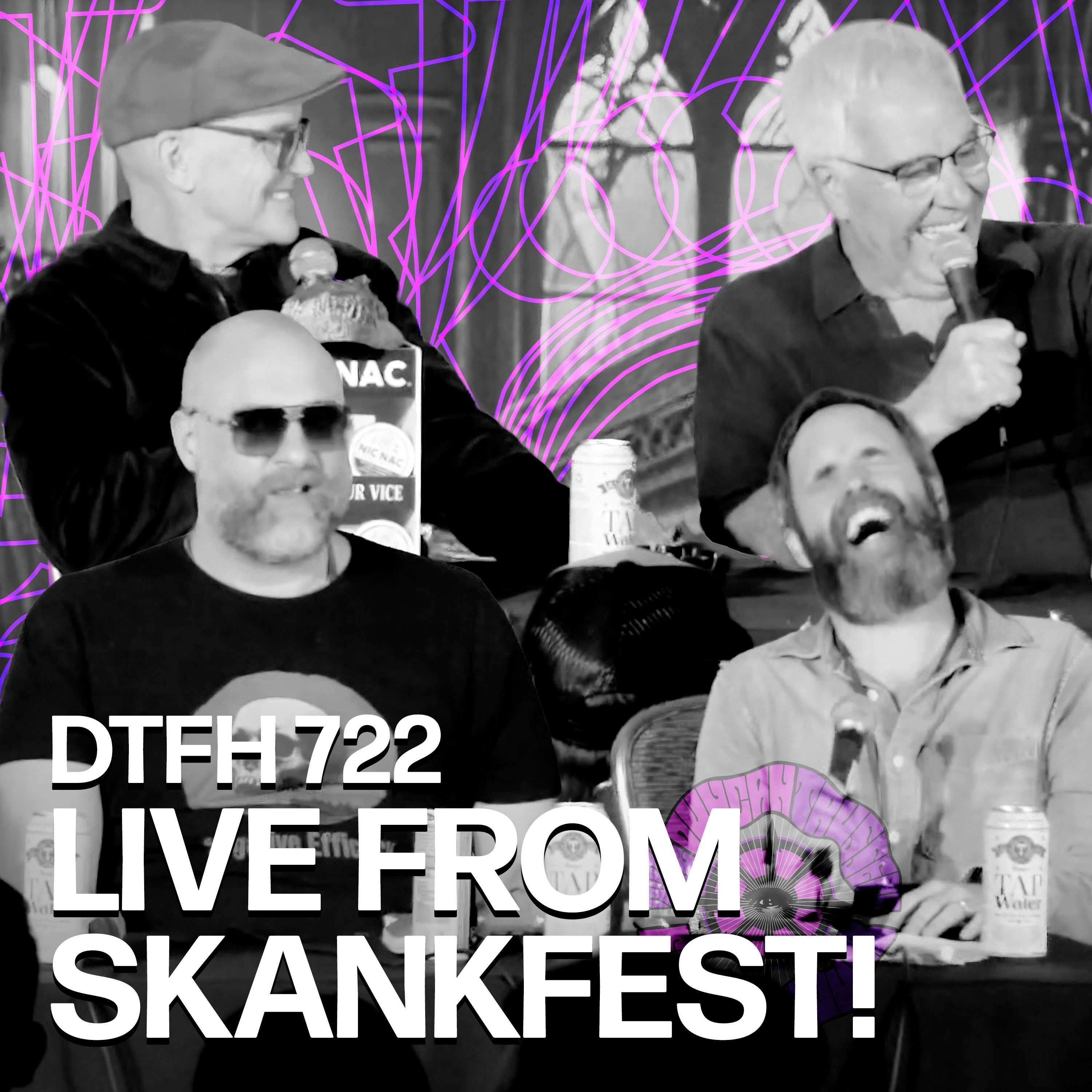
Welcome, everybody. It's great to see you. And this is an incredible episode that happened because of my friend, the brilliant comedian Greg Fitzsimmons, who happened to be at Skankfest, which is by far my favorite comedy festival ever. Go next year if you can. It's such a blast. Like, I don't know. I honestly have never really enjoyed comedy festivals, but it is the most insane, wild party. It happened in New Orleans, and as it turns out, Greg was there with Tom o', Neill, who happens to be his friend and neighbor. If you don't know who Tom o' Neill is, you probably know his book Chaos. Charles Manson, the CIA, and the Secret History of the sixties. Tom o' Neill is so fucking cool. And in this episode, we talk about his incredible book about Manson and the CIA. Also joining us on this live episode of the DTFH is the brilliant comedian Kurt Metzger. Check out his podcast, Derp with Kurp. This is a mega episode of the dtfh. And a huge thank you to Skankfest for filming and recording the whole thing for me. Also, just because it's the nature of live podcasts, I guess the audio is kind of fucked up in the beginning of this, so my apologies for that. But it gets better in, like, a minute and and a half. So I'm sorry about that. But now, everybody, please welcome to the dtfh, Tom o', Neal, Kurt Metzger, and Greg Fitzsimmons, live from Skank Fest New Orleans.
- [01:49]
Thank you. Thank you, everybody. Thank you so much.
- [01:55]
Thank you guys so much for being here. This is gonna be the first live taping of my podcast, the Dunkin Trussell Family Hour, that I've done, like, five or maybe eight years. So can I just. I'm gonna just start the podcast, and if you guys could give me a giant roar when I say where we're coming from, that would be awesome. So.
- [02:20]
Welcome to the Duncan Trestle Family Hour podcast being recorded live at the Legion of Skanks Festival in New Orleans, where it's Skank Fest.
- [02:51]
Holy shit. I got. I gotta tell you, man, I got so lucky with this episode because my stupid plan was, like, try to find, like, a hoodoo priestess to do some magic up here. But I procrastinated and DM some lady at like, 3am on Wednesday, and she's like, didn't write back. Like, fuck that guy. But as it turns out, I've got the best lineup ever. And how many of you have read that book, Chaos, about Charles Manson?
- [03:30]
The author is here with us tonight. Tom o' Neill is here. Holy shit. We are gonna go deep into some CIA MK Ultra cult talk. And who better to get us in the mood for that than my first guest? Everybody, a giant round of applause for Kurt Metzger, everybody. Let him hear it. Kurt Metzger.
- [04:00]
Sit here.
- [04:04]
How you doing, man?
- [04:07]
B
Oh, man, I'm excited, Duncan. It's a Mystery Boys fucking caper.
- [04:11]
A
Well, they don't know what that is. This is another announcement we're making. I guess you've talked about. I've talked about it a little bit. Kurt and I have started our own podcast on ymh, the Mystery Boys. And so keep your eye out for that.
- [04:28]
B
It's about positivity and solving mystery.
- [04:32]
A
Yeah, positivity. That's right. And we actively combat the scourge of misinformation that is taking over the Internet. Everything we say is verifiably 100.
- [04:45]
B
It's like, hey, what's this adrenochrome about? Oh, it doesn't exist.
- [04:49]
A
Yeah, it's not real, guys. There's no such thing as adrenochrome. And Jeffrey Epstein killed himself in prison. Now.
- [04:59]
B
I just want justice for Jeffrey. And I've always been clear about that.
- [05:03]
A
Yeah, yeah, for sure. And I'm so happy Maxwell is in a minimum security prison because those fucking monsters, what they did to that beautiful woman. It's really sad.
- [05:13]
B
I know. With them big ass titties, joking around the yard, doing yoga.
- [05:17]
A
I would have sucked on her feet for a day.
- [05:21]
B
I wish her well. I wish her well.
- [05:26]
A
Now I gotta. Also, we have on this podcast one of the best comics of all time. I'm lucky to call him my friend. And Tom wouldn't be doing this without him. Everybody, a giant round of applause for Greg Fitzsimmons. Everybody. Let him hear. Greg Fitzsimmons is here.
- [05:46]
B
The Fitz dog. That's right.
- [05:50]
A
And now, everybody, please give the biggest gang fest round of applause for someone who wrote the best creepiest book on Charles Manson of all time. Everybody, a giant round of applause for Tom o', Neal, everybody. Let him hear Tom o'. Neal.
- [06:16]
How you doing, Tom? Fine, thanks, man. I. Listen, I. I couldn't. Like, we'd already talked a little bit and. And then later, Greg's like, you know, you were talking to, right? He wrote the book Chaos. Fuck, Are you kidding me? That is. I remember. It's one of those books.
- [06:34]
B
You're on a list, dude, you better watch your ass.
- [06:39]
A
Not Tom. Tom is on many lists. Like, many lists. Because your book, the Nine Inch Nails.
- [06:47]
B
Guys probably hate you.
- [06:51]
A
Greg, how did you end up being friends with Tom o'?
- [06:54]
C
Neill?
- [06:55]
D
Tom was my neighbor in. We lived in Little Italy on Mulberry street in New York. Back in 93, I moved in, and we lived next door to each other for years. And he. I saw him as a journalist writing different pieces, entertainment journalism, and. But he was the real deal. And so then we moved out to California. We moved three doors away from each other in. In Venice Beach. And I saw him. People say, like, it took him 20 years to write this book. And people go, oh, it took me 20 years to write a book. Yeah, you masturbated 8,000 times like he did. He did. But he also.
- [07:35]
B
You can do both. Just write one hand.
- [07:38]
D
It's weird. You're only using the keys on the left side of the board, which is unusual, but you can get very proficient at it. But he would write every fucking day. I would walk past his apartment, and he'd be sitting there, and if he wasn't there, he was driving a car I gave him into the desert to interview some LAPD officer on his deathbed who was finally willing to talk about the case. So Tom's been one of my best friends for 35 years, and, yeah, he's the best.
- [08:11]
A
Woo. Yeah.
- [08:13]
B
That's nuts. You have a connection like that. Fitz Dog. That's nuts. You have a connection like that. Of actual. Like, this is one of the most thorough.
- [08:20]
A
Well, Tom, you. Can you talk a little.
- [08:24]
D
Good input there, Kurt. That was really.
- [08:26]
A
That was great, Kurt. Tom. Yeah.
- [08:31]
D
Can you.
- [08:32]
A
I think the story of how you ended up getting sucked into the Manson Vortex is crazy, but for.
- [08:40]
B
That was the name of my punk.
- [08:41]
A
Band in high school, Manson Vortex.
- [08:47]
Can you talk about how it happened, how it started?
- [08:48]
E
Yeah, yeah, yeah. It was not planned, just kind of like this podcast. I only met him two nights ago, I think.
- [08:57]
B
That's right. And we said, looks like the Mystery Boys got another mystery on our.
- [09:01]
A
That's right.
- [09:03]
Yes.
- [09:04]
B
If it takes three months or 20 years, the mystery Boys, we're on the case.
- [09:09]
E
But I was very happy to come on. But I began this in 1990, 1999, and I got a call from an old editor of mine that I'd worked with at another magazine for many years, asking me to do a piece for a magazine that she had just moved to called Premier Magazine, which was a film magazine. And she said, I want you to do a story about the Manson murders. That this story would commemorate what was going to be the 30th anniversary of the crime. And I said, I'm not interested. I never read Helter Skelter. What can be done that's new about this? And she said, you want to come on the masthead here and you have to show them. Do one feature, I'll get you under contract. She and I had worked at another magazine and everybody at the top went over there and the freelancers who were contributors, you know, we needed contracts, were all waiting and it was kind of like, do this or you're not going to get the job. So I did it with reluctantly. It was supposed to be a three month gig. And.
- [10:17]
In that conversation.
- [10:20]
I mean, I still have PTSD about this.
- [10:23]
D
Yeah, it's the Gilligan's island of books.
- [10:30]
E
You know. I said, what's interesting about it 30 years later? What hasn't been written about it? And she said, you'll find an angle, you always do. And she said, why don't you begin by trying to figure out how it changed Hollywood? Because when these murders happened In August of 69, you know, I shouldn't assume people might not be even familiar with what they are. So, no, I don't know what you're talking about.
- [10:58]
So on August 8, 1969, Charles Manson, who had a group of hippies that he lived with at the Spahn Ranch outside of la, sent his followers to a house that he was familiar with and told them to just kill everybody in the house and leave witchy signs. And the people in the house were Roman Polanski, the director's wife, Sharon Tate, who was eight and a half months pregnant, and her friends Wojciech Verkowski and Abigail Folger, who'd been house sitting there while both Roman was in London scouting locations for a movie called Day of the Dolphin that he ended up never doing.
- [11:39]
B
And what was it called again?
- [11:41]
E
John Lilly. Day of the Dolphin. Oh, that's gonna send you off probably.
- [11:45]
B
Well, okay. Even without John Lilly? Even without that.
- [11:50]
Yeah. Cause I mean, they had some chick hand job in a dolphin to see if he could teach him to speak English. And no, I know when I get a handjob it does not improve my English. I could have told John Lilly that I make dolphin sounds. Greg.
- [12:04]
D
That's right.
- [12:05]
A
Okay, wait, wait, hold on. Tom. Not to get completely diverted into John Lilly, but just let's. I won't, let's stop for a moment. Can you tell people who John Lilly was? Some people definitely don't know who that was.
- [12:21]
E
Yeah, he was a psychiatric drug researcher who was studying communications between dolphins.
- [12:31]
A
He invented the flotation tank and he loved ketamine you know that?
- [12:36]
B
Oh yeah, yeah, yeah. He loved it at the end. After all his life of crimes, he.
- [12:40]
A
Loved it in the beginning.
- [12:41]
B
It's a dissociative. It dissociates you from the trauma of the evils you.
- [12:45]
A
I hope you don't start saying bad things about ketamine, man, because it's a wonderful drug.
- [12:50]
B
The Sunken Place. I love it. I'm talking about John place.
- [12:55]
Have you guys seen weapons by the way? It's the white man's. Get out. That's my review.
- [13:01]
Finally. Finally.
- [13:07]
A
Well, what's interesting about John Lilly aside from his dolphin research? This is what's really weird is in one of his books. Did you read the book where he talked about how he had all these visions on ketamine in a float tank where an alien intelligence communicated with him and told him that artificial intelligence was going to take over planet Earth, that that was coming and that there was. We had to do something to stop it. And this is long before AI. I mean also he was jerking off dolphins. So you got to do the math era. I don't know.
- [13:45]
B
I don't know. First of all, the dolphin had a name. His name was Peter. Peter the dolphin. Say it.
- [13:49]
A
Peter the dolphin was a lady actually.
- [13:53]
B
I know his co ed had been. It made him more compliant with the experiments. You just give him a little bit of a handy in the. In the submerged dolphins.
- [14:00]
A
Dolphins are horny. You don't have to work they'll you well okay.
- [14:04]
D
They've got a blow hole. You don't need to them.
- [14:06]
B
No, dude. Don't you remember Russ beneath's joke about that? No, don't them in that hole. But if you do. Hold on.
- [14:17]
Oh, I got unlaid at a wedding telling that in Hawaii to some. Some J was down and she had her arm on my shoulder. I was like I know a good joke. They'll get in this town. Kauai. No, they have to worship a pineapple as a God and shit. They don't. Yeah.
- [14:33]
A
But you know, I think mentioning John Lilly it does paint a picture of the culture at the time. Like people were injecting themselves with ketamine. Fucking dolphins. This was what, six?
- [14:46]
B
Yeah.
- [14:46]
C
No.
- [14:46]
E
He was a pioneer in ketamine research.
- [14:48]
A
Yeah.
- [14:49]
B
And dolphin volcanoes.
- [14:52]
E
I never heard that word unlaid before.
- [14:55]
B
Yeah, no. Yeah. I've never talked my way into pussy. I've talked myself out of pussy. Only in my life.
- [15:03]
I've never once talked it into.
- [15:07]
You gotta get out of the way of the sales.
- [15:09]
A
What they taught us at the Wizard.
- [15:25]
This episode of the DTFH is brought to you by BetterHelp. I got a big old family now, and let me tell you, I can't. Like, there's no way that I could be the person I used to be during the holidays, because that person used to be somebody who would just get hammered and try to drink through the holidays. Not in a festive way either, but just in, like, I hated them. I hated everything about them. Christmas music, Christmas trees, Christmas lights, Christmas cheer, Christmas consumerism, the weather, the holidays, the days off, all of it. Like, I can't even explain to you how I would hear a Christmas song on the radio and just like, fucking turn that I was really depressed, I guess is what I'm trying to say, during the holidays. And so for those of you out there for the holidays who are experiencing not what to you probably seems like some kind of garish, ridiculous consumerist hell ritual, for those of you out there who are looking at the world right now and wondering why you chose to incarnate during this time period, for those of you who are, for lack of a better word, the Grinch. And by the way, the Grinch probably had seasonal affective disorder or whatever it's called. Fucking needed some of those lights. Shyness. Grinch needed better help, basically. Listen, you want to give yourself a great Christmas gift, especially right now. These are the dark times for you, which they used to be for me. Give therapy a try. I know probably for those of you deep in the abyss right now, what I'm saying sounds absolutely ridiculous. But I'm telling you, if it worked for me, it'll work for you. It. You don't have to. Believe it or not, you don't have to spend the next few months in just a dark, swampy hell. I'm not saying it's going to make you like Christmas music again, because a lot of it sucks. Especially like, what's with this sexy Christmas music? What is that why was why I still hate horny Christmas songs? Well, I. I don't want to hear about, like, you humping on Christmas like, nobody does. So let's get rid of those. Sorry, Betterhelp. You don't have to make turning into a recluse and hiding from the world your holiday tradition. You could actually find a new holiday tradition and better help could be that. Why not make therapy part of your Christmas? Seriously, there's no reason you can't enjoy home alone.
- [18:16]
You know, it doesn't have to be so dark. I'm talking to me a few years ago. You can Hear the bell again.
- [18:25]
Got to read the Polar Express to know what that meant. But if you lose the Christmas spirit, you can't hear the bell. Could be a hearing issue. Sorry. Better help get therapy. Better help is great because you could do it all online. They help you find a great therapist by doing the initial matching work for you so you can focus on your therapy goals. A short questionnaire helps identify your needs and preferences and their 12 years of experience and industry leading match fulfillment rate means they typically get it right the first time. If you aren't happy with your match, you could switch to a different therapist at any time. With over 30,000 therapists, BetterHelp is one of the world's largest online therapy platforms having served over 5 million people globally. And it works with an average rating of 4.9 out of 5 for a live session based on over 1.7 million client reviews. This December, start a new tradition by taking care of you. Our listeners get 10% off@betterhelp.com Duncan that's betterhelp.com Duncan thank you, BetterHelp.
- [19:47]
B
Also, they said when a customer says no, what they really mean is I need to know more.
- [19:55]
A
That's true.
- [19:56]
B
And you can carry that through all areas of life.
- [20:04]
A
So obviously it was a weird time that these murders happened and so keep going with the story.
- [20:11]
E
I forgot where I was.
- [20:13]
A
Oh, you're talking about. He was off like trying to make this movie about John Rowan.
- [20:17]
E
So Roman was out of the country. Sharon had just come back from making her last well, she didn't know was her last movie at the time. And long story short, four of Manson's followers went to this house at the top of Bel Air. And if you saw Once Upon a Time in Hollywood, you might be a little bit familiar with the story. And everybody was brutally murdered and you know, hundreds of stab wounds, blood writing left on the walls. And then the next night, Manson sent them to another house and they killed a middle aged couple from Los Feliz. And nobody knew who had committed these.
- [20:54]
A
I used to live by that house. Oh, did you Waverly? Yeah. And there were people who'd lived there during that time who talked about how all of a sudden in the neighborhood, oh yeah, these hippies were wandering around and they were doing what Manson called creepy crawling.
- [21:10]
E
Creepy crawling.
- [21:11]
A
Can you talk about what that was?
- [21:12]
E
Yeah, they would go into a house while people were asleep, they'd break in and they wouldn't steal anything. They would just move the furniture around and they called it creepy crawling.
- [21:22]
A
Wait, creepy crawly. Man, it's such a hit.
- [21:27]
Creepy crawly dude.
- [21:29]
E
Damn.
- [21:29]
A
We just like to squirm around on the bathroom floor. Move their deodorant.
- [21:34]
B
It sounds like always sunny.
- [21:38]
Wanna play Nightcrawlers?
- [21:42]
A
I mean, aside from the murders, that is one of the more. That's one of the crew. It's spooky, man.
- [21:48]
E
Yeah, they did a lot of things. Like they would reenact the crucifixion with Manson on a cross.
- [21:53]
B
What's wrong with that?
- [21:56]
A
I never.
- [21:56]
B
Maybe he was Filipino.
- [22:00]
A
Okay.
- [22:02]
That's a mish they do.
- [22:04]
B
Do you guys like that? Geo.
- [22:08]
A
So how did the like, how would a typical Manson crucifixion go down?
- [22:14]
E
Well, a lot of people weren't sure whether he actually really did it or whether he had programmed his followers when they were tripping on lsd, he'd give it to them for consecutive days. Whether he programmed them to believe that they saw him crucified.
- [22:29]
A
I promise you he had them crucify him. Because I've been on enough acid where I've been like, I wonder what it feels like to hang on a cross. And I'm sure he convinced them to do it. Like definitely they did. I don't know if they nailed his hands in. They probably tied his hands.
- [22:45]
E
They probably tied him up. Yeah.
- [22:47]
A
You ever think about how you can't crucify yourself?
- [22:50]
B
Yeah, it's impossible.
- [22:53]
A
Like, you need a friend.
- [22:54]
E
Yeah.
- [22:57]
Well, his followers believe that they had seen him raise people from the dead. Raise animals from the dead. Talk to animals.
- [23:08]
B
I talk to animals all the time. Did the animals answer?
- [23:12]
A
Should have gone first in the list. It's talk to animals.
- [23:16]
B
Hey, get that dog out of here.
- [23:19]
D
I do that after the late show Friday in the Midwest a lot.
- [23:23]
Talk to the animals.
- [23:24]
B
Which state specifically? There's a lot of people here from a lot of states.
- [23:28]
D
I don't want to insult the people from Indiana.
- [23:30]
B
Okay, fair. That's fair.
- [23:32]
A
So, but it seems like what happened is you began researching this.
- [23:39]
E
Oh yeah. Back to that. And I'm going to keep it short. So I got this assignment. I interviewed the prosecutor who put them away and wrote the best selling true crime book of all time. To this day, Helter Skelter Vincent Bugliosi. And I started finding holes in his narrative. And what was supposed to be a three month assignment turned into a 20 year odyssey. And it's horrible. I mean, I literally fucked up.
- [24:04]
B
That bad.
- [24:05]
E
I did. No, I did big.
- [24:06]
B
Not you, him. Bill Peosi.
- [24:08]
E
But I like put Premier magazine out of business because I brainwashed the editor. In chief to believe that I was on a noble crusade. And he believed everything I was finding out. And they paid me for, I think, 18 months to just report this one story. And they were going to do a single issue devoted to it until the corporate overlords at Hachette, which owned the magazine, fired Jim. And because he had spent so much money on this, and they thought he'd lost his mind, I'd lost my mind. And the new guy that was hired by the corporation said, you've got to turn that story in in a month. You've been working on it at that point for almost two years. And long story short, I got a book agent. And he said, I'll get you out of your obligation to the magazine, and we'll do a book, and then you can pay the magazine back by giving them the first excerpt from the book. And he said, how long will you take? And I said, just another year or two.
- [25:10]
B
Wow.
- [25:11]
A
20 years. Okay.
- [25:13]
B
What are you, George R.R. martin?
- [25:16]
This is your Winds of Winter.
- [25:21]
A
Yeah, Greg. So, you know, this is almost a trope. It's like the writer goes insane. Like, you know, and I'm sure there.
- [25:30]
B
Sounds like just good journalism that you should do with an important story.
- [25:33]
A
It's true. But at some point when you're like, no, you don't understand, man. I found something more out about the man. Something.
- [25:38]
E
That's exactly how it was.
- [25:39]
A
People are gonna get worried. Were people worried about you? Did you have friends who were like, oh, come on, man. Are you, Greg? Did you?
- [25:45]
D
I honestly. No, no, no, Honestly. Tom would. The book came in chunks, and he would uncover a certain chapter. Not specifically a chapter, but a chapter of the story. And we'd be having dinner or we'd be having, you know, hanging out late night at my house with a close group of friends. And he would update us, and every time he did, we went like, fuck, yeah, man. Keep going. Like, we never thought for a second that there wasn't gonna be a book that came out.
- [26:15]
B
This is before podcasting.
- [26:17]
A
Yeah, yeah, yeah. Wow.
- [26:18]
D
Right?
- [26:19]
A
But you. So you had, like, the classic, like, maybe one of the best things that can happen to a journalist, and the worst things that can happen, you actually found a place you're not supposed to go.
- [26:31]
E
Right.
- [26:31]
A
You had. I can never say his name. Vincent Bugliosi.
- [26:35]
E
So the G is silent. Bugliosi. And if you said a hard G, he would just get furious.
- [26:42]
A
One of them.
- [26:45]
Red flag. Red flag.
- [26:49]
E
Exactly.
- [26:50]
B
So.
- [26:51]
A
But can you. Can you talk about.
- [26:55]
What we talked about the first night here when he started getting weird with you when he was.
- [27:02]
E
So what happened was I found out that he had taken shortcuts at trial. That was a little stuff. And then I later found out that he had actually misrepresented and withheld evidence from the defense and suborned perjury. He had created a completely false narrative, which isn't so bad for the book part, but he did this in front of a jury where five people's lives were at stake. They all got the death penalty, and they were sentenced to death after the trial. But the California State Supreme Court outlawed the death penalty a few years later. That's why none of them were executed. But he took really serious liberties with the truth. And when I started finding that out, he started tracking me because he knew what was happening.
- [27:51]
B
What is he, Israel?
- [27:52]
E
Yeah, practically. No, cut that out.
- [27:57]
Please.
- [27:57]
B
Cut it out.
- [28:00]
Dave Smith is already here. The drones could.
- [28:03]
D
It was weird. At one point, he gave Tom a pager. I was like, what?
- [28:07]
B
Wait, what? But what year was it, though?
- [28:09]
A
I don't think this was Manson's pager.
- [28:14]
B
Why would he. Why would he give you a pager?
- [28:16]
D
I was in the Levin with the.
- [28:18]
E
Pagers, and, oh, I thought he really.
- [28:20]
B
Did do that, because the milkman story made me think, anything's possible, you know.
- [28:24]
D
Look, there's a reason why I'm on the edge here of the table.
- [28:28]
A
We're all on the edge.
- [28:30]
B
The mystery boys stay up all night solving mysteries, dude.
- [28:33]
A
But, you know.
- [28:38]
So suddenly you're at his house, right?
- [28:42]
E
Well, first, he was one of the first interviews I did before I knew any of his malfeasance in the case. I thought he was heroic. I read the book for the first time. I'm like, wow, it's an amazing read. It's a terrifying story. And he agreed to talk to me. He hadn't done an interview for about five or 10 years at that point about the case. After he convicted these people, he went on to this illustrious career as a true crime author. He wrote books about cases. He became a defense attorney and then would write books about those cases and wrote a whole bunch of books. And he tried to put Manson kind of behind him for a while because he wanted people to recognize him for other stuff.
- [29:22]
B
Oh, my God, what kind of psycho is like, I need more than just, I'm the guy that brought Manson in.
- [29:30]
E
Yeah. I mean, the ego is out of control. But he agreed to talk to me. And I spent about six hours at his house, and in, like, the second or third week of my reporting, and it Was great. I mean, we sat in the house, his wife served me Italian cookies and coffee, and we talked.
- [29:46]
A
Okay, can I stop you there? And this is weight. This is. This is too much detail. So forgive me, but, you know, you walk into someone's house.
- [29:52]
E
Yeah.
- [29:53]
A
And you get that initial house smell.
- [29:55]
B
Yes.
- [29:56]
A
You know what I mean?
- [29:57]
E
No. House smell.
- [29:58]
B
Yeah.
- [29:59]
A
You know, the house is someone else lost. It's like. It's like if a house had balls. It's the smell of a house. You know what I'm talking about?
- [30:07]
B
Yeah.
- [30:07]
A
Like. And I know this is. Sounds like I'm being like, I know.
- [30:11]
B
Exactly what you're talking about.
- [30:12]
A
You don't remember what his house smelled like?
- [30:16]
E
No.
- [30:16]
B
Like a nice gravy?
- [30:18]
E
No.
- [30:18]
A
I mean.
- [30:20]
E
They were Italian Americans, and my mom's Italian, so she did what my mom would have done if somebody visited. She put these Italian cookies out and really good coffee.
- [30:29]
B
My mom's Italian, too. I said exactly what they did. Where's your dad?
- [30:33]
E
Irish.
- [30:34]
B
Oh, okay, that's classic Goodfellas right there.
- [30:36]
A
Were there any, like, pictures on the wall? Like, any. Anything related to, like. Not really.
- [30:41]
E
Well, the first thing he showed me, he had a shelf of the first editions of every.
- [30:49]
He republished the book years and years because it was selling. So he'd put a new afterword or.
- [30:54]
B
Jesus Christ.
- [30:55]
E
I mean, it was a money machine for him. And I don't hold begrudge him for that. I just begrudge him for lying about what happened in the city.
- [31:02]
B
That would be a great movie. Just you and the hero guy that you think is a hero and then just finding out how off it is. Yeah, that's the whole movie.
- [31:11]
E
That's exactly what happened. So we went out to lunch, and then after lunch, he gave me a tour of.
- [31:18]
A
What did the restaurant smell like. I'm sorry.
- [31:21]
B
It was such a bad question.
- [31:23]
A
I'm sorry.
- [31:24]
B
No, the most important question. You're right to ask mystery boys.
- [31:32]
E
But we went to lunch and he gave me a tour of all the historic sites that were local to the San Fernando Valley. Like where the Manson family hid a wallet that they stole from Rosemary LaBianca. We go back to his house, and we're sitting there for a couple more hours. I was with him for five or six hours. And again, it's a friendly interview, almost worshipful on my part, But I wasn't getting anything from him. He'd done this interview for 30 years. And I did what journalists call the Hail Mary pass, which is. I said to him, I go, vince, you're giving Me, a lot of information. It's all great, but I need something new. I'm trying to find an angle to the story. Is there something that's never been reported that you know, that you could share with me and if you want, we could go off the record, meaning not for attribution. And I said, I'll turn off the tape recorders. And I say recorders, because I always had two. Because if one fucked up and I was really bad with technology. And he thought for like literally like 30 seconds. And he goes, turn them off, turn them off. And it's probably the worst decision he made in his life.
- [32:36]
B
He's a narcissist for real. He just. What a trial he did now.
- [32:40]
E
You have no idea.
- [32:41]
B
You are a diabolical motherfucker. Did you know this this whole time?
- [32:45]
A
Yeah. That's crazy. That works.
- [32:46]
B
Oh, no, Greg. I mean about you.
- [32:48]
E
Oh, yeah, yeah.
- [32:48]
D
It's my. One of my favorite things about him.
- [32:50]
B
I mean, it's great work, dude.
- [32:52]
E
Oh, no, it's kind of standard. I mean, any good journalist.
- [32:55]
B
It was. Not no more. It ain't.
- [32:56]
E
Oh no, exactly. No, nobody does this kind of stuff anymore. But then he told me something that was brand new and it kind of changed a lot of stuff. And.
- [33:10]
I don't. So I wasn't allowed to attribute it to him.
- [33:14]
A
And.
- [33:14]
E
And then we jump ahead six years later. And in those six years by him giving me that little bit of information, he opened this hole. The first hole of about a dozen, but the first one was him. That's a lot of holes. Yeah, it was almost like. Was he self sabotaging because he felt guilty? And then six years later. Well, a year later, I stopped talking to him because I knew so much about him. And he. He starts calling me and checking. When's this coming out? I'm hearing stuff. And then I found out that he was calling people after I interviewed them to ask what I asked. And then he would tell other people not to talk to me. And he finally left me a voice message that I still have that said, hey, Thomas, can you play it?
- [34:02]
A
We'll turn the recorders off. Do you have it? Is there any way you can get it?
- [34:07]
B
No, this would be a great movie, dude, I'm telling you, just this section of it.
- [34:10]
A
I actually mean this. I will not. If we can cut the live stream.
- [34:14]
E
No, no, I don't have it on me.
- [34:16]
A
A journalist taught me this trick once.
- [34:25]
D
And so the student becomes the teacher.
- [34:30]
B
Nice.
- [34:31]
E
But the message was, hey, Thomas. Vince. So I understand you're still working on this. And I haven't heard from you for a couple months and you didn't return my calls. And he goes, but I've hear. I can't remember who it was from. He would always say he didn't remember. And I knew exactly who he was getting information from. He said, but I hear that you're questioning some of the tactics I took and the prosecution and, you know, you need, you know, as a layperson. You don't know why I took those choices. So you lay person. A layperson means not a civilian.
- [35:03]
B
A layperson. Like he's a priest of some kind.
- [35:06]
E
No, no, I'm not a lay person.
- [35:08]
B
No, I know.
- [35:09]
A
But his view of, like you, like.
- [35:11]
E
So he's saying, you might not understand because you're not a lawyer or a prosecutor, and I want to be able to explain this stuff. So he was immediately trying to control what I was going to do, which is fair on his part. So I called him back and I said, vince, of course I'm going to give you time to basically rebut what I'm. I didn't say accuse you of because I was still trying to, you know, play the diplomat. I said, but I'm still reporting, so, you know, I'll get back to you probably in a month or two. And it was six more years because it took me that long.
- [35:44]
A
Wow.
- [35:45]
E
And my agent wouldn't let me take the book out. He wouldn't let me interview Vince with all my damning information until after I got a book contract. Because Vince is so powerful in publishing because of his sales of his books. And he. He knew because I was sharing all my information with him at that point how dangerous Vince was and how Vince would do anything to stop.
- [36:10]
A
You think he would have killed you.
- [36:12]
E
He would do something worse. And that's in the book. I mean, he threatened to. I mean, he had a pattern of this because I found out that he had committed literal crimes before he became famous for the case. And when people caught him, he would threaten to ruin them by using law enforcement to spread wrong information.
- [36:31]
A
Wow.
- [36:31]
B
And misinfo. What we fight against at the mystery.
- [36:34]
A
We do fight against. So he basically. He could have had you gangstalked. He could have just. He could have turned the lot. He could have just.
- [36:41]
E
He was going to exp. He said he had information that I was a pedophile.
- [36:45]
B
Oh.
- [36:46]
E
And he was going to share it. And so this was so six years later.
- [36:50]
A
That could be a really powerful blackmail technique. I wonder if other people use that.
- [36:54]
E
Yeah.
- [36:57]
B
Oh, yeah. You should look into that for your next book.
- [37:06]
E
Luckily, though, believe it or not, I think I'm smarter than him.
- [37:11]
B
I do.
- [37:12]
E
I do.
- [37:13]
B
That dumb dago.
- [37:15]
E
I'm half. But anyway, so when this happened, we had. First, I went to his house. Six years later, same kitchen, but this time very hostile. And he had two tape recorders, and I had two tape recorders.
- [37:29]
B
No, this could be a movie, I'm telling you. That's so funny.
- [37:34]
E
And he had a legal pad of notes and about 10 books that he'd written so he could read me the blurbs from the books, telling them, telling the world what a brilliant prosecutor he was.
- [37:46]
B
It was just you and him?
- [37:48]
E
Well, no. All right. It's so fucking crazy. First, I called him six years after I'd started, and I said, vince, I always promised you I was gonna come back to you and give you an offer to explain yourself. And he didn't return the call. So I had his home number. I called him at home and he said, tom o', Neill, I don't remember you. Who are you? And I knew that he'd been calling people that year, and I said, I'm the one. Then he finally. That's when he planted the seed. If I'm gonna harm you if you do this, because I would talk to you, but I've heard horrible things about you, so horrible that I can't even. I don't even want to talk to you. And when I heard these things, I didn't believe that because I liked you. You seem like a nice person, but these things, I go, vince, what the fuck are you talking about?
- [38:32]
B
Sounds like De Niro in the movie of this. I don't want to believe these things.
- [38:36]
E
But I. Yeah, you're actually right. Except he's too old now, but he would be good. So anyway, then I go.
- [38:43]
Long story short, he says this to me on the phone and he says, so I won't talk to you. And I said, vince, you really need to. You need to hear what I found. And he says no. We hang up. Literally three minutes later, he calls me back and he says, so the conversation we just had, I don't trust that you're not going to misrepresent it. So I want to have the conversation again, but I want my wife on the exception extension. Gail. His long suffering wife, so she can be my witness.
- [39:11]
A
What an.
- [39:12]
B
Is she a public notary? Otherwise? Doesn't count.
- [39:15]
A
Tom, it's Gail. I know. You didn't turn the tape recorders off?
- [39:21]
E
No. So I said to him, I Go. Well, I'm alone in my Venice bungalow. Fitz is probably playing Caesar's Casino or something. I can't drag him over to be my witness. So I need May 13th to the.
- [39:32]
D
17Th, tickets at Fitzgerald, Greg Fitzsimmons.
- [39:35]
A
See him live.
- [39:36]
B
I told you I'd plug you.
- [39:38]
D
I think the light. The late show Friday is light.
- [39:42]
E
So I said, I'm going to record the conversation. That's my witness. He said, that's fine. So he's like, gail, are you on the phone? And she's like, yes, Vince. And then we. He said, so you called me and you said. I said, is this. I said, vince, it's Tom o'. Neal. You pretended not to know me. He said, I didn't pretend not to know you. I didn't remember until you reminded me. And I said, okay, and go. So you said, we had to replay the conversation.
- [40:07]
A
What the fuck?
- [40:08]
E
It was insane. And then I knew he still said he wasn't going to do it. I knew his ego and his fear of being exposed was too much to let me walk away without him knowing what I was doing. Like, everything. So he called me about a month later, or no, two weeks later, and he said, I'm going to do the interview with you, so come to the house. He said, gail talked me into it because she liked you a lot more than I did.
- [40:37]
Everything that came out of his mouth, there's no Gail. No, there's a Gail.
- [40:40]
B
Believe this?
- [40:42]
A
There's no Gale.
- [40:43]
B
There's a mummy in the attic with cups of tea.
- [40:46]
E
So when I went to the house, he said, I'm going to do what we call an opening statement. Statement, like, this is a trial and you're not allowed to tape record it. But I want Gail here to witness it so you don't misrepresent it. And I said, well, a couple weeks ago, my witness was my recorder. He goes, that's not happening here. I go, whatever, Vince just.
- [41:06]
A
And I have to put a party dress on for this.
- [41:09]
E
So he gave me a half hour opening statement where he once.
- [41:15]
B
Not being recorded officially.
- [41:17]
E
No, no. Actually, halfway through, I said, vince, I need this on tape because you're just talking about how great you are. I'm not asking.
- [41:24]
B
No one will believe you this happened if you haven't.
- [41:26]
E
Exactly. So he let me tape it at that point. And then at the end of that half hour, he said, gil. He said, gil, you can go now. We'll talk and we'll be on tape. And she goes, I have a horrible headache. I'm like, yeah, I bet you do. And I knew she hated him. I knew she'd filed for divorce against him five times.
- [41:44]
A
Because I think of how just blowing that dude.
- [41:47]
B
Now in the movie, I would have you bang her. Yeah, yeah, like that. Pent up dungeon. But you know, you just. It's based on true events. That's how it is in this business. You get it?
- [41:56]
E
But I actually knocked on her door about six months ago to try to talk to her for the first time in. That was 2006, I think. But anyway, finish it here just to tell you how crazy it was. So we talked for four hours and I put all my incriminating evidence up. And he would say, turn the recorders off. Turn the recorders off. And we turn the recorders off. And then he threatened me and said, you have no idea how much I can hurt you if you try to publish this. And then he would say things like, you're trying to destroy my legacy. And he would point at a portrait of him with his two kids behind him. And he said, this is my family. I love my family. Do you want to destroy that? And I said, vince, I'm not talking about anything I did. This is all stuff you did.
- [42:44]
A
Yeah. You destroyed the greatest family of all time. The Manson family. You piece of shit.
- [42:51]
B
They were gonna make a new world, a better world.
- [42:54]
D
Here's the story of a man named Charlie.
- [42:59]
Who was bringing up three right. Lice ridden girls.
- [43:04]
A
All of them had sheets of acid like they're. But I.
- [43:09]
B
One of them shot Gerald Ford.
- [43:12]
D
Wow, the Manson bu.
- [43:17]
B
Why did one of them end up go on to shoot Gerald for?
- [43:21]
E
Well, she shot at him, but shouldn't hit him. Squeaky.
- [43:24]
B
Oh, Squeaky didn't hit him.
- [43:26]
A
Yeah, cute name.
- [43:27]
B
It's still very strange. She was out on the street, I.
- [43:30]
A
Here, I. I guess, like from the Manson family. Do you think if he hadn't cut corners in the investigation, in the trial, is there some possibility Manson could have gotten off the hook?
- [43:43]
E
Yeah.
- [43:43]
A
Yeah, fuck him. So we could have. Manson could be performing here tonight.
- [43:48]
E
He's dead.
- [43:49]
A
He's dead.
- [43:50]
B
If the Beach Boys had any honor, he would have been with us tonight.
- [43:53]
A
You really believe that, huh? Like Manson might not. So his whole narrative.
- [43:59]
B
I bet he wasn't that good.
- [44:00]
A
Oh, by the way, I think this is a good time. Can we play that YouTube Manson clip just so we can honor his memory?
- [44:09]
Oh, wait, can you stop it real quick? This is a recommendation. I mean, I guess you shouldn't do this, but back when, you know, I'm a dad Now, I don't take psychedelics like I used to, but my favorite thing to do when I was peaking on acid or on ketamine was. Was to watch Charles Manson interviews. And I really recommend that because I mean that. Cause like, you know, like when, you know when you take ecstasy and listen to EDM for the first time and you're like, I get it now. That's what happens when you take acid and watch these videos. Just trust. Try it. I'm sorry, I shouldn't even brought that up. Go ahead and play this video.
- [45:01]
This episode of the DTFH is brought to you by my friends at True Classic. Listen, Christmas is coming. And if you have people like me in your life, the only thing you need to get them is an amazing, perfect T shirt. I'm telling you, this is not like socks. Nobody wants socks. Nobody wants a Bible. But what we do want is a perfect soft shirt. That's all nice, perfect black shirt. I've got so many True Classic shirts in my closet. It's the best. I just reach for a perfect shirt and put it on. For the T shirt people out there. This is for you. For everybody else who just doesn't respect the sacred temple of your body and will pull on any old stupid shirt and not even think about it. I don't know. Go ahead, keep doing that. Defile your body temple with some kind of awful shirt that feels. That feels like sandpaper is rubbing against your body all day long. That's not a True Classic shirt. True Classic shirts. I'm telling you, I'm a T shirt snobby. I know good T shirts when I feel them. And a True Classic tee is the perfect shirt. It gets four DTFH golden peaches, which is the highest award I can offer anyone in the world from this podcast, it's the perfect gift. Whether you're shopping for your dad, your brother, your partner, or now even the woman and kids. Women. I'm sorry I said woman. Maybe you have more than one woman. Hope you do. Even the women, the many women in your life and kids in your life, they have something for everyone. You can find True Classic shirts anywhere. You can find them at Amazon, Target, Costco and Sam's Club. Or do me the honor of going to trueclassic.comduncan to get the perfect gift for everyone on your list. Again, it's TrueClassic.com Duncan. Thank you, True Classic.
- [47:23]
This clip.
- [47:30]
B
Should I just look in his eyes or what?
- [47:32]
E
What?
- [47:34]
A
You just take it in, baby.
- [47:36]
B
Just stare into his little black eyes while he.
- [47:38]
A
It's okay.
- [47:39]
B
If it's not working, tell me some half ass Scientology, Charlie.
- [47:44]
A
Holy trophy hunting in super smash brothers. Let's play that.
- [47:51]
Here we go.
- [47:51]
B
We got. Don't forget, we gotta play that at tremendous preview.
- [47:54]
A
I think it's 6:18. 6:18.
- [47:58]
E
I could put a track record on it. Or I could put a computer on.
- [48:03]
B
No, no, come on down. Get off computers.
- [48:05]
E
Get off tracks.
- [48:05]
A
If you got out of here, there are a lot of people who think.
- [48:08]
E
You'D go start killing people again. Again. Well, you guys are misinformed. I haven't killed anyone. What about.
- [48:15]
B
What about Shea?
- [48:17]
E
What about him?
- [48:17]
A
Well, what about him? He got killed.
- [48:20]
E
Well, the word is you killed him.
- [48:21]
A
Word is you stabbed him.
- [48:22]
B
What does it feel like to kill?
- [48:23]
E
Word, Charles. Word is that you're an old woman. Word is you have turkey in the sky. Word is I don't know what word is.
- [48:31]
A
Somebody else tell you that?
- [48:32]
E
I didn't tell you that. Did you kill Shay?
- [48:34]
A
Hell no.
- [48:34]
E
Did you cut him in's ear off? Hell yes.
- [48:42]
B
The truth. Fun. Now, when you cut his ear off, what did it feel like?
- [48:46]
E
What did it feel like when you cut his ear off? Tell me about it.
- [48:48]
A
Come on, what did it feel like? Yeah, well, I had done what he said for about 20 years.
- [48:56]
E
I'd done everything he told me.
- [48:57]
A
Okay, that's enough. But that's from the Charles Manson podcast.
- [48:59]
B
I didn't know the news had that many Dutch angles in it back then.
- [49:05]
A
So.
- [49:08]
Based on what you're saying, when he's like, I didn't kill anybody is cut off in here, you're.
- [49:14]
B
You're really bugliosis.
- [49:16]
A
You're. Yeah, you're like, he's not lying. That's the crazy thing is, he might not be lying there. He might. He. He.
- [49:23]
B
I just gave them the tool to kill. It's a basic Amway.
- [49:26]
A
But that's not.
- [49:27]
E
I mean, like, that's the complicated part. I do believe he deserved to be sent to prison and the followers for the crimes. I do believe he was responsible.
- [49:37]
A
They were horrible.
- [49:40]
E
What people don't know is he had enablers. And that's where it goes, Axl Rose.
- [49:45]
A
That's where we get to the craziest part of all. And this is for those of you who don't know. We've talked about this on the Mystery Boys, but it hasn't come out yet. Ted Kaczynski, for those of you who don't know, when he was. He got a scholarship to Harvard when he was what, 16? And in Harvard, he underwent These horrific.
- [50:10]
B
Experiments, they didn't show that in Doogie Howser.
- [50:13]
A
No, no.
- [50:15]
E
And.
- [50:19]
A
Dookie Howser was MK Ultra.
- [50:23]
B
Well, how would you become a 16 year old fucking doctor?
- [50:26]
A
It's true.
- [50:28]
B
I don't gotta do no 20 years of reason, you know that.
- [50:37]
A
But.
- [50:41]
Doogie Howser, Kaczynski, Charles Manson, and not just like people who've done horrific shit, but what I think Ken Kesey and so many others were directly involved with these CIA experiments called MKUltra, where we were in the Cold War and we thought the Soviets were doing some kind of insane mind control technology. We were trying to keep up. And your book points in the direction that Manson might have been in some way involved. In other words, he was created, maybe not intentionally, we won't know.
- [51:21]
B
We may never know. Just like we may never know who Epstein worked for. Who? Jeffrey Epstein.
- [51:30]
A
It's impossible to figure out about Epstein. Everyone should stop talking about it.
- [51:33]
B
Maybe a forensic historian.
- [51:37]
Could tell us who Jeffrey Epstein.
- [51:39]
A
What are your, what's your feeling though on it? Because it feels like in the book, it's not like you can prove it. Prove it, but what are your thoughts on that?
- [51:48]
E
Yeah, yeah. So my book took another like left turn about two years in when I found out that Bugliosi had changed the official version. And he was, I was trying to figure out what was he protecting, what was he hiding? Why did he have to lie? I mean, why did he lie when I don't think he had to? And then I learned that, I mean, I read the book, he completely stayed away from the year in San Francisco. Right after Manson was released from prison in 1967, in March, he violated his parole immediately in Los Angeles and moved to San Francisco without permission. And instead of being sent right back to prison, which would have normally happened, they accepted him and gave him to a parole officer who was doing drug research at a place called the Haight Ashbury Free Medical Clinic, which opened in June of 67, which was the birth of the Summer of Love and the Haight Ashbury. And there's a lot to say about what happened that summer. But Manson in under three or four months, transformed from this kind of petty con who had been in and out of federal institutions for half of his life at that point, from the time he was 13 or 14, he was committing crimes like stealing cars and he would cross state lines, which made it a federal crime. So he'd be in these juvenile detectives, detention centers, juvenile facilities, and then real prison for becoming a pimp. And every crime he was convicted of Always was federal because when he was a pimp, he'd take the girls across state lines sometimes just right over. And then he'd be back in the care of the federal government. So they release him then. And all of a sudden, by the end of the summer of 67, while he's going to see his parole officer, Roger, whose looking the other way when he's committing crimes and getting arrested, but developing this cult of young women followers who were. It began at like 4 or 5, then it was 6, 7, 8. Who followed him around the hate, always walking behind him, never speaking unless he gave.
- [53:58]
B
Them permission to the fattest bushes God ever created, but beautiful bushes, but so I wanted.
- [54:06]
E
And then he transformed into this cult leader that had these powers over people's behavior and choices that nobody had had before.
- [54:16]
A
So. Okay, let me stop you there, because this is one of the accounts I read. One of the things he would do with his followers, I'm sure, you know, he would, you know, give them acid. He was on acid and he would sit.
- [54:27]
E
No, no, he wouldn't take acid.
- [54:29]
A
That motherfucker. Are you serious?
- [54:31]
E
Oh, yeah, yeah, he didn't take it. He would give them the acid. He pretended to take it, but he was manipulating them while they were tripping.
- [54:39]
A
Oh, man, just when you think he can't get any cooler.
- [54:43]
B
But wasn't he giving a meth?
- [54:44]
E
I thought like not so amphetamines. Then he started combining them and zest.
- [54:51]
B
Is not a good killer drug, but meth is.
- [54:54]
E
Yeah, but the doctors who worked at this clinic, a couple of them in particular, were experimenting on animals five years before and giving them. It was called aggregate. Aggregate experiments where they would put mice in these control situations and crowd them, anticipating the crowding and density of what was going to happen in the hate and give them amphetamines and then they would kill each other. Then they were trying to control the amphetamines by injecting them with lsd.
- [55:27]
A
At what point as a scientist are you like, I've gone nuts. Like when you.
- [55:32]
B
I don't die up to when you are have puppy heads being stung by sand flies in a. Remember of the Fauci.
- [55:41]
A
That's how we got Ozempic, man. You have to do that.
- [55:44]
B
Oh, but you know, I apologize. I use it. I only use it for my dick.
- [55:49]
A
But.
- [55:53]
B
I take it back. The whole thing.
- [55:55]
A
I think what your book gets at is, you know, who was crazier here, like so sure, Manson's walking around, he's got his cult girls who walking behind him. He's giving him acid. Not taking it himself, but then to study him. You have scientists overcrowding, mice giving them speed, then acid to try to find out what's going to happen to the hippies. Like, who was it naming him?
- [56:23]
B
Squeaky also probably.
- [56:25]
A
Oh, my God.
- [56:27]
E
Yeah, well, so right before he. They left the hate in early 68 and moved, migrated down to LA. And at that point, he was a guru who had complete control. So I wanted to find out how he learned how to do what he did.
- [56:44]
A
Yes.
- [56:45]
E
And Bugliosi has this kind of fascinating paragraph in the last chapter of the book. After they're convicted, after they go to prison, he said one of the lingering mysteries is how did Manson, a barely literate ex con who spent most of his life in federal institutions, learn how to get power over people. As many as 30 or 40 people who would do whatever he said without asking, including committing murder against total strangers. And then.
- [57:18]
B
Sounds like war. Like it sounds like a fucking president, where they all have.
- [57:23]
A
Sounds like a president.
- [57:25]
No, but that to me, though, I mean, that. That this is like jumping to kind of where I wanted to go with this.
- [57:31]
B
And he was leaving that hint like a fucking asshole. Like, oh, can you solve the mystery? What a piece of shit.
- [57:39]
A
But what you.
- [57:40]
D
Finally somebody said it.
- [57:43]
A
Thanks for speaking truth to power, Tom.
- [57:49]
But.
- [57:51]
Something that's interesting to me about the Manson cult, and you've looked into other cults too, we talked about this. You studied this is. At what point.
- [58:03]
Does a cult go from being a cult to just being. This is how things are. If you look at like for example, Manson's big crime. He convinced people to kill people for him, which is exactly what any government leader does every day. That's a huge part of being president. You convince people to go murder for you. And I guess I'm curious your thoughts on what distinguishes a cult like a Manson cult from default reality or the cult that we're all in, aren't we just in.
- [58:37]
E
It's kind of interesting because during the death penalty phase, so they get convicted of murder. All the first four who are on trial, man, five, Manson and three girls, four. And then Watson was tried later.
- [58:53]
They get convicted, then they have the death penalty phase of the trial where the jury has to decide whether to have them executed or just life in prison. And during that phase of the trial, their defense attorneys argued that this was like a war. And if these women who had now been convicted of killing for him did it, they were the same as the soldiers who at that time were in Vietnam killing People and you can't make them responsible for something that they were brainwashed to do by their leader. So they use that Vietnam War analogy.
- [59:34]
But I think it's kind of important to say. You brought up MK ULTRA a little bit earlier. MK ULTRA was trying to create. I don't know if anybody even knows what it is.
- [59:43]
A
You guys know what MKUltra is. They know.
- [59:47]
E
So MK Ultra was started in about 1949 and it was a secret operation by the CIA whose ultimate objective was to create programmed assassins. People who could be programmed to kill without any recollection of being programmed and do it and have no memory of anything after the act.
- [60:09]
B
Also spies and you could, like human officers.
- [60:13]
E
Everything.
- [60:14]
B
You could jerk off on them, store your data.
- [60:18]
E
But the. One of the main. And this is. I mean, it's really hard to do this in this kind of setting because it's so fucking complicated and layered. But one of the main MK ULTRA researchers was a guy named Louis Jolly and West, called Jolly west, who took a sabbatical in 1966 to go to the hate and study that. Study the hippies. Before anyone knew the hippies were coming there. This is.
- [60:42]
B
And he brought up smells a lot too, like you.
- [60:45]
A
You're talking about Operation Midnight Climax.
- [60:49]
E
Climax, yeah, yeah.
- [60:51]
B
What about Operation Dumbo? Drop dead.
- [60:54]
A
What is that?
- [60:55]
B
He killed an elephant with LSD and that was like his opening. Are you.
- [60:58]
A
He's the dude who killed an elephant with acid?
- [61:01]
E
Oh, yeah. That's Jolly. Yeah. Tesco. Tesco.
- [61:04]
A
Oh, my God. I had. No. For those of you who don't know like this, this is one of the. As an acid head, like, you just know that they gave a poor elephant a normal dose of acid.
- [61:19]
E
No, no, it was a massive dose. It was too much even for a big elephant.
- [61:24]
A
How much acid. How much acid is too much for an elephant?
- [61:29]
E
I forget because I'm so bad at science, but it's a certain number of milligrams that's like.
- [61:33]
A
Jamie, can you pull that up?
- [61:36]
B
Inhale.
- [61:39]
E
I think they did that when we did it too. You don't have a Jamie.
- [61:44]
A
No, but. So, yeah, he gives. They give a. They kill him.
- [61:48]
E
And that was a CIA experiment that is fucking crazy that west did in 1962 in Oklahoma and killed this poor zoo animal because he was trying to learn about musk. I mean, Wes is a whole. It's why the book took 20 years.
- [62:04]
A
Yeah.
- [62:05]
E
He was a very prominent academic and psychiatrist who was accused when MK Ultra was exposed in 1976. 77. Jolly west was on the Front page of the New York Times as one of eight academics that were alleged to have secretly worked for the CIA from the early 50s until 72, 73, conducting LSD experiments, mind control experiments on people without their consent or knowledge. In place safe houses, academic institutions, prisons, Air force and military bases. And he denied it. And he said, they approached me, of course, but I would never do something like that. He denied it till he died a year before I got the assignment.
- [62:48]
B
Sure, I kill an elephant with acid, but I would never participate in a weird experiment ever.
- [62:55]
A
Of course I killed an elephant with acid, but to watch people in a brothel.
- [62:58]
B
I pray you get that opportunity, sir.
- [63:00]
A
And this. I'm Jolly West. I would never do such a thing.
- [63:04]
B
A jolly old soul, that is so.
- [63:08]
E
So Wes was given an office at the Haight Ashbury Free Medical Clinic to do, to recruit subjects for his research. And he had what he called a laboratory disguise as a hippie pad on the same block as the clinic where he was siphoning people that came. Came in and sending them there to experiment on. And again, when he was exposed, he denied it. He went to his grave. Nobody was ever able to prove it. And I had a hunch that there was evidence in his. I actually. When his name popped up in my reporting the second year in as this mysterious character who was at the clinic when Manson learned how to do exactly what the CIA had been trying to do for, at that point, about 17 years, I thought those parallels, they can't be coincidences. So I called you. I actually called. I was going to interview him. This is crazy, but I had interviewed him five years before because he was an authority on celebrity stalkers. And I did a story on celebrity stalkers. I went to his office at ucla. He was a dick. He was late. He didn't even have a dialogue with me. It was like he was sitting in front of a class lecturing. And I never even transcribed the tape. He's not in that story. And then all of a sudden, he pops up in this. I'm like, I interviewed that guy. I'll call him. I found out he had just died. So I asked UCLA, he'd been there for 20 years when he died. Did he leave his papers to you? And they said, yeah, but they're not processed yet. And that could take a year or two. And I said. And I send this. Honestly, I said, I have a magazine assignment and I've got to get this.
- [64:46]
A
Do you hear this sound? It's a tape recorder turning off.
- [64:53]
E
But they processed the papers early for me. And I went there every day for a whole summer.
- [64:58]
A
Wow.
- [64:58]
E
And it was the worst, most tedious work anybody could do. And there's a famous author named Robert Caro who writes these book about books about Robert Moses and Lyndon Johnson. And he's won Pulitzer Prize in his. His kind of motto is turn every page. You have to look at every single page because you don't know what you might miss. And I did that for months. And I hated myself. I was broke. And I was like, why am I doing this? But it was just something in my gut. And all of a sudden I found this letter, 12 or 13 pages long, from 1953 from west to someone named Sherman Grifford in Washington. And it sounded like it was an outline for what became the MKUltra program. And I'm like, but Grifford, who's that? But that name does sound familiar. So I went home that night and I have the one book that was written about MK Ultra. There were two at that point. I had one of them called the Search for the Manchurian Candidate by John Marks, who exposed the program in 76.
- [66:00]
B
What does MK stand for, by the way?
- [66:02]
E
It's just an acronym. Nothing means anything. They would give these acronyms.
- [66:07]
B
So it's not Mortal Kombat like I thought.
- [66:10]
E
It's not what Manson?
- [66:11]
B
Mortal Kombat?
- [66:12]
E
No, no, sorry.
- [66:14]
D
It's not Mein Kampf.
- [66:15]
E
But I went home.
- [66:19]
A
Mortal Kombat Mein Kampf Edition.
- [66:36]
This episode of the DTFH is brought to you by Squarespace. Friends, the new year is coming. And look, I get it, when it comes to starting your own business, I don't know where you're at with that, but I remember back in the old days when I started realizing like, maybe there's a way for me to do something without having a boss. It feels weird. It just, you know, it feels odd to try to get out of the box and start doing your own thing. And one great first step you can take is build yourself a website for your business. Even if you don't have everything in place, even if it's just an idea in your head, you will be amazed at what happens when you start taking those first steps. It's like the universe responds. I'm sorry if that sounds woo woo, but it's true. True. And the next thing you know, just, I don't know, random coincidences start happening, synchronicities, affirmations from the universe that you're on the right path, but you got to take the first step. And what better way to take it than to use Squarespace to build yourself a website. If you want the perfect website for whatever service you're offering the world, Squarespace has it all. Squarespace gives you everything you need to offer services and get paid all in one place. From consultations to events and experiences. Showcase your offerings with a customizable website designed to attract clients and grow your business. Get paid on time with professional on brand invoices and online payments. Plus streamline your workflow with built in appointment scheduling and email marketing tools. Also, it is so easy to make an amazing looking website with Squarespace. I've made more than a few. It always, by the way, gets better. It's crazy. It evolves. Now you can use AI to help you build a beautiful website. Whether you want to make something deep, complex, powerful, or whether you just need to make something quick, Squarespace has everything you need. You gotta try them out. And the good news is you can try them out for free by going to squarespace.com duncan. Give it a shot. Ride that stallion around the field. And when you're ready to launch, use Offer code Duncan to get 10% off your first order of a website or a domain. Again, it's squarespace.com dunkin. Use offer code Duncan to get 10% off your first order of a website or a domain. Thank you, Squarespace.
- [69:30]
E
So I went home that night and I saw a footnote in Marx's book that said Sidney Gottlieb, the mad scientist at the CIA who ran MK Ultra, used the alias Sherman Grifford. So all of a sudden it was like, ping, bam, boom. This doctor who went to his grave never being prosecuted or even investigated for this because they took his word, had not only been involved in the program, he had helped Gottlieb create it. And then he was in the hate at the clinic that Manson came into every day when he had this miraculous transformation from this barely literate con into a guru.
- [70:10]
A
It's crazy.
- [70:10]
B
Called the process. And it works.
- [70:12]
A
It's imagine. It's. It's wild thinking of Manson just going to that clinic. He's got syphilis, regular guy, his girls.
- [70:23]
D
His girls have dd.
- [70:24]
A
That's why he's like, yeah, my ladies, I don't know, they got those bumps again. I don't know. I think it's my fault. And someone from the CIA is like, you know what? I think I can help you build your confidence up. Come inside. It's crazy to think that. And.
- [70:41]
Surely you must have been like, this can't be real. Because to me, that's exactly How I felt the implications are really terrifying. Which is. When did they start?
- [70:54]
E
Especially when I learned about his involvement with Jack Ruby and the JFK assassination. He was Jack Ruby's psychiatrist. Right.
- [71:03]
A
Okay. That's our time for tonight, guys. I got kids. I got kids. I got fucking kids, man. Don't. Don't go. Don't Go deeper. Go deeper. No. I'm so sorry.
- [71:15]
E
No, I never had any because all I did was this.
- [71:18]
A
Well, that's another thing.
- [71:19]
B
Is like just a desolate battlefield of jizz rags across his floor.
- [71:26]
I don't feel. True.
- [71:27]
E
True.
- [71:29]
B
Don't need a mystery boy to solve that mystery.
- [71:33]
Don't forget the movie.
- [71:35]
A
I won't. Okay, so we're running out of time here, but. And there's no way to cover your book because the book is a good book. Thank you so much for spending those 20 years. It is an incredible book.
- [71:50]
B
Nobody does real journalism anyway. Like, it's bizarre that you did real.
- [71:54]
A
Journalism, but just for a second. We don't have a lot of time. And Kurt.
- [71:59]
B
Yes.
- [72:00]
A
He has invested a lot of money in making one of the most incredible.
- [72:03]
B
Curb Max Media. The media company I started very recently, as you know.
- [72:08]
A
Yeah. Yeah. It's a good company.
- [72:11]
B
Yeah. Kirkbanks Media. A lot of great reporting so far from the festival.
- [72:15]
A
We have time, you guys. Anybody want to ask a question for. What do you got?
- [72:23]
Was it true Jolly west was involved with Timothy McVeigh?
- [72:26]
E
Yeah. There's a journalist who says she has a source that put west in the cell with Timothy McVeigh as soon as he was taken into custody. And that's what west did with Jack Ruby? Well, not assume, but after. But then when Wes left Jack Ruby after his first psychiatric evaluation to announce it, in the preceding 48 hours, he'd had a psychotic break from which he'd never recover. Dun dun. Yeah. And he did. So I think it's. I know the journalist and I know her reporting. She's not saying who her source is, and until she reveals it, but I would not be surprised. Same thing with Jonestown.
- [73:08]
And.
- [73:09]
A
Wait, what? He was involved with Jonestown?
- [73:11]
B
Yeah, It's a network of networks, dude.
- [73:14]
E
Yeah, he was. He was like a modern day. He was a zelig. Every. Patty Hearst was the first psychiatrist. You know, Patty Hearst was brainwashed by a guy named Donald Defries. Sin K, who escaped from prison because the guards turned the other way. And he became the next Manson. He started a cult called the csla.
- [73:37]
A
This guy's like the Forrest Gump of the CIA.
- [73:41]
E
Exactly. You're gonna find out hopefully what this.
- [73:43]
B
Hey, do you think this could be connected in some way to that furry that they say killed Charlie Kirk?
- [73:50]
I wonder if the zombie kid that's a furry.
- [73:52]
A
Take it easy on the furry community.
- [73:55]
B
I made a movie preview.
- [73:58]
A
Any more questions? Right back here. Are the Jews behind all of this? Next question. Next question. Over here. We have a question over here. What do you got?
- [74:08]
B
I don't think the Catholics aren't in on it, you son of a question.
- [74:12]
A
YouTube.
- [74:14]
Subscribe on YouTube. All right.
- [74:17]
F
Hey, it's Ryan Seacrest for Albertsons and Safeway. The holiday season can be exhausting with all the parties and the end of year celebrations, but don't forget to take care of yourself by stocking up on your favorite nutritional products. Now through December 30th. Shop in store and online and save on items like Cliff Snack Bars, Luna Bars, Boost Nutritional Energy Drinks, Premier Protein Shakes, Z Bar Variety Packs, Open Nature Powder and Body Fortress Protein powder offers end December 30th. Restrictions apply. Offers may vary. Visit albertsons or safeway.com for more details.
- [74:48]
C
You really want to be better with your finances. You try to put money away in savings. You look for deals. You wrote out a budget once, a long time ago. You still overdraft from time to time, and you still have debt. The truth is, managing money is not easy, but Rocket Money can help. Rocket Money shows you exactly what you're spending every month. From there, the app helps you make a budget that meets your financial goals. The app even gives you real time alerts when you're about to go over your budget so you don't spend too much. With Rocket Money, you can also see all your subscriptions at a glance and cancel the ones you don't want right from the app. Rocket Money can even try to get you a refund for some of the money wasted. Plus, you can use the Smart Savings feature to start putting more money away. Rocket Money analyzes your accounts to determine the optimal time to stow away cash without going over your budget. Our members report that the Rocket Money app save more than $700 a year. Getting better with money doesn't have to be a pipe dream. Rocket Money can make it a reality. Go to RocketMoney.com cancel or download the app from the Apple App or Google Play stores.
- [75:48]
A
Thank you.
- [75:51]
Wait, wait. Say that again.
- [75:56]
297 milligrams.
- [75:59]
B
What does that mean?
- [76:00]
A
And that is. That is like, that's enough acid to that.
- [76:05]
B
That's still an elephant.
- [76:09]
That's what they say. It's in the book. Get the book.
- [76:13]
A
Thank you for your research, sir. Any other questions? What do you got?
- [76:20]
E
I don't want to tell you because I know where you're going with that. Yeah, it wasn't Ruby.
- [76:26]
A
Next goddamn question. Next question. I know where you're going with that. What do we got?
- [76:35]
Wait.
- [76:36]
B
I want to thank our sponsor Palantir once again for putting this together.
- [76:39]
A
Yeah, thanks. Thank you Palantir, for the gift box making Skank Fest possible. Palantir is one of the top sponsors of Skank Fest.
- [76:47]
B
Palantir, let us look at you.
- [76:53]
Thank you.
- [76:53]
E
I am a sponsored by Palantir. What's behind the ice wall?
- [76:58]
A
What?
- [77:00]
B
What's behind the ice wall? On your mom's pussy.
- [77:02]
A
The ice wall.
- [77:05]
B
I didn't know what to say because look, George R.R. martin is not done. He's.
- [77:09]
A
You can find out yourself. You just have to learn to astrally to do astral projection. Read journeys out of the body. That'll teach you how to do it.
- [77:17]
B
Hey, John, we'll put in your.
- [77:18]
A
Robert Monroe, another person who worked with the CIA. Okay, you guys, we gotta wrap it up. You guys have been amazing.
- [77:27]
B
Now let's play this.
- [77:31]
A
And we have a thank you. Thank you, everybody. We're not. We're not gonna leave yet, but just. Could you all please give a huge round of applause for Tom o' Neill for coming escape writing this book. Thank you, Tom. That was awesome. Thank you. Thank you. And.
- [77:53]
None of this would have happened without Greg Fitzsimmons, everybody. Give it up for Fitzsimmons.
- [78:00]
And of course my blood brother, fellow mystery boy. Give it up for Metzger, everybody.
- [78:08]
B
Let him in. All right. And I am dying to now, now introduce it.
- [78:14]
A
Yeah.
- [78:14]
B
Okay. This isn't done yet. I was hoping to be done with it by the end of the festival, but I'm gonna pitch this to you right now. This preview, it's like Mad Max. Okay, the first one if it was Elvis movie, okay, but Elvis, his uncle Laser.
- [78:34]
I've made years to make this and you can just make it with apps now.
- [78:38]
A
I know this is rude to ask. Wait, I need to ask. I know this is rude. You did tell me how much did it cost to produce this? Because it's fucking nuts. And I know you.
- [78:47]
B
Well, I've signed up twice for certain apps because I didn't know how it worked, so probably a lot more than should. Yeah, probably about like 400amonth. It's not that much, but look, just. This is. It's not done yet. All right?
- [79:05]
A
It's not done.
- [79:06]
B
I'm just saying.
- [79:07]
A
All right, let's roll it. Can we roll the that video? I said.
- [79:17]
E
The dark gods rule the was.
- [79:22]
They can take his dog.
- [79:26]
A
They can.
- [79:26]
E
Burn down his trailer, but when they mess with his short bus.
- [79:31]
They fired up the wrong laser.
- [79:35]
B
Now you won't stop.
- [79:38]
E
Until they say Uncle Duke. Laser is.
- [79:49]
Uncle laser.
- [79:56]
Love by the sword, die by the laser.
- [80:04]
B
It goes on for quite some time.
- [80:13]
A
Sam.
- [81:02]
B
That was our part.
- [81:09]
Oh, here we go.
- [81:47]
Yeah, it's not done.
- [81:54]
A
Thank you guys so much for coming out. And let's give a giant round of applause for all the people who made Skank Fest possible. This has been the best one. Thanks for coming out. Good night. Thank you, guys.
- [82:05]
F
Hey, it's Ryan Seacrest for Albertsons and Safeway. The holiday season can be exhausting with all the parties and the end of year celebrations. But don't forget to take care of yourself by stocking up on your favorite nutritional products. Now through December 30, shop in store and online and save on items like Cliff Snack Bars, Luna Bars, Boost Nutritional Energy Drinks, Premier Protein Shakes, Z Bar Variety Packs, Open Nature Powder and Body Fortress Protein powder offers end December 30th. Restrictions apply. Offers may vary. Visit albertsons or safeway.com for more details.
- [82:36]
A
Okay, only 10 more presents to wrap. You're almost at the finish line.
- [82:42]
B
But first.
- [82:53]
A
Ah.
- [82:55]
There.
- [82:56]
B
The last one.
- [82:59]
A
Enjoy a Coca Cola for a pause that refreshes.
- [83:06]
What do you think makes the perfect snack? Hmm, it's gotta be when I'm really craving it and it's convenient.
- [83:12]
E
Could you be more specific?
- [83:13]
A
When it's craving convenient. Okay, like a freshly baked cookie made with real butter, available right down the street at a.m. p.m. Or a savory breakfast sandwich I can grab in just a second at a.m. pM. I'm seeing a pattern here. Well, yeah, we're talking about what I crave, which is anything from am, pm. What more could you want?
- [83:29]
E
Stop by AM PM where the snacks and drinks are perfectly craveable and convenient.
- [83:33]
A
That's cravingience.
- [83:34]
E
Am PM Too much good stuff.