← Dwarkesh Podcast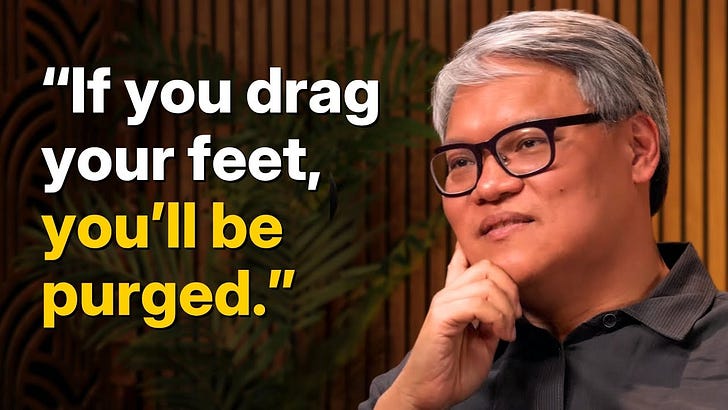
Dwarkesh Podcast
Xi Jinping’s paranoid approach to AGI, debt crisis, & Politburo politics — Victor Shih
01:29:09
Loading summary
Transcript163 lines
- [00:00]
Victor Shi
Today I'm talking with Victor Shi, who is the director of the 21st Century China center at UC San Diego. China is obviously the most important economic and geopolitical issue over time, and doubly so, if you believe what I believe about AI. I was especially keen to talk to you because you have deep expertise not only in Chinese elite politics, but also its economic system, its fiscal banking policies. We'll get into all of that before we get into the AI topics. Is China actually a more decentralized system than America? If you look at government spending by provincial governments versus the national government in China, it's like 85% local, provincial, 15% national. In the US it's actually, if you look at state and local, it's 50% national. Federal government is 50%. When you think of an authoritarian system, you often think of it as like very top down, the center controls everything. But if you look at these numbers, it just seems like it's quite decentralized. Or is that the wrong way to look at the numbers?
- [00:54]
Unnamed Expert
I think for a while China was quite decentralized. So this is kind of from the mid-1970s all the way until the mid-1990s, China was very decentralized, where local governments generated a lot of revenue, but they also spent a lot of money. And it incentivized them to do kind of basically good things, such as trying to attract as much FDI as possible, trying to attract as much local investment as possible, give tax breaks and so on and so forth. So I think China had a very good period of mainly sort of private sector driven growth because of this fiscal decentralization. And that's the understanding of, I think, most economists. But then there was tax centralization in 1994, basically where the central government basically said, okay, this is ridiculous. We don't want to end up like the Soviet Union and fall into different pieces. We need to control fiscal income. So then they grabbed the most lucrative of taxation at that time, and it continues to be the case, which is the value added tax. And so the collection of value added taxes. And then also in subsequent decades, pretty much all other tax categories are now collected by the central government. Then they reimburse part of the money to the provinces. And then supposedly they say, okay, now you can spend the money as you wish, but in reality that's not the case. So in reality it's kind of like, well, if you do this thing, then I'll give you a little bit of money, but you have to do the thing that I want you to do to get this money to get this grant, basically. So then the fiscal autonomy, I would say has been falling since 1994. I mean, there are different periods. Sometimes there's a little bit more autonomy. So sort of from 2000 to until recently until 2020, the localities gained more autonomy vis a vis land sales. So that's when the real estate market was going very well. Even though they couldn't control the tax revenue, they could control the land revenue. But then the central government basically killed the land market in 2022. And now I think localities in China are highly dependent on the central government.
- [03:15]
Victor Shi
Let's start at the very top. If you look at the members first, I want to understand the personnel. If you look at the members of the Politburo and you look at their past, a lot of them will be provincial leaders and then some local thing before that. But in many cases they'll have stints, as you said, as they were the head of this chemical engineering. So they studied Xi Jinping himself was a like has a PhD in chemical engineering, right?
- [03:44]
Unnamed Expert
Something some kind of. Well, but yeah, that's actually what you.
- [03:48]
Victor Shi
Want to ask about. If you just look through the list, a lot of them are like PhD economists, PhD industrial engineer, et cetera, et cetera. I mean, some of them that you look, it's like, oh, they have a PhD in Marxist theory or something. Marxist thoughts, which. That seems fake. But are they actual technocrats? If you look at their degrees, they seem quite impressive. Or is this just like fake made up credentialism? If there's like a PhD economist in the Politburo, should I be impressed and be like, oh, they probably really understand economics or should I just think this.
- [04:20]
Unnamed Expert
Is so the former Premier of China, Li Keqiang, his undergraduate degree I think was economics and he studied under one of the best economists in China. So I think he understood economics. So I would say in the Politburo today, there is this wing of the Politburo who are military industrialists who were trained as engineers and they indeed were trained in the best programs in China. So Ma Xinrui, the party secretary of Xinjiang, for example in the Politburo, graduated from Tsinghua University, Zhang Guoqing also, who worked in military industry for years. I don't know if it's Tsinghua, one of the other top science programs in China. So they know a lot about science, but does that mean that they know a lot about governing? I mean, that's. I think it's somewhat different question. But then you also have other cases like Ding Shishang So we can talk about him because he's in charge of cybersecurity in China. He has a technical background, but in metallurgical forging. Graduating at, I wouldn't say it's not the MIT of China, maybe closer to the IIT of China, just kind of like the Second Tier Science Institute founded by one of the Soviet experts who wanted to teach China how to do metallurgy. But does that kind of very specialized technical knowledge make you a better leader? I think it depends on the person. And I think what happens in the Chinese Communist Party is that as people rise up, there's certainly you have to have political acumen. If you don't have political acumen, you're not going to make it. And some people on top of their technical expertise, it turns out that they have some political acumen, but it's not something that you sort of know ex ante. Except for the princelings. So the princelings, the reason why they're special is not just because of their, the children of high level officials is that they grew up honing this political acumen because their parents could teach them about it. So then some people turn out to have political acumen. They're pretty smart. They don't necessarily have the best degrees from the best universities in China and they end up being very successful. So it's not necessarily, oh, all the Peking and Tsinghua University graduates, they all get to the very top. There are certainly disproportionate amount of people like that in the Politburo, but they don't dominate because at the end of the day it is somewhat random.
- [07:06]
Victor Shi
Yeah, I still feel confused about how to model the competence of the party because on the one hand they are super educated in STEM and are selected at least partly on merit, et cetera. On the other hand, we just see them a lot of zero. Covid was just genuinely stupid, scrubbing down airport runways and so forth. And it just lasted for too long. And why was nobody steering the ship then? So.
- [07:43]
Unnamed Expert
Well, no.
- [07:44]
Victor Shi
What's the way to put together this picture?
- [07:45]
Unnamed Expert
So there's a lot of expertise at sort of the lower level that can feed to the higher level. And there's some channels for doing that. I would say a lot of channels for doing that. So they're not so dysfunctional on that score. But what time and again leads to suboptimal policy is the party's sort of instinct to preserve itself, but then in a way worse than that to preserve its power. So it's not like, oh well, we do this kind of thing, you lead to a better sort of outcome, public health outcome, and we get to survive, you know, politically. But if they see it's like, okay, even if we do survive politically, but it leads to a diminution of our power in one respect. You know, we have less control of the banks, or, like, the scientists become more independent or something like that, then they would say, let's not do that, you know, because it's like, what's the cost? Some people die, you know, whatever. We have slower growth for a couple of years, but we get to preserve this power. We will go ahead and preserve power.
- [08:51]
Victor Shi
Mm. But if you're an economist. Okay, so here's a question. Like the. Traditionally, the way I understand, if you study economics in at least an American university, you'll learn about, like, supply, demand. Here's why certain regulations can be bad. Here's why tariffs are bad. Just the basic 101 teaches you that. So if a lot of the members at the highest levels of the Communist Party have this basic understanding, then what's the reason that they make mistakes that many economists say they shouldn't do? Like, why. Obviously, people talk about rebalancing a lot. Why don't they think that increasing consumption is a good idea?
- [09:28]
Unnamed Expert
Well, so there's a traditional reason, and then there's today's reason, which is on top of the traditional reason. The traditional reason is that, you know, education in China, you get tracked into sciences, stem, or you get into social science or humanities. If you get tracked into stem, you may never learn anything about supply and demand, which is just not required. You just learn a bunch of math. You learn a lot of engineering if you want to be an engineer. And then there are some art classes for you to select. You can select the art classes or maybe one econ class. For a while, learning economics was popular. So in the 1990s, all the engineering students would have taken an econ class. But people who were trained before that, they were not. The one class that is still required for everybody is government ideology. In fact, the requirement for government ideology has been ratcheted up in recent years. So that now, because I look at all the applications of students from China and I look at what classes they've taken, now, once a year, they have to take a class called Situation and Policy, which is basically just the Chinese government's perspective on all kinds of different issues. But that's not economics. It's not accounting. It's not some basic skill. It's just telling people what the government prefers in a given topic. So that's a traditional reason. So you can have some very high level officials, even if they have PhD in nuclear engineering, they may not know very much about how the market works, how society works, so on and so forth. The new reason is that we have one very, very powerful figure in the Chinese Communist Party, such that even if you're a Politburo member, which used to give you some autonomy in the domain that you govern over, that is no longer the case. If Xi Jinping expresses a preference over a policy direction, that is the direction you have to go toward no matter what. Because if he observes that you're dragging your feet or that you're pursuing a slightly different agenda, you will be perched. And we've seen cases of that.
- [11:40]
Victor Shi
At some point we'll talk about leading small groups and the way they work. But the picture you get from the fact that Xi is monitoring what all these different Politburo members are doing, he's noticing whether they're dragging their feet, he's leading all these small teams. You'll explain this in a second. How these work, but they organize different leaders who are the heads of the ministries or commissions that are relevant to a specific project working. And I guess every week they meet and they hammer out who is the bottleneck, what do we need to do to get a project moving. So Jia has ratcheted up at the amount of such meetings, and the picture you get is somebody who is micromanaging details across all these policy areas. If you read Stalin biographies, there's a big thing like Stalin actually was a person like this. Obviously not to great effect, but he was interested in micromanaging every single detail across each. Even the theater productions in the country to like steel production, everything. Is that who Xi is or.
- [12:42]
Unnamed Expert
Yeah. So if you look at what he does day to day, he spends a lot of time in meetings. And it's astonishing. I mean, there's no, this is one thing, it's like, there's the Chinese leadership. They're not going to play golf, you know, three days out of a week. I mean, Xi Jinping and his colleagues are having meetings about policies on almost every, you know, like 270 days out of the year.
- [13:08]
Victor Shi
So the study sessions with the politburo, these meetings, et cetera, are they like, are they substantive? Are they real? Is he like actually learning the intricacies of like, here's the, you know, here's how zero Covid has impacted this province and here's why we should. Whatever, whatever. Or are they just faux. Because if you read the announcements from the party or departments, they're just like, so vapid, like typical communist speak. How real are these meetings?
- [13:35]
Unnamed Expert
So I've talked to some people who've lectured to the Politburo. I think they're somewhat real because they don't know ex ante what questions they'll be asked. Like, I'm talking about the speakers, right? So I think Xi Jinping and other leaders, they know what the speaker would say in the main remarks. But then there's a Q and a portion of it which actually is real, like it's not staged. So that's pretty scary. You know, if you're some professor, you know, Xi Jinping asked you to come and, and ask you a bunch of random questions is very scary. So I think they are substantive. And then. Well, but the thing is also Xi Jinping will make remarks after such a lecture, and those remarks become policy. So you asked about the leading small group. So this is where this ranking is very important, right? So the head of the leading small group always has to be the senior most ranked person. And of course, the good thing about having Xi Jinping as the head of a leading small group is that his authority is not going to be challenged by anyone else because everyone agrees he's the most powerful and most senior ranked person in all of China. But the problem is all the other members of the leading small group are lower ranked than him. Well, not all, but whereas before, when decisions were made in the Politburo Standing Committee, notionally the party and also even the bureaucratic ranks of all the Politburo Standing Committee members are equivalent to each other. So there was debates, there were debates, and then even sometimes overturning of the position of the party Secretary General, sort of. Historically you have seen cases like that. But when most of the decision was pushed into all these different leading small group, usually there's one other person who's similarly ranked as Xi Jinping, the premier of China or one of the other people. But everyone else would be these vice premier ministers or provincial governors who are definitely ranked lower than Xi Jinping. And you know, in no scenario will they debate a particular policy with Xi Jinping. So at most maybe there's one person with sort of equal standing officially with Xi Jinping who could voice some kind of disagreement. But of course, because Xi is so powerful informally, no one would actually dare to do that. And so basically the whole thing, once all the decisions got pushed into leading small groups, basically became Xi Jinping, and then it's very hard on him because basically before all These meetings, there's a briefing, someone gets out a briefing book and say, okay, this is what we're going to talk about. Here are the policy options. Which one do you want? He has to make up his mind. I mean sometimes I'm sure he consults with other people and so on and so forth. So then he has to be really engaged with a large number of policy area on a day to day basis because the decisions that he make becomes the law basically.
- [16:44]
Victor Shi
Yeah. And it's stupendous to think about. We understand. You can tell somebody how big is China, the population, et cetera, the size of the economy. I think visiting China gives you a tangible sense of just how big. You have provinces, each of which have as many people as a normal nation state, provinces which have hundreds of millions of people, 40,000 people, 40 million people, so forth. And then one person will say something at the end of a meeting that determines the policy for basically everyone. Yeah, for the population of north and South America or something. Does he say things at the end of meetings, during his speeches, et cetera, which indicate that he actually has a good understanding of these different policy areas? Cuz obviously the official speeches are very vague and it's always something like we will make sure that we are robustly pursuing Chinese growth while hewing to the tenets of Mao's thought. And while not so never anything specific or interesting, but do we have an indication that behind closed doors he's.
- [17:50]
Unnamed Expert
Well, you don't think there's anything specific or interesting, but if you have read thousands of these things, sometimes it's quite revealing actually.
- [17:59]
Victor Shi
Sorry.
- [18:02]
Unnamed Expert
General.
- [18:02]
Victor Shi
Yeah, I'm interested in what it reveals about him personally. Did he display any analytical ability, any sort of like empirical understanding of different policies, et cetera?
- [18:14]
Unnamed Expert
Yeah, that is difficult. So I would say because of his upbringing as a princeling for internal party matters, how to control the party, how to control the military from the speeches. Some of these, they're not secret speeches, but they're sort of more geared toward other members of the Chinese Communist Party. So some of these speeches, like if you go to China, you can read some of these speeches which I have. He has a really good political nose, like he knows what it takes to control the party apparatus, control the military, on especially economic issues. Yeah, it seems like some advisor gives him some talking points, he talks through it, there is some sense of that on technology issues. I think he cares a lot about it, but only from the perspective that competition with the United States is a very important objective. The Chinese Communist Party is for him personally, a very important objective. So he wants to win. But precisely the extent to which he understands all the intricacies, it's unclear to me. I don't think he necessarily. I don't think he does. But then comparing him to American leaders, especially today, I think he's probably better prepared just because in China the experts, they talk to the top leadership all the time.
- [19:50]
Victor Shi
Yeah. The advantage of the American system, of course, is that at least in theory, it can survive a leader who is not up to the snuff. Publicly available data is running out, so major AI labs like Meta, Google, DeepMind and OpenAI all partner with skale to push the boundaries of what's possible. Through Scale's Data foundry, major labs get access to high quality data to fuel post training, including advanced reasoning capabilities. Scale's research team SEAL is creating the foundations for integrating advanced AI into society through practical AI safety frameworks and public leaderboards around safety and alignment. Their latest leaderboards include Humanities Last Exam, Enigma, Eval, Multichallenge and Vista, which test a range of capabilities from expert level reasoning to multimodal puzzle solving to performance on multi turn conversations. Scale also just released Scale Evaluation which helps diagnose model limitations. Leading frontier model developers rely on Scale Evaluation to improve the reasoning capab of their best models. If you're an AI researcher or engineer and you want to learn more about how Scale's Data foundry and research lab can help you go beyond the current frontier of capabilities, go to scale.com dwarkash okay, let's go back to Ding Xiaojiang. How do you pronounce his name?
- [21:10]
Unnamed Expert
Ding Xuexiang.
- [21:11]
Victor Shi
Okay, sorry about it. So Politburo has what? 25 members? 20. 25?
- [21:15]
Unnamed Expert
Yes, 25 members.
- [21:17]
Victor Shi
Standing Committee has seven members. This is the key group inside the Politburo and this person is one of those seven. He runs the center for Science, the Central Science and Technology Commission. The reason I'm especially interested in him is because any large scale AI effort that China would launch would be under his purview. Do we understand what he wants, who he is, what his relationship with Xi is, what he would do if AGI is around the corner, et cetera?
- [21:51]
Unnamed Expert
Yeah, these are all very good question. So I think in addition to the Science Technology Commission that you mentioned, another very important position that he holds is that he's the head of the office of the Central Commission on Cybersecurity. The head of the Central Commission on Cybersecurity is Xi Jinping himself. But the head of the Administrative Office which runs the day to day operation of that commission, which basically a leading group is Ding Shishang. And he took that position back in 2022. So he's been steeped in cybersecurity for a couple of years. I think by now he knows all the major players and some of the key policy issues. His relationship with Xi Jinping is a very interesting one. So he only directly worked under Xi Jinping for one year. When Xi was in Shanghai, he was basically the very senior level secretary who would support whoever the party secretary of Shanghai was. And he worked under three different party secretaries of Shanghai, supported Xi Jinping for one year. For some reason, Xi Jinping just trusted him absolutely after that. And it's a mystery. And you know, I've looked at all the open literature, I've asked people in Shanghai. Nobody knows why that's the case. I mean, almost certainly I think one reason is that he was gathering a lot of information about the other leaders of Shanghai and sending all that information to Xi Jinping to basically let him know. Because at that time, as you know, the previous leader of China, Jiang Zemin, had a very big stronghold in Shanghai. So basically Xi Jinping had to sort of break that apart before he could assert control over Shanghai. Ding Shixiang likely was one of the people who sent all this necessary information to Xi Jinping in order for him to do that. But beyond that, I mean, lots of people do that for Xi Jinping, truth be told. So beyond that, what else has he done for the big boss to earn his trust, I think is a big mystery. But the manifested outcome is that Xi trusts him a great deal because in 2013 he was promoted to Beijing to be the second in command in his personal office, handling all the flows of data in and out of the desk of Xi Jinping. So that's a very important position. He became the first in command a couple years later. He took control over the entire apparatus that governed Xi Jinping's day to day Life back in 2017. Now he's a vice premier in charge of cybersecurity. So clearly this guy is trusted. His preference for AI AGI. So I tweeted this Davos speech, which you also looked at. I think it's very revealing. So you look at it, you're like, so what he said was, we need to invest in AI, but we need to do it. We can't go all out in investing in it without knowing what the brakes are. We have to develop the brakes also. At the same time, I think that's extremely revealing. So basically it's very different from the American approach because in America it's all driven by private sector. And of course, all these, except for one or two companies, everyone just invest, invest, invest, and try to reach AGI as soon as possible. For the Chinese government, they're very AF that some actor outside, but even inside the Party is going to use it as a tool to usurp the power of the Party. So they want to know that they have a way of stopping everything if it comes to it. So for them, developing the brakes is just as important as developing AI itself.
- [25:49]
Victor Shi
What are the different organizational milestones we should be watching for to understand how they're thinking about AI when things have escalated? So to add more color to this question, what I expect to happen, let's say next year in terms of raw AI capabilities, we might have computer use agents. So a thing which is not just a chatbot, but can actually do real work for you, you put it loose on your computer, it'll go through your email and compile your taxes, et cetera. And then in five years, I expect it to be able to do all white collar work, or most white collar work, which is like 40% of the economy potentially. Eventually we'll have full AGI, even robotics and so forth. As this is happening, how should we be tracking how the Party is thinking about what is happening, how seriously they take it, what they should do about it? Should we? I think last week or a couple weeks ago, there was a Politburo study session on AI, but I don't know if there was AGI, AI or what kind of AI they were discussing. Should we be looking for a leading group on AGI in particular, should we be trying to just read more speeches? What should we be paying attention to?
- [26:56]
Unnamed Expert
Thus far it seems like it's under cybersecurity leading group. So Ding Zhixiang would be there won't.
- [27:01]
Victor Shi
Be a new group?
- [27:02]
Unnamed Expert
I don't think so, because for the Party, it's a security aspect of it that's the most important. I mean, there's one aspect where it's like, yeah, it'd be great to automate all industrial production. China is doing a good job doing that already. I don't think they need additional infrastructure, you know, sort of governing infrastructure to allow them to do that. But on sort of applying AGI or AI to governance, to even service sector, generating video content for people, doing even like travel agency stuff. The Party is very, very paranoid that some hostile actor outside of China, certainly they believe that very strongly or inside of China is going to do something, and the AGI is going to take off and it's going to undermine the Party's authority. So I think basically what we're going to see in terms of institutional development is not at the top end, but at the lower end. So they will want to designate human beings in all the government agencies, in all the commercial entities that are using AI or AGI to put their foot on the brake if it comes to it.
- [28:16]
Victor Shi
But so far, after the deep sea became a big deal, the immediate reaction, it seems in China, yeah, very enthusiastic. All the different big tech companies, WeChat, Tencent, everybody was encouraged to adopt it, and they did adopt it as fast as possible. Xi himself met with Lian Wanfang and did a whole meeting where all the industrial heads were there. And Xi said, we have to accelerate, I don't know, whatever technology in China, et cetera. So it seems like so far the response has been the greater the capabilities of AI, the more they're excited about it, the more they think this is the beginning of Chinese greatness. But you think that changes at some point?
- [28:55]
Unnamed Expert
No, no, no. I mean, they want to develop it, of course, they'll pour a lot of money. They'll try to give Deep, seek as much help as possible, you know, sourcing GPUs, whatever, all this kind of stuff. But I am all but certain that there is one, or maybe a team of people in the headquarters of Deep Seq who can pull the plug if necessary, because there is such a team of people in every major Internet company in China.
- [29:23]
Victor Shi
What would cause them to pull the plug?
- [29:27]
Unnamed Expert
So if AGI started generating Falun Gong related content, and it proliferates very quickly beyond the capacity of the sensor to control it, then they'll have to stop the algorithm from generating new images and new videos and so on and so forth.
- [29:45]
Victor Shi
Suppose it turns out, you were saying, look, they can help high flyer source GPUs, and et cetera. What is the mechanism by which. Suppose it turns out that for High Flyer to continue making deepseek, to continue making progress, they need all the GPUs that Huawei can produce, and they need a whole bunch of other things. They need energy, they need data centers. What would it actually look like for the government to say, every single Huawei GPU has to go to deepsea, they're going to get access to all this spare land to build data centers. Who would coordinate that? Would that be the leading cybersecurity group? Would that be somebody else?
- [30:19]
Unnamed Expert
Yeah, it could be, yeah. So that's Interesting. So the physical investment will have to share power with some other leading group. Yeah, so I guess that would be a justification for AGI leading group of some sort because, you know, building power center that falls under ndrc. It could be under Li Qiang or He Lif. Especially He Lif, which is in charge of investment and financing. But if Xi Jinping doesn't want He Lifong to share that power, then we'll have to give it all to Ding Shishang and then give him a lot of power. I mean, he can just do it by fiat or create a separate organization to make it happen. At this point, as you know, data centers are being built in China in a very fast clip. And I think they're just using existing command structure. There is potentially a foreign aspect of this. So it's like you build up all this cloud computing capacity in the Gulf states, who's going to be the customer who's willing to pay billions of dollars to use it? China. Right. So then the foreign policy apparatus will have to coordinate that and so on and so forth.
- [31:36]
Victor Shi
Belt and Road V2 data centers. Does it have any end implication to the progression of AI who actually ends up controlling these leading groups, whose purview it ends up under? Or is it just basically a detail? But in terms of what happens with AI in China, it doesn't have that big an implication.
- [31:57]
Unnamed Expert
I think it does matter. Yeah. So you have some decision makers who have shown to be not very good and even politically not very good, but nonetheless, for some reason they're trusted. Maybe precisely because they're not very good, they're very dependent on Xi Jinping that they get promoted. The chief negotiator with the United States, He Lifong, Vice Premier in charge of finance. He is well known for starting and perpetuating the largest real estate bubble the world has ever seen in Tianjin. I don't know if you went to Tianjin. There are just empty buildings everywhere. So there's the new Manhattan, you know, literally the size of Manhattan, filled with empty office buildings. He made that, ironically.
- [32:43]
Victor Shi
Sounds like a great tourist site. Not because it's real Manhattan, but because.
- [32:46]
Unnamed Expert
It'S actually cool to visit. But you know, it's like, wow, this is great. Like, what are you going to do with the buildings?
- [32:52]
Victor Shi
We went to this in Amisham. We went to this huge, huge Buddhist temple. By huge I just mean like there would be this structure, the shrine, and you'd go through it and you'd realize behind it was an even bigger shrine that was hiding from view and then you'd go through that one, there'd be an even bigger one. This happened like five times. If you were to drive through this, it would take you like.
- [33:20]
Unnamed Expert
But it's new, right? Not historical, right?
- [33:22]
Victor Shi
Oh, no. Yeah, yeah, it's new. And then I asked like the head, by the way, there was nobody else there. Yeah, yeah, of course it was me. Three white guys and nobody else. And I asked the head monk, how'd you guys finance this? And he says, we've got a lot of supporters, a lot of donations.
- [33:39]
Unnamed Expert
I don't think so. Yeah, yeah. So then there. It really depends, like who's in charge of AGI. Yeah. So Ding Shishang really is a mystery. I think he has great political acumen. He must, in order to gain Xi Jinping's trust. He has some technical background, but it's metallurgical forging. But he's worked in Shanghai for decades, so he knows how private corporations run. He knows a lot about international trade, fdi. So I think if you look at the sort of people in the Politburo. Politburo Standing Committee, I would say he's definitely in the top quartile of people that you would want to be in charge of AI, if not the top two or three people.
- [34:24]
Victor Shi
Right, Interesting.
- [34:25]
Unnamed Expert
I mean, one thing that I would say about AI is that content creation is going to be a big roadblock for China because China is so paranoid about the content that flows on the Internet that they put human beings all over the place to slow things down, slow the transmission down. And now if you have AI creating tons of content, there will still be human beings, algorithms and human being double triple checking the content because they're just so afraid of some subversive content getting out.
- [35:08]
Victor Shi
But it's still been compatible with them innovating and having leading companies in even content. Right. Like RedNote and TikTok and so forth, not to mention WeChat. So if AI ends up and AI might be even more robust to some of these sensitive content because you can just teach the AI to not say certain kinds of things.
- [35:31]
Unnamed Expert
But even if that were the case, even if you train something that you think is pretty good, they will still want a human being checking everything.
- [35:37]
Victor Shi
As somebody who is trying to observe what the party is doing, have you found that using LLMs has been helpful and if so, which model gives you the best insight into what the CCP is thinking?
- [35:51]
Unnamed Expert
Yeah, no, I've been using AI quite a bit, both to sort of code data. It used to be like text, hand code stuff and now a lot of it can be automated. But in terms of finding out what the Chinese government is doing, I think some of the American models are okay, like rock is okay. But the most helpful has been Deepseek. So to me it's quite clear that Deepseek, which of course was first developed by a hedge fund to trade in the Chinese market, part of what they really trained the model for was to detect important policy documents and meetings within the Chinese government. Because when you enter the right, or even not even like especially sophisticated proms, just like what is the Chinese government and doing when it comes to AI, it comes out with a bunch of very high quality links which is very useful for my research. So then immediately you get a sense of what are the latest policies, what are the latest statements by high level officials. It seems that Deep SEQ puts some higher weighting, let's say, on this kind of content. So I don't dare to install it on my phone, but I certainly have collaborators who have downloaded the open source model and install into a hard drive and I use the WEP interface for some of my research.
- [37:13]
Victor Shi
Do you think it's just because they have more Chinese language data and so it's just better at understanding the party communications?
- [37:19]
Unnamed Expert
So I've used sort of Baidu's thing and so I think the typical Chinese language models are more trained on social media content which will come back with hits that are like more social media. It's like, oh, if you ask about AI, we'll talk about how AI gets used and different things instead of this kind of policy documents and meetings and so on and so forth. So it seems just from an inductive observation that deepseak is trained on this kind of content.
- [37:49]
Victor Shi
So that High Flyer can make trades.
- [37:51]
Unnamed Expert
Yes, so that High Flyer can. I mean obviously China being China, government policies have a huge impact on how different stocks do. And that's often where you would find alpha. In the old days, people used to call up their friends who worked for this and that ministry to get insider information. But I think what High Flyer has discovered would also generate alpha is to really use algorithm to look closely at these policy documents.
- [38:20]
Victor Shi
Look, coffee isn't the reason that you're going to stay at the Ritz, but it could be the reason that you leave. Because when you offer a truly freeing product, your customers require excellence in all the parts, not just the core. So the Ritz works with a specialty roaster to ensure that they can deliver great coffee. That's what workos does for your product. But for Enterprise features like single sign on access controls and audit logs. These features are not the reason that people will love your product. But if you don't have them at all, you simply won't get a seat at the table with your biggest, most important customers. Companies like OpenAI, Anthropic, Vercel, and Perplexity all rely on workos to serve their enterprise customers. In fact, Nvidia might be the only other vendor that all of these AI companies share. And that's because not only are these features critical, they require excellence. WorkOS makes it super easy to plug in these features into your product and get back to delivering the premium experience that your customers expect. If you want to learn more, go to workos.com and tell them that I sent you. All right, back to Victor. Okay, and then this is going to sound like a naive question, but we're talking about how the Party in the abstract wants to maintain control over every aspect of Chinese life and Chinese economy. But of course, the Party is made up of individuals, and many of these individuals, Xi himself, went through periods where the Party had extraordinary control over people's lives during the Cultural Revolution and so forth. And they personally and their family suffered as a result of this. And they're educated people. Many of them had been in industry. Right. These are not naive people. So maybe I'm just projecting too much of my Western bias here. But what is the reason that they think it's so crucial that the banks are run by the Party and the AI is run by the party and nothing escapes the party state?
- [40:14]
Unnamed Expert
Yeah. So the Cultural Revolution generation, I think a lot of people suffered horrendously, including Xi Jinping himself. But then basically you have two types of lessons that people drew from it. So the first lesson is like, oh, the Party's too dictatorial. China needs to liberalize, and so on and so forth. So you have a lot of people from that generation who feel that way. Many of them now live in the United States. Basically, they tried to leave China as soon as possible in the 1980s and succeeded. But for someone, apparently for Xi Jinping himself and others like him, the lesson was just don't be on the losing side in any political struggle. Make sure you're on the winning side. Because if you are on the winning side, then you can do terrible things to your enemies. So that apparently is the lesson that he learned. And he basically honed his skills and built his coalitions for the time that he would take over high level positions in the Party for decades, as it turns out. So if you look at the data, when he was in Fujian Province, he spent an inordinate amount of time hanging out with military officers in Fujian back in the 1980s, late 1980s, early 1990s. And then you're like, well, why did he bother to do that? Most local officials, they don't do that. I mean, the military's there, you need to be nice to them and all this stuff. But he built a dormitory for them. He even joined a unit of anti aircraft regiment. He tried as much as possible to do as much as possible with the military because he knew he needed the support of somebody in the military when the time comes. Guess what, sort of 30 years later, when he was about to be elevated to be Secretary General of the Chinese Communist Party, many of the people that he knew back in Fujian are now generals. They're in charge of important military units. And once he came to power, then he really promoted some of these people. But then lately, of course, he's purging some of these people, which is really interesting. Yeah, yeah, yeah. He had a strategic vision about his own career trajectory and he pursued that in a very determined fashion, I would say.
- [42:27]
Victor Shi
What is the main difference between him and Stalin in the sort of political maneuvering sense? Because all of this sounds very similar to.
- [42:33]
Unnamed Expert
Yeah, I would say early in their career they're very similar. So outwardly they're very low key. You know, Stalin was the bureaucrat, very low key. Not flamboyant, not making loud speeches like Trotsky did, but low key, getting things done, seen as a very reliable person. This was a reason why Stalin was chosen, as far as I know. I don't know that much about Stalin. Same thing with Xi Jinping. So his father belonged to actually the liberal faction in the Chinese Communist Party. His father never offended that many people within the party. I mean, everyone at a high level will have sort of screwed over somebody along the way. But his father was in the better category, let's say. And he himself was very low key. While the other princelings were fighting for very good jobs in the capital city of Beijing or in Shanghai, Xi Jinping said, oh no, it's okay, I'll go down to the villages, I'll work in Hebei, in a rural area. Then Fujian, which was kind of a peripheral area. And then Zhejiang was slightly better, but still not Beijing or Shangh. So he got out of the way of this political infighting, I think, in a similar way that Stalin did. Early on, he did not confront people too much. But once he came to power, he knew they both knew what it took to control the party which they govern over. Basically, you form a whole series of coalitions to get rid of your most threatening enemy at a given time. So for Xi Jinping, it was like, oh, well, you know this guy Zhou Yongkang, who controlled the police forces and also the Ministry of State Security at the time, doing all this irregular things, being fabulously corrupt, he's a threat to the whole party. So he convinced Hu Jintao to join with him to purge Zhou Yongkang, which was successful. Stalin did the same thing to Trotsky. And then after the most threatening person is gone, you form another coalition to purge the next person and so on and so forth. So they both basically did that until they achieved absolute power within the party.
- [44:50]
Victor Shi
Yeah, yeah. And if you read the Stalin biography, so many of the in the early part, like half the people in the politburo are later are gonna end up in the Gulags. And then many of the people in the politburo later have been to the gulag. I wonder if there's a Trotsky analogous person in the story, somebody who was a flamboyant speechmaker.
- [45:07]
Unnamed Expert
Yeah, Bo Xilai.
- [45:08]
Victor Shi
Bo Xilai.
- [45:08]
Unnamed Expert
Bo Xilai. Yeah, yeah. So he was one competitor with Xi Jinping, but because he was so high profile that he never had a chance to be the top leader of China. And then of course, Xi Jinping made sure that he would fall.
- [45:21]
Victor Shi
Right. And now he's in prison.
- [45:22]
Unnamed Expert
And now he's in prison. He's not alive. His son is in Canada. Actually he's on Twitter now on X.
- [45:29]
Victor Shi
I should reach out. Honestly, he'd be interested.
- [45:32]
Unnamed Expert
That would be really interesting actually.
- [45:34]
Victor Shi
Let's move on to another topic. I know you studied deeply, which is the local government debt situation. Sure. What is the newest there? What is your sense of the situation now?
- [45:45]
Unnamed Expert
Yeah, it just keeps growing in absolute size because basically China is trying to tell the world that they don't have a high debt level, which at the central level that is sort of the case. It's still 60, 70% of GDP. But the reason why that is the case is because there are a lot of things the Chinese government would like to do. They push it down to the local level. But the authorization of local debt issuance is authorized by the central government. So at the end of the day, it's really the central government telling local governments like, okay, you need to do this thing. I'm not going to give you money, but I will give you the authorization to issue even more debt. So the Debt level keeps going higher and higher. The one thing that has alleviated the cash flow pressure late last year was the central government authorized again the issuance of close to 10 trillion renminbi in special local debt to repay some of the higher interest bearing debt of local governments. But that's an accounting exercise. It doesn't literally decrease local debt, it just changes from higher yielding to lower yielding. Meanwhile, the overall size of local government debt in China I would estimate to be 120% of GDP to 140% of GDP.
- [47:02]
Victor Shi
Whoa. That's atop the 60% that is owed.
- [47:05]
Unnamed Expert
By the central government. Yeah, so total governmental debt is. Yeah, it's pushing 200.
- [47:10]
Victor Shi
And the high level way to understand what this debt debt was for. The debt in Western countries and other OECD countries is often because you owe money basically to pensioners. In this case it was just that.
- [47:23]
Unnamed Expert
They built bridges, they build all the high speed rail, all the infrastructure, the beautiful infrastructure that you do see in China. And then more recently, industrial policies. Right. So for example, if there's a new science park for AI, let's say the land that they acquire, the infrastructure that's built is all built with borrowed money. Then there are these startups. And the startups are partially financed by some of these central level investment funds that you read about industrial policies. But then actually the local government also have their own cedar funds which uses borrowed money to finance some of these venture deals.
- [48:06]
Victor Shi
For startups, is the fact that they can get cheap credit from banks more relevant is the fact that they can get loans from provincial funds. More important, there's also these central government funds, the big fund and so forth, which is the bigger piece here?
- [48:21]
Unnamed Expert
So a lot of it depends on your social network and your connections. So if you're a startup at Tsinghua University, you have access to private sector funds, but also some of the central government cedar funds, if it falls in the right category, semiconductors, AI, et cetera, et cetera. But if you're at Liang Wanfeng, I don't know. So at Lianfeng, because it started out as a financial institution, so it was mainly private sector money from financial investors. But there are other AI, especially sort of more hardware driven initiatives in the provinces which are ceded by local government funds. And the point about financial repression is that without financial repression, an investor in China can invest in Silicon Valley. They can go to Sequoia and invest money. But because of capital control, they cannot legally move more than $20,000 a year out of China. They have to find domestic investment. So as A result, many of them choose to invest in Chinese high tech or they choose to put their money in the bank. So actually a lot of people just choose to put their money in the bank. And then the state banking system is then finance to they have the deposits with which to lend to local government cedar funds for industrial policies.
- [49:40]
Victor Shi
And the crucial thing here is that the banking sector is totally controlled by the state. So you're not getting a true rate of return based on what the productive value of investment is. It's literally like 1%.
- [49:52]
Unnamed Expert
Yes. The deposit rate's 1%.
- [49:54]
Victor Shi
Yeah. Which is, I mean it's like an insanely low return.
- [49:57]
Unnamed Expert
Inflation rate is very low in China. Right.
- [50:00]
Victor Shi
There's a couple mixed up questions I want to ask here. But basically, so you said, well, if there were no capital controls, these people might want to take their money and go invest in Silicon Valley. Very basic development economics would show you that if a country is less developed, they'll have higher rates of return. People would want to invest, the Silicon Valley would want to invest in China. Why would getting rid of capital controls make capital go the other way? And this goes into other questions of why is it the case that the Chinese stock market has performed so badly even though the economy has grown a lot? And then why is it the case that they have a current account surplus and they're basically accumulating T bills? The pattern you should see obviously is that they can earn much higher rates of return building productive things in China than accumulating 4% yield T bills.
- [50:47]
Unnamed Expert
Well, so at the deepest level, I would say there is a deep fundamental difference between capitalism and socialism. And it sounds very philosophical. Philosophical. But I think this might help sort of your Gen Z listeners think about this, because for socialism they only care about output. It's like, okay, whatever capacity we're thinking about, whether it's grain production or metal production or these days robotics, we just want more of it. Right. So then the state can use the state banking system, which they control, to allocate huge amount of capital to maximize the output of all these different things that they care about. But when you maximize the output, you don't necessarily make money doing that. Whereas capitalism wants to maximize profit, which is, as you know, the difference between the cost of production and the amount that you can earn from selling the output. For socialism, they don't care about that.
- [51:47]
Victor Shi
But the companies aren't socialist, right? The companies are probably.
- [51:51]
Unnamed Expert
No, but because the financial system is socialist, they're, they're forced into socialist like behavior. You can't go into a bank and say, look, I make robotics. This robot that I'm going to make is going to be highly profitable down the road, but I can only make 10 of them. And then the bank would be like, well, this is B.S. i know a lot of startups don't make any money, but at some point, notionally, you have to start making money. Whereas the socialist banking system basically says, even if you never make any money or hardly any money, that's okay as long as the Chinese government tells us that this is a strategic sector. As long as you can prove to us you can actually produce the thing that we want you to produce. If you never ever make money doing that, that's perfectly fine.
- [52:35]
Victor Shi
What is the sort of outer loop feedback, the thing which keeps the system disciplined Here there's private investors who care about actually earning a rate of return. And so they're only going to invest in companies which they think have a viable shot of. Of becoming huge companies that can actually be at the frontier in technology if these banks are not actually competing against real investors and it's not their money. Yeah, exactly.
- [53:03]
Unnamed Expert
So they don't care.
- [53:04]
Victor Shi
But it seems like this is compatible with many of the world's leading companies being developed in the system. So how is it working?
- [53:13]
Unnamed Expert
Well, so this is where the. But bureaucracy steps in, right? So it's like, well, how would a bank tell what's a good company and what's not a good company? So then there's a complicated system where the Ministry of. So let's say for robotics or for semiconductors, there is a sort of expert group in Ministry of Industry in informationalization, information technology, that will assess all these different projects. So the banks will literally send them and say, okay, this company wants to borrow $10 million. Do they have real technology? Is this a good prospect? And some bureaucrat, supposedly with no financial stake in the company, they're completely neutro. Supposedly. I say supposedly because in reality we've seen many cases of corruption in conjunction with an expert panel who, again, with no. Any relationship with the company or with the bank will sign off on these projects or reject these projects, get sent back to the bank. And the bank says, okay, these bureaucrats say that your project is good, you're good to go, here's $100 million.
- [54:17]
Victor Shi
But it seems to work.
- [54:18]
Unnamed Expert
Yeah, yeah.
- [54:19]
Victor Shi
But doesn't this just belie the whole idea? Like central planning isn't supposed to work, right?
- [54:23]
Unnamed Expert
No, no, no. So there's selection bias. We see. And pay attention to the cases that work. And there have Been some fabulous success case which by the way does not include Xiaomi or BYD because those were mainly privately funded at the beginning.
- [54:39]
Victor Shi
And Catl and dji.
- [54:41]
Unnamed Expert
Yeah, exactly. So the success cases actually are not that. I mean, but there are, I'm sure I don't know the cases, but like there are, well, Huawei, so I would say like Huawei, there was a lot of state funding along the way and so on and so forth. So you have success cases, but there are so many failed cases and billions and billions of dollars just thrown down a hole basically for the failed cases. In fact, for a semiconductor, things got so bad that they had to arrest a whole bunch, dozens of people in the Ministry of Information and Industry and Information Technology who were in charge of approving these semiconductor deals. They all went to jail because they were in a deal where some companies submit a bogus project, they approved it, they got a part of the money, and so on and so forth. So it doesn't work very well. I mean, of course you have fraudulent cases in the U.S. also, all that kind of stuff. But the scale in China, the waste in China is a much larger scale phenomenon.
- [55:43]
Victor Shi
And it's all financed, as you say, with this financial repression, which is basically a tax on savers. And so even though there's no meaningful income tax and just value added tax and corporate income tax, if you factor in the currency devaluation, which is a tax on consumers, and then this financial repression which is a tax on savers, it actually might be a meaningful decrease in the quality of life of an average person.
- [56:07]
Unnamed Expert
No, I mean, you definitely see it for an economy that's been growing 5 plus percent for decades. By this time you would expect pretty much the vast majority of the population in China having all the basic necessities, shelters, medical care, et cetera, et cetera. You don't see that a lot of migrant workers are barely getting by. The homelessness is increasingly a problem in China, especially with the labor market being so fickle these days. Elderly care is pretty abysmal. Very basic level, let's say, for a lot of people, not for everyone. So some people get very good elderly care if they worked for the government or SOE previously. So you see a lot of problems that the Chinese government has overlooked. So this is why I'm saying they have a goal of making all Chinese people very happy and fulfilled. One part of it is being fulfilled, the technology part, but the other part of truly making people living a good life, they're not making as much progress as they should.
- [57:11]
Victor Shi
I would say, and then just to close the loop on this. So I think sometimes we get impressed when we see, oh, they've got the Made in China 2025 and the NDRC and the MIIT and so forth, have these very specific lidar needs to get to this point and we need the EUV machines at this point and so forth. But your claim is that that part of the system is actually dysfunctional and in fact the part that actually works is the 5% that is totally private.
- [57:42]
Unnamed Expert
No. So the private sector stuff works a lot better. You have occasional successes from the state finance system. So I wouldn't say that there are no success cases, but I would say that for every success case you see, there are just maybe even over a dozen failed cases, which of course you have failed cases everywhere in vc. But the amount of money being wasted in the state financial system would be.
- [58:10]
Victor Shi
Much larger going back to the local government debt burden. There's a world where AI isn't a big deal, and there's a world where AI is a big deal. If we live in the world where AI truly causes huge uplift to economic growth and so forth, is it possible that this problem doesn't meaningfully harm China's ability to compete at the frontier? And here's why that might be the case. It seems like this problem is especially affecting poorer provinces, whereas you have the actual numbers. But are Shanghai and Guangdong in a good position with respect to their fiscal situation? And could they keep funding top end semiconductors, AI firms, data centers? And so China could still keep competing at the frontier in AI, even if the poorer provinces don't have the money to fund basic services and so forth. And in the long run they get advanced AIs and that's a big uplift to economic growth and they can just grow their way out of this debt problem.
- [59:14]
Unnamed Expert
Yeah, so we can talk about that. I'm a bit skeptical about that for the case of China, but yes, indeed, as you said, some places like Shanghai and Guangdong, they're still in relatively okay fiscal positions, but then there are other sort of wealthier provinces with a lot of debt also. So Zhejiang Province, which is where Deep Seik is located actually, and also Alibaba and all these tech companies, they have a high debt load, but because they start from a pretty wealthy place, they can still service the debt without too much difficulty. But actually a trade war is going to make it worse for Zhejiang Province because a lot of the the manufacturing export firms are also in Zhejiang. But nonetheless, the case of China is that basically the Financial system is geared toward fulfilling the priorities of the party, that is the priorities of Xi Jinping. So even if they can't do anything else, they will do the things that Xi Jinping wants them to do. And AI apparently is one of the higher priorities for Xi Jinping because he's held multiple study sessions, he's had different politburo meetings, and so on. So, and Ding Chixiang, who's one of his most trusted lieutenants, is in charge of it, et cetera. So I do expect fair amount of resources being devoted to it, regardless of the situation. In local debt, I mean, in fact, at the local level, things are so bad, but they just don't care, right? So there are civil servants, teachers who are not paid four or five months out of the year. I think you can say, well, how can you run a government like that? Wouldn't it just collapse? But then you have to look at the outside options for your teacher, for your very low level bureaucrat. What option do you have? I mean, do you want to go back to delivering food to people, or would you rather at least take six, seven months of civil service salary? At least you have health care. At least you can get your free lunch at your workplace cafeteria every day. People still choose to work for the Chinese government, even if that were the case. But a lot of the previously very generous fringe benefits and so on, so forth, that has all been cut down because of the local debt issue. But they're still pouring a lot of resources into national defense and AI and technology.
- [61:32]
Victor Shi
And what would a solution at this point look like? Because if you've already spent all this money, first of all, actually, why is it the case that these investments aren't productive? Because. Because it's not like it's entitlement spending, where you're doing it for, I don't know, old people. But then at the end of the day, you're not getting any return for it. Theoretically, these are like you're building real bridges, you're building airports. So why aren't they productive? And then what does a solution at this point look like?
- [61:59]
Unnamed Expert
Well, so it was very productive. I think you noted in this Art Kroeber book review that you did in the 1980s and 1990s, because China lacked a lot of infrastructure. But once you build the first high speed rail between Beijing and Shanghai, you build the second one, you build the third one, there's very rapidly diminishing return. Also, as you know, the population is basically shrinking in China and especially in a lot of cities in northeastern China. And also in southwestern China. So you really don't need high speed rails connecting those cities to other places in China because. Because nobody lives there anymore.
- [62:37]
Victor Shi
Can I ask about this? So if the reason that the provincial leaders kept doing this construction was because they want to get promoted and they want to get GDP numbers on the book, and government spending now is as the gdp, even if the ultimate thing you're building is not that productive, but then the central government has had a problem with this for a while and then they think this is fake, they don't want to keep this fake growth going. And they see the local debt number.
- [63:05]
Unnamed Expert
So.
- [63:07]
Victor Shi
Were they still promoted nonetheless? Like why? Why did they, why were people doing this? Who was the person who created? And also a lot of these people got arrested in the aftermath, right? So they weren't promoted, they were actually arrested. So what was incentivizing them to keep?
- [63:21]
Unnamed Expert
Why? So when you invest in a large infrastructure project, a lot of money changes hand. And that is so. Well, so this is a big debate in my field also, you know, some people say, well look, you know, like the more you invest, more likely you're to get promoted. My argument is that it's not the actual investment, it's the rent seeking that comes along with the investment, right? So you have to get a contractor for cement, you have to get a contractor for this and that, you get a big envelope under the table as a kickback, then that allows you to pay your superiors. Because let's say you did a billion dollar investment to build light rail or something like that in a city, you got a $100 million payout from contractors, you can give your superior $50 million to thank that person and to up your chance of getting a promotion.
- [64:17]
Victor Shi
Interesting.
- [64:17]
Unnamed Expert
And so I would say that's more the realistic mechanism for linking investment and promotion than like, oh, good job, you generated investment and GDP in this city. We're going to reward you with a promotion. In fact, there's really good work by James cone showing this. It's like basically also when you do real estate deal, you can sell land che to politically connected princelings and then they will lobby on your behalf for your promotion. And statistically there is an effect. So if you sell land cheaply to princelings, your chance of promotion goes up.
- [64:52]
Victor Shi
I find it fascinating, the fact that whether a corrupt political equilibrium leads to more construction or less construction, because the political equilibrium in America today is that, I don't know, California isn't the least corrupt country state in the country, but the political equilibrium is that. But the fact that there's so many different factions who get their hand into the pocket means that it's not that everybody's like, we need California Rail to happen yesterday because I need my share of it. It's that I'm gonna get a little consulting fee to slow this down by five years and another person. So it's quite interesting. And if you read the carobiography of Robert Moses and you look at the strategies he employed, it actually is very similar to what you're mentioning here, where it's in every single single faction's interest that a bridge that Robert Moses is working on gets done through some of the mechanisms you mentioned. For example, he would give the banks these discounted bonds for this construction. So the bank lobbyists were encouraged to keep the construction going and he would give. Obviously the unions wanted employment, so they want the construction to have. Every single person at every stage was incentivized. So I find it interesting that China has maintained to keep a political equilibrium with which encourages too much building, whereas our political equilibrium is that it's discouraged.
- [66:12]
Unnamed Expert
Yeah, it is. So basically all the regulations in the US environmental this and that builds its own sort of stakeholders and lobbying group. And it is in the interest of these lobbying groups to prolong the process so that they can absorb a higher share of the rent. Whereas. Because in China, because they have this command structure headed by the Chinese Communist Party, the secretary of the city or province can cut through all the red tape because he's the boss of all the regulators, most of the regulators, let's say at the local level. So if he wants to do something, he can cut through all of it as long as he can benefit somehow himself. So I think that would be. I would say that's the difference.
- [66:57]
Victor Shi
Interesting. Okay, and then what would a solution to this problem look like? Because if it's 100% of your GDP above.
- [67:04]
Unnamed Expert
So I would say. And of course, the Chinese government will never ever in a million years do it in its current form, which is to reduce a lot of the other unnecessary spending, like national defense, like a lot of the industrial policies, and then use the savings to bolster domestic demand with welfare policies and to gradually decrease over amount of local government debt. That I think is economically sound because it's like China already has the largest navy in the world. Why does it need a navy that's even bigger than the largest navy in the world? It doesn't need that. I mean, it has more than enough for national defense. It has some of the best jet fighters in the world. Already some of the best missile systems. No one is going to invade China or come close to it. So they actually don't need it. I mean the tech race, I mean I'm somewhat sympathetic to China because now that there's US policies preventing Chinese companies from buying all the chips and AI so it wants its own capacity, is spending a lot of money on it. So that part I'm somewhat sympathetic. But other aspects of industrial policies for some of the battery stuff for solar power, et cetera, it can certainly reduce a lot of subsidies. It can increase taxes actually on many export oriented firms which is one of the reasons why there's a big trade surplus in China. And trade imbalance between the US and China get more revenue that way to finance domestic demand and to pay down local government debt over time. The Chinese government of course will never do that because it has a very high places a very high priority over competition with the U.S. across many different front and to get dominance over multiple supply chains. But in the world of global trade, why do you need that? I mean the same thing goes for us. The US doesn't need dominance over every single supply chain.
- [69:11]
Victor Shi
Yeah. Why is it the case that economists, so when they're talking about rebalancing more towards consumption, they'll often suggest that you should do increase the amount of welfare. But it seems like the more straightforward thing to do would just be to get rid of financial repression so that by default savers would have more purchasing power. Get rid of currency devaluation, again the same effect. So why not get rid of the regressive taxes rather than the wealth?
- [69:41]
Unnamed Expert
Because yeah, if you just get rid of financial repression it will only benefit the savers, which is the opposite. 10% of households, net savers, 10, 20% of households. If you look at median households, they have very little savings actually besides the home in which they live. So there's this misconception, it's like oh, China has the largest savings deposit in the world. And that's true. But if you look at the distribution of the savings, deposits is highly concentrated in the hands of 10%. So even if you say oh okay, deposit interest rate suddenly goes up to 4%, it's only going to benefit the people with large amount of savings. Most people, they're not going to benefit from it. Most people, if they don't have better welfare services, they're going to save like crazy in anticipation of getting sick. So you do need better certainly medical care insurance in China. I mean that's something frankly I worry about the US if you Cut back on Medicaid, it's going to encourage precautionary savings, which you can say, well, but that's a good thing. Americans save too little maybe, but then your short term consumption is going to come down.
- [70:45]
Victor Shi
Okay, so you mentioned a second ago, well, why do they need this big military? Obviously the reason is not just self defense, but a potential invasion of Taiwan. So given your reading of elite politics, what's your sense on the probability that they would actually invade Taiwan this decade?
- [71:05]
Unnamed Expert
So first of all, I think we do know something about Xi Jinping's preference mapping when it comes to this issue. He has said a number of times that obviously China should be united. So I do believe that's sincere. But clearly his desire to achieve that is not so strong that he would take a very risky gamble achieving it. Because if that were the case, he would have done it already. He's been in power for 12 years. He hasn't done very much. Certainly the amount of pressure on Taiwan has ratcheted up. And also from his other policymaking, we know that he's not a reckless policymaker.
- [71:48]
Victor Shi
Well, zero Covid was kind of reckless.
- [71:50]
Unnamed Expert
Well, do you think that was reckless? Well, so that was actually conservative. Right. So he preserved the lockdown longer than was necessary.
- [71:57]
Victor Shi
Yeah, I mean it depends on how you. But you could say the same thing about Taiwan. It's like it's conservative because in the long run maybe they'll pose a national security threat. Right. But, but in other words, change from the norm.
- [72:12]
Unnamed Expert
Wants it so badly that he would just do whatever it takes to get it. He would have done it already.
- [72:18]
Victor Shi
Yeah, I guess you could argue that he has been trying to build up enough self sufficiency.
- [72:24]
Unnamed Expert
Sure.
- [72:25]
Victor Shi
That in the aftermath, China would not be left in the lurch with food or power. And that's why they're doing clean tech. That's why they're doing investments in semis and so forth. So they that over the next few years, if they built enough self sufficiency, they're in a position where they actually could without it being a HU. Couldn't have done the same thing in 2015.
- [72:46]
Unnamed Expert
Right. Yeah. So then we've seen the Chinese government engage in all this behavior, stockpiling this and that like oil, grain and so on and so forth, enlarging its navy, building all this landing capabilities and so on and so forth. So then one argument is like, well, so there's a threshold. Once he feels that he reaches that threshold, then he'll go for it. But then for me it's Like, I don't think that threshold is fixed. Right. It's really conditional on a lot of different things. And there are some exogenous factors that will increase the threshold, other exogenous factors will lower the threshold. So I would say more recently, one factor that might have have increased the threshold for him acting is what happened in Ukraine. So Ukraine, you have a case where Putin was very confident about taking over all of Ukraine within a short period of time. Turns out he was wrong. He was getting all this bad intelligence, so on and so forth. I think for Xi Jinping, he cannot discount that possibility and that very likely increased the threshold.
- [73:53]
Victor Shi
Interesting.
- [73:54]
Unnamed Expert
But then there could be other factors that lower the threshold.
- [73:57]
Victor Shi
This gets to the question of how much information flow is there, how much true information is getting up to Xi Jinping in the authoritarian systems, Obviously there's a danger that the leader is not getting told what they don't want to know. But you were mentioning a second ago that you think that the top leadership is in communication with experts all the time, is in meetings all day where they are learning about what's happening. Is that your sense of. But then you read about zero Covid, and it seems like by year three, it was very obviously a mistake. So to the extent that it wasn't stopped at that point, was that because information wasn't getting up to the top leadership? Similar story with, I think there was a very famous case in 2024 where Xi said, why don't we have billion dollar unicorn tech companies in China and people are responding. Does he not realize that the 2021 tech crackdown is the reason that's the case? Did somebody not tell him? So what's your sense on how much he is getting told things which might make him uncomfortable? For example, that we might not succeed in Taiwan.
- [74:58]
Unnamed Expert
Yeah. So this. Yes. It goes to a question of the role of expertise in the Chinese government. I think that's a very interesting question. I mean, frankly, I'm trying to use some kind of data to try to assess that. But my intuition is this. The top leadership always listens to experts. So unlike some cases in the U.S. the experts are respected, they're listened to. But there are sort of interest groups that are close to leadership. They also know that. So they will present different kinds of experts to tell him different sorts of expert opinions. So sometimes you would get these conflicting advice from different experts and he will have to make some kind of gut call. Other times, for political reasons, they will just ignore the experts. So they will never say fake news. We don't believe in science and so on and so forth. Sometimes even though they know for sure the experts are right because of other political reasons, they'll say, okay, you're right, but we're not going to do what you want us to do for now for a bunch of political reasons.
- [76:06]
Victor Shi
And how did that manifest in zero Covid.
- [76:08]
Unnamed Expert
Yeah, so I think the timing of it also the decision not to buy Paxlovid on a very large scale, that might have been some kind of political decision. And we show we have a paper, actually should send it to you, showing that basically they kind of knew the experts told them the US vaccines were better, MRNA vaccines were better. But the Chinese government said, okay, we believe you, but still we want to help our domestic pharmaceutical industry, so we're gonna only sell the domestic stuff in China. So that's very clear. If you look at the propaganda, you know, they began to denigrate the western vaccines and highlight the Chinese vaccine and so on and so forth. But I think they do meet with experts a lot. Sometimes the experts are manipulated into saying certain things. Other times the experts are sincere, they listen to them, but they still choose to not implement what the experts recommend.
- [77:04]
Victor Shi
Yeah, I guess I'm just trying to get a sense of where does this net out in the competence of the political system. It seems like they have a track record of, of making some smart calls, but then occasionally making a call that is so bad that it wipes out all the smart calls. And zero code being an example of that, or obviously one child policy before that, not to mention all the things that Mao did. And so I'm getting the sense that they will consult with economists or scientists or whatever on some things. But then I guess I still don't understand. Well then why did they, okay, we're not gonna buy the American vaccine because of this. This is the time of all times to be making sure the pharmaceutical industry in China is in a good position. Sure. But then did they not know that people were locked in their apartments starving and that this was not a long term viable strategy and so forth. How is this compatible with this very technocratic picture we have of the world?
- [78:01]
Unnamed Expert
Well, so there are technocrats or people who know a lot, but I guess, yeah, generally speaking, protecting the party, protecting the state apparatus and all the important tools of the Chinese government will almost always be a higher priority to any kind of technical considerations in a given decision making. So it's like, well, why protect all these pharmaceutical companies because they're state owned enterprises. They need to survive the ordeal. They need to have a national brand name and also, of course, pharmaceuticals. And what they call new biology is in one of these industrial plans. In order to finance some of these future research in advanced biology, these companies need cash flows.
- [78:56]
Victor Shi
What is the succession plan after Xi is gone?
- [78:59]
Unnamed Expert
There are no plans right now. There are no plans.
- [79:02]
Victor Shi
What's your sense of what would happen tomorrow? He drops dead. What happens next?
- [79:05]
Unnamed Expert
Oh, God. Okay, Yeah, I think that would be an issue. Yeah. If you were to drop that tomorrow, I mean, so what would this power struggle? So the biggest impact is this, right? So right now, financial repression works because. So let's say you're a billionaire. You try to get your money out of China, you know, you make up some fake paperwork. You know, I'm importing a million Rolex watches from Singapore. I need to pay an invoice for a billion dollars. That order will go from your bank to the state administration of foreign exchange in Shenzhen or in Shanghai, and some bureaucrat will have to okay it. Large denomination outflows. Right now that bureaucrat is like, if I approve this, someone in Beijing is going to notice it and I'm going to be in jail within a week. So I will not approve it. But if that person was like, there's nobody in Beijing. No one's minding the store. And this Guy promises me $100 million if I approve it, I'll go ahead and approve it. So. So if there's any sense that there's no command structure in Beijing, even for like a week or two, I think we would have a financial crisis, at least.
- [80:17]
Victor Shi
That's interesting. How might you just say? Because there'd be tremendous capital outflows.
- [80:21]
Unnamed Expert
So let's put it this way. The foreign exchange reserve, basically. Oh, my God, so much money, $3 trillion right now. It's like less than 5% of money supply in China. So it doesn't take a panic. So even if people want to just rationally reallocate 10% of their assets outside of China, foreign exchange is gone, massive devaluation, et cetera, et cetera. Huge. And they would have to jack up interest rates to like 20% to stop it. Then there's mass bankruptcy, blah, blah, blah, et cetera.
- [80:51]
Victor Shi
Yeah, but they can stop it if.
- [80:54]
Unnamed Expert
There'S a command structure. If people believe that they're going to go to jail the week after, even if they get $100 million in cryptocurrency in Hong Kong, whatever.
- [81:04]
Victor Shi
And suppose it doesn't happen tomorrow, but in 2028, 2030, he just goes senile and over the course of months, it's clear that there needs to be a successor. What does then the succession process look like?
- [81:20]
Unnamed Expert
Yeah, so there's historically a way that we know doesn't work, and then there is a way that could work. One way that we know historically doesn't work is to designate someone and say, you're going to be the successor. I mean, that person is going to die for sure in a horrible way. And we've seen this for Stalin, we've seen this for Mao. The other way is to have someone that everyone trusts to represent the leader's opinion, but cannot possibly become the number one person. And Mao had Jiang Qing, his wife. Xi Jinping can also do that for his wife, or increasingly, we see his daughter taking a higher profile. And the reason why these individuals cannot be number one in the party is because of this ingrained sexism in the party against women. And also, they have never held official positions in the party, and so on and so forth. So I think having a transition figure who can basically stabilize the whole situation while the different factions fight it out peacefully, hopefully will be a very important ingredient. But sometimes even these transitional figures are too weak. So Jiang Qing was purged within weeks of Chairman Mao dying. The Long March veterans, they were so close to each other that they worked it out among themselves nonetheless. So that was a pretty peaceful transition. Besides the purge of Jiang Qing and her colleague in the Gang of Four these days, the Long March generation of officials who have spent decades with each other, governing with each other, that doesn't exist anymore. There's very high turnover. The people who are in the Politburo, there are different elements in there. Some of them, a few of them, have worked closely with each other over the decades, but many of them worked in such disparate bureaucracies that there is not a lot of trust between them. And that probably is by design. So you don't want to want people in the Politburo to trust each other, to be friends with each other too much, because they could get together and usurp your power. So given that there isn't this social capital that we saw back in 1976, I think this transition is going to be more ruthless, more brutal, and potentially more disruptive.
- [83:40]
Victor Shi
What are the important factions in Chinese politics today? What is the equivalent of liberal or conservative in American politics? Historically, there's things like the Shanghai clique or whatever. But do those still exist? And if they do, what do they stand for?
- [83:56]
Unnamed Expert
I mean, they're all beholden to Xi Jinping in one way or Another.
- [84:00]
Victor Shi
But do they have different ideas about what should happen with China or what should happen with the world?
- [84:03]
Unnamed Expert
Yeah, generally speaking you have some people who are more pro market. These people tend to be people with more governing experience along the coastal provinces like Zhejiang Province, Shanghai, and then you have the status people, most of the careers in state owned enterprises. So all the military industrialists, I would guess that they're more pro state power. Well, but actually those figures I think will ultimately be somewhat stabilizing because you basically saw this in the Soviet Union. For those people, they just want to preserve their vested interests. So it's like, okay, whoever is in charge, as long as you subsidize the state sector some more, I'll support support you. So in the Soviet Union after Stalin died, or even between the sort of Khrushchev and post Khrushchev transition, they were stabilizing politically even though they ended up damaging the Soviet economy by demanding so many subsidies for their own sector. So the fact that you have quite a number of these guys from the military industrial sector as Politburo member potentially could be stabilized.
- [85:10]
Victor Shi
What's your forecast on Chinese growth or the Chinese economy relative to the us If AI is not a thing, let's just forecast out everything else in the year 2040. Is it 2x as big as US economy? PPP? Is it 3.4x? Is it 1x?
- [85:30]
Unnamed Expert
Yeah, no, I think it's 1x or sort of 1.2x of US economy, even PPP. Yeah, well, I don't quite believe in these PPP calculations.
- [85:40]
Victor Shi
How come?
- [85:41]
Unnamed Expert
Just because the quality is very different and China's in some cases still worse. In other cases, increasingly it's better than US quality. So I'm not an expert, but yeah, even controlling for inflation, so real income, overall size of the economy would be similar to the US, maybe slightly larger by 2040.
- [86:04]
Victor Shi
But it's already 1.1.2, right? No, no, no, no.
- [86:09]
Unnamed Expert
Well, yeah, if it's not ppp, then if it's just real income, I think it's like 70% of US economy, something like that.
- [86:15]
Victor Shi
So this is quite a bearish forecast because usually people expect it to be quite dominant by 2040.
- [86:20]
Unnamed Expert
Yeah, because growth rates were slowing down anyway and then now you have this trade pressure and so on and so forth, it's going to slow down. There's no big consumption stimulus in sight because of the high debt level. So they can't possibly push growth rates up through that mechanism. So they have to double down on more investment, more supply side. But then at some point. Is the world really going to switch to 100% buying BYD as opposed to Volkswagen and all these other cars? I don't know. I think there'll be a pretty big pushback or at least some kind of limit. So let's say China takes over most of Latin America, most of Africa, most of Middle East. That's still not such big markets. Right. You ultimately have to conquer Europe, you have to take, take North America. That's gonna be really tough.
- [87:10]
Victor Shi
Final question.
- [87:11]
Unnamed Expert
Sure.
- [87:11]
Victor Shi
What advice do you have for me on how to land if not somebody on the politburo, like one step away from the Politburo?
- [87:20]
Unnamed Expert
Yeah, I think that's very tough. Anyone who's been a mid level or higher official can no longer leave the People's Republic of China. There are some former vice ministers who can go to Hong Kong. So I think that's your best bet is like reach out to one of these vice ministers type and to agree to meet with them in Hong Kong or Shenzhen. Even better yet, that could be okay if they've been out of power.
- [87:46]
Victor Shi
Do you think it could be an interesting scenario or would they not say anything?
- [87:50]
Unnamed Expert
Yeah, it depends on the person. I mean some people are willing to be a bit more open, but frankly there is this atmosphere in China where people are afraid of deviating from the party line because they can really get in trouble.
- [88:04]
Victor Shi
Yeah. Yeah. Okay. This is super useful to get a very much more tangible sense of what is actually how the Chinese political system actually works. We talk about China so much and I just. Most of us have such little understanding of even the basic congress president level Chinese political system. So. And obviously a lot of it is obfuscated on purpose. So I appreciate you adding a lot more color to it.
- [88:34]
Unnamed Expert
Great. Thank you for having me.
- [88:35]
Victor Shi
Yep. I hope you enjoyed this episode. If you did, the most helpful thing you can do is just share it with other people who you think might enjoy it. Send it to your friends, your group chats, Twitter, wherever else. Just let the word go forth. Other than that, super helpful. If you can subscribe on YouTube and leave a five star review on Apple Podcasts and Spotify, check out the sponsors in the description below. Below. If you want to sponsor a future episode, go to dwarkash.com advertise thank you for tuning in. I'll see you on the next one.