Podcast
Dwarkesh Podcast
Hosted by Dwarkesh Patel · EN
75episodes
Episodes
Newest firstAll episodes
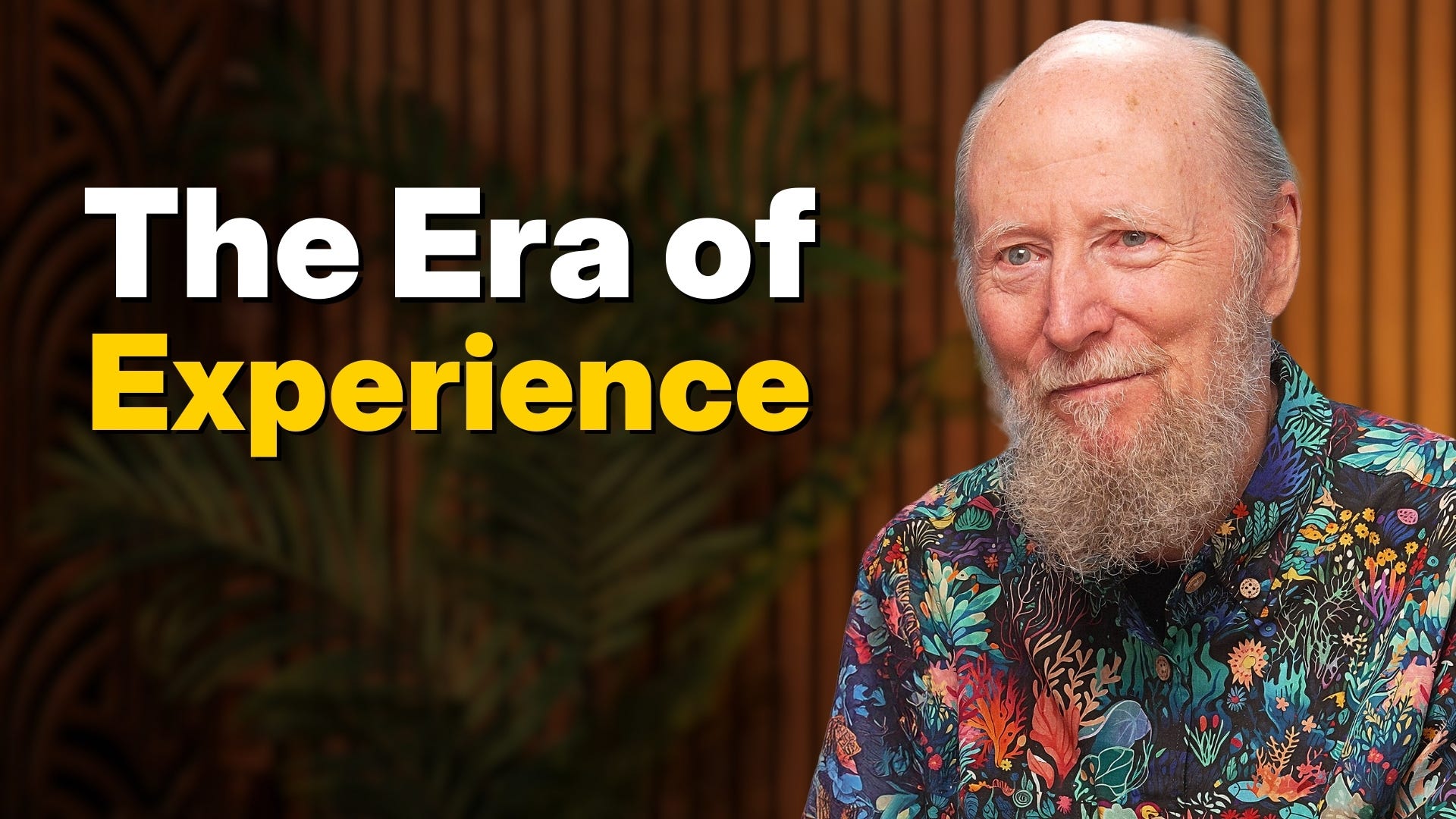
Richard Sutton – Father of RL thinks LLMs are a dead end
Sep 2601:06:22Summary readyRichard Sutton is the father of reinforcement learning, winner of the 2024 Turing Award, and author of The Bitter Lesson. And he thinks LLMs are a dead end.After interviewing him, my steel man of Richard’s position is this: LLMs aren’t capable of learning on-the-job, so no matter how much we scale, we’ll need some new architecture to enable continual learning.And once we have it, we won’t need a special training phase — the agent will just learn on-the-fly, like all humans, and indeed, like all animals.This new paradigm will render our current approach with LLMs obsolete.In our interview, I did my best to represent the view that LLMs might function as the foundation on which experiential learning can happen… Some sparks flew.A big thanks to the Alberta Machine Intelligence Institute for inviting me up to Edmonton and for letting me use their studio and equipment.Enjoy!Watch on YouTube; listen on Apple Podcasts or Spotify.Sponsors* Labelbox makes it possible to train AI agents in hyperrealistic RL environments. With an experienced team of applied researchers and a massive network of subject-matter experts, Labelbox ensures your training reflects important, real-world nuance. Turn your demo projects into working systems at labelbox.com/dwarkesh* Gemini Deep Research is designed for thorough exploration of hard topics. For this episode, it helped me trace reinforcement learning from early policy gradients up to current-day methods, combining clear explanations with curated examples. Try it out yourself at gemini.google.com* Hudson River Trading doesn’t silo their teams. Instead, HRT researchers openly trade ideas and share strategy code in a mono-repo. This means you’re able to learn at incredible speed and your contributions have impact across the entire firm. Find open roles at hudsonrivertrading.com/dwarkeshTimestamps(00:00:00) – Are LLMs a dead end?(00:13:04) – Do humans do imitation learning?(00:23:10) – The Era of Experience(00:33:39) – Current architectures generalize poorly out of distribution(00:41:29) – Surprises in the AI field(00:46:41) – Will The Bitter Lesson still apply post AGI?(00:53:48) – Succession to AIs Get full access to Dwarkesh Podcast at www.dwarkesh.com/subscribe
Summary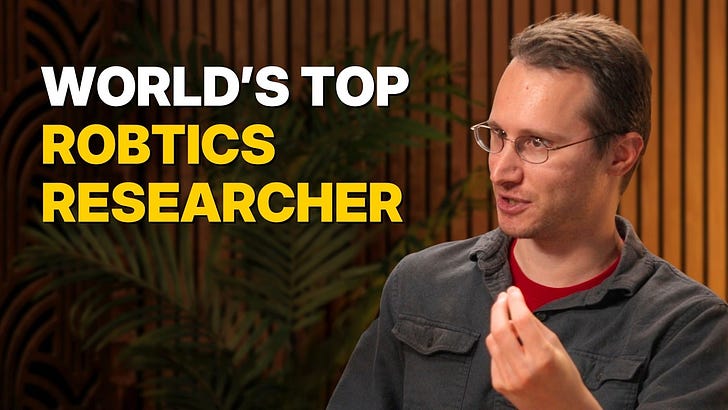
Fully autonomous robots are much closer than you think – Sergey Levine
Sep 1201:28:28Summary readySergey Levine, one of the world’s top robotics researchers and co-founder of Physical Intelligence, thinks we’re on the cusp of a “self-improvement flywheel” for general-purpose robots. His median estimate for when robots will be able to run households entirely autonomously? 2030.If Sergey’s right, the world 5 years from now will be an insanely different place than it is today. This conversation focuses on understanding how we get there: we dive into foundation models for robotics, and how we scale both the data and the hardware necessary to enable a full-blown robotics explosion.Watch on YouTube; listen on Apple Podcasts or Spotify.Sponsors* Labelbox provides high-quality robotics training data across a wide range of platforms and tasks. From simple object handling to complex workflows, Labelbox can get you the data you need to scale your robotics research. Learn more at labelbox.com/dwarkesh* Hudson River Trading uses cutting-edge ML and terabytes of historical market data to predict future prices. I got to try my hand at this fascinating prediction problem with help from one of HRT’s senior researchers. If you’re curious about how it all works, go to hudson-trading.com/dwarkesh* Gemini 2.5 Flash Image (aka nano banana) isn’t just for generating fun images — it’s also a powerful tool for restoring old photos and digitizing documents. Test it yourself in the Gemini App or in Google’s AI Studio: ai.studio/bananaTo sponsor a future episode, visit dwarkesh.com/advertise.Timestamps(00:00:00) – Timeline to widely deployed autonomous robots(00:17:25) – Why robotics will scale faster than self-driving cars(00:27:28) – How vision-language-action models work(00:45:37) – Changes needed for brainlike efficiency in robots(00:57:59) – Learning from simulation(01:09:18) – How much will robots speed up AI buildouts?(01:18:01) – If hardware’s the bottleneck, does China win by default? Get full access to Dwarkesh Podcast at www.dwarkesh.com/subscribe
Summary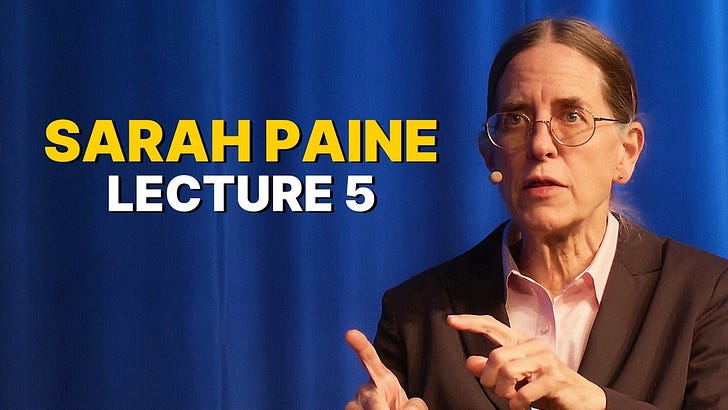
How Hitler almost starved Britain – Sarah Paine
Sep 501:35:17Summary readyIn this lecture, military historian Sarah Paine explains how Britain used sea control, peripheral campaigns, and alliances to defeat Nazi Germany during WWII. She then applies this framework to today, arguing that Russia and China are similarly constrained by their geography, making them vulnerable in any conflict with maritime powers (like the U.S. and its allies).Watch on YouTube; listen on Apple Podcasts or Spotify.Sponsors* Labelbox partners with researchers to scope, generate, and deliver the exact data frontier models need, no matter the domain. Whether that’s multi-turn audio, SOTA robotics data, advanced STEM problem sets, or even novel RL environments, Labelbox delivers high-quality data, fast. Learn more at labelbox.com/dwarkesh* Warp is the best interface I’ve found for coding with agents. It makes building custom tools easy: Warp’s UI helps you understand agent behavior and its in-line text editor is great for making tweaks. You can try Warp for free, or, for a limited time, use code DWARKESH to get Warp’s Pro Plan for only $5. Go to warp.dev/dwarkeshTo sponsor a future episode, visit dwarkesh.com/advertise.Timestamps00:00:00 – How WW1 shaped WW200:15:10 – Hitler and Churchill’s battle to command the Atlantic00:30:10 – Peripheral theaters leading up to Normandy00:37:13 – The Eastern front00:48:04 – Russia’s & China’s geographic prisons01:00:28 – Hitler’s blunders & America’s industrial might01:15:03 – Bismarck’s limited wars vs Hitler’s total war Get full access to Dwarkesh Podcast at www.dwarkesh.com/subscribe
Summary
Why evolution designed us to die fast, & how we can change that – Jacob Kimmel
Aug 2101:44:40Summary readyJacob Kimmel thinks he can find the transcription factors to reverse aging. We do a deep dive on why this might be plausible and why evolution hasn’t already optimized for longevity. We also talk about why drug discovery has been getting exponentially harder, and what a new platform for biological understanding to speed up progress would look like. As a bonus, we get into the nitty gritty of gene delivery and Jacob’s controversial takes on CAR-T cells. For full disclosure, I am an angel investor in NewLimit. This did not impact my decision to interview Jacob, nor the questions I asked him.𝐄𝐏𝐈𝐒𝐎𝐃𝐄 𝐋𝐈𝐍𝐊𝐒TranscriptYouTubeApple PodcastsSpotify𝐒𝐏𝐎𝐍𝐒𝐎𝐑𝐒* Hudson River Trading uses deep learning to tackle one of the world's most complex systems: global capital allocation. They have a massive in-house GPU cluster, and they’re constantly adding new racks of B200s to ensure their researchers are never constrained by compute. Explore opportunities at hudsonrivertrading.com/dwarkesh\* Google’s Gemini CLI turns ideas into working applications FAST, no coding required. It built a complete podcast post-production tool in 10 minutes, including fully functional backend logic, and the entire build used less than 10% of Gemini’s session context. Check it out on Github now!* To sponsor a future episode, visit dwarkesh.com/advertise.𝐓𝐈𝐌𝐄𝐒𝐓𝐀𝐌𝐏𝐒(00:00:00) – Three reasons evolution didn’t optimize for longevity(00:12:07) – Why didn't humans evolve their own antibiotics?(00:25:26) – De-aging cells via epigenetic reprogramming(00:44:43) – Viral vectors and other delivery mechanisms(01:06:22) – Synthetic transcription factors(01:09:31) – Can virtual cells break Eroom’s Law?(01:31:32) – Economic models for pharma Get full access to Dwarkesh Podcast at www.dwarkesh.com/subscribe
Summary
China is killing the US on energy. Does that mean they’ll win AGI? – Casey Handmer
Aug 15, 202501:08:22Summary readyHow will we feed the 100s of GWs of extra energy demand that AI will create over the next decade? On this episode, Casey Handmer (Caltech PhD, former NASA JPL, founder & CEO of Terraform Industries) walks me through how we can pull it off, and why he thinks a major part of this energy singularity will be powered by solar. His views are contrarian, but he came armed to defend them.Watch on YouTube; listen on Apple Podcasts or Spotify.Sponsors* Lighthouse helps frontier technology companies like Cursor and Physical Intelligence navigate the U.S. immigration system and hire top talent from around the world. Lighthouse handles everything for you, maximizing the probability of visa approval while minimizing the work you have to do. Learn more at lighthousehq.com/employersTo sponsor a future episode, visit dwarkesh.com/advertise.Timestamps(00:00:00) – Why doesn’t China win by default?(00:08:28) – Why hyperscalers choose natural gas over solar(00:18:01) – Solar's astonishing learning rates(00:27:02) – How to build 50,000 acre solar-powered data centers(00:40:24) – Environmental regulations blocking clean energy(00:44:04) – Batteries replacing the grid(00:49:14) – GDP is broken, AGI's true value must be measured in total energy use(00:58:45) – Silicon wafers in space with one mind each Get full access to Dwarkesh Podcast at www.dwarkesh.com/subscribe
Summary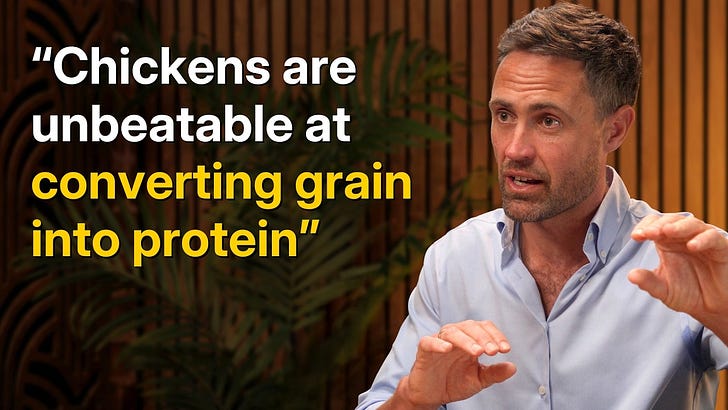
It May Be Impossible to Outcompete Factory Farming – Lewis Bollard
Aug 7, 202501:08:05Summary readyA deep dive with Lewis Bollard, who leads Open Philanthropy’s strategy for Farm Animal Welfare, on the surprising economics of the meat industry.Why is factory farming so efficient? How can we make the lives of the 23+ billion animals living on factory farms more bearable? How far off are the moonshots (e.g., brainless chickens, cultivated meats, etc.) to end this mass suffering? And why does the meat industry have such a surprising amount of political influence?For decades, innovation in the meat industry has actually made the conditions for animals worse. Can the next few decades of tech reverse this pattern?Watch on YouTube; listen on Apple Podcasts or Spotify.Donation match fundraiserThe welfare of animals on factory farms is so systemically neglected that just $1 can help avert 10 years of animal suffering.After learning more about the outsized opportunities to help, I decided to give $250,000 as a donation match to farmkind.giving/dwarkesh. FarmKind directs your contributions to the most effective charities in this area.Please consider contributing, even if it’s a small amount. Together, we can double each other's impact and give a total of $500,000.Bluntly, there are some listeners who are in a position to give much more. Given how neglected this topic is, one such person could singlehandedly change the game for 10s of billions of animals. If you’re considering donating $50k or more, please reach out directly to Lewis and his team by emailing andres@openphilanthropy.org.Timestamps(00:00:00) – The astonishing efficiency of factory farming(00:07:18) – It was a mistake making this about diet(00:09:54) – Tech that’s sparing 100s of millions of animals/year(00:16:16) – Brainless chickens and higher welfare breeds(00:28:21) – $1 can prevent 10 years of animal suffering(00:37:26) – Situation in China and the developing world(00:41:41) – How the meat lobby got a lock on Congress(00:53:23) – Business structure of the meat industry(00:57:42) – Corporate campaigns are underrated Get full access to Dwarkesh Podcast at www.dwarkesh.com/subscribe
Summary
Sarah Paine: How Imperial Japan Crushed Tsarist Russia & Qing China
Jul 25, 202501:55:37Summary readyAfter my last lecture series with Sarah Paine ended, I still had so many questions. I knew we’d only scratched the surface of Sarah’s scholarship, so I immediately invited her back for another series: she graciously agreed, and we’ll be releasing the results online over the coming weeks and months!This first lecture is focused on the balance of power in East Asia at the turn of the 20th century. Specifically, how did Japan (population 47M) defeat China (400M) and Russia (130M) to become Asia's dominant power?For me, the most interesting thing was that Japan's surprise attack on Port Arthur at the beginning of the Russo-Japanese War (1904) helps us understand why Japan might have thought Pearl Harbor would work.Watch on YouTube; listen on Apple Podcasts or Spotify.Sponsors* Google’s Veo 3 helps us visualize the hypothetical scenarios that often come up during our interviews. Veo’s ability to generate both video and audio—all with incredible realism—makes it perfect for bringing our content to life. If you have a Google AI Pro or Ultra plan, you can try it in Gemini today by visiting gemini.google.* Hudson River Trading is one of the world's top quantitative trading firms. Responsible for around 15% of all U.S. equities trading volume, HRT powers their trades with cutting-edge deep learning models. Their in-house AI team does fundamental ML research and then applies it to some of the most competitive markets in the world. If you’re interested in joining them, you can learn more at hudsonrivertrading.com/dwarkesh.To sponsor a future episode, visit dwarkesh.com/advertise.Timestamps(00:00:00) – Japan’s Meiji reforms(00:14:44) – Trans-Siberian railway & Japan’s 3-year window for empire(00:29:58) – The most important battle in the Russo-Japanese war(00:48:38) – China’s implosion: imperialism, civil wars, and opium(00:59:31) – Was Russia on track to dominate Asia?(01:14:20) – Pearl Harbor (1941) vs surprise attack of Port Arthur (1904)(01:34:03) – Why big countries still lose wars(01:46:56) – Grand strategy for small countries Get full access to Dwarkesh Podcast at www.dwarkesh.com/subscribe
Summary
Stephen Kotkin — How Do We Explain Stalin?
Jul 10, 202502:12:41Summary readyThe Stephen Kotkin episode. Kotkin is arguably the world’s foremost expert on Joseph Stalin and has written a massive 2-volume biography of Stalin (with a 3rd volume in the works).No other individual had more of a profound impact on the 20th century than Stalin. He held the power of life and death over every single person across 11 time zones, and he killed tens of millions of people, utterly consumed by an ideology aimed at building paradise on Earth.And, he was one half of the biggest and most consequential military confrontation in history (even if Hitler didn’t prove to be his match).Watch on YouTube; listen on Apple Podcasts or Spotify.Sponsors* Lighthouse is THE fastest immigration solution for the technology industry. All they need is your resume or LinkedIn profile to tell you which visas you’re most eligible for, and they’ll send you this eligibility document for free, no commitment required. Get started today at https://www.lighthousehq.com/ref/Dwarkesh.To sponsor a future episode, visit dwarkesh.com/advertise.Timestamps(00:00:00) – Was the tsarist regime the lesser of 2 evils?(00:23:45) – The peasants brought Lenin to power, then he enslaved them(00:37:38) – Why did so many go along with enforced famine and the Great Terror?(01:02:26) – Today’s leftist civil war(01:13:01) – Doesn’t CCP deserve credit for China's growth?(01:35:13) – Why didn't somebody just kill Stalin?(01:52:45) – Overcoming the pathologies of communism with tech: USSR vs China Get full access to Dwarkesh Podcast at www.dwarkesh.com/subscribe
Summary
Why I don’t think AGI is right around the corner
Jul 3, 202500:14:01Summary readyI’ve had a lot of discussions on my podcast where we haggle out timelines to AGI. Some guests think it’s 20 years away - others 2 years. Here’s an audio version of where my thoughts stand as of June 2025. If you want to read the original post, you can check it out here. Get full access to Dwarkesh Podcast at www.dwarkesh.com/subscribe
Summary
Godfather of Synthetic Bio on De-Aging, De-Extinction, & Weaponized Mirror Life — George Church
Jun 26, 202501:33:45Summary readyGeorge Church is the godfather of modern synthetic biology and has been involved with basically every major biotech breakthrough in the last few decades.Professor Church thinks that these improvements (e.g., orders of magnitude decrease in sequencing & synthesis costs, precise gene editing tools like CRISPR, AlphaFold-type AIs, & the ability to conduct massively parallel multiplex experiments) have put us on the verge of some massive payoffs: de-aging, de-extinction, biobots that combine the best of human and natural engineering, and (unfortunately) weaponized mirror life.Watch on YouTube; listen on Apple Podcasts or Spotify.Sponsors* WorkOS Radar ensures your product is ready for AI agents. Radar is an anti-fraud solution that categorizes different types of automated traffic, blocking harmful bots while allowing helpful agents. Future-proof your roadmap today at workos.com/radar.* Scale is building the infrastructure for smarter, safer AI. In addition to their Data Foundry, they recently released Scale Evaluation, a tool that diagnoses model limitations. Learn how Scale can help you push the frontier at scale.com/dwarkesh.* Gemini 2.5 Pro was invaluable during our prep for this episode: it perfectly explained complex biology and helped us understand the most important papers. Gemini’s recently improved structure and style also made using it surprisingly enjoyable. Start building with it today at https://aistudio.google.comTo sponsor a future episode, visit dwarkesh.com/advertise.Timestamps(0:00:00) – Aging solved by 2050(0:07:37) – Finding the master switch for any trait(0:19:50) – Weaponized mirror life(0:30:40) – Why hasn’t sequencing/synthesis led to biotech revolution?(0:50:26) – Impact of AGI on biology research progress(1:00:35) – Biobots that use the best of biological and human engineering(1:05:09) – Odds of life in universe(1:09:57) – Is DNA the ultimate data storage?(1:13:55) – Curing rare diseases with genetic counseling(1:22:23) – NIH & NSF budget cuts(1:25:26) – How one lab spawned 100 biotech companies Get full access to Dwarkesh Podcast at www.dwarkesh.com/subscribe
Summary