
Podcast
Eating at a Meeting
Hosted by Tracy Stuckrath, CFPM, CMM, CSEP, CHC · EN
Eating at a Meeting explores a variety of topics on food and beverage (F&B) and how they impact individual experience and inclusion, sustainability, culture, community, health and wellness, laws and more.
The mission of Eating at a Meeting is to share authentic stories that illustrate the financial, social, emotional, and mental impact food and beverage have on individuals, organizations, and the earth. I see it being threefold:
● Help individuals and organizations understand how F&B
impacts employee, customer and guest experience, the
planet and the bottom line.
● Help those growing, producing, preparing, and serving
F&B understand the duty of care they hold in food safety
and inclusion as well as the opportunity they have to
create experiences that are safe and inclusive.
● Support those with dietary needs by gathering their
insight on eating at a meeting with dietary needs,
helping them better advocate for themselves and
educating them on the processes found on the other
side of the kitchen door.
11episodes
Episodes
Newest firstAll episodes
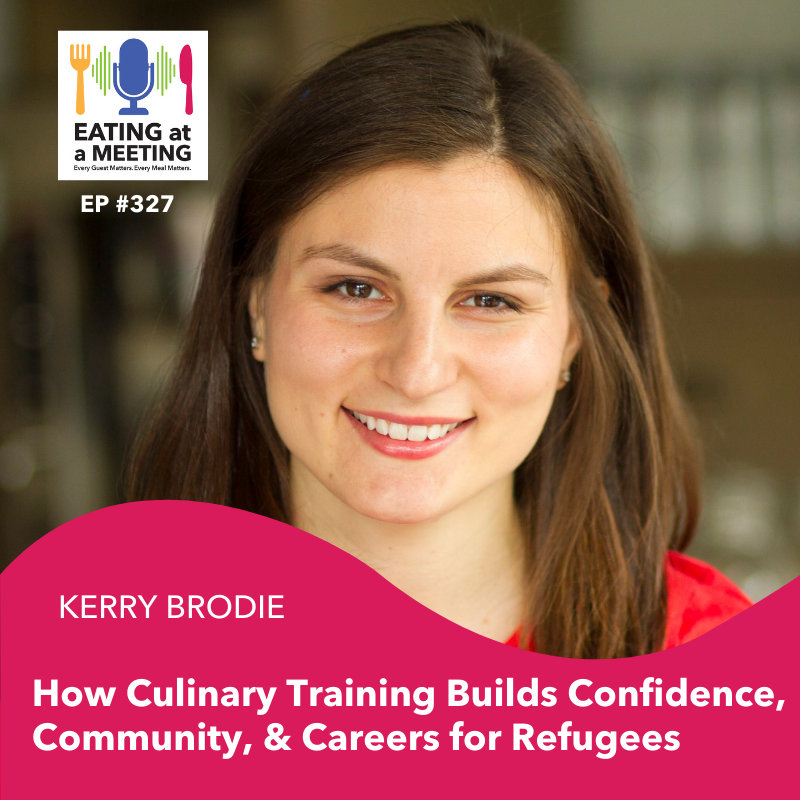
327: How Culinary Training Builds Confidence, Community, & Careers for Refugees
Oct 2100:50:18Tap to summarizeImagine using your food and beverage choices to not just nourish guests—but to help someone rebuild their life. Next week on the Eating at a Meeting Podcast LIVE, I’m sitting down with Kerry Brodie, founder and executive director of Emma's Torch, a nonprofit culinary training program that empowers refugees, asylees, and survivors of human trafficking by providing paid culinary training, work experience, and job placement—all through the lens of dignity, sustainability, and inclusion. Emma’s Torch is about far more than cooking skills—it’s about building confidence, fostering community, and helping individuals navigate new lives and achieve financial independence. Since its founding, they’ve worked with over 600 students, generating more than $25 million in increased wages as graduates go on to become business owners, bakers, supervisors, and more. For planners and hospitality professionals, this conversation is a powerful reminder that every meal we serve at an event is a chance to make an impact—not just on guests’ plates, but in their lives. If you want your events to reflect purpose as well as taste, this is a conversation you won’t want to miss.
Transcribe →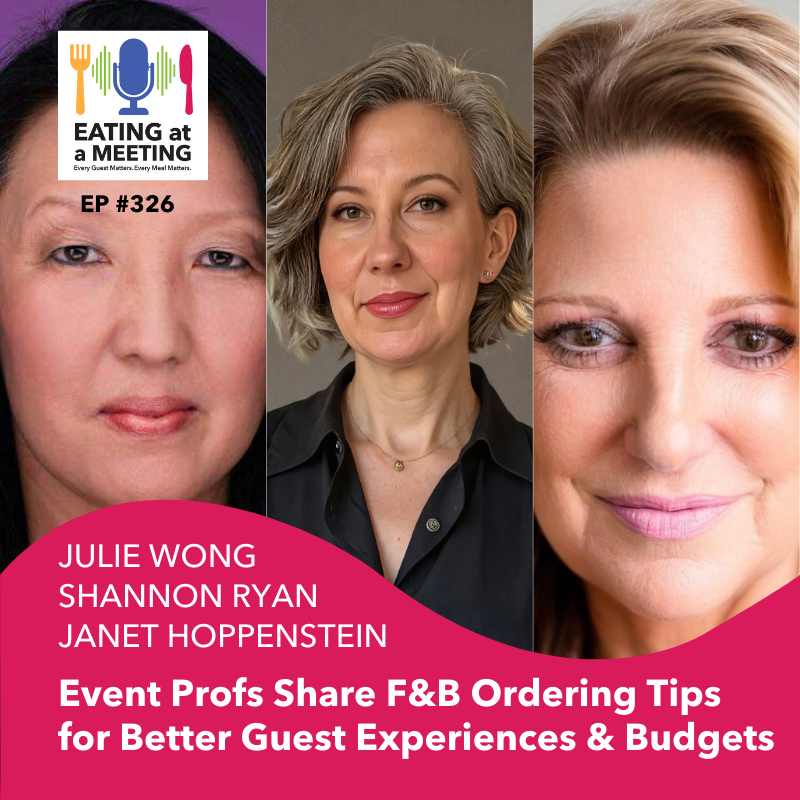
326: Event Profs Share F&B Ordering Tips for Better Guest Experiences & Budgets
Oct 1400:58:29Tap to summarizeAs event planners, we know that food and beverage is rarely just a line item—it’s an experience, a connector, and sometimes a challenge. In this week’s Eating at a Meeting LIVE, I’m gathered a group of event planners — Janet C. Hoppenstein, CMP, Shannon Ryan, CMP, and Julie Wong, CMP — for an open conversation about how they navigate ordering F&B for their events: what guides their decisions, what concessions or compromises they make, and how they think about the attendee experience when planning menus. We’ll talk about: ▶︎ How budget, inclusivity, sustainability, and logistics come into play ▶︎ What they wish venues and caterers understood better ▶︎ How attendee expectations are changing—and how planners are adapting Whether you’re a planner yourself or part of a catering or venue team, this conversation will offer insights that can help you deliver better, more thoughtful food and beverage at your next event. Join me and bring your own questions or stories to the chat!
Transcribe →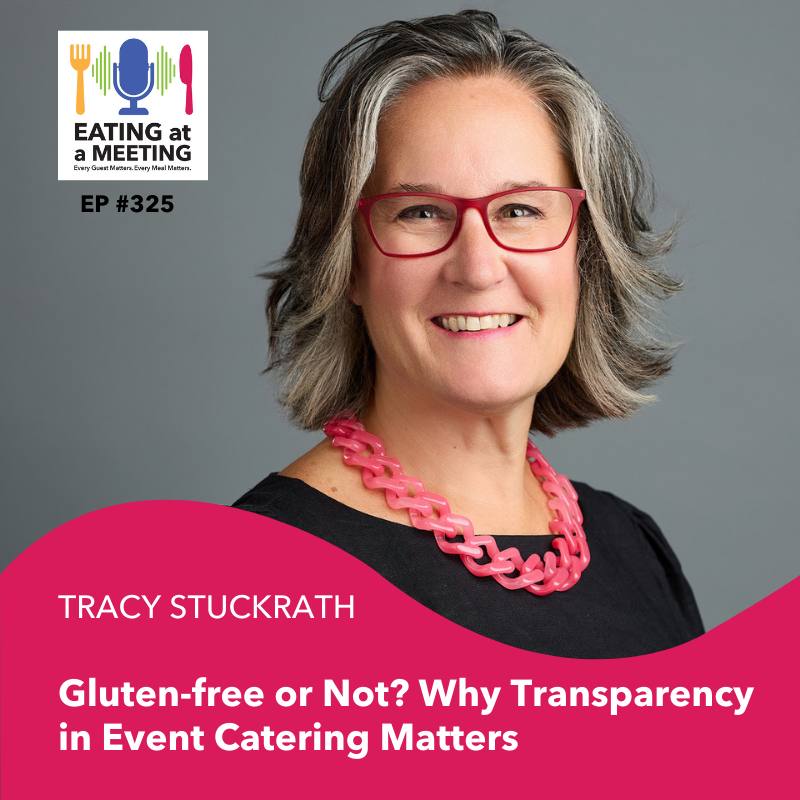
325: Gluten-free or Not? Why Transparency in Event Catering Matters
Oct 700:21:09Tap to summarizeWhen the Rice Isn’t the Issue: A Real Talk on Food Safety, Chef Pushback & Guest Trust This week, it’s just me—no guest, just the truth. At a recent event, I was told by a chef that rice—specifically Uncle Ben’s—was the reason a gluten-free option couldn’t be provided. But we’d already discussed that on our prep call. I had asked for gluten-free rice. We agreed. And then… the night of the event? Nothing was gluten-free. His response? “Just put ‘Uncle Ben’s’ on the sign. Some gluten-free people are fine with it.” And when I asked what I could eat, he said, “We won’t kill the meeting planner—we’ll make you something else.” Spoiler alert: Uncle Ben’s plain rice is gluten-free. So the issue wasn’t the rice. It was the lack of follow-through. It was the dismissive attitude. It was the failure to respect the safety of every guest. In this episode, I’m diving into: • Why food safety requires transparency—not assumptions • How “good enough” is not good enough • The responsibility of hotels and planners to deliver on dietary promises If you’ve ever been gaslit about a dietary request—or told to “just eat something else”—pull up a chair. You’re not alone. And this conversation needs to be had. See less
Transcribe →
324: When Venues Can Learn from a Gluten-free Bakery in a Shared Space
Sep 3000:47:04Tap to summarizeThis week, I’m talking with Ashley Orr, the powerhouse baker behind Sweet Nothings Bakery and Cafe—a 100% gluten-free bakery operating out of a shared kitchen space. Yes, you read that right. Shared kitchen. Not a dedicated gluten-free facility. Sound familiar? For any planner who’s been told by a convention center or hotel that “we can’t do gluten-free,” Ashley’s story is proof that it can be done—with the right knowledge, systems, and commitment. Diagnosed with a gluten allergy in 2019, Ashley didn’t just change how she ate—she reimagined how to bake, launching her business to fill the flavor gap in gluten-free baked goods. Now baking alongside other (non-GF) businesses at Little Blue Bakehouse, she takes meticulous care to protect her products and her customers from cross-contact, and the results speak for themselves. In our conversation, we’ll explore: • How Ashley safely operates in a non-dedicated kitchen • The protocols that protect her gluten-free guests • What venues and planners can learn from her model • Why SOPs—not just suppliers—are key to safe dining Whether you're serving 10 people or 10,000, this is a must-watch for anyone who’s been told “we just can’t do that.” Ashley is doing it—and doing it well. Let’s talk about how.
Transcribe →323: Voices of Change in Food Journalism: 5 Women Leading the Charge
Sep 2300:20:38Tap to summarizeWhat’s on the Menu? Voices of Change in Food Journalism Food writing is more than recipes—it shapes culture, policy, and the guest experience at every table. In this Eating at a Meeting LIVE episode, I’m sharing clips from two powerhouse conversations recorded at the inaugural Les Dames d’Escoffier M.F.K. Fisher Women in Food & Storytelling Symposium, where Eating at a Meeting served as Media Sponsor. First up: Toni Tipton-Martin and Ruth Reichl pull back the curtain on the evolution of food journalism—from the era when recipes were relegated to “women’s pages” to groundbreaking storytelling that made space for new voices. Hear how mentorship, risk-taking, and saying yes to what scares you can transform not only careers, but entire industries. Then Kat Craddock, Editor-in-Chief and CEO of SAVEUR magazine, moderates a powerful discussion with Marion Nestle and Grace Young. Together they reveal how food writing preserves culture, sparks advocacy, and even protects vulnerable communities—from exposing industry influence on public health to fighting for the survival of America’s Chinatowns. These women remind us that journalism isn’t just about documenting what’s on the plate—it’s about shaping how we understand food’s role in society. For event professionals, planners, and anyone feeding communities, their insights underscore why every menu choice and every story told at the dining table matters.
Transcribe →322: Making Dining Safer by Law: Illinois Steps Up for Gluten-Free Guests
Sep 1600:34:10Tap to summarizeImagine this: You're out to dinner with your staff. One of them has celiac disease. The server doesn’t know what gluten is. The kitchen isn’t sure either. That moment? It sparked real change in Illinois. In this episode of Eating at a Meeting LIVE, I’m talking with State Senator Sally Turner, the powerhouse behind Senate Bill 1288—a bill that could soon make Illinois one of the safest places to dine out if you live with celiac disease. It’s a big deal. This new law (awaiting the governor’s signature) would require ALL food handlers in the state to be trained on celiac disease, gluten-free protocols, and preventing cross-contact. Senator Turner shares how a personal connection turned into statewide action—and why this matters not just for restaurants, but for anyone planning events, catering menus, or feeding guests. Because safety shouldn't depend on luck. It should be built into the system. We’ll cover: ✅ Why the bill passed unanimously ✅ What it means for hotels, venues & caterers ✅ How this legislation could shape SOPs and training far beyond Illinois ✅ Why awareness isn’t enough without action Whether you're gluten-free, planning meals, or pushing for safer dining—this conversation is one you’ll want to be part of.
Transcribe →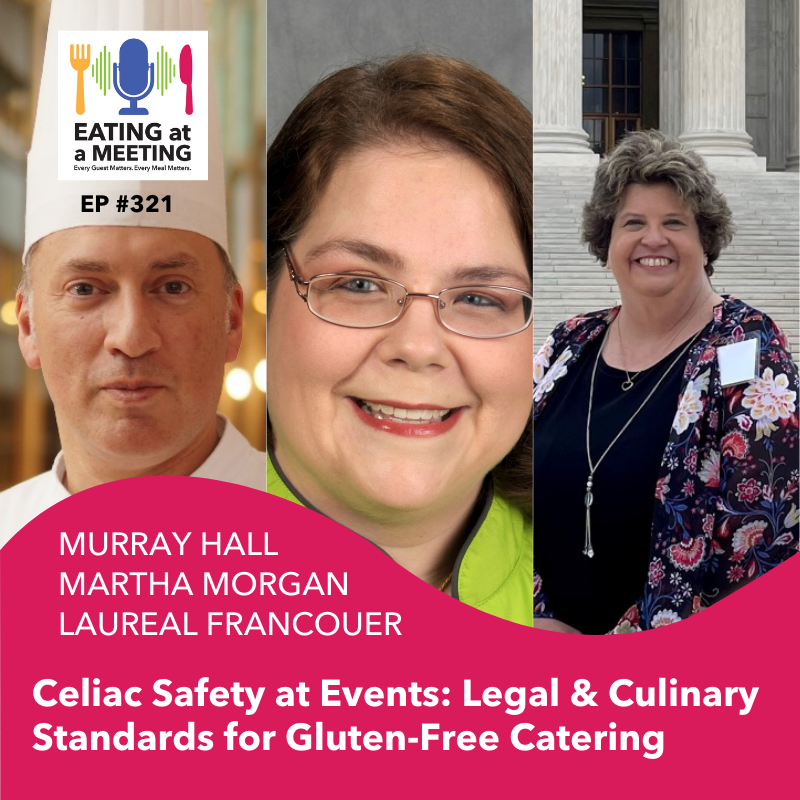
Celiac Safety at Events: Legal and Culinary Standards for Gluten-Free Catering
Sep 900:47:09Tap to summarizeIn this episode, Tracy is joined by Chef Murray Hall, Chef Martha Morgan, and disability rights attorney Laurel Francoeur to discuss an issue that should no longer be happening—venues refusing to provide safe meals for guests with celiac disease. An event planner recently posted that the kitchen at her event venue “doesn’t accommodate” celiac guests. Not a preference. Not a lifestyle. A medically necessary dietary need—and still being dismissed. She is asking the network of planners for suggestions to order about 10 celiac-friendly meals in a particular city. Chef Murray’s take? “Crazy that this is still happening. Most places have shifted to this being the norm, not the exception.” We’ll break down: ▶︎ Why “we don’t do that” is an unacceptable—and sometimes unlawful—response ▶︎ How kitchens can safely serve gluten-free meals when they choose to ▶︎ What planners can say to push back and advocate for their attendees ▶︎ Why inclusive dining should be the baseline, not the exception If you’ve ever had to scramble to feed your guests safely—or felt like you were the only one fighting for what’s right—this conversation is for you.
Transcribe →
320: Getting Gluten-Free Right: Why It’s a Responsibility for Events, Not a Preference
Sep 200:50:54Tap to summarizeAs May—and Food Allergy Awareness and Celiac Disease Awareness Month—wraps up, I’m delighted to bring you a truly impactful conversation with Claire Beach, Catering Director at Azura Events in London. Claire is a passionate advocate for inclusive and sustainable event planning, drawing deeply from her own lived experiences as a gluten-free, neurodivergent attendee. In this candid episode, we explore what it actually means to get gluten-free right at events—and why it's a true responsibility, not a mere preference, for everyone involved in our industry. Claire and I dive into how communication, education, and empathy are at the heart of providing safe, empowering, and waste-conscious dining experiences for all. Tune in to hear practical strategies her new UK task force is pursuing, plus creative ideas to ensure every guest feels truly welcomed and included. You’ll hear the real-life impact—physical, emotional, and professional—of getting it wrong and how we can all do better.
Transcribe →319: Recipe First
Aug 2600:54:48Tap to summarizeAt the end of Food Allergy and Celiac Disease Awareness Month this May, I was thrilled to chat with Benji Koltai, co-founder and CEO of Galley. On this episode, Benji brings his personal journey with Crohn’s disease and gluten intolerance, pairing it with his tech expertise to revolutionize food safety from the inside out. We dive deep into what “recipe first, people always” truly means—exploring how a digital recipe system transforms food safety, allergen awareness, and food waste in kitchens from hotels to college dining. Benji shares how Galley empowers foodservice teams—reducing food waste, streamlining operations, and making dining safer for everyone with dietary needs. Listen in to discover powerful stories from clients, the real numbers behind food waste savings, and how a single source of culinary truth can change the guest experience and bottom line. Benji’s insights on technology, transparency, and compassion are game changers!
Transcribe →
318: How do you Build Community through Food
Aug 1900:36:19Tap to summarizeHow do we truly build community through food? In this episode of Eating at a Meeting, I'm joined by two inspiring professionals—Jenny Ng, Event Planning Senior Manager at National Co-op Kosher, and Rachel, General Manager & Food and Beverage Director at a locally-focused hotel restaurant—to unpack this very question. Fresh from my presentation at MPI Minnesota, we dive into what it means to connect people using food and beverage, and how thoughtful sourcing, labeling, and inclusive practices translate into memorable, meaningful events. Jenny shares how her team champions dietary inclusivity and sustainability—think robust labeling, creative themed menus, and even mocktail alternatives, so every attendee feels seen and served. Rachel offers her perspective from the hotel and restaurant world, where managing without a banquet manager means she wears all the hats—and why knowledge, training, and local partnerships are critical to crafting a welcoming dining experience for all. Together, we discuss practical tips—from putting detailed menus on conference apps to advocating for your attendees’ dietary needs and pushing back on venues when needed. We reminisce about the power of themed events, the role of childhood hospitality lessons, and the joy of a well-made mocktail. Plus, you'll hear our wish lists for the future of catered food functions—more variety, more transparency, and more community at every table. Give it a listen—and let’s keep building community, one shared meal at a time.
Transcribe →