
Podcast
Eating at a Meeting
Hosted by Tracy Stuckrath, CFPM, CMM, CSEP, CHC · EN
Eating at a Meeting explores a variety of topics on food and beverage (F&B) and how they impact individual experience and inclusion, sustainability, culture, community, health and wellness, laws and more.
The mission of Eating at a Meeting is to share authentic stories that illustrate the financial, social, emotional, and mental impact food and beverage have on individuals, organizations, and the earth. I see it being threefold:
● Help individuals and organizations understand how F&B
impacts employee, customer and guest experience, the
planet and the bottom line.
● Help those growing, producing, preparing, and serving
F&B understand the duty of care they hold in food safety
and inclusion as well as the opportunity they have to
create experiences that are safe and inclusive.
● Support those with dietary needs by gathering their
insight on eating at a meeting with dietary needs,
helping them better advocate for themselves and
educating them on the processes found on the other
side of the kitchen door.
26episodes
Episodes
Newest firstAll episodes
354: Event F&B: Designing Menus That Respect People & Ingredients
Feb 1000:56:11Tap to summarizeImagine sitting down at an event, ready to enjoy dessert… and realizing the kitchen can't tell you what's in it. Tracy is joined by internationally recognized vegan pastry chef, cookbook author, and culinary educator Fran Costigan to talk about what should be one of the easiest wins in event food and beverage: designing menus that respect both people and ingredients. Fran has spent decades teaching chefs—many of them in traditional kitchens—how to create plant-based desserts that are stunning, delicious, and practical to execute. And here's the truth she keeps proving: most kitchens already have what they need. What's missing is the mindset, the training, and the commitment to transparency. We dig into: • Why hotel and catering pastry teams still treat vegan (and dairy-free) desserts like a "special request" • How to build one great dessert for everyone instead of creating multiple "separate but sad" options • The real issues with hidden ingredients (hello, seasoning mixes with wheat flour) and why labeling matters • Smarter sweeteners and why "dairy-free" doesn't always mean safe • Practical swaps and techniques chefs can use right now—without reinventing their pantry • Why gluten-free isn't automatically "healthier," and what planners should understand when designing menus
Transcribe →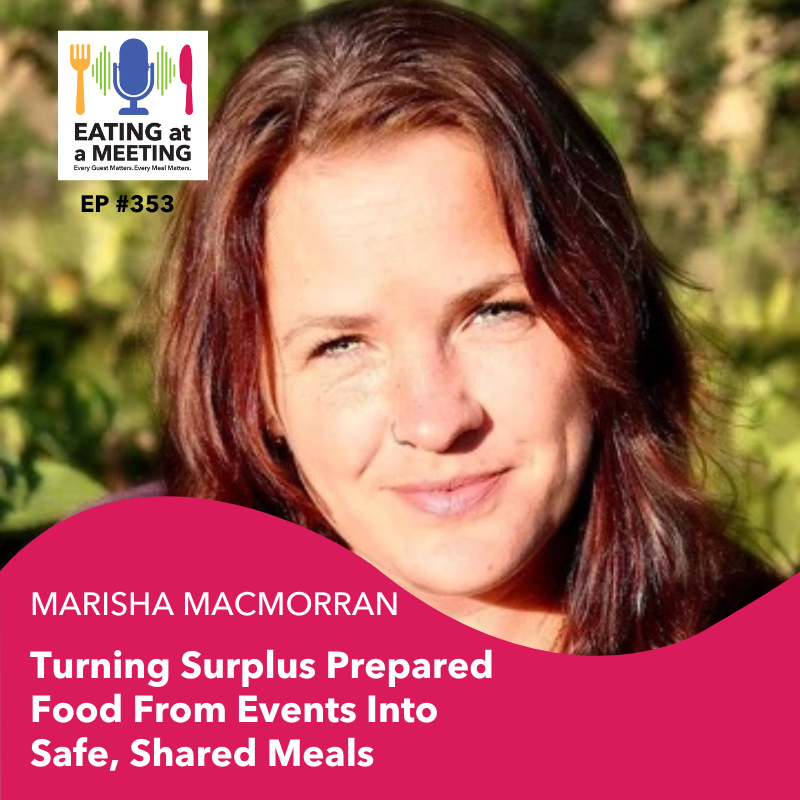
353: Turning Surplus Prepared Food From Events Into Safe, Shared Meals
Feb 300:52:30Tap to summarizeLast year, Les Dames NC selected Food Connection as one of three beneficiaries of our annual holiday cookie sale—and this conversation is exactly why. This is the third interview in my series spotlighting organizations that are feeding our communities with food that already exists… including food coming straight from events, catering kitchens, and conference centers. I'm sitting down with Marisha MacMorran, Executive Director of Food Connection, an Asheville-based nonprofit that rescues surplus prepared food and redistributes it to neighbors across Western North Carolina. This isn't about scraps or leftovers—it's about smoked brisket, roasted vegetables, crab cakes, veggie couscous… food that was cooked with care and deserves a second purpose. Food Connection connects those with too much food to those without enough—keeping hundreds of tons of fresh food out of landfills while delivering hundreds of thousands of heat-and-serve meals with dignity and choice. If you've ever wondered what should happen to food after an event—or how your F&B decisions can support the communities we host meetings in—this is a conversation you'll want to be part of. Because feeding people is about more than food. It's about connection, dignity, and showing up for one another. What questions do you have about rescuing surplus food from events?
Transcribe →352: How Event Food Can Feed Communities: The Javits Center Model
Jan 2700:54:27Tap to summarizeWhen I first toured the Javits Center rooftop farm back in October 2022, I walked past rows of lettuce, herbs, and apple trees on top of a convention center, tasted apples the chef had just brought down from the orchard, and went home with honey from the hives above the show floor. That visit completely changed how I think about what event food can do. Now I'll be talking with Yashi Dadhich, Director of Energy & Sustainability at the Javits Center, about how a convention center best known for massive trade shows is also growing tens of thousands of pounds of produce on its roof—using it first to feed attendees and staff—and then donating the surplus to help nourish their neighbors. From a one-acre rooftop farm and greenhouse to partnerships with organizations like Rethink Food and local pantries, Javits has built a food donation program that connects: � Farm-to-table menus for events � Rescued prepared food and ingredients after events � Community impact, feeding New Yorkers facing food insecurity � Sustainability goals, including waste reduction and energy savings For those of us planning meetings and events, this is a powerful blueprint for turning "leftovers" into impact—without sacrificing service, safety, or the bottom line. We'll talk about: � How their rooftop farm and kitchens are designed to reduce waste and maximize donation � What it takes to build strong food-rescue partnerships � How planners can plug into donation systems when they book a venue like Javits � Why feeding your community should be part of your event success metrics If you've ever looked at what's left on the buffet and thought, there has to be a better way, you'll want to join this conversation with Yashi and bring your questions about working with venues on food donation and rescue. What do you want to know about donating event food or partnering with venues on food rescue?
Transcribe →351: Anaphylaxis And Events: Why Allergy Safety Can't Be An Afterthought
Jan 2200:48:38Tap to summarizeWhen Kerry Washington recently shared on Jimmy Kimmel Live that she often eats in bathrooms at high-profile events because her food allergies aren't taken seriously, the allergy community felt it. And when FARE posted that clip, Jo Frost — who lives with life-threatening anaphylaxis herself — commented, "hear you and see you @kerrywashington DITTO." That one word — DITTO — carried decades of lived experience. In this episode of Eating at a Meeting LIVE, Jo and I talk about what it really means to navigate everyday life — restaurants, airplanes, school cafeterias, and event spaces — when a trace amount of nuts, shellfish, or airborne particles can shut down your body. Jo has survived more anaphylactic shocks than she's willing to count. She's been dismissed in restaurants, pushed back on by airline crews, and told "it should be fine," even when the stakes were life or death. She's also been sounding the alarm for years, insisting that ignoring anaphylaxis is as dangerous as "putting a loaded gun in my face." If you plan menus, host families, work in hospitality, or manage any food service environment, Jo's perspective is essential. Her story echoes what millions live with — and what our industry must do better. Every Guest Matters. 🩷 Every Meal Matters.
Transcribe →350: How Mobile Food Rescue Teams Are Saving Communities From Hunger
Jan 2000:49:37Tap to summarizeAs 2025 closed, Tracy dedicated three episodes to something that matters deeply: the organizations feeding people who need it most. And we're starting with one that's rewriting what community feeding can look like in Florida. When the Orange County Convention Center in Orlando, FL shared that one of the larger food donation charities they work with was The Freedom Tour, I knew the story would be powerful. What I didn't expect was just how vital their work is to Polk County families. Back in 2016, when The Freedom Tour began, more than 100,000 county residents — including nearly one in four children — were food insecure. Today, the numbers remain high: 113,000 people and more than 33,000 children still face inconsistent access to food. That's over 20% of kids in the county. That's the reality Bobby Williams walks into every day. This week on Eating at a Meeting LIVE, I'm talking with Bobby Williams, founder of The Freedom Tour — an operation that began under a carport and now moves millions of pounds of food every month through mobile pantries, school partnerships, and statewide relief efforts. And for those of us planning meetings and events, this isn't just inspiring — it's instructive. Because your surplus food can become support. Because your leftovers can become lifelines. Because partners like this make donation safe, simple, and deeply impactful. This conversation kicks off a month-long spotlight on organizations that feed communities with dignity, creativity, and heart. Because every meal can make a difference — even the ones we don't serve.
Transcribe →115: Safety + Inclusion = Revenue
Feb 1, 2022Tap to summarizeWhat do you get when you provide a safe dining experience for someone with food allergies? An inclusive experience in which everyone can enjoy a meal with together without anyone going hungry. If you are a #foodservice outlet or an #event, adding those two types of experiences together — safety + inclusion — you gain potential for increasing your revenue. You see, individuals with #foodallergies and other dietary needs are VERY loyal. Debbie Bruce, founding member and current Director of the Canadian Anaphylaxis Initiative (CAI), can attest to that herself. For the past 30+ years she has collaborated with community partners, businesses, all levels of government and advocacy groups to draw attention to anaphylaxis issues and to improve the everyday safety, inclusion and quality of life for the 3 million Canadians living with Anaphylaxis. Her background in the packaged goods industry (production, purchasing and marketing), collaboration with community partners, and as the mother of two boys with multiple food allergies, she has seen how being improved safety measures, menus that offer options for everyone and can lead to higher profits. Join Tracy and Debbie on Wednesday, December 15 at 12PM on #EatingAtAMeeting LIVE as they discuss how creating safe and inclusive dining experiences can improve the bottom line. Connect with Tracy: facebook.com/groups/EatingataMeeting thrivemeetings.com
Transcribe →