← Econ Dev Show Podcast - Economic Development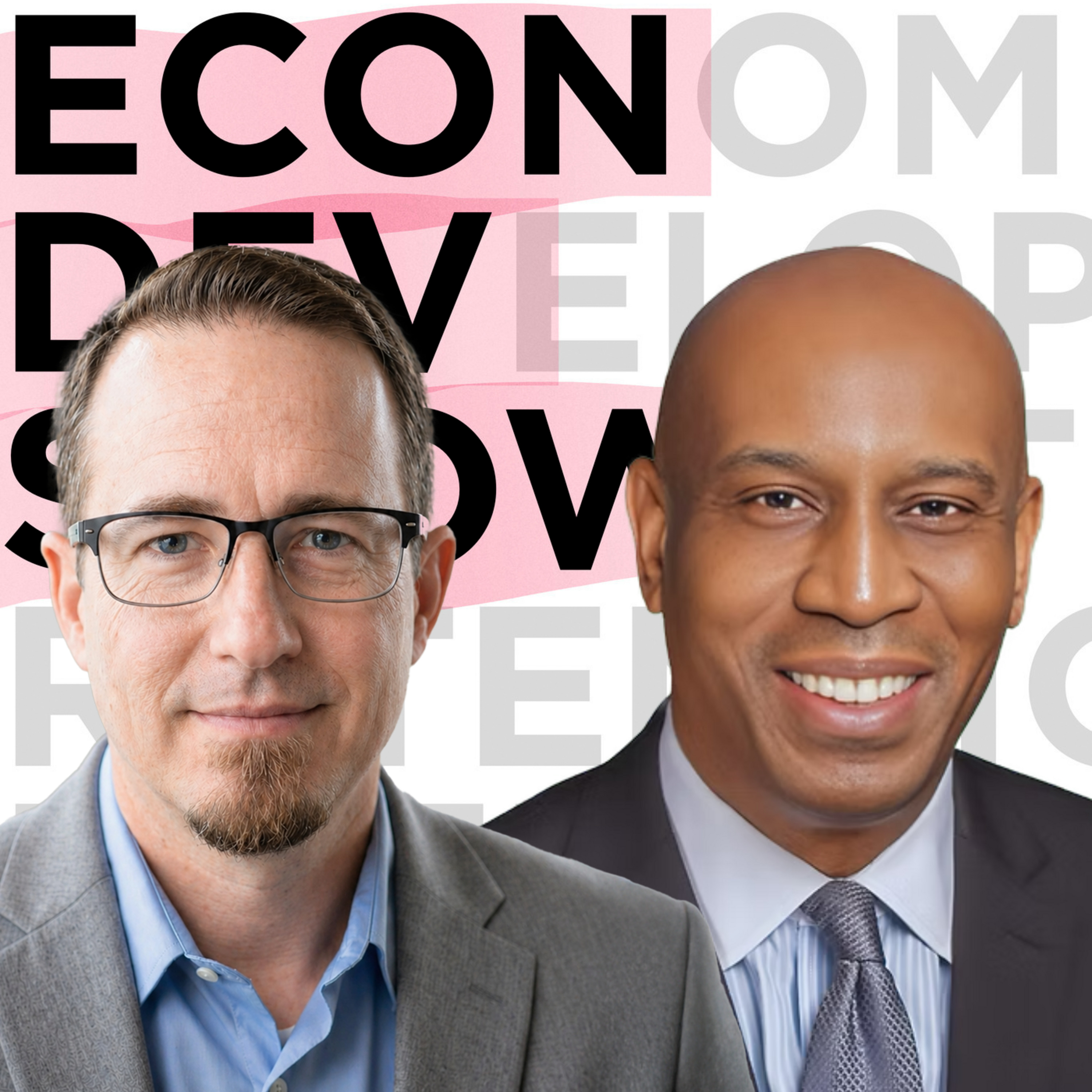
Econ Dev Show Podcast - Economic Development
225: Detroit Beyond the Comeback with Kevin Johnson
00:27:00
Kevin Johnson explains how Detroit is moving beyond its “comeback” story by combining major investment, neighborhood commercial corridor development, inclusive entrepreneurship, and a sharper case for why companies should choose the city.
Loading summary
Transcript34 lines
- [00:02]
A
Welcome to the Econ Dev show. We explore the strategies, ideas and insights that are driving economic development forward into the future. You'll hear new insights from passionate EDs about their successes and struggles. And you'll learn from attraction and retention experts about how to apply actionable strategies inside your edo. We'll help take your organization, your community and your career into your to the next level. Here's your host, Dane Carlson.
- [00:34]
B
Welcome back to the Econ Dev Show. Today we're here with Kevin Johnson. He is the president and CEO of the Detroit Economic Growth Corporation. Kevin, welcome to the show.
- [00:44]
C
Good to be on your show. Thank you for inviting.
- [00:47]
B
Absolutely. Detroit has been called the comeback city for more than a decade now. How do you describe what's going on there right now?
- [00:56]
C
I like to think that the comeback part is an acknowledgement of some really difficult times that the city has had. But as you use it today, it is not accurately described where we are in this iteration of Detroit. All cities have ebbs and flows. Some of them, the ebbs are a little deeper, some of the flows a little bit more have a little bit more strength to them. We tend to feel like what we're doing has a current that is raging at this point. And that comes from not just, you know, hype, but it comes from the fact that the story is worth telling. We're in a position now to tell a story that is unique to American cities. And not many American cities have had the kind of transformation that this city has had. So that's given us a tremendous amount of momentum to go to the marketplace and share why this is a beneficial place for investment.
- [02:05]
B
Fantastic. What are these currents, what are these trends that are shaping Detroit over the next, you know, today and over the next five to ten years?
- [02:13]
C
Well, I think there's a couple that are really of note. One is there is a a reinvestment of energy around technology not only from just pure tech, but from tech that's coming out of the university system through places like Michigan center for Innovation that is under construction now from places like Michigan Central and New Lab where corporate is collaborating with, with new and unique ways to make products run more efficiently and better. There are corporate investments even on the traditional manufacturing side that we see that want to tap into the DNA of this city, which is rich and it's worth and it's marketable. We're seeing investment in real estate from companies like Bedrock, you know, building, you know, the second largest office tower in, in the cities, in the city and in the state where GM's headquarters was relocated into. So corporate investment is, is, is coming along. So we have all this pushing in a direction that allows for the buzziness of Detroit to be recognized and to be promoted. For example, Time magazine listed Detroit as one of the greatest places to one of its greatest places, meaning this a place you need to come see. Fast Company written about our innovation corridor along Michigan Avenue. New York Times has put it on its top places to visit in 2025 and in 2026. So that earned media is beginning to kind of permeate out into the market. And now you're beginning to kind of uncover technology that's being developed here, office opportunities from a white collar perspective, a reinvestment in manufacturing that is driving this energy, and the fact that we have places to go play like no other in the country. All four of our sports teams are located downtown. We have America's number one riverfront hosting the NFL draft, hosting the final four next year. All of these things are beginning to make people who thought about forgetting about Detroit are now remembering Detroit but looking at it in a different way.
- [05:01]
B
That's so interesting. And how are its different neighborhoods influencing the city's broader economic development strategy?
- [05:09]
C
Well, for us, I like to call Detroit, when I moved here in 2018, a city that is what I call an inside out city, inside the city limits is its neighborhoods. And they are historic. They are revered by the people who live there in those neighborhoods. If you come to Detroit and they ask you where you went to school, that doesn't mean where you went to college. That means where you went to high school. And those high schools were in neighborhoods. So it defines where you are placed in this kind of mosaic of a city. So it's the neighborhoods that make up the edges, and that gives the core the strength it needs. And so our neighborhood commercial corridor are, to be really frank, over time, as we lost population through white flight, through suburbanization versus urbanization, the commercial corridors that used to keep those neighborhoods vibrant, they went along with it, meaning either they went out of business or they relocated to another part of the city or of the region. And so now what we're in, this administration, the new Sheffield administration, along with what Mike Duggan did as mayor, is say we have these vibrant corridors coming, trying to, we're trying to get them to come back in because the population growth is happening now. For the first time in 50 years, we're seeing population growth in Detroit. And now is a good time for commercial developers to look into the neighborhoods and look at that as an opportunity. And we're promoting that in a way that we haven't done because we have great partners in the city of Detroit who want to see that happen.
- [07:16]
B
Sure. So is that neighborhood development, is it influencing any large scale business attraction decisions?
- [07:23]
C
Well, what it's doing is giving the corporate decision makers confidence that neighborhood stabilization through commercial corridor developers will be looked upon favorably for those employees who actually want to live in the city. And that's vital to our continued growth and development is when we bring in companies that want to invest here that their employees don't have to take a 25 mile commute out to the edges of the region to find quality homes with commercial development and commercial corridor experience that they don't have to get in the car and drive out to get. So we are very bullish on this as a concept and I think that the development community is paying attention now.
- [08:22]
B
Sure. And how are you, you know, how are you working together with the small businesses to in the neighborhood development crews? Like how are you practically on the ground working to help with this?
- [08:35]
C
First, we have about four or five programs that promote entrepreneurial development. And what we found here in Detroit is that the entrepreneurs that are here are from the neighborhoods. So step one is these are people that are being, you know, coming from Chicago and Dallas to come and try to make a buck. These are people who are native Detroiters. And we have programming to support that. For an example, we have a program called Motor City Match. And Motor City Match gives grant funding to entrepreneurs who want to reopen storefronts in commercial corridors primarily. And we use that as really a neighborhood stabilization fund. But it also has a business that is attached to it that could open a store and hire in the neighborhood. So you got three things going. You got investment, you will have facade improvement, you will have an entrepreneur who's getting started, and then you have an employer all in one space of geography. So Motor City Match does that. We match dollars to dollars to help promote that. So that's one. The second thing is that we do, we have a startup fund where I just talked about, you know, technology driven opportunities. At the new lab, we deployed about $300,000 across 13 innovative startups working in healthcare, fintech, clean energy, advanced manufacturing, mobility, all to say, we will invest in you. What you need to do is commit not to leave us. We're going to invest in you to get you to that next level, to get you scalable. But you have to say, we want to be in Detroit and we're going to build our, we're going to build our dream here. So that's the second one we're doing. We've selected 13 companies that have made that commitment to Detroit and we think we will continue to see projects like that. We have another project called a green grocer program. This is for small concept grocery stores to open operations in the neighborhoods where fresh food and food deserts can be pervasive. So we incentivize our greengrocer program to make it a corner store with quality product type of development in the neighborhoods. We just had an announcement yesterday on one of those and we're going to continue to do that because fresh food is essential to life, obviously, but accessing it is not evenly distributed. So that's another program. We're doing all of this, Dane is really around bringing the services that you would get out in the suburbs closer into an urban environment. Because what we're trying to do is get those dollars circulated in the same zip code.
- [11:56]
B
Absolutely. So let's talk a little bit about economic growth. Corporation degc, right, sits at an interesting intersection between major investment, small business support, neighborhood growth, entrepreneurship, access and inclusion. How do you define its role in Detroit's economic ecosystem?
- [12:15]
C
Well, for us, we've been in existence since 1978, and what we were built to be is to depoliticize economic development. Meaning that there's a consistency with the work we do that crosses over administration to administration. The consistency says that if said investment has selected Detroit, that we are in a posture through programming and policy to assist you in that experience. And it doesn't impact because of the way the political system runs your decision to come here. So we try to be the front door, the kitchen, the bedroom and the garage when you pull up in our driveway. Right. That gives us credibility amongst the economic development ecosystem that there's a reliability component associated with what we do. And it has served this city well. We have. In my time here, We've attracted over $15 billion in development. We've created over 30,000 jobs. We've had over 3, 200 or so storefronts that have reopened in the city of Detroit. We have attracted for the first time in about 50 years a automotive with Stellantis building, you know, the new Jeeps here in the city of Detroit. That hadn't happened, and it would not have happened without a strong partnership between the administration and. Which still exists to this day, and its economic development entity, which we are. So we work for and on behalf of the city of Detroit. And that credibility is what has withstood us almost 50 years.
- [14:33]
B
And under your leadership, DEGC has emphasized access, inclusion and financial empowerment. How do you make sure those values show up in actual deals, programs and outcomes?
- [14:45]
C
Well, we do that by how we market our pro. Our services. We do that as who we target for the investments that they want to make in us and we want to make in them. So equity is built upon everything we do. So for an example of that, I talked to you about Motor City Match, and statistically speaking, 70% of the awardees are women, 80% are of minority, 75% are native. And when you can. When you can point to statistics like that, that tells the general public, you know, what the program looks like. The city.
- [15:32]
B
Right. All right.
- [15:34]
C
We're a diverse city. Our programs look like that. They're not all skewed toward. Oh, just because you're in tech doesn't mean tech could be found in Detroit. Doesn't have to be recruited in from Silicon Valley. We don't have to incentivize you to come to Detroit. The incentive is Detroit. The incentive is the environment that we are trying to create. The incentive is we have dollars that we're willing to invest in you, but what you got to do is pick us. So everything we do has that kind of lens associated with.
- [16:14]
B
That's right.
- [16:15]
C
Cool. So that's right.
- [16:18]
B
So you're so closely connected with the government there in Detroit. And Detroit recently went through a major leadership transition. Economic development work can be vulnerable to political change. How do you keep momentum across different administrations?
- [16:35]
C
Well, what we did right from day one is we went and had a conversation with the administration about our impact. You know, here's our report card. And when we showed the administration our report card, it said to them, here's an entity, an essential agency that we're going to need in order for us to be. To achieve our goals and objectives. How are they doing in these areas? How are they doing in small business development and entrepreneurial growth? How are we doing in business attraction and retention? How are we doing in managing their public authorities? You know, the Downtown Development Authority, Economic Development Corporation, the Brownfield Redevelopment Authority? What kind of impact are the authorities that we've tasked them to manage? How are they doing? How are we doing with fiscal policy in terms of how we work with the state of Michigan on economic development policy? How are we doing in that space? And I'm proud to report that we have exceeded our goals. Goals that my board and I set for this organization every year at around 90 below effectiveness. Now, that. And that's through a pandemic, by the way. That, that, that kind of thing happened and it impacted the entire country, us notwithstanding. So how do you dust yourself off and come back out of that? Well, we reported out on that. What were we doing during the pandemic? So when the administration, the new administration came in and saw our report card, I'm proud to say that there was a level of confidence that the people that are that work with me have a sense of understanding of what it takes in order to keep this city moving forward and thriving.
- [18:35]
B
That's phenomenal. So when a major development of any kind is announced, in your experience, what should economic developers be thinking about beyond the headline jobs and investment numbers?
- [18:46]
C
I would say that there is community sensitivity happening in our country. Community sensitivity meaning what type of impact does it have on my life, my electricity cost, water and sewer, road and infrastructure? Whether there could be a partnership, a community benefit by companies coming to our. In our. I think we have to be more community engaging than what we have been in the past. Even places that don't see a lot of economic development, the community tends to have a reaction to something that is so out of their frame of reference that they don't know what this big scary thing is going to do to my life. So I would say in economic development, we have to be frontlining those conversations, be a facilitator of those conversations and also engage the company themselves. Look, it's great you're coming to town. We are happy you're bringing the 500 jobs and $50 million of investment and taking 25 acres of land that had been laid vacant for decades. Really happy about that. But you have neighbors. And what we want to do is we want you to be neighborly. And if you walk in as an economic developer and counsel that company about the consciousness and them being very conscientious about how they enter into a community, it will make their experience much more acceptable and much more beautiful because you have a partnership with the city and a partnership with its residents. Because right now there's a lot of uncertainty. And I know you've heard a lot about what data centers are going through in trying to cite locations around this country. Well, it's attractive that they're going to be paying a whole bunch of taxes. It's attractive that they're going to. They don't necessarily ask for incentives. It's attractive that they will be hiring people that will make an above average wage, a livable wage. That's attractive. But what can be perceived as not so attractive is what is this going to do to my utility bill? What is this going to do about quality of water in our area? How are my schools going to be impacted? And if you can confront that at the beginning of the process, as opposed to the first meeting of the planning board, about whether or not you. You're zoned properly, that saves a lot of people a lot of night's sleep.
- [21:41]
B
What does this role taught you about leading economic development in a city with such a complex story?
- [21:47]
C
When I took the job, my now wife asked me. We were in a similar business, and she asked me, this was before we were married. She said, why would you leave Atlanta to come to Detroit? That no longer is the case. But at the time, I told her that. That Detroit was the ultimate challenge. Meaning you had a city that has dusted itself off, put structures together, new management in place, political stabilization. Finally, no more us versus them. You had elements of a city that was reinvesting in itself. And if you can take the, you know, take your lens and clear off, you'll see that they're investing in itself. You throw in the work ethic of the people. You throw in a strong philanthropic community who was willing to put dollars into the city to make it become what it should be, which is one of America's great cities. Hell, man, this is an arsenal of democracy. That's what it was. This was the place that the middle class was built upon. This was the first place that you had a living wage when you went to work. So you had all of that moving in a direction positively for the first time in decades. And so I couldn't help but be attracted to this challenge. I could get over some of the, you know, little snarky comments about Detroit. I can get over that because I can pick at any city in America because I've lived in a lot of them, and I know where the stress points are. You know, I can say something, you know, negative about any city you want to bring from Palm Springs, California, to Boston, Massachusetts. Detroit couldn't be lifted up by putting down other cities. What Detroit had to do is look at where it had its. Its strengths, and you go out to the market and you sell the hell out of it. And that's what we were able to do. And that's what I came here to do. And I'm so happy now that we have this push of momentum in a way that I don't think it's turning off anytime soon.
- [24:15]
B
Wow. What advice would you give to a younger economic developer who wants to work on both major investment and inclusive neighborhood growth?
- [24:23]
C
For my young economic development friends, I will Say a couple of things. One, stay focused on. Learn to read your city. Well, not, not what, not what you want it to be, but what they say they want. You know, I've worked in places where I knew it was something that, what I wanted them to be without what I thought the city could be. But if you don't have the support for that vision, it could be a very frustrating job. That's number one. Number two is make sure no matter how big or small a city is, that you try to achieve economic development. Buy in. Done. I don't really know how to do anything else other than this and I'm rare in that space and I appreciate it. I understand that. But if you're going to get into this business, it's one which can frustrate you to no end. But don't invest all your good years in a place that doesn't really want to achieve what you were hired to do. Some places don't want growth and you got to call it like you see it. And if they don't want growth and you're in a growth business, you need to go and find you a place that wants some growth because you're in the growth business. You're in the job creation business, you're in the economic uplift business. So don't ever forget your business.
- [25:54]
B
Kevin, that's excellent advice and I thank you for your time today. If anybody wants to reach out to you, what's the best way for them to do that? Maybe pick your brain.
- [26:04]
C
I'd be happy to share my email, which is eegc.org kjohnsonegc.org I'd be happy to speak to my colleagues in the business.
- [26:15]
B
Well, I hope that they, they take you up on that. You have had some fantastic insights today and you have. It's not often I, I sit down with somebody and I think, wow, I am definitely not the smartest person on this call today. And, and you have illustrated that. So thank you so much for coming on the show today.
- [26:35]
C
Thank you for all. Daniel, thank you for all the things you're doing in our business. We appreciate it.
- [26:40]
A
You've been listening to the Econ Dev show with Dane Carlson. If you' economic developer who never stops learning. For more expert strategies, fresh insights and new ideas to take your career, organization and your community to the next level. Visit us on the web at econdevshow. Com.