← Econ Dev Show Podcast - Economic Development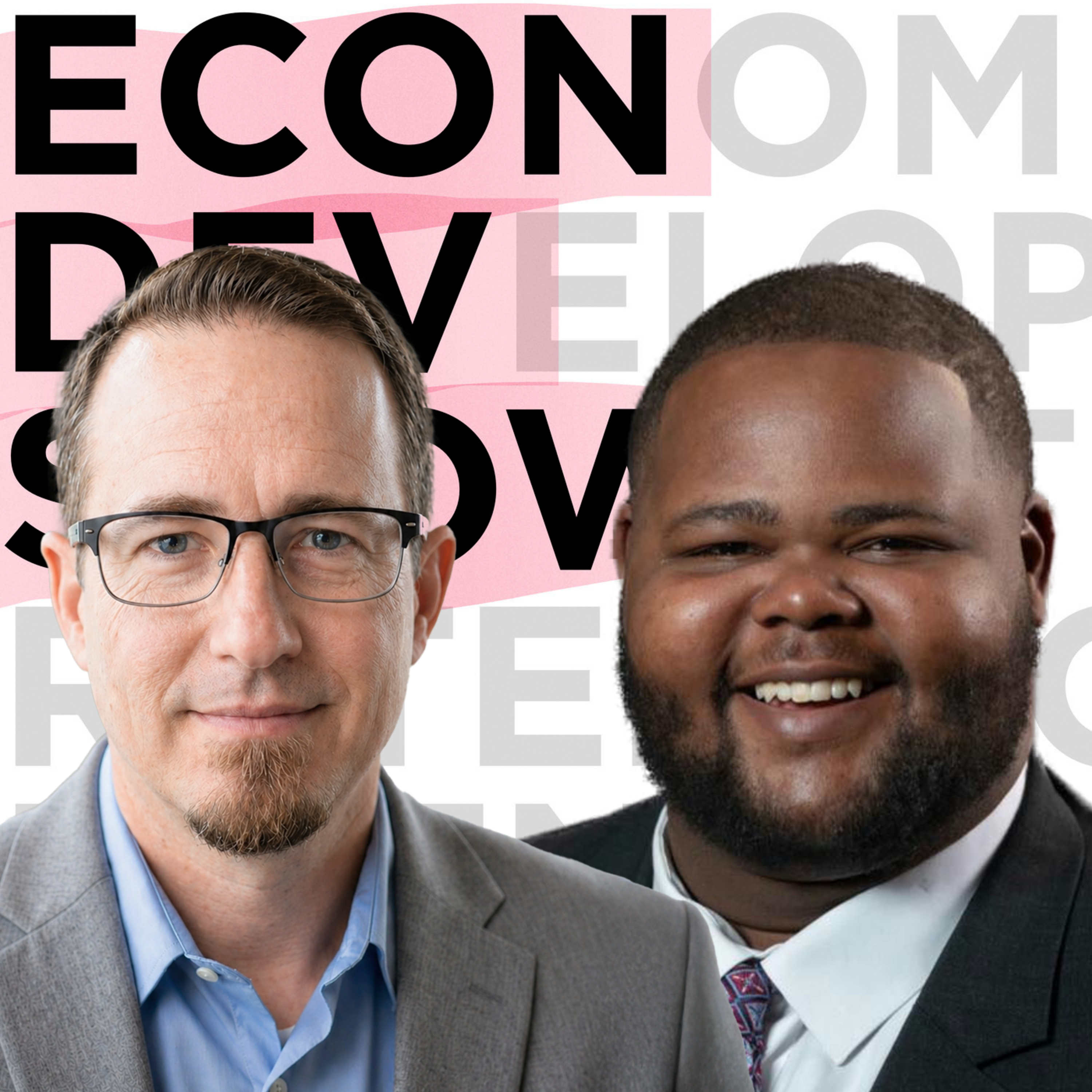
Econ Dev Show Podcast - Economic Development
226: Economic Development Is a Relationship Game with Damian Denmark
00:30:02
Damian Denmark joins the Econ Dev Show to talk about building Yukon’s economic development function from scratch, why relationships are the real infrastructure of local growth, and how communities should think more strategically about projects, incentives, data centers, and trust.
Loading summary
Transcript47 lines
- [00:02]
A
Welcome to the Econ Dev Show. We explore the strategies, ideas and insights that are driving economic development forward into the future. You'll hear new insights from passionate EDs about their successes and struggles. And you'll learn from attraction and retention experts about how to apply actionable strategies inside your Edo. We'll help take your organization, your community and your career to the next level. Here's your host, Dane Carlson.
- [00:35]
B
Welcome back to the Econ Dev Show. Today we're here with Damien Denmark. He is the economic development director for the city of Yukon in Oklahoma. Damien, welcome to the show.
- [00:45]
C
Thanks Dave. Thanks for having me today. I appreciate it.
- [00:48]
B
Absolutely. So for our listeners who don't know like me, where is Yukon? Oklahoma?
- [00:54]
C
Yukon, Oklahoma is obviously in the great state of Oklahoma. So we're just northwest of Oklahoma City. So we're right in that bedroom suburban community that's just growing and thriving because of that Oklahoma City metro opportunity.
- [01:10]
B
Gotcha. So tell us about the city. How big is it? You mentioned it's growing. So how quickly is it growing?
- [01:16]
C
Yeah. So Yukon was actually one of the top 10 fastest growing cities in the country. Our zip code, 73099 is a very popular zip code because we're able to share that. So we sit at roughly around 26,000 population and so definitely have grown over the last 10 years of just bustling and opening doors. Obviously a lot of attraction through annexing land in so we can continue to grow Yukon proper. But there are some disadvantages. So there are some areas within Yukon that it's actually Oklahoma City, but we still call them Yukonites just for fun. But yeah, we have a pretty good sized map and pretty solid population and have seen quite bit of growth over the last few years.
- [02:08]
B
That's awesome. And how long have you been there?
- [02:11]
C
So I've been here since January of this year. So I just celebrated my six month anniversary last Friday.
- [02:19]
B
Oh well, congratulations. What drew you there? Like why did you. Other than the fact that it was a job, why there? Tell us about what you feel like makes it special.
- [02:28]
C
You know, UConn is a very unique place. For years growing up, I grew up in northeast Texas, so we would always come to UConn, Oklahoma City area for either church camps, family outings and so being able to have the opportunity to come to this town after years of either staying in a hotel, visiting friends, shopping and eating in UConn, it was kind of a match made heaven. Right. So I really couldn't complain when the offer was available to apply for the economic development director position.
- [02:59]
B
So was this Your first job in local government?
- [03:03]
C
No. So this would be my third job in local government. So I've worked both on the private side and then on the public side of economic development.
- [03:14]
B
Gotcha. So how would you describe economic development in Yukon?
- [03:18]
C
I would describe it as really unique. The city has never really had an economic development department, let alone a director or someone to lead economic development. And so to come in and build out this department from scratch in the middle of a fiscal year here in Oklahoma, and to create a mindset of. UConn is open for business now. This is in partnership with other departments. I really don't want to take all the glory. It's just really unique. We've created our incentive policy. We're looking at reactivating tiffs that were essentially started but not activated. And we've just seen a lot more interest in economic development. Building out our retail space in UConn. And I think it just really took someone to understand the market and kind of build those opportunities for the city.
- [04:07]
B
Let's talk about your sort of marketing background and how that influences how you do economic development.
- [04:15]
C
Yeah. You know, when I started that company, it was more of just, hey, how do we fill the need in rural communities? I lived in rural Kansas. I grew up in rural America. And so I understood really the gaps, right? The gaps of being a small business owner, the gaps of running a local government staff burnout. And so we really just created that agency to really, really fulfill the need and the void that these communities have, and then how we transition that to economic development. What I've learned early on in my career, it's all about connections. It's always about being vocal, being able to provide input and bringing value to the conversation. And that's exactly what the company was created for. It's to fill those gaps. So those rural communities, rural business owners, rural agencies, or just nonprofits and so on, have that voice, and they're able to be seen and be heard at a more affordable opportunity and not be overlooked by bigger agencies. And so that was really initially created on a whim. And last year it really grew. We picked up maybe 28 different government clients across the country. And so it was just a great opportunity, and we're just increasing partnerships. I'm thankful I don't manage day to day. UConn keeps me busy enough to where I don't have time to do so. And so I've brought in people that can really fill that void and that has the passion of serving people, and that's either worked in government all their Life or have always shown an interest to work with local government.
- [05:50]
B
So I reached out to you, I think it was last week or the week before, because you posted this incredible essay. I thought this was. This is absolutely incredible essay on LinkedIn. And it was called How a Move to Liberal Kansas Changed My Life. Right? And the first time I read that, I thought, you know, I don't think of Kansas as liberal. Then I had to read it again and I realized that's a place, right?
- [06:13]
C
Yeah, that is a place that is. You know, some say it's the armpit of Kansas. It's southwest Kansas. It touches right on the Oklahoma panhandle. So it's a unique place. And I can tell you really about that story. It was just. It was just really weird, you know, during the pandemic, got a new job, they said, hey, you have two options. You can move to Nebraska or you can move to liberal Kansas. Well, me, I took too long to answer. So when I finally came back, they're like, hey, you're actually going to liberal Kansas whether you like it or not. So I said, fine. So I packed up everything from Texarkana and relocated to Liberal in less than 30 days. I found an apartment complex there. Never seen any pictures of it, couldn't find any pictures of it. It was sight unseen, paid the deposit, and then I moved in. It was a beautiful apartment. And so I moved to this community not knowing anything about it in the middle of the pandemic, you know, obviously everyone was wearing face shields and I have. I'm wearing a face shield, you know, because it's a new community. I was given the opportunity to really come out liberal. I really disliked liberal. For the first seven months of my life, Contracted Covid and W. Mongus almost died in Liberal. And so. But then I quickly fell in love with the opportunity of being in Liberal. Got super involved in the community, super involved throughout southwest Kansas, Garden City, Dodge City and those areas. It just really created a network and a friendship of just among community leaders, business owners, serial entrepreneurs, just everyday average people as well. Liberal had a lot of heartache.
- [07:59]
B
Yeah. Tell me, what was that moment where it stopped feeling like a place that you moved to and started feeling like your community?
- [08:09]
C
I would say that moment so moved there in August of 2020, November 2020, contracted Covid. I didn't get out of the hospital till January of 20. And so being in a new community, not knowing anyone airlifted the Kansas City. Coming back to the community and navigating through that, and then people that didn't even know who I was at the time, had no idea where I was from, but they comforted me, they provided me, they cooked meals, they provided service while I was homebound and carrying around an oxygen tank. And to those who've ever lived in liberal Kansas, when it's during the winter, it snowed really bad. And so being able to be in the snow, carrying around oxygen tank and the community of people that you didn't know and for people to just be able to help and provide those services. And I had a gentleman from the church I was attending drive all the way up to Kansas City to bring me back to liberal. And again, he didn't know who I really knew who I was. And so I think that was really the icing on the cake for me in two things. One is, you know, either I'm really lovable guy, or two, these people are really genuine. And so I think as I get older, I realize I'm probably a little bit of both. And then they also really were just genuine people in that community. And that's when I really just finally realized that, hey, this is a community where people love each other. It's just a little smaller. And so it's something I had to get used to. And that's when I really just fell in love. You know, I got super involved on the nonprofit side, super involved on the city side. And then maybe eight months later, I transitioned to the director of business development at the Seward County Development Corporation, where I kind of let the business retention and expansion side for the growth of the county. And so we were just. There was just a love and there was just a love and passion for that community. Because when I once thought I was going to unfortunately not be around or be alive in that community, I was fine. And then when I came back to that community, those people that were there, they just loved and they appreciated and they just showed so much mercy and grace during that time.
- [10:33]
B
So I'd imagine that it felt like, you know, you having received all that love and mercy and grace during that time really sort of changed you.
- [10:43]
C
I didn't like, and I want to be 100% honest with you when I say I did not like a liberal. I was. I am not joking, I am not exaggerating. I called my boss, I was like, hey, man, I got to go. This is not for me. This is not what I signed up for. Literally, I'm just in a town of no one. I know. Everything closes at 9 o'. Clock. There was a church I was attending, there were a few people I hung out with. It was just. I was outside of my comfort zone. And so I really did have a hate relationship for liberal my first six, seven months there, because it was just. I wasn't used to it. I wasn't who I am or who I was in my previous community. It was just something to where it wasn't ideal for me. And so I just. I was looking at social media posts from 2020, when I was 20, said, you know, I really got to get out of this town or I'm really in a bad place. Not mentally, just in liberal Kansas. And so it's just like that. Just to have that attitude then and to look back is like, oh, man, now I love this place. I can't get enough of this place. And so it was just unique. I just really despised the city at that time and just Kansas in general. And now that I look back and just say, hey, give it a year. And it did. It changed me to the fact where, you know, the trajectory of my career went a whole different path and where I started when I moved there and then the relationships that have been built across the state.
- [12:23]
B
You wouldn't have learned this had you stayed in your comfort zone. You wouldn't have learned this in a bigger city. Right. Because you could have continued to be who you were. You could have continued to be like you were and sought out the things that you liked. And yet this change, I'm sure that you've carried it on and you brought it with you to UConn. Right. It's not like you just love the people in liberal Kansas. You probably love the people in UConn exactly the same way.
- [12:51]
C
And now from a different point of view of being in community development, economic development, and being a part of the communities, you know, wherever I may live, it's becoming one of those ideas. You know, there are always going to be negative sides to every community. They're always going to be out. The positives are always going to outweigh the negatives. And so I truly do love UConn and in all its glory, both in the negative and the positive way. One, because I am able to shape the perception of what our citizens think about our community. I have a direct impact in that. And so that puts a lot of responsibility on me. And the second is, you know, we have people who have been here all their lives and they have seen UConn go from itty bitty to where it is now and where Oklahoma City has played in part of that. And so, you know, to hear those conversations, to Hear the story behind that. It just motivates even more. Just be in love with this community. You know, it's had its struggles, it's had its wins, and some of those can be in the same year. But it's just. I'm in love with UConn. It's home and just excited to be here.
- [14:05]
B
Yeah. You said in your essay, you said the strongest communities aren't built by buildings, they're built by people.
- [14:13]
C
And I, And I said that. I was very intentional when I said that, because a lot of individuals think that economic development is strictly all about the size of the buildings, the size of the project. No, it's the size of the people that are coming together to support that. In Oklahoma, like most other communities outside of Kansas and maybe Missouri and a couple other states, you know, they rely generally only on sales tax dollars. There's. The municipalities here aren't relying on ad valorem, or also known as property taxes. And so when you have community members who are not supporting these projects, who don't feel that they're being listened to and don't see the investment themselves, they don't have to support it. They obviously can go 10 minutes down the road to Oklahoma City or 20 minutes down the road to Edmond and so on and so forth. But how that ties into is, you know, we're building up people because we want people to invest in our community. We want people to. And I call this simple. Live, work, play, grow their family. That's all I want. And we can't build that through building out these large buildings or these hundred million doll projects. We build that through creating those relationships to make people so. So excited to invest in our community.
- [15:36]
B
So percent that's the case. What. You know, let's. Let's just work this out because obviously you've thought this through. So what is the, you know, what's the BR&E strategy that comes out of this? What's the business attraction strategy that comes out of this? That comes out of this, you know, loving the people and, and being so concerned about it. Like, let's play this out to a practical level, because although 100% I agree with you, take this to your board or you take this to your council, they're gonna say, well, that's all good. And we love that you're a connector, and we love that you do these things, but let's get to the practical nitty gritty of it.
- [16:14]
C
You know, I would say, and I'll give you a prime example, without naming names or the companies are interested Relationships matter. In the case of, you know, in my first four months, we're able to bring the table a deal that was desperately wanting to go to Oklahoma City that brought in $100 million project. And I think tomorrow they're going to make a pretty huge announcement on the partnership of that which is going to be an NBA player relationship. Had to play in that relationship comes into play when you're working with a lady who has despised the city for many years and has not trusted anyone from the city and owns a piece of property that's gold within Yukon proper. And we're able to work with the developer to get that property developed and having actual tenant rep and brokers actually interested in that property for development. And so when we look at it from a B, R and E standpoint and we look at it when I'm presenting to council or to our board, our economic development board, it's simple. Building relationships matter because you're instilling trust, you're instilling the opportunity and you're letting people know that you're one, that you're listening and two, that you're able to articulate what's happening around your community because that's why relationships matter in this game. I've learned quickly it's not what you know in economic development, it's who you know. And so you will never know anyone if you're not actively building that relationship or I like to call building that Rolodex of just people who are very knowledgeable in the game. And so from a BR&E standpoint, that's been super successful thus far for us.
- [17:59]
B
So tell me about a project in UConn, something that like a specific thing that you've enacted that's been successful that you, you know, has a name that, that you think maybe you thought it wasn't going to, maybe you, maybe you knew it was going to work from the get go or maybe you didn't know that it was going to work and it, and it's been successful. But I mean, I know you've only had six months, so.
- [18:20]
C
Yeah, no, I would definitely mention highlight. So it's the Miller Crossing project. So it's, it's going to take place on Yukon Parkway, which is land we were able to get annexed in from Oklahoma City. And so that consists of about nine QSRs, sports facility, hotel development, as well as medical office space which is about roughly over $100 million project. I was super skeptical. One, because you know, when we talk about people and local developers and having a dream and that making it a reality being in economic development. Dane, you and I both know it's not done until dirt's moving, and then it's still not done until the building's open. And then I'm still questioning you when the building is actually open. Right. And so that would probably be one of the proudest moments in economic development because we're able to get a TIF pass in record timing. We were actually able to get that TIF pass in two months. In which I've never, in all my years working in economic development and then speaking with mentors, I've never seen a resolution or ordinance pass for a Tiffany tax increment financing project to be done in less than 60 days. And so now they're in the phase, we break ground with that. They break ground on that project September 1st. And so. And then they get to make this huge announcement in partnership with the NBA player that is going to be deeply involved in this project tomorrow. So I would say that's a huge win, not just for me, not just for economic development, but it's a huge win for the community. We're aiming towards UConn to be a sports tourism destination. There are some other opportunities that we're working in the pipeline for outdoor sports tourism and working with some major players that I've had the opportunity to visit with in Las Vegas a couple weeks ago. That would probably be the most exciting win and how we're shaping economic development within the city.
- [20:33]
B
It's always good when something that you were a little bit hesitant on succeeds like that. And 60 days, less than 60 days for a tiff, right? It's. You got to go fast these days.
- [20:45]
C
It's a lot of stress, a lot of heartache, and a lot of incentive and negotiation.
- [20:50]
B
So we were chatting before, before we started recording about the new challenge that a lot of communities are facing, which are data centers and how to think about them, how to deal with their sort of inevitability. And economic developers are sort of caught in the middle of these kinds of situations because on one hand, we're charged with bringing investment to our communities, especially investment in things that. That are. That make stuff, right? That export. I don't want to say primary jobs, but are primary industries and data centers are that. Right? That's exactly what they are. They're not jobs. How, without getting too sensitive on the topic, how are you guys thinking about this? And how are you personally thinking. Thinking about this?
- [21:56]
C
The role of an economic development director has changed since the early. Probably mid-1900s, right? We went from real estate developers to, in the 90s, we became technical data and incentive experts, and now we got to build ecosystems and communities. Right, Right. And so obviously, my goal is if any business is interested in UConn, we are going to do our best to make it happen. My goal isn't to tell anyone. No. We just navigate through incentives, through opportunities, and then if we have the infrastructure. You know, I would say this. A lot of people love using AI. It's a powerful tool. When we're looking at data centers, I think they can be very instrumental in the communities. I think they can be very beneficial to the taxpayers and residents financially if your leadership knows how to properly negotiate and you have the infrastructure that's readily available. Now, with that being said, a lot of the issues that I see around the country in the articles between Kansas, Missouri, Oklahoma, there are infrastructure issues and there are these data centers that can come in and provide the infrastructure, which is all great, but until it's tied into that development agreement, it's not. I think if any data center that's interested in coming to your community, there are a few ways to look at it. Obviously, you want to listen to the input for your residents. Obviously you want to bring in your utility partners, whether that's water infrastructure, your electric infrastructure, and so you're able to really understand exactly what the market capacities are for your community, really without going into too much detail on the City of Yukon's project. Because there's no privacy in economic development, there's no privacy in local government. Every community right now is going through the shift of having an interest, of having a data center right in their community. And I think the biggest thing for UConn right now is that we're navigating through water issues. And we've been able to prove that, you know, we have the water capacity to provide or have a Data center within UConn proper. But I think a lot of that could have changed if we didn't have the infrastructure. And that's a lot what communities are going through right now, they're not doing their due diligence to check for infrastructure, first thing. Second thing, they're not taking full advantage of the opportunity. When the developers or the data center, land owners or so on and so forth are interested in your community, are you maximizing every benefit, opportunity for your residents, for the business owners, for the tourism aspect? I've seen some contracts or development agreements that were negotiated where it brought in up to $110 million in additional revenue for the city where they were promised to bring in or build a new fire substation to assist with the offset cost of housing. So there are many different strategic ways of when we're looking at data centers and how they're affecting the community. You know, from a standpoint of we want jobs, well, it's only going to bring 20 to 25 jobs. Well, that's 20 to 25 jobs we didn't have from the beginning. But then we look at it from a sales and use tax benefit. All the sales and use tax that are going to come in if we require certain stipulations for them to bring in that construction, bring in the workers that are doing the work in building this project. I think a lot of it has to start with the root of policy that is held within these cities, municipalities. For us specifically, if there's any development agreement that comes into play with the city of Yukon and any developer, there are certain requirements. You must be a chamber member. You must incorporate public art or provide a fee in lieu of public art. You must use all city owned services such as water, trash services or wherever services that are feasible. And you must be involved in our community. You must submit a community impact financial statement of showing that you're involved in the community. So there are many ways to strategically place and say, hey, this data center can come in. We have the infrastructure they have proving that this is going to be compliant. It's not going to be noisy. Great. Now what's the economic benefit for us? How are we shifting to show a financial gain for our community other than bringing the sales and use tax, other than bringing 20 to 25 jobs. And so the negotiation piece is detrimental to any industrial project that's coming into your community because you're not going to see a sales tax year over year from this project.
- [27:01]
B
Damian, that was an incredibly good answer. That was excellent.
- [27:04]
C
I tried.
- [27:06]
B
I think that after this, I think we're going to have to have a follow up episode because you brought up a lot of good stuff and I'm sure that a lot of our listeners are going to want to pick your brain because you have definitely thought if you didn't just come up with this on the spot, you definitely thought about this a lot.
- [27:23]
C
I was given the task to create our economic development policy and I was given the task to create our incentive policy. And I spent three months of my first six months, day and night, for the most part, six days a week working on creating these policies. And so we were able to find form that not just for industrial development and not just for the Data center. But for anyone who wants to do business with Yukon, we want to make sure there's a benefit not just for the developer, not just for the city itself, but for the residents who live, work and grow their families here.
- [28:01]
B
That's awesome. Damien, if anybody wants to follow you on LinkedIn or learn more about the city of Yukon or if they want to find something, does the city of Liberal have a website yet is really what I want to know.
- [28:15]
A
Yeah.
- [28:15]
C
City of Yukon has a beautiful website as well that lists our economic development department. We are working with Golden Shovel, which is really the gold standard in economic development. Obviously I can't build our city's economic development website for conflict issues. So we trusted Golden Shovel, which is the next best thing. And so my, my department will oversee tourism and economic development here in July at the next start of the fiscal year. And so we've partnered with them to bring us one of the best websites in the economic development and tourism game. So we're excited for that.
- [28:56]
B
Excellent. And they can follow you on LinkedIn, right?
- [29:00]
C
Follow me on LinkedIn. I'd love to connect rural communities. I love to help out rural communities. Just have a conversation. I can't tell you since moving to Oklahoma and being at some of the utility meetings where rural, smaller community city managers. Well, how do we get our economic development board engaged? And it's just by having a simple conversation and my city manager allowing me to go speak to these small communities to really help them out and get those boards engaged and really showcase what is economic development versus what people think economic development is.
- [29:37]
B
Damian, this has been awesome. Thank you so much for coming on the show today.
- [29:40]
C
Thanks for having me, Dane.
- [29:43]
A
You've been listening to the Econ Dev show with Dane Carlson. If you're an economic developer who never stops learning, for more expert strategies, fresh insights and new ideas to take your career, organization and your community to the next level, visit us on the web@econdevshow.com.