← Econ Dev Show Podcast - Economic Development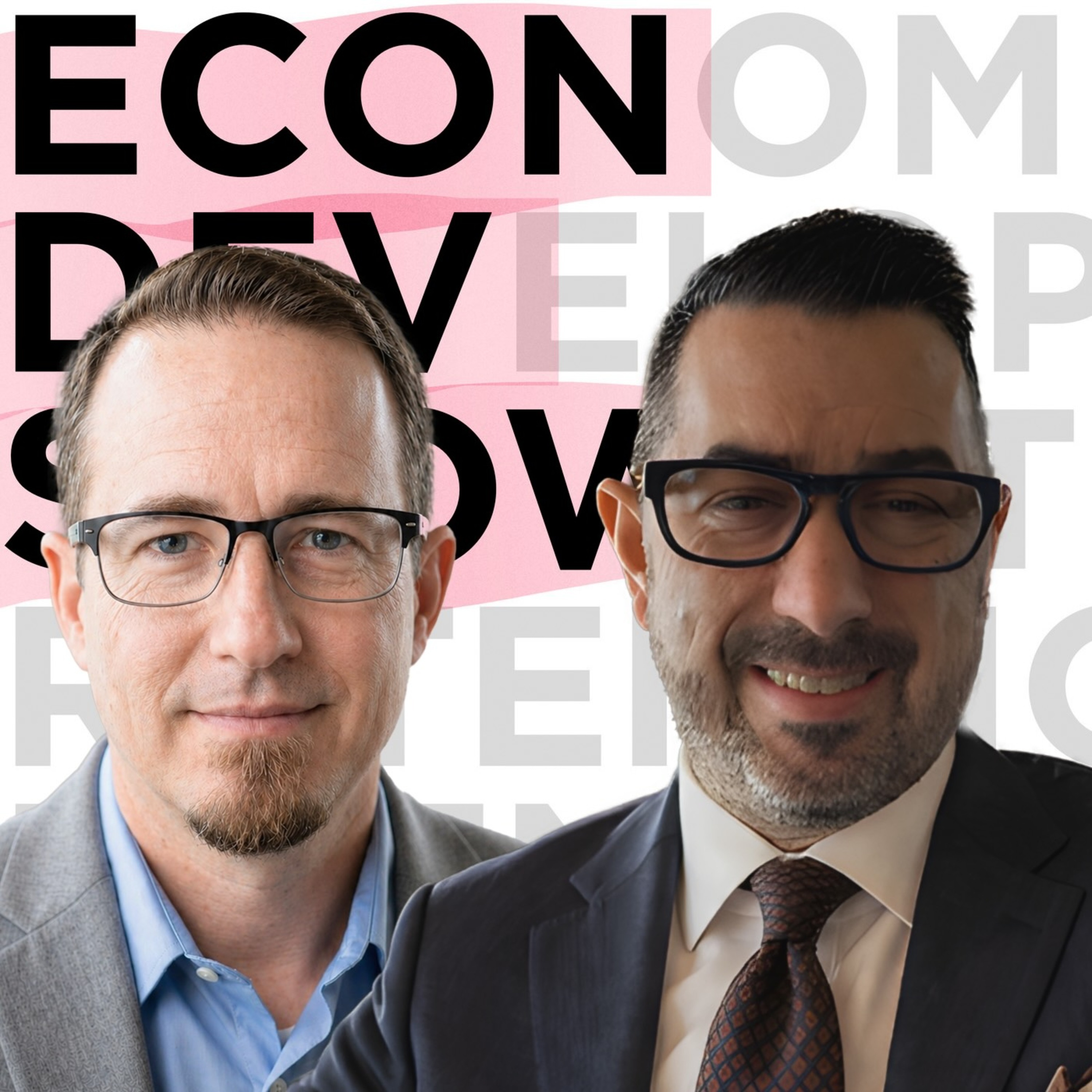
Econ Dev Show Podcast - Economic Development
230: No Is Never the Final Answer: Creative Retention Strategies with Andrew Sloss
00:26:21
Andrew Sloss explains why “no” is often the beginning of a conversation, how communities can support struggling businesses creatively, and why transparency, relationships, and incentive compliance matter.
Loading summary
Transcript42 lines
- [00:02]
A
Welcome to the Econ Dev show. We explore the strategies, ideas and insights that are driving economic development forward into the future. You'll hear new insights from passionate EDs about their successes and struggles. And you'll learn from attraction and retention experts about how to apply actionable strategies inside your edo. We'll help take your organization, your community and and your career to the next level. Here's your host, Dane Carlson.
- [00:35]
B
Welcome back to the Econ Dev Show. Today we're here with Andrew Sloss. He is the principal at Sloss Site selection and Location Investment Consulting. Andrew, welcome to the show.
- [00:46]
C
Thanks, Dan. I'm happy to be here. It's good to see you again.
- [00:48]
B
It's been a minute since you were last on the show. I think it's been a couple hundred episodes at least. Probably things have changed for you. You're in a completely different position. You've been some different places since then and now you're out on your own with Slos site selection. Tell me about that transition, how that's played out.
- [01:08]
C
I just thought it's getting to the point in my career where I want to be able to control more of what I can control. And there's lots of benefits to working for large corporations and large consulting firms, but there's also plenty of drawbacks. And So I turned 50 this year and I just kind of made the decision that I wanted to go out there and control what I can control and do the kind of work that's most meaningful to me. And at least for right now, I think the best way to do that is to go on my own.
- [01:30]
B
And you know, we're about the same age. So yeah, I totally understand that, that feeling having been, you know, in these different sort of setups. Having been in a, in a large organization, how does that change the way that you advise companies today?
- [01:46]
C
I think when you are part of a large organization, obviously there's a lot more resources in the sense of there's been so many times and not just where I was most recently, but going back to when I was even at Baker Tilly or Ernst and Young where I might be advising on site selection. But through that discussion, it turns out they have a sales and use tax issue or they have some other tax related issue or some other issue that the firm I'm working for has expertise in. You know, it's a lot easier than to be like, hey, I can connect you with someone and then obviously further strengthens the relationship that you have with that client. So that, that's one advantage. Know I'm still able to do that, even as a solo practitioner. I just have to maybe work a little bit harder to find the right connections because I don't have all that expertise myself. And certainly, you know, a large firm has a lot of financial resources that at least when you're first starting out as a solo practitioner, you most likely don't have. But sometimes that comes with a lot of red tape, too, that I now don't have to worry about.
- [02:40]
B
Yeah, right. And I think that's probably the biggest one, the red tape.
- [02:44]
C
Right.
- [02:44]
B
You, you can see an opportunity or you can, you know, as they say, you can be the rowboat against the battleship.
- [02:51]
C
Yes.
- [02:53]
B
You said in your pre interview with me you had this story about no is never the final answer. And that's kind of where I want, what I want to talk about today. What does that mean in practical terms? That no is never the final answer?
- [03:05]
C
I've been doing this for 19 years here in August where I've been doing this type of work. And I think there's been times in my career where I've done projects and the initial discussion with the community has been, no, we can't help you, or no, this isn't an operate thing that we're interested in doing. Part of it is maybe as my background as an. As an attorney who you just never take the first no for an answer as an attorney. Right. So going back to the drawing board with my client being like, hey, I think we need to position this a little bit differently with the community and maybe doing some more direct, you know, what I sometimes call, like, advance work in the community to kind of make sure that everyone understands what we're looking to do there. Especially if it's not like an existing company, this is a brand new, like a greenfield project or a committee that isn't in that community yet to really get them to understand. Because sometimes, I mean, again, communication is, is a challenge among human beings. We all have our different ways of understanding what someone else is saying. And no matter how clear you think you're being, sometimes people read things into what you're saying that isn't truly there. Right. So there just has been times where there's been some of those communication challenges with the local or a state economic development organization. And you kind of come back to them and say, hey, can we just have another call? Because I think maybe, you know, whether you want to say we get off on the wrong foot or I think maybe there's a misunderstanding about what we're asking for, what the client's Looking to achieve. And sometimes when you have that second conversation and you know, now the, you know, almost, you're almost at a point where, you know, you're, you're, you have nothing to lose now. You can almost put all your cards on the table like, hey, look, this is really what's going on. This is really what we want to do. This is how, this is why we want to be in your community. We really think this is a good project for all these different reasons, not just for us, but for the community. Then typically you can get a little bit of movement in those conversations. Then they'll usually like, you know what, let's, they'll go back and say, well, let's have some, we'll have some internal discussions with the local leaders here and see if this is something that we are interested in. And then at least you get to a, maybe to keep that. Especially when you're doing a multi, multi state or multi jurisdiction site selection project, you're keeping that community kind of in the, in the running for it, which can oftentimes help you. You know, when you're talking to other communities as well, from a leverage standpoint, of course, but just also, just because, you know, sometimes people say no, but then, you know, they're just too busy and you come back to them a few weeks or maybe a few months later and they're in a better spot.
- [05:22]
B
Sure, that makes sense. You recently worked with a struggling retailer. Let's talk about them and the problem that they were facing.
- [05:29]
C
Well, I mean, you know, there's almost, almost regardless of what retail you're kind of in, if you're a large retailer, there's been some very significant economic headwinds going back to even before the pandemic. But certainly, you know, during the pandemic there were lots of challenges because people weren't going to stores and going out or whatever. But this particular retailer, you know, there's multiple factors as far as why they had been struggling and what was kind of at the nature of it. And so, you know, we, we were, we were hired to come in there and really do, I mean, really, it was doing a straight retention play. There wasn't going to be new jobs, most likely, there wasn't going to be new investment. But this company played a very crucial role in all the communities that they were in, whether the community was large or small. And so we just kind of brought, the approach really was like, hey, this is what's happening. The client is having a really hard time. We're just coming to the community Say, hey, we value our relationship with you. We value the role that we play in your community. Is there anything that can be done to help us keep these, you know, facilities open in the short term? Because there were some, there's some things changing on the business side that in the next three to five years, you know, we strongly believe that, that everything's going to turn around. But we really kind of need this stopgap measure in the short term to try to keep these, you know, these facilities operational.
- [06:46]
B
What was the local response to that?
- [06:48]
C
There were some communities who said, absolutely not, we're not interested in talking to you. We don't think this is a real thing. And we didn't get anywhere. There were some communities, the vast majority of communities would say this isn't something that we typically can incentivize or can help you with. But you know, we're going to talk to the city council, the county commissioners, local leadership, and we'll see what we can do. Most of the time they would come back and say we just don't have a mechanism because there's not the jobs, there's not the investment taking place, which we completely understand. It's a very difficult type of project to try to incentivize and help. Typically they were always very good to say, hey, but we do have these programs or these programs, most of the time they weren't applicable. So like some of them might be like a signage program where if they were going to improve signage or improve landscaping that they could get a dollar for dollar reimbursement for that. That wasn't really something that was going to be terribly helpful and nothing. And the client wasn't really interested in, at least in the short term investing and things like that, with a few different exceptions. So. But then there were a few communities who are like, we will, we will find something. And it was really a wonderful project. We'll just share this with you, Dane. So one of the things that was really cool because this wasn't an. But there was one community who I probably needed leave nameless in Texas who not only gave the clients some job grants and some things like that, but also had extended through the university system free tuition to our clients employees if they enrolled in the, in the statewide university system. So it wasn't so much a benefit necessarily like a direct benefit to the client other than it definitely was a recruiting tool that they've been able to leverage to say, hey, if you come work here, you can get, you know, pretty substantial discount tuition at this university.
- [08:26]
B
Because that we don't often think, well, especially because these weren't new jobs. Right. I think that's, at the end of the day, that's what this is all about. This was not a traditional economic development thing. This was, you know, purely retention. And you were coming and you were asking for whatever help they could possibly give you. And I think from the sound of it, you heard those nos, you heard those, no, we can't help you. No, we don't have anything. So how did this ultimately all play out?
- [08:52]
C
Yeah, I meant the, in the communities that we were successful in. I don't remember the exact numbers, but I mean, we ended up getting over a million dollars of incentives across for those communities that were able to help. I was doing that work in six different states. They were, they, they're in every single state. So I just was doing it in six states. But I thought, you know, that was, that, that was pretty darn good. I thought for what we were, what we were talking about. And the, I mean the client was absolutely thrilled with our efforts and what we had done. And so it just was, I mean, it was a very, a very interesting project and I really enjoyed doing the work because it was such a challenge. When you found a community that was willing to work with you, it was a lot of fun to figure out a solution and a way around to help out the client and then help out the community because they did play a very important role in the community.
- [09:34]
B
And how did you demonstrate that value? Obviously they pay taxes, obviously they employ people. But like, how to dig into that
- [09:40]
C
a little bit, they serve their, they have clients or they have customers in the community that come specifically to their locations to get medical treatment prescriptions, things like that. In a lot of communities, they were the only one within the 30 minute drive. And so if that location were to close, the constituents there were going to. Now you have to drive an hour round trip to pick up a monthly prescription. In a lot of places, the consult with the pharmacist was the most medical care they've gotten in a long time. And so to lose that was very impactful to many, many communities. And one of the things that was driving a lot of the challenges was some of the, some of the issues around the medical insurance and the in between companies as far as reimbursements on prescriptions, that was driving a lot of the losses that we're talking about. And that's not, that wasn't, that's not an issue specific to our client. That's an issue in the industry. And so to Be able to explain that to the local economic and local political leaders there to say this is what's going on. I don't know if you're aware of the situation, like. Cause it was eye opening to me when I learned about it myself. But then to be able to explain it like this isn't just like this isn't bad business decisions, this isn't a struggling industry, like it's going away. There's just some things that need to be fixed in the industry that are in the process of being fixed but won't be fixed for another, like fully fixed for three or four, maybe even five years. So just being able to tell them the full story. And I think the thing, this is something I've always, I've always done it with any project, but I'm always, I've always been a firm believer in full transparency on my projects. Now sometimes you can't always share every piece of information that you have, in which case I will say I can't share everything. The client was like, hey, we're just going to go in, we're going to lay all the cards on the table and explain exactly what's going on. That's what we did. And I really think it was that transparency which helped us, even if we didn't actually get any actual assistance, that transparency in that approach really helped us to have those conversations and led to more opportunities to have even further discussions.
- [11:34]
B
Yeah, that makes sense. So at what point should a company stop pushing and accept that the answer is, you know, truly no?
- [11:41]
C
Yeah. And I think that probably give you the lawyer answer. If it depends. It depends on the client's tolerance for pushing. In this particular situation, our clients have quite a bit of high tolerance for pushing a little bit. Especially in communities where they had been there for 40, 50, 60 years. There were other times where, you know, they weren't as comfortable pushing because they were relatively new or there was some other stuff that had been going on in the community. Like maybe they had already closed two locations there and this was the last one and they, you know, they wanted to ask but they weren't going to push. I think for, you know, for me, you know, having a lot of communication with my client, like you have that initial discussion, a very high level discussion that typically is anonymous with the locals, either the local community or the state local community, you know, so as, as their consultant, I kind of gauge the temperature, read the room there and come back to the client like, hey, I think it's a yes, I think it's a No, I think it's a maybe. And then there's obviously a spectrum along there as far as it's a hard no, it's a soft no. I think it's a no now. But I think if we push and can build a better business case, I think we can get to a maybe. So kind of talking them through what my suggested approach is. And if they say, yeah, let's go ahead and push, let's push. I mean, that's one of the biggest advantages that a company can have by hiring someone like myself is I don't live in that community most of the time and I don't work for the company. So I can, I can push as hard as I want because it's not gonna, you know, if they don't like me pushing, then that's me. I'm the one pushing. Whereas some company, you know, they might have a general manager who lives in the community, or they might have a plant manager lives in the community. And all other people are very involved in, you know, it's a local faith community or the school district or whatever. And they don't want to push. Cause they have to see their elected officials at school or at church or at the grocery store. I don't have to worry about that. So I can, I can push a little bit more.
- [13:25]
B
So let's talk about the economic developers. How should they pursue creative solutions without promising incentives that they maybe don't have the authority to provide?
- [13:34]
C
I mean, I would say, especially from this project I was working on, just, just have a discussion with me or have a discussion with us that do this sort of work. Like, don't. Just like we've received so many. Well, not so many, but there were, there were a couple communities that were just. I'm at rude. I mean, can think of a better terminology for it, but we're just totally rude, like from the jump. Like not. Not nice. Wasn't interested in talking about it. No matter how we help, we have tools. We're not gonna tools, we're still not gonna help. We don't wanna talk to you about it. I was like, wow. Like, I mean, I understand this is a very large company and all that sort of thing, but you know, we're just trying to have a discussion. We're trying to be a good community partner with you. So I think just being open to a discussion and really thinking out of the box. As a former economic developer, I understand that, but like, okay, well, what are some other things that can help? So like for instance, there was one community that they just happened to have this workforce training money for seven years that no one had ever touched, no one had ever applied for, no one had ever used. And they said, you know what we're going to take, I think it was $50,000 of that money and we're going to put that into a jobs grant if you can retain those jobs for like a five year period. So I meant year over year, like it was a very small amount of money that we're talking about like maybe $7,000 a year in grant for this client. But believe it or not, Dane, that was enough for the internal people at the client to say, we're not going to close that location because it showed
- [14:59]
B
the community was invested. Right. Right. Wanted it. So then is our job creation and capital investment, are they too narrow of a measurement of economic value to, to still continue to work in that way?
- [15:13]
C
But I, I think just in a situation where, and I've done, I've done a number of retention projects over the course of my career and typically you're talking, you know, most of the retention projects I've done, it's a, it's a manufacturer, it's a headquarters, it's a regional headquarters, you know, it's a primary employer in the community. Those situations, a lot of, a lot of times they'll find a way to help us, you know, even if it's just some sort of creative permitting or something to help ease the, some of the burdens that the company is facing. This is, this was an, obviously a very unique situation. And so, you know, it's, it's hard for, especially on the local communities just to have some sort of funds available for retention because. And one of the critiques we got most often was like, well, if I give you money, I have to give everybody money, right? I was like, well, I meant you could see it that way. But the bottom line is if my client leaves, it's going to put a lot of pressure on, if there are any other similar industries in your community, it's going to put that much more pressure on those that are left and then they're going to come and ask. And now you're going to have a community who has to drive very far to get basic, you know, essential needs met. So I think the jobs investment still still key drivers for economic development. I think just it would be beneficial to come to local communities of say, how can we, how can we partner to make sure that for any struggling business, regardless of what industry it's in, are there other resources that we can have available, like, and maybe, I mean, for those, for those communities that had like the facade improvement grants and the landscaping improvement grants and, you know, you know, the downtown revitalization grant and things like that. Those are great programs. I definitely would recommend you keep hanging out of those. I would say they could probably adjust them a little bit to be a little bit more flexible in how they could be used in the sense of like, hey, maybe you're not improving outward signage, but there's a bunch of stuff inside a location, like inside a store or whatever that needs to be improved. Can it be used for that? Because a lot of those things were. Well, it can only be. It has to be outside of the building, which I understand they want the beautification. They want their downtown or their main business corridor to look a certain way. But if it looks okay on the outside. Can, though, can. Can there be something done on the inside of a store especially, you know, maybe the store needs to, I don't know, they need to build a new freezer or they need a new piece of equipment or something like that. Can, can there be a way to kind of shoehorn that in there? Especially because so many of these communities had the money and the money wasn't being used. So can you figure out a way to be more flexible with those opportunities
- [17:38]
B
then after it's all done or after it's been sort of agreed to, what Mistakes often cause companies to lose incentives that have theoretically already been awarded.
- [17:48]
C
The compliance is what, you know, we refer to as incentives. Compliance is, is as important, if not more important than getting the award. Right? Because typically an incentive that you. You get is it isn't paid in one year. And even if it is paid in one year, typically you have like a. At least two or three years, if not five or 10 years of what's called compliance, where you have to report, yes, we create this many jobs. This is the payroll, this is the investment. You have to do that for, you know, for a set number of years. And failure to do that sometimes can result in the incentive being clawed back plus interest, or you just not getting the incentive any, any, any longer. If your organization is the one who's going to be doing the compliance for the next 10 years, you have to make sure there's multiple stakeholders within the company that have visibility into what that looks like. Because there's been so many times over my 19 years doing this where my client just didn't want to pay me or the firms I worked for to do the compliance, which I understand, because, you know, it's expensive, it's an hourly situation, it can be very time intensive. So they would give it to their, someone in their tax group or maybe even someone in their HR function or something like that. But then that person leaves, gets fired, gets terminated, gets laid off, just leaves or retires. And there isn't anyone else in the company who knows that that was part of their job responsibilities. A couple years go by and before you know it, the city council or the county commissioners or the state is saying, hey, we haven't received any of your compliance for the last two or three years. You're in breach of your contract, we want our money back. And then it comes back with interest most of the time. Of course. Now sometimes you can cure that. Sometimes, especially if you've been still adding the jobs and doing the investment, you can go back and do the compliance kind of in arrears, but you don't want to run that risk. And I've just seen it too many times where companies lose in some cases millions of dollars because they don't stay on top of the compliance.
- [19:32]
B
So I guess what should a company look for when selecting a site selection or an incentives consultant? What is the key?
- [19:38]
C
I mean, obviously helpful, of course, but not always the most important thing. But I think, you know, what kind of relationships do they have? How well connected are they in communities that you're looking at? And I mean, that's one thing that I take a lot of pride in as a professional is my just natural desire to maintain relationships with communities that I've been in. I mean, I still talk to, talk to economic development people who were in communities that I did projects in, you know, 12 years ago that now of course they're in different states or different communities, but if I see them at Select USA or I see them at some sort of other event, I go talk to them. How you doing? What's going on? You know, So I think having those relationships are so incredibly important. I would say going back to that incentive I mentioned with the, in Texas, with the university, I meant that incentive exists for my client because of the relationship I have with the local economic development person there who I've known for 15 years now. And you know, I've met his wife, he's met my wife, we've gone golfing together, we've done lots of things together that weren't business related just to build that relationship. And it's that sort of thing. When you have those relationships and you have that strong foundation, you can get a lot more work done because they Trust you. You trust them. And you know they know that you're being direct and honest with them, and you know that they're being direct honest with you and that you just can really build out that relationship and get more done. So that's really important. I mean, you can have all the big names, you can hire the biggest names in site selection, the biggest firm in site selection, but if they don't have a relationship at the state and local level, it's going to be a little more difficult and you might end up leaving some money on the table.
- [21:16]
B
Sure. So you say you've been doing this for 19 years. How did you get into it? How did it start?
- [21:22]
C
A complete accident. I had. I had moved to New York back in 2007, 2006, somewhere around there. I was actually was doing work as an attorney. And it was obviously the worst time to move to one of the most expensive cities in the, in the world in 2007, because it was right before the Great Recession. And then all that work kind of started driving, drying up. I was traveling like 70% of the time. And back when. What is the name of the website? Back when monster.com was like the job website before there was a LinkedIn, ADP found me because I had my resume on there or whatever. And they said, hey, do you want to do tax credits? And I just wanted a steady paycheck because I was really struggling in New York. I said, yeah, that sounds great. Didn't know anything about it. Interviewed. I went down there and got my start, really, with ADP doing statutory credits. The Federal Work Opportunity Tax Credit is kind of what I started on. But then the. All the statutory jobs tax credits, that's how I kind of first got into it. Realized pretty quickly that probably my expertise, especially as an attorney, was probably going to be more on the site selection, negotiated incentive side. And at least back then, I don't know if it's still this way. At adp, you couldn't do both. You couldn't do statutory and negotiated. There wasn't an opportunity to switch. So I got a job at ey and that's really where my career took off. And that's where I really picked up all of the nuances of site selection and negotiated incentives.
- [22:36]
B
That's awesome. So how's AI changed your work?
- [22:40]
C
I think there's been, this is just my opinion, too much of a reliance on AI right now for this sort of work because there's just still too many mistakes being made. And what I mean by that is, and I've heard this at conferences I've been to recently. You know, it's fine to use AI to do like a, like a very high level, like, hey, we're looking here. Can you identify buildings that fit? But I mean, I've seen AI make up billions that don't exist. And I've seen AI make up people that don't exist in communities. It can shorten some of the work you need to do. But just like everyone says, like you have to be double and triple checking AI. So it can be very helpful and I think especially for me right now, I mean, I use AI to help me summarize my inbox. I've set up agents to once a week go through my inbox to say, let me know if there's any appointments that have been sent to me that I've not accepted that are not on my calendar. And that's, that helps a lot. So just learning to kind of build that into my, my daily practice and my daily routine, that's where it helps me the most. For all the others, all the other, the site selection, looking at sites, the reaching out to people. I mean, I still do that all myself. I don't use AI too much for that right now just because I don't have the, I don't have the time to, to do, to, to do that with AI and then spend the time to double check it. Let me just go out and do it myself the first time because I know that for the most part I'm going to do it right and I won't have any mistakes. But I definitely think there's a, there's a, there's a wave coming where AI is going to be very, very, very useful in site selection. Helping you to identify sites, help you to identify areas where you might not think to go for a particular project.
- [24:14]
B
Sure, yeah. I use it to scan my inbox and look at emails that I've already responded to and see if there's any that, that I've responded to that I need to follow up and make sure that, you know, see if that why they haven't responded back. Yeah, that's a. I think I do that all the time. In addition to finding calendar invites that I totally missed. So finally, what's one thing that you believe about incentive negotiations that many economic developers would disagree with?
- [24:44]
C
I would say probably that I'm being forthright with information I'm providing to the community. I think a lot of times they think that I'm hiding the ball or that I have some ulterior motive. Or there's something I'm not sharing. And I'm sure they probably have that opinion because it has happened to them in their career and they probably burned them, maybe even cost them a job at one point. But that's not how I operate. I've never been that way. That's not how I want to operate. That's not the way that I want to be thought of in this industry. I certainly know professionals who have done that, and if that's how they want to do it, that's their choice. But that's not me. That was one of the things I learned with the example that we talked about was, hey, I'm. I'm actually just being completely transparent. This is what's going on. This is why we're asking this. These are the challenges they're facing. There's nothing else underneath what I'm telling you that's behind the situation. But a lot of times they just were like, I don't. I don't believe you. I don't think this is what's really going on. I'm like, okay, I can't make you believe me.
- [25:35]
B
So I think that's an excellent answer. And I think that goes along with everything you said, right? Lay your cards out on the table and show them what the real situation is. Andrew, this has been excellent. If anybody wants to learn more about your company or contact you, what's the best way for them to do that?
- [25:49]
C
The best way just to find me on LinkedIn. That's the easiest way just to find me. Andrew. Andrew C. Sloss. I'm pretty easy to find on there.
- [25:56]
B
Awesome. Well, thank you so much for coming on the show today. Best of luck.
- [26:00]
C
Yep, thanks, Dan.
- [26:02]
A
You've been listening to the Econ Dev show with Dane Carlson. If you're an economic developer who never, never stops learning, for more expert strategies, fresh insights and new ideas to take your career, organization and your community to the next level, visit us on the web at econdevshow. Com.