← Econ Dev Show Podcast - Economic Development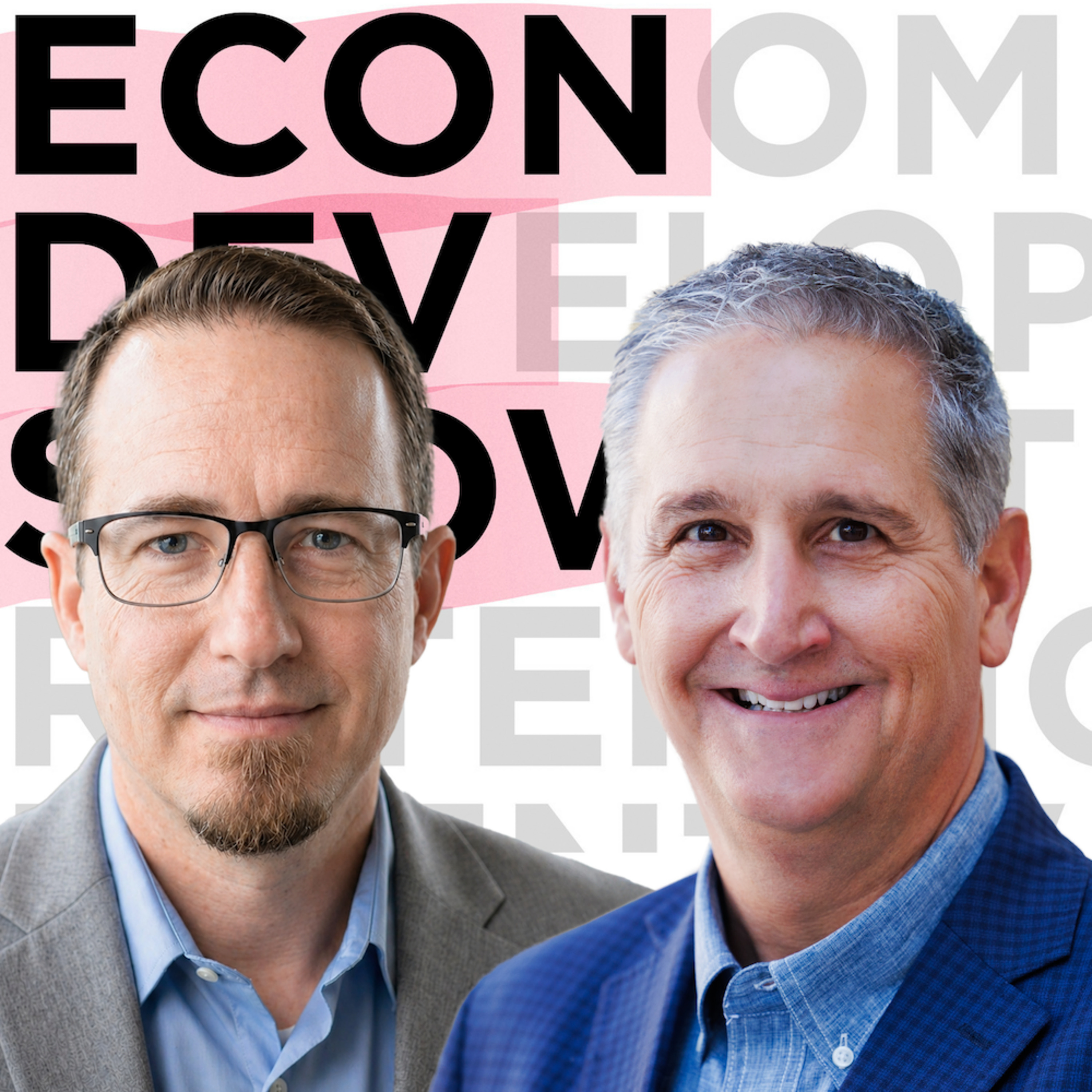
Econ Dev Show Podcast - Economic Development
231: Speed Wins in Economic Development with Mike Swesey
00:27:07
Mike Swesey, president and CEO of the St. Petersburg Area Economic Development Corporation, explains how speed, responsiveness, workforce alignment, authentic relationships, and disciplined targeting are helping St. Pete compete for business investment.
Loading summary
Transcript64 lines
- [00:02]
A
Welcome to the Econ Dev show. We explore the strategies, ideas and insights that are driving economic development forward into the future. You'll hear new insights from passionate EDs about their successes and struggles. And you'll learn from attraction and retention experts about how to apply actionable strategies inside your edo. We'll help take your organization, your community and and your career to the next level. Here's your host, Dane Carlson.
- [00:34]
B
Welcome back to the econ Dev Show. Today we're here with Mike Swayze. He is the president and CEO of the St. Petersburg area Economic Development Corporation in Florida. Mike, welcome to the show.
- [00:45]
C
Thanks for having me, Dan. I appreciate it.
- [00:47]
B
Absolutely. So for our listeners who don't know, where is St. Petersburg?
- [00:52]
C
St. Petersburg, Florida is in the Tampa Bay area. We are the west side of Tampa Bay. We're a peninsula on a peninsula. If you think about it, we are a population of about 265,000 in our city. And then the Tampa Bay region, we have about three and a half million population.
- [01:09]
B
So you're closer to the ocean than Tampa. So is St. Petersburg, is it a beach sort of destination?
- [01:16]
C
It's both a beach and a business destination. So that's part of our efforts at St. Petersburg economic development is to elevate the awareness of St. Pete as a destination for businesses. We have three Fortune 500 companies headquartered over here. I'm looking towards the beach, which is eight miles from downtown. So we have a vibrant downtown, a very populated downtown, walkable, and it's also on the water. So our downtown is on Tampa Bay. And then when you get to the west side of St. Pete, the beaches, that's the goal over there. So literally about eight miles from downtown.
- [01:50]
B
Ch. And you mentioned, what'd you say, three Fortune 500 companies, their headquarters, correct?
- [01:56]
C
Yep, we do. I mean, we recruited footlocker a couple years ago, would have been in the fourth, and they were purchased by Dick's Sporting Goods. And so that project changed and so we, I guess we lost the opportunity to have another one.
- [02:09]
B
So how do you describe the business community that's sort of emerging there?
- [02:15]
C
So we, we have a. We're, we're highly financial services.
- [02:18]
A
We have.
- [02:19]
C
Raymond James is headquartered here. They started in St. Pete. We have multiple financial service companies here. We recruited webull, Webull from Manhattan, from Wall street to move here. And they are growing their technology platform based around trading, financial services and stock trading. We're seeing a lot of fintech, so we're seeing a lot of tech growth in general in the region and in St. Pete, a lot of it's around financial services as well.
- [02:48]
B
And why do you think that is? What's the draw?
- [02:51]
C
Well, I think it's the workforce. So when you have a workforce with the knowledge in a certain sector, certain category, then people spin out of companies, they grow out of a company and they start their own company. They have the knowledge and it's easy to recruit employees when you have the workforce. It's easier to recruit employees if they have other options, if it doesn't work out, wherever they land initially, when they come to the region.
- [03:14]
B
Gotcha. So the talent, the industry mix, all those kinds of things go together.
- [03:21]
C
Correct. We're also seeing a lot of growth in marine sciences, maritime sciences and life sciences. And then we have a defense sector that is strong in the region as well. So we've got a nice mix of industry types in the region in addition to, and you mentioned that earlier, in addition to the beaches. So we do. Tampa, the city of Tampa has zero beaches. St. Pete is where all the beaches are. So in Clearwater. So when you see the advertisements with the beautiful beaches, they're all on this side of the region. And we have a thriving destination tourism industry as well. Sure.
- [04:01]
B
So yeah, you've got it all right. Talent, quality of place, industry mix.
- [04:05]
C
So if you think about the best airports in America, Tampa International is consistently ranked top one, two or three airports in, in the country. Pete Clearwater, it's a smaller airport, but it still has commercial service. And between the two airports we have around 165 direct non stop destinations. So that's really it. You know, getting in and out of the market is, is very easy, very, very convenient.
- [04:33]
B
Sure. Is that driven or was the creation of those routes, was it primarily driven by tourism?
- [04:39]
C
There's no doubt about it, especially as it relates to St. Pete Clearwater Airport. That airport, they have a small percentage of business travelers. They have two or three main airlines that come into that airport and that was 100% driven on tourism. However, their fastest growing segment of ridership is the business destination, business riders as well. Now Tampa International on the other hand, that's, you know, I would say that was a combination of tourism destination and then, you know, business destination. I don't know mix, I don't know the mix over there, but I would say it's probably 60 plus percent business traveler. Wow.
- [05:19]
B
So tell me about the organization, the St. Petersburg area edc. What's its mission and how has it evolved as the city has grown?
- [05:27]
C
We are, we're, we're a young organization. So we have been around we're starting our 10th year and it grew out of an effort with the city of St. Petersburg and the St. Petersburg Chamber of Commerce. And they took a look at what were we lacking, what we're missing in the market. How are we going to elevate the awareness of a business destination to the world? And kept coming back to, hey, you. There's nobody sending the mess. So we started in the chamber for a couple of years just to get started. And the organization started to grow after that. And our mission is to educate business decision makers and business influencers, site selection consultants, on the, you know, the awareness of St. Pete as a location for business and not just to just come to Tampa and stay on the Tampa side, which, which. Which is happening and it still happens to this day. But we've definitely elevated our brand awareness. We have a tagline and we have a new brand with two or three years ago, we came up with a new brand identity. It's called Become St. Pete. We want companies to come to St. Pete and we want them to buy into the special place that we have here and we want them to become Saint Pete. So we're just calling it out. That's what we want you to do. You can't keep companies out, but you can work a little harder on companies that really fit the mold. And I've got some great examples of companies that moved here from other places and have just dove all in and they're just. Yeah. Literally it became same. Yeah. So we have some really cool stories. And I've been here about three years, so I'm the second CEO of the organization. And we were really elevating our game, getting to site selectors, we're getting to CEOs or getting to markets that we need to get to. Some of our recent successes. I mentioned the Footlocker deal. That was huge. We, you know, we put together an incredible package to recruit their headquarters here. It was all in motion. Of course, they were acquired, as I mentioned. So that was. That was a great win for us. And it's still a win because there's a Champs Champs Sporting Goods, which was owned by Foot Locker, which now is part of Dick's Sporting Goods. They've continued to grow here. So we saw a few hundred jobs. We just don't have the corporate headquarter jobs that we wanted. But, you know, really a very exciting project that is starting to grow right now. It's a company called Matic Group, and they're a European. They're headquartered in Paris for France, and they have. They have manufacturing in two or three countries over in Europe, and they have about 14 or 1500 employees. They're an automotive technology company. And they reached out to many EDCs across Florida and in the Southeast, and they said, you were the first to respond. You guys were on top of it. You're ready for us. You're collaborative. You introduced us to the people we need to be introduced to. And they've now made St. Pete their north American headquarters, and their plan is to grow larger than they are in Europe. So that's one of those deals where I like to say if you hit a lot of singles and doubles, you're going to win the game, right? And so it looks like a single right now, and nobody even really knows their name. They probably have five or six employees right now, and they're getting ready to buy a building and start growing here. And so that was super exciting. We actually went over to London and met them over there to kind of close the deal, if you will. So we proved that we wanted them, and they've just become a great success story. A couple of the big names, early, early wins. One is called Dynasty Financial, and they moved from Manhattan as well, and they came to St. Pete with about 40 or 50 employees, and that was three or four years ago. And now they're over 220, and they're filling up space faster than we can build it. So that was a great win. Another company called Ark Invest, which Cathie Wood is an internationally known investor, she again, she was looking for a place to leave New York, and she was looking all up and down Florida, and she actually had a personal connection with Cheryl Penny, the CEO of Dynasty Financial. And he. He basically was our salesperson on that deal. He said, you need to come to St. Pete, check it out. And she did. And sure enough, now they have office space here. They're growing their company here. I mentioned Webull earlier this W E B U L L and they left Wall street and they're now in St. Pete. They bought a building, they moved their world headquarters here. They have two or three hundred employees now, and they're growing. And they're an online trading platform, kind of like a Robinhood. They don't like when I compare them to Robinhood. They like them. Basically, everybody knows that name. And they're growing quickly. So that's a great success story. And then we have another company, and I keep going back to New York. It's kind of been easy picking. Of course, another company called Smart Choice Communications, and they're technically still headquartered in New York and they're in Midtown and they have an operation in Missouri as well. But they chose to come to St. Pete. All of the growth is now in St. Pete. So they basically kept what they had in New York. They knew they needed to grow. It made more sense to grow in Florida for a lot of reasons. And they just absolutely love the environment, love the weather and like you said, we've got the beaches and downtown. We have all the major sporting teams. So we obviously have the Tampa bay rays in St. Pete, we have the Bucs in Tampa, the Lightning in Tampa and we have the Rowdies, the soccer team that they're in St. Pete as well. So we have all the major sports. It's just a great place to do business.
- [10:41]
B
That's phenomenal. You mentioned in your MATIC story that you were the first to respond and the most responsive. What do you think that says about the role of speed in modern economic development?
- [10:53]
C
Companies are making decisions faster and faster. You used to get a request for proposal and you have a week to turn it around, right. And then it was shorter and shorter and now you're getting shortlisted without even knowing it. Right. So you have to have your website, your data has to be working for you 24 7, right. So when they reach out to you, they're ready for the information because you're probably already down to, let's say, five or six sites or whatever the number might be. Well, often it's a site selection consultant, which I call them site eliminators, not site selectors, because they're always trying to get you off the list so that if you can get on the list and you're, you're, you're collaborative, you're responsive, you get them the information, it's thorough, it's accurate, they have a job to do. I think that speed to market is number one now. I mean, obviously you got to make the cut with, you know, the right workforce, the right growth, population growth, the right demographics, all that. But once you have the opportunity, you really have to jump on it, you know, to be there, be as responsive as quickly as possible. I mean, now it's sometimes it's a one or two day turnaround anymore, which is just kind of crazy. So you got to be ready. In fact, on the MATIC deal, our business recruitment manager, she was checking our emails on Sunday and she sent them an email Sunday night and they were floored. They said, oh my gosh, we're, we're getting a response from same.
- [12:04]
B
I'd imagine that involves, you know, local Leaders, county partners, government officials, and, and even you mentioned the trade mission to, to London. How do you make all that collaboration work without slowing the project down?
- [12:17]
C
A lot of that happens either during the site visit, if they do a site visit, or if we go on a trade mission and we happen to have business leaders in a market, we will call on companies, but I wouldn't say it would slow it down. We do have testimonials, obviously, and we'll have some of our success stories that I just mentioned earlier. They become our biggest salespeople and so we'll have them reach out and talk to the company and tell them what their experience was and how it went and without us in the room even. And so I don't think it slows you down. I think it's kind of the, it's the testimonial and the real world experience that our companies have seen when they move here or grow here.
- [12:53]
B
Yeah. You mentioned the person from Dynasty Financial being your chief salesperson, right? That's absolutely the case. Talk to me about recruiting from New York City. You said it was sort of easy pickings.
- [13:07]
C
So we target companies that are in, you know, some of our targeted industries and that really aligned with the workforce. I keep going back to workforce because I think that's, you know, number one, if a company comes to your community, they can't get the right workforce. What they need, they're not going to be successful. We want happy customers. So we're going after companies that we think will be, will be successful here. So we target companies that are certain size that, you know, there's certain tools to tell you whether companies are growing or not and whether it would make sense to be in your region and if they would even consider your region. So we do some specific targeting of companies and then we take a look at when leases are expiring. Right. I mean, we all have information now on leases expiring and we know their cost of doing business versus our cost of doing business. And one example I mentioned to you, the company Smart Choice Communications, you know, they just kept what they have in New York. They want the New York address. You know, they need access to, you know, the country, in the world, et cetera. But as they grow, you know, they're going to keep their 50 people there and they're going to grow like crazy down here. So I mean, that's fine with us too. We don't just go after complete moves and headquarter moves. As you know, those aren't as often, don't happen as often as you think. But we'll go up there. We'll usually go around a trip, whether it's conference or a trade mission, putting on as a region or as a community. And then we have some of our success stories line us up with companies that they think would be interested in making the move as well. And so we just play off of that. We're doing the same thing this year in Toronto. We've had a lot of success stories coming out of Canada. And so we're going to go to Canada, we're going to put on a half a day seminar, we're going to bring the people you would need to know to make the move to Florida, in this case to the United States. And then some more success stories that come and close the sale for us, if you will. And New York's easy flight, New York's a two hour flight. So we're up and down and same time zone. So that's a, that's another advantage we have east coast companies, we really have the, one of the best international time zones we can, we can get the European Day all over the United States. And people are, are very comfortable doing business in the eastern time zones. So when you, when you look at moving companies around the country, things like that factor in and especially if they're leaving employees in one place or another. So a company from California, you know, it's a three hour time difference for us. So we, we do see some of that, but it's just an easier, easier sell.
- [15:38]
B
But not every project is a success. What's a lesson you've learned from a challenge or missed opportunity that made you better?
- [15:44]
C
Well, I would say, and this goes, this, this doesn't, this, this goes back to my time in my previous job and not, not in St. Pete. But it was a lesson I'll never forget. I received a phone call and it just sounded kind of shady. And the guy said, hey, we're literally. It was a phone call, wasn't even email. And he said, we're looking to build a data center in the Midwest and I get some information on utility rates, et cetera, et cetera. And he said, call me back. So I called the guy back and it wasn't a business answer. It was like, hello. And I said, hey, I'm calling for Mike Angelo, which was kind of funny. And the guy's like, hey Mike, you know, so I'm like, okay, this has gotta be fake, you know, so I pass it on to one of my partners and I said, you know, call, call these people back. And See what they need. It ended up being Google. And so you have to take them all seriously. Council Bluffs and all. Got it. But the moral of that story is you have to take them all seriously. Right. I mean, we get a lot of calls and if you don't take one of them serious, you just never know. And said, hey, work with us. So we just started doing a little research. I'm like, okay, you know, they're real and all that. Something locked us into them and said, this company wants to grow in the United States and, and, and they have huge upside. So I would say just you have to take them all seriously.
- [17:02]
B
That's good advice. We all get those calls and we think, what, what is this? This, there's no way this is real. There's no way that this will work.
- [17:09]
C
Right. I almost felt it end up being a real project.
- [17:11]
B
Oh my goodness. What's a St. Pete win or initiative that may not get the headlines, but that you think is deeply important to the community's long term economic health?
- [17:21]
C
Yeah, I mean, I think we do get the headlines on this, but the quality of life is just unmatched. I mentioned the professional sports teams. We have 250 miles of shoreline and most of it has been protected from development. So we have these amazing parks along the water and so you can go jogging and see dolphin. Right. Playing any day. The quality of life, the different arts is, is amazing. Like I said, access, vibrancy. I think maybe people don't realize how vibrant St. Petersburg is. At one point, St. Pete was, was literally a retirement community. A retirement community about, let's say 20, 30 years ago started to change and our average age dropped 20 years. In 20 years, we went from about 64 as our average age of 44. And our highest growing demographic is the 25 to 40 right now. But when you look at the workforce, 25 to 60 years old is 80% of the population. So I think there's a misperception. I know there's a misperception that we are older, sleepier town. And it just couldn't be further from the truth.
- [18:37]
B
So before St. Pete, you were, as you mentioned, in Iowa. Yeah. You were there for I think quite a while. Right.
- [18:44]
C
So it was called the Greater Des Moines Partnership and actually helped start that organization. That organization really kicked off in about 1999. We started grow 2000. Basically took three or four groups and combined them into one organization, put a corporate umbrella over it, rebranded the community. We had been stagnant for a long time and really started to see the Growth happen about the same time St. Pete started growing, honestly. So there's a lot of similarities between where I came from and where I'm at. Des Moines is a big insurance town. St. Pete's a big financial services town. A lot of tech happening in both cities of growing tech, growing population, and growing young population. But I was there for about 24 years. Sure.
- [19:27]
B
And so how did you make your way into economic development?
- [19:32]
C
It's kind of a, you know, a lot of. Back when I was in college, it wasn't even really a degree, right. And so my degree is in city, city planning. And so I remember getting out of college and like, oh, I guess I'm gonna work for the city, whatever. You know, I'm playing subdivisions and whatever else. And I had. There was a small community, a small suburb in Des Moines, and they had a chamber of commerce and they needed somebody to run the chamber of commerce and start an economic development, Economic development Corporation. I was 24 years old. I didn't know what the hell that even meant, right. I'm like, well, I know what a chamber is. So I went down there and I was like, this is, this is pretty cool work. You know, we're, we're, we're working on securing land, getting it ready for development. I just thought it was really interesting. And then my second job was with the state economic development group and kind of underwriting deals and all that kind of thing and more financial services. And then the marketing side of it came open, and that's where it happens. So I got into marketing up there. And then with the new group in Des Moines being put together, they were just kind of hand picking who they wanted to start that team, and I was lucky enough to get the call.
- [20:41]
B
So what leadership habits have stayed with you across different communities and organizations?
- [20:46]
C
I really pride myself on being authentic and real. I mean, I think that's, you know, everybody wants to feel appreciated and, and, and they want to know what you're thinking and, and no hidden agendas type of thing. And I like to cliche, but I like to make sure, you know, I leave a place better than I found it, at least in, in some way. And I, I want people to, you know, trust. I think trust is a big deal. I've been very fortunate. Many of them I've really loved working for. I try to pick the best out of each leader that I've worked for and try to mold that into my decision making.
- [21:21]
B
What advice would you give to a younger economic developer who wants to be known as responsive, trusted, and Effective?
- [21:29]
C
Yeah. I mean, you have to be professional, you have to know your product. People can see through it if you're faking it. And you know, there's not saying fake it till you make it. But you can't fake it. When companies are asking direct questions and often they already are consultants or companies, often they already know the answer. Right. I would say don't be too aggressive on, on trying to get the deal. If the deal doesn't work for your community, it's got to work for your community. I mentioned earlier we need happy customers. You don't want a company to land and two or three years later they said we were sold a bill of goods because we were told we could get the workforce at X and we can't. And now we're not happy. And so I would say you got to keep your eye on the ball as to try to think through what's important for a company making a decision and the person who's really, their reputation is on the line when they go to the exec, to the board and executive board and say, hey, I think we should move this company the same and you know they're going to live with that for a long time. Make sure that you know your product and make sure that who you're going after product fits what they need.
- [22:30]
B
Yeah. Don't oversell.
- [22:31]
C
I mean, there's a saying, right? Let the game come to you. And sometimes that has to happen. I mean, you have to be aggressive and you have to be responsive, but at some point you don't want to be annoying either. Right. So you have to let, sometimes let the game come to you a little bit.
- [22:45]
B
And you also mentioned sort of deeply understanding. What does that look like in practice for you?
- [22:51]
C
I mean, know your market. I mean, so you need to know what your workforce is. You know, you need to know what you're strong in. How many, how many college students do you have? How many graduates a year do you have? What's, what's the percentage of growth and who's moving there. So you know, if everybody moving to your communities retirement age, well, that's not good for business. Right. So you have to, you have to know those things. Obviously. You have to know, you know, the educational systems and what are we working, we don't, what are we training the, the next generation to do it and are we training them in the right areas? And if not, we need to get to the colleges and say here's what we need or the high schools for that matter.
- [23:30]
B
Excellent advice. Whether somebody's young or old in economic development, that I think that is excellent advice.
- [23:37]
C
You know, we get a lot, we have a lot of pressure to get wins. Right. And so economic development's a long game. And what have you done for me lately? Happens a lot. And so sometimes as economic developers, especially the leaders, you know, there's a lot of pressure on us to, to, to close the deal. Really, there's factors outside of what we can control that closes the deal as well. So, yeah, I just wouldn't sell out for, for a win solid.
- [24:03]
B
And how do you manage that relationship with, you know, your board and the leadership when, you know, like you said, there's this pressure to close the deals.
- [24:12]
C
There, there's definitely as, as a CEO or as a leader in an organization, there's definitely called board management. So we need to communicate. The board has to know what you're doing. Always say if people aren't communicating, person on the other end is, they're going to start making it right. And so they don't understand what you're doing. So let's just say you have a digital marketing strategy that you're deploying and let's say you haven't had as many wins as you wanted last year or even so far this year for them or whatever it might be. However, you're doing all the right things to get in front of decision makers. But if your board doesn't know that, then they don't know that.
- [24:49]
A
Right.
- [24:49]
C
So like, hey, we're not seeing any site visits, we're not seeing any new announcements. Why is that? And if you have, if they have to ask you, it's almost maybe too late. So communication is everything with your board and your leaders. Yeah, I think, and I'd say in our case, we have some public money, but 85% of our funds come from the private sector. And so, you know, they're CEOs, market leaders, whatever they are their organizations and they expect you to deliver what they need to hear and not waste their time, basically.
- [25:22]
B
Well, Mike, this has been excellent. If any of our listeners want to learn more about St. Petersburg, what's a website they should go to?
- [25:29]
C
Become St. Pete.com. call it right out. Become St. Pete.com. we got great. We revamped our website three years ago. We're getting ready to refresh it again. We're building tools into it so you can do your own analysis before you call us or email us. But we'd love to have, we'd love to have them visit and, and come on down and visit as well. Visit the website and they come and see this beautiful piece of the United States. It's just an awesome area.
- [25:58]
B
I would encourage our listeners to do that. It sounds like an awesome place. I should go to St. Pete. That sounds fun.
- [26:04]
C
Yeah, you should. I'm telling you, an interesting fact is we average 361 days of sunshine. Wow. And we hold the Guinness Book of World Records for the most days of sunshine, which was like two years. And we have zero snow days.
- [26:18]
B
Right.
- [26:19]
C
Zero snow days from where I came from. That's a big deal.
- [26:22]
B
If any of our listeners want to reach out to you, how should they do that?
- [26:25]
C
It's my. My name, m.swayze.m s W-E-S-E-Y comsaintpete.com or obviously you click on the website and you'll see my ugly mug there and you can click on that. Get a hold of me.
- [26:37]
B
Mike, this has been awesome. Thank you so much for coming on the show today and sharing all your wisdom.
- [26:42]
C
Yeah, I appreciate it. I really appreciate your time, Dane. And thank you for having me.
- [26:47]
A
You've been listening to the Econ Dev show with Dane Carlson. If you're an economic developer who never stops learning, for more expert strategies, fresh insights and new ideas to take your career, organization and your community to the next level, visit us on the web@econdevshow.com.