Loading summary
Transcript56 lines
- [00:04]
Jason Palmer
The economist. Hello and welcome to the Intelligence from the Economist. I'm Jason Palmer. Today on the show, the Canadian bridge caught in a Trumpian trade tantrum and a tribute to junk art genius Betye Saar. First up though,
- [00:43]
Hafiz Ibrahim
This hospital had almost 1,000 beds. A lot of services, a lot of doctors, working nurses, Patients were giving good services, health services.
- [00:51]
Tom Gardner
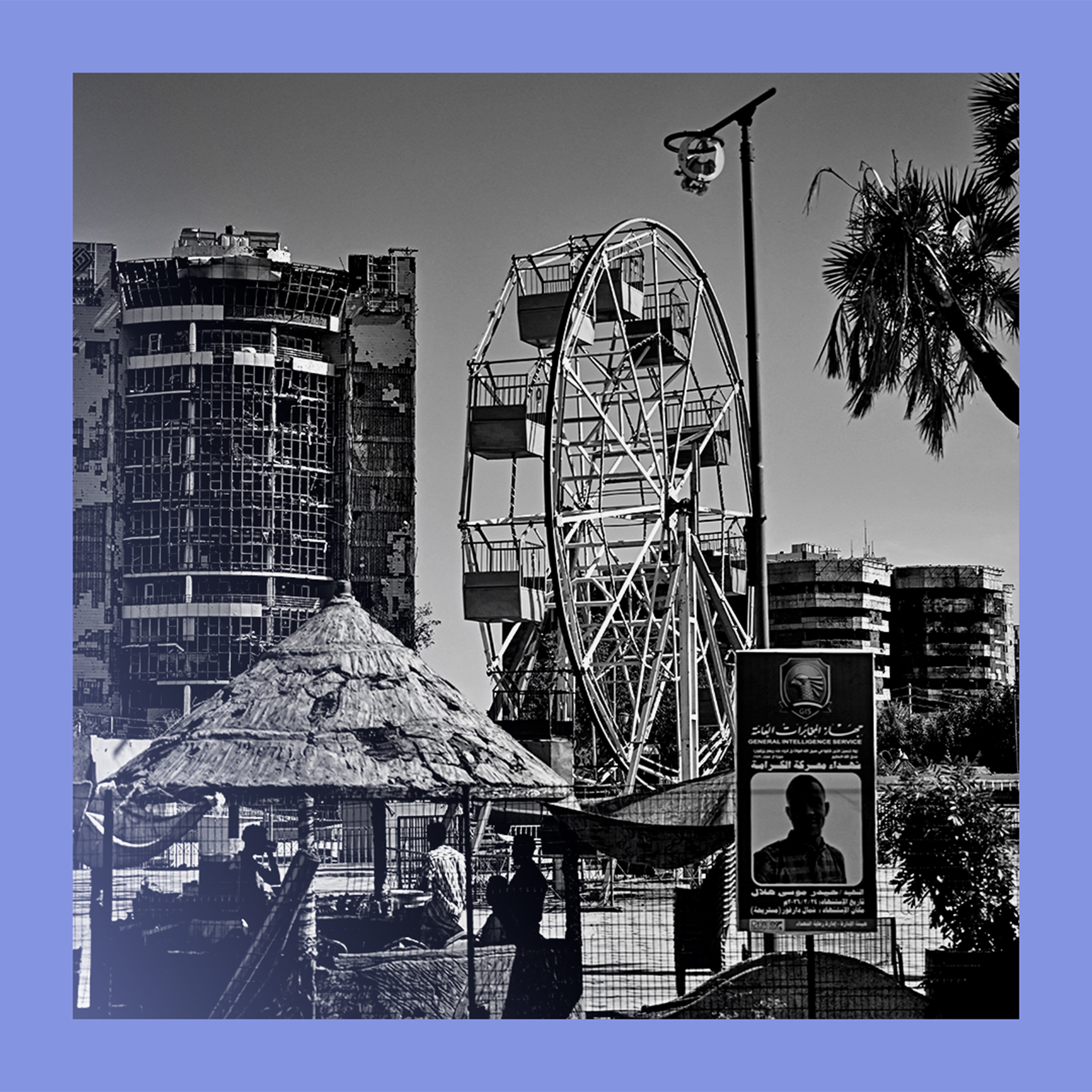
Before the war in Sudan, there was some semblance of a working healthcare system. But the war has changed everything.
- [00:58]
Jason Palmer
Tom Gardner is an Africa correspondent for the Economist.
- [01:01]
Tom Gardner
Hafiz Ibrahim is an engineer rebuilding the hospital which is no longer functional.
- [01:06]
Hafiz Ibrahim
They were stationed here, the RSF members, they were stationed here in the hospital and basically they were attacking the army and the army was attacking them back. So as a result, we have this southern wing completely destroyed by the mage, by the airplane, and we have a lot of holes here and there.
- [01:24]
Tom Gardner
I mean, it's incredible.
- [01:25]
Hafiz Ibrahim
Yeah, Everywhere, it's everywhere.
- [01:27]
Tom Gardner
You can see bullets, bullets, these bullets.
- [01:30]
Hafiz Ibrahim
All day long, these bullets. Even the mosque got its share from these bullets.
- [01:36]
Tom Gardner
Sudan's latest civil war is now more than three years old, but it's continuously overshadowed by other conflicts in the Middle east and Ukraine. But it's the world's worst humanitarian crisis with millions of people displaced and possibly hundreds of thousands of people killed. The National AR army retook the capital last year and they're keen to project a confidence that they'll recapture the country soon, but that seems unlikely. Violence continues elsewhere and in places it's intensifying now.
- [02:05]
Jason Palmer
Tom, you went to Sudan to report this story. Tell us what it's like on the ground there today.
- [02:10]
Tom Gardner
Well, Khartoum, the capital, is a ruin. It feels like a ghost city. You arrive there and the first thing that hits you is just how quiet it is, how empty the streets are, how pitch black they are at night. Last year the national army liberated it from the rapid support forces. So in theory, things are going back to normal. In some respects they have. I mean, the violence there is obviously ended more or less. And the most striking thing is just how vast areas, including the historic center of the city, around the presidential palace, the airport, it's just completely devastated. Still. The buildings are still mostly standing because it wasn't carpet bombed. But if you look closely, everything has been removed, looted methodically. In some parts of the city, the richer parts, barely anyone has returned simply because there are no services. It's still not entirely safe. But in poorer neighborhoods, there is a bit more life. Some people are returning, people like 29 year old Mohammed Anwar. He fled with his family his two aging parents early in the war and came back to Khartoum a couple of months ago. He found his house had been damaged by shelling, but most importantly, his clothes, his furniture, refrigerator, even the electrical wiring in his house, Everything had been stolen. Well, most things are replaceable, I guess,
- [03:43]
Hafiz Ibrahim
you know, but I lost some things
- [03:45]
Tom Gardner
I can never replace, like my. My two laptops, my hard disk, which has memories of me since, you know, since I was born.
- [03:54]
Jason Palmer
Every image, every video, every memory I
- [03:58]
Tom Gardner
have, I lost it. Mohammed was one of many people I spoke to who'd recently returned. I mean, some of them had to leave because they had no work or they'd exhausted their savings, the goodwill of their relatives. So they had no choice but to come back to Khartoum.
- [04:16]
Jason Palmer
Now, we've spoken quite a lot on the show about this conflict. What is the state of it now between these two sets of forces?
- [04:22]
Tom Gardner
The Sudanese armed forces certainly feels it has the upper hand now. It controls, along with Khartoum, the east of the country, the north of the country. But the rapids support forces, this rich and well connected paramilitary group, it still controls much of the west of the country, in particular Darfur, its home base. And crucially, all evidence points to the fact that they continue to enjoy significant backing from the United Arab Emirates. I should say the UAE emphatically denies this. The army, by contrast, has support from Saudi Arabia, Egypt, Turkey in particular. And I think the crucial point and one of the reasons why this war has gone on as long as it has, is that none of these backers are likely to let their partners on the ground in Sudan to lose our right.
- [05:18]
Jason Palmer
So you said that some piece had returned to Khartoum. What about the rest of the country? What does the fighting look like now, really?
- [05:24]
Tom Gardner
No part of the country is entirely safe. That's because both sides have significant armories of drones, and the drone war is now all over the country. So actually, in the course of my time in Sudan, I saw a huge number of buildings which had been destroyed by drones. Civilian infrastructure, hospitals, markets, gas stations. No part of the country is entirely safe from the war. But the real hotspot, I would say, is a place called El Obeid in a state called North Kordofan. And that place has been under a sustained aerial assault by the rapid support forces for several months. Many are very afraid that there could be a looming massacre if the rapid support forces manages to take control of the city, which, if they did, would certainly be a significant turning point. It would mean that the rapid support forces have the opportunity or potential to attack Khartoum from the west once again. It would also connect Kordofan up with their home base in the west of the country, in Darfur. So it would be a very significant thing and a symbolically very important loss for the army were to fall to the rapid support forces in the coming weeks.
- [06:44]
Jason Palmer
And while all this is going on, you said that millions of people had been displaced. Where. Where are they? How are they?
- [06:50]
Tom Gardner
Yeah, so millions have left the country, fled to neighboring countries like Chad or Egypt or South Sudan. But the majority are actually internally displaced. Many of them are living in IDP camps, which are really, really basic, incredibly bad conditions. Very little food, very little healthcare, very little water. These are the places where the humanitarian crisis in Sudan is most visible and most acute. I met a woman called Raja in one of these camps. She'd recently fled El Obeid. She told me that shelling would happen two, three times a day even. But the drones, she says, always struck in the evening time. And if you didn't get to food distribution sites before the drone strikes began, you'd be left without food until the next day.
- [07:42]
Jason Palmer
Coming back to the international dimension of this, and I'm sure that the drones are a part of it, these foreign backers that won't back down, what is their interest here? Why. Why are they so involved?
- [07:53]
Tom Gardner
They all see Sudan as strategically important in terms of its resources, security along the Red Sea. Remember, Sudan has 800 km or so of Red Sea coastline. That's along one of the world's most contested and vital waterways. Sudan has huge gold reserves. It has vast tracks of arable land. All of these countries see their own future economic and security interests in Sudan. And as a result, they're determined not to lose out by seeing their. The side that they've backed from losing. So more recently, for example, the string of successes that the armies enjoyed on the battlefield, I think those are very much the result of recent supplies of weapons, including drones from Turkey. I think there is every reason to believe that the UAE will continue to back the RSF to prevent it from collapsing, because they don't want a future at Sudan where they have no influence or where they do not have a stake in some of its resources.
- [09:04]
Jason Palmer
Does that suggest to you, though, that it is those very foreign powers who might be able to point towards a peace, towards a settlement of some kind, since they are already so involved?
- [09:13]
Tom Gardner
Yes, and that's pretty much the premise of what's called the quad. That's four countries led by America, so Egypt, Saudi Arabia, and the uae, which have been brought together for the purposes of trying to establish some sort of agreed political future, political settlement for Sudan. The idea is that once those countries can come to some sort of agreement, then the next step will be to get their partners on the ground to agree to a ceasefire and eventually some sort of political settlement about how Sudan will be governed.
- [09:48]
Jason Palmer
Okay, so that's a framework. It doesn't sound simple, but it does sound plausible, I guess. What are the roadblocks?
- [09:55]
Tom Gardner
This is complicated by a number of things. The war in Iran has been a drag on attention. It's complicated the entire regional picture. It's also intensified the importance even more of the Red Sea given the closure of the Strait of Hormuz. So in that respect, it may be that these powers are just too invested to give up anything, to cede any ground. And then there's the problem that even if they were able to achieve some kind of breakthrough diplomatically in the coming weeks or months, any peace deal or any ceasefire will be extremely hard to implement and enforce, precisely because the Rapid Support Forces and the SAF are not these monolithic blocks with clear commander control. As the war has dragged on, they have become increasingly fractious, unruly coalitions. The army contains, you know, Islamists from the pre war regime as well as rebels from Darfur that they'd once fought against. The Rapid Support Forces is made up of, you know, contains mercenaries from across Africa and even as far away as Colombia. So any, even interim peace agreement will be very, very tricky both to forge and to implement.
- [11:14]
Jason Palmer
Tom, thanks very much for joining us.
- [11:16]
Tom Gardner
Thank you. Jason.
- [11:32]
Jason Palmer
Little plug here for the Economist Insider, our video series that takes you behind the scenes of our newsroom. If you're a digital subscriber, Insider is already included in your subscription. And if you're listening for free, you can watch extended clips via the link in the show. Notes this week, Zanny Minton Beddoes, our editor in chief, and Edward Carr, our deputy editor, are joined by our China experts to explore how China and America differ when it comes to deploying AI. In the past few weeks, Chinese labs have released AI models that almost match America's most advanced, advanced ones. How is the technology reshaping China's workforce and economy? And crucially, will China pull ahead in the AI race?
- [12:20]
Annie Crabill
Just me and a van, my guy and a motorbike. In late July, I was proudly among the first drivers to cross the Gordie Howe Bridge. This is a really beautiful cable stayed bridge connecting Detroit, Michigan on the US side with Windsor, Ontario in Canada.
- [12:46]
Jason Palmer
Annie Crabill is a senior digital editor at the Economist.
- [12:51]
Annie Crabill
It was a big deal that it finally opened because the bridge has been in the works for over 14 years. It was meant to symbolize cross border cooperation, but it has become a symbol of the growing tensions between the two countries. It's named after an ice hockey legend, Gordie Howe.
- [13:13]
Jason Palmer
Howe shoots, he scores.
- [13:15]
Annie Crabill
Gordie Howe, a Canadian who played 25 seasons with the Detroit Red Wings, and he was no stranger to dropping the gloves. Gordie Howe is coming over to the penalty box, which is sort of fitting because there was a big fight over this bridge.
- [13:38]
Jason Palmer
So why does this bridge exist? Why do we need another bridge in that general part of the world?
- [13:42]
Annie Crabill
Basically, this bridge is a really good idea for both countries. The current situation is that this is one of the busiest border crossings between Canada and America. It does about $94 billion in trade over the course of a year. And the current setup is that there's really only one bridge that trucks can drive over, which is, you know, primarily how the shipping works between these countries. It's called the Ambassador Bridge. It's privately owned, it charges high tolls, and it doesn't actually integrate the highway system. So you get deposited on the Canada side, not directly on the highway. So a lot of businesses, when they learned that this new Gordie Howe Bridge was going to open, were extremely excited. I spoke with one trucking company owner. It's called the McLaren Transport Company. And this company actually set up shop five years ago close to the Gordie Howe Bridge, which was then under construction precisely because of all the benefits that it expected to get.
- [14:51]
Tom Gardner
We see the savings already. It's only been almost an hour. And in this industry, every dollar counts. Yeah, driver idling time, the little fuel, the wear and tear on the truck, the drivers are happy, like, hey, I could get home three hours early.
- [15:07]
Annie Crabill
I'm like, hey, McLaren Transport works primarily with the big three automakers in Detroit. And when you're building a car, remember, parts are going back and forth between Canada and America multiple times, six to eight times, according to Mark Carney, Canada's prime minister. So these shipping costs really compound.
- [15:27]
Jason Palmer
Okay, so that's a pretty good case for it. But you say we're in the middle of a fight about it. What's the fight?
- [15:33]
Annie Crabill
As is often the case with Donald Trump, it's hard to pin it down exactly. But in February of this year, suddenly he attacked this bridge on Truth Social, threatened to block it, and said Canada needed to give Americans a bigger ownership stake in it. And also change some of their trade practices. So this bridge seems like a casualty in this bigger trade war that Trump has been waging, and he succeeded in delaying opening this bridge by months. One of the hangups was over its financing. So Canada basically paid for this bridge. It fronted the $6 billion Canadian that it cost to fund the construction. And the plan was that it would recoup the costs with tolls. You know, this could take decades until it was paid back, and only after that, Canada and Michigan would split the profits. And Trump called that unfair. Their leadership, from Trudeau to the current
- [16:30]
Tom Gardner
leadership, I mean, in all fairness to them, they need us to survive.
- [16:35]
Annie Crabill
Then in mid July, the countries announced that they had struck a new agreement. In principle, what Trump basically claimed was a new deal. It would create this American fund where Canada would give 50% of the net profits. So that means the tolls minus these undefined operating costs over 15 years. So that's a shorter time period. But in reality, any profits will take years to materialize. So it's not actually clear what Trump gained other than holding up the project and making Canada look like they were renegotiating. Then Trump added an insult to injury. He reignited his trade war in July, and he announced that new 50% tariffs would be imposed on a bunch of Canadian goods starting in August. So then Canadians uninvited the Americans from the bridge opening ceremony on July 24, and the Canadian Minister for Housing and Infrastructure, Gregor Robertson, had to address the absence.
- [17:40]
Tom Gardner
Given the back and forth between our levels of government, we thought it's more appropriate for us to focus on celebrating
- [17:46]
Jason Palmer
here in Canada today, which for Canadians fits in the category of sick burn. What does all this mean for the Canadian American relationship, do you reckon?
- [17:55]
Annie Crabill
This really should have been a case study in mutual benefit, a win for both sides. So, back in 2013, when this deal finally went through, Michigan's Republican governor at the time, Rick Snyder, really summed it up. He said, this is one of those situations where you should just be happy, but the happiness is a bit dampened now, considering all of this back and forth.
- [18:18]
Jason Palmer
And as you say, it's not entirely clear what the back and forth is about or for or will gain in the long run.
- [18:24]
Annie Crabill
Yeah, exactly. Trump loves to pick fights. This one seems particularly not worthwhile. But this bridge, it's really a battle in a bigger war, which is the trade dispute. So the countries are still negotiating a new trade deal. Trump may have thought he found a pressure point in this bridge, but actually, Mark Carney might not be more inclined to accept the President's terms on trade. As a result of all of this, Canadians are really unhappy with the way they've been bullied by America, and they are pushing for Carney to take an elbows up approach in that they are inspired by Gordie Howe himself. Fighting elbows up was his signature tactic.
- [19:13]
Jason Palmer
Annie, thanks very much for your time.
- [19:15]
Annie Crabill
Thank you very much for having me. Jason.
- [19:26]
Ann Ro
When Betisa went walking among market stalls, fleabark hits or yard sales, objects spoke to her.
- [19:36]
Jason Palmer
Ann Ro is the Economist's obituaries editor.
- [19:39]
Ann Ro
It might be a chipped ceramic of a cat or a bundle of postcards, a rusty dagger or a broken necklace. They all seemed to her to carry the energy of their previous owners. They were all still not quite alive, but they were certainly not dead. They'd been thrown away, but they were now asking her to make something of them. They would tell her, you can do something with us. You can make art with us. And so she did. She became almost the most famous assemblage artist in America in the middle of the 20th century. She had always been that way, growing up in Watts, which was then a separate district from Los Angeles. She would look in the garden, scrabble about in the yard to see if she could find beads or coins or shells, anything she could keep as a treasure and make into something else. Another thing that was an influence in childhood was that the Watts Towers were then being built. She would go with her grandmother to see these extraordinary constructions of concrete and piping that was stuck all over with broken plates and tiles and so on, just rising in the middle of Watts and all the work of one man, Simon Rodier. She was amazed that he could make something beautiful out of what other people considered simply junk and had thrown away. Certain objects, though, came to speak very loudly to her. They were things like lengths of rope or models of old, three master ships or chains or birdcages. These all, for her, carried connotations of slavery. As a black woman herself, she could feel the weight of history in them, and she began to incorporate them more and more into pieces of art. She would put them together, and that became her comment on slavery. She became most famous, though, for recreating the image of the black mammy. This was the figure of the black servant, usually plump and smiling, dressed in an apron and a kerchief and with a broom, who cleaned white folks houses and cared for their children. All through the 20th century, until about the 1960s or so, she could find these representations of black mammies all over the place. When she looked in flea markets and so on, and so she consciously began to collect them. And there was one in particular called Aunt Jemima, which showed again the mammy with her broom. And in 1968, Betye Sar seized on this figurine. It was a notebook holder. And she gave the mammy, who was holding a broom in one hand, a rifle in the other hand. Under her broom holding arm, she tucked a hand grenade. And then she worked over the face so that this mammy was was no longer smiling broadly and happily, but looked terrifying. On the front of her apron there was a picture of a mammy dandling a white child, but this was almost obliterated by a black power fist. So this was truly, as she called it, the Liberation of Aunt Jemima. This piece touched a national nerve and it made her feel that she was an artist at last. She had done design at college, mostly because black students were not allowed to do pure art in those days. But she had taught herself printmaking, enameling, watercoloring, and become extremely proficient at all of them. And as if to confirm her feeling of having arrived, in 1974, the National Endowment for the Arts gave her a scholarship and a grant. She had arrived. She carried on with her theme of black slavery for decades. She was even touched herself by this feeling of a life that was restricted. One of her earliest pieces was called Black, and it featured herself looking out with her hands pressed to the glass, as if she couldn't escape. She had astrological signs, stars, the moon and her sign of Leo up in the panels of the window above her, as if something other than herself was determining her life. What was her fate? What was her destiny as a black woman? Even though she felt she was a member of the black bourgeoisie, even though she was relatively light skinned, she still felt that she was the victim of fate and destiny. And a large part of that was what black people had been through in America. Right into her 90s, she continued working, and her very last pieces, or some of them, were huge, immersive experiences that were based on canoes. One of them was a canoe that carried pleading black hands. Another was a canoe that carried bird cages on its seats. And these were filled with branches and stones to symbolize nature. One was a pleasure, one fleeting canoe, the other a soothing canoe. And they meant for her the journey from one place to another, or from one lower state of consciousness to another. And this was how she saw her work. She went on doing it right to the end, preferably in silence. But all around her, she could still hear not only the ambient sounds of of Laurel Canyon, where she lived and had lived for decades. She also couldn't help feeling that the objects stacked so neatly all around her studio were actually talking to her, begging her once again to give them life.
- [26:36]
Jason Palmer
Anne Row on Betty Sar, who's died aged 99. That's all for this episode of the Intelligence. The show's editors are Chris Impey and Jack Gill. Our deputy editor is Sarah Larnyuk and our sound designer is Will Rowe, with Mark Burrows standing in. This week, our senior producers are Henrietta McFarlane and Alize Jean Baptiste. Our senior creative producer is William Warren and our senior development producer is Rory Galloway. Our producer is Anne Hanna and assistant producer Kunal Patel. With extra production help this week from Emily Elias, Peter Grenett and Sarah Treenor. We'll all see you back here tomorrow for the weekend. Intelligence. This week we pay serious attention to attention. Isn't yours divided? I know mine is. And it's not just some passive side effect of this crazy fast moving world. It's and attention economy. Me and you, we're the resource that's being strip mined day in and day out. It's not a new problem of technology. The reverie of medieval monks was threatened by newfangled books. We dive into the serious study of what attention is, how we've been forced into giving it away, and meet a group of, let's call them attention radicals, claiming back what was once all ours.