Loading summary
Transcript81 lines
- [00:00]
AAA Advertiser
Why get aaa? Because bad roads, bad tires and bad luck out of gas, locked out or in a ditch stuff happens with 247 roadside assistance AAA's got your back no matter whose car you're in. Join today@aaa.com AAA expect something more. Roadside assistance is provided by independent facilities contracted by aaa. Coverage in taxis, limousines and other ride sharing conveyances is excluded. 2024 AAA US markets rack national surveys offers terms, conditions and policies are subject to change without notice. Visit AAA.com for details. This intelligence podcast is sponsored by Back Market, the leading global marketplace for refurbished tech. When the kids need phones, laptops or tablets for school, buying refurbished tech makes sense for families trying to save money without sacrificing quality. At backmarket tech costs up to 50% less compared to new. All devices have been professionally refurbished and come with a 1 year warranty and 30 day return policy. Start saving money. Visit backmarket.com or the back Market app to shop now.
- [01:06]
Hugo Jai
The economist.
- [01:12]
Rosie Blore
Hello and welcome to the Intelligence from the Economist. I'm Rosie Blore. Today on the show, can Syria be rebuilt after years of strife? And how street markets have changed New York. But first,
- [01:48]
Andy Burnham
Thank you so much. Friends, what a moment and what backing you've given me.
- [01:57]
Rosie Blore
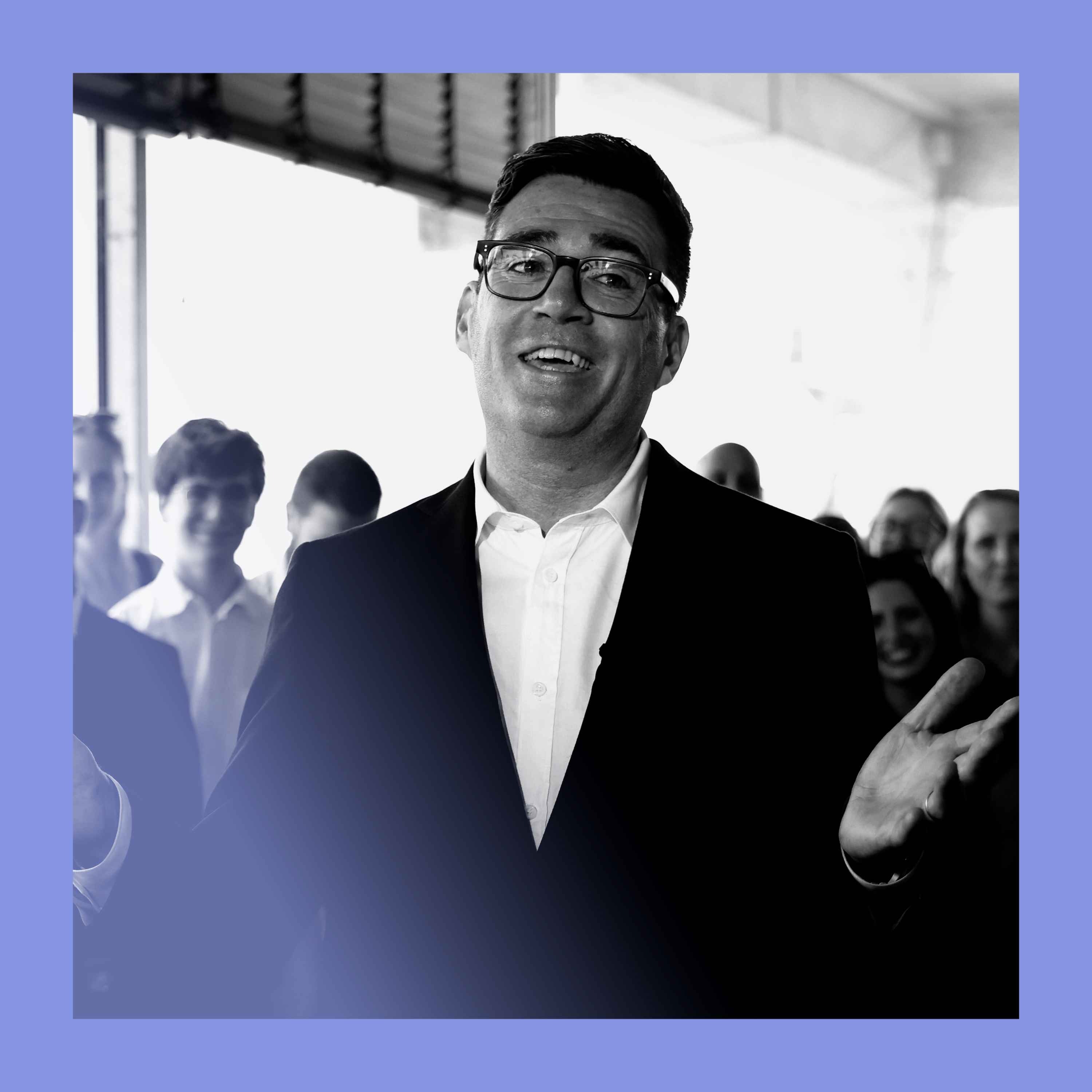
Today, Andy Burnham becomes Britain's new Prime Minister. The man known as King of the north will meet a real King Charles III, then officially replace Keir Starmer and move into 10 Downing Street. All that comes after Friday's appointment as leader of the Labour Party.
- [02:15]
Andy Burnham
This is a proud moment you have given me and my family today and an emotional one. But it is one for which I am ready. I am ready.
- [02:30]
Rosie Blore
He's sounding full of confidence.
- [02:33]
Andy Burnham
I know what I want to do. Working with you all. I have a plan.
- [02:40]
Rosie Blore
Question is, what is Andy's plan?
- [02:46]
Hugo Jai
Andy Burnham says he's been planning to become Prime Minister for a year now, but we still actually know very little about what he's planning to do when he gets there.
- [02:58]
Rosie Blore
Hugo Jai is our Britain political correspondent.
- [03:01]
Hugo Jai
The identity of most of his cabinet has been kept under wraps. He's said very little about some of the biggest issues in politics, like immigration and foreign policy. The one thing that we know he's really big on and plans to do is to devolve power away from Westminster and towards other regions of the country.
- [03:22]
Rosie Blore
So let's take this ascendance to Prime Minister one step at a time. What happens next? What does Burnham do in the next few days, possibly weeks?
- [03:32]
Hugo Jai
Well, so the very first thing he does after becoming Prime Minister is to sign A slightly terrifying letter which declares what Britain's nuclear submarine should do in the event of a nuclear war. But once he's got that out of the way, the first thing he'll need to do is to appoint his Cabinet. So the most important position there will be Chancellor. They're the person responsible for the economy and the public finances. Rachel Reeves, the incumbent, is expected to be leaving. It's rumoured now that Shabana Mahmood, the current Home Secretary, is going to take over as Chancellor. She would be something of a compromise choice. Ed Miliband was previously seen as the front runner, but he's maybe regarded as a bit too left wing. Might spook business, spook the markets. Then there was Wes Streeting from the right of the party. But he would alienate the left. So Shabana Mahmood is neither too left wing nor right wing. Although Burnham did say when he became Labour leader last week that he plans to draw on all wings of the Labour Party as he puts together his Cabinet as a whole.
- [04:33]
Andy Burnham
You will see it reflects all parts of our party, all communities, and it will reflect your own place within this great party of ours. A stronger, more, more united Labour Party, lifting up a stronger and more united Britain.
- [04:52]
Hugo Jai
And on the economy, what he has said so far is more what he won't do than what he will do. So he won't raise any of the main taxes. That's keeping to a promise that was made by Keir Starmer and Rachel Reeves. He won't change the massively expensive pensions policy. That means we spend more and more on pensions each year. He has said he's going to revisit the issue of whether to drill for oil in the North Sea, but that's relative minor in the grand scheme of things. So if he does have big economic plans, he's keeping them pretty secret so far.
- [05:25]
Rosie Blore
And, Hugo, two of the big issues facing Burnham and facing Britain are, as you say, migration and foreign policy. How will he deal with either of those?
- [05:37]
Hugo Jai
We really don't know much at all about either of those. On migration, he's said one thing he's not going to do. He's ditching a plan for digital ID cards, which had been dreamt up by Keir Starmer and was pitched as, among other things, a way of cracking down on illegal migration. Burnham is seen as coming from the left of Labour broadly, although some of his mentors, such as former Home Secretary David Blunkett, are more from the right. So Burnham would say that's a strength that he can draw on all wings of the party and all traditions of the party. But the risk is that he ends up looking a bit muddled and not really taking a strong stance at all on foreign policy. Obviously, the very biggest issue is how he deals with the us, how he deals with Donald Trump. He said that he will meet Trump where he's at, whatever that means. I think he's going to clearly try and have a constructive relationship with the White House, which he has to do. But there is maybe a sense that he's going to be slightly less close to Trump than Keir Starmer sought to be.
- [06:42]
Rosie Blore
Other Prime Ministers have talked about trying to devolve some power away from London, and many have done a bit of that. But Andy Burnham seems to want to take that further. What are his plans there?
- [06:56]
Hugo Jai
His big announcement that he made a couple of weeks ago is that he's going to split the Downing street operation between London and a new office in Manchester, which He's calling number 10 North. This has attracted a bit of criticism because he was the mayor of Greater Manchester, and so there was a bit of grumbling about, well, why is he just trying to move everything from London to Manchester? But he has said that it's not just about Manchester, it's not just about. About the north of England, and that he wants to govern in the interests of the UK as a whole.
- [07:25]
Andy Burnham
I will be a leader for the north, the south, the east and the west, for Scotland, Wales and for Northern Ireland.
- [07:37]
Hugo Jai
Whether this is going to work, though, is pretty unclear. There have been previous attempts at devolution and their record of success is somewhat mixed. I mean, certainly just taking an institution and moving it from London to. To somewhere else can backfire. For example, the Office for National Statistics was moved to Newport in Wales, which is a decision now seen as a pretty catastrophic mistake in some ways. So he's going to have to, I think, take a more sophisticated approach than just take Department A and put it in City B and really sort of look at these things in the round if it's going to be a success.
- [08:11]
Rosie Blore
Now, Hugo, you've talked about the different wings of the Labour Party here. Starmer lost his role as Prime Minister partly because he lost the support of the parliamentary Labour Party. Can Burnham bring Labour together?
- [08:28]
Hugo Jai
Well, on paper, it looks like he's done that as part of the Labour leadership contest, in which he was the only candidate. He won the nomination of well over 90% of Labour MPs, so in theory, it looks like he's got support from pretty much everywhere. The thing is, British politics has been incredibly fractious, incredibly divided for the last decade. Now, that includes the Labour Party. Keir Starmer, as you say, was dethroned by his own MPs less than two years after winning a massive general election victory. Once Burnham has to start making decisions, he is going to make one wing of the party or another unhappy. And I think it's very much sort of tbc if he can keep that sort of broad support that he's benefited from so far.
- [09:17]
Rosie Blore
And we may not know a lot about Burnham's plans, we know a lot about Britain's challenges. What are the problems that Burnham's really going to need to try and find solutions to?
- [09:29]
Hugo Jai
Britain is not in a very happy place at the moment. We've got an economy which is growing very sluggishly that feeds through to crumbling public services. Even though both taxes and borrowing are at more or less record highs, leaving pretty much everyone unhappy. There are huge challenges and potentially opportunities coming down the track. The rise of AI is perhaps the biggest one. To the average British person, devolution or the rise of AI or foreign policy are much less important than can they see a doctor, can they get a dentist? These are issues that Burnham does, I think, appreciate the importance of. He talks a lot about how he wants to be on the ground and talk to ordinary people and stay plugged in in a way that he did when he was mayor. But it's gonna be tricky being Prime Minister. You get a million things thrown at you every day. And I think from today and every day after that, for as long as he's Prime Minister, he's gonna have to juggle a lot of things to make his premiership a success.
- [10:35]
Rosie Blore
Hugo, thank you very much.
- [10:38]
Hugo Jai
Thank you.
- [10:48]
Bill Advertiser
This Economist podcast is sponsored by Bill, the intelligent finance platform that helps businesses and accounting firms scale with proven results with AI powered automation. Bill isn't just moving money, they're simplifying financial operations. For nearly half a million customers, Bill has securely processed over a trillion dollars in transactions. That's proven infrastructure. Ready to talk with an expert? Visit bill.comproven and get a $150 gift card as a thank you. That's bill.comproven terms and conditions apply. See offer page for
- [11:25]
AAA Advertiser
why get aaa? Because bad roads, bad tires and bad luck. Out of gas, locked out or in a ditch, stuff happens. With 24. 7 roadside assistance. AAA's got your back no matter whose car you're in. Join today@aaa.com AAA expect something more. Roadside assistance is provided by independent facilities contracted by aaa. Coverage in taxis, limousines, and other ride sharing conveyances is excluded. 2024 AAA US Market Track National Surveys offers terms. Conditions and policies are subject to change without notice. Visit AAA.com for details.
- [12:06]
Rosie Blore
Syria is a country destroyed since the Arab Spring. In 2011, it suffered a brutal civil war, violent crackdowns by the regime of Bashar Al Assad, the rise of ISIS, and intervention by foreign armies.
- [12:22]
AAA Advertiser
Demonstrations are taking place in cities across the country demanding that President Assad stand down. Violence against civilians in Syria has reached alarming heights.
- [12:31]
Gareth Brown
We're getting information that the US has
- [12:33]
Annie Crabill
launched strikes against the ISIS in Syria.
- [12:36]
Gareth Brown
This is the US President Donald Trump's
- [12:38]
Annie Crabill
response to the deadly ISIS attack.
- [12:40]
Rosie Blore
Even recently, explosions struck central Damascus. Yet the war is mostly over. Since Ahmed Al Shara gained power 18 months ago, Syria is more peaceful than it's been for years. Many hope that the country could soon begin to function properly once again. But ending the war is only the beginning.
- [13:03]
Gareth Brown
Rebuilding Syria is a mammoth undertaking.
- [13:07]
Rosie Blore
Gareth Brown is a Middle east correspondent.
- [13:10]
Gareth Brown
And that takes more than peace. It takes politics. It takes, it takes confidence. Most importantly, it requires money and lots of it.
- [13:20]
Rosie Blore
And Gareth, what exactly is that money needed for?
- [13:25]
Gareth Brown
Everything you can think of, from roads and rebuilding houses to rebuilding the telecoms infrastructure, water infrastructure, energy infrastructure. The list is so long, I can't really do it justice. So when you drive around Jobar, which was once a pretty wealthy, prosperous, middle class suburb of Damascus, you really get a sense of the scale of the reconstruction requirements. You see the sort of skeletons of houses, apartment blocks. You look closely at them and you see it's literally just bricks and mortar. There's nothing else there. There's bullet holes. And then you sort of notice that not only have these houses been damaged and abandoned, but they've then been scavenged. So some of them don't have doors. There's no stairs going up to the second floor. All the wiring and metal work has stripped out these houses. And these buildings are beyond repair. They have to be knocked down. There's no coherent sense of a community or a society or a place that can be inhabited. And these are not small corners of the capital. These are like vast, vast suburbs which were the beating heart of Syria's middle class. They're just gone. And that's in Damascus. When you go north, when you go to the northeast, when you go to places like Aleppo and Homs, the devastation is even worse. And, you know, I imagine being a Syrian and looking at this area and thinking, where on earth do you start? Imagine an empty plot of land which then you had to, you know, not only build a house on, but also connect it to the water and the power and the electricity and the Internet network. Well, Syria is even worse than that because you don't have empty land. You have mountains and mountains of rubble.
- [15:15]
Rosie Blore
And how much is it actually going to cost?
- [15:18]
Gareth Brown
Well, the figures are eye watering. The World bank says that more than $100 billion worth of physical assets in Syria have been destroyed during the war. Some reconstruction costs are estimated to be more than $200 billion. That's more than 10 times the country's GDP in 2024. And it's every corner of life. There are places you go where the bridges over rivers have been destroyed, so you have to get on small barges and the telecoms network is patchy. Water, energy. People can't heat their homes in the winter. They don't have electricity throughout the day and night. They can't run a refrigerator. So this is like a holistic demand to rebuild almost from scratch a country, its infrastructure and its institutions.
- [16:02]
Rosie Blore
With that scale of rebuilding necessary and such a huge amount of money, can it happen?
- [16:09]
Gareth Brown
It can happen. And I think there's two strategies from the government. You see this top down approach of pursuing big investment deals from foreign partners, the Gulf, Europe, America. And then you also have this grassroots approach. Almost 2 million Syrians have returned to Syria in the last 18 months. And some of them have been in places like Turkey, Germany, even Britain. And they're taking back money. And thanks to them, there's some small scale reconstruction that is actually happening. You know, people go back to a village and they give five or ten thousand dollars to rebuild the school or a mosque or a small medical clinic. But these two things seem a bit disjointed. This is where Ahmed El Shara, this new president, former Al Qaeda militant's, interesting, unique, bizarre relationship with President Donald Trump is really something that many Syrians are betting on with the backing of the White House, the administration, that international firms can be comfortable and confident in coming to Syria and helping rebuild whatever part of the country it is.
- [17:13]
Rosie Blore
Gareth? The country is, of course, more peaceful now than it was under Assad, but there is still instability. How does that affect things?
- [17:22]
Gareth Brown
I think that knocks confidence. I mean, people do need to be reminded that this is still a very unstable country with security threats wherever you look. Now, that could be any number of pro government militias. It could be the threat of isis, which still lingers in the northeastern desert. Emmanuel Macron touched down in Damascus, and this was meant to be a huge moment for Syria to have A big Western leader arrive in the country and spend a night in the capital, only for the morning after his arrival to sort of be plagued by these two explosions. The fact that that can happen when the French president is in town on this historic visit knocks everyone's confidence. And all this chatter, all this excitement around investor confidence is really knocked when something like that happens.
- [18:05]
Rosie Blore
You talk about Al Shara reaching out internationally and saying that there are all these investment opportunities. Who's actually taking him up on them and what are they investing in?
- [18:17]
Gareth Brown
In the first months after Shara took power, it was really the Saudis and the Qataris who were sort of leading the international interest in business and reconstruction in Syria. The United Arab Emirates, because of Shara's background in Al Qaeda and as a jihadist, were much more standoffish. But now, 18 months in, it seems like the Qataris are the ones that are really rolling up their sleeves. They have spades in the ground. There's a refurbished airport in Damascus which is going to open. It's been rebuilt by the Qataris. Their reconstruction efforts have started. Saudi efforts have got a bit more stuck in the country's bureaucracy. But most interestingly is the last couple of months, the uae, which was, as I said, quite standoffish, has now really started to engage with Damascus. You have entrepreneurs from Dubai and Abu Dhabi, big construction firms, all talking about huge projects. And I think the general understanding in Damascus and indeed the region, is it's going to be these Gulf states that do a lot of the rebuilding of Syria.
- [19:17]
Rosie Blore
Has there been interest in investment beyond Middle Eastern countries?
- [19:22]
Gareth Brown
There has been some. There have been some deals signed by French companies. Some American firms are sort of poking around Syria's oil fields. So there's plenty of interest. But these bombings, they allow that seed of doubt in the minds of big Western firms like Chevron to grow. And that's not an uncertainty that Syria needs at all at the minute. It needs all the outside help it can get.
- [19:45]
Rosie Blore
And do you think it will get it? And is Al Shara the right person to lead Syria into a new beginning?
- [19:53]
Gareth Brown
Well, I think at the moment, Al Shara is the right person by default. There's not really another national figure who could maybe pull this all together. And I don't think we can take his survival for granted. There's been a number of assassination attempts, but I think it's key to look at Syria in the regional context. Now we have a region, in particular the Gulf, that has experienced for the last 15 years Syria as a failed state, where it's become a haven for drug trafficking, the export of international terrorism. And it's been a disaster for pretty much everyone, not least Syrians. And I think there is a consensus in the region that that can't be allowed to happen again. So in some regards, Syria has become almost too big to fail for the Gulf Arab states. So whatever the attacks by ISIS or other insurgent groups that do happen in the capital, there's still an insistence from Syria's regional friends, even the United States, that actually this new state project can't be allowed to fail. And by hook or by crook, it has to maintain the support of the international community.
- [20:57]
Rosie Blore
Gareth, thank you so much for talking to me.
- [20:59]
Gareth Brown
Thanks for having me, Rosie.
- [21:14]
Annie Crabill
Oh, yeah.
- [21:15]
Ron Benaghi
This is another Eastern European herb lovage. It's just like.
- [21:20]
Annie Crabill
It does look like celery leaves. Yep, big celery.
- [21:22]
Ron Benaghi
Rub it and smell it. It's. It's like parsley. It's like celery, but it's neither.
- [21:27]
Annie Crabill
It's in between, but like fresh, really
- [21:30]
Ron Benaghi
good, chopped up in potato.
- [21:31]
Annie Crabill
To me, this is one of the best places in the world.
- [21:37]
Hugo Jai
Annie Crabill is a senior digital editor at the Economist.
- [21:41]
Annie Crabill
Four times a week, Union Square, a small park in the heart of New York City, transforms into an open air market. There are lawyers in suits on their way to work. There's little old ladies greeting each other. There's NYU students, chefs, actors, artists. All of New York City basically marveling at the produce, picking up tomatoes, squeezing and smelling them, which farmers love to complain about.
- [22:13]
Ron Benaghi
I don't know why. There's continents. And then they look at it and they talk about, like they're buying a diamond ring, they talk about it. Then they bring someone else over and they look at it.
- [22:24]
Annie Crabill
Union Square is the most active market, but it is not the only one. Every week, depending on the season, there are 45 markets around the city's five boroughs. It's the biggest open air farmers market network in the United States. And last week, the Green Market, as it's called, celebrated its 50th birthday. Ron Benaghi was at the first one. He was just 16, working with his dad, a fourth generation farmer. And they drove in from their farm in New Jersey. The first Green Market had 12 vendors in a fenced in lot on 59th Street. And there was a security guy who opened the gates.
- [23:10]
Ron Benaghi
Let me know, are you ready now? Okay, you ready?
- [23:12]
Gareth Brown
You ready?
- [23:12]
Hugo Jai
Right.
- [23:12]
Ron Benaghi
Then he'd walk over the fence, unlock it, and he'd run because it was a herd of buffalo out there. Looked like people Come pouring in, you know, like the parting of the Red Sea. Here they come, you know, wow, here come these people. People were so amazed at cabbage. They said, it's just cabbage, but look how nice it is. Cabbage. They thought it was. They've never seen anything so fresh. And all the stands. I was there, Locust Grove was there. Chip can.
- [23:41]
Annie Crabill
This was the goal of the Green Market. Two urban planners, Benny Bonape and Bob Lewis, pitched the idea to the city and to farmers that they recruited from the region. City people would get access to amazing producer farmers, would get access to a huge new customer base. Ron remembers Bob Lewis knocking on his family's door.
- [24:08]
Ron Benaghi
And they had all these diagrams and drawings. And Bob kept alluding to the markets in France where. And I can't think of the name of it, but the way they do it, and it's been for hundreds of years, outdoor tents. They pick it in the morning sometimes and there it is on the counter. And he was trying to revive that in New York City. It started them thinking, why can't we get a fresh tomato when we're surrounded in the Northeast by farmland? We have to buy tomatoes in California in a three pack. Why? So my father's listening to me. We have this new concept where you come to the city and you sell direct to the public. So we're cutting out.
- [24:46]
Annie Crabill
Farms in the New York region were struggling in the mid 20th century. As suburban sprawl gobbled up land. In the mid 70s, there was an oil shock. Ron's dad, staring down rising fuel prices, began talking about selling. But after the Green Market opened, the farm had a bright new future.
- [25:08]
Ron Benaghi
Tomatoes, peppers, eggplant, the usual things that we grow. After that, we said, wow, we gotta start growing this. People are asking for that. Maybe we should grow raspberries again. We got rid of all our raspberries. It was too much labor. Let's start growing them again. And it really gave us a shot in the arm of ambition. For me, it did say, wait a minute, this is like.
- [25:28]
Annie Crabill
Along the way, the markets changed the city itself. Union Square is a prime example. In the 70s, the park was a bit rundown. It's now a destination. And the Green Market helped drive people and businesses to the area. A non profit called grownyc manages the markets. They vet farms so making sure the produce all comes from where it says it does and decide when to set up a new neighborhood market. They also created a system which other farmers markets in America have adopted, that allows people to seamlessly use their farm food welfare benefits with all the Vendors. California chefs are famous for pioneering the farm to table movement in America. But the region around New York grows a ton of beautiful produce too. And it not only features in menus now at most of the city's best restaurants, but it really shapes the menus. Lots of green market farmers have relationships directly with chefs and they'll ask them, what do you want us to grow next year? Ron does that, for example, with his herbs. Lena Chardullo is the executive chef at a nearby restaurant called Union Square Cafe. And Suzanne Cupps has a restaurant called Lola's which is also in the neighborhood. They both like to come themselves on market days, see what's going on with new things in season, load up their carts and walk them back to their restaurants. But it is, it is a very, very different neighborhood now. And just restaurants scene in general is really different even from 20 years ago I would say it's very different. And now it is really cool to purchase here. And you see it because a lot of people, people are specifically putting in the past 50 years the Green market has gone from an experiment to an institution. But in that time, some things have never changed and probably never will. Conscious about, you know, I was, I realized that I am a, I am a squeezer. Yeah, of course I'm a squeezer and I'm a smeller.
- [27:46]
Ron Benaghi
And it's okay if there's a reason for it.
- [27:47]
Annie Crabill
Well, the reason I always buy it.
- [28:10]
Rosie Blore
That's all for this episode of the Intelligence. We'll see you back here tomorrow.
- [28:33]
AAA Advertiser
Why get aaa? Because bad roads, bad tires and bad luck. Out of gas, locked out or in a Ditch, stuff happens with 247 roadside assistance. AAA's got your back no matter whose car you're in. Join today@aaa.com AAA expect something more. Roadside assistance is provided by independent facilities contracted by aaa. Coverage in taxis, limousines and other ride sharing conveyances is excluded. 2024 AAA US Market Truck national surveys offers terms, conditions and policies are subject to change without notice. Visit AAA.com for details.
- [29:03]
Annie Crabill
If you're listening to this, you're ready. Ready to join the industrial intelligence generation. A generation defined not by age but but by a shared mindset to connect teams, accelerate efficiency and drive innovation. Using the power of Aviva software to reshape industries turning real time insights into real world growth. Discover our stories@industrialintelligence.com join Generation I.